Article

Do Inclusive Energy Communities Enable Behavioral and Social Change? Insights from Cases in Denmark, Italy and Norway


by
Pariman Boostani
1,*,
Kenneth Vilhelmsen
2,
Giuseppe Pellegrini-Masini
3 and
Gabriele Quinti
4
1
Department of Teacher Education, The Norwegian University of Science and Technology, NO-7491 Trondheim, Norway
2
Independent Researcher, P.O. Box 8900 Trondheim, Norway
3
ENEA, Italian National Agency for New Technologies, Energy and Sustainable Economic Development, 00196 Rome, Italy
4
Knowledge & Innovation, 00196 Rome, Italy
*
Author to whom correspondence should be addressed.
Soc. Sci. 2026, 15(2), 133; https://doi.org/10.3390/socsci15020133
Submission received: 5 December 2025 / Revised: 30 January 2026 / Accepted: 16 February 2026 / Published: 18 February 2026
(This article belongs to the Section Community and Urban Sociology)

Abstract

Energy communities in Denmark, Italy, and Norway were investigated to explore factors that enable or hinder the behavioral and social transformations necessary to achieve a socially just environmental transition, particularly in projects involving vulnerable individuals. This study seeks to understand how energy communities drive behavioral change and social transformation by examining seven energy communities in Denmark, Italy, and Norway. Consequently, 57 semi-structured interviews were conducted among the seven cases. This paper suggests fostering behavioral shifts towards energy-saving practices in Norway and Denmark to reduce energy consumption and mitigate energy vulnerability. Education and awareness-raising on energy-saving measures in Italy have already led to tangible changes in daily behaviors among vulnerable groups. Across all countries, prior environmental attitudes, trust in project leaders and project plans, and community support were crucial in driving participation and behavioral change. Additionally, financial incentives motivated some participants, especially those from vulnerable groups facing high living costs. Key enablers of change included access to knowledge and a sense of community, while barriers like financial constraints and time limitations hindered broader participation. The study highlights the importance of involving vulnerable individuals in decision-making to enhance their sense of ownership and commitment to energy-saving practices. For sustainable behavioral change, it is essential to address environmental motivations and the financial, political, social, and practical considerations that affect vulnerable populations’ decision to join energy communities.

1. Introduction

Due to climate change, there is increasing concern about sustainable behavioural change within communities (Humphreys 2022). People’s attitudes toward sustainable development can significantly affect their behaviour toward energy transition and renewable energy (Ali et al. 2023), even though pro-environmental attitudes alone are not sufficient (Kollmuss and Agyeman 2002). To accelerate the global energy transition, we need more investment in decarbonising energy systems and in meeting growing demand with renewable solutions; nevertheless, the transition requires affordable energy prices to avoid a negative impact on households (IRENA 2024).
Our research aims to understand how social practices and behaviours in inclusive energy communities influence the transition to a socially just environmental future. By exploring key questions about the enablers and hindrances to behaviour change, we examine how different groups, especially vulnerable ones, experience these challenges differently, considering intersectional dynamics. This includes analysing behavioural changes and their links with inequality and vulnerability factors. Our focus is on energy community projects, analysing variables that affect their success in engaging vulnerable individuals and addressing energy vulnerability.
While a growing body of literature has examined behavioural change, energy communities, and energy vulnerability, much of this research remains either single-country-focused or does not explicitly centre vulnerable groups as active participants in energy community initiatives. This study is part of the European Research project (ACCTING1), which advances existing knowledge by combining a comparative, multi-country design with a focus on inclusivity and vulnerability. The study analyses seven energy community case studies from Denmark, Italy, and Norway, revealing common behavioural enablers and hindrances across different national contexts. It also emphasises how institutional arrangements influence the nature of inclusion and engagement.
While earlier ACCTING project outputs (Boostani et al. 2025) primarily documented case-specific findings to inform policy and practice, this article develops a distinct scholarly contribution by re-analysing the empirical material through a comparative, research-question–driven framework focused on behavioural mechanisms and the lived experiences of vulnerable groups. To do so, we addressed the following research questions in this paper:
  • What variables influence the outcome of energy community projects that involve vulnerable individuals and aim to reduce energy costs?
  • What variables in communities influence the behaviour of individuals who promote, join, and participate in energy communities that reduce energy vulnerability?
We first conducted a literature review of the concepts of energy communities and vulnerabilities, as well as of energy policies in Denmark, Italy, and Norway. Following this, we identified the barriers and drivers of behavioural change related to participation in energy communities through interviews. We also outlined the variables that influence the outcomes of these projects, particularly the involvement of vulnerable individuals and the reduction of energy vulnerability. Finally, we recommended policy recommendations to reduce energy vulnerability, promote sustainable behavioural change, and facilitate the sustainable transformation of energy communities.

2. Energy Communities and Vulnerabilities

Energy communities present a solution to injustices in the energy sector by promoting social, democratic, and ecological governance (REScoop 2024). Energy communities do not have an agreed-upon definition (Neij et al. 2025). Some authors adopt regulatory definitions, while others propose general definitions. Energy community projects are communities of place or interest that exhibit a high degree of ownership and control over an energy project and collectively benefit from its outcomes (Humphreys 2022). Likewise, Gui and MacGill (2018, p. 95) define an energy community as “social and organisational structures formed to achieve specific goals of its members primarily in the cleaner energy production, consumption, supply, and distribution, although this may also extend to water, waste, transportation, and other local resources”.
In this paper, we adopt a broad and comprehensive notion of energy communities, in agreement with the above definition of Gui and MacGill (2018), and thereby mean any local participatory process led or actively participated in by citizens that aims to increase the sustainable use or production of energy; we do so because we believe that a comprehensive definition that does not bind energy communities to specific forms of organisation, such as legal entities defined within national legislation, might better capture those formal and informal networks that animate energy communities. Some authors argue for the use of community energy projects rather than energy communities. For example, Bauwens et al. (2022) noted that energy communities have increasingly been used to describe legally defined entities, adopting the jargon of EU legislation. Nevertheless, such a relatively new distinction does not reflect any established convention among scholars or practitioners. Therefore, in this paper, we use the terms interchangeably.
Moreover, sustainability and transformation are central to this study, as energy communities can be key agents for the energy transition (Klein and Coffey 2016). Transition is a significant change in society, technology, institutions, and the economy (Hölscher et al. 2018). Energy transition brings change to the energy system (Sovacool 2016). Another closely related concept, energy transformation, is used by some scholars interchangeably with energy transition. According to Coy et al. (2021), energy transformation is an “inherently political process, involving significant changes in technology, economics and indeed society” (p. 4). Such societal change requires processes of learning and meaning-making, through which knowledge enables actors to understand (Hjerpe et al. 2017), engage with, and act upon energy-related change. In this sense, knowledge has been conceptualised as a central driving force of sustainability transitions.
Building on this perspective, to achieve this transformation, it is essential to understand the factors and conditions that influence individuals’ willingness (internally driven motivation (Coy et al. 2021) to adapt and change their energy consumption behaviours (Steg et al. 2015). Behavioural change plays a critical role in these transformations at the individual and collective levels. Behavioural change refers to adopting a new behaviour based on people’s motivation to change to a desired behaviour (Hagger et al. 2020). Individual behaviour changes, such as adopting sustainable energy practices and engaging in energy community initiatives, can drive broader community-wide transformations. Collective behavioural changes, the changes in the way a group acts coordinatively to achieve a purpose, influenced by societal norms, culture, and policy, are essential for achieving the goals of the Green Deal. Collective actions are a key characteristic of energy communities, particularly regarding the motivation to join the project and the decision-making process within the community (Fouladvand 2022). Examples of behavioural change include starting, organising, or joining an energy community project; actively participating in an energy community; learning new information about sustainable practices; and implementing pro-environmental behaviours such as energy conservation, sustainable mobility, and purchasing organic foods.
As Pellegrini-Masini (2020) mentions, what individuals consider positive for themselves could impact the community on collective matters. Therefore, analysing behavioural change at the individual level is essential. Personal factors such as beliefs and behaviours, cultural and social context, education, knowledge about sustainable energy, and access to energy services all influence individual-level behavioural change (Kauppi 2015; Steg et al. 2015). Furthermore, according to Kauppi (2015), popular individuals influence individual behaviour change, as do those with authority, which aligns with research on the role of opinion leaders in promoting behavioural change (Valente and Pumpuang 2007). Moreover, energy communities can be social environments where prosocial behaviours are carried out; these refer to acts of kindness that help others or foster positive interactions (Bergin et al. 2003; Nitschke et al. 2022). Working towards shared goals provides an opportunity for individuals to help one another (Hardy and Carlo 2005). Prosocial behaviour can be observed through volunteering in communities, charitable actions (Hardy and Carlo 2005) and providing emotional support (Bergin et al. 2003) to community members.
In essence, the analysis of individual and collective behaviour is intertwined in this work. Individual actions might happen in the context of collective actions; they can ignite them or be a consequence of them (Pellegrini-Masini 2020). In the context of the energy transition, vulnerable groups are more at risk of falling behind (Pellegrini-Masini et al. 2020) and slipping into energy poverty compared to other groups. Vulnerabilities affects behaviour by limiting access to resources, increasing daily stress, and reducing the ability to make proactive energy decisions. Coy et al. (2021) argue that empowerment and behavioural change are not guaranteed within the energy transition, as factors such as economic insecurity, social marginalisation, and institutional barriers affect motivations. As a result, vulnerable individuals often favour short-term coping strategies over long-term sustainability actions.
Behavioural change in energy transitions is often targeted through specific interventions. Axon et al. (2018) map European community-based initiatives that utilise mechanisms such as information provision, social learning, and empowerment. However, the effectiveness of these interventions depends on their awareness of social and structural inequalities. Without addressing vulnerability, they risk reinforcing existing exclusions rather than promoting inclusive participation in energy transitions.
This article defines vulnerability factors as economic disadvantage (Furmankiewicz et al. 2021; Snodin 2020), disability (Hesselman et al. 2021; Winston 2022), foreign ethnic background, old or young age (Kata et al. 2022; Tsirou 2019), living in rural or remote locations (e.g., islands), and gender (Cunha et al. 2021; Nolden et al. 2022), meaning non-male genders are often underrepresented in energy community projects. This categorisation has no pretence of being exhaustive; nevertheless, it is an effort to encompass the vulnerabilities that might affect the most participation in energy community projects (Boostani et al. 2024). Individuals with one or more of these vulnerabilities may benefit from participating in energy communities, which can help reduce energy bills and provide a platform for sharing information and knowledge about energy-saving strategies. In Denmark, Italy, and Norway, energy communities operate under different regulations but share goals of promoting local engagement and encouraging sustainability. We sought to understand how these initiatives and policy incentives create social and environmental benefits that enhance community inclusivity.

3. Country Legislation

All three countries have instituted various forms of support for energy communities, including financial and other assistance. In Norway, ENOVA, a state-owned enterprise under the Ministry of Climate and Environment, offers general energy-efficiency subsidies (Enova SF 2024; Woods et al. 2024). These programmes are not designed specifically for energy communities, but cooperatives, housing associations or other legal entities that qualify as energy communities can apply under the same rules as any applicant: up to 25% of the investment cost is reimbursed (capped at ≈€15,000 for comprehensive building upgrades and ≈€10,000 for single measures such as installing hydronic heating systems), and ENOVA also provides free information and guidance on available support (Enova SF 2024). Beginning in July 2025, the Norwegian government will lower the licensing threshold for solar panel developments to 10 MW (Ministry of Energy 2025). This amendment to the Energy Act Regulations will simplify the application process and reduce the cases handled by the Norwegian Water Resources and Energy Directorate (NVE), especially for rooftop solar power plants (Ministry of Energy 2025).
Denmark now hosts what Nordic Energy Research (2023) calls the Nordic region’s most mature policy “ecosystem” for energy communities. Developers of any new land-based wind turbine or ground-mounted PV park must offer at least 20% of the project’s equity to residents living within 4.5 km under Lov om fremme af vedvarende energi (LBK nr. 132 af 06/02/2024) (Danish Ministry of Climate Energy and Utilities 2024). RED II concepts were transposed through Bekendtgørelse nr. 1069 af 30/05/2021 om VE-fællesskaber og borgerenergifællesskaber, which formally recognises Renewable- and Citizen-Energy Communities and gives them the right to generate, share and trade electricity (Danish Ministry of Climate Energy and Utilities 2021).
A broad amendment to the Electricity Supply Act (Lovforslag LSF 69/2024, in force 1 January 2025) empowers the regulator to approve local “collective” tariff pilots for energy-sharing groups, but the nationwide differentiated-tariff methodology is still in consultation and is not expected to be fully applied before mid-2026 (Danish Ministry of Climate Energy and Utilities 2025; Nordic Energy Research 2023). Start-up finance is available via Bekendtgørelse nr. 1162 af 09/08/2022, which sets aside about DKK 4 million per year for feasibility studies, storage pilots and outreach (Danish Ministry of Climate Energy and Utilities 2022). Neighbour-oriented benefit-sharing remains extensive: the tax-free VE-(Danish Energy Agency 2024b); the værditabsordning for property value loss (Danish Energy Agency 2024d); the salgsoptionsordning (put-option) for the very closest neighbours (Danish Energy Agency 2024a); and the mandatory Grøn Pulje, which channels DKK 125,000 MW−1 for wind and 40,000 MW−1 for solar into host-municipality funds (Danish Energy Agency 2024c). Taken together, these instruments have fostered an estimated 633 Danish energy communities, more than the rest of the Nordic region combined (Nordic Energy Research 2023).
In Italy, the energy community is supported by rules that reward the sharing of locally produced electricity, rather than the classic net-metering approach. Renewable energy communities (CER) receive payments for the energy they share, and a time-limited premium administered by the national energy services operator (GSE) under ARERA’s framework for “diffuse self-consumption” and a ministerial decree from late 2023. These arrangements aim to make participation tangible for households and local associations, including those facing energy vulnerability. Alongside this, building-retrofit incentives known as the Super bonus offered a 110% tax deduction until the end of 2023, followed by 70% in 2024 and 65% in 2025, which some communities have used to help ease the cost of efficiency upgrades for their members.
Historically, the rapid spread of rooftop solar was driven by the feed-in-tariff programme (Conto Energia), which closed in 2013 once the annual incentive cap of €6.7 billion was reached. More recently, Italy’s recovery plan has channelled capital grants to “energy solidarity” initiatives: a 40% grant that initially targeted very small municipalities has been expanded (May 2025) to towns with fewer than 50,000 inhabitants and made procedurally more flexible (e.g., higher advance payments), with the application deadline extended to 30 November 2025. Together, these measures lower entry costs and link everyday practices of sharing and saving to visible, place-based benefits, which help sustain participation and inclusion in the energy community (Agenzia delle Entrate 2020; ARERA—Autorità di Regolazione per Energia Reti e Ambiente 2022; MASE 2021, 2023, 2025).
Taken together, the three countries show a shared commitment to lowering entry costs for collective action, but they differ in policy logic: Denmark leans on ex-ante inclusion via mandatory local co-ownership and strong neighbour-benefit schemes within a coherent ecosystem; Italy emphasises ex-post rewards for shared consumption and targeted, place-based grants without equity requirements; and Norway relies on technology-neutral subsidies and streamlined permitting that communities can access on equal terms, but without community-specific tariff rights.

4. Materials and Methods

4.1. Case Study Descriptions

Case studies were conducted across three European countries. Seven cases were selected to ensure the inclusion of energy communities involving vulnerable individuals, based on the vulnerability factors outlined in section two and the ACCTING report by Boostani et al. (2025). The selection considered the efforts of suitable energy and solidarity communities to address energy vulnerability and promote active participation among vulnerable groups. Furthermore, the selection process commenced with web page research, followed by contacting potential cases to discuss the research objectives. After identifying a list of communities in each country, two to three cases per country were selected, based on their appropriateness and the availability of participants for fieldwork. Energy community project leaders then contacted potential participants eligible for inclusion in the study. Researchers visited the sites to conduct semi-structured interviews once the approved participant consent form was shared.
In Norway, two cases illustrate efforts to promote sustainable energy solutions while addressing vulnerability. The first case is Sofienberggata 7 in Oslo, where a municipally owned housing block underwent renovations. Improvements included highly insulated facades (Futurebuilt 2023), modern ventilation systems, solar panels, and thermal energy wells, resulting in over a 70% reduction in energy consumption. Low-income residents, including the elderly and those with disabilities, benefited from lower energy costs and enhanced safety, with temporary housing provided during renovations. The second case is the Bergen Ecovillage in Østerøy, which is in the early stages of development. This project aimed to create a sustainable community with low-energy, nearly CO2-neutral homes built from local materials, emphasising local food production and renewable energy (Bergen Økologiske Landsby 2019, 2022). The project plans to install solar energy systems in communal houses to achieve electricity self-sufficiency and provide heat for small greenhouses (SPLEiS 2025). Significant community engagement occurred, but some prospective members faced financial difficulties, prompting ongoing efforts to secure funding for inclusivity.
In Denmark, two cases of sustainable energy projects entailing collective action were selected. The first, Solhuset (part of the Energifællesskab Avedøre projects—the first energy community in Denmark) in Avedøre, Copenhagen, consisted of roof solar panels installed by a consumer-owned utility that provided up to 100% of the hot water needed for 454 apartments during warmer months (EBO Consult 2020, 2024). The project aimed to establish a self-sufficient, non-profit local energy network by developing infrastructure such as solar panels and charging stations (Chen-Florea and Hustad 2024). Low-income tenants and immigrants participated in decision-making through board representation, promoting inclusivity. A second case is the Universitetets Energifællesskab (UEF) in Aarhus, which created a solar cooperative for rooftop panels on the campus of the University of Aarhus (UEF 2023). Citizens, including financially vulnerable students, could buy shares, become co-owners, and receive annual returns (AURORA 2023; UEF 2023). Workshops and public discussions further engaged the community in energy issues and the project’s development.
In Italy, several of the energy solidarity communities under consideration effectively addressed energy poverty while promoting the adoption of renewable energy. In Rome, the “A Otto Minuti dal Sole” (meaning at eight minutes from the sun) was selected as a case study; it involved 23 families, two businesses, and a community organisation in marginalised neighbourhoods. The project aimed to install photovoltaic systems, transforming residents into prosumers, and to hold regular meetings to foster participation. Another selected case study was “Le Vele”, which operates within the Vaccari Institute, an institution supporting people with disabilities. A 90-kW solar PV system provides clean energy, using savings to fund social programs for energy-poor families, with continuous involvement from local organisations (such as the Banco dell’Energia Foundation and the Vaccari Institute) and families. The third case selected is in San Nicola da Crissa, Calabria, where “Critaro” was the region’s first renewable and solidarity energy community. A photovoltaic system powers the local school and benefits 30 disadvantaged families by significantly reducing their energy bills. Active participation from the municipality and families exemplifies how renewable energy can address social inequalities and energy poverty.
All cases, regardless of country, were managed by project leaders committed to environmental sustainability and reducing energy costs. In Italy, local authorities were more actively involved in energy communities. Further, there were significant differences in development stages among the cases. For instance, Bergen Ecovillage had just started and had not yet reduced energy costs, whereas La Vele installed photovoltaic systems in November 2023, generating 120,000 kWh annually and accruing benefits for the community. Recognising these differences is essential when evaluating results and assessing policy measures to foster comparable cases.
Overall, the seven energy communities have been selected across three countries with varying national contexts, governance structures, demographic and economic variations, and stages of development. Differences in stages of development allowed us to examine how behavioural enablers and hinderers emerge before/during/after the implementation process. The focus of this research is not on outcomes but on the participation process and the enablers and hindrances to fostering behavioural change across cases. This process-oriented approach enables meaningful comparison across cases, even when projects are at different stages of implementation.

4.2. Procedure

Following the literature reviews and pilot studies conducted in the first cycle of the ACCTING project, three types of questions were identified for three target groups: community members, local authorities, and project leaders. After getting the ethical approval from SIKT2, the team first invited project leaders to participate in exploratory interviews as a pilot study. Later, in a second stage of data collection, 57 semi-structured interviews were conducted online and in person with all three target groups, with respondents recruited through snowball sampling from September 2023 to August 2024.
Snowball sampling was used to reach individuals involved in energy community initiatives, especially vulnerable participants often missed. This method helped identify respondents with experience in energy communities across three countries. The interviews were conducted in English, Norwegian, and Italian. This linguistic flexibility was intentionally adopted to ensure that participants, particularly those in vulnerable situations, could express themselves in a language they felt comfortable with, thereby reducing potential barriers to participation and supporting richer, more accurate data collection.

4.3. Data Analysis

All interviews have been transcribed and translated (if conducted in languages other than English, such as Italian, Danish, or Norwegian). We followed thematic and qualitative content analysis. To support systematic coding, three types of interview reporting sheets were developed and organised into three Excel files, each corresponding to one of the three respondent groups. Themes and codes were defined based on the ACCTING analytical guidelines and the preceding literature review. For example, “main motivation for joining an energy community” was coded, with subcodes including social aspects, environmental concerns, financial aspects, individual non-financial needs, policy intervention, and other issues specified by participants. The reporting sheets were shared with other ACCTING project members for feedback and refinement to ensure consistency with broader project objectives.
Following this process, researchers coded all interviews using the finalised reporting sheets, added anonymised participant quotations, and removed sensitive information. A qualitative content analysis was then conducted to identify and analyse the frequency and distribution of enabling and hindering factors affecting both individual behavioural change and community-level outcomes in inclusive energy transitions. To enable cross-country comparison, the same coding framework was consistently applied across all cases in Denmark, Italy, and Norway, allowing patterns and context-specific variations to be identified without assuming institutional equivalence across countries.
We compared countries using a shared coding system that we applied consistently in Denmark, Italy, and Norway. Instead of treating countries as the same, we analysed them based on common factors that enable or hinder behaviour at different levels: individual (micro), community (meso), and government (macro). This method helped us identify general trends that cross borders as well as differences within local contexts. It allowed us to avoid directly comparing outcomes, which could be influenced by the projects’ stage of development or by national policies.
Parts of the empirical material analysed in this article draw on interviews previously reported in the ACCTING project report authored by the same research team. While the project report was primarily aimed at documenting case-specific findings and informing policy-oriented audiences, the present article offers a distinct analytical contribution. Specifically, the interview data were re-analysed using a comparative thematic framework structured around behavioural mechanisms and explicit research questions that were not the focus of earlier reports. In contrast to the ACCTING report, which organised findings at the project and case level, this article centres the analysis on variables as experienced and articulated by vulnerable groups themselves. The re-analysis involved reorganising the material across cases, refining coding categories, and interpreting findings through the lens of behavioural change in energy communities.

4.4. Demographic Information

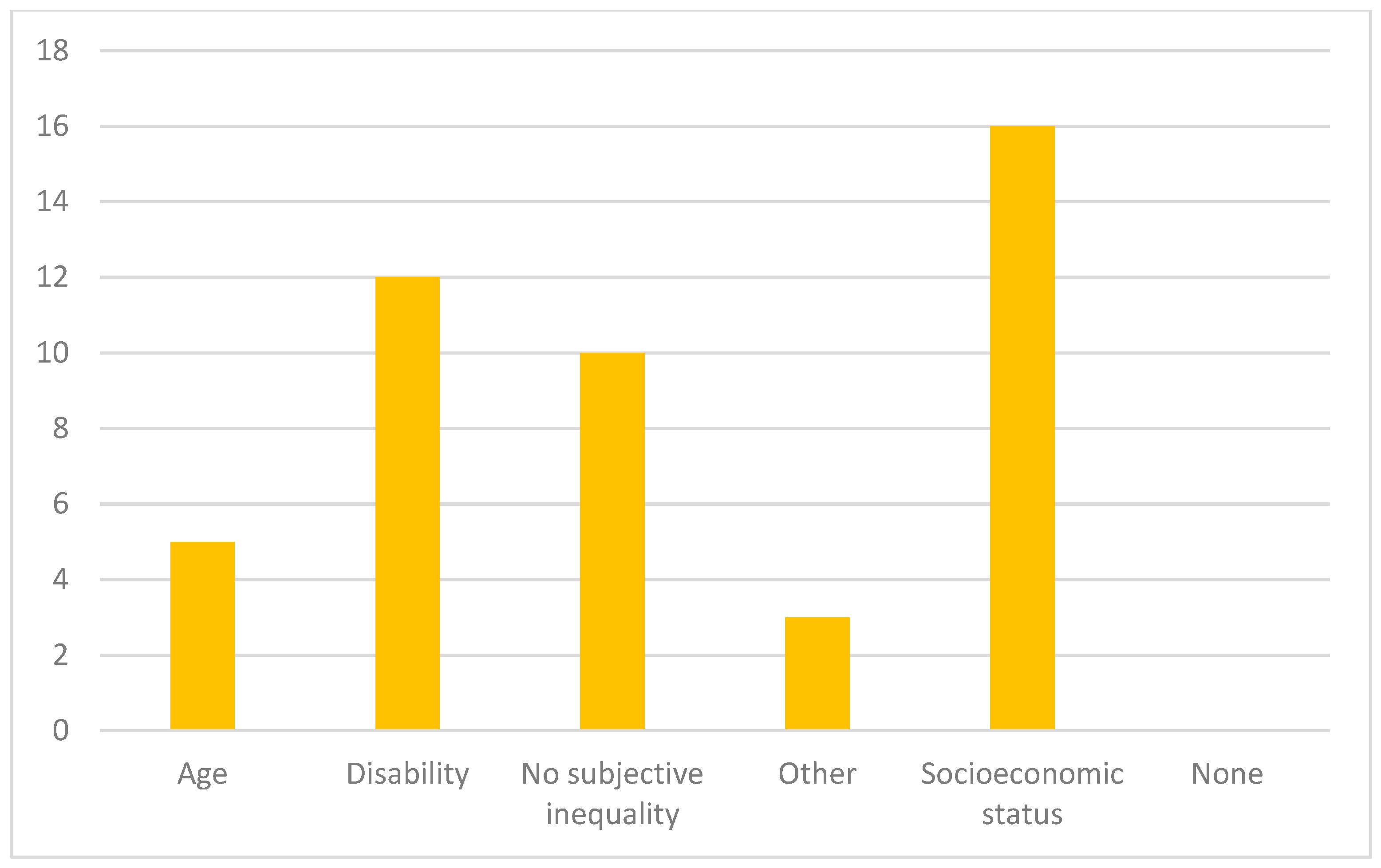
We interviewed 30 women and 27 men. All 57 participants identified themselves as either male or female, and we did not encounter individuals of other genders. Since gender has been considered a vulnerability criterion in research line three of the ACCTING project, we have attempted to recruit more women for energy community projects to ensure their voices are heard. Figure 1 illustrates that socioeconomic status is the primary vulnerability criterion across the three countries. Most of the people affected were from low-income groups who could not afford to pay their energy bills or were unemployed and receiving government financial support. While the project leaders and policymakers were generally considered not to be in a condition of inequality, there were some cases in which they were also vulnerable and fell into the other categories.
As shown in Table 1, most women were community members, while men were mainly the project leaders of the selected energy communities. This suggests that in these energy communities, men predominantly held leadership roles and were more actively involved in projects, while women were often viewed as community members. However, in some cases, women served as project leaders, including in the Bergen ecovillage and the UEF project.

5. Results

5.1. Factors Affecting Behavioural Change in Vulnerable Groups

Section 5.1.1, Section 5.1.2, Section 5.1.3, Section 5.1.4 and Section 5.1.5 primarily address the second research question (RQ2) of this study by examining the variables that shape individual behavioural change among vulnerable participants in energy communities. At the same time, these mechanisms have implications for the first research question (RQ1), as individual behaviours interact with project design and institutional conditions to influence collective outcomes related to energy cost reduction.
The following sections examine how behavioural change emerges among vulnerable participants across the Norwegian, Danish and Italian cases. Rather than narrating each case in isolation, we organise the evidence around five interlocking mechanisms: material/economic pressures, knowledge and skills, social relations and spaces, values and identities, and institutional/project design, and weave quotations from different sites to show how similar pressures take distinct shapes in place. It should be noted that some of the quotations used in this paper were extracted from the final research line 3 ACCTING report (Boostani et al. 2025), which was authored by the same research team.

5.1.1. Material and Economic Pressures

This subsection addresses RQ2 by examining how material and economic pressures influence individual energy-use behaviours and participation decisions among vulnerable households. Across all settings, rising electricity prices functioned as an immediate behavioural trigger, prompting households to adopt low-cost conservation routines. These adjustments were typically framed as pragmatic responses to financial strain rather than as long-term sustainability strategies. In the Norwegian cases, participants described routinised frugality based on comfort-reducing practices. One resident explained how keeping expenses low required continuous self-discipline:
“Nowadays, I am very careful not to use much electricity, so I pay the lowest, I am cautious … I never turn on the heater unless it is needed. I do not wash my clothes daily, but maybe twice a week. I try to wash dishes by hand instead of using the washing machine. So, I do not get high electricity … I always tell my kids to wear more clothes, socks, and a sweater; if necessary, we can turn on the heater. Because I try to minimise unnecessary electricity use … I am cautious with that because I want to ensure that the bills are the lowest so I can have some money”.
(NO-VL05)
Another participant similarly linked everyday restraint to financial necessity, describing how households “turn off the lights, wash clothes infrequently, and do not waste water” as a way of “practising economics at home” (NO-VL06). Together, these accounts illustrate how material pressure translates into sacrifice-based behavioural change that is immediately effective but difficult to sustain over time.
Danish respondents also reacted to price signals, but more often framed behavioural change in terms of gaining control through local generation rather than ongoing self-restraint. As one tenant board member noted, producing energy locally through solar panels offered both economic and environmental benefits:
“The energy that you pull down is free and does not harm the environment … I am surprised we did not do that 20 years ago”.
(DK-VL01)
In the Italian cases, material pressure similarly triggered early behavioural adjustments, such as shifting consumption to cheaper time slots and reducing everyday use, even before photovoltaic systems became operational. At this stage, behavioural change relied heavily on anticipation and personal sacrifice. However, once photovoltaic installations were in place, interviewees described a qualitative shift in both the meaning and sustainability of behavioural change. As one respondent observed:
“In the energy community, the installation of the photovoltaic system has led to a radical reduction in energy costs in an institution that is frequented by people in difficulty, who, thanks to this reduction in costs, will be able to have better assistance”.
(IT-VL17)
This illustrates how infrastructural interventions can convert short-term, sacrifice-based behavioural adaptations into more durable outcomes, where reduced energy costs free up resources that can be redirected toward care and support. In this sense, behavioural change was no longer sustained through deprivation but embedded in improved material conditions enabled by collective investment.

5.1.2. Knowledge, Skills and Guidance

This subsection addresses RQ2 by analysing how access to knowledge, skills, and practical guidance shapes behavioural change and engagement in energy communities. Across all cases, knowledge functioned less as abstract awareness and more as a translation mechanism that enabled participants to convert motivation into routinised practice. Where information was embedded in structured learning settings, such as meetings, courses, or guided discussions, behavioural intentions were more likely to become sustained everyday actions.
In the Norwegian cases, participants highlighted how formal and informal learning opportunities supported the adoption of new practices. In the Bergen Ecovillage, one participant linked participation in permaculture and energy-efficiency courses to changes in daily routines:
“I completed several courses in permaculture, as well as some energy efficiency courses at the university, which included subjects such as energy efficiency and decentralised water systems”.
(NO-VL10)
Similarly, in Denmark, meetings and discussion forums within the UEF project at Aarhus University provided a space where knowledge-sharing reduced perceived barriers to action, particularly for participants with limited financial means. One student explained how collective learning offered an alternative pathway to sustainable energy use:
“Students at the university can gather and discuss energy and climate change mitigation topics … I wanted to reduce my CO2 footprint … I did not have enough resources to buy the land to install solar panels or other generators. So, this is sort of one way to achieve the goal of consuming more sustainable electricity”.
(DK-VL02)
Italian initiatives also foregrounded informational activities, with meetings serving as catalysts for changes in everyday practices such as recycling and the timing of energy use. In A Otto Minuti dal Sole, participants linked the rapid organisational development of the energy community to increased environmental awareness beyond the immediate group:
“Less than a year passed from the time the decision was made and the legal constitution of the energy community to the start-up of the plant … Awareness towards environmental issues has increased greatly … People who were outside of it now want to promote initiatives”.
(IT-VL19)
Taken together, these accounts show that knowledge enabled behavioural change not simply by informing participants, but by making sustainable practices intelligible, feasible, and socially supported. Where guidance was accessible and embedded in collective settings, vulnerable individuals were better able to experiment with, adopt, and maintain new behaviours over time.

5.1.3. Social Relations

This subsection addresses RQ2 by exploring how social relations and shared spaces support sustained behavioural change and participation. Across all cases, social relations served as a stabilising mechanism, transforming individual intentions into collective routines by fostering trust, mutual support, and a sense of shared responsibility.
In the Norwegian and Danish cases, behavioural change gained traction when projects created physical and social spaces that enabled regular interaction. In Sofienberggata 7 in Oslo, residents emphasised that the renovated meeting hall allowed them to “connect with others,” providing a setting where everyday practices, such as conserving energy and reusing resources, could be shared and normalised. Similarly, in Solhuset, climate meetings and tenant groups linked individual thrift to collective responsibility, encouraging residents “to be more involved … by participating in discussions, sharing ideas, and expressing concerns” (DK-VL01).
Italian interviewees placed even stronger emphasis on relational dimensions as a primary motivation for participation. In A Otto Minuti dal Sole, one respondent highlighted how human relationships and inclusive social practices supported engagement, particularly for disadvantaged neighbours:
“We are a community. We also try to involve the most disadvantaged people (e.g., thanks to the parties). I make my house (with a large garden) available for parties. Human relationships among us are fundamental”.
(IT-VL06)
Another example from a vulnerable respondent of how prosocial attitudes played a role in motivating the participation can be seen as follows:
“Here is a real community with much solidarity among the inhabitants… Everyone is aware of the social aims of the projects and the advantages that should, first of all, benefit the people most in need. Everyone accepted”.
(IT-VL08)
Taken together, these accounts illustrate how relational infrastructures (meeting halls, social events, and collective rituals) convert information into practice and practice into shared norms. Where such infrastructures weakened or were disrupted, participation tended to thin out; for example, in La Vele, setbacks such as reduced transport services coincided with more passive and sporadic attendance. This contrast highlights the role of social relations not merely as a contextual feature, but as a key mechanism sustaining behavioural change over time.

5.1.4. Values, Attitudes and Identities

This subsection addresses RQ2 by examining how values, identities, and life experiences motivate participation and sustain engagement under conditions of constraint. Across cases, pre-existing orientations toward sustainability and social responsibility functioned as a meaning-making mechanism, helping individuals justify continued effort even when material benefits were delayed or uncertain. In the Norwegian cases, participants articulated normative visions of change grounded in long-standing life experiences and ecological worldviews. One resident of the Bergen Ecovillage described participation as part of a broader ethical stance toward living with nature:
“Instead of constructing roads and buildings, we should grow food … We should work with nature and not against it”.
(NO-VL09)
Similarly, in Denmark, members of the UEF project (primarily students and university staff) linked their participation to pre-existing pro-environmental attitudes and a desire to act on widely shared climate concerns. One student framed engagement to demonstrate agency and collective voice:
“For years, we have been told that climate change is a reality… Even if our efforts are small, they still represent progress … There are steps we can take and ways we can communicate with the government to express our desire to be more climate-friendly”.
(DK-VL05)
Italian interviewees also described a diffusion of sustainability-oriented values, including changes in consumption, recycling practices, and prosocial commitments to include neighbours most in need. These values often motivated participation as a contribution to broader societal transformation, while remaining closely intertwined with everyday material realities. One respondent expressed a strong desire to be part of the energy transition through collective action:
“I buy things from regenerative organic farming, small local farmers, recycling … joining the community is a great opportunity to be part of this transition … It may be low-cost, but you have to be willing to invest”.
(IT-VL10)
This orientation was also evident in another respondent, who articulated environmental concern alongside lived experiences of energy hardship. She emphasised the urgency of renewable energy adoption, “if we are not careful, it will not be long before we are all gone” (IT-VL09), while also describing high winter electricity bills linked to poor housing conditions and limited technical options. Her engagement illustrates how pro-environmental values did not substitute material motivations but rather provided meaning and justification for participation under conditions of constraint. In this sense, values and identities did not replace material drivers; they amplified them, making everyday frugality, patience, and continued engagement more conceivable while projects progressed through lengthy administrative stages.

5.1.5. Institutional and Project Design

This subsection addresses RQ1 by analyzing how institutional arrangements, financing models, and project sequencing influence collective outcomes and the capacity of energy communities to reduce energy costs. Across the cases, project design emerged as a critical mediator between individual engagement and durable collective practice, determining whether early mobilization translated into tangible economic benefits.
In the Norwegian and Danish cases, financial sustainability proved to be a recurring bottleneck even where interest and participation were high. In the Bergen Ecovillage, project leaders had mobilized residents through meetings and workshops, yet progress stalled because the initiative “has yet to take off due to financial challenges,” despite plans for a solar-powered, self-sufficient community. Similarly, in Denmark, members of Solhuset highlighted how maintenance costs could reintroduce economic pressure after installation, noting that “we will have to do something about our PV panels because they are old and no longer effective” (DK-VL01). These examples illustrate how financing and long-term cost planning shape whether projects can sustain energy cost reductions over time.
Italian cases underscored the importance of sequencing and governance choices. In La Vele, delays between legal constitution and operational delivery produced uneven engagement: some participants remained active in meetings and social initiatives, while others became passive as expected benefits were postponed. Critaro illustrates an alternative design strategy, characterized by a more top-down governance approach in which vulnerable individuals were instructed on procedural steps such as filling out forms and receiving information. This model facilitated rapid enrolment and visible cohesion, with residents valuing being “all associated” (IT-VL24), but it also limited opportunities for learning-by-doing and deeper capability-building.
Across sites, the analysis suggests that where institutional timelines were opaque or delivery was delayed, trust and participation weakened; conversely, where procedures were clear, milestones visible, and social spaces maintained, confidence in leadership and processes grew. These patterns highlight how institutional and project design do not merely provide a backdrop for behavioral change but actively shape whether energy communities can move from early engagement to stable, cost-reducing outcomes.

5.2. Country-Specific Insights (Brief Synthesis Within the Thematic Frame)

Section 5.2 synthesizes findings from both research questions by showing how national policy contexts and institutional settings shape the interaction between individual behavioral mechanisms (RQ2) and project-level outcomes (RQ1). Although material constraints and social learning recur, their articulation varies by policy setting. In Norway, price salience dominated household narratives in a context of low initial know-how; brochures, workshops and a shared hall gradually filled capability gaps, but project-level finance remained the binding constraint (Bergen Ecovillage). In Denmark, prior awareness and organized forums (tenant boards, university groups) met a supportive milieu, enabling proactive engagement and local generation ambitions, even as maintenance costs reintroduced economic strain. In Italy, prosocial neighborhood work and the anticipation of shared-consumption rewards knitted together, but administrative lags meant that many behavioral changes (shifting to cheaper time slots, reducing use) preceded tangible savings; where municipal leadership was strong (e.g., mayoral framing in Critaro), participation scaled quickly, albeit with a more directive style.
Taken together, the cases suggest that economic pressure and social learning are the proximate drivers of household change, while finance and administrative sequencing determine whether projects cross the threshold from frugality to durable, collective energy practices. Where guidance and social spaces are deliberately built, vulnerable households convert thrift into shared routines; where funding gaps and delivery lags persist, enthusiasm stalls despite strong values and intentions. These qualitative patterns align with, and help interpret, the comparative tendencies quantified in Section 5.3.

5.3. Enablers and Hindrances of Behavioural Change in Energy Communities

Table 2 is based on a qualitative content analysis of the interview material across all case studies. Interview transcripts were systematically coded to identify factors influencing participation in energy communities and behavioral engagement related to energy poverty reduction. Codes were subsequently grouped into micro-, meso-, and macro-level factors and classified as enablers, hindrances, or both, depending on how participants described them. The number of mentions reflects the frequency with which each factor was referenced across the dataset, while the case study column indicates the breadth of occurrence across cases rather than relative importance. In addition, the case study column shows how many of the seven energy community cases included a specific factor. This is based on whether the factor appeared in at least one interview or observation from each case. This column highlights the relevance of each factor across the cases, not its importance or intensity.
Across the interviews, the most frequently mentioned variables (see Table 2) were Knowledge in the broad sense of awareness, practical information, and know-how (overall mentions 40), being part of a community or network (34), and Beliefs and values that orient action toward prosocial and pro-environmental goals (30). Policies and politics were also highly salient contextual factors that many participants experienced as consequential for what could or could not be done in practice (26). A second tier comprised perceived Self-efficacy (25) and Education understood as formal or informal training that yields applicable skills (22), alongside significant Relationships such as trust, care, support and leadership within groups (22). Material constraints appeared prominently but below the leading cognitive and relational variables, with Money at 21 overall mentions and Time at 20. Other contextual constraints were mentioned less often, including Social and economic conditions (15), Infrastructure (14), Physical geography and environment (13), and occasional references to Events and developments (6). This ranking provides a descriptive map of what respondents themselves foregrounded when narrating how change took shape in their everyday lives and projects.
Regarding enablers, interviewees most often cited knowledge resources that make action both legible and doable. Brochures, meetings, workshops, and prior experience were repeatedly linked to minor but cumulative adjustments in practice; for example, more efficient energy use, better waste management, and a more precise grasp of technology choices and organizational steps. Perceived self-efficacy and education reinforced this cognitive platform, since believing that one can act and having the skills to do so supported not only adoption but also maintenance over time. Community belonging and significant relationships were close behind and functioned as social infrastructures that carried information, diffused norms, and sustained mutual accountability. Beliefs and values mattered as a motivational layer, helping keep effort steady when direct economic benefits were not immediate, particularly in settings where participation was animated by prosocial aims as well as environmental concern.
Hindrances clustered around time and money on the one hand, and around institutional and structural frictions on the other. Opportunity costs, competing demands, and outlays for maintenance or replacement reintroduced economic pressure even after installations were in place. Policies and politics were the single most cited contextual barrier. Participants described procedural delays, unclear sequencing, and uncertainty about roles for vulnerable groups, which slowed the translation of participation into operations and savings. Broader social and economic conditions, as well as aspects of infrastructure, set limits on what households and initiatives could deliver despite high motivation, while the local physical environment added practical constraints in some cases. Several factors were ambivalent within single interviews, especially Knowledge and Policies and politics, which often enabled early mobilization yet revealed limits at later stages of delivery. Together, these patterns suggest that cognitive resources, self-efficacy, and community ties form the most common enabling platform. At the same time, time, money, and institutional frictions are the principal sources of interruption along the pathway from intention to tangible outcomes.

6. Discussion

This study makes a relevant contribution by examining energy communities and changes in behaviour among vulnerable groups across different countries. Unlike past research that often focused on single countries or failed to consider vulnerability within energy communities, this comparison of Denmark, Italy, and Norway shows both common factors and unique pathways to change. In all three countries, the behaviour of vulnerable individuals was influenced by their knowledge, social connections, and material limits, even though the countries have different welfare systems and rules. The study also highlights that the ways to achieve inclusion differ greatly. In Italy, local leaders and direct financial support were often needed for participation. In Denmark, cooperative governance and low barriers helped people engage. In Norway, public-sector support played an important role. These findings show that behavioural change in energy communities relies not on a single model but on tailoring interventions to local needs.
In both the Norwegian Bergen Ecovillage and the Danish UEF case, projects were still in the early phases during our analysis and had not yet reduced energy costs. Nevertheless, behavioural changes were already evident, including increased awareness, information-seeking, and everyday energy-saving practices. This finding suggests that behavioural change does not depend solely on immediate financial outcomes but can precede them, particularly when projects foster learning and engagement. In contrast, Italian cases where installations were operational or near commissioning demonstrated how behavioural adaptations could move beyond short-term sacrifice and become embedded in improved material conditions, reinforcing continued participation.
According to the analysis in Table 2, the most significant enabler of behavioural change for vulnerable individuals was knowledge, encompassing awareness and experience. Many vulnerable individuals might lack access to information about their environmental footprint. Once informed, they might be more willing to make changes that align with sustainable practices (Kollmuss and Agyeman 2002). Education and awareness-raising can empower vulnerable groups (Apergis et al. 2022; Boostani 2025) to help build inclusive energy communities. Access to practical advice on implementing changes, such as energy-saving tips or waste-management strategies, could empower individuals and give them the confidence to act. Individuals who have experienced the effects of environmental degradation, such as higher energy costs or exposure to pollution, might be more motivated to change their energy consumption behaviours due to their life experiences (He et al. 2023). Several participants in the selected countries highlighted the importance of energy communities and how they acquired knowledge about pro-environmental behaviour through meetings, discussions, and workshops.
Across the cases, social interaction emerged as a foundation for collective action, knowledge sharing, and community building, with meetings and workshops helping embed sustainable practices. Nevertheless, this social momentum was often tempered by financial constraints, which limited participation, delayed expected benefits, or created ongoing maintenance burdens for renewable energy infrastructure. These constraints further shaped patterns of engagement, with some community members taking active roles in decision-making while others adopting a more passive, top–down-driven involvement. Nevertheless, the projects still produced important social gains, such as increased sustainability awareness and stronger community cohesion. Together, these dynamics underscore that sustained behavioural change in vulnerable communities depends on simultaneously addressing economic barriers, strengthening social inclusion, and ensuring long-term financial viability.
According to Dimitrova et al. (2021), social interaction and awareness in a community (e.g., participation in meetings and discussions) can facilitate behavioural change at both levels. Being part of a community or social network, and having certain beliefs and values (e.g., religious, cultural, ideological) among participants, were important enablers of behavioural change. In energy communities, individuals may feel a sense of collective responsibility and shared goals. As Kuznik (2024) states, a sense of community can enhance participation in energy community projects at the pre-membership stage. This collective effort could inspire personal behaviour changes as they see others in the community making similar efforts. Vulnerable individuals often rely on social networks for support. When individuals experience a sense of belonging and witness the community’s shared commitment, they are more likely to be motivated to participate in energy communities and to adhere to sustainable behaviour (Kuznik 2024). Therefore, if peers or project leaders advocate for pro-environmental actions, it may become easier for individuals to follow suit, especially when they see tangible benefits. Furthermore, being part of a community can foster social norms that promote sustainability (Tiberio et al. 2025). If green behaviours are normalised within the group, individuals are more likely to adopt them to fit in or meet community expectations.
Pro-environmental attitudes were also shown to be an important driver of behavioural change. For some individuals, caring for the environment might be framed as a moral or community duty, and several participants had pro-environmental attitudes before joining the energy community. For example, in “A Otto Minuti dal Sole”, five of the six individuals had previous pro-environmental attitudes, and all participants reported behavioural changes after joining energy communities. Therefore, it seems the individuals’ pre-existing values around environmentalism influenced their behaviour when given the opportunity or resources to act (Diekmann and Preisendörfer 2003).
These values were sometimes shaped by broader life experiences and cultural backgrounds. Immigrants, for example, may draw from traditions in their countries of origin that emphasise sustainability, such as frugal living or resource conservation. These values can facilitate the easier adoption of pro-environmental behaviours in their new communities. Some participants considered self-efficacy an enabler, linked to their ability to organise and perform specific tasks within their community (Mashinchi and Ravesloot 2022). According to Bandura (2000, 2001), Depp (1993), and Pellegrini-Masini (2020), motivation to participate in community projects can enhance individuals’ capacity to contribute to collective activities, while beliefs about one’s own capabilities influence whether individuals perceive themselves as having a meaningful voice in decision-making processes.
A further significant hindrance to behavioural change was the time and money required. Many pro-environmental behaviours, such as investing in energy-efficient appliances or renewable energy solutions (e.g., solar panels), require upfront financial investment. Moreover, the lack of financial support for vulnerable individuals to join energy communities can hinder behavioural change at both levels. For low-income individuals, this is a significant barrier. Vulnerable individuals have expressed a desire to receive financial support in order to participate in a project. They face difficulties meeting their basic needs and cannot afford to dedicate time to a project that offers no financial compensation or support.
According to Karakislak et al. (2023), community members who are active in projects can, in limited circumstances, receive financial support; for example, board members may be compensated for their work, but this is not an option for most project members, due to the limited availability of paid work within a project and the need to fill vacancies with skilled individuals. Also, the initial costs often outweigh the potential long-term savings, making it difficult for individuals to prioritise these actions when meeting immediate needs, which is the primary concern. Vulnerable individuals usually juggle multiple responsibilities, such as balancing work, family, health issues, and caregiving duties; therefore, recycling, gardening, or adopting a sustainable lifestyle may not be feasible when they are already stretched thin with other obligations (Lorenzoni et al. 2007; Owen and Mitchell 2011). Grants or subsidies for green actions may be available, but vulnerable individuals often lack awareness of or access to these resources. Navigating the complex bureaucracy to secure financial incentives can be overwhelming, and misalignment of policies at different levels (local, national, European, global) creates confusion. For example, in a study by Woods et al. (2024), the complex ENOVA funding process in Norway hindered low-income households from accessing funds for home renovations. Moreover, conflicting regulations on energy tariffs and waste management can leave individuals uncertain about how to adopt sustainable behaviours. For example, in Italy, waste management tariffs such as the municipal TARI (Comune di Milano 2025) vary significantly across municipalities in both calculation and incentives for waste reduction, and hybrid models like pay-as-you-throw (Romano and Masserini 2023) have only gradually been introduced and differently implemented, leading to unclear financial signals for residents about the environmental benefits of their actions.
In conclusion, both enablers and barriers influence vulnerable individuals in energy communities. Evidence from three targeted countries suggests that effective policies should be developed to address their specific needs. Involving these individuals in decision-making processes can empower them to adopt sustainable practices, thereby improving their circumstances and boosting their confidence. Inclusion leads to greater knowledge of how to reduce energy consumption and manage waste effectively.

Essential Factors Encouraging Participation in Energy Vulnerability Solutions

This section examines how energy communities foster behavioural change and support broader societal transformations toward a greener and more inclusive energy system. Building on the analysis in the previous section, our findings highlight several interlinked factors that shape individual and collective engagement. Interview results underscore the importance of supportive regulatory conditions, financial assistance, strong social relations, and accessible knowledge and awareness. These elements serve as critical foundations for enabling participation and addressing the barriers faced by vulnerable groups in the selected energy communities.
Several forms of engagement appear particularly effective in encouraging behavioural change. Workshops, training sessions, and community meetings help individuals understand the purpose and functioning of energy community projects and highlight opportunities for their own involvement. Ensuring that vulnerable groups are actively invited to participate in these processes strengthens democratic participation and provides essential insights into the everyday challenges they face. Furthermore, adequate funding and transparent regulatory structures support the development of renewable energy initiatives, while community-level norms around energy conservation, waste reduction, and recycling contribute to a supportive environment for sustainable practices.
These activities not only expand awareness but also cultivate trust, reinforce collective action, and improve the legitimacy of project leaders and plans. Over time, participants gain skills, knowledge, and confidence, which enhances their self-efficacy and encourages sustained pro-environmental and prosocial behaviours. Clear national policies that recognise the needs and roles of vulnerable groups further strengthen these dynamics and help energy communities grow in a more inclusive direction.
The long-term effects observed across the cases show that mature energy communities can contribute to a just and participatory energy transition. As vulnerable groups become more empowered to influence decisions and shape their energy futures, sustainable behaviours become embedded in daily routines, and social and environmental resilience increases. Reduced energy vulnerability stabilises household budgets and improves overall well-being, which, in turn, supports continued engagement. Successful community initiatives can also act as policy drivers by demonstrating the value of decentralised, community-centred energy models and motivating governments to create more supportive frameworks. Through these combined developments, energy communities contribute to a broader societal shift toward sustainability, energy justice, and shared responsibility for environmental stewardship.

7. Conclusions

This study examined how inclusive energy communities in Denmark, Italy, and Norway support behavioural change at individual and collective levels. Despite differences in development pathways and national contexts, the cases show a shared set of drivers and barriers shaping change among vulnerable participants. Knowledge, community engagement, and shared values consistently motivated participation, while financial constraints, time pressures, and unclear policy frameworks impeded it.
Across the seven cases, change was most evident where information and awareness were paired with practical mechanisms that reduced financial risk and uncertainty. In the Italian cases, Le Vele and CRITARO, fully subsidised or collectively financed PV installations removed upfront costs, enabling vulnerable households to participate without assuming individual financial risk and sustaining their involvement over time. Financial support alone, however, was insufficient. As energy-justice scholarship notes, even when financial and technical tools are available, people may still lack the capacity or opportunity to reflect on how their interests align with wider energy-system goals (Lennon et al. 2025). This was echoed in the Danish UEF case, where low financial entry thresholds and shared ownership facilitated access for low-income students, but collective decision-making and ongoing engagement were key to longer-term changes in everyday energy practices.
These findings point to complementary roles for policy and community-led action. Policy support that streamlines procedures and clarifies responsibilities can facilitate collaboration between private companies, local actors, and communities, while strategies that actively include vulnerable groups in decisions address felt marginalisation. Appropriate forms of compensation can encourage participation, particularly when communities help design and distribute benefits, and when rules for compensation are formalised to ensure fairness and transparency (Corvino et al. 2021; Boomsma et al. 2019). Reducing regulatory complexity and introducing tailored frameworks further lowers barriers to entry (Vardanyan 2025). Democratic decision-making within energy communities can enhance perceived fairness and procedural justice, strengthening trust and participation (Bauwens et al. 2022; Janzen et al. 2016; Walker and Devine-Wright 2008). Free or subsidised training equips members with the skills to operate and maintain systems; environmental impact assessments undertaken alongside community needs assessments help align projects with local priorities (Humphreys 2022). Given that financing remains a central hurdle, public direct support and targeted grants for low-income households can remove the initial investment barrier and prevent exclusion from the energy transition (Pellegrini-Masini et al. 2020). Context matters for how these elements combine. In Italy, inclusive projects may require active municipal leadership to launch and coordinate delivery; in Denmark, civil-society organisations and educational institutions often have the social capital to lead from the outset. In both settings, indeed across all three countries, financial barriers persist and are most effectively addressed through public funds and, where appropriate, private sponsorships, alongside governance arrangements that build capabilities and sustain participation.
The study’s findings may have limited generalisability due to the small number of participants in the selected energy communities, which was primarily influenced by practical constraints. Some communities were still in their early stages and therefore lacked a broader pool of participants. In addition, the energy communities examined were at different stages of development; following their progress over time would be valuable for identifying barriers and drivers in achieving inclusive energy communities (Boostani et al. 2025). Language barriers also hindered interviews with some vulnerable individuals, particularly immigrants who did not speak English, Norwegian, or Danish. Moreover, the use of semi-structured interviews combined with snowball sampling limited the ability to track long-term behavioural changes, while the small sample size restricted opportunities for quantitative validation through surveys.
Several methodological limitations should also be acknowledged. Snowball sampling may have led to an overrepresentation of participants already engaged in energy community initiatives, potentially overlooking individuals unable to participate due to limited time, financial resources, language barriers, lack of knowledge, or lack of interest. To mitigate this, the study included a diverse range of respondents, community members, project leaders, and local authorities, from three countries and from projects at different stages of development. Conducting interviews in multiple languages improved inclusivity but may have led to minor losses of nuance during translation. To address this, the analysis prioritised preserving meaning over literal translation and focused on thematic patterns rather than linguistic detail. Finally, because the case studies represented different developmental stages, the analysis focused on behavioural processes and conditions shaping participation rather than directly comparing outcomes, limiting conclusions about long-term impacts.
From a research perspective, the findings point to several directions for future work. Longitudinal studies are needed to examine how behavioural change evolves as energy communities move from planning to implementation and operation, particularly regarding the durability of behaviours when financial or institutional support changes. Future research should also explore how different behavioural interventions, such as compensation schemes, training, or collective ownership, interact with specific vulnerability profiles, rather than treating vulnerable groups as homogeneous. Finally, comparative research across policy contexts would help identify which regulatory and support frameworks most effectively enable sustained behavioural change and reductions in energy poverty.

Author Contributions

Conceptualisation, P.B. and G.P.-M.; methodology, P.B. and G.P.-M.; interviews, P.B. and G.Q.; investigation, P.B. and G.Q.; writing—original draft, P.B. and K.V.; writing—review and editing, P.B. and G.P.-M. All authors have read and agreed to the published version of the manuscript.

Funding

This project is funded by the Department of Teacher Education at the Norwegian University of Science and Technology and the ACCTING (AdvanCing behavioral Change Through an INclusive Green deal) European Research project (under grant agreement No. 101036504).

Institutional Review Board Statement

Ethical review and approval were waived for this study. Based on an agreement with NTNU, the Data Protection Services of SIKT, the Norwegian Agency for Shared Services in Education and Research, have reported that this project’s processing of personal data meets the requirements of data protection legislation (Ref number: 135153).

Informed Consent Statement

Informed consent was obtained from all subjects involved in the study.

Data Availability Statement

The data supporting the findings of this study are available on the ACCTING webpage, but restrictions apply to their use. These data were used under license for the current study and are not publicly available.

Acknowledgments

The authors would like to thank the ACCTING members, and specifically (Christian A. Klöckner, Marina Cacace, and Erica Margareta C. Löfström), for their feedback on the interview guide and interview questions. We also thank (Francesca Pugliese) for her feedback on the interview questions and for conducting some of the interviews in Italy. While preparing this work, the authors used Grammarly to assess the paper’s cohesion and coherence. We also used ChatGPT 5.2 to restructure and rephrase the result and conclusion sections. After using these tools, the authors reviewed and further edited the content as needed and took full responsibility for the published article.

Conflicts of Interest

The authors declare no conflicts of interest.

Notes

1
ACCTING (AdvanCing behavioural Change Through an INclusive Green deal) is an EU funded Horizon 2020 project. Grant agreement No. 101036504. The emphasis of this project is on inequalities. Research line three of this project relates to clean energy and energy poverty. More information can be found on https://accting.eu/.
2
Norwegian Agency for Shared Services in Education and Research.

References

  1. Agenzia delle Entrate. 2020. Superbonus 110% (Pagina Informativa Aggiornata). Available online: https://www.agenziaentrate.gov.it/portale/superbonus-110- (accessed on 1 December 2025).
  2. Ali, Amjad, Luca Esposito, and Andrea Gatto. 2023. Energy transition and public behavior in Italy: A structural equation modeling. Resources Policy 85: 103945. [Google Scholar] [CrossRef]
  3. Apergis, Nicholas, Michael Polemis, and Simeoni-Eleni Soursou. 2022. Energy poverty and education: Fresh evidence from a panel of developing countries. Energy Economics 106: 105430. [Google Scholar] [CrossRef]
  4. ARERA—Autorità di Regolazione per Energia Reti e Ambiente. 2022. Delibera 727/2022/R/eel—Testo Integrato Autoconsumo Diffuso (TIAD). Available online: https://www.arera.it/fileadmin/allegati/docs/22/727-22.pdf (accessed on 8 April 2025).
  5. AURORA. 2023. Solar Energy in Denmark. Available online: https://www.aurora-h2020.eu/au-main/ (accessed on 8 April 2025).
  6. Axon, Stephen, John Morrissey, Rosita Aiesha, Joanne Hillman, Alexandra Revez, Breffní Lennon, Mathieu Salel, Niall Dunphy, and Eva Boo. 2018. The human factor: Classification of European community-based behaviour change initiatives. Journal of Cleaner Production 182: 567–86. [Google Scholar] [CrossRef]
  7. Bandura, Albert. 2000. Exercise of human agency through collective efficacy. Current Directions in Psychological Science 9: 75–78. [Google Scholar] [CrossRef]
  8. Bandura, Albert. 2001. Social cognitive theory: An agentic perspective. Annual Review of Psychology 52: 1–26. [Google Scholar] [CrossRef]
  9. Bauwens, Thomas, Daan Schraven, Emily Drewing, Jörg Radtke, Lars Holstenkamp, Boris Gotchev, and Özgür Yildiz. 2022. Conceptualizing community in energy systems: A systematic review of 183 definitions. Renewable and Sustainable Energy Reviews 156: 111999. [Google Scholar] [CrossRef]
  10. Bergen Økologiske Landsby. 2019. Et Rikt liv Med Enkle Midler: Bergen Økologiske Landsby. Available online: https://www.bergenokologiskelandsby.no/alt-innhold/bruvik/BOL%20Prospekt%20Osteroy%20februar%202019.pdf (accessed on 8 April 2025).
  11. Bergen Økologiske Landsby. 2022. Prosjektbeskrivelse, Kortversjon, Med Vekt på Gjennomføring og Finansiering; Bergen Økologiske Landsby og Ledaal Eiendom. Available online: https://www.bergenokologiskelandsby.no/alt-innhold/bruvik/prosjekt_femdrift_kort_ledaal_bol_20220214.pdf (accessed on 8 April 2025).
  12. Bergin, Christi, Susan Talley, and Lynne Hamer. 2003. Prosocial behaviours of young adolescents: A focus group study. Journal of Adolescence 26: 13–32. [Google Scholar] [CrossRef]
  13. Boomsma, Christine, Emma ter Mors, Corin Jack, Simon Shackley, Kevin Broecks, Ruben Peuchen, Pim Piek, Diana M. Cismaru, Corina Buzoianu, Jasmin Werker, and et al. 2019. Report on Compensation Schemes and Effectiveness in Different Countries (D6.2.1). Available online: https://scholarlypublications.universiteitleiden.nl/access/item%3A3203995/view (accessed on 8 April 2025).
  14. Boostani, Pariman. 2025. Critical factors in reaching an ideal society. SN Social Sciences 5: 1–25. [Google Scholar] [CrossRef]
  15. Boostani, Pariman, Giuseppe Pellegrini-Masini, and Jørgen Klein. 2024. The Role of Community Energy Schemes in Reducing Energy Poverty and Promoting Social Inclusion: A Systematic Literature Review. Energies 17: 3232. [Google Scholar] [CrossRef]
  16. Boostani, Pariman, Kenneth Vilhelmsen, Giuseppe Pellegrini Masini, Gabriele Quinti, Francesca Pugliese, and Marina Cacace. 2025. ACCTING Report on Research Line 3: Leveraging Behavioural Change for Inclusive Energy Communities. Geneva: Zenodo. [Google Scholar]
  17. Chen-Florea, Alexander L. Q., and Oda Bagøien Hustad. 2024. Energy Community Avedøre (GOGREEN Case Report Series No. 1). Roskilde: Roskilde University. Available online: https://gogreen-project.com/wp-content/uploads/2024/12/Denmark-Energy-Community-Avedore.pdf (accessed on 10 May 2025).
  18. Comune di Milano. 2025. Tari—Information. Available online: https://www.comune.milano.it/en/argomenti/tributi/tari-informazioni (accessed on 1 December 2025).
  19. Corvino, Fausto, Giuseppe Pellegrini-Masini, Alberto Pirni, and Stefano Maran. 2021. Compensation for energy infrastructures: Can a capability approach be more equitable? Journal of Human Development and Capabilities 22: 197–217. [Google Scholar] [CrossRef]
  20. Coy, Dominique, Shirin Malekpour, Alexander K. Saeri, and Roger Dargaville. 2021. Rethinking community empowerment in the energy transformation: A critical review of the definitions, drivers and outcomes. Energy Research & Social Science 72: 101871. [Google Scholar] [CrossRef]
  21. Cunha, Felipe Barroco Fontes, Claudia Carani, Carlo Alberto Nucci, Celso Castro, Marcelo Santana Silva, and Ednildo Andrade Torres. 2021. Transitioning to a low carbon society through energy communities: Lessons learned from Brazil and Italy. Energy Research & Social Science 75: 101994. [Google Scholar] [CrossRef]
  22. Danish Energy Agency. 2024a. Salgsoptionsordningen. Available online: https://ens.dk/tilskud-og-puljer/fremme-af-udbygning-med-vindmoeller-og-solceller/salgsoptionsordningen (accessed on 8 April 2025).
  23. Danish Energy Agency. 2024b. Ve-Bonusordningen. Available online: https://ens.dk/tilskud-og-puljer/fremme-af-udbygning-med-vindmoeller-og-solceller/ve-bonusordningen (accessed on 8 April 2025).
  24. Danish Energy Agency. 2024c. Vejledning Om Grøn Pulje. Available online: https://ens.dk/Sites/Ens.Dk/Files/Stoette_Vedvarende_Energi/Vejledning_Om_Groen_Pulje.Pdf (accessed on 8 April 2025).
  25. Danish Energy Agency. 2024d. Værditabsordningen (Nye Regler). Available online: https://ens.dk/tilskud-og-puljer/fremme-af-udbygning-med-vindmoeller-og-solceller/vaerditabsordningen-nye-regler (accessed on 8 April 2025).
  26. Danish Ministry of Climate Energy and Utilities. 2021. BEK nr. 1069 af 30/05/2021 om VE-fællesskaber og borgerenergifællesskaber. Available online: https://www.retsinformation.dk/eli/lta/2021/1069 (accessed on 8 April 2025).
  27. Danish Ministry of Climate Energy and Utilities. 2022. BEK nr. 1162 af 09/08/2022 om Tilskud til Lokale Energifællesskaber og Lokal Grøn Omstilling. Available online: https://www.retsinformation.dk/eli/lta/2022/1162 (accessed on 8 April 2025).
  28. Danish Ministry of Climate Energy and Utilities. 2024. LBK nr. 132 af 06/02/2024 om fremme af vedvarende energi. Available online: https://www.retsinformation.dk/eli/lta/2024/132 (accessed on 8 April 2025).
  29. Danish Ministry of Climate Energy and Utilities. 2025. Lovforslag LSF 69/2024 (Gennemførelse af Elmarkedsdirektivet og Fremtidssikret Regulering af Netvirksomheder m.v.). Available online: https://www.retsinformation.dk/api/pdf/245612 (accessed on 20 April 2025).
  30. Depp, Mary Jo. 1993. Leadership Self-Efficacy and Community Involvement. University Park: The Pennsylvania State University. Available online: https://www.proquest.com/openview/3d6e99f99e5210a927b43fce227d7054/1?cbl=18750&diss=y&pq-origsite=gscholar (accessed on 8 April 2025).
  31. Diekmann, Andreas, and Peter Preisendörfer. 2003. Green and greenback: The behavioral effects of environmental attitudes in low-cost and high-cost situations. Rationality and Society 15: 441–72. [Google Scholar] [CrossRef]
  32. Dimitrova, Anastazija, Antonín Vaishar, and Milada Šťastná. 2021. Preparedness of young people for a sustainable lifestyle: Awareness and willingness. Sustainability 13: 7204. [Google Scholar] [CrossRef]
  33. EBO Consult. 2020. Denmark’s First Energy Cooperative. Available online: https://eboconsult.dk/en/2020/12/15/denmarks-first-energy-cooperative-is-officially-approved/ (accessed on 15 May 2025).
  34. EBO Consult. 2024. EBO Consult and Energy Communities. Available online: https://eboconsult.dk/en/energifaellesskab/ (accessed on 15 May 2025).
  35. Enova SF. 2024. Kartleggingsstøtte til Borettslag og Boligsameier. Available online: https://www.enova.no/nb/bedrift/bygg-og-eiendom/stottetilbud-innen-bygg-og-eiendom/kartleggingsstotte-til-borettslag-og-boligsameier (accessed on 6 July 2025).
  36. Fouladvand, Javanshir. 2022. Behavioural attributes towards collective energy security in thermal energy communities: Environmental-friendly behaviour matters. Energy 261: 125353. [Google Scholar] [CrossRef]
  37. Furmankiewicz, Marek, Richard J. Hewitt, and Jan K. Kazak. 2021. Can rural stakeholders drive the low-carbon transition? Analysis of climate-related activities planned in local development strategies in Poland. Renewable and Sustainable Energy Reviews 150: 111419. [Google Scholar] [CrossRef]
  38. Futurebuilt. 2023. Sofienberggata 7. Available online: https://www.futurebuilt.no/Forbildeprosjekter#!/Forbildeprosjekter/Sofienberggata-7 (accessed on 15 May 2025).
  39. Gui, Emi Minghui, and Iain MacGill. 2018. Typology of future clean energy communities: An exploratory structure, opportunities, and challenges. Energy Research & Social Science 35: 94–107. [Google Scholar] [CrossRef]
  40. Hagger, Martin S., Linda D. Cameron, Kyra Hamilton, Nelli Hankonen, and Taru Lintunen. 2020. The Handbook of Behavior Change. Cambridge: Cambridge University Press. [Google Scholar]
  41. Hardy, Sam A., and Gustavo Carlo. 2005. Religiosity and prosocial behaviours in adolescence: The mediating role of prosocial values. Journal of Moral Education 34: 231–49. [Google Scholar] [CrossRef]
  42. He, Rui, Jianjun Jin, Xin Qiu, Chenyang Zhang, and Jubo Yan. 2023. Rural residents’ climate change perceptions, personal experiences, and purchase intention–behavior gap in energy-saving refrigeration appliances in Southwest China. Environmental Impact Assessment Review 98: 106967. [Google Scholar] [CrossRef]
  43. Hesselman, Marlies, Sergio Tirado Herrero, Marilyn Smith, Marine Cornelis, Iñigo Antepara, Anna Bajomi, and Roberto Barrella. 2021. Moving Forward on the Right to Energy in the EU. Engagement Toolkit. Available online: https://www.engager-energy.net/wp-content/uploads/2022/02/ENGAGER_Right-to-Energy-Toolkit_FINAL.pdf (accessed on 15 May 2025).
  44. Hjerpe, Mattias, Erik Glaas, and Paul Fenton. 2017. The role of knowledge in climate transition and transformation literatures. Current Opinion in Environmental Sustainability 29: 26–31. [Google Scholar] [CrossRef]
  45. Hölscher, Katharina, Julia M. Wittmayer, and Derk Loorbach. 2018. Transition versus transformation: What’s the difference? Environmental Innovation and Societal Transitions 27: 1–3. [Google Scholar] [CrossRef]
  46. Humphreys, Anisha. 2022. Community Renewable Energy Groups in Australia and the Relationship Between Individual and Collective Pro-Environmental Behaviour. Macquarie Park: Macquarie University. [Google Scholar]
  47. IRENA. 2024. A Just and Inclusive Energy Transition in Emerging Markets and Developing Economies: Energy Planning, Financing, Sustainable Fuels and Social Dimensions. Abu Dhabi: International Renewable Energy Agency. Available online: https://www.irena.org/-/media/Files/IRENA/Agency/Publication/2024/Sep/IRENA_G20_Just-transition_in_EMDEs_2024.pdf (accessed on 15 May 2025).
  48. Janzen, Rich, Joanna Ochocka, and Alethea Stobbe. 2016. Towards a theory of change for community-based research projects. Engaged Scholar Journal: Community-Engaged Research, Teaching, and Learning 2: 44–64. [Google Scholar] [CrossRef]
  49. Karakislak, Irmak, Pantea Sadat-Razavi, and Petra Schweizer-Ries. 2023. A cooperative of their own: Gender implications on renewable energy cooperatives in Germany. Energy Research & Social Science 96: 102947. [Google Scholar] [CrossRef]
  50. Kata, Ryszard, Kazimierz Cyran, Sławomir Dybka, Małgorzata Lechwar, and Rafał Pitera. 2022. The role of local government in implementing renewable energy sources in households (podkarpacie case study). Energies 15: 3163. [Google Scholar] [CrossRef]
  51. Kauppi, Susanna. 2015. Behaviour Change and Communication: A Descriptive Literature Review of Behavior Change and Communication in Sub-Saharan Countries. Available online: https://urn.fi/URN:NBN:fi:amk-2015120920030 (accessed on 15 May 2025).
  52. Klein, Sharon J. W., and Stephanie Coffey. 2016. Building a sustainable energy future, one community at a time. Renewable and Sustainable Energy Reviews 60: 867–80. [Google Scholar] [CrossRef]
  53. Kollmuss, Anja, and Julian Agyeman. 2002. Mind the gap: Why do people act environmentally and what are the barriers to pro-environmental behavior? Environmental Education Research 8: 239–60. [Google Scholar] [CrossRef]
  54. Kuznik, Mia. 2024. Exploring the Success Factors of Renewable Energy Communities: A Social-Psychological Perspective. Available online: https://purl.utwente.nl/essays/103251 (accessed on 30 June 2025).
  55. Lennon, Breffní, Tamara Hajdu, Niall P. Dunphy, Paul Tobin, Pablo Barrachina, and Danka Ördög. 2025. Participation in energy communities: The COM-B model as a framework for exploring motivations through living labs. Environmental Research: Energy 2: 045009. [Google Scholar] [CrossRef]
  56. Lorenzoni, Irene, Sophie Nicholson-Cole, and Lorraine Whitmarsh. 2007. Barriers perceived to engaging with climate change among the UK public and their policy implications. Global Environmental Change 17: 445–59. [Google Scholar] [CrossRef]
  57. MASE. 2021. D.Lgs. 8 Novembre 2021, n. 199 (Attuazione RED II). Available online: https://www.gazzettaufficiale.it/eli/id/2021/11/30/21G00214/sg (accessed on 8 April 2025).
  58. MASE. 2023. Decreto n. 414/2023 (Incentivi per CER e Autoconsumo). Available online: https://www.mase.gov.it/portale/documents/d/guest/decreto-cer-pdf (accessed on 8 April 2025).
  59. MASE. 2025. Decreto n. 127/2025—Modificazioni al DM 7 Dicembre 2023, n. 414. Available online: https://www.mase.gov.it/portale/documents/d/guest/m_amte-decreti_ministro_r_-0000127-16-05-pdf (accessed on 8 April 2025).
  60. Mashinchi, Genna, and Craig Ravesloot. 2022. Memory self-efficacy and community participation. Graduate Student Journal of Psychology 19. [Google Scholar] [CrossRef]
  61. Ministry of Energy. 2025. “Enklere og mer Effektiv Behandling av Solkraft.” Government.no. Available online: https://www.regjeringen.no/no/aktuelt/enklere-og-mer-effektiv-behandling-av-solkraft/id3086947/ (accessed on 8 April 2025).
  62. Neij, Lena, Jenny Palm, Henner Busch, Thomas Bauwens, Sören Becker, Anna Bergek, Aron Buzogany, Chiara Candelise, Frans Coenen, and Patrick Devine-Wright. 2025. Energy communities—Lessons learnt, challenges, and policy recommendations. Oxford Open Energy 4: oiaf002. [Google Scholar] [CrossRef]
  63. Nitschke, Jonas P., Paul A. G. Forbes, and Claus Lamm. 2022. Does stress make us more—Or less—Prosocial? A systematic review and meta-analysis of the effects of acute stress on prosocial behaviours using economic games. Neuroscience & Biobehavioral Reviews 142: 104905. [Google Scholar] [CrossRef]
  64. Nolden, Colin, Lee Towers, Daniela Schamroth Rossade, Peter Thomas, Giovanna Speciale, and Richard Watson. 2022. Can liberalised electricity markets deliver on climate change and energy poverty? Evidence from community projects in Great Britain. Local Environment 27: 1151–71. [Google Scholar] [CrossRef]
  65. Nordic Energy Research. 2023. Implementation of Renewable Energy Communities and Citizen Energy Communities in the Nordics and Europe (NER 2023-03). Available online: https://pub.norden.org/nordicenergyresearch2023-03/ (accessed on 8 April 2025).
  66. Owen, Alice, and Gordon Mitchell. 2011. Outside influence—Some effects of retrofit insulation on social networks, social norms and household energy practices. Energy Policy 39: 456–654. [Google Scholar] [CrossRef]
  67. Pellegrini-Masini, Giuseppe. 2020. Wind Power and Public Engagement: Co-Operatives and Community Ownership. London: Routledge. [Google Scholar]
  68. Pellegrini-Masini, Giuseppe, Alberto Pirni, Stefano Maran, and Christian A. Klöckner. 2020. Delivering a timely and Just Energy Transition: Which policy research priorities? Environmental Policy and Governance 30: 293–305. [Google Scholar] [CrossRef]
  69. REScoop. 2024. Inclusivity Guide for Energy Communities. Available online: https://energycommunityplatform.eu/resources/inclusivity-guide-for-energy-communities/ (accessed on 8 April 2025).
  70. Romano, Giulia, and Lucio Masserini. 2023. Pay-as-you-throw tariff and sustainable urban waste management: An empirical analysis of relevant effects. Journal of Environmental Management 347: 119211. [Google Scholar] [CrossRef]
  71. Snodin, Helen. 2020. Changes to the Energy Landscape and Potential Impact on Scotland’s Consumers. Available online: https://hdl.handle.net/1842/37460 (accessed on 8 April 2025).
  72. Sovacool, Benjamin K. 2016. How long will it take? Conceptualizing the temporal dynamics of energy transitions. Energy Research & Social Science 13: 202–15. [Google Scholar] [CrossRef]
  73. SPLEiS. 2025. Solenergi på Fælleshus til Mennesker, Planter og Beredsskapsstrøm. Available online: https://www.spleis.no/project/421529 (accessed on 8 April 2025).
  74. Steg, Linda, Goda Perlaviciute, and Ellen Van der Werff. 2015. Understanding the human dimensions of a sustainable energy transition. Frontiers in Psychology 6: 805. [Google Scholar] [CrossRef]
  75. Tiberio, Lorenza, Benjamin Kirchler, Chiara Massullo, Giuseppe Carrus, Julia Haider, Andrea Kollmann, and Federica Caffaro. 2025. Unveiling the power of social norms interventions: Investigating energy savings behavior in an Italian energy cooperative. Energy Research & Social Science 122: 103989. [Google Scholar] [CrossRef]
  76. Tsirou, Vaia. 2019. Energy Refurbishment of Buildings to Combat Energy Poverty in Southern Europe. Available online: https://www.semanticscholar.org/paper/Energy-refurbishment-of-buildings-to-combat-energy-Tsirou/b776ea67df1c1741616675a5cf48e0c85239ed15 (accessed on 8 April 2025).
  77. UEF. 2023. Universitetets Energifællesskab F.M.B.A. (UEF). Available online: https://www.uef.dk/ (accessed on 8 April 2025).
  78. Valente, Thomas W., and Patchareeya Pumpuang. 2007. Identifying opinion leaders to promote behavior change. Health Education & Behavior 34: 881–96. [Google Scholar] [CrossRef]
  79. Vardanyan, Yelena. 2025. Energy communities in Sweden: Barriers and driving forces. Current Sustainable/Renewable Energy Reports 12: 10. [Google Scholar] [CrossRef]
  80. Walker, Gordon, and Patrick Devine-Wright. 2008. Community renewable energy: What should it mean? Energy Policy 36: 497–500. [Google Scholar] [CrossRef]
  81. Winston, Nessa. 2022. Sustainable community development: Integrating social and environmental sustainability for sustainable housing and communities. Sustainable Development 30: 191–202. [Google Scholar] [CrossRef]
  82. Woods, Ruth, Sara Heidenreich, Marius Korsnes, and Gisle Solbu. 2024. Energy-efficiency policies reinforce energy injustices: The caring energy practices of low-income households in Norway. Energy Research & Social Science 116: 103663. [Google Scholar] [CrossRef]
Figure 1. Main vulnerability categories met in the study (number of individuals per category).
Socsci 15 00133 g001
Table 1. Gender and its roles in Energy Communities, (Boostani et al. 2025, p. 24).
GenderRole in the CommunityNumber of Participants
WomenCommunity member20
Project leader9
Local authority1
MenCommunity member11
Project leader13
Local authority3
Table 2. Mentions of enablers and hindrances to behavioral change in the interview dataset. Adapted from (Boostani et al. 2025, p. 36), with additional analysis by the authors *.
Social
Level
FactorEnabler (Mentions)Hindrance (Mentions)Both (Mentions)Overall Mentions (E+H)Case Studies (Out of 7)
Individual resources (micro-level factors)Time2180207
Money8132217
Knowledge (awareness, experiences, know-how, information, data)3375407
Education (degrees, courses, skills)2020223
Perceived self-efficacy2500257
Access to equipment (tools, machines, software)52076
Access to political and social actors61377
Social dynamics (meso-level factors)Being part of a community or social network3131347
Significant relationships (trust, care, support, leadership)2112227
Beliefs and values (pro-environmental and prosocial)2910306
Social appreciation (or lack thereof)1220142
Structural (macro-level factors)Physical geography and environment1037134
Infrastructure952147
Social and economic conditions5106157
Policies and politics (local, national, European, global)11155267
Events and developments (local, national, European, global)60062
* Enabler and Hindrance record distinct mentions at the respondent level. Repeated statements of the same sign by the same respondent are counted once. Both flags respondents who described the same factor as both enabling and hindering during the interview, and this is already reflected in the Enabler and Hindrance counts. Overall mentions (E+H) is the simple sum of Enabler and Hindrance and represents the total volume of mentions of the factor in the sample. Counts are descriptive and not intended for population inference. Case study occurrence indicates the number of case studies (out of seven) in which a factor was mentioned at least once, capturing cross-case spread rather than frequency or importance.
Disclaimer/Publisher’s Note: The statements, opinions and data contained in all publications are solely those of the individual author(s) and contributor(s) and not of MDPI and/or the editor(s). MDPI and/or the editor(s) disclaim responsibility for any injury to people or property resulting from any ideas, methods, instructions or products referred to in the content.