1. Introduction
Access to healthcare is a fundamental component of public health equity and sustainable development. However, disparities in healthcare access persist globally, particularly in rural areas where the geography, poverty, and inadequate infrastructure combine to create systemic barriers (
Barjis et al. 2013;
Ngene et al. 2023). Globally, more than half the world’s rural population faces barriers to timely healthcare (
World Health Organisation 2021), often due to distance, inadequate infrastructure, and limited transportation options (
Barjis et al. 2013). In Africa, access to healthcare faces challenges, which lead to poor health, delays in treatment, and higher mortality rates (
McLaren et al. 2014;
Khuzwayo and Moshabela 2018). South Africa is no exception. Despite its progressive healthcare policies, South Africa faces significant rural-urban disparities in healthcare access, with rural communities often lacking essential health services (
Ngene et al. 2023).
Healthcare access is a complex concept that goes beyond simply having available facilities. It includes physical accessibility, financial affordability, availability of services, cultural acceptability, and quality of care (
Chinyakata et al. 2021;
Moeti et al. 2024). In rural communities, physical access is often the most significant obstacle. Transportation systems, whether formal or informal, play a crucial role in facilitating access to healthcare, particularly in regions like KwaZulu-Natal, where geographical isolation and poor infrastructure are challenges (
Clarke and Mars 2015;
Mabunda et al. 2020;
Fobosi 2023). Importantly, road transport infrastructure provides communities with access to essential services such as ambulances (
Pillay 2023). Long distances to clinics, poorly maintained roads, limited or expensive transportation options, and a reliance on informal transit systems can delay or entirely prevent individuals from seeking care (
Clarke and Mars 2015;
Naidoo and Ennion 2019). Social and economic factors, including unemployment and household income levels, further complicate matters in rural communities (
Willie and Maqbool 2023).
National and provincial policies in South Africa acknowledge the importance of rural healthcare. Besides the fixed clinic facilities in communities, mobile clinics are a crucial part of the healthcare system, particularly for remote communities (
Akunwafor et al. 2024). In the context of South Africa, a mobile clinic is a vehicle equipped with medical equipment and examination areas, and staffed with trained health professionals, such as nurses, so that they can function as fully operational clinics in remote areas (
Nkosi 2024). Mobile clinics are often located at fixed central points and visit only on scheduled days (
Callaghan et al. 2025), which does little to meet the daily needs of households spread across the area. Many rural households consist of women, children, elderly people, and persons with disabilities (
Statistics South Africa 2024). For people with reduced mobility, accessing even the nearest mobile clinic poses a significant challenge (
Clarke and Mars 2015;
Nkosi 2024). This limitation reflects a broader disconnect between healthcare planning and the lived realities of rural communities. Although mobile clinics are mentioned in this study, that is not the focus, but rather the services themselves. Instead, mobile clinics are discussed as part of the broader rural healthcare system in South Africa. Mobile clinics serve as one of the few available service delivery models in remote communities. It should be noted that these still require residents to travel to fixed central points; however, the same transportation barriers that affect access to permanent clinics also apply. The references to mobile clinics, therefore, contextualize transportation challenges shaping overall healthcare access in rural communities in South Africa.
While several studies in South Africa have examined rural healthcare access, particularly in KwaZulu-Natal, significant gaps still exist.
Nkosi (
2024) examined the role of mobile clinics in rural healthcare in KwaZulu-Natal, but emphasized issues with clinic services (medication, staffing) rather than how transportation to those mobile clinics influenced access.
Buthelezi et al. (
2025) explored how community healthcare workers provide people-centered care in rural KwaZulu-Natal using a realist evaluation. Their study focused on service delivery and governance structures, while disregarding the physical barriers, such as transportation and infrastructure, that the community faces in accessing healthcare.
Ngcobo and Mvuyana (
2022) explored healthcare providers’ perceptions of the improvements to service delivery during the National Health Insurance pilot in rural KwaZulu-Natal. The focus was on staff evaluations at healthcare centers rather than transport barriers experienced by the community when accessing services. Despite the growing focus on rural healthcare in South Africa, there is still a lack of community-based, transport-oriented research that prioritises the voices of rural communities.
Research Objective
This research focuses on Mt Elias in the uMshwathi Municipality, highlighting the national effort for universal healthcare services in rural areas. Exploring the connection between transport and healthcare access in this area is not only timely but essential for informing sustainable, context-sensitive interventions that address existing service gaps. Therefore, this study explores how transportation affects access to healthcare services from the perspective of the community members in Mt Elias, uMshwathi Municipality. To achieve this, there are two objectives: (1) to assess the current state of healthcare access in Mt Elias, and (2) to explore how transportation challenges have impacted the community’s ability to access timely and adequate healthcare.
This study forms part of a larger research project on accessing rural transport and its effect on essential services in Mt Elias. This study supports the UN Sustainable Development Goals, especially SDG 3 (ensuring healthy lives and well-being for all). The emphasis is on how to address the critical barriers to inadequate transport systems that prevent access to healthcare clinics and mobile services in rural areas. The lived experiences of the Mt Elias community highlighted policy misalignment, particularly the inadequate mobile clinic model and the lack of integrated rural transport planning.
3. Materials and Methods
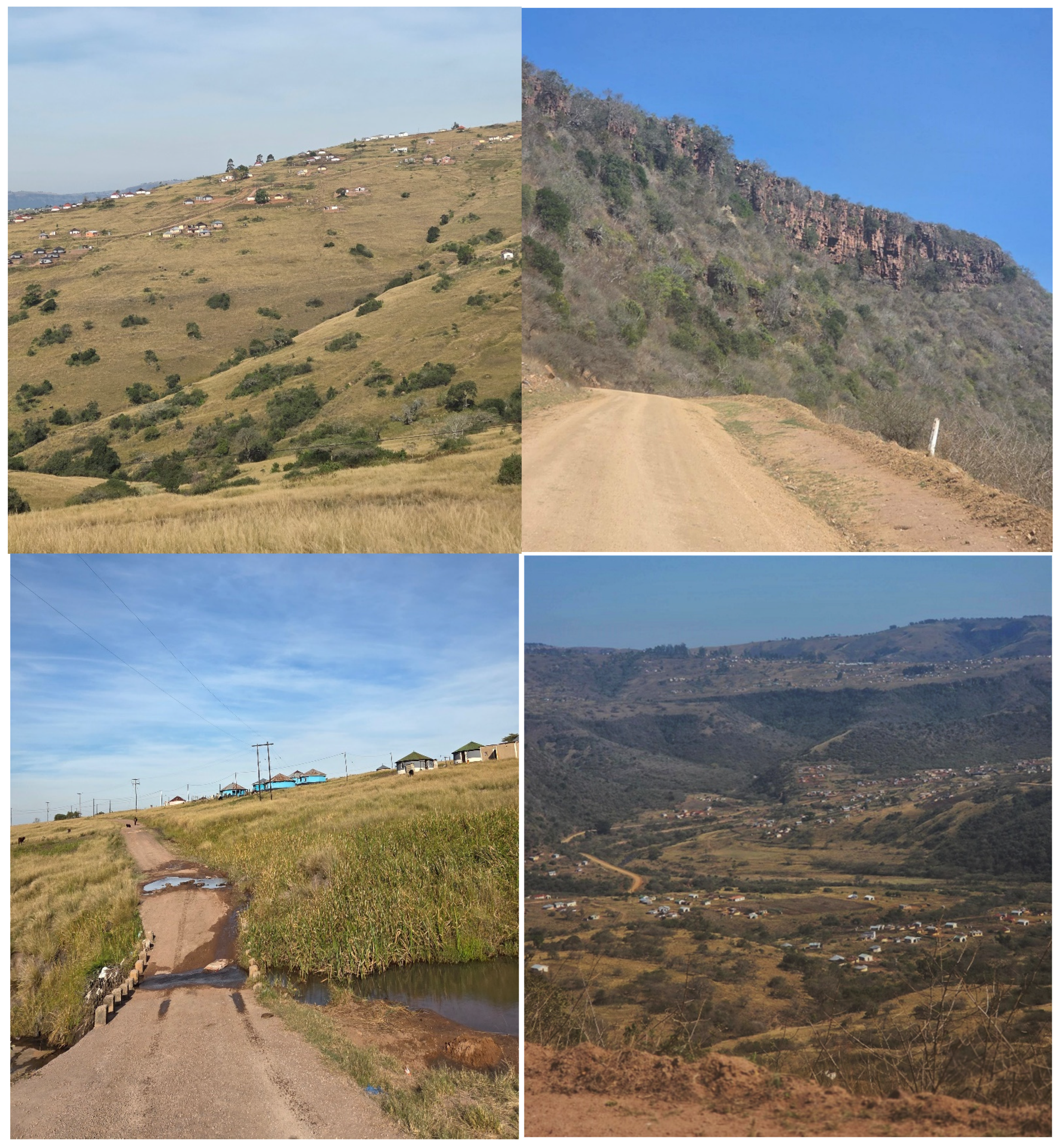
This study forms part of a larger research project on rural transport access in Mt Elias and its effects on access to essential services. The research was conducted in Mt Elias, a rural community located within the uMshwathi Local Municipality in the KwaZulu-Natal province of South Africa. Mt Elias is not recognised as a discrete statistical unit in the national census or administrative datasets. As a result, disaggregated demographic, socioeconomic, crime, and health facility data specific to Mt Elias are not available from Statistics South Africa or provincial health databases. This area has a challenging terrain that impacts the daily travel experiences of learners. Many households are scattered throughout the landscape, particularly in the valley, where accessibility to schools can be hindered by long distances and uneven surfaces. The valley’s steep inclines and poorly maintained paths pose safety risks, further complicated by the intermittent availability of informal transport options. Households in these remote areas frequently rely on informal travel methods, which expose them to various hazards, including environmental and social risks. To illustrate the spatial distribution of households in this community,
Figure 1 shows steep terrain, gravel roads, and dispersed rural homesteads that are common in the study area and contribute to limited transport access to healthcare services.
3.1. Research Philosophy and Paradigm
This study adopts an interpretivist phenomenological approach to explore how community members in Mt Elias experience transport barriers to healthcare access. Interpretivism emphasizes understanding social phenomena from the perspectives of those who experience them, recognizing that meaning is constructed through lived experiences and social interactions (
Merriam and Tisdell 2017). Phenomenology, as a methodological orientation, describes and interprets the essence of experiences as they are lived by individuals (
Creswell and Poth 2019). This paradigm is particularly appropriate for this research, as it prioritizes community voices and situates transport challenges within the context of participants’ daily realities, enabling a nuanced understanding of how structural barriers intersect with individual circumstances to influence healthcare access.
3.2. Research Design
Rural communities are characterized by low population density. Quantitative or mixed-method research was considered unsuitable. Mt Elias is a sparsely populated rural area. A small number of residents with varying literacy levels created practical barriers to administering standardized questionnaires. This presented challenges for written surveys, increasing the risk of incomplete or inaccurate responses. For these reasons, a qualitative, exploratory research design was employed to investigate the research objectives. This approach allows for an in-depth exploration of complex, context-dependent phenomena and is appropriate for research questions that require detailed, rich data from community members (
Patton 2015). The exploratory nature of the design helps identify emergent themes and unexpected findings that might not be apparent through predetermined frameworks. Semi-structured interviews were selected as the main data collection method, enabling flexibility in questioning while maintaining consistency throughout the research process.
3.3. Sampling and Participants
The study comprised 52 participants residing in Mt Elias. Their age range was from 21 to 65 years. Women made up a higher proportion of participants, reflecting their main role as caregivers and primary users of healthcare services in the community. Most women were the heads of households. Male participants were fewer and mainly household heads or adult dependents. The highest number of participants had completed high school, while a few reported having tertiary qualifications. Unemployment was widespread among the participants, and they relied on government social grants to support their households. These included child support grants, old-age pensions, and disability grants. A few participants reported part-time or informal employment, such as farm work, road maintenance, domestic work, or small-scale self-employment. Stable full-time employment is limited.
A purposive sampling strategy was employed to recruit participants from Mt Elias, uMshwathi Municipality. Purposive sampling allows researchers to select participants who possess specific knowledge or experience relevant to the research objectives (
Merriam and Tisdell 2017). The inclusion criteria were (1) aged 18–65 years and (2) permanent residents of Mt Elias for at least one year. The exclusion criteria included individuals with severe cognitive impairment or acute medical conditions that would prevent meaningful participation. The participants’ profiles included household heads, caregivers, children’s guardians, elderly people, and individuals with chronic conditions, ensuring diverse perspectives on transport and healthcare access within the community.
3.4. Data Collection
The researchers conducted semi-structured face-to-face interviews between May and August at venues convenient to participants, including their homes. An interview protocol guided discussions with open-ended questions exploring participants’ experiences accessing healthcare, transport challenges, costs, time burdens, and coping strategies. Interviews ranged from 30 to 60 min and were audio-recorded with participant consent and transcribed verbatim. Field notes documented non-verbal communication and contextual observations. Interviews were conducted in English or isiZulu, with translations facilitated by trained interpreters where necessary.
3.5. Data Analysis
Data were analyzed using thematic analysis informed by
Braun and Clarke’s (
2022) six-phase model and facilitated through ATLAS.ti software (Version 25). Thematic analysis is suitable for interpretive, phenomenological research that examines how people construct meaning through narrative. It is also methodologically flexible and capable of handling the complexity of relationships, while still ensuring rigour and transparency in analytic decisions. Initial coding involved systematic line-by-line examination of interview transcripts to identify meaningful units and preliminary concepts. Open coding generated descriptive codes reflecting participants’ language and experiences. Codes were subsequently organized into families and hierarchically within ATLAS.ti, where semantic relationships were mapped and interrogated. Through iterative refinement, coded segments were clustered into candidate themes representing patterns across the data. These were reviewed against original transcripts to ensure coherence and representation. Data were validated through memo writing and analytic triangulation, comparing emergent findings against existing literature on rural transport and healthcare access.
3.6. Trustworthiness
Credibility was enhanced through prolonged engagement with participants, member checking where preliminary findings were discussed with selected participants, and peer debriefing with research supervisors. Dependability was established through transparent documentation of methodological decisions and audit trails within ATLAS.ti, enabling external review of analytical processes (
Guba 1981). Confirmability was ensured through reflexive practice, where researchers acknowledged potential biases and positionality. Transferability was supported through a rich, contextual description of Mt Elias and participant demographics, enabling readers to assess applicability to other rural contexts. Positionality was an important component of trustworthiness. The researchers did not have direct community ties to Mt Elias. After each interview, reflections were documented to ensure that participants’ perspectives guided the analysis.
3.7. Ethical Considerations
Ethical approval was obtained from the Department of Transport and Supply Chain Management Research Ethics Committee before data collection. Informed written consent was obtained from all participants. Participants were assured of their rights to withdraw without penalty. Confidentiality was upheld by anonymizing transcripts and securely storing audio files and data on encrypted, password-protected devices. Participants were assigned pseudonyms in all reporting. No identifiable information linking participants to their responses was retained beyond the analysis phase. Given the sensitive nature of health experiences and socioeconomic vulnerabilities, particular care was taken to ensure interviews were conducted with cultural sensitivity and that participants experienced no harm or distress.
4. Findings
This study focused on understanding how transportation barriers affect healthcare access for rural residents in Mt. Elias, uMshwathi Municipality. Through interviews, four key themes emerged that highlight the significant challenges faced by the community in accessing healthcare: (1) Financial Constraints, (2) Infrastructure and services gaps, (3) Physical Accessibility, and (4) Safety Concerns. These themes highlight how structural, financial, physical, and safety-related obstacles severely limit healthcare access for rural communities.
In this study, the terms “van” and “bakkie” are used interchangeably. Both refer to small, light-duty vehicles commonly used in rural areas for deliveries, informal passenger transport, or mixed-use travel. Although not officially part of the public transport system, these vehicles are frequently used by rural residents to reach healthcare facilities due to the lack of formal transport options.
4.1. Theme 1: Financial Constraints
The study found that most households rely on social grants such as disability grants, child support grants and older persons’ grants while some depend on their pension funds. In Mt Elias, there is a high unemployment rate and the active population in the economy ends up depending on their elderly parents or children who are receiving government grants. Participants consistently reported that they rely on private transport to access clinics and hospitals. This dependency mainly exists because clinics are not within the community. During emergencies, ambulances are often unavailable, slow, or unreliable, which forces the community to hire private transport. The cost of hiring transport, ranging from R300 to R700 depending on the distance, was described as burdensome, especially for families without a stable income.
“We are forced to hire a car for R500 to the hospital,” said Participant 11.
These costs are often paid using elderly grants, diverting social support meant for subsistence.
“We take it from her grant money,” admitted Participant 3.
Some community members are of the opinion that public transport lacks dignity, especially for the elderly or ill. They are forced to pay more for private transport for their elderly parents.
“They argue that since she gets an older person’s grant, we need to do better with her money,” Participant 3 added that “Sometimes the cars are unavailable. Sometimes they raise the price due to high demand,” shared the same respondent.
The unpredictability of availability and fluctuating costs, especially during emergencies, adds emotional and financial stress.
The financial constraints that the community faces highlight how poverty and limited transportation options exacerbate health inequalities. Households are forced into unsustainable spending to secure basic healthcare access, undermining their financial stability. The reliance on grants used for transport suggests systemic failure: social welfare is being used to compensate for the absence of functioning public services. Financial constraint is not merely about costs but survival choices, dignity, and the reallocation of scarce household resources.
4.2. Theme 2: Infrastructure and Service Gaps
The community consistently reported that transport infrastructure and healthcare were a failure. Healthcare services, such as ambulances, were reported to be delayed or absent.
“Sometimes you call in the morning and they come in the afternoon,” said Participant 20.
“It takes five hours or more,” confirmed Participant 19.
Many rely on mobile clinics, which are inconsistent, poorly distributed, or stationed at central points, such as schools. However, centralising mobile clinics can result in unequal access to healthcare services, especially for those with mobility disabilities, the elderly and the sick. Community members may have to walk long distances to access a mobile clinic.
“The mobile clinic comes once a month, sometimes, and it’s too far. I take two taxis to get to the clinic in eFaye,” Participant 20 explained.
Poor roads compound these challenges. When it rains, gravel roads become muddy, making it difficult for transport operators. As a result, drivers demand higher fares or simply decline to offer services.
“Taxi drivers complain that the gravel road destroys their taxis,” said Participant 41.
“The government takes years to grade the road,” echoed Participant 36.
Even basic devices, such as a wheelchair, that assist mobility are absent or inadequate.
“The wheelchair is not made for the road,” noted Participant 1.
Many communities simply lack clinics altogether:
“We don’t have a nearby clinic,” said Participant 29.
The lack of government investment in rural infrastructure and healthcare services has created a spatial inequality where rural communities remain locked out of the systems that urban residents access more freely. The infrastructure and service gaps are indicators of systemic neglect. Poor roads, absent clinics, and unreliable ambulances all send the same message to rural communities: you are on your own. This reality makes healthcare access not just inconvenient but often impossible, reinforcing patterns of rural exclusion and inequality. Participants mentioned mobile clinics; however, the findings broadly explore healthcare access. Mobile clinics are included in the study to illustrate how transport barriers limit access to this service delivery model. The focus of the findings remains transportation as a determinant of healthcare access in Mt Elias.
4.3. Theme 3: Physical Accessibility
For most participants, to reach healthcare facilities requires hours of walking, often having to negotiate steep pathways, muddy river crossings or flooded terrain. Most participants reported walking between 1 and 3 h each way. This situation is made worse by a lack of accessible transport for the elderly, those with a disability or with chronic conditions.
“I walk for 2 h and 30 min to the clinic,” said Participant 12.
“My mother cannot use a taxi. She lost one leg”, explained Participant 32.
“We borrow a wheelchair from someone in the community,” the same Participant added.
After heavy rainfalls, rivers flood and roads become impassable.
“We use a wheelbarrow during emergencies to reach the main road,” said Participant 13.
When public vans are available, they operate only once daily, often at 8 a.m. If a resident misses this, there are no other options.
“If you miss the 8 a.m. van, there’s no other option to go back to the clinic,” shared Participant 35.
Barriers related to physical accessibility expose how deeply geographical conditions, infrastructure, and physical health interact to undermine healthcare access. In Mt Elias, distance is not just a measure of kilometres but lived barriers shaped by rain, terrain, age, and disabilities. The routine act of going to the clinic becomes a test of endurance and resilience. When residents must rely on borrowed wheelchairs, wheelbarrows, or have to walk, it signals a breakdown in the very systems meant to protect the most vulnerable.
4.4. Theme 4: Safety Concerns
The community expressed fear and anxiety about personal safety when accessing healthcare. Many must travel through isolated, forested, or bushy areas, often on foot. Robbery, animal attacks, and even reports of violence were common.
“We pass through forests, cross rivers, and there are robbers,” said Participant 21.
“Dead bodies have been found in the bush,” warned Participant 41.
“There are no houses on the way to the clinic; the route is too bushy. The clinic is far from people,” echoed Participant 50.
Women were particularly vulnerable. Participant 25 noted: “My aunt was attacked. They took her phone. Public transport is often unsafe too. Vans are overcrowded, in poor condition, and sometimes operated by reckless drivers”.
“The overload is dangerous. Some vans carry people, goats, cement, and groceries together,” said Participant 35.
“We are squashed in the vans… the vans are not in good condition,” shared Participant 41.
Safety is a critical but often overlooked aspect of healthcare access. In Mt Elias, unsafe routes and unreliable vehicles create a climate of fear that deters clinic visits, especially among women, children, and the elderly. This risk is not only physical but psychological, adding trauma to an already difficult process. The findings highlight how the lack of infrastructure is not impartial; it produces danger, erodes trust, and compounds health risks. When considering healthcare access, it is not just the distance, but the safety and dignity of the journey. Vans are commonly used in Mt Elias to transport passengers, but it is a problematic mode, associated with high safety risks, discomfort, and overcrowding. Vans frequently carry too many passengers or goods at once. Their use reflects how scarce basic transport is and how the community has adapted to the limited transport options.
4.5. Summary of Themes and Key Codes
Table 1 presents the number of mentions for each major theme across all interviews. Frequencies represent the number of coded quotations and do not imply statistical prevalence.
5. Discussion
This study explored how transport affects community members’ access to healthcare services in Mt Elias, uMshwathi Municipality. To achieve this, the two objectives were (1) to assess the current state of healthcare access in Mt Elias, and (2) to explore how transport challenges impacted the community’s ability to access timely and adequate healthcare. The findings are presented and discussed in alignment with these objectives. The SDH framework emphasizes that social, economic, and environmental conditions significantly impact healthcare results and access to healthcare. Transport is a crucial yet often neglected factor that affects not only an individual’s ability to reach healthcare facilities but also the timeliness, frequency, and quality of the care they receive.
5.1. The Current State of Healthcare Access in Mt Elias
The findings demonstrate that accessing healthcare in Mt Elias is hampered by distance to facilities, limited healthcare infrastructure, and economic hardship. Clinics and hospitals are located far from the community, with no permanent healthcare facilities within immediate reach. Ambulance services are unreliable and mobile clinics are infrequent, often arriving only once a month and stationed at central locations which are inaccessible to people with reduced mobility. These findings align with national assessments showing persistent rural–urban disparities in healthcare access across South Africa, despite constitutional guarantees of universal healthcare (
McLaren et al. 2014;
Ngene et al. 2023). In Mt. Elias, even when mobile clinics are available, their infrequent visits and fixed locations prevent access for individuals who are frail, disabled, or living in widely scattered homesteads. As individuals age, their mobility becomes increasingly limited, while their reliance on and frequency of visits to healthcare facilities increase (
Porter et al. 2018). This dynamic has significant implications for the accessibility and effectiveness of fixed-point service delivery.
The reliance on private transport with costs ranging from R300 to R700 per trip highlights the economic burden of seeking care. For most households, depending on social grants, this expenditure diverts resources from basic needs (
Willie and Maqbool 2023). This extends to SDH applications, showing how transport affects socioeconomic vulnerability, resulting in daily challenges. The reliance on social grants to hire transport illustrates how poverty directly delays medical care, a pattern documented in other rural contexts (
Naidoo and Ennion 2019). Similar patterns have been observed in other rural South African communities, where transport costs are one of the major barriers to accessing care (
Chinyakata et al. 2021;
Fobosi 2023). This is consistent with
Naidoo and Ennion’s (
2019) study, which found that people with a disability in rural communities frequently fail to access rehabilitation services because it is prohibitive to hire private transport. In this way, financial limitations together with geographical isolation, create several exclusionary factors.
The absence of functional public transport, coupled with gravel roads, further undermines service accessibility. Poorly maintained gravel roads become impassable during heavy rains, making even emergency care unreachable. The lack of infrastructure has been widely documented as a major reason for inequalities in rural health in Africa (
Sewell et al. 2019;
Pillay 2023). Healthcare in Mt Elias remains technically available but practically inaccessible in daily life. Interpreted through the SDH framework, these findings reaffirm that healthcare access is determined not merely by the presence of facilities but by the social and structural conditions. Transport availability, road conditions, household income, disability status and physical terrain are causes that affect healthcare access (
Chinyakata et al. 2021). Even though there are practical ways to bridge rural health gaps, such as mobile clinics, the findings demonstrate that these clinics at fixed central points and infrequent visits leave some households without service.
5.2. How Do Transport Challenges Impact the Community’s Ability to Access Timely and Adequate Healthcare?
Transport difficulties have a direct and profound impact on the timeliness and adequacy of healthcare access in Mt Elias. Participants described walking for up to three hours there and back to reach healthcare services, facing difficult terrain, unpredictable weather, and personal safety risks. This finding mirrors the challenges in sub-Saharan Africa regarding rural healthcare access, where long walks to transport routes or services pose significant obstacles, particularly for older individuals, those with disabilities, and during rainy weather along difficult terrain (
Porter et al. 2018). The physical burden delays routine healthcare visits and deters individuals from seeking healthcare until their condition becomes severe. These are consistent with findings from other rural areas. For example,
McLaren et al. (
2014) observed that greater distances to healthcare facilities are strongly associated with delayed or missed treatment, particularly for chronic illnesses. Similarly, it was found that travel problems significantly affect children’s timely hospital admissions in rural areas (
Richards et al. 2024). Transport barriers to healthcare access are more severe for people with disabilities and low-income households (
Myers and Standley 2024;
Gulati et al. 2025). These barriers can lead to poorer health conditions among vulnerable groups.
In emergencies, the absence of reliable ambulance services and affordable transport options severely compromises one’s health. Participants reported waiting several hours for ambulances or resorting to expensive private cars. This situation is similar in the Eastern Cape, with limited availability of ambulances in rural areas (
Willie and Maqbool 2023). These delays are not just inconvenient but life-threatening, particularly for patients with acute conditions, pregnant women, and the elderly. Comparable findings in rural KwaZulu-Natal and Limpopo show how inadequate transport systems lead to higher maternal and child mortality rates and delayed emergency responses (
Buthelezi et al. 2024;
Nkosi 2024). Unpredictable and unsafe transport makes the problem worse. Overcrowded vans, poor vehicle conditions, and unsafe walking routes discourage seeking timely care, especially among women, children, and people with disabilities.
Ndibatya and Booysen (
2020) highlight that safety concerns reduce attendance at healthcare facilities in rural communities, causing the vulnerable to be excluded. Transportation systems should not only be functional but also support users with a sense of security, self-worth, and autonomy.
5.3. Implications and Recommendations
The evidence from this study highlights the urgent need to address transportation as a fundamental aspect of rural health policy, which involves improving and maintaining rural roads, enhancing physical accessibility, subsidizing transportation costs for rural households to reduce financial barriers and expanding and decentralizing mobile clinic services to reach remote communities. Additionally, it is essential to integrate transport and healthcare planning at the municipal level and strengthen emergency response systems to ensure timely ambulance services. Implementing these interventions would not only improve access to healthcare but also align with national goals of universal health coverage and global health equity initiatives.
5.4. Limitations
The study did not include perspectives from healthcare providers, transport operators, or local government officials. Including these groups could have provided a more comprehensive understanding of systemic barriers and potential policy solutions. This research was conducted in a single rural community, Mt Elias, in uMshwathi Municipality. While this allowed for in-depth exploration of local experiences, it limits the generalizability of the findings to other rural areas. Healthcare access and transport conditions may vary across regions due to differences in infrastructure, geographical terrain, and local governance.
6. Conclusions
Without reliable, affordable, and safe transport, health services remain inaccessible to those who need them most. To improve healthcare access in rural areas, practical interventions and partnerships are required, especially between community health worker programs, telehealth, transport providers and local organizations. Telehealth bridges geographic and transport barriers, which improves healthcare access in rural areas. Integrating transport providers in rural areas with the healthcare system can enhance service reliability and patient access to healthcare. The findings reveal a gap in policy implementation. For instance, national frameworks such as the Rural Transport Strategy and mobile clinic programs have not effectively translated into accessible healthcare for rural communities. These initiatives often prioritize the provision of healthcare facilities without incorporating transport planning, leading to fragmented and ineffective service delivery. Bridging this gap requires a comprehensive approach that connects health services, transport infrastructure, and community needs. Mt. Elias exemplifies how the absence of such integration continues to perpetuate rural marginalization and health inequities. If transport challenges are effectively addressed, they can serve as a powerful tool for improving health outcomes and promoting social justice in rural areas. Future research could focus on how gender and community dynamics interact with rurality to shape health outcomes. Future research could also develop and validate rurality indices that integrate geographic and social complexity for SDH research.
This study supports the UN Sustainable Development Goals, especially SDG 3 (ensuring healthy lives and well-being for all). By addressing a critical barrier to healthcare access in rural South Africa, the study emphasises how inadequate transportation systems prevent access to clinics and mobile services. By capturing the lived experiences of the community of Mt Elias, the study highlights policy misalignment, especially the inadequate services of current mobile clinics and the lack of integrated rural transportation planning.