Systematic Review

Exploring the Role of Conformity in Decision-Making and Emotional Regulation: A Systematic Review


Department of Psychology, Università degli Studi della Campania “Luigi Vanvitelli”, 81100 Caserta, Italy
*
Author to whom correspondence should be addressed.
Soc. Sci. 2026, 15(1), 14; https://doi.org/10.3390/socsci15010014 (registering DOI)
Submission received: 20 August 2025 / Revised: 26 October 2025 / Accepted: 18 December 2025 / Published: 26 December 2025

Abstract

Conformity is defined as the inclination to align one’s thoughts and behaviors with those of a group, driven by the desire for social acceptance and accuracy. While this alignment can enhance group cohesion and facilitate effective communication, it may also lead individuals to adopt false beliefs or engage in risky choices. This systematic review explores the interconnected dynamics of conformity, emotional regulation, and decision-making, shedding light on their transformative impacts on individual behavior within various contexts. A search was conducted in four databases, namely Scopus, Web of Science, IEEE, and PubMed, focusing on research related to social conformity, emotion regulation, and decision-making from 2014 to October 2024. After several screening stages, 38 studies that met the inclusion criteria were selected as the subject of the present review. The findings examined in this review explore the interplay between emotions and conformity in shaping social dynamics and decision-making processes. Additionally, the review addresses how contextual factors, social group dynamics, and individual differences affect conformity behaviors. Importantly, the review identifies a critical gap in the literature regarding how emotional regulation strategies might moderate the influence of conformity, particularly in emotionally charged or socially complex situations. Addressing this gap presents a promising avenue for future research, with implications for developing interventions aimed at fostering healthier decision-making and emotional resilience within group environments.

1. Introduction

Conformity is the tendency of individuals to align their behaviors, attitudes, and beliefs with those of a group. This phenomenon has long fascinated psychologists due to its interplay with decision-making and emotional regulation processes. Decision-making is the process through which individuals assess multiple alternatives in order to select the most optimal course of action. This process is influenced by both personal and social factors. On one hand, the capacity for emotion regulation can significantly modulate decision-making performance, influencing both the efficiency and quality of decisions. Additionally, the social context in which decisions are required and made can also exert a substantial influence: the presence of social norms and the propensity to conform to group expectations can not only guide the choices toward collective standards but also indirectly shape decisions by affecting underlying emotion regulation processes (Bergquist and Ekelund 2025). Researchers have explored conformity extensively, uncovering both positive and negative effects on individual and group dynamics (Kim and Hommel 2015). At the core, conformity often leads individuals to align with the opinions and choices of their peers in order to gain social approval and maintain a positive self-concept (Klucharev et al. 2009). While this behavior can facilitate communication and strengthen group cohesion, it can also lead to the acceptance of false information or encourage risky behaviors (von Weichs et al. 2021).
To align with group norms, individuals frequently tend to also adjust their emotional expressions in order to cultivate a sense of belonging and acceptance (Goldenberg et al. 2014). This alignment can involve either suppressing or exaggerating emotional responses to meet group expectations, highlighting the strong influence of conformity on emotional regulation strategies. Research supports this connection by showing that a strong desire for social acceptance drives individuals to adopt the behaviors and preferences of their peers (Stallen and Sanfey 2015). Reinforcement learning (i.e., to take actions in a changing environment to maximize long-term rewards) offers a useful framework for understanding these dynamics, as social norms can selectively reward particular behaviors and attitudes, thus reinforcing conformity over time (Klucharev et al. 2009).
Research indicates that conformity and emotional regulation, together, significantly shape how decisions are made, as individuals’ emotional responses often affect their sensitivity to group influence (Mackie and Smith 2018). Gross (2015) highlights that emotional regulation—strategies used to manage and respond to emotional experiences—can either lessen or intensify the effects of conformity on decision-making.
Emotions play a crucial role in shaping social dynamics by enhancing communication, strengthening relationships, and promoting wellbeing within individuals, groups, and even between different groups (Zollman 2008). Emotional influence operates through both affective and inferential processes: for instance, individuals may experience emotional contagion or draw inferences about others’ motives and intentions based on their emotional expressions. Such processes, including mutual liking and emotional alignment, create a shared emotional state that fosters conformity and enhances social cohesion (Steinel et al. 2010). Emotions are a consistent and often predictable influence that can affect decision-making positively or negatively, depending on the situation (Blanchette and Richards 2009). The common patterns have been identified across various domains, indicating that emotions significantly impact judgments and choices (Cummins and Cummins 2012).
It is crucial to note that the interplay between conformity, decision-making and emotional regulation varies across different contexts and individuals. Factors such as group status—whether people perceive a group as in-group or outgroup—as well as individual personality traits and selfregulatory abilities can significantly influence the extent to which individuals conform (Ng et al. 2016). This variability highlights the complex nature of conformity, suggesting that its effects fluctuate depending on both social and personal factors (Ng et al. 2016; Brosch and Steg 2021).

1.1. Research Gap and Rationale

While research has explored conformity, emotional regulation (ER), and decision-making (DM) individually or, at most, in dyadic combinations, there is limited focus on their dynamic interactions. Understanding how these processes work together could provide a comprehensive perspective on how people adapt their thoughts and actions in response to social influence. Current frameworks tend to view ER as a minor emotional factor and DM as a purely cognitive outcome, overlooking how conformity mediates these relationships.

1.2. The Literature Lacks

  • A unified model integrating ER, conformity, and DM.
  • Clarity on ER’s dual role as an antecedent trait influencing conformity and a situational mediator in decision-making.
  • Attention to moderators, such as individual differences and cultural contexts, that shape these pathways.

Objectives

This systematic review aims to:
(a)
synthesize empirical evidence regarding the interaction between emotional regulation (ER), conformity, and decision-making (DM);
(b)
propose a conceptual model that captures their mediated and moderated relationships; and
(c)
evaluate methodological approaches to enhance theoretical precision and empirical coherence in this field.
Although considerable research has been conducted on the individual effects of conformity on decision-making, on one side, and on emotional regulation, on the other, a critical gap remains in understanding the interdependent dynamics of these factors. Therefore, by synthesizing these aspects more comprehensively, this systematic review aspires to deepen our understanding of how conformity, emotional regulation, and decision-making interact, offering valuable insights for future research and practical interventions in social and emotional domains. The remainder of this paper is structured as follows: Section 2 details the theoretical framework and conceptual model; Section 3 outlines the systematic review methodology; Section 4 presents the synthesis of findings.

2. Theoretical Framework

2.1. Conceptual Foundations and Definitions

To improve clarity and ensure coherence among the key constructs, the variables of Conformity, Emotional Regulation (ER), and Decision-Making (DM) are summarized in Table 1. This table consolidates theoretical distinctions, functional roles, and common empirical operationalizations identified in the reviewed literature.

2.2. The Dual Role of Emotional Regulation

In this framework, Emotional Regulation (ER) functions as both an antecedent tendency that influences initial susceptibility to social influence and as a situational process utilized during decisions made in the context of conformity. Antecedent regulatory tendencies, such as habitual reappraisal or suppression, create a baseline that can either buffer against or increase vulnerability to conformity pressure. This is consistent with broader ER theory, which emphasizes the timing and context of regulatory strategies (Gross 2015). There is also evidence that strengthening self-regulatory routines can decrease conformity (von Weichs et al. 2021), and research has shown age-related improvements in desire regulation in response to social exposure (Castrellon et al. 2023).
During the decision-making process, situational emotional regulation mediates how social pressure impacts decision quality. For instance, feelings of gratitude or awe can enhance private alignment with personal values (Ng et al. 2016; Prade and Saroglou 2023), while social instructions can alter both affective and neural responses (Koban et al. 2017). Additionally, collective emotions can either amplify or inhibit alignment through emotional transfer and burden (Goldenberg et al. 2014). Neurosyntheses have further indicated that conformity triggers conflict-monitoring and regulation circuits in the brain (Wu et al. 2016).
Finally, the outcomes of decisions feed back into emotional regulation through cycles of learning and appraisal (Hytönen 2014; Lindström et al. 2017), completing a dynamic loop that reinforces ER’s dual role as both an antecedent tendency and a mediating process in this model.

2.3. The Proposed Model: An Integrated Framework

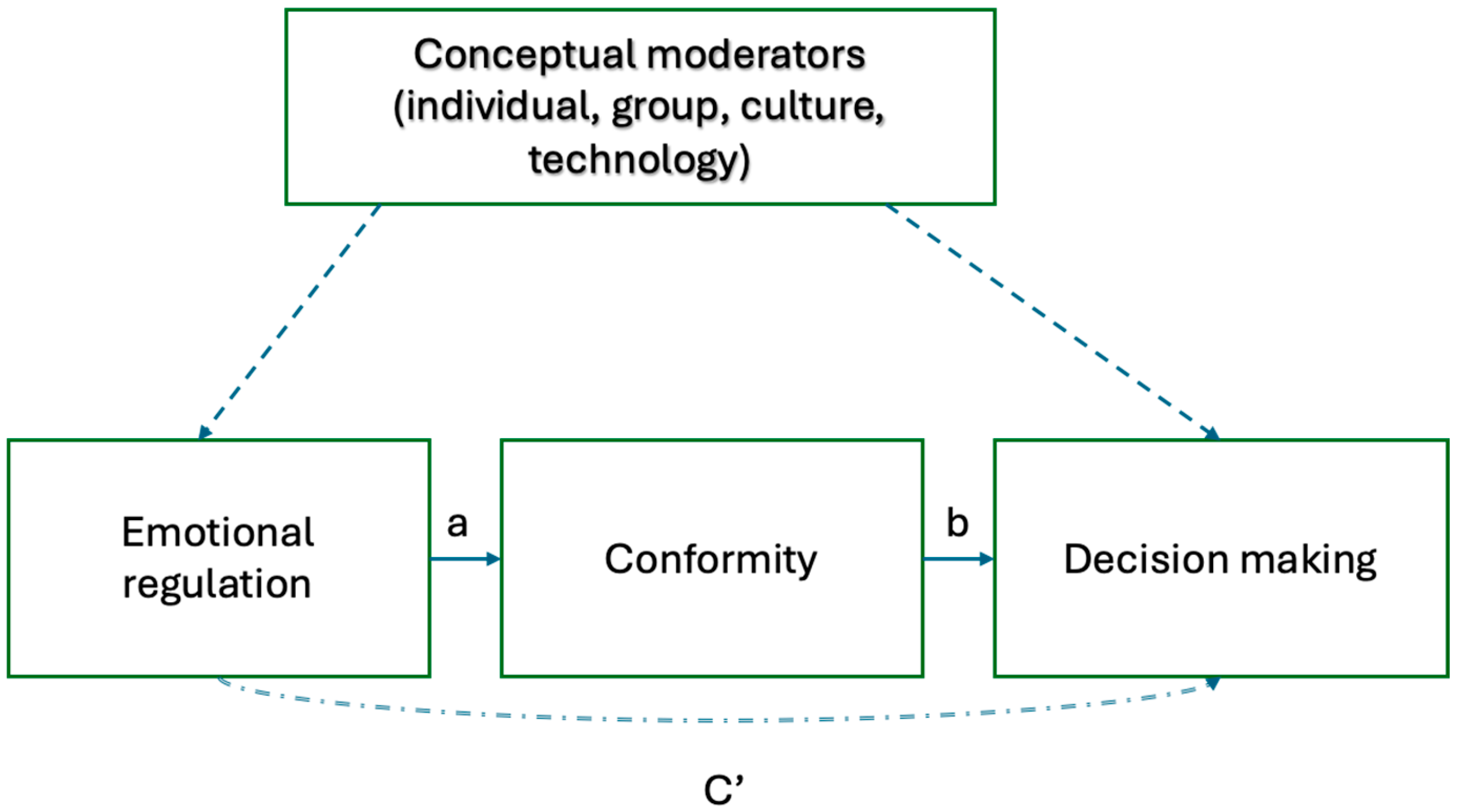
Building on these conceptual refinements, the integrated framework (see Figure 1) proposes a moderated mediation model that connects Emotional Regulation (ER), Conformity, and Decision-Making (DM) through both inherent tendencies and situational processes. ER impacts conformity both before and during social decision-making contexts, influencing how individuals respond to group pressure and how those responses ultimately affect their final decisions.
Importantly, contextual moderators—such as group size, task complexity, cultural tightness, and digital interaction settings—are hypothesized to change the strength of these relationships. This framework adheres to established mediation–moderation conventions (Hayes 2013) and positions moderators as boundary conditions that clarify when and how the relationships among ER, Conformity, and DM are most pronounced.

2.4. Propositions Derived from the Model

Building on a synthesis of previous empirical findings and theoretical insights, the following propositions formalize the hypothesized pathways of the integrated model:
P1 (Mediation): Conformity mediates the effect of Emotional Regulation (ER) on Decision-Making (DM), represented as follows: ER → C → DM.
P2 (ER Directionality): Adaptive ER strategies, such as reappraisal, reduce conformity pressure, while maladaptive strategies, like suppression, increase it.
P3 (C → DM Effect): Higher levels of conformity raise the likelihood of making group-consistent decisions, regardless of the accuracy of the outcomes.
P4 (Feedback Loop): The outcomes of DM influence ER; decisions that align with conformity lower the ER load, whereas nonconforming decisions increase it.
P5 (Individual Moderation): The relationship between ER and conformity (ER → C) is stronger among individuals who have high social sensitivity or limited task experience.
P6 (Group Moderation): Group cohesion and power concentration enhance conformity and strengthen the pathway from ER to conformity to decision-making (ER → C → DM).
P7 (Cultural Moderation): In collectivist or tightly normed contexts, conformity is intensified, thereby reinforcing the mediated relationship.
P8 (Technological Moderation): High-anonymity or AI-mediated environments increase conformity pressures and influence decision-making outcomes.

3. Methodology

3.1. Search Strategy and Study Selection

The present study strictly follows the established PRISMA (Preferred Reporting Items for Systematic reviews and MetaAnalyses) guidelines, a widely recognized framework for conducting systematic reviews and meta-analyses. PRISMA provides a structured and comprehensive approach to ensure transparency and rigor in the review process. By adhering to PRISMA guidelines, the present review was conducted maintaining a structured approach, ensuring that each step is transparent, well-documented, and replaceable.
To create an enhanced foundation of the study, an extensive electronic literature search spanning from 2014 to October 2024 was carried out. This ten-year time frame was chosen to delve into the most comprehensive and relevant publications in the field, avoiding the inclusion of outdated methods. To ensure a comprehensive exploration of the literature, four different prominent databases were considered for the research, namely Scopus, Web of Science, IEEE and PubMed. These databases were selected due to their vast coverage of academic and scholarly articles.
The key search string used on all the databases, respectively, to carry out the search was the following: (“Social Conformity” AND “Emotion regulation”) OR (“Social Conformity” AND “Decision-making”) OR (“Social Conformity” AND “Emotion regulation” AND “Decision-making”).

3.2. Eligibility Criteria

The literature concerning research on conformity, emotional regulation and decision-making includes numerous studies.
To make the present research more focused on the domain, exclusion and inclusion criteria were strategically set.
The Inclusion criteria were the following:
  • Studies investigating how emotions influence conformity behaviors and their subsequent impact on decision-making processes.
  • The literature search included the 2014 to 2024 timeframe to incorporate the most recent findings.
  • Studies reporting experimental and observational research, case studies, meta-analyses, and systematic reviews were considered.
  • Only articles published in English were included to ensure the study is broadly accessible.
  • Studies that include participants of all genders and cultural ethnicities to obtain better insights on the context.
  • Only articles fully accessible through institutional portals and open access were included for better accessibility.
On the other hand, the following categories of articles were excluded:
  • Articles that do not directly address the relationship between conformity, emotional regulation and decision-making.
  • Studies involving any physical health issues or mental health disorders.
  • Studies published before 2014 and after October 2024.
  • Articles that are not open-access sources or that cannot be obtained through institutional resources.

3.3. Study Selection

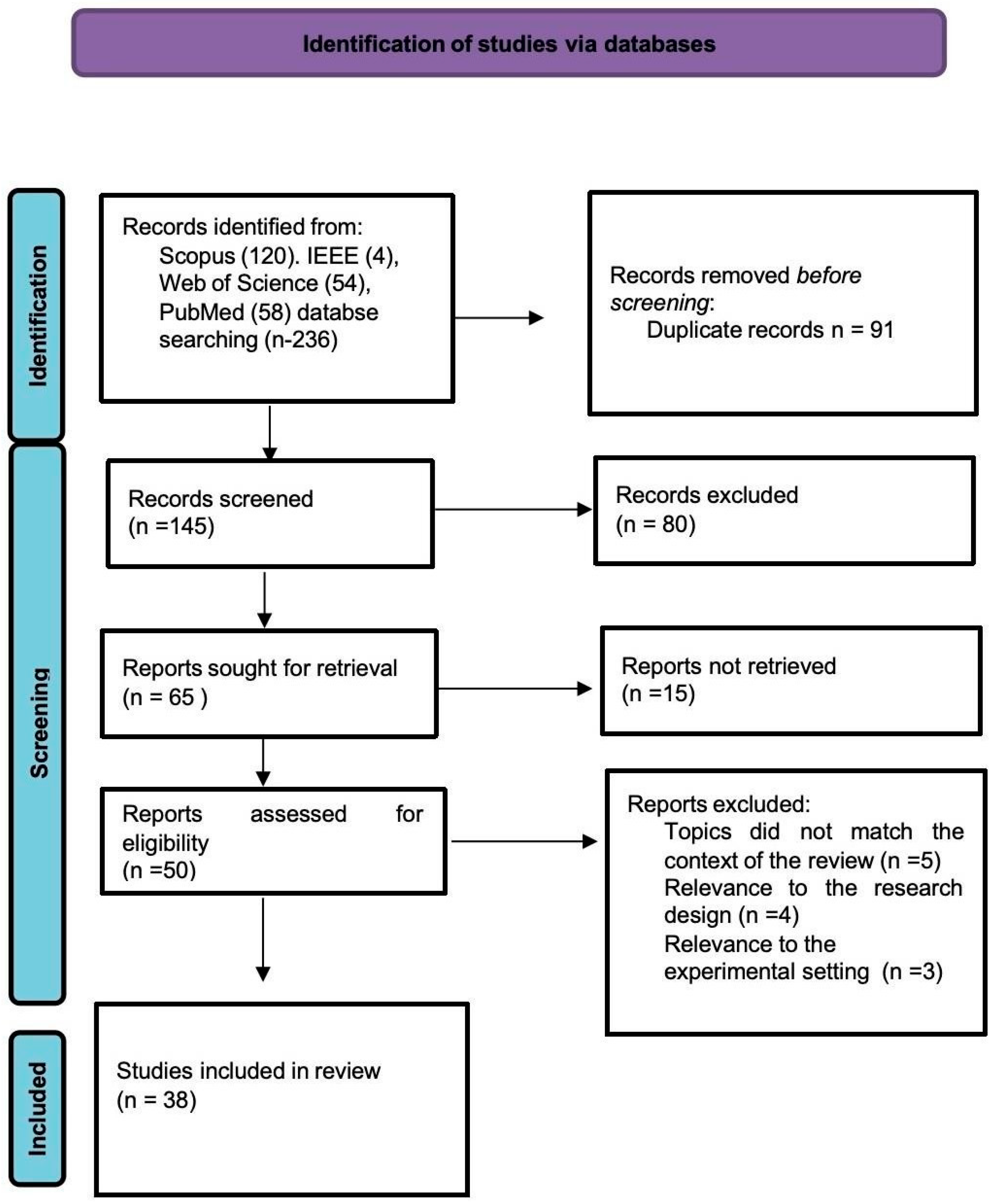
The initial phase of the electronic search yielded 236 records across all databases utilized. Following this, 155 duplicates were identified, and 91 were removed, leaving a total of 145 papers for the first screening. Of these 145 papers, 80 were excluded after reviewing the titles and abstracts for several reasons: the sample features did not meet the inclusion criteria, there was no engagement with the key topics, the primary classification of the key topics (i.e., conformity, emotional regulation, and decision-making) was absent. The remaining 65 papers were pursued for retrieval; however, 15 were removed due to the unavailability of full access. This resulted in 50 papers that underwent final screening, which involved skimming the full texts upon retrieval. In this last stage, 12 papers were discarded: 5 for lack of relevance to the topic, 4 due to research designs that did not align with the review’s theme, and 3 for their irrelevance to the experimental design. Finally, 38 papers were selected to provide key findings for the discussion in the systematic review, adhering to the established inclusion criteria.
Figure 2 shows the PRISMA flow chart illustrating the study selection process.

3.4. Measurement and Operationalisation Across Studies

In the 38 studies reviewed, conformity, emotional regulation (ER), and decision-making (DM) were measured using various behavioral, self-report, and neurophysiological methods. Conformity was most often assessed through group influence or consensus judgment paradigms, which recorded participants’ alignment with majority choices (e.g., Wu et al. 2016; Toelch and Dolan 2015; Kim and Hommel 2015). Emotional regulation was primarily evaluated using self-report tools, such as the Emotion Regulation Questionnaire and its adaptations (e.g., Prade and Saroglou (2023); Schöbel et al. (2016)). In several studies, experimental manipulations and neural indicators of regulatory control were also employed (e.g., Goldenberg et al. (2014)).
Decision-making outcomes were operationalized through both objective performance measures, such as choice accuracy and reaction time (e.g., van den Bos et al. 2014), as well as self-report indices of perceived risk, confidence, or bias (e.g., Lerner et al. 2014). The variation in these operationalizations is further discussed in Section 4, where we evaluate whether the proposed relationships remain consistent across different measurement approaches. This cross-method analysis enhances the generalizability of our proposed framework.

4. Results

4.1. Key Synthesis

The systematic review of the 38 studies revealed several interconnected empirical themes that collectively support the integrated conceptual model proposed in Section 2. Our analysis focused on identifying recurring patterns in the evidence, which fell into three main areas: (1) the direct effects of conformity on decision variables; (2) the specific mechanisms through which emotional regulatory processes mediate this relationship; and (3) the boundary conditions set by contextual moderators. The following discussion is structured around these key findings, illustrating how the complex, non-linear interactions observed in the literature reinforce the necessity of this framework.

4.2. Summary Table

This systematic synthesis consolidates evidence from 38 empirical and theoretical studies that examine the interrelations among Emotional Regulation (ER), Conformity (C), and Decision-Making (DM). The studies reviewed utilized a variety of methodologies, including behavioral experiments, computational modeling, and neuroimaging techniques, across different social and cultural contexts. Overall, the findings indicate that ER consistently affects individuals’ susceptibility to conformity pressures, which in turn impacts the quality of decision-making and group outcomes. The table below summarizes each study’s methodology, main findings, and their theoretical connection to the integrative ER–C–DM framework.
Table 2 presents a summary of 38 empirical and theoretical studies that explore Emotional Regulation (ER), Conformity (C), and Decision-Making (DM). This table highlights the methodological approaches, key findings, and theoretical significance of the reviewed studies, which collectively contribute to the integrative framework illustrated in Figure 1. Asterisks indicate statistical significance (* p < 0.05, ** p < 0.01, *** p < 0.001).

5. Discussion

The Discussion section interprets the key findings of this systematic review, integrating empirical evidence on conformity, emotion regulation, and decision-making within a cohesive theoretical framework. This section is organized thematically, following the primary relational components of the proposed model: (1) Emotion Regulation → Conformity, (2) Conformity → Decision-Making, (3) Decision-Making → Emotion Regulation/Conformity feedback loops, and (4) Contextual Moderators. Each subsection connects observed empirical trends to the corresponding propositions (P1–P8), effectively illustrating how these propositions were inductively derived from the reviewed studies.
The key findings have been divided into three parts, exploring, respectively, the interplay between: (1) Conformity and Decision-Making, (2) Conformity and Emotional Regulation and (3) Conformity, Decision-Making and Emotional Regulation.

5.1. Conformity and Decision-Making

Humans naturally tend to conform by aligning their behaviors, beliefs, and attitudes with those of others around them (Kim and Hommel 2015). This tendency arises from both conscious choices and automatic, implicit processes, driven by the need for social acceptance, personal coherence, and accurate information. Thus, conformity is not a static behavior; rather, it is a dynamic cognitive-emotional process that significantly influences how individuals make decisions in social contexts.
Empirical evidence indicates that social cues significantly influence perception and choice across multiple cognitive levels. Castrellon et al. (2023) found that observing others exhibit self-control can enhance one’s own self-regulation. Additionally, Duderstadt et al. (2024) and Germar et al. (2016) demonstrated that social influence can bias even early sensory processing, affecting how individuals interpret their environments.
Shamay-Tsoory et al. (2019) conceptualized social alignment as a feedback loop involving error monitoring, alignment, and reward, which reinforces conformity through intrinsic reward mechanisms. Similarly, Koriat et al. (2015) showed that perceived consensus boosts the fluency and confidence with which individuals express their opinions.
Together, these studies illustrate that conformity functions as a reward-based heuristic, simplifying decision-making by minimizing cognitive conflict and uncertainty. This rationale supports the theoretical connection between conformity, decision confidence, and reward-based learning discussed in Propositions 3 and 4.
Informational and normative motives differentiate the ways in which conformity influences decision-making processes. Toelch and Dolan (2015) demonstrated that individuals constantly balance their own judgments with socially shared information, choosing to conform when group cues appear reliable or beneficial. Their neurocomputational perspective clarifies that normative conformity, which is rooted in the desire for social acceptance, and informational conformity, which is driven by the pursuit of accuracy, engage distinct evaluative mechanisms. Together, these findings suggest that conformity serves as a cognitive tool that helps individuals minimize uncertainty and optimize social utility.
Lipari (2018) expanded on this view by showing that, in situations of uncertainty, people often prioritize belonging and self-consistency over accuracy. This convergence of findings supports Proposition 3, which posits that conformity alters the perceived value and confidence of decisions through social validation.
Additionally, individual and situational differences can moderate this process. Bazazi et al. (2019) reported that younger individuals are more susceptible to peer influence than adults, while Haddad et al. (2014) found that adolescents are particularly prone to risk-taking when peers are present. Wice and Davidai (2020) noted that people evaluate conformity differently based on perceived motives: conformity driven by altruistic intent is viewed as more legitimate than conformity driven by self-interest. These patterns reinforce Proposition 5, highlighting that personality, age, and motivational factors shape the intensity and direction of conformity effects.
At the group level, conformity fosters cohesion and enables quick consensus formation; however, it can also lead to groupthink when majority opinions are flawed. Stallen and Sanfey (2015) noted that conformity enhances social coordination, while Mistry and Liljeholm (2019) found that individuals often adhere to group decisions, even at the cost of personal gain. These findings highlight the delicate balance between the advantages of coordination and the drawbacks of reduced autonomy.
The composition of the group and the cultural context also play significant roles in these dynamics. Harada (2023) showed that smaller groups tend to encourage more creative divergence, whereas Capozzi et al. (2014) demonstrated that larger groups increase conformity pressure. Brown et al. (2022) found that in collaborative workshops, a perceived consensus can mask underlying disagreements, creating “illusions of agreement.” Alongside the work of Bazazi et al. (2019) and Harada (2021), these findings suggest that the outcomes of conformity depend on the social structure and task design, which aligns with the logic of Propositions 6 and 7. Similarly, Baldi (2014) illustrated how social conformity shapes endogenous preference formation in economic decision-making contexts, indicating that collective norms can influence even seemingly individual preferences.
At the societal level, conformity can lead to polarization. Tu and Fishbach (2015) observed that individuals are more likely to conform to others’ stated preferences than to their actual behaviors. Meanwhile, Brown et al. (2022), utilizing Social Sampling Theory, explained how homophily and averse reactions to social extremeness can exacerbate initial differences. Conversely, Faralla et al. (2019) demonstrated that trust and commitment can mitigate conformity pressures, as cooperative intentions encourage constructive disagreements. These dynamics underscore how social norms can either stabilize or destabilize collective decision-making, depending on the presence of emotional trust and perceived group cohesion.
Conformity extends beyond human interactions to include digital and artificial domains. Research by Hertz and Wiese (2018) found that individuals are likely to conform to groups of robots when they appear competent. Moreover, Vollmer et al. (2018) showed that children conform even more than adults in these situations. Weger et al. (2015) reported that immersive gaming increases conformity to the judgments made by computers, while Bocian et al. (2024) revealed that both human and AI avatars can influence moral evaluations in virtual reality. These findings align with Proposition 8, suggesting that digital environments enhance conformity by integrating social and technological sources of influence.
In summary, conformity is not simply a reaction to external pressure; it is a strategic adaptation that promotes social harmony, cognitive efficiency, and emotional comfort. It influences decision-making across individual, group, societal, and technological contexts through a complex interaction of social learning, emotion regulation, and contextual moderation.

5.2. Conformity and Emotional Regulation

Conformity is not just a social or cognitive phenomenon; it is also an emotionally regulated process. Mechanisms of emotional regulation (ER) play a significant role in determining when, how, and to what extent individuals align with group norms. Conformity can arise not only from explicit social pressure but also from internalized emotional states that steer people toward social harmony, a sense of belonging, and emotional equilibrium (Stallen and Sanfey 2015). This interaction emphasizes that emotions are not secondary to conformity; rather, they often drive it.
Private conformity involves the internalization of social norms without external enforcement. Prade and Saroglou (2023) describe it as implicit alignment driven by emotional processes. Ng et al. (2016) show that gratitude enhances conformity tendencies more than joy or neutral states, even without public exposure or social pressure. Gratitude helps stabilize social alignment by promoting prosocial behavior and strengthening relationships. These findings support Proposition 1, indicating that positive emotion regulation strategies facilitate social integration and reduce emotional dissonance.
Koban et al. (2017) show that emotional regulation in social contexts influences both subjective experiences and physiological responses. Cues like reassurance and empathy can change emotional perceptions and reactions to pain and stress. This indicates that conformity involves emotional contagion and cognitive control, aligning individual feelings with the group’s emotional tone. Thus, emotional regulation helps internalize social information, aligning emotions and behaviors with perceived norms.
Goldenberg et al. (2014) showed that group-based emotions—like collective anger, pride, or guilt—can influence individual feelings, connecting personal emotions to those of the group. They identified two key mechanisms: emotional transfer, which promotes conformity by strengthening group identification, and emotional burden, which can reduce conformity when collective emotions become overwhelming or morally conflicting. These findings support Proposition 2, which states that group-based emotion regulation moderates conformity by enhancing shared emotional identification and minimizing intragroup conflict.
These studies highlight the connection between conformity and emotional regulation through both conscious and automatic pathways. Conscious strategies, like gratitude and perspective-taking, align personal emotions with social norms. Meanwhile, automatic processes, such as emotional contagion, operate at a pre-reflective level. This combination explains why people conform even in private contexts, as emotional regulation fosters emotional balance with social alignment.
Neurocognitive research reveals the complex relationship between social influence and conformity. Studies by Koban et al. (2017) and Wu et al. (2016) show that social conformity activates brain regions tied to emotion and self-regulation, suggesting that emotional regulation is a fundamental mechanism in conformity-related decision-making.
Emotional regulation serves two purposes: it helps individuals internalize social cues and influences behavioral alignment based on emotional context. Rather than seeing conformity as simple compliance, this perspective highlights that effective emotional regulation can make alignment feel rewarding rather than coercive. However, when emotional regulation fails—due to factors like moral disengagement or cognitive overload—conformity may diminish, leading to resistance or moral dissonance.
In summary, emotional regulation significantly shapes conformity by determining whether social alignment feels rewarding or threatening. Positive strategies, such as gratitude and empathy, enhance conformity by creating a sense of belonging, while maladaptive regulation can inhibit it. Understanding this interplay is crucial for grasping how conformity develops within the emotional framework of social behavior, linking emotional regulation, conformity, and decision-making.

5.3. Conformity, Decision-Making and Emotional Regulation

Conformity, decision-making, and emotional regulation form an interdependent system that explains how social influence, cognitive evaluation, and emotional control shape human behavior. Individuals often feel a psychological urge to align their thoughts, beliefs, and actions with the majority, even if their personal views differ. This alignment is deeply rooted in emotional and moral processes that promote social belonging and collective coherence. Lindström et al. (2017) describe the “common-is-moral” heuristic, which suggests that behaviors widely endorsed by others are seen as morally superior. Furthermore, Pryor et al. (2019) illustrate that even arbitrary norms can gain moral significance when they become emotionally charged. This indicates that moral conformity arises from emotional attachment rather than rational deliberation.
From a neurocognitive perspective, Hytönen (2014) reveals that automatic and deliberative systems work together to encode social alignment through learning mechanisms. This positions conformity within dual-process models of cognition. Kim and Hommel (2015) further emphasize that conformity serves both accuracy-seeking and affiliation motives, which helps explain its persistence even when group opinions conflict with personal evidence. Together, these findings form the basis for Proposition 6, which suggests that emotional regulation mediates moral internalization by transforming social approval into consistent moral beliefs.
At the cognitive-emotional level, conformity affects how individuals gather and evaluate information. Research by Germar et al. (2016) and Duderstadt et al. (2024) indicates that social information can bias early perceptual and neural processes, showing that conformity influences the pre-decisional stages of cognition. Shamay-Tsoory et al. (2019) explain this alignment through a feedback loop involving error monitoring, emotional contagion, and reward. Additionally, Bazazi et al. (2019) highlight the role of individual and developmental factors, such as age and social sensitivity, in moderating these effects. Emotional regulation emerges as the mechanism that determines whether this alignment fosters coherence or simply results in compliance.
Ng et al. (2016) demonstrate that inducing feelings of gratitude increases private conformity. Prade and Saroglou (2023) find that experiences of awe reduce self-focus and enhance collective identification. Goldenberg et al. (2014) show that shared emotions can either enhance or inhibit conformity, depending on the emotional burden involved.
Conformity also influences evaluative reasoning during decision-making. Toelch and Dolan (2015) distinguish between normative and informational conformity, revealing that people balance private and social information by evaluating the reliability of group cues. Li et al. (2019) confirm that when social data seem credible, individuals tend to overweight it, even at the cost of accuracy. Stallen and Sanfey (2015) note that this process can lead to efficient, consensus-driven choices, while Mistry and Liljeholm (2019) demonstrate that it might also result in suboptimal outcomes when the majority opinion is flawed.
The findings collectively support Proposition 7, which asserts that effective emotional regulation encourages adaptive conformity, thereby enhancing collective decision-making. Conversely, poor emotional regulation leads to maladaptive conformity, which can impair judgment.
Khalila et al. (2019) demonstrate that individuals often conform to social expectations online, sharing information that aligns with perceived norms, even when that information is unverified. Weger et al. (2015) find that immersive virtual environments increase susceptibility to external influences, and Bocian et al. (2024) show that AI-controlled avatars in virtual reality can influence moral judgments. These studies highlight how digital settings amplify both the informational and emotional aspects of conformity, supporting Proposition 8: emotional regulation plays a crucial role in determining whether conformity in technology-mediated environments leads to constructive consensus or polarization.
In this study, emotional regulation serves as both a mediator and moderator between conformity and decision-making. It transforms social influence into emotional coherence, guiding individuals toward agreement when that agreement helps maintain emotional balance. However, when emotional signals clash with personal values, regulation mechanisms can lead to resistance or dissonance. This cyclical process—where emotions influence conformity, conformity affects decision-making, and the outcomes of decisions, in turn, adjust emotions—captures the theoretical framework proposed here. Therefore, emotional regulation acts as a psychological bridge that provides dynamic stability between individual thought and collective influence.

5.4. Discussion Summary

The reviewed evidence shows that conformity is an adaptive process shaped by emotional regulation, influencing both individual and group decision-making. Emotion regulation links social influence to cognitive evaluation, helping to internalize norms and moderating the impact of conformity on judgments. Effective emotion regulation—through gratitude, reappraisal, or shared prosocial feelings—enhances alignment, coordination, confidence, and group efficiency. In contrast, when regulation is ineffective, conformity can lead to bias and reduced independent judgment. These elements—conformity, decision-making, and emotion regulation—create a dynamic feedback system where emotions guide alignment, conformity affects evaluations, and decision outcomes influence future emotions. This perspective shows that emotion regulation is essential for social adaptation, coherence, and moral judgment in both direct interactions and technology-mediated contexts.

6. Conclusions

The studies examined in the present systematic review highlight the complex interplay of emotional, cognitive, and social factors that influence conformity in decision-making and emotional regulation. The majority of them examine the interplay between conformity and decision-making, or between conformity and emotion regulation. However, there is a significant gap in understanding how the three of them influence each other. Thus, there is a significant opportunity for further research to address existing gaps in the literature, particularly through in-depth examinations of how emotional susceptibility, cognitive biases, and social norms shape decision-making in long-term, real-life contexts. Additionally, exploring the long-term effects of conformity-driven choices on emotional regulation is a valuable area for inquiry. Understanding these dynamics is crucial for promoting healthier decision-making and emotional resilience. While conformity can help individuals navigate social situations, it can also suppress critical thinking and foster maladaptive behaviors. By addressing these gaps, scholars can deepen their understanding of the sustained effects of conformity on human behavior and its role in emotional and social adaptation. In conclusion, while the current body of research provides valuable contributions, there remains a pressing need for more integrated investigative efforts to thoroughly comprehend the nuanced dynamics of conformity and its broader implications within societal structures. This comprehensive approach can significantly enhance our understanding of how conformity shapes individual experiences and influences collective social dynamics.

7. Limitations

This review synthesizes a variety of approaches, including laboratory tasks, virtual reality/agent settings, and observational/online contexts. This diversity limits direct comparability and prevents a formal meta-analysis. Measures of Emotion Regulation (ER) and Conformity (C) varied widely and were sometimes specific to particular tasks, which hindered alignment of constructs. Many of the samples were small and primarily consisted of specific populations, such as students, which reduces the generalizability of the findings. Additionally, numerous studies employed cross-sectional or single-session designs, making causal inferences—especially regarding the feedback from Decision-Making (DM) to ER—tentative at best. Reporting gaps, such as incomplete sample sizes, effect sizes, and contextual information, further limited the precision of the analysis. Lastly, the search window used for this review excludes newer studies published after our cut-off date and other databases, such as PsyInfo and social psychology journals, to reduce biases.

8. Future Work

  • Standardize measures of emotion regulation (ER) and cognitive measures (C) and report effect sizes and contexts to facilitate cumulative research.
  • Directly test the model’s propositions (P1–P8) using experimental and longitudinal designs, including manipulations of anonymity, norm tightness, and group cohesion.
  • Move beyond (Western, Educated, Industrialized, Rich, and Democratic) samples by employing cross-cultural and multilevel designs to evaluate potential moderators.
  • Integrate behavioral measures with physiological and neurobiological data, as well as computational modeling, to estimate the strength of the pathways (ER → C → decision-making) and the feedback from decision-making to emotion regulation (DM → ER).
  • Prioritize preregistration, open data access, and a broader review of the literature, including publications in non-English languages, to minimize bias and support future quantitative syntheses.
  • To address the gap identified in my systematic review, I conducted cross-cultural experiments comparing Indian and Italian participants in dynamic emotion recognition tasks. These tasks included conformity paradigms to explore how cultural background, age, and gender affect both recognition accuracy and biases. Building on these findings, my future research will extend this line of inquiry to decision-making. Specifically, I will investigate how social influence, conformity, and emotional regulation shape cognitive processes in evaluative and choice contexts.

Author Contributions

Conceptualization, methodology, investigation, and writing—original draft preparation were contributed equally by all authors. All authors have read and agreed to the published version of the manuscript.

Funding

This research received no external funding.

Institutional Review Board Statement

Not applicable.

Informed Consent Statement

Not applicable.

Data Availability Statement

No new data were created or analyzed in this study.

Acknowledgments

The authors thank colleagues and collaborators for helpful discussions and feedback during the development of this manuscript.

Conflicts of Interest

The authors declare no conflict of interest.

References

  1. Baldi, Guido. 2014. Endogenous preference formation on macroeconomic issues: The role of individuality and social conformity. Mind & Society 13: 49–58. [Google Scholar] [CrossRef]
  2. Bauer, Christine, and Bruce Ferwerda. 2023. The effect of ingroup identification on conformity behavior in group decision-making: The flipping direction matters. Paper presented at the 56th Hawaii International Conference on System Sciences, Maui, HI, USA, January 3–6. [Google Scholar] [CrossRef]
  3. Bazazi, Sepideh, Jorina Von Zimmermann, Bahador Bahrami, and Daniel Richardson. 2019. Self-serving incentives impair collective decisions by increasing conformity. PLoS ONE 14: e0224725. [Google Scholar] [CrossRef] [PubMed]
  4. Bergquist, Magnus, and Malin Ekelund. 2025. The role of emotion regulation in normative influence under uncertainty. BMC Psychology 13: 731. [Google Scholar] [CrossRef] [PubMed]
  5. Blanchette, Isabelle, and Anne Richards. 2009. The influence of affect on higher-level cognition: A review of research on interpretation, judgment, decision making, and reasoning. Cognition & Emotion 24: 561–95. [Google Scholar] [CrossRef]
  6. Bocian, Konrad, Lazaros Gonidis, and Jim A. C. Everett. 2024. Moral conformity in a digital world: Human and nonhuman agents as a source of social pressure for judgments of moral character. PLoS ONE 19: e0298293. [Google Scholar] [CrossRef]
  7. Brosch, Tobias, and Linda Steg. 2021. Leveraging emotion for sustainable action. One Earth 4: 1693–703. [Google Scholar] [CrossRef]
  8. Brown, Gordon D. A., Stephan Lewandowsky, and Zhihong Huang. 2022. Social sampling and expressed attitudes: Authenticity preference and social extremeness aversion lead to social norm effects and polarization. Psychological Review 129: 18–48. [Google Scholar] [CrossRef]
  9. Browne, Glenn J., Radha Appan, Roozmehr Safi, and Vidhya Mellarkod. 2018. Investigating illusions of agreement in group requirements determination. Information & Management 55: 1071–83. [Google Scholar] [CrossRef]
  10. Capozzi, Francesca, Andrew P. Bayliss, Marco R. Elena, and Cristina Becchio. 2014. One is not enough: Group size modulates social gaze-induced object desirability effects. Psychonomic Bulletin & Review 22: 850–55. [Google Scholar] [CrossRef]
  11. Castrellon, Jaime J., David H. Zald, Gregory R. Samanez-Larkin, and Kendra L. Seaman. 2023. Adult age-related differences in susceptibility to social conformity pressures in self-control over daily desires. Psychology and Aging 39: 102–12. [Google Scholar] [CrossRef]
  12. Cummins, Denise Dellarosa, and Robert C. Cummins. 2012. Emotion and deliberative reasoning in moral judgment. Frontiers in Psychology 3: 328. [Google Scholar] [CrossRef] [PubMed]
  13. Deutsch, Morton, and Harold B. Gerard. 1955. A study of normative and informational social influences upon individual judgment. Journal of Abnormal and Social Psychology 51: 629–36. [Google Scholar] [CrossRef] [PubMed]
  14. Duderstadt, Vinzenz H., Andreas Mojzisch, and Markus Germar. 2024. Social influence and social identity: A diffusion model analysis. Journal of Experimental Social Psychology 63: 1137–55. [Google Scholar] [CrossRef] [PubMed]
  15. Efferson, Charles, and Sonja Vogt. 2018. Behavioural homogenization with spillovers in a normative domain. Proceedings of the Royal Society B 285: 20180492. [Google Scholar] [CrossRef]
  16. Faralla, Valeria, Guido Borà, Alessandro Innocenti, and Marco Novarese. 2019. Promises in group decision making. Research in Economics 74: 1–11. [Google Scholar] [CrossRef]
  17. Germar, Markus, Thorsten Albrecht, Andreas Voss, and Andreas Mojzisch. 2016. Social conformity is due to biased stimulus processing: Electrophysiological and diffusion analyses. Social Cognitive and Affective Neuroscience 11: 1449–59. [Google Scholar] [CrossRef]
  18. Goldenberg, Amit, Tamar Saguy, and Eran Halperin. 2014. How group-based emotions are shaped by collective emotions: Evidence for emotional transfer and emotional burden. Journal of Personality and Social Psychology 107: 581–96. [Google Scholar] [CrossRef]
  19. Gross, James J. 2015. Emotion regulation: Current status and future prospects. Psychological Inquiry 26: 1–26. [Google Scholar] [CrossRef]
  20. Haddad, Anneke, Freya Harrison, Thomas L. Norman, and Jennifer Y. F. Lau. 2014. Adolescent and adult risk-taking in virtual social contexts. Frontiers in Psychology 5: 1471. [Google Scholar] [CrossRef]
  21. Harada, Tsutomu. 2021. Mood and Risk-Taking as momentum for creativity. Frontiers in Psychology 11: 610562. [Google Scholar] [CrossRef]
  22. Harada, Tsutomu. 2023. Exploring the effects of risk-taking, exploitation, and exploration on divergent thinking under group dynamics. Frontiers in Psychology 13: 1063525. [Google Scholar] [CrossRef] [PubMed]
  23. Hayes, Andrew F. 2013. Introduction to Mediation, Moderation, and Conditional Process Analysis: A Regression-Based Approach. New York: Guilford Press. [Google Scholar]
  24. Hertz, Nicholas, and Eva Wiese. 2018. Under pressure: Examining social conformity with computer and robot groups. Human Factors: The Journal of the Human Factors and Ergonomics Society 60: 1207–12. [Google Scholar] [CrossRef]
  25. Hytönen, Kaisa. 2014. Neuroscientific evidence for contextual effects in decision making. Behavioral and Brain Sciences 37: 33–44. [Google Scholar] [CrossRef] [PubMed]
  26. Khalila, Ashraf, Salam Abdallahb, and Kundan Noor Sheikh. 2019. Fact-Checking & Social Media Sharing Behavior Among Uae Youth. In Proceedings of the International Conferences ICT, Society, and Human Beings 2019; Connected Smart Cities 2019; and Web Based Communities and Social Media 2019. Algarve: IADIS Press. [Google Scholar] [CrossRef]
  27. Kim, Diana, and Bernhard Hommel. 2015. An event-based account of conformity. Cognitive Processing 26: 484–89. [Google Scholar] [CrossRef] [PubMed]
  28. Klucharev, Vasily, Kaisa Hytönen, Mark Rijpkema, Ale Smidts, and Guillén Fernández. 2009. Reinforcement learning signal predicts social conformity. Neuron 61: 140–51. [Google Scholar] [CrossRef]
  29. Koban, Leonie, Marieke Jepma, Stephan Geuter, and Tor D. Wager. 2017. What’s in a word? How instructions, suggestions, and social information change pain and emotion. Neuroscience and Biobehavioral Reviews 81: 29–40. [Google Scholar] [CrossRef]
  30. Koriat, Asher, Shiri Adiv, and Norbert Schwarz. 2015. Views that are shared with others are expressed with greater confidence and greater fluency independent of any social influence. Personality and Social Psychology Review 20: 176–93. [Google Scholar] [CrossRef]
  31. Lerner, Jennifer S., Ye Li, Piercarlo Valdesolo, and Karim S. Kassam. 2014. Emotion and Decision Making. Annual Review Psychology 66: 799–823. [Google Scholar] [CrossRef]
  32. Li, Li, King King Li, and Jian Li. 2019. Private but not social information validity modulates social conformity bias. Human Brain Mapping 40: 2464–72. [Google Scholar] [CrossRef]
  33. Lindström, Björn, Simon Jangard, Ida Selbing, and Andreas Olsson. 2017. The role of a “common is moral” heuristic in the stability and change of moral norms. Journal of Experimental Psychology: General 147: 228–42. [Google Scholar] [CrossRef]
  34. Lipari, Francesca. 2018. This Is How We Do It: How Social Norms and Social Identity Shape Decision Making under Uncertainty. Games 9: 99. [Google Scholar] [CrossRef]
  35. Mackie, Diane M., and Eliot R. Smith. 2018. Intergroup emotions theory: Production, regulation, and modification of group-based emotions. Advances in Experimental Social Psychology 58: 1–69. [Google Scholar] [CrossRef]
  36. Mistry, Prachi, and Mimi Liljeholm. 2019. The expression and transfer of valence associated with social conformity. Scientific Reports 9: 2154. [Google Scholar] [CrossRef] [PubMed]
  37. Ng, Jomel W. X., Eddie M. W. Tong, Dael L. Y. Sim, Samantha W. Y. Teo, Xingqi Loy, and Timo Giesbrecht. 2016. Gratitude facilitates private conformity: A test of the social alignment hypothesis. Emotion 17: 379–87. [Google Scholar] [CrossRef] [PubMed]
  38. Page, Matthew J., Joanne E. McKenzie, Patrick M. Bossuyt, Isabelle Boutron, Tammy C. Hoffmann, Cynthia D. Mulrow, Larissa Shamseer, Jennifer M. Tetzlaff, Elie A. Akl, Sue E. Brennan, and et al. 2021. The PRISMA 2020 statement: An updated guideline for reporting systematic reviews. BMJ 372: n71. [Google Scholar] [CrossRef]
  39. Prade, Claire, and Vassilis Saroglou. 2023. Awe and social conformity: Awe promotes the endorsement of social norms and conformity to the majority opinion. Emotion 23: 2100–4. [Google Scholar] [CrossRef]
  40. Pryor, Campbell, Amy Perfors, and Piers D. L. Howe. 2019. Even arbitrary norms influence moral decision-making. Nature Human Behaviour 3: 57–62. [Google Scholar] [CrossRef]
  41. Schöbel, Markus, Jörg Rieskamp, and Rafael Huber. 2016. Social influences in sequential decision making. PLoS ONE 11: e0146536. [Google Scholar] [CrossRef]
  42. Shamay-Tsoory, Simone G., Nira Saporta, Inbar Z. Marton-Alper, and Hila Z. Gvirts. 2019. Herding brains: A core neural mechanism for social alignment. Trends in Cognitive Sciences 23: 174–86. [Google Scholar] [CrossRef]
  43. Stallen, Mirre, and Alan G. Sanfey. 2015. The neuroscience of social conformity: Implications for fundamental and applied research. Frontiers in Neuroscience 9: 337. [Google Scholar] [CrossRef]
  44. Steinel, Wolfgang, Gerben A. Van Kleef, Daan Van Knippenberg, Michael A. Hogg, Astrid C. Homan, and Graham Moffitt. 2010. How intragroup dynamics affect behavior in intergroup conflict: The role of group norms, prototypicality, and need to belong. Group Processes and Intergroup Relations 13: 779–94. [Google Scholar] [CrossRef]
  45. Toelch, Ulf, and Raymond J. Dolan. 2015. Informational and normative influences in conformity from a neurocomputational perspective. Trends in Cognitive Sciences 19: 579–89. [Google Scholar] [CrossRef]
  46. Tu, Yanping, and Ayelet Fishbach. 2015. Words speak louder: Conforming to preferences more than actions. Journal of Personality and Social Psychology 109: 193–209. [Google Scholar] [CrossRef] [PubMed]
  47. van den Bos, Esther, Mark de Rooij, Anne C. Miers, Caroline L. Bokhorst, and P. Michiel Westenberg. 2014. Adolescents’ increasing stress response to social evaluation: Pubertal effects on cortisol and alpha-amylase during public speaking. Child Development 85: 220–36. [Google Scholar] [CrossRef] [PubMed]
  48. Vollmer, Anna-Lisa, Robin Read, Dries Trippas, and Tony Belpaeme. 2018. Children conform, adults resist: A robot group induced peer pressure on normative social conformity. Science Robotics 3: eaat7111. [Google Scholar] [CrossRef] [PubMed]
  49. von Weichs, Vivica, Nora Rebekka Krott, and Gabriele Oettingen. 2021. The self-regulation of conformity: Mental contrasting with implementation intentions (MCII). Frontiers in Psychology 12: 546178. [Google Scholar] [CrossRef]
  50. Weger, Ulrich, Stephen Loughnan, Dinkar Sharma, and Lazaros Gonidis. 2015. Virtually compliant: Immersive video gaming increases conformity to false computer judgments. Psychonomic Bulletin & Review 22: 1111–16. [Google Scholar] [CrossRef]
  51. Wice, Matthew, and Shai Davidai. 2020. Benevolent conformity: The influence of perceived motives on judgments of conformity. Personality and Social Psychology Bulletin 47: 1205–19. [Google Scholar] [CrossRef]
  52. Wu, Haiyan, Yi Luo, and Chunliang Feng. 2016. Neural signatures of social conformity: A coordinate-based activation likelihood estimation meta-analysis of fMRI studies. Neuroscience & Biobehavioral Reviews 71: 101–11. [Google Scholar] [CrossRef]
  53. Zollman, Kevin James Spears. 2008. Social structure and the effects of conformity. Synthese 172: 317–40. [Google Scholar] [CrossRef]
Figure 1. Moderated mediation model illustrating the relationships among Emotional Regulation (ER), Conformity (C), and Decision-Making (DM). ER influences C (path a), which in turn affects DM (path b), with a direct effect (path C′) also considered from ER to DM. Contextual moderators (individual, group, cultural, and technological factors) act on the ER → C and C → DM relationships, moderating the strength of these associations. The model follows conventional representations of moderated mediation (Hayes 2013).
Socsci 15 00014 g001
Figure 2. A flow chart illustrating the study selection process in accordance with the PRISMA guidelines. The chart presents the number of records identified, screened, assessed for eligibility, and included in the review, along with reasons for exclusions at each stage. Revised according to the recent PRISMA updated structure (Page et al. 2021).
Socsci 15 00014 g002
Table 1. Conceptual Definitions and Roles within the Suggested Framework.
ConstructCore Definition (Refined)Key Subtypes/DimensionsFunctional Role in ModelRepresentative Measures/ExamplesKey References
ConformityThe tendency to align attitudes or behaviors with group norms or perceived expectations.Normative: Driven by the need for social approval and avoidance of rejection. Informational: Driven by accuracy-seeking and uncertainty reduction.Independent variable influencing Decision-Making; interacts with Emotional Regulation.Behavioral conformity paradigms, self-report conformity scales.Deutsch and Gerard (1955); Kim and Hommel (2015)
Emotional Regulation (ER)Processes through which individuals influence the experience, expression, and modulation of emotions in social contexts.Antecedent-Focused: Cognitive reappraisal (implemented before emotional activation). Response-Focused: Expressive suppression (implemented after emotional activation).Dual role: (a) Trait-level ER as antecedent shaping susceptibility to conformity; (b) State-level ER as mediator influencing DM quality.ERQ (Reappraisal/Suppression); physiological indices (e.g., PFC activation).Gross (2015); von Weichs et al. (2021)
Decision-Making (DM)Cognitive and affective processes guiding selection among alternatives under uncertainty.Accuracy/Error • Risk Propensity • Bias Induction.Dependent variable—outcome of conformity pathway.Choice accuracy, risk-shift scores, response latency.Lerner et al. (2014); Toelch and Dolan (2015)
Contextual ModeratorsVariables that condition the strength or direction of relationships among ER, C, and DM.Individual: Age, social sensitivity. Group: Cohesion, power hierarchy. Cultural: Collectivism, norm tightness. Technological: AI cues, anonymity, interface feedback.Moderators affecting (a) ER → C susceptibility and (b) C → DM effect magnitude.Contextual coding and moderator analysis across studies.Hayes (2013); Stallen and Sanfey (2015)
Table 2. Comprehensive synthesis of the 38 studies included in the review: methodologies and key findings.
Study (Author Year) Methodology Key Findings
Bauer and Ferwerda (2023)Online experiment, mixed factorial design (N = 199; UK and India). Participants curated a music playlist while 4 simulated bots voted against them 70% of the time. Measured flipping direction and group inclusiveness.Negative flipping stronger (add → not add). Indian sample (collectivist) showed higher conformity than UK (individualist). Inclusiveness had little effect except UK negative flipping increased with inclusiveness.
Bazazi et al. (2019)Spatial estimation task (N = 141). 2 × 2 design manipulating Payoff (Individual vs. Collective) and Social Information (Present vs. Absent).Individual incentives increased harmful conformity, reducing diversity and crowd accuracy. Collective incentives preserved independence and group wisdom.
Bocian et al. (2024)Preregistered Asch paradigm online (N = 120). Moral dilemma judgments alone vs. Zoom room with unanimous wrong answers by confederates.Demonstrated moral conformity in digital settings; strangers’ unanimity shifted moral judgments.
Brosch and Steg (2021)Perspective/review on leveraging emotion for sustainable action; synthesizes behavioral science and neuroscience to outline research agenda.Emotions are central drivers of sustainable behavior. One-size-fits-all affective appeals (e.g., fear) can backfire; interventions should tailor emotions to audiences and contexts.
Brown et al. (2022)Cognitive/computational Social Sampling Theory with agent-based modeling of attitude expression and polarization.Polarization can emerge from authenticity preference, aversion to extremes, and homophily; conformity pressures scale to societal polarization.
Browne et al. (2018)Field studies of 8 software development teams; analysis of designer–developer collaboration.Conformity pressures in workshops create ‘illusions of agreement’, risking incomplete/inaccurate requirements.
Capozzi et al. (2014)Modified gaze-cuing paradigm; objects cued by single vs. multiple faces.Larger groups amplified conformity; multiple faces increased alignment of object desirability with group gaze.
Castrellon et al. (2023)Mobile experience sampling (N = 157; ages 18–80) on desire regulation in social contexts.Resistance to conformity improves with age; older adults better regulate desires amid others’ enactment, linked to emotion regulation.
Duderstadt et al. (2024)Combines social identity theory with diffusion model analysis to parse in-/out-group influence on perception.Targets whether influence acts via judgmental bias (criteria) vs. perceptual bias (sensory processing); specific empirical outcomes not provided here.
Efferson and Vogt (2018)Modeling/experimental work on behavioral homogenization and norm spillovers.Cultural evolution amplifies interventions; observed behavior change spreads via social learning beyond initial targets.
Germar et al. (2016)EEG color discrimination with simulated group pressure (N = 39 women); diffusion modeling + ERP.Conformity stems from biased evidence accumulation toward group response (drift), not lower effort; early LRP/N1 effects; increased threshold separation.
Goldenberg et al. (2014)Five emotion experiments (N = 285).Cultural differences in emotional nonconformity (β = 0.34 **). Collective emotions can drive conformity or resistance via emotional transfer/burden.
Gross (2015)Review/meta-analytic synthesis using the process model of emotion regulation.No single ‘best’ ER strategy; effectiveness is context-dependent. Future work should study sequencing/blends and move beyond single-strategy interventions.
Haddad et al. (2014)Risk-taking in virtual social contexts across adolescents vs. adults.Adolescents show heightened peer-driven risk-taking; adults more swayed by risky advice.
Harada (2021)RL/Q-learning comparison of individuals, dyads, triads on a two-armed bandit.U-shaped performance by group size; triads can outperform individuals and dyads.
Harada (2023)Computational modeling of risk attitudes and explore/exploit on divergent thinking in individuals, dyads, triads.Risk aversion positively correlated with divergent thinking, especially in triads; risk-taking did not affect dyads.
Hertz and Wiese (2018)Analytical and social tasks with groups of computers, robots, or humans.Significant conformity to non-human agents, especially in analytical tasks, tied to perceived competence.
Hytönen (2014)Critical review of unconscious influence methods (priming, awareness assessment, replication).Evidence for strong unconscious effects is weak; methodological flaws common; conscious thought likely primary driver.
Kim and Hommel (2015)Attractiveness judgments under non-social numeric ‘action-like’ distraction (female participants).Conformity-like biases can arise from basic action-representation mechanisms, not only social pressure.
Khalila et al. (2019)Two urn-probability experiments (N = 48; N = 50). Private info then social info (congruency/accuracy manipulated); Brier-based incentives.Participants underweighted social information vs. Bayesian optimality, especially when conflicting with private info; weight of social info rose as private reliability decreased.
Koban et al. (2017)Systematic review on instructions/suggestions/social information impacting affect (pain/emotion) and neural correlates.Instructions/social suggestions alter affect and neural processing via expectations/appraisals; calls for direct comparisons across influence types.
Koriat et al. (2015)Non-social tasks testing ‘prototypical majority effect’; confidence and latency measures.Perceived consensus boosts confidence/fluency absent social interaction, indicating cognitive basis for social influence.
Lerner et al. (2014)Comprehensive review of emotion and decision-making; Emotion-Imbued Choice model.Emotions (integral/incidental) pervasively shape choices via multiple dimensions and goal activation.
Li et al. (2019)fMRI urn-guessing (N = 35). Private clues + 50% valid social cues; order manipulated.Striatum updates private evidence value; dmPFC detects private–social conflict and promotes conformity; stronger striatum–dmPFC coupling predicts resistance to uninformative influence.
Lindström et al. (2017)Nine experiments (N = 473) in Public Goods Game; agent-based modeling.‘Common is moral’ heuristic drives moral conformity; internalized values predict behavior; norms show punctuated equilibrium.
Mistry and Liljeholm (2019)Gambling task (N = 30).72% chose suboptimal rewards to match majority (β = 0.42 **), evidencing conformity overriding reward-maximization.
Ng et al. (2016)Emotion induction (N = 212); color judgment against fabricated consensus.Gratitude increased private conformity (d = 0.62 ***), suggesting an ER pathway to social alignment.
Prade and Saroglou (2023)Awe induction (N = 285).Awe increased norm endorsement and majority conformity by ~25% (d = 0.55 ***), via reduced self-importance and collective identity.
Schöbel et al. (2016)Modified urn task (N = 40) isolating informational influence; sequential decisions and confidence vs. Bayesian optimal model.Participants overweighted private info relative to social cues, inflating confidence when in conflict—bias in info integration beyond normative pressure.
Shamay-Tsoory et al. (2019)Theoretical review proposing a unified feedback-loop neural model (error monitoring, alignment, reward) for social alignment.Different alignment forms (mimicry, conformity) share a core, rewarding mechanism.
Stallen and Sanfey (2015)Review of the neuroscience of conformity.Proposed mPFC–accumbens–insula circuitry underlying conformity; outlined fundamental and applied implications.
Toelch and Dolan (2015)Neurocomputational review reframing conformity via perceptual and value-based decision models.Clarifies normative vs. informational conformity within computational frameworks.
Tu and Fishbach (2015)Studies comparing conformity to others’ actions vs. preferences (e.g., food choices).People conform more to others’ stated preferences; conformity declines once others have acted.
Vollmer et al. (2018)Robot Asch paradigm with children and adults (N = 40).Children conformed to robots (φ = 0.41 ***); adults resisted—developmental differences in tech influence.
Weger et al. (2015)Gaming + AI judgment task (N = 26).Immersive gaming increased conformity to AI by ~1.8× (η2 = 0.32 *).
von Weichs et al. (2021)Four online experiments (meta N = 789) using logical reasoning under majority misinformation; tested Mental Contrasting with Implementation Intentions (MCII) vs. controls.MCII reduced conformity and improved accuracy (Hedges g = 0.28 [0.11, 0.46]); works with pre-specified or idiosyncratic if–then plans.
Wice and Davidai (2020)Four studies (N = 808) on perceived motives for others’ conformity.Benevolent, group-serving conformity judged positively (competent/strong); self-serving conformity judged negatively (weak-willed).
Wu et al. (2016)ALE meta-analysis of fMRI social conformity studies.Identified common neural responses to norm violations/disagreement, mapping a neural signature of social conflict.
* p < 0.05, ** p < 0.01, *** p < 0.001.
Disclaimer/Publisher’s Note: The statements, opinions and data contained in all publications are solely those of the individual author(s) and contributor(s) and not of MDPI and/or the editor(s). MDPI and/or the editor(s) disclaim responsibility for any injury to people or property resulting from any ideas, methods, instructions or products referred to in the content.