


Abstract
With the promotion and development of anime, manga, and video games in Japan and beyond, a substantial number of fans have been attracted. These people began to dress up as their favorite characters. Cosplay has found applications in different fields. This essay argues that cosplay has played a positive role in promoting gender expression, enhancing mental health, and fostering cultural consumption that transcends mere escapism. Cosplay provides a safe environment for gender expression, challenging traditional gender norms, embracing diversity of gender expression, and allowing cosplayers to showcase their gender identities. Cosplay helps cosplayers not only overcome mental pressure in real life by enabling them to play superheroes and build their resilience, but also brings them a sense of achievement and cultivates their problem-solving abilities through the creation of costumes. Cosplayers utilize these characters for cultural consumption, promoting the cosplay-related economic industry in Japan. Cosplayers, audiences, and organizers of anime conventions form a sustainable consumption cycle by making or purchasing costumes, spending money on merchandise, and organizing comic conventions. Cosplay has driven economic benefits in the catering, photography, and venue rental industries by incorporating anime themes and catering to the demands of three major consumer groups.
1. Introduction
1.1. Definition
The definition of cosplay has always been highly controversial. The main controversies revolve around two aspects. One aspect of the debate lies in whether the characters played in cosplay should be derived from Japanese anime. An article in The Independent defines cosplay as an entertainment activity in which cosplayers act as fictional characters from Japan. However, an article in The Daily Mail has expanded the definition of cosplay to include costumes from all science fiction conventions in both the East and the West (Mason-Bertrand 2019). Therefore, there has always been controversy and a lack of clarity regarding the definition of cosplay in mainstream media.
Another aspect of the controversy is whether cosplay is an escapist form of entertainment. Some people consider cosplayers to be escapists and marginalized individuals lacking social skills (Nesic 2013). Some people believe that cosplay serves as a separate, independent space, distinct from daily life. They can express themselves and relieve stress in this space, free from the constraints of the outside society (Mason-Bertrand 2019). Therefore, the definition of cosplay depends on how people define this escape space. Indulging in the fantasy of the virtual world and releasing stress in the independent space of cosplay are both forms of escapism into an unrestrained space. Two debates discuss the internal evasion mechanism of cosplay from both positive and negative perspectives, rather than the interaction with the external society. Cosplay is not a permanent utopia, so escape is only temporary. More importantly, it is about how cosplayers can utilize this brief escape space of cosplay to confront the predicaments they face in real life and address them, rather than constantly indulging in the pleasure brought by the fantasy world.
Cosplay is a performance art in which cosplayers wear costumes to represent a specific fictional character in anime, manga, movies, and video games. The participants who play these characters are called cosplayers. Cosplayers who wear costumes of virtual characters at science fiction and comic conventions in both the East and the West belong to cosplay. They choose a character based on their preferences. Some cosplayers choose the characters they admire and like. Some other cosplayers choose characters that resonate with them, such as those with similar personalities and experiences. They also choose a role with a personality that they cannot or lack the courage to play in their daily lives. Cosplay is a participatory culture. In cosplay art festivals and anime expos, audiences can visit and take photos of the characters. Cosplayers will imitate the poses of the characters and interact with the audience. Cosplay is a subculture in Japan. Anime and manga are mainstream cultures. The characters played by cosplayers are derived from these mainstream cultures.
The essence of cosplay is to portray a character that does not exist in the real world. Cosplay becomes a free space isolated from reality. People can briefly escape the difficulties and pressures they face in their real identities to enjoy the state of playing another role. Escapism is defined as a psychological strategy that individuals use to divert their attention from real-life problems. People can express their diverse personalities that they dare not express in the real world and relieve the stress in real life. People engage in substitutive social interactions by establishing connections with virtual characters. They try to understand their identities and express their personalities by playing the role of others (Gabbiadini et al. 2021). This escape space is temporary. Comic conventions have established external contact with the audience and society. Cosplayers apply the ways of gender expression to address social issues of gender stereotypes and the methods of recovering from setbacks cultivated through inspiring character stories in real life. Therefore, cosplay is an entertainment activity that helps people reconnect with reality by allowing them to play fictional characters and address issues related to gender expression and mental health in the real world.
1.2. Origin
The earliest awareness of role-playing can be traced back to masquerade balls, which originated in Italy. At the masquerade balls, people put on different costumes and masks to pretend to be another person and avoid others from perceiving their true identities. Guests can play characters that are vastly different from their real-life identities and personalities. People in the masquerade balls don’t guess or judge whether the characters they play match the guests (Michelle 2024). In April 1877, Jules Verne sent out nearly 700 invitations for a masquerade ball. Several guests arrived dressed as characters from Verne’s novels (Liptak 2022). This event is the first time that participants have dressed up as fictional characters. An American newspaper in 1908 reported a couple wearing the costumes of characters from the science fiction comic “Mr Skygack” (Miler 2014). In 1960, the science fiction TV series Star Trek, a sci-fi television series, was loved by many viewers, and the number of people attending Worldcon increased. Fans of Star Trek not only imitate the costumes of the characters, but also their personalities and actions. Such activities are called recreation costuming, which is the predecessor of cosplay (Lunning 2011). In 1980, the demand for anime in Japan increased rapidly, and an increasing number of fans followed the conventions of American science fiction and fantasy. In 1984, Takahashi Nobuyuki, the founder of the anime publishing company Studio Hard, participated in the World Science Fiction Convention in Los Angeles. He witnessed fans attending the event wearing costumes of characters from science fiction novels (Winge 2006). Such a grand comic convention scene, along with the enthusiasm of cosplayers for role-playing, inspired him. He wants to define this form of entertainment as a term and apply it to Japanese society. Masquerade, when translated into Japanese, specifically refers to the aristocratic masquerade ball, which differs from the phenomenon of fans from all over the world dressing up for science fiction and anime. Therefore, based on the characteristics of role-playing costumes and the qualities of role-playing, he combined “costume” and “play” to create a term called “cosplay” (Winge 2006). Therefore, the origin of cosplay integrates the influences of both Western and Eastern cultures. The definition of cosplay is not limited to characters in Japanese anime. In the late 1990s, the first cosplay cafés were established in the Akihabara district. Akihabara initially had many stores that wholesaled computer parts and electronic components. Many computer enthusiasts and anime and game fans will come to purchase parts. There are also more stores selling anime and character costumes. They can purchase parts online due to the development of online stores. Later, Akihabara launched many maid cafés to serve customers and meet the needs of anime enthusiasts. Cosplay was initially developed in Akihabara in Tokyo, and gradually gained popularity in other cities in Japan as well (Yahoo Movies 2014).
1.3. The Acceptance of Cosplay in Japan and Beyond
The globalization of cosplay has unfolded differently across regions, shaped by the distribution of local entertainment industries and the degree of fan participation. In Japan, the abundance of characters, anime IP, and costume-design industries provides a strong cultural infrastructure for cosplay. Events such as Comiket attract several hundred thousand visitors and serve as major hubs for cosplay culture. In the United States, cosplay has developed primarily on the West Coast. The San Diego Comic-Con attracts more than one hundred thousand visitors every year. Unlike Japan’s deep-rooted cultural foundation, cosplay in the U.S. is characterized by its diversification: science fiction, Hollywood films, and role-playing video games all serve as inspiration sources for cosplay. Europe relies more on fantasy, science fiction, and role-playing in the fairy world, demonstrating that cosplay is shaped by multiple popular cultures (Lamerichs 2018). The United States also has a high inclusiveness for cosplay activities. In the United States, cosplayers can wear their costumes at almost any occasion, including restaurants and on the streets (Winge 2006). In South Korea, the scale of cosplay is relatively small, but it has dedicated studios. In East Asia, cosplay has flourished in China. Cosplayers have a core space for a subculture community called Bilibili in China. On this software, anime enthusiasts and cosplayers will create derivative works of characters, including drawing fan art and editing character videos. Many comic conventions purchase tickets on this platform (Yin and Fung 2017). Due to the lack of infrastructure for the cultural industry and cross-cultural communication, cosplay has not developed in many southern regions worldwide (Lamerichs 2018). Therefore, the reason for the unequal globalization of cosplay lies in the fact that different countries approach the development of cosplay in varying ways. The activity level of the cosplay community, the distribution of cultural enterprises, and the available cosplay materials will all determine the development of cosplay in various regions.
Unequal development of cosplay also stems from social prejudice. A considerable number of people have a relatively low level of acceptance. Some cosplayers define themselves as otaku. Otaku refers to fans of Japanese anime and manga. People often consider otaku to be overly obsessed with the imaginative world of anime and to be socially isolated from the outside world (Hoff 2012). This group that is overly immersed in the virtual world runs counter to the concept of normalized communication in the real world. Additionally, the stereotype of otaku stems from news reports of dangerous events. Tsutomu Miyazaki killed four young girls in 1989. There are over five thousand videotapes of anime and horror movies in his residence. Due to this incident, the public believes that the young people who participated in anime are dangerous and mentally abnormal perverts. This concept is deeply rooted in Japanese society, resulting in the fact that some people still consider cosplay an antisocial activity (Hoff 2012). Some people believe that cosplay has brought negative impacts to Japanese society. Therefore, some cosplayers began to attend public comic conventions to interact with the audience and society. They hope to change society’s perception of cosplayers as staying at home and indulging in anime. Due to the efforts of cosplayers to socialize outward, people have changed their negative impression of cosplay and increased their acceptance of it.
Furthermore, collectivism tends to outweigh individualism in Japanese culture. Cosplay, as a subculture, is beyond the acceptance of mainstream culture. The cosplayers’ costumes highlight their uniqueness, which breaks away from the normalization of the community. Collectivism emphasizes group harmony. Cosplay costumes are different from ordinary daily wear; they are exaggerated images of characters from anime and novels. Cosplay costumes are highly personal things, which break away from the normalization within a group. In Japan, some comic conventions don’t allow cosplayers to wear costumes outside of the venue. The cosplay guidelines of Comiket emphasize the prohibition of wearing cosplay costumes outside the venue (Comic Market Preparatory Committee n.d.). The official rules of the World Cosplay Summit stipulate that participants are prohibited from walking in cosplay costumes in non-designated areas (World Cosplay Summit Executive Committee n.d.). The Tokyo Game Show states that participants are not allowed to wear character costumes in public areas outside the exhibition hall (Computer Entertainment Supplier’s Association n.d.). They can wear costumes in the designated restaurants. People believe that this kind of individualism does not conform to the norms of the mainstream group (Winge 2006). They hope to separate the highly individualistic costume activities from the places where the general public’s daily activities take place. As the exposure of cosplay increases, Japan has come to realize the immense cultural value of cosplay. The first World Cosplay Summit was held in Nagoya in 2003, which has promoted Japanese anime and manga (Aichi Television Broadcasting 2008). Japan has also witnessed the vigorous development of cosplay in the U.S., China, Europe, and other places. Many popular culture companies and the Japanese government have begun to organize cosplay events. Previously, some cosplayers had also been spontaneously organizing meetups (Hoff 2012). Therefore, Japan has also gradually begun to accept this highly individualized activity. Cosplay merely expresses the rich inner world and unique voices of cosplayers, which are often hidden from the public.
1.4. Significance of the Research
Cosplay in Japan exists within a highly regulated social framework that restricts physical space, gender expression, and acceptable forms of individuality. The U.S., Europe, and China all have fewer restrictions on cosplay. In contrast, these restrictions in Japan extend beyond the regulation of cosplay event locations to the suppression of individual expression and the reinforcement of traditional gender norms. Japanese society has a strict framework for measuring job performance, standardizing gender expression, and the value of people to society. That is why people would want to escape the constraints of Japanese society on their individual expression through cosplay. Such constraints have limited scholarly engagement with the positive role of cosplay, leaving little room to examine how cosplay challenges these rigid frameworks. Researchers in this field focus on such evasion phenomena without considering how to reconnect with social issues and address them through brief evasion in participating in cosplay. To fill this research gap, this study explores the following research questions: How does cosplay serve as a comfortable channel for gender expression? How does cosplay improve people’s mental health as an effective therapeutic tool? How does cosplay promote Japan’s economic development and creative industrial chain?
This study aims to explore the positive role that cosplay has played in gender expression, mental health, and cultural consumption. Cosplay is not an entertainment activity to escape the pressure of reality. The significance of this research lies in demonstrating how cosplay positively responds to various pressures. Cosplay is an effective way to relieve stress. It deals with the central issues of society and promotes people’s well-being. People’s expression of gender can be free from the constraints of traditional gender norms. When people can learn ways to solve problems and cultivate resilience, their stress will be reduced. Cosplayers have become a significant consumer group, providing substantial economic benefits to the cosplay cultural industry and its related industries. This emerging consumption cycle generates demand and provides supply. These three aspects are important components of people’s well-being. This study aims to analyze how cosplay has played a positive role in these three aspects and explore the ways to achieve the above effects. Beyond escapism, this research demonstrates the positive value of cosplay. Cosplay, as a medium for cosplayers, helps them convey positive influences on society. It is an activity of outward promotion. Its positive role makes cosplay integrate into society. In their interaction with society, cosplayers broke through the shackles that bound the three aspects and responded to these social issues. Cosplay, based on the form of performance, has expanded society’s constraints on gender expression, pressure, and cultural consumption. Moreover, the positive role of cosplay serves the national conditions of Japan. This study examines the way cosplay changes the constraints in these three aspects and demonstrates the positive effects of cosplay. This study analyzed how cosplay promotes traditional gender norms, mental health conditions, and the consumption of cosplay in Japan.
2. Materials and Methods
2.1. Research Design
This research adopted a combination of qualitative and quantitative research methods. This study applied an interdisciplinary approach. By analyzing the mechanisms and characteristics of cosplay itself, this study aimed to demonstrate how cosplay plays a positive role in gender expression, psychotherapy, and cultural consumption. This study employed qualitative data analysis to demonstrate how cosplay has promoted gender expression in Japanese society. The research collected character photos of cosplayers and conducted interviews with them at the ICOS International Comic Convention. In this study, the researcher approached the field as a participant observer rather than a distant observer. The author attended the comic convention as an audience member. The researcher experienced the cosplay culture through field investigation at the comic convention.
This study explored the tension between cosplayers and traditional gender norms by analyzing the characteristics of the characters they portray. The research employed visual content analysis. By examining the costumes, temperaments, and occupations of the characters, this study analyzed how cosplay challenges traditional gender norms and paves the way for a more diverse and inclusive society. The researchers attended the comic convention as observers and obtained cosplayers’ contact information with their explicit consent. The cosplayers voluntarily provided the photographs used in the study. Before data use, the cosplayers confirmed in writing that their images could be used solely for academic research. The photographs did not include any sexually suggestive, overly exposed, or inappropriate content. The images highlighted the characters’ overall temperament, focusing on costume construction, makeup, posture, and facial expressions rather than any specific body part. The analysis interpreted how cosplayers express their notions of gender while maintaining full respect for their autonomy. The researchers did not provide any comments on the cosplayers’ figures. The researchers did not make secondary creations of the pictures and publish them on other platforms. They were used exclusively for academic analysis and were not employed for commercial or promotional purposes.
Additionally, by interpreting the video of the character costume production process, this study dissected how the costume-making process shaped his problem-solving ability. Through cosplay therapy, this research revealed that cosplay improved patients’ mental health. This treatment method fostered the courage to defeat enemies and the resilience to overcome dilemmas, enabling individuals to embody the qualities of a superhero. The research aimed to prove that cosplay can promote people’s well-being.
This research provided quantitative data on the role of cosplay. To investigate the influence of cosplay on cosplayers’ gender expression and mental health, this study conducted a survey. The researcher randomly selected 25 cosplayers to fill out the questionnaire at the ICOS International Comic Convention in August 2025. To explore the crossplay of cosplayers, the researcher selected both male and female characters. The question design aimed to establish connections based on the gender of cosplayers and the gender of the characters they were skilled at portraying.
The criterion for question design was to establish indicators for measuring positive mental health, including confidence and happiness. To assess the confidence and happiness gained through cosplay, participants were asked to use a sliding scale to select numerical values indicating their level of agreement with each statement and their perceived happiness. This study divided participants’ responses into intervals to analyze trends in factors related to mental health. All participants completed the questionnaires anonymously. They provided consent for this research to use their data.
The research also collected large-scale consumption data related to cosplay in Japan. This research analyzed statistical data on the size of the Japanese animation market and the anime merchandising market. The research explained the trends in cosplay-related consumption and explored the reasons behind this high consumption. The research demonstrated the economic benefits brought by cosplay from the perspectives of cosplayers, audiences, and organizers of comic conventions. The research identified industries that collaborate with the cosplay industry. This study aimed to demonstrate how cosplay leverages its characteristics and demands of three distinct consumer groups to promote the economic benefits of these industries. Research helped enterprises recognize potential opportunities for collaboration with cosplay.
2.2. Data Sources
The questionnaire data were sourced from cosplayers at the ICOS International Comic Convention. This convention brought together cosplayers from various East Asian countries, who dressed as characters from anime, games, and mythological narratives according to their preferences. Character photographs and interview responses were collected at comic conventions, with all images obtained directly from cosplayers at the ICOS International Comic Convention. This research obtained permission to use these photographs. The study interviewed these cosplayers and received their informed consent to incorporate their views on cosplay into the research. In addition, the study employed a helmet-creation video published by the cosplayer Gyaku on the publicly accessible video platform YouTube (San Bruno, CA, USA) (Gyaku 2017).
There were two standards for selecting character pictures. The first standard was that the gender of cosplayers was opposite to the characters they play, which facilitated the analysis of crossplay. The second standard was that the selected character differs from the character image that is defined by traditional gender norms. This standard enabled the study to examine how cosplay challenged gender norms and expanded the diversity of gender expression. The criterion for selecting responses from cosplayers was whether they demonstrated a tendency to choose characters of a particular gender and the adjustments they made to portray these characters. When the research analyzed the promoting effect of cosplay on mental health, it sought responses that demonstrated changes in cosplayers’ mental health status, such as shifts from negative to positive attitudes. This assessment criterion reflected whether cosplay could serve as an effective tool for improving mental health. The criterion for selecting videos in the research was whether they demonstrated detailed steps for making costumes. The video needed to include material selection and production duration. The reason for designing this standard was to assess how cosplayers handled challenges and whether they proactively sought alternatives when raw materials were unavailable. The production duration could reflect their level of commitment, which helped them affirm their efforts.
In terms of cultural consumption, the research broke down the sources of consumption related to cosplay, including the costume market, the animation market, and the anime merchandising market. There were three criteria for selecting data sources in the research: directly or indirectly reflecting the economic benefits brought by cosplay, being related to the consumer groups of cosplay, and indicating that mainstream culture and subculture promote each other’s development. Based on these standards, this study selected market analysis institutions and the official association of Japanese animation as data sources. Cosplayers were a major consumer group. They needed to buy many costumes to play different characters. The market size of cosplay costumes in Japan for 2024 was based on data from Yano Research Institute (Tokyo, Japan). This institution was a research organization specializing in market research and industrial analysis, established in 1958. It not only provided business consulting services for enterprises, but also offered highly reliable data and reports to government agencies and research institutions. It had collaborated on projects with the Ministry of Economy, Trade and Industry, the Cabinet Office, and local governments (Yano Research Institute Japan Service 1964). These cooperative projects made the data source for the costume market size authoritative. The Yano Research Institute had a section on Leisure and Entertainment, which included the topic of Otaku. The Otaku section encompassed cosplay, anime, and comics (Yano Research Institute Ltd. 1964). Therefore, this institution was very proficient and professional in providing reports on cosplay, which was highly relevant to the research topic.
Additionally, this study selected the data report of Grand View Research (San Francisco, CA, USA) to show the consumption of anime fans. The data on the anime merchandising market size was based on information from raw material suppliers, distributors, and buyers. Market trends were evaluated based on surveys, technical symposia, and trade journals (Grand View Research 2023). Therefore, this report can be generalized to most anime merchandise consumers in Japan. The research conducted by this institution was large in scale and was estimated based on buyer data from multiple levels. This data source provided visual data on the expenses of anime fans and audiences of comic conventions analyzed in the research, which fulfilled the selection criteria of data sources. To demonstrate the transmission of mainstream culture promoting subculture, the study selected the Japan Animation Association (Tokyo, Japan) as the data source. This institution is the official website of the Japanese animation industry, an association composed of 52 animation production companies. This association provided the latest and most comprehensive data on Japanese anime (The Association of Japanese Animations 2024). This data source revealed that Japanese anime has a large fan base. These fans tended to play the characters they liked and showed their outfits to others, which attracted more potential consumers. Audiences who were interested in their costumes wanted to know about the anime to which these characters belong.
2.3. Theoretical Framework and Analytical Procedure
By analyzing the characteristics of cosplayer character photos, this study categorized three purposes of gender expression. Each cosplayer had a unique interpretation of the character and produced a different effect on the acceptance of gender expression in Japanese society. The first purpose was to challenge traditional gender norms. This research focused on exploring the conflict points between role-players and traditional gender norms. This research demonstrated that different expectations for men and women could coexist within the same character. Male cosplayers were willing to adjust and incorporate feminine expressions. Therefore, this study employed a method that identified characteristics that deviate from traditional gender norms in Japan, challenging their fixed template. The second purpose was to expand the diversity of gender expression. Beauty and cuteness were also applied to male characters, rather than being limited to women. The third purpose was to showcase cosplayers’ true gender identities. Some male cosplayers identified themselves as female, which was contrary to their biological sex. Japanese society discriminates against this phenomenon. The performance nature of cosplay concealed the discrimination that transgender expressions may cause. Audiences tended to perceive these individuals as playing a character rather than expressing a gender identity. This study applied Erving Goffman’s notion of gender, which conceptualized gender as a role that individuals perform through costumes, bodily behaviors, and facial expressions (Goffman 1959). The purpose of these three gender expressions was to show the gender of the characters performed by cosplayers, but the character images and performance methods they present did not meet the social expectations of gender. The application of Goffman’s theory revealed the intrinsic tension of gender expression. The difference between the first goal and the second one lay in their different focuses. The first purpose focused on the behaviors of cosplayers to challenge gender norms, such as a male cosplayer making a feminine expression. Cosplayers made feminine expressions in their clothes and makeup. They put on skirts and made their faces gentler rather than full of masculine sharpness.
When analyzing how cosplay improved people’s mental health, the study employed a bottom-up therapy model. The definition of cosplay lies in playing another person. Taking advantage of this characteristic, psychological counselors asked patients to play roles that they appreciated, resonated with, or were contrary to their personalities. These characters were often selected as superheroes, which endowed patients with the ability to defeat villains and difficulties. The process of playing a superhero was like participating in a game of upgrading and defeating monsters. By experiencing the storylines of superheroes and imitating the methods they used to handle problems, patients reflected the growth stories of superheroes in themselves. This game cultivated their courage and resilience. Motivated by the spirit of heroes, patients healed their psychological traumas (Rubin 2006). Therefore, superhero therapy was a form of recreational therapy. Cosplay, as an entertainment activity of superhero therapy, was classified as recreational therapy. This bottom-up model was presented in Figure 1 (Morris Chambers 2023). Through recreational activities, recreational therapy addressed patients’ mental health issues and helped them recover from psychological trauma. This treatment enabled patients to regain their independence. They could independently handle the events that threaten them and regain control of the situation (American Therapeutic Recreation Association 2009). Therefore, this bottom-up model proved that cosplay is an effective way to enhance mental health. In addition to playing superheroes, making costumes for characters could also promote people’s mental health. In the field of costume production, this research utilized achievement motivation. People have a desire to achieve their goals successfully. They also have the desire to overcome difficulties and challenges (American Psychological Association n.d.). The most important thing was that they could decide how to make costumes, which helped them develop a sense of control. Cosplayers were immersed in the process of making costumes and sought substitutes for missing materials. They wanted to make a complete set of costumes. In this process, they affirmed themselves and shaped their problem-solving abilities.
Figure 1.
Bottom-up therapy model.
In terms of cultural consumption, the research initially identified three consumer groups associated with cosplay: cosplayers, audiences, and organizers. The identities of cosplayers and the audience could be mutually converted. Cosplayers spent a lot of money on purchasing costumes (Okazaki 2025). Audiences and cosplayers purchased merchandise related to their favorite characters (Suhaeb et al. 2021). Cosplayers were also audiences of different anime. Some viewers were attracted by the cosplayers’ costumes at the comic convention and joined the cosplayers’ community. The organizers spent a lot on renting the event venue and hiring photographers to take pictures for the comic conventions (Smith 2025). More cosplayers and audiences spent money to attend the comic convention. Therefore, this consumption cycle constantly generated high expenses, and consumers continuously joined it. Therefore, these three groups have contributed to Japan’s economic development. Moreover, the research continued to explore the demands of the three consumer groups and identified the corresponding suppliers. Cosplayers aimed to showcase photos of the characters they play at comic conventions and on social media to expand their social influence, so they hired photographers to take pictures. The organizers wanted to promote the anime convention to attract more participants and accommodate a larger audience, which is why they hired photography teams and rented venues. The audience hoped to interact with their favorite characters, immerse themselves in the anime’s atmosphere, and enjoy their meals. The restaurants provided these services by incorporating themes from various anime. Therefore, cosplay drove the development of the catering, photography, and venue rental industries. The research focused on a demand-and-supply cycle to demonstrate how cosplay contributes to economic development.
3. Findings and Discussion
3.1. Gender Expression
Cosplay creates a safe space for gender expression to challenge traditional gender norms. In Japan, society expects women to be gentle and nurturing. They are expected to be soft-spoken, polite, and non-confrontational, maintaining harmony in social settings. The society also wants them to take care of the family. In many anime series, female characters often prepare box lunches for their loved ones. They are expected to avoid much self-expression. Men should be strong and reliable. The society expects them to develop leadership and decision-making ability. They are brave and aggressive. They should avoid feminine expressions (Kincaid 2013). However, cosplayers serve to restore the image of characters rather than defining femininity and masculinity. They used crossplay to break the traditional gender narrative. Crossplay refers to cosplayers playing roles that are opposite to their biological sex. At the same time, the cosplayers’ performances should align with the original character images. If the bodies of two sexes can achieve the same effect for characters of the same sex, there are no specific gender norms for one gender (Hutabarat-Nelson 2017). For example, a cosplayer utilized crossplay to challenge traditional gender norms. In Figure 2, this cosplayer is male. He played a female character in Date a Live, called Tokisaki Kurumi. He played the classic character of Kurumi. She is a slender and petite girl. The black dress decorated with roses looks dignified and elegant. However, she is renowned for the image of killing and creating fear. Her weapon is a pistol, which is used to consume others’ lifespans and replenish her own. Elegance and aggressiveness that belong to two gender expectations appear in the same female character. He effectively captures this tension, showing how male cosplayers can embody both gentleness and boldness of female characters. Men possess decisive and aggressive traits.
Figure 2.
A male cosplayer played the female character Kurumi.
Therefore, it is very suitable for a male cosplayer to play such a bellicose female character. His performance breaks the limitations of traditional gender norms and gender expectations. His performance demonstrated that women are not vulnerable and dependent; they can also be powerful and capable of protecting themselves. His eyes and demeanor reveal a resolute image of a combative state. However, he hopes that his makeup can be more feminine to showcase Kurumi’s temperament. He asked the makeup artist to make the lines of his face more delicate and applied bright lipstick. These changes in makeup all enabled him to present a feminine side in his performance, which made his portrayal more in line with Kurumi’s temperament.
His cosplay reflects Erving Goffman’s notion of gender. Erving Goffman claims that gender is doing rather than being. “Being” means the biological sex of the cosplayer is innate and fixed. “Doing” refers to the gender roles that people perform and behave in daily interactions (Goffman 1959). This male cosplayer displayed the gentle face and elegant posture of the female character by imitating Kurumi’s costume and makeup. However, his crossplay is contrary to the theory advocated by Goffman. Role-playing is the act of people performing roles in life that meet the social expectations of both men and women. Society is a stage, and people play roles like actors (Goffman 1959). People in Japan often perform expected gender roles to conform to traditional gender norms, but he conceals his well-defined and angular face, which has strong masculine features. Despite being a man, he played a female role that met social expectations. It is a breakthrough of social norms for a male cosplayer to portray an elegant female character. His performance enabled the audience to redefine female identity and feminine traits. The nature of the character reproduced in role-playing balances the doubts and abruptness that his breakthrough might bring. The audience will believe he is playing a character, while considering whether traditional gender norms are the only criteria for constructing the social gender order. Cosplay has become a buffer zone for reconstructing society’s expectations of gender. The breakthrough of cosplayers is based on the degree of character restoration, which protects them from attacks by advocates of traditional gender norms. More importantly, the audience’s cognition has reduced the constraints and limitations of gender norms.
Moreover, cosplayers break the stereotypes of gender expression and enrich the diversity of gender expression. Specifically, cosplayers use crossplay to expand the diversity of gender expression and embrace diverse traits of a gender instead of confining gender expression to a fixed interpretation. Crossplay has nothing to do with their gender identities (Glasspool 2023). At the ICOS International Comic Con in August 2025, the researcher randomly selected 25 cosplayers to fill out the questionnaire. They are all women, as shown in Figure 3. However, 16 percent of the participants were good at playing male characters. 16 percent of the participants were proficient in both male and female characters. They show their proficiency and professionalism in crossplay. Female cosplayers often choose androgynous characters or bishōnen to play when selecting male characters, not bellicose and muscular ones. Bishōnen means beautiful youth (Glasspool 2023). In Figure 4, a female cosplayer played the male chess player. This chess player is a graceful chess player. He is good at playing chess and providing political strategies. She chose the classic chess player’s outfit. She wore a blue shawl and a robe with plum blossom patterns at the comic convention, presenting the character as ethereal and aloof. The plum blossom also symbolizes the indomitable and noble male character. She thinks she has a neutral appearance and a pair of well-defined masculine brows and eyes exuding aloof grace. Therefore, she believes that playing male roles makes her feel more at ease and more comfortable. Her androgynous appearance and elegant temperament enable her to be more compatible with the character image of “beautiful youth”, which provides her with an opportunity to expand the diversity of gender expression. Men can also be refined and debonair, not necessarily rugged and burly. Her temperament is in line with this role. Her crossplay reduces the stereotype of male images and broadens diverse gender expressions. This image differs from the traditional portrayal of strong male characters shaped by gender norms, but it aligns with her temperament. While finding roles that align with their self-images, they are also breaking gender stereotypes and expanding the diversity of gender expression. Another representative way of gender expression is that cosplayers tend to play cute figures. Kawaii stands for cuteness and innocence. This image is inconsistent with the traditional Japanese stereotype of aggressive and virile male characters (Glasspool 2023). Many cosplayers play cute male characters according to their preference for characters. These cosplayers reduce the restrictions on gender temperament. The words that previously described female characters can also be used to describe male characters. On cosplay platforms, audiences and other cosplayers consider that they are playing characters and praise the degree of accuracy in restoring anime characters. Audiences don’t question them when cosplayers do not meet audiences’ expectations for the appearance or temperament of men or women. The audience will think their images align with the characters and are derived from the anime. They don’t make designs beyond their characters’ images.
Figure 3.
(a) Cosplayers’ gender; (b) the gender of characters that cosplayers are good at playing.
Figure 4.
A female cosplayer played the role of a male chess player.
It is more acceptable to express the gender identities of the cosplayers in cosplay. “Trans” cosplay not only expresses cosplayers’ affection for their characters, but also reflects their gender identities. They reveal their true gender to society by playing characters that match their gender identities (Glasspool 2023). If the characters they present are aligned with the appearances of the characters, the audience will consider that they are playing the characters. Therefore, audiences are more likely to accept cosplayers’ appearance in an image that is different from their biological sex. Their expression of gender identities is harmonious with the image of their characters. A female cosplayer said that her favorite character was Rick Grimes, a male character from The Walking Dead. She indicated that when playing this character, she was able to express herself more freely without being constrained by gender issues in her daily life (Tompkins 2019). This way naturally expresses her masculinity and gender identity. Her performance vividly portrays the character’s image and respects the character’s temperament. Audiences consider her to be a debonair male figure. When the audience recognizes the masculinity in her, society is more likely to accept her true gender identity. Cosplay serves as a safe channel, making cosplayers feel confident in expressing their gender, which aligns with the definition of cosplay as “playing another role”.
3.2. Mental Health
Cosplay helps cosplayers overcome mental pressure in reality through role play. By alleviating mental pressure, cosplay enhances the sense of happiness of cosplayers. In Figure 5, 92 percent of the participants had a happiness index above 60, among the 25 participants. More than half of the participants had a happiness index between 93 and 100, which demonstrates that cosplay has a positive effect on the mental health of cosplayers. The high happiness indexes after participating in cosplay indicate that cosplay is an effective tool for improving the mental health of cosplayers. The positive impact of cosplay helps improve mental health in Japan. In Japan, a special phenomenon is called jōhatsu.
Figure 5.
Cosplayers’ happiness Index after participating in cosplay.
Jōhatsu refers to individuals in Japan who intentionally vanish from their lives to escape work stress, social pressure, family difficulties, debt, or shame (Hincks 2017). Shame is associated with feelings of resignation, unemployment, failing exams, and not meeting the expectations of various age groups. Shame culture is pervasive in Japan (Rooksby et al. 2023). People are highly sensitive to others’ opinions and criticisms. Jōhatsu is usually manifested through depression, social anxiety disorder, and adjustment disorder (Hincks 2017). Cosplay provides a space for people who have these mental pressures in real life to release and overcome them. Psychological counselors often apply the immersive tendency to help customers relieve stress. Immersive tendency refers to the state where people become entirely immersed in the characters they play and the virtual world. This process of “devoting oneself to the character” allows people to temporarily set aside anxiety, troubles, and self-doubts in real life (Morris Chambers 2023). Customers develop cognitive resonances with these characters and their stories, which help them get into the characters. This treatment approach is not the way to evade problems but rather to learn the courage to overcome stress from the characters and build the resilience to recover from difficulties. Resilience refers to the capacity to adapt well and recover after experiencing significant stress, adversity, or trauma. Rather than being unaffected, resilient individuals may experience emotional pain. However, they can gradually regain mental calm, solve problems positively and effectively, and seek solutions that help them move forward (American Psychological Association n.d.). This approach can help the authentic self-emerge from trauma by playing the role of a virtual character.
Furthermore, psychological counselors combine this method with superhero therapy. The characters they choose to play are usually heroic figures in anime. Superheroes all have a common superpower, which is the ability to heal. Most of the current storylines of superheroes are about facing setbacks, quickly recovering from frustration, actively solving problems, and defeating villains (Rubin 2006). After cosplayers overcome the difficulties faced by the characters they play, they are motivated by this heroic spirit and learn the spirit of overcoming difficulties. In real life, they emulate superheroes’ healing behaviors to save themselves and develop resilience, which alleviates their work and social pressures. The characters they play serve as their role models to guide them to move forward. When they perform other characters and experience their stories, they will imitate the behaviors and personalities of their ideal roles. This phenomenon is called the Proteus Effect (Yee 2007). This concept goes back to the key point in cosplay: imitation. Playing another character can often enhance the bravery and problem-solving abilities of cosplayers. They consider that they are doing everything in the image of another character rather than themselves. The sense of shame in them would have vanished accordingly. Even if they make mistakes, they will believe it’s the characters’ fault. The characters bear the shame and pressure for them. In addition, by healing the traumas faced by the characters, they are also healing themselves. Cosplayers understand that characters also experience embarrassing emotions after facing shameful events. They understand that this is an instinctive emotional response shared by most people, so they can consider it a normal process, and their emotions can be understandable. Thus, they apply these methods to solve problems and regulate their negative emotions in real life.
Cosplayers regulate their emotions and gain a sense of achievement by mastering skills through the creation of costumes. Both anxiety and depression in Japan are severe. The reason for the immense pressure is that they haven’t found something that can be mastered and accomplished independently. They have been trapped in a sad mood that renders them feel worthless and unable to shake this mood off. Cosplay focuses more on handcrafting. Many cosplayers designed their costumes. Handmade production requires investments of time and energy. When they complete the whole costume, they will gain a sense of achievement and pride. Even if this is only a small part of it, they independently accomplished them rather than relying on others, which is very important for those who tend to criticize and deny themselves in their daily lives. They affirm themselves and build confidence by making cosplay costumes. In Figure 6, 88 percent of participants expressed an approval rate of over 60 for gaining more confidence through cosplay among 25 participants. Nearly half of the participants were within the range of 93 to 100 in terms of their recognition degree of gaining confidence. The sense of achievement gained from completing the costumes and wearing them at comic conventions helped them build confidence. This sense of accomplishment enhances the motivation for such pleasant activities. They feel confident about their ability and believe their efforts are worthwhile. In Yorath’s research, a cosplayer emphasized that she thought the costume she made looked bad, but she did create something. Without her dedication, this costume would not exist (Yorath 2022).
Figure 6.
The degree of recognition that cosplayers have gained more confidence through cosplay.
Cosplayers gained confidence and developed problem-solving skills by making costumes. Taking cosplayer Gyaku as an example, he experienced a sense of control and accomplishment through crafting the Faraam costume from Dark Souls II. The materials of the samurai’s helmet and armor are hard to find and too expensive. Gyaku looked for substitutes immediately. He chose handcrafted fiberboard as a substitute, which could be found in small shops. He used a hot melt gun to connect the components of the armor. He drew the patterns required for the vest on the selected fabric, cut it, and colored it by himself. The color balance of blue and yellow needs to be evaluated by Gyaku himself. The entire armor took a week to complete. Gyaku obtained a suit of armor and wore it to the comic convention (Gyaku 2017). These investments and dedication to cosplay come with material rewards and promote his growth. He independently handled and decided the entire process, from material selection to accessory assembly and coloring. He felt a great sense of achievement and gained the confidence to solve problems. He also received recognition from audiences. In the video’s comment section, viewers expressed their admiration for his ability to produce a complete suit of armor of exceptional quality. They were impressed by how accurately the design and texture of the armor were replicated. These comments boosted his confidence. Therefore, the confidence gained from both internal and external perspectives is a positive indication of mental health. He receives recognition from himself and others simultaneously. He affirms his value and ability. Additionally, the process of making costumes inspires cosplayers to learn new skills. They can apply their creative skills and problem-solving abilities to their lives (Yorath 2022). Gyaku enjoys the process of making costumes and takes the initiative to solve the problems. Upon discovering that the helmet materials were difficult to obtain, he quickly identified fiberboard as a suitable alternative and replicated the appearance of the armor by applying gray paint. By reducing or solving the things that make him feel anxious or stressed, his mental health naturally improves. As he has experienced the process of solving problems in cosplay, he can apply this problem-solving ability to the predicaments in daily life. Therefore, cosplayers like Gyaku will realize that their costumes are under their control and choice. They can decide how to solve the problems. The reason why they feel stressed in daily life is that others determine their fate, and cosplayers make choices passively. In cosplay, they can independently and actively make character costumes.
Adolescents participating in cosplay need to have a clear and comprehensive understanding of their personal identity, which helps protect their mental health during the transition to adulthood and avoid identity confusion. Most participants in cosplay activities are adolescents, and some are even minors. For young people, the most significant intrinsic motivation to participate in cosplay is the desire to explore self-expression and personal development. Another major intrinsic motivation is the pursuit of a sense of belonging and opportunities to interact with peers within the cosplay community (Abramova et al. 2021). According to Erikson’s psychosocial stages of development, late adolescence is a critical period for clarifying “who they are” and forming a stable perception of their identities (Cherry 2024). Both self-expression and group belonging function as practices through which adolescents explore and construct their personal identities. These motivations engage both internal self-perception and external social feedback, reflecting the dual components of identity formation. A clear identity allows adolescents to better understand their strengths, cultural and gender identities, reducing the likelihood of identity confusion in adulthood. Once teenagers develop a stable sense of self, they also recognize that the characters they portray in cosplay represent only one dimension of their personality—often a side that is not expressed in everyday life. When teenagers have a clear understanding of their identities, they will be able to distinguish between the roles they play and their true selves. After participating in conventions, they can comfortably transition out of their character roles without becoming overly attached to their virtual identities or resisting a return to real life. Understanding that their real selves differ from their portrayals enables young cosplayers to form a solid and deep understanding of their gender expression, mental health, and cultural consumption. As a result, they become better equipped to manage and minimize potential negative psychological impacts and identity confusion in cosplay.
3.3. Cultural Consumption
Cosplayers use their characters as cultural consumption to promote the economic industrial chain of cosplay in Japan. Cultural consumption is the process by which individuals or groups select, engage with, and interpret cultural products. Cosplayers both make and purchase costumes of characters. When creating costumes, they consider which materials are more suitable for showcasing the texture of the clothes and the temperament of the characters in the anime. When cosplayers purchase costumes, they will compare different merchants. They also spend several hours practicing the characters’ signature expressions and manners. Their costumes and performance should be as close as possible to the designs of the original characters (Hutabarat-Nelson 2017). They engage with and reflect on cosplay characters, which is a kind of cultural reinterpretation and reuse. During this process, a large amount of consumption emerges. A great deal of time and energy has been invested in the cultural consumption of cosplay. Cosplayers have devoted a significant amount of time to selecting costumes, producing them, and replicating character movements. Such a large time cost will weaken the stickiness of cosplayers to the cosplay hobby. Recreational activities should be carried out during periods when both the mind and body are not disturbed by work and family (Seregina and Weijo 2016). Some cosplayers who cannot afford the high prices of costumes will make their own. Their joy in making clothes can be affected by the tight schedule and exhaustion. As life changes, with more time spent on work and family, the time spent on cosplay will inevitably decrease. Some cosplayers sometimes forget to eat because they are overly devoted to costume making (Seregina and Weijo 2016). The researchers stayed at the comic convention until the end of the program. Most of the cosplayers didn’t go to eat until the program was about to end. Maintaining the character image for a long time in the venue is also a hard and challenging process, which consumes a lot of their physical strength and energy. Therefore, while cosplayers enjoy the cultural consumption of cosplay, they expend considerable energy. Such consumption of time and energy will reduce the consumption stickiness of some cosplayers towards cosplay. If cosplayers want to maintain high stickiness, they should learn to plan reasonably the time for preparing for comic conventions and the learning efficiency of character features.
In addition to investing a great deal of time and energy, Cosplayers spend a lot of money on purchasing costumes. Yano Research Institute estimates the market size of cosplay costumes in Japan for 2024 to be approximately $1.87 billion. It increased by $0.32 billion within four years (Okazaki 2025). Most cosplayers purchase costumes that cost between $101 and $200. In pursuit of higher-quality costumes, some cosplayers spend between $200 and $600 on each piece. Movie-quality costumes up to $2000 (Astute Analytica 2023) (Pune, India). The market size indicates that there is a significant expenditure on cosplay costumes. The following special characteristics of cosplay explain the high prices of the costumes. First, most of the characters’ costumes are handmade. Unlike mass-produced costumes from wholesale factories, handmade costumes require significant time and effort, which results in much higher prices. A piece of costume may take several weeks or even months to make. They need to cut, polish, and sew the fabric according to the pattern of the clothing (La 2019). These steps require a huge amount of working time and investment costs. In addition, the costumes for cosplay are usually multi-layered. Artisans need to make the linings, corsets, cloaks, and accessories on the arms of the costumes (Joice 2021). They need to ensure that the materials they choose can meticulously depict the characters’ images in the anime. Different levels of costumes need to be superimposed to form a complete set of costumes that can fit the appearance of a character. The absence of one of these layers affects the appearance and restoration degree of the costumes. Artisans consider many design concepts in the process of making costumes. Rather than paying for the costumes, it is more about paying for the superb skills and dedication of the artisans. Some cosplayers choose to make their costumes to save money, but this option incurs additional expenses. Some cosplayers tried a type of costume that they had never made before. They may make mistakes in material selection and pattern cutting during the production process, which causes them to have to purchase new materials (Joice 2021). This process of making costumes generates additional costs. Therefore, cosplayers’ purchase and production of costumes generate a large amount of consumption, which promotes Japan’s economic benefits. Moreover, because there are many anime and comics in Japan, each cosplayer prefers different characters. The costumes of the characters are very rare. Some less popular character costumes and props may only be available in two or three. Thus, this rarity can also lead to high prices of costumes. Besides, cosplayers often play multiple characters to attend various comic conventions, so they need to buy different costumes to update their characters. Another reason for frequently updating characters is to remain active in the cosplay community and on social media, which helps to expand their social influence. Beyond the costume itself, related accessories, wigs, and props will also incur expenses (Suhaeb et al. 2021). They actively consume cosplay in this process. Cosplayers who want to engage with the cosplay culture need to either handcraft or purchase their costumes. They are both creators and consumers. Such dual roles not only bring considerable consumption, but also form a sustainable consumption cycle. A continuous stream of cosplayers joins this consumption cycle based on their demands. Different anime and manga are frequently screened in Japan. New characters also appear in a released anime series. Cosplayers want to play the latest and most popular characters, so they have demands for the new costumes of these characters. As long as there is demand, there will be supply. Some cosplayers also have strong handicraft skills. These cosplayers and custom-made sellers make and sell costumes. Other cosplayers purchase these costumes. This circular cultural consumption has enabled cosplay to be continuously consumed and produced, remaining active in the market. Anime, as a mainstream culture, provides new materials for cosplayers, which promotes the sustainable development of cosplay as a subculture. Therefore, participating in the cosplay culture has brought continuous economic benefits to Japan.
Apart from cosplayers, the audience is also a major consumer group that fosters the economic development of cosplay. In Figure 7, The Association of Japanese Animation reported the market size of the Japanese animation market in the broad sense has increased gradually since 2002, reaching $23.09 billion in 2023 (The Association of Japanese Animations 2024). Broad sense refers not only to animation production itself, but also to the distribution of anime, copyright sales, merchandise, and projects related to animation IP, and so on. The slight decline in the middle part was due to the global financial crisis in 2008. Anime production technology in Japan has undergone significant evolution, from DVDs to digital painting, accompanied by advancements in lighting, color, and drawing techniques. The colors of the animation have become more vivid, and the movements of the characters have become more fluid. The character’s hair and eyes have more details. Additionally, the character designs in Japanese anime are interesting and bring out the charm of the characters. These cartoon characters have superpowers to save the world and fulfill people’s wishes, such as Astro Boy and Doraemon. The fascinating storyline portrays the personalities of each character (Incredimate 2023). The improvement in picture quality and character design of anime has attracted an increasing number of viewers to watch it. Therefore, the market of Japanese animation has resumed growth and has an increasingly vast influence. Such a profound and rich history of animation promotes the development of subcultures. Japanese anime has gained a group of loyal viewers. A large proportion of viewers interested in anime characters become cosplayers. They decide to do cosplay because of their affection for the anime characters. They achieve a transformation from audience to performers. The development of anime has become an opportunity for cosplay to enter the public eye. Therefore, anime has promoted the development of cosplay, and cosplay has brought huge returns to the anime market. These cosplayers attend comic conventions to showcase their performances. On the one hand, their portrayal of the characters and their costumes attracts the audience at the comic convention. The audience develops an affinity for the characters and wants to know which anime the characters came from. They start to watch these animations and purchase anime merchandise. On the other hand, cosplayers post photos of the roles they play at different comic conventions online (Ellard 2023). Some audiences develop an interest in cosplay after coming across exquisite cosplay photos online (Barajas 2018). They engage in entertainment activities related to cosplay. This cultural consumption has led to explosive growth in the sales of anime merchandise. The peripheral products include books, dolls, cards, badges, and others. Japan becomes the world’s largest market for anime merchandise. More than half of the global revenue share of the anime merchandising market is contributed by Japan (Grand View Research 2023). What’s more, Japan launched the “Cool Japan” policy, as reported by Foreign Policy magazine, aiming to enhance its cultural appeal globally. “Cool Japan” mainly promotes the influence of anime and comics (Nagata 2012). With the promotion of Japanese popular, cosplayers from other countries have developed a fondness for the performance style of Japanese popular culture. To meet the demands of this fashionable and entertaining lifestyle, cosplayers in Indonesia have begun to purchase anime-related comics, toys, costumes, and so on. They hope to look different from others in their dress, making themselves the center of attention (Suhaeb et al. 2021). An increasing number of international fans are attracted by anime and join the cosplay community, which has contributed to the growth of the anime merchandising market in Japan. They purchased numerous peripheral products featuring their favorite characters. This participation process in cosplay has brought significant benefits to the global anime merchandising market. The global anime merchandise market size has increased gradually from 2020 to 2024, reaching $10.9 billion by 2024. According to this trend prediction, the market size is expected to grow at an annual rate of 9.4%. The anime merchandising market include figurine, clothing, board games, toys, posters, books, and others (Grand View Research 2023). The large market size of the anime merchandising market has enhanced the international influence of Japanese popular culture and generated substantial revenue for the country. More tourists travel to Japan to attend comic conventions, which contributes to Japan’s economic growth.
Figure 7.
The Japanese Animation Market in a Broad Sense (Data Source: AJA).
The cosplay market drives the development of related industries. Theme restaurants and bars are the industries that benefit the most significantly. The decoration and food of the theme restaurant are related to a specific anime. For example, a café named “Baratie” is themed around the anime One Piece. The café’s name, “Baratie,” is derived from a floating restaurant ship in the anime One Piece. The sculpture at the entrance of the café is the character Sanji, who serves as a chef in this anime (Okamoto Kitchen n.d.). Placing his figure within the restaurant aligns well with the overall theme, which corresponds to his culinary role in the original storyline. The decor of the restaurant is also centered on an ocean theme, featuring numerous ornaments of marine creatures throughout. The latte art of the coffee features character designs from One Piece. The food is designed based on elements that appear in One Piece, such as omelets with pirate hats and chocolate island desserts featuring coconut trees (Okamoto Kitchen n.d.). The waiters in the restaurant also wear character costumes to provide service, which offers customers an immersive dining experience. Many customers who are fans of One Piece are willing to visit this restaurant for a meal. The theme restaurants not only attract customers who enjoy anime characters, but also provide employment opportunities for cosplayers. Akiko works as a manager of a cosplay bar. She works for the owner of the cosplay bar and holds related events. She often wears character costumes in the bar (Truong and Gaudet 2020). Customers can interact with service staff dressed in their favorite character costumes during meals. Such a design has solved the employment problem for some people. Some anime enthusiasts without stable jobs can work in themed restaurants like “Baratie”. They are very happy to show their enthusiasm for cosplay while working. Customers also enjoy such immersive services, which encourage them to consume at the restaurant. Through immersive dining experiences, cosplay has contributed to the growth of the catering industry. The interaction between cosplayers and customers places the customers in the anime scenes. Customers will believe that the characters they like are having a conversation with them and creating stories together. Some customers who are not familiar with anime learn about One Piece and cosplay through its decorations and entertainment activities when they come to the restaurant for a meal. If they feel enjoyable in thematic restaurants, they are very likely to watch this anime and explore cosplay.
Additionally, cosplayers often visit themed restaurants to meet their photoshoot needs. Many anime fans also enjoy immersive dining experiences that allow them to taste food inspired by their favorite series. Anime cafés and restaurants represent an innovative sector within the cultural industries. Anime enthusiasts constitute a large potential consumer group, and their spending power has been increasingly recognized. These themed restaurants have identified and responded to such demands. They designed a lot of theme foods that attracted them to take photos as souvenirs. These restaurants also collaborate with many photography studios to attract cosplayers to come and take photos and make purchases (Hu 2024). Anime-themed cafés provide settings designed after specific series, along with food items incorporating anime elements. Cosplayers are drawn to these locations because the restaurant environment fulfill their expectation for the design of fictional worlds and the environment that their characters live in. Unlike ordinary restaurants, these businesses create anime-inspired food designs and offer immersive interactions with staff members in themed costumes. The emotional value provided by the staff and the aesthetic appeal of the anime setting encourage cosplayers and anime fans to return and continue consuming. Therefore, the rise of this innovative industry helps attract the substantial consumer base formed by cosplayers.
Furthermore, cosplay contributes to the development of the venue rental industry and the photography industry. The organizers of anime expos and art festivals spend a considerable amount of money on renting venues to host events frequently. In February 2011, hundreds of events were held in the Kanto region (Truong and Gaudet 2020). Moreover, cosplay has driven the economic development of the photography industry. Cosplay events require photo shoots and promotion, so the organizing party hires photographers to take pictures of the cosplayers. The organizers of Sakura-Con 2025 hired photographers from Mahou Photo to shoot for the anime convention. They uploaded the cosplay photos to the official photo booth gallery (Smith 2025). By releasing photos of the 2025 anime convention, the organizers have begun to attract more cosplayers and audiences to participate in the 2026 event. When users browse the Sakura-Con official website and see the exquisite photos released by the organizers, they will become potential participants in upcoming events and pay more attention to the news on the official website. Therefore, the organizers can sell many tickets to the audience and recruit more cosplayers. Cosplayers also hire photographers to take pictures of the characters they play. They print their photos and take these photos to the comic conventions (Cowan 2018). They exchange these photos as gifts with other cosplayers or give them to the audience attending the comic convention. These photos enhance cosplayers’ portrayal of the characters and increase their exposure, which helps them remain active in the cosplay community for a long time. Additionally, they post photos on social media of themselves in costume, striking a variety of poses as their characters (Ellard 2023). By updating photos of their characters and editing the content of their cosplay on social media, they boost their popularity. They attract more fans and earn income in the process of operating social media. They desire to gain more attention and praise, so they constantly have demands for photography and high-quality photos. For these reasons, they frequently hire photographers to take pictures. Whenever they play different roles, they will hire photographers. Depending on the characteristics of different characters, they will also choose the shooting location and environment. The exposure of cosplay and the economy of the photography industry benefit each other, but the expenditure of cosplayers as a consumer group is unstable. Cosplayers are a significant group that bridges the connection between cosplay and the photography industry. As cosplay culture has expanded, photography studios have increasingly recognized cosplayers as a potential consumption group. Many studios design anime-themed rooms and collaborate with cafes, heritage buildings, and other businesses to offer a diverse range of shooting locations (Hu 2024). These shooting locations met the camera requirements for cosplayers to play different roles. They will also invite some cosplayers to promote their studio. A rental space company named SPS has taken advantage of collaborating with well-known cosplayers on social media, allowing these cosplayers to use the photography studio for free. These cosplayers included the name of their studio and the SPS website in the photos they posted on social media, which helped promote the photography studio (Hu 2024). Photography studios have reaped substantial profits by capitalizing on the fan economy. When fans browse the posts of well-known cosplayers, they will notice the information about the studio. This promotion attracts many cosplayers to these photography studios for shooting. The benefits gained by the photography studio are far greater than those of these cosplayers.
In addition, the organizers of the comic convention capitalize on the enthusiasm of cosplayers for cosplay to generate substantial profits. Many cosplayers do cosplay based on their interests and hobbies. Many of them are students. These cosplayers need to buy their own tickets, just like tourists, to participate in the comic convention. They are participants rather than performers hired by the comic convention. According to the researchers’ observations, comic conventions often feature dedicated performance activities at specific times. The cosplayers themselves are responsible for preparing the costumes, purchasing tickets, and spending at the comic convention. Such high consumption can easily reduce the stickiness of some cosplayers to the cosplay hobby. The organizers have become the best beneficiaries. The organizers of the comic convention, as decision-makers, failed to alleviate the pressure on cosplayers to consume. The cultural industry has underestimated its efforts. If the cosplay industry wants to address this potential issue of unequal profits, the organizers should provide visible services for cosplayers and cover ticket fees for them. These visible services include the supply of venue food, shooting fees, and support for distributing the surrounding area. The anime convention is a gathering place for cosplayers and audiences. The primary purpose of attending the comic convention is to take photos with their favorite characters and experience the entertainment atmosphere of the convention. Without an abundance of cosplayers participating in the comic convention, the comic convention would not have reaped huge profits. The cultural industry and comic convention organizers should pay more attention to the feelings of consumers to retain the huge customer group of cosplayers. They should respect the efforts of cosplayers and share some of their expenses instead of constantly taking advantage of their enthusiasm for cosplay to consume their value. Cosplayers will continue to create value for the cosplay industry only when they enjoy the benefits of consumption. This mutually beneficial approach can promote the circular development of the industry.
4. Conclusions
To sum up, cosplay has played a positive role in gender expression, mental health, and cultural consumption that goes beyond escapism. This research breaks through the traditional gender norms, shame culture, and suppressed individuality in Japan to demonstrate the positive role of cosplay. Cosplay transcends these social constraints to respond to issues related to gender expression, mental health, and cultural consumption. The popularity of cosplay has driven the development of related innovative industries. The catering industry offers services ranging from restaurant decoration to the image of anime characters, providing customers with an immersive dining experience. The photography industry and venue rental have reaped huge profits by seizing the demands of cosplayers and organizers. The positive impacts of cosplay in these three aspects aim to challenge the traditional industrial operation model and the strict restrictions of expression and expectation in Japan.
This research demonstrates that cosplayers have broken through traditional gender norms and diverse gender expectations that restrict cosplay. This research proposes three forms of gender expression for the academic field of cosplay to address constraints on cosplay in Japan. In the field of cosplay research, some researchers have analyzed the development of cosplay in different countries. Cosplay is more open and popular in North America. They can wear character costumes in public places, but in Japan, they can only do so in venues (Hoff 2012). Both the physical and social spaces of cosplay have been deprived. In Japan, cosplayers have also been stigmatized by society due to extreme anti-social murder cases and the stereotype of social withdrawal (Hoff 2012). Spatial restrictions and stereotypes both limit cosplay’s ability to convey its interpretations of gender expression to the outside world. This study explains the reasons for restrictions on cosplay and the methods for addressing them. The constraints of cosplay stem from society’s expectations of gender expression and traditional gender norms. This study identified three ways of gender expression and analyzed how cosplayers challenged social gender norms through character selection and performance methods. This research contributes to the spatial definition of gender expression and to ways to broaden its space. This research has helped the cosplay research field recognize the groups that break through the restrictions of cosplay and how cosplayers use crossplay to overcome them. Additionally, this research shows that cosplay promotes understanding and inclusiveness of diverse gender expressions within Japanese society and among global audiences. This study is conducive to creating a respectful, harmonious society for individuals with different gender identities. Cosplay is a soft way to expand the diversity of gender expression and reduce the prejudice of gender norms. As a participatory culture, cosplay brings marginalized participants in terms of gender expression back into society.
This research indicates that cosplayers develop resilience and coping capacities by portraying superheroes, which can contribute to overcoming difficulties and healing trauma. Existing scholarship on cosplay and mental health identifies both intrinsic and extrinsic motivations for participation. Cosplay functions as a channel for character identification and self-expression, allowing individuals to fulfill emotional needs through performance. The extrinsic motivation for cosplayers to make costumes lies in emotional release and the pursuit of achievement and social recognition (Beltran et al. 2025). This study contributes to the mental health literature on cosplay in two key ways. First, while prior research notes that cosplayers identify with and imitate characters, this study specifies the special traits cosplayers admire and explains how embodying these traits supports resilience building and trauma recovery. What’s more, it provides quantitative evidence in the survey demonstrating cosplay’s positive effects on confidence and subjective well-being. The sense of achievement derived from costume-making is further examined through detailed steps of the production process, revealing how this achievement extends to broader capacities such as creativity and problem-solving. Compared with treatment approaches that rely on medical instruments or medication, cosplay encourages active self-healing and minimizes discomfort or side effects. Through character embodiment, participants learn to confront challenges as their authentic selves by applying the resilience, adaptability, and problem-solving skills associated with superhero figures rather than relying on fictional superpowers. Beyond its therapeutic implications, cosplay also functions as a cultural industry that supports well-being. Physical health and confidence in gender expression form the foundation for individuals to pursue higher-level achievements and participate productively in society. As these foundational needs are met, individuals are better positioned to shift their focus toward self-actualization and higher-order aspirations.
This research has identified a consumption cycle composed of cosplay’s main consumer groups and an innovative industrial chain driven by cosplay. In the cosplay economy, cosplay is a high-cost entertainment project. This high cost not only stems from the time investment in cosplay, but also from the materials used to make the costumes and the transportation and ticket fees required for comic conventions. Investment in cosplay will erode the positive experience of treating it as entertainment, because a great deal of time and money has been invested (Seregina and Weijo 2016). Furthermore, cosplayers are exploited within the cosplay industry. They constantly invest their time, money, and passion for cosplay in exchange for reputation, social recognition, and some rewards. However, many cosplayers are already engaged in professional cosplay labor, yet they are still defined as cosplay enthusiasts, which neglects much of the real value of their labor (Nichols et al. 2023). This study analyzes the reasons cosplay costumes are expensive and the high cost of making them. This study refines the proposed consumption patterns of cosplay from the perspectives of three consumer groups. This study identified three main consumer groups and the consumption cycles formed by their interactions, including cosplayers, fans, and organizers. Beyond supplementing the consumption aspect of the cosplay research field, this study also identified innovative industries driven by cosplay and the ways they operate by leveraging its characteristics. Catering, photography, and venue rental cater to the demands of three consumer groups by providing supplies and focusing on the immersive experience of consumers through animation to make profits. This study analyzed the characteristics of cosplay to build this consumption cycle and discovered a creative industry. This study also examines how the organizers of comic conventions capitalize on cosplayers’ enthusiasm, which generates significant profits and attracts large numbers of visitors. The study discussed the reasons for cosplayers’ reduced stickiness to cosplay and provided methods to maintain their stickiness. Therefore, this study dissects how the unique mechanism of cosplay brings together three consumer groups and explores related innovative industries by identifying their needs. Moreover, this research is conducive to expanding the acceptance of cosplay and to helping more industries recognize its flexibility for innovation. Both Cosplayers and diners can experience the emotional value and anime atmosphere brought by immersive dining. Cosplay surrounds people’s lives and meets their needs. When people feel that cosplay enhances their sense of well-being, they are more likely to accept it.
This research mainly focuses on the positive influence of cosplay in Japan. Based on Japan’s traditional gender norms, mental health conditions, and cultural consumption contexts, this study analyzes how cosplay responds positively to each context and offers solutions. This research examines the restrictions on cosplay in Japan and how it breaks through them. The interpretation of how cosplay benefits Japanese society may not necessarily apply to other countries because certain cultural elements and phenomena unique to Japan may not exist elsewhere. Some aspects of the research analysis need to be flexibly transformed and interpreted based on the specific national contexts, which cannot be directly generalized to other countries. Thus, the research will further explore the influence of cosplay in different cultural settings to enhance the universality of findings. Every country has its specific national conditions and cultural differences. Cosplay has developed differently across countries and occupies different cultural positions, producing different effects. Future research will focus on a comparative analysis of the influence of cosplay in Western countries and Japan, using the previously discussed dimensions. Future research will analyze differences in gender expression between Japan and Western countries, enabling cosplay to flexibly adapt to and support the development of gender expression in different countries. Due to cultural specificity, the reasons why cosplayers engage in cosplay may differ from those of cosplayers in Japan. Depending on different mental health conditions, cosplay therapy will find different entry points for treatment and establish new connections with mental health. The research will explore the relationship and interaction between the selected characters and the patients. Future research will investigate how the personalities of the chosen characters relate to the patients’ personalities. This research has explored, to some extent, how cosplay promotes the global growth in the consumption of anime-related products. Future research will further explore the global economic flow of cosplay. This study will examine additional foreign policies related to popular culture in Japan and analyze how these policies promote cosplay consumption across different countries.
Additionally, this research will enhance its impact across time by tracking changes in cosplayers’ feelings and opinions about cosplay. The interviews and character photos primarily focus on cosplayers’ current feelings about engaging in cosplay. Participants will change their views on cosplay and the changes they make to their makeup and costumes as they play characters over time. Future research will explore the motivations behind cosplayers’ choices of characters at different periods. Future research will investigate changes in cosplayers’ performance across different periods and age groups. As they gain more experience and age, they will have different interpretations of cosplay. Their way of gender expression will change. Different periods bring about different challenges and mental health issues, prompting cosplayers to react differently through cosplay. Consumption patterns and relationships between the audience and cosplay also change over time. The research conducted an in-depth analysis of the influence of cosplay across multiple dimensions, offering various avenues for future study. Future research can continue to expand on how cosplay affects their growth in these three aspects. Future research can classify cosplayers by age group or track the growth process of several cosplayers. The research will continue to explore the potential of cosplay, which enables it to promote more aspects of society. The research not only promotes people’s well-being and provides a channel for gender expression through cosplay, but also continues to analyze the impact of cosplay on the national economy.
Funding
This research received no external funding.
Institutional Review Board Statement
Ethical review and approval were waived for this study because the research received an exemption determination from the UC Davis IRB Administration (IRB ID: 2376017-1).
Informed Consent Statement
Informed consent was obtained from all subjects involved in the study.
Data Availability Statement
The raw data are available at the following link: https://docs.google.com/spreadsheets/d/1DMYaBwCXZUGZ36VQcq5XIL97s1ogUx2zuEreuffDif0/edit?usp=sharing (accessed on 8 July 2025).
Acknowledgments
This study is most grateful to Eddy U, the director of East Asian Studies at UC Davis, for his feedback and guidance. His feedback promoted the theoretical development and methodology of this research. Additionally, this study is grateful to all participants. Their responses provided data support for this study, which helped analyze the impact of cosplay on gender expression and mental health. Finally, this study would like to express sincere appreciation to the cosplayers who provided photographs of their characters, which enabled this study to conduct the visual analysis.
Conflicts of Interest
The authors declare no conflict of interest.
Abbreviations
The following abbreviations are used in this manuscript:
| Worldcon | World Science Fiction Convention |
| AJA | The Association of Japanese Animation |
References
- Abramova, S., O. Smirnova, and S. Tataurova. 2021. Cosplay As a Youth Subculture: The Factors of Choice and Identity Formation. KnE Social Sciences 5: 97–106. [Google Scholar] [CrossRef]
- Aichi Television Broadcasting. 2008. What Is World Cosplay Summit? World Cosplay Summit. Available online: https://web.archive.org/web/20080919041833/http://www.tv-aichi.co.jp/wcs/e/what/wcs2003.html (accessed on 26 May 2025).
- American Psychological Association. n.d. Achievement Motivation. APA Dictionary of Psychology. Available online: https://dictionary.apa.org/achievement-motivation (accessed on 5 July 2025).
- American Therapeutic Recreation Association. 2009. About Recreational Therapy. Available online: https://www.atra-online.com/about-rt (accessed on 5 July 2025).
- Astute Analytica. 2023. Asia Pacific Cosplay and Otaku Costumes Market Report (2023–2030). Astute Analytica. Available online: https://www.astuteanalytica.com/industry-report/asia-pacific-cosplay-otaku-costumes-market (accessed on 20 July 2025).
- Barajas, Angela N. 2018. Pros and Cons: Anime Conventions and Cosplayers. Master’s thesis, The University of Texas, Arlington, VA, USA. [Google Scholar]
- Beltran, Daniella Marie R., Jamira Jelean Buton, Mary Joy P. Lacson, Mary Clarence G. Mendoza, and Elisha P. Peralta. 2025. Cosplay and Mental Health: Exploring How Cosplaying Promotes Positive Mental Health. Mandaluyong: Rizal Technological University. [Google Scholar]
- Cherry, Kendra. 2024. Understanding Erikson’s Stages of Psychosocial Development. Verywell Mind. Available online: https://www.verywellmind.com/erik-eriksons-stages-of-psychosocial-development-2795740 (accessed on 20 July 2025).
- Comic Market Preparatory Committee. n.d. Cosplay Guidelines. Comic Market. Available online: https://www.comiket.co.jp/ (accessed on 10 November 2025).
- Computer Entertainment Supplier’s Association. n.d. Tokyo Game Show Cosplay Guidelines. Tokyo Game Show. Available online: https://tgs.cesa.or.jp/ (accessed on 20 July 2025).
- Cowan, Will. 2018. The Cost in Costumes: What Does It Take Calgary’s Cosplayers to Make a Living from Their Passion? Calgary Journal. Arts and Entertainment Section. Available online: https://calgaryjournal.ca/2018/01/19/the-cost-in-costumes/ (accessed on 2 June 2025).
- Ellard, Amanda. 2023. When Escaping Reality Helps Define Identity: Expression and Empowerment in the Cosplay Community. Folklife Magazine. Smithsonian Center for Folklife & Cultural Heritage. Available online: https://folklife.si.edu/magazine/cosplay-community (accessed on 1 July 2025).
- Gabbiadini, Alessandro, Cristina Baldissarri, Roberta Rosa Valtorta, Federica Durante, and Silvia Mari. 2021. Loneliness, escapism, and identification with media characters: An exploration of the psychological factors underlying binge-watching tendency. Frontiers in Psychology 12: 785970. [Google Scholar] [CrossRef] [PubMed]
- Glasspool, Lucy. 2023. Engagements with Gender, Sexuality, and Authenticity in Cosplay. In Gender in Japanese Popular Culture. Edited by Sirpa Salenius. Cham: Palgrave Macmillan, pp. 241–74. [Google Scholar] [CrossRef]
- Goffman, Erving. 1959. The Presentation of Self in Everyday Life. Cooperstown: Doubleday. [Google Scholar]
- Grand View Research. 2023. Market Analysis Report. Grand View Research. Available online: https://www.grandviewresearch.com/industry-analysis/anime-merchandising-market-report (accessed on 2 June 2025).
- Gyaku. 2017. How to Make DARK SOULS2 Faraam Set. Gyaku Workshop YOGA Prop. YouTube. Available online: https://www.youtube.com/watch?v=4X4v2lMYqVQ (accessed on 1 July 2025).
- Hincks, Joseph. 2017. Do Stressed-Out Japanese Really Stage Elaborate Disappearances? On the Trail of the jōhatsu or ‘Evaporated People’. Time. Available online: https://time.com/4646293/japan-missing-people-johatsu-evaporated/ (accessed on 2 June 2025).
- Hoff, Edmund W. 2012. Cosplay as Subculture: In Japan and Beyond. Tokai Gakuen University. Available online: http://hdl.handle.net/11334/323 (accessed on 26 May 2025).
- Hu, Huichuan. 2024. Staged creativity and co-creation of meanings: The commodification of spaces for cosplay in Japanese cosplay culture. Cultural Sociology. [Google Scholar] [CrossRef]
- Hutabarat-Nelson, Tiffany M. 2017. Fantastical Body Narratives: Cosplay, Performance, and Gender Diversity. Master’s thesis, University of Louisville, Louisville, KY, USA. [Google Scholar]
- Incredimate. 2023. The Evolution of Japanese Animation. Incredimate. Available online: https://www.incredimate.com/blog/the-evolution-of-japanese-animation/ (accessed on 26 May 2025).
- Joice, Emily. 2021. Cosplay Is an Expensive Hobby! But It Doesn’t Have to Be. Cosplay Advice. Available online: https://cosplayadvice.com/cosplay-is-expensive/ (accessed on 3 August 2025).
- Kincaid, Chris. 2013. A Look at Gender Expectations in Japanese Society. Japan Powered. Available online: https://www.japanpowered.com/japan-culture/a-look-at-gender-expectations-in-japanese-society (accessed on 26 May 2025).
- La, Erika A. 2019. The Basics: Why Is Cosplay So Expensive? Erika A La Mode’s Cosplay Confectionery. Available online: https://erikaalamode.wordpress.com/2019/07/11/the-basics-why-is-cosplay-so-expensive/ (accessed on 3 August 2025).
- Lamerichs, Nicolle. 2018. Productive Fandom. Amsterdam: Amsterdam University Press. [Google Scholar]
- Liptak, Andrew. 2022. Cosplay: A History: The Builders, Fans, and Makers Who Bring Your Favorite Stories to Life. New York: Simon and Schuster. ISBN 9781534455825. [Google Scholar]
- Lunning, Frenchy. 2011. Cosplay, drag and the performance of abjection. In Mangatopia Essays on Manga and Anime in the Modern World. Edited by Timothy Perper and Martha Cornog. Santa Barbara: ABC-CLIO, pp. 71–88. [Google Scholar]
- Mason-Bertrand, Adele. 2019. Cosplay: An ethnographic study of subculture and escape. White Rose eTheses Online. October 12. Available online: https://etheses.whiterose.ac.uk/25835/ (accessed on 21 July 2025).
- Michelle, L. 2024. Masquerade Definition & Meaning: Everything You’d Need to Know. Masquerade Store. Available online: https://www.masqueradestore.com/blogs/masquerade-store/what-is-a-masquerade?srsltid=AfmBOopjz0JPB9wEOCQgHworIJWuNhXxQGcKvRcA488cvrZg3GFJYu3w (accessed on 2 June 2025).
- Miler, Ron. 2014. Ron Miller photographer. In Cosplay World. Edited by Brian Ashcraft and Luke Plunkett. New York: Prestel Publishing, pp. 13–16. [Google Scholar]
- Morris Chambers, Julie A. 2023. Cosplay Fandom Leisure Engagement: Exploring Cosplay Participation and Involvement on Depression and Well-Being Toward a Recreation Therapy. Ph.D. thesis, University of Mississippi, Oxford, MS, USA. [Google Scholar]
- Nagata, Kazuaki. 2012. Exporting Culture via ‘Cool Japan. The Japan Times. Available online: https://www.japantimes.co.jp/news/2012/05/15/reference/exporting-culture-via-cool-japan/ (accessed on 2 June 2025).
- Nesic, Natasha. 2013. No, Really: What Is Cosplay? Handle Proxy. May 3. Available online: http://hdl.handle.net/10166/3217 (accessed on 2 June 2025).
- Nichols, Elizabeth Gackstetter, Amy C. Lewis, and Dave Tomczyk, eds. 2023. Entrepreneurial Cosplay: Creating Identity, Building Identity, Brand and Business Acumen. Abingdon: Routledge. [Google Scholar] [CrossRef]
- Okamoto Kitchen. n.d. Themed Food and Anime Cafes! Okamoto Kitchen. Available online: https://okamotokitchen.com/themed-food-anime-cafes/ (accessed on 2 June 2025).
- Okazaki, Kohei. 2025. Is the Market Size of Oshikatsu over 1 Trillion Yen? Details of Consumption That Will Not Be Defeated by Rising Prices—Nomura Securities. Nomura Wealth Management. Available online: https://www.nomura.co.jp/wealthstyle/article/0392/ (accessed on 20 July 2025).
- Rooksby, Maki, Hamish J. McLeod, and Tadaaki Furuhashi. 2023. Understanding Hikikomori: How Shame and Trauma Push Some People to Live in Extreme Social Isolation. The Conversation. Available online: https://www.milwaukeeindependent.com/syndicated/understanding-hikikomori-shame-trauma-push-people-live-extreme-social-isolation/ (accessed on 2 June 2025).
- Rubin, Lawrence C. 2006. Using Superheroes in Counseling and Play Therapy. New York: Springer Publishing. [Google Scholar]
- Seregina, Anastasia, and Henri A. Weijo. 2016. Play at any cost: How cosplayers produce and sustain their ludic communal consumption experiences. Journal of Consumer Research 44: 139–59. [Google Scholar] [CrossRef]
- Smith, B.L. 2025. “Photoshoot Sakura-Con 2025.” Sakura-Con. Available online: https://sakuracon.org/author/smithblplu-edu/ (accessed on 3 August 2025).
- Suhaeb, Firdaus W., Neti Anggraeni, M. Rasyid Ridha, and Supriadi Torro. 2021. Consumerism of Japanese Popular Culture in the Cosplayer Lifestyle (Sociological Studies on Cosplay Communities in Makassar City). Paper presented at International Joined Conference on Social Science (ICSS 2021), Ternate, Indonesia, October 27–28; pp. 614–18. [Google Scholar]
- The Association of Japanese Animations. 2024. Anime Industry Report. The Association of Japanese Animations. Available online: https://aja.gr.jp/english/japan-anime-data (accessed on 2 June 2025).
- Tompkins, Jessica E. 2019. Is Gender Just a Costume? An Exploratory Study of Crossplay. Transformative Works and Cultures 30. [Google Scholar] [CrossRef]
- Truong, Alexis H., and Stéphanie Gaudet. 2020. Costume Play and Young Adults’ Socio-Economic Insertion Pathways in Japan. International Journal of the Sociology of Leisure 3: 177–96. [Google Scholar] [CrossRef]
- Winge, Theresa. 2006. Costuming the Imagination: Origins of Anime and Manga Cosplay. Mechademia 1: 65–76. [Google Scholar] [CrossRef]
- World Cosplay Summit Executive Committee. n.d. World Cosplay Summit Official Participation Rules. World Cosplay Summit. Available online: https://worldcosplaysummit.jp/ (accessed on 10 November 2025).
- Yahoo Movies. 2014. 75 Years of Capes and Face Paint: A History of Cosplay. Yahoo Entertainment. Available online: https://www.yahoo.com/movies/75-years-of-capes-and-face-paint-a-history-of-cosplay-920073311.html (accessed on 26 May 2025).
- Yano Research Institute Japan Service. 1964. Business Content. Yano Research Institute. Available online: https://www.yano.co.jp/service/ (accessed on 5 July 2025).
- Yano Research Institute Ltd. 1964. Leisure and Entertainment. Yano Research Institute Ltd. Available online: https://www.yanoresearch.com/pickup/enterainment/index.html (accessed on 5 July 2025).
- Yee, Nick. 2007. The Proteus Effect: Behavioral Modification via Transformations of Digital Self-Representation. Ph.D. dissertation, Stanford University, Stanford, CA, USA. [Google Scholar]
- Yin, Yiyi, and Anthony Fung. 2017. Youth online cultural participation and Bilibili. In Advances in Electronic Government, Digital Divide, and Regional Development. Hershey: IGI Global Scientific Publishing, pp. 130–54. [Google Scholar] [CrossRef]
- Yorath, Bethan. 2022. Cosplay and Mental Health: A Thematic Analysis. Ph.D. thesis, University of Surrey, Guildford, UK. [Google Scholar]
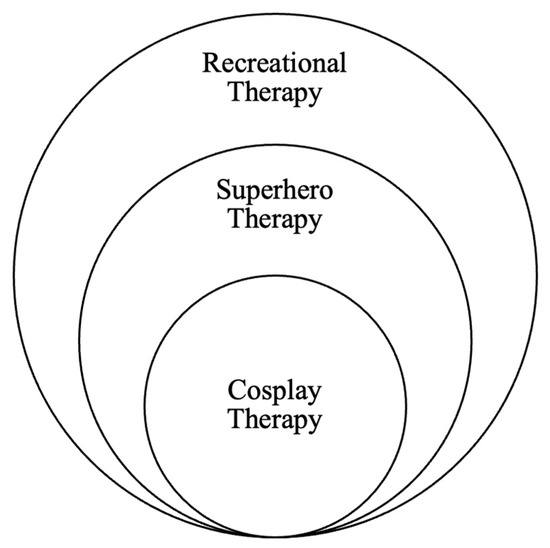
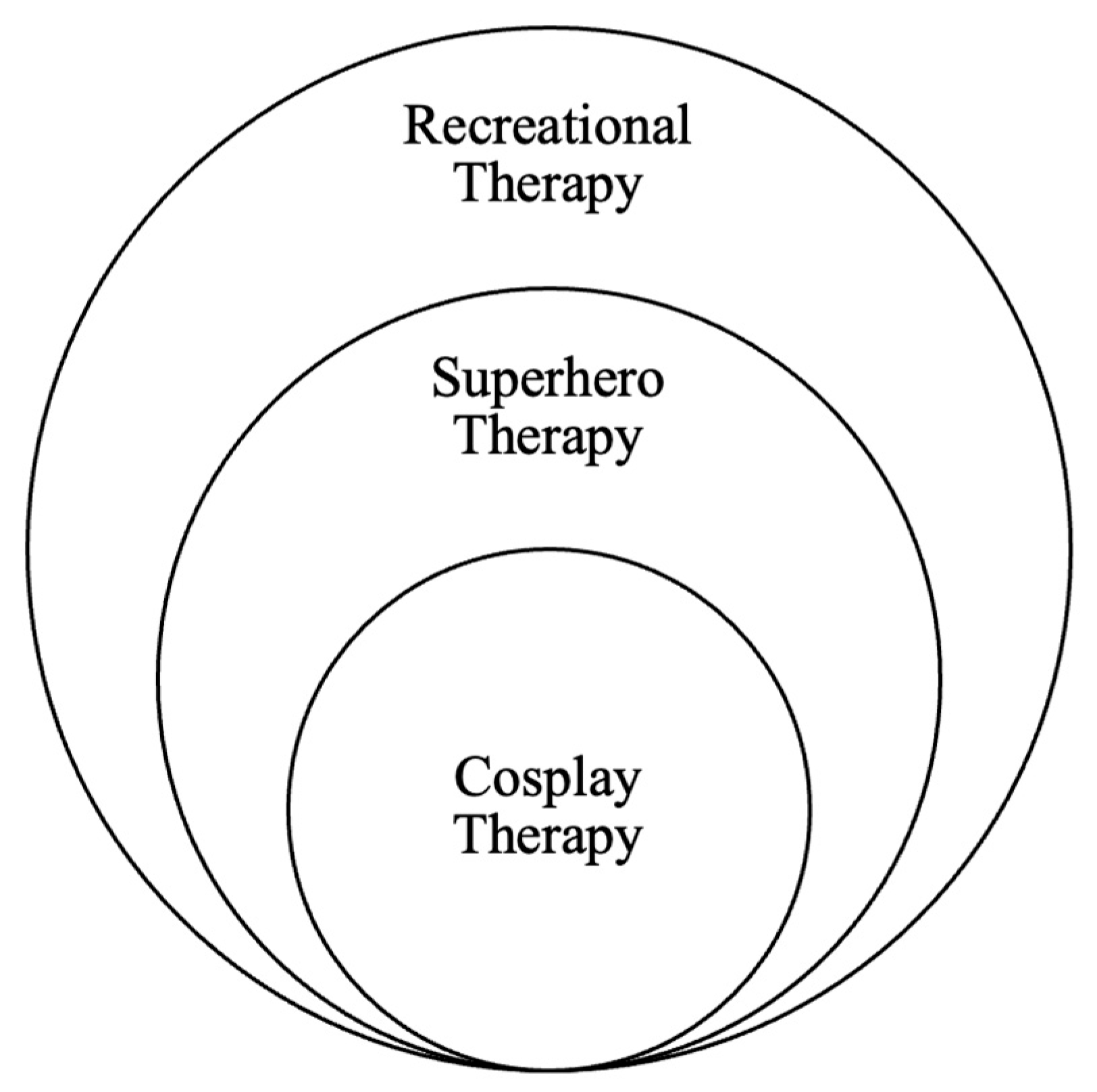
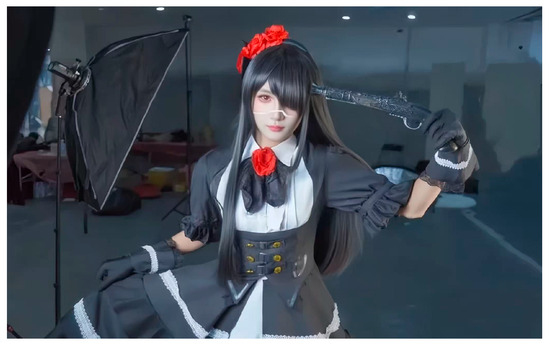
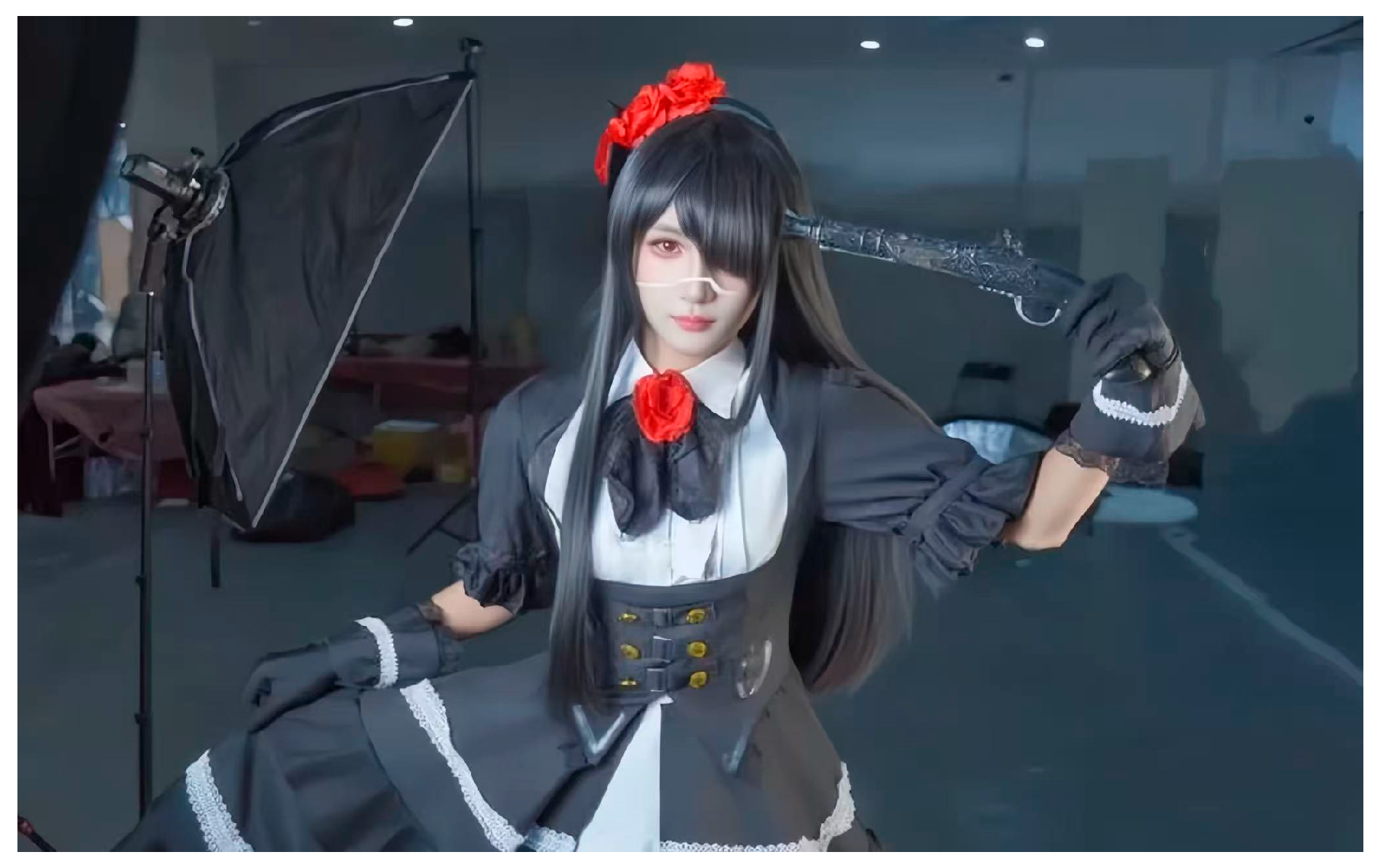
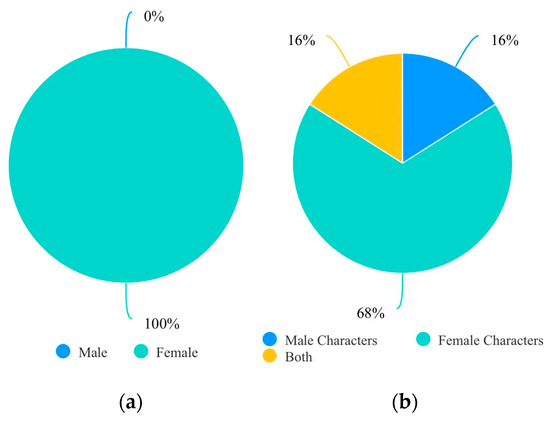
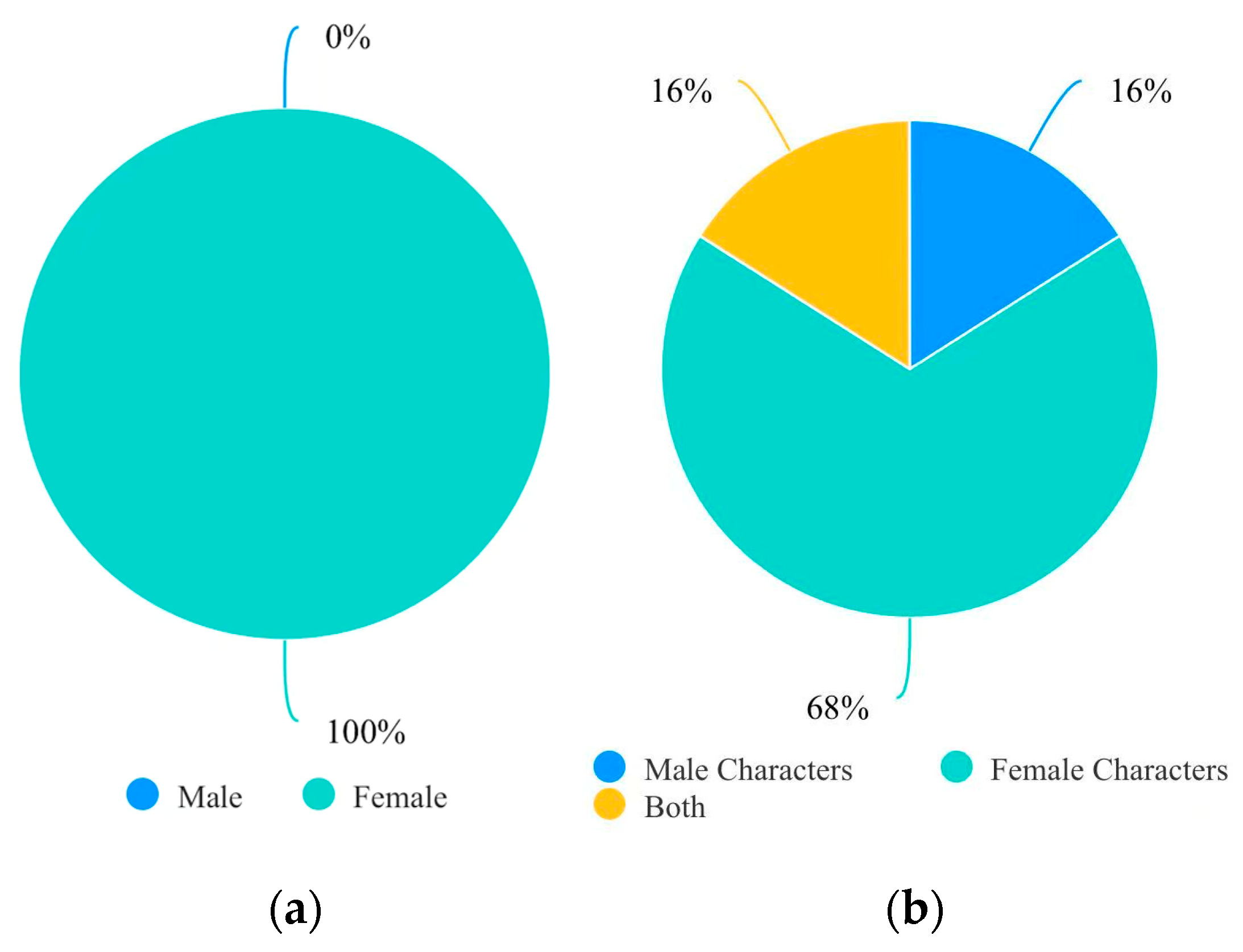
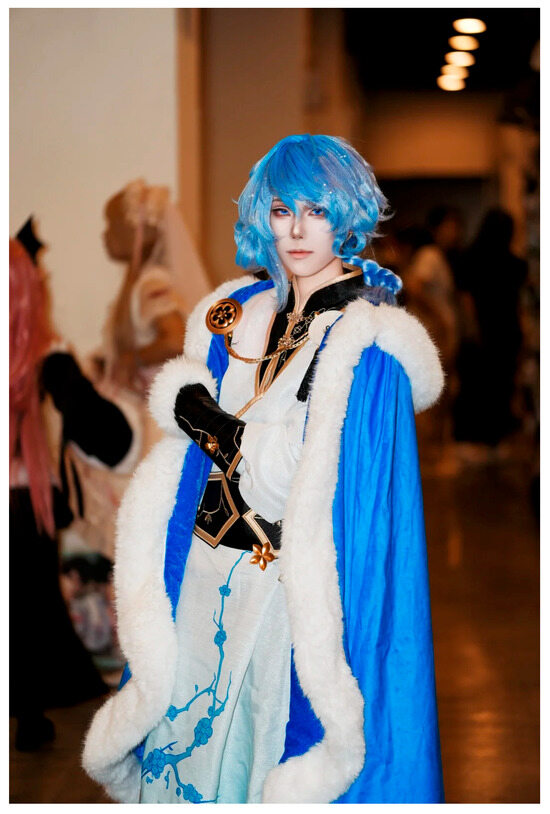
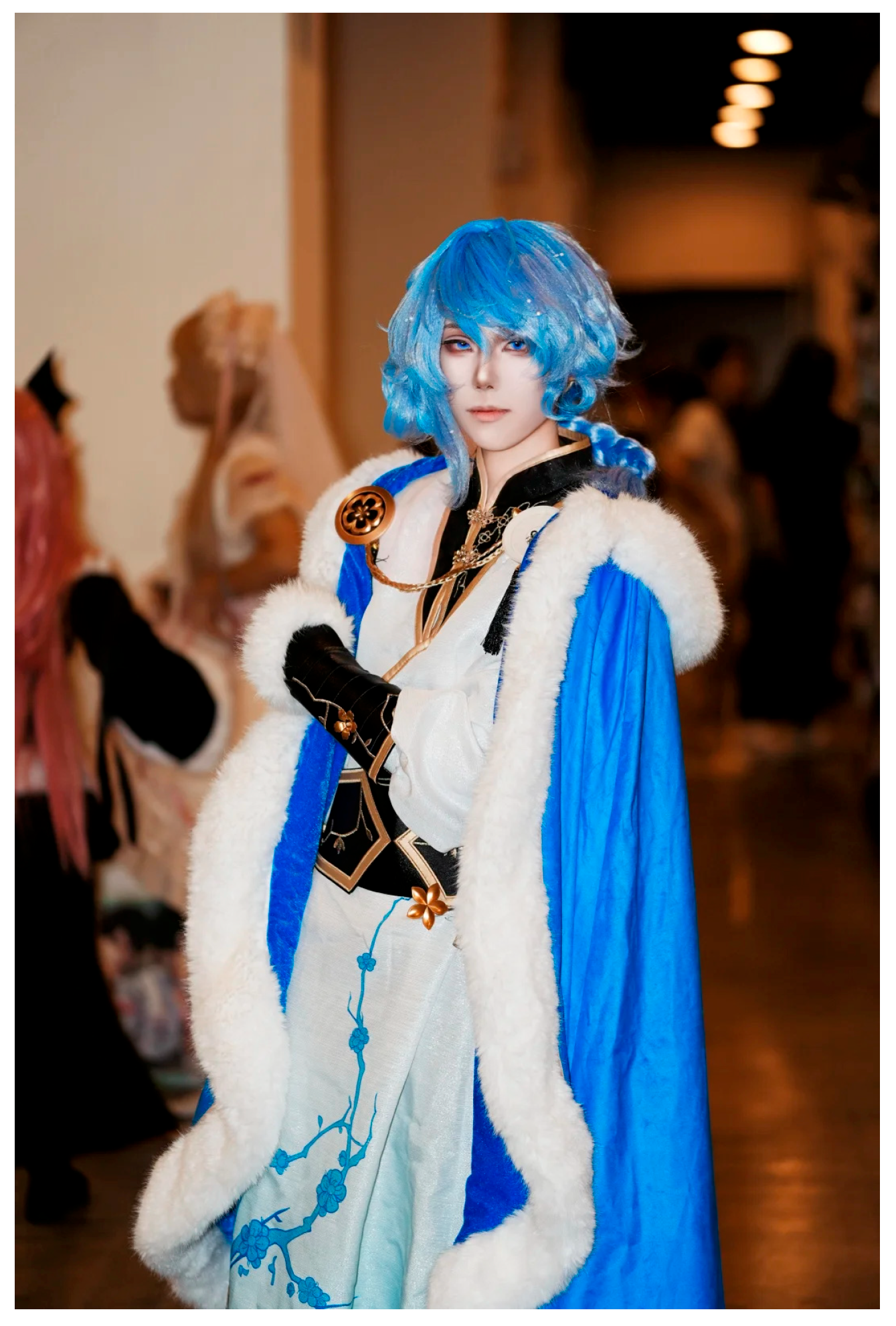
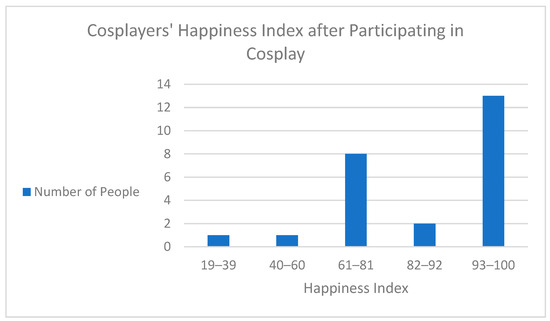
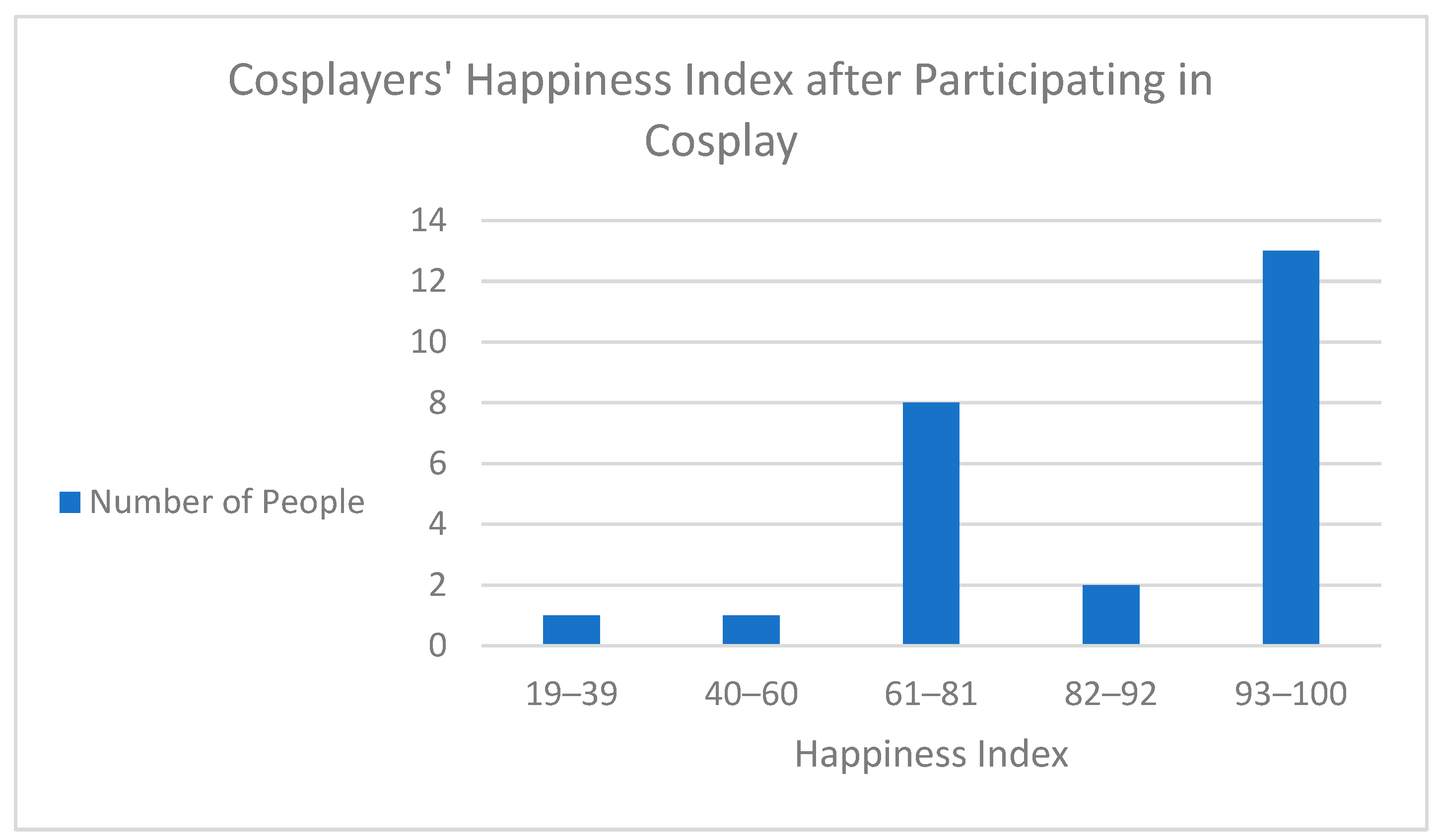
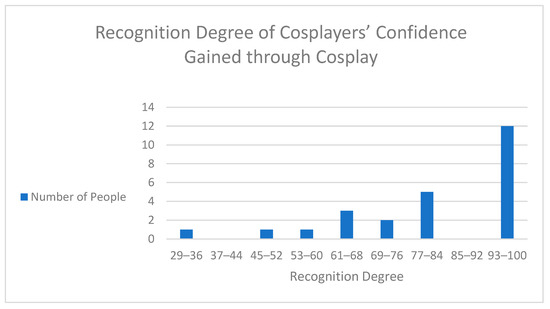
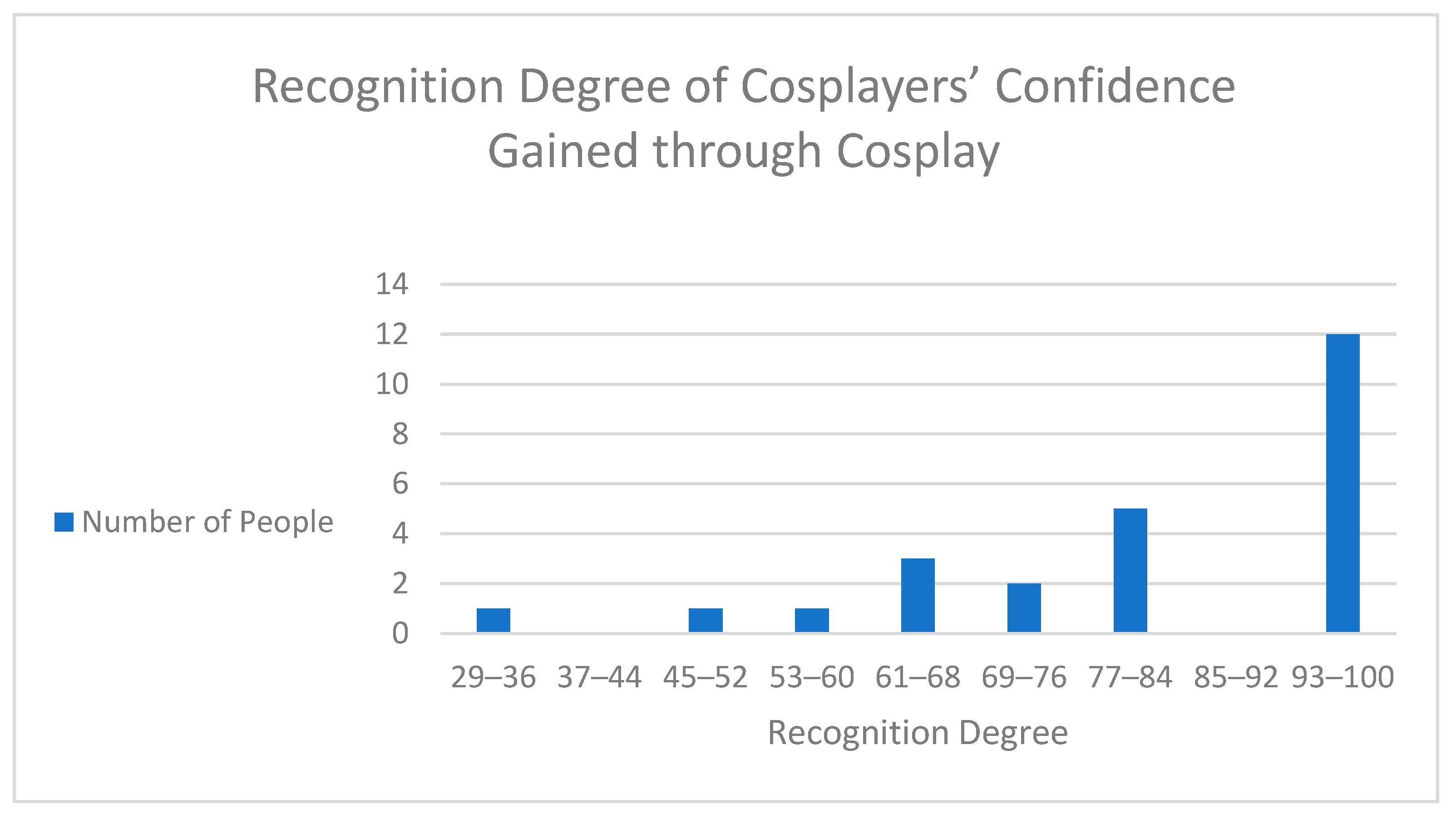
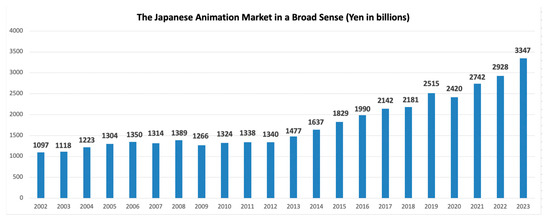
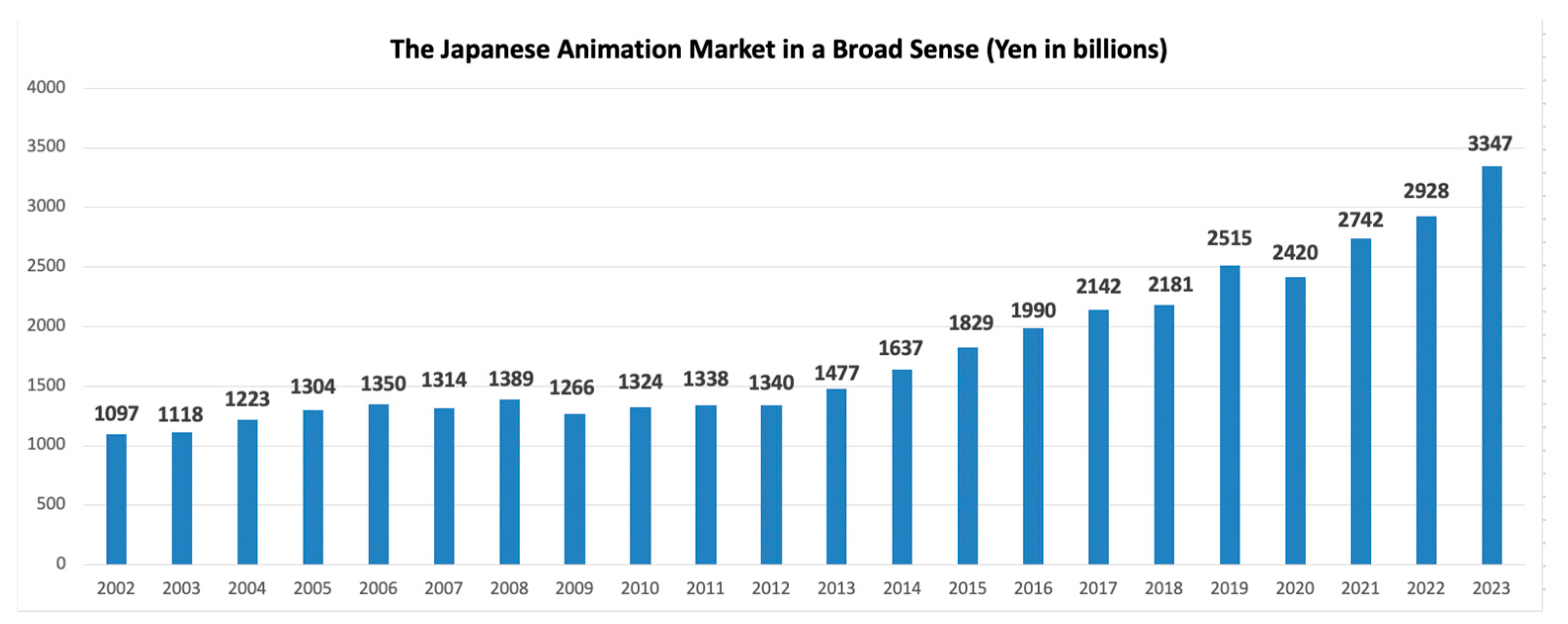
Disclaimer/Publisher’s Note: The statements, opinions and data contained in all publications are solely those of the individual author(s) and contributor(s) and not of MDPI and/or the editor(s). MDPI and/or the editor(s) disclaim responsibility for any injury to people or property resulting from any ideas, methods, instructions or products referred to in the content. |
© 2025 by the author. Licensee MDPI, Basel, Switzerland. This article is an open access article distributed under the terms and conditions of the Creative Commons Attribution (CC BY) license.