
Article

Empathy as a Significant Part of Future Teachers’ Creative Thinking Abilities: The Case of a University in Kazakhstan

by
Raikhan Amanbaikyzy
1 and
Daiva Jakavonytė-Staškuvienė
2,*
1
Institute of Pedagogy and Traditional Art, Korkyt Ata Kyzylorda University, Kyzylorda 120014, Kazakhstan
2
Academy of Education, Vytautas Magnus University, 03111 Vilnius, Lithuania
*
Author to whom correspondence should be addressed.
Soc. Sci. 2025, 14(4), 205; https://doi.org/10.3390/socsci14040205

Submission received: 5 February 2025 / Revised: 15 March 2025 / Accepted: 23 March 2025 / Published: 26 March 2025

Abstract

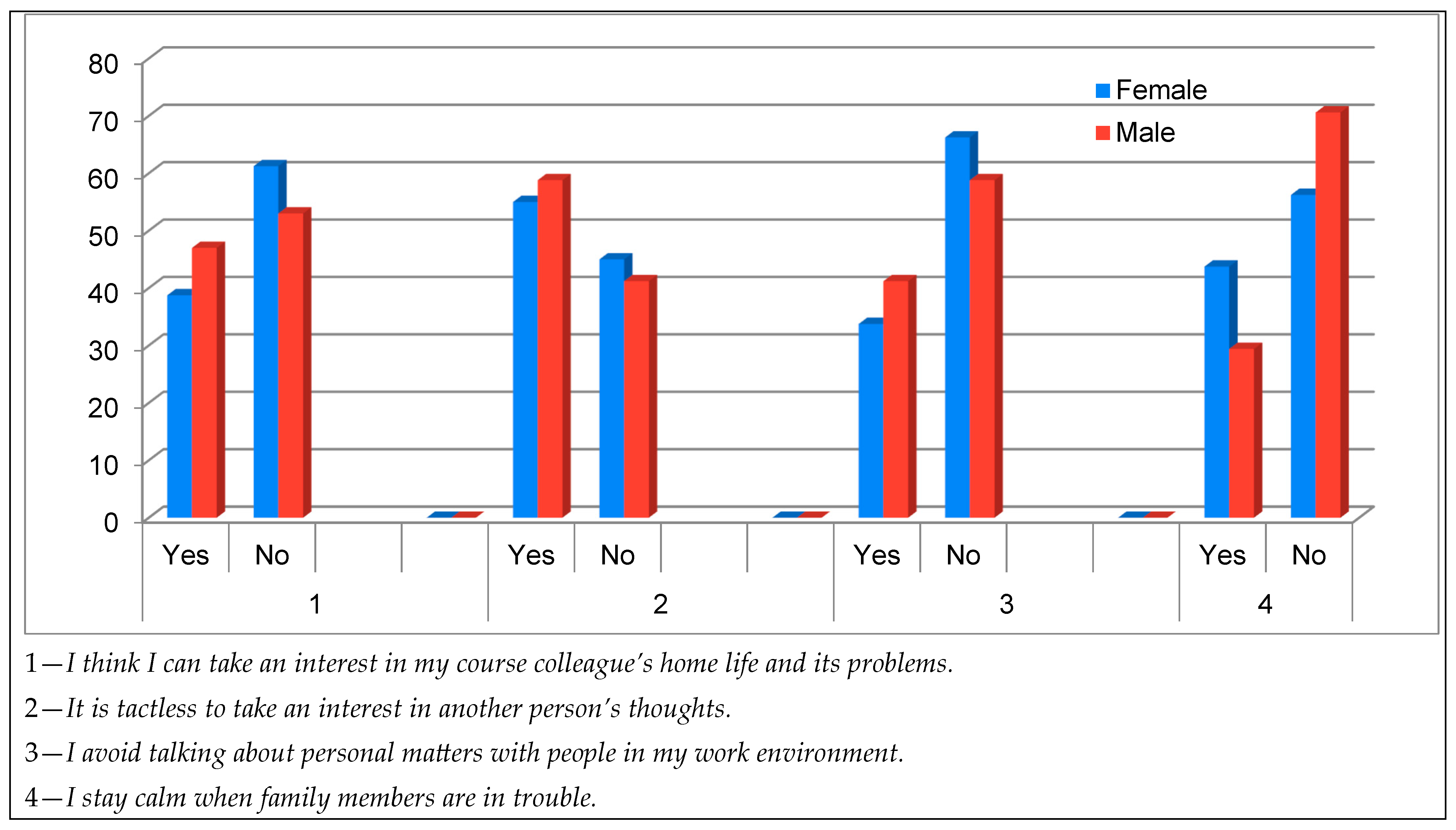
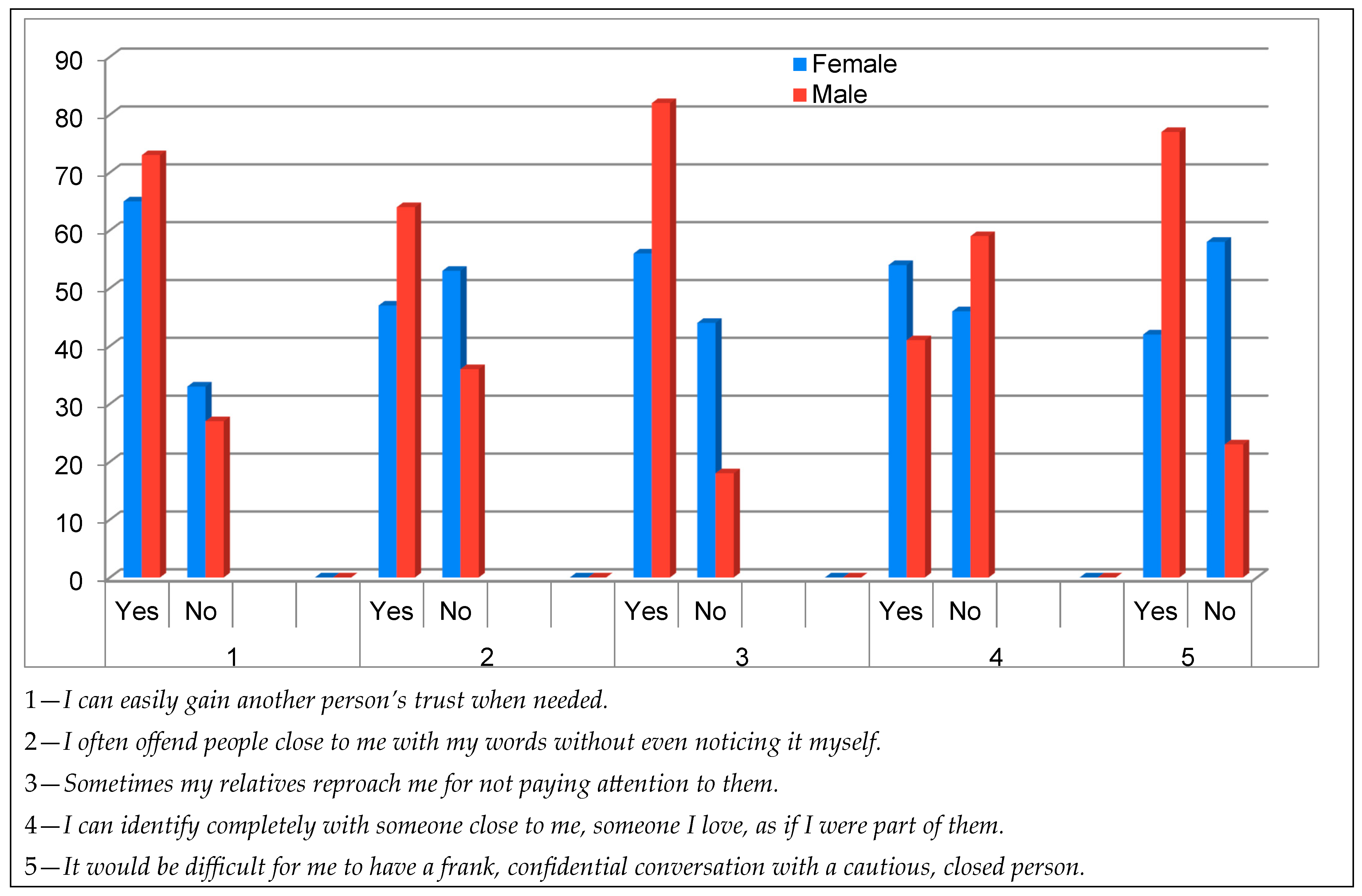
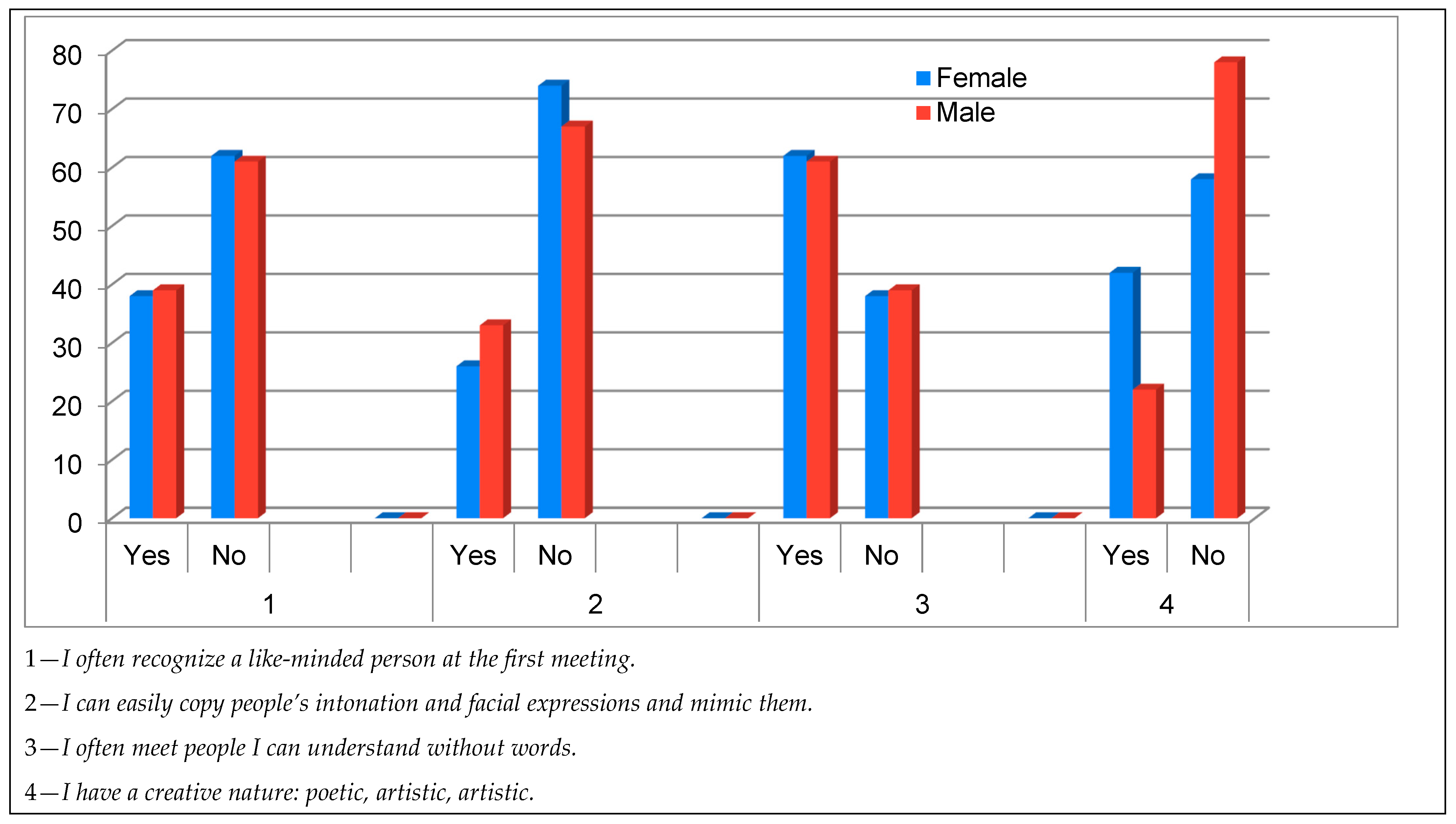
This study aims to investigate the development of empathy as a thinking skill among preservice teachers at the University of Kazakhstan. Empathy is one of the domains of critical thinking, and this article aims to reveal the domains of empathy of future teachers. The research used some questions developed by empathic abilities diagnostics The questions were tailored to the pedagogy students and their experiences, and only those related to expressing empathy skills, i.e., assessing the ability to empathize with and understand the thoughts and feelings of another person, were selected. In this article, the authors stress the importance of empathy skills and their expression for developing creative thinking skills in future teachers. The results of a study involving 114 prospective schoolteachers (80 women and 34 men) from one university in Kazakhstan are presented. The study explored preservice teachers’ perceptions of the development of empathy skills, which included areas such as the conditions and dispositions for empathy, the ability to empathize with others, and the identification of empathy expression. To summarize the empirical data, it can be said that preservice teachers are able to recognize the body language of individuals and understand others without words, react emotionally to disasters in the immediate environment, and are sometimes out of control in their vocabulary in the immediate environment (they may unintentionally offend others).
Keywords: empathy; creative thinking; future teacher; situational development of empathy; experience reflection empathy; creative thinking; future teacher; situational development of empathy; experience reflection