
Article

Validating Scales for Measuring Self-Efficacy, Growth Mindset, and Goal Setting
Department of Business, Management, and Accounting, University of Maryland Eastern Shore, Princess Anne, MD 21801, USA
*
Author to whom correspondence should be addressed.
Soc. Sci. 2025, 14(12), 726; https://doi.org/10.3390/socsci14120726
Submission received: 15 July 2025 / Revised: 21 September 2025 / Accepted: 4 December 2025 / Published: 18 December 2025

Abstract

Self-efficacy beliefs and mindset influence student success, impacting how a learner experiences and responds to learning situations and setbacks. Accordingly, mindset interventions, are successful at increasing student performance with particular efficacy with historically underserved students such as those attending HBCUs. This paper studies a classroom-based mindset intervention that was implemented with the goal of increasing learning and achievement through improving the students’ cognitive disposition. The intervention, implemented at a mid-Atlantic minority serving institution of higher education, involved the creation of a custom-designed three-tool self-assessment developed to engender students’ critical reflection. The scales in question measured self-efficacy, growth mindset, and mastery goal orientation. This paper presents the results of reliability testing via Cronbach’s alpha and inter-item covariance. According to the findings, all three tools showed strong (good to excellent) reliability with acceptable positive covariance indicating that they are capable of serving as appropriate instruments for further adoption, usage, and analysis. It is the goal that this paper contributes to the body of literature on mindset interventions encouraging more individuals working with traditionally underserved learners to consider exploring efforts to increase students’ positive mindsets.

1. Introduction

A growth mindset can be beneficial for students, yet many students enter academic programs with a fixed mindset which can be detrimental to success. Prior research has shown that mindset interventions are effective methods for helping students develop a growth mindset, and in this research, we examine the validity and reliability of three self-assessment scales developed as part of a larger mindset intervention. If valid and reliable, these tools can be used by educators to help students develop a growth mindset, which may enable them to achieve higher levels of academic success.
A mindset can be conceptualized as a person’s beliefs and attitudes that shape how they perceive themselves and the world around them (Cherry 2024). A mindset is the collection of assumptions that contribute to an individual’s expectations, perceptions, and responses to situations (BeWell 2021), ultimately impacting success and failure (O’Keef et al. 2018). Mindset has been found to impact reality (Crum et al. 2011), as it influences a wide range of outcomes by shaping how a person thinks, feels, performs, and responds to situations (BeWell 2021). A 2011 study by Crum et al. investigated whether physiological satiation, as measured by the gut peptide ghrelin, is influenced by the mindset a person has when consuming food. Participants in the study consumed milkshakes of similar composition on two separate occasions. However, they were told in one instance that they were consuming a high-calorie and high-fat indulgent shake, and that they had a low-calorie, sensible shake in the other. According to the results, satiety was consistent with participants’ perceptions about the milkshake rather than the actual caloric content (Crum et al. 2011).
Importantly, attributes of a mindset are both implicit and malleable, meaning that even though a mindset affects individuals outside of conscious awareness, a mindset can change (Dweck and Yeager 2019). In this research, we focus on the dichotomy between a fixed mindset and a growth mindset, and on the process of enabling students to move from a fixed to a growth mindset (Dweck 2019). When complemented by the related concepts of self-efficacy and mastery goal orientation, a growth mindset can improve an individual’s capacity to achieve success (Buzzetto-Hollywood et al. 2019b). In the next paragraphs, we discuss self-efficacy and mastery goal orientation, then elaborate on mindset theory and mindset interventions.
Self-efficacy is a facet of mindset that refers to a person’s confidence in their ability to achieve goals (Bandura 1977). When it comes to learning, the notion is that a person’s level of belief in their ability to flourish has a direct impact on their success. Findings indicate that elevated self-efficacy positively correlated to increased well-being, academic success, and resilience (Passarelli 2014; Vuong et al. 2010).
An individual’s goal orientation can also affect academic success. Students who have a mastery goal orientation focus on knowledge acquisition, self-improvement, and personal competence (Akin and Arslan 2014; Buzzetto-Hollywood and Mitchell 2019; Dweck 1986; Elliot and McGregor 2001; Zhao et al. 2025). A mastery goal orientation is associated with positive outcomes, including engagement, interest, effort, persistence, grit, and positive affect (Akin and Arslan 2014). In studies, a mastery goal orientation has been found to result in higher engagement and learning gains compared to a performance goal orientation (Han et al. 2025). In their meta-analysis of 44 studies, Diaconu-Gherasim et al. (2024) found that a mastery goal orientation has a negative correlation with anxiety and depression. Additionally, a meta-analysis of 90 studies in which goal orientations were experimentally manipulated (Noordzij et al. 2021) found that mastery goal orientation resulted in higher task performance.
Mindset theory posits that human capacities such as intelligence and ability can change and develop over time (Memari et al. 2024). Yet individuals with a fixed mindset instead of a growth mindset believe that human capacities and talents are set and unchanging. Since individuals with a fixed mindset believe that talent and intelligence are unalterable, they tend to be easily discouraged and lack resilience (Yeager and Dweck 2020; Buzzetto-Hollywood et al. 2019a). Conversely, possessing a growth mindset means that individuals are more likely to persevere and improve when faced with adversity (Dweck and Yeager 2019).
Individuals with a growth mindset believe that human capacities can change and can be cultivated with support and effort (Yeager and Dweck 2020; Buzzetto-Hollywood et al. 2019a). For an individual with a growth mindset, overcoming a challenge is an opportunity to progress toward a long-term goal. An individual with a growth mindset exhibits persistence when encountering challenges, while an individual with a fixed mindset may avoid challenges and be less likely to realize their full potential.
Yeager and Dweck (2020) suggest that the effectiveness of growth mindset effects is meaningfully heterogeneous across individuals and contexts. Findings have shown that individuals with a growth mindset experience several positive outcomes (Kyler and Moscicki 2024) including increased academic performance (Aronson et al. 2002; Burnette et al. 2013), higher levels of happiness (Schroder et al. 2017), greater flexibility (Boullion et al. 2021), stronger mastery goal orientation (Buzzetto-Hollywood et al. 2019a), and lower levels of psychological distress (Burnette et al. 2022).
A mindset intervention is a program or set of strategies purposed to alter a person’s mindset from a more fixed mindset (believing abilities are static and unimprovable) to a growth mindset (believing abilities can be cultivated). Mindset interventions in education aim to improve students’ academic performance and well-being by shifting their beliefs about learning and intelligence from fixed to growth-oriented. These interventions typically involve teaching students about the malleability of intelligence and the importance of goal setting, self-efficacy, sustained effort, and use of effective learning strategies (Burnette et al. 2013; DeBacker et al. 2016; Dweck 2018). Studies have found that mindset interventions are successful at increasing persistence and resilience and academic performance of students (Buzzetto-Hollywood et al. 2019a; DeBacker et al. 2016; Dweck 2018) and that they are particularly effective with students from traditionally underserved groups (Burnette et al. 2023; Claro et al. 2016).

2. Materials and Methods

A series of studies investigating aspects of student persistence and success commenced approximately six years ago at a minority-serving Historically Black College or University (HBCU) in the United States, led by the principal author of this paper. The initial study, which examined student performance in online courses and utilized the standard 12-item grit assessment, found incremental correlations between higher grit scores and increased self-discipline and self-efficacy. However, a positive correlation between grit scores and academic achievement could not be validated (Buzzetto-Hollywood et al. 2019b). Using a longitudinal approach, a secondary study (Buzzetto-Hollywood and Mitchell 2019) broadened the focus beyond online courses to investigate the relationship between grit and student persistence toward graduation. The findings indicated a positive correlation between grit scores, GPA, and persistence. The researchers concluded that grit alone may be insufficient; interventions that cultivate a growth mindset may be more effective in enhancing student success (Buzzetto-Hollywood and Mitchell 2019).
The next phase of the project focused on evaluating mindset interventions. As a part of the methodology, a series of custom models, self-assessments, and reflective exercises were developed based on prior research. These instruments were reviewed by an expert panel whose feedback informed several revisions. In June 2019, the project was presented at a regional teaching and learning conference, where attendees participated in a three-hour session that included a condensed version of the intervention with the use of the self-assessments. Participants provided feedback with respect to the instrument and materials, and a structured discussion was conducted to gather deeper insights. The feedback was carefully reviewed and used to refine and strengthen the instruments and activities/materials. The updated version of the project was then presented at an annual assessment conference in Philadelphia, Pennsylvania, to obtain final feedback before the next stage of implementation. The results of this work, along with the finalized instruments, were then published in the Interdisciplinary Journal of E-Skills and Lifelong Learning in a paper that asserts that a well-designed mindset intervention may positively influence key student measures (Buzzetto-Hollywood et al. 2019a).
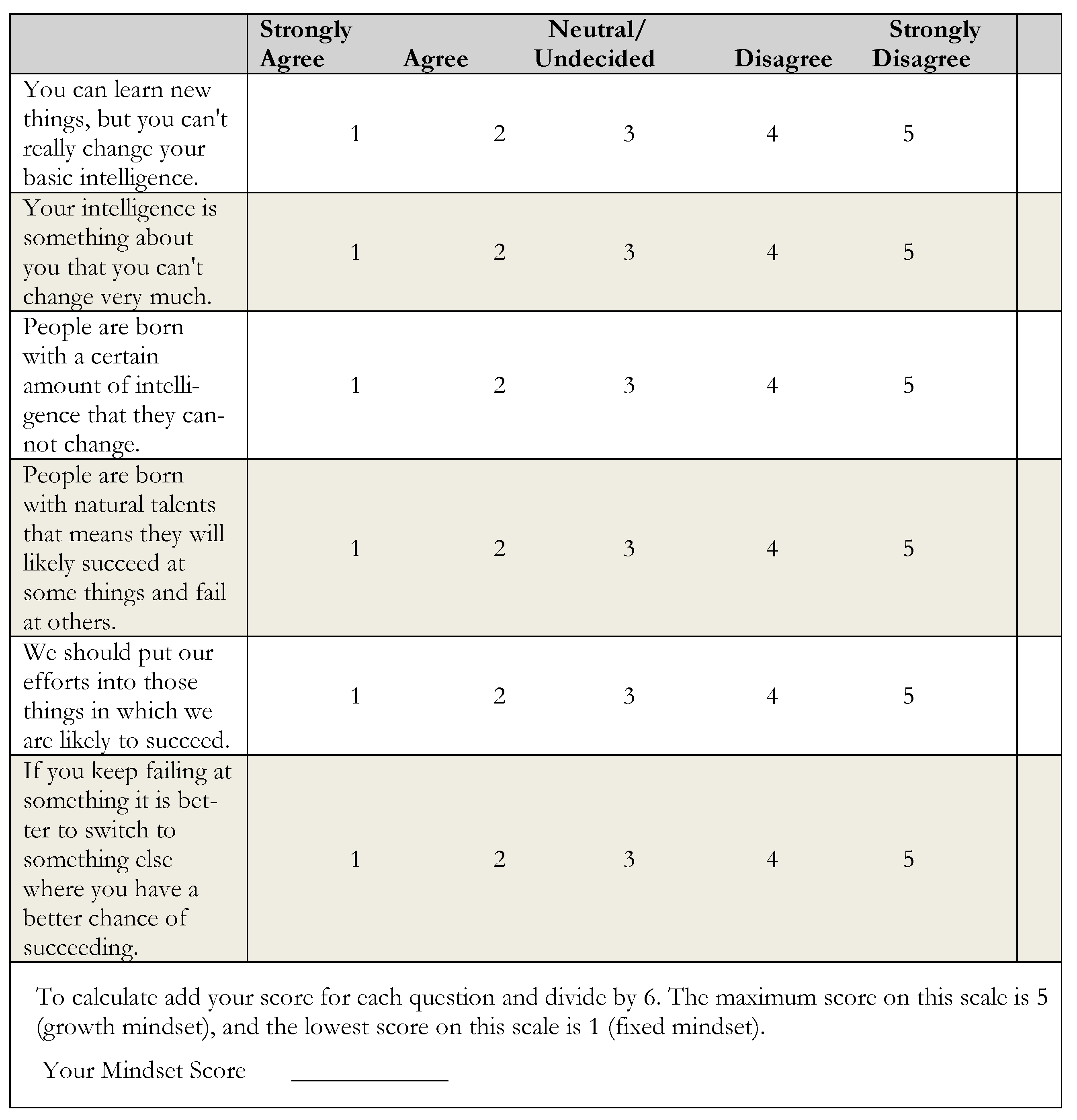
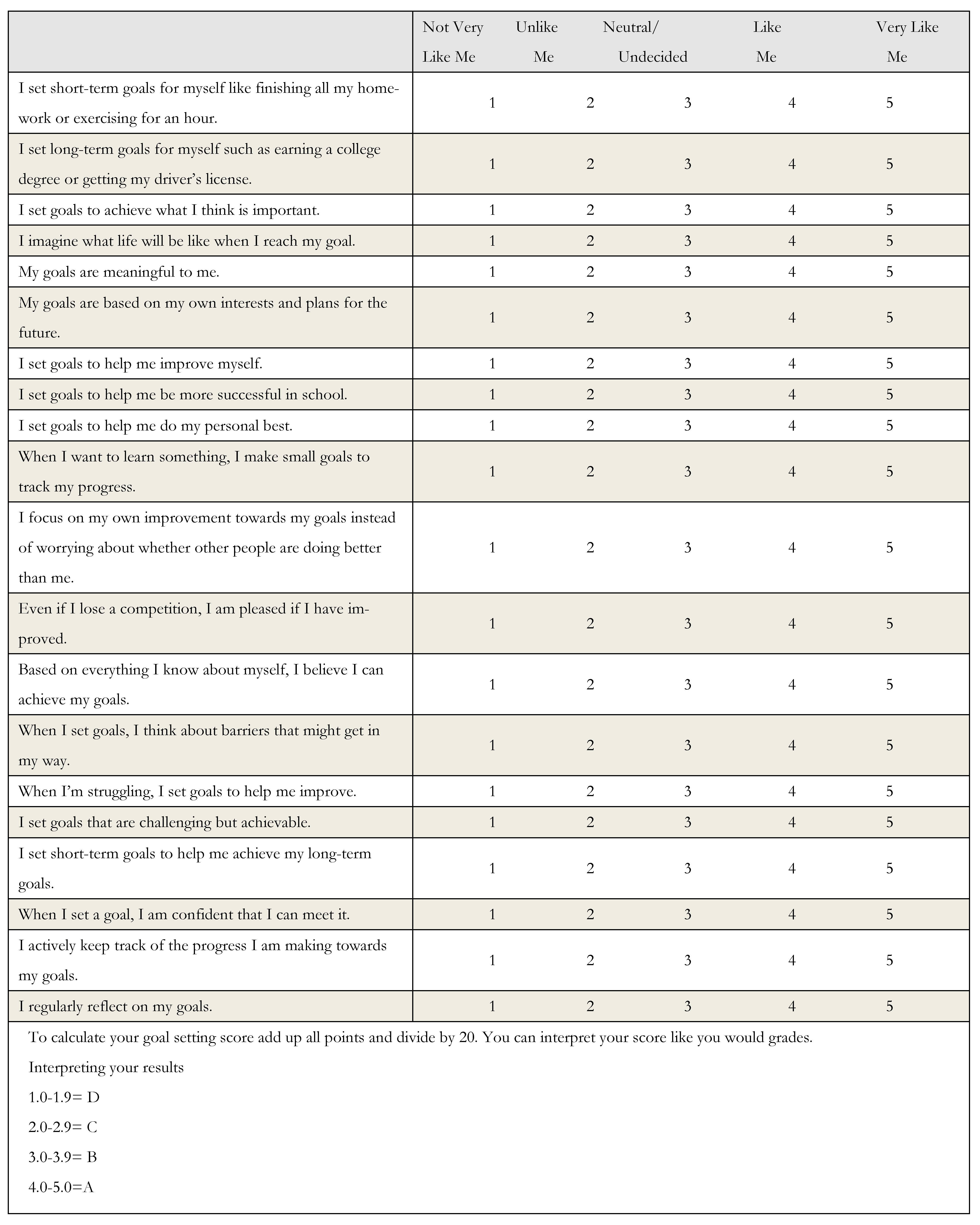
The mindset intervention, consisting of course activities, reflective exercises, and the self-assessments shown in Figure 1, Figure 2 and Figure 3, was piloted the following year with a small cohort of first-year students before being implemented more broadly between 2022 and 2023. Once data collection concluded, all responses were imported into SPSS 31.0 for analysis. The study focused on one primary research question, whether the self-assessments functioned as reliable instruments, which was evaluated through internal validity testing using Cronbach’s alpha and an inter-item covariance matrix.

3. Results

Table 1 shows a summary of the cases included in the analysis for the self-efficacy, growth mindset, and goal setting categories. The number of valid responses used in the analysis ranged from 230 to 232 out of a total sample of 236, meaning that about 97.5% to 98.3% of cases had complete data. A small number of cases, between 1.7% and 2.5%, were excluded using listwise deletion due to missing data. Since the amount of missing data was minimal, it did not significantly impact the results. Using listwise deletion helped maintain consistency across all variables, although it slightly reduced the total number of observations.
Cronbach’s alpha, also known as tau-equivalent reliability or a coefficient alpha, is a reliability coefficient that measures the internal consistency of tests and measures. Cronbach’s alpha is a measure of the correlation between the answers in a questionnaire and can take values between 0 and 1. The higher the average correlation between items, the greater the internal consistency of a test, whereas
  • Excellent: A Cronbach’s alpha of 0.9 or higher;
  • Good: A Cronbach’s alpha between 0.8 and 0.9;
  • Acceptable: A Cronbach’s alpha between 0.7 and 0.8;
  • Questionable: A Cronbach’s alpha between 0.6 and 0.7;
  • Poor: A Cronbach’s alpha between 0.5 and 0.6;
  • Unacceptable: A Cronbach’s alpha below 0.5.
Covariance is a statistical technique for measuring the degree to which two variables change in relation to each other. A positive covariance indicates that when one variable is above its average, the other tends to be above its average as well, and vice versa for below-average values. A negative covariance indicates the opposite relationship. An inter-item covariance matrix is a way of displaying the covariance between all pairs of items in a scale or test. The inter-item covariance matrix is a tool used in psychometrics and is a foundational component of internal consistency reliability. While high inter-item covariance suggests good internal consistency and suggests items are measuring the same thing, low covariance can signal that some items are measuring different concepts or are poorly formulated, necessitating item revision or removal. Accordingly, an inter-item covariance matrix can provide information about the unidimensionality of a scale or test by exploring whether the data conform to a unidimensional structure. A unidimensional structure implies that all items measure the same underlying construct, which can be examined by analyzing the relationships between items represented in the covariance matrix.
Internal consistency reliability was assessed for three categories: self-efficacy, growth mindset, and goal setting. Cronbach’s alpha coefficients and mean inter-item covariance were calculated for each category, with results presented in Table 2. Growth mindset, with six (6) items, demonstrated strong internal consistency, with an alpha of 0.836 and a mean inter-item covariance of 0.756. Self-efficacy, also with six (6) items, exhibited excellent internal consistency, yielding a Cronbach’s alpha of 0.946 and a mean inter-item covariance of 0.777. Finally, goal setting, which included twenty (20) items, generated an alpha of 0.976, also indicating excellent reliability and a mean inter-item covariance of 0.563, a number reasonable considering the larger number of items. Overall, the tools used to aid learners in critical self-assessment across all three categories (growth mindset, self-efficacy, and goal setting) demonstrated strong (good to excellent) reliability and are suitable for further use and analysis.
Table A1 in Appendix A depicts the covariances for growth mindset, all of which were positive, indicating that item responses moved in the same direction. These values ranged from 0.322 to 1.548. The strongest inter-item relationship, α = 1.091, was observed between items V14 and V15, indicating a close alignment between these two items. On the other hand, the weakest covariance was observed between items V15 and V17 (α = 0.322). Although still positive, the lower covariance suggests that V15 and V17 may reflect distinct aspects of growth mindset.
The inter-item covariance matrix supports the reliability of the self-efficacy scale, as shown in Table A2 in Appendix A. All covariance values in pairs were positive and moderately to strongly sized, ranging from 0.651 to 1.048. This pattern of positive and substantial covariances suggests that the items exhibit unidimensionality and are consistently measuring a familiar underlying construct.
The inter-item covariance matrix for the goal setting scale, which comprised 20 items, consistently showed moderately positive covariances across all item pairs, indicating coherent structure and suggesting these items are interrelated. This pattern supports the assumption that the items measure aspects of the goal setting construct. Table A3 in Appendix A includes the results, which reveal values ranging from 0.384 to 0.720. The covariances between pairs, V29 and V32, were α = 0.384, indicating a weak positive relationship. The strongest covariances were observed between pairs V28 and V35, where α = 0.720 suggests a high shared variance.

4. Discussion

The purpose of this study was to explore the validity and reliability of three self-assessment scales prepared to support a mindset intervention introduced at a mid-Atlantic HBCU located in the United States. The self-assessment scales created for this project were intentionally designed to be concise and comprehensible to first-year students. Accordingly, the language was deliberately simplified, avoiding ambiguous or confusing terminology. Furthermore, the tools were designed to complement each other in terms of appearance, structure, and tone, thereby creating a cohesive and interrelated construct within the larger mindset intervention unit.
Several rounds of expert review, as well as pilot testing, were conducted before implementation with undergraduate students enrolled in a business school. Participating students completed faculty-led exercises, group discussions, individual self-assessments using the three tools under consideration, critical reflection, and several goal planning and setting activities. Data collected from student completion of the three self-assessment tools were collected, downloaded, and analyzed in SPSS. Cronbach’s alpha application and inter-item covariance matrix tests were conducted to explore the research question of whether the tools are reliable.
According to the findings, all three tools demonstrated strong (good to excellent) reliability, with a reasonable positive covariance, indicating that they are capable of serving as appropriate instruments for further adoption, usage, and analysis. In the following sections, they are compared to other popular and widely available instruments that cover the same three constructs.

4.1. Growth Mindset

At the core of any mindset intervention is the notion that mindsets are malleable and can be changed from maladaptive and fixed, which often results in feelings of inadequacy and adverse outcomes, to highly adaptive and growth oriented, which leads to increased well-being (Schroder et al. 2017), greater resilience (Boullion et al. 2021), and more positive outcomes (Kyler and Moscicki 2024).
Two established scales are the primary constructs used for assessing growth mindset, both developed by growth mindset pioneer Carol Dweck. The first is the eight-item scale, known as the Implicit Theories of Intelligence Scale (ITIS) or the Growth Mindset Scale (Dweck 1999), and its short-scale version, comprising three items, which was developed as part of Dweck’s (Dweck et al. 1995) broader Implicit Theories Scale. Looking at internal consistency of the eight-item scale, Levy and Dweck (1999) reported moderate internal consistency (0.62). Further, two studies indicated that the eight items did not fit a unidimensional model (Midkiff et al. 2017; Troche and Kunz 2020). Dweck’s three-item scale, when explored by her testing, yielded higher internal consistency (0.94) and acceptable unidimensionality. Comparing results, the scale used in this study achieved strong internal consistency (0.84) and unidimensionality outperforming Dweck’s eight-item scale but underperforming Dweck’s three-item scale. Nevertheless, the authors of this paper argue that a six-item instrument is more suitable for thought-provoking self-reflection and critical discourse than a simpler three-item instrument.

4.2. Self-Efficacy

Self-efficacy, or the belief in one’s ability to succeed and achieve goals, is rooted in the work of Albert Bandura and social cognitive theory and has consistently been shown in the research to have a direct positive link to well-being, resilience, and ultimately success (Passarelli 2014; Vuong et al. 2010).
Over the years, numerous tools have been introduced to measure self-efficacy. The SES or Self-Efficacy Survey is a particularly popular tool, with over 100 items, designed to reflect Bandura’s socio-cognitive theory. It was introduced and tested in 2012 (Panc et al. 2012). The final version of SES obtained internal consistency coefficient values between 0.75 and 0.84 with strong covariance (0.72). When compared, the six-item scale developed for and utilized in this study had higher internal consistency at 0.946 and stronger covariance (0.77) and is shorter and easier to implement with learners. Additional popular tools that some researchers may find worth exploring are the General Self-Efficacy Scale (GSE) with 10 items, which is reported to have a Cronbach alpha of around 0.76 (Schwarzer and Jerusalem 1995) or the New General Self Efficacy Scale with eight items, which was found to have an alpha of approximately 0.87 (Chen et al. 2001).

4.3. Goal Setting

Goal setting is an essential skill for students, as it provides direction, motivation, and a sense of accomplishment (Buzzetto-Hollywood and Mitchell 2019). Goal orientation, which is impacted by mindset, represents an intersection of motivation and self-regulation/self-efficacy (Fındıkoğlu and Gürol 2021). Learners with a mastery goal orientation exhibit greater persistence, effective time management, and more positive outcomes (Akin and Arslan 2014).
The Goal Orientation and Learning Strategies Survey (GOALS-S) instrument is an extensive 84-item survey designed and tested by Dowson and McInerney (2004) to measure students’ motivational goal orientations and their cognitive and metacognitive strategies. Confirmatory factor analysis was employed, whereas a comparative fit index (CFI) value of 0.95 or higher and a root mean square error of approximation (RMSEA) value of 0.05 or lower are generally considered indicative of a good fit. After initial analysis yielded suboptimal scores, some questions were removed, and the analyses were repeated, resulting in strong findings that indicated GOALS-S is a psychometrically sound measure of middle and senior school students’ academic and social goal orientations, as well as their cognitive and metacognitive strategies. When compared, the twenty-item goal-setting self-perception tool used in this study also indicated strong reliability with a Cronbach alpha of 0.98, but with more moderate positive covariance (0.56). Nevertheless, the authors assert that at 20 items, it is more practical to implement with secondary and post-secondary students.
Studies have repeatedly found that mindset interventions are successful at increasing student performance (Claro et al. 2016; DeBacker et al. 2016; Dweck 2018) with particular efficacy with historically underserved students such as those attending HBCUs (Andersen and Nielsen 2016; Claro et al. 2016; Clay 2016). Additionally, self-assessment tools are valuable in mindset interventions because they encourage self-reflection, engender critical metacognition, empower learners to identify their own strengths and weaknesses, and promote student ownership of learning. According to Atrash et al. (2023), self-assessments enable students to critically evaluate their performance, increase their involvement in learning, and encourage them to set goals for academic improvement.

5. Limitations

The most notable limitation of this study is that it was conducted at a single minority-serving institution located in the mid-Atlantic region of the United States. The limitations inherent in the study presented in this paper can be addressed by future research that expands the scope of this examination to include additional institutions from more parts of the world.

6. Conclusions

This paper presents three tools custom-designed to work together as part of a mindset intervention. Cronbach’s alpha and inter-item covariance analyses concluded that these tools are sound and well-suited to their purpose. The research presented in this paper is ongoing. Further analyses of participant responses are being conducted and will be reported in due course. Additionally, a sample of students who completed the mindset intervention was presented with a satisfaction survey designed to measure their perceptions of the overall value, usefulness, and efficacy of the intervention. The next paper in this series will include additional analysis and the results of the student satisfaction survey.
The tools explored in this paper are free to use with attribution. The authors do not assert that they are superior to all other available instruments. Instead, this paper explores three free tools designed to be easy to use and comprehend, working in harmony together as part of a mindset intervention. The authors’ goal is for this paper to contribute to the body of literature on mindset interventions and encourage more individuals working with traditionally underserved learners to consider exploring efforts to increase students’ positive mindsets. Findings indicate that the tools explored in this paper are reliable and research conducted at both minority and majority serving institutions in the United States and abroad can explore their efficacy with a wider range of students.

Author Contributions

This paper represents the work of several authors. N.B.-H. served as lead author and designed the self-assessment tools, conceptualized the research, designed the methodology, collected and analyzed the raw data, contributed to the literature review, and compiled the paper. L.W. prepared the tables included in the paper and contributed to the results and the literature review. R.R. contributed to the literature review. L.T.-B. engaged in manuscript review. All authors have read and agreed to the published version of the manuscript.

Funding

This research received no external funding.

Institutional Review Board Statement

The study was conducted in accordance with the Declaration of Helsinki and approved by the Institutional Review Board of the University of Maryland Eastern Shore UMES Protocol #01-2024-004 with approval extended through 12/2025.

Informed Consent Statement

Informed consent was obtained from all subjects involved in the study.

Data Availability Statement

The original contributions presented in this study are included in the article. Further inquiries can be directed to the corresponding author.

Conflicts of Interest

The authors declare no conflicts of interest.

Appendix A

Table A1. Growth mindset inter-item covariance matrix.
Growth Mindset Inter-Item Covariance Matrix
V13V14V15V16V17V18
V131.3651.0480.9480.660.4830.612
V141.0481.4161.0910.5660.4220.564
V150.9481.0911.4810.5860.3220.558
V160.6600.5660.5861.5470.5940.465
V170.4830.4220.3220.5941.2810.558
Table A2. Self-efficacy inter-item covariance matrix.
Self-Efficacy Inter-Item Covariance Matrix
V7V8 V9V10V11 V12
V70.9870.8080.8580.790.7290.704
V80.8080.9230.7750.7350.7650.671
V90.8580.7751.0480.6870.6940.705
V100.7900.7350.6871.0370.7790.673
V110.7290.7650.6940.7791.020.651
V120.7040.6710.7050.6730.6510.900
Table A3. Goal setting inter-item covariance matrix.
Goal Setting Inter-Item Covariance Matrix
V19V20V21V22V23V24V25V26V27V28V29V30V31V32V33V34V35V36V37V38
V190.8060.5080.4970.4780.5010.4770.5050.520.5140.5980.4770.5180.5170.4180.510.4810.5880.4580.5060.545
V200.5080.7340.5910.6010.6080.620.5560.5920.5520.4960.4760.4590.5750.430.4940.4970.560.5330.5010.533
V210.4970.5910.6810.580.5840.5790.5610.5620.5510.5240.4690.4180.5530.4260.4420.4990.5430.5280.5050.508
V220.4780.6010.580.7730.6190.6070.5690.5690.5440.520.440.4710.5590.4550.4760.5010.5830.5380.5390.604
V230.5010.6080.5840.6190.7360.6460.6010.5810.6130.5190.460.4730.610.450.4970.550.6080.5470.5130.58
V240.4770.620.5790.6070.6460.7320.5850.5660.5990.4960.4330.4370.5870.3930.4750.5120.5770.5250.4790.501
V250.5050.5560.5610.5690.6010.5850.7280.6450.6470.5550.540.4880.5970.4550.5410.5750.6060.5610.5530.582
V260.520.5920.5620.5690.5850.5660.6450.870.6770.6450.5590.5260.6060.5110.6030.5610.660.5710.6310.622
V270.5140.5520.5510.5540.6130.5990.6470.6770.7380.6010.5240.510.6010.4690.5760.5840.6660.5780.5740.572
V280.5980.4960.5240.520.5190.4960.5550.6450.6010.890.5870.510.540.5190.6660.580.720.560.6530.638
V290.4770.4760.4690.440.460.4330.540.5590.5240.5870.9380.5740.5720.3840.5840.5370.5480.5520.5890.63
V300.5180.4590.4180.4710.4730.4370.4880.5260.510.510.5740.9980.5360.4780.5850.4920.5440.5230.5630.562
V310.5170.5750.5530.5590.610.5870.5970.6060.6010.540.5720.5360.7320.4470.5370.5620.6260.590.5660.567
V320.4180.430.4260.4550.450.3930.4550.5110.4690.5190.3840.4780.4470.8960.5370.4830.5510.4430.4630.54
V330.510.4940.4420.4760.4970.4750.5410.6030.5760.6660.5840.5850.5370.5370.8870.6180.6860.5480.6320.627
V340.4810.4970.4990.5010.550.5120.5750.5610.5840.580.5370.4920.5620.4830.6180.770.6420.6090.6230.627
V350.5880.560.5430.5830.6080.5770.6060.660.6660.720.5480.5540.6260.5510.6860.6420.8820.5980.670.658
V360.4580.5330.5280.5380.5470.5250.5610.5710.5780.560.5520.5230.590.4430.5480.6090.5980.7290.6270.611
V370.5060.5010.5050.5390.5130.4790.5530.6310.5740.6530.5890.5630.5660.4630.6320.6230.670.6270.9220.666
V380.5450.5330.5080.6040.580.5010.5820.6220.5720.6380.630.5620.5670.540.6270.6270.6580.6110.6660.932

References

  1. Akın, Ahmet, and Serhat Arslan. 2014. The Relationships between Achievement Goal Orientations and Grit. Education and Science 39: 267–74. [Google Scholar] [CrossRef]
  2. Andersen, Simon Calmar, and Helena Skyt Nielsen. 2016. Reading intervention with a growth mindset approach improves children’s skills. Proceedings of the National Academy of Sciences of the United States of America 113: 12111–13. [Google Scholar] [CrossRef]
  3. Aronson, Joshua, Carrie B. Fried, and Catherine Good. 2002. Reducing the effects of stereotype threat on African American college students by shaping theories of intelligence. Journal of Experimental Social Psychology 38: 113–25. [Google Scholar] [CrossRef]
  4. Atrash, Hammam, Michal Katz-Leurer, and Gila Shahar. 2023. The effect of self-assessment on student competence in physiotherapy clinical training: A randomized controlled trial. BMC Medical Education 23: 780. [Google Scholar] [CrossRef]
  5. Bandura, Albert. 1977. Self-efficacy: Toward a unifying theory of behavioral change. Psychological Review 84: 191–215. [Google Scholar] [CrossRef]
  6. BeWell. 2021. Your Powerful, Changeable Mindset. Stanford Report. Available online: https://news.stanford.edu/stories/2021/09/mindsets-clearing-lens-life (accessed on 22 October 2023).
  7. Boullion, AnnaMaria, Mathew C. Withers, and Marie Lippmann. 2021. Mindsets: Investigating resilience. Personality and Individual Differences 174: 110669. [Google Scholar] [CrossRef]
  8. Burnette, Jeni L., Ernest H. O’Boyle, Eric M. VanEpps, Jeffrey M. Pollack, and Eli J. Finkel. 2013. Mind-sets matter: A meta-analytic review of implicit theories and self-regulation. Psychological Bulletin 139: 655–701. [Google Scholar] [CrossRef]
  9. Burnette, Jeni L., Joseph Billingsley, and Crystal L. Hoyt. 2022. Harnessing growth mindsets to help individuals flourish. Social and Personality Psychology Compass 16: e12657. [Google Scholar] [CrossRef]
  10. Burnette, Jeni L., Joseph Billingsley, George C. Banks, Laura E. Knouse, Crystal L. Hoyt, Jeffrey M. Pollack, and Stefanie Simon. 2023. A systematic review and meta-analysis of growth mindset interventions: For whom, how, and why might such interventions work? Psychological Bulletin 149: 174. [Google Scholar] [CrossRef] [PubMed]
  11. Buzzetto-Hollywood, Nicole, and Bryant C. Mitchell. 2019. Grit and persistence: Findings from a longitudinal study of student performance. Issues in Informing Science and Information Technology 16: 377–91. [Google Scholar] [CrossRef] [PubMed]
  12. Buzzetto-Hollywood, Nicole, Bryant C. Mitchell, and Austin J. Hill. 2019a. Introducing a Mindset interventions to improve student success. Interdisciplinary Journal of e-Skills and Lifelong Learning 15: 135–55. [Google Scholar] [CrossRef]
  13. Buzzetto-Hollywood, Nicole, Kathy Quinn, Wendy Wang, and Austin Hill. 2019b. Grit in online education. Journal of Education, Society and Behavioural Science 30: 1–11. [Google Scholar] [CrossRef]
  14. Chen, Gilad, Stanley M. Gully, and Dov Eden. 2001. Validation of a new general self-efficacy scale. Organizational Research Methods 4: 62–83. [Google Scholar] [CrossRef]
  15. Cherry, Kendra. 2024. What Is a Mindset and Why It Matters. Very Well Mind. Available online: https://www.verywellmind.com/what-is-a-mindset-2795025 (accessed on 15 September 2024).
  16. Claro, Susana, David Paunesku, and Carol S. Dweck. 2016. Growth mindset tempers the effects of poverty on academic achievement. Proceedings of the National Academy of Sciences 113: 8664–68. [Google Scholar] [CrossRef] [PubMed]
  17. Clay, Gregory. 2016. New Tactics Needed to Fix Low HBCU Graduation Rates. The Undefeated. Available online: https://theundefeated.com/features/new-tactics-needed-fix-low-hbcu-graduation-rates/ (accessed on 20 August 2019).
  18. Crum, Alia J., William R. Corbin, Kelly D. Brownell, and Peter Salovey. 2011. Mind over milkshakes: Mindsets, not just nutrients, determine ghrelin response. Health Psychology 30: 424–29. [Google Scholar] [CrossRef]
  19. DeBacker, Teresa K., Benjamin C. Heddy, Julianna Lopez Kershen, H. Michael Crowson, Kristyna Looney, and Jacqueline A. Goldman. 2016. Effects of a one-shot growth mindset intervention on beliefs about intelligence and achievement goals. Educational Psychology 38: 711–33. [Google Scholar] [CrossRef]
  20. Diaconu-Gherasim, Loredana R., Andrew J. Elliot, Alexandra S. Zancu, Laura E. Brumariu, Cornelia Măirean, Cristian Opariuc-Dan, and Irina Crumpei-Tanasă. 2024. A Meta-analysis of the relations between achievement goals and internalizing problems. Educational Psychology Review 36: 109. [Google Scholar] [CrossRef]
  21. Dowson, Martin, and Dennis M. McInerney. 2004. The Development and Validation of the Goal Orientation and Learning Strategies Survey (Goals-S). Educational and Psychological Measurement 64: 290–310. [Google Scholar] [CrossRef]
  22. Dweck, Carol S. 1986. Motivational Processes Affecting Learning. American Psychologist 41: 1040–48. [Google Scholar] [CrossRef]
  23. Dweck, Carol S. 1999. Self-Theories: Their Role in Motivation, Personality, and Development. East Sussex: Psychology Press. [Google Scholar]
  24. Dweck, Carol S. 2018. Growth Mindset Interventions Yield Impressive Results. The Conversation. Available online: http://theconversation.com/growth-mindset-interventions-yield-impressive-results-97423 (accessed on 4 October 2018).
  25. Dweck, Carol S. 2019. The choice to make a difference. Perspectives on Psychological Science 14: 21–25. [Google Scholar] [CrossRef]
  26. Dweck, Carol S., and David S. Yeager. 2019. Mindsets: A view from two eras. Perspectives on Psychological Science 14: 481–96. [Google Scholar] [CrossRef]
  27. Dweck, Carol S., Chi-yue Chiu, and Ying-yi Hong. 1995. Implicit theories and their role in judgments and reactions: A word from two perspectives. Psychological Inquiry 5: 267–85. [Google Scholar] [CrossRef]
  28. Elliot, Andrew J., and Holly A. McGregor. 2001. A 2 × 2 achievement goal framework. Journal of Personality and Social Psychology 80: 501–19. [Google Scholar] [CrossRef]
  29. Findikoglu, Fuat, and Mehmet Gurol. 2021. Academic Goal Orientation: New Insights and Cultural Adaptation of Academic Goal Orientation Questionnaire into the Turkish Language. Georgia Educational Researcher 18: 4. [Google Scholar] [CrossRef]
  30. Han, Tingzhi, Guoxing Xu, and Wenli Lu. 2025. Examining the Effects of Different Types of Achievement Goal Orientation on Undergraduate Students’ Engagement in Distance Learning: The Mediating Effect of Self-Efficacy. Behavioral Sciences 15: 39. [Google Scholar] [CrossRef] [PubMed]
  31. Kyler, E. Nathan, and Michele K. Moscicki. 2024. Measuring many mindsets: A systematic review of growth mindset domains, and discussion of domain relationships, with implications for growth mindset interventions. Social and Personality Psychology Compass 18: e70015. [Google Scholar] [CrossRef]
  32. Levy, Sheri R., and Carol S. Dweck. 1999. The impact of children’s static versus dynamic conceptions of people on stereotype formation. Child Development 70: 1163–80. [Google Scholar] [CrossRef]
  33. Memari, Milad, Katherine Gavinski, and Marie K. Norman. 2024. Beware false growth mindset: Building growth mindset in medical education is essential but complicated. Academic Medicine 99: 261–65. [Google Scholar] [CrossRef] [PubMed]
  34. Midkiff, Brooke, Michelle Langer, Cynthia Demetriou, and Abigail T. Panter. 2017. An IRT analysis of the Growth Mindset Scale. In Quantitative Psychology: In Proceedings of the 82nd Annual Meeting of the Psychometric Society. Edited by Marie Wiberg, Steven Culpepper, Rianne Janssen, Jorge González and Dylan Molenaar. Berlin/Heidelberg: Springer, pp. 163–74. [Google Scholar]
  35. Noordzij, Gera, Lisenne Giel, and Heleen van Mierlo. 2021. A meta-analysis of induced achievement goals: The moderating effects of goal standard and goal framing. Social Psychology of Education: An International Journal 24: 195–245. [Google Scholar] [CrossRef]
  36. O’Keefe, Paul A., Carol S. Dweck, and Gregory M. Walton. 2018. Implicit Theories of Interest: Finding Your Passion or Developing It? Psychological Science 29: 1653–64. [Google Scholar] [CrossRef]
  37. Panc, Teofil, Alexandru Mihalcea, and Ioana Panc. 2012. Self-efficacy survey: A new assessment tool. Procedia–Social and Behavioral Sciences 33: 880–84. [Google Scholar] [CrossRef]
  38. Passarelli, J. 2014. “Growth Mindset” Interventions. Stanford Teaching Commons: Teaching Talk. Available online: https://teachingcommons.stanford.edu/teaching-guides/foundations-course-design/learning-activities/growth-mindset-and-enhanced-learning (accessed on 19 August 2020).
  39. Schroder, Hans S., Matthew M. Yalch, Sindes Dawood, Courtney P. Callahan, M. Brent Donnellan, and Jason S. Moser. 2017. Growth mindset of anxiety buffers the link between stressful life events and psychological distress and coping strategies. Personality and Individual Differences 110: 23–26. [Google Scholar] [CrossRef]
  40. Schwarzer, Ralf, and Matthias Jerusalem. 1995. Generalized Self-Efficacy Scale. In Measures in Health Psychology: A User’s Portfolio. Causal and Control Beliefs. Edited by Johnston Weinman, Stephen C. Wright and Marie Johnston. Windsor: NFER-NELSON, pp. 35–37. [Google Scholar]
  41. Troche, Stefan J., and Alexandra Kunz. 2020. The factorial structure and construct validity of a German translation of Dweck’s implicit theories of intelligence scale under consideration of the wording effect. Psychological Test and Assessment Modeling 62: 386–403. Available online: https://www.psychologie-aktuell.com/journale/psychological-test-and-assessment-modeling/currently-available/inhaltlesen/psychological-test-and-assessment-modeling-2020-3.html (accessed on 1 January 2025).
  42. Vuong, Mui, Sharon Brown-Welty, and Susan Tracz. 2010. The effects of self-efficacy on academic success of first-generation college sophomore students. Journal of College Student Development 51: 50–64. [Google Scholar] [CrossRef]
  43. Yeager, David S., and Carol S. Dweck. 2020. What can be learned from growth mindset controversies? American Psychologist 75: 1269–84. [Google Scholar] [CrossRef]
  44. Zhao, Shan, Pujing Chen, Ling Jin, Cheng Yu, Hongfeng Zhang, and Danhua Lin. 2025. Unlocking emotional well-being: Evaluation of a stress mindset intervention with a metacognitive approach. Emotion 25: 1169–84. [Google Scholar] [CrossRef]
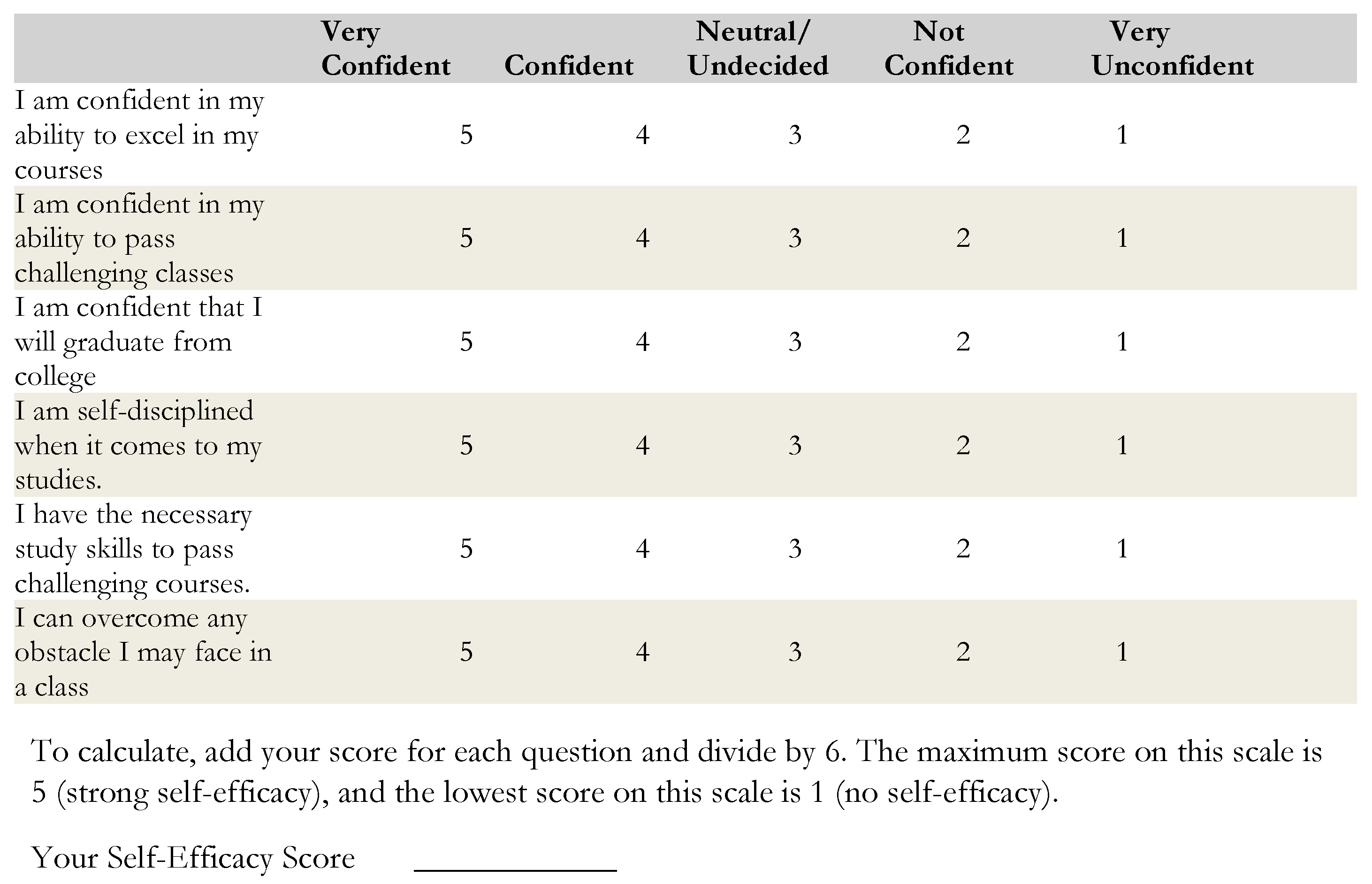
Figure 1. Self-efficacy.
Socsci 14 00726 g001
Figure 2. Growth mindset.
Socsci 14 00726 g002
Figure 3. Goal setting.
Socsci 14 00726 g003
Table 1. Case processing summary.
Case Processing Summary
CategorySelf-EfficacyGrowth MindsetGoal Setting
Valid (N)231 (97.9%)230 (97.5%)232 (98.3%)
Excluded (N)5 (2.1%)6 (2.5%)4 (1.7%)
Total (N)236 (100%)236 (100%)236 (100%)
Table 2. Cronbach’s alpha.
Reliability Statistics
CategoryN of ItemsCronbach’s AlphaMean Inter-Item Covariance Matrix
Growth Mindset60.8360.756
Self-Efficacy60.9460.777
Goal Setting200.9760.563
Disclaimer/Publisher’s Note: The statements, opinions and data contained in all publications are solely those of the individual author(s) and contributor(s) and not of MDPI and/or the editor(s). MDPI and/or the editor(s) disclaim responsibility for any injury to people or property resulting from any ideas, methods, instructions or products referred to in the content.