Viewpoint

Can Managing Climate Risks Be a Catalyst for Broader Transformative Change?

1
Wageningen Environmental Research, Droevendaalsesteeg 3-3 A, 6708 PB Wageningen, The Netherlands
2
Climate Adaptation Services, 1406 NZ Bussum, The Netherlands
3
Municipality of Nijmegen, 6511 PS Nijmegen, The Netherlands
4
School of Built Environment, University of Technology Sydney, Ultimo 2007, Australia
5
Centre for Development Support, University of Free State, Bloemfontein 9301, South Africa
*
Author to whom correspondence should be addressed.
Soc. Sci. 2023, 12(3), 158; https://doi.org/10.3390/socsci12030158

Submission received: 1 September 2022 / Revised: 17 February 2023 / Accepted: 20 February 2023 / Published: 6 March 2023

Abstract

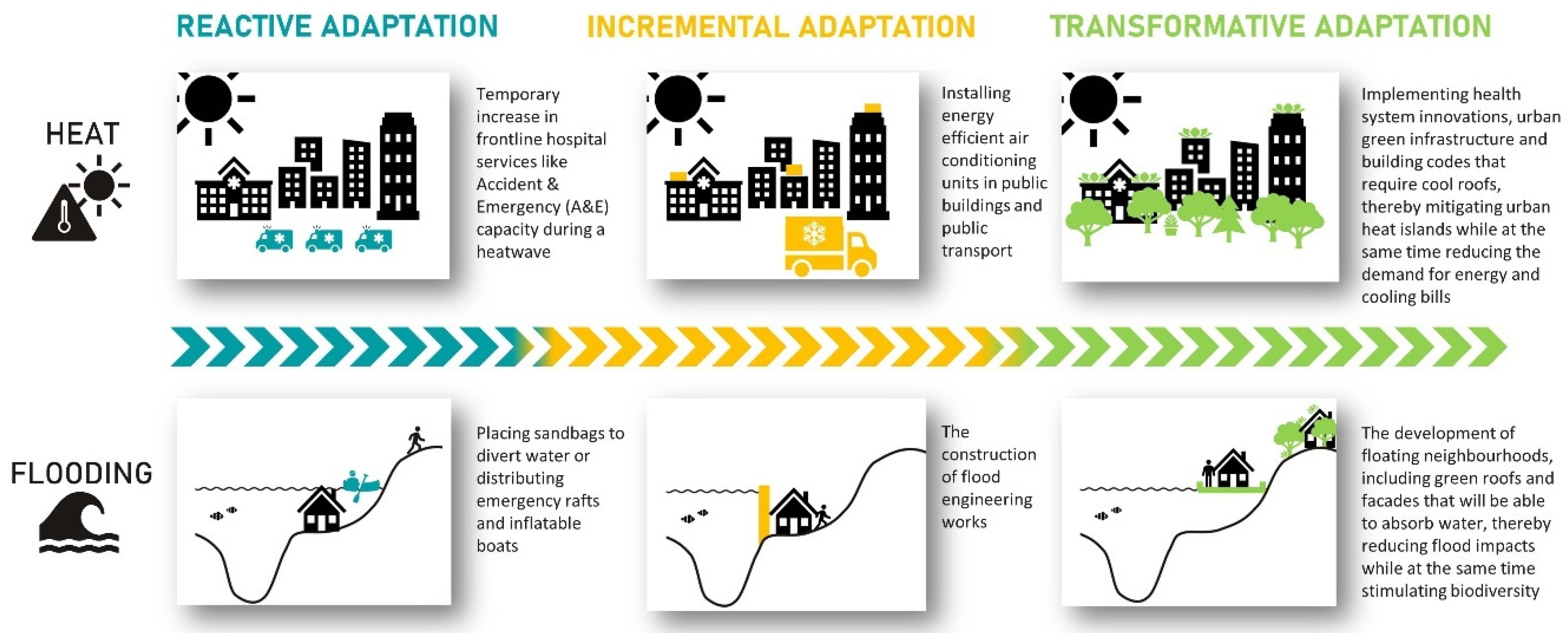
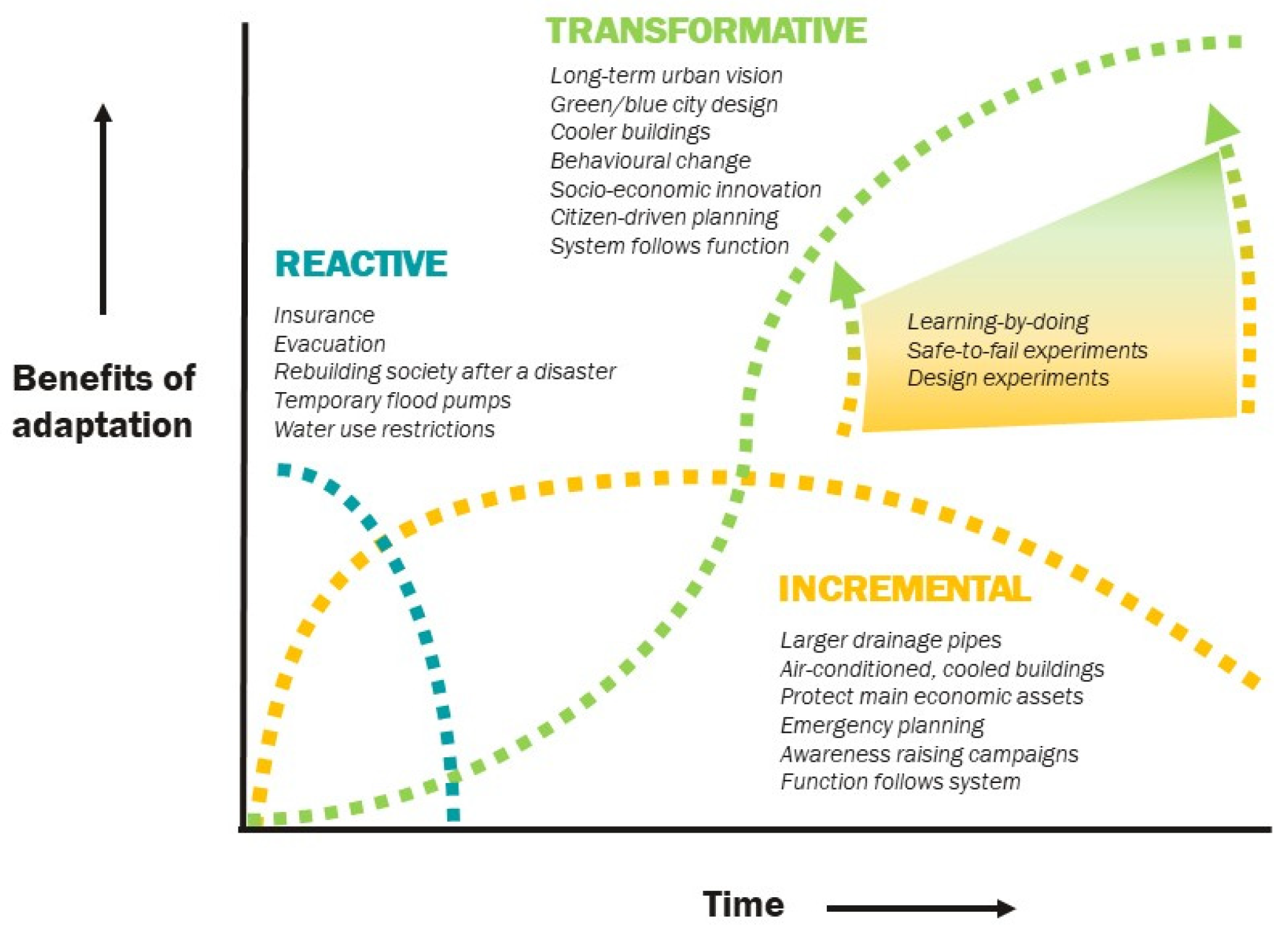
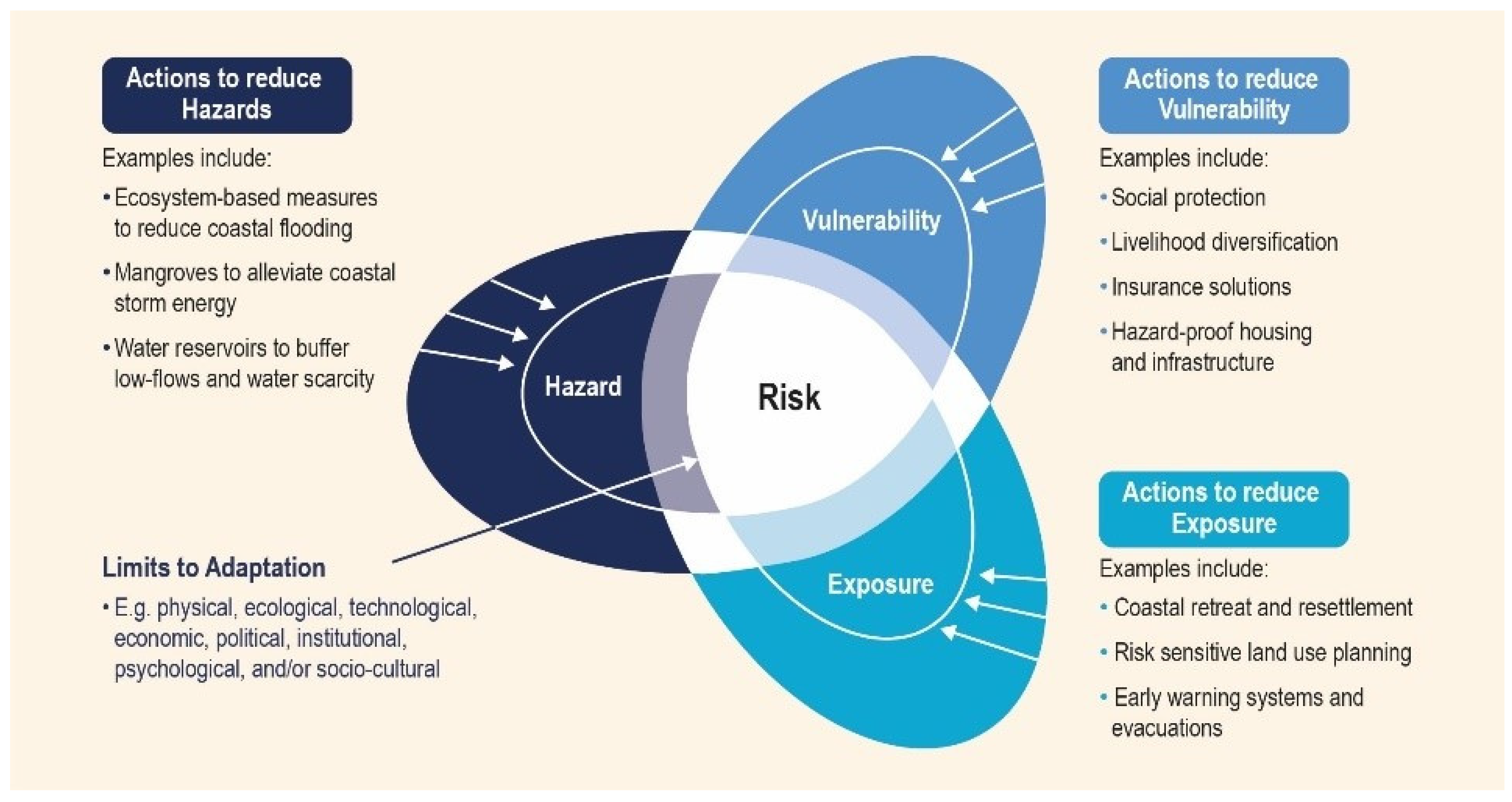
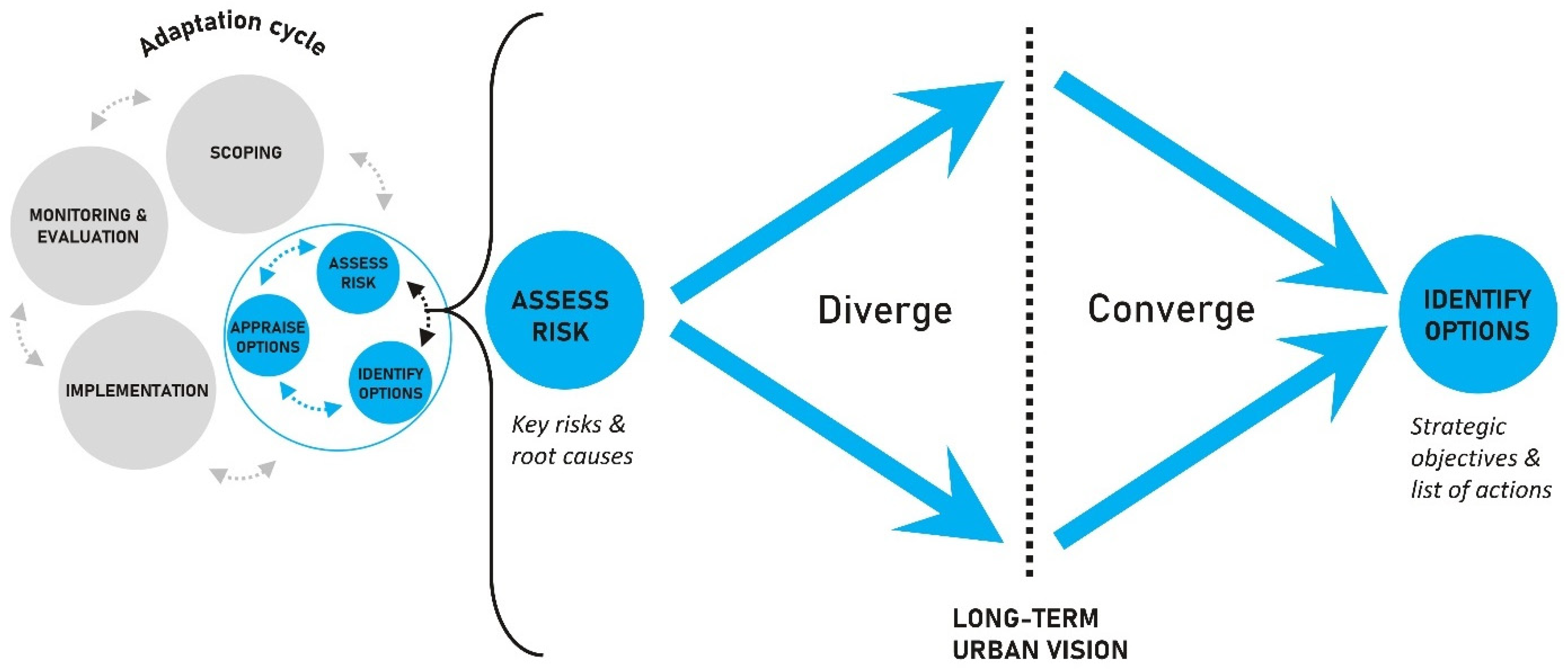
This essay addresses the long-term effectiveness of urban climate change adaptation approaches, based, inter alia, on work in the C40 city network. We argue that in most cities, the dominant framing of climate risk management almost exclusively focuses on short-term incrementalities and preventive solutions directly tackling hazards, vulnerability, and exposure. This approach has serious flaws, leading to missed opportunities for longer-term sustainable urban development. Until very recently, climate science usually provided only a marginal input to long-term urban planning and design. We argue that any analysis of urban climate risk management and the associated climate services should be broadened beyond solely climate focusing on impacts. In this context, the development of positive urban visions is a key gap for both research and practice. A change is required from negatively addressing risks to positively pursuing a positive vision of attractive, resilient, and sustainable cities. The emphasis on short-term incremental solutions should shift towards long-term transformation. This embodies a paradigm shift from “function follows system” to “system follows function”. For many cities, this also means a change in procedural practice from siloed top-down to integrated, participatory urban transformation. Our main argument in this paper is that simple, longer-term sustainable urban transformation would not only reduce climate risks but also enhance overall environmental quality, economic opportunities, and social wellbeing.
Keywords: climate change adaptation; urban development; transformative adaptation; urban visions climate change adaptation; urban development; transformative adaptation; urban visions