1. Introduction
Sitting at an elevation of 2993 m above sea level, Cirque Peak is considered an easy scramble in the Canadian Rockies. Scrambling occupies a space between hiking and rock climbing, requiring the use of one’s hands to assist ascent, often without protective equipment such as ropes. The activity has grown increasingly popular in recent years due to advancements in mapping software, expanded cellular networks, GPS-enabled devices, and the influence of social media on wilderness recreation (
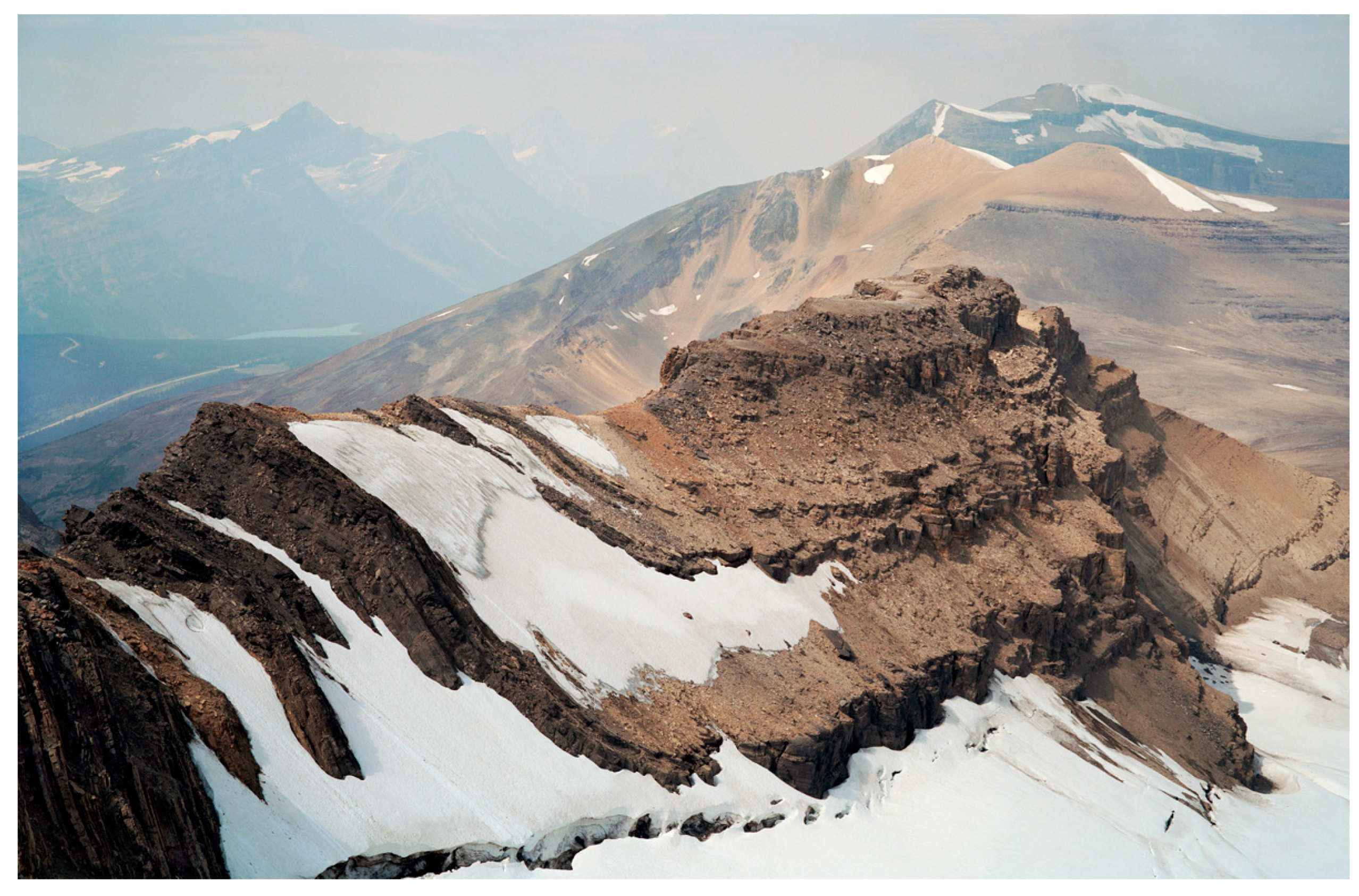
De L’Eglise 2019). Cirque Peak was my first scramble in the Rockies, and I brought a Fuji 6 × 9 cm medium-format film camera as part of my 2006 MFA thesis research at Concordia University. My objective at the time was to capture scenes from the mountains of Western Canada that engaged with the wilderness myth as perpetuated by iconic landscape artists such as the Group of Seven—a collective of early 20th-century Canadian landscape painters.
In one photograph from that ascent, I deliberately included the Icefields Parkway, visible along the left side of the frame, as well as the spur road leading to the Peyto Lake viewpoint (see
Figure 1). Retrospectively reflecting on Siobhan Angus’s discussion of David Milne’s concept of the “dazzle spot,” I now recognize that I composed the image to draw the viewer’s attention toward this human incursion before allowing the eye to move through the landscape (
Angus 2025). I flagged the photograph on my contact sheet for potential inclusion in my MFA exhibition and produced both a high-resolution scan and a 40 × 60-inch chromogenic print. Yet I ultimately abandoned the image due to the haze blanketing the distance. I recall feeling deprived of the expansive view from the summit because of wildfire smoke. At the time, the aesthetics of smoke conflicted with my desire for clarity and unobstructed vision.
In retrospect, this decision reveals an aesthetic blind spot. The smoke that compromised the image was not incidental but indicative of a high-severity fire season, with numerous fires burning in the region surrounding Jasper National Park. The image I rejected may, in fact, have been the most prescient in the series—a visual marker of climate change before I had the conceptual language to recognize it as such. My aesthetic resistance to smoke effectively foreclosed an engagement with what environmental historian Stephen J. Pyne would later describe as the Pyrocene: a fire-defined epoch in which combustion becomes a dominant planetary force (
Pyne 2021).
Smoke from wildfires and other sources—despite being the most pervasive and deadly aspect of combustion—has been marginalized within visual culture. While flames dominate photographic, journalistic, and artistic representations of wildfire, smoke operates as a more diffuse and temporally extended condition that resists spectacle. By attending to its aesthetic, archival, and experiential dimensions, I suggest that smoke offers a critical framework for rethinking artistic practice, environmental perception, and the lived realities of wildfire in the Pyrocene.
2. Fire, Colonialism, and the Pyrocene
The emergence of contemporary wildfire regimes is inseparable from the intertwined histories of colonialism and fire management. Although the term Anthropocene was formally rejected in 2024 by the International Union of Geological Sciences and the International Commission on Stratigraphy (
Waters 2024), it continues to circulate widely in public and academic discourse. Its critiques—particularly those foregrounding colonialism—remain essential. Within the 2018 exhibition catalogue for Edward Burtynsky, Jennifer Baichwal and Nicholas de Pencier’s
Anthropocene, Heather Davis and Zoe Todd are invoked to position colonialism as foundational to contemporary environmental crisis (
McManus 2018;
Davis and Todd 2017). Colonialism dramatically altered the ways in which Indigenous peoples on every continent (except Antarctica) had historically cohabitated with fire on the land.
Speaking as a settler on unceded syilx territory in the Okanagan Valley of British Columbia, it is crucial to acknowledge that fire has long been a tool of ecological stewardship. The syilx observed the behaviour of fire on the land and adapted it for utilitarian purposes, including driving game, renewing grasses and berries, and facilitating travel. These practices, often referred to as cultural burning, contributed to landscapes characterized by frequent, low-intensity fires (
Christianson 2019). Seeing as how these customs have been in place since time immemorial, there is no way of differentiating whether fire-adapted species such as the ponderosa pine developed their thick fire-resistant bark and practice of self-pruning their low-hanging branches in relation to human inputs or whether humans simply recognized these characteristics and worked in harmony with them.
Colonial settlement disrupted these systems. The banning of Indigenous burning practices, coupled with aggressive fire suppression policies, contributed to what is now described as a global fire deficit. Fewer fires burn, but those that do are larger, more intense, and more destructive. Within this altered regime, smoke becomes not simply a byproduct but a defining atmospheric condition—one that reflects both ecological imbalance and the legacies of imposed fire suppression. To foreground smoke, therefore, is also to foreground the historical conditions that have made contemporary fire behaviour—and its atmospheric consequences—possible.
3. Against Spectacle: Smoke and Visual Culture
Contemporary wildfire imagery is dominated by spectacular representations of flame: burning homes, towering fire columns, and apocalyptic skies. As Angus has observed, such images risk aestheticizing catastrophe, producing visual repetition that can normalize crisis rather than mobilize response. Angus claims that “most of these images emphasize the spectacular and surreal nature of fire. There is no guarantee, however, that these environmentally activist photographs will result in greater empathy or action. Indeed, in many cases, they aestheticize or anesthetize. Sublime images of disaster sensationalize crises. The repetition of these visual forms serves to normalize catastrophe” (
Angus 2022). These spectacular images of fire, while visually compelling, often compress wildfire into a singular moment of destruction.
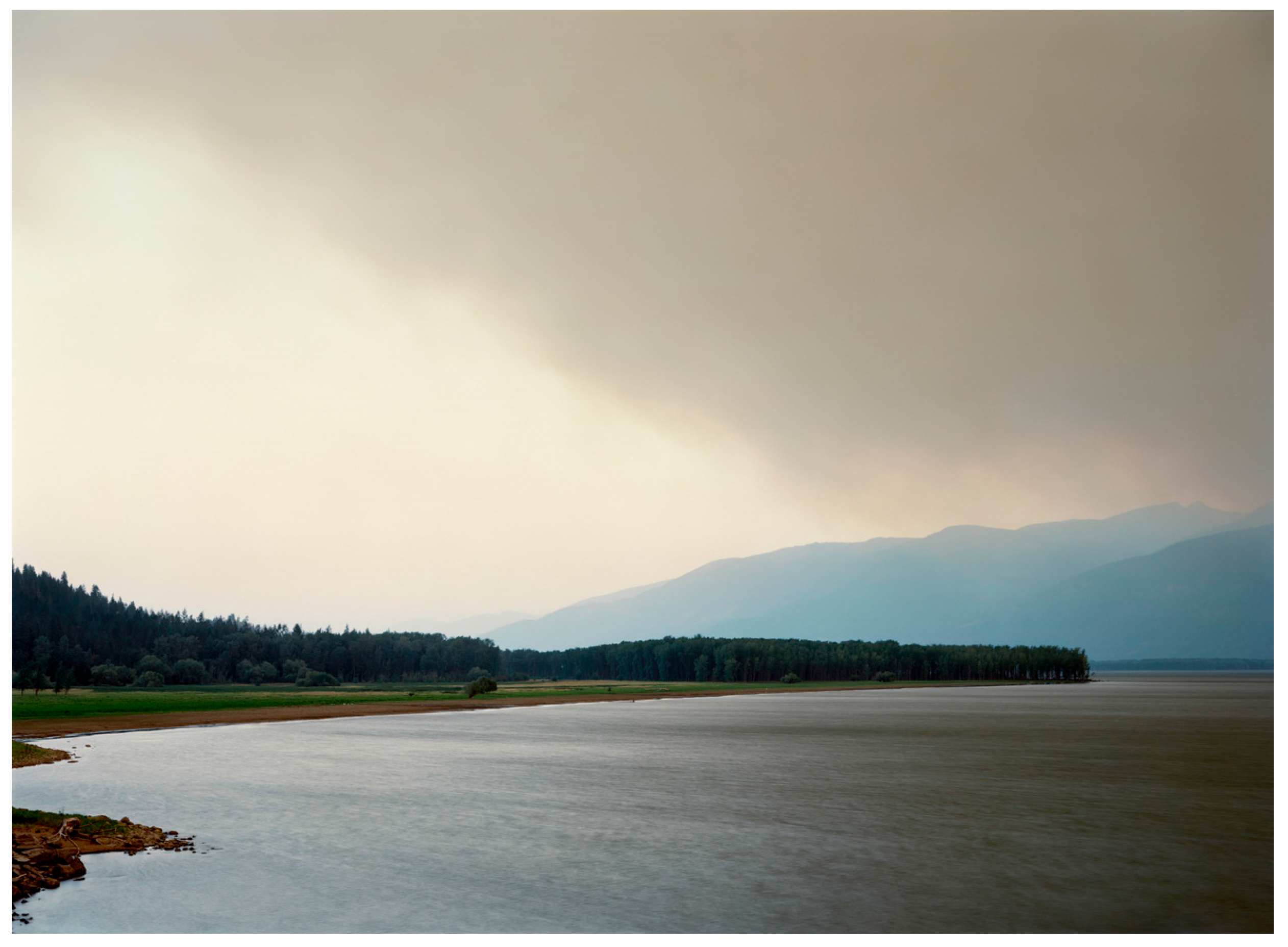
Smoke operates differently (See
Figure 2). It is diffuse, lingering, and resistant to visual clarity. It disperses unevenly, obscures depth, and complicates spatial orientation. Its effects accumulate over time, often becoming legible only in retrospect. As such, smoke resists the conventions of landscape representation that privilege distance, clarity, and compositional coherence.
This distinction became acutely apparent during the 2023 wildfire season in the Central Okanagan. While flames dominated media coverage in the early stages of the McDougall Creek wildfire, it was smoke that defined the lived experience of the disaster in its aftermath.
4. Case Study: The 2023 Okanagan Fires
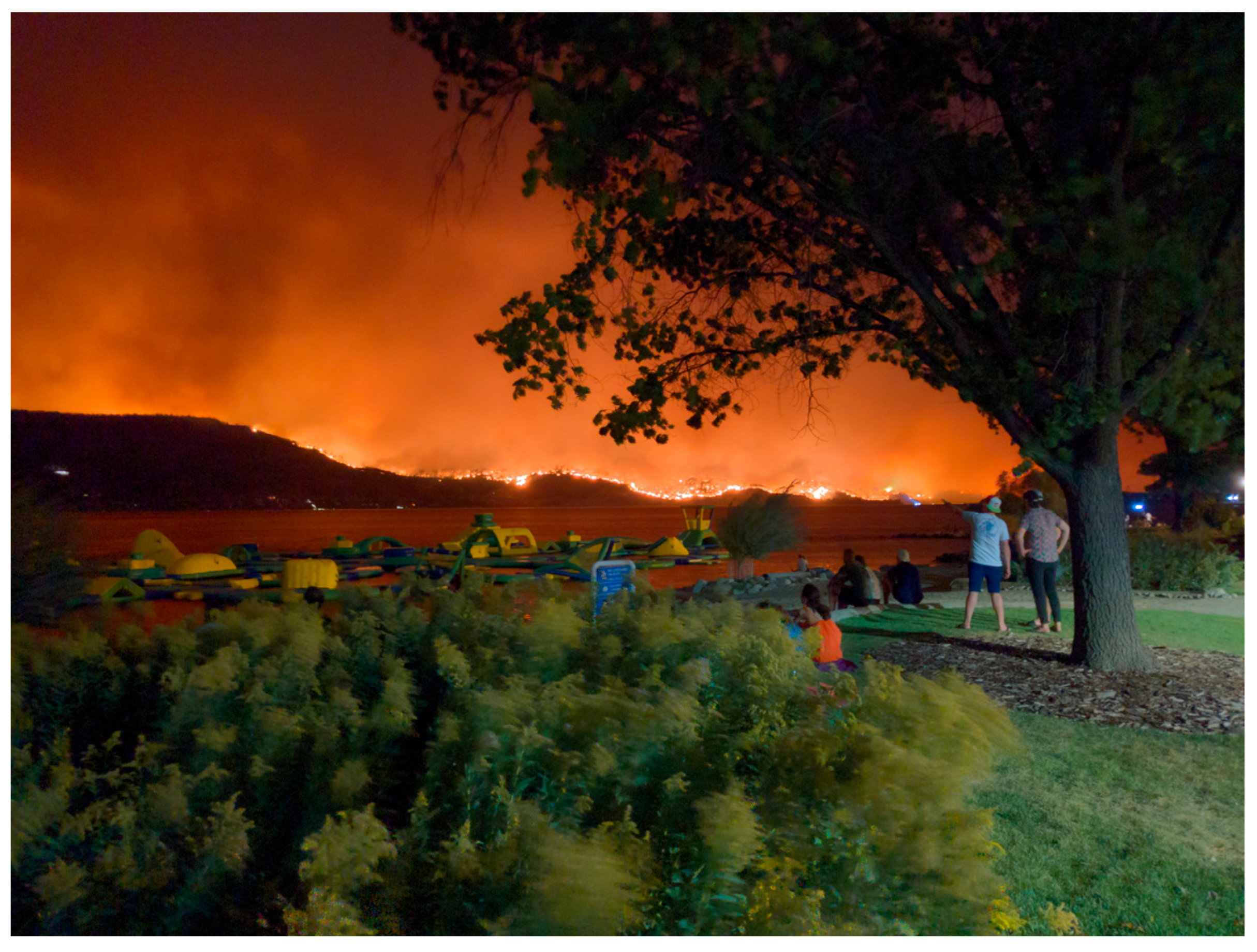
The McDougall Creek wildfire ignited ten kilometres from West Kelowna, BC, on the evening of 15 August 2023 (See
Figure 3). By 17 August, a pillar of smoke resembling a mushroom cloud rose as wind-driven flames expanded the fire from 64 to 6800 hectares in less than twenty-four hours (
Vikander 2023). The fire ultimately burned nearly 14,000 hectares along the west shore of Okanagan Lake and spotted across the water, igniting two additional fires on the east shore. Collectively known as the Grouse Mountain Complex, these fires forced more than 35,000 evacuations, closed Kelowna International Airport, and prompted a local state of emergency.
Spectacular images circulated widely as media outlets descended on the region. Yet as journalists and tourists departed, what remained was a dense, toxic atmosphere composed of burned ecological matter and the remnants of hundreds of destroyed structures. After the initial firestorm, an uncanny stillness settled over the valley. Smoke obscured the landscape, complicating damage assessment and shaping how residents experienced loss and uncertainty.
From across Okanagan Lake, residents used binoculars to search for signs of their homes. For those who had lost everything, smoke offered a fragile form of privacy, shielding devastation from view. In this sense, wildfire was not experienced as a discrete event but as an ongoing atmospheric condition. Smoke structured daily life, mediating visibility, movement, and perception in ways that extended far beyond the initial moment of ignition.
5. Smoke as Lived and Embodied Condition, Part I
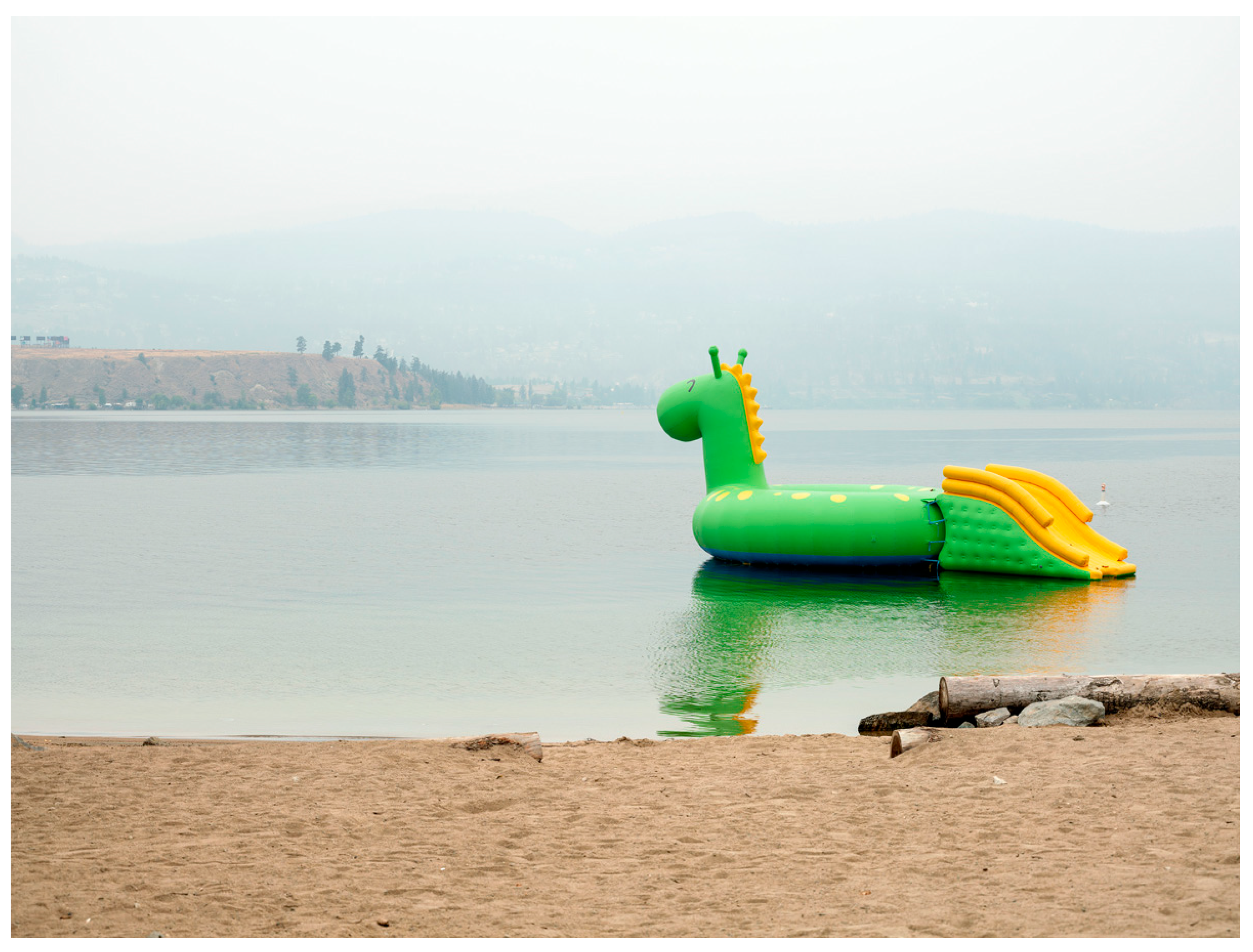
While many residents evacuated, I remained in the region, producing photographs from public beaches (See
Figure 4). Wearing an N95 mask, I cycled along the lakeshore, encountering spaces typically defined by summer leisure now marked by absence and stillness. The sensory experience of smoke—its smell, density, and bodily effects—became central to my understanding of wildfire.
The health implications of smoke further underscore its significance as the main marker of the Pyrocene. While eight fatalities were directly attributed to Canada’s 2023 wildfire season, recent studies estimate that 5400 acute and 64,300 chronic deaths in North America and Europe were related to PM2.5 exposure from Canada’s 2023 fires (
Zhang et al. 2025). Fine particulate matter (PM2.5) penetrates deep into the lungs and bloodstream, contributing to both acute and chronic health conditions.
During a recorded walk with West Kelowna Fire Chief Jason Brolund, I developed
The Scars in Our Community, a fifteen-minute audio work accompanying a series of photographs commissioned by the Kelowna Art Gallery shortly after the 2023 fires (
Rutkauskas 2024;
Brolund 2024). Brolund described the cumulative toll of smoke exposure on firefighters working long, consecutive shifts with limited protection. While past assumptions framed wildfire smoke as less harmful, emerging science—and institutional recognition by WorkSafeBC—links it to serious illness, including cancer. Even mitigation measures, like post-exposure sauna use, underscore the limits of current protections and the emotional weight of knowing risks are often only acknowledged after harm occurs (
Rutkauskas 2024;
Brolund 2024).
Brolund emphasized that smoke is unavoidable in meaningful wildfire management: communities must choose between controlled smoke from prescribed burns or uncontrolled smoke during peak fire season. He highlighted the importance of Indigenous-led practices, particularly cultural burning by the syilx and other Nations (
Rutkauskas 2024;
Brolund 2024). These insights resurfaced during a 2025 workshop that I participated in at the Squamish Lil’wat Cultural Centre in Whistler, BC, where discussions prioritized infrastructure protection while largely overlooking smoke as an ongoing public health issue—revealing a persistent gap in how wildfire risk is understood.
6. Smoke as Lived and Embodied Condition, Part II
Recent scientific research further complicates smoke as a visual or atmospheric phenomenon. A 2024 Nature Communications study, “Metal Toxin Threat in Wildland Fires Determined by Geology and Fire Severity,” demonstrates how high-intensity fires alter mineral soils, generating toxic metals such as carcinogenic hexavalent chromium. These substances pose serious public health risks through the inhalation of smoke and dust (
Lopez et al. 2023). Wildfires also mobilize synthetic materials from homes and industrial sites, thereby uniting organic combustion with industrial pollution. In his book
Firestorm: How Wildfire Will Shape Our Future, Edward Struzik writes about the Libby Mine Superfund site in Montana, where asbestos fibres embedded in tree bark were redistributed over long distances by fire.
Despite growing awareness of these risks, firefighters are often unable to consistently use adequate respiratory protection. As Struzik notes, “respirators are a problem for firefighters on the front lines … The mask can plug, or safety glasses can fog up. More often than not, firefighters dispense with their respirators after a while … Jamie Coutts, the fire chief who fought wildfires in Slave Lake and Fort McMurray, concedes that he has a better than average chance of getting cancer. ‘It is what it is’, he said. ‘That’s the life of a firefighter’” (
Struzik 2017). This acceptance of exposure—normalized through necessity—resonates with another recent experience in my hometown.
I first met Allan Willcocks at the Telemark Nordic Centre in West Kelowna shortly after moving to the Okanagan in 2016. Easily recognizable in a teal Patagonia jacket, pink ski goggles, and a pocket radio tuned to classic rock—ostensibly to deter cougars—Allan became a familiar presence and a friend. A former forester and firefighter, he had spent nearly four decades working in and around wildfire. He coughed frequently and spoke openly about diminished lung capacity, symptoms that worsened in cold winter air.
After returning from a four-month professional development leave in late 2024, I was struck by Allan’s absence from the ski trails. I soon learned that he had died on 27 July 2024, at the age of seventy-one. In lieu of flowers, his family requested donations to the BC Wildfire Relief Fund in support of those affected by the 2023 fires that had threatened his own home. This gesture was striking, given Allan’s vocal criticism of the BC Wildfire Service’s response to the McDougall Creek fire. Until months before his death, he had continued to speak with the media about the need to restructure provincial firefighting practices and reinvest in initial attack capacity (
Lorraine 2024).
7. Smoke and the Historical Record
In 2021, I was conducting research into photographic records on wildfire and preparing a publication for the Grantham Foundation for the Arts and the Environment. Responses from local institutions revealed a striking absence of such material. The Kelowna Public Archives and the Museum & Archives of Vernon yielded only a handful of images, suggesting a significant gap in the visual record. I was astounded to receive a reply from the Archivist in Vernon that stated, “In response to your inquiry re: forest fire images, there seems to be a significant gap in our collection relating to that subject. We have a hazy 1921 photo of a fire on a hill in Coldstream … a water bomber in action circa 1998, a forestry crew camp in 2003, and cots set up for evacuees in 2017. That is basically it for this topic. I’m sorry that we can’t be of more help to you” (
Bell 2021).
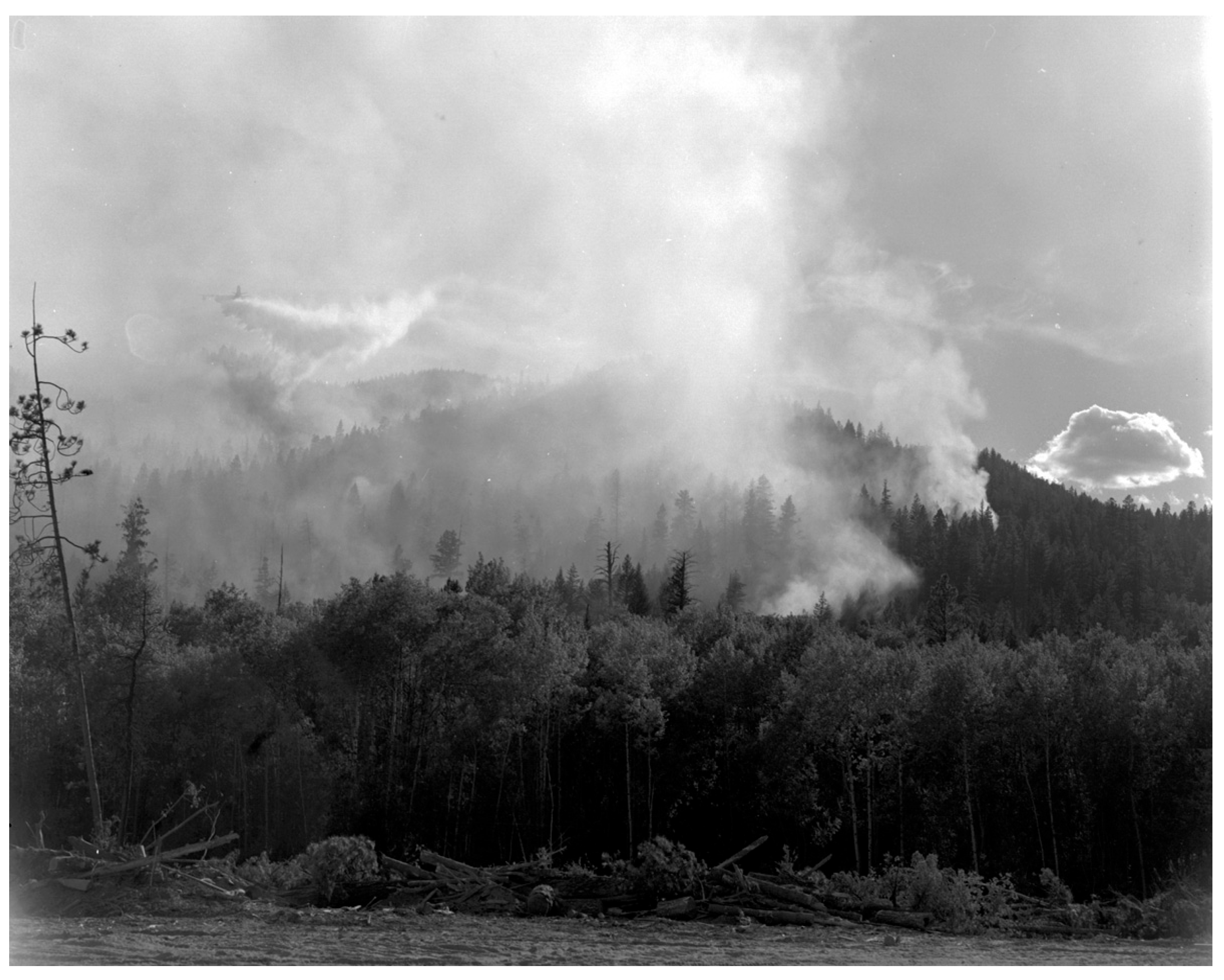
Expanding my search to the Royal BC Museum, I located images depicting fire suppression efforts and post-burn landscapes, including a Martin Mars water bomber combating the 1960 Dean Fire (See
Figure 5). Results associated with the keyword “smoke”, however, are more often associated with industrial pollution than wildfire. While this distinction suggests that smoke has historically been framed as an industrial byproduct rather than an ecological condition, the two are dramatically intertwined.
In
A Dirty History of Photography: Chemistry, Fog and Empire, Michelle Henning traces how both photographic aesthetics and materials have been affected by atmospheric conditions. Focusing on industrial pollution in the region surrounding London, where Ilford developed its production facilities as the company rose to prominence, Henning provides examples of how pollution, including smoke from domestic and industrial sources, inhibited the photographic process (as a legitimate veil) and also how smoke acted upon photographic materials and caused them to chemically ‘fog’ (
Henning 2025). Eventually, Ilford relocated its facilities to higher ground along the western reaches of the town so that pollutants would have less impact on account of the prevailing winds. In 1938, Ilford introduced “air washers” at their Selo factory—a precursor to modern air conditioning—which aided in reducing the impacts of pollutants on photosensitive materials (
Henning 2025). The archival record of smoke, therefore, reflects not only ideological frameworks that shaped what was deemed worthy of visual record, but also reveals a technological concern that posed an obstacle in capturing scenes with objective precision.
Within a paradigm that positioned fire as an enemy to be eradicated, smoke became something to eliminate rather than represent. At the time when many of the photographic records I was seeking were being produced, the U.S. Department of Agriculture’s campaign icon Smokey Bear’s battle cry of “only you can prevent forest fires” had already been raging. Only recently have we begun to collectively acknowledge the benefits of deliberately applying fire to the land. This is variously referred to as good fire, beneficial fire or intentional fire by Indigenous communities as well as within scientific and academic spheres (
Christianson 2019). As the settler-colonial legacy of Smokey Bear continues to live on, we need to act against what Kyle Powys Whyte refers to as the “vicious sedimentation” that has accumulated as layers upon layers of deep-seated fear of fire (
Vinyeta and Bacon 2024). While Smokey places the onus on the individual and fosters human exceptionalism over the more-than-human community, we will only learn to coexist with wildfire through collective community action, by decolonizing fire practices and recognizing how government and industry continue to sell an unchanging message to a constantly changing audience (
Vinyeta and Bacon 2024).
8. Atmospheric Representation
Atmospheric effects have long been central to painting, from J.M.W. Turner’s explorations of light and haze to Impressionist engagements with industrial pollution (
Angus 2025). While the aesthetics of smoke can certainly be associated with wildfire, it is important to contextualize wildfire smoke within an expanded atmospherics that includes industrial pollution and the destruction of natural resources associated with the military-industrial complex. In Pyne’s 2012 book
Fire: Nature and Culture, he argues that “we rarely study fire for itself; rather, we understand fire within the context of other disciplines … In one context it is chemistry, in another physics, in still another biology, or even anthropology. We know it when we see it, but how we see it shapes how we define what we think we know” (
Pyne 2012). Pyne goes on to close out this chapter by stating that “people reshape fire and have leveraged its presence on the planet, but with or without people, fire will endure as a trait both intrinsic and unique to earth” (
Pyne 2012). When faced with images of smoke, we confront painful histories including industrialization, war, settler-colonialism and climate change. Our ambivalence towards smokey landscapes runs deeper than being denied a spatial depth. It involves acknowledging traumatic moments in our collective history. This is what Henning refers to as the “interaction of the natural and the social, and the disciplines of geophysics and history” (
Henning 2025).
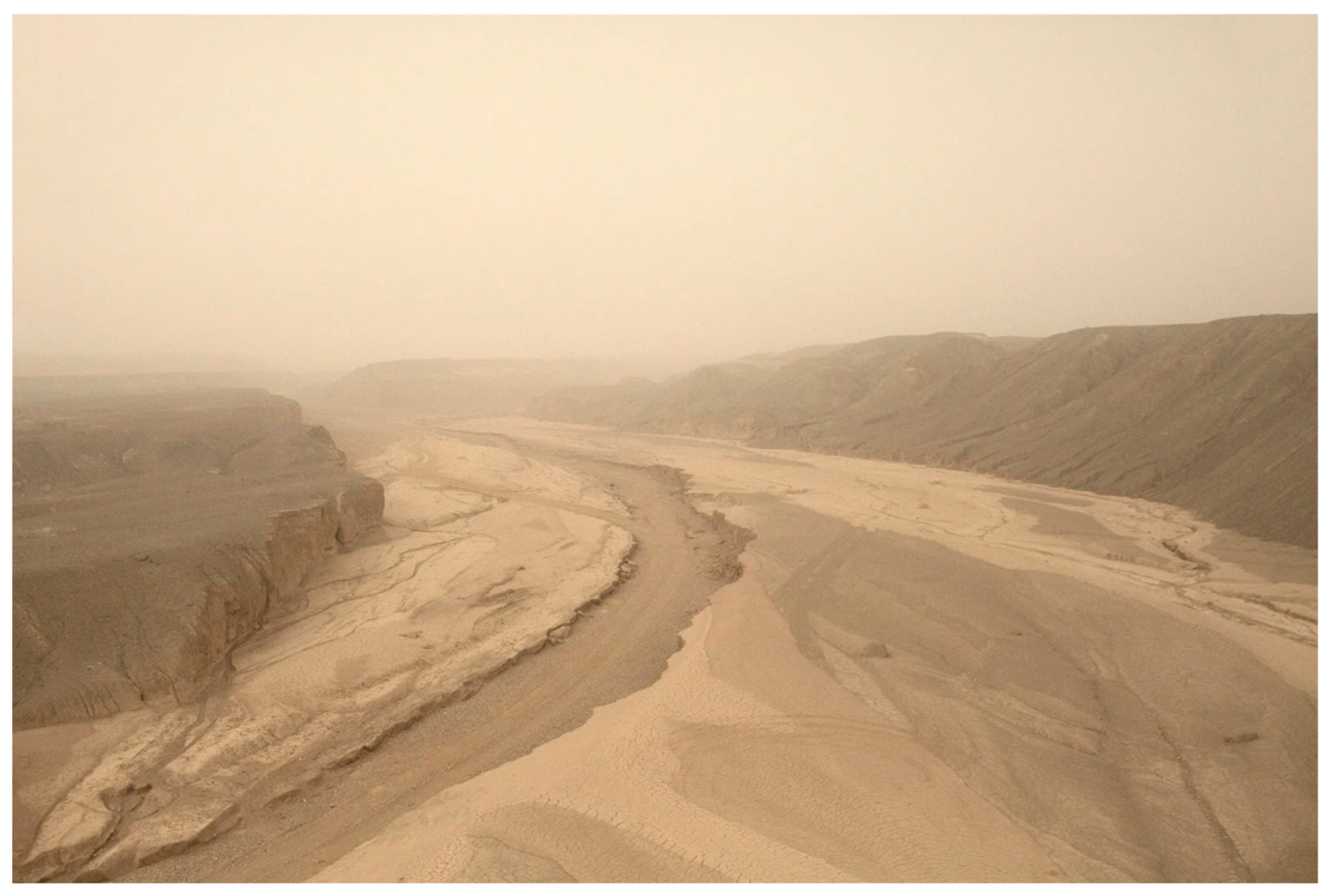
Benoît Aquin’s 2006 series titled
The Chinese ‘Dust Bowl’ (See
Figure 6) focuses on the desertification of portions of China. Aquin trained his camera on both urban and rural landscapes, draped in yellowed and cream-coloured hazes. In certain images, the viewer struggles to differentiate the parched earth from the sky. In other photographs, smoke stacks and industrial complexes peek out from the haze, drawing a direct comparison between the effects of climate change and the fossil fuel industries that most radically contribute to its acceleration.
In a 2009 article appearing in Ciel Variable magazine, William A. Ewing recounts how the idea of this series initially came to Aquin while crossing the Gobi Desert in 2002. Ewing reflects how “there is a great beauty to these images—a kind of Turneresque swirl of form in which people have little more substance than insects—but this beauty is held in check by the reality of what we’re looking at: catastrophe, in fact, as a ballooning Chinese population squeezes (or is squeezed) onto land surfaces that can’t possibly support it in the long term.” (
Ewing 2009). With his series, Aquin won the inaugural Prix Pictet in 2008 when the theme was
Water. His artist’s statement reflects on how, at the time of writing, deserts covered 18% of China. 78% of these deserts were natural, yet 22% were human-caused. The dust storms that he documented were attributed to overgrazing by farmers. Once the soil is barren, any remaining topsoil is swept up and carried great distances by the wind. The most dense storms proliferate the capital, Beijing, before moving on to Korea and Japan, and yet the massive clouds make their way across the Pacific and reach North America (
Aquin 2008). Not dissimilar to the fugitive nature of wildfire smoke examined earlier as a lived and embodied condition, the effects of desertification have been, and continue to be, felt on a local-regional level by millions of Chinese, but also by tens of millions of global citizens who experience the effects of dust storms from a greater distance.
The Prix Pictet, whose official motto is “Harnessing the power of photography to draw global attention to issues of sustainability”, waited thirteen years before announcing the theme of the ninth cycle of the award—
Fire. Of the twelve photographers who were shortlisted for this theme, only two engaged directly with wildfire as a manifestation of the element. The winner, Sally Mann, presented a series of images titled
Blackwater that were made around the Great Dismal Swamp, a Virginian landscape associated with the slave trade that burned on and off for years after a 2008 wildfire was caused by logging equipment. But it is Mark Ruwedel’s series
LA Fires, 2017–2020 that is most similar to Aquin’s
Dust Bowl. Both series present human figures as insects dwarfed by the surrounding land; they incorporate a bleak approach with detritus strewn in the foreground, and both photographers allow a diffuse haze to ‘fog’ their images. Prix Pictet Chair, Stephen Barber, wrote of the theme that “fire has hardly been out of the news since the inferno that consumed Notre Dame in Paris in early 2019. We have seen record rainforest blazes in the Amazon, forest and bush fires in Australia and conflagrations in California. It is the fourth element. Fire destroys, and it renews. Fire means survival, renewal, and economic prosperity. Yet our abuse of this most capricious of elements is the source of most of our environmental woes.” (
Barber 2021). Both dust and smoke have acute repercussions for humans situated within close proximity to their centres of origin, but it is their chronic and global impacts that are most pernicious (
Zhang et al. 2025).
9. War, Heroism, and the Iconography of Smoke
Members of the aforementioned Group of Seven, including A.Y. Jackson and Franz Johnston, served as war artists during the First World War. Their depictions of devastated landscapes—marked by stripped vegetation and atmospheric residue—bear striking similarities to post-fire environments. These aesthetic and thematic traditions persist through the increasing number of photojournalists and war photographers representing the climate crisis as a humanitarian issue. Both historically and contemporaneously, smoke operates as a visual and conceptual bridge between ecological and military destruction. In both cases, smoke obscures, dramatizes, and transforms the landscape, complicating distinctions between natural and human-induced catastrophe.
One artist working at the nexus of climate and warfare is Charles Stankievech. Holding a longtime interest in the Cold War—a war defined by nuclear science—Stankievech writes in his 2026 article in the e-flux Journal that the so-called Warm War will be predicated upon geoengineering as a weapon. While geoengineering is commonly framed as a utopian concept, deploying a range of technological incursions in an attempt to cool the climate, Stankievech postulates on the military potential of a warming climate. Beginning with historical examples such as the Epic of Gilgamesh, wherein weather is used as a “divine weapon”, to Sun Tzu telling of the importance of weather for military success in The Art of War, Stankievech then moves into an argument regarding how the Warm War “refuses to treat the atmosphere as a neutral medium for strategy and insisting instead that every projection, every model, every ‘scenario,’ is already a political decision about whose futures are expendable.” (
Stankievech 2026) Just as clean water has become a resource of privilege, so too is clean air.
Stankievech’s 2011 single-channel video installation titled
LOVELAND (See
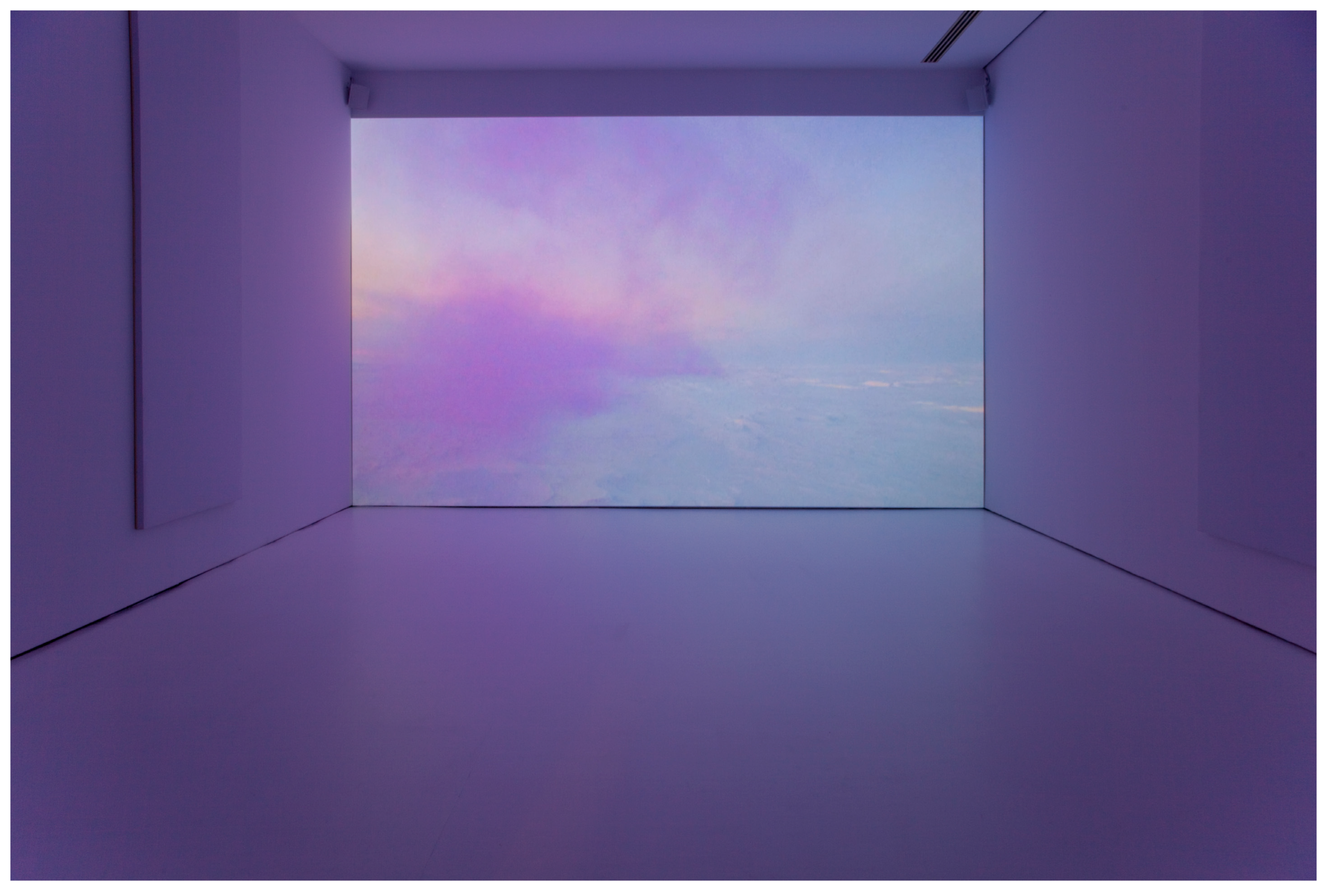
Figure 7) was shot between December 2009 and January 2010 on the Arctic Ocean north of the BAR-3 Distant Early Warning Line, which was a North American Aerospace Defense Command (NORAD) surveillance radar outpost (
Stankievech 2011). What initially begins as a sparse, snow-covered landscape is soon interrupted by waves of purple smoke that grow increasingly thick. The exhibition and associated book unite the video installation with scientific resources, popular media references, and a facsimile of M.P. Schiel’s apocalyptic novel from 1901, titled
The Purple Cloud. In Schiel’s novel, the narrator—the sole survivor of a poisonous volcanic eruption in the region surrounding Mount Tambora—proceeds to burn down cities including Paris, London and San Francisco as he descends into madness. The Mount Tambora reference is significant, insofar as this Indonesian eruption in 1815 had wide-reaching climate impacts, lowering global temperatures and resulting in what is often referred to as the “year without a summer”. Forced indoors due to the smoky skies, persistent cold and rain that proliferated during the following years, Mary Shelley crafted her Modern Prometheus, Frankenstein, in 1818 (
Roushan and Stankievech 2024). Accordingly,
LOVELAND merges a Cold War landscape shot in the very environment most prone to global warming (the Arctic), with the multifarious implications of smoke as an actor upon climate change, as a historic trigger of supernatural horror resulting from scientific experimentation and finally as a literal representation of warfare through the use of a smoke grenade as a signalling or screening device.
10. Identifying and Dismantling Nostalgic Archetypes of Fire
In their 2022 article
How Nostalgia Drives and Derails Living with Wildland Fire in the American West, the authors point to how the condition of nostalgia, literally a painful longing to return home, was first diagnosed in soldiers and exiles in the 17th century. Through the examination of four nostalgic figures, the Giant Sequoia, the Heroic Firefighter engaged in the “Good Fight”, the Lone Frontiersman and the Noble Savage, the writers trace how nostalgic conceptions of these characters continue to live on and inform our affective responses to wildfire today (
Ladino et al. 2022). They make the connection between wildland firefighting and warfare abundantly clear when examining the archetype of the Heroic Firefighter in relation to media headlines. “Headlines such as ‘More than 700 firefighters lose ground to raging Nevada wildfires 24h after the funerals of 19 colleagues who died’ and ‘Canada provides assistance to California in battle against historic wildfires’ could easily replace ‘firefighters/colleagues’ with ‘soldiers’ and ‘wildfires’ with ‘wars’ without changing the sentiment.” (
Ladino et al. 2022).
The photographs in Charles-Frédérick Ouellet’s series titled Ligne de foudre exemplify two nostalgic figures, the Heroic Firefighter and the Lone Frontiersman. In 2023, Ouellet—a Québec-based photographer who works at the intersection of documentary and photojournalism—embarked on a unique journey to capture the human aspects of firefighting. To achieve this, he enrolled in training and enlisted as a wildland forest firefighter with SOPFEU (Société de protection des forêts contre le feu), the official firefighting agency responsible for forest fires in the Province of Québec. Ouellet suggests that this was the only way for him to create the kinds of images that he wished, and in 2023, he was embedded as a firefighter within catastrophic fires raging through the boreal forests of Eastern Canada. While he brought a camera along, his role was to work as a functional member of a fire crew. Ouellet has extended this practice of embedding with his most recent series Vers l’Est, which has unfolded over a two-year period in the Donbas region of Ukraine.
In Ligne de Foudre, his black-and-white images offer an intimate glimpse into the lives of the firefighting crew. Photographs of precarious trees shot from eye level that are still smouldering are interspersed with aerial infrared maps of the smoking fires from far above the earth’s surface. Firefighters are shown at work, and quietly resting in the forest, exhausted from their labours. In the series, Ouellet also includes a self-portrait that was made at the end of a shift. The effects of the fire are emblazoned on his skin. Clearly fatigued, he is covered in dark soot, revealing both the physical and mental costs of his labour.
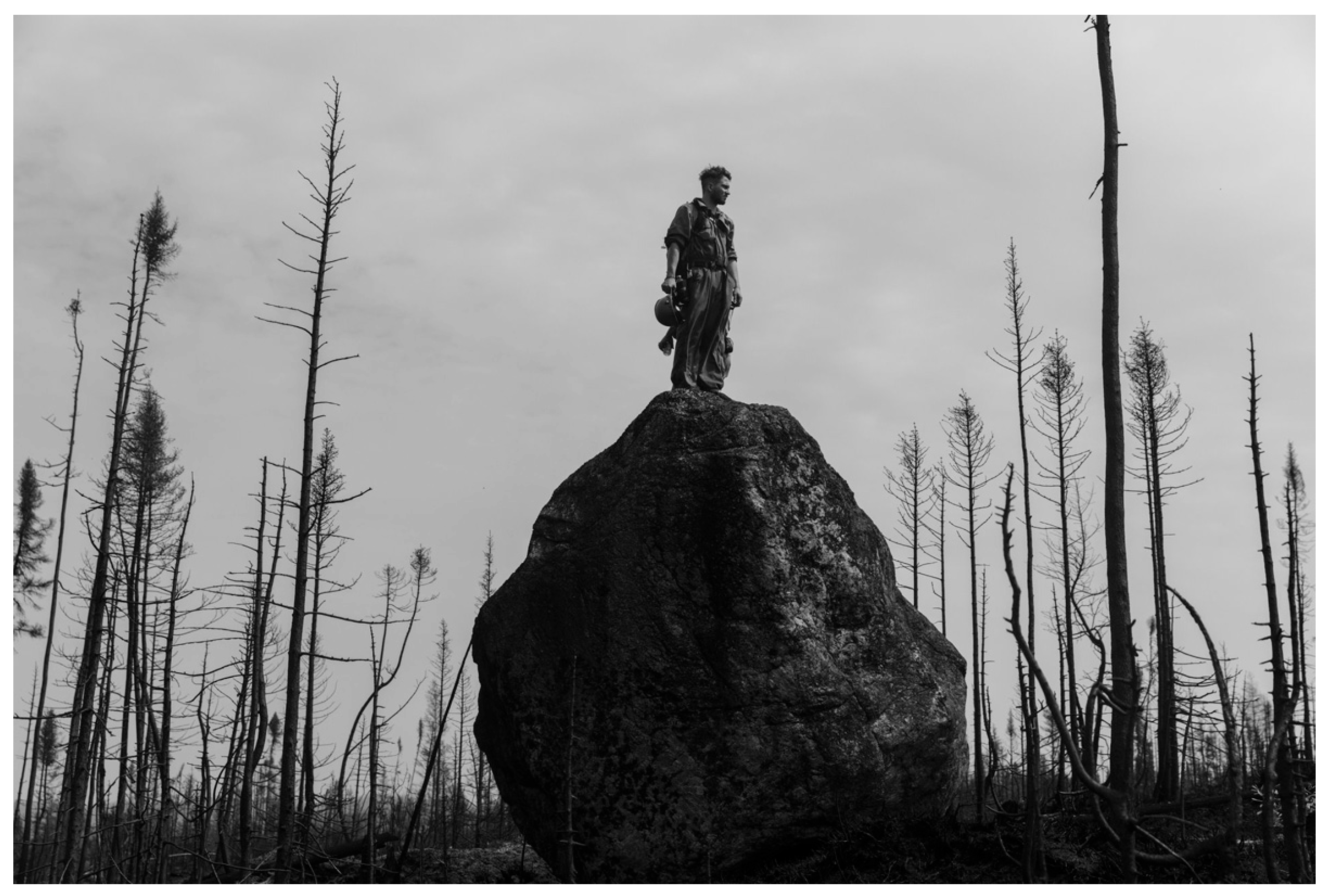
One particular photograph, titled
A Day in the Life of a Québec Fire Crew (See
Figure 8), depicts a lone firefighter perched atop a massive granite boulder. Surrounded by the burnt remnants of what appear to be Black Spruce trees, the firefighter resembles a Roman sculpture, adorned in flowing garments. Their gaze seems to be lost in a moment of deep introspection, as if caught in a timeless moment. Ouellet’s placement of the firefighter on a natural pedestal—the boulder occupies the entire bottom half of the frame—suggests the Heroic Firefighter’s dominance over the environment. Yet the viewer may be forming assumptions based on emotional attachments to nostalgic ideals when regarding this image. This may be exactly why it won the World Press Photo contest’s still photo category (North and Central America) in 2024. On the other hand, this firefighter has a name, Theo Dagnaud, and the photographer is not merely a documentarian here, but is also a member of Dagnaud’s team. But how exactly do we ascertain when the burning aesthetics, or the aesthetics of burning, are helpful and when they are harmful? As T.J. Demos claims, “even more perverse than using evidence itself (of drought, mega-fires, devastation) to negate causality (global warming, climate change, petrocapitalist agency) is the aesthetic delectation of images of beautiful destruction, where the photographer, or more likely cell-phone user, positions themselves in the thick of things, so that the viewer, distanced, protected—at least temporarily so—can witness destruction as a sublime aesthetic object.” (
Demos 2019). Smoke may offer a pathway to reconciling the gap between the destructive event and the sublime experience, as increasingly greater numbers of people experience wildfire smoke, even when they do not reside anywhere near the fire front. Additionally, workers within the wildland fire industry are increasingly taking issue with how the rhetoric surrounding ‘fighting’ a fire reinforces settler-colonial fire management legacies, pitting ‘us’ against nature. The mental and physical health impacts of working as a firefighter are coming to the foreground as fire seasons become more severe. Some workers in the industry are even suggesting alternative terms to ‘firefighting’, such as ‘fire dancing’, as a means of dismantling the toxic effects of these nostalgic stereotypes (
Strahan 2026).
11. Aftermath, Ethics, and Representation
Years after the McDougall Creek wildfire, its effects continue to reverberate. In conversation with my friends, students and other members of my community who were impacted by the 2023 fires in the Central Okanagan, I have encountered firsthand accounts of loss and displacement. One particular story involved a young person learning of their home’s destruction through images circulating in the press and on social media. Photojournalism can be an extractive industry, as photographers descend on a wildfire and its aftermath for a few short days, before retreating to their homes and offices, which are often at a great distance from the site of extraction. For those uprooted by the fire, these practices can complicate the trauma of returning to the site of one’s former home and sifting through the remains. Images may inform and bear witness, but they may also retraumatize. Work by photographers such as Charles-Frédérick Ouellet presents an embodied experience with wildfire and assumes a compassionate point of view, rather than one that is inherently exploitative. Yet despite careful intention, artists cannot fully determine how their work will be received or what affective responses it may produce. To foreground smoke is to engage with these ethical complexities. Unlike spectacular images of flame, which often fix attention on a singular moment of destruction, smoke implicates viewers in a more sustained and embodied encounter. It lingers, infiltrates, and resists containment—both materially and representationally. Smoke is often the only atmosphere of a fire that many members of the public will experience firsthand, as smoke travels much greater distances than flames can.
12. Conclusions
Wildfire has increasingly been framed through the spectacle of flame, yet it is smoke—diffuse, persistent, and resistant to representation—that most profoundly structures contemporary life in the Pyrocene. Attending to smoke shifts wildfire from a singular event to an ongoing condition, one that unfolds across temporal, spatial, and bodily scales. Across artistic practice, archival inquiry, and lived experience, this paper has traced how smoke complicates visual conventions, exposing the limits of dominant representational frameworks while revealing the atmospheric dimensions of environmental crisis. To foreground smoke is to engage with uncertainty, duration, and embodiment, challenging the primacy of clarity and spectacle in visual culture. For artists, this entails an ethical reconsideration of how wildfire is depicted and circulated, particularly in relation to trauma and public perception. In an era increasingly defined not only by fire, but by the air it produces, smoke demands sustained attention as both subject and condition.