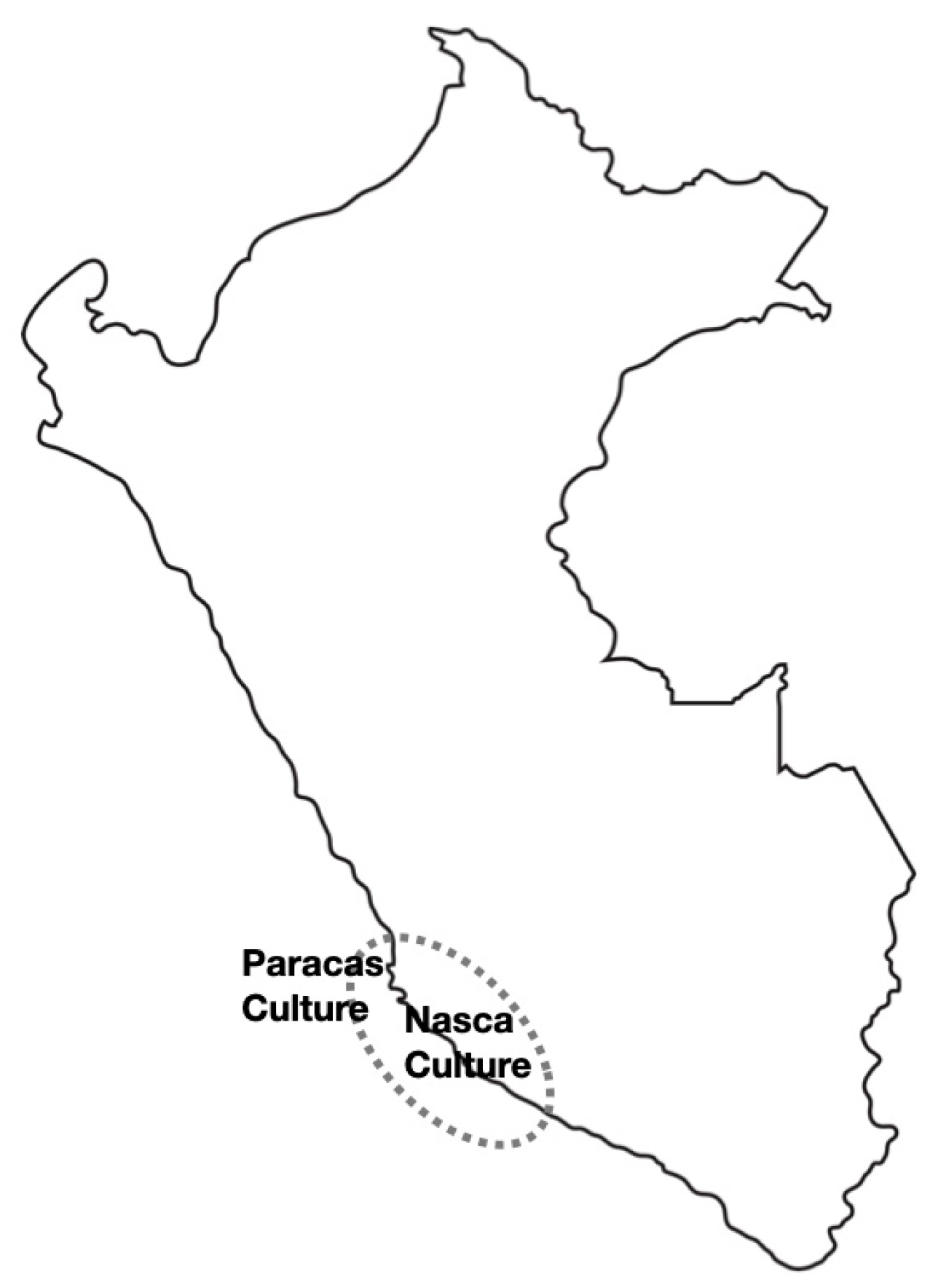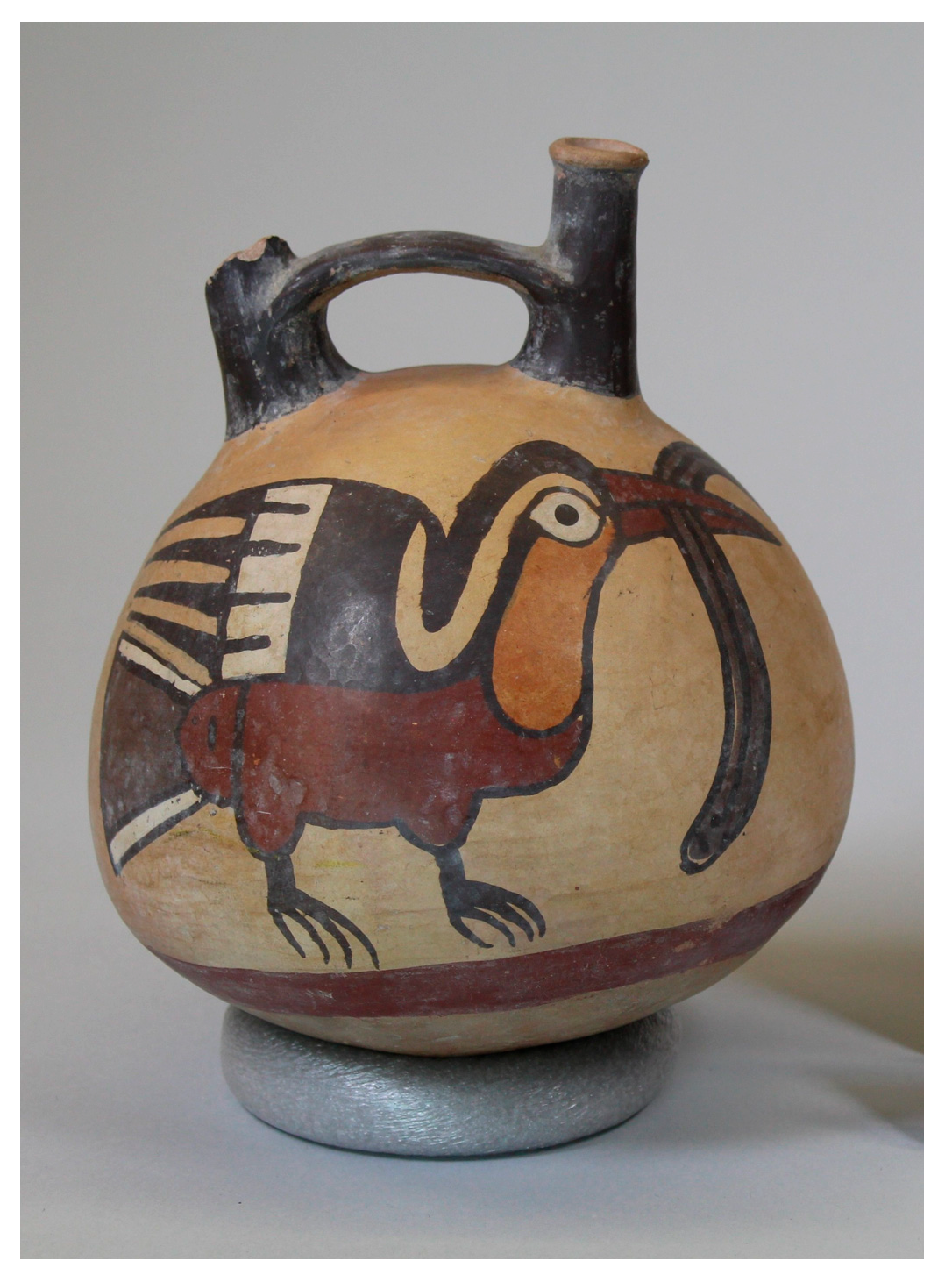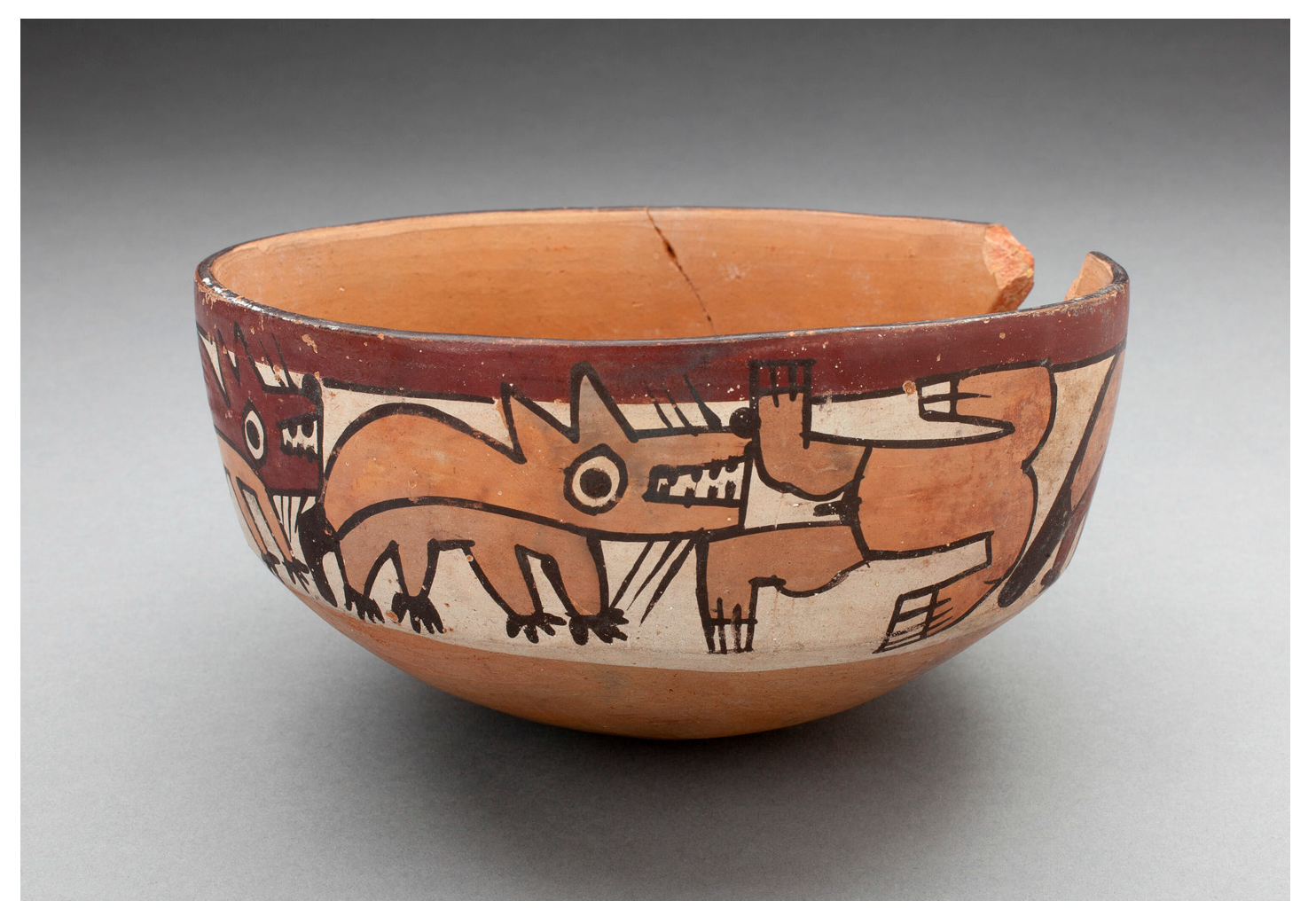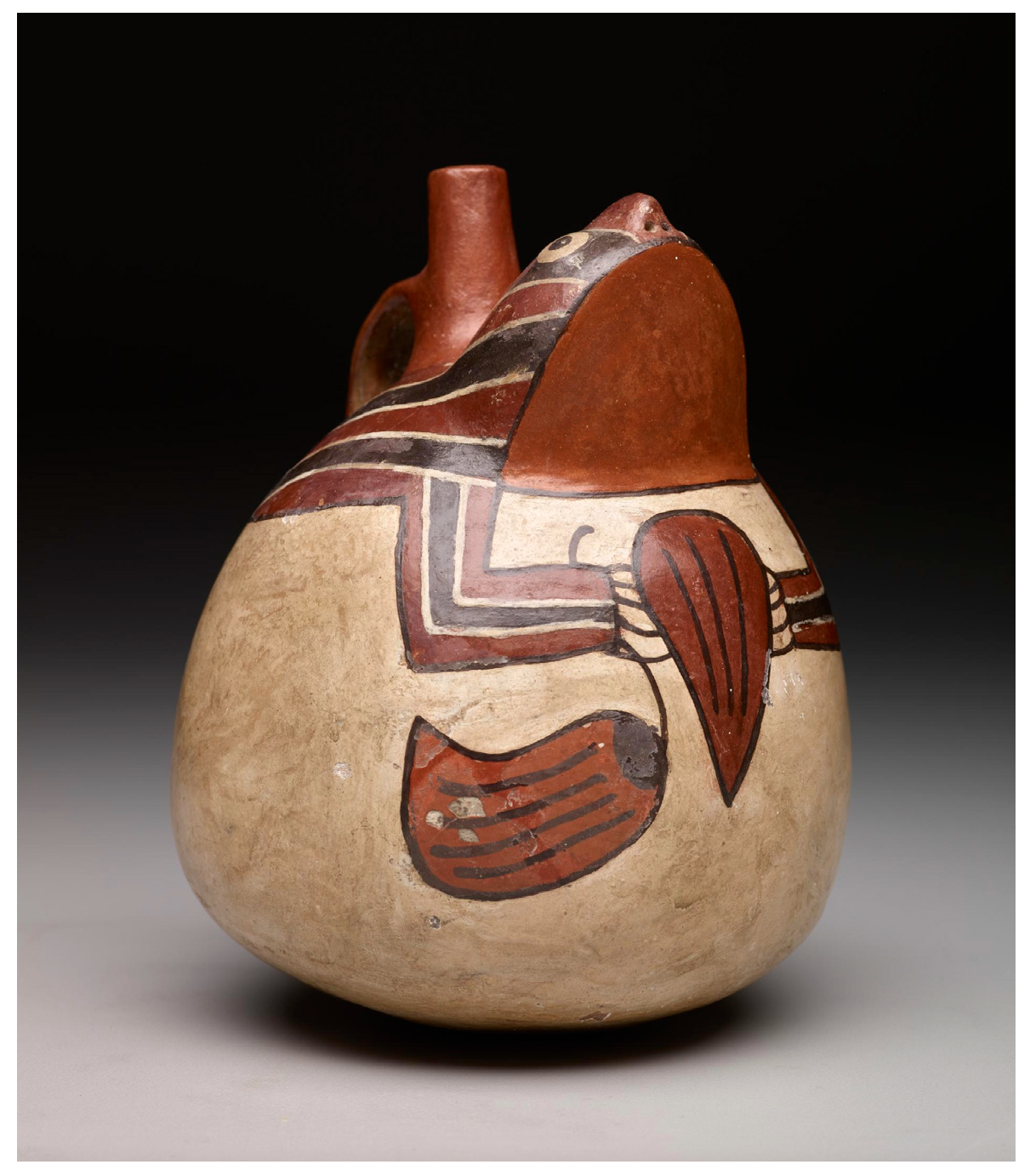

Visual Nature: Multiperspectivity on Peru’s South Coast

Abstract
1. Introduction

2. Visual Analogy


3. Relationality and Multinaturalism
4. Meta-Predators
5. Human Beings as Meta-Predators


6. The Power of Prey
7. Conclusions: The Predator–Prey Paradigm and Its Discontents

Funding
Data Availability Statement
Acknowledgments
Conflicts of Interest
| 1 | |
| 2 | Culpeos (Lycalopex culpaeus), related to jackals and wolves, are not true foxes. The name “culpeo” comes from the Mapuche word “culpem” meaning “madness,” referring to the canid’s imprudent bravery (Jiménez and Novaro 2004). Peters (1991, pp. 310 and 314n.9) notes an interest in predation in the imagery of both Paracas and Topará, which figure as south-coastal precursors to Nasca visual culture. |
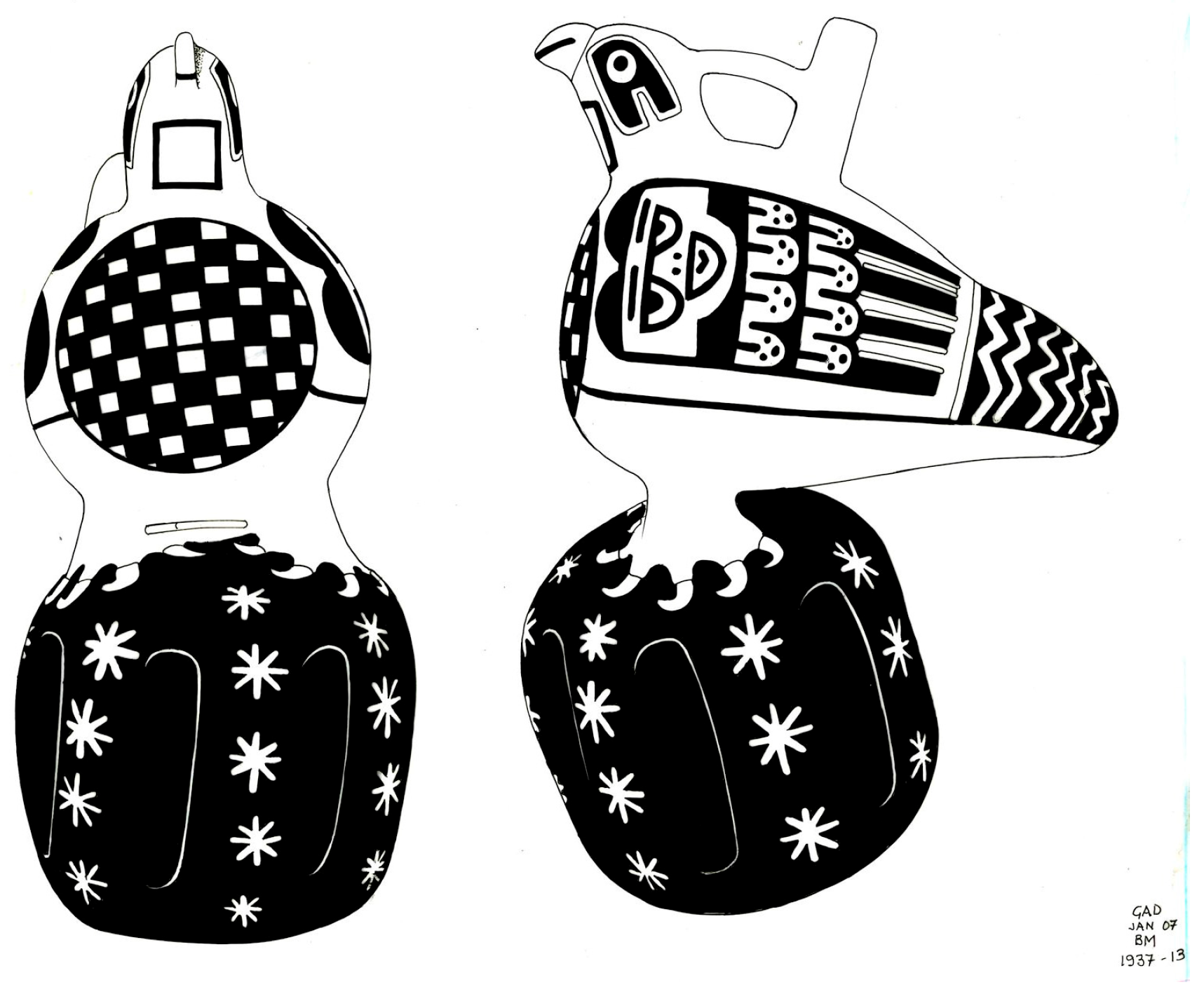
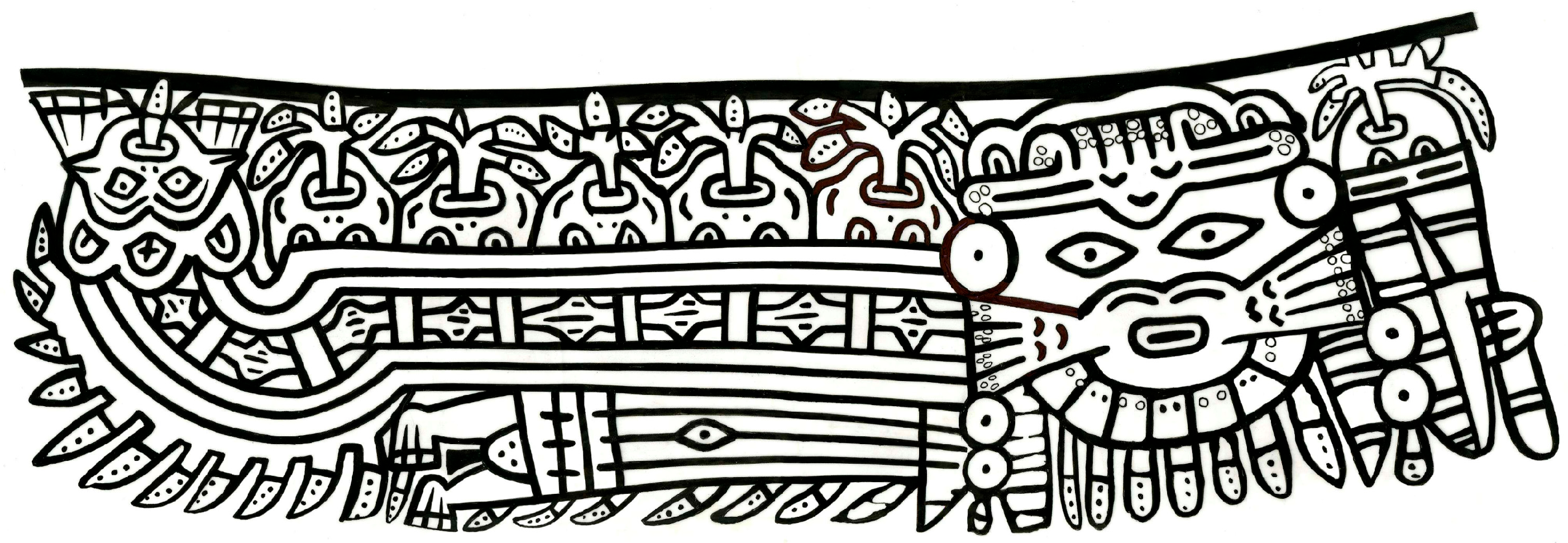
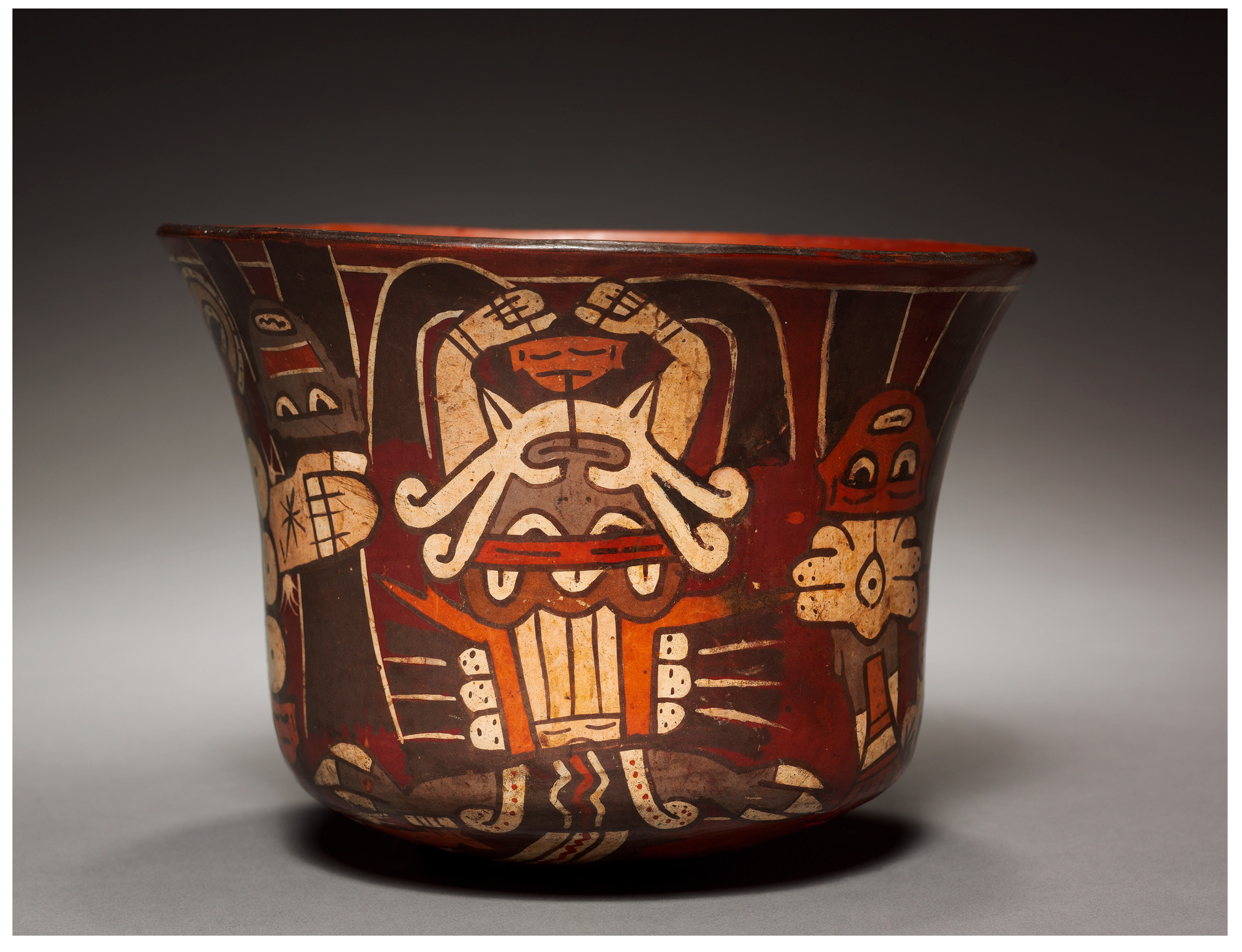
| 3 | Illustration by the author; vessel is in the collection of Harvard University Peabody Museum of Archaeology and Ethnology 54-41-30/7541. |
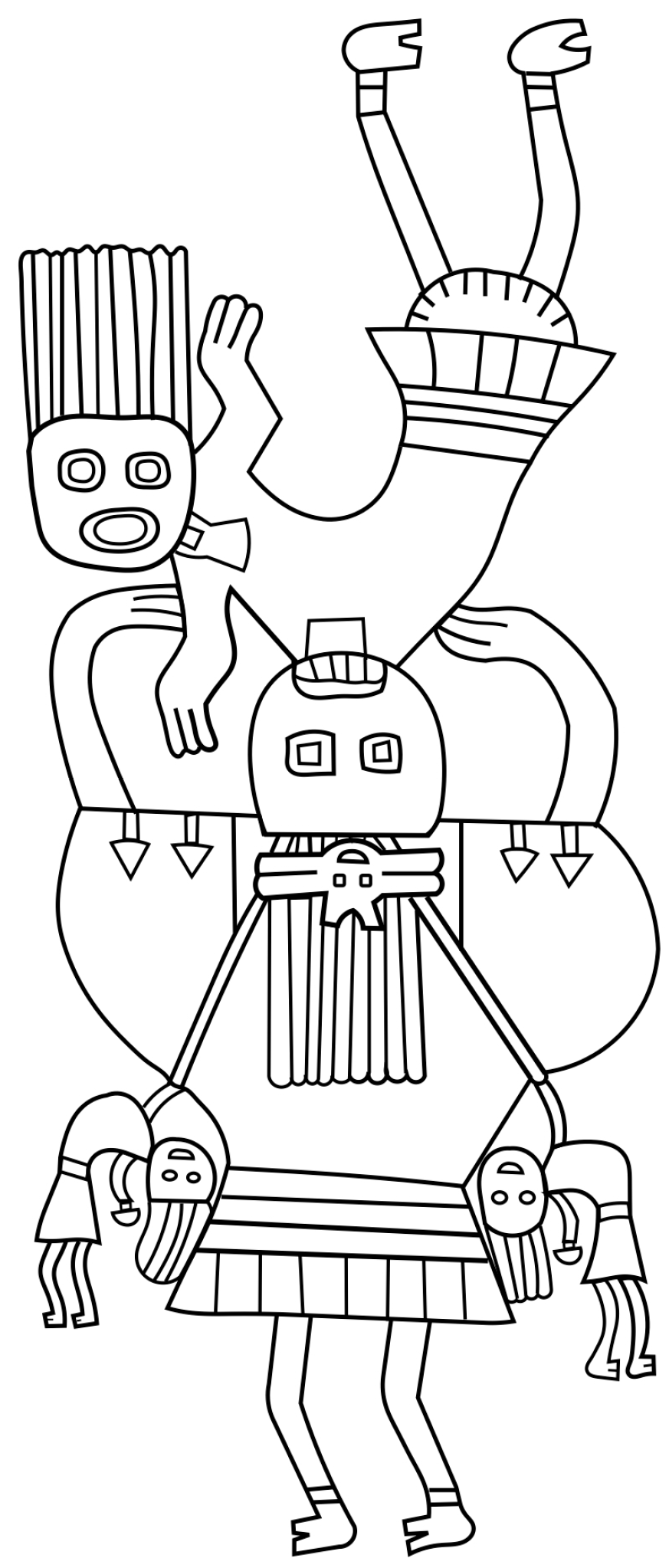
| 4 | González Holguín (1608, bk 1, p. 151), in his early seventeenth-century Quechua dictionary, defines haylli as a “canto regozijado en guerra, o chacras bien acabadas y vencidas” (joyful song in war or of victory when agricultural labor has been finished successfully). |
| 5 | The animal, sometimes called “spotted cat” or “colocolo” in the literature, likely portrays one of several distinct species all of which have, to various degrees, spotted pelts with ringed tails and legs. The most likely is Leopardus garleppi, a small, wild feline that inhabits semi-arid environments and is found throughout the Andean area. |
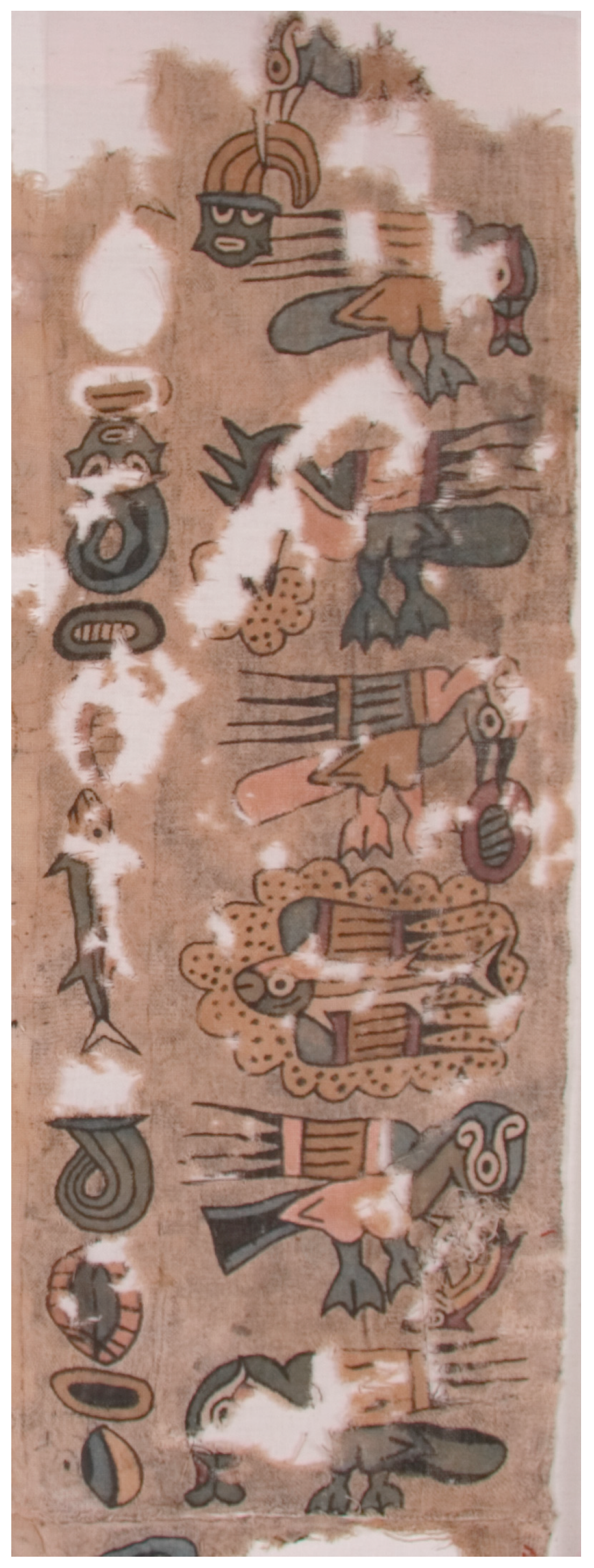
| 6 | This study is based largely on late Paracas (Paracas phase 10), Proto-Nasca (Nasca phases 1 and 2), and what are traditionally described as early to middle Nasca (phases 3–4 and 5, respectively). Recent archaeological work problematizes the standard seriation of Nasca ceramics according to which simpler imagery predates visual complexity and indicates that some of these phases may have overlapped (Carmichael 2019; Conlee et al. 2024; Vaughn et al. 2014). In general, I focus here on imagery that features relatively few primary figures that are less complicated and so easier to “read,” than those associated with later Nasca phases (see Proulx 2006). In the course of this study over 2500 artifacts—mostly ceramic, but also weavings—were examined, both in person and via on-line collections. The artifacts selected for publication here reflect my bias towards institutions that make high-resolution scans available for scholarly inquiry free of charge. |
| 7 | The Nasca did not distinguish between toads and frogs. Given the arid environment, most are likely toads (Proulx 2006, p. 158). |
| 8 | |
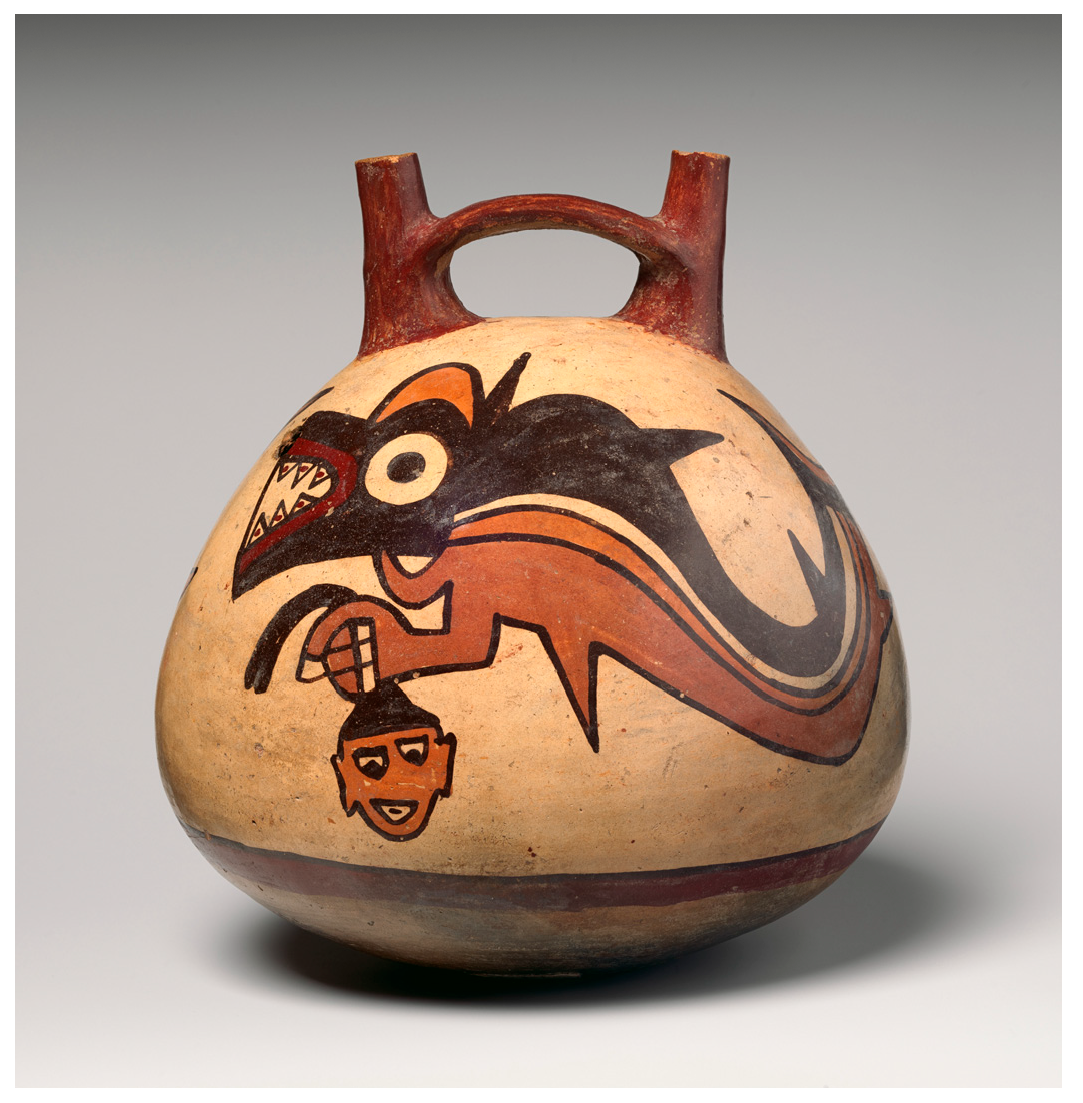
| 9 | In mid to late Nasca times (N5 and after) imagery indicates an increasing emphasis on head taking in militaristic contexts (Browne et al. 1993, p. 290; Roark 1965, p. 54). |
| 10 | |
| 11 | |
| 12 | Because Andean cultures—including those on south-coastal Peru—maintained connections with the Amazonian lowlands for millennia, drawing on the ethnographic literature from the Amazon for possible cultural, ideological, or ontological insights is not altogether unreasonable. |
| 13 | Although Viveiros de Castro’s research focuses on Amazonian peoples, he employs the term Amerindian to suggest that perspectivism is practiced far beyond Amazonia. Some conclude that perspectivism may be limited to hunting peoples (Fausto 2007, p. 523), but many North American Indigenous thinkers have written about closely aligned concepts as part of relational ontologies that are not necessarily associated with hunting. See, for example, Cajete (2000), Kimmerer (2013), Watts (2013), and Wilson (2008). |
| 14 | A future article will discuss the tendency of scholars to rely on religion and ritual to explain the material and visual cultures of the Andean south coast and other Indigenous peoples who are known primarily through archaeology. |
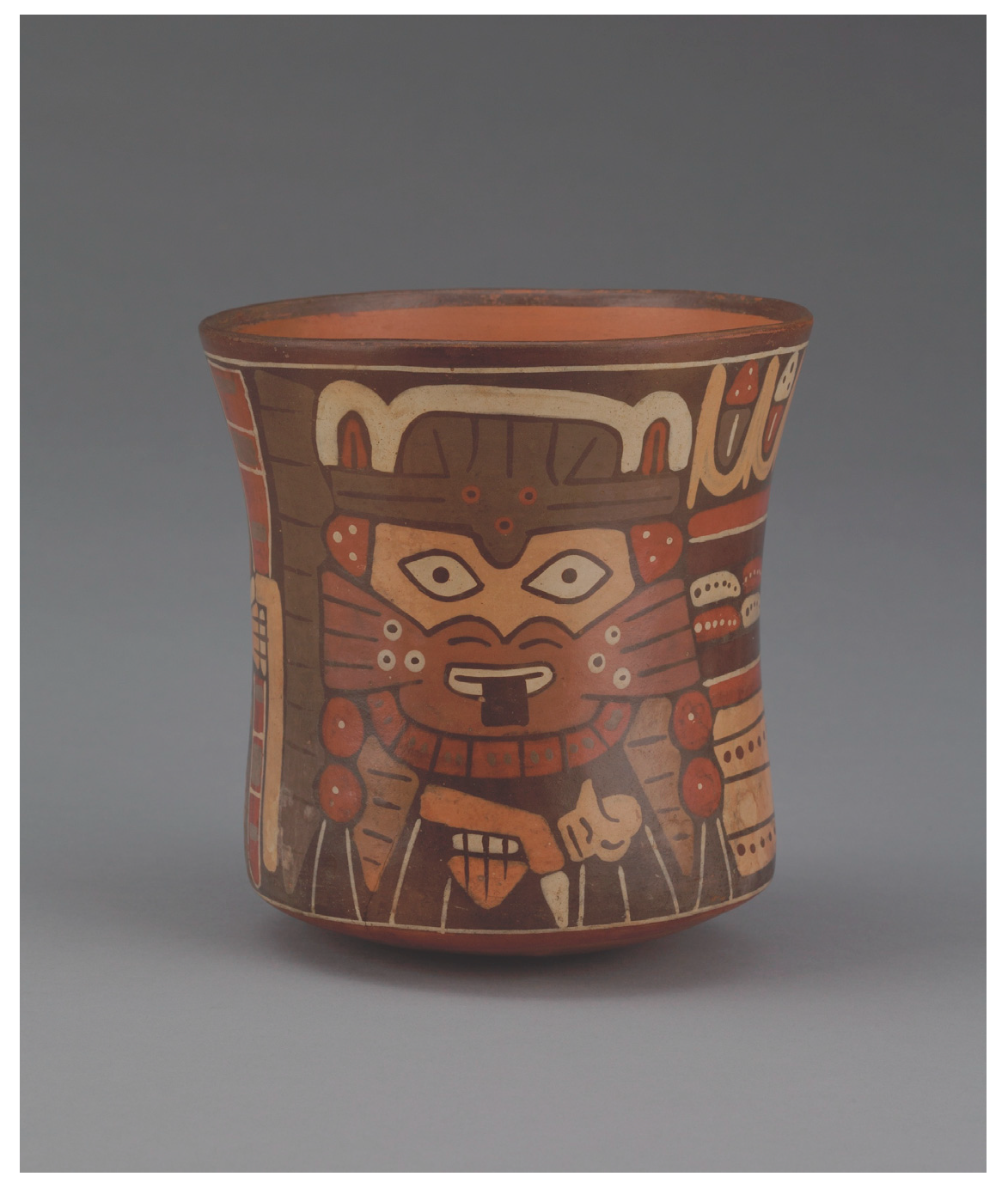
| 15 | Considerable effort has been expended on identifying the source of the nose-ornament form. Carmichael (2016, pp. 63–64) discusses the available pictorial evidence, as well as previous interpretations, concluding that the ornament is a combination of coypu (Myocastor coypus, a large semi-aquatic rodent also known as a river otter or nutria) and pampas cat characteristics. The key difference for Carmichael and others is the orientation of the whiskers: those of the coypu are described as upswept, while horizontal whiskers correspond to the pampas cat. Yet, the difference between upswept and horizontal is, in reality, negligible. Indeed, Carmichael (ibid., p. 64) notes that felines, identifiable by their distinctive pelts, are depicted with upswept whiskers; he also notes that the “Nasca propensity to mix creature parts makes it unlikely we can ever be certain of a single derivation.” Given the fact that pampas cats are more frequently depicted in early south-coastal imagery than coypu, suggests that the feline is the iconographical referent for Paracas and Nasca nose ornaments (Proulx 2006, p. 146). |
| 16 | One of Proulx’s (2006, pp. 78–79) variations, called the Step-Masked Anthropomorphic Mythical Being, lacks the whiskered nose ornament that typifies other Anthropomorphic Mythical Beings and also does not always have readily identifiable zoomorphic features. Classifying it with the other Anthropomorphic Mythical Beings complicates the category. |
| 17 | While I have reservations about using terms, such as harpy, derived from Greek mythology to name Nasca entities, thorough discussion is beyond the scope of this study. |
| 18 | In his section on supernatural or sacred themes in Nasca art, Proulx (2006, pp. 62–115) includes additional named beings. These include basically anthropomorphic entities (the Harvester [pp. 91–94], the Hunter [pp. 96–97], and the Jagged-Staff God [pp. 97–98]), as well as the Mythical Spotted Cat (pp. 88–91), which occasionally has the eye markings of falcons but is otherwise feline, and the Mythical Monkey (pp. 98–102), which is consistently simian. |
| 19 | Like human beings, culpeo have a flexible diet. While their preferred food is meat, when needs must they consume fruits, berries, and the seed pods of the huarango tree, enabling them not only to survive in the arid south coast but thrive. |
| 20 | Prehensile feet on anthropomorphs largely disappear after N2 (Carmichael 2016, p. 63), but monkeys continue to be a subject of Nasca ceramicists, peaking in N7 (Proulx 2006, pp. 142–43). |
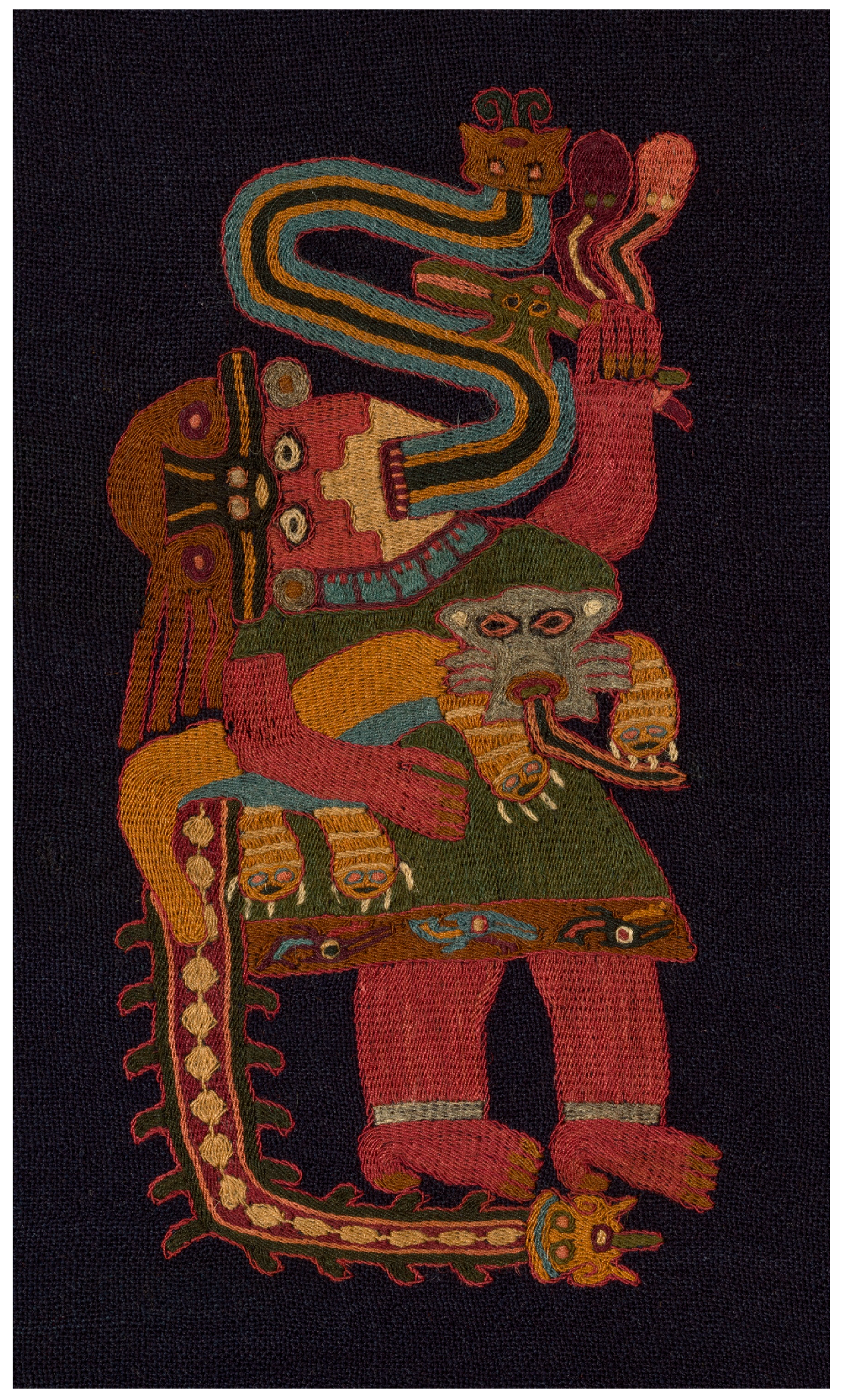
| 21 | Frame’s larger argument is that Paracas Necropolis embroideries in block-color style illustrate the transformation of the newly deceased to mature ancestorhood, which includes taking on both plant and predatory animal attributes. Frame’s maturing ancestor interpretation is appealing, but it does not account for (and was not intended to address) the full range of south-coastal meta-predators from Paracas through Nasca periods. |
| 22 | |
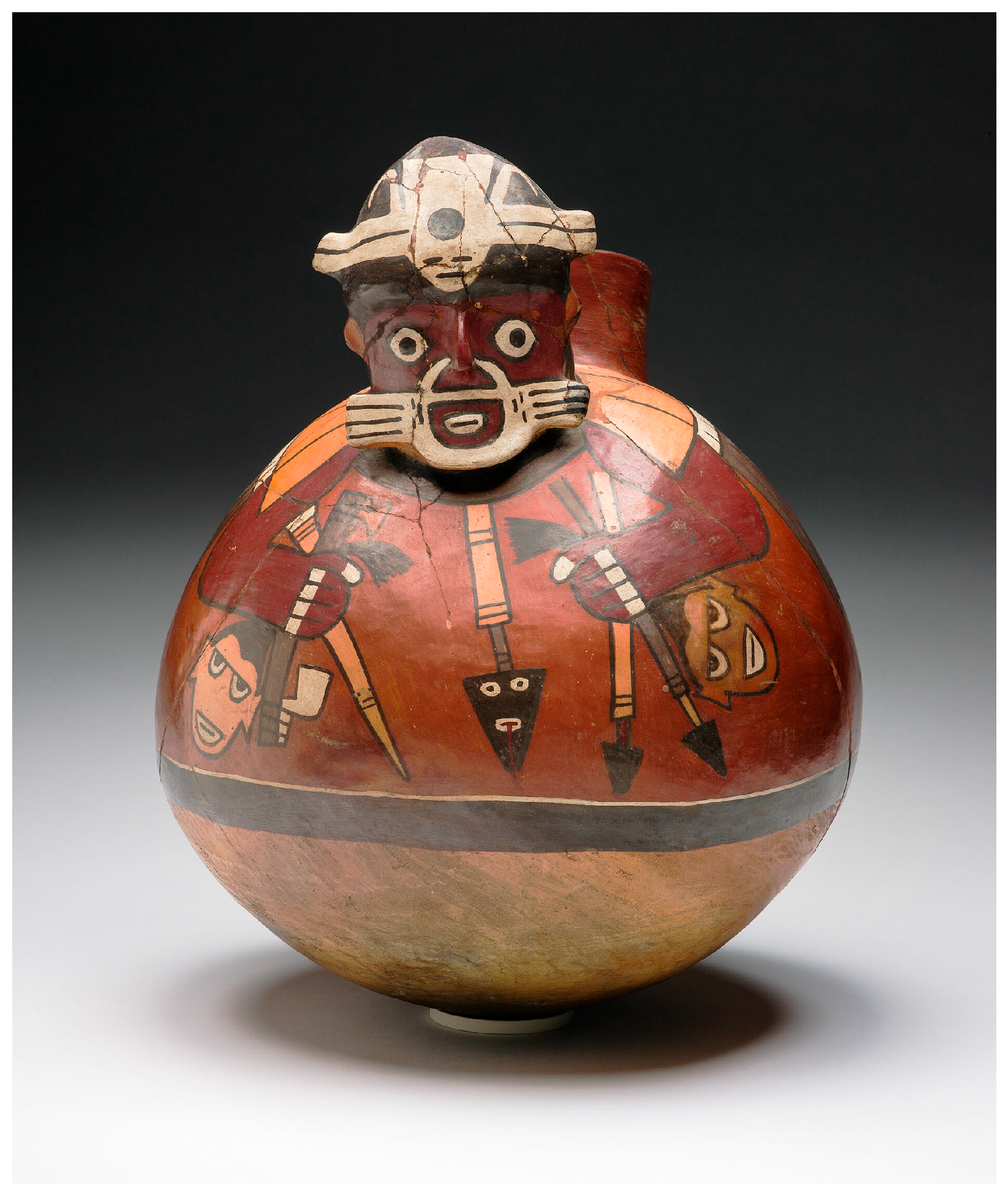
| 23 | That heads were taken by force is suggested by the bloody batons or clubs held by some composite entities. Most of the heads are those of men and analysis indicates that they were inhabitants of the south coast, suggesting that conflict was mostly restricted to the Nasca. Some of the curated heads could have been ancestral skulls. For more on origins of heads, see Knudson et al. (2008). |
| 24 | |
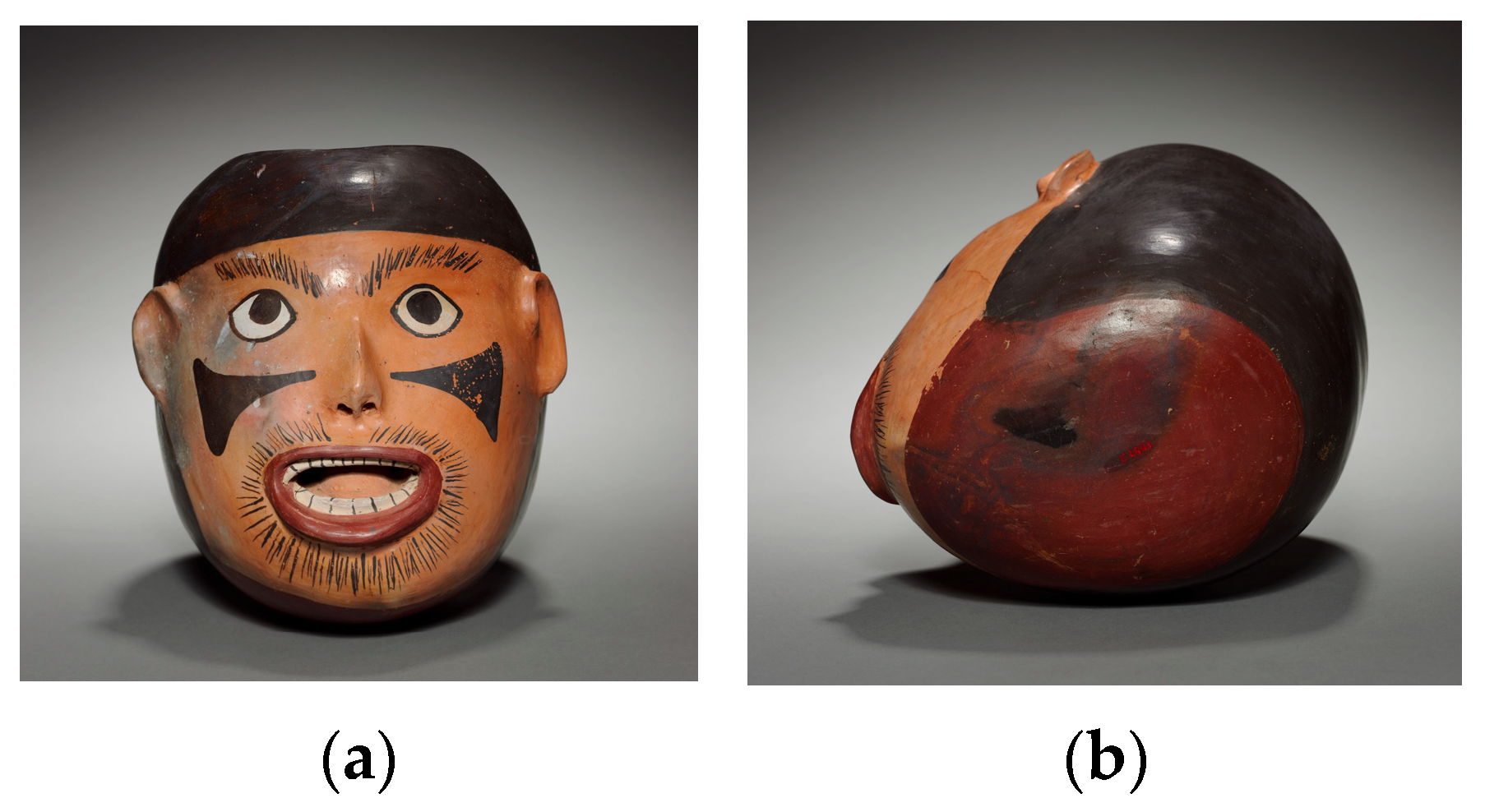
| 25 | Centuries after the height of Nasca civilization the Inka consumed maize beer from the skull of their enemies as a way of absorbing the opponents’ power into the Inka body politic. There is no evidence that the Nasca literally did the same, but consumption from head jars would have been metaphorically similar (as it was when the Inka drank from head-shaped beakers). |
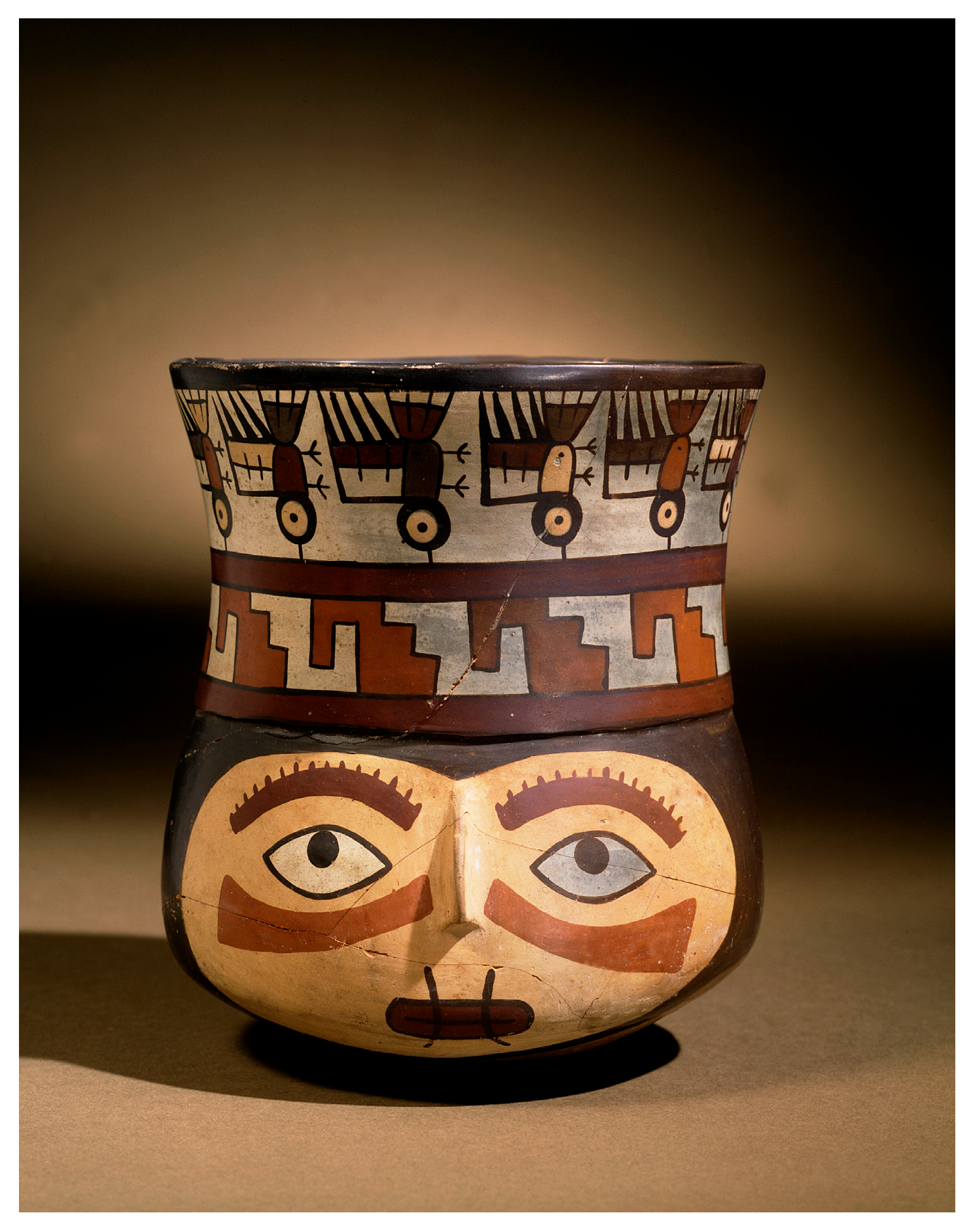
| 26 | Stylistically, the jar corresponds to middle Nasca (phase N5). It had been used prior to burial and so was not produced as a head replacement. See Conlee (2007) for a thorough discussion of the finds at La Tiza, as well as a consideration of two other headless bodies found with “head vessels” in the Nasca area. |
| 27 |
References
- Allen, Catherine J. 1982. Body and Soul in Quechua Thought. Journal of Latin American Lore 8: 179–95. [Google Scholar]
- Allen, Catherine J. 1988. The Hold Life Has: Coca and Cultural Identity in an Andean Community. Washington: Smithsonian Institution Press. [Google Scholar]
- Arnold, Denise Y. 2018. Making Textiles into Persons: Gestural Sequences and Relationality in Communities of Weaving Practice of the South Central Andes. Journal of Material Culture 23: 239–60. [Google Scholar] [CrossRef]
- Arnold, Denise Y., and Christine Hastorf. 2008. Heads of State: Icons, Power, and Politics in the Ancient and Modern Andes. Walnut Creek: Left Coast Press. [Google Scholar]
- Arnold, Denise Y., and Juan de Dios Yapita. 2013. The Metamorphosis of Heads: Textual Struggles, Education, and Land in the Andes. Pittsburgh: University of Pittsburgh Press. [Google Scholar]
- Bastien, Joseph W. 1978. Mountain of the Condor: Metaphor and Ritual in an Andean Ayllu. St. Paul: West Publishing. [Google Scholar]
- Beresford-Jones, David. 2011. The Lost Woodlands of Ancient Nasca: A Case-Study in Ecological and Cultural Collapse. Oxford: Oxford University Press. [Google Scholar]
- Beresford-Jones, David, and Oliver Q. Whaley. 2021. Nasca Domestic Culture: The Significance of Past Environments for Reading the Material Culture of the South Coast of Peru. Ñawpa Pacha 42: 163–83. [Google Scholar] [CrossRef]
- Browne, David M., Helaine Silverman, and Ruben García. 1993. A Cache of 48 Nasca Trophy Heads from Cerro Carapo, Peru. Latin American Antiquity 4: 274–94. [Google Scholar] [CrossRef] [PubMed]
- Cajete, Gregory. 2000. Native Science: Natural Laws of Interdependence. Santa Fe: Clear Light. [Google Scholar]
- Carmichael, Patrick H. 1994. The Life from Death Continuum in Nasca Imagery. Andean Past 4: 81–90. [Google Scholar]
- Carmichael, Patrick H. 2015. Proto-Nasca Art and Antaras. Ñawpa Pacha 35: 117–72. [Google Scholar] [CrossRef]
- Carmichael, Patrick H. 2016. Nasca Origins and Paracas Progenitors. Ñawpa Pacha 36: 53–94. [Google Scholar] [CrossRef]
- Carmichael, Patrick H. 2019. Stages, Periods, Epochs, and Phases in Paracas and Nasca Chronology: Another Look at John Rowe’s Ica Valley Master Sequence. Ñawpa Pacha 39: 145–79. [Google Scholar] [CrossRef]
- Carmichael, Patrick H., Brenda V. Kennedy, and Lauren Cadwallader. 2014. Coastal but not Littoral: Marine Resources in Nasca Diet. Ñawpa Pacha 34: 3–26. [Google Scholar] [CrossRef]
- Cieza de León, Pedro de. 1553. Primera Parte de la Crónica del Perú. Sevilla: Martín de Montesdoca. [Google Scholar]
- Conlee, Christina A. 2007. Decapitation and Rebirth: A Headless Burial from Nasca, Peru. Current Anthropology 48: 438–45. [Google Scholar] [CrossRef]
- Conlee, Christina A., Daniel A. Contreras, Ann H. Peters, and Kevin J. Vaughn. 2024. Reconsidering Chronologies and Cultural Change on the South Coast of Peru: A Compilation and Analysis of Radiocarbon Dates from Nasca, Ica, and Paracas. Quaternary International 703: 97–111. [Google Scholar] [CrossRef]
- Dean, Carolyn. 2025. Inside Abstraction: Interpreting Inka Visual Culture. Austin: University of Texas Press. [Google Scholar]
- Dean, Carolyn. 2026. Material Witnesses: The Matter of Presence in Inka Visual Culture. In Indigenous Visual Cultures in Latin America: Seeing, Being, and Meaning. Edited by Tamara L. Bray and Carolyn Dean. Austin: University of Texas Press, pp. 43–65. [Google Scholar]
- DeLeonardis, Lisa. 2012. Interpreting the Paracas Body and its Value in Ancient Peru. In The Construction of Value in the Ancient World. Edited by John K. Papadopoulos and Gary Urton. Los Angeles: Cotsen Institute of Archaeology Press at UCLA, pp. 197–217. [Google Scholar]
- Fausto, Carlos. 2007. Feasting on People: Eating Animals and Humans in Amazonia. Current Anthropology 48: 497–530. [Google Scholar] [CrossRef] [PubMed]
- Fausto, Carlos. 2020. Art Effects: Image, Agency, and Ritual in Amazonia. Translated by David Rodgers. Lincoln: University of Nebraska Press. [Google Scholar]
- Fixico, Donald. 2003. The American Indian Mind in a Linear World. Milton Park: Routledge. [Google Scholar]
- Frame, Mary. 1995. Ancient Peruvian Mantles: 300 B.C.-A.D. 300. New York: Metropolitan Museum of Art. [Google Scholar]
- Frame, Mary. 2001. Blood, Fertility, and Transformation: Interwoven Themes in the Paracas Necropolis Embroideries. In Ritual Sacrifice in Ancient Peru. Edited by Elizabeth P. Benson and Anita G. Cook. Austin: University of Texas Press, pp. 55–92. [Google Scholar]
- González Holguín, Diego. 1608. Vocabulario de la Lengua General de todo el Peru Llamada Lengua Qquichua, o del Inca. Lima: Francisco del Canto. [Google Scholar]
- Jiménez, Jaime E., and Andrés J. Novaro. 2004. Pseudalopex culpaeus. In Canids: Foxes, Wolves, Jackals and Dogs; Status Survey and Conservation Action Plan. Edited by Claudio Sillero-Zubiri, Michael Hoffmann and David W. Macdonald. Gland and Cambridge: International Union for Conservation of Nature, pp. 44–49. [Google Scholar]
- Kimmerer, Robin Wall. 2013. Braiding Sweetgrass: Indigenous Wisdom, Scientific Knowledge, and the Teachings of Plants. Minneapolis: Milkweed. [Google Scholar]
- Knudson, Kelly J., Sloan R. Williams, Rebecca Osborn, Kathleen Forgey, and Patrick Ryan Williams. 2008. The Geographic Origins of Nasca Trophy Heads Using Strontium, Oxygen, and Carbon Isotope Data. Journal of Anthropological Archaeology 28: 244–57. [Google Scholar] [CrossRef]
- Nieves, Ana. 2009. More Than Meets the Eye: A Study of Two Nasca Motifs. Andean Past 9: 229–47. [Google Scholar]
- Nieves, Ana. 2023. Pots, Petroglyphs, and Pathways: The Mythical Killer Whale in Nasca Art. In Perspectives on Place. Edited by Elizabeth McGoey and Jeanne Marrie Teutonico. Chicago: The Art Institute. [Google Scholar] [CrossRef]
- Paul, Anne. 1992. Paracas Necropolis Textiles: Symbolic Visions of Coastal Peru. In The Ancient Americas: Art from Sacred Landscapes. Edited by Richard F. Townsend. Chicago: The Art Institute, pp. 279–89. [Google Scholar]
- Peters, Ann H. 1991. Ecology and Society in Embroidered Images from the Paracas Necrópolis. In Paracas Art & Architecture: Object and Context in South Coastal Peru. Edited by Anne Paul. Iowa City: University of Iowa Press, pp. 240–314. [Google Scholar]
- Proulx, Donald A. 2006. A Sourcebook of Nasca Ceramic Iconography: Reading a Culture Through Its Art. Iowa City: University of Iowa Press. [Google Scholar]
- Proulx, Donald A. 2010. Curacas y guerreros en la costa sur del Perú. In Señores de los Imperios del Sol. Edited by Krzysztof Makowski. Colección Arte y Tesoros del Perú. Lima: Banco de Crédito, pp. 18–37. [Google Scholar]
- Roark, Richard Paul. 1965. From Monumental to Proliferous in Nasca Pottery. Ñawpa Pacha 3: 1–92, 135. [Google Scholar] [CrossRef]
- Silverman, Helaine. 2002. Ancient Nasca Settlement and Society. Iowa City: University of Iowa Press. [Google Scholar]
- Townsend, Richard. 1985. Deciphering the Nazca World: Ceramic Images from Ancient Peru. Museum Studies (Art Institute of Chicago) 11: 116–39. [Google Scholar] [CrossRef]
- Vaughn, Kevin J., Jelmer W. Eerkens, Carl Lipo, Sachiko Sakai, and Katharina Schreiber. 2014. It’s About Time? Testing the Dawson Ceramic Seriation Using Luminescence Dating, Southern Nasca Region, Peru. Latin American Antiquity 25: 449–61. [Google Scholar] [CrossRef]
- Vilaça, Aparecida. 2005. Chronically Unstable Bodies: Reflections on Amazonian Corporalities. Journal of the Royal Anthropological Institute 11: 445–64. [Google Scholar] [CrossRef]
- Viveiros de Castro, Eduardo. 1998. Cosmological Deixis and Amerindian Perspectivism. The Journal of the Royal Anthropological Institute 4: 469–88. [Google Scholar] [CrossRef]
- Watts, Vanessa. 2013. Indigenous Place-Thought and Agency amongst Humans and Non-humans (First Woman and Sky Woman go on a European Tour!). Decolonization, Indigeneity, Education and Society 2: 20–34. [Google Scholar]
- Wilson, Shawn. 2008. Research Is Ceremony: Indigenous Research Methods. Winnipeg: Fernwood. [Google Scholar]










Disclaimer/Publisher’s Note: The statements, opinions and data contained in all publications are solely those of the individual author(s) and contributor(s) and not of MDPI and/or the editor(s). MDPI and/or the editor(s) disclaim responsibility for any injury to people or property resulting from any ideas, methods, instructions or products referred to in the content. |
© 2026 by the author. Licensee MDPI, Basel, Switzerland. This article is an open access article distributed under the terms and conditions of the Creative Commons Attribution (CC BY) license.
Share and Cite
Dean, C. Visual Nature: Multiperspectivity on Peru’s South Coast. Arts 2026, 15, 113. https://doi.org/10.3390/arts15060113
Dean C. Visual Nature: Multiperspectivity on Peru’s South Coast. Arts. 2026; 15(6):113. https://doi.org/10.3390/arts15060113
Chicago/Turabian StyleDean, Carolyn. 2026. "Visual Nature: Multiperspectivity on Peru’s South Coast" Arts 15, no. 6: 113. https://doi.org/10.3390/arts15060113
APA StyleDean, C. (2026). Visual Nature: Multiperspectivity on Peru’s South Coast. Arts, 15(6), 113. https://doi.org/10.3390/arts15060113