1. Introduction
If Russian and international Modernism may be characterised—beyond its stylistic pluralism—by an insistence on experiment as an epistemic ethos (a refusal to treat the given as final, whether in form, perception, or embodiment), then Aleksandr Beliaev and Nikolai Fedorov occupy a particularly revealing, if long underestimated, position within that modernist laboratory. Their shared horizon is not merely “the future” as a chronological next step, but futurity as a task: a programme for reconfiguring the conditions of the human, where the body becomes a site of technical, moral, and metaphysical trial. In this respect, Beliaev’s popular science-fiction plots and Fedorov’s “Philosophy of the Common Task” (“Filosofiia obshchego dela”) should be read less as marginal curiosities than as adjacent modalities of a broader modernist will to transform life through procedure, device, and concept. Fedorov’s project radicalises a modernist premise that art, science, and philosophy are no longer contemplative mirrors but operative instruments: the world is not to be interpreted, but rebuilt, down to the molecular, anatomical, and cosmological strata. His utopian anthropology, oriented toward the conquest of death and the redesign of the human organism, anticipates the modernist fusion of technics and eschatology that animates both Russian Cosmism and the European avant-garde’s “new man” fantasies. Here, experimentation is elevated from method to ethics: knowledge is authenticated by deed, and “progress” is measured by humanity’s capacity to reengineer its own biological limits. Such a stance resonates with the international modernist moment in which the body is repeatedly displaced from a stable natural substrate into a constructible medium—whether in Futurist prosthetic dreams, Constructivist bio-social engineering, or the wider modernist preoccupation with mechanisation, speed, and altered states of perception. Beliaev, working within the mass genre of science fiction, translates this modernist epistemology into narrative stress-tests: the amphibianised child, the disembodied but living head, the apparatus that sustains cognition while severing it from sensorium and agency. Beliaev’s fiction operates as a pragmatic thought-experiment that places the modernist faith in technoscientific innovation under ethical and affective pressure, revealing how invention is never purely technical but always embedded in regimes of power (capitalist exploitation, colonial imaginaries, institutional secrecy) and in the recalcitrance of human desire, attachment, and pain. The result is a modernist dialectic in miniature: utopian procedure generates dystopian remainder; the perfected mechanism exposes the irreducibility of lived embodiment. Beliaev and Fedorov thus converge as complementary modernist experimenters: one composing speculative metaphysics of collective transformation, the other staging narrative trials of engineered bodies, and both insisting that modernity’s decisive aesthetic and philosophical question is, finally, what kinds of humans (and inhumanities) experimentation will make possible.
The first two decades of the twentieth century saw an unprecedented surge of scientific and technological experiments directed at the physical transformation of the human body. Many of these experiments were either paralleled by surgical experiments on animals or involved the use of materials of animal origin. Ivan Pavlov’s Nobel Prize in physiology in 1904 was based on his surgical reconfiguration of dogs’ digestive tracts to produce pure stomach juice to aid human digestion (
Todes 2002) thus suggesting compatibility of human and animal organisms. In Bolshevik Russia of the 1920s, medical doctors were involved in the most daring experiments on rejuvenation by implanting extracts derived from animals and reviving isolated organs of mammals and fish. Some of these experiments were made public by open demonstrations and were widely discussed in periodicals (
Krementsov 2014). The general public received these developments with optimism and excitement as the final goal of such experiments was to rid humanity of physical ailments and most strikingly to achieve knowledge needed for the conquest of death. The most popular and prolific science fiction writer of the 1920s and 1930s, Aleksandr Beliaev (1884–1942), turned experiments involving cross-species hybridism and the invention of reanimation apparatuses into adventure plots.
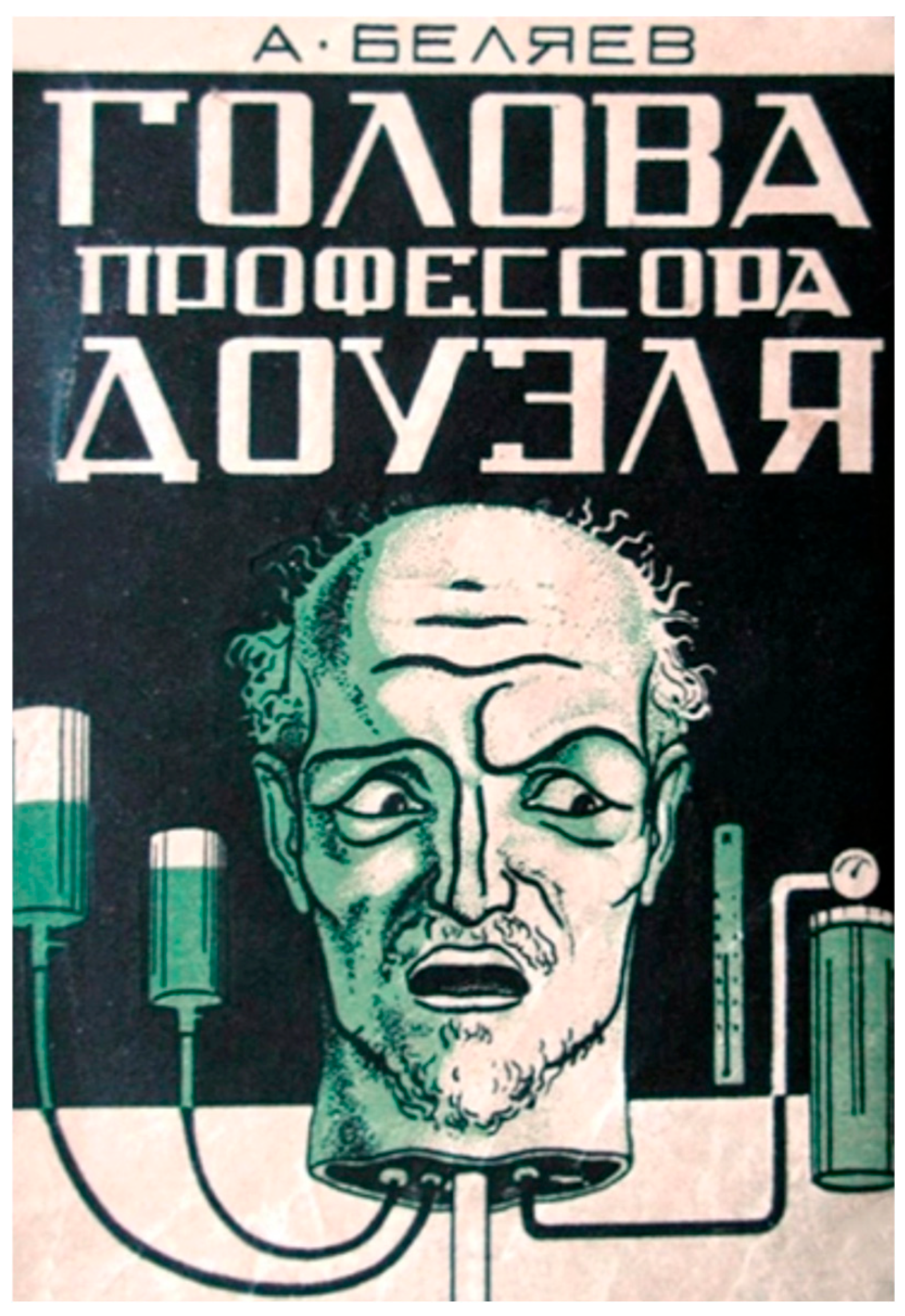
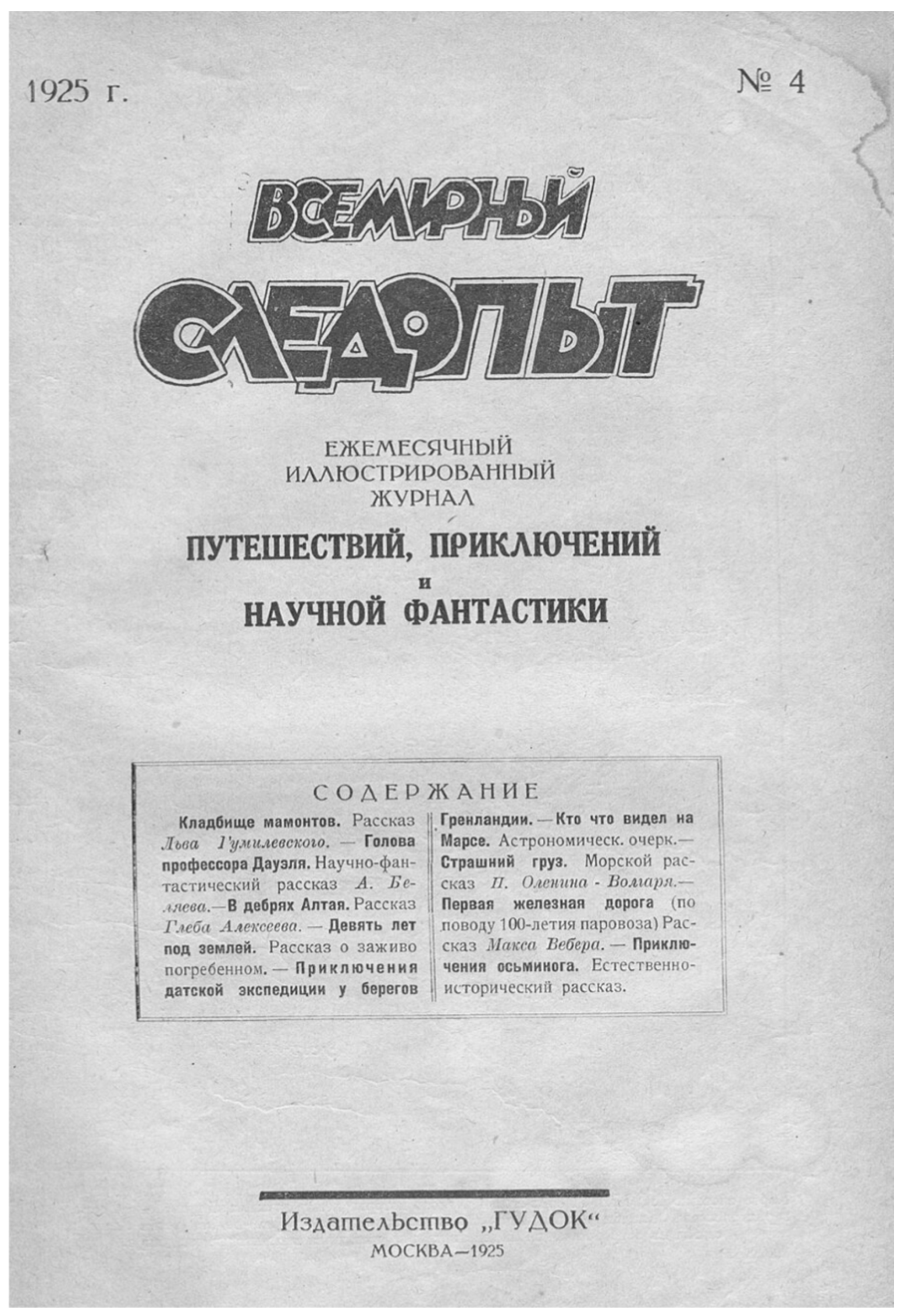
In his novels of the 1920s, starting from
Professor Dowell’s Head (1925) (
Golova professora Douelia) (
Figure 1 and
Figure 2), overt reservations about transhuman transformations concerned the fate of objects of radical technologies, mainly in capitalist and colonial societies. Yet consequences of surgical transformations raise questions related to their scientific and ethical viability. The latest research on the trends in technology, literature and art in the 1920s demonstrates that trust in unlimited possibilities of the human mind and human body based on scientific progress encouraged thinking that combined humanism’s logocentrism with elements of posthumanism (
McQuillen and Vaingurt 2018, pp. 1–14).
Beliaev’s views on scientific experiments additionally were informed by late-nineteenth-century pre-Revolutionary scientific theories (
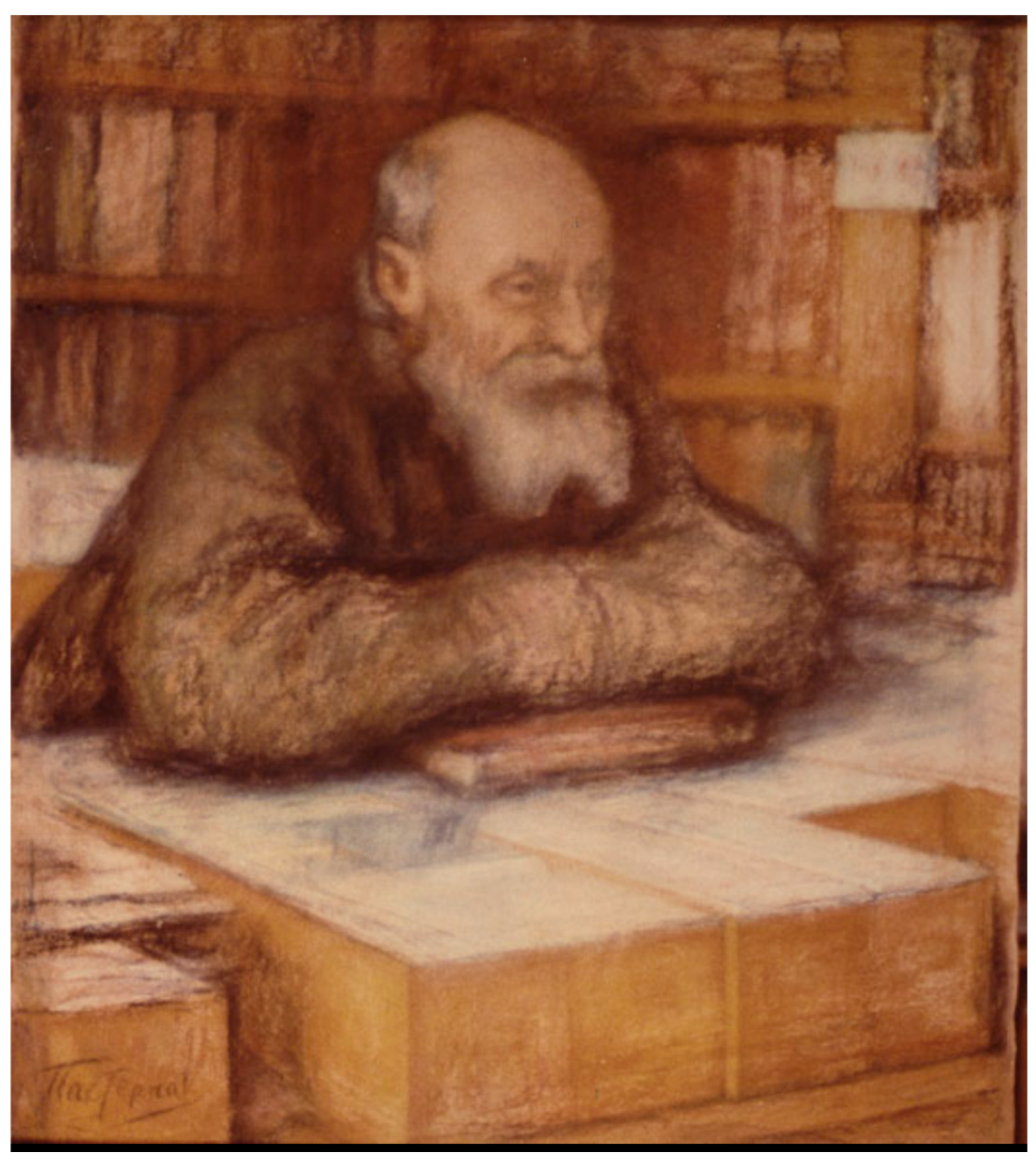
Fratto 2023). Nikolai Fedorov’s (
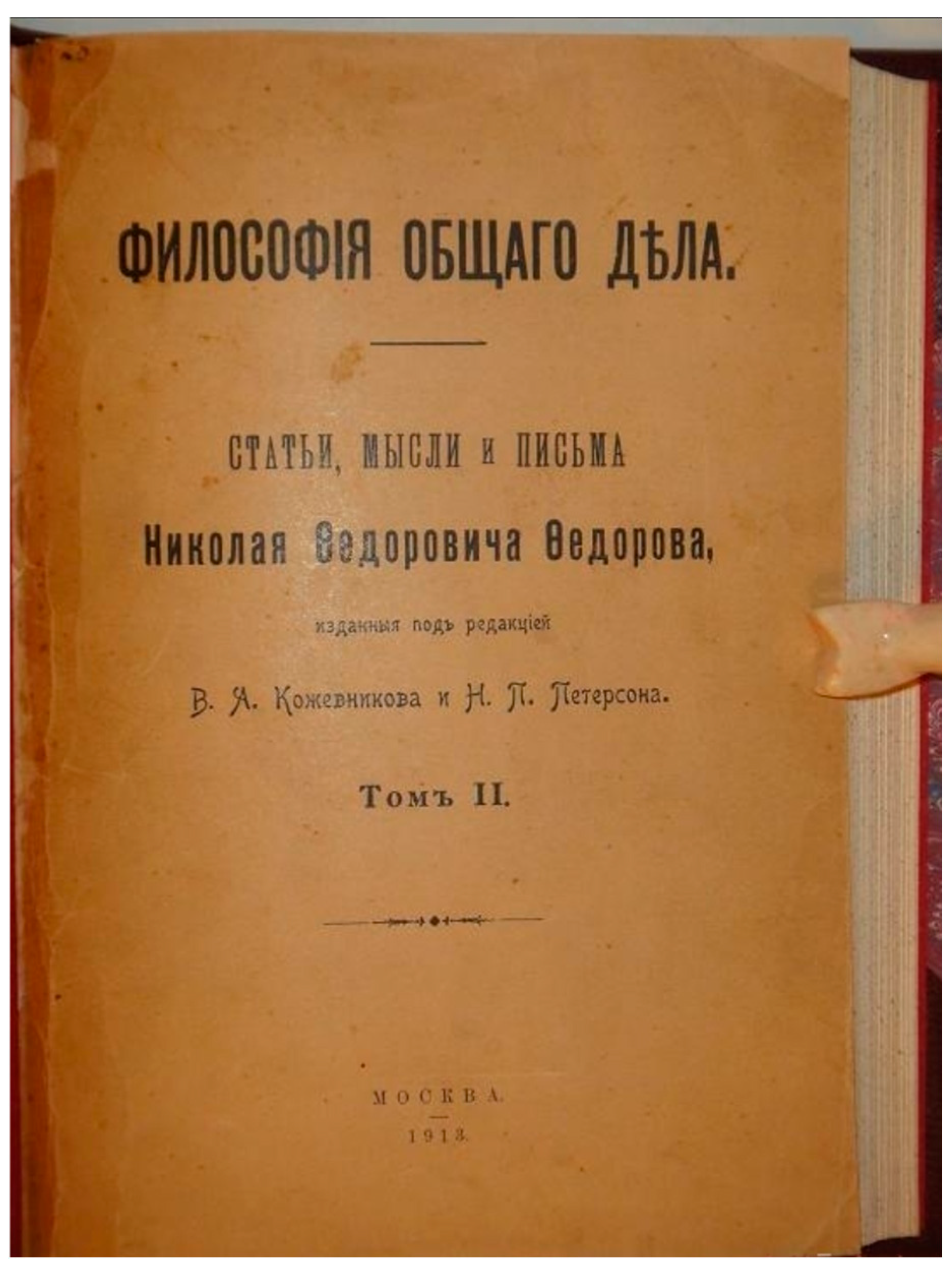
Figure 3) (1829–1903) visionary futurity known as Philosophy of the Common Task (
Figure 4) bridged pre-Revolutionary utopian aspirations with the speculative thought of the 1920s. As explained by Masing-Delic, “The utopian 1920s and 1930s brought a wide and receptive audience” to Fedorov’s ideas (
Masing-Delic 1992, p. 104). Fedorov’s bold vision of human potential to achieve utopia through bodily modification has been recently linked with the development of Russian posthumanist thought (
McQuillen and Vaingurt 2018, p. 16). My aim is to identify and analyse both intersections and differences in Beliaev’s and Fedorov’s visions of futurity in relation to body transformations in two of Beliaev’s most important yet understudied novels of the 1920s,
The Amphibian Man and
Professor Dowell’s Head. I address features of trans- and posthumanism in Beliaev’s narratives of body modifications that involve experiments in assembling hybridised human–animal, interhuman and human–machine organisms. Transhumanist and posthumanist paradigms of modification of humans are evolving as well as the terms defining them. Braidotti’s approach defines the posthuman subject as “an assemblage that encompasses human and nonhuman actors, technological mediation, animals, plants and the planet as a whole” (
Braidotti 2017, p. 9). In Yvonne Howell’s view, the terms transhumanism and posthumanism are relevant for both Soviet science and science fiction. Transhumanism operates on the view that humanism has not proceeded far enough “to allow the capacity for rational thought to help us achieve our godlike potential” (
Howell 2021, p. 195). These categories help me to identify intersections and differences in Beliaev’s and Fedorov’s futurity in relation to the logocentrism and anthropocentrism of humanist thinking. I position Beliaev’s writing within the speculative discourse informed by Fedorovian aspirational futurity as well as by scientific and medical experiments involving reanimation and reconstruction.
Aleksandr Beliaev’s science fiction presents a case of a new vision that reflects concurrent scientific and social trends as well as culture-specific aspirations directed at the transformation of the human body. While Beliaev’s embeddedness in the New Soviet Person discourse and the scientific experimentation of the 1920s has received scholarly attention (
Krementsov 2014;
Schwartz 2021;
Kaminski 2022), the influence of Nikolai Fedorov’s thinking has received relatively little consideration. Zeev Bar-Sella in his biography of Beliaev noted traces of Fedorovian influence in Beliaev’s novel
Professor Dowell’s Head (
Bar-Sella 2013, p. 166). Bar-Sella observes that Beliaev’s preface to the first publication of
Professor Dowell’s Head, which described the reanimation experiment as “a true resurrection from the dead” that in the past was the prerogative of deity, is connected to Fedorov’s teachings. (See
Bar-Sella 2013, p. 166). Recently Anastasiia Gacheva initiated a discussion on the relevance of Fedorov for Beliaev’s fiction in her lectures on cosmism in Russian literature (
Gacheva 2022). According to Gacheva, Beliaev’s futurity was informed not only by the futurology of the Russian cosmists of his generation, but also by Nikolai Fedorov’s quest to reconfigure humanity through their own efforts directed at changing the human body. Beliaev’s knowledge of Fedorov’s ideas most likely dates to 1923 when he met an important follower of Fedorov, philosopher and writer Nikolai Setnitskii (1888–1937). Setnitskii and Beliaev were both employed at the time in the Department of Postal Communications, Narkomat pocht i telegrafov, and contributed to the journal
Zhizn’ sviazi (Life of Comunications). (See
Bar-Sella 2013, pp. 166–67;
Gacheva 2022). Setnitskii argued for the abolition of the modern practice of cremation of corpses as this obstructs future resurrection according to Fedorov’s ideas on the preservation of bodies of ancestors. (
Hagemeister 1997, p. 190). The human quest to achieve immortality in Fedorov’s Philosophy of the Common Task was achievable by humanity’s channelling its intellectual and physical energy toward the conquest of mortality. Bar-Sella’s and Gacheva’s remarks led to my search for narrative enmeshments of Fedorovian ideas with Beliaev’s vision of scientific experiments on the transfiguration of human and animal bodies.
Body transformations are a normative feature of science fiction. In the formulation of Sherryl Vint,
SF is particularly suited for exploring the question of the posthuman because it is a discourse that allows us to concretely imagine bodies and selves otherwise, a discourse defined by its ability to estrange our commonplace perceptions of reality.
As explained by
Vint (
2010) in her book on animals in science fiction, science and experimental laboratory practice is one of the primary intersections of human and animal life in modern Western cultures. Animals are an important presence in the constitution of scientific knowledge. For this reason, they are central to the conditions informing the emergence of the scientifically oriented Western society that gave birth to science fiction. Beliaev’s doctor-scientists in
The Amphibian Man (
Chelovek-amfibiia) and
Professor Dowell’s Head (
Golova professora Douelia) are successfully involved in most radical reconfigurations of the human body aimed at saving lives. The only way to save humans from their imminent death is by radical surgery hybridising the body.
The Amphibian Man narrates a story of animal organ transplant to a human infant, while
Professor Dowell’s Head describes consequences of the amputation of the whole body from the neck down and replacing it with a supporting apparatus that feeds the brain, facilitating its functioning. Both stories are set in capitalist societies positing the problem of medical ethics that gives them a contemporary sociopolitical edge. Both manifest a posthuman predicament in line with current theorising that stresses that as in the case of human–animal relations the relationship between the human and the machine is “beyond metaphorization” (
Braidotti 2013, p. 57).
2. Body Transformation Through Human–Animal Hybridity in The Amphibian Man
In Fedorov’s writing we do not find positive thinking about the animal body and “animal organs” (
Masing-Delic 1992, p. 99). Passages on zoomorphism and animal nature are aimed at criticism of the animal side of human nature. Fedorov proposes the conquest of animality such as blindly following of natural drives. For this reason, even the human body and human organs will have to be reconstituted by resurrectors, as “resurrecting must transcend mechanical reconstitution and include an ameliorating reconstruction of the resurrectee—a new design of human form” (
Masing-Delic 1999, p. 19). Fedorov’s project is overtly anthropocentric (
Hagemeister 1997). However, in the perception of some leading figures of the Russian avant-garde, his aspirational ideas about the possibility of human physical immortality did not want to exclude animals. In Maiakovsky’s posthumanist futurity expressed in “How I became a Dog” (“Kak ia sdelalsia sobakoi”) (Mayakovsky 1915) he suggests sacrificing his own liver for the physical well-being of a small mongrel dog. This poem is about the transformation of the body, yet this is a voluntary transformation of a human into a dog. The idea of offering a human liver for an inter-species organ transplant is not only an expression of solidarity with these humanised animals, it is also declaration of physiological human–animal complementarity (
Mondry 2015, pp. 300–35).
The idea of the suitability of animal organs for humans for the purpose of physical revival is best expressed in Aleksandr Beliaev’s The Amphibian Man. Gacheva argues that the novel is inspired by Fedorovian ideas in several ways. Its main protagonist, Doctor Salvator, performs operations and by transforming human nature acts as a saviour of the suffering humans. As such he achieves a human potential embedded by God the creator. Fedorov believes that through the physical transformation of the human body man will emerge as a kind of human that God wanted him/her to be. This line of thinking suggests that Salvator’s transformational experiment based on the transplant of the shark’s gills into a human body reflects Fedorovian thinking on the transformation of a human body into something that is better adapted to a new environment.
This line of thinking is of interest in the context of body transformation narratives in science fiction. There are two issues that need clarification: the issue of the medical surgeon as scientist playing God and the problem of mixing human and animal material in surgical experiments. In contrast with the outcomes of iconic cross-species surgical experiments by Herbert Well’s Dr. Moreau and Mary Shelley’s Dr. Frankenstein (
Brem and Anijar 2003), Beliaev’s Doctor Salvator playing God does not receive authorial condemnation. In Beliaev’s novel it is desirable for a scientist to take an initiative in helping humans survive via radical transformation. Local indigenous people in Argentina view Salvator as a Saviour. He treats poor people without charge, and his garden is full of children who play happily away from their parents. Out of necessity to save the life of a child, Salvator tells the child’s family that the boy died. His act is explained by the fact that the child with his postoperative amphibian body needs constant medical attention as he can stay out of water only for a limited time. To return the boy back to his family would lead to his imminent death. Keeping him from his parents does not present Beliaev with a moral problem. (A Soviet film adaptation
Chelovek-Amfibiia (1961) changes Ichtyander to Salvator’s biological son and in this way removes the ethical issue in this relationship (See
Mondry 2023)). While Dr. Frankenstein and Dr. Moreau were inadequate father-creators who treated their progeny badly and lovelessly, Salvator treats his saved boy as his own child. To denote his new hybridised nature, Salvator names the boy Ichthyander, a composite of two Greek words for fish and human. Beliaev radically rewrites the previous foundational science fiction narratives of Man playing God in surgical transformations via hybridism. Salvator continues to care for Ichthyander and gives him unconditional love. It is plausible to claim that Beliaev follows Fedorovian thinking in matters of humans’ potential ability to learn to achieve reanimation by means of technologies and science.
Turning to the argument around the issue of Man playing God in current debates on cross-species experiment,
Robert and Baylis (
2003) in their well-known article “Crossing Species Boundaries” demonstrate that one of the arguments often used against human–animal hybridism is linked to the objection of humans playing God:
According to some, crossing species boundaries is about human beings playing God and in so doing challenging the very existence of God as infallible, all-powerful, and all-knowing. There are, for instance, those who believe that God is perfect and so too are all His creations. This view, coupled with the religious doctrine that the world is complete, suggests that our world is perfect.
Robert and Baylis (
2003) also document an existing counterargument to this thinking as some commentators argue that not only it is
not wrong to play God, but rather this is exactly what God wants us to do. Proponents of this view maintain that God left the world in a state of imperfection so that we become his partners. This view intersects with Fedorov’s project for humanity to realise its embedded potential through science and technology.
In Beliaev’s novel, the operation on Ichthyander is a form of resurrection, and this is in line with Fedorov’s ideas. Fedorov claims that even resurrection should be understood as an act that humans can perform themselves and turns to the Bible to support his claim. He quotes from Paul’s epistles to the Corinthians: “For as by a man came death, by a man has come also the resurrection of the dead.” (1 Corinthians 15:21) (
Fedorov 1982, p. 404). For Fedorov this call implies a call for humans to use all resources available on earth into the reconstruction of their own body as well as the bodies of their ancestors. In George Young’s formulation, “To Fedorov ‘man as he ought to be’ is not only immortal but engaged in the task of bringing immortality to all others” (
Young 2012, p. 47). This line of thinking reinterprets Christianity’s eschatological message into a scientifically and technologically achievable transformation of nature and the human body. Implications of Fedorovian thought for Beliaev’s science fiction result in the irrelevance of arguments around Man playing God for Doctor Salvator’s experiments on the human body. In addition to the successful surgical transfiguration of the boy, Salvator conducts several secretive experiments that hybridise animal species. Despite precautions, this experimentation becomes known to the Catholic church leaders. They persecute Salvator and put him on trial, providing Beliaev with an opportunity to introduce the topic of Man Plays God in the context of the Church’s objections. Predictably, the Catholic priest promotes a creationist model and argues that man was made in the image of God and that human essence should not be changed. The priest’s dogmatic position contrasts with Fedorov’s hermeneutics in interpretating human potential in the Scriptures. The main category of Fedorov’s thinking is: “the world as it ought to be, and not as it is given” (
Semenova 1982, p. 19).
The trial provides Doctor Salvator with an opportunity to explain the purpose of his multi-species experiments:
Man is not perfect. Having received great advantages compared to his animal ancestors in the course of evolution, we have, at the same time, lost much of what we had from lower stages of our animal development.
I was particularly interested in the problem of exchange and transplantation of tissues between distant species—for example, between fish and mammals, and vice versa. In this area, I accomplished what scientists considered impossible.
(
Beliaev 1987, p. 140). (All translations from Russian are by me.)
At this juncture, Beliaev’s views on transformational experiments related to the animal and human bodies depart significantly from Fedorov’s. Fedorov’s project aims to separate humans from the rest of the animal world. Thus human–animal hybridism is Beliaev’s own invention as he confirms in the “Afterword” (“Posleslovie”) of his novel (
Beliaev 1928b). As Liapunov and Nudel’man explain, Beliaev did not accept evolution simplistically as a dialectical process that improved human nature. He understood a nonlinear process of human evolution. Evolution perfected human brain, emotions, social structures “but at the same time human organism was losing its plasticity, flexibility, separated itself from the nature and for this reason could not improve under the influence of nature” (
Liapunov and Nudel’man 1963, p. 10). Salvator’s experiments on cross-species surgeries reflect Beliaev’s views on the value of improving the products of evolution by selecting and combining the strongest organs and tissue to improve human and also animal organisms. These features of his writing suggest that he thought along the posthumanist paradigms as far as not separating humans from animals is concerned. However, using animals for human medicine is not acceptable under current critical posthumanist thinking.
Contrary to Beliaev’s narratives, Fedorov insisted on the need to choose whether “the history of humanity will form only one page in the history of zoology, or whether such thinking that accepts humans succumbing to animal existence will become only one small line in the whole history of the development of the human mind” (
Fedorov 1982, p. 395). The emphasis on the mind is telling for the logocentric feature of Fedorov’s project when it comes to the distinction between humans and animals. On one hand he calls for the refiguration of the human body attaching importance to it but on the other suggests the primacy of the projective mind over matter. For Fedorov, current features that humans share with animals make humanity mortal. In Beliaev’s novel, Salvator’s experiments on cross-species hybridism by using animal material bring humanity closer to longevity and, ultimately, to the possibility of conquering mortality.
Salvator’s experiments on animal organs are directed towards achieving reanimation as is evidenced by the text:
Salvator’s day was rigidly scheduled. From seven to nine in the morning he received his Indian patients, from nine to eleven he was in surgery, and then he went into his villa and worked in the laboratory. He operated on animals and then studied them. When his observations were finished, Salvator released these animals into the garden. […] Various organs pulsed in glass jars filled with mysterious solutions. Cut-off arms and legs continued to live. When these living body parts got sick, Salvator treated them, restoring their fading life.
The fact that Salvator treats “fading life” suggests that his project relates to the immortality of matter. He conducts experiments on animal organs that are in line with some of the most daring laboratory experiments of the 1920s. Notably, it was a young doctor Sergei Briukhonenko who conducted experiments on the reanimation of heads of laboratory animals, including an experiment on the reanimation of a dog’s head in 1925 by attaching an apparatus pumping oxygenised blood back into the dog’s severed head (
Krementsov 2014, pp. 54–56). This experiment was widely publicised in the press in 1926 and attracted financial support from several agencies. Beliaev was aware of experiments on the reanimation of animals by Soviet and Western scientists, such as Sergei Briukhonenko, Sergei Chechulin, Ioachim Petrov and the late-nineteenth-century famous French physiologist Charles Brown-Sequard, all of whom he named in his article “On My Works” (“O moikh rabotakh”) (
Beliaev 1939). While the reanimation experiment on animals is inspired by the search for cure, longevity and immortality, it can only be superficially linked to Fedorov’s project. It is important to stress that Fedorov called upon scientists to conduct experiments in tissue and organ generation, not for the purpose of curing or replacing the diseased or worn out tissue, but rather for constructing or growing entirely new ones (
McQuillen 2018, p. 107). He made this clear in his essay “On the dramas of Ibsen and on super-art” (“O dramakh Ibsena i o sverkhiskusstve”) (1997), writing that “a full re-creation (vossozdanie) is needed”:
Artificial tissues do not replace natural tissues from which we are structured, and which are studied by histology. It [histology] must not be limited to correction of such tissue, i.e., histotherapy, or replacement of depleted and sick tissue by healthy and not exhausted ones. Radical treatment is needed in all organs, i.e., a full re-creation is needed.
In the “Afterword” of his novel (
Beliaev 1928b), Beliaev explained that while he read about a doctor in Argentina who successfully operated on indigenous children, the idea of hybridising Ichthyander was his own. In his explanation, Beliaev expresses unlimited trust in future science. His attitude to the issues of bioethics in Salavator’s experiments on cross-species assemblages is not clear. In the context of the novel, bioethical issues are subsumed by religious arguments of the Church officials, and this obscures Beliaev’s personal views (
Mondry 2023).
Beliaev’s preoccupation with transformative experiments on animal organs departs from Fedorov’s project in relation to human organism and organs. In Fedorov’s vision man will organically achieve transformation of his body that will be able to function in various terrestrial and extraterrestrial domains. Fedorov wants humans to develop science and technologies that will enable transformation through extracting material from nature in a very specific way. According to him, man must learn “to convert elementary particles into mineral, then plant, and finally, living tissues” (
Fedorov 1982, p. 405). Thus, it is not through the radical surgical procedures involving transplants of cross-species body parts, but through growing and developing a new type of organism. Its organs will allow humans to move in multiple environs to continue to extract new materials necessary for the construction of the organism.
Fedorov insists that despite these changes the human will remain truly human, the change will result in actively achieved transformation of his inner aspirations into the real ones:
That which now exists in him only speculatively [myslenno] or in indefinite striving, only as projectivity, will become in him real and manifested [deistvitel’no, iavno.] The wings of his soul will become bodily [telesnymi] wings.
It is clearly important for Fedorov to be understood correctly and for this reason he emphasises the most radical part of his statement, that the human organism will learn to transform itself into an organism with new organs.
In The Amphibian Man Salvator creates Ichthyander as a human with shark’s gills to complement his weak lungs, allowing him to penetrate the deepest oceanic layers. For Salvator this project is not only salvific in relation to saving the life of a young boy. The creation of a universal human is a futuristic project that has potentially practical implications for the whole of humanity. In his statement in self-defence during his trial, Salvator makes clear the far-reaching implications of his surgical project:
Are you aware that the area covered by the ocean equals almost one hundred and forty million square miles? … But this expanse with its vast stores of food and raw material could accommodate millions, billions of people. … Billions of people could live in the ocean without feeling cramped or restricted.
And its power! Did you know that ocean absorbs the amount of energy equivalent to nine billion horsepower? … It is practically a limitless source of energy. How is it being used by the land-bound humanity? Virtually not at all.
The emphasis on “the land-bound humanity”, the conversion of energy into power, and learning to change nature are in line with Fedorov’s project. Learning to harvest natural resources for Fedorov is a new kind of agriculture that converts this material into the reconstruction of human bodies. Fedorov sees the need for humanity to break not only into the cosmos but also to be able to reach multiple domains by becoming polnoorgannyi, containing organs with total universal functionality. In The Amphibian Man, Beliaev shows the advantages for humans to be able to operate in aquatic environments unsuited for their current bodies. The hybridism of Ichthyander can be viewed as one step in the direction of becoming one of Fedorov’s future humans who develop new organs for formerly unobtainable spaces on the planet, albeit through transformational surgery. While Beliaev’s vision echoes Jules Verne’s Twenty Thousand Leagues Under the Sea (1870), a novel known to him, it presents a scenario with the modified human organism rather than a submarine reaching the oceans’ depth. The Fedorovian quest to recreate a human contributes to this new vision of subterranean discoveries.
3. Professor Dowell’s Head: Assembling Human Heads with Apparatuses and Interhuman Bodies
Beliaev conceived ideas for the novel
Professor Dowell’s Head during one of the especially painful stages of his illness when he was partially paralysed (1917–1920). Fedorov’s call for the human organism to generate wings and have “aeronautic capacity” (
Fedorov 1982, p. 405) had to have a personal appeal to Beliaev. As a child Beliaev was obsessed with the idea of being able to fly. In an unsuccessful attempt to experiment with jumping up into the air from the roof of a barn he fell and the damage to his spine was major for the rest of his life. His dream of being able to fly found its expression in his correspondence with Konstantin Tsiolkovsky in the 1930s as well as in several articles and stories of that period (
Liapunov and Nudel’man 1963). In his article “About my works” (
Beliaev 1939), describing the genesis of
Professor Dowell’s Head, he states that reading the work of Charles Brown-Sequard inspired him to write a story about the reanimation of heads. While Beliaev transposed his personal somatic experience of disembodiment during his illness to Dowell’s sensations, he states that Brown-Sequard’s early experiments on the reanimation of dog heads gave a scientific underpinning to the plot. The plot of
Professor Dowell’s Head involves a surgical experiment conducted by a brilliant surgeon-scientist Dowell and his colleague. Unlike
The Amphibian Man, the experiment involves not biological cross-species transplantation but an attachment of a mechanical apparatus to the head supplying it with necessary minerals and oxygen. Dowell’s original experiments mimicked Brown-Sequard’s attempts to reanimate dogs’ heads. However, at the hands of his treacherous colleague it was his own head surgically separated from the body that became the object of the experiment. Beliaev reworked the story
Professor Dowell’s Head into a novel in 1928 by adding another transformative surgery involving attachment of a donor body to a living head.
When explaining the original impulse to write the novel in the 1920s, Beliaev described his state of losing the sense of his body as the most frustrating period in his life:
Professor Dowell’s Head is largely an autobiographical story. Once, an illness kept me in a plaster bed for three and a half years. It was linked to the paralysis of the lower part of my body. And although I could use my hands, my life during these years was reduced to a kind of life of “a head without a body”.
While Beliaev transposes his personal somatic sensations to the experience of Professor Dowell in the novel, Dowell’s situation was the result of a surgery. As in most of Beliaev’s science fiction plots, the events take place in a capitalist society, this time in France. Scientist Dowell is juxtaposed to the evil and self-serving Doctor Kern who operates on Dowell pretending to save his life during one of his asthmatic fits. The real reason for Kern’s transforming Dowell into an assemblage machine with a functioning head is to make him produce ideas that Kern passes for his own. For this reason, he keeps Dowell’s head in a secret laboratory. This subplot allows Beliaev not only to make political commentary about the impossibility of free science in capitalist societies but, arguably, implicitly to raise bioethical concerns (
Krementsov 2014, p. 58).
Kern’s secret becomes known to laboratory assistant Loran whose job is to look after the equipment that supplies the head with necessary fluids. Through facial mimicry the head makes Loran open a tap that supplies special fluids and air to activate speech. Dowell’s head tells Loran of his predicament and as readers we learn of Dowell’s condition as it is narrated by the head.
In terms of the difference between trans- and posthumanist thinking, the mechanical apparatus with the living head presents an embodiment of the Cartesian binarism that divides matter and spirit, rationality and the body. That Beliaev thinks in terms of Descartes’s dualism is made overt by the head’s ironic remark:
I am deprived of everything that living people have access to. The only ability left to me is to think. “I think and therefore I exist”,—the head cited with a bitter smile the words of philosopher Descartes.—Exist ….
Due to its new status of becoming-machine, Professor Dowell’s head is rivetingly unhappy and yearns in its dreams for its former life full of sensations and emotions. The brain stores memories of past pleasurable somatic experiences. Bar-Sella writes that in one of the versions of the novel of 1928, there was an episode expressing Dowell’s head desiring to relive sensations of being kissed. Beliaev excluded this episode from the published version of the novel (
Bar-Sella 2013, pp. 161–63). The mental and emotional suffering of Dowell attests to Beliaev’s scepticism for the human–machine assemblages.
In relation to the issue of the Cartesian split in science fiction, Sherryl Vint observes that
Our failure to think of the body and its specificity as crucial to subjectivity is part of the legacy of Cartesian dualism. If we think of self as associated solely with mind, then technological changes to the body are not viewed as significant for human culture and human identity.
Dowell’s and other head’s losing of their bodies results in their loss of human identity. Their attachment to apparatuses is depicted as extremely consequential in their negative impact as they can be easily sabotaged and as such pose danger to the living heads. Beliaev clearly assigns polemical importance to the Cartesian split as this topic is further thematised in Dr. Kern’s two more successful operations on the separation of the head from the body. He follows the procedure according to Professor Dowell’s methodology, and uses the two heads to make public his successful experiment. The publicity campaign is not dissimilar to the one surrounding Briukhonenko’s experiments on the reanimated dog’s head, although the novel precedes these demonstrations of 1926 (
Figure 5).
The two heads belong to ordinary not-well-educated persons, a young farmer killed in a car accident and a young female singer accidentally killed in a shooting exchange. Their heads are engaged in a conversation around deciding whether they still possess a soul and whether the seat of the soul is in the body or the head. Like Dowell, they both miss their bodies, albeit for different reasons. The young farmer misses his physically strong body because he is used to physical labour and the young woman misses it out of vanity. Both expect Dr. Kern to attach a new body that would match the physical attributes needed for their existence.
In current theorising, based on the latest technological advances in enhancement of the body with non-organic aids, the line separating the organic and inorganic is displaced. According to Braidotti,
The use of technology is central to post-anthropocentric predicament. Relationship between posthuman and technological other displaces the line of demarcation between the organic and the inorganic, between the born and the manufactured, flesh and metal […].
While Beliaev demonstrates his enthusiasm in experiments in cross-species hybridism in The Amphibian Man, in Professor Dowell’s Head the assemblage between the head and the life-supporting machine is shown as incompatible with the active and fulfilling human life. The heads’ mental, physical and emotional suffering suggest Beliaev’s transposing his own somatic experience of separation of head from body in the state of partial paralysis. The heads’ experience as assemblages creates misery for them as they continue to dream of their holistic existence as full organisms. Admittedly, the apparatus is not a prosthetic body but rather a machine making the functioning of the head possible. While the experiment has proven that technically a head can be kept alive for a certain time, its dependence on the human body becomes clear in the novel. This experience of separated heads proves that the body is as important as the mind for human life. Additionally, the replacement of the body with the artefact does not align with Fedorov’s project as he insisted that the human body has a potential to generate and regenerate to become a multifunctional organism.
To reinforce the idea of the equal value of the mind and the body, Beliaev introduces yet another experiment, this time aimed at the reverse operation of joining head with body. All three heads irrespective of their intellectual abilities, social status, education, and gender strongly desire to have a body. The yearning for a beautiful body is strongest in the young woman, Brike, and it is her asking Dr. Kern to surgically give her another woman’s body that Kern accepts as a worthy challenge. Professor Dowell’s head also becomes enthusiastic about this formerly unperformed operation as it is linked to the experiments on reanimation of the dead and because he too wishes to have a body. A virtuoso surgeon, Dr. Kern successfully attaches Brike’s live head to the body of a young woman recently killed in an accident. This reverse operation reanimates the dead body. Significantly, the donor body starts having a positive effect on the character and mental outlook of young Brike by making her more modest and less vain and shallow. This development is telling as it suggests a polemical stance towards logocentrism of Cartesianism.
Postoperative transformations in Brike’s personality attest to the powers of the body. The change in Brike’s organism from being oversexed to becoming chaste has a Fedorovian undercurrent. Beliaev describes this change as a miracle of transformation:
In her heart new dreams were being born about new kind of happiness. Perhaps this was the biggest miracle of “transfiguration”, which neither Brike nor her admirer Lare suspected! Pure, virginal body of Angelica Gay not only rejuvenated Brike’s head, but changed the direction of her thinking. A vulgar girl from a cabaret was being transfigured into a modest girl.
The core idea of this transformation relates to an important aspect of Fedorov’s futurity. For Fedorov, the link between birth by sexual procreation and mortality is a biological reality proving that to become immortal, humans have to stop procreating:
Two vital distinctive feelings are characteristic for the human—their sense of mortality and shame of physiological birth. […] Both the shame of birth and fear of death amalgamate into one feeling of criminality, from which arises the duty to resurrect, which in the first instance requires progress in celibacy [tselomudrie].
The results of
Professor Dowell’s Head’s interhuman surgical transformation on the human organism with the influence of the donor body on the mental and emotional outlook attest to Beliaev’s knowledge of the concepts of endocrinology. Additionally, and importantly for my focus, the results of the operation are in line with the importance that Fedorov attaches to the holistic embodied transformation of human organisms. This however does not mean that surgery is the desired means to achieve such transformation. Yet as an unexpected byproduct of the surgery, the effect of the inherent transformational potential of the human body aligns with Fedorovian thinking. The fact that the operation uses only human organisms on one hand matches Fedorov’s ideas of distancing human from animal nature, but on the other hand it contradicts Fedorov’s quest to find a way to create completely new organs rather than to reuse existing ones. In Fedorov’s thinking, such a utilisation of human parts by other humans would equate to cannibalism, the term that he uses in his work (
Masing-Delic 1999).
In terms of relation of the machine–head assemblage to Fedorovian thinking, Anastasiia Gacheva makes an important point. She suggests that the inability of Dowell’s assemblage to take part in holistic intellectual and physical human activities relates to the main pathos of Fedorov’s project. The project calls for a proactive effort to take part in the Common Task, for which both intellect and skills are needed. For Fedorov, “knowledge is proven by action” (
Fedorov 1982, p. 54). The surgeon as an active agent of change was one of Beliaev’s continuous characters as is further exemplified by his story “A Man Who Never Sleeps” (“Chelovek, kotoryi ne spit”) (1926) about Doctor Vagner’s experiments on getting rid of the need to sleep to increase human activity. Disembodied Dowell can only make an intellectual contribution through thinking while Doctor Kern writes down Dowell’s thoughts. Kern with his hands can operate and experiment while Dowell can only generate ideas. Gacheva’s thinking rightly suggests that for Fedorov, the change of the whole human organism is needed rather than the development of the brain alone. It is thus the problem of inactivity of Dowell’s disembodied existence that is at the core of the similarity between Beliaev’s and Fedorov’s thought on the task to transform the human. Dowell’s scientific project fails because of the forced separation of his mind and body. While technically and scientifically the project of reanimation can potentially be accomplished, limitations of human nature make it both a utopian and dystopian adventure. Overtly, the project fails because it takes place in the socially unsuitable capitalist society where the scientific research is inseparable from competition and greed.
The fact that Beliaev acknowledged the work of Brown-Sequard in his article “About My Works” (
Beliaev 1939) attests to his valuing the work done by scientists who can actively turn experimental results into deeds. As somebody who suffered from spinal tuberculosis, Beliaev must have been familiar with Brown-Sequard’s main achievements on the study of partial spine paralysis (known today as BSS, Brown-Sequard Syndrome). In the novel, the operation involving the attachment of the body to the head turns out to be more challenging to perform than the attachment of a head to a machine because of the neurological intricacies of the spinal cord. A skilful surgeon, Brown-Sequard’s laboratory experiments involved not only discoveries related to spinal sensory pathways ascending to the brain but also masterfully executed operations on the spine (
Aminoff 2017). In “About My Works”, Beliaev states that his idea of creating people unified from two parts (“dvuedinye liudi”) (
Beliaev 1939, p. 24) in the novel
Professor Dowell’s Head was additionally inspired by the work of contemporary Soviet surgeons who transplanted organs and tissue from cadavers to living humans. This latter acknowledgment attests not only to Beliaev’s following scientific and technological developments but, additionally, to the growing expectations of science fiction to promote and disseminate the work of Soviet scientists (
Schwartz 2021).
Beliaev’s insistence on the importance of the work of surgeon-practicians echoes the Fedorovian emphasis on the importance of action. The issue of the impact and role of ideas generated by science fiction in moving science forward was important to Beliaev. He clearly puts his writing in the continuum of speculative and heuristic thought and into practice through the act of writing. Taking part in “the common task” was important for him. His literary imagination synthesises personal embodied experience, various scientific and medical experiments, and speculative thought.
4. Concluding Remarks
Towards the end of the 1920s, Nikolai Fedorov’s name became widely disseminated by the main press. The 100th anniversary of his birth was marked by two articles published in a daily mainstream newspaper
Izvestiia in 1928. The article by Maxim Gorky, dated 28th of November, mentioned Fedorov’s ideas on taking control of nature as a necessary step towards freedom, while on 28 December an article by Aleksandr Gorsky, one of Fedorov’s followers, expounded on the relevance of Fedorov’s ideas for scientific, technological, and social transformations in Soviet Russia (
Gacheva 2022). It is in this context that Beliaev established himself in the science fiction domain by writing on body transformations of humans and animals facilitated by science and technology. In his essay “Fantasy and Science” (“Fantastika i nauka”,
Beliaev 1928a), Beliaev insisted that the right balance between scientific knowledge and speculative narrative is at the core of the very genre of science fiction. This balance must be informed by scientific and technological facts and trends which became a distinguishing feature of Beliaev’s science fiction. For this reason, his writing exhibits features of trans-and posthumanist thinking that shaped the development of scientific knowledge and experimentation. Reading the scientific work of Western and Russian authors allowed Beliaev not only to precede some hybridisation experiments on body transformation but also speculatively put them to the test in narratives of “real-life” situations in human societies. While all the surgical experiments are technically successful, they end in tragedy for the operated humans and, often, for the Promethean scientists. Failures are the result of undermining human nature that yearns for romantic attachments, sensual pleasures, tactile and olfactory sensations. The desire for a holistically active life contributes to the downfall of the transformed bodies. From an amphibian man with lungs and implanted gills, Ichthyander becomes a man-fish because his weak lungs are damaged from staying at the surface for too long. The reason for his disobedience in following Doctor Salvator’s instructions is due to Ichthyander’s falling in love with a young woman. The young amphibian man’s coming of age and the call of human nature lead to him compromising the results of the life-saving operation. Society not being ready for the cross-species operation is also a contributing factor to Ichthyander’s personal tragedy as he was hounded by religious fanatics. While there is hope for Ichthyander’s future to become amphibian again through a second operation, for now he must live in exile in the Southern Seas and as a man-fish be exposed to the dangers of being eaten by carnivorous sharks. The Fedorovian dream of the universal human body that can live across diverse elements is shattered. In
Professor Dowell’s Head, head–machine assemblages’ yearning for the restoration of their bodies results in their deaths because even after the body-reassembling operations like the one performed on Brike, human nature resists control. In this gendered case, innate sexual drive makes her prematurely escape Dr. Kern’s postoperative care and her still-weak reassembled body becomes gangrenous. With Kern’s pre-emptive suicide to avoid arrest for criminal experimentation, the head of Dowell and other laboratory heads are doomed to death. The two novels reflect several of Fedorov’s ideas and ideals, while causes for failures in experiments often intersect with his warning and criticisms of obstacles for physical transformation of humanity. Issues of romantic love and sexual drive that contribute to the failure of Ichthyander’s and Brike’s reanimations to endure relate to Fedorov’s claims that the blind force to procreate is one of the major contributing factors to human societies not departing from the animal world. As such, the blind force of nature also hinders engaging in the task to resurrect the generations of the dead. The united efforts of humanity needed to engage in this “common task” should result in global cooperation of the learned scholars. Contrary to this are clandestine experiments conducted in secret laboratories by ambitious and individualistic scientists in Beliaev’s novels.
Reassembling and de facto resurrecting Brike’s body by attaching to her head a body taken from a cadaver is based on surgical experiments that had special significance for Beliaev. It is probably for this reason that he titled an intermediate draft of the novel with this added operation as “Voskresshie iz mertvykh” (“Resurrected from the Dead”) (
Bar-Sella 2013, p. 158). Explaining this surgical operation in 1939, Beliaev stresses the importance of using fresh bodies for interhuman organ and tissue transplants. While he makes this observation in relation to some contemporary ideas on the reanimation of frozen bodies, this point intersects with Fedorov’s thinking. The factor of necrobiome was addressed by Fedorov in relation to the task of resurrection of the past generations with the factor of decay giving urgency to the Common Task. For Fedorov, if there will be death, there will be corpses in the soil that feed bacteria (
Fedorov 1982, p. 401). The use of existing human organs for reconstructive surgery goes against Fedorov’s call for generating new organs designed for immortality. The experiments on using animal material for human medicine and rejuvenation go against Fedorov’s call for humanity to move away from “zoomorphism” (
Fedorov 1982, p. 396). Beliaev’s thought intersects with and diverges from the sphere of Fedorovian thought that was distilled by the discourse of the 1920s. Along with other speculative and practical scientific and medical experiments, Beliaev’s writing tests their viability in the dynamic plots that combine adventure, romance, and social critique.
The human–animal and human–machine assemblages problematise issues that are at the core of current transhumanist and posthumanist thinking. Characters’ rejection of existence as a head–machine assemblage has distinctly anti-transhumanist undertones as it cautions against radical technological disembodiment of life. Beliaev’s questioning validity of the Cartesian mind–body split moves in the direction of posthumanism as it relates to the human–animal boundary and does not separate man from nature. He is critical of the separation of mind from body in Descartes’s cogito which is also the separation of human being from animal being as it is accomplished by a similar abstraction from sensory material reality. Using animals for enhancement of human medicine relates to the issues of bioethics that was in a rudimentary state in the 1920s. Beliaev’s novels reflect the moral dilemma that continues to inform a research culture in which animals are deemed sufficiently like humans for purposes of clinical trials yet unlike humans in matters of suffering. While in both novels, capitalist society and its ideals are a contributing factor to the dystopian endings of experiments, human nature remains the determining factor. It manifests itself in both the quest to conquer illness and mortality, and the desire to remain human as we know it rather than as we ought to be. Fedorovian calls to stop being driven by the unconscious forces of the “animal” part of human nature are the most difficult to conquer even in the fantasy world of science fiction. When Beliaev looked at his own work of the 1920s from the vantage point of 1939 in “About my works”, he reflected a new reality that needed a new kind of Common Task. He states that had the novel Professor Dowell’s Head been published earlier than 1937 it could have had a real practical impact on the development of scientific and medical experimentation as some of his ideas preceded later experiments on reanimation and organ and tissue transplants. He notes that the reception of the novel since its publication in 1937 was explicitly positive among medical professionals. The practical side of his detailed descriptions of attaching limbs and nervous tissues was discussed in a lecture by professors of medicine and students in Leningrad Medical School. Staff of the Moscow Institute of Blood Transfusion discussed the relevance of his fictional experiments for urgent situations in battlefields. This latter was topical for 1939 with the Spanish Civil War raging and the threat of Nazi Germany looming large. The Common Task of the end of the 1930s decade had a different kind of urgency regarding the demands of blood transfusion, reanimation, and reconstruction as they could be applied to wounded and maimed bodies. Hence Beliaev’s insistence on the practical usability of his speculative inventions were expressed in the form of fiction. There is a marked shift in the utopian euphoria of the Fedorovian 1920s and the sober medical reality of the last years of the 1930s that affected Beliaev’s thinking about the purpose of his own writing of the 1920s.
To conclude, I wish to return to the core intuition that has guided my reading: Aleksandr Beliaev’s science fiction (both The Amphibian Man and Professor Dowell’s Head) are not only examples of entertaining Soviet science fiction, but are cases of concentrated modernist experiments in narrative form: laboratory fictions that test what becomes of subjectivity, ethics, and desire once the human organism is treated as a technical object. Beliaev does not simply decorate his plots with scientific novelties; he builds the story-world out of procedures—surgery, transplantation, artificial maintenance of life—so that invention itself becomes the engine of fate. In that sense, the fantastic is never a decorative excess. It is a method that forces the following modernist question to the surface: what, precisely, is a human being when its physiological boundaries can be crossed, redesigned, or indefinitely prolonged?
This is where Nikolai Fedorov’s philosophy of the Common Task becomes indispensable, not as a distant influence to be mechanically traced, but as a conceptual horizon that makes legible why Beliaev’s fictional scientists so often appear as ambiguous redeemers. Fedorov’s insistence that humanity must assume collective responsibility for nature, up to and including the overcoming of death, is a maximal formulation of the avant-garde will to transform life. I read it as an extreme version of Modernism’s operative turn: knowledge must become deed, and thought must prove itself by reorganising the material conditions of existence. Once I allow that horizon into view, Beliaev’s plots stop looking like isolated curiosities and begin to resemble narrative micro-models of a broader twentieth-century experimental culture in which technics, ethics, and metaphysics are continually braided together.
At the same time, one could notice how strongly Beliaev complicates Fedorov. Fedorov remains rigorously anthropocentric, imagining a future in which the rebuilt human organism culminates in a harmonised, collectively regulated humanity. Beliaev, by contrast, pushes me into the unstable zone of hybridity and assemblage: Ichthyander’s amphibian body is not a triumphant endpoint but a precarious compromise; Dowell’s sustained head is not a victory over death but an exposure of the violence inherent in separating cognition from embodied life. His hybridised animals are disturbing counterpoints to the harmonious life in the garden of Eden (
Mondry 2023). Again and again I encounter a distinctly modernist dialectic: utopian procedure generates a remainder that cannot be absorbed: pain, desire, jealousy, exploitation, social panic. The “new body” is never simply new; it becomes a lightning rod for power and cruelty. That is why the avant-garde stakes feel so immediate. When one considers Russian Futurism’s cult of transformation, Constructivism’s project of building life, or the broader European modernist fascination with mechanisation, prosthesis, and altered perception, Beliaev reads like a parallel, genre-based example of the avant-garde: he conducts, in the idiom of mass narrative, the same fundamental trial of the human that the historical avant-gardes pursued through manifestos, montage, biomechanics, and experimental design. Beliaev’s fictional operations resonate with the twentieth century’s real techno-utopian imaginaries—rejuvenation schemes, transfusion dreams, projects of reanimation and physiological optimisation—while Fedorov supplies the eschatological grammar that renders such projects morally.
Each technological breakthrough is shadowed by a collapse of intimacy, autonomy, or justice; each attempt to perfect life exposes how easily innovation can be seized by modern cultural and political institutions. While Fedorov offers the boldest modernist thesis—humanity must become the conscious author of its own biological destiny—Beliaev forces the counter-thesis into view: the body resists being reduced to a blueprint, and society turns experiment into spectacle, commodity, or weapon. Holding them together, we see a decisive twentieth-century constellation: Avant-garde aspiration, scientific practice, and philosophical futurity converging into a single, unresolved question of unfinished modernity that examines whether the experimental re-making of the human will redeem life, or merely multiply its forms of vulnerability.