1. Introduction
Emerging in a period of escalating and ultimately explosive social unrest, the avant-garde itself constituted an aesthetic detonation that radically ruptured the artistic paradigms of the European tradition. This is especially pertinent to the Russian avant-garde, which took shape within a culture undergoing an abrupt and accelerated entry into modernity in the early twentieth century. Its explosive character was driven, above all, by a foundational and productive contradiction at the very core of its poetic logic
1. By drawing an analogy with rhetorical figures, the literary scholars Johanna Renata Döring-Smirnova and Igor Pavlovich Smirnov characterized avant-garde poetics as a form of metonymic catachresis, describing its protagonists as bearers of a catachrestic mode of thinking (
Döring-Smirnova and Smirnov 1980). This logic is defined by a specific part-to-whole relationship in which the whole is negated by the assertive presence of its parts. To this framework, we must add a defining structural principle: juxtaposition-in-identity. This denotes a conceptual configuration where two terms form a dialectical opposition while simultaneously asserting their underlying unity—a relationship of
opposition-in-unity. This principle is crucial for analyzing the problem of the human–machine relationship during the formative period of Russian modernism.
This article analyzes the paradoxical interaction—and ultimate synthesis—of corporeal and mechanical principles, tracing their evolution in the Russian avant-garde from the early 1910s to the mid-1930s. The focus lies on visual art, primarily painting and graphic works. The study investigates the semantics and pragmatics of these artworks by interrogating the shifting meanings of the body/the organism and the machine. This analysis is situated within a dual framework: the lens of cultural anthropology and the specific ideological context of the period, which together illuminate how artistic forms both reflected and shaped the era’s fundamental reconceptualization of life and matter. This analytical perspective allows us to delineate the defining features of the Russian avant-garde as a distinct phenomenon within twentieth-century European cultural history and to illuminate the mechanisms that drove both its transformative discourse and its eventual decline in the 1930s. The trajectory traced here—from an early modernist vision of the machine as a tool serving human purposes to the Soviet-era identification of the human with the machine—provides a crucial lens for understanding the broader cultural shift from the liberal, future-oriented aspirations of the avant-garde to the conservative, retrospective ideology that solidified in the subsequent decades.
The issue of corporeality has attracted significant scholarly attention in contemporary humanities. Several collective volumes—such as
The Body in Russian Culture (
Telo 2005),
Discourse of Corporeality and Eroticism in Literature and Culture (
Diskursy 2008), and
Body in Text (
Tijelo 2016)—are dedicated to bodily motifs, addressing a wide range of issues primarily within Russian literary studies and, to a lesser extent, the visual arts. A notable methodological shift toward cultural anthropology is exemplified by Mikhail Zolotonosov’s monograph
Word and Body, which examines the function of bodily motifs in Russian literature and art of the Stalinist era, with particular focus on park sculpture (
Zolotonosov 1999). The relationship between art and corporeality is explored in greater depth in Toby Clark’s chapter,
The ‘New’ Man’s Body: A Motif in Early Soviet Culture (
Clark 1993), which examines the ideological conflation of the Soviet “new man” with the machine, alongside the mythological and aesthetic dimensions of physicality under Stalinism. A parallel line of inquiry focuses specifically on the motif of the machine in avant-garde art. A notable comparative case study is Maria Elena Versari’s analysis of this motif in
Italian Futurism and Constructivism (
Versari 2009). Finally, the extensive scholarship on the Russian avant-garde also encompasses the motif of the electrical machine in art. In addition to Irina Lebedeva’s foundational article on the
Electroorganism group (
Lebedeva 1993), my own prior work has examined the mythological perception of electricity in the Russian avant-garde (
Zlydneva 2015).
This article introduces a new perspective on the motif of corporeality in relation to the machine within the context of early Soviet ideology, specifically during its transition into a totalitarian phase. It proposes a novel synthesis of art-historical analysis with a cultural–anthropological approach. This is achieved by examining the mechanization of the body through the lens of the dynamic interaction between the concepts of the
body and the
organism. A productive approach lies in integrating natural language data with concepts articulated in pictorial form. A theoretical foundation for this type of analysis can be found in the works of the Moscow–Tartu Semiotic School (see, in particular,
Ivanov 1967). My analysis also draws upon the theory of intermedial structural–semantic correspondences developed by Aage Hansen-Löwe, whose work focuses primarily on Russian Symbolism and the avant-garde (Hansen-Löwe).
2. Body and/or Organism
Machines were originally conceived as extensions of human bodily faculties. Therefore, any historical inquiry into the human–machine relationship must begin with a rigorous definition of corporeality. Central to this inquiry is the dynamic interplay between two key conceptual pairs: first, the
body and the
organism; and second, the relationship of both these concepts to the notion of the
mechanism as it functions within a cultural system. From Romanticism through Symbolism and into the avant-garde, a fundamental opposition was systematically constructed: the
organic and the
corporeal were positioned against the
mechanical. This antithesis mapped onto a series of deeper cultural dichotomies—the
natural versus the
cultural, the
innate versus the
artificial, or, in semiotic terms, the
continuous versus the
discrete. Endowing the body with the qualities of a mechanism is typical for artistic formations of an analytical type. Meanwhile, as early as the 16th century, the Chief Rabbi of Prague and Kabbalistic philosopher Judah Loew ben Bezalel was credited with creating the legend of the Golem—a mechanical double of a human being, an artificially constructed body. Within this early mythology of automata, the very opposition between the organic and the mechanical manifests as their paradoxical identification: the human
as machine. By the twentieth century, this conceptual framework had expanded significantly. A key articulation of this expansion is found in the writings of the Soviet art historian Aleksandr Gabrichevsky, who theorized a fundamental distinction between organic and mechanical principles in both the creation and perception of artistic form (
Gabrichevsky 2002). One might say that the
body and the
organism within culture constitute a specific, dual-core medium. Within it, depending on the dominant cultural type, one principle or the other assumes precedence. During the European Renaissance and Baroque periods, the development of anatomical atlases and analytical representations of the human body—framed through the study of organ function—effectively reconceptualized the body as a
natural machine. This analytical impulse evolved further: while Impressionism turned visual perception itself into an object of reflection, the avant-garde pursued a radical estrangement of the eye’s very functions.
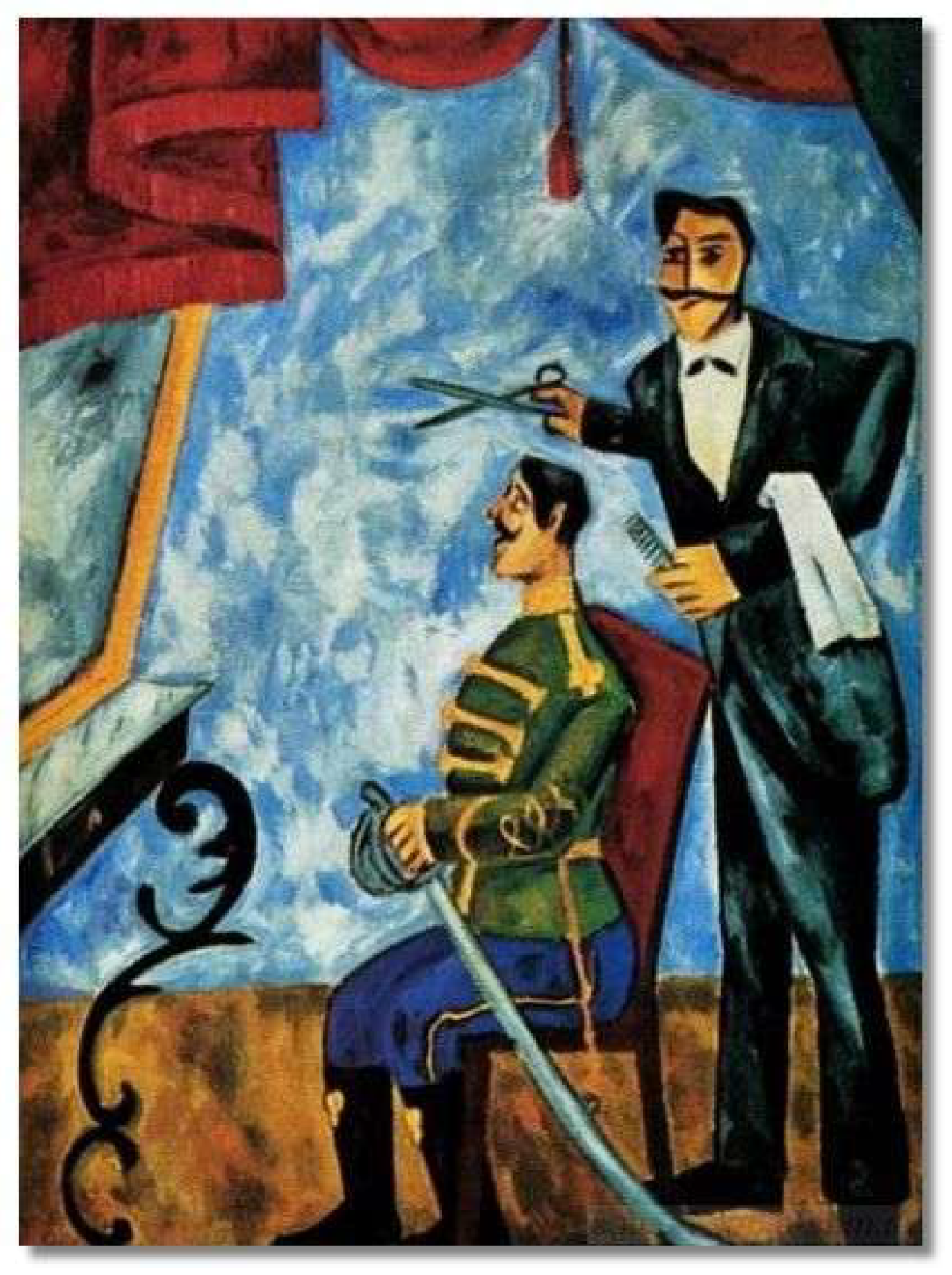
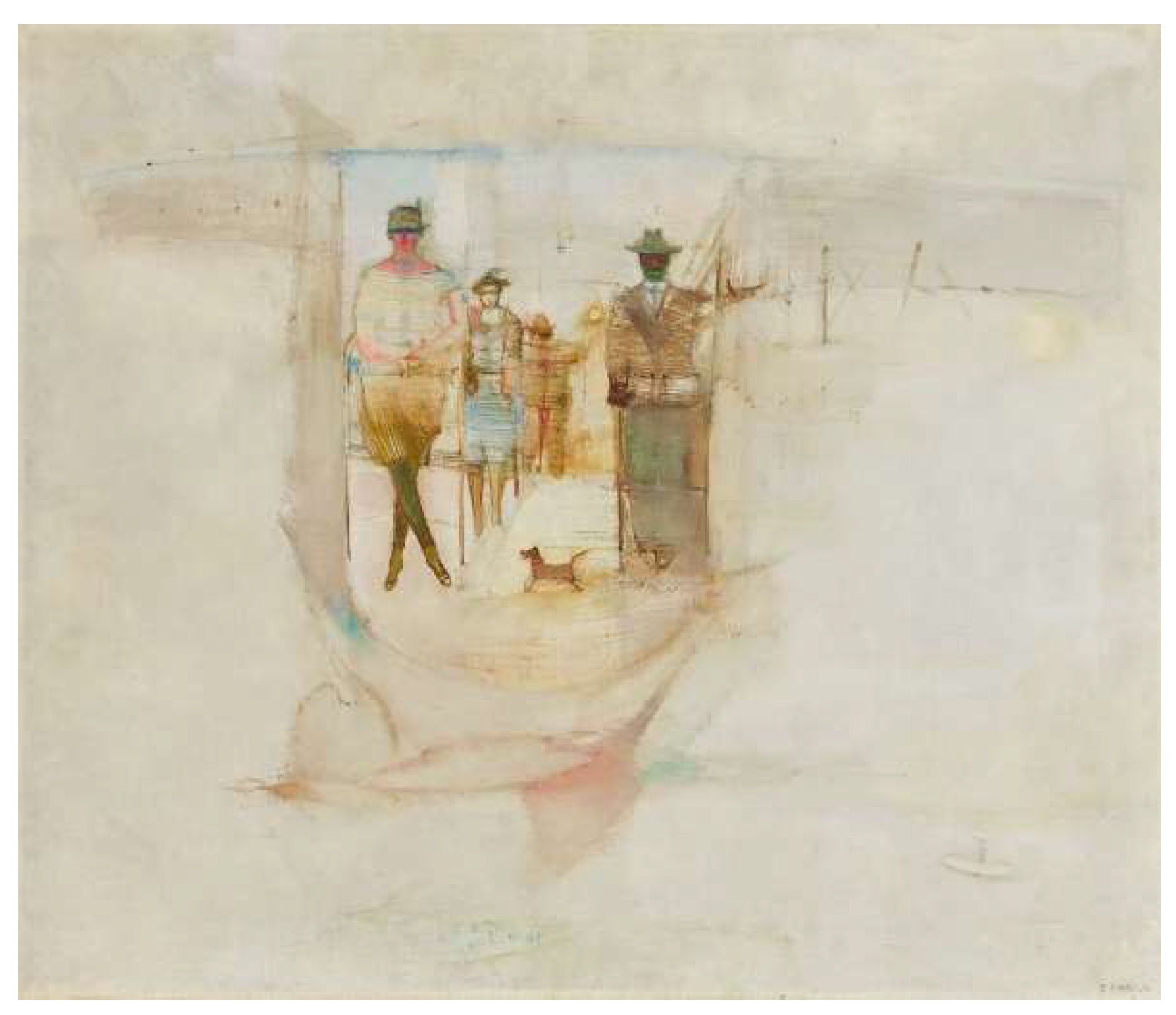
The machine civilization of the late nineteenth and early twentieth centuries entered the artist’s field of vision gradually and not without ambivalence. Everyday mechanical devices and medical instruments first appeared in the moralizing allegories of Hieronymus Bosch, the genre paintings of the Dutch Masters, and the clinical scenes of Rembrandt’s “anatomical theatre.” By the 1910s, this process of assimilation intensified in Russian art, where a thematic focus on barbershops—and a particular fascination with the professional tools of razors and scissors—became widespread. A particularly notable concentration of barbershop scenes is found in the early work of Mikhail Larionov (
Figure 1).
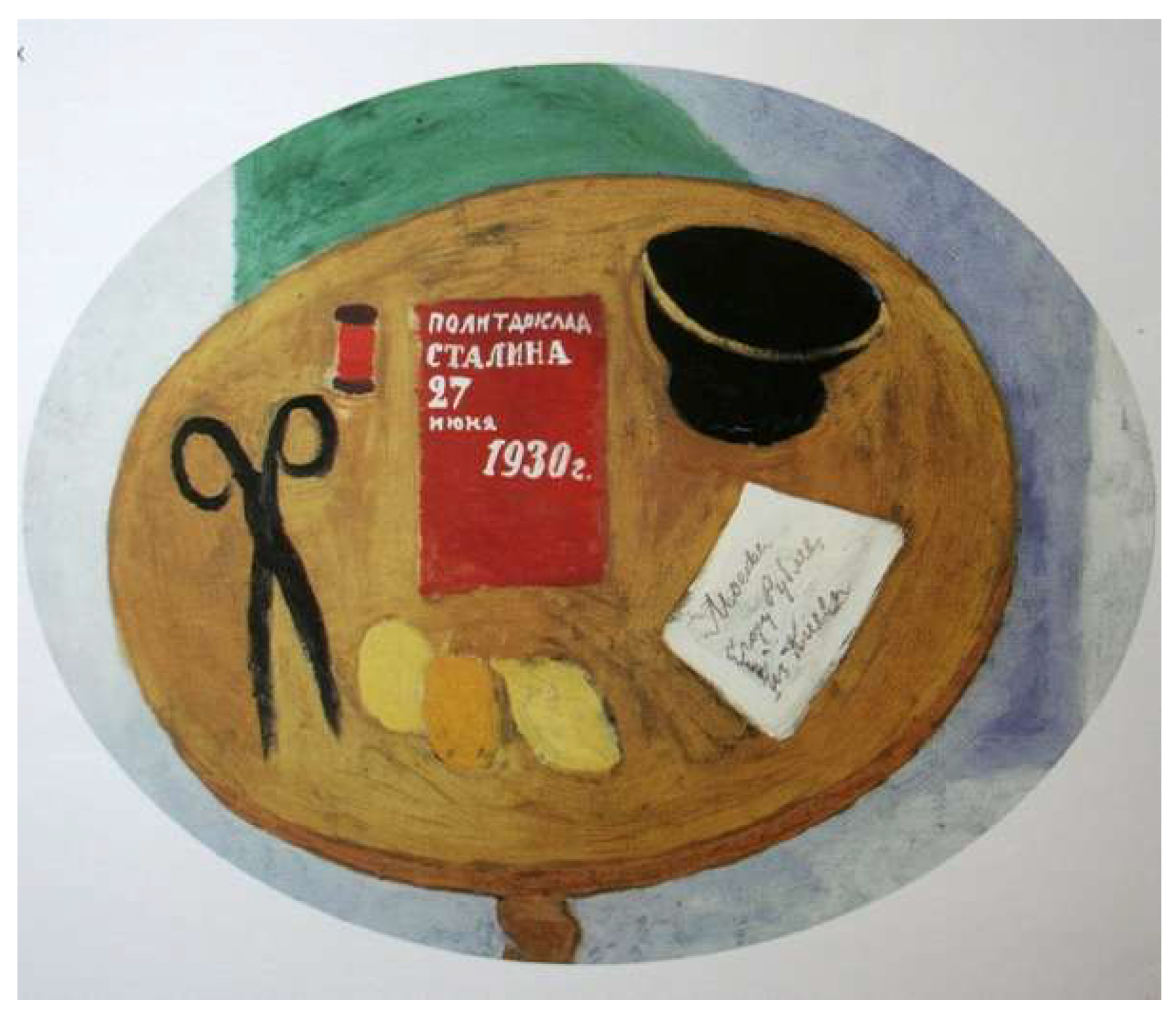
Within a few years, the sharp cutting tools in his paintings underwent a significant metamorphosis, re-emerging as piercing beams of light that simultaneously wound and sharpen vision. The symbolism of barbers’ tools was transfigured in the first Soviet decade. In Georgi Rublev’s primitivist still life
Letter from Kyiv (1930), a pair of scissors looms menacingly over the composition. Their stark black silhouette is conspicuously positioned alongside a party document on the table, forging a potent visual juxtaposition (
Figure 2).
The transition from a manual tool to a self-propelled machine required but a single step—yet this step heralded a leap into a fundamentally new civilizational epoch. This rupture was precipitated by the introduction of an intervening force: no longer the direct application of the human hand, but an engine driven by artificial energy—electricity. Art proved remarkably swift not only to register but also to emphatically articulate this profound transformation.
The fusion of body and mechanism in motion achieved a decisive breakthrough in Italian Futurism, where dynamic form itself acquired autonomous significance within the broader project of the historical avant-garde. The Russian avant-garde responded with its own distinctive version of this synthesis, one grounded in the principles of natural biomechanics. This concept is vividly materialized in Vladimir Tatlin’s ornithopter Letatlin (1929–1932). The construction introduces the idea of a hybrid body-organism: the human pilot, equipped with artificial wings for flight, is thereby reconfigured into a living machine for aerial locomotion. In this configuration, corporeality is endowed with an additional, mechanical function, paradoxically underscoring its newly articulated organic nature. However, the full advent of the machine age precipitated a conceptual separation between the body and the organism. To elucidate this critical shift, it is necessary to turn to the data of natural language.
In everyday usage, the
body and the
organism function as synonyms. In nineteenth-century Russian literature, however, the dominant conceptual dichotomy was between the
corporeal and the
spiritual. The body was thrust into the foreground by the avant-garde, where the painting, the poetic word, and sound itself became objects endowed with flesh, while the problem of the spirit receded beyond the bounds of its concern. Mikhail Bakhtin’s theory of the carnivalesque provides a key to understanding this foregrounded corporeality. For Bakhtin, the body preserves its integrity precisely by undergoing trials that transgress its own boundaries. In carnival culture, the “lower bodily stratum” and the inner body metaphorically spill outward, challenging classical, closed forms (
Bakhtin 1985). A clear conceptual division between the
body and the
organism crystallized in the 1920s, coinciding with a fundamental socio-cultural split: the
body came to signify individual, corporeal existence, while the
organism was increasingly aligned with the pragmatic collectivity required by the new state. Within the series of oppositions—
whole/fragmented and
continuous/discrete—the first term of each pair is affiliated with the
body, while the second is affiliated with the
organism. This distinction finds support in linguistics. In Russian, the word
тело (telo, body) is etymologically associated with meanings of strength and indivisible wholeness. Conversely,
организм (organizm, organism), a term of Latin origin, semantically aligns with “tool” and “instrument,” thereby situating it firmly within the sphere of labor, utility, and production.
2 Thus, the internal form of the word
body (telo) is semantically governed by the concept of strength-in-wholeness. In stark contrast, the concept of the
organism is grounded in the semantics of mechanical assembly, with an overriding emphasis on constituent parts and their discrete functions. In essence, the notions of
body and
organism exist in a state of simultaneous affinity and opposition. Their fundamental distinction lies in their respective
modus operandi: one oriented towards indivisible integrity, the other towards functional organization.
Within the Symbolist worldview, the concept of the
body held metaphysical primacy, with the
organism positioned as its subordinate component. Pavel Florensky exemplifies this hierarchy. While he meticulously analyzed the organism’s capacity for perception and developed a taxonomy of organ homotypy, his framework was fundamentally structured by an opposition between the
living organism (unitary and integrated) and the
dead organism (mechanical and disintegrated). The natural philosophy of the poet Nikolai Zabolotsky can be viewed as a distinctive elaboration and extension of this Florenskian conceptual lineage, particularly in its treatment of the body and organism. This principle is articulated with stark precision in Zabolotsky’s poem “Metamorphoses” (1937): “Oh, how many dead bodies I have separated from my own body.” The line posits a fundamental law: only dead, inert matter is susceptible to separation and dismemberment into parts (
Zabolotsky 2014, p. 504). A related conceptual operation is depicted in his poem “Birds.” Here, the fragmentation of a bird’s body into separate organs—its reduction to the constituent parts of an
organism—is met with a protest from nature itself, embodied by the living birds who witness this dissection (
Zabolotsky 2014, p. 195). The interpretations of the
body and the
organism advanced by Florensky and Zabolotsky can thus be understood as modeling a quintessentially twentieth-century conceptual paradox: the simultaneous
proximity and
difference between these two notions, as registered in and through language. The
organism, conceived as an assembly of discrete parts, is ontologically opposed to the indivisible
wholeness of the body. Yet, in its vital functioning, a living organism is simultaneously identified
with the body precisely because it manifests this very wholeness. In the realm of the
visual arts, however, this conceptual dynamic assumes a different configuration.
3. The Organism in the Service of Production
In visual representation, the
body typically appears as a continuous form, saturated with aesthetic, erotic, and ideological connotations. Representations of the
organism, by contrast, are governed by the principle of
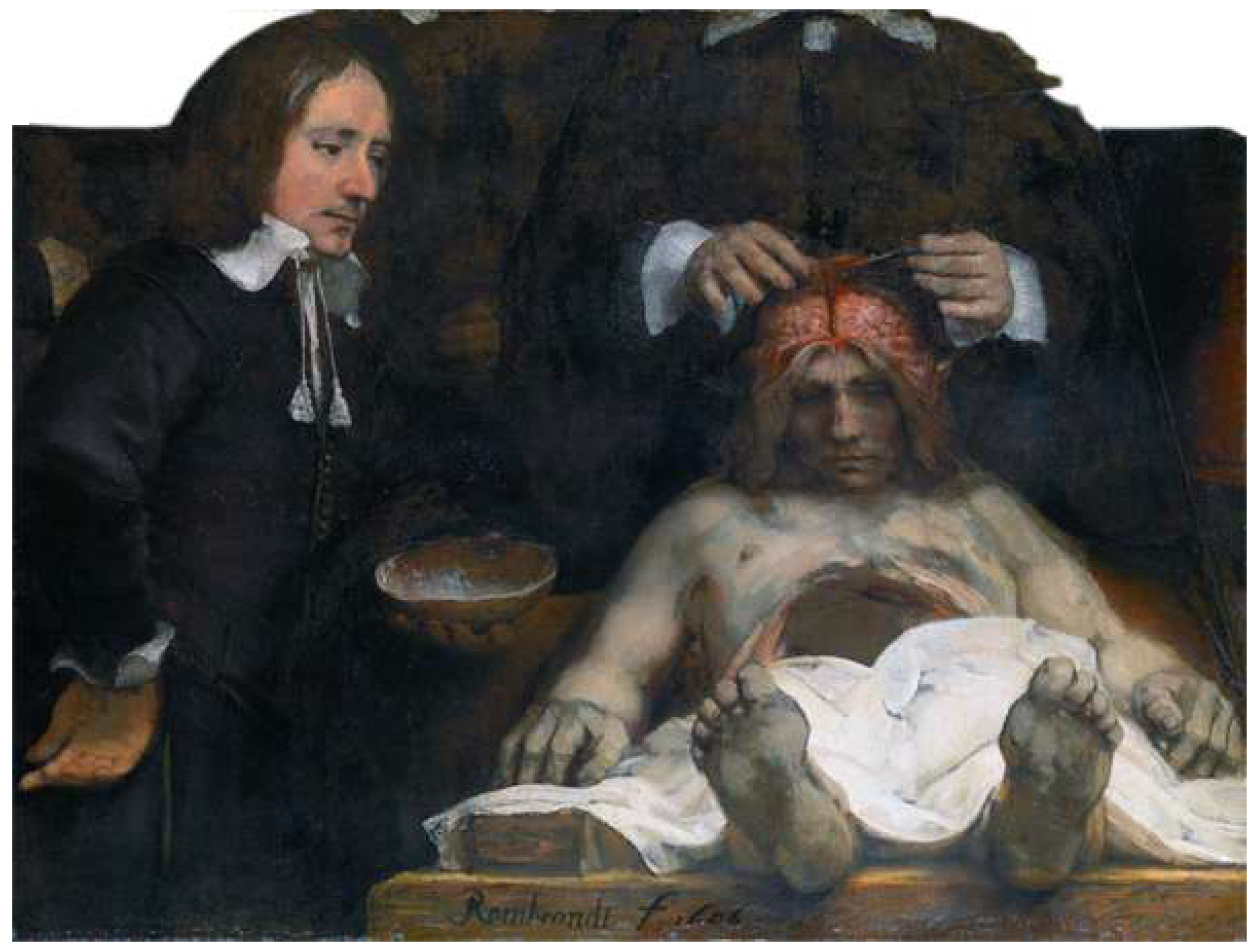
discreteness: the whole is conceived as a functional assemblage of parts, shifting the central artistic problem to the mechanics of their interaction. The analytical, dissective nature of the organism finds its quintessential visual expression in cross-sectional modes of representation. A canonical example is Rembrandt’s
The Anatomy Lesson of Dr. Deyman (1656), a composition that lays bare the logic of the organism as an object of scientific—and, by extension, instrumental—knowledge (
Figure 3).
The painting captures the experience of fragmenting a cadaver for educational and epistemic purposes, a practice mirrored in the composition’s analytical structure: the doctor and his students are hunched over the corpse, rendered in steep foreshortening. Here we encounter a visual projection of scientific–medical discourse, one that operates with the category of the organism as a system of functional parts—a kind of natural mechanism. This cross-sectional, dissective mode of composition is not confined to the Baroque. It is characteristic of artistic periods that, while historically distant, share a similar analytical
poetics. Above all, it becomes a defining visual strategy of the avant-garde. This is exemplified in the paintings of Alexander Labas from the late 1920s, which, fueled by his fascination with new technologies and aeronautics, systematically depict passengers in moving vehicles—airplanes and trains—in cross-section. His 1928 watercolor
“In the Cockpit” is a case in point (
Figure 4).
In the 1920s, Soviet Russia’s state project placed primary emphasis on perfecting the citizen’s body and transforming it into an efficient, productive mechanism. Unlike the historical avant-garde of the 1910s, which was preoccupied with creating a superhuman, this new corporeality was conceived as a function, and the concept of the organism became a central priority in the construction of the new world. While the development of the body’s natural capacities was approached pragmatically, it nevertheless carried a distinct aesthetic significance. Thus, the experiments conducted by Mikhail Matyushin and his colleagues—exploring the expansion of the visual field, color perception, and the brain’s response to light—can be seen, in a sense, as a continuation of the early avant-garde’s mythopoetic project, aimed at transcending the traditional dichotomy between time and space (
Tillberg 2012). The perception of the organism as a scientific laboratory also defined the work of the Institute of the Brain, which opened in Moscow in 1925. Both art and the state converged in their focus on the body/organism as a central object of inquiry. This interdisciplinary focus is exemplified in the work of the renowned Soviet art historian Nikolai Tarabukin. In his 1929 manuscript
Gesture in Art (which remains unpublished), Tarabukin theorized gesture as the primordial origin of all languages and a mode of profound communication, analyzing its manifestations across various art forms, including painting (
Tarabukin 1929;
Zlydneva 2023). He conceptualized gesture as both an agent of will and a catalyst for motor dynamics. This interpretation of the gesture is rooted in the concept of the living body as an organism in a state of perpetual becoming, renewal, and development. This conceptual framework found a direct theatrical application in the very same years, as Vsevolod Meyerhold developed his theory of biomechanics—a term originally coined by the poet and efficiency theorist Alexei Gastev in 1921 (
Smirnov 2020, p. 21). The logic of this engineered body achieved its monumental scale in the mass sports parades of the 1930s. Here, the individual body was fully subsumed into the collective organism of a vast ideological apparatus. The synchronized movements of countless bodies transformed the aesthetics of gesture into a totalizing mechanism, forging the crowd and the masses into a single, seamless entity.
The transformation of the body into a machine–organism found its theoretical justification in Alexander Bogdanov’s
tektology—a theory he described as a “universal organizational science.” Bogdanov systematically applies the concept of the organism in conjunction with that of organization, arguing that systemic contradictions generate an organizational task: “Life solves it either negatively, by destroying the system itself—for example, by the death of the organism—or positively, by transforming the system, freeing it from contradictions” (
Bogdanov 1922). The organism, conceived as an integral component of a larger organization—be it labor, life, or society—inherently resists disorganization. Bogdanov’s globalist vision directly reflects this drive to transcend the fundamental opposition between cosmos and chaos. His functionalist conception of the body-as-organism also found vivid expression in the era’s leftist poetry. Alexei Gastev, for instance, celebrated the fusion of man and machine, cataloging types of machinery and tools in his verse as if they were extensions of the human anatomy. His poem from 1923 powerfully articulates this synthesis:
“Look! I stand among them: machine tools, hammers, cupola furnaces and forges, and among hundreds of comrades…
New iron blood flows into my veins…
I myself am growing steel shoulders and immensely strong arms. I have merged with the iron of the structure.”
Here, the industrial landscape is internalized as a new physiology, and the poet’s body is literally refashioned by the mechanical environment.
A mechanical interpretation of the worker’s body, defined strictly by its productive functionality, was systematically outlined in Alexei Gastev’s 1924 study,
The Scientific Organization of Labor (NOT), which adapted and radicalized the principles of Frederick Taylor’s management theory. Gastev’s rules for maximizing labor productivity are articulated with the force of scientific law. His instructions prescribe optimal bodily efficiency down to the most minute detail: “The body posture at work should be such that it is comfortable to work and at the same time no energy is wasted on completely unnecessary standing. If possible, one should work while sitting. If sitting is not possible, the legs should be kept apart; to prevent the leg that is extended forward or to the side from slipping, a support should be provided” (
Gastev [1924] 1972 URL). The goal of the Central Institute of Labor (CIT) in Moscow, founded by Alexei Gastev in 1921, was to transform the worker into an ideal “social engineering machine” (
Smirnov 2020, p. 120). Gastev’s social engineering aimed to transform the worker’s body into an element of the assembly line, thereby fostering an attitude toward the organism as a kind of technical apparatus. Here, the body is strictly functional; more accurately, it is a body–organism, or an organized body.
Thus, by the late 1920s, a process unfolds in art and social thought wherein the semantics of the body are not merely distinguished from those of the organism but are directly supplanted by them. This conceptual shift can be distilled into two core theses:
The new sensibility—while still indebted to the velocities of Futurism—became fundamentally defined by the imperatives of production, labor, and social organization. Consequently, gesture was reconceptualized in a dual register: as both an aesthetic form and a pragmatic instrument.
The focus shifted from constructing new bodies to engineering specialized organisms adapted for specific productive tasks. As a result, the enhancement of human physicality was reduced to its social utility, rendering programs of sport and hygiene purely utilitarian in nature.
4. Electricity as a Mediator
Herein lies a central contradiction of early Soviet modernism: the body, with its inherent principle of indivisibility, was transformed into an organism—a discrete entity fundamentally opposed to the indivisible body. Henceforth, the organism served the cause of technological progress, projecting the image of a future golden age onto a distant past, while the individual body was integrated into the collective body as a specialized social organ. A mediating substance was required to reconcile this schism. This role was found in the concept of electricity.
In December 1922, the painter Kliment Redko (1897–1956) published a manifesto titled
“Declaration of the Electroorganism”, marking the founding of the Electroorganism group, which remained active for only two or three years. The group’s composition was eclectic, and its aesthetic program was never clearly defined. It was represented at its first exhibition in Moscow in 1924 by a diverse array of artists, including Kliment Redko, Mikhail Plaksin, Alexander Tyshler, Alexander Labas, and Sergei Luchishkin. These artists, recent graduates of VKhUTEMAS, positioned themselves in opposition to two dominant forces: on one hand, Kazimir Malevich and Vladimir Tatlin, who embodied the tradition of autonomous art inherited from the early avant-garde; and on the other, the constructivists Alexander Rodchenko and El Lissitzky, who advocated abandoning easel painting in favor of direct engagement with industrial production. The works produced by the group’s members were dynamic compositions characterized by an accentuated rhythm and a synthesis of geometric patterns with organic forms (
Figure 5).
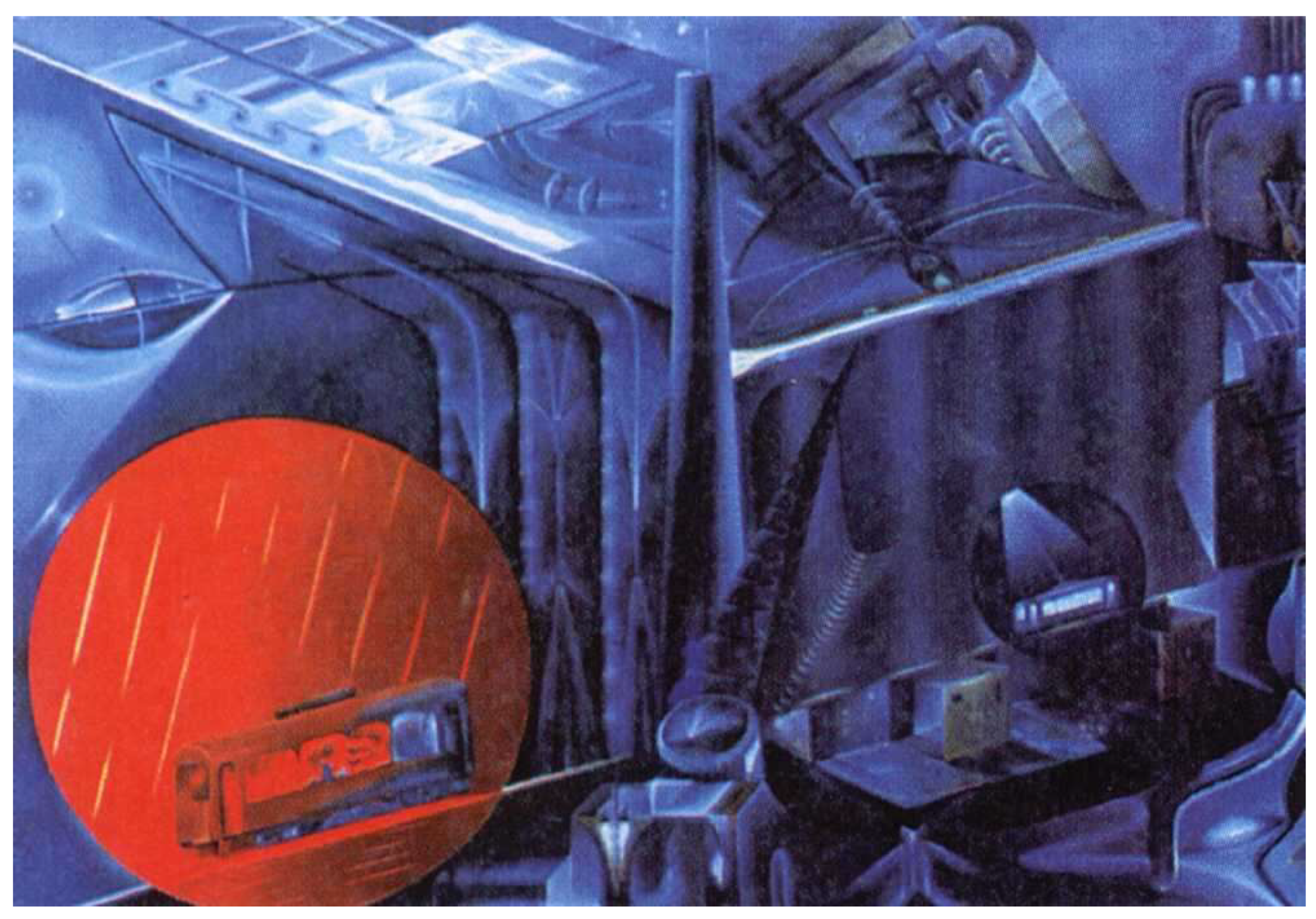
Their paintings frequently incorporated fragments of industrial machinery—such as screws, mechanical parts, and assembly lines—while the titles of their canvases were directly borrowed from the lexicon of scientific discourse (for example, Tyshler’s painting was titled
Color-Dynamic Tension in Space) (
Figure 6).
The Declaration’s text is particularly illustrative: it is dominated by a semantics of vitalism, which takes the form of either a call for a pragmatic relation to nature aimed at unleashing the energy of matter or a summons to organize artistic material according to the laws of scientific knowledge. At the same time, the text is marked by a celebration of electricity as the mediator between inert nature and living substance, which imparts dynamism and development to the world. The Declaration proclaimed: “…The Electro-organism as an entity (a) reveals in art new methods for studying the form of the earth in relation to forms existing in the absolute, (b) discovers in nature new elements, explaining them through art… We are moving into science” (cited in
Lebedeva 1993, pp. 187–88). The keywords
energy,
matter,
light, and
electricity indicate that art was being tasked with the goal of transforming nature into a servant of civilization.
The neologism “electroorganism” marked a decisive conceptual shift, displacing focus from the natural human body toward an artificial, electrically charged entity. Corporeality is thus framed metaphorically, with the electrical machine posited as its foundational source. In this sense, electricity operated as the era’s defining
logo—a pervasive emblem of modernity and progress, analogous to information technology today. It was through this symbolic lens that extensive experimentation on the interface between the human body/organism and electrical energy unfolded. A paradigmatic instance of this interplay is the invention of the electroencephalogram (EEG). The foundational research was conducted by Ukrainian physiologist Vladimir Pravdich-Neminsky, who in 1913 published the world’s first electroencephalogram, recorded from the brain of a dog. He is also credited with coining the term “electrocerebrogram” for this graphical record of brain activity (
CMI Istoriya Entsefalografii n.d.). The term “electroencephalogram” (EEG) itself was introduced by the German psychiatrist Hans Berger following his pioneering recording of human brain waves in 1924. The neologism, formed from the Greek roots for “electric,” “brain,” and “writing,” established a template for scientific nomenclature. The name “Electroorganism” directly mirrors this morphological structure, replacing “-encephalogram” with “-organism” to denote a living entity actuated by or constituted through electrical processes.
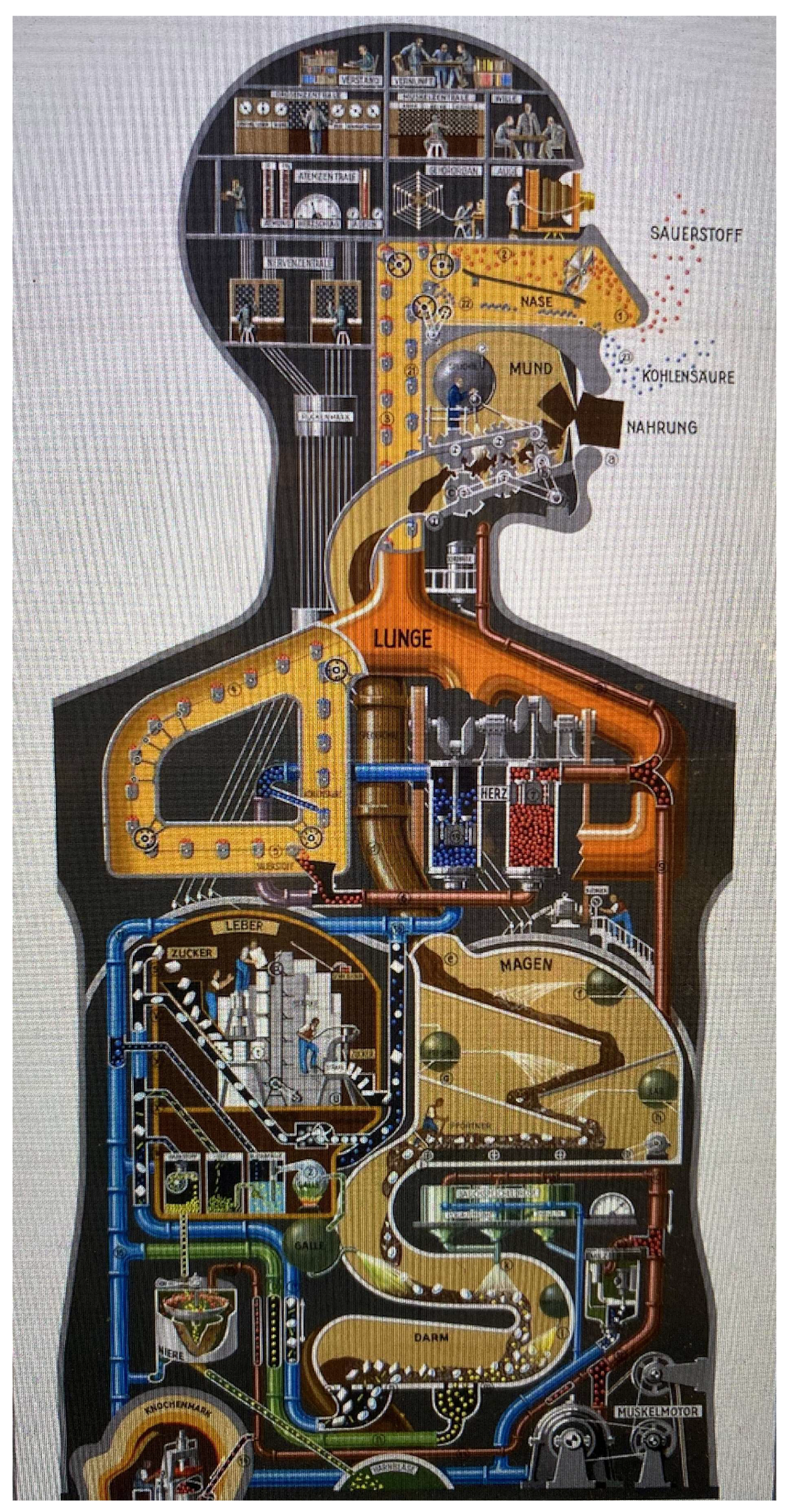
The concept of merging the human body with electrical machinery gained prominence across Europe in the 1920s, not solely in Russia. A key manifestation of this trend is evident in the work of the renowned German physiologist and science popularizer Fritz Kahn. The illustrations for his books, produced by German artists, appeared concurrently with the activities of the Electroorganism group, offering a parallel visual exploration of the same techno-organic synthesis. In Kahn’s work, the physiological functions of the human body were visualized through elaborate metaphorical schemas. For instance, blood circulation was rendered as an intricate subterranean river network, while the brain was portrayed as a complex electrical cipher or switchboard (
Figure 7).
The illustrations in Fritz Kahn’s book
Man as an Industrial Palace (
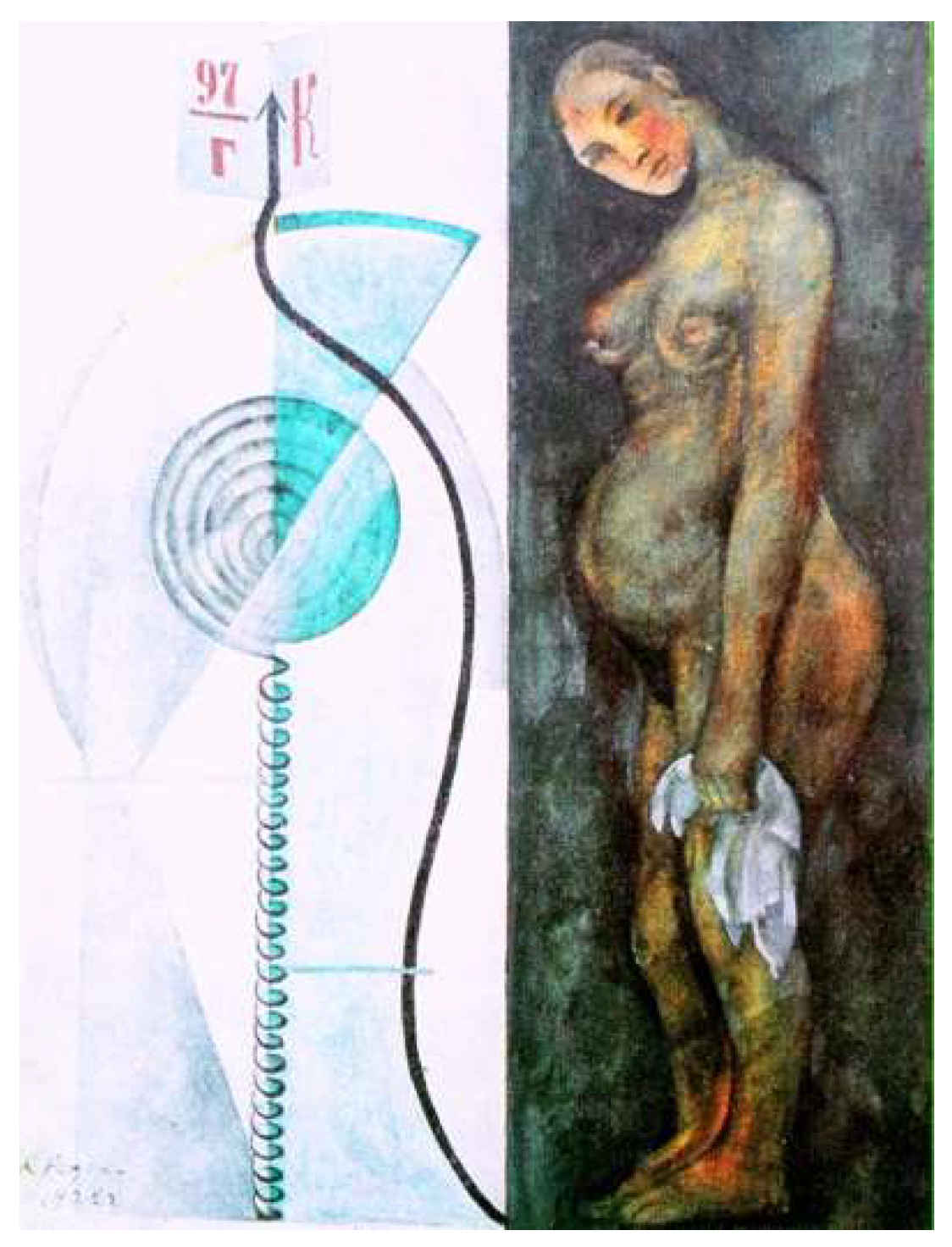
Der Mensch als Industriepalast, 1931)—which visualize the brain as a centralized power station or map the circuitry of sexual arousal in the cerebral cortex onto an electromagnetic relay system—exhibit a striking compositional and conceptual affinity with the works of the artist K. Redko. A direct parallel can be drawn, for instance, with Redko’s painting
The Number of Births (1923). This diptych-like composition juxtaposes the image of a pregnant woman with a schematic spiral, the latter serving as an explicit visual metaphor for the process of biological development (
Figure 8).
The stylistic and conceptual proximity between German and Russian art in the 1920s can be attributed to two interconnected factors: first, sustained cultural exchange facilitated by joint exhibitions, publications, and artists’ travels; and second, more fundamentally, a profound typological similarity rooted in a shared epochal impulse to reinterpret scientific and technological breakthroughs through the prism of the human body. Among these breakthroughs, electricity held particular significance, functioning as both a literal and metaphorical force that reshaped artistic imaginaries in both contexts.
5. Mythological Projections
For the second-wave avant-garde of the 1920s, electricity—while firmly established as a symbol of technological progress—retained the mythological connotations inherited from fin-de-siècle Symbolism. This is particularly evident in the reinterpretation of light through the prism of archaic imagery, a process that again foregrounded the centrality of corporeality. The idea of light’s direct physiological impact found concrete realization in Mikhail Matyushin’s groundbreaking lighting design for the 1914 avant-garde opera
Victory Over the Sun (
Tillberg 2012), translating this theoretical concern into a radical sensory experience. Matyushin’s later notes from his work at the Department of Organic Culture at the State Institute of Artistic Culture (GINKhUK) demonstrate his sustained conviction in the intrinsic connection between corporeality and natural light. In 1921, he posited that “The Earth’s orbit is not the trace of the Earth’s movement, but the body of the Earth itself; the body of the Sun passes through the body of the Earth” (
Matyushin 1921; cited in
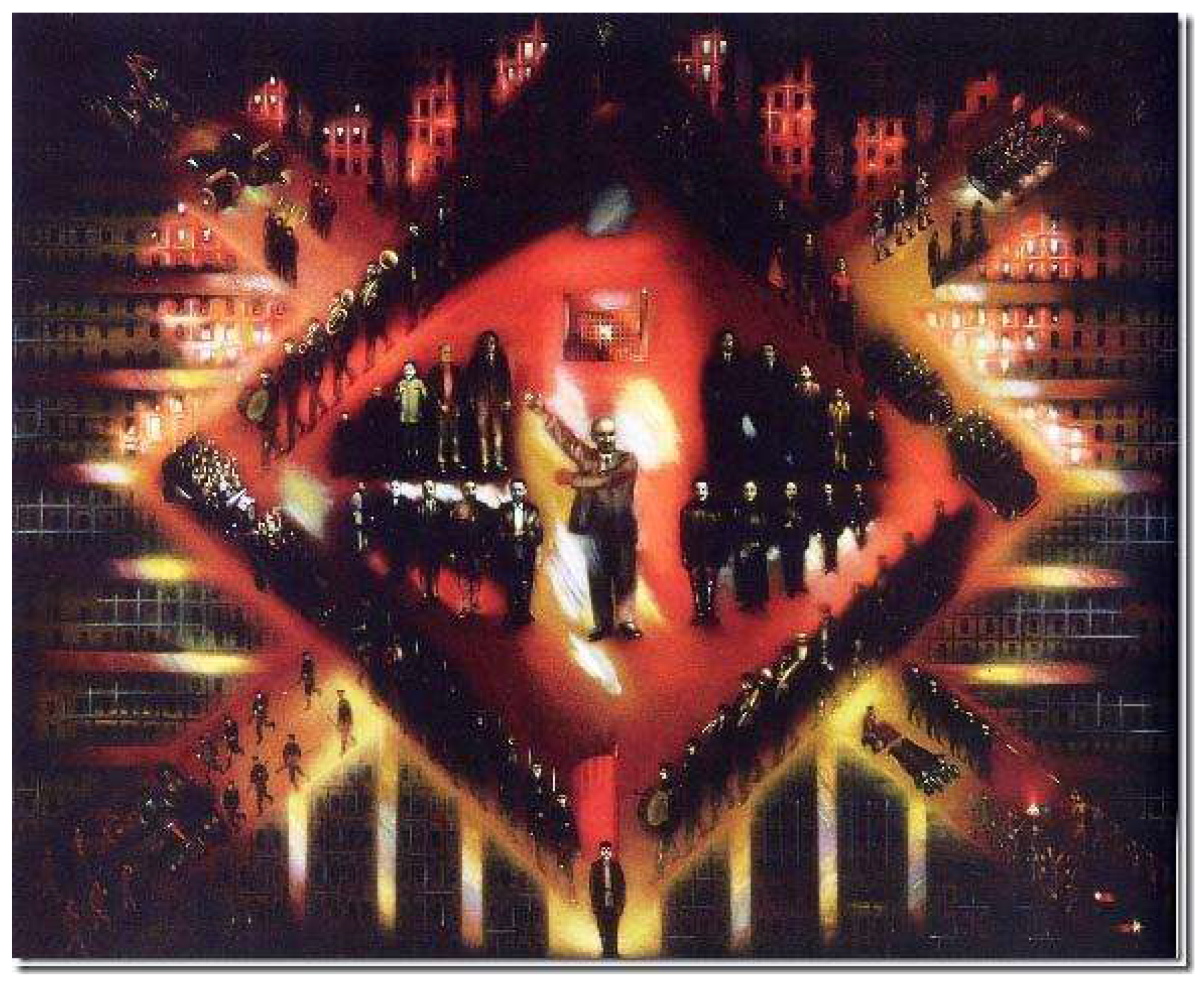
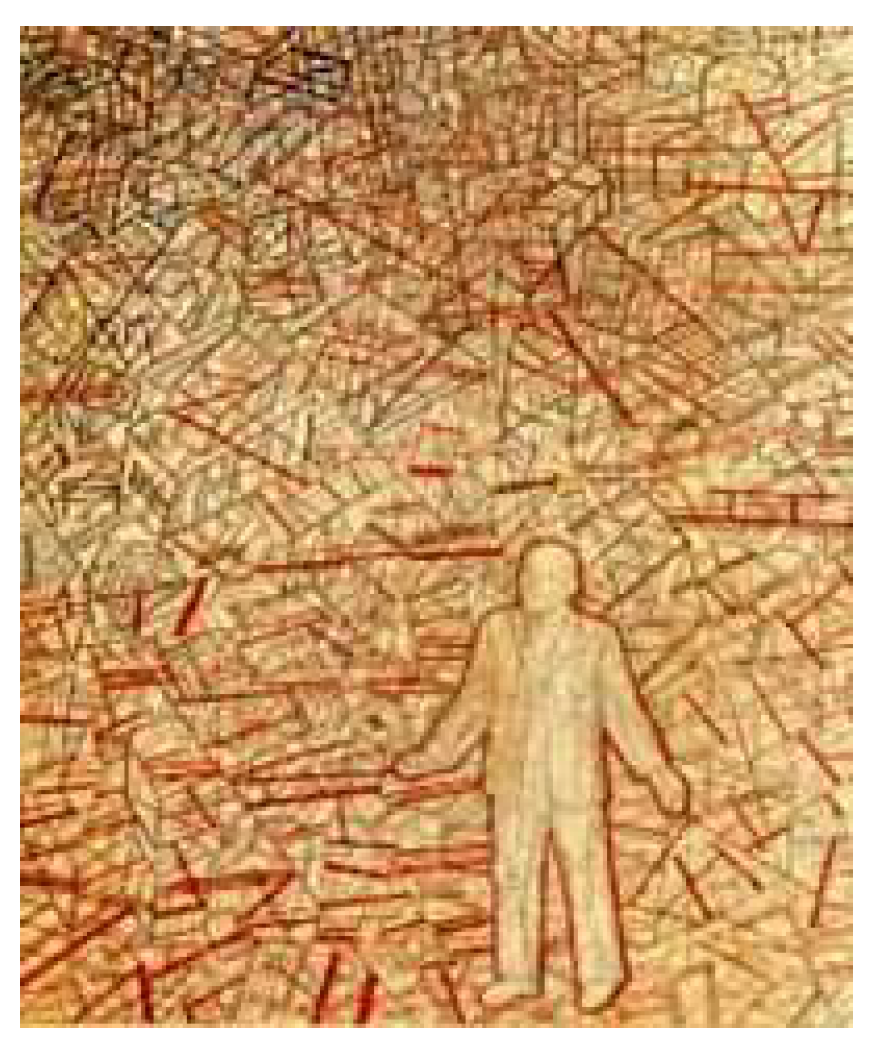
Povelikhina n.d.). Parallel to this, Alexander Bogdanov emphasized the symbolic and physiological link between human blood and electricity, as well as between natural and artificial light. Consequently, within the era’s political rhetoric, machine-generated electric light gained ascendance, effectively instantiating a new, technological solar symbolism. This visual rhetoric finds a striking manifestation in Pavel Filonov’s painting
GOELRO Plan (1940), where Lenin’s silhouette is nearly dissolved within an intricate arabesque of multidirectional light rays (
Figure 9).
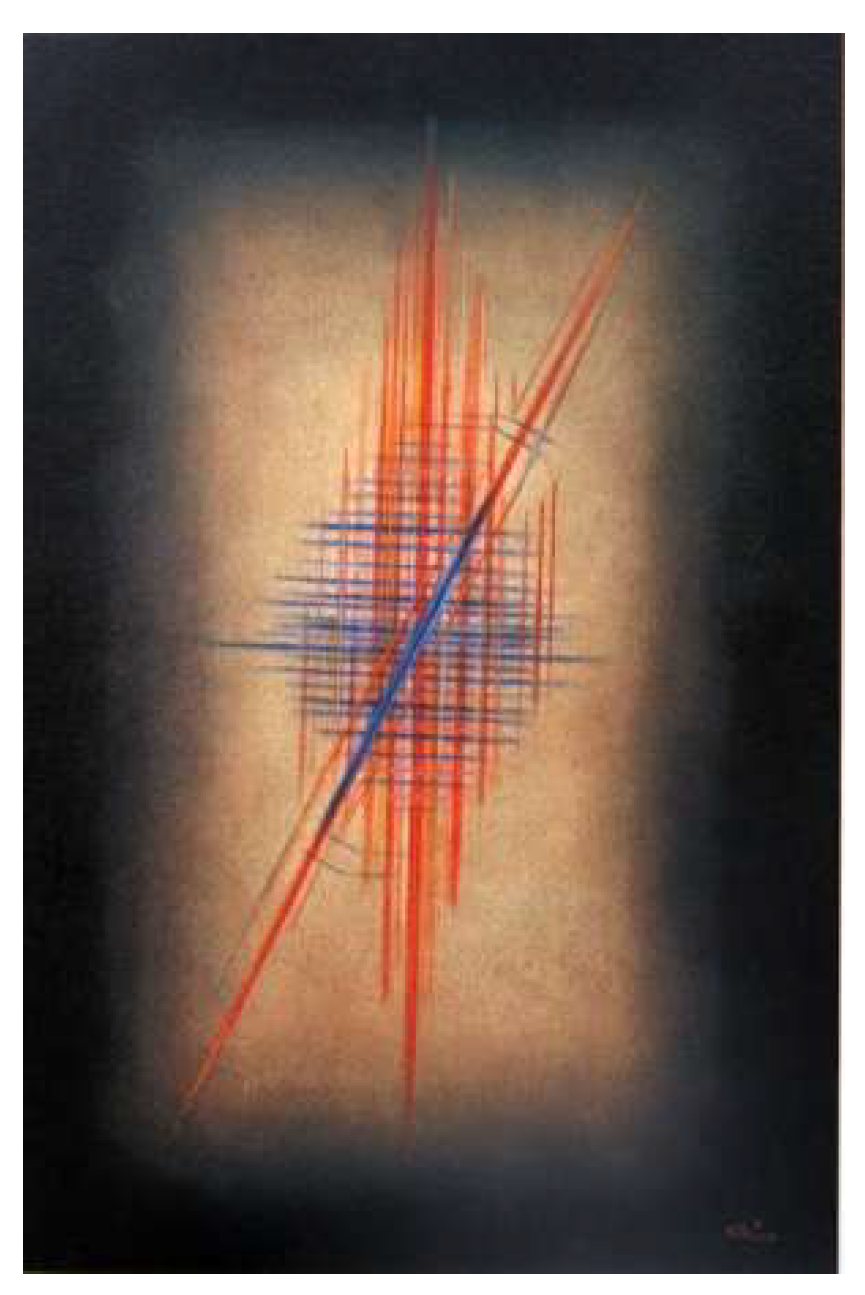
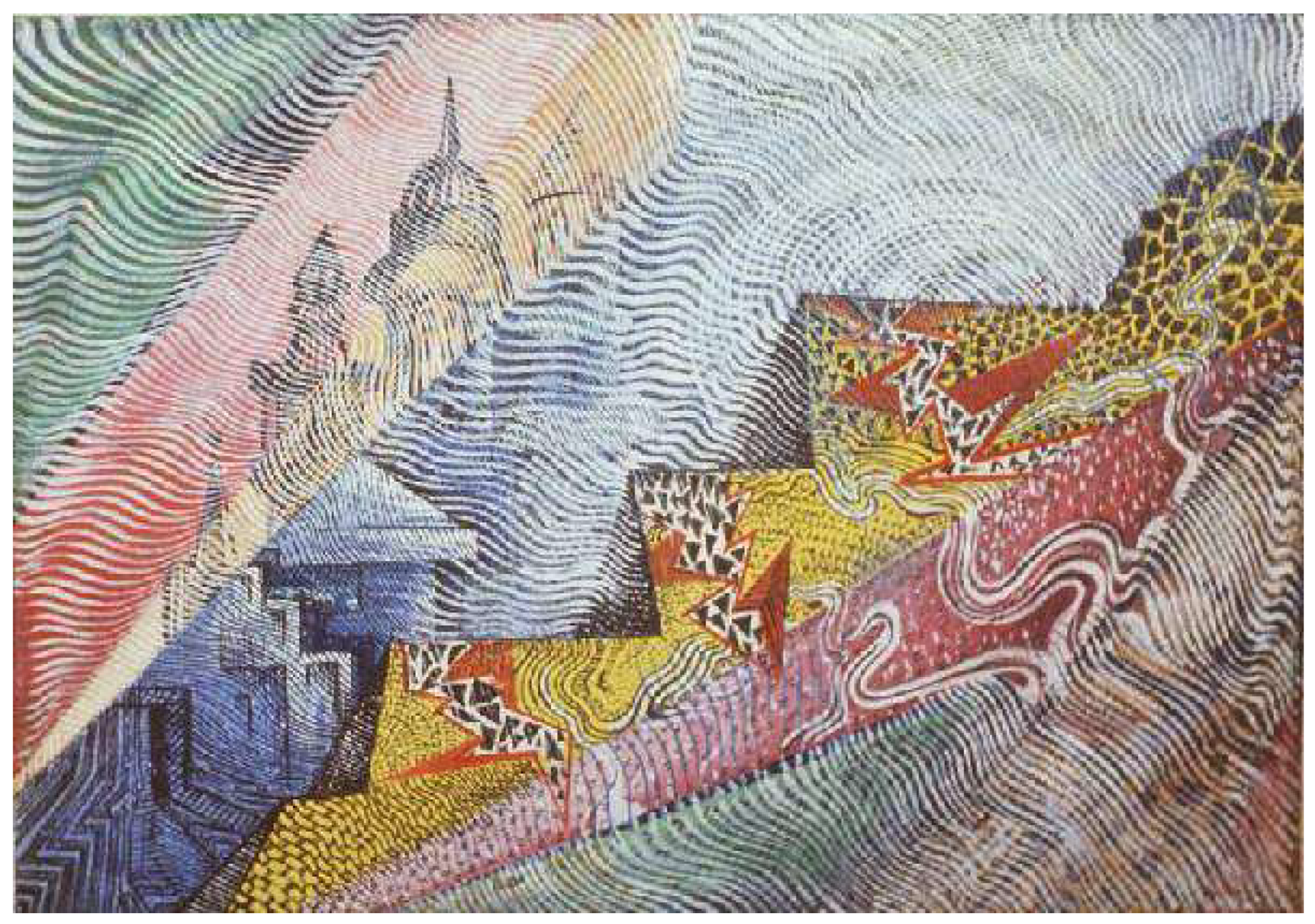
The period was further defined by a broader fascination with waves as a universal physical medium, encompassing both the emergent technology of radio waves and the mysterious phenomena of cosmic rays. This conception of waves as a form of living matter found visual expression in the works of the Amaravella group, most notably in the paintings of Aleksandre Sardan (
Figure 10).
The wave motif aligns with a symbolism that became a profound leitmotif within a distinct branch of the late Russian avant-garde—one that consciously positioned itself apart from Constructivism. This symbolic language extended beyond painting. A pivotal figure bridging the worlds of late 19th-century Symbolism and the technological ethos of the 20th century was Pavel Florensky. Alongside his theological and philosophical work, Florensky engaged deeply with the physical nature of electricity. His scientific contributions were significant: he helped develop new dielectrics, authored the entry on electricity for the
Technical Encyclopedia, and served on the state commission responsible for drafting the plan for the country’s comprehensive electrification. In Florensky’s writings, electricity functions not merely as a technological phenomenon but as a powerful conceptual metaphor. He employs the term “electric” as a figurative device to elucidate complex spiritual and ethical dilemmas. He employs the term “electric” as a comparative figure to elucidate complex spiritual and ethical dilemmas. This is exemplified in his reflection on the interdependence of moral opposites: “It does not happen that with the increase of good, evil diminishes; rather, as with the development of electricity, every appearance of positive electricity goes hand in hand with the appearance of negative electricity” (
Florensky 1994, p. 200). Through this analogy, Florensky posits a cosmological and ethical principle of polarity, where forces exist not in isolation but in inextricable correlation. From the perspective of his metaphysical holism, Florensky interpreted energy and light as the fundamental constituents of electricity. This worldview is articulated in two key passages. First, he describes a universal interconnectivity: “The energies of things flow into other things, and each lives in all, and all in each.” Secondly, he attributes specific, transcendent sensory qualities to spiritualized matter: “…Sweetness, warmth, fragrance, musical harmony, and above all, radiant light—these are the characteristic signs of flesh filled with the Holy Spirit” (
Florensky 2000, p. 151). Together, these statements delineate his vision of a cosmos suffused with dynamic, divine energies, wherein physical phenomena and spiritual essence are indivisible. For Florensky, words themselves were primary vessels of energy and, consequently, the foremost bearers of the concept of a living organism. At first glance, this metaphysical philosophy seems diametrically opposed to the ethos of scientific progress championed in K. Redko’s
Declaration of the Electroorganism.
However, this initial impression of opposition is misleading. The group operated under the alternative Russian name Свеченизм (Svechenism), which translates as “the doctrine of light” or “luminous substance/energy.” This aligns directly with the core tenet of their
Declaration of the Electroorganism, which states unequivocally: “The highest manifestation of matter is light” (cited in
Lebedeva 1993, p. 187). Far from rejecting metaphysical dimensions, Redko’s artistic practice synthesized Symbolist mythology with Soviet political iconography. His 1925 painting,
The Revolt, exemplifies this fusion. In it, the artist’s fascination with electricity as a divine, transformative force is articulated through a compositional structure that directly references the traditional iconographic scheme of the Transfiguration (
Figure 11). Traditionally, in icons depicting the Transfiguration, the image of Christ revealed to the apostles is framed by radiating rays of light. The preservation of this iconographic scheme in Redko’s painting points to a sacral–mythological component within the interpretation of the revolutionary narrative.
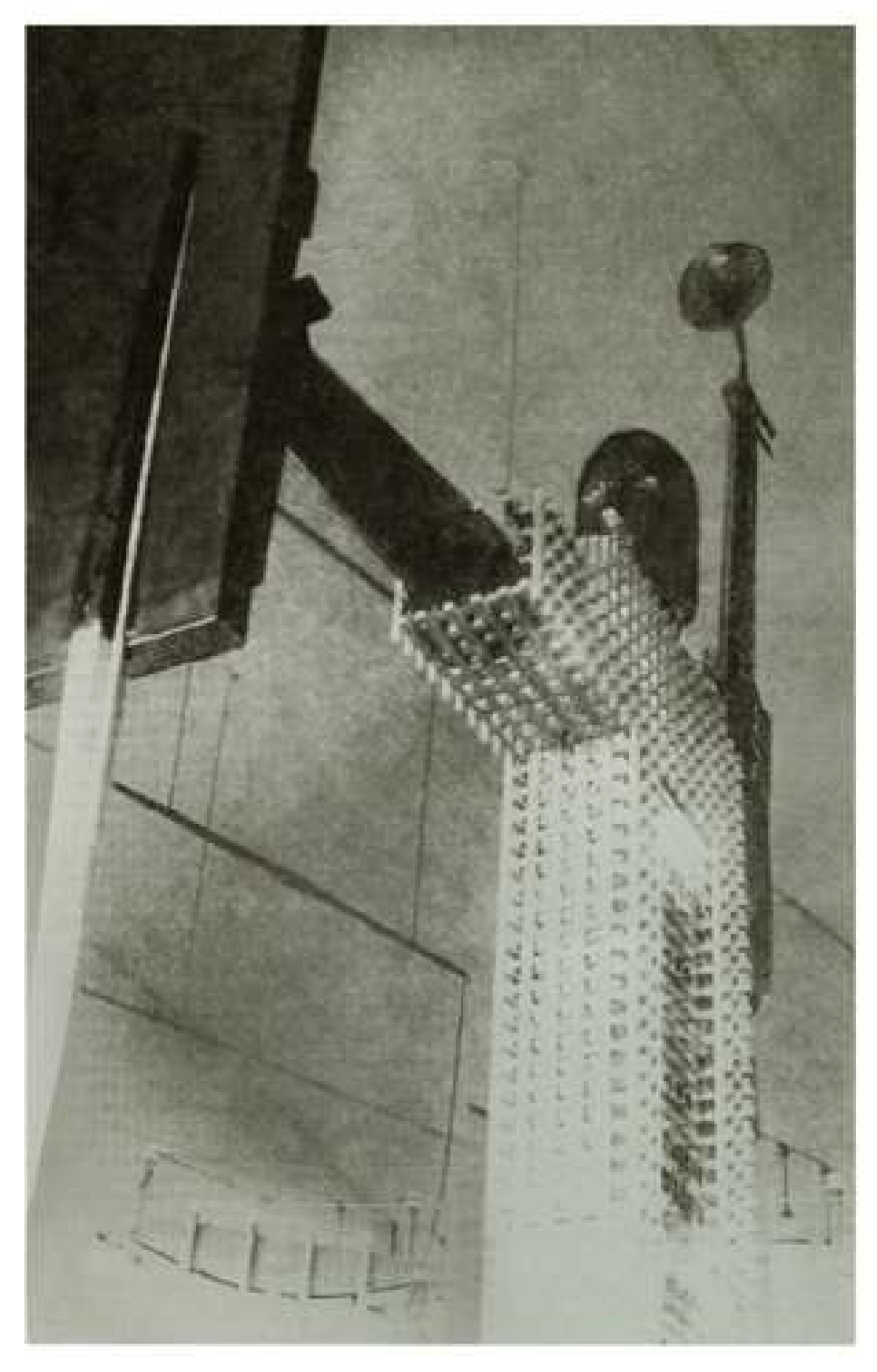
Redko’s electric luminism operates as an antiphase to the early avant-garde. While Mikhail Larionov’s Rayonism of the 1910s was predicated on the externalization of subjective vision through the materialization of light—interpreting a ray as a tangible entity for the eye—in Redko’s work, light undergoes an inversion. As a derivative of electrical energy, it is reified into an object in its own right. Consequently, the light in Redko’s paintings serves a dual function: it expresses pure wave energy while simultaneously carrying a potent mythopoetic charge. Consequently, the group’s self-designation “Electroorganism”—a synthesis of machine and organism—reveals itself to be subordinate to these deeper, foundational layers of the cultural text. In this way, undulating, wave-like electrical energy forged a conceptual link between the body’s wholeness as a natural principle and the organism’s discreteness as a modern concept. This synthesis supplied the impetus for the emergence of a new, multicomponent machine: “corporeality.” Tellingly, even the female body—a traditional metaphor for the integrity of nature—was reinterpreted within this framework. In the work of one member, it is portrayed not as a holistic symbol but precisely as a discrete, composite organism. I refer here to Alexander Labas’s sculpture
Electric Venus (1930). This large-scale construction, assembled from wood, metal, and glass, evoked a female silhouette only in the most abstract sense, while simultaneously presenting the image of a colossal machine—a kind of capacitor or energy storage device (
Figure 12).
6. Conclusions
The paradoxical nature of avant-garde artistic thought—which Dering-Smirnova and Smirnov liken to the rhetorical figure of catachresis—is clearly evident in the metamorphosis of the concepts of body and organism. The principle of representing the whole through its parts is inherent to the concept of the organism as an object assembled from discrete units, where each part negates the body as an indivisible whole. Within the discourse of the late avant-garde, the organism and the body thus form an antinomic opposition in identity: the body, understood as a living, indivisible totality, gives way to the organism conceived as a fragmented, inanimate entity. In a final paradoxical turn, this organism is then identified with the machine, which is itself endowed with the qualities of a lifelike—that is, corporeal—being. Electricity—imbued with both mythological significance and the concrete meaning of a carrier of energy and light—served as the pivotal operator of this conceptual transformation.
In Stalinist Russia, this reimagined body found its political analogue in the concept of a collective social body, meticulously regulated by the administrative “organs” of the state. The Russian Empire, formally reconstituted in the 1930s under communist rhetoric, manifested itself precisely as such a composite entity: a mechanism, or a peculiar organism assembled from disparate territorial and functional parts. These conceptual shifts aligned precisely with the ambitions of the official ideology, which sought to wholly subordinate the individual to the model of a fully regimented industrial worker. In this grand project, the state invested immense hope in luminous energy as the very force that would set its new social and industrial mechanisms in motion. It was along this ideological and technological trajectory that a number of remarkable scientific advances were ultimately realized. However, the search for the elixir of youth in the science of the 1920s, as well as the means to prolong the lives of the bodies of already deceased revolutionary leaders through their experience of mummification in the 1930s and later (Lenin in 1924, Grigory Kotovsky in 1925, Georgi Dimitrov in 1949, Stalin in 1953, etc.) was an attempt to turn back the wheel of history. The drive to resurrect an archaic consciousness was ultimately aimed at forging a social organism modeled on the utopian blueprint of a perpetuum mobile. The collapse of Russian totalitarianism in the 1990s demonstrated that these plans were unattainable, no matter how persistent the attempts to revive them, and that the domination of an impersonal mechanism over the natural integrity of the whole threatens a humanitarian catastrophe.