1. Introduction
Modernity is evolution leading to the development of society on planes coordinated with individual needs. Some needs, which are completely normal for the current generation, are unthinkable for those representing older generations. One such need, increasingly present in the sphere of tourism and recreation, is the need for beauty (
Chmielewski 2012)—understood not only as esthetic pleasure, but as a value that has a real impact on a person’s mental, emotional, and spiritual well-being (
Magsamen 2019). In contemporary tourism, this need for beauty is increasingly addressed that actively frame, interpret, and intensify the perception of landscape, functioning as mediators between the visitor and the surrounding environment. It is worth noting here that whenever beauty is mentioned in the article, the key aspect is the subjective perception of beauty by users, and not the concept of beauty understood as the proportions of architectural objects. This subjective perception positions architecture not merely as a physical object, but as an experiential and interpretative medium, similar to a work of art, which shapes emotions, directs attention, and constructs meaning through spatial experience. In the context of this study, beauty in the landscape is defined as the harmony between natural surroundings and architectural form, the enhancement of sensory experience, the ability of space to evoke emotional resonance, and the integration of cultural meanings embedded in the environment. This concept emphasizes that beauty in tourism landscapes is a multidimensional phenomenon: visual, atmospheric, symbolic, and experiential. Such an understanding aligns contemporary tourism architecture with artistic practices such as environmental art and landscape-based installations, where space itself becomes a carrier of esthetic and symbolic value rather than a neutral backdrop. The development of society is directly linked to the creation of new, more specific, and often luxurious needs. In recent decades, the dynamics and function of trips to rural areas have changed. These trips have evolved from traditional utilitarian trips, which involved helping with farm work or caring for the farm (due to the rapid automation of agricultural production and rural depopulation) to recreational trips, offering an alternative and respite from crowded cities, as well as an opportunity for regeneration, contact with nature, and esthetic experiences (
Kruczek 1979). In this context, architectural interventions increasingly act as spatial scenographies that choreograph movement, perception, and interaction with the landscape, transforming tourism spaces into curated sequences of esthetic and sensory encounters. The pandemic has further accelerated these processes. The main issue addressed in this study is how contemporary architectural forms in tourism and recreational environments respond to the growing demand for beauty, multisensory experiences, and emotional value, while integrating with natural and cultural landscapes. Particular attention is given to the ways in which architecture not only accommodates tourism functions but actively produces esthetic experiences, reinforcing or reinterpreting the artistic qualities of the surrounding environment. Specifically, this research examines how design strategies mediate the relationship between functional requirements, user expectations, and esthetic and emotional experiences, and how these strategies are reflected in the selection of architectural examples that exemplify current trends. These strategies are understood as comparable to artistic tools such as framing, sequencing, contrast, and immersion that influence how space is perceived, remembered, and emotionally processed by users. By analyzing these aspects, this study aims to clarify the role of architecture as a medium for enhancing well-being and creating meaningful interactions between users, nature, and the built environment. In this sense, contemporary tourism architecture operates at the intersection of utility and artistic expression, where built forms function similarly to large-scale spatial artworks that amplify the experiential and emotional potential of place. As human needs change and expand, they are moving into new areas of creative activity in the form of contemporary architectural forms, which are intended to respond to emerging needs, ensuring comfortable use and satisfying the user’s desire for beauty. In this article, new architectural forms are understood as innovative spatial and esthetic solutions created for tourism and leisure in the 21st century. These forms increasingly blur the boundaries between architecture and art, as their primary value lies not only in use but in the experiential narratives they generate. These forms include: architecture inspired by organic, biomimetic, or landscape-integrated geometries; structures using sustainable technologies and new materials; hybrid and multifunctional typologies shaped by experiential expectations of users; buildings whose expressive form itself becomes an esthetic attraction. In such cases, the architectural object itself often assumes the role of an artistic landmark, becoming a focal point of visual identity and a catalyst for esthetic appreciation within the landscape. They differ from traditional typologies by emphasizing emotional experience, symbolic value, and visual distinctiveness, reflecting global architectural trends while often departing from local vernacular traditions. This shift signifies a transition from architecture as a background element of tourism to architecture as an active agent that constructs and intensifies artistic and emotional engagement with place. For many years, tourist and recreational facilities have enriched the landscape, and their location has most often been dictated by tradition or the attractiveness of the surroundings (
Stasiak 2011). The literature emphasizes the importance of the natural environment as a key factor in shaping the well-being of society. The forms of buildings built in the landscape have traditionally referred to the surrounding canons, integrating with the surroundings and incorporating existing cultural heritage (
Hrehorowicz-Gaber 2022). Buildings located in mountainous areas were completely different from, for example, buildings built in coastal areas (
Hermawan and Švajlenka 2021). Regionalization was their distinguishing feature and a continuation of building traditions (
Gołembski 1999).
New architectural forms, embedded in picturesque landscapes, not only meet functional needs but also respond to the esthetic aspirations of users, for whom beauty becomes a crucial element of recreation. Unlike traditional approaches, these contemporary forms often reinterpret the landscape through architectural gestures that frame views, guide movement, and heighten sensory awareness, thereby transforming natural scenery into an experience comparable to an open-air exhibition or immersive artwork. In addition to esthetic value, contemporary tourism and recreational architecture increasingly focus on user experiences and emotional value. By “experiences,” this study refers to the multisensory interactions and memorable activities that visitors engage in within architectural and natural environments, including spatial exploration, visual delight, tactile engagement, and immersive encounters with nature. “Emotional value” encompasses the psychological and affective impact of these experiences, such as feelings of relaxation, inspiration, connectedness, and well-being. Through these mechanisms, architecture strengthens the artistic dimension of tourism spaces by enabling users to perceive, interpret, and emotionally respond to the landscape in a more conscious and intensified manner. Together, experiences and emotional value shape the overall perception of the place, influence user satisfaction, and become central criteria in the design of new architectural forms that aim to enrich leisure and tourism environments in the 21st century. The objective of this study is to analyze how contemporary architectural forms in tourism and recreational environments respond to evolving user needs for beauty, multisensory experiences, and emotional engagement, while integrating with natural and cultural landscapes. By doing so, this study positions tourism architecture as a spatial practice that not only supports recreation but also contributes to the broader cultural and artistic interpretation of landscape. Contemporary tourist and recreational facilities increasingly depart from tradition. Modern facilities embrace globalization, draw inspiration from new sources, depart from standard solutions, and utilize standardized building materials thus redefining the relationship between architecture, beauty, and landscape in the 21st century. This redefinition reflects a growing tendency to treat architectural form as an expressive and symbolic medium, capable of generating artistic meaning beyond its functional role. At the same time, these contemporary architectural forms establish a deliberate and meaningful dialog with traditional landscapes and cultural heritage. Design strategies frequently involve the careful selection of local and regionally significant building materials, the reinterpretation of vernacular architectural motifs, and a sensitivity to the historic and natural context of the site. By integrating these elements, modern tourism and recreational facilities are able to create a continuity between past and present, simultaneously reflecting global architectural trends while preserving a sense of place and cultural identity. Such dialog enhances the artistic depth of tourism architecture, allowing it to function as a bridge between cultural memory, contemporary expression, and sensory experience. This approach not only reinforces the visual and esthetic coherence of the landscape but also enhances the experimental and emotional engagement of users, emphasizing that innovation in architecture can coexist with respect for heritage and environmental context. Consequently, architecture in tourism landscapes emerges as a form of spatial art that mediates between people, place, and beauty, responding to contemporary demands for meaningful, emotionally resonant, and esthetically rich experiences.
2. Materials and Methods
This study employs a qualitative, descriptive methodology aimed at systematically analyzing contemporary architectural forms in tourism and recreational environments. This research is grounded in theoretical frameworks from environmental psychology, landscape architecture, and tourism studies, providing a basis for understanding how architecture shapes human perception, experience, and emotional response. The focus is on how architectural design responds to evolving user needs for beauty, multisensory experiences, and emotional engagement, while integrating with natural and cultural landscapes.
Selected examples were chosen according to specific criteria, including architectural innovation, integration with landscape and cultural heritage, functional relevance to tourism and recreational activities, and the capacity to provide meaningful esthetic and emotional experiences. The examples analyzed represent a diverse range of architectural forms, including hotels, mountain lodges, observation towers, elevated terraces, and treetop paths. This diversity allows for a systematic comparison of structures serving different functions and designed for varied user interactions. Some examples were selected based on first-hand site visits, enabling direct observation of spatial qualities, materiality, and user engagement, while others were gathered from literature, visual documentation, and project reports from various countries, providing a comparative perspective on how geographic, cultural, and climatic contexts shape architectural responses.
The methodology involved the systematic collection and analysis of visual and textual data, including photographs, plans, diagrams, and project documentation, combined with field observations that captured the interaction between architecture, users, and landscape. Each example was evaluated according to predefined criteria: spatial integration with the landscape, materiality, functional performance, esthetic quality, and capacity to generate emotional and multisensory experiences. Observations were qualitatively coded to identify recurring patterns, design strategies, and esthetic principles across different types of tourist and recreational facilities, highlighting both universal trends and context-specific adaptations.
Triangulation of data sources was applied to enhance the reliability and robustness of the findings, combining field observations, literature analysis, and visual documentation. This structured approach ensures that this study provides a comprehensive and reproducible framework for evaluating contemporary architectural forms, even in the absence of numerical data. The qualitative methodology allows for an in-depth understanding of how modern architecture reconciles functional, esthetic, and experiential demands within diverse landscapes.
This study also acknowledges its methodological limitations, including the reliance on a selected number of examples and the inherent subjectivity in assessing esthetic and emotional qualities. These limitations were mitigated through systematic observation, cross-case comparison, and the inclusion of diverse typologies and geographic contexts, ensuring that the conclusions drawn are empirically grounded and theoretically informed.
3. Case Studies: Analysis of Architectural Examples
3.1. Contemporary Definition of Architectural Forms in the Context of the Demand for Beauty in Tourism and Recreation
New architectural forms are structures whose primary purpose is to meet contemporary needs, defined by current trends in both architecture and the lifestyle of contemporary society. They are intended to create spaces for people in a user-friendly manner, respecting the history of the place, region, and local tradition. At the same time, they should consider esthetic values and the need for beauty, which (along with function) becomes one of the key design criteria. Beauty in tourist and recreational architecture is not merely decorative; it is a fundamental element influencing the perception of space, the emotions of users, and their relationship with their surroundings (
St-Jean et al. 2022). In this sense, architectural form operates as an experiential medium, actively shaping how users perceive, interpret, and emotionally respond to both the built structure and the surrounding landscape, similarly to the role played by artistic interventions in space. Tourist facilities can be systematized according to their function, intended users, location, and form (
Baud-Bovy and Lawson 1998). The classification proposed by M. Nowacki divides them into nine categories: (
Nowacki 2000): scenic attractions, observational attractions, ecological attractions, recreational attractions, landmarks, activity areas, infrastructure, settlement infrastructure, and large-scale recreational infrastructure. Observation towers, observation decks, and treetop paths, which are increasingly appearing in the Polish landscape (
Czernik 2019), fall within several categories (e.g., observation decks, recreational facilities). However, for the purposes of further discussion, they will be defined as a paratourism attraction due to the lack of a clear implication of tourists as users and the supportive nature of these facilities. They are also frequently visited by the local community, enriching their spatial and esthetic experience. Their significance lies not only in their functional role, but also in their capacity to frame views, guide movement, and curate encounters with the landscape, thereby transforming natural scenery into a consciously perceived esthetic experience.
Due to the observed continuous development of tourism and the demand for it, as well as forecasts of further growth, it is necessary to find effective and measurable methods of assessing areas in terms of their suitability for various forms of tourism. “The current development of tourism and forecasts indicating further intensive development of this phenomenon create a need to seek effective methods that will enable a measurable assessment of the suitability and attractiveness of areas for various forms of tourism. Competitiveness in the tourism market (
Dwyer and Forsyh 2006) creates a particular need to develop tools that will allow for the precise determination of an area’s position among real and potential competitors with similar tourism resources, as well as the identification of unrivaled features that indicate the optimal direction of development of the tourism function.” (
Zajadacz and Sniadek 2009). When considering the suitability of various elements of tourist attractiveness aimed at enriching the offer, it is worth prioritizing the transcendent and timeless value of sustainable and universal value, such as sustainable use of space and a landscape undisturbed by dissonances. These values gain additional importance when architecture is understood as an element that enhances the artistic and symbolic coherence of the landscape, rather than disrupting it. The variability of architectural form is a result not only of the availability of building materials, the pursuit of world-class architecture and related trends, but also the necessity of using new structures and constructing new spatial installations and forms, a natural consequence of pursuing new construction technologies and the integration of advanced functional systems. This beauty of architecture, understood as its esthetic qualities and the synergy of function, form, and context—sustainable, modern, and regionally rooted—is becoming one of the key factors determining the success and attractiveness of tourist and recreational facilities. In this context, beauty emerges as a functional value in itself, closely linked to the experiential and emotional reception of space, and comparable to the impact traditionally attributed to works of art in public and landscape settings.
3.2. The History and Evolution of Recreational Areas in the Context of Economic and Cultural Transformations
Traveling has become a common activity nowadays, increasingly less considered a luxury. This was not always the case; however, as today’s perception of travel is primarily due to globalization, which has facilitated access to information and transportation (including affordable options) for everyone. Contemporary travel options are becoming increasingly accessible and attractive to a wide range of people. Older generations demonstrate a reduced tendency to travel, which may be partially due to social conditions rooted in earlier periods, economic shortages, and digital exclusion (a wealth of options is primarily available via the internet). This relationship can be explained by the APC (Age-Period-Cohort) model, which identifies three significant factors influencing generational behavior. Age refers to changes occurring throughout an individual’s life (which influences, for example, the need to travel), Period refers to historical or global events that an individual has witnessed and may influence behavioral patterns (e.g., a pandemic), and cohort refers to the unique influence of upbringing, its conditions, and the formation of values in a given generation. The combination of these three factors results in generational differences in travel patterns. Older generations travel to places traditionally perceived as spas, summer resorts, and destinations for summer or winter tourism. Such places have a well-established reputation and structural and functional resources to possess sufficient tourism potential. This is exemplified by the broadly defined Podhale region (the mountainous region of southern Poland). Traditional Podhale architecture, as well as Alpine architecture and, in fact, any architecture with similar topographical conditions, was initially associated with pastoralism in the 19th century. Tourism in mountain resorts is closely linked to a network of hiking trails, which constitute a significant element of the tourist infrastructure. Their development dates back to the 19th century, when mass tourism in the mountains increased in popularity (
Kozak and Kozak 2023), facilitating access to attractive areas for a growing number of tourists. Over the years, as needs changed, these places have evolved in character, form, and, above all, function to best adapt to the desired contemporary function. Inspired by local tradition, architects design structures with modern, desirable functions, which, due to the demand for usable space, are in no way able to catch up with tradition; they cannot always adequately follow local building traditions. As a result, contemporary architecture increasingly interprets tradition rather than replicates it (
Graburn et al. 2021), using form, material, and spatial composition as tools for creating new esthetic and symbolic meanings within familiar landscapes. Today’s mountain architecture is the result of years of inspiration from prototypes of mountain huts, which served as a muse, inspiration, and pioneering counterpart to contemporary hotel forms. Designs were created, combining simplicity and elegance, resulting from considerations about adapting historical structures to contemporary needs, harmonizing the layout, surroundings, and character of the site. In this way, the style and visual character of tourist facilities were enriched.
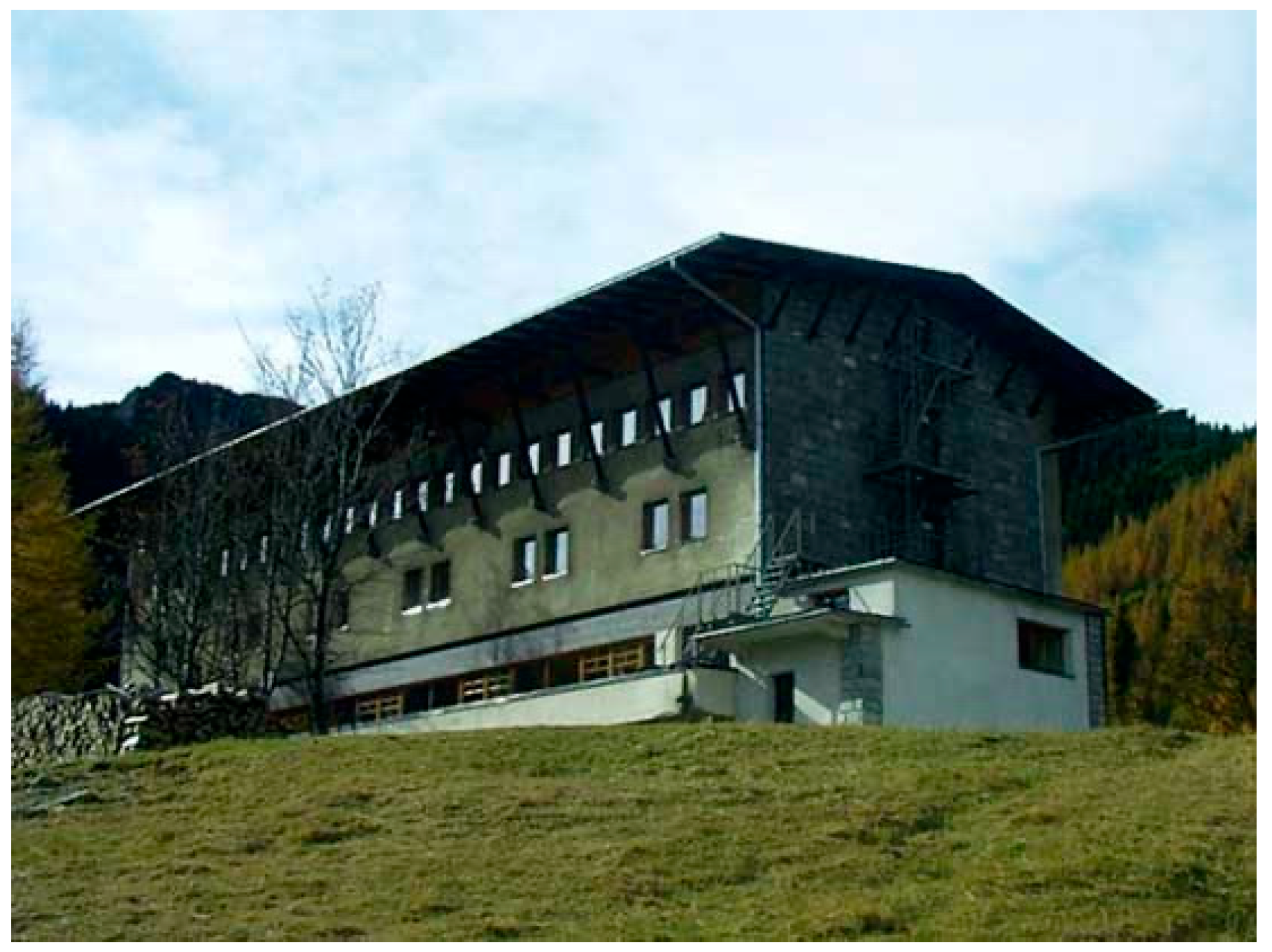
The demand on the tourist services market and the technical requirements (e.g., fire protection requirements, accessibility) increasingly require that mountain hut facilities have all the attributes of luxury hotels, and they are increasingly called mountain hotels rather than mountain huts (
Figure 1).
The contemporary evolution of recreational spaces and destinations reflects changes in architecture and types of activities, as well as in culture and social needs. A diversity of architectural forms and shapes is observed, from modern buildings to the revitalization of historic buildings and the revitalization of monuments with new functions. New recreational destinations attract not only tourists but also the local community, offering a variety of attractions, such as parks, sports recreation areas, cafés, art galleries, and co-working spaces (not always used exclusively for professional purposes). Increasingly, recreation is not limited to the functional satisfaction of relaxation but also to an esthetic, symbolic, and even spiritual experience. Consequently, the beauty of architecture and landscape today plays a key role in shaping recreational spaces. (
Liang and Wu 2024) Architecture thus becomes a carrier of meanings and emotions, reinforcing the artistic perception of leisure spaces and transforming them into environments of contemplation and experience. The growing popularity of ecotourism and active recreation is resulting in the creation of bicycle routes, trekking trails, and nature parks, where the beauty of the surrounding natural environment harmonizes with thoughtful, subtle architectural interventions. Cultural tourism and thematic trail design have also brought many changes to recreational spaces, increasingly incorporating esthetic and narrative aspects of space. These changes contribute to the creation of more sustainable and diverse recreational spaces, adapted to the needs of contemporary society.
3.3. Changes in the Needs and Perception of Recreation and Tourism in the 19th and 20th Centuries in Poland
The industrial revolution, which led to the automation of production processes, also significantly facilitated and streamlined the development of health resorts. The modernization of production plants and the modularization of structural systems facilitated the construction of buildings, including health resorts. The increase in the number of health resorts also led to their greater attractiveness, which was directly linked to lower prices for services provided there and, consequently, their accessibility. It was these natural qualities that formed the basis of their popularity, as “sulphurous mineral waters have traditionally been used in spa treatments” (
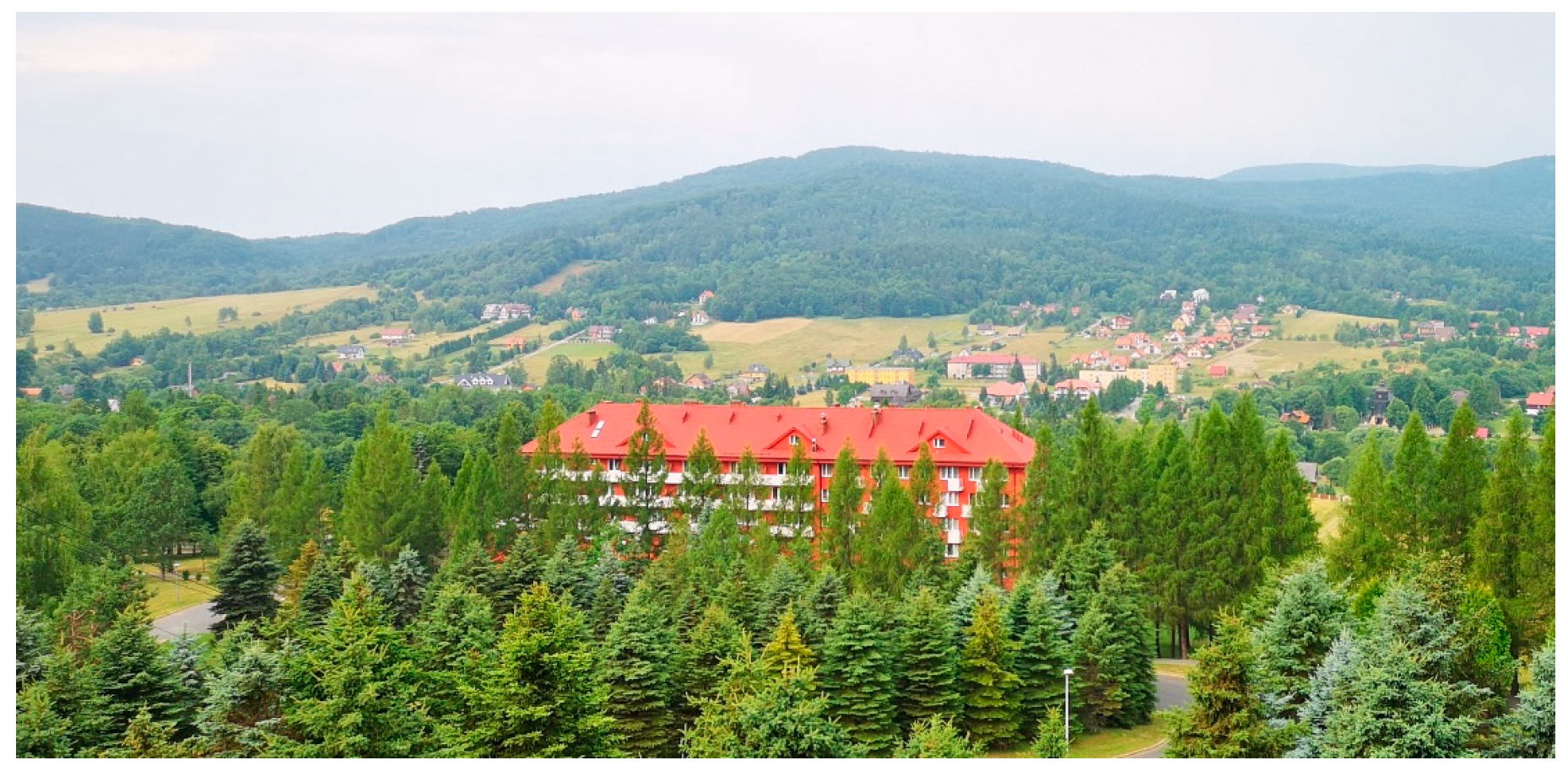
Orecchio et al. 2017). Overall investment in the development of recreation in Poland further increased with the introduction of the socialist system. The newly established state-owned enterprises offered employees affordable, accessible “holidays under the pear tree” (A colloquial term for financial support for an employee’s leisure or vacation, provided from the Company Social Benefits Fund (ZFŚS). Intended to enable employees and their families to travel to company-owned recreation centers (
Figure 2). These activities led to a further increase in the number and availability of recreational services in the country, “the history of tourism is an inseparable element of human history, but the beginning of tourism is considered to be the moment when man began to travel for cognitive purposes” (
Kraś 2008). Further changes were associated with the liberalization of the economy after 1989, when spas began to be available to people not employed in state-owned enterprises (
Jarosz 2001;
Fogt 2013). Later changes are the result of the influence of globalism on the development of society’s needs and areas of interest, which was associated with an increased demand for spa services, but also an improvement in the quality of the services provided. At the same time, these socio-economic transformations influenced the perception of architecture itself not merely as utilitarian infrastructure, but as a medium capable of shaping emotional, esthetic, and cultural experiences. Health resorts gradually evolved into spaces where architecture began to play an increasingly important role in creating an atmosphere of beauty, comfort, and symbolic detachment from everyday life (
Węcławowicz-Bilska 2008). This marked the beginning of perceiving recreational architecture as an esthetic and experiential value, closely related to the human need for beauty.
Today, the development of spas plays a significant role in providing comprehensive healthcare, but also addresses the needs of relaxation and recreation for those seeking improved well-being or entertainment. Modern spas are not only treatment centers but also places of architectural, scenic, and emotional beauty, attracting both patients and tourists seeking contact with nature, culture, and tranquility. Newly emerging spas, such as Latoszyn near Debica, Jaworze near Bielsko-Biala, Ciezkowice and Czarny Dunajec in Malopolskie, and Pinczow in the Swietokrzyskie Voivodeship, are a response to the growing public demand for such places (
Węcławowicz-Bilska 2021).
In the case of Latoszyn, the main advantage is the healing properties of sulfur waters, which are effective in treating dermatological, rheumatic, and respiratory conditions. Meanwhile, in Jaworzno near Bielsko-Biała, a key resource is the medicinal waters that supply nearby spas, as well as the proximity of the mountains, which attracts tourists for recreational and therapeutic purposes. This spa specializes in treating circulatory and respiratory diseases. In Malopolskie Voivodeship Ciezkowice and Czarny Dunajec, the abundance of mineral waters is used to treat digestive, rheumatic, and dermatological conditions. Meanwhile, in Pinczow (similarly to Solec-Zdroj and Busko-Zdroj), sulfur mineral waters are extracted, which are effective in treating rheumatic, dermatological, and gynecological conditions (
Carbajo and Maraver 2017). Each of these spas also has appropriate sanatorium and treatment infrastructure and recreational facilities. Natural resources, such as healing mineral springs, form the foundation of these spas, enabling effective treatment of illnesses and improving health. Combined with appropriate sanatorium and treatment infrastructure and a wide range of recreational activities, these new spas are becoming attractive destinations for both those seeking treatment and tourists seeking to improve their health and relax in a natural setting. All of these towns feature cycling and walking paths, swimming pools, spa facilities, spa parks, and graduation towers. They offer a wide range of recreational activities for people of all ages, including educational trails, museums, gyms, playgrounds, treetop walks, rope parks, and observation towers. These elements are not merely functional additions but serve as architectural instruments for shaping esthetic perception. Structures such as treetop walks, observation towers, and spa parks introduce curated visual experiences, framing landscapes and transforming natural surroundings into consciously perceived esthetic compositions. In this sense, architecture acts as a mediator between nature and the user, reinforcing the experience of beauty and contributing to the cultural and artistic value of tourism spaces.
Transformations in the perception of recreation and tourism, initiated in the 19th and 20th centuries by the Industrial Revolution and later shaped in Poland by the realities of the socialist system and globalization, have led to a new model of the spa as a place not only for treatment but also for esthetic and spiritual experiences. Contemporary resorts respond to the need for comprehensive regeneration of both body and mind by offering spaces that heal, relax, inspire, and delight with their design.
3.4. The Evolution of Tourist Expectations: The Aestheticization of Leisure and the Individualization of Needs
3.4.1. The Current Importance of Health Resorts as Paratourist Spaces of Comfort and Esthetics
Contemporary tourism and recreation are areas that have evolved dynamically in tandem with society’s evolving needs. In the face of rapid socio-economic, technological, and cultural changes, increasingly diverse and demanding customer expectations pose new challenges for recreation destinations and the leisure industry (
Kaczmarek et al. 2005). Traditional spas have lost their appeal in recent times due to changing societal needs and inadequate adaptations to the modernization efforts. Spas that experienced their heyday in the 1980s are remembered with great fondness by their former users. Despite the lack of qualitative research describing this phenomenon, media reports demonstrate a widespread, deep sentiment among former spa patients for the spas they visited during their peak years. Due to the insufficient pace of transformation of facilities to meet the needs of modern individuals, these centers have lost their luster over the years. Iconic health resorts, while maintaining their iconic status, are experiencing a gradual evolution of their tourist and paratourism infrastructure towards modernity. These facilities are often designed as spa resorts, with a higher standard of service, catering to the needs of more affluent users with even more complex needs and requirements (including often also foreign users). Depending on the location and the facilities offered, they address the needs of various social groups. Traditional spas primarily catered to those with health problems and the elderly, and this group of users mostly visited the treatment centers for health and rehabilitation purposes. In recent years, a significant change in their operation has occurred, with some also beginning to function as facilities and areas dedicated to clients seeking preventative or relaxation healthcare (
European Parliament 2017). In addition to its therapeutic function, the importance of preventative care, mental regeneration, slow living, contemplation, and the need to experience beautiful, gentle, and sensory-friendly spaces is growing. The European Parliament’s report on health tourism divides it into three segments: medical tourism (treatment), spa tourism (healing and relaxation), and wellness tourism (health promotion and prevention). This clearly demonstrates the trend of popularizing wellness, which is becoming a dominant travel theme. Leisure is increasingly associated with an esthetic experience, and the resorts themselves function as enclaves of retreat from the daily hustle and bustle, stress, and pressures of the technological world. In this context, architecture becomes a form of applied art., an environment consciously designed to evoke emotions, support contemplation, and provide multisensory experiences. The spatial composition, material choices, light, and relationship with the landscape all contribute to perceiving health resorts as esthetic environments, where beauty plays a therapeutic and symbolic role alongside medical treatment. A modern health resort is therefore not only a place of healing but also a setting for experiencing beauty—nature, architecture, and life itself. It is a space that harmonizes health with cultural, spiritual, and recreational functions, thus responding to the growing desire for holistic regeneration.
3.4.2. A Variety of Tourist Attractions with Interesting Architectural Structures—Observation Towers, Rope Parks: Architecture for Observing the Landscape
Due to the changing needs of contemporary users, a need has arisen to create new architectural forms that meet needs beyond the scope of a building’s traditional functional program. Taking into account these changes, the search for new esthetic experiences, and the need to maintain a strong tourist and recreational appeal, new architectural structures have been designed to fulfill functions distinct from those of traditional buildings. The development of tourism and its shift toward active prevention of lifestyle diseases and improved well-being have led to the need to find new solutions that complement, attract, and encourage tourists to engage in recreational activities. As a result of these changes, new architectural solutions and forms have emerged and become widespread, designed to provide visitors with unforgettable sensory and visual experiences. In response to individuals’ need for contact with nature, for example, the trend toward constructing observation towers, treetop paths, rope parks, and viewing platforms has become increasingly prominent in the landscape. Their presence is becoming increasingly embedded in the landscape. Typical tourist infrastructure is now supplemented by less typical tourist facilities associated with experiencing the beauty of the surroundings and architectural forms, such as observation towers, treetop trails, cable railways, narrow-gauge tourist railways, tourist caves, cable bridges, underwater tourist trails, as well as geotourism sites and geoparks. The latter two forms are the result of the dynamic development of geotourism, which began in the 19th century. Geotourism has gradually become an important factor in promoting the enrichment of tourist experiences. These unusual attractions are an increasingly popular choice for travelers seeking new perspectives and thrills while traveling (
Ólafsdóttir and Tverijonaite 2018). These structures function as architectural devices for framing and interpreting the landscape. By directing movement, controlling viewpoints, and choreographing the sequence of spatial experiences, they transform the act of observation into an esthetic and almost artistic experience. In this way, architecture not only enables tourism but actively shapes the perception of beauty, reinforcing the artistic dimension of the landscape itself.
3.5. Tourist Buildings and Structures Distinguished by Innovative Contemporary Design
Below, we have selected and briefly discussed examples of building elements whose architecture not only sets current global trends, but also becomes an expression of the contemporary search for beauty in tourist and recreational spaces and responds to the needs of users caused by global changes in the characteristics of tourism. In this context, contemporary tourist architecture can be understood as a form of spatial expression situated at the intersection of engineering, landscape design, and artistic creation. These structures do not merely provide shelter or services but actively shape the esthetic perception of place, transforming tourism infrastructure into a medium for experiencing beauty, atmosphere, and emotional resonance. Architecture thus functions as a catalyst that enhances the cultural and artistic dimension of leisure
3.5.1. Tourist Facilities: Shelters and Mountain Huts
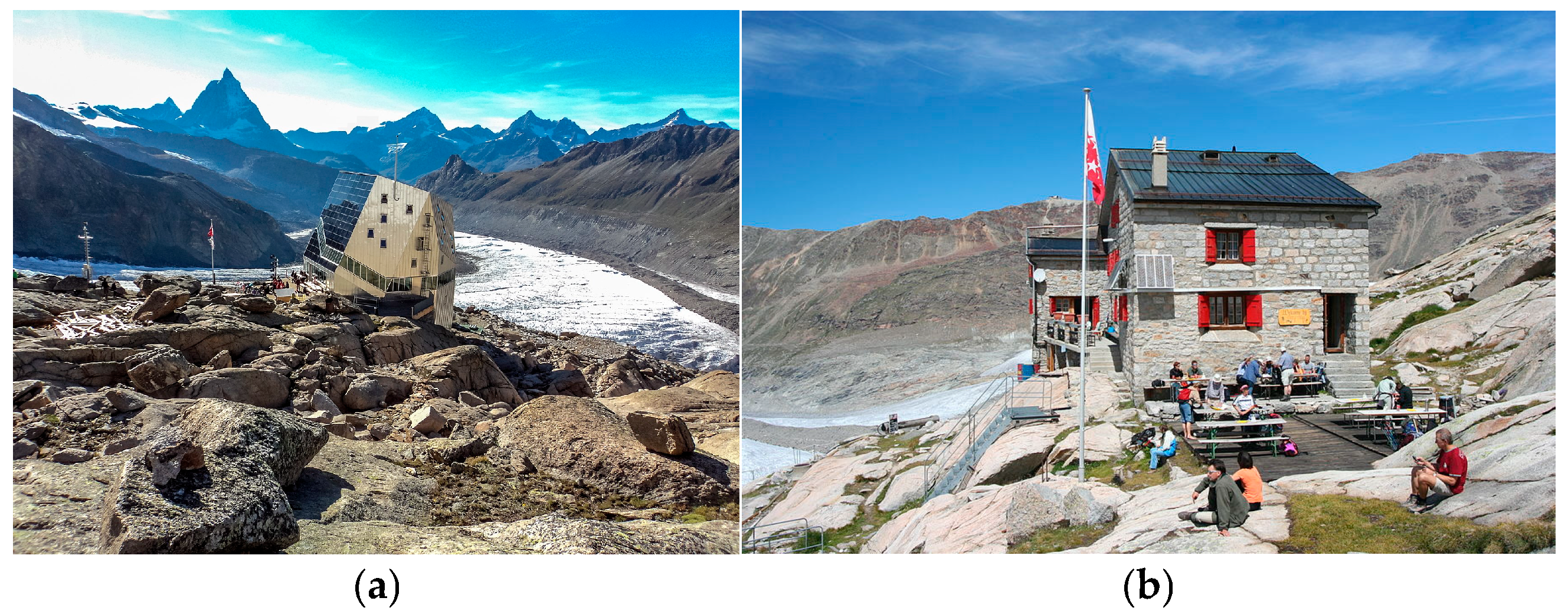
Monte Rosa is a project by Bearth & Deplazes Architekten on a glacier in Switzerland above the town of Zermatt (
Figure 3a). The project is a transformation of a previously existing mountain hut (
Figure 3b), which was redesigned in 2009. The modern structure aligns with the esthetic trends of contemporary high-altitude architecture, demonstrating a combination of beauty, innovation, and functionality. The exterior is clad in reflective sheet metal, whose visual effects conceal the building within its surroundings. This solution enhances the visual experience of the landscape and integrates the architecture into the natural beauty of the Alpine landscape. The building’s wooden structure makes it eco-friendly, and its interior maximizes energy gains from solar energy entering the building. The striking interplay of light and shadow in the interior further emphasizes its beauty as a space for contemplation and relaxation.
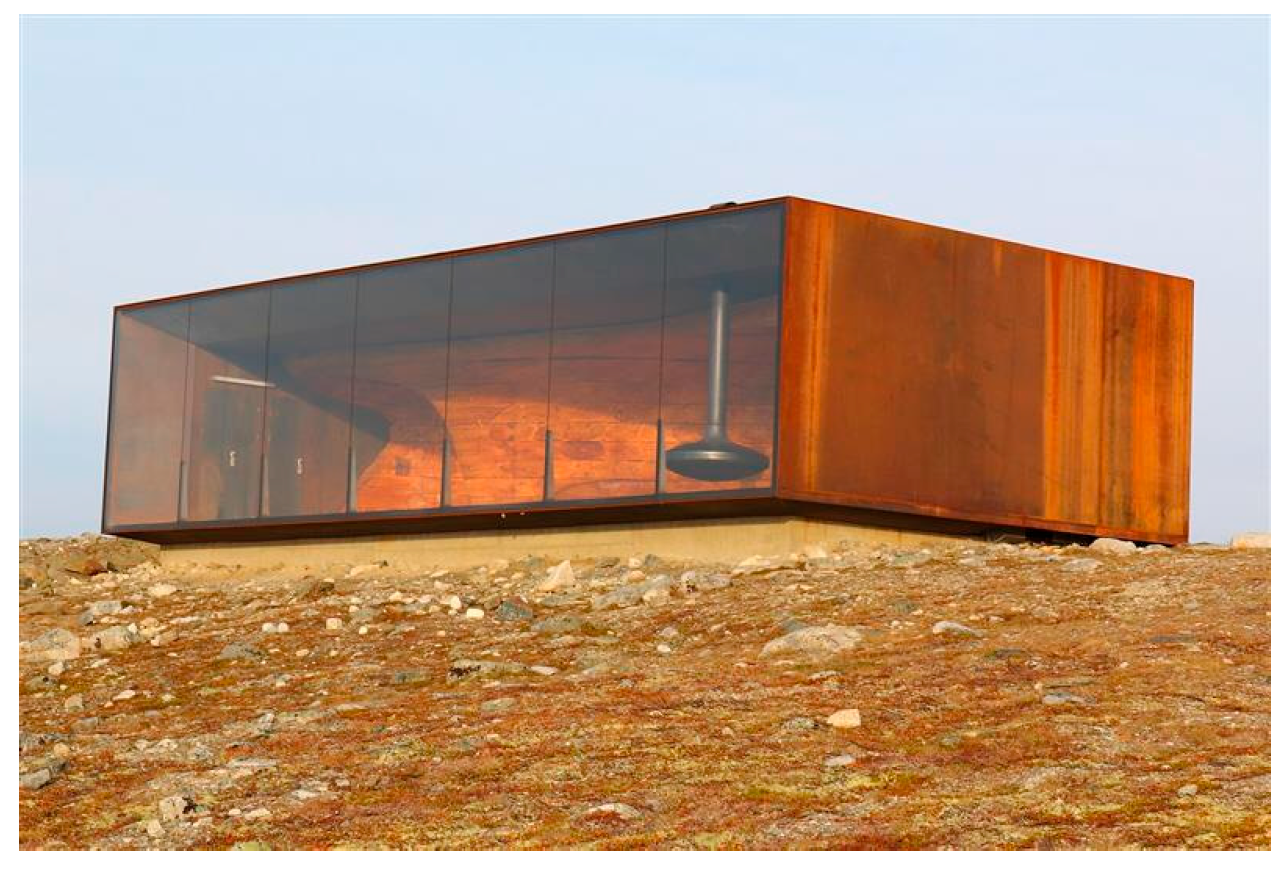
The Tverrfjellhytta Observation Pavilion (
Figure 4), designed by Snøhetta and located in the Dovrefjell Mountains in Norway, is an example of architecture that celebrates the beauty of the landscape and combines the contrast of a steel and glass exterior with an organic wood interior, echoing the forms of the ice. It functions as a tourist facility and educational space for the Wild Reindeer Foundation. The austere interior provides visitors with a cozy space with a fireplace and spectacular views, exemplifying the harmony of architecture with its surroundings and respect for nature. Tverrfjellhytta (by Snøhetta) is an example of architecture that not only serves a utilitarian purpose but also becomes a vehicle for emotions and esthetic experiences, aligning with a design trend that considers beauty a key element of the quality of tourist spaces. Both examples illustrate how contemporary shelters transcend their original functional role and become instruments of esthetic mediation. Through form, materiality, and controlled visual framing of the landscape, these structures guide perception and intensify the experience of place. In this sense, the architecture acts similarly to land art or environmental art—subtle, site-specific, and inseparable from the surrounding landscape—reinforcing the role of beauty as a fundamental component of modern tourism.
3.5.2. Tourist Facilities: Wellness Centers, Recreation Complexes, Mountain Hotels
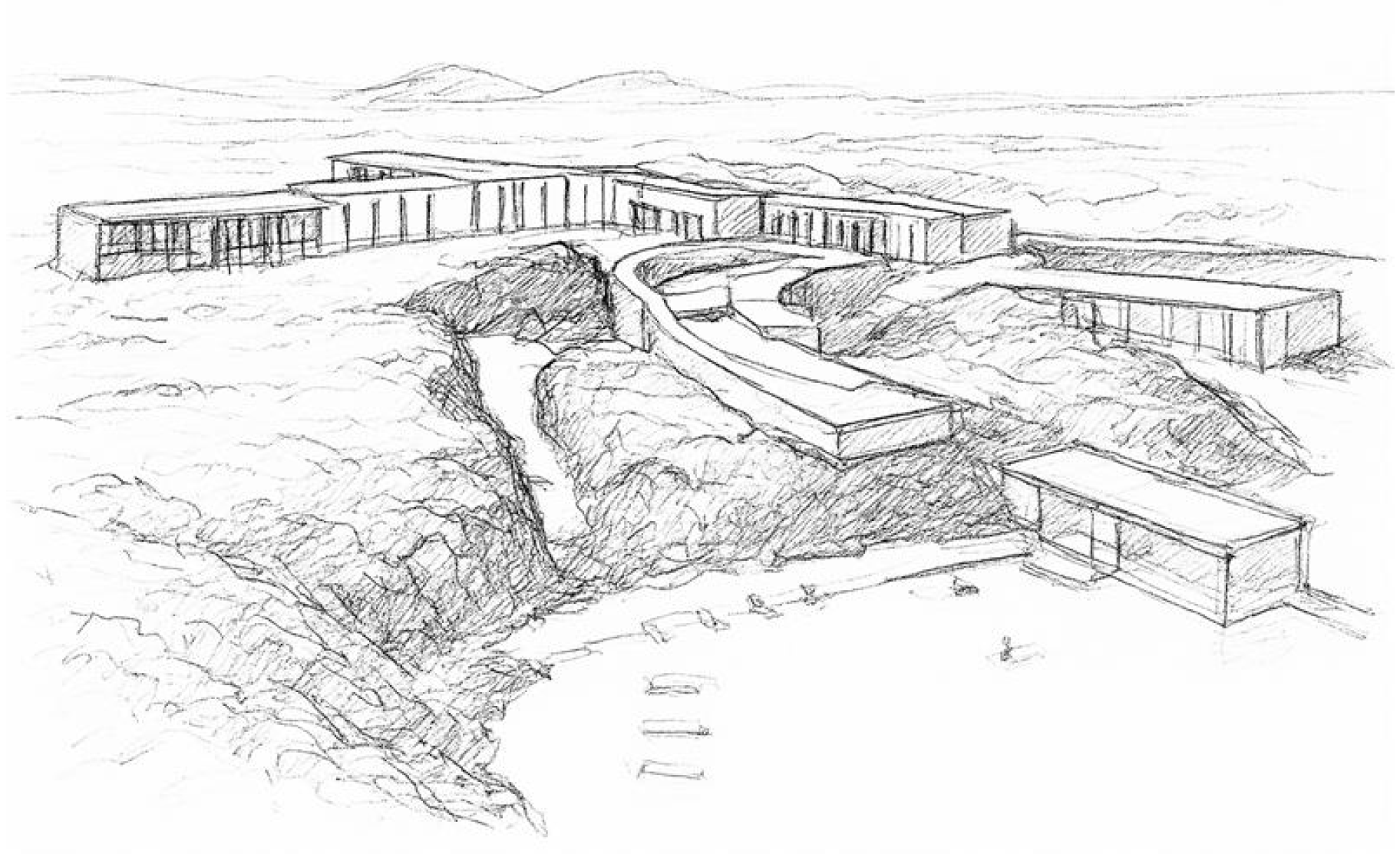
The Blue Lagoon Spa Hotel was completed in Iceland in 2018 (
Figure 5). Designed by Basalt Architects, the building’s form represents a contemporary approach to designing in a challenging landscape. The building is fully integrated with its landscape context, blending seamlessly with the surrounding topography without disrupting it in any way. The building’s architectural form is an artistic reflection of the flowing magma that characterizes the location. The building is completely ecological, utilizing geothermal energy to convert it into electricity and also utilizing it directly in the form of natural thermal pools within the spa complex.
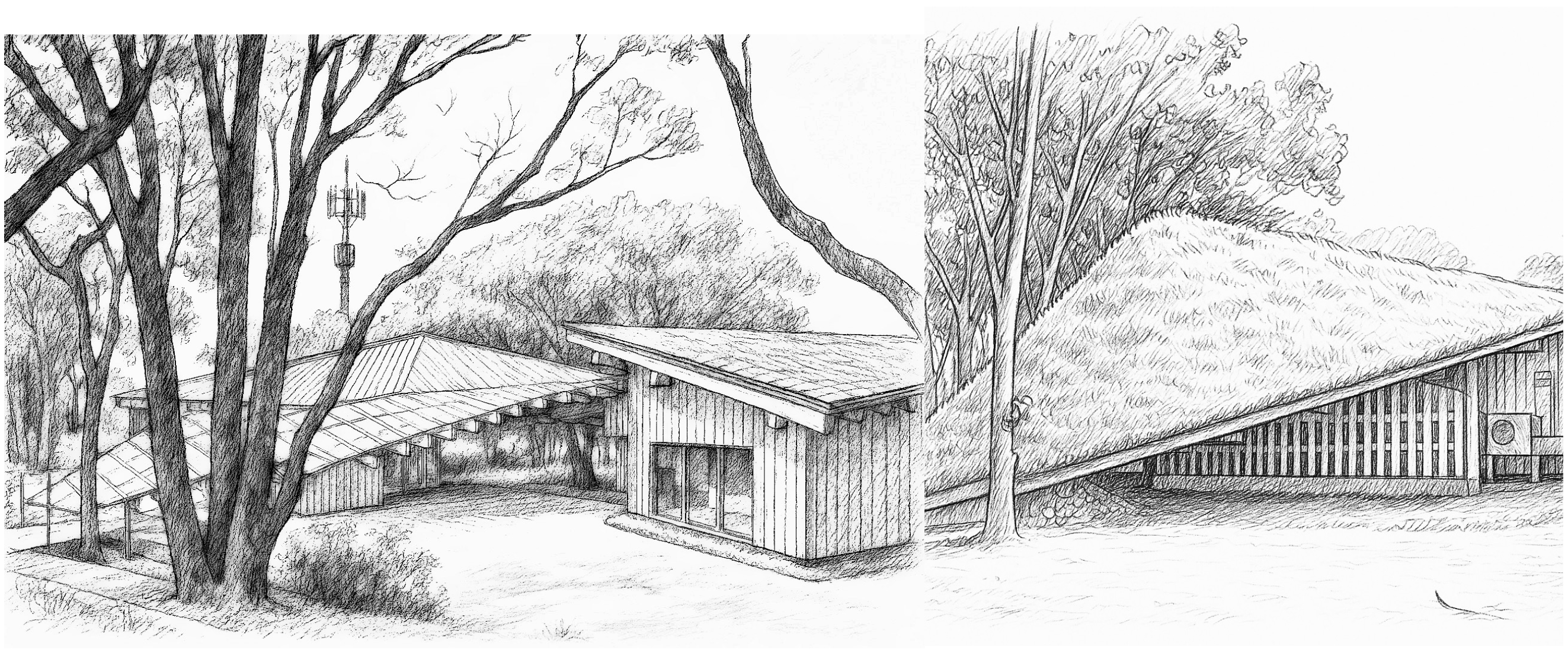
Keneka Wellness Center, designed by Kengo Kuma & Associates, was built in Takasago, Japan, in 2021 (
Figure 6). The center functions as both a wellness center and a medical facility. The building’s architectural design is designed to be surrounded by greenery, preserving as many existing trees as possible. A striking design element is the distinctive roof form, angled at multiple angles and finished with a variety of materials, which serves as an artistic accent emphasizing the project’s innovation and esthetics. The building utilizes eco-friendly power sources and innovative design and construction solutions (including the proprietary Kaneka system—external insulation combined with dual ventilation, the use of top-class thermal insulation, and achieving Net-Zero Energy Building status); it is an example of sustainable and beautiful contemporary architecture.
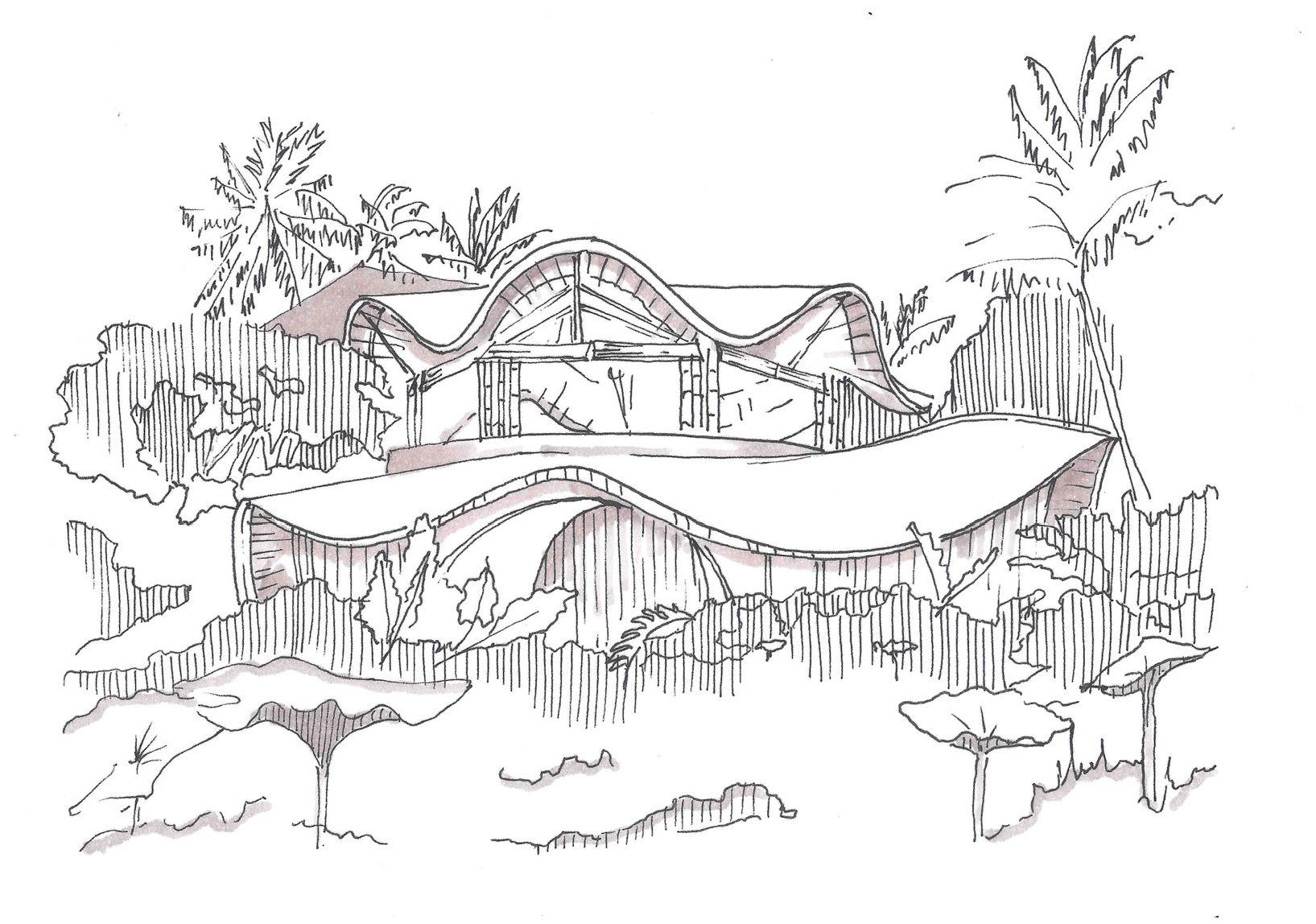
Yoga & Spa is a facility opened in Ubud, Indonesia, in 2022 (
Figure 7). Designed by Pablo Luna Studio, it is a place of spiritual ecstasy and a profound connection between body, mind, and spirit. The design brief was to create a space with a solemn character, celebrating the interaction between mentality, physicality, and spirituality. The architectural form was inspired by the fluidity of the surrounding flora, balance, and a nod to the natural beauty of the surroundings. The facility was constructed with the additional use of local materials, blending with the natural surroundings and emphasizing respect for the environment.
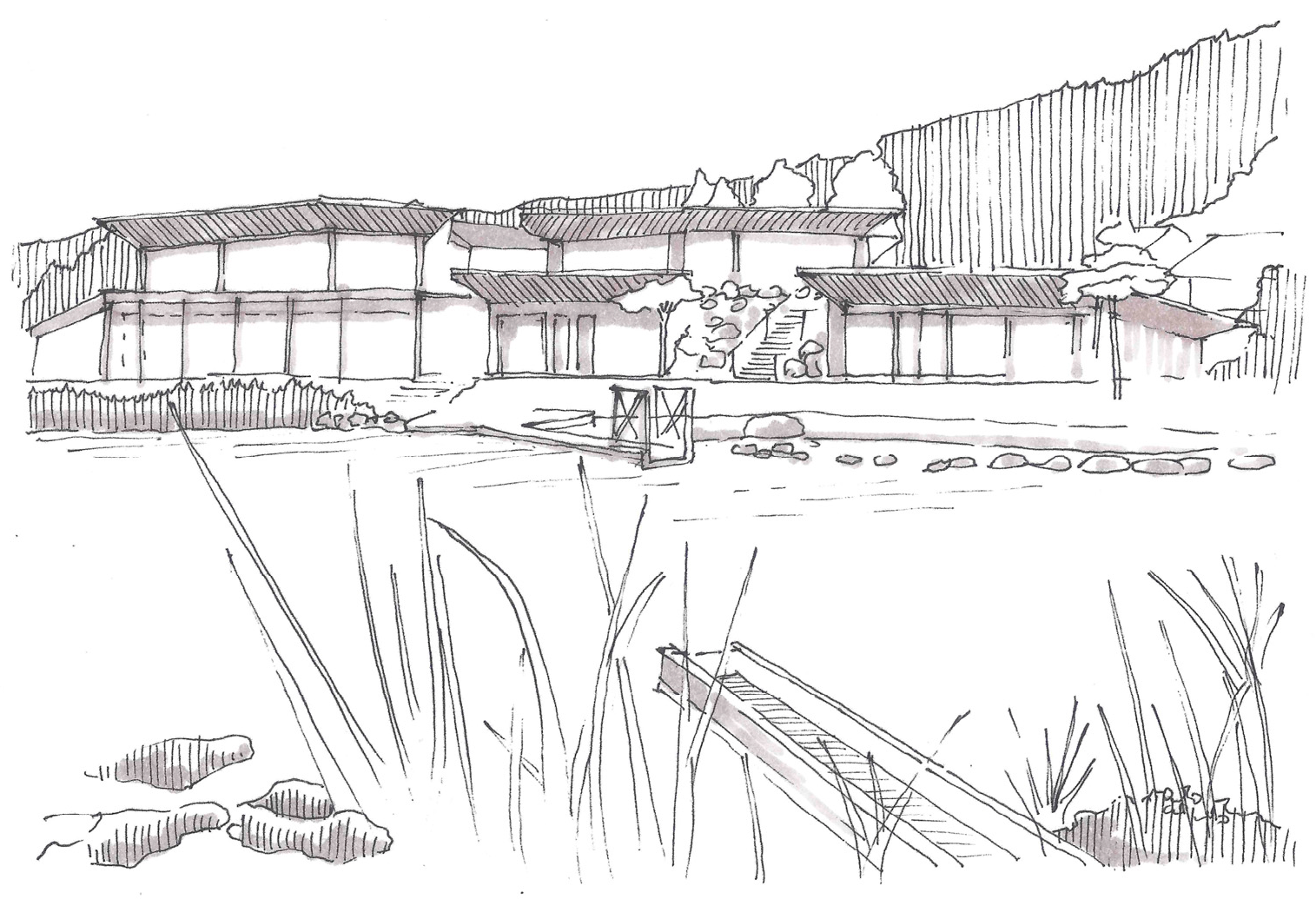
Puradies Nature Resort in Leogang, Austria, designed by NOA in 2023 (
Figure 8). The facility is an adaptation of a farm with guest cottages, transformed into an attractive complex consisting of the main complex and 15 smaller cottages. The facility was designed as an example of ecological architecture, also in terms of urban planning. Numerous natural water bodies are located within the plot. The facility’s architecture is designed to be minimally invasive and integrate with the landscape. The overall design intent is to achieve a minimally invasive approach, allowing for seamless integration with the mountain surroundings and highlighting the beauty of the valley’s natural vistas. In these examples, architecture becomes a sensory framework for well-being, where esthetic experience is inseparable from relaxation and regeneration. Form, material, light, and spatial sequencing contribute to an atmosphere that supports contemplation and emotional balance. These facilities demonstrate how contemporary tourism architecture operates as an experiential environment—one that merges wellness, landscape, and artistic expression into a coherent narrative of beauty.
3.5.3. Tourist Facilities: Observation Towers
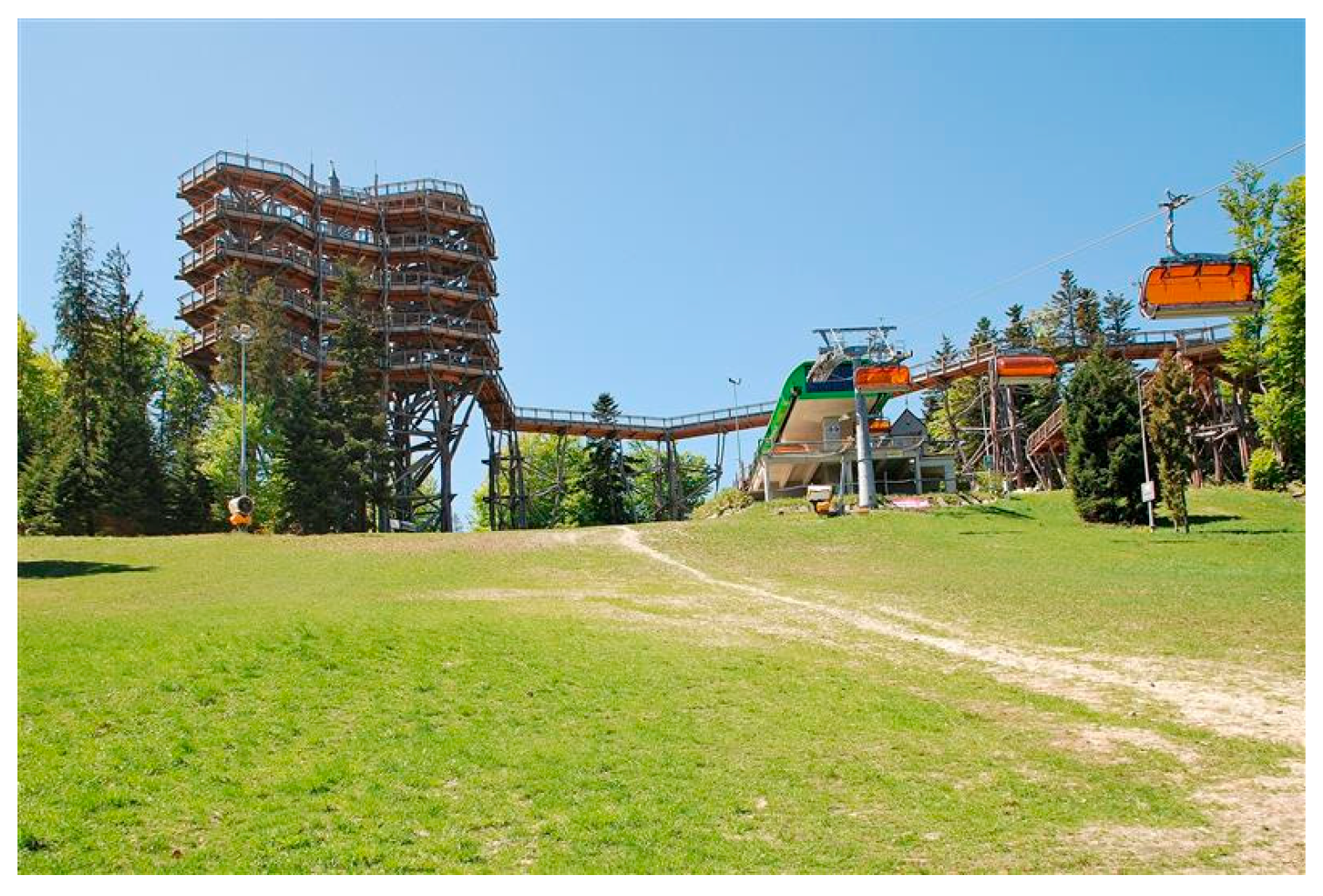
The observation tower with a treetop trail in Krynica Zdroj is an engineering structure combining a tourist function with the esthetics of the natural landscape. It was built in the heart of the Beskid Sadecki Mountains, amidst the forests of Jaworzyna Krynicka in Poland (
Figure 9). The tower, which crowns the landscape trail, is 49.5 m high and constructed entirely of wood to highlight the beauty of the surrounding views and provide a unique esthetic experience while walking above the treetops. The structure is made of black locust wood and leads for 1030 m through the natural landscape. The idea was to enhance the surrounding views by creating a structure that integrates with the natural landscape, using local materials, while avoiding monumentalism and giving it a light feel.
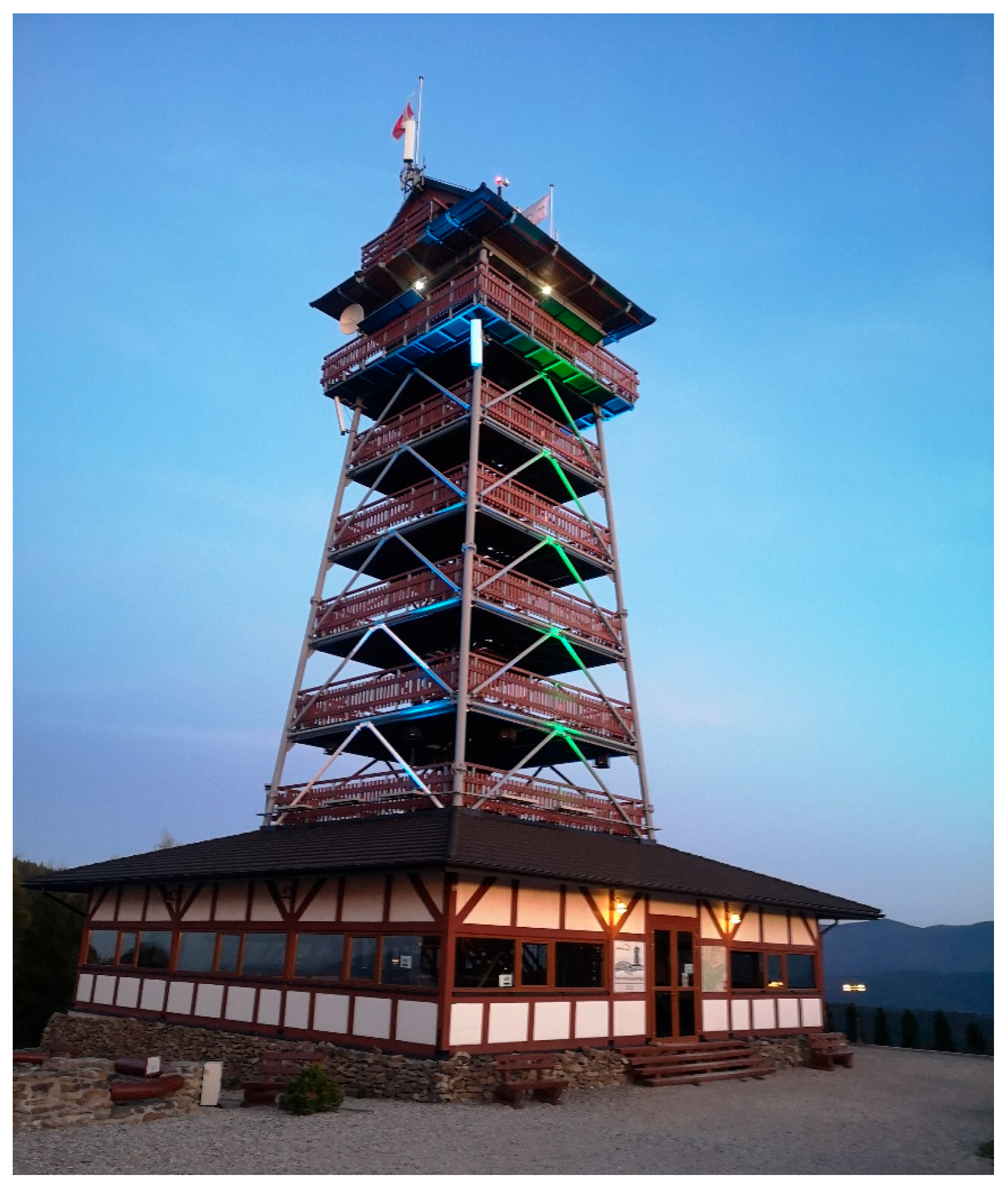
An example of how the needs of modern consumers are met is a large hotel complex with wellness facilities, a regional restaurant (“Beskidzki Raj”), an observation tower, a mini zoo, and many attractions that will keep customers occupied for longer. The entire complex is situated high above the village of Zawoja at an altitude of 840 m above sea level (
Figure 10), allowing for picturesque panoramas that synergistically enhance the experience of natural and architectural beauty. Observation towers function as architectural instruments for controlled perception of the landscape. By elevating the observer and directing sightlines, they transform passive viewing into a staged esthetic experience. In this way, architecture not only enables access to views but actively constructs a visual narrative, reinforcing the artistic dimension of landscape appreciation within contemporary tourism.
3.5.4. Tourist Facilities: Walking Paths, Viewing Platforms, Parks
Innovative and Esthetic approaches to designing recreational and tourism areas are increasingly visible in the landscape. Paths through treetops and clouds are one such element. The COVID-19 pandemic has recently demonstrated how important contact with nature is for humans, and that its deprivation leads to numerous negative consequences and changes in the human body. This has highlighted the centuries-old need for human contact with the natural environment. From the perspective of contemporary architectural theory, these interventions can be understood not only as functional infrastructure but also as spatial devices that frame, interpret, and aestheticize the landscape, transforming contact with nature into a consciously designed experience.
This need is inextricably linked to human history and demonstrates the relationship between humans and nature, an awareness of which is becoming blurred over time due to the so-called “shifting baseline syndrome.” This concept was introduced by (
Pauly 1995) and although this study originally concerned fishing, it describes the way the human psyche works, which shows that people can only relate their expectations and ideas to their own experiences, and therefore natural experiences and attachment to them fade with each successive generation, each of which has less experience of contact with nature (and therefore their reference base is unconsciously shifted). In this context, contemporary architectural interventions in natural landscapes act as mediators between diminishing everyday contact with nature and the human need for esthetic and emotional engagement, restoring the capacity to perceive the environment as meaningful, exceptional, and worthy of contemplation.
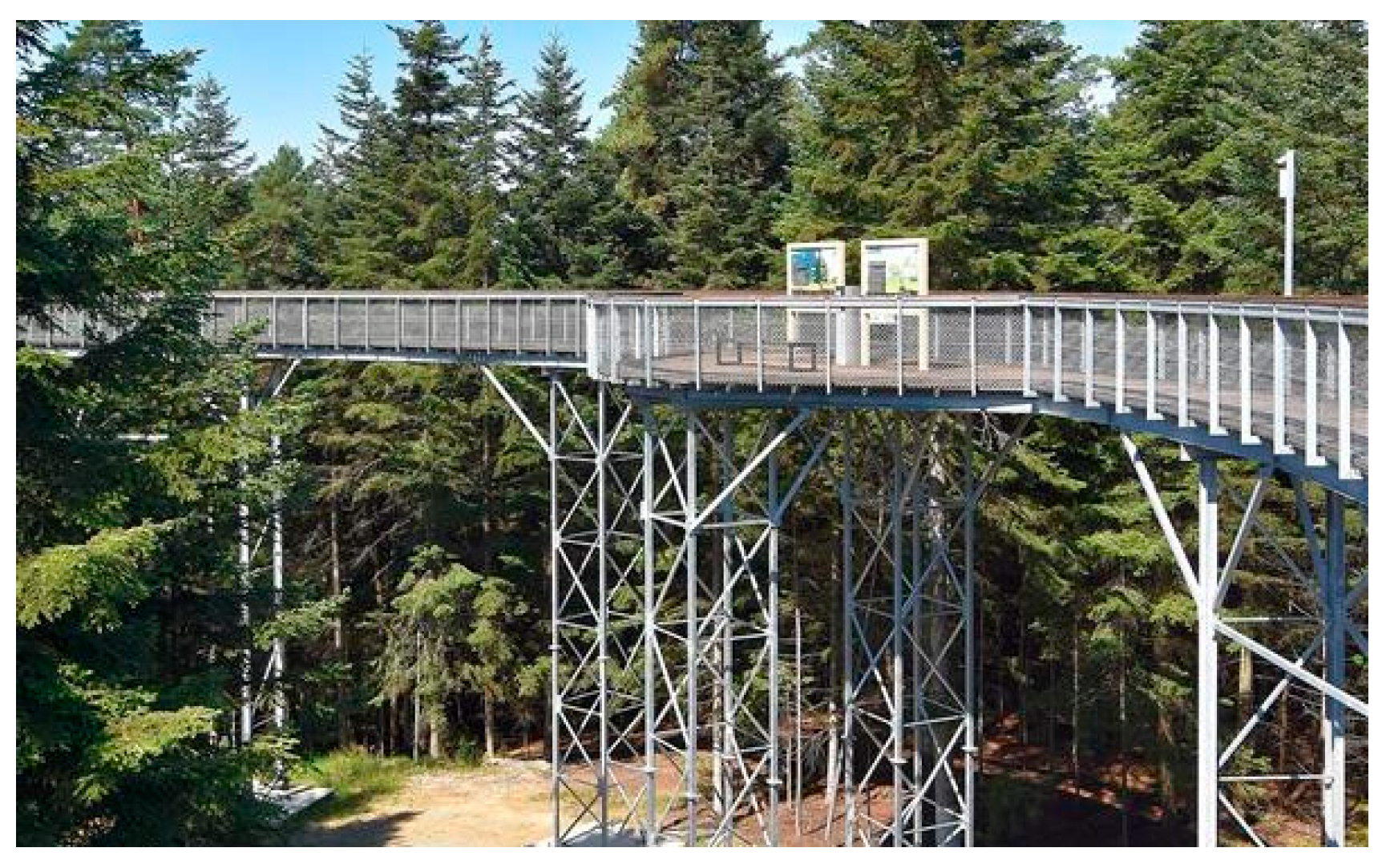
The need that surfaced during this crisis was met with a response from architects, landscape architects, and engineers, whose collaboration can be seen in modern engineering structures such as cloud and treetop paths. These structures exemplify a modern approach to landscape design and bring people closer to nature in an innovative way, creating new, beautiful spatial experiences, combining functionality with the emotional impact of the surroundings. By choreographing movement, directing views, and sequencing sensory impressions, such structures operate in a manner comparable to large-scale spatial installations, where architecture functions as a tool for constructing esthetic narratives rather than merely facilitating access. Thanks to the efforts of the Ciezkowice municipal authorities, a treetop trail located in the Ciezkowice Foothills (
Figure 11) was opened in 2023. This over-kilometer-long walking trail offers views of the surrounding Ciezkowice-Roznow Landscape Park. Such investments require careful planning to avoid “spoiling the landscape by erecting tourist objects and facilities” (
Partyka 2010), prioritizing instead a harmonious integration with nature. It is elevated over 22 m above the ground and cost PLN 21 million (partly co-financed by EU grants). The elevated trajectory of the path transforms the act of walking into a visual and experiential sequence, in which the landscape is gradually revealed, framed, and perceived as an esthetic composition, reinforcing the role of architecture as an active interpreter of natural beauty.
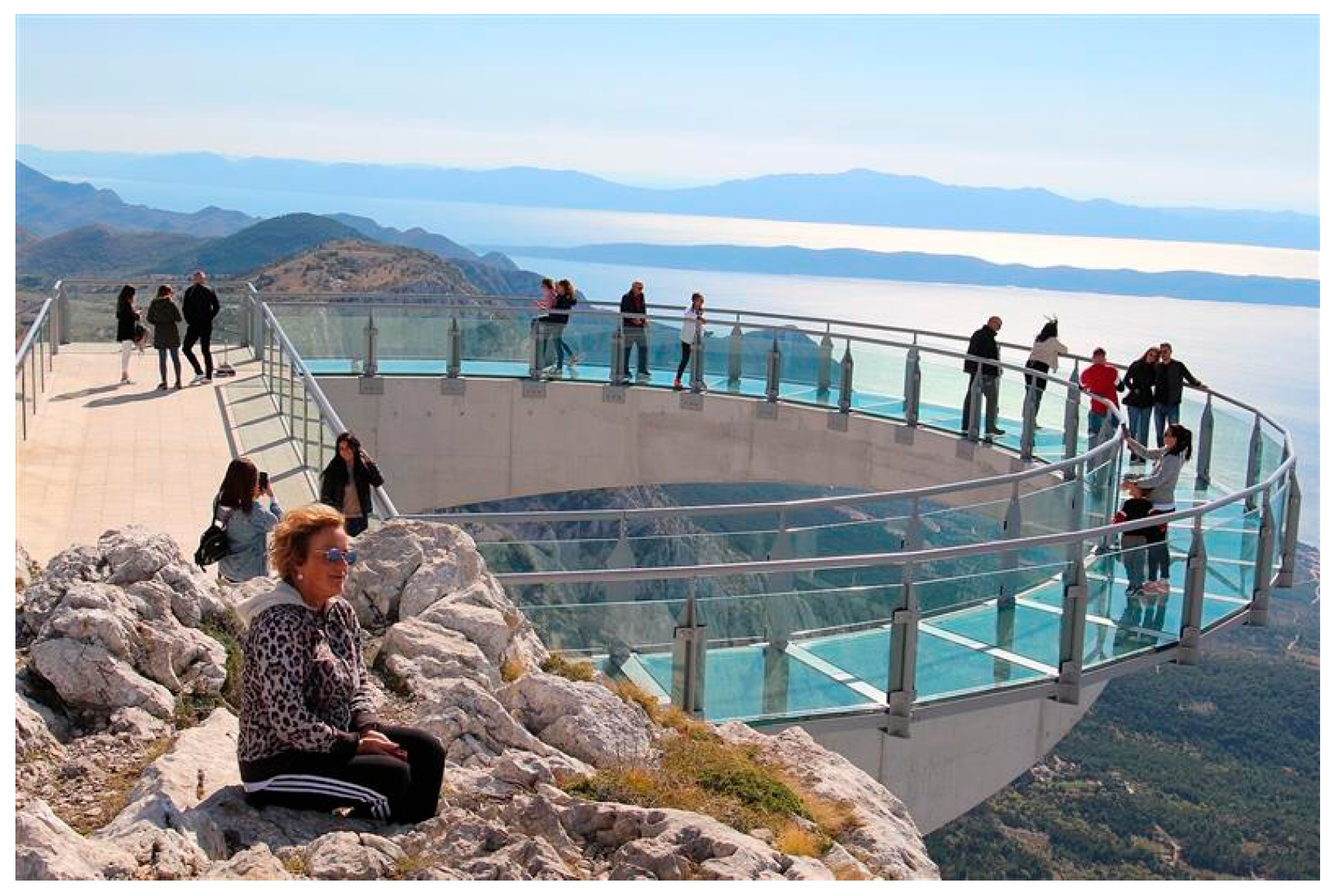
Skywalk Biokovo is located in Biokovo Nature Park, on the Ravna Vlaška pass (1228 m above sea level), on the road leading to the summit of Mount Sv. Jure. The glass-enclosed, horseshoe-shaped terrace juts out 12 m above the cliff edge and attracts tourists from all over the coast. Unfortunately, the transportation infrastructure is inadequate to meet demand (
Figure 12). The dramatic form and materiality of the Skywalk intensify sensory perception and emotional response, transforming the landscape into a spectacle consciously staged by architectural means, where the boundary between observation and artistic experience becomes blurred.
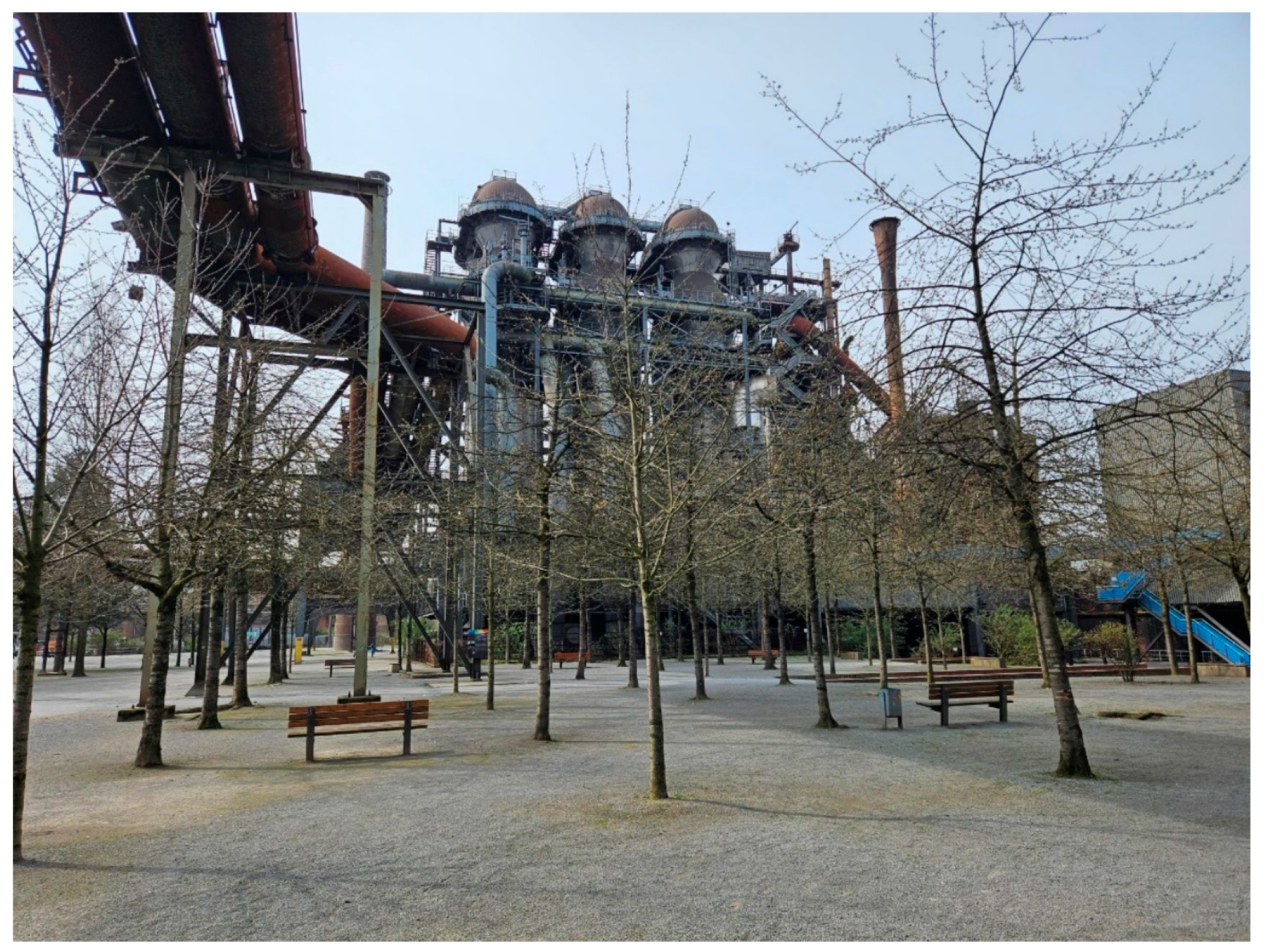
Emscher Park in Germany (
Figure 13) is example of respect for local history. The space was created in response to the needs of a community interested in the customs of the local community and wanting to experience the conditions of a given location in the most engaging and immersive way possible. The park is also the result of many transformations that led to its contemporary form. Activities such as landscape reconstruction, restoring the ecological conditions of the Emscher River, creating “adventure” spaces, as well as complete respect for cultural heritage and local culture, have all contributed to its attractiveness. These numerous transformations have led to an increased attractiveness of the place, where the local community now wants to spend their free time, but also uses it for, for example, the now common practice of remote work or simply relaxing in the open air. In this case, the park operates as a cultural landscape shaped through architectural and spatial strategies that merge memory, ecology, and esthetic experience, positioning public space itself as a form of collective, lived artwork.
The examined case studies confirm that architectural interventions in tourism spaces act as tools of perceptual mediation. By guiding movement, filtering sensory stimuli, and framing selected visual axes, architecture enhances and intensifies the experience of landscape in a way comparable to artistic composition. As in environmental installations, meaning emerges not from the object alone, but from the interaction between space, body, and perception.
4. Results
Searching for Leisure Spaces: Cultural Heritage Spaces as Tourist Attractions
Cultural heritage spaces constitute extraordinary tourist attractions worldwide. These places are rich in history, tradition, and art, attracting travelers interested in discovering the cultural diversity and beauty of bygone eras. From picturesque old towns and buildings to post-industrial complexes, these spaces offer unforgettable experiences and inspire travelers to explore and learn about different cultures and traditions. Various elements play a key role in tourism development, with accommodation, dining, and transportation considered the most crucial for a stay (
Corboș et al. 2024). Accommodation includes hotels, motels, guesthouses, vacation resorts, and other facilities, an increasingly extensive offering that organizes visitors’ time between attractions. The food service infrastructure complements this, offering restaurants, grocery stores, and additional services. Providing convenient transportation, including transportation options and infrastructure such as rail, buses, roads, and air connections, is also crucial. The development of the tourism function and the characteristics of the tourism space must be considered in the context of environmental and socioeconomic conditions (
Ptaszycka 2007). The classification of tourist development adopted in tourism geography, sometimes referred to as the tourism industry or, more broadly, the leisure industry, consists of the following elements:
Tourist resources (potential as a basis for a later attraction);
Tourist accommodation facilities (resorts, hotels, restaurants, food outlets);
Sports and recreational facilities;
Tourist services (information, travel agencies);
General infrastructure (technical, social, communication, transport).
The case study analysis encompasses the architecture of both accommodation facilities and recreational facilities, as well as landscape infrastructure. Despite the significant diversity of the facilities selected for analysis, the results indicate four values that characterize most of the selected examples and influence the perception of the architecture and its relationship with the surrounding landscape.
Integration of structures with the landscape—this is the dominant trend in all structures and is achieved by striving to minimize the interference of structures with the surroundings and by using local materials and referring to local and characteristic forms.
Using a change in perspective—the procedure involves enabling a change in the user’s perspective of view and is particularly visible in point elements designed to ensure the intensification of visual experiences by changing the point of view on landscape values to one that facilitates their better perception and experience (
Chmielewski and Grabowski 2023).
Architecture of sensory experiences—it is visible in the use of elements determined not only by function but also influencing the user’s emotions and sensory perception through image, the use of specific materials (touch) or the well-thought-out location of the object, ensuring a multi-sensory experience (which may consist in offering the recipient stimuli or minimizing them for the purpose of calm and relaxation).
Changing the models of leisure tourism—the facilities analyzed respond to user needs, which change over time and are subject to globalization processes. This means that the proposed solutions are dependent on the needs of the recipient, resulting in increased requirements for facilities and an increased role and influence of well-being on the nature of the designed spaces.
These four values indicate that contemporary tourist architecture performs a role that exceeds traditional functional classification. The analyzed facilities operate as perceptual and experiential frameworks that structure the way users encounter landscape, heritage, and space. In this sense, architecture becomes an active medium that mediates between the visitor and the environment, shaping esthetic perception and emotional response rather than merely providing access or infrastructure. The analysis indicates that contemporary tourist architecture, particularly treetop walkways, observation towers, and mountain wellness facilities, is no longer conceived as neutral infrastructure, but as a designed experience rooted in phenomenological perception. These structures operate in a manner analogous to environmental art and land art, where the landscape itself becomes a medium of narration rather than a passive background. Similar to large-scale artistic installations by creators such as Daniel Buren, Daniel Libeskind in landscape contexts, or site-specific works by artists like Varini, Karavan, or Maya Lin, architectural elements in tourism spaces choreograph movement, perception, and attention. Treetop paths and viewing platforms do not merely enable access or circulation; they actively direct the gaze, frame selected views, and regulate the tempo of experiencing the landscape. In this sense, tourist architecture functions as a spatial ‘frame’ for the landscape: it isolates fragments of nature, assigns them symbolic value, and transforms a natural view into an esthetic object. The attractiveness of such spaces is therefore not based solely on the inherent qualities of nature, but on the way architecture translates natural beauty into an accessible, safe, and emotionally intensified experience.
The table below (
Table 1) synthetically presents the features and values of architecture and tourism space collected in this study, as well as the changes that emerged as a result of the processes of social and economic change.
Modern society, in accordance with the key idea of contemporary liberalism, also means complete freedom in terms of interests. Each individual can live according to their own principles and interests, as long as it does not harm the rest of society—“The only purpose for which power can be rightfully exercised over any member of a civilized community, against his will, is to prevent harm to others.”(
Mill 1859) The development of interests also led to a need to address concerns related to respect for the region’s history.
In analyzing various forms of contemporary tourist attractions, reference was made to examples located in Poland and abroad, which demonstrate a variety of ways of shaping space to evoke esthetic and emotional experiences. Due to the diversity of forms, the examples discussed include the observation tower in Jodlowka Tuchowska (Tuchow commune); the observation platform in Wola Krogulecka (Stary Sącz commune); the rope park on Gubalowka Mountain (Zakopane city and commune); the treetop trail (Ciezkowice commune); the cloud trail (Biokovo commune, Croatia); the garden of lights in Krynica Zdrój; a promenade above the area (above Lake Gleboczek in the Tuchola commune). In the case of the table, they define the concepts used in the analysis. It is worth emphasizing that each time the terms “rope park”, “treetop path” or “cloud path” may cover a different form, size and state of intervention in space, therefore the advantages and disadvantages of such elements should always be considered in relation to the location and spatial context. Across these examples, architectural elements such as elevated paths, platforms, and towers function similarly to large-scale spatial installations. They do not merely enable movement or observation, but actively choreograph the sequence of views, bodily movement, and sensory engagement, thereby assigning symbolic and esthetic value to the surrounding landscape. The impact of selected attractions on the surroundings, both environmental and cultural, was also analyzed and summarized, taking into account and synthesizing the relationships between the objects and their surrounding context (
Table 2).
Table 2 includes environmental and socio-economic elements to define the impact of the investment on the surroundings. In the environmental area, reference was made to animate and inanimate nature and spatial and landscape values when assessing intervention in these categories. The same assessment was adopted for socio-economic and cultural elements. The purpose of the table is to indicate many variables that determine both the threats and the potential of contemporary tourism investments, especially in the context of creating places that not only serve recreation, but also foster the experience of beauty and harmony with the surroundings, depending on the variable taken into account. The analysis of the presented case studies directly addresses the research problem outlined in the Introduction.
Each examined architectural form demonstrates how contemporary design in tourism and recreational environments responds to the evolving user needs for beauty, multisensory experiences, and emotional engagement. The selection of diverse examples—from observation towers, elevated terraces, and rope parks to treetop trails and gardens of light—illustrates how architectural strategies mediate between functional requirements, esthetic aspirations, and cultural context. By considering the integration of these structures with natural and cultural landscapes, as well as their impact on user experiences, the results highlight the ways in which modern architectural interventions contribute to meaningful, immersive, and emotionally engaging recreational spaces. In this way, the findings provide empirical evidence for the role of contemporary architecture in enhancing well-being, facilitating interaction with the environment, and translating societal demand for beauty into spatial and experiential qualities. The results confirm that architecture in tourism spaces increasingly operates as a tool for translating natural and cultural values into structured esthetic experiences. By framing views, guiding perception, and intensifying sensory contact with the environment, architectural forms enable visitors to experience landscape in a manner comparable to engaging with a work of environmental or land art.
5. Conclusions
Contemporary tourist and recreational facilities are increasingly moving away from historically established patterns, adopting modern, expressive forms that constitute not only functional spaces but also elements of an esthetic experience. A common phenomenon observed in their creation is the departure from standard solutions, designing not only facilities but also treetop paths or rope parks. These previously familiar forms are now being developed on a mass scale in municipalities and cities, not always being necessary, and their locations are not always optimal, often negatively impacting the landscape. However, with proper consideration of the surrounding context and designing with respect for it, this negative impact can be minimized or eliminated altogether.
Contemporary tourist and recreational facilities are being created as structures that integrate with nature, created with meticulous attention to detail. They celebrate the relationship between architecture and landscape, with beauty becoming one of the most important criteria for their evaluation, both visually and in the user’s experience. This study demonstrates a clear shift from architecture understood as infrastructure toward architecture understood as experience. Facilities such as treetop paths, observation towers, and elevated walkways function as experiential devices that frame, filter, and intensify the perception of landscape, transforming views into curated esthetic events. We are observing a clear shift from functionality to experience: beauty is becoming a therapeutic, soothing, and regenerative value, directly impacting the well-being of users and residents. Architecture not only responds to the physical needs of users but also seeks to move, soothe, and inspire them. In this context, contemporary tourist architecture can be interpreted through the lens of phenomenology and environmental art. Similar to site-specific artistic interventions, these architectural forms use landscape as a medium of narration, guiding bodily movement and perception to produce emotional and symbolic meaning. The value of new architectural forms in the landscape for contemporary tourism is contingent upon prior, accurate location analysis, which will enhance the attractiveness of a place and prevent the loss of landscape values. Contemporary architectural forms in the landscape are a response to society’s new needs. They are created based on patterns other than historical ones, yet they often reference historical prototypes. Currently, the design of spatial layouts and even architectural forms themselves is based on their ability to create beauty understood as harmony with nature, a sensual experience of space, and sometimes even evoking emotional sensations and responses in the user. The analysis of the case studies demonstrates that contemporary architectural interventions successfully translate the evolving societal demand for beauty and emotional experiences into tangible spatial solutions. Observation towers, elevated terraces, rope parks, and treetop trails illustrate how architecture can mediate between functional requirements, esthetic expectations, and cultural and environmental context. These examples confirm that careful design, grounded in both direct observation and comparative analysis across different countries and landscapes, allows for meaningful engagement with space, supporting multisensory experiences, well-being, and sustainable interaction with the environment. The findings underline that contemporary tourism architecture is not merely a set of structures, but a holistic approach to shaping experiences, connecting users to nature, culture, and heritage, and responding to the broader social need for esthetic and emotional enrichment.
Expert analysis has shown that the location of such facilities should be analyzed not only in terms of meeting user needs but also in terms of landscape coherence and its impact on the urban context (
Bartkowski 1985). Following trends and potential economic benefits when locating tourism-specific elements and facilities without prior location analysis can do more harm than good. Therefore, it is crucial to access the potential and limitations that will allow for the development of tourism without interfering with the most important pillars of sustainable development in the landscape. However, proper planning is essential, as “a gap in the design and execution process [...] may be conducive to spatial chaos, degradation of landscape values and cause inadequate interference in the existing nature” (
Maciejko and Strzelecki 2023). It can be argued that beauty in 21st-century tourist architecture is becoming not a luxury but a necessity, a tool for building an emotional connection with a place, a factor in competitiveness, and a response to social needs related to esthetics, regeneration, and the spiritual dimension of recreation. Today, tourist facilities are becoming not only destinations but also a manifestation of modern values: sustainability, accessibility, multi-sensory appeal, and beauty as a fundamental quality of the human environment. It can therefore be concluded that beauty in 21st-century tourist architecture is not an ornamental addition, but a fundamental design parameter. Architecture acts as an interpretive framework that makes natural beauty accessible, legible, and emotionally engaging, allowing visitors not only to observe landscapes, but to experience them as meaningful and memorable works of spatial composition. Treetop walkways, observation towers, and mountain SPA complexes can therefore be interpreted as large-scale spatial installations rather than purely functional structures. Their design logic corresponds with phenomenological approaches in architecture and with strategies known from environmental and land art, where the landscape is treated as an active component of the work rather than its setting. As in the works of Maya Lin, Dani Karavan, or Georges Rousse, space is not consumed visually from a single point, but experienced through movement, sequence, and bodily presence. Tourist architecture choreographs perception: it leads, filters, frames, and intensifies the experience of nature, allowing visitors to encounter the landscape not as raw scenery, but as a composed and meaningful esthetic event. Consequently, it is not nature alone that attracts contemporary tourists, but the way architecture enables its experience. Architecture translates natural beauty into a legible and emotionally engaging language, transforming landscapes into experiential works of art and positioning beauty as a central value of contemporary tourism space.