1. Introduction
Over the years, Istanbul’s museums have been vital elements of the city’s architectural culture, intangible heritage, and sensory awareness [
1,
2,
3,
4]. The museum experience encompasses the complex interactions between visitors within the museum atmosphere [
5,
6], particularly the actions taken while navigating. The museum’s atmosphere, shaped by themes, narratives, curatorial choices, textures, sounds, and scents, significantly impacts visitor engagement and understanding. The connection between visitors and the museum environment fosters distinctive museum experiences [
7,
8]. Visiting the museum is a sociocultural activity that encourages visitors to contemplate the themes and narratives presented, ultimately eliciting sensory experiences [
9,
10,
11]. We experience the museum atmosphere influenced by sensory factors [
12,
13,
14].
The museum experience intertwines multimodal sensory experiences [
15,
16,
17], providing visitors with opportunities for multimodal sensory interactions grounded in in situ bodily experiences [
18,
19,
20]. The body is an integral part of creating sensory museum experiences. Beyond visual encounters, museum visits engage in visual and haptic interactions that enhance learning, education, and community involvement. Multimodality encompasses the complexity and interconnectedness of various sensory experiences, including visual, auditory, olfactory, and haptic sensations, as well as spatial perception [
21,
22]. This study draws on the idea that research should extend beyond visual aspects to examine the multimodal sensory elements of museum experiences. Focusing on the multimodality of sensory aspects in museums provides a novel perspective for research and practice [
23,
24].
Recent museum research increasingly frames sensory-spatial experience as something visitors produce through embodied movement in atmospheres shaped by light, materiality, sound, and smell, rather than as a purely visual encounter with objects. Studies argue that museums are multimodal environments where perception is multimodal—visual attention is continuously entangled with haptic orientation, acoustic cues, smells, and the spatial rhythm of walking through galleries [
14,
16,
19,
25]. Museum atmosphere emerges through the interplay of sensory channels and spatial practices [
11,
17,
20,
26]. The problem of how museums in Istanbul incorporate lighting that encourages active sensations, making visits more multimodal, created the research gap. The primary question centres on how the visitors perceive and interact with museum spaces through visual and haptic experiences, particularly in relation to lighting.
We use a participatory approach to gather data on the multimodal characteristics of lighting in Istanbul’s museums. Using
sensorywalk [
27,
28]—a qualitative, mobile, and participatory methodology—the study examines how young adults (aged 18–26) perceive museum atmospheres beyond the visual domain. Data were collected through semi-structured interviews (n = 10),
sensorywalk sessions (n = 16), and photographic documentation. Walking-based sensory approaches support this agenda by capturing in situ experience as visitors navigate and narrate spatial impressions, enabling researchers to trace how sensory cues become spatial knowledge, affect, and engagement [
19,
20,
29,
30]. Using
sensorywalks responds to calls in museum studies to examine experience ‘beyond the visual’ through walking-based, sensory-spatial inquiry [
19,
20,
25]. This study explored how museum lighting influences multimodal visual and haptic experiences through embodied movement at the Istanbul Museum of Painting and Sculpture, employing a participatory
sensorywalk approach with young adult visitors.
3. Methodology Design
3.1. Case Study Site: Istanbul Museum of Painting and Sculpture
The case study examines the Istanbul Museum of Painting and Sculpture, located in Karaköy, Istanbul, as a prominent example of adaptive reuse in contemporary museum architecture. In 2009, Antrepo No. 5—an industrial warehouse situated in Karaköy Port—was allocated to Mimar Sinan Fine Arts University for conversion into a museum. The institution houses a significant collection of paintings and sculptures, spanning from the late 19th-century Ottoman period to the late 20th century. In 2012, architect Emre Arolat initiated the transformation of the building, initially designed by Sedat Hakkı Eldem, into a modern cultural venue. Completed in 2021, the project reconfigured the space to include new exhibition halls, collection storage, administrative offices, artist studios, a library, and reading areas, while preserving the original 1950s load-bearing concrete structure. The architectural intervention highlights the site’s industrial character through a design language that balances historical continuity with contemporary functionality. Featuring high ceilings, large-scale galleries, and multimodal spaces, the museum is designed to accommodate a broad spectrum of users and programmatic needs. Located in a central urban context, the facility also integrates permanent and temporary exhibition galleries, educational spaces, workshops, administrative zones, and a cafe, reinforcing its role as a dynamic cultural and architectural landmark within the city [
103,
104,
105,
106].
3.2. Sensorywalk as a Research Method
Visiting a museum involves ‘walking’ through designed exhibitions, collections, and displays that enhance and manipulate multimodal sensory experiences in the space. Experiences shape how visitors perceive stimuli through their senses as they walk, influencing their connections to the museum environment. Walking addresses questions about sensory experiences beyond visual experiences [
107,
108,
109]; it is a beneficial way to explore the museum environment [
110].
The
sensorywalk is applied as a mobile, in situ, multimodal documentation protocol that translates fleeting bodily perception into structured qualitative data.
Soundwalks,
smellwalks and visuo-spatial walks have been used to examine
soundscapes,
smellscapes, and visual urban experiences [
111,
112,
113,
114]. Early
sensorywalk practice grew out of
soundwalks, in which sound-based data were collected through walking to examine the auditory features of built environments [
115]. Researchers have used
smellwalks for place-based analysis and discoveries [
28]. The studies combined smell and sound expectations [
116] or focused on multimodal sensations of transformed built environments [
111]. Paquette and McCartney’s [
117]
sensorywalks used sound, photography, and video recording, and those open-ended interviews accompanied the walks—explicitly linking walkers’ movement to listening experience.
Sensorywalks accompanied mapping and cartographic methods to document sensory experiences-based data, highlighting them as markers of urban identities [
118,
119,
120,
121]. Recent multisensory studies combine visual, auditory, and ethnographic approaches, emphasising spatial usage, memory, and cultural heritage in sensory experiences [
122,
123,
124,
125]. But the application of the walking method within museum environments—particularly for studying lighting, atmosphere, and embodied perception—remains insufficient. Most existing museum studies continue to rely on conditional observation, surveys, or post-visit interviews, often privileging visual interpretation over multimodal sensory experiences. By applying a
sensorywalk within a museum, this study contributes to an emerging yet underdeveloped methodological area, demonstrating how walking-based participatory approaches can reveal multimodal interactions among the museum environment, lighting, and the sensing body.
We are aware that there are other methods for decoding in situ spatial experience into a researchable dataset. One of the vital
sensorywalk’s methodological values is that it treats movement, bodily perception, and sensory awareness as the primary research instruments rather than secondary reflections on observation. It developed in walking-based research [
107,
115,
126,
127,
128]. Instead of asking people to remember or describe a place from a distance,
sensorywalk records perception as it unfolds, allowing smells, sounds, textures, tastes, and visual impressions to be registered in real time through the moving body [
111]. This makes it especially powerful for studying the museum atmosphere, because it captures how people experience the place sensorially, not just how they interpret it cognitively or visually. The key methodological point is that the walker becomes a ‘sensor’, producing data from situated perception, thereby challenging visually dominant museum studies and enabling a better grasp of lived place experience.
Sensorywalk is a sensory-based walking approach that helps heighten awareness of the museum atmosphere through sensory notifications of the space. Our study is based on the idea that multimodality enables us to gain valuable insights into the museum’s sensory-based concepts. There is no single type of sensorywalk because there are no strict methods for grasping or recording sensory experiences. The goal is to investigate the visual and haptic effects of lighting in the space, shaping the connection to the museum atmosphere. Data collection uses walking to capture individual experiences during their visit. The strategy focuses on the museum’s immediate sensory features and analyses young adults’ visual and haptic experiences.
Using the
sensorywalk method, this study focuses on the visual and haptic museum experiences of individual visitors. The technique is a research tool that explores the museum atmosphere through sensory experiences, providing insight into how individuals perceive the place beyond its visual aspects [
29,
30]. Our focus on lighting aligns with a growing museum literature that treats light not only as a visibility and conservation tool but also as an active mediator of atmosphere, materiality, scale perception, and haptic engagement [
88,
90,
98,
99,
100,
101].
3.3. Participants, Data Collection and Analysis
A total of 16 participants took part in the
sensorywalk sessions, and 10 semi-structured interviews were conducted beforehand to establish baseline insights. The participant group represents a relatively homogeneous visitor profile: young adults (18–26), primarily university students, many of whom have prior familiarity with museums and, in some cases, academic exposure to spatial, cultural, or design-related disciplines. The museum’s location within Istanbul’s Karaköy district—a culturally vibrant area frequented by students—further supported the inclusion of this demographic. The museum area and its periphery were among Istanbul’s youth-friendly districts. The museum, which initiated educational programmes in a museum environment for the first time in 1980, played an active role in educational initiatives for young adults in Turkey [
103,
129]. Recruitment primarily targeted university students who frequently visit museums, reflecting the museum’s surrounding sociocultural context and the study’s focus on young visitors. The focus on this age group aligns with prior research emphasising young adults’ evolving sensory relationships with cultural institutions [
26,
79,
80].
This study prioritises interpretive depth rather than statistical representativeness, consistent with qualitative research. The sample size follows established practice in walking-based museum research, in which small groups are used to generate multi-layered sensory data rather than statistically representative large samples [
20,
29,
107,
111,
117]. A small, relatively homogeneous sample was appropriate in this study’s context because the aim was to generate phenomenological knowledge of lived, spatial experience. The interview phase (n = 10) enabled in-depth exploration of perceptual narratives, while the
sensorywalk phase (n = 16) captured variation across spatial and lighting conditions. When the small-sized participant group was relatively homogeneous, the method produced rich, multimodal, in situ data for each participant. The final participant numbers produced complex data (verbal narration, written templates, photographs, and field notes) through interpretive analysis, which were suitable for the study’s aim.
Data collection was conducted in three phases: semi-structured interviews with museum visitors, sensorywalk sessions, and photographic documentation of the museum interior. These methods were selected to capture high-quality qualitative responses and record, decode and interpret the museum environments’ visual and haptic features. Interview responses were analysed thematically, walking templates were interpreted for spatial and sensory impressions, and photographs were assessed to record and contextualise sensory interactions within the museum. By combining interviews, walking templates, photography, and reflexive field notes, the method directly aligns with the study’s aim to understand how lighting mediates multimodal sensory perception within museum environments.
Open-ended, question-based interviews preceded the initial phases. The walkers’ ratings (on a one-to-ten Likert scale) reflected the intensity, duration, and likelihood of the experiences. We conducted 10 face-to-face, semi-structured interviews with visitors about the museum’s sensory qualities. During these interviews, we concentrated on the ideas and concepts that shaped the visitors’ spatial perception and sensory experiences within the museum. Engaging with museum visitors before the primary fieldwork helped clarify their initial thoughts and perceptions of the museum atmosphere. The method enabled young adult walkers to articulate their sensory relationships with the museum’s lighting.
The sensorywalk was implemented in two complementary stages. Pre-walk interviews explored participants’ initial perceptions of the museum’s sensory qualities and their expectations regarding light, space, and materiality. Guided sensorywalk sessions were then conducted to observe how these perceptions evolved through embodied experience. During the walks, participants were encouraged to describe their immediate sensations, identify spatial features that influenced their perception, and capture photographs that illustrated their sensory engagement. Their reflections were documented using structured response templates, allowing for later thematic analysis.
The sensorywalk method and its two-stage structure were chosen because the research question focuses on how visitors perceive and experience the museum atmosphere through visual and haptic engagement with lighting, which requires capturing perception in situ and during movement rather than solely through post-visit reflection. Sensorywalk is particularly appropriate because it treats the body and walking as primary research instruments, allowing sensory awareness to emerge in the museum environment as visitors navigate the place. The two-stage design strengthens the method. Pre-walk interviews establish participants’ expectations and baseline perceptions of lighting, space, and materiality, providing a point of comparison. The guided sensorywalk then captures how these perceptions evolve through embodied experience. This structure enables contrast between anticipated and lived sensory responses.
The
sensorywalk fieldwork included one couple
sensorywalk (between 3 and 5 pm) and two group
sensorywalks (between 1 and 4 pm) in the museum environment. The fieldwork involved 16 young adults reporting no physical disabilities. During these
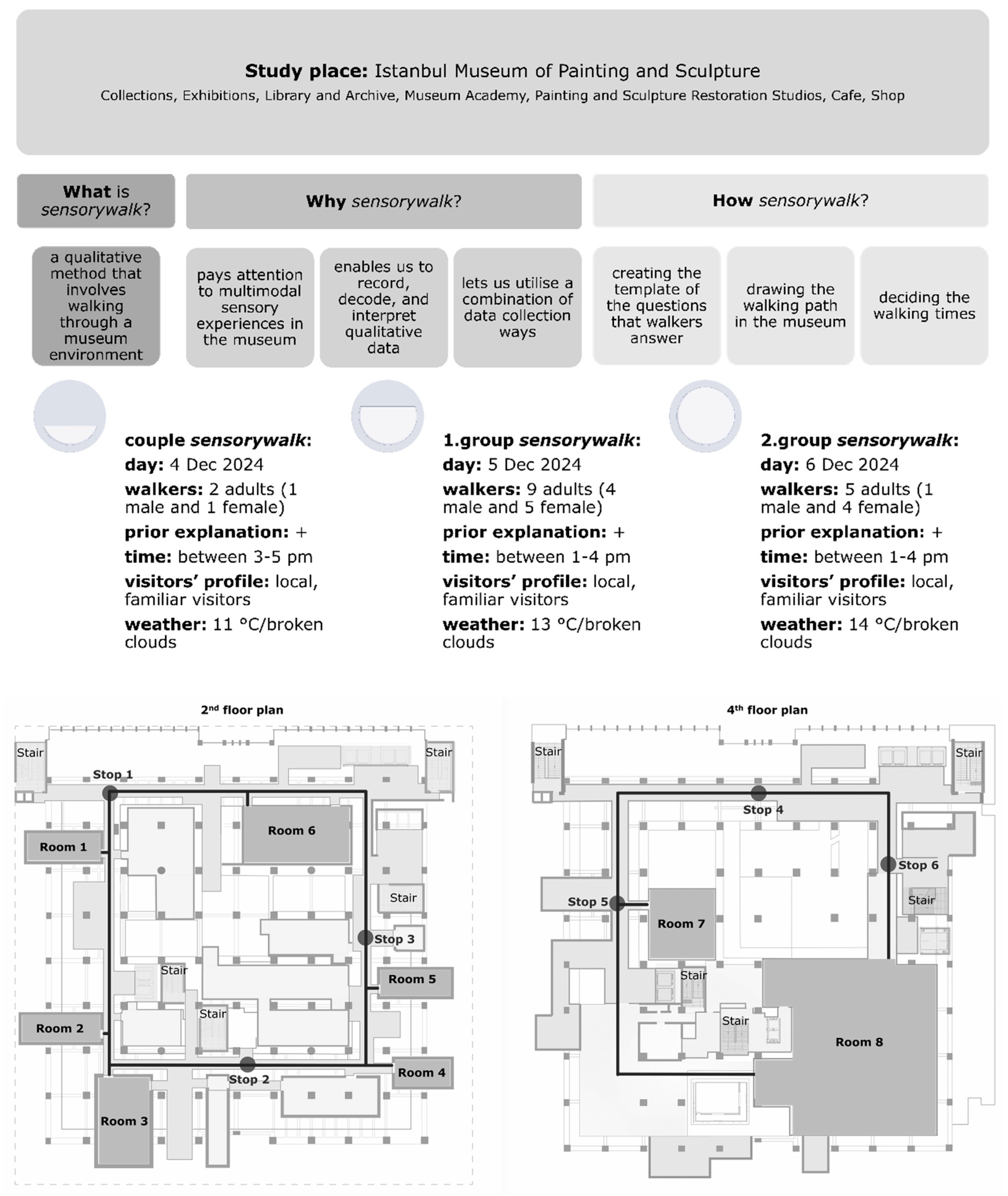
sensorywalk sessions, participants explored the museum exhibition areas and experienced the museum atmosphere, following a designated path under the researcher’s supervision. Selected stops along the path encouraged sensory observation in the place. In the winter of 2024 (in December),
sensorywalk sessions occurred with signed informed consent from the participants, who had previously visited the Istanbul Museum of Painting and Sculpture. All participants reported no physical or sensory disabilities that might restrict participation. The
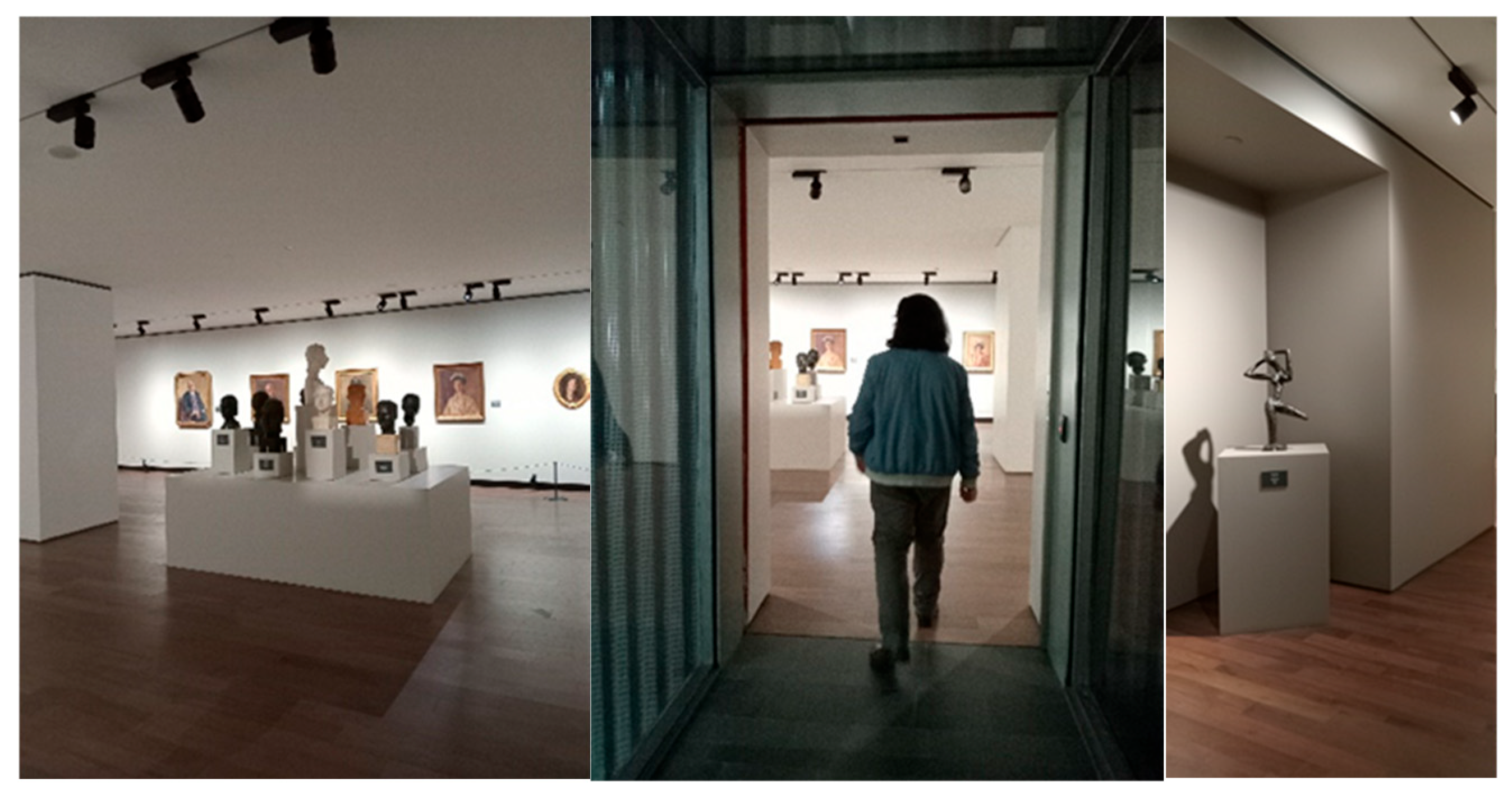
sensorywalk sessions incorporated walking, observation, and recording responses on a response template. The template was prepared in advance of the walks and distributed to the participants. During the walks, participants filled out the templates by using note-taking and answered questions. They also took photographs during the walks. The photography captured the museum’s interior architectural elements, objects, exhibitions, and installations. The photo taking aims to capture the sensory relationships between visitors and the museum. The photos aim to show how young adult visitors interpret their surroundings through immediate sensory experiences (see
Figure 1).
The second and fourth floors were deliberately chosen for the
sensorywalks because they together represent contrasting yet complementary spatial and atmospheric conditions within the museum. Eight rooms were selected for observation and experience, and six rest stops were defined along the walk. The second floor is characterised by a more articulated layout with interconnected exhibition rooms, corridors, and frequent shifts between daylight and controlled artificial lighting, allowing a close observation of how lighting guides movement, orientation, and intimate visual–haptic engagement. In contrast, the fourth floor is defined by expansive, open-plan galleries with stronger perceptions of scale, structural rhythm, and more uniform lighting conditions, offering a different sensory register focused on openness, immersion, and bodily awareness in large volumes. Walking both floors enabled the study to examine how variations in spatial scale, circulation patterns, and lighting strategies shape multimodal sensory experience across the museum’s vertical levels, strengthening the interpretive depth of the
sensorywalk findings (see
Figure 1).
During the one couple and two group sensorywalk sessions, each followed a predefined route through the museum’s major exhibition halls, stairways, and observation areas, including pauses at designated ‘sensory stops’ for focused reflection. Participants completed observation templates containing open-ended questions and Likert-scale items (1–10) to measure the intensity, duration, and enjoyment of sensory experiences. Photographs were taken using participants’ mobile devices to record spatial cues and lighting conditions. These photographs were later analysed alongside textual data to triangulate findings across modalities (visual, verbal, and experiential). The research team maintained a reflexive field journal to document contextual observations, including ambient sound, temperature, and crowd density. This multi-layered dataset facilitated an interpretive understanding of how lighting and spatial configuration mediated multimodal sensory engagement.
Participant feedback was reviewed through a structured, multi-stage qualitative analysis process. Data from pre-walk interviews, sensorywalk templates, photographs, and field notes were first transcribed and organised. Initial coding identified recurring sensory experiences related to light, building material, and spatial characteristics. These codes were then grouped into broader thematic categories under visual qualities and haptic engagement. Photographic data were used to contextualise and verify textual accounts across modalities. This approach ensured that participant feedback was interpreted rather than selectively reported.
All qualitative data—including interview transcripts, walking templates, and photographic documentation—were analysed thematically using a reflexive approach consistent with interpretive phenomenological analysis. Initial coding focused on recurring descriptors of sensory engagement (e.g., brightness, warmth, texture, atmosphere). Axial coding then grouped these into broader themes such as visual focus, haptic response, movement, rhythm and affective connection. Photographic data were used to contextualise textual accounts, identifying correlations between sensory impressions and spatial elements (e.g., lighting direction, material surfaces, or spatial transitions). The triangulation of verbal and visual data enhanced validity and offered a richer, embodied interpretation of museum experiences. Emergent patterns highlighted how controlled lighting not only structured visual attention but also modulated visitors’ emotional and tactile engagement with the environment. This interpretive process informed the study’s findings on how lighting contributes to multimodal sensory awareness and museum design.
4. Findings
Findings from the visually focused sensorywalk exercises revealed that the integration of natural and artificial lighting significantly enhanced the museum’s sensory qualities. One participant observed that “natural light coming through the skylights matches the interior lights of the building, the lighting shapes the specific atmosphere of the museum.” Participants noted that key architectural features—including long columns, expansive walls, high ceilings, and vast exhibition halls—shaped their visual experience. The use of targeted exhibition spotlights, complemented by ambient lighting, created a coherent museum atmosphere. Controlled lighting also helped reduce distractions and support visitor focus as they moved through the space.
The museum employed neutral colour schemes, primarily pastel and earth tones, allowing artworks to stand out. The exhibition featured minimalist pedestals and long walls arranged in clusters or spread out, facilitating varied interactions with artefacts. The museum design incorporated stainless steel and glass, enhancing the interior atmosphere and lighting. The sensorywalk study found that clear signage for lighting tools was essential in the museum for young adults, providing sensory context for the exhibit. Lighting effectiveness is crucial for accurately illuminating the museum and enhancing the visitor experience. The distance between the fixtures and the walls was well-designed. Responses showed that the spatial layout effectively guided them through the exhibition with specific pathways. The visual elements significantly contributed to the museum’s spatial perception.
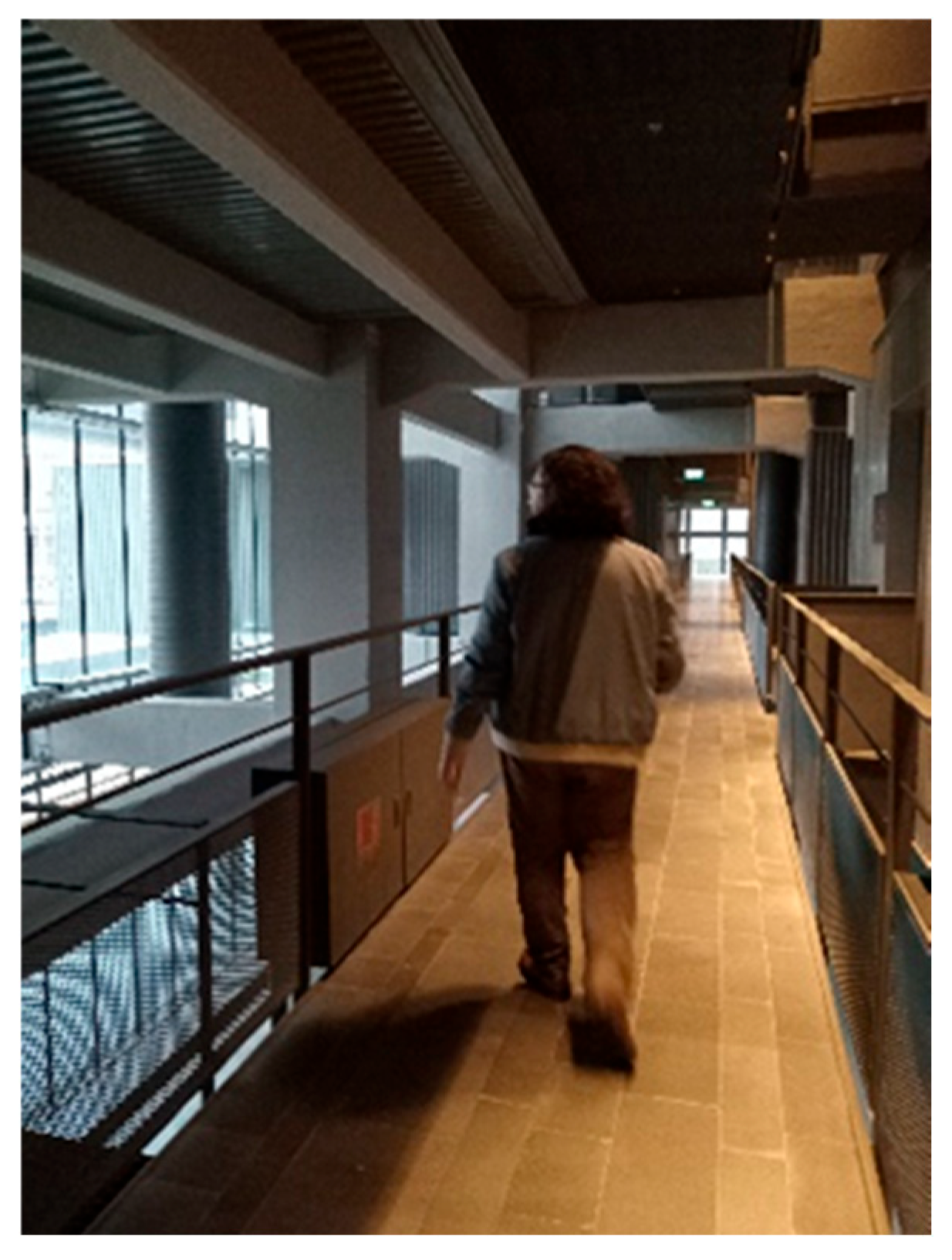
The controlled lighting minimised distractions during the walk. Regarding spatial organisation, young adults described the museum as having wide, open spaces facilitating navigation and reflection. Lighting aided navigation, and especially floodlights, helping visitors move easily around the museum. The accessibility of stairs and elevators, along with the architectural layout, enhanced the visual experience of young adults during the visit. Special lighting guided visitors throughout the museum, highlighting corridors, rooms, and sections (see
Figure 2). Spatial transition from natural to adaptive and controlled lighting environments guiding sensory navigation.
Haptic experiences captured during the
sensorywalk sessions revealed meaningful tactile interactions with the museum space. Visitors engaged with materials such as cold marble sculptures and soft fabrics, creating a diverse, multimodal experience. The interior design included recognisable material textures that blended modern and rustic aesthetics. Several participants reported experiencing positive sensations while interacting with flooring materials, thereby enhancing their haptic engagement with the space. We asked,
“what materials do you notice more clearly in this lighting?”. One participant noted,
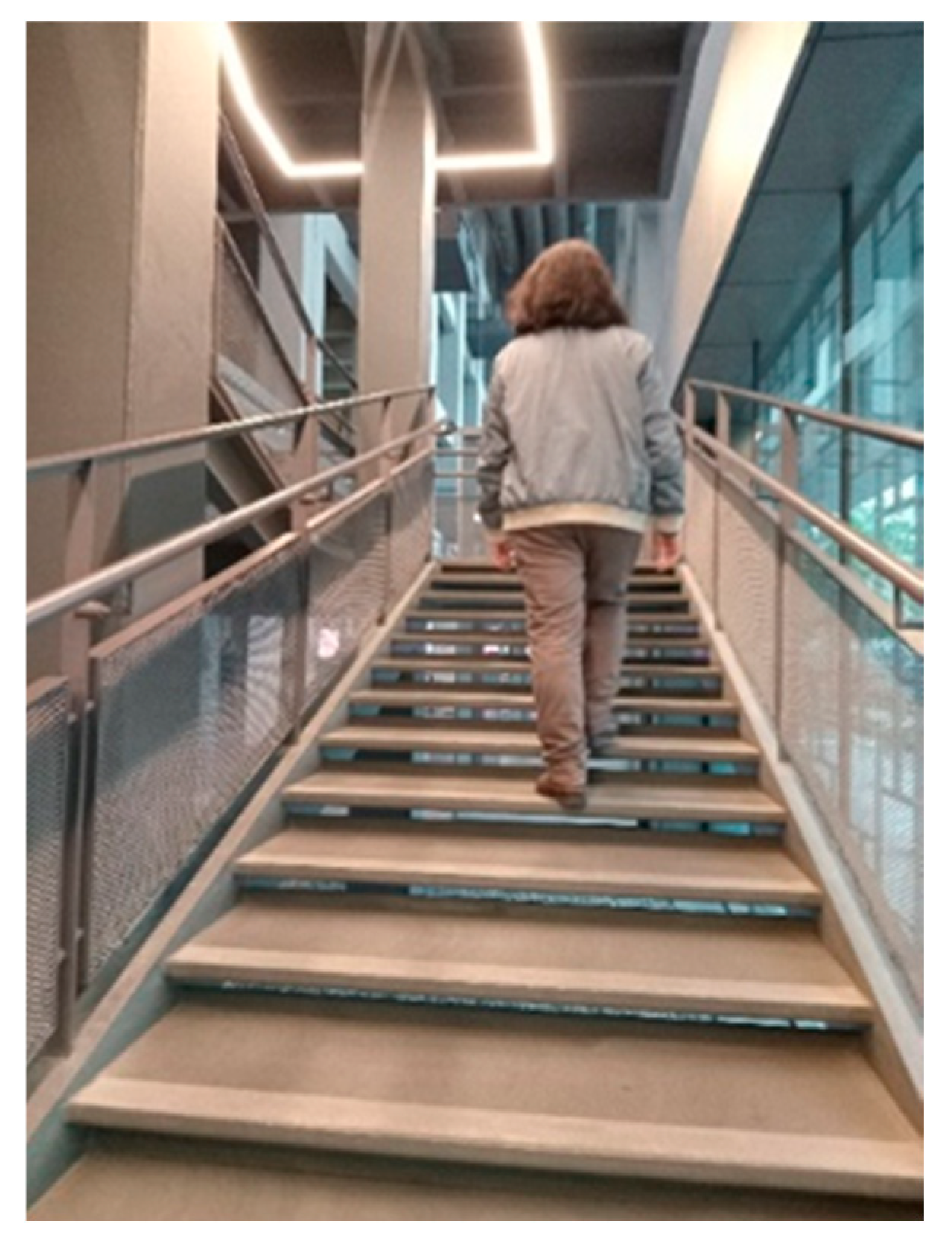
“I appreciated the museum’s spacious galleries with smooth flooring. As I walked, the polished floors made my steps feel gentle as I entered the exhibition areas.” While large windows brought in seasonal daylight, some visitors found glossy surfaces less authentic. The spatial scale and ceiling height were considered well-suited to the exhibition content. Additionally, airflow in expansive galleries produced a gentle breeze, contributing to the overall multimodal sensory experience. Visitors encountered haptic stimuli through walking, viewing, and resting, including tactile engagement with handrails and staircases (see
Figure 3). Tactile progression from stone and metal to wood, fabric, and glass surfaces, enhancing embodied awareness. The findings demonstrate how the museum’s design incorporated haptic dimensions into its lighting and material choices, responding to visitor movement and fostering a sensory connection with the space.
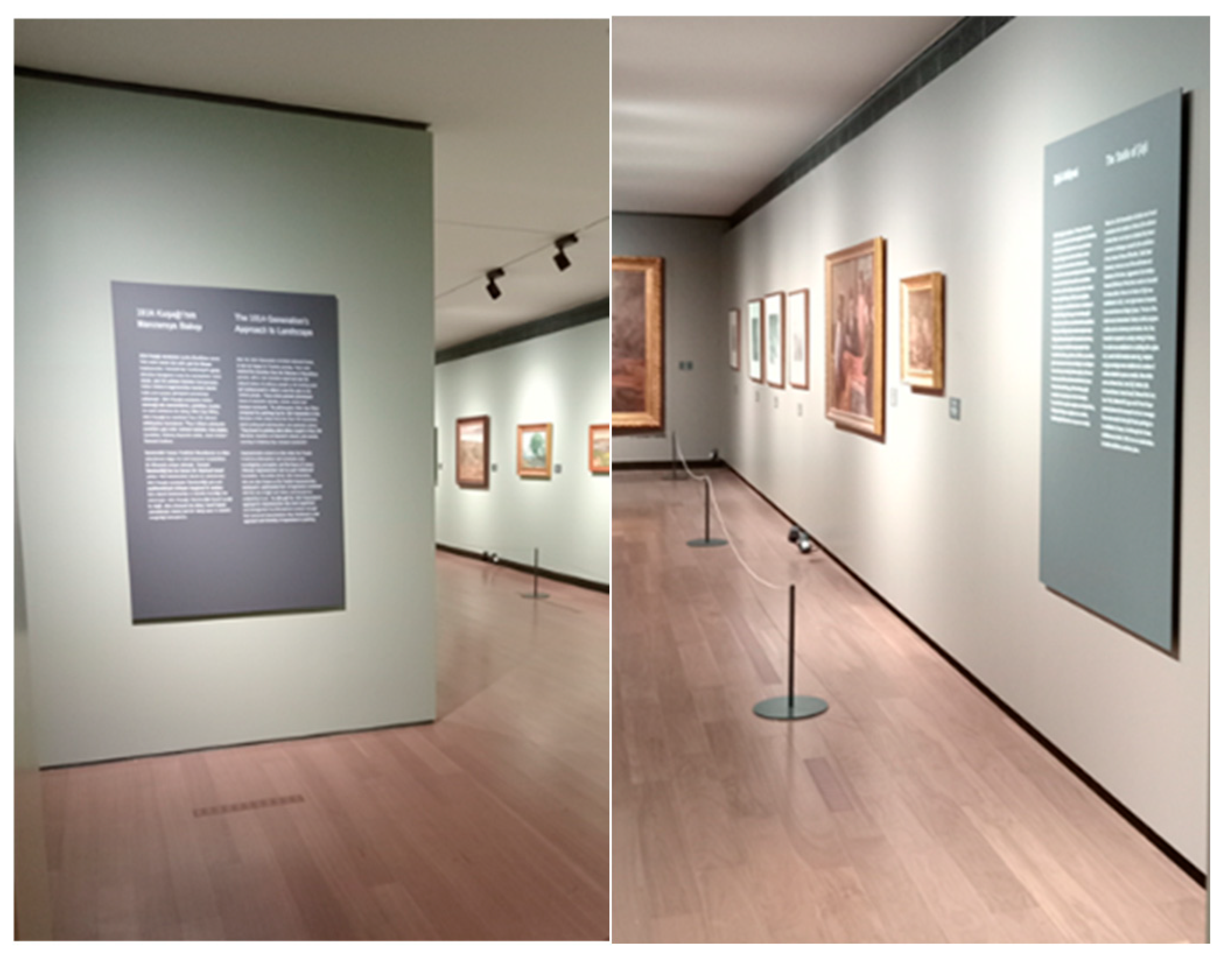
The walls provided diverse visual encounters. White or light matte colours on the walls were common in the place. The light reflections on the floor were visible. The information tables on the walls were exposed to controlled, monitored light (see
Figure 4). Even the small writings were easy to read thanks to proper lighting, and images and maps enhanced the museum. One walker said,
“it’s not dim in this section—I can easily read the labels”. The findings highlighted that light tables created a visually and haptically engaging atmosphere, thereby enhancing visitors’ immersive experience.
The lighting’s intensity set the mood of the visit within the museum. Soft, warm, dim lighting fostered a sense of intimacy, while bright, stark lighting imparted a tranquil atmosphere (see
Figure 5). One walker stated that
“the soft lighting in the sculpture gallery makes the space feel so calm and intimate”. The dimmable soft lights are easy to follow when walking. The lighting temperature and appearance accentuated the overall museum experience. Warm white colour tones promoted a more inclusive museum visit experience. One walker said,
“I see they use warmer lighting; it does not feel sterile and cold in here.” The ceiling, walls, and floor were illuminated by a diverse range of lighting temperatures and textures, determined by the appearance of the lights. The colour display, arranged in horizontal lines and a grid, corresponds to the building’s scale, height, and spatial organisation.
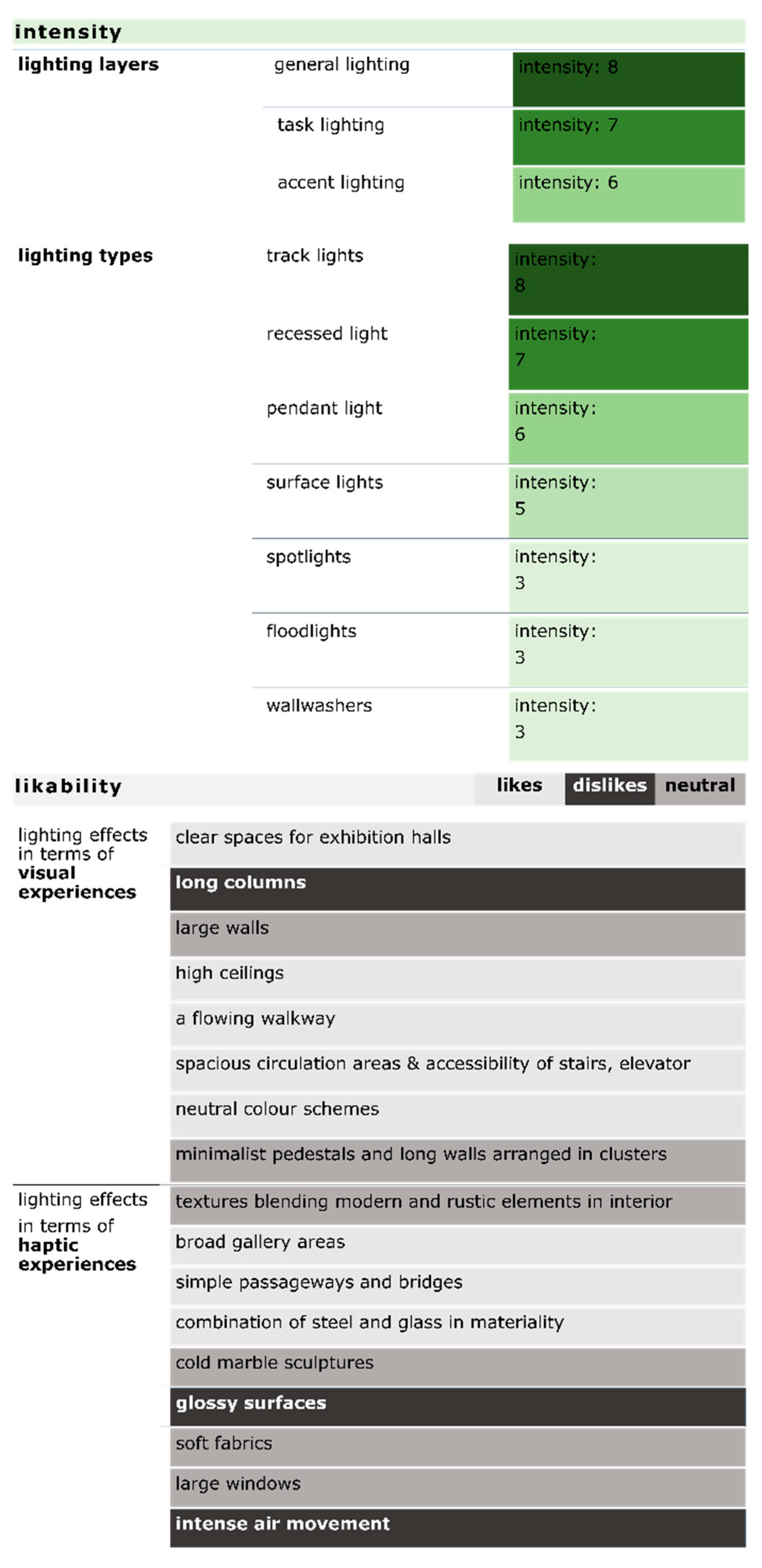
The findings show that young visitors ranked visual sensory experiences as the most significant aspect of the museum atmosphere. The museum subtly influenced perception by varying lighting intensities and likability (see
Figure 6). The diverse colours and shapes of paintings, artworks, and displays attracted the visitors’ attention and encouraged physical and sensory interactions with exhibits. One walker said,
“It’s exciting to see how they manipulate my visual perception in the space with the lighting. The interior lighting easily captures my attention but does not distract me from the artworks when I enter the room.” The study found that visual sensory experiences were ranked as the most significant aspect of the museum environment by young adult visitors. The interplay of colour, shape, and lighting within artworks and displays stimulated attention and encouraged both physical and sensory interaction.
5. The Discussion
5.1. Visual and Haptic Engagements in the Museum Atmosphere
Museums have historically served as preservers of culture and knowledge, primarily utilising visual and textual displays. Nevertheless, growing research and experimental approaches are challenging this mainly visual orientation. The development of sensory museum models represents a wider ‘sensory revolution’ within museum studies and design. The innovative approach aims to engage multimodal senses to create immersive, sensorially impactful experiences.
The lighting offered a rich visual experience, engaging young adult visitors with various colours, textures, and forms in paintings, sculptures and artefacts. In the interview, we asked “how does the lighting in this space affect how you look at the artwork?”. One participant said, “I look at how the light hits that sculpture. The shadows almost change it”. The pieces manipulated sensory responses in accordance with the place’s spatial use. The museum uses lighting to emphasise the visual effects of the exhibition environments. Task lighting is used in the halls. Techniques such as track lighting, spotlights, ambient illumination, and natural light were combined to enhance the exhibits’ sensory qualities. The illuminated vertical surfaces are among the most visible elements of the place. The combination of transparent elements, solid and opaque visual qualities affected young adults’ spatial perceptions during the walk.
Recessed lights are used in distinctive colours, allowing the movement to flow in the space. Accent lighting’s tools altered the visual qualities of the museum atmosphere, introducing dynamic and static elements to the museum landscape. One participant talked about the diversity of the light and said, “I really liked the diversity of the lights when I walked in the place. Every room made me feel different”. The pendant lights were used in walkways and halls, providing control and portable lighting and creating greater flexibility for haptic museum experiences. The track lighting created wall washing. Wall washing made the space seem more spacious. Wall washers ensured that visitors could see the details of art and displays, providing optimal viewing conditions. The museum employed indirect lighting or strategically placed fixtures to avoid harsh shadows and glare. One participant said, “the shadows feel so natural, like the artwork’s glowing from within”. Distinct lighting styles defined separate zones within the museum, facilitating a comfortable viewing experience. One walker admitted that “the impact of diverse lighting is subtle yet effective. Together, they create no harsh glare—just sufficient light to make the colours and forms adequately visible”. The lights encouraged exploration and engagement, enhancing visual experiences and the effect of lighting tools.
The museum provided haptic experiences through touch, skin and kinaesthetic qualities. Haptic elements included three-dimensional artefacts, interactive screens, touch buttons, maps, building materials such as wood, textures, and touchable artefacts from the exhibition areas. Without touching replicas, feeling the textures of materials like crafts, fabrics, or stone, manipulated the bodily experiences. The museum atmosphere featured interactive displays for young adult visitors to engage with. The uniform brightness of the fabrics matched the solid surfaces of the interiors. Visitors sensed the material quality, such as the ceramics’ smoothness, the steel’s roughness, and the rigidity of the sculpted materials.
The lights directed attention to particular artworks and exhibits, with strategically positioned spotlights and accent lights making select pieces prominent and guiding visitors’ sensory experiences. The accent lighting on the artwork is detectable. Using lighting to create contrasts and shadows infused the artwork with sensory engagement, thereby enhancing the overall museum experience. One walker said that “the shadows make it easy to appreciate the finer details of the painting”. The lighting improved the quality of the artworks’ colours, textures, and intricate details. Some pot lights are intentionally designed to create high-contrast shadows.
Young adults faced minimal challenges with lighting technology, enhancing their museum engagement. One participant’s statements admit that “lighting can negatively affect the museum experience. Bad lighting can flatten even the most vibrant piece. However, here, lighting serves as a motivation for exploration. I’ve been to galleries where no harsh lighting made the colours look completely different”. At the museum, lighting tools facilitated the exploration of exhibition layouts. Visual experiences in the museum were closely tied to the use of these tools, with background colours and screen sizes significantly impacting both visual and haptic sensations. The quality of lighting equipment in media installations notably influenced the haptic experiences of young adults during their visits. Lighting can quickly alter multimodal sensory experiences, increasing interactions with the museum’s sensory elements.
The lighting was designed in accordance with the sitting areas in the place. The museum’s directional luminaires allowed visitors to relax and immerse themselves in the atmosphere, enriching their understanding. “The design did a great job with the lights and benches—everything is well-designed in the bench places. The lighting feels very intentional—like it’s part of the exhibit.” The shaded fixtures for sitting areas were designed to match the size of the sofa. The lighting system provided an intimate place for sitting and relaxing. The lighting design was carefully coordinated with seating placement throughout the museum, contributing to a cohesive, immersive spatial experience. Directional luminaires were strategically positioned to create zones of visual comfort, enabling visitors to pause, reflect, and engage more deeply with the surrounding atmosphere. Shaded fixtures above seating areas were proportioned to match the scale of the benches, reinforcing a sense of spatial intimacy. This deliberate integration of lighting and furniture created a calming environment for rest and contemplation, enhancing the museum’s overall sensory experience.
One walker said, “I never realised how much lighting mattered in a museum. I just assumed everything was static”. The dialogue during the museum walks was crucial for encouraging observation and experience, thereby enhancing the museum experience for young adults. The museum atmosphere introduced flexible, customisable lighting for young adults. Museum professionals and policymakers may create innovative, age-appropriate coding and branding for museum visiting. Strategies for enhancing museum experiences through lighting can create a sensory-friendly atmosphere for young adults. The findings showed that lighting shaped museum experiences, influencing visitors’ engagement with artefacts and the overall sensory ambience.
The lighting tools personalised experiences by layering information about artefacts, deepening appreciation. The museum experience was enhanced by immersive affordances enabled by innovative lighting tools. Utilising lighting tools in the museum has significantly altered multimodal sensory experiences for young adults. Recognising the sensory aspects of lighting tool use in a museum setting was crucial for enriching and engaging multimodal sensory museum experiences. In doing so, the museum atmosphere strengthened the bond between young adult visitors and their surroundings, ultimately improving visitor satisfaction and museum engagement. The lighting tools were vital to understanding and interpreting the museum’s sensory experiences.
Visual experiences were the most prominent sensory aspect, with participants highlighting how natural and artificial lighting shape the museum’s atmosphere. Daylight from skylights and reflective surfaces balanced and improved colour perception and spatial depth. Features such as high ceilings, long columns, and expansive walls enhanced the openness and fluidity. Spotlights highlighted artworks, while ambient lighting softened transitions, reducing fatigue and fostering contemplation. Controlled lighting minimised distractions, creating a rhythm of focus: wide corridors and easy circulation aided orientation, with floodlights outlining pathways for navigation. Variations in light intensity sparked curiosity and exploration. The neutral colour scheme allowed artworks to stand out, while reflective surfaces increased luminance, reinforcing spatial rhythm. Participants found these elements calming and cohesive, with lighting establishing perceptual continuity.
The walking method used in this study was an innovative, humanistic, participatory, and educational sensory approach. Multiple lighting layers helped enhance the museum experience (see
Table 1). While initial impressions relied on visual cues, tactile and embodied sensations crucially boosted visitor engagement. Participants showed detailed awareness of textures, materials, and temperature differences as they explored. Architectural elements, such as stairs, handrails, seating, and flooring, supported physical and sensory orientation, encouraging tactile interactions. Visitors expressed tactile pleasure from features such as cool marble, smooth metal, and soft upholstery, which enhanced comfort and familiarity. Walking on polished floors fostered rhythmic movement, emphasising embodied navigation. Haptic perception involved touch and kinesthetic perception—sensing balance, movement, and airflow. The spacious gallery, with its temperature variations and ventilation, created an ambient tactility that complemented the visual impressions. This multimodal harmony strengthened emotional connections, turning passive observation into embodied exploration. Light and textures enhanced tactile engagement; soft lighting highlighted the sculpture’s contours and details, enabling kinesthetic perception. Shadow gradients from directional lighting made materials feel almost touchable, blending sight and touch into an immersive experience.
We used
sensorywalk to make the museum visit physically and sensorially engaging. The Istanbul Museum of Painting and Sculpture features special building materials combined with transparency and solidity to promote movement throughout its spaces. Young adult visitors can traverse vast open areas, ascend stairs, or transition from room to room, offering distinct physical and intangible interactions with the museum atmosphere. The museum design enables the young visitors to navigate the museum and engage with the exhibitions in a more immersive way. The museum setting inspires sensations and reflection by encouraging bodily movements for young adult visitors [
130].
5.2. How About Other Senses and Points?
Visitors noted that the museum’s auditory qualities were affected by background voices and natural sounds. The interior area was quiet, making the visitors feel calm. The lighting has not had a significant influence on the auditory dimensions, but it has positively contributed to their overall auditory experiences in the museum. Touch played a role in interactive exhibits but was less prominent than visual stimuli. The sense of smell was the least prevalent in the museum, as visual and haptic experiences overshadowed the odours from the artefacts. However, the distinctive smells of the artworks and building materials are noticeable. The museum environment shaped auditory experiences. While lighting did not directly affect auditory perception, it contributed to the overall sensory atmosphere. Visitors described the space as generally quiet, with ambient and nature-based sounds creating a calming effect—a relationship between lighting levels and emotional–perceptual states from calmness to focus. Touch was primarily involved in interactive exhibits, but it was less dominant than visual engagement. Olfactory stimuli were the least prominent among the senses; however, some participants noted the subtle yet distinctive scents of artworks and construction materials, adding to the atmosphere of authenticity—interaction among visual, haptic, and affective modalities coordinated by lighting design.
The museum’s auditory atmosphere is combined with visitors’ interaction with the exhibits. The museum features extensive exhibition areas, and a top-floor terrace serves as an open-air museum, offering a panoramic view of the city. According to the findings, young visitors noted the natural sounds of wind, birds, and trees on the terrace, enriching the auditory atmosphere and creating a unique sonic experience for the museum. Although several museum visitors walked at the same time, the interior design fostered a tranquil atmosphere. Smooth floors lead to quiet exchanges of sensory experiences. Visitors often whispered as they discussed exhibits, enhancing a contemplative mood. The auditory narratives, presented through multimedia displays and documentaries, resonated with the lights. Insights from sound-based sensorywalk revealed that footsteps echoed across various surfaces, creating a unique auditory backdrop. The rhythm and soft loudness of footsteps varied with the museum environment. A soft hum from the heating and ventilation systems in the interior areas was distinct, while the air conditioning produced a constant sound.
Apart from visual and haptic experiences, the study revealed that the museum curated authentic sounds for its exhibits and hosted special auditory performances. Sound installations and immersive audio experiences enhanced visitors’ engagement with the museum. Subtle auditory references—such as footsteps and whispers—created a distinctive
soundscape [
131,
132] that accompanied visitors on their walk. Periodic sounds from audio guides and headphones enabled visitors to explore the museum atmosphere according to the exhibition’s navigation [
133,
134,
135]. Art installations featuring human voices served as participatory auditory tools, helping young adults engage with the exhibition’s sound elements [
55,
136].
Sensorywalk data indicated that olfactory experiences included metallic, oceanic, botanical, floral, and woody scents, contributing to a distinctive atmospheric identity. The cafe allowed visitors to savour distinct aromas from coffee and tea, while the exhibit released scents reminiscent of paint, leather, and wood, enhancing the museum’s immersive experience [
54]. Integrating such sensory cues positions the museum as a vital laboratory for experiencing multimodal sensory dimensions, aligning with the concept of the museum as a sensory environment [
19,
137].
The scent-based findings revealed that artefacts emitted distinct scents, including those associated with paint, metal, musty, or rustic odours. Galleries were filled with prominent scents of marble and steel. The artworks released strong odours, while outdoor areas have deeper sea and earthy fragrances. In the exhibition spaces, the smell of paint and varnish was noticeable. Given its coastal position, external smells, such as salty sea scents, hinted at nearby seawater. The sensorywalk study found that lighting tools that resonated with a unique scent affected the olfactory ambience. Indoor air quality and air movements influenced overall olfactory dimensions. The museum cafe contributed to the distinctive olfactory atmosphere with the smell of coffee and tea.
Auditory and olfactory perceptions, though secondary to visual and haptic experiences, reinforced the museum’s atmospheric quality. The controlled acoustic environment—characterised by soft echoes and subdued visitor chatter—facilitated concentration and tranquillity. Subtle scents of materials, including marble, metal, and paint, contributed to a multimodal sense of authenticity, connecting visitors to the material history of the space.
Accessibility is a fundamental dimension of the sensory museum experience and should be considered. Although the participant group in this study did not include visitors with diagnosed physical disabilities, the findings demonstrate that the museum’s visual and haptic qualities strongly influence museum accessibility. Features such as controlled illumination, balanced light levels, clear visual contrasts, and open circulation routes can reduce visual fatigue, spatial confusion, and cognitive overload. The accessibility factors that are especially significant for visitors with visual impairments, sensory sensitivities, neurodivergent conditions, or anxiety-related difficulties.
The interplay between lighting, spatial organisation, and sensory perception contributed to what participants described as a ‘living atmosphere’—a perceptual synthesis of visual and haptic experiences that elicited calmness, curiosity, and reflection [
138]. The museum’s layered lighting system, which combines recessed lights, pendant fixtures, and accent illumination, fostered a dynamic environment where light guided the emotional tone as much as visibility. Several participants expressed emotional resonance with particular spaces, emphasising lighting’s capacity to evoke mood and memory [
139]. Soft, dim lighting fostered intimacy and concentration, while bright, evenly distributed illumination created a sense of openness and clarity. These perceptual modulations shaped the tempo and rhythm of visitors’ movement and attention throughout the museum. Directional lighting around benches and resting points established zones of visual comfort, encouraging visitors to pause, reflect, and engage more deeply with their surroundings. Participants described these areas as ‘intentional moments of rest’ where light and spatial intimacy merged.
The convergence of sensory modalities demonstrates that lighting serves as a multimodal mediator—a design element that coordinates sensory information across multimodal experiences (see
Table 2). By shaping how visitors perceive depth, texture, and atmosphere, lighting establishes the conditions for embodied understanding and inclusive participation. The findings indicate that lighting not only enhances aesthetic appreciation but also promotes sensory well-being, enabling young adults to connect cognitively and emotionally with their environment [
140]. This multimodal integration reveals that sensory experience in museums is not hierarchical but relational: visual and haptic modalities work in tandem to construct meaning, while lighting provides the rhythm and coherence that unify perception. The museum atmosphere thus becomes a communicative and pedagogical medium—an environment where sensory diversity enriches both personal reflection and collective experience.
5.3. Contributions and Practical Implications
Our study examined how lighting contributes to the sensory aspects of a museum atmosphere in the literature. Previous studies have examined smell, sound, or touch as separate sensory layers, but few have demonstrated how lighting coordinates visual attention, haptic perception, spatial rhythm, and affect into a sensory atmosphere. Our findings show that lighting, as an atmospheric agent, structures embodied perception, extending existing sensory and phenomenological understandings of the museum experience (see
Table 3).
At a theoretical level, this study contributes to museum and sensory studies by advancing an atmospheric and relational understanding of lighting within multimodal museum experience. Rather than treating light as a neutral background condition or a purely visual instrument, the study conceptualises lighting as an active sensory mediator that coordinates visual attention, haptic awareness, bodily movement, and affective response. This perspective extends phenomenological approaches to museum atmosphere by demonstrating how embodied perception emerges through the interaction of environmental cues and the sensing body. By foregrounding the role of lighting in structuring sensory hierarchies and spatial rhythm, the study moves beyond ocular-centric models of museum experience. It contributes to a more integrated, multimodal framework in which perception is understood as situated, embodied, and atmospherically produced.
Understanding a museum’s multimodal sensory qualities—such as how lighting interacts with material surfaces, spatial scale, movement patterns, and resting points—helps designers and curators intentionally evoke atmosphere rather than treating it as an incidental outcome. By capturing multimodal sensory data through embodied methods, this study offers insights that can inform future lighting strategies, exhibition layouts, and sensory design frameworks. Methodologically, the study contributes by applying sensorywalk as a mobile, in situ documentation protocol in an Istanbul museum context, addressing a gap in how Istanbul museums incorporate lighting to encourage multimodal engagement. Unlike traditional methods, the sensorywalk captures individual embodied perception as visitors move through lighted space, linking lighting conditions directly to sensory awareness. By integrating walking templates, Likert sensory ratings, photography, and reflexive field notes, the study demonstrates how multimodal experiences can be translated into structured qualitative evidence, offering a framework for sensory-based museum research.
The study informs sensory-based museum design and toolkits. Sensory engagement is not a peripheral concern but a vital component of museum design. Promoting new design solutions to improve the accessibility and engagement of the museum experience is a key goal. These insights reinforce the need for museum design guidelines that embed accessibility within sensory experience, ensuring that multimodal atmospheres enable meaningful participation for visitors with diverse abilities and sensory preferences.
While traditional museum design has primarily focused on visual elements, the complexity of museum components necessitates new guidelines that incorporate multimodal sensory features. Understanding the museum’s multimodal qualities will help demonstrate how they can be effectively evoked. Innovative models that capture multimodal sensory data can inform future museum development. The findings support the development of adaptable design models that respond to diverse visitor needs and contexts, providing guidance not only for museums in Istanbul but also for comparable cultural institutions seeking to enhance sensory richness, inclusivity, and experiential quality.
The study informs sensory-based museum design and the development of practical toolkits by demonstrating how lighting can be strategically employed to enhance multimodal engagement, accessibility, and visitor well-being. Promoting new design solutions that support inclusive and sensory-aware museum experiences is therefore a key outcome of this research.
Analysing visiting experiences in Istanbul’s museums offered insights for urban planners and policymakers that could benefit museums across Turkey and contribute to a broader, global perspective. Making young visitors aware of their roles as museum users and encouraging them to participate in sensory-based museum studies were among our successes.
5.4. Limitations of the Study and Suggestions
This study emphasises the importance of multimodal experiences to foster sensory museum practices. This study argues that multimodal experiences of museum atmosphere warrant recording, decoding, and promotion as expeditiously as possible. The sensorywalk study helped us collect data on visitors’ experiences at the museum. The study was intentionally qualitative because the research question focuses on embodied, in situ sensory experience, which cannot be fully captured through quantitative measures alone. The primary aim was to decode and interpret lived sensory perception. We acknowledge that future studies could extend this work through complementary quantitative or mixed-method analyses.
Our participant group consists of young local visitors (18–26), many of whom are frequent museum-goers and may share similar educational or sociocultural backgrounds (e.g., student status). This demographic profile shapes outcomes in two ways: first, familiarity with museum conventions may increase sensitivity to lighting design and spatial navigation cues; second, shared cultural and educational references may make specific sensory descriptors more readily articulated. The participant profile may heighten sensitivity to atmosphere in terms of material qualities and shape how sensory experiences are defined. So, the findings reflect the perceptions of a museum-literate group rather than those of first-time visitors, older adults, or audiences. These factors may limit how far the findings represent other visitor groups (older adults, first-time visitors, non-student audiences, visitors with sensory/physical disabilities). Future studies should therefore include a broader range of demographics and compare first-time and repeat visitors to examine how familiarity and sociocultural background influence multimodal sensory experiences. Incorporating a wider diversity of backgrounds would strengthen future research, as sensory experience in museums is shaped by multiple interacting factors beyond spatial and lighting design alone.
We recognise that several external and internal factors affecting sensory perception make it impractical to capture the full range of sensory experiences in museums; even modern technologies cannot encompass every detail. The conditions—such as the nature of the glass used and the container for the object—modulate how light is perceived. The roles of north light and colour rendering are fundamental to how artworks, building materials, and spatial characteristics are experienced in museum environments. The factors such as seasonal daylight and UV exposure are also important. In this study, the findings show that daylight serves as natural illumination, reducing harsh shadows and supporting visual comfort—qualities participants described as clarity, calmness, and spatial openness. Although we did not technically analyse daylight orientation or spectral qualities, visitors’ statements reflect how these lighting conditions shape their museum experiences.
Our findings do not capture the full range of the museum’s sensory attributes. Psychological states such as mood, stress or attentiveness can amplify or dampen sensory awareness, influencing how lighting is experienced. Biological and neurological differences—including sensory sensitivity, fatigue, vision, hearing, and mobility—shape how visitors perceive light, texture, temperature, and spatial scale [
141,
142,
143]. We suggest considering these directions for future studies.
6. Conclusions
This study sits directly within the ‘sensory turn’ in museum and spatial-experience research by treating the museum not as a neutral container for objects but as an atmospheric, designed environment produced through embodied navigation, environmental cues, and multimodal perception [
7,
8,
33,
34]. This study aligns with work showing that visitor experience emerges through movement and interaction within an atmosphere with lights, textures, sound, and scent [
5,
6,
64,
65,
66]. By framing perception as multimodal and embodied, the study’s approach echoes phenomenological arguments that spatial understanding is grounded in the sensing body rather than in vision alone [
18,
31,
32], and it resonates with critiques of
ocularcentrism in spatial evaluation [
37,
38].
Museums serve as spaces for engagement, learning, and social connections, where sensory experiences are crucial in communities’ urban life. Contrary to the hegemony of visual understanding of the built environment, understanding the multimodal sensory experiences is essential. The study asked how young adult visitors interacted with visual and haptic components in the museum. We utilised sensorywalk to uncover the sensory dimensions of visitors’ museum experiences, focusing on visual and haptic museum elements.
Findings highlighted that the Istanbul Museum of Painting and Sculpture used lighting creatively to enhance immersive exhibits and temporary installations, transporting visitors to specific times and places. Lighting elements fostered sensory connections, while perceived visual and haptic components added depth to the museum atmosphere. Lighting features enabled young adults to engage dynamically with sensory elements, facilitating immersive haptic experiences and visually rich interactions. Visitors described strong visual reactions influenced by lighting. Their haptic experiences were significantly shaped by how they physically felt through the skin and their body awareness under the light. Haptic experiences included textured walls, sculptures, air vibration, inner temperature and touchable objects, while visual characteristics allowed visitors to interact visually with the museum atmosphere. Background colours, textures, shapes, and forms immersed young adults’ visual and haptic experiences in the museum atmosphere. The lighting enhanced visual effects, creating contrasts and highlighting artefact colours. Lighting features of interactive screens, maps, and installations affected visual and haptic experiences for young adult visitors, promoting sensory engagement. Lighting tools promoted physical participation within the museum space. The study’s sensory approach revealed that hybrid data collection enhanced understanding of visitors’ sensory experiences in museums.
The study highlights that sensory-aware lighting strategies can support diverse bodily, cognitive, and perceptual needs within museum environments. Features such as evenly distributed illumination, reduced glare, clear contrasts, and well-lit circulation routes enhance spatial legibility, orientation, and comfort—conditions that are particularly important for visitors with visual impairments and sensory sensitivities. The integration of lighting with tactilely legible materials, seating areas, and transitional spaces further supports embodied navigation and reduces sensory overload.
We think that the museum atmosphere’s multimodal dimensions must be systematically recorded and interpreted to understand the ‘non-visual’ museum experience better. Recognising and incorporating multimodal sensory features is essential not only for enhancing visitor engagement but also for shaping the future of museum design. Discussion highlighted the need for new museum concepts, design innovations, and strategies to sustain and support multimodal museum experiences. The information is helpful in museums’ decision-making and management practices beyond Istanbul.