
Experimental and Numerical Investigation on Three-Segment Precast Bridge Columns with Grouted Sleeve-Unbonded Prestressing Hybrid Connections

Abstract
1. Introduction
2. Experimental Program
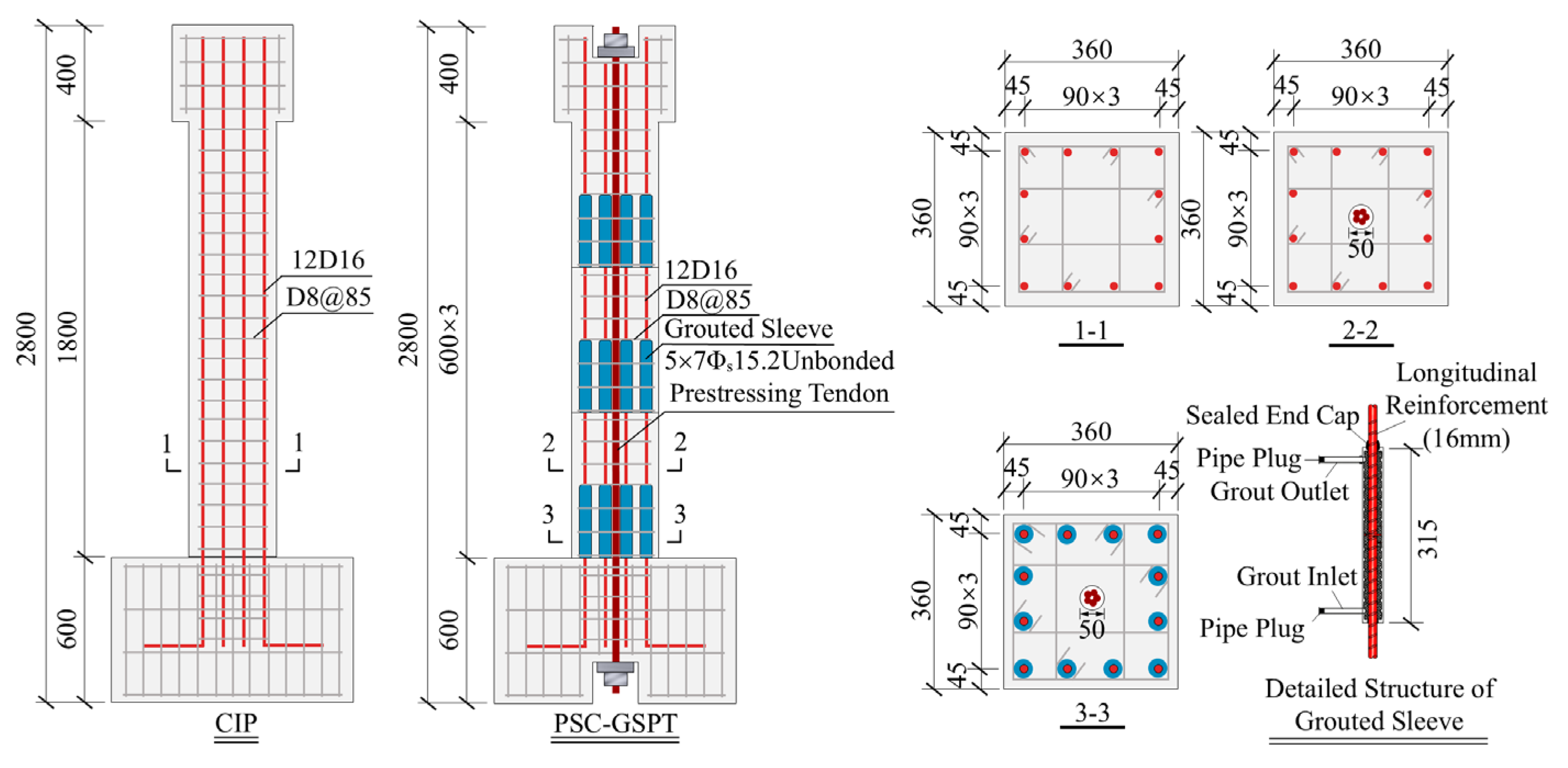
2.1. Design of Test Specimens
2.2. Material Properties
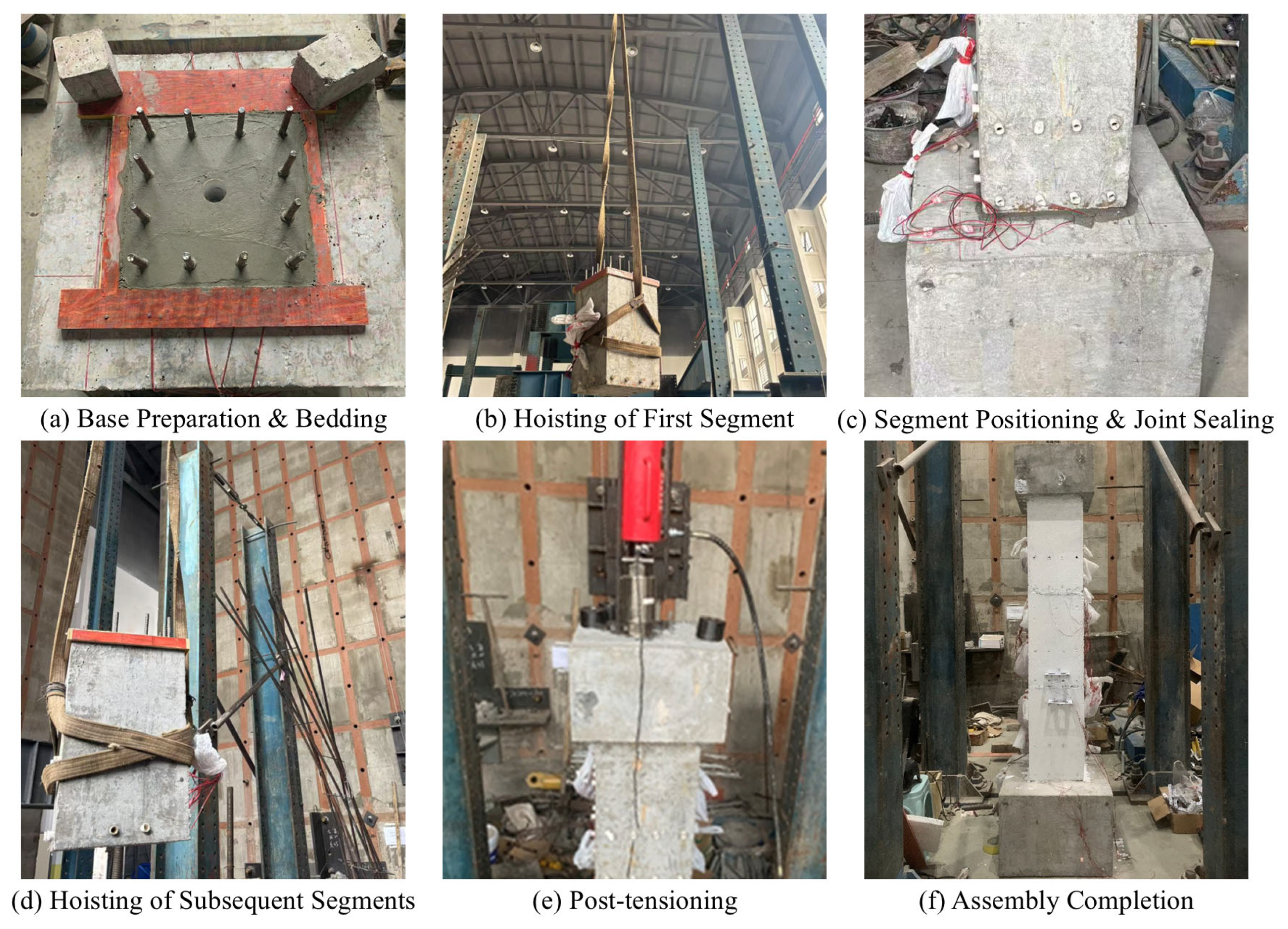
2.3. Assembly of Specimens
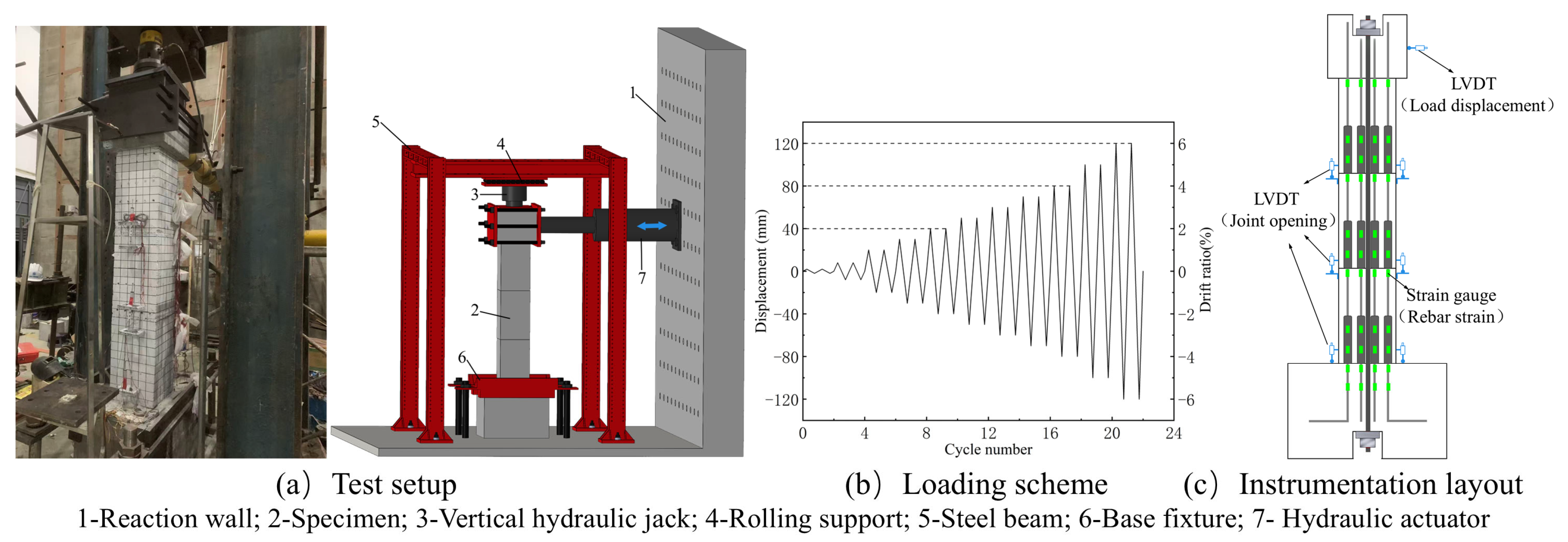
2.4. Test Setup and Loading Protocol
3. Experimental Results and Discussion
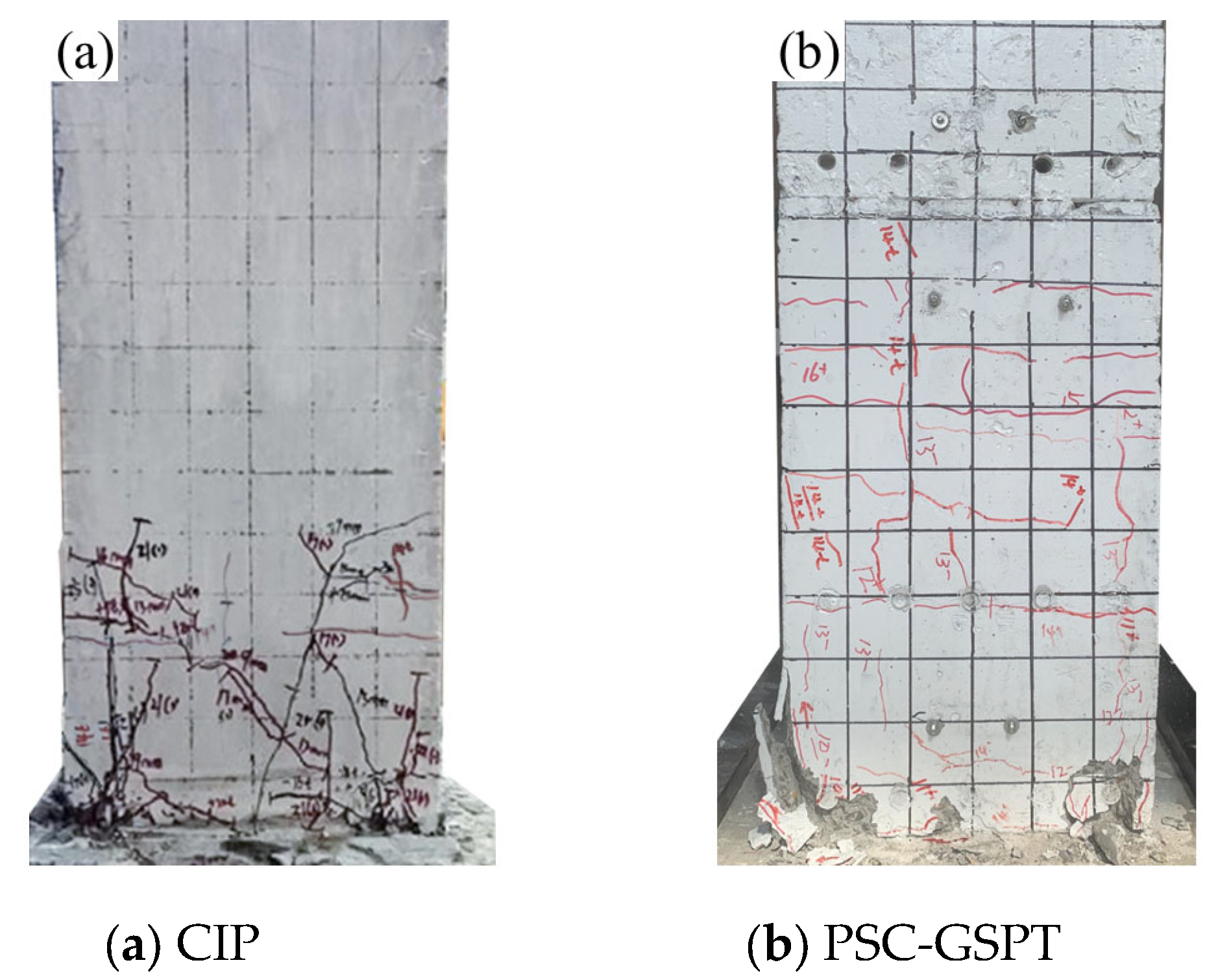
3.1. Damage Progression and Failure Modes
3.2. Strength and Ductility
3.3. Stiffness Degradation
3.4. Energy Dissipation Capacity
3.5. Residual Displacement
4. Finite Element Model: Validation and Discussion
4.1. Modeling Technique
4.2. Modeling Validation
4.3. Parametric Study
4.3.1. Prestress Level
4.3.2. Prestress Ratio
4.3.3. Configuration
5. Conclusions
- The PSC-GSPT specimen exhibited superior damage control capabilities through a favorable shift in the failure mechanism. In contrast to the CIP specimen, which suffered from severe concrete crushing and reinforcement buckling at the column base, the PSC-GSPT specimen successfully relocated the plastic hinge region from the base to the section immediately above the grouted sleeves due to their localized stiffening effect. Consequently, structural damage was primarily limited to joint opening and minor compressive crushing, while the unbonded tendons remained elastic throughout the loading process, effectively coordinating the deformation of the segments.
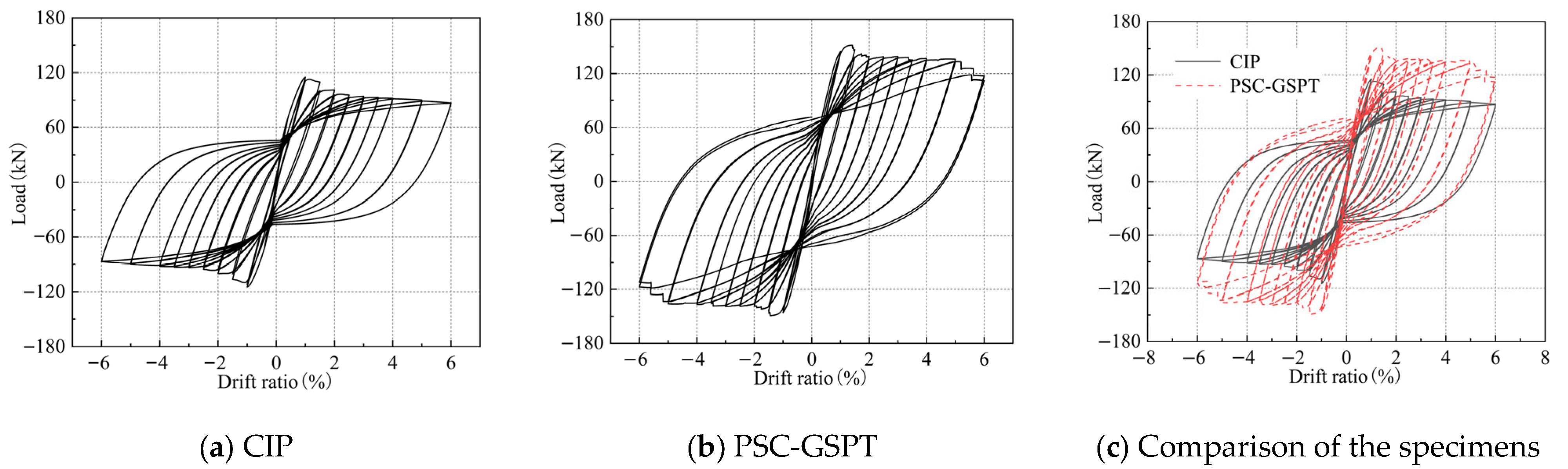
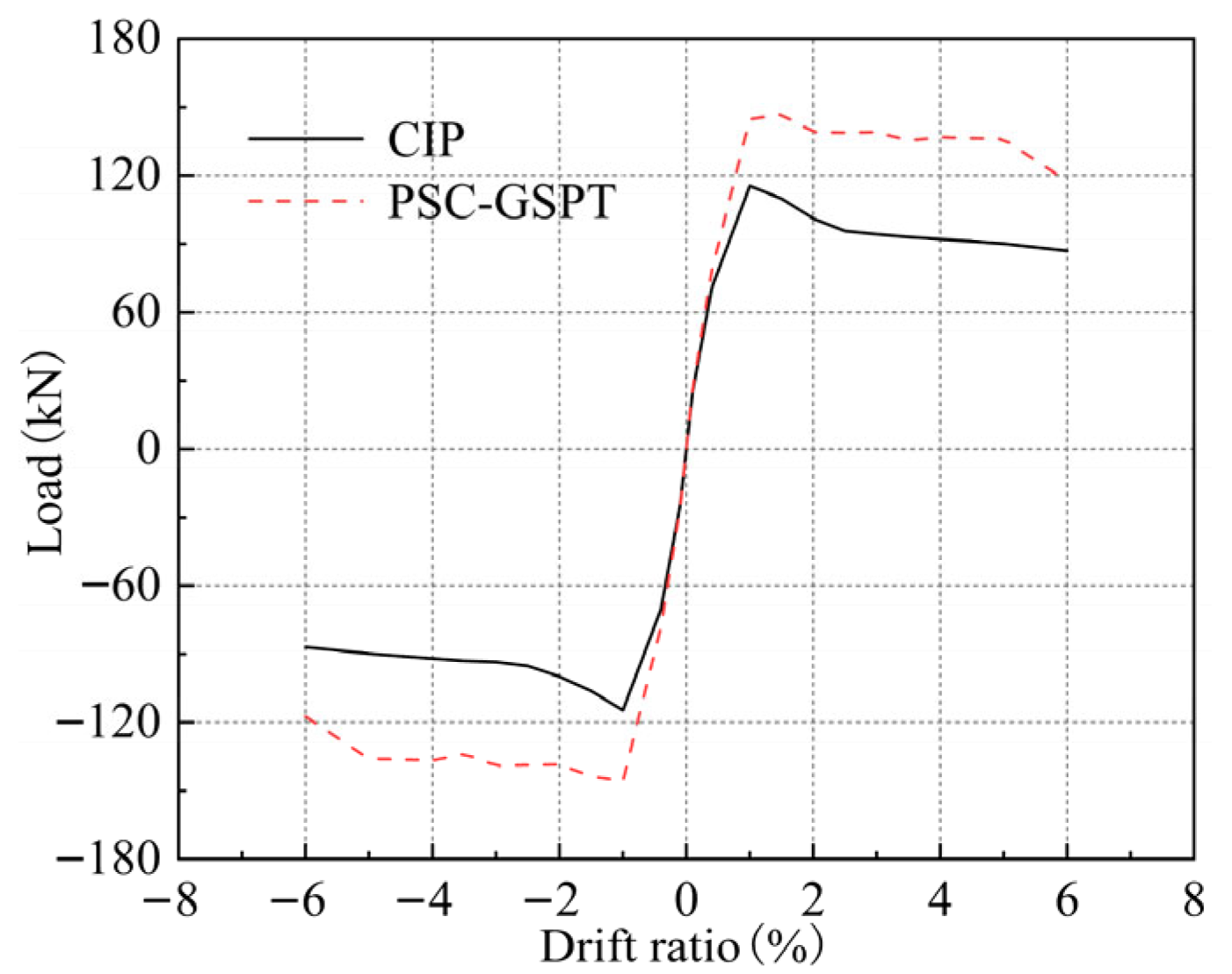
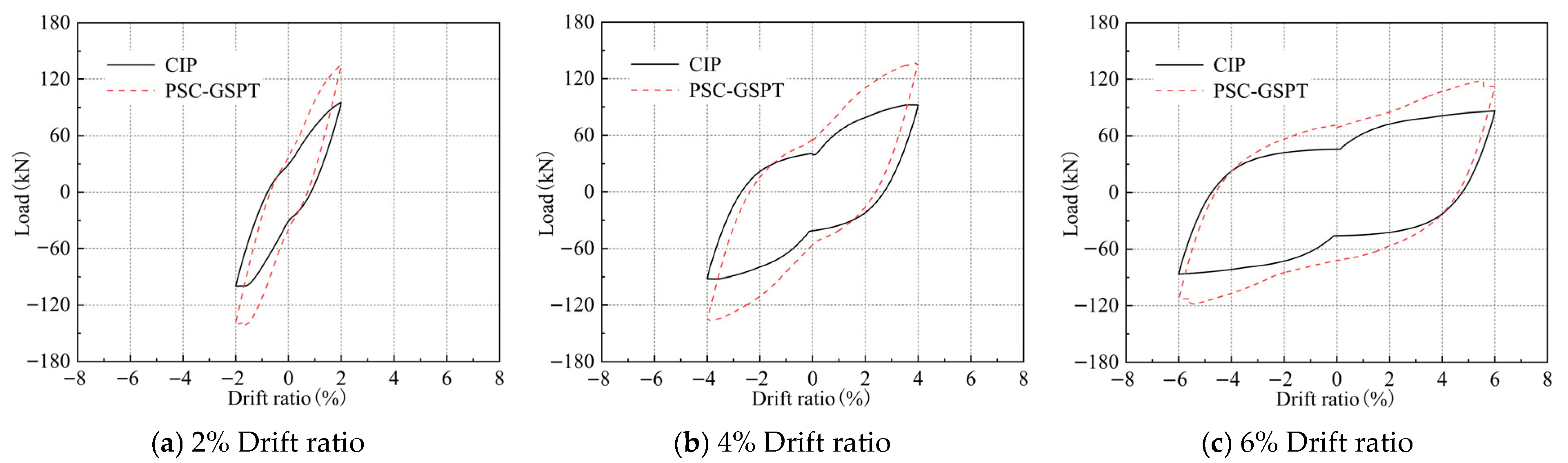
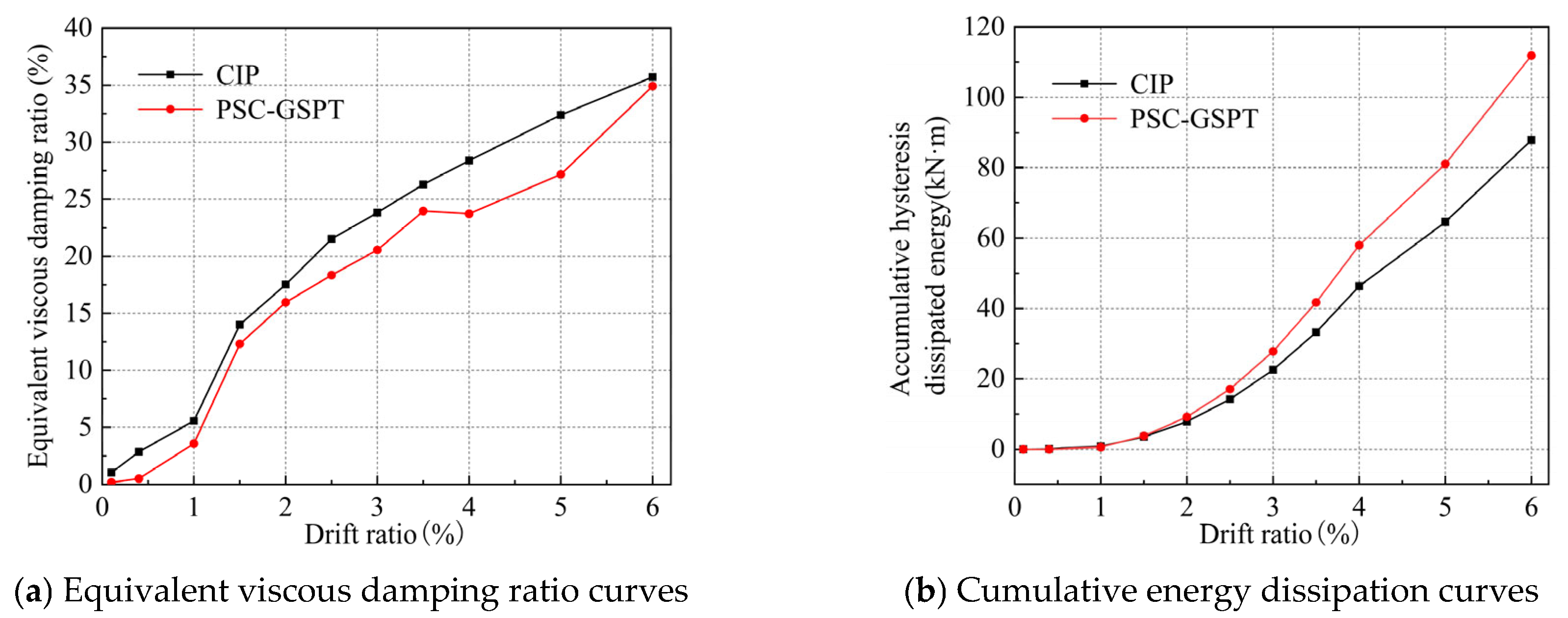
- The proposed hybrid connection system significantly enhanced both the load-carrying capacity and deformation capability of the structure. Experimental results indicate that, driven by the confinement provided by high-strength grout and the active clamping force from the tendons, the PSC-GSPT specimen achieved a 30.2% increase in peak load and a 41.3% increase in ultimate displacement compared to the CIP specimen, with the displacement ductility coefficient improving by 20.7% (reaching 6.58). Furthermore, despite the characteristic “pinching” effect observed in its hysteretic loops, the specimen achieved a 27% increase in total cumulative energy dissipation compared to the CIP specimen, attributed to its superior strength and large deformation capacity.
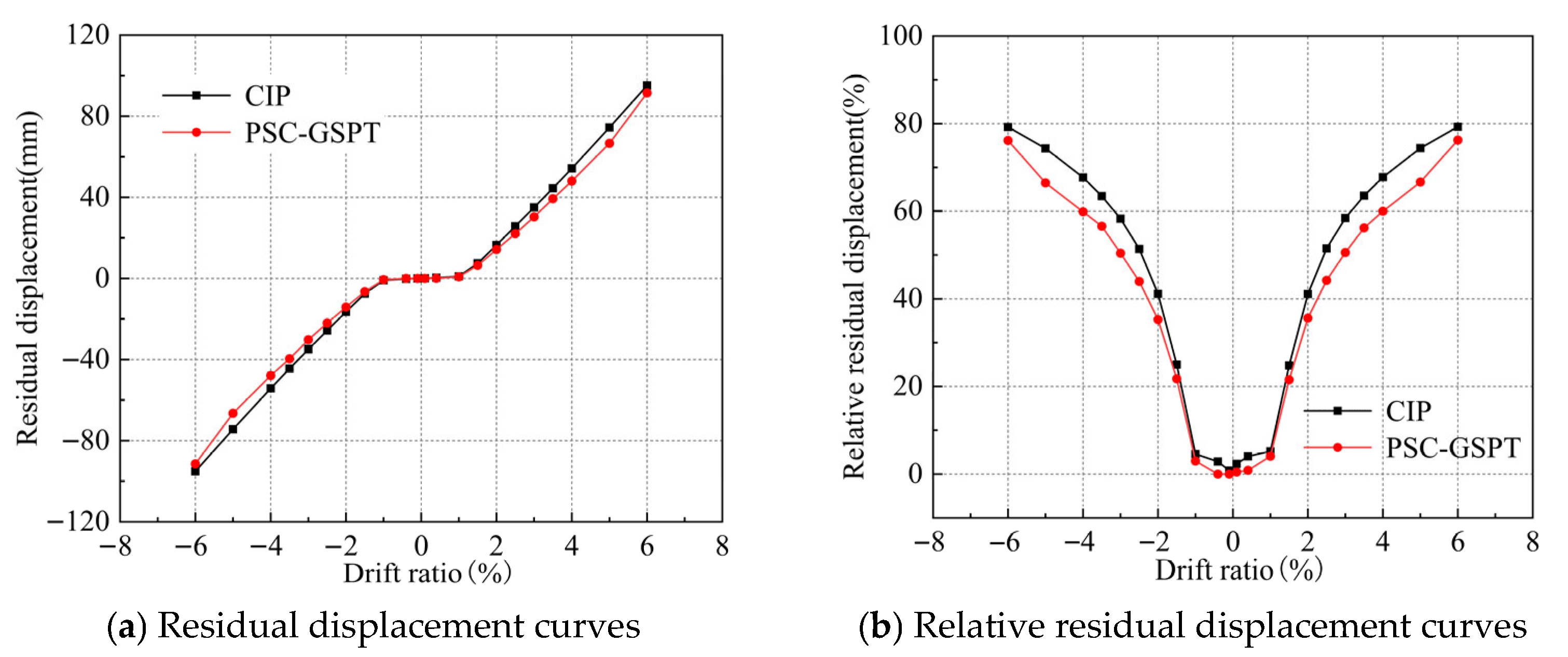
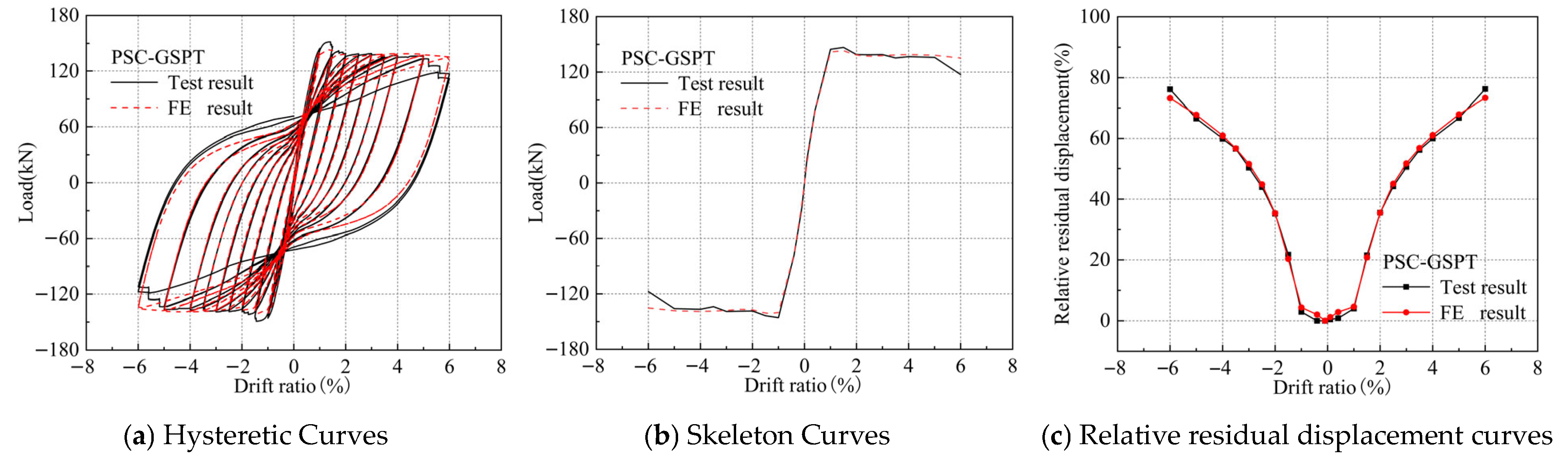
- The PSC-GSPT specimen demonstrated exceptional post-earthquake functional recoverability, characterized by consistently lower relative residual displacements than the CIP specimen across all displacement amplitudes. The elastic restoring force provided by the unbonded prestressing tendons effectively overcame the nonlinear deformations at the segmental joints, ensuring that the structure could return to its original position even after large-magnitude excursions, thereby significantly reducing post-earthquake repair costs.
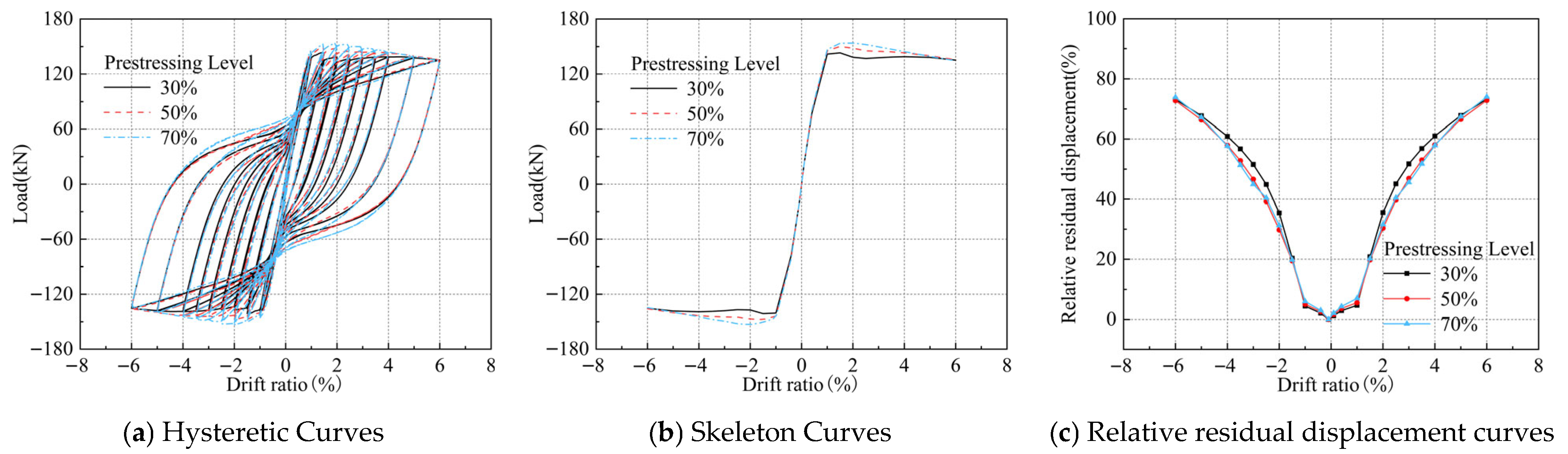
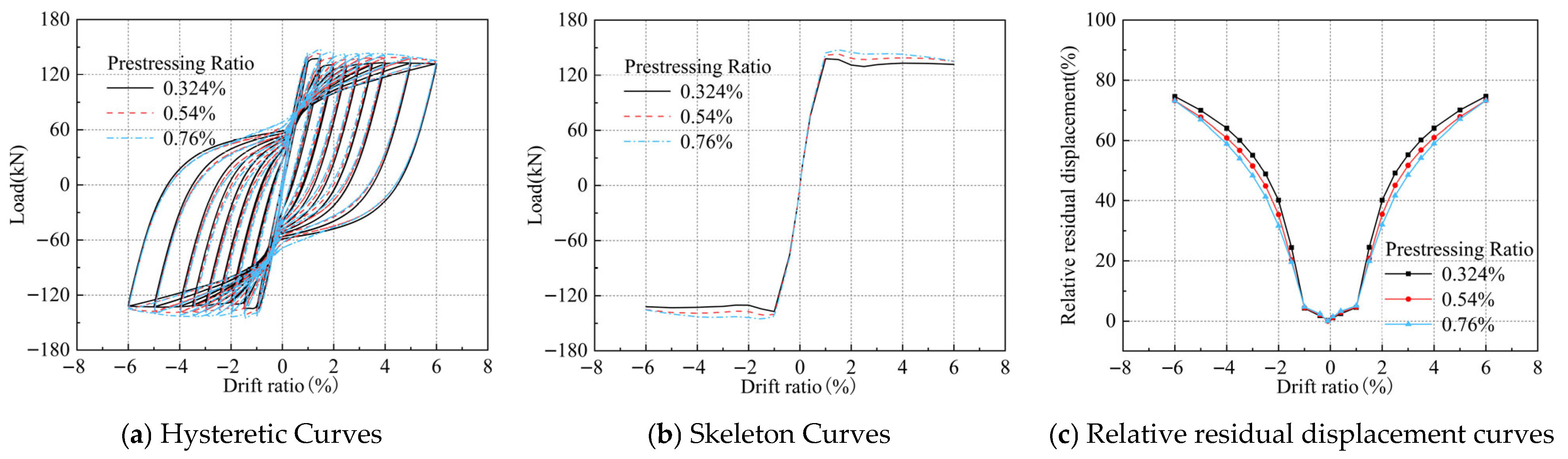
- Numerical parametric analyses indicate that optimizing prestressing parameters is a robust strategy for enhancing structural performance. Specifically, moderately increasing the prestressing reinforcement ratio (e.g., from 0.324% to 0.76%) significantly improves load-bearing capacity and self-centering capability with minimal ductility loss. However, the initial prestress level requires careful control; while excessive initial prestress (e.g., 70%) yields marginal strength gains, it accelerates core concrete crushing and causes a detrimental reduction in ductility. Therefore, an initial prestress level of approximately 30% is recommended for design.
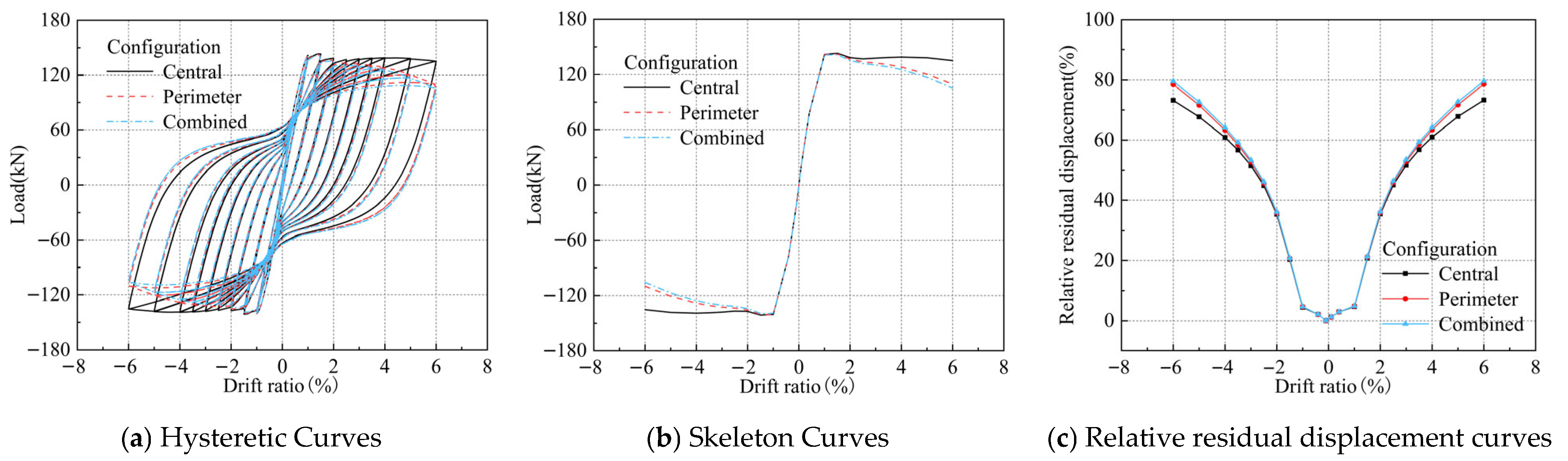
- The spatial layout of the prestressing tendons exerts a decisive influence on structural ductility. The central concentration configuration is identified as the optimal design strategy, as it significantly mitigates the rate of strain accumulation in the tendons during lateral drift compared to perimeter or combined arrangements, thereby preventing premature yielding. Simulation results confirm that the central configuration yields a displacement ductility coefficient 15.6% and 20.4% higher than that of the perimeter and combined configurations, respectively, ensuring sustained elastic restoring force under strong seismic excitations.
6. Discussion and Limitations
- Long-term Engineering Applicability: The practical implementation of this system must account for prestress losses due to concrete creep and shrinkage over time, which necessitates strict long-term monitoring to ensure sustained self-centering capability. However, the durability of grouted sleeve connections is inherently enhanced by the observed plastic hinge relocation mechanism, which shifts structural damage away from the joint interfaces and limits the mechanical demand on the sleeves.
- Resilience under Repeated Events: The system’s ability to withstand repeated seismic events is fundamentally superior to traditional CIP columns due to its robust self-centering mechanism, which significantly minimizes the accumulation of irreversible plastic damage and residual displacement.
- Experimental and Scaling Constraints: Due to laboratory and resource constraints, the experimental program used 1:5 scaled specimens and a limited sample size, which may introduce scale effects and does not fully account for the statistical variability found in full-scale bridge components.
- Loading and Environmental Simplifications: The quasi-static cyclic testing was conducted under a constant axial load ratio, which does not capture the dynamic strain-rate effects or the fluctuating axial forces typical of real-time seismic excitations. Furthermore, future research incorporating environmental aging and dynamic sequential loading (e.g., shake-table tests) is essential to fully validate the system’s performance under realistic field conditions.
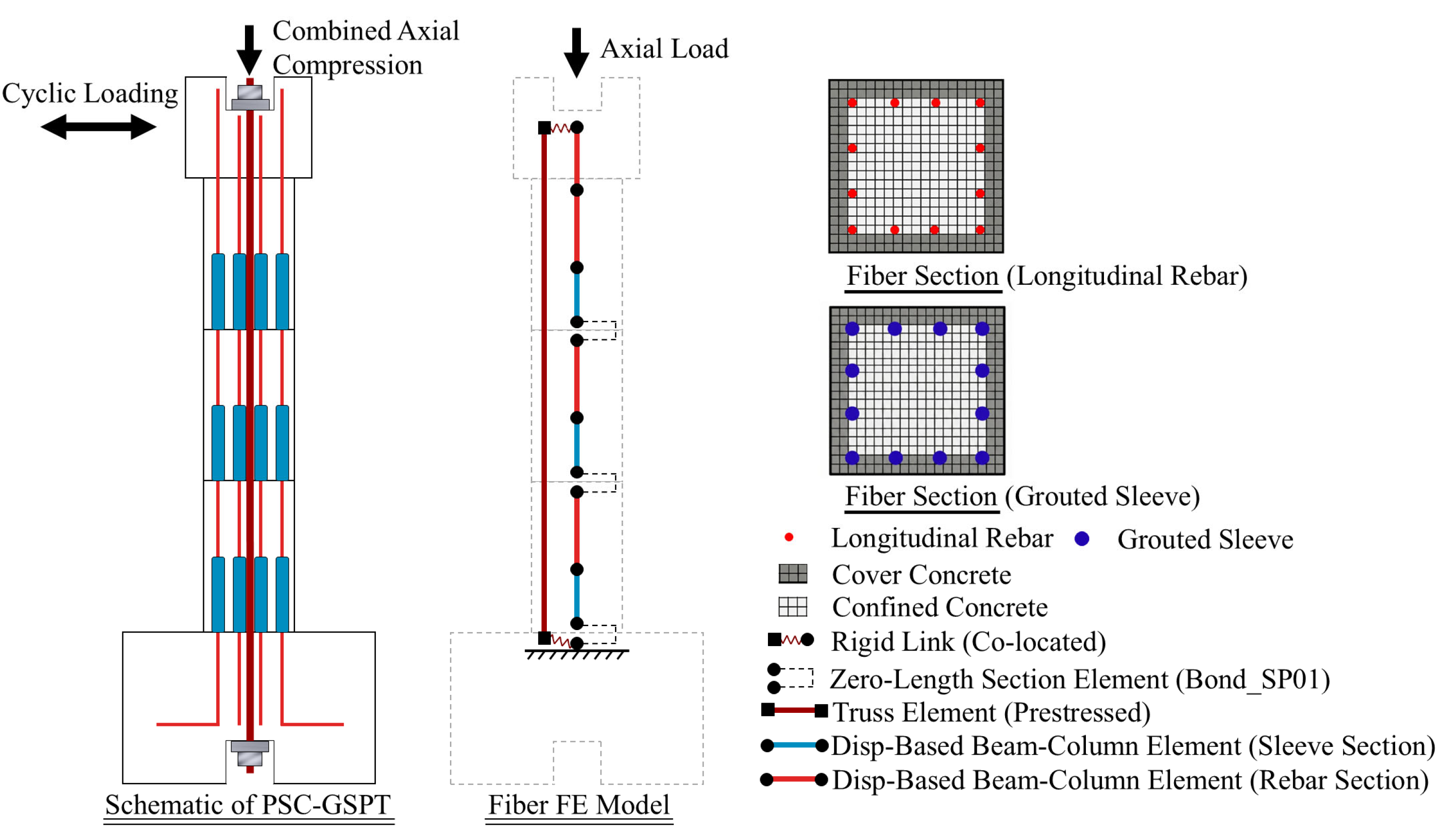
- Limitations of Numerical Analysis: Although the baseline experiment validated the 30% initial prestress and central tendon layout, the broader recommendations derived from the parametric study rely on numerical projections. Establishing universally “optimal” design parameters requires further physical validation across diverse structural configurations and dynamic loading protocols. Furthermore, the finite element analysis relied on simplifications such as the equivalent steel section method for sleeves and idealized material models for tendons. While these effectively capture global kinematics, they may oversimplify complex, highly localized nonlinear interactions at the joint interfaces.
Author Contributions
Funding
Data Availability Statement
Conflicts of Interest
References
- Billington, S.L.; Barnes, R.W.; Breen, J.E. A precast segmental substructure system for standard bridges. PCI J. 1999, 44, 56–73. [Google Scholar] [CrossRef]
- Azizinamini, A. Accelerated Bridge Construction. J. Bridge Eng. 2020, 25, 02020002. [Google Scholar] [CrossRef]
- Zhang, Q.; Alam, M.S. State-of-the-art review of seismic-resistant precast bridge columns. J. Bridge Eng. 2020, 25, 03120001. [Google Scholar] [CrossRef]
- Liu, Y.Q.; Liang, F.; Au, F.T.K. Precast segmental bridge columns with resettable sliding joints—An inspiration from ancient Chinese pagodas. Structures 2021, 33, 615–626. [Google Scholar] [CrossRef]
- Zhu, Z.; He, S.H.; Li, Y.; Dong, P. Review of experimental investigations on seismic performance of precast segmental bridge columns in seismic regions. Adv. Struct. Eng. 2023, 26, 1161–1186. [Google Scholar] [CrossRef]
- Ramaglia, G.; Mecca, I.; Angrisano, M.; Santagata, R.; Olivieri, C. An optimization-based framework for the structural strengthening of masonry buildings. Int. J. Space Struct. 2025, 40, 170–179. [Google Scholar] [CrossRef]
- Su, H.; Yang, C.; Sun, C.; Hu, L.; Fan, W. Seismic performance of precast multi-segment columns with grouted sleeves: Experimental and numerical investigations. Eng. Struct. 2024, 301, 117239. [Google Scholar] [CrossRef]
- Su, H.; Yang, C.; Fan, W.; Sun, C.; Guo, W. Hysteresis characteristics of multi-segment precast columns with ultra-high performance concrete-based grouted sleeve connections: An experimental and analytical approach. Eng. Struct. 2025, 322, 119157. [Google Scholar] [CrossRef]
- Tazarv, M.; Shrestha, G.; Saiidi, M.S. State-of-the-art review and design of grouted duct connections for precast bridge columns. Structures 2021, 30, 895–909. [Google Scholar] [CrossRef]
- El-Naqeeb, M.H.; Hassanli, R.; Pham, T.M.; Ma, X.; Bazli, M.; Manalo, A. Seismic resistance of precast GFRP-reinforced concrete columns with grouted corrugated duct connections. Structures 2025, 81, 110142. [Google Scholar] [CrossRef]
- Dawood, H.; ElGawady, M.; Hewes, J. Behavior of segmental precast posttensioned bridge piers under lateral loads. J. Bridge Eng. 2012, 17, 735–746. [Google Scholar] [CrossRef]
- Wang, Z.; Wang, J.Q.; Zhao, G.T.; Zhang, J. Design criterion for the self-centering capacity of precast segmental UHPC bridge columns with unbonded post-tensioning tendons. Eng. Struct. 2019, 200, 109706. [Google Scholar] [CrossRef]
- Wang, Y.X.; Cheng, Z.; Li, S.; Wang, J.Q.; Zhong, R.; Zeng, M.; Ming, F.Y.; Cui, B. Effect of a novel joint connection of UHPC wet joint and tapered sleeve locking-type couplers on the lateral cyclic response of precast segmental railway bridge columns. Eng. Struct. 2023, 289, 116333. [Google Scholar] [CrossRef]
- Wang, Y.X.; Li, S.; Gao, C.S.; Cheng, Z.; Wang, J.Q.; Hu, Y.Q. Experimental and numerical study on cyclic behavior of precast segmental railway bridge columns with lap-spliced rebar connections using UHPC wet joints. Eng. Struct. 2024, 319, 118818. [Google Scholar] [CrossRef]
- Zhao, Y.; Zhang, H.P.; Pan, Z.F.; Li, G.Z. Mechanical behavior of grouted sleeve connection for rebars in precast concrete structures and reliability analysis considering the ratio of anchorage length to rebar diameter. Case Stud. Constr. Mater. 2024, 20, e02883. [Google Scholar] [CrossRef]
- Ameli, M.J.; Parks, J.E.; Brown, D.N.; Pantelides, C.P. Seismic evaluation of grouted splice sleeve connections for reinforced precast concrete column–to–cap beam joints in accelerated bridge construction. PCI J. 2015, 60, 80–103. [Google Scholar] [CrossRef]
- Liu, Y.; Li, X.P.; Zheng, X.H.; Song, Z. Experimental study on seismic response of Precast bridge columns with double-grouted sleeve connections. Eng. Struct. 2020, 221, 111023. [Google Scholar] [CrossRef]
- Haber, Z.B.; Saiidi, M.; Sanders, D.H. Seismic performance of precast column with mechanically spliced column-footing connection. ACI Struct. J. 2014, 111, 639–650. [Google Scholar] [CrossRef]
- Haber, Z.; Mackie, K.R.; Al-Jelawy, H.M. Testing and analysis of precast columns with grouted sleeve connections and shifted plastic hinging. J. Bridge Eng. 2017, 22, 04017078. [Google Scholar] [CrossRef]
- ACI Committee 318. Building Code Requirements for Structural Concrete (ACI 318-02) and Commentary (ACI 318R-02); American Concrete Institute: Farmington Hills, MI, USA, 2002. [Google Scholar]
- AASHTO. LRFD Bridge Design Specifications, 10th ed.; American Association of State Highway and Transportation Officials: Washington, DC, USA, 2024. [Google Scholar]
- California Department of Transportation (Caltrans). Seismic Design Criteria, Version 2.0; California Department of Transportation: Sacramento, CA, USA, 2019. [Google Scholar]
- Marsh, M.L.; Wernli, M.; Garrett, B.E.; Stanton, J.F.; Eberhard, M.O.; Weinert, M.D. Application of Accelerated Bridge Construction Connections in Moderate-to-High Seismic Regions; NCHRP Report 698; Transportation Research Board: Washington, DC, USA, 2011. [Google Scholar]
- Ameli, M.J.; Brown, D.N.; Parks, J.E.; Pantelides, C.P. Seismic column-to-footing connections using grouted splice sleeves. ACI Struct. J. 2016, 113, 1021–1030. [Google Scholar]
- Ge, J.P.; Yan, X.F.; Wang, Z.Q. Seismic performance of precast assembled bridge piers connected by grouted sleeves and prestressing tendons. J. Traffic Transp. Eng. 2018, 18, 42–52. (In Chinese) [Google Scholar]
- Chen, L.; Guo, M.; Hou, W.Q.; Yu, T.; Zhang, Y.; Guo, W. Experimental study on quasi-static of prefabricated and assembled bridge pier with “grouting sleeve + prestressing tendons” hybrid connection. J. Cent. South Univ. (Sci. Technol.) 2024, 55, 3814–3832. (In Chinese) [Google Scholar]
- Dawood, H.; ElGawady, M.; Hewes, J. Factors affecting the seismic behavior of segmental precast bridge columns. Front. Struct. Civ. Eng. 2014, 8, 388–398. [Google Scholar] [CrossRef]
- Zhang, D.; Zhou, Z.H.; Gao, S.L.; Yue, Y.N.; Zhang, Y.F.; Li, N. Experimental and numerical study on seismic performance of precast segmental CFST bridge columns with non-uniform prestressed steel tendons. Eng. Struct. 2023, 274, 115048. [Google Scholar] [CrossRef]
- Ma, C.; Zheng, X.B.; Zhu, Z.; Zhou, M. Seismic behavior of precast columns with unbonded prestressed tendons and energy-dissipating bars: Physical and numerical investigations. Sci. Rep. 2023, 13, 21544. [Google Scholar] [CrossRef] [PubMed]
- GB 50010-2010; Code for Design of Concrete Structures. China Architecture & Building Press: Beijing, China, 2010.
- JTG 3362-2018; Specifications for Design of Highway Reinforced Concrete and Prestressed Concrete Bridges and Culverts. China Communications Press: Beijing, China, 2018.
- JTG/T 2231-01-2020; Specifications for Seismic Design of Highway Bridges. China Communications Press: Beijing, China, 2020.
- JGJ 355-2015; Technical Specification for Grout Sleeve Splicing of Rebars. China Architecture & Building Press: Beijing, China, 2015.
- JGJ 1-2014; Technical Specification for Precast Concrete Structures. China Architecture & Building Press: Beijing, China, 2014.
- ACI 374.1-05; Acceptance Criteria for Moment Frames Based on Structural Testing and Commentary. American Concrete Institute: Farmington Hills, MI, USA, 2005.
- Yamashita, R.; Sanders, D.H. Precast Unbonded Prestressed Concrete Bridge Columns for Seismic Applications. In Proceedings of the 21st US-Japan Bridge Engineering Workshop, Tsukuba, Japan, 3–5 October 2005. [Google Scholar]
- Guan, D.; Chen, Z.; Liu, J.; Lin, Z.; Guo, Z. Seismic performance of precast concrete columns with prefabricated UHPC jackets in plastic hinge zone. Eng. Struct. 2021, 245, 112776. [Google Scholar] [CrossRef]
- Cai, Z.-K.; Yuan, W.; Wang, Z.; Smith, S.T. Seismic behavior of precast segmental bridge columns reinforced with hybrid FRP-steel bars. Eng. Struct. 2021, 228, 111484. [Google Scholar] [CrossRef]
- Gao, R.; Luo, Y.; Hong, Q.; He, J. Experimental study and numerical model validation on seismic performance of self-centering precast segmental bridge columns. Preprint 2025. [Google Scholar] [CrossRef]
- Park, R. Evaluation of ductility of structures and structural assemblages from laboratory testing. Bull. N. Z. Soc. Earthq. Eng. 1989, 22, 155–166. [Google Scholar] [CrossRef]
- JGJ/T 101-2015; Specification for Seismic Test of Buildings. China Architecture & Building Press: Beijing, China, 2015.
- Zhong, C.; Christopoulos, C. Self-centering seismic-resistant structures: Historical overview and state-of-the-art. Earthq. Spectra 2022, 38, 1168–1202. [Google Scholar] [CrossRef]
- Wang, Z.; Wang, J.-Q.; Liu, T.-X.; Zhang, J. An explicit analytical model for seismic performance of an unbonded post-tensioned precast segmental rocking hollow pier. Eng. Struct. 2018, 161, 176–191. [Google Scholar] [CrossRef]



| Bent | Joint Connection | Concrete | Rebar | Axial Load Ratio (fcAc) | |
|---|---|---|---|---|---|
| Flexural | Shear | ||||
| CIP | - | C40 | Twelve 16 mm dia. HRB400 | 8 mm dia. HRB300 Hoops@85 mm | 10% |
| PSC-GSPT | Grouted sleeves and Unbonded Prestressing Tendon | ||||
| Type | Day | Measured Compressive Strength (MPa) | Measured Bending Strength (MPa) |
|---|---|---|---|
| Grout | 1 | 40.5 | 7.2 |
| 3 | 59.2 | 8.5 | |
| 28 | 103.2 | 18.4 | |
| Bedding mortar | 28 | 78.5 | 12.5 |
| Feature | CIP Specimen | PSC-GSPT Specimen | Note |
|---|---|---|---|
| Yield Displacement | 15.2 mm | 17.3 mm | Delayed yielding in PSC due to prestress |
| Peak Displacement | 20.2 mm | 28.2 mm | Higher deformation capacity |
| Ultimate Displacement | 77.2 mm | 113.0 mm | Significant improvement (approx. 2.8×) |
| Plastic Hinge Location | Column base | Above grouted sleeves | Plastic hinge relocation mechanism |
| Damage Characteristics | Base crushing, rebar buckling | Localized above sleeves, distributed cracks | Controlled damage |
| Specimens | Type | +Δy | +Py | +Δu | +Pp | −Δy | −Py | −Δu | −Pp | μ |
|---|---|---|---|---|---|---|---|---|---|---|
| CIP | Measured | 15.2 | 97.6 | 77.2 | 115.7 | −14.1 | −93.1 | −82.1 | −114.8 | 5.45 |
| PSC-GSPT | Measured | 17.3 | 129.6 | 112.1 | 150.7 | −16.9 | −128.5 | −113 | −145.8 | 6.58 |
| Calculated | 17.2 | 127 | 120 | 143.2 | −17 | −124.6 | −120 | −141.1 | 7.02 |
| Material Model | Target Component | Key Parameters |
|---|---|---|
| Concrete02 | Confined Concrete | fcc = 50.5 MPa, εcc = 0.005, fcu = 40.4 MPa, εcu = 0.015 |
| Steel02 | Longitudinal Rebar | fy = 432 MPa, E0 = 200 GPa, b = 0.01, R0 = 18, cR1 = 0.925, cR2 = 0.15 |
| Bond_SP01 | Boundary/Slip | fy = 432 MPa, Sy = 1.0 mm, Su = 30.0 mm, b = 0.4 |
| Steel01 | Prestressing Tendon | fpy = 1832 MPa, Ep = 195 GPa, b = 0 |
| Validation Metric | Direction/Level | Experimental | Numerical | Relative Error (%) |
|---|---|---|---|---|
| Peak Load (Pp) | Positive (+) | 150.7 kN | 143.2 kN | 4.98% |
| Negative (−) | −145.8 kN | −141.1 kN | 3.22% | |
| Drift at Peak (Δp) | Positive (+) | 28.2 mm | 25.4 mm | 9.93% |
| Negative (−) | −27.5 mm | −25.1 mm | 8.73% | |
| Initial Stiffness (Ki) | Average | 13.1 kN/mm | 13.5 kN/mm | 3.05% |
| Residual Drift (Δres) | at 4% Drift Level | 47.9 mm | 48.7 mm | 1.67% |
| Specimens | Prestressing Level | Prestressing Ratio | Configuration | Pp (kN) | μ | at 4% Drift Level |
|---|---|---|---|---|---|---|
| PSC-GSPT | 30% | 0.54% | Central | 142.2 | 7.02 | 60.93% |
| P-1 | 50% | 0.54% | Central | 148.9 | 6.73 | 57.99% |
| P-2 | 70% | 0.54% | Central | 153.5 | 6.44 | 57.75% |
| R-1 | 30% | 0.324% | Central | 137.6 | 7.13 | 64.07% |
| R-2 | 30% | 0.76% | Central | 146.6 | 6.81 | 58.93% |
| L-1 | 30% | 0.54% | Perimeter | 141.5 | 5.92 | 63.35% |
| L-2 | 30% | 0.54% | Combined | 140.6 | 5.59 | 64.22% |
Disclaimer/Publisher’s Note: The statements, opinions and data contained in all publications are solely those of the individual author(s) and contributor(s) and not of MDPI and/or the editor(s). MDPI and/or the editor(s) disclaim responsibility for any injury to people or property resulting from any ideas, methods, instructions or products referred to in the content. |
© 2026 by the authors. Licensee MDPI, Basel, Switzerland. This article is an open access article distributed under the terms and conditions of the Creative Commons Attribution (CC BY) license.
Share and Cite
Yi, B.; Zhao, N.; Chen, G.; Tang, H.; Zhang, B.; Wang, G. Experimental and Numerical Investigation on Three-Segment Precast Bridge Columns with Grouted Sleeve-Unbonded Prestressing Hybrid Connections. Buildings 2026, 16, 1041. https://doi.org/10.3390/buildings16051041
Yi B, Zhao N, Chen G, Tang H, Zhang B, Wang G. Experimental and Numerical Investigation on Three-Segment Precast Bridge Columns with Grouted Sleeve-Unbonded Prestressing Hybrid Connections. Buildings. 2026; 16(5):1041. https://doi.org/10.3390/buildings16051041
Chicago/Turabian StyleYi, Bo, Ningyu Zhao, Guozheng Chen, Haitao Tang, Boheng Zhang, and Guan Wang. 2026. "Experimental and Numerical Investigation on Three-Segment Precast Bridge Columns with Grouted Sleeve-Unbonded Prestressing Hybrid Connections" Buildings 16, no. 5: 1041. https://doi.org/10.3390/buildings16051041
APA StyleYi, B., Zhao, N., Chen, G., Tang, H., Zhang, B., & Wang, G. (2026). Experimental and Numerical Investigation on Three-Segment Precast Bridge Columns with Grouted Sleeve-Unbonded Prestressing Hybrid Connections. Buildings, 16(5), 1041. https://doi.org/10.3390/buildings16051041