

Image Recognition-Based Analysis and Simulation Optimization of Mechanical Performance of Steel Fiber-Reinforced Concrete
Abstract
1. Introduction
- (1)
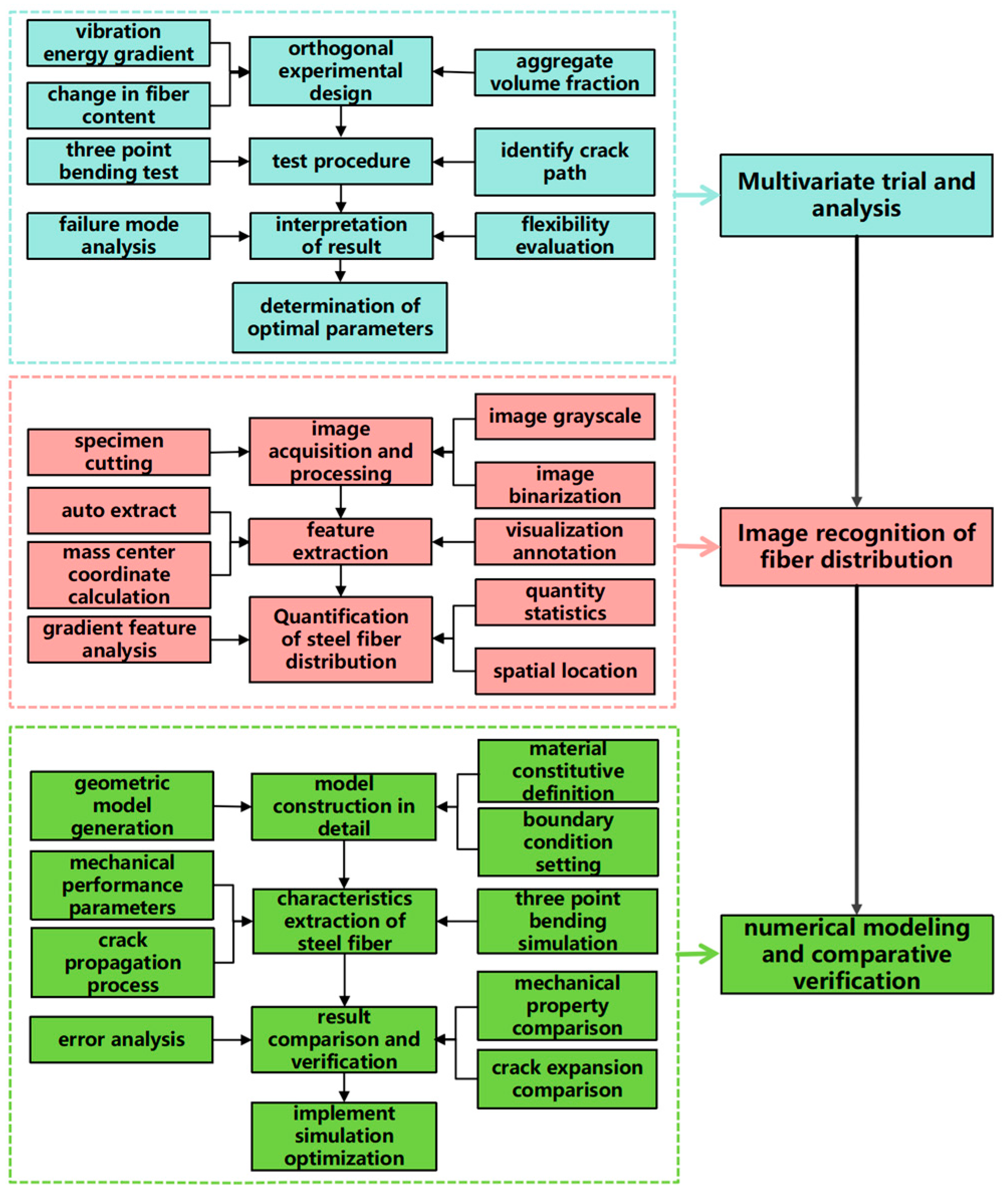
- To quantitatively analyze the effects of key construction process parameters (vibration energy, fiber dosage, aggregate volume fraction) on the actual spatial distribution of steel fibers in cast beams.
- (2)
- To develop and apply a robust image recognition pipeline to accurately extract and parameterize the real fiber distribution state from cross-sectional specimens.
- (3)
- To construct a finite element model incorporating the real fiber distribution and verify its superiority over traditional models with ideal random distribution in predicting crack morphology and initial cracking load.
2. Materials and Methods
2.1. Experimental Materials and Multi-Factor Design
2.2. Mechanical Property Testing of Specimens
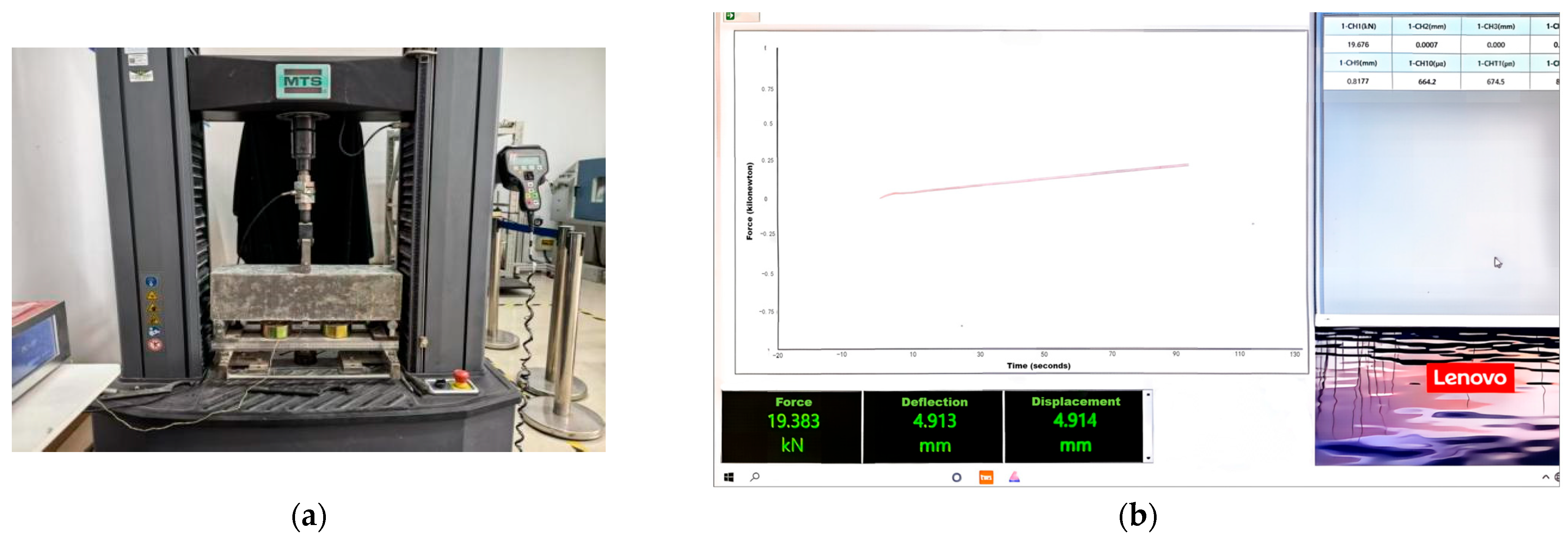
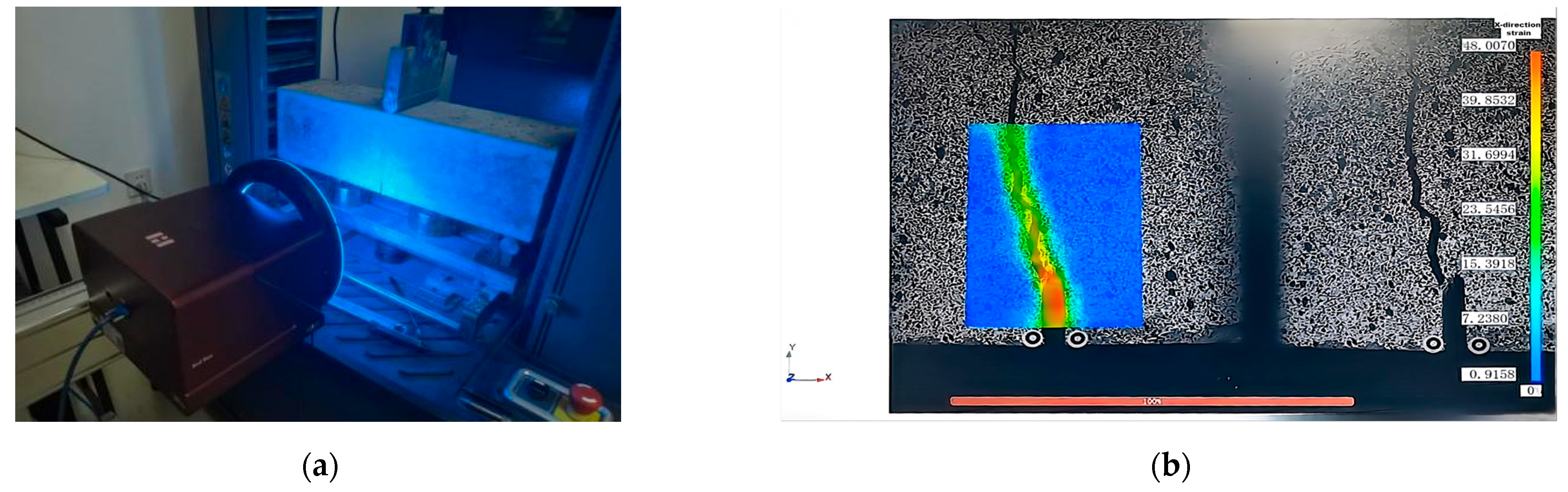
- Initial cracking stage: Micro-cracks appeared at the bottom mid-span of all specimens, indicating the initiation of fiber-matrix interface debonding.
- Stable propagation stage: Characterized by “multi-crack propagation,” where 3–5 secondary cracks with widths less than 0.1 mm were generated around the main crack.
- Final failure stage: Specimen failure occurred when the mid-span deflection reached approximately 2.8 mm. To quantitatively analyze the failure mode, the pull-out lengths of all observable steel fibers on the fracture surface were systematically measured. Statistical results indicated that the pull-out length exhibited a distinct bimodal distribution. This bimodal distribution carries clear physical significance: the shorter pull-out peak (4 mm) primarily corresponds to fibers with strong bonding to the matrix, which either fractured or were only partially pulled out during failure, whereas the longer peak (8 mm) mainly corresponds to fibers that were nearly completely pulled out due to weaker interfacial bonding or unfavorable orientation. This distribution characteristic directly confirms that different vibration energies, by influencing fiber orientation and spatial distribution, lead to inhomogeneity in the fiber-matrix interfacial bonding state, ultimately manifesting as differentiated fiber failure mechanisms at the macroscopic level.
2.3. Fiber Distribution Image Recognition Method
2.3.1. Specimen Cutting and Image Acquisition
2.3.2. Image Grayscale Conversion
2.3.3. Image Binarization
2.3.4. Initial Detection Region Extraction Method
2.3.5. Visual Annotation of Detection Results
2.3.6. Output of Steel Fiber Characteristic Parameters
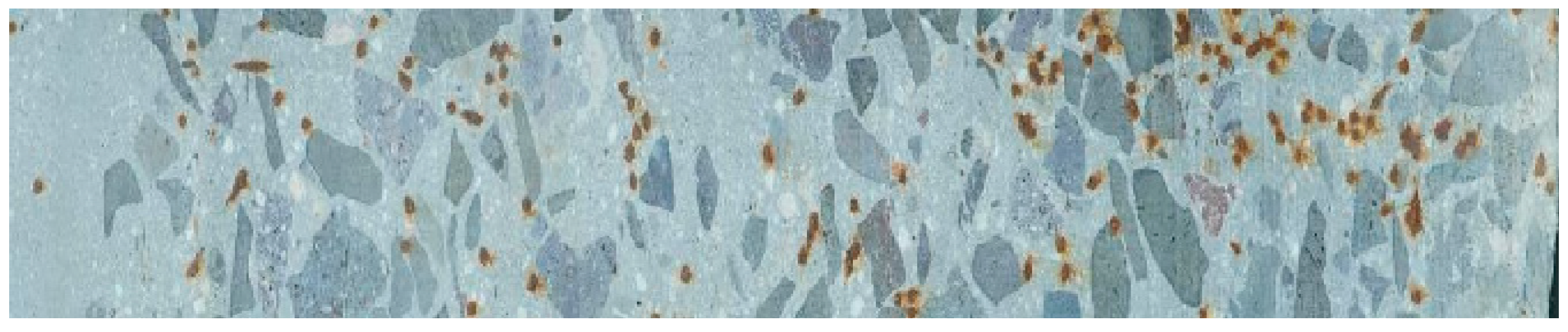
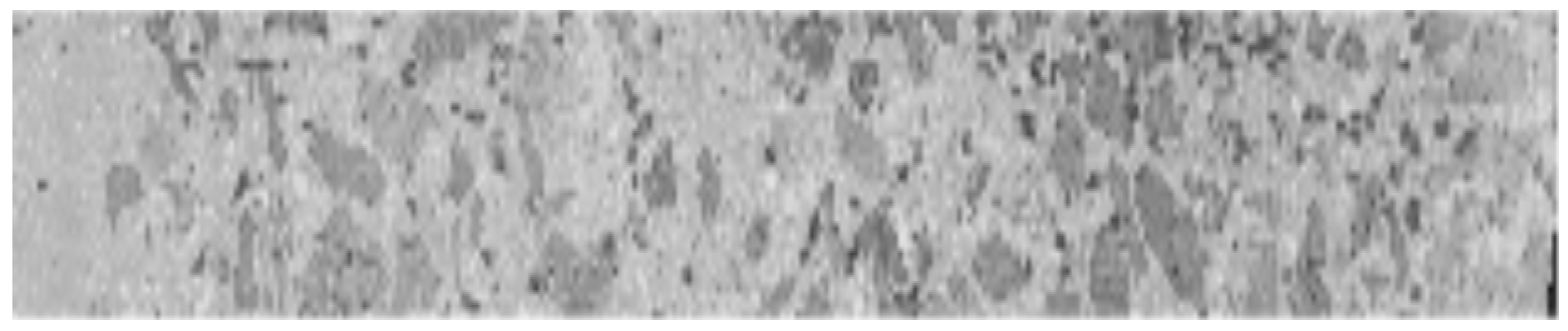
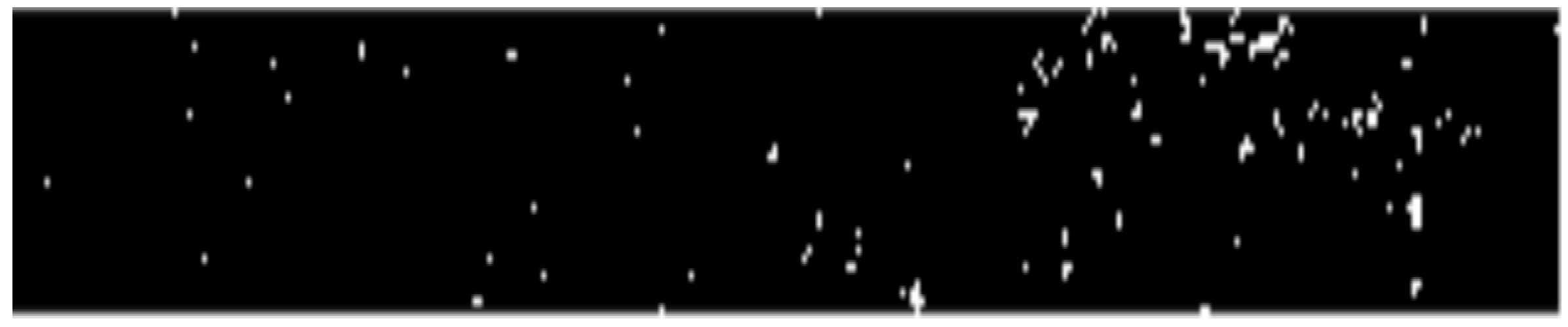
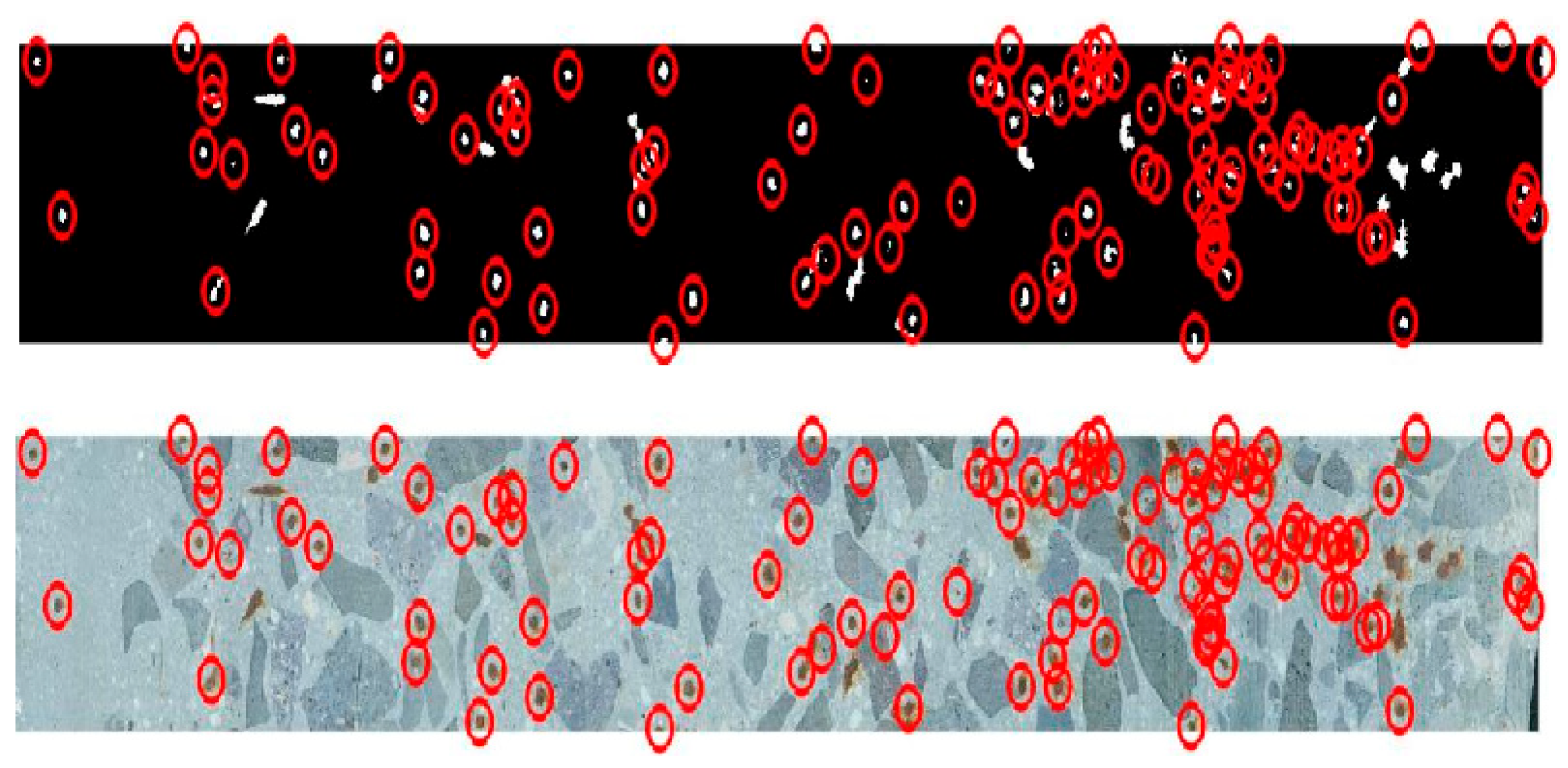
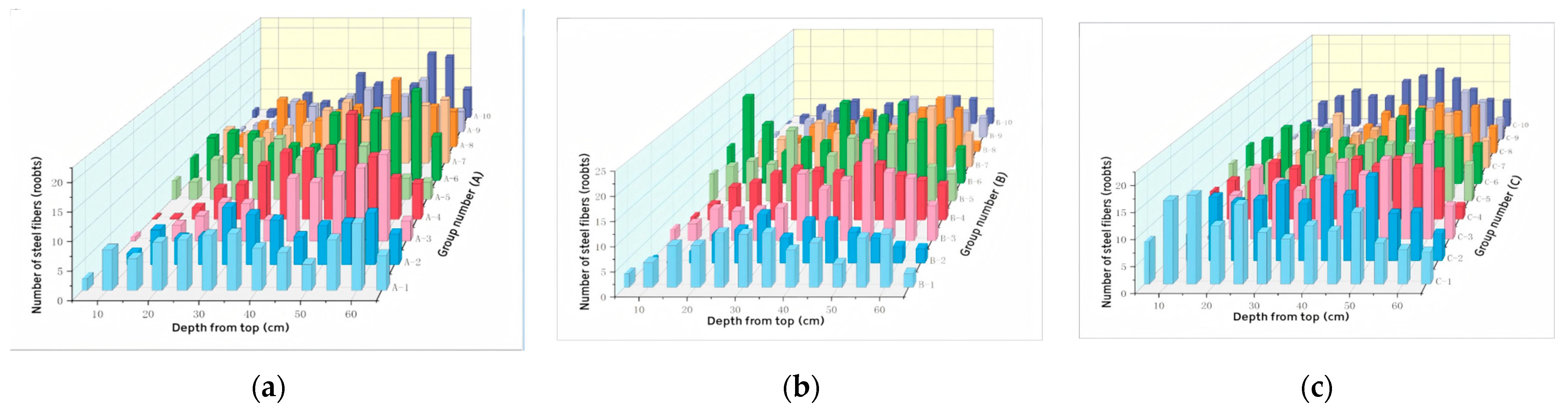
- Stratified Quantitative Statistics aims to quantify the distribution pattern of fibers across the specimen cross-section. The beam specimen with a total height of 65 cm is divided into 5 cm segments, and the number of fibers in each layer is counted. Representative data are shown in Table 2.
- Spatial position information outputs the centroid coordinates (x_c, y_c) of each fiber in a Cartesian coordinate system. The origin of the coordinate system is set at the top-left vertex of the detection region, with the X-axis extending to the right and the Y-axis extending downward. This is consistent with the pixel matrix of the digital image, ensuring the direct usability of the data. This coordinate data records the precise position of all identified fibers within the cross-section. Representative data are shown in Table 3.
2.3.7. Verification and Error Analysis of Image Recognition Algorithm
- Verification by comparison with manual counting. Two independent researchers manually annotated and counted the fibers as the true values. Subsequently, the automatic recognition results were compared with the manual count results to calculate the detection accuracy, false positive rate, and false negative rate. The partial comparison results are shown in Table 4.
- 2.
- Analysis of main error sources
- (1)
- Fiber overlap and adhesion. In two-dimensional projections, spatially adjacent or crossing fibers may be algorithmically identified as a single connected domain due to pixel connectivity, resulting in undercounting compared to the actual number. This is the primary source of missed detection.
- (2)
- Boundary and partial fibers. Fibers located at the cutting edge of the sample may appear as fragmented due to incomplete inclusion in the image, resulting in incomplete geometric features, which can easily lead to missed detection or errors in geometric parameter extraction.
- (3)
- Matrix background interference. Dark aggregates, pores, or fine cracks in the concrete matrix may exhibit grayscale values similar to fibers under specific lighting conditions. Although the OTSU global threshold method can effectively segment the fibers, it may still cause a small number of false-positive detections in localized areas.
- (4)
- Low-contrast fibers. Fibers completely enveloped by cement paste or severely corroded, exhibiting markedly reduced contrast with the surrounding matrix, may be excluded during binarization.
3. Results
3.1. The Influence of Process Parameters on Fiber Distribution and Mechanical Properties
3.1.1. Statistical Analysis of Flexural Tensile Strength
3.1.2. Analysis of Experimental Results
- Influence of Vibration Energy Gradient
- (1)
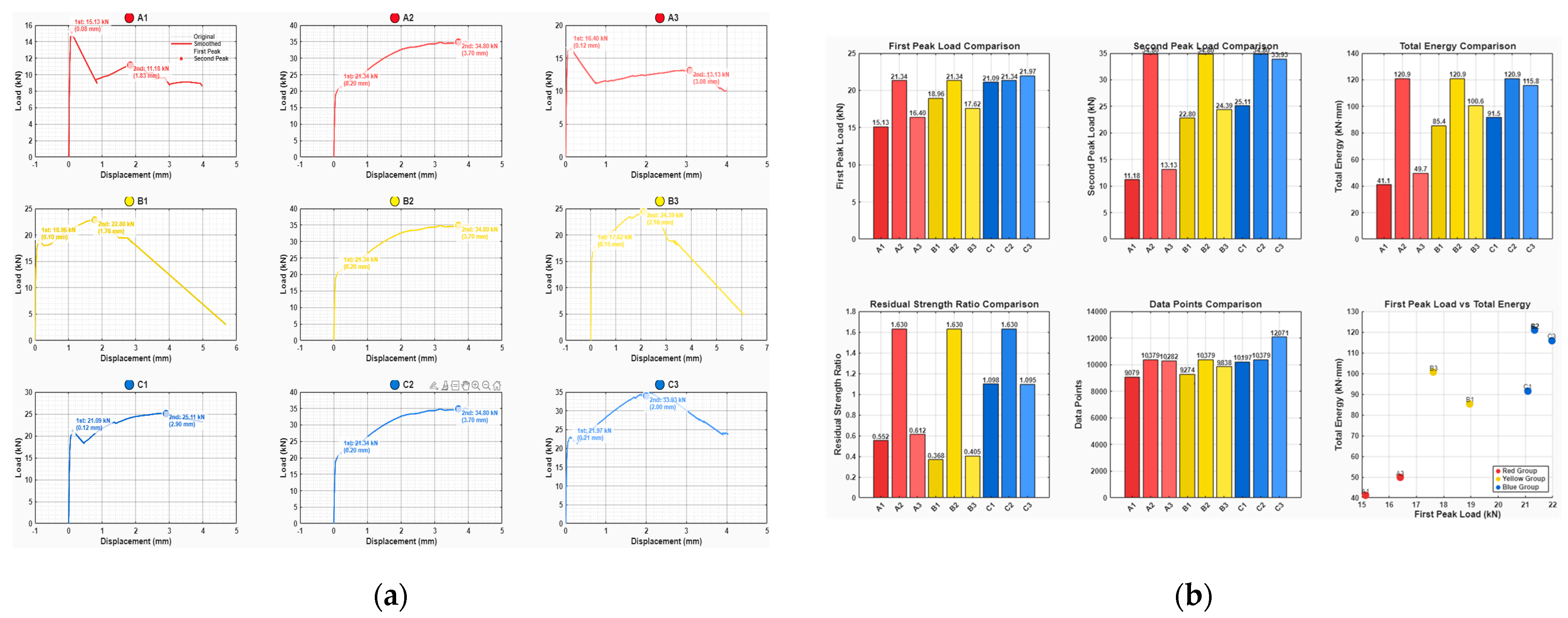
- Low Energy (Group A1): The fiber distribution was closest to a random state. However, due to insufficient vibration, the fiber sedimentation rate was only 12%, failing to form an effective gradient-enhanced structure. This resulted in the lowest tensile strength, with a failure mode characterized by a single penetrating crack.
- (2)
- Medium Energy (Group A2): The fiber sedimentation rate increased to 20%, with the fiber density at the bottom being approximately 1.3 times that at the top. The flexural tensile strength reached its peak. The moderate vibration energy optimized fiber orientation, leading to an ideal crack propagation path featuring multiple cracks.
- (3)
- High Energy (Group A3): The fiber sedimentation rate further increased to 28%, but local aggregation occurred (aggregated area accounted for about 8%). This caused the flexural tensile strength to be slightly lower than that of Group A2, although its residual strength was the highest. This indicates that excessive vibration energy can lead to uneven fiber distribution, resulting in stress concentration.
- Influence of Steel Fiber Dosage
- (1)
- Low Dosage (Group B1): The fiber spacing was too large, and the fiber bridging effect was weak. Cracks propagated rapidly, leading to the lowest flexural tensile strength.
- (2)
- Medium Dosage (Group B2): The fiber spacing was moderate, and the distribution was uniform. The porosity in the interfacial transition zone was minimized, resulting in a significant improvement in flexural tensile strength.
- (3)
- High Dosage (Group B3): The fiber agglomeration rate was as high as 12%. The excessive fibers disrupted the continuity of the matrix, causing the flexural tensile strength to be lower than that of Group B2.
- Influence of Aggregate Volume Fraction
- (1)
- Low Aggregate Fraction (Group C1): The obstruction effect of aggregates on fibers was insufficient, leading to inadequate fiber participation in load transfer. The probability of fiber bending was low (0.15), resulting in the lowest tensile strength.
- (2)
- Medium Aggregate Fraction (Group C2): The skeleton structure was effective, with a fiber bending probability of 0.25. The crack propagation path was extended, yielding the highest flexural tensile strength.
- (3)
- High Aggregate Fraction (Group C3): The fiber bending probability increased to 0.32, the mortar layer became thinner, and the interface zone was weakened, increasing the risk of early cracking.
3.2. Image Recognition Results of the Actual Distribution Characteristics of Steel Fibers
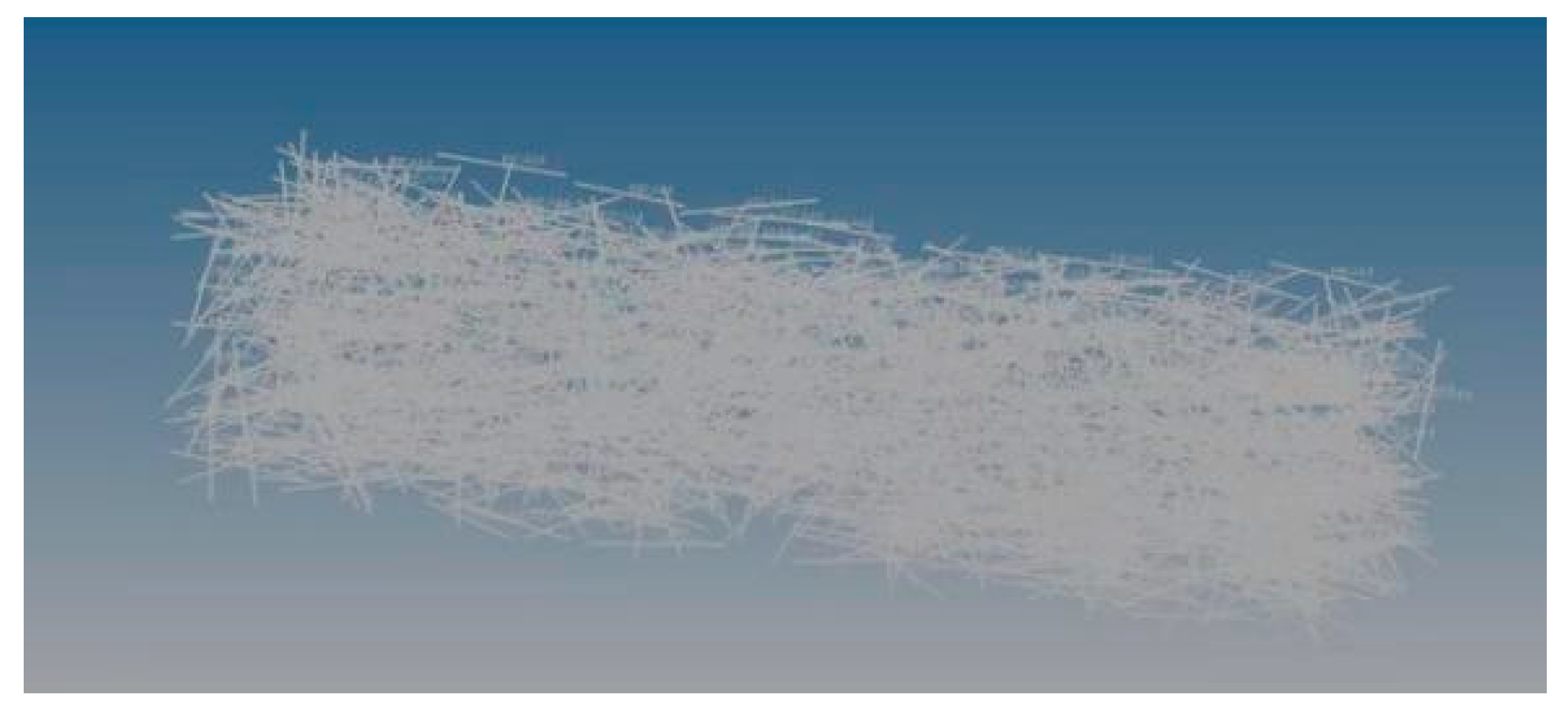
3.2.1. Steel Fiber Distribution
3.2.2. Gradient Distribution Characteristics
- (1)
- Gradient Features of Quantitative Distribution
- (2)
- Spatial Coordinate Distribution Characteristics
- (3)
- Analysis of Gradient Formation Mechanism
3.3. Simulation Comparison Between Actual and Random Distributions
3.3.1. Model Parameters and Material Constitutive Laws
- (1)
- Material Property Definition
3.3.2. Simulation Process and Alignment with Experimental Tests
- (1)
- Boundary Conditions and Support Settings
- (2)
- Load Application and Loading Protocol
- (3)
- Incorporation of Fiber Distribution
- (4)
- Method for Extracting Mechanical Parameters
3.4. Quantitative Mechanical Property Analysis
3.4.1. Model Validation and Error Analysis of Mechanical Parameters
- (1)
- Initial Crack Load: The error of the traditional model (Group D1) was 28.9%, while the error of this model (Group D2) was reduced to 12.6%, a reduction of 16.3%. The significant improvement in the prediction accuracy of the initial cracking load is mainly attributed to the fact that the actual distribution model can realistically reflect the fiber gradient distribution effect caused by the vibration process, thereby more accurately predicting the initial cracking behavior.
- (2)
- Ultimate Bending Moment: The error of the traditional model was 33.4%, while the error of this model was only 15.8%. The error of the D1 model mainly stems from its assumption of ideal random distribution, which fails to reflect the non-uniformity of fiber spatial distribution caused by rheological properties and vibration processes in actual construction. By incorporating actual fiber data obtained through image recognition, this model more realistically reproduces the spatial distribution characteristics of fibers during the modeling process, thereby improving the prediction accuracy of the component’s ultimate bearing capacity.
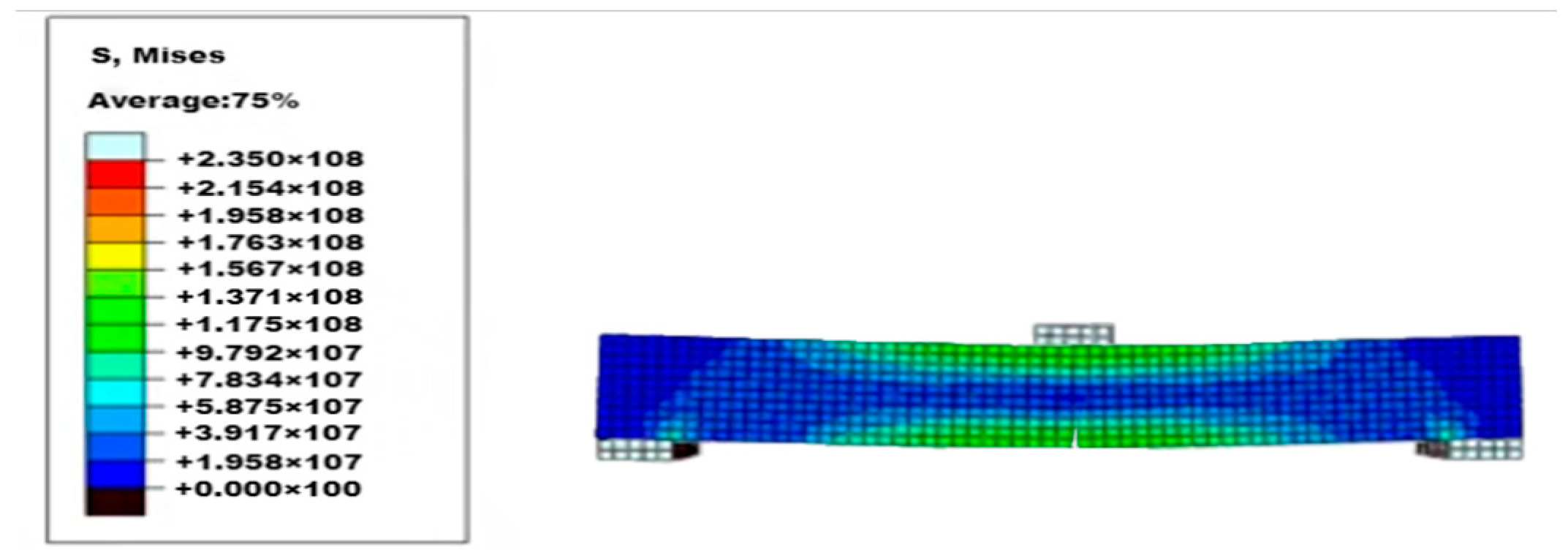
3.4.2. Comparison of Crack Path Similarity
4. Discussion
4.1. Mechanism of Process Parameters Affecting Fiber Distribution and Properties
- An optimal performance was achieved under moderate vibration energy (30 s), revealing the dual role of vibration. Insufficient energy (Group A1) leaves fibers largely immobilized by the yield stress of the paste, resulting in a random yet inefficient distribution with poor bridging. Excessive energy (Group A3), while enhancing settlement, also induces significant fiber agglomeration due to inertial forces, creating stress concentration points. The moderate energy strikes a balance, promoting favorable fiber orientation along the principal stress and a beneficial bottom-enriched gradient, thereby maximizing crack resistance and toughness.
- A distinct “saturation threshold” was identified at 1.5% volume fraction. Below this threshold (Group B1), excessive fiber spacing fails to bridge crack-tip stress fields, leading to brittle failure. Exceeding it (Group B3) promotes fiber clustering, which not only wastes material but critically disrupts matrix continuity, creating preferential paths for crack propagation. This underscores that increasing fiber content alone is counterproductive beyond its dispersibility limit within the matrix.
- Aggregate Fraction: An aggregate volume fraction of 40% (Group C2) formed an optimal skeletal structure. This structure physically hinders fiber settling, increasing the likelihood of fiber bending and reorientation for better load transfer, while maintaining sufficient mortar thickness to ensure the integrity of the fiber-matrix interfacial transition zone (ITZ). Lower fractions (Group C1) reduce this beneficial hindrance, while higher fractions (Group C3) thin the mortar layer and weaken the ITZ, both compromising performance. This highlights the active role of aggregates in controlling fiber distribution and interfacial quality in SFRC mix design.
4.2. Advantages and Significance of Image Recognition and Numerical Simulation
- Traditional numerical models typically rely on the idealized assumption of completely random fiber distribution in space (Group D1). However, the image recognition results and the influence patterns of processing parameters obtained in this study confirm that the actual distribution exhibits significant non-uniformity and process dependency. By utilizing image recognition technology, this study achieves precise mapping of reality and parametrically embeds this mapping into the numerical model, thereby shifting the starting point of simulation from idealized assumptions to realistic mapping.
- Mechanism analysis improved prediction accuracy. The comprehensive enhancement in prediction accuracy of the actual distribution model (Group D2) can be explained from a meso-mechanical perspective. The significant reduction in the error of predicting the initial cracking load is primarily attributed to the model’s accurate representation of the fiber gradient distribution induced by vibration.
4.3. Limitations and Future Outlook
- Scale and Dimensional Limitations. This study was conducted using standard laboratory-scale beam specimens. In real-world engineering structures, the dimensions are significantly larger and involve more complex boundary conditions. The distribution of internal fibers may be influenced by multiple factors such as the template effect, resulting in more intricate patterns. When extrapolating the findings to large-scale engineering applications, it is crucial to carefully consider dimensional effects. Additionally, current image recognition technologies rely on two-dimensional cross-sectional analysis to infer three-dimensional distribution characteristics, assuming uniform distribution within horizontal layers. Future research should focus on developing CT scanning combined with three-dimensional image processing techniques to achieve in situ quantitative characterization of spatial fiber networks, thereby enabling more precise studies.
- Expansion of Parameter Range. This study primarily focused on three key process parameters. However, in practical engineering, fiber type (hooked-end, straight, etc.), matrix rheology (self-compacting concrete vs. ordinary concrete), environmental conditions, and other factors may interactively influence fiber distribution. Future research could further expand the parameter space and establish a more comprehensive database and predictive model.
5. Conclusions
Author Contributions
Funding
Data Availability Statement
Acknowledgments
Conflicts of Interest
References
- Bayramov, F.; Tasdemir, C.; Tasdemir, M.A. Optimisation of steel fibre reinforced concretes by means of statistical response surface method. Cem. Concr. Compos. 2004, 26, 665–675. [Google Scholar] [CrossRef]
- Yardimci, M.Y.; Baradan, B.; Tasdemir, M.A. Effect of fine to coarse aggregate ratio on the rheology and fracture energy of steel fibre reinforced self-compacting concretes. Sadhana 2014, 39, 1447–1469. [Google Scholar] [CrossRef]
- Zhao, Y.; Wang, Z.; Xie, Y.; Wang, P. Experimental study on flexural performance and fatigue life of steel fiber reinforced concrete beams. Concrete 2018, 2018, 42–45+50. (In Chinese) [Google Scholar] [CrossRef]
- Li, Y.; Zhang, J.; Zhang, C.; Xue, Q. Experimental study on flexural performance of steel fiber reinforced concrete. Concrete 2018, 2018, 74–78. (In Chinese) [Google Scholar]
- Li, F.; Zhao, R. Experimental study on fracture properties of high-strength concrete and steel fiber reinforced high-strength concrete. Concrete 2002, 29–32. (In Chinese) [Google Scholar]
- Gao, D.; Zhang, T. Fracture energy of steel fiber reinforced high-strength concrete under three-point bending. J. Hydraul. Eng. 2007, 1115–1120+1127. (In Chinese) [Google Scholar] [CrossRef]
- Xu, P.; Zheng, M.; Wang, C.; Ding, Y.; Zhang, M.; Wang, X.; Ma, J. Experimental study on fracture energy of high-strength concrete considering the influence of size and fiber content. Bull. Chin. Ceram. Soc. 2020, 39, 3488–3495. (In Chinese) [Google Scholar] [CrossRef]
- Fan, X.M.; Zhao, K.; Zhou, X.P.; Ye, X.; Sun, X. Research on detection of steel fiber content in ultra-high performance concrete slabs based on image recognition method. Concrete 2025, 83–89+103. (In Chinese) [Google Scholar]
- Yao, Y.; Yang, K.; Wu, H.; Cheng, Z.; Liu, J.; Wang, J.; Zhong, R. Distributions of coarse aggregate and steel fiber in ultra-high performance concrete: Migration behavior and correlation with compressive strength. J. Build. Eng. 2024, 95, 110128. [Google Scholar] [CrossRef]
- Tan, Y.; Zhao, S.; Zhou, H.; Zhao, J.; Wu, J. Fracture damage process and mechanism of steel fiber reinforced concrete based on digital image and ultrasonic technology. J. Cem. 2025, 53, 2287–2300. (In Chinese) [Google Scholar] [CrossRef]
- Li, J.Y.; Chen, L.; Hu, G.C.; Wang, Z.; Guo, J.; Wang, X. Experimental study and finite element simulation on flexural toughness of steel fiber reinforced concrete. J. Changchun Inst. Technol. (Nat. Sci. Ed.) 2024, 25, 1–6. (In Chinese) [Google Scholar]
- Wang, D. Experimental Study and Finite Element Analysis on Flexural Toughness of Steel Fiber Reinforced Concrete. Master‘s Thesis, Zhengzhou University, Zhengzhou, China, 2017. (In Chinese) [Google Scholar]
- Ji, S.H. Numerical Simulation Study on Meso-Structure and Fracture Process of Fiber Reinforced Concrete. Ph.D. Thesis, Chang’an University, Xi’an, China, 2014. (In Chinese) [Google Scholar]
- Xu, B. Two-Dimensional Random Modeling Method for Hybrid Fiber Reinforced Concrete. Master’s Thesis, Wuhan University of Technology, Wuhan, China, 2014. (In Chinese) [Google Scholar]
- Zhang, H.B. Research on the Strengthening and Toughening Effects of Hybrid Fiber Reinforced Concrete. Master‘s Thesis, Guangdong University of Technology, Guangzhou, China, 2011. (In Chinese) [Google Scholar]
- Wittmann, F.H.; Roelfstra, P.E.; Sadouki, H. Simulation and analysis of composite structures. Mater. Sci. Eng. 1985, 68, 239–248. [Google Scholar] [CrossRef]
- Radtke, F.; Simone, A.; Sluys, L. A computational model for failure analysis of fibre reinforced concrete with discrete treatment of fibres. Eng. Fract. Mech. 2010, 77, 597–620. [Google Scholar] [CrossRef]
- Cunha, V.M.C.F.; Barros, J.A.O.; Sena-Cruz, J.M. A finite element model with discrete embedded elements for fibre reinforced composites. Comput. Struct. 2012, 94–95, 22–33. [Google Scholar] [CrossRef]
- Abrishambaf, A.; Cunha, V.M.C.F.; Barros, J.A.O. A two-phase material approach to model steel fibre reinforced self-compacting concrete in panels. Eng. Fract. Mech. 2016, 162, 1–20. [Google Scholar] [CrossRef]
- Gal, E.; Kryvoruk, R. Meso-scale analysis of FRC using a two-step homogenization approach. In Proceedings of the FraMCoS-7, Jeju, Republic of Korea, 23–28 May 2010; pp. 1–10. [Google Scholar] [CrossRef]
- Soetens, T.; Matthys, S. Different methods to model the post-cracking behaviour of hooked-end steel fibre reinforced concrete. Constr. Build. Mater. 2014, 73, 458–471. [Google Scholar] [CrossRef]
- Liu, C.Y.; Ding, W.H.; Su, J.; Gao, W.; Li, X. Meso-finite element simulation analysis of flexural performance of steel fiber recycled concrete beams. J. Shandong Jianzhu Univ. 2025, 40, 26–33+69. (In Chinese) [Google Scholar]
- Lu, C.; Xu, L.; Jia, J. Contrast preserving decolorization with perception-based quality metrics. Int. J. Comput. Vis. 2014, 110, 222–239. [Google Scholar] [CrossRef]
- Otsu, N. A threshold selection method from gray-level histograms. IEEE Trans. Syst. Man Cybern. 1979, 9, 62–66. [Google Scholar] [CrossRef]
- JGJ/T 221-2010; Technical Specification for Application of Fiber Reinforced Concrete. China Architecture & Building Press: Beijing, China, 2010.



| Comparative Group for Parameter Influence | ||||
|---|---|---|---|---|
| Group | Vibration Level | Steel Fiber Dosage | Aggregate Volume Fraction | |
| A1 | Low Energy (Vibration Time 10 s) | 1.5% | 40% | |
| A2 | Medium Energy (Vibration Time 30 s) | 1.5% | 40% | |
| A3 | High Energy (Vibration Time 50 s) | 1.5% | 40% | |
| B1 | Medium Energy (Vibration Time 30 s) | 1.0% | 40% | |
| B2 | Medium Energy (Vibration Time 30 s) | 1.5% | 40% | |
| B3 | Medium Energy (Vibration Time 30 s) | 2.0% | 40% | |
| C1 | Medium Energy (Vibration Time 30 s) | 1.5% | 30% | |
| C2 | Medium Energy (Vibration Time 30 s) | 1.5% | 40% | |
| C3 | Medium Energy (Vibration Time 30 s) | 1.5% | 50% | |
| Numerical Model Validation Group | ||||
| Group | Model Type | Parameter Setting | Test Sample Source | Cross-Section Comparison |
| D1 | Traditional Random Model | Assumed Uniform Fiber Distribution | Numerical Simulation Data | Compared with D3 |
| D2 | Image Recognition Distribution Model | Actual Distribution via Image Recognition | Numerical Simulation Data | Compared with D3 |
| D3 | Actual Test Sample | Parameters of Group A2 | Laboratory Cast Specimen | Reference Sample |
| Number | Quantity | Location | ≥60 cm | 55~60 cm | 50~55 cm | 45~50 cm | 40~45 cm | 35~40 cm | 30~35 cm | 25~30 cm | 20~25 cm | 15~20 cm | 10~15 cm | 5~10 cm | 0~5 cm |
|---|---|---|---|---|---|---|---|---|---|---|---|---|---|---|---|
| A1 | 2 | 8 | 6 | 10 | 10 | 12 | 12 | 9 | 8 | 6 | 11 | 14 | 7 | ||
| A2 | 1 | 2 | 7 | 6 | 6 | 10 | 9 | 8 | 6 | 9 | 9 | 11 | 7 | ||
| A3 | 1 | 1 | 3 | 6 | 9 | 9 | 6 | 12 | 11 | 12 | 13 | 15 | 5 | ||
| ⋯ | ⋯ | ⋯ | ⋯ | ⋯ | ⋯ | ⋯ | ⋯ | ⋯ | ⋯ | ⋯ | ⋯ | ⋯ | ⋯ | ||
| Steel Fiber Coordinate Data Sheet | ||||||||||||
|---|---|---|---|---|---|---|---|---|---|---|---|---|
| A1 | X | 17.58377239 | 10.36150235 | 6.609195402 | 5.396907216 | 7.845070423 | 24.47572816 | 30.28787879 | 44.33 | 41.7063197 | 43.78983834 | ⋯ |
| Y | 304.2286617 | 2100.328638 | 2189.126437 | 3493.953608 | 5062.147887 | 1594.543689 | 2510.590909 | 276.91 | 2959.973978 | 1243.605081 | ⋯ | |
| A2 | X | 14.42430704 | 15.26808511 | 6.927536232 | 10.30508475 | 17.40273038 | 30.33802817 | 20.32 | 20.38271605 | 26.78571429 | 26.31147541 | ⋯ |
| Y | 2553.52452 | 5592.710638 | 2110.130435 | 1120.728814 | 2854.59727 | 5037.988732 | 2150.07 | 4340.876543 | 4074.972527 | 5692.016393 | ⋯ | |
| A3 | X | 3.880434783 | 3.333333333 | 6.441558442 | 7.078534031 | 14.75695461 | 10.65443425 | 11.02083333 | 16.72727273 | 10.19148936 | 21.88842975 | ⋯ |
| Y | 1602.554348 | 2203.666667 | 2699.74026 | 2814.596859 | 4801.38653 | 5246.201835 | 5332.145833 | 4890.755245 | 2043.042553 | 858.464876 | ⋯ | |
| ⋯ | ⋯ | ⋯ | ⋯ | ⋯ | ⋯ | ⋯ | ⋯ | ⋯ | ⋯ | ⋯ | ⋯ | ⋯ |
| Image Number | Manual Count | Image Recognition Count | Absolute Error | Recognition Accuracy | False Positive Count | Number of Missed Tests |
|---|---|---|---|---|---|---|
| A1 | 119 | 119 | 4 | 96.6% | 3 | 7 |
| A2 | 94 | 91 | 3 | 96.8% | 2 | 5 |
| A3 | 112 | 103 | 9 | 92.0% | 4 | 5 |
| ⋯ | ⋯ | ⋯ | ⋯ | ⋯ | ⋯ | ⋯ |
| Group | Young’s Modulus (GPa) | Flexural Strength(MPa) |
|---|---|---|
| A1 | 31.5 | 4.2 |
| A2 | 36.8 | 5.9 |
| A3 | 33.1 | 5.0 |
| B1 | 29.7 | 4.8 |
| B2 | 36.8 | 5.9 |
| B3 | 34.2 | 5.3 |
| C1 | 32.4 | 5.3 |
| C2 | 36.8 | 5.9 |
| C3 | 34.5 | 6.2 |
| Performance Parameter | Experimental Measurement Values (Mean ± Standard Deviation) | Traditional Random Model (D1) (Absolute Error, Relative Error) | Actual Distribution Model (D2) (Absolute Error, Relative Error) |
|---|---|---|---|
| Initial cracking load (kN) | 15.8 ± 0.9 | 11.2 (−4.6 kN, −28.9%) | 13.8 (−2.0 kN, −12.6%) |
| Limit bending moment (kN·m) | 4.25 ± 0.21 | 2.83 (−1.42 kN·m, −33.4%) | 3.58 (−0.67 kN·m, −15.8%) |
| Image Number | Manual Count | Image Recognition Count | Absolute Error | Recognition Accuracy | False Positive Count | Number of Missed Tests |
|---|---|---|---|---|---|---|
| A1 | 119 | 119 | 4 | 96.6% | 3 | 7 |
| A2 | 94 | 91 | 3 | 96.8% | 2 | 5 |
| A3 | 112 | 103 | 9 | 92.0% | 4 | 5 |
| ⋯ | ⋯ | ⋯ | ⋯ | ⋯ | ⋯ | ⋯ |
Disclaimer/Publisher’s Note: The statements, opinions and data contained in all publications are solely those of the individual author(s) and contributor(s) and not of MDPI and/or the editor(s). MDPI and/or the editor(s) disclaim responsibility for any injury to people or property resulting from any ideas, methods, instructions or products referred to in the content. |
© 2026 by the authors. Licensee MDPI, Basel, Switzerland. This article is an open access article distributed under the terms and conditions of the Creative Commons Attribution (CC BY) license.
Share and Cite
Su, H.; Guo, K.; Geng, W.; Cheng, N.; Li, C.; Kong, D.; Yang, Z. Image Recognition-Based Analysis and Simulation Optimization of Mechanical Performance of Steel Fiber-Reinforced Concrete. Buildings 2026, 16, 704. https://doi.org/10.3390/buildings16040704
Su H, Guo K, Geng W, Cheng N, Li C, Kong D, Yang Z. Image Recognition-Based Analysis and Simulation Optimization of Mechanical Performance of Steel Fiber-Reinforced Concrete. Buildings. 2026; 16(4):704. https://doi.org/10.3390/buildings16040704
Chicago/Turabian StyleSu, Huifeng, Kece Guo, Wenlong Geng, Ning Cheng, Chenrui Li, Dehao Kong, and Zhuoer Yang. 2026. "Image Recognition-Based Analysis and Simulation Optimization of Mechanical Performance of Steel Fiber-Reinforced Concrete" Buildings 16, no. 4: 704. https://doi.org/10.3390/buildings16040704
APA StyleSu, H., Guo, K., Geng, W., Cheng, N., Li, C., Kong, D., & Yang, Z. (2026). Image Recognition-Based Analysis and Simulation Optimization of Mechanical Performance of Steel Fiber-Reinforced Concrete. Buildings, 16(4), 704. https://doi.org/10.3390/buildings16040704