


Abstract
This article addresses the problem of insufficient bearing capacity and stiffness in laminated timber beams during use and proposes a reinforcement method by increasing the cross-section. Twenty glued laminated timber beams with dimensions of 2850 mm × 120 mm × 50 mm were produced using Pinus sylvestris var. mongolica as the raw material. Douglas fir with good tensile properties and new self-tapping screws were selected as reinforcement materials. Through adhesive bonding and adhesive–nail combination methods, an enlarged section reinforcement beam was formed. The influence of section height, bonding process, and the arrangement of self-tapping screws on the bending performance of three groups of six adhesive-reinforced specimens and three groups of fourteen adhesive–nail reinforced specimens was examined through bending performance tests. The results showed that compared with specimens reinforced with single-layer panels, the ultimate load of specimens reinforced with double-layer panels increased by 22.82 to 29.49%, and bending stiffness increased by 17.26 to 48.17%. Within the same group, the ultimate load of specimens reinforced with standard compressive stress adhesive increased by 3.88 to 5.71% under bending. Compared with adhesive reinforcement specimens, adhesive–nail combined reinforcement specimens showed an 8.91 to 11.36% increase in ultimate load. In specimens with the same screw insertion angle, the ultimate bearing capacity of beams reinforced with longer screws and smaller spacing was actually lower. Moreover, the ultimate load of specimens reinforced with self-tapping screws inserted at 90° was 4.2% higher than that of specimens with screws inserted at 45°.
1. Introduction
Wood is a primitive and eternal material, with a warm and delicate texture and strong affinity. It has been endowed with the title of the “most humane material” and is the main material in wooden structures. It is also a precious gift given to humanity by nature. Wooden architecture has a long history of development and profound cultural heritage. Wooden architecture with different styles and eras is not only a symbol of national culture but also a condensation of the millennial wisdom of craftsmen.
Since the 20th century, the world has attached great importance to the position of the construction industry in the field of energy conservation and emission reduction, proposing the construction of ecological civilization buildings and green industrial development [1,2,3,4]. Various countries have successively introduced a series of policies to promote the development of green buildings. Modern wooden structures have the characteristics of energy conservation, environmental protection, seismic safety, rapid construction, and renewable raw materials. Therefore, under the concept of developing green buildings, modern wooden structures will definitely usher in better development [5,6,7,8,9,10,11].
As the most important material in modern timber structure buildings, laminated wood can be made into components of any cross-sectional form without being limited by the size of the wood itself and has the characteristic of using small materials for large purposes. However, it also has natural defects such as knots and cracks, which are inevitable during the growth process of wood. Therefore, it can lead to insufficient bearing capacity and stiffness of glued laminated timber beams during use due to material strength degradation, changes in usage conditions, and other reasons [12,13,14]. To this end, scholars at home and abroad have proposed methods for strengthening glued laminated timber beams: Yi Jin et al. conducted experimental research on the stiffness degradation of CFRP-reinforced glued laminated timber beams under cyclic loading, and the results showed that as the number of fatigue cycles increased, the bending stiffness of the test beams decreased to varying degrees. CFRP cloth played a significant role in preventing crack propagation but had a small impact on the stiffness degradation rate [15]. Hu Bin et al. conducted experimental research on the bending performance of glued laminated timber beams. The results showed that although existing methods of strengthening glued laminated timber beams, such as pasting steel plates and reinforcing bars, can improve the bearing capacity of the beam, the increase in stiffness is not significant. However, the method of increasing the cross-section can better improve the bearing capacity and stiffness of laminated timber beams [16]. Yang Xinhui et al. conducted a study on the bending performance and design method of steel-plate-reinforced laminated timber beams. The results showed that the bearing capacity of the specimen was directly proportional to the thickness of the steel plate, and the reinforcement of the specimen by screws was more significant. Attaching steel plates can improve the bearing capacity of composite beams; however, the increase in stiffness of the beam is relatively small [17].
In this regard, this article adopts a method of increasing the cross-section to reinforce glued laminated timber beams, using Douglas fir with good tensile strength as the new cross-section material (Douglas fir has good tensile properties and good interlocking with self-tapping screws), as well as pasting it at the bottom of the glued laminated timber beam for reinforcement, in order to improve the stiffness of the reinforced beam. At the same time, the newly added section is connected to the glued laminated timber beam using adhesive nails. The screwing-in of self-tapping screws can improve the connection performance between new and old laminates, prevent adhesive layer shear failure when reinforcing beams are bent, and suppress crack development to reduce brittle failure of reinforced beams when bent. At present, scholars at home and abroad have not conducted much research on the flexural performance of glued laminated timber beams strengthened by the cross-section increasing method. However, this simple and effective reinforcement method has important research significance for improving the flexural performance of glued laminated timber beams [11,18,19,20,21].
2. Experimental Overview
2.1. Experimental Grouping
2.1.1. Adhesive Reinforcement Test Piece
In order to fully study the effect of the adhesive reinforcement method on the bending performance of glued laminated timber beams, three groups of six adhesive-reinforced beams were designed, with two specimens in each group having identical cross-sectional forms and lengths of 2850 mm. Douglas fir, which has good tensile performance, was selected as the material for the new layer board. The specimen numbered LS is an unreinforced beam, the specimen numbered LC is a single-layer glued reinforced beam, and the specimen numbered LF is a double-layer glued reinforced beam. In this way, the influence of different cross-sectional heights on the bending performance of specimens can be compared. In order to study the effect of bonding process on the bending performance of specimens, different compressive stresses were used for bonding reinforcement of two specimens in each group. The specimen with beam number “1” used a standard compressive stress of 0.8 N/mm2 when bonding new laminates, while the specimen with number “2” used half the standard compressive stress of 0.4 N/mm2 when bonding new laminates. In this way, the influence of different adhesive compressive stresses on the bending performance of specimens can be compared. The parameters of each group of specimens are shown in Table 1.
Table 1.
Parameters of adhesive-reinforced specimens.
2.1.2. Reinforcement of Specimens by Adhesive–Nail Combination Method
In order to fully study the effect of the combination of adhesive screws and enlarged cross-section reinforcement method on the bending performance of glued laminated timber beams, three sets of fourteen adhesive screw-reinforced beam specimens were designed, with identical cross-sectional forms and lengths of 2850 mm for each set of specimens. The specimen numbered LS is an unreinforced beam, the specimen numbered LC is a single-layer glued reinforced beam, and the specimen numbered LF is a double-layer glued reinforced beam. In this way, the influence of different cross-sectional heights on the bending performance of specimens can be compared. The arrangement of self-tapping screws within each set of specimens was different. This is done to compare the effects of different screw spacing, screw length, and screw insertion angle on the bending performance of beams (comparing the effects of another different condition on the basis of the same two conditions). The parameters of each set of specimens are shown in Table 2.
Table 2.
Parameters of specimens reinforced with adhesive and nail bonding.
2.1.3. Material Properties
The same batch of Pinus sylvestris var. mongolica was selected as the material for the laminated wood panels in all test beams, with a density of 0.65 g/cm3. The raw materials were cut into single-layer panels of the specified size and dried in an oven at 60–80 °C, ultimately controlling the moisture content of the single-layer panels within the range of 10–12%.
The adhesive used for the construction of the enlarged cross-section in this experiment is SAU-0001-3 type Aike adhesive provided by Shenyang Aike Haobo Chemical Co., Ltd. (Shenyang, Liaoning, China). It is a water-based high-molecular weight isocyanate adhesive that does not contain phenol. It is mainly used for bonding small- and medium-section structures of broad-leaved hardwood integrated timber and coniferous wood strips.
2.1.4. Test Piece Design
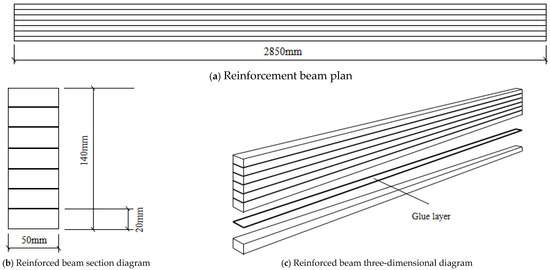
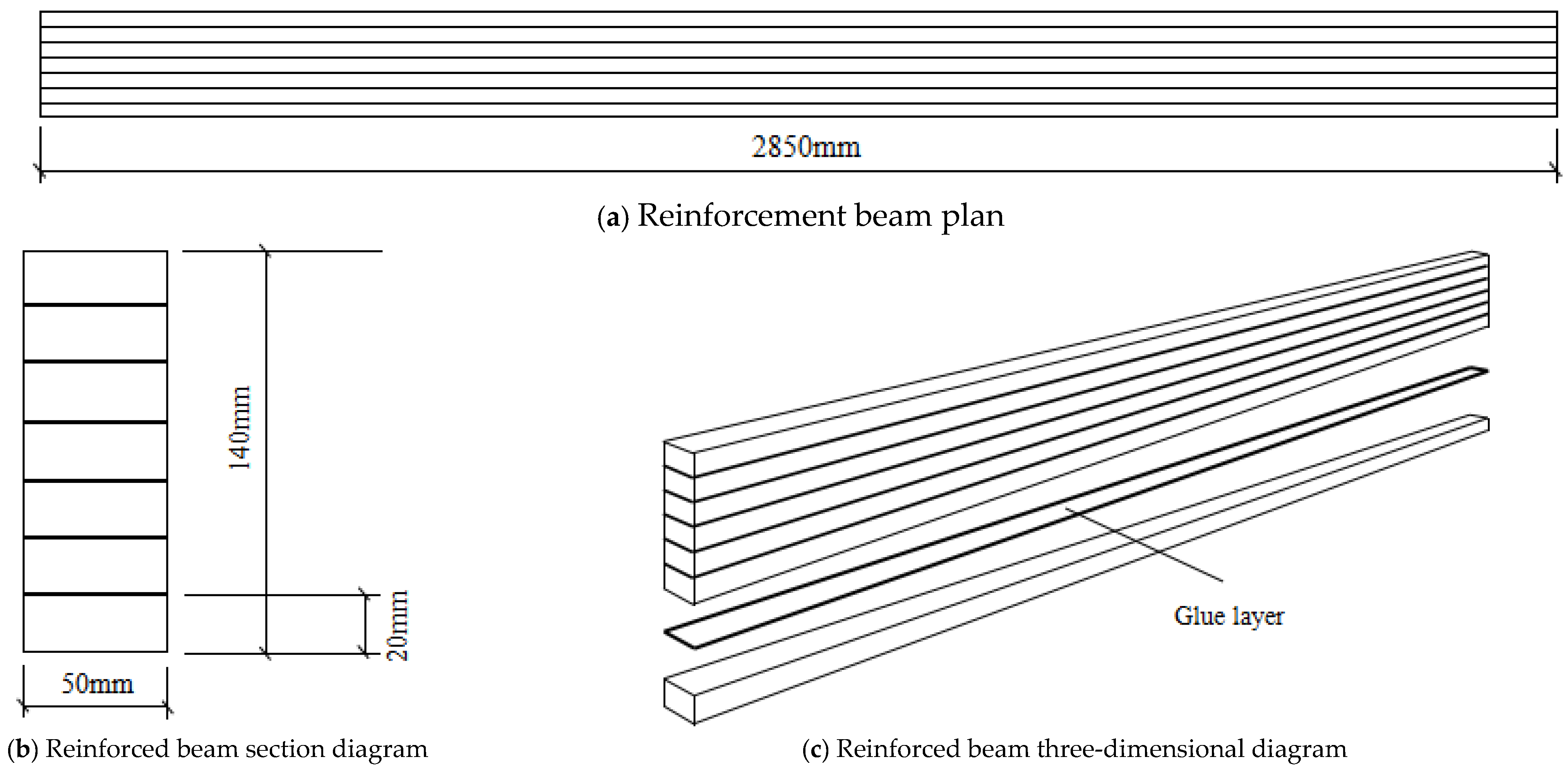
The design of adhesive reinforcement specimens takes LC1-reinforced beams as an example, with a designed beam length of 2850 mm, a height of 20 mm, and a width of 50 mm for each layer of laminated wood boards, as well as a total height of 140 mm for the beam body. The thickness of the adhesive layer can be ignored, as shown in Figure 1.
Figure 1.
Design of LC1 specimen.
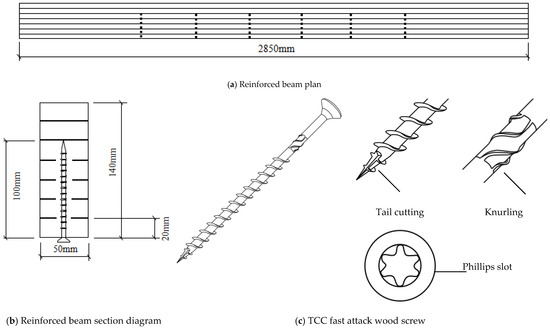
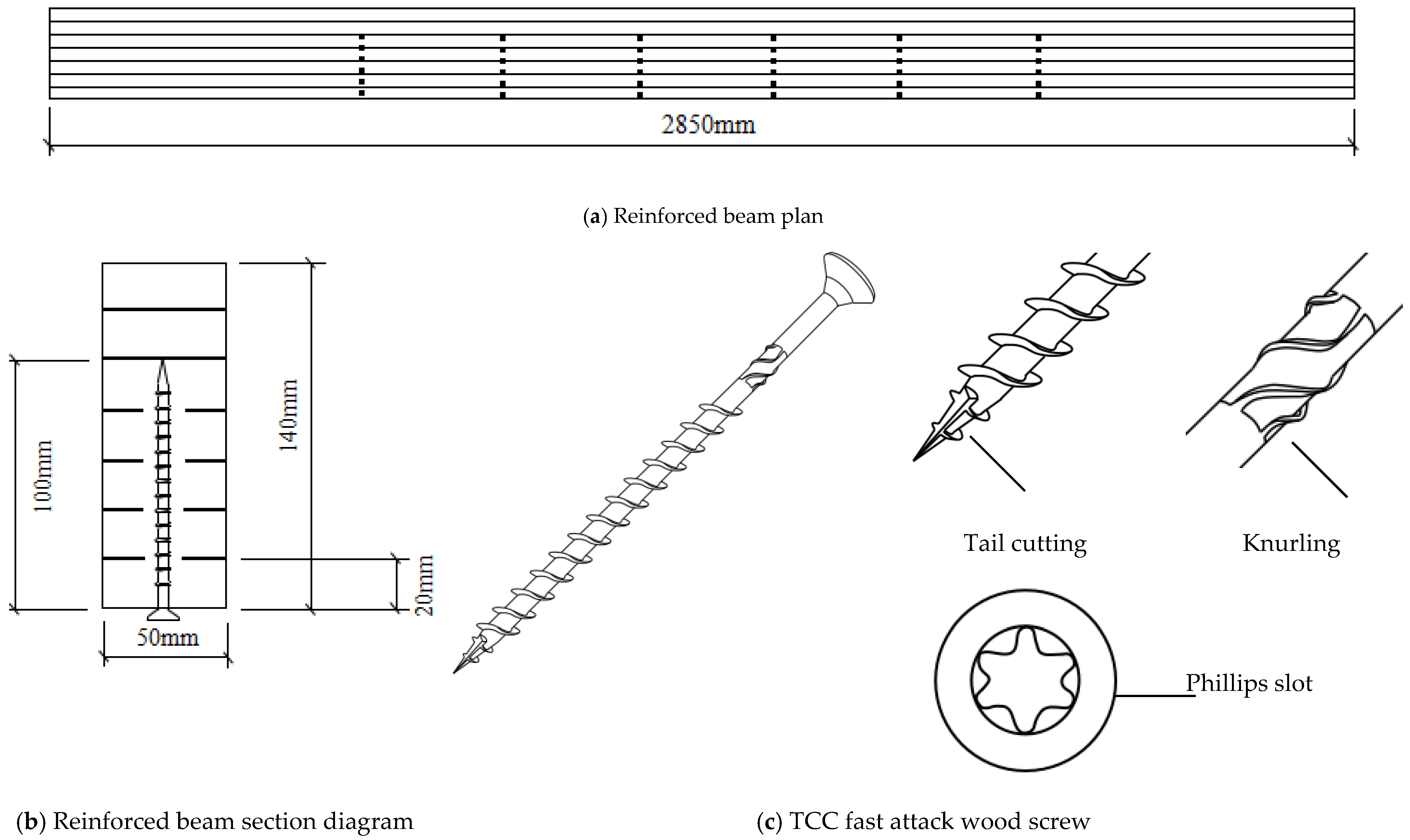
The design method of using adhesive and screws to reinforce specimens takes the LC6-reinforced beam as an example. The self-tapping screw adopts a double countersunk head with rolling-flower cutting-tail wood structure fast attack screw. The cutting-tail design reduces the possibility of wood cracking, and the rolling flower has a good hole-expansion effect. The plum blossom groove provides strong torque. And the screws are coated with corrosion-resistant materials throughout the body, as shown in Figure 2.
Figure 2.
Design of LC6 specimen.
2.2. Material Testing
2.2.1. Test Piece Design and Production
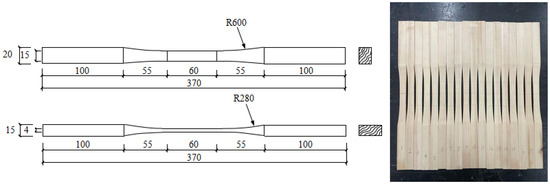
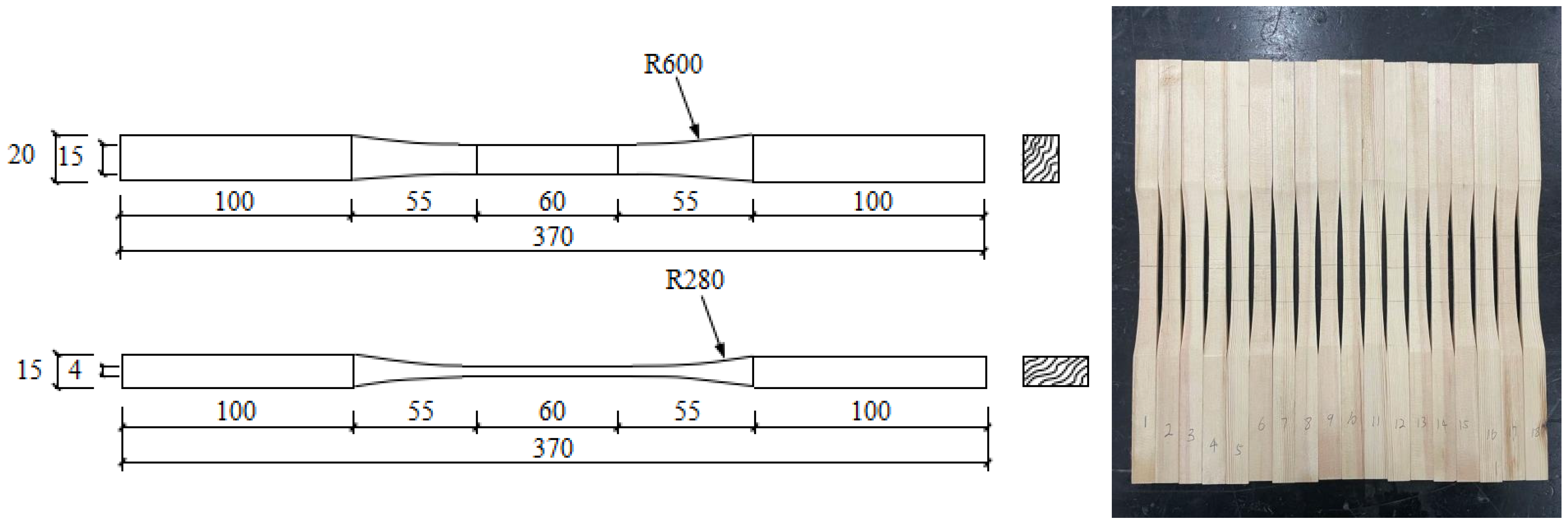
In the tensile test of materials, 15 mm × 4 mm is used as the cross-sectional dimension for tensile specimens of all materials, and a length of 370 mm (effective length of 60 mm) is used as the total length along the tensile direction, as shown in Figure 3.
Figure 3.
Section size of small tensile test piece.
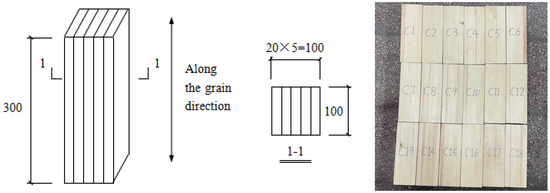
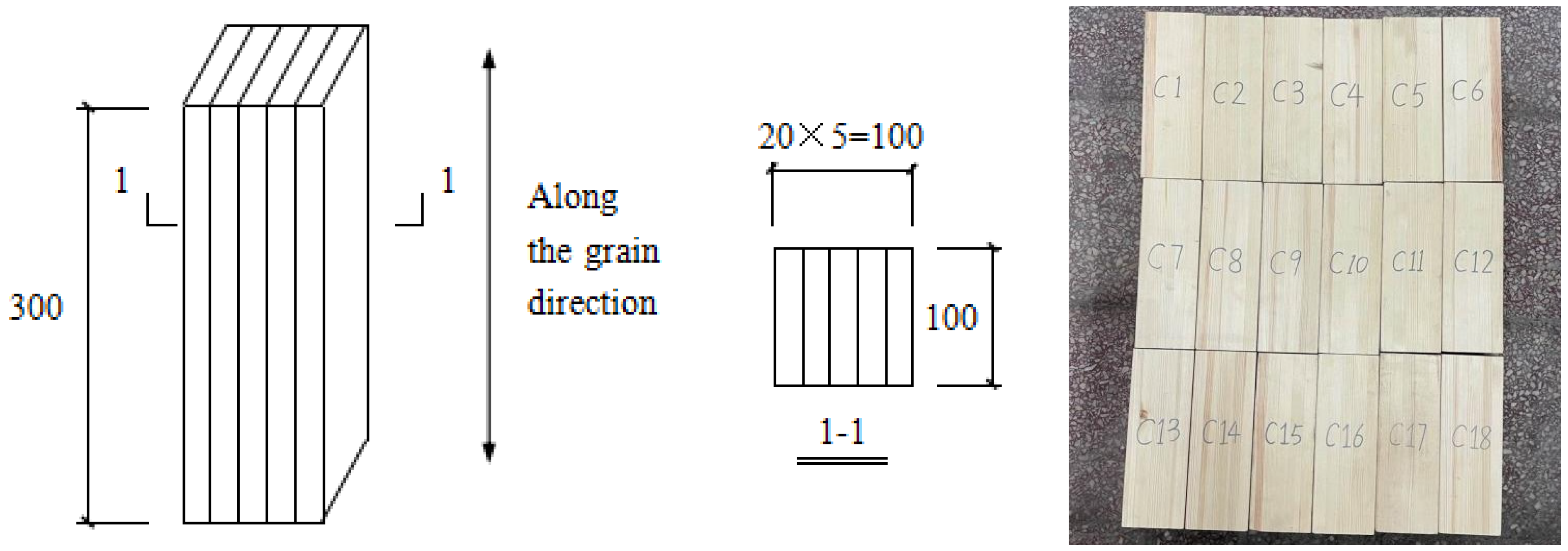
Using short specimens with a square cross-section wider than 60 mm as compressive specimens in the grain direction of wood can ensure that the test data is not affected by column size effects. Therefore, 100 mm × 100 mm × 300 mm was used to make prismatic compressive specimens, as shown in Figure 4.
Figure 4.
Dimensions of pressure test piece.
2.2.2. Results of Tensile and Compressive Tests
After the tensile and compressive tests are completed, the data of the longitudinal tensile and compressive performance tests of two materials, camphor pine and Douglas fir, are sorted out, as shown in Table 3, Table 4 and Table 5.
Table 3.
Mechanical performance indicators of tensile and compressive strength along the grain of camphor pine and Douglas fir.
Table 4.
Tensile mechanical performance indicators of camphor pine and Douglas fir.
Table 5.
Compressive mechanical performance indicators of camphor pine and Douglas fir.
Through a combination of experimentation and analysis, material research was conducted on camphor pine and Douglas fir, and the tensile and compressive strength along the grain and elastic modulus of the two materials were obtained, providing data support for the subsequent derivation of the bending bearing capacity calculation formula. Meanwhile, according to the observed experimental data, the elastic modulus of Douglas fir is not much different from that of camphor pine, providing better stability for the composite of the two materials.
2.3. Loading System
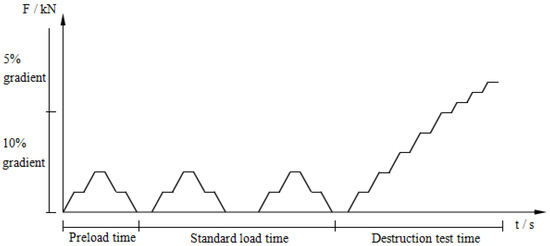
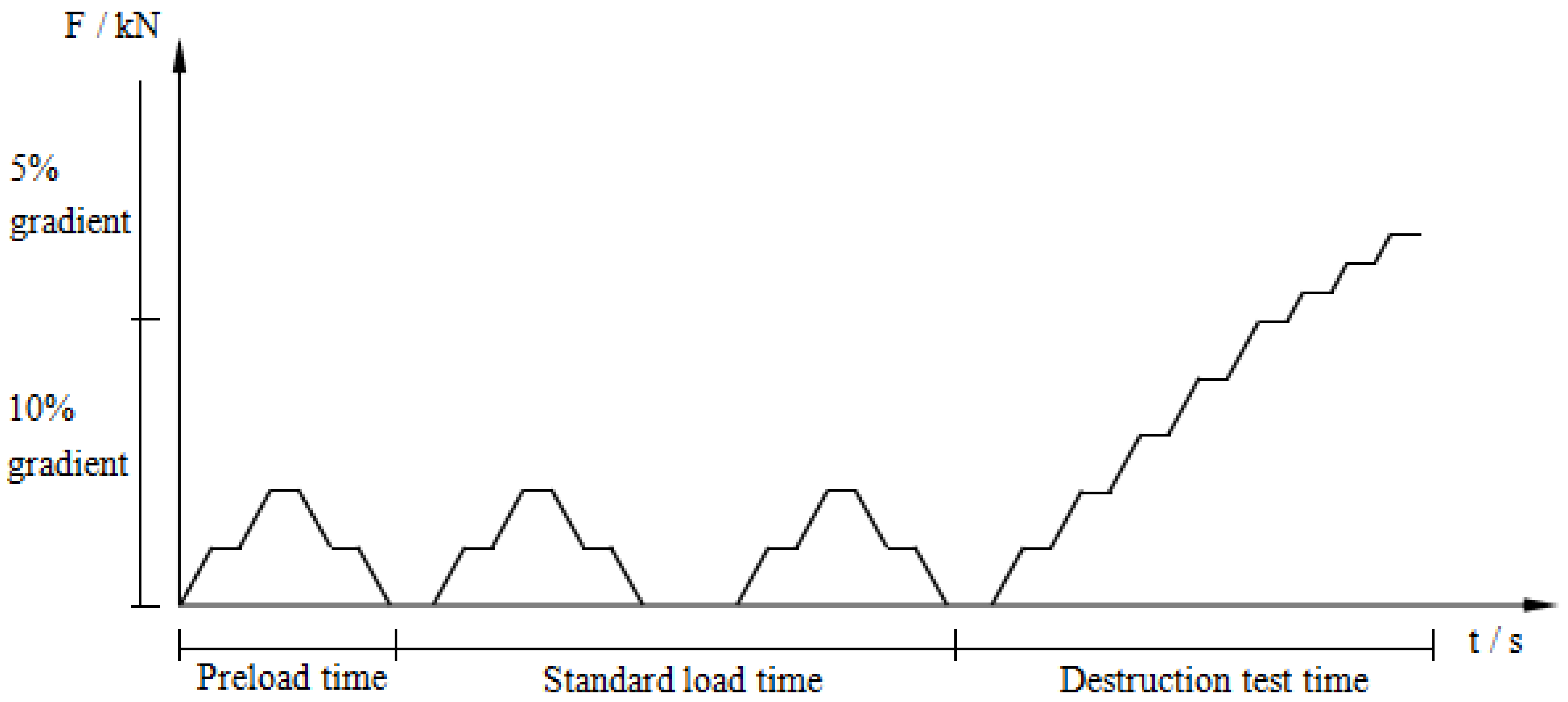
The bending performance test of reinforced beams consists of an elastic loading stage and a failure loading stage. The elastic loading stage takes 10–20% of the estimated ultimate load as one loading cycle, with each cycle uniformly loading and unloading between 15 and 20 s. The elastic loading stage is divided into five cycles, with the aim of obtaining the elastic modulus of the reinforced beam when it is bent and, at the same time, making the two ends of the reinforced beam better adhere to the support in order to obtain accurate test data.
The loading of the destructive test is divided into two parts: force control and displacement control. In the elastic loading stage, after completing five elastic loading cycles, 10% of the ultimate load is used as the loading gradient to gradually load until 50% of the ultimate load is reached. Afterward, 5% of the ultimate load is used as the loading gradient to initiate force-controlled loading. When the mid-span deflection reaches 1/50 of the effective span of the specimen, loading is carried out with a 5 mm increase in deflection until the specimen fails. The loading diagram of the specimen is shown in Figure 5.
Figure 5.
Loading system for bending test of specimen.
2.4. Layout of Measurement Points and Data Collection
2.4.1. Layout of Measurement Points
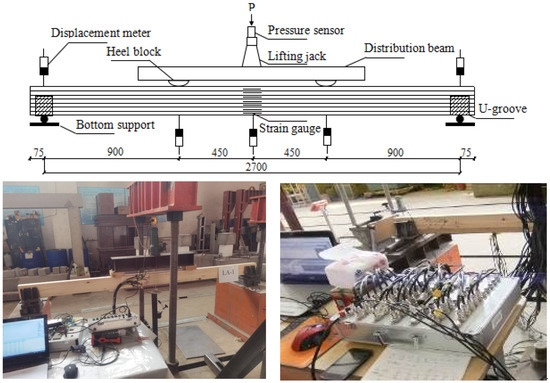
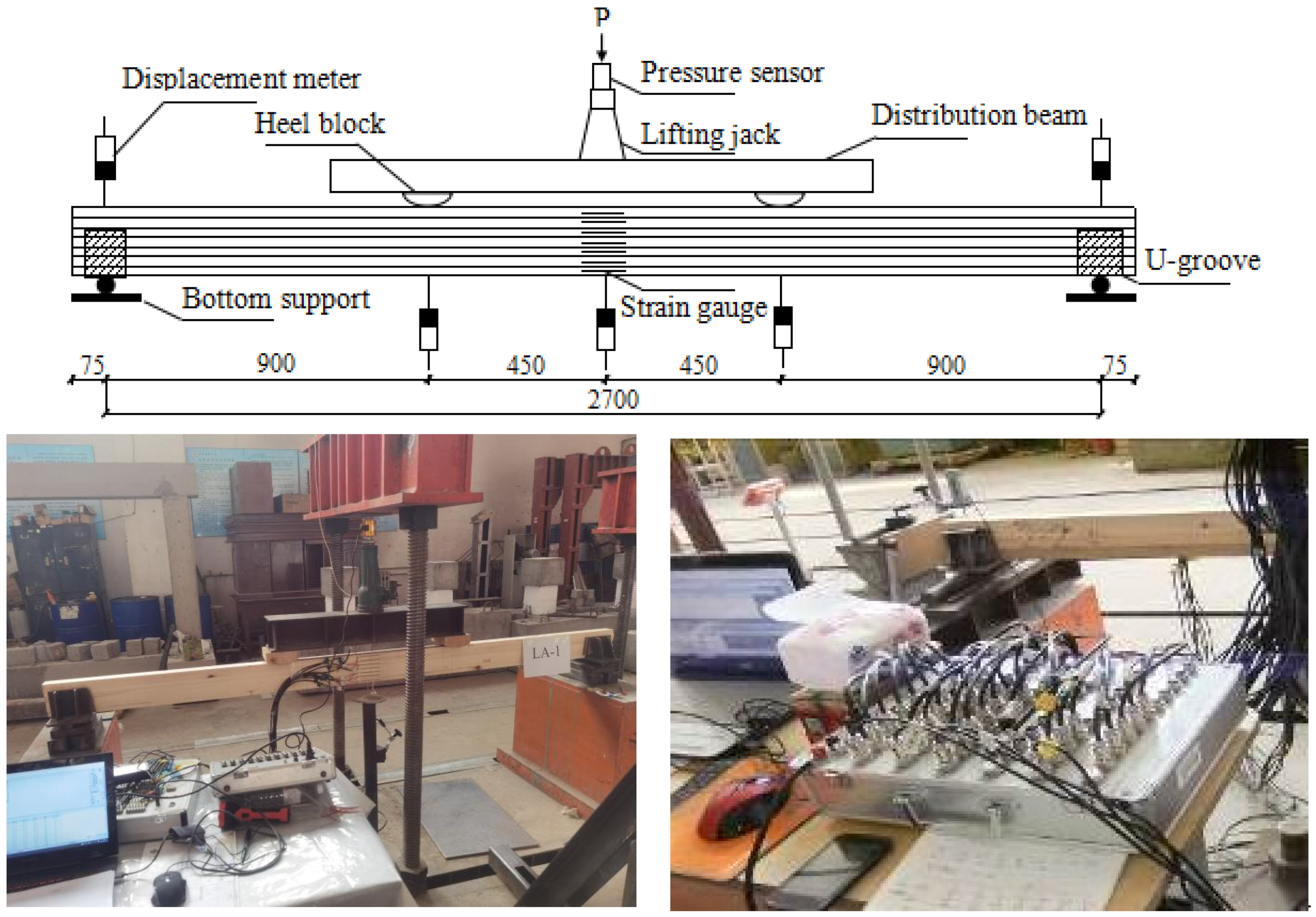
The bending test of the reinforced beam adopts a three-point loading method to ensure the formation of a pure bending section in the mid-span area of the reinforced beam. To simplify the bending test, it is considered that the forces on each section of the pure bending section of the reinforced beam are the same. Therefore, only strain gauges should be pasted at the middle position of each layer of the beam span. To prevent failure of data collection caused by strain gauge damage, one strain gauge should be pasted at the top and bottom of the mid-span of the specimen. The number of strain gauges pasted on each specimen should be 9–10, and the specification of each strain gauge should be 100 mm × 3 mm.
2.4.2. Data Collection
Data collection objects: the force applied by the jack, the deflection of the reinforced beam, and the strain of the laminate.
During the loading process of the beam bending test, the pressure sensor is responsible for collecting the vertical force applied by the jack and the return force transmitted through the reaction frame. The data collection is completed through the DH3818 static strain testing and analysis system to obtain the corresponding strain values, in order to control the applied force and record the data.
The strain values of the reinforced beam were collected throughout the entire process using the DH3816N static strain testing and analysis system, and the results were saved in an Excel spreadsheet. When the deflection of the beam reaches 60 mm or there are obvious signs of damage (such as the sound of wooden knots breaking or fiber tearing inside the beam) during the loading process, remove the displacement meter to protect it from damage, and use a steel ruler to read the elongation of the jack to achieve displacement control loading.
The loading device and measurement point arrangement used for the bending performance test of laminated timber beams are shown in Figure 6.
Figure 6.
Loading device and measuring point arrangement for bending test of glued wood beam.
3. Analysis of Experimental Results
3.1. Analysis of Experimental Phenomena
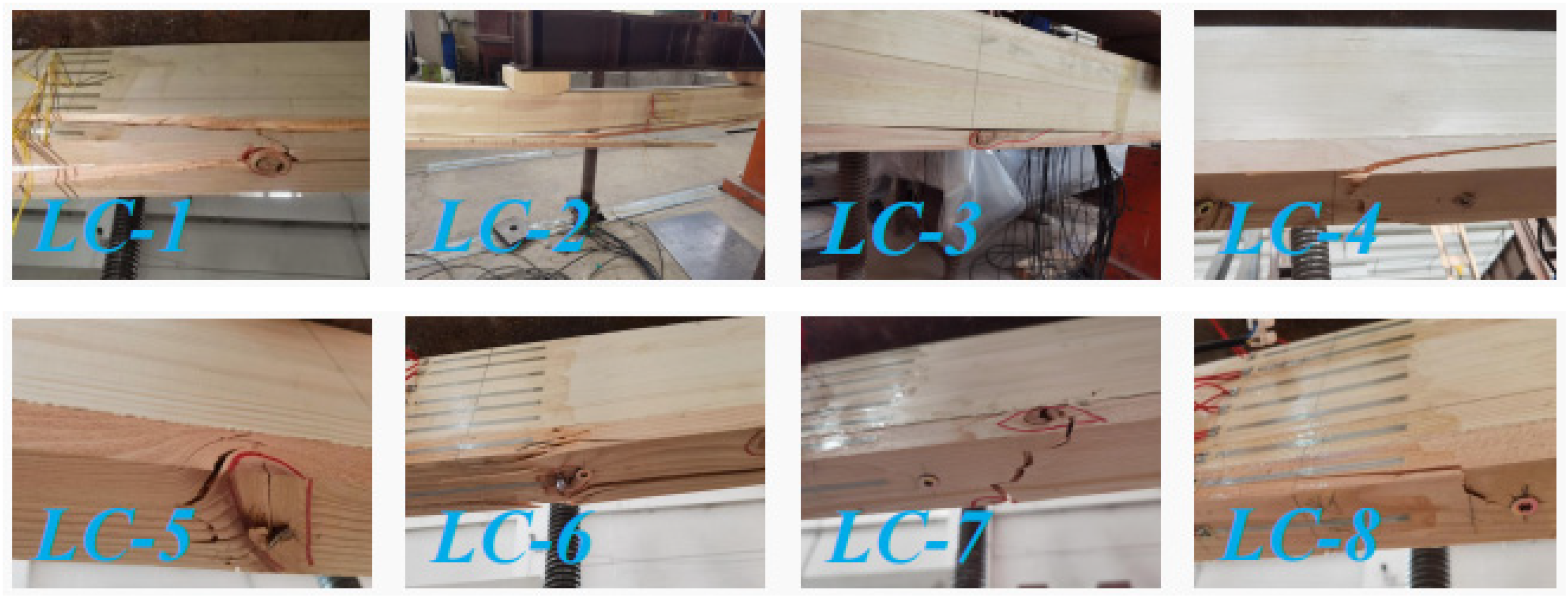
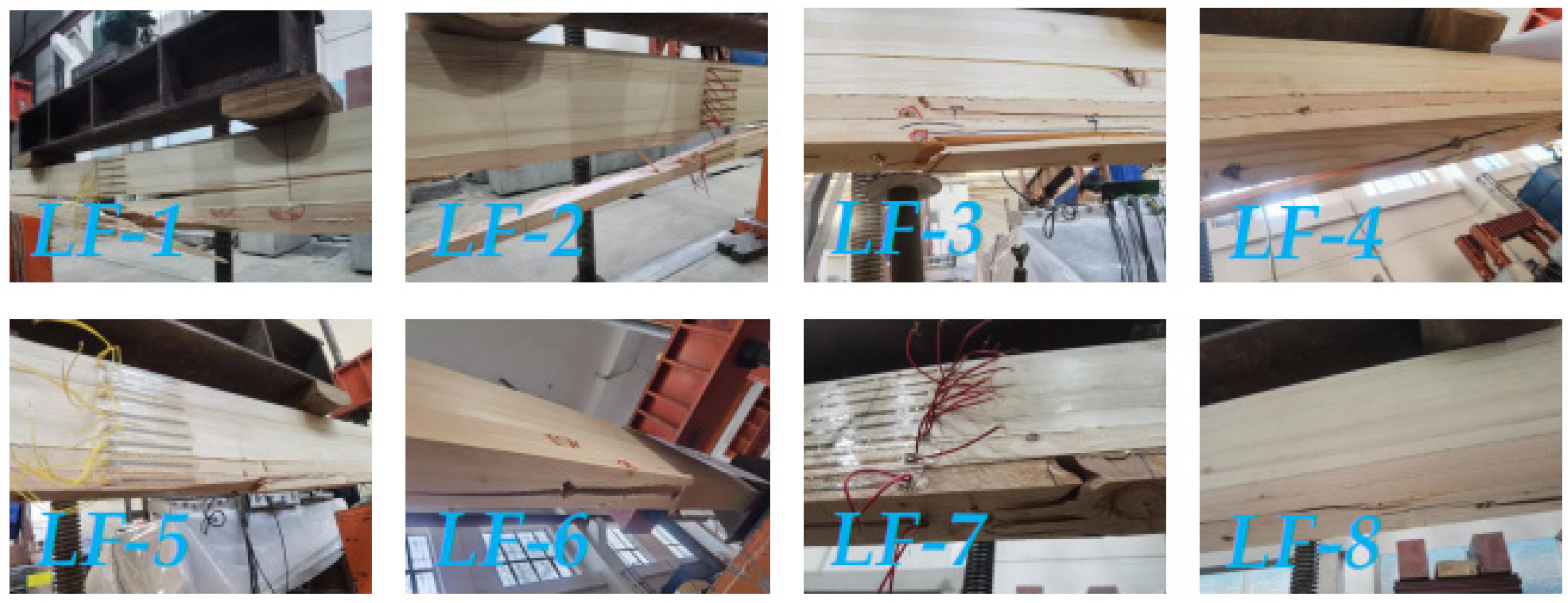
Through the analysis of experimental phenomena, it can be concluded that the failure modes of reinforced beams can be divided into five categories, including bottom tearing failure, bottom tensile failure, top compression failure, adhesive layer shear failure, and torsional failure. The following is a specific analysis of these five failure modes.
- (1)
- Tear failure at the bottom of the beam
The tearing failure at the bottom of the beam often occurs in adhesive-reinforced beams, especially in specimens with many wooden knots in the bottom plate. Typically, there is no abnormality at the wooden knots during the initial loading stage; however, as the load increases and the deflection increases, cracks will appear at the wooden knots, causing the specimen to have weak points under stress (usually in the pure bending section; the wooden knots near the bottom of the specimen have the greatest impact on its stress performance). In the subsequent loading, the cracks will continue to extend and be accompanied by the sound of wood tearing. Usually, after 2–3 loading cycles after the cracks appear, the specimen will suddenly fail and the cracks will extend laterally to the beam end. This type of failure usually occurs suddenly during the loading process and belongs to brittle failure.
- (2)
- Beam bottom tensile failure
The tensile failure at the bottom of the beam occurs in specimens reinforced by adhesive and nail bonding. Unlike the tearing failure at the bottom of the beam, the cracks in the specimen usually extend upward from the bottom plate to 2–3 layers of the plate, and almost do not extend laterally, being manifested as fracture failure. Usually, there is no abnormality at the wooden knots during the initial loading stage; however, as the load continues to rise and the deflection increases, cracks may sometimes appear at the wooden knots. However, unlike specimens reinforced with adhesive, the insertion of self-tapping screws improves the connectivity between layers and can effectively suppress the development of cracks. In the subsequent loading, there will also be occasional tearing sounds at the crack; however, it is rare for it to suddenly fail during 2–3 loading cycles. On the contrary, the specimen can clearly hear the muffled sound of laminated compression or the tearing sound of fibers under tension before failure. At this point, when the loading is stopped, the specimen will fail during the holding load stage, and cracks will generally develop toward the upper plate, causing the beam to break and fail, with obvious signs of failure.
Figure 7.
Failure mode of unreinforced beams.
Figure 8.
Failure modes of beams reinforced with single-layer Douglas fir board.
Figure 9.
Failure modes of beams reinforced with double-layer Douglas fir board.
3.2. Analysis of Experimental Data
Through the bending performance test of reinforced beams, two types of failure modes were summarized: ① tearing failure at the bottom of the beam and ② tensile failure at the bottom of the beam. The corresponding failure modes and relevant test data for each reinforced beam are shown in Table 6.
Table 6.
Bending test data of strengthened beam.
Based on the experimental data in Table 6, the following conclusions can be drawn: when using the same reinforcement material, compared to specimens reinforced with single-layer panels, specimens reinforced with double-layer panels have an increased ultimate load capacity of 22.44–24.63%. It can be seen that the method of increasing the cross-section can effectively improve the bearing capacity of specimens. Within the same group, compared to specimens reinforced with adhesive, the ultimate load of specimens reinforced with adhesive nails increased by 9.21–11.16%, indicating that self-tapping screws improve the connection performance between new and old laminates. The ultimate load of specimens reinforced with standard compressive stress adhesive within the same group is slightly higher than that of specimens reinforced with half-standard compressive stress adhesive. This also indicates that the adhesive process during specimen preparation has a certain impact on the stress performance of the specimen.
3.3. Load–Deflection Relationship Curve
The load–mid-span deflection curve (P–f curve) can reflect the overall performance of glued laminated timber beams under applied loads. Load indicates bearing capacity, expressed as a limit state, while deflection reflects deformation capacity, expressed as a normal-use state.
3.3.1. Comparison of Curves of Specimens with Different Cross-Sectional Heights
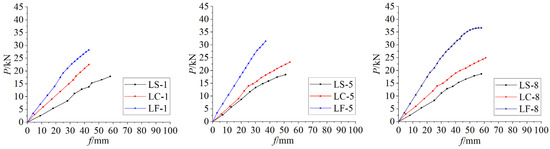
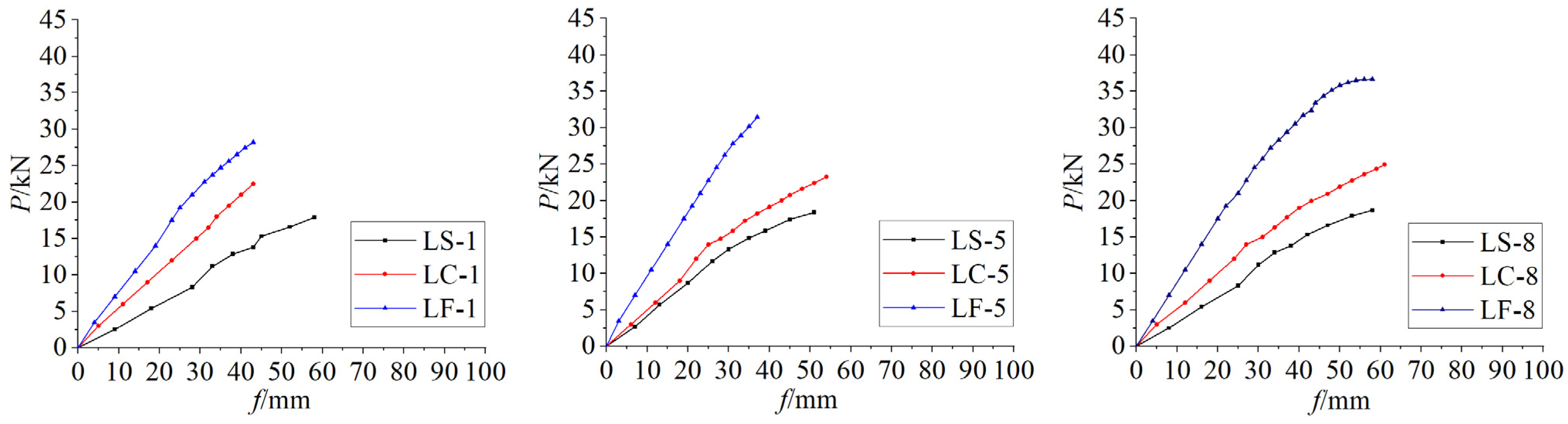
In order to compare the influence of section height on the bending performance of reinforced beams, the load–deflection curves of specimens with the same reinforcement material but different numbers of layers were plotted in the same coordinate system, as shown in Figure 10.
Figure 10.
Comparison of different cross-sectional heights.
By comparing the load–deflection curves of groups S, C, and F, it can be concluded that the stress performance of the specimens with double-layer panels attached to the bottom layer is better than that of specimens with single-layer panels attached to the bottom layer. By observing the slope of the curve, it can be seen that increasing the cross-section significantly increases the slope of the load–deflection curve of the specimen, indicating that stiffness has been improved. To further determine the level of stiffness improvement after increasing the cross-section, Formula (1) is used to calculate the flexural stiffness of the specimen cross-section.
In the formula: EI—Bending stiffness of cross-section, kN·m2;
F—Ultimate load, kN;
L—Effective span of beam, m;
w—Mid-span deflection of beam, m.
The above equation shows that the bending stiffness EI of the mid-span section of the beam is inversely proportional to the mid-span deflection w. The bending stiffness of each group of specimens is calculated below and the results are shown in Table 7.
Table 7.
Reinforcement beam bending stiffness.
The calculation results show that compared to single-layer reinforced beams, the bending stiffness of double-layer reinforced beams increased by 33.64–43.44%, indicating that the method of increasing the cross-section can effectively improve stiffness.
3.3.2. Comparison of Curves for Two Reinforcement Methods
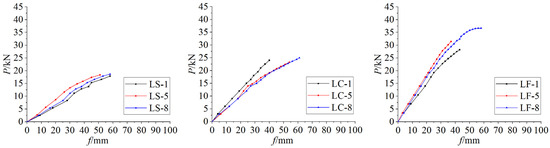
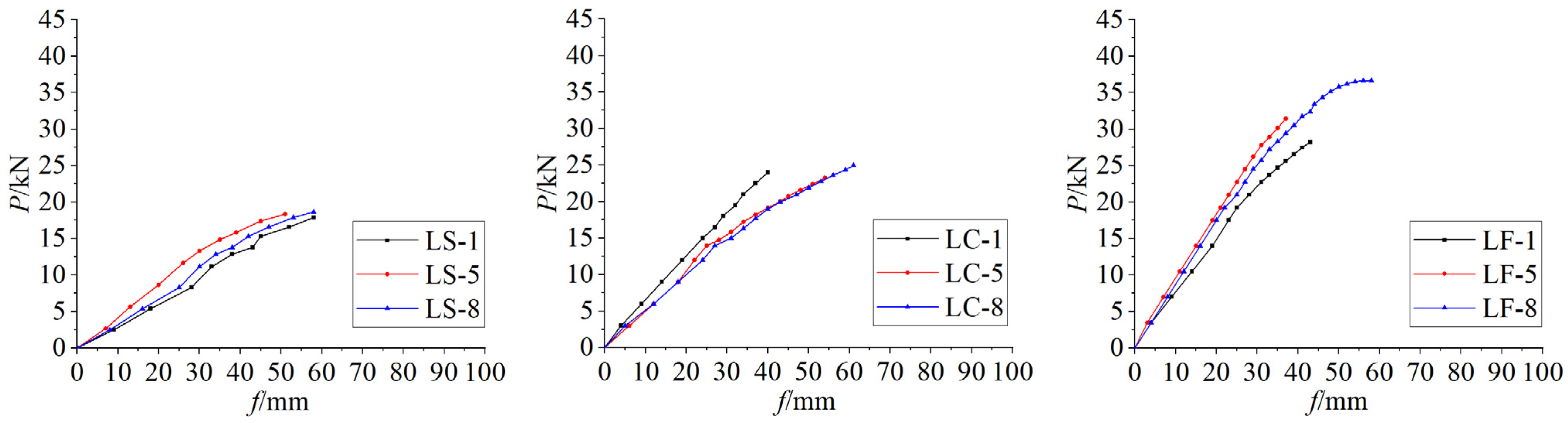
In order to compare the stress performance of adhesive-reinforced specimens and adhesive–nail bonded reinforced specimens, three representative load–deflection relationship curves were selected from different working conditions of LS, LC, and LF specimens and plotted in the same coordinate system, as shown in Figure 11.
Figure 11.
Comparison of different reinforcement methods.
Comparing each load–deflection curve in the same group, and compared with adhesive-reinforced specimens, adhesive–nail combined reinforcement specimens have higher ultimate loads and more sufficient stress. This is because at the initial elastic stage, when deflection is small, self-tapping screws bear only a small portion of vertical load transmitted from the reinforced beam. In the middle stage of stress, as load continues to increase and the reinforced beam enters the elastic–plastic stage, the self-tapping screws gradually share vertical load, improving connectivity between old and new laminates, greatly limiting crack development and allowing fuller stress within the beam.
3.3.3. Comparison of Self-Tapping Screw Arrangement Methods
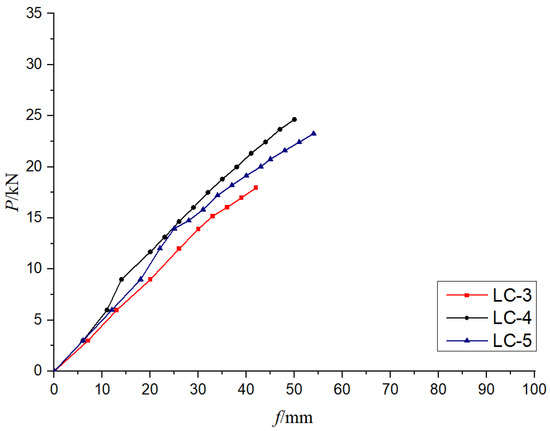
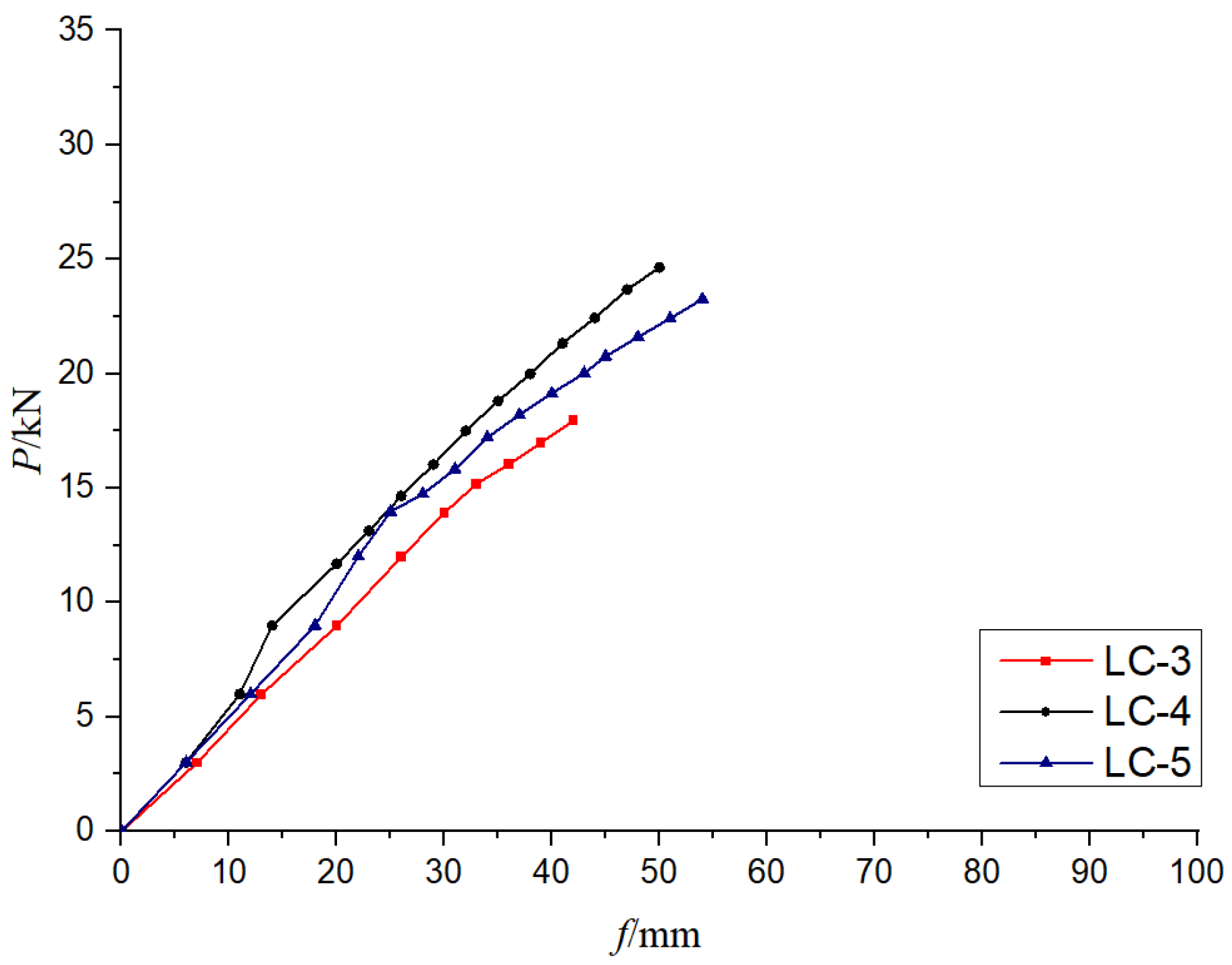
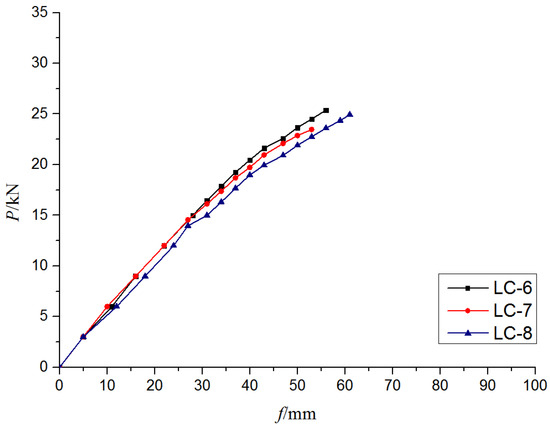
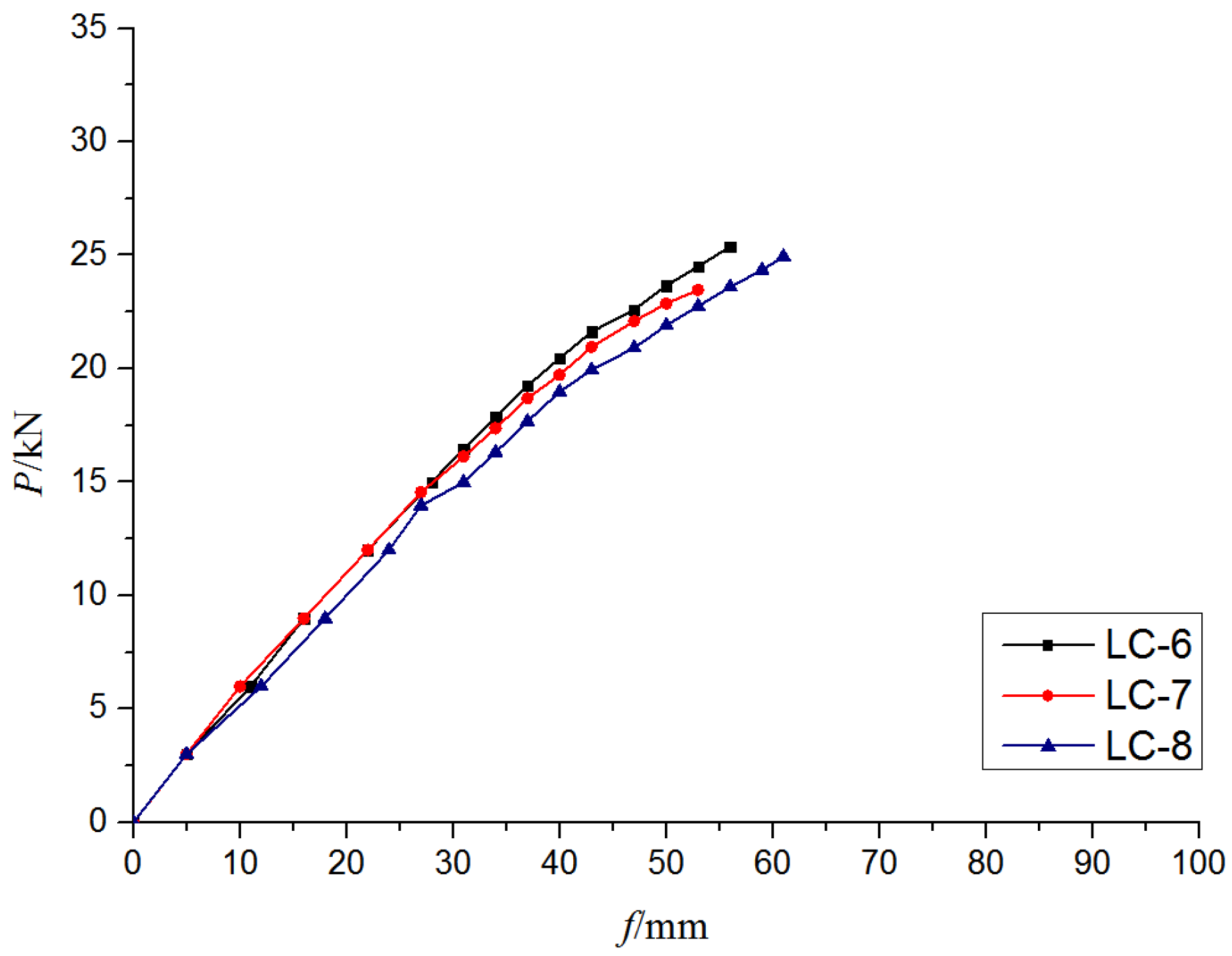
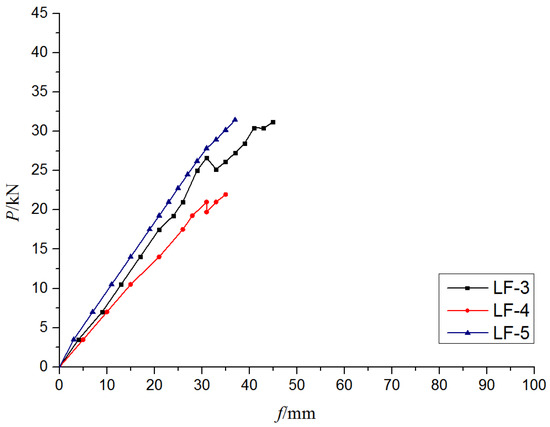
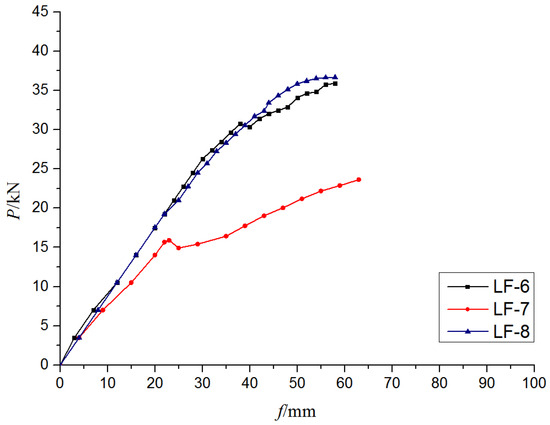
In order to analyze more clearly the influence of self-tapping screw arrangement on bending performance, the load–deflection curves obtained from bending tests of composite beams reinforced with self-tapping screws of the same rotation angle but different sizes and spacing in LC and LF groups were plotted separately, as shown in Figure 12, Figure 13, Figure 14 and Figure 15.
Figure 12.
Single-layer reinforced self-tapping screw 45° screwed in.
Figure 13.
Single-layer reinforced self-tapping screw 90° screwed in.
Figure 14.
Double-layer reinforced self-tapping screw 45° screwed in.
Figure 15.
Double-layer reinforced self-tapping screw 90° screwed in.
Figure 12, Figure 13, Figure 14 and Figure 15 show that the arrangement of self-tapping screws also influences the ultimate load of the reinforced beam. In the same group with the same insertion angle, compared with specimens reinforced with long nails (120 mm) and short spacing (20 mm), specimens reinforced with short nails (100 mm) and short spacing (20 mm) and those with long nails (120 mm) and long spacing (25 mm) have higher ultimate loads. This is because when the screws are too long and spacing too small, concentrated local wood fiber damage occurs, reducing the ultimate load of the reinforced beam. Meanwhile, it can be seen from Figure 8 and Figure 9 that compared to the short spacing screw-reinforced specimens, the failure mode of the long spacing screw-reinforced specimens is better. The damage degree of the test piece is lower, showing good stress performance.
According to the overall analysis of ultimate loads of various specimens in Table 4, it can be concluded that the ultimate load of specimens reinforced with long nails (120 mm) and long spacing (25 mm) is 1.6% higher than that of specimens reinforced with short nails (100 mm) and short spacing (20 mm), while the ultimate load of specimens reinforced with screws rotated 90° is 13.1% higher than that of specimens reinforced with screws rotated 45°. Considering the number of screws (8 long screws, 10 short screws) and the degree of wood fiber damage caused by screw insertion, it is recommended to screw 120 mm long self-tapping screws into the beam at 25 mm spacing and 90° angle as the optimal configuration in this experiment.
3.3.4. Comparison of Load–Strain Curve
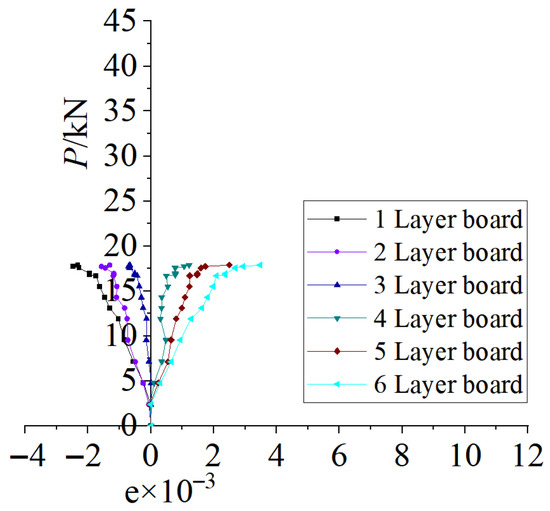
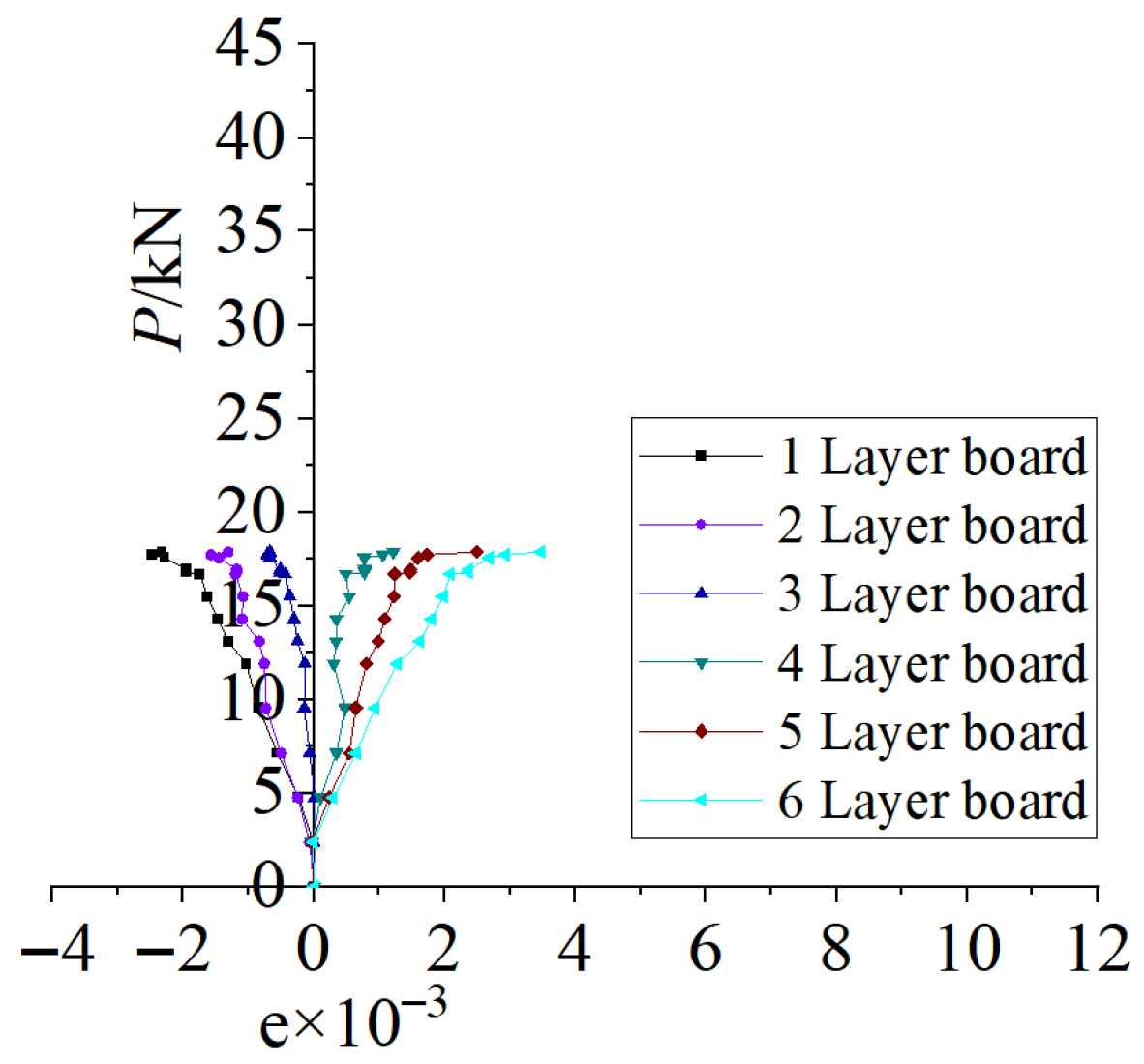
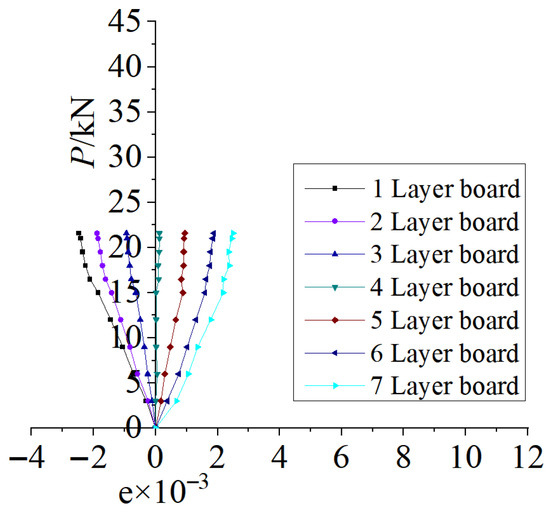
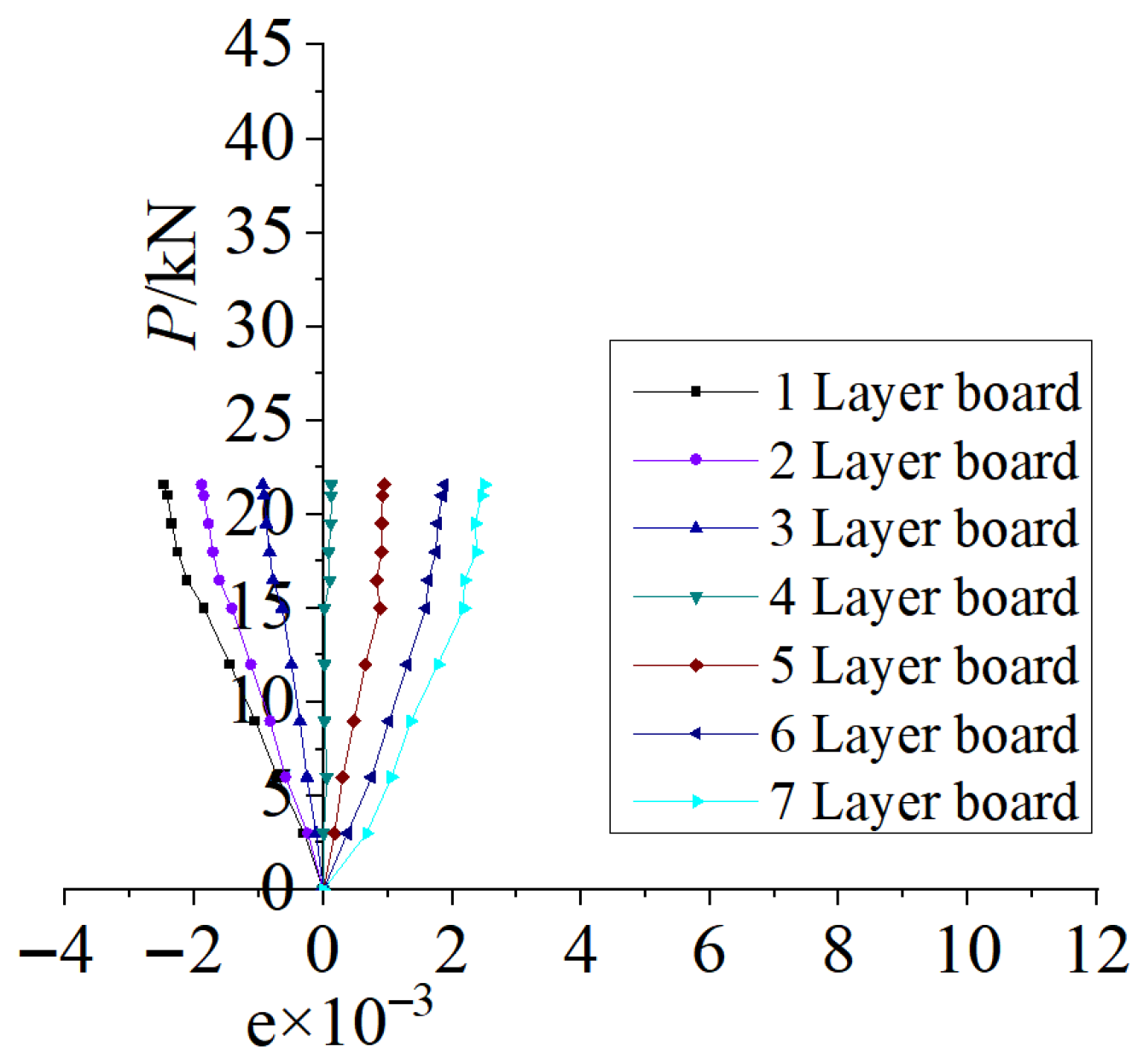
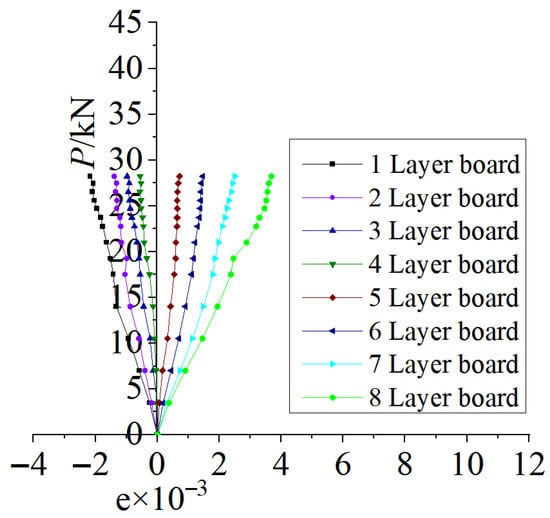
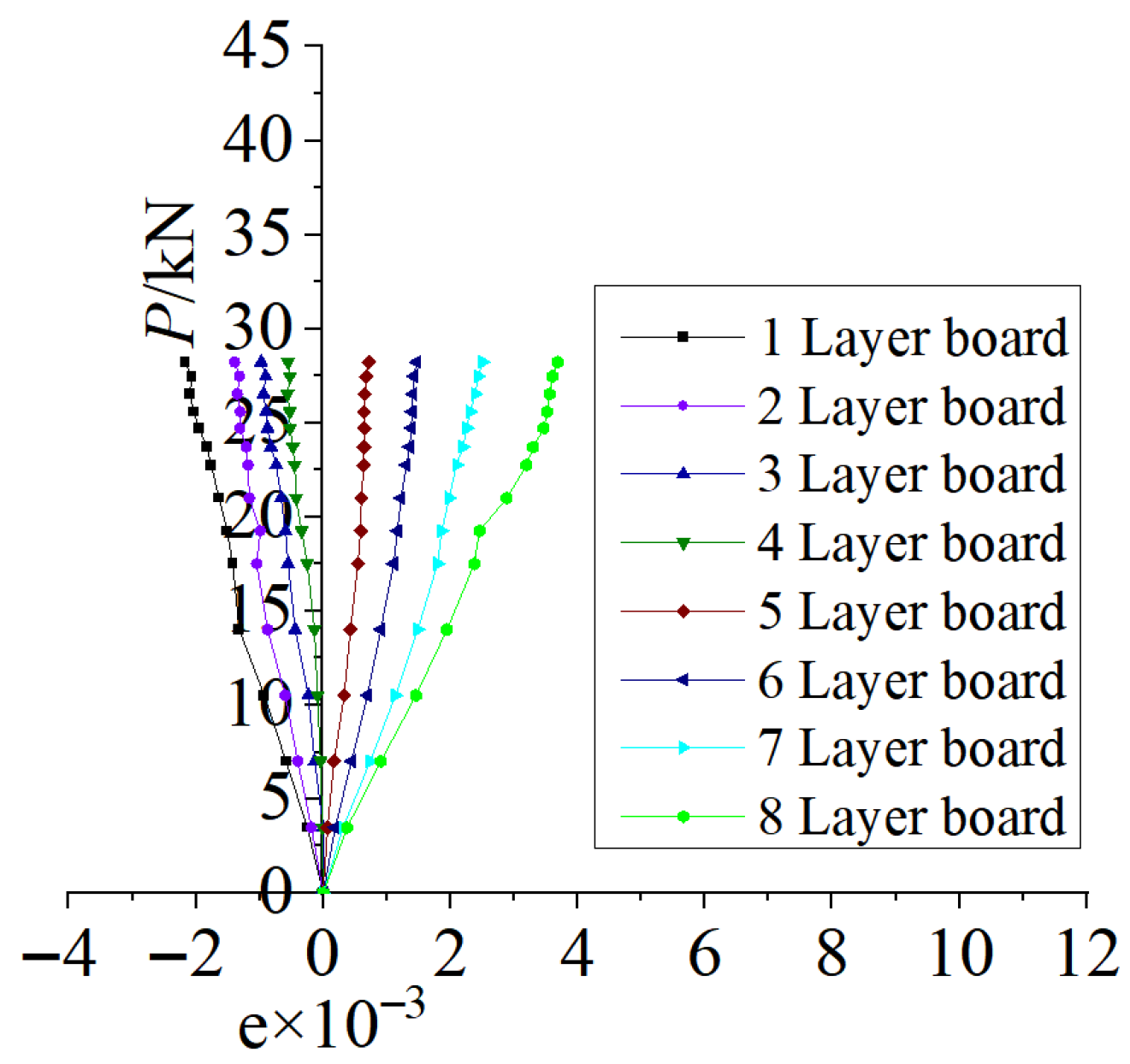
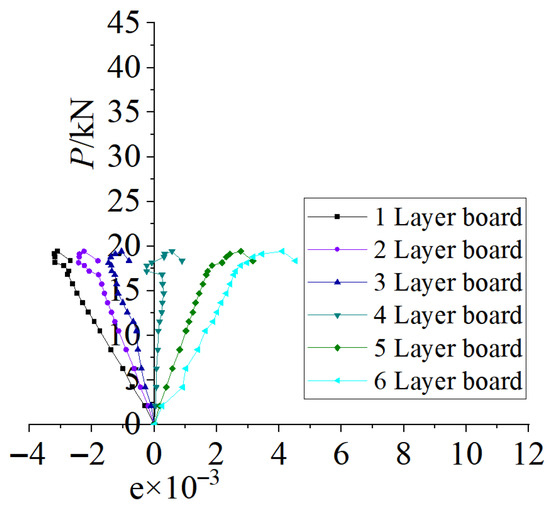
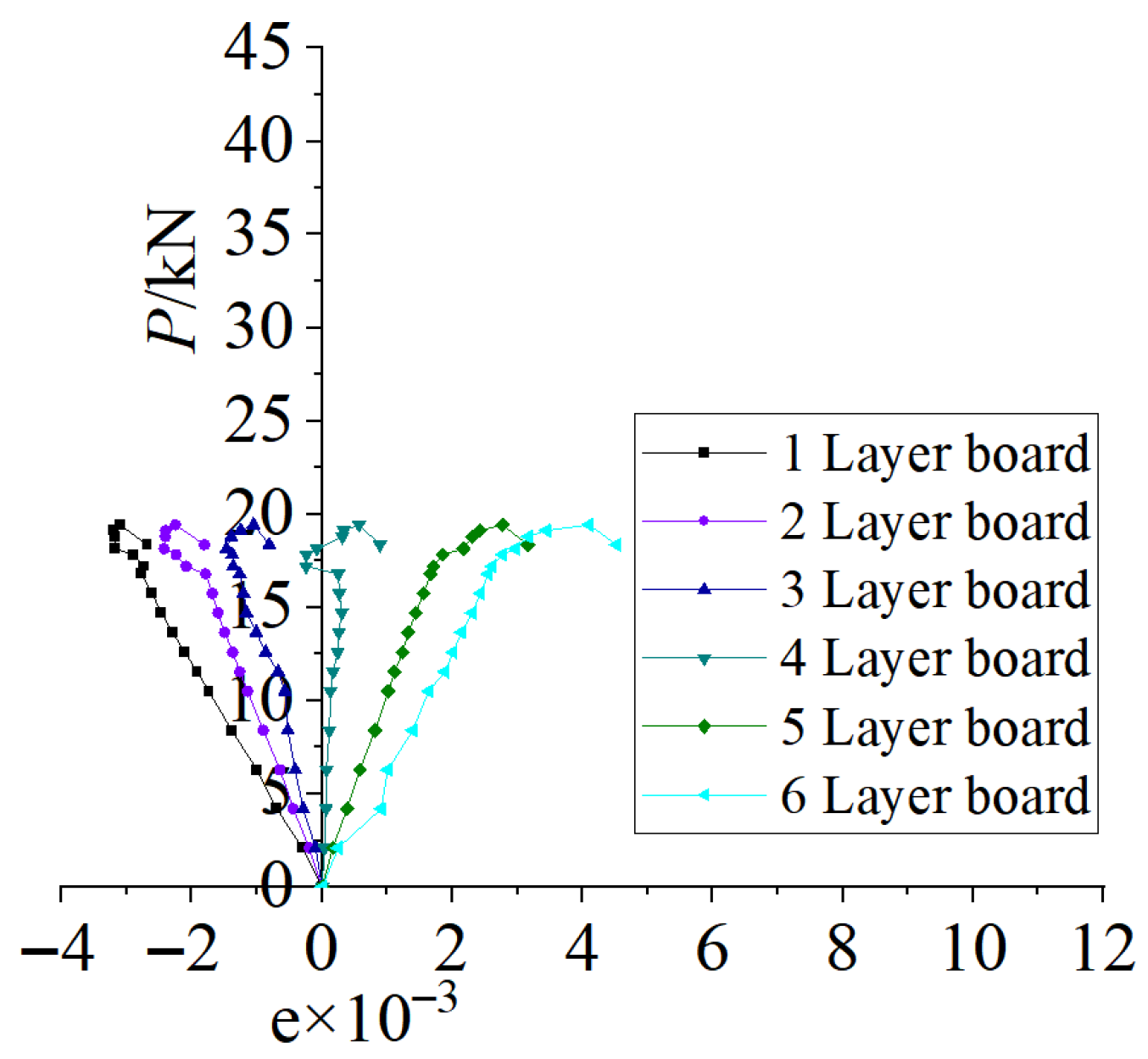
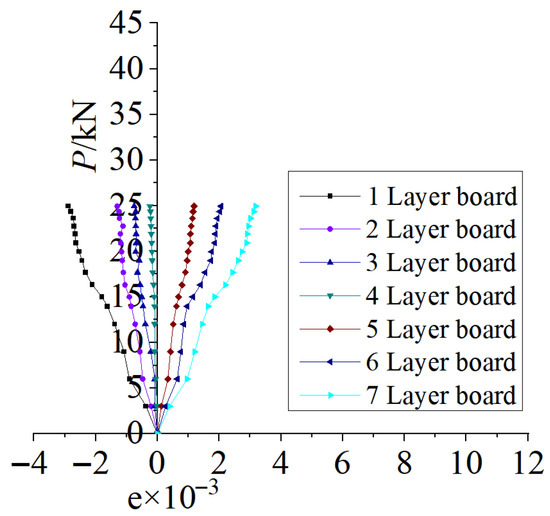
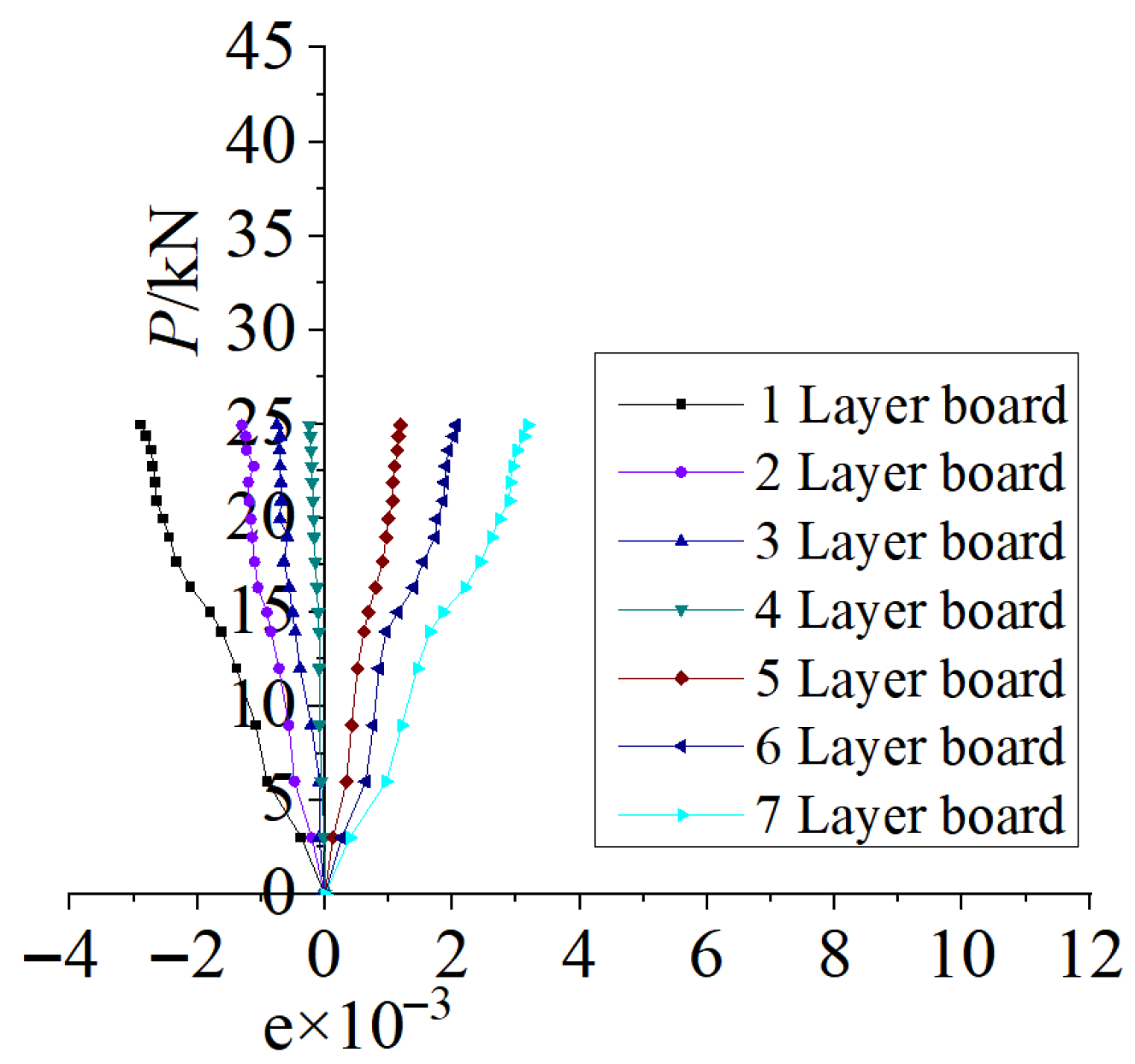
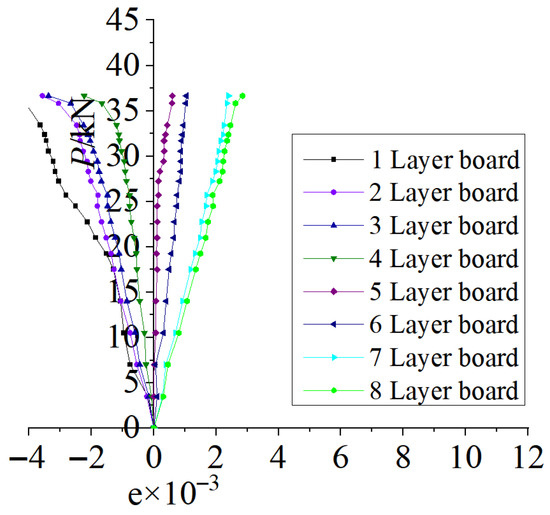
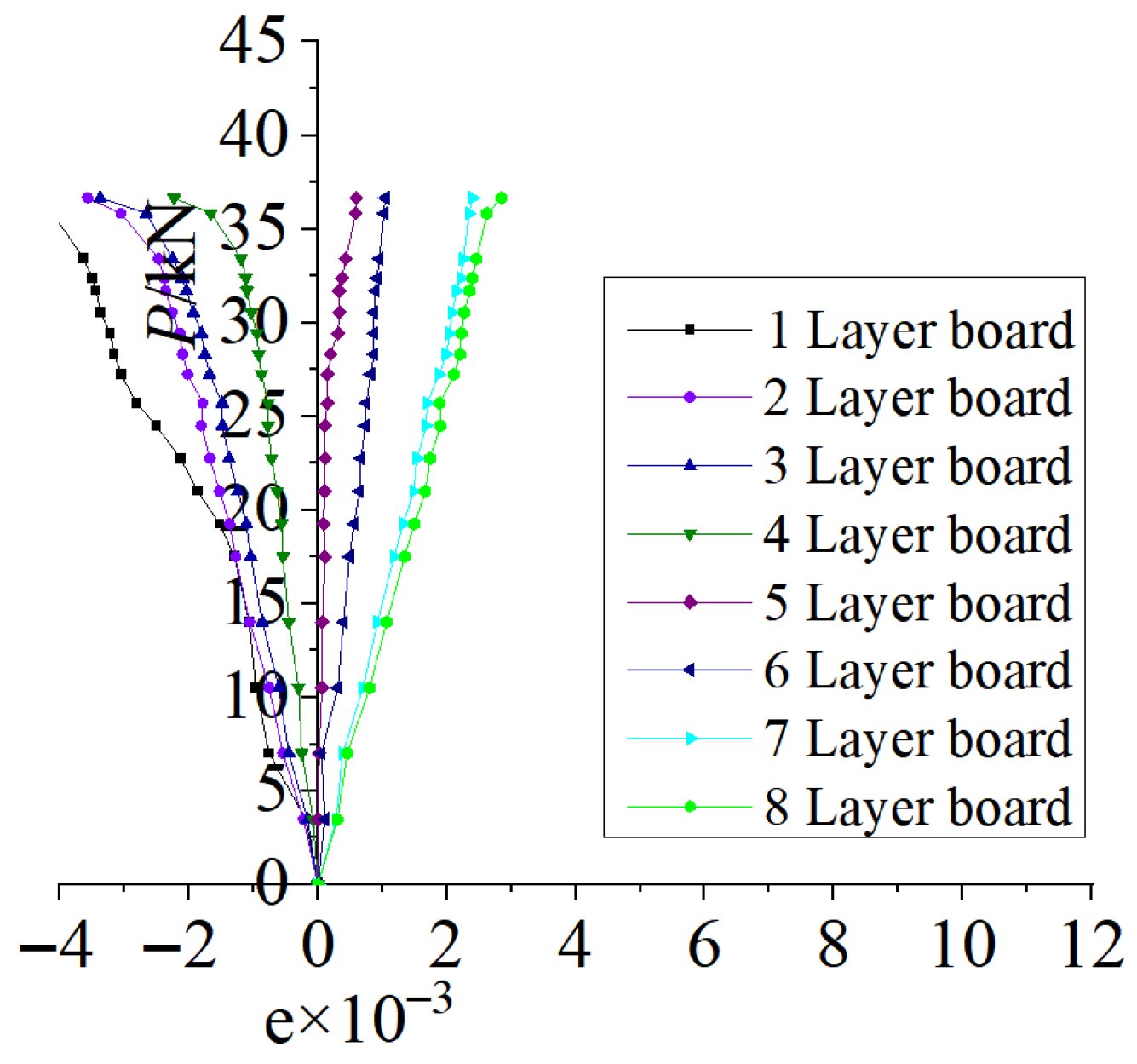
Because of the large number of test beams, it is not practical to list mid-span load–strain curves for each specimen. Therefore, representative beams were selected from adhesive-reinforced beams and adhesive–nail reinforced specimens to draw mid-span load–strain curves, as shown in Figure 16, Figure 17, Figure 18, Figure 19, Figure 20 and Figure 21.
Figure 16.
Load–strain curve of specimen S1.
Figure 17.
Load–strain curve of specimen C1.
Figure 18.
Load–strain curve of specimen F1.
Figure 19.
Load–strain curve of specimen S5.
Figure 20.
Load–strain curve of specimen C8.
Figure 21.
Load–strain curve of specimen F8.
Through analysis of load–strain curves, it can be concluded that compared to specimens reinforced with single-layer panels, specimens reinforced with double-layer panels have more reasonable stress distribution and a more balanced distribution between compression and tension zones. After reinforcement with double-layer panels, the effective cross-sectional area increases, improving stiffness and allowing material properties to be better utilized. At the same time, compared with adhesive-reinforced specimens, the load–strain curve of adhesive–nail reinforced specimens is fuller, the tension and compression zone area is larger, and stress is more fully developed. The load–strain curve of double-layer adhesive-reinforced specimens is slightly higher in the tensile zone than in the compression zone, and after self-tapping screws are inserted, the curve shifts toward the compression zone, indicating improved stiffness and faster entry into the elastic–plastic stage.
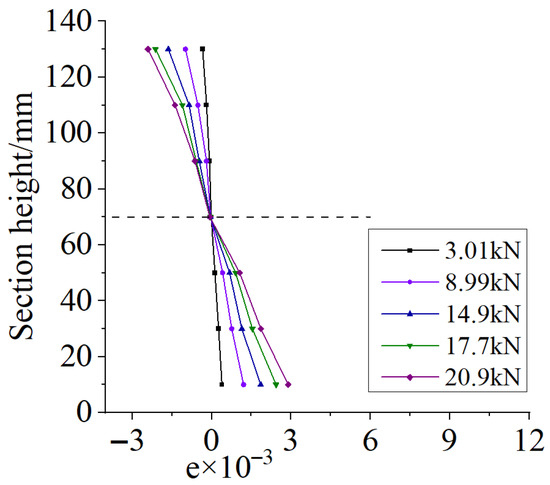
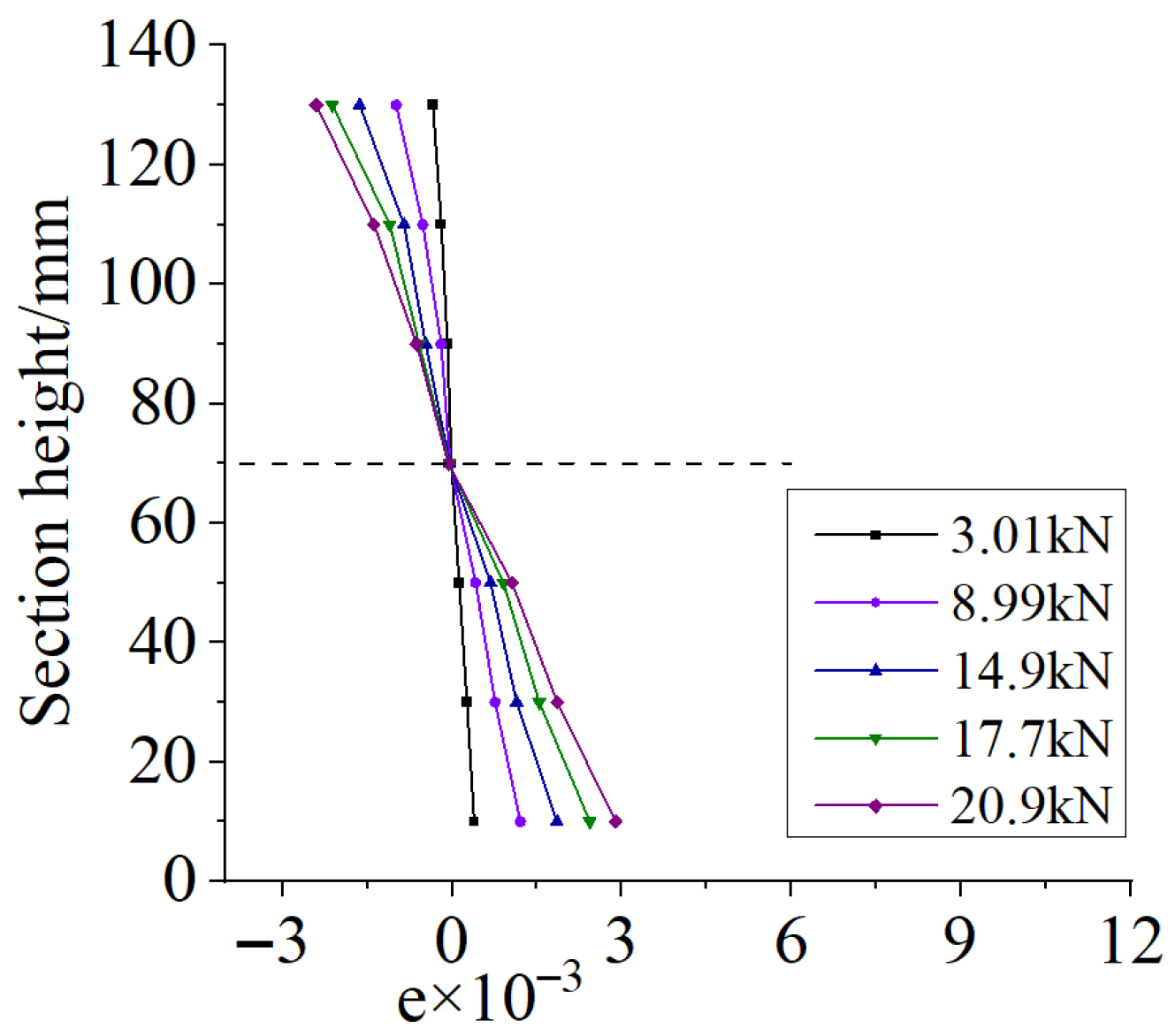
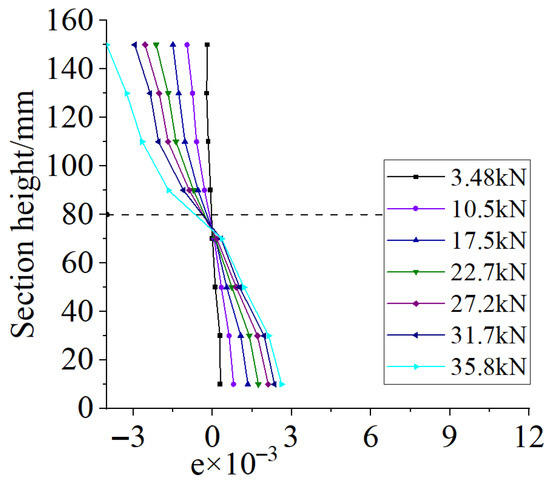
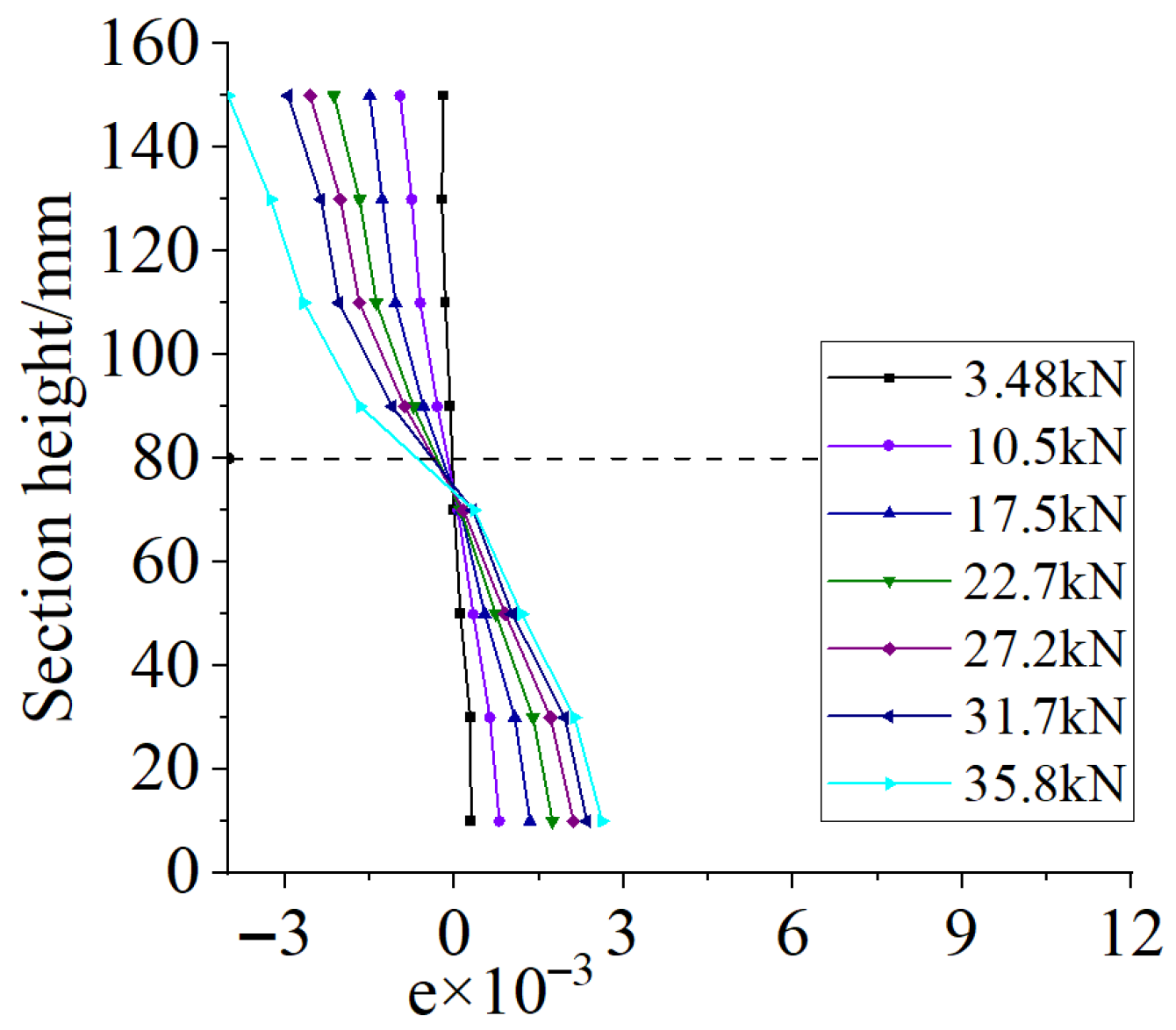
3.3.5. Comparison of Strain Relationship Curves at Mid-Span Section
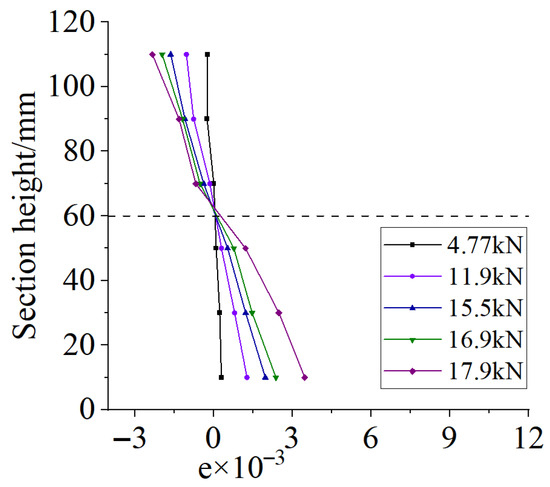
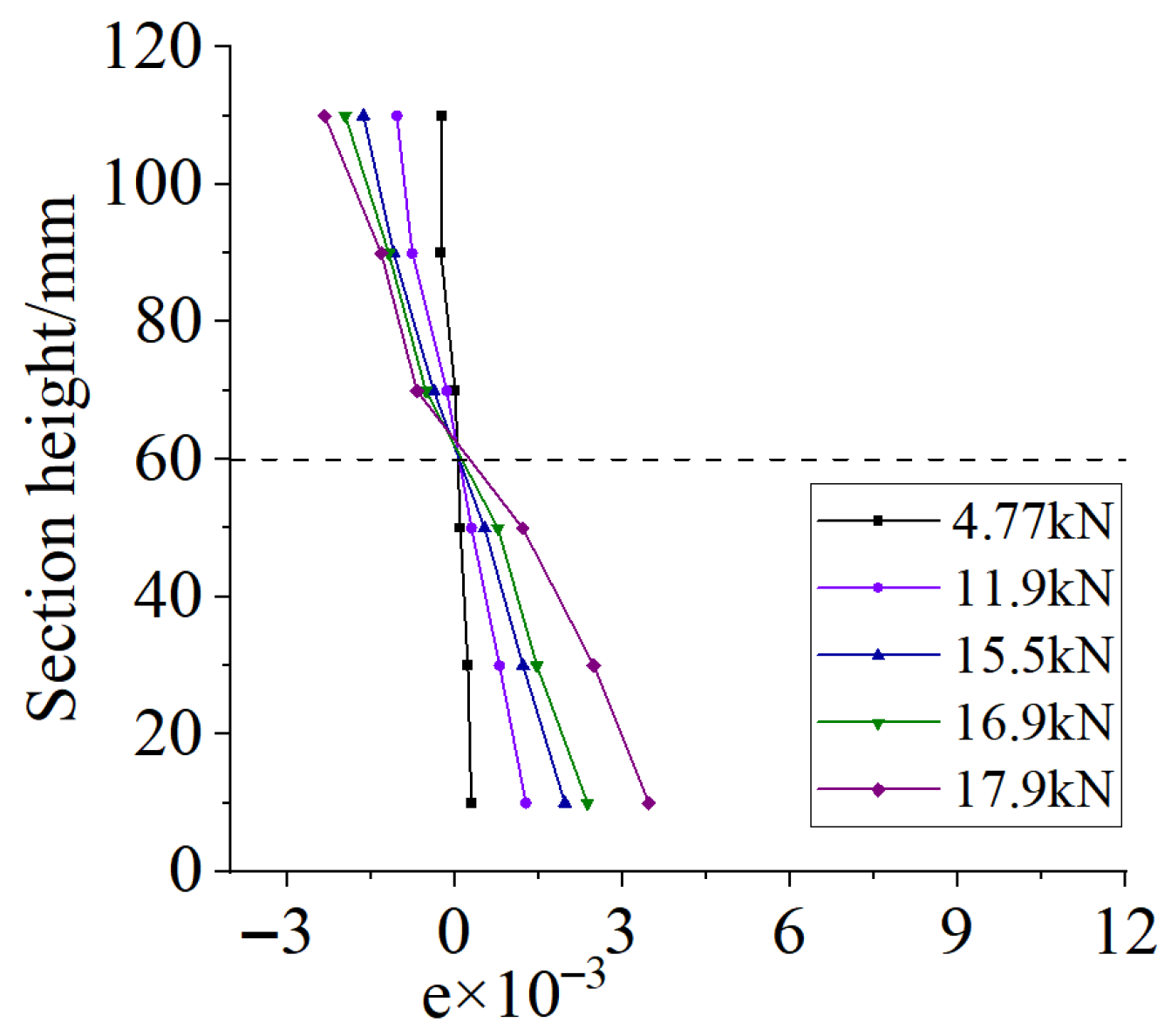
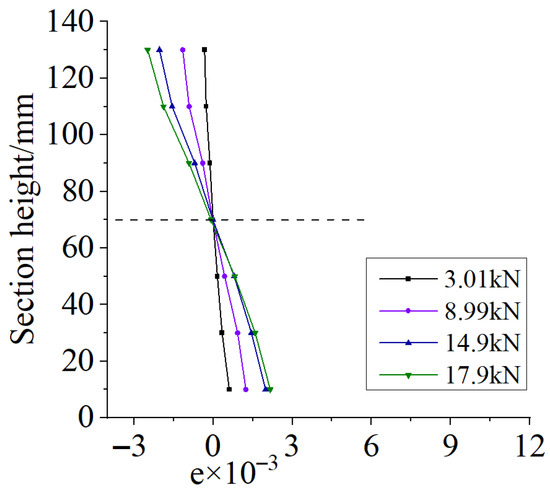
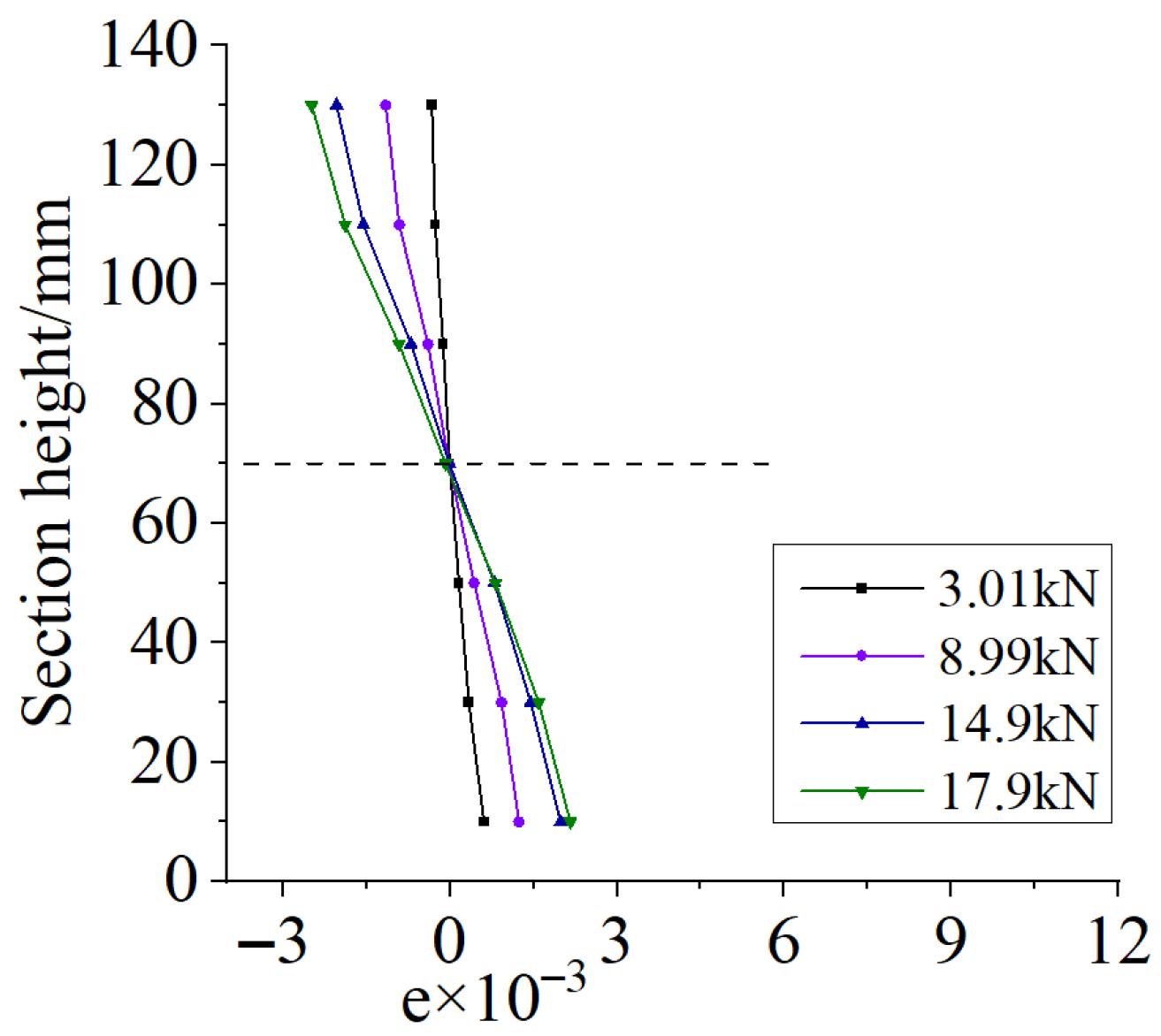
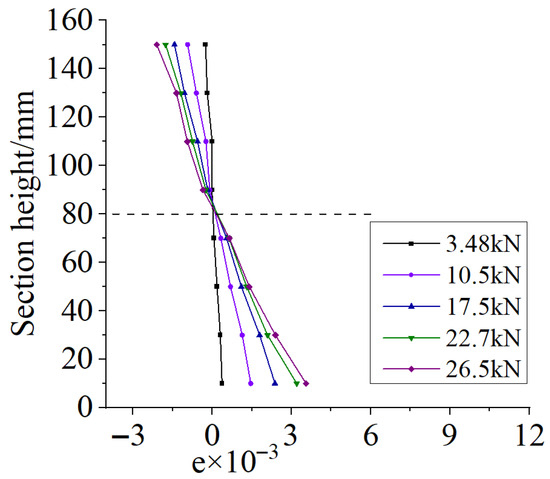
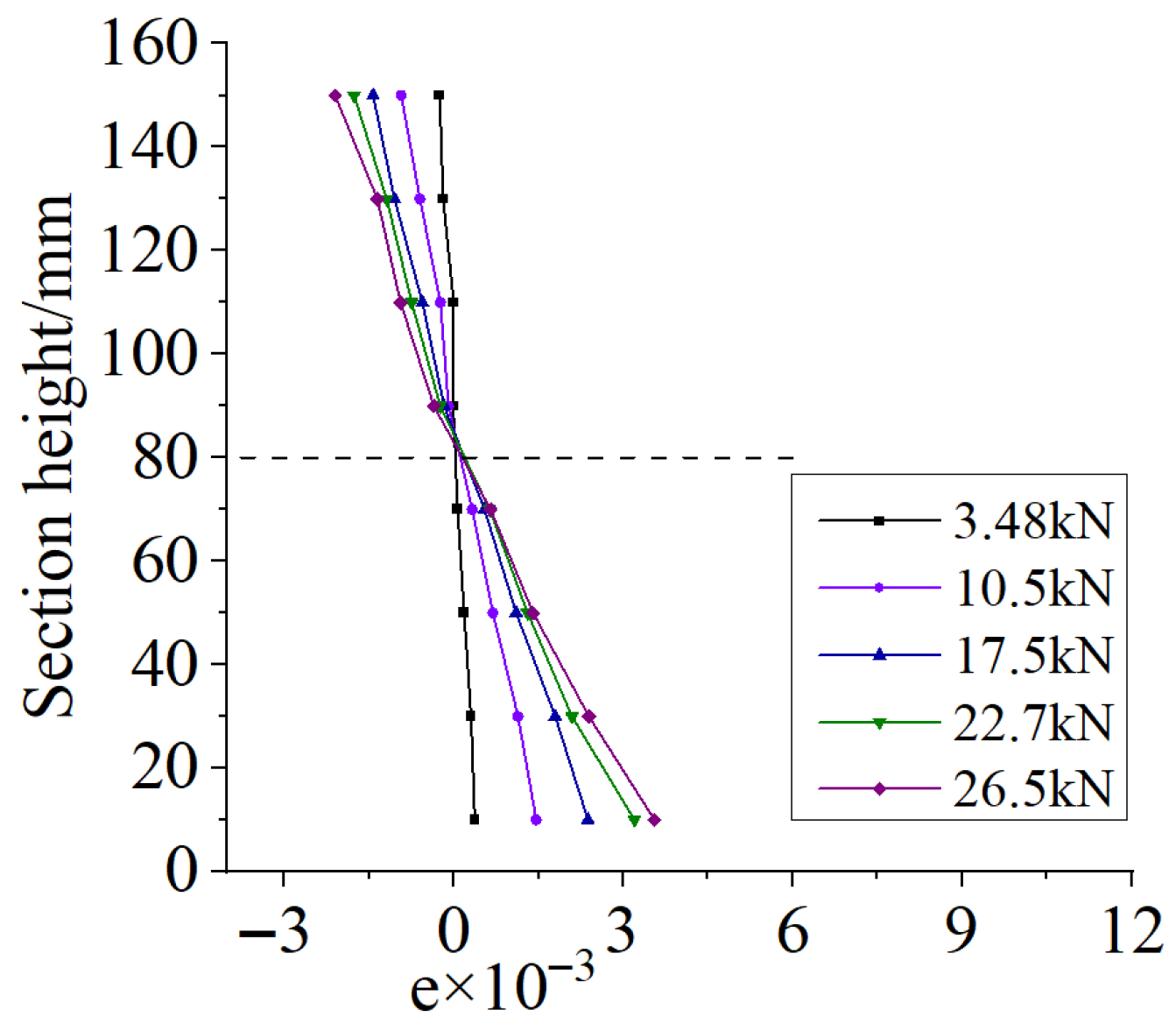
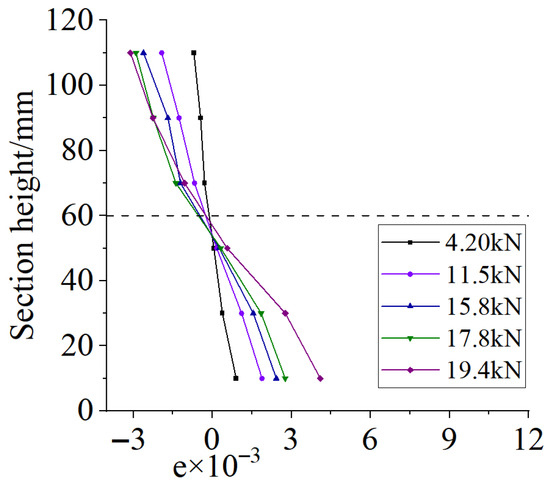
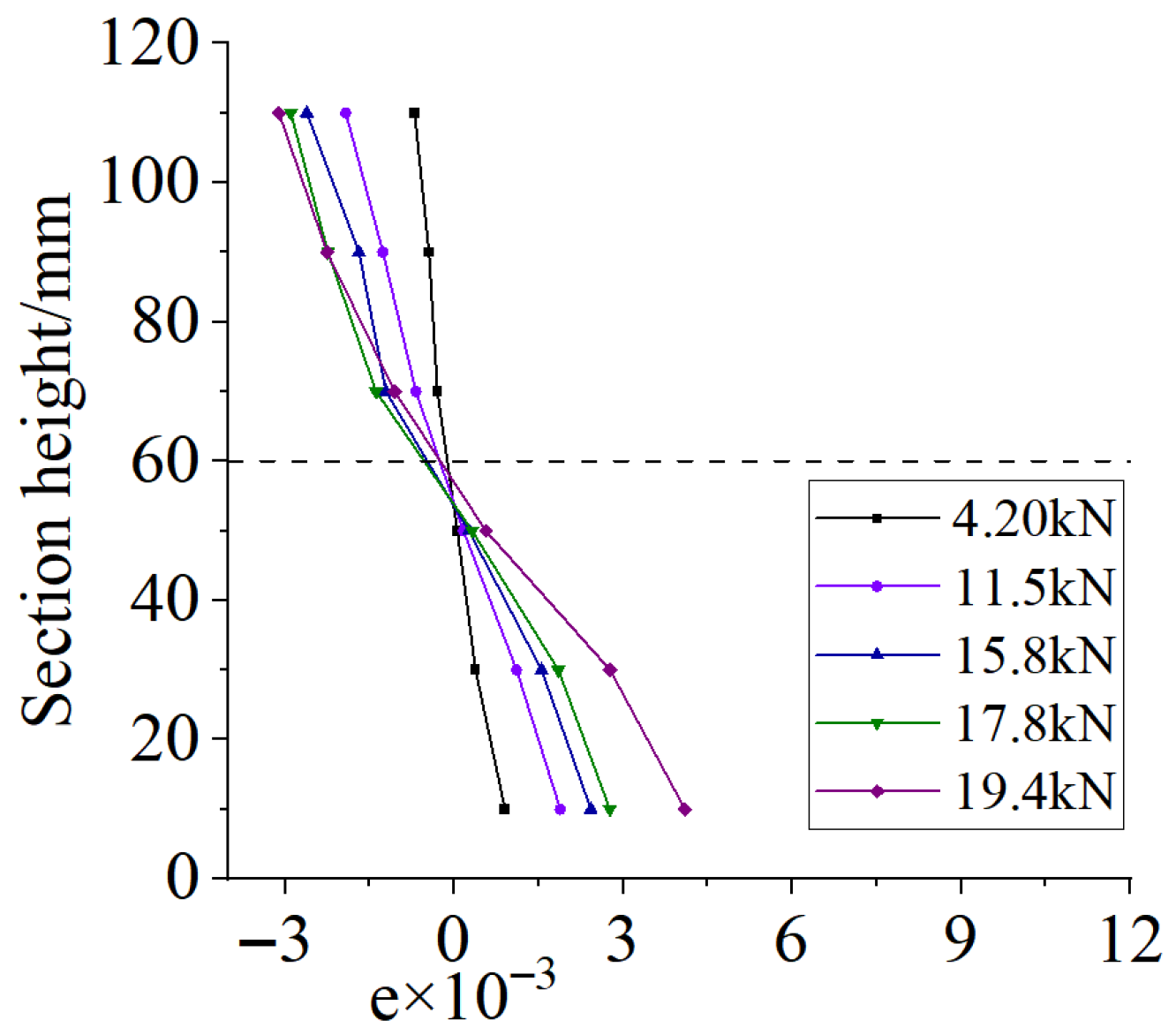
Representative beams from adhesive-reinforced and adhesive–nailed specimens were selected to draw mid-span section strain curves, as shown in Figure 22, Figure 23, Figure 24, Figure 25, Figure 26 and Figure 27.
Figure 22.
Strain relationship curve of mid span section of specimen S1.
Figure 23.
Strain relationship curve of mid span section of specimen C1.
Figure 24.
Strain relationship curve of mid span section of specimen F1.
Figure 25.
Strain relationship curve of mid span section of specimen S5.
Figure 26.
Strain relationship curve of mid span section of specimen C8.
Figure 27.
Strain relationship curve of mid span section of specimen F8.
Figure 22, Figure 23, Figure 24, Figure 25, Figure 26 and Figure 27 show variation curves of typical mid-span section strain with section height for single-layer and double-layer reinforced specimens under different loads. After comparison, it can be seen that the neutral axis of the load–span height relationship curve for adhesive-reinforced specimens is located at or above 1/2 of the section height. Compared with single-layer adhesive-reinforced specimens, the neutral axis for double-layer adhesive-reinforced specimens is generally located at or below 1/2 of the section height, indicating that increasing cross-sectional area improves stiffness. After self-tapping screws are inserted, the neutral axis of the mid-span height curve lies below 1/2 of the section height, showing that self-tapping screws improve stress performance and allow compression zone materials to be more fully utilized.
At the same time, mid-span section strain of single-layer and double-layer reinforced specimens remains linearly distributed, indicating that the plane section assumption is valid for design and analysis.
4. Discussion
Adopting the method of increasing the interface to reinforce glued laminated timber beams enhances stiffness and load-bearing capacity. Experimental data show that this method quickly improves bending performance and is simple and fast. A reinforcement method using adhesive and self-tapping screws is also proposed. The insertion of screws improves bonding between new and old laminates and suppresses crack development, delaying failure. Two types of failure phenomena for reinforced beams were summarized, along with the degree of improvement in bearing capacity for different reinforcement methods. Load–strain and mid-span strain curves were plotted, verifying that the plane section assumption applies.
5. Conclusions
This article conducted bending performance tests on six groups of twenty reinforced beams, studying the effects of section height, adhesive technology, and screw arrangement. Based on test data, the following conclusions are drawn:
- (1)
- Within the same group, compared to specimens reinforced with half-standard compressive stress, specimens reinforced with standard compressive stress adhesive showed 3.88–5.71% higher ultimate load, indicating that manufacturing quality affects mechanical properties.
- (2)
- Ultimate load and flexural stiffness of reinforced beams are proportional to section height. Compared with single-layer reinforced specimens, double-layer specimens showed 9.21–24.63% higher ultimate load and 33.64–43.44% higher bending stiffness. The cross-section increasing method effectively improves insufficient capacity and excessive deformation.
- (3)
- After self-tapping screws were inserted, ultimate load increased by 9.21–11.16%, indicating fuller stress development. Screws improve laminate connectivity, limit adhesive layer shear failure, and suppress crack propagation.
- (4)
- Mid-span strain remains essentially linear in both single-layer and double-layer reinforced specimens, supporting use of the plane section assumption.
- (5)
- Based on ultimate load and screw quantity considerations (8 long, 10 short) and fiber damage, 120 mm screws at 25 mm spacing and 90° angle are recommended as the optimal arrangement.
Based on these results, future work is suggested. Although adhesive and self-tapping screws effectively enhance bending performance and control crack development, screw tails still damage the beam bottom and reduce tensile strength. Therefore, attaching a steel plate to the bottom before inserting screws may further improve bending performance.
Author Contributions
Methodology, N.G. and T.W.; Resources, Z.W.; Formal analysis, Z.W. and M.L.; Writing—original draft, X.W.; Writing—review and editing, T.W.; Software, M.W. All authors have read and agreed to the published version of the manuscript.
Funding
This article is supported by the Joint Guidance Fund Project of Heilongjiang Province, with project number LH2024E004.
Data Availability Statement
The original contributions presented in this study are included in the article. Further inquiries can be directed to the corresponding author.
Conflicts of Interest
Author Ziyang Wu was employed by the company Daqing Oilfield Co. The remaining authors declare that the research was conducted in the absence of any commercial or financial relationships that could be construed as a potential conflict of interest.
References
- Wu, C.; Xue, J.; Song, D.; Zhang, Y. Seismic Performance Evaluation of a Roof Structure of a Historic Chinese Timber Frame Building. Int. J. Archit. Herit. 2022, 16, 1474–1495. [Google Scholar] [CrossRef] [Scilit]
- Yuan, S.; Sun, X.; Wang, W.; Zhou, B.; Sun, X.; Sun, J.; Wang, X. The Reaction-to-fire Performance of Wood Covered with A Transparent Film: A Potential Method for the Preservation of Chinese Wooden Historical Buildings. Int. J. Archit. Herit. 2023, 17, 1778–1790. [Google Scholar] [CrossRef] [Scilit]
- Chen, Z.; Zhu, E.; Pan, J.; Wu, G. Energy-Dissipation Performance of Typical Beam-Column Joints in Yingxian Wood Pagoda: Experimental Study. J. Perform. Constr. Facil. 2015, 30, 04015028. [Google Scholar] [CrossRef] [Scilit]
- Wang, Y.; Yang, F.; Zhang, J.L.; Zhang, Y.N.; Gao, Y. Ancient Commercial Buildings Seismic Performance Analysis and Study of Protection. Appl. Mech. Mater. 2013, 2545, 1965–1969. [Google Scholar] [CrossRef] [Scilit]
- Takuya, M.; Soei, K.; Satoshi, W.; Inoue, M. Environmental and Economic Evaluation of Wooden and Reinforced Concrete Non-residential Buildings III. A comparative analysis of LCA and eco-efficiency indicator based on input-output method. Mokuzai Gakkaishi 2021, 67, 7–13. [Google Scholar]
- Kevin, A.; Adam, R.P. Comparative Cradle-to-Grave Life Cycle Assessment of Low and Mid-Rise Mass Timber Buildings with Equivalent Structural Steel Alternatives. Sustainability 2021, 13, 3401. [Google Scholar]
- Paletto, A.; Becagli, C.; Geri, F.; Sacchelli, S.; De Meo, I. Use of Participatory Processes in Wood Residue Management from a Circular Bioeconomy Perspective: An Approach Adopted in Italy. Energies 2022, 15, 1011. [Google Scholar] [CrossRef] [Scilit]
- Guo, H.; Liu, Y.; Meng, Y.; Huang, H.; Sun, C.; Shao, Y. A Comparison of the Energy Saving and Carbon Reduction Performance between Reinforced Concrete and Cross-Laminated Timber Structures in Residential Buildings in the Severe Cold Region of China. Ecol. Environ. Conserv. 2017, 9, 1426. [Google Scholar] [CrossRef] [Scilit]
- Laitinen, M.; Ilgın, H.E.; Karjalainen, M.; Saari, A. Low-Carbon Emissions and Cost of Frame Structures for Wooden and Concrete Apartment Buildings: Case Study from Finland. Buildings 2024, 14, 1194. [Google Scholar] [CrossRef] [Scilit]
- Bravo, T.P.; Gattas, J.M.; Bravo, F.; Astroza, R.; Maluk, C. Experimental assessment of modal properties of hybrid CFRP-timber panels. Constr. Build. Mater. 2024, 438, 137075. [Google Scholar] [CrossRef] [Scilit]
- Konstantinos, S.; Anastasios, S.; Solomon, T. Displacement-Based Seismic Design and Assessment of Friction-Dissipating Light-Timber Frames Coupled with a Self-Centering CLT Wall. J. Perform. Constr. Facil. 2024, 38. [Google Scholar]
- Wang, T.; Di, J.; Zuo, H. Long-Term Loading Experimental Research of Prestressed Glulam Beams Based on Creep Influence. Sustainability 2022, 14, 9937. [Google Scholar] [CrossRef] [Scilit]
- Bakalarz, M.M.; Kossakowski, P.G. Application of Transformed Cross-Section Method for Analytical Analysis of Laminated Veneer Lumber Beams Strengthened with Composite Materials. Fibers 2023, 11, 24. [Google Scholar] [CrossRef] [Scilit]
- Saad, K.; Lengyel, A. Strengthening Timber Structural Members with CFRP and GFRP: A State-of-the-Art Review. Polymers 2022, 14, 2381. [Google Scholar] [CrossRef] [Scilit]
- Yi, J.; Zhu, B.; He, G.; Zhou, Y. Experimental study on stiffness degradation of CFRP reinforced glued laminated timber beams. J. Cent. South Univ. For. Technol. 2021, 41, 165–172. [Google Scholar] [CrossRef]
- Hu, B. Experimental Study on the Flexural Performance of Glued Laminated Timber Beams Strengthened by Adhesive Enlarging Section Method. Master’s Thesis, Northeast Forestry University, Harbin, China, 2022. [Google Scholar] [CrossRef]
- Yang, X.; Xue, W.; Guo, N. Bending performance of steel plate reinforced laminated timber beams. J. Jilin Univ. (Eng. Ed.) 2017, 47, 468–477. [Google Scholar] [CrossRef]
- Asa, P.; Feghali, E.C.; Steixner, C.; Tahouni, Y.; Wagner, H.J.; Knippers, J.; Menges, A. Embraced wood: Circular construction method for composite long-span beams from unprocessed reclaimed timber, fibers and clay. Constr. Build. Mater. 2024, 416, 135096, Corrigendum to Constr. Build. Mater. 2024, 424, 135939. [Google Scholar] [CrossRef] [Scilit]
- Leibnitz, O.; Dreimol, C.H.; Stucki, S.; Sanz-Pont, D.; Keplinger, T.; Burgert, I.; Ding, Y. Renewable wood-phase change material composites for passive temperature regulation of buildings. Next Mater. 2024, 2, 100132. [Google Scholar] [CrossRef] [Scilit]
- Dan, B.; Felix, H. Structural design using reclaimed wood—A case study and proposed design procedure. J. Clean. Prod. 2023, 420, 138316. [Google Scholar]
- Munandar, W.A.; Purba, R.H.; Christiyanto, A. Exploratory study on the utilization of recycled wood as raw material for cross laminated timber. IOP Conf. Ser. Mater. Sci. Eng. 2019, 669, 012011. [Google Scholar] [CrossRef] [Scilit]



Disclaimer/Publisher’s Note: The statements, opinions and data contained in all publications are solely those of the individual author(s) and contributor(s) and not of MDPI and/or the editor(s). MDPI and/or the editor(s) disclaim responsibility for any injury to people or property resulting from any ideas, methods, instructions or products referred to in the content. |
© 2025 by the authors. Licensee MDPI, Basel, Switzerland. This article is an open access article distributed under the terms and conditions of the Creative Commons Attribution (CC BY) license.