Article

Energy Performance Evaluation and Optimization of a Residential SOFC-CGS in a Typical Passive-Designed Village House in Xi’an, China


1
Department of Railway Engineering, Zhengzhou Railway Vocational and Technical College, Zhengzhou 451460, China
2
Wales College, Lanzhou University, Lanzhou 730000, China
*
Authors to whom correspondence should be addressed.
Buildings 2026, 16(1), 59; https://doi.org/10.3390/buildings16010059

Submission received: 23 October 2025 / Revised: 28 November 2025 / Accepted: 16 December 2025 / Published: 23 December 2025
(This article belongs to the Section Building Energy, Physics, Environment, and Systems)

Abstract

Due to the increasingly severe energy crisis and extreme climate conditions in recent years, the development and use of alternative clean energy sources have become increasingly important. This study evaluates the energy performance of applying residential solid oxide fuel cells (SOFCs) in a typical passive-designed residential village house in Xi’an. Furthermore, the study integrates photovoltaic (PV) systems and storage batteries with a solid oxide fuel cell co-generation system (SOFC-CGS) to enhance its overall energy performance. The results show that when the SOFC-CGS operates independently, it can provide stable electricity. However, due to its limited capacity, it only meets 43% of the total energy demand and cannot fully satisfy the heating requirements. In this energy supply scenario, the SOFC-CGS heating efficiency reaches 25%, the power generation efficiency reaches 42%, and the overall efficiency reaches 67%. After integrating the PV battery system with the SOFC-CGS, the addition of photovoltaic and battery systems boosts the energy self-sufficiency rate by 32 percent, reaching 75%. In other words, this clean energy combination can cover 75% of the household’s traditional energy consumption. In addition, the heating efficiency increases by 2 percentage points to 27%, the power generation efficiency rises by 4 percent to 46%, and the overall system efficiency improves by 6 percent to reach 73%. Furthermore, the utilization rate of the photovoltaic battery system also rises from 25% to 73%: an increase of 48 percent. Therefore, according to the analysis results, integrating PV and storage batteries with the SOFC-CGS proves to be a profitable and efficient solution for application in passive-designed village houses in Xi’an.

1. Introduction

With the increasing global focus on low-carbon rural development, energy systems for typical passive-designed village houses have become a key research topic in sustainable building design. The rapid escalation of global energy consumption and the pressing challenge of climate change have brought distributed energy resources (DERs) to the forefront of sustainable energy research. Since the 1950s, the environmental impacts of fossil fuels have become increasingly evident, and the first oil crisis of 1973 highlighted the vulnerability of conventional energy systems [1,2,3,4]. Although these historical events prompted the exploration of alternative energy strategies, many of the underlying issues remain unresolved [2]. In parallel, passive design strategies, such as improving building orientation, insulation, and natural ventilation, have long been promoted as complementary approaches to reduce demand and mitigate environmental impacts [3]. However, while such strategies can enhance energy efficiency and comfort, they are insufficient to eliminate the systemic dependence on fossil fuels or to meet the growing energy demands driven by climate change and rural development [4]. Today, issues of global warming, air pollution, and energy shortages remain unresolved, underscoring the necessity for a transition towards clean, renewable, and decentralized energy systems [5].
Xi’an, located in the northwest of China, is known for its abundant solar energy resources, making it an ideal location for studying the application of renewable energy systems like PV panels and solid oxide fuel cell co-generation systems (SOFC-CGS) [6]. The region experiences significant solar radiation levels, with over 2000 h of sunlight annually. Additionally, rural areas in Xi’an are densely populated, with many households relying on traditional energy sources such as coal and natural gas [7]. These characteristics create an urgent need for clean, decentralized energy solutions to meet the growing energy demand and reduce reliance on fossil fuels [5]. As such, this study is both timely and relevant, as it aims to provide a sustainable, energy-efficient solution to these challenges and contribute to the broader goals of decarbonization in rural China.
DERs, such as PV panels, storage batteries, and SOFC-CGSs, are small-scale, modular technologies that are located close to end users. Unlike centralized power plants, DERs reduce transmission losses, allow flexible deployment, and offer synergy between electricity and thermal energy. Consequently, they have emerged as key enablers of decarbonized, reliable, and resilient energy systems [2]. Recent studies on PV underline both their rapid deployment potential and their inherent intermittency. PV output peaks at midday, whereas residential demand typically concentrates in the morning and evening, leading to persistent mismatches between supply and load. Enlarging installation capacity does not proportionally improve self-consumption; instead, research shows that coupling PV with thermal energy storage (TES) or hybrid solar cycles can enhance utilization [3]. For instance, integrating TES with Brayton cycles achieves a higher efficiency at elevated inlet temperatures, while Rankine-based integrations, although less efficient, provide a more stable operation at lower temperatures [4,5]. Given these limitations, research attention has turned to fuel-cell-based solutions that can provide stable electricity and recoverable heat across seasons. SOFC-CGSs have emerged as a promising DER option, due to their dual ability to generate electricity with relatively high efficiency and to recover stack waste heat for domestic use. Research in integrated Power-to-X chains demonstrates that an optimal heat integration and pinch-analysis-based co-design can reduce production costs and downsize electrolyzer capacity requirements. Yet, their rated capacity often constrains their performance under high seasonal heating loads, particularly in winter, and efficiency gains are easily offset by radiator heat losses when heat is not effectively utilized. Thus, while the SOFC-CGS offers greater stability than PV, it still requires system-level integration to maximize its benefits. Given these unresolved mismatches, storage technologies are introduced as an additional layer of flexibility, especially for batteries. Studies on battery storage emphasize its role in smoothing fluctuations and enhancing PV self-consumption but also caution against overestimating its standalone value at small residential scales [6]. Case analyses of stand-alone grids show that batteries combined with demand-side participation improve efficiency by approximately 3% and reduce energy costs by nearly 30% compared to scenarios without participation [7]. Similarly, hydrogen-linked systems reveal that the operating-condition optimization of electrolyzes delivers greater system-level efficiency than maximizing component-level performance, again underscoring that storage yields its highest value when coordinated with flexible demand and other DER devices. However, to achieve optimal performance, DERs must be adapted to the unique thermal and operational characteristics of typical passive-designed village houses.
The PV-battery-SOFC hybrid system developed in this study offers three key advantages: energy complementarity, stand-alone operation, and low carbon emissions. It is particularly suitable for rural areas in the northwest, where solar resources are abundant, the grid is unstable, and natural gas networks are accessible. This system stores the solar power stored in batteries during the day, and during the night or on cloudy days, the SOFC unit generates electricity and recovers waste heat, ensuring a continuous supply of electricity and hot water year-round. Even in the event of a grid failure, the system can operate independently, with emissions being close to zero.
Compared to diesel generators, the SOFC-CGS system offers a clean energy solution, and hydrogen is abundantly available in China. By the end of 2023, the country’s hydrogen production capacity exceeded 49 million tons per year, with an output exceeding 35 million tons [8]. In contrast to PV-heat pump systems, the PV-battery-SOFC hybrid system features a simple structure, is easy to install, and can effectively utilize the abundant solar resources in the northwest.
In China’s rural areas, especially in northwestern regions like Xi’an, traditional houses have been transformed into typical passive-designed village houses to reduce the heating demand and improve comfort. Over recent decades, traditional village houses have been replaced by monotonous brick structures, which are often designed and built without professional guidance. These buildings suffer from poor insulation, low thermal comfort, and heavy reliance on coal stoves and grid electricity. Surveys in Xi’an villages revealed that 78% of residents feel cold at night during the winter, while 59% are dissatisfied with thermal comfort [9]. At the same time, most electricity supplied to these rural households comes from coal-fired power plants, with 73.4% of national generation still being dependent on coal [10]. This results in a dual crisis of energy inefficiency and environmental degradation. Thus, the integration of DERs into rural housing systems has become not only an academic inquiry but also a practical necessity for improving living conditions and achieving carbon reduction goals.
Despite the improvements achieved through passive design strategies and the efficiency advantages of DER devices, the simulation results indicate that the substantial winter heating demand in Northwestern China cannot be fully met by PVs or SOFC-CGSs [11]. In practice, direct natural gas heating, achieving efficiencies of about 95%, remains the most feasible option for space heating, while PVs and SOFC-CGSs are better positioned to supply household electricity, domestic hot water, and summer cooling [12,13,14,15,16]. While passive design strategies, such as improving the orientation, insulation, and window-to-wall ratios, can reduce the energy demand and enhance comfort, they are insufficient to address the broader structural and systemic energy challenges faced by rural housing in Northwestern China [17]. Residents continue to rely on unhealthy and unclean fuels such as raw coal, with risks of CO poisoning being reported every winter [18]. Even households that adopt modern appliances often face inefficiencies, due to poorly designed system configurations [19]. The current research generally agrees that the efficiency improvements achieved by single DERs in rural residential settings are constrained by “supply–demand temporal mismatches” and “operational fluctuations [20].” For instance, the PV-generated output is concentrated around midday, while peak residential loads in Northwestern China typically occur in the morning and evening [21]. This leads to low self-consumption ratios, and simply enlarging the PV installation can even dilute utilization [22]. When the south-facing roof area is expanded from approximately 13 m2 to 50 m2, the share of the annual demand supplied increases only marginally, with diminishing returns, indicating that capacity expansion alone cannot effectively resolve load-matching issues [23,24]. In contrast, the SOFC-CGS can provide stable, season-independent electricity generation and recover stack waste heat for the domestic hot water supply [25]. Nevertheless, their rated power and thermal storage capacity are insufficient to cover the high winter heating load: when a SOFC-CGS is required to shoulder the space-heating demand, large amounts of purchased electricity become necessary, radiator heat losses intensify, and overall efficiency gains remain limited at around 65%, with optimized operation reaching about 67% [26]. At the system integration level, the “electric–heat coupling” complementarity of the PV and SOFC-CGS has been widely validated [27]. Daytime PV generation reduces SOFC runtime and natural gas consumption, while also lowering radiator losses and thus improving the thermal utilization efficiency [28]. However, this simultaneously diminishes the contribution of the SOFC-CGS to the domestic hot water tank, increasing the auxiliary boiler’s fuel consumption [29]. This trade-off highlights the central challenge in rural household-integrated energy systems: while multi-source complementarity can significantly reduce the purchased electricity and improve the primary energy efficiency, the lack of electrical or thermal storage or demand shifting leaves the heating side largely dependent on a fossil-based gas supply [30]. Empirical and simulation studies on battery integration further indicate that, in small-scale single households, modest battery capacities yield only marginal improvements in peak shaving and self-consumption rates, with unit cost-effectiveness often being inferior to demand-side management measures such as heat pump coupling, load shifting, or preheating strategies [31]. Therefore, the starting point of this research is the recognition that passive design and single DER deployment are insufficient. What is needed is a systemic integration of multiple DERs that is capable of balancing the intermittency of renewables, matching the supply with demand patterns, and utilizing the waste heat and storage capacity to achieve higher overall efficiency [32].
Previous studies on SOFC systems have primarily focused on urban or industrial applications, while their adaptation to typical passive-designed village houses remains underexplored, often highlighting their high cogeneration efficiency and low emissions [33]. However, few have explored their dynamic performance in rural residential settings, particularly in conjunction with renewable sources like PV [34,35,36]. This paper builds on the existing literature by offering a detailed simulation-based comparison of the SOFC-CGS’s integration schemes, emphasizing energy matching, load-following capability, and thermal–electric synergy. The analysis draws on simulation results that model hourly energy flows, device efficiencies, and system-level interactions under varying seasonal conditions. This study focuses on the comparative analysis of fuel-cell-based integrated DER systems, with a particular emphasis on the SOFC-CGS. While PVs have been widely applied in rural contexts, the performance of SOFC-CGSs in such settings, especially when combined with PVs, remains underexplored. This research aims to address this gap by analyzing the operational behavior, energy efficiency, and system integration potential of SOFC-CGSs when paired with PVs and battery storage. Two configurations are examined in detail: PVs combined with SOFC-CGSs, and PVs integrated with both battery storage and SOFC-CGSs. These systems are evaluated under realistic rural energy demand profiles and climatic conditions specific to Xi’an, with a focus on how each configuration manages the balance between electricity and thermal energy supply.
The purpose of this study is to evaluate the energy performance of integrating SOFC-CGSs with PVs and battery systems in a typical passive-designed village house in Xi’an. This research compares dual-device and triple-device configurations to determine optimal strategies for the rural energy transition. Rather than focusing on a single technology, the research compares dual-device and triple-device integration schemes to assess their relative advantages in terms of energy efficiency, supply stability, and renewable utilization. A key question addressed is whether the added complexity of including battery storage significantly improves system performance, or whether a simpler PV + SOFC-CGS configuration is sufficient for meeting rural energy demands. This investigation not only fills a gap in the current literature but also provides practical insights for designing resilient, low-carbon energy systems in rural Northwestern China.
Against this background, the main contributions of this study to the state of the art can be summarized as follows:
  • First application in rural Western China:
This study presents the first performance analysis of a residential SOFC-CGS applied to a typical passive-designed village house in Xi’an, Northwestern China, where rural households remain highly dependent on traditional fossil-based energy. This provides context-specific evidence for the clean energy transition in rural Western China.
2.
Design and assessment of an integrated PV–battery–SOFC system:
Beyond standalone devices, this work designs and evaluates a hybrid system that couples SOFC-CGSs with PV panels and battery storage. The configuration is tailored to the energy profile of Northwestern China, addressing the intermittency of solar power, the high winter heating demand, and the temporal mismatch between the energy supply and residential load.
3.
Demonstration of multi-energy complementarity and system-level synergy:
The proposed architecture exploits the complementary roles of the SOFC-CGS (stable baseload and recoverable heat), PV (zero-carbon electricity), and battery storage (flexible dispatch and higher self-sufficiency). Simulation results show that the integrated system improves the overall efficiency from 67% to 73% and achieves a clean-energy coverage of 75%, outperforming the standalone operation.
4.
A scalable and replicable pathway for rural decarbonization:
The findings indicate that the proposed multi-energy complementary system can serve as a scalable and replicable model for rural decarbonization in Northwestern China and other regions with similar climatic and socio-economic conditions, providing a practical technical pathway for improving energy self-sufficiency and reducing carbon emissions in village households.

2. Materials and Methods

2.1. Research Object

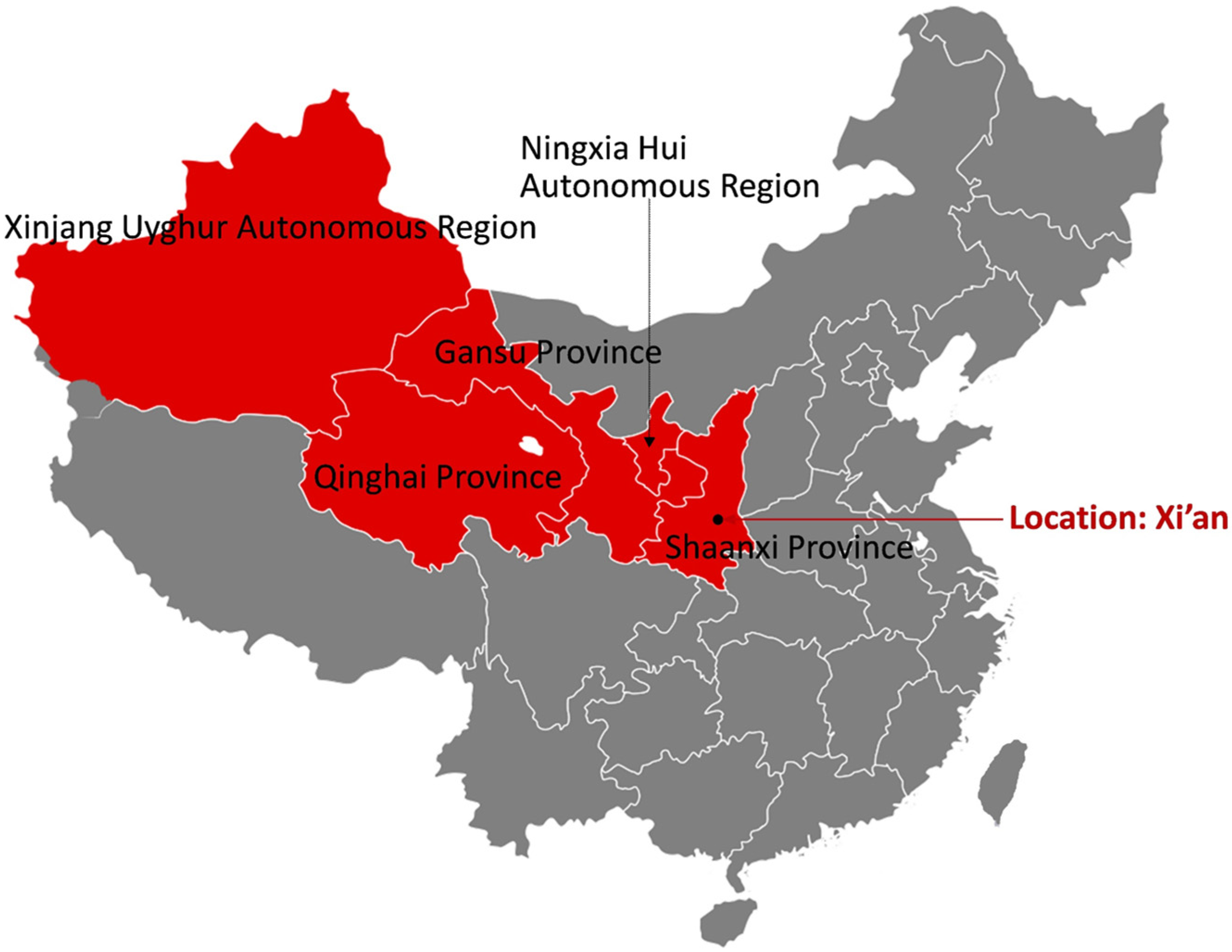
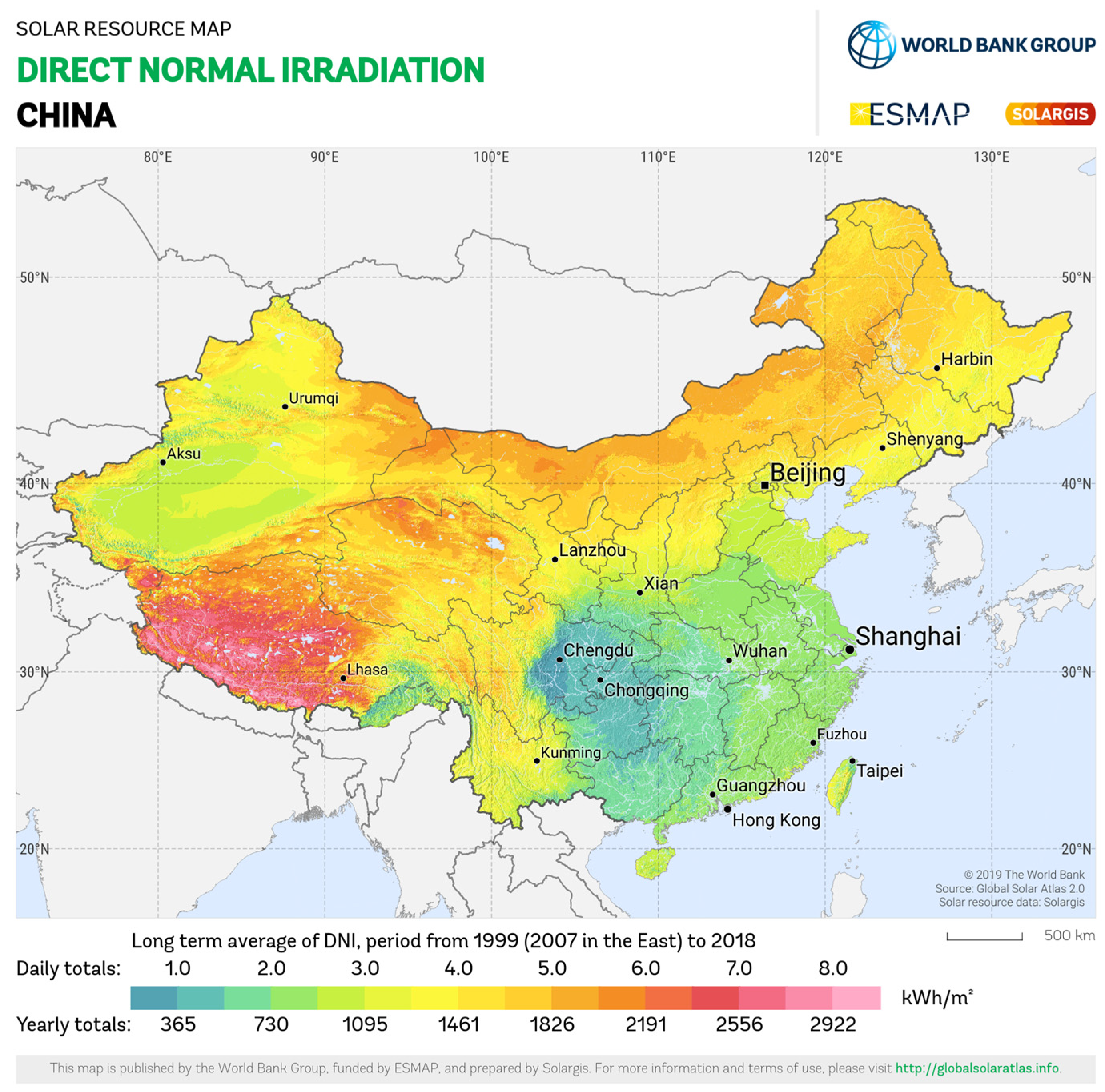
In this study, since the energy demand for rural houses in Northwestern China is significant [8], the energy performance of a SOFC-CGS in a typical passive-designed village house in Xi’an was evaluated through detailed simulation. The location of Xi’an City is shown in Figure 1. Moreover, as the solar energy resource is abundant in the northwestern region of China [37], the energy performance of the SOFC-CGS was further optimized by integrating PV and storage battery systems. The annual normal-direction solar radiation distribution is shown in Figure 2.
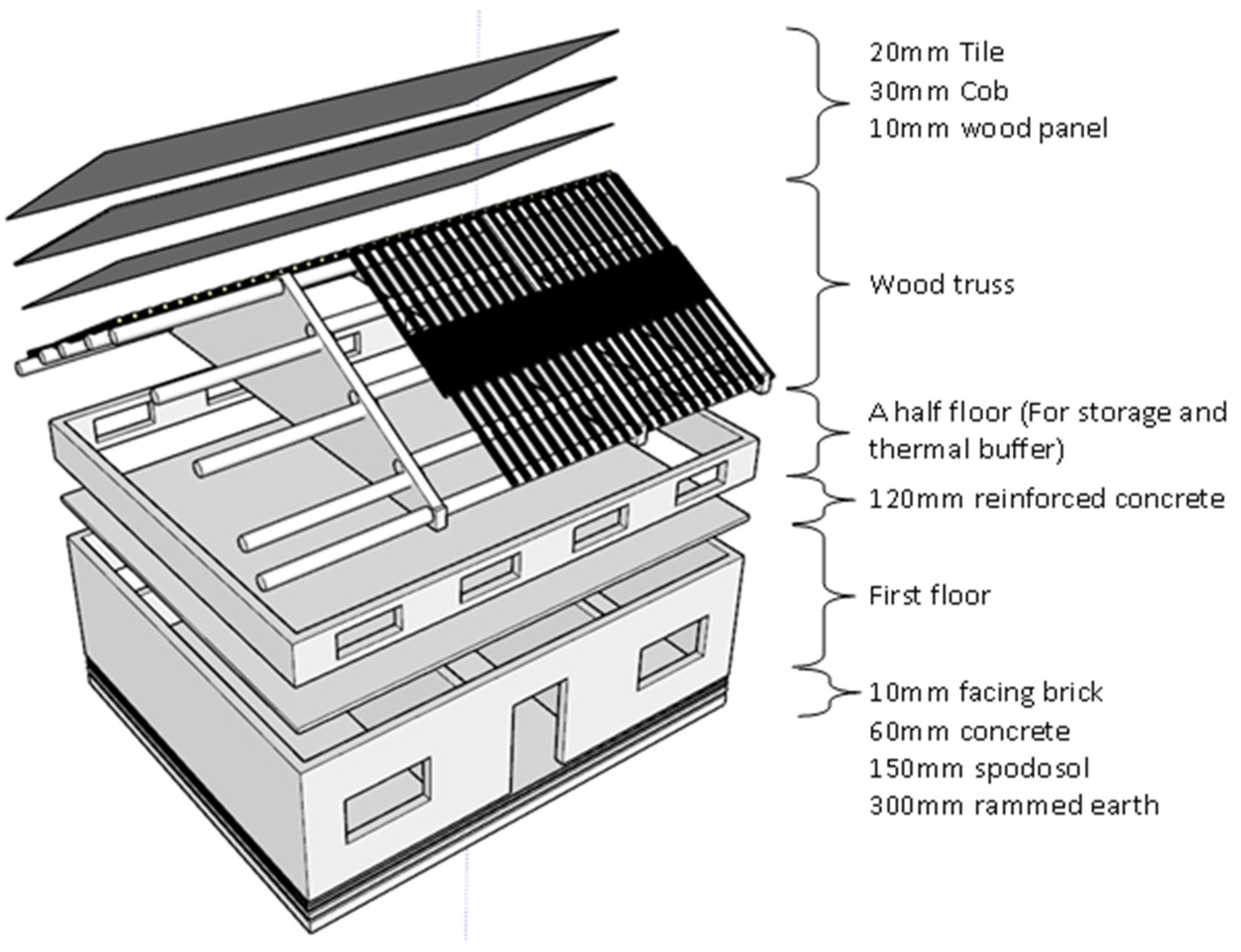
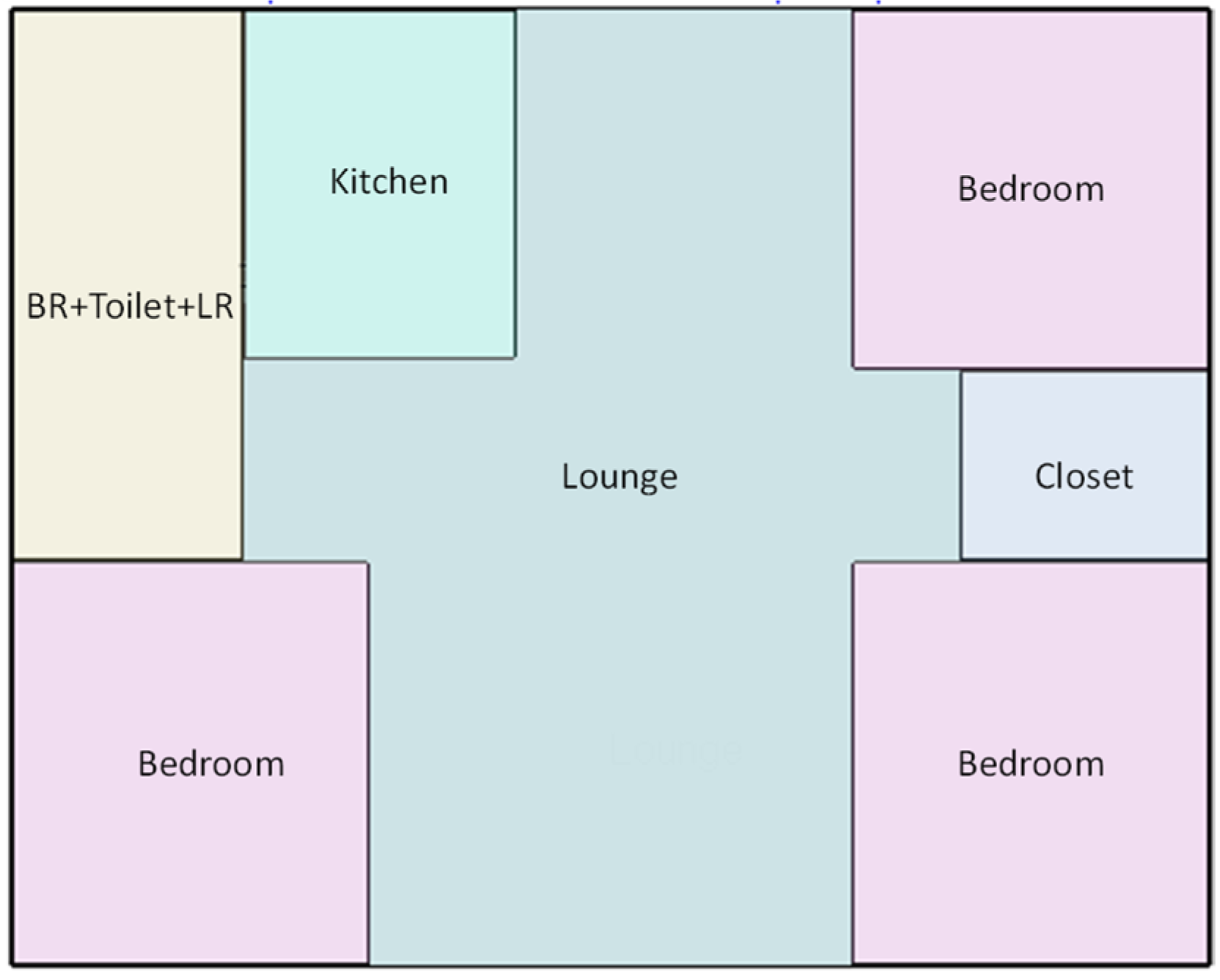
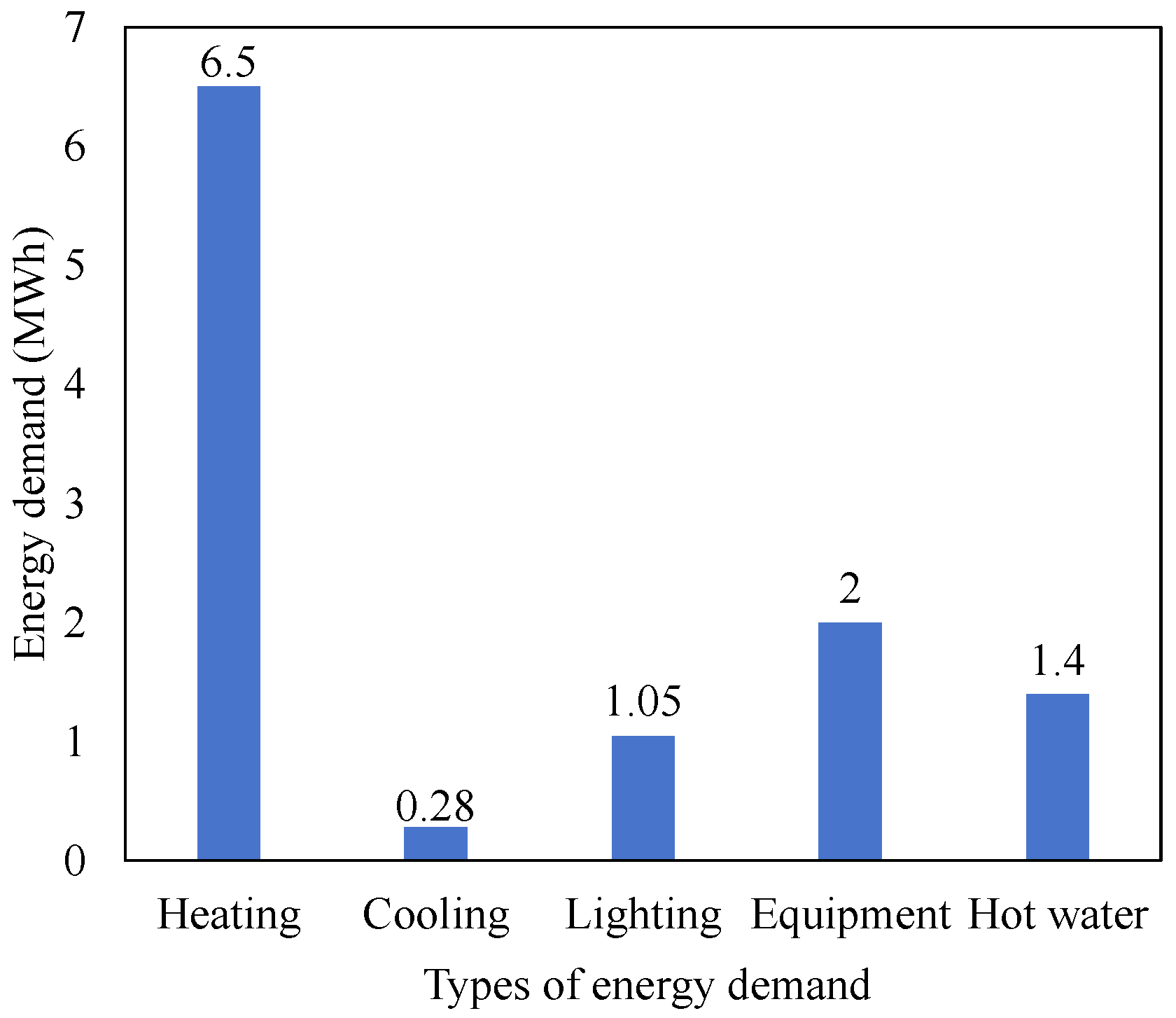
Usually, there are two approaches to optimizing a building’s energy performance: the passive approach and the active approach. If a house exhibits poor energy performance, its design should first be improved through passive design measures, followed by the application of clean energy systems as active strategies to further enhance its efficiency [39]. Since the typical passive-designed village house in Xi’an was not designed or constructed scientifically, its energy performance should first be improved through a passive design and then enhanced with clean energy systems. The original 3D structure and the configuration of the typical passive-designed village house in Xi’an is shown in Figure 3 and Figure 4. Detailed information about the house has been provided in a previously published article. The procedure and results of the passive design analysis are also presented in the same publication [40]. After implementing passive design strategies, the annual energy consumption of the house is illustrated in Figure 5. The specific weather data used as an input for the model were obtained from the ASHRAE code [41]. The hourly energy demand of the target house was simulated using the calibrated commercial software EnergyPlus 25.1.0. Mazzeo [42] demonstrated that EnergyPlus is an advanced engine for predicting the energy demand of buildings, making it suitable for the analysis in this research.

2.2. Research Methodology

Laboratory experiments for analyzing the energy usage of clean energy systems are costly when exploring their potential performance under different energy supply scenarios. In contrast, computer simulations can provide an initial guide for applying clean energy systems in buildings by generating relatively accurate operational data and offering insights for efficient system implementation.
Therefore, dynamic models of clean energy systems were developed using mathematical formulations to investigate the effects of applying such systems in village houses. Programming languages such as Python 3.13.9 and Visual Basic 17.0 Net were employed to develop simulators for the PV, storage battery, and SOFC-CGS systems. Furthermore, Visual Basic for Applications (VBA) and Microsoft Access were used for data organization in this study. The characteristics of the computer programs and programming languages and their applications in this research are summarized in Table 1.

3. Analysis of Applying SOFC-CGS in the House

3.1. Modeling of SOFC-CGS

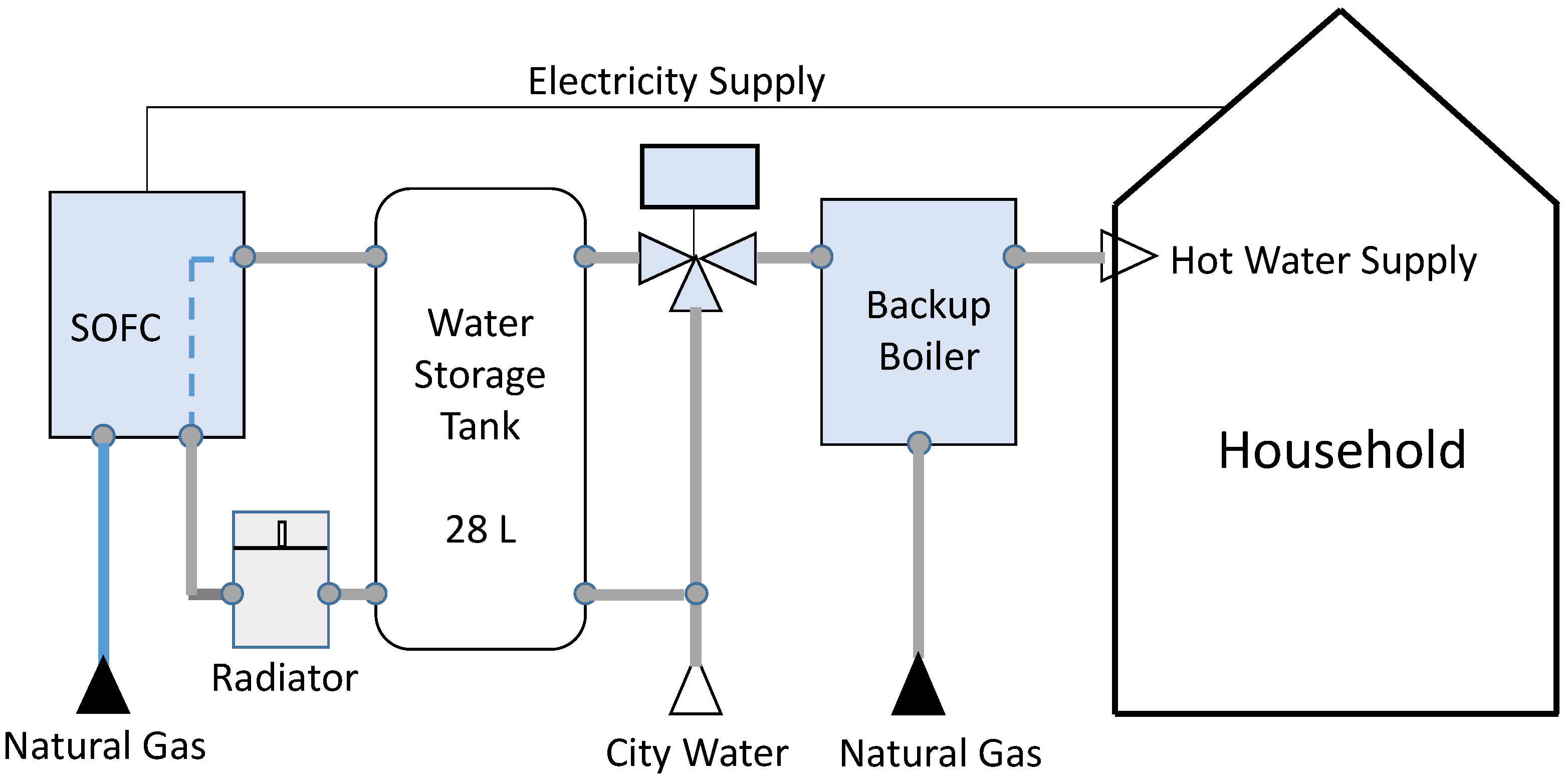
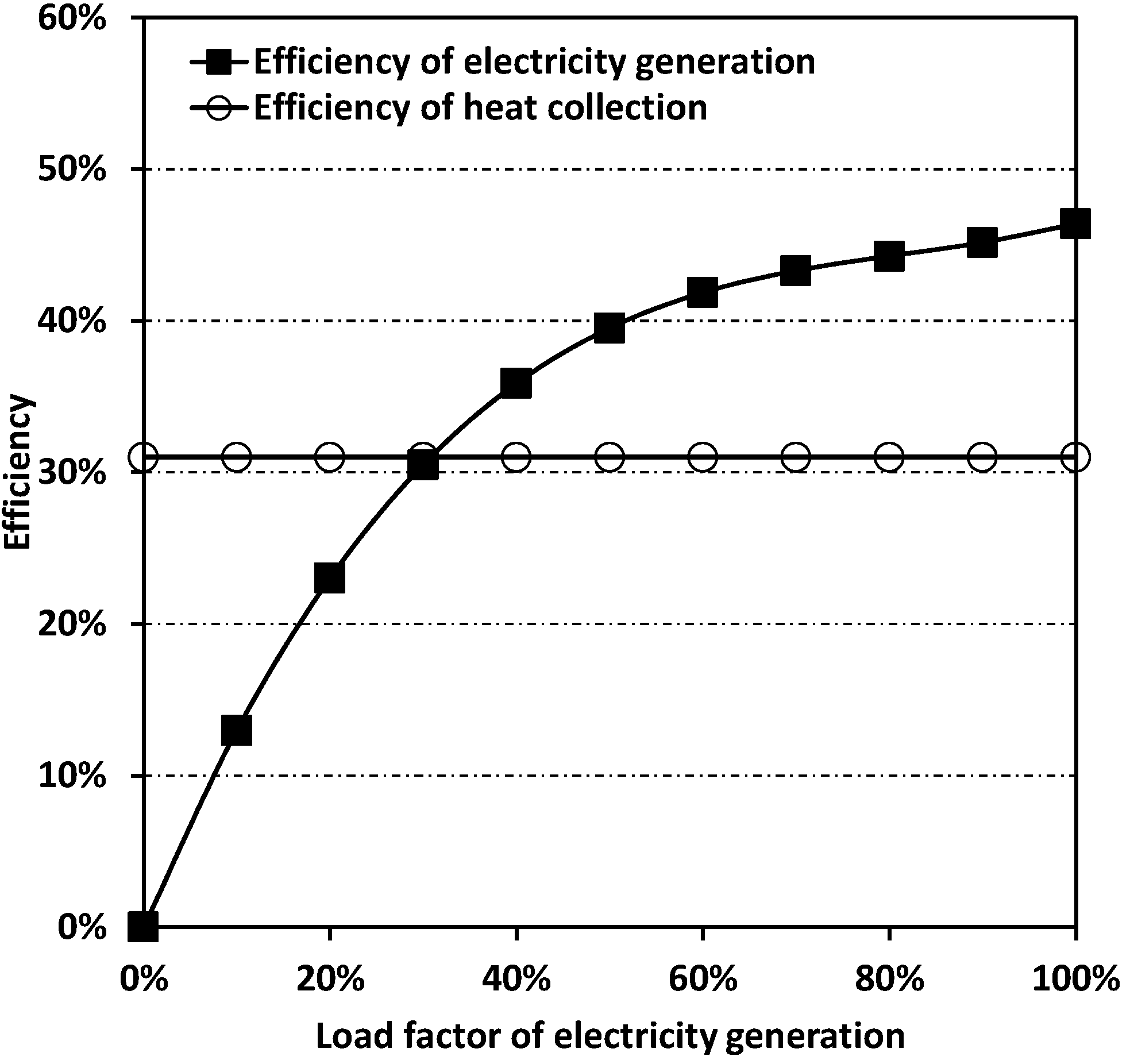
A SOFC is a clean energy device for generating electricity by consuming hydrogen or natural gas. From the chemical reaction in the cell stack, there is no environmental pollution in the electricity generation procedure of a SOFC. A residential SOFC, as a clean energy device, has a relatively low efficiency [42]. The selected SOFC model achieves a maximum electrical efficiency of approximately 47%, primarily due to unrecovered heat losses from the stack and auxiliary components. In order to improve the efficiency of SOFC, the SOFC cogeneration system was developed for residential use [43]. In this system, heat losses from SOFC are collected to heat water; a backup boiler is used for reheating the water; and a 28 L water storage tank is used in this system, as illustrated in Figure 6. SOFC consumes natural gas to generate electricity to serve the household’s electricity demand. The heat losses of SOFC are collected and transferred to the water storage tank by a water tube. The temperature limit of the storage tank is 65 °C, and the temperature is adjusted by controlling the water flow rate in the tube that collects heat from the SOFC. If the input water temperature going through the radiator is higher than 34 °C, the radiator dissipates excess heat to maintain the temperature at 34 °C, ensuring optimal thermal recovery conditions before the water enters the SOFC stack. In this system, the city water temperature was set to 15 °C and the hot water temperature demand was set to 40 °C. The output water temperature from the water mix device was set to be equal to or less than 33 °C. If the water output from the storage tank was equal to or less than 33 °C, hot water directly entered the backup boiler to reheat the water to 40 °C and then the hot water at 40 °C was provided to the household. If the output water temperature from the storage tank was higher than 33 °C, the water mix device mixed the city water and water from the storage tank to attain the temperature of 33 °C, and then, through the backup boiler, water was heated to 40 °C to supply the household. This system is illustrated in Figure 6. The mathematical equation of the electricity generation efficiency is written as Equation (1). The efficiency of the heat collection of the SOFC–CGS was constantly 31%. The efficiency of the electricity generation and heat utilization in the SOFC-CGS is shown in Figure 7. The specific mathematical model of the SOFC-CGS is in the author’s previous published article [44].
EFFElSup = 0.6868 × LF3 − 1.6829 × LF2 + 1.4601 × LF.
where
EFFElSup = efficiency of electricity generation of SOFC. (%)
LF = load factor of electricity generation. (%)
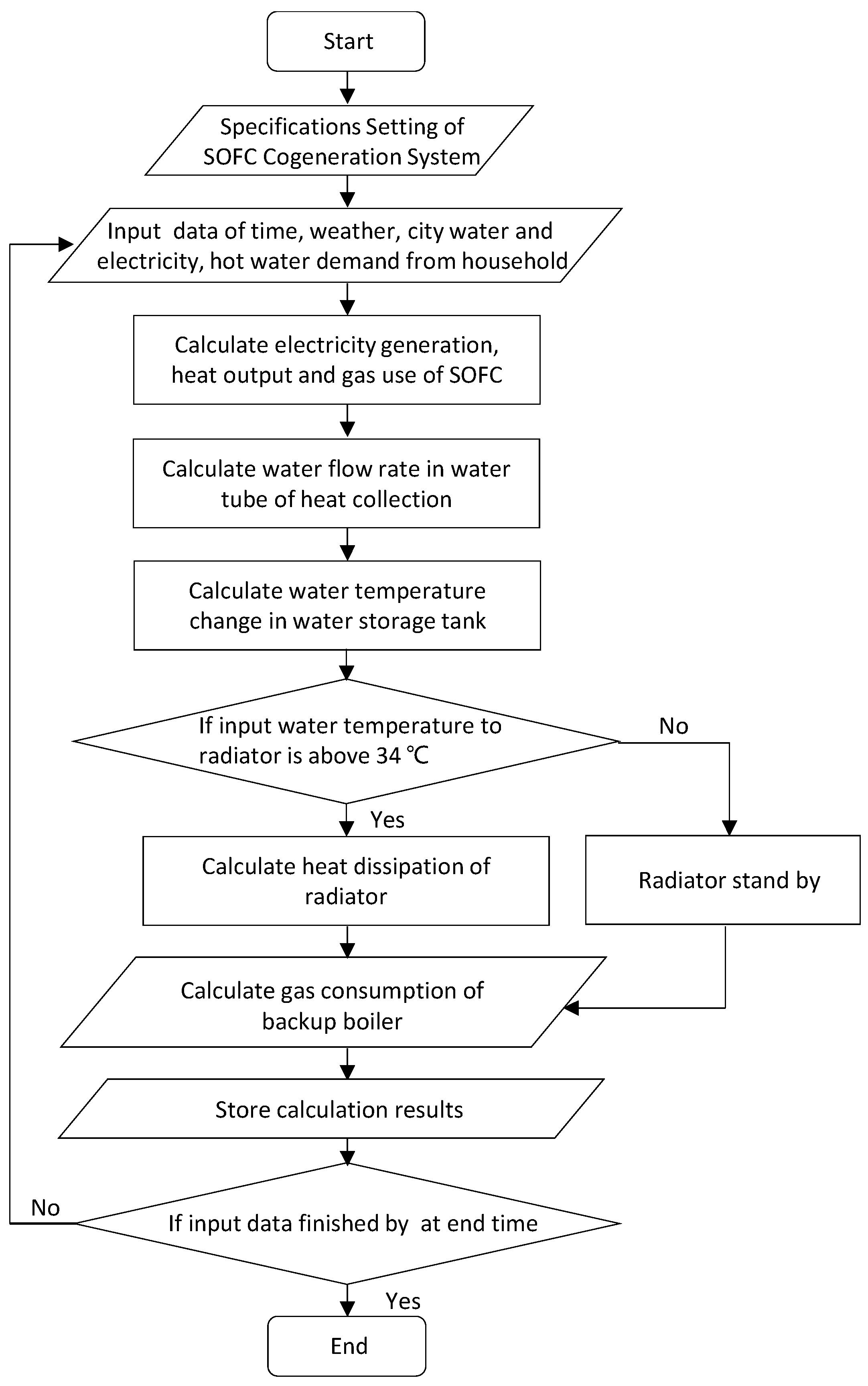
The program flowchart and input parameters are shown in Figure 8 and Table 2.

3.2. Simulation of SOFC-CGS in the Passive-Designed Village House

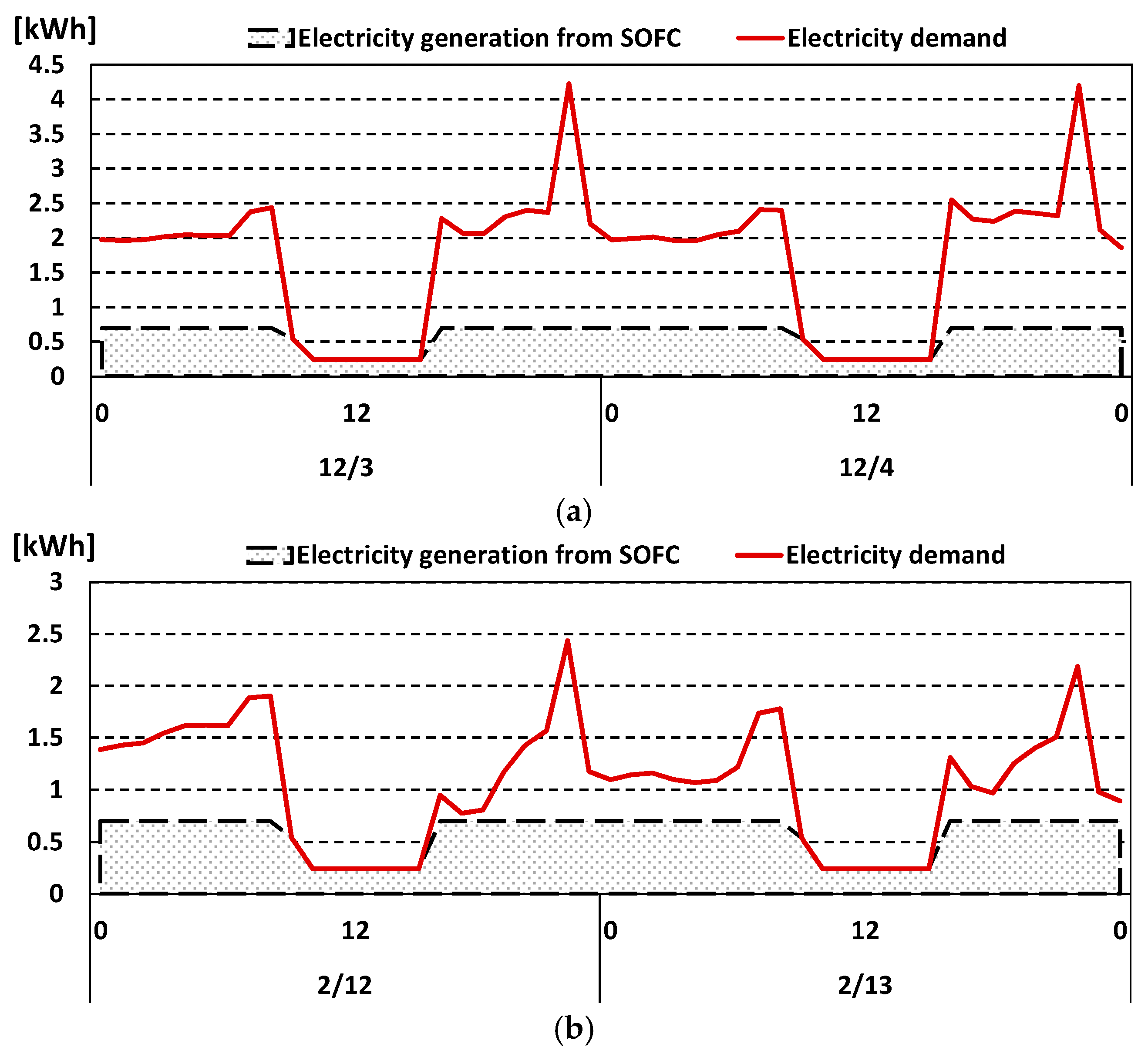
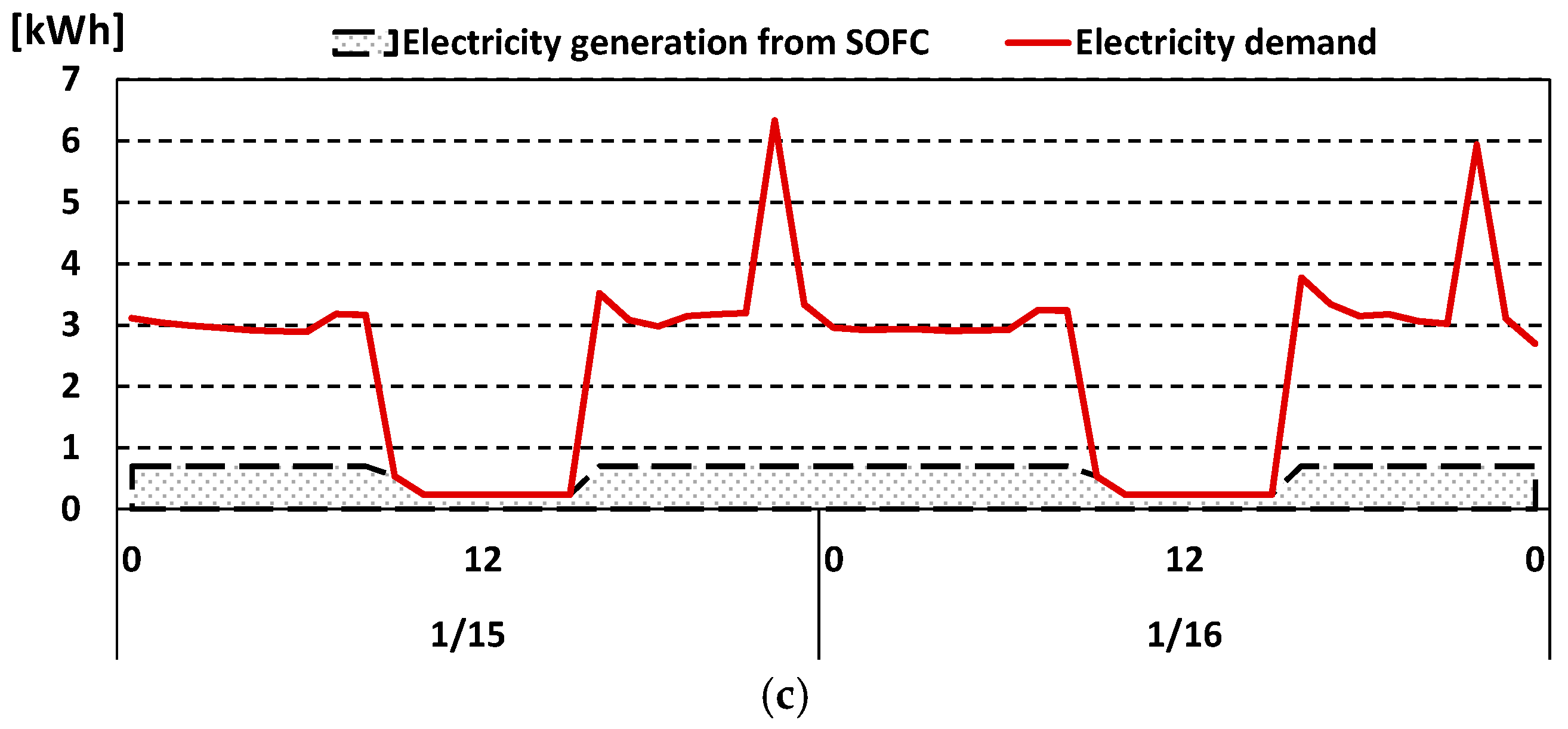
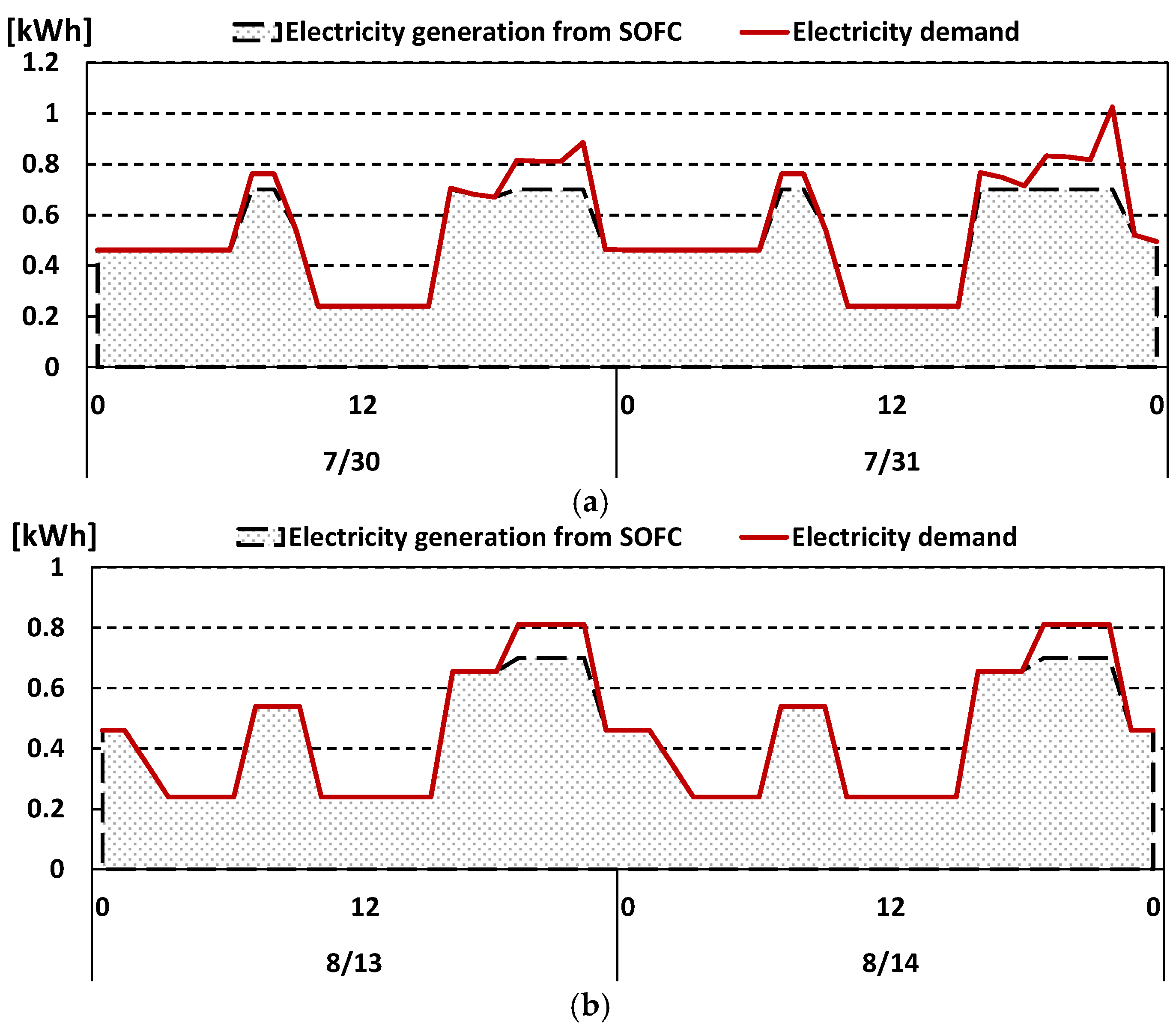
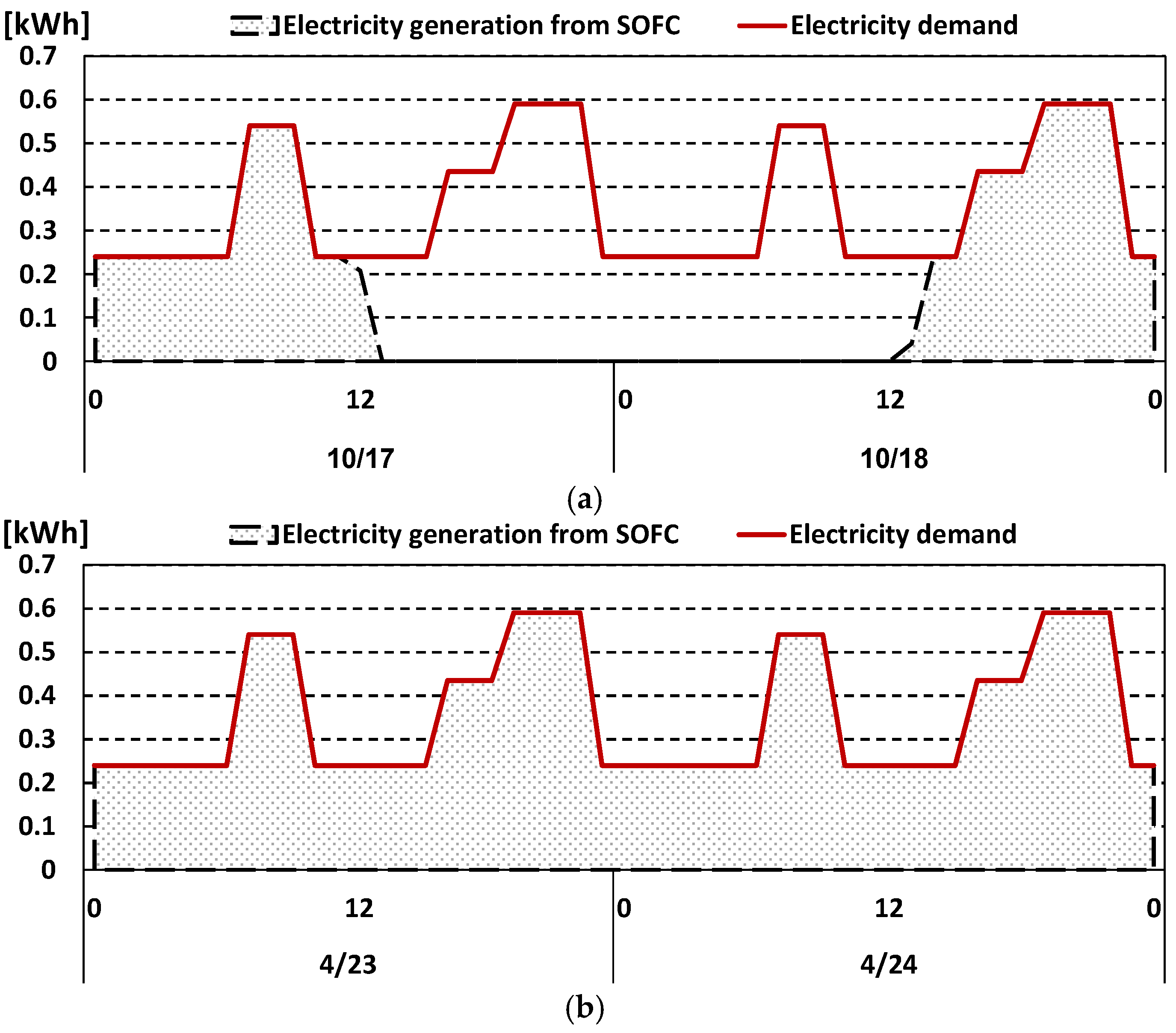
Based on the mathematical model of SOFC-CGS introduced in the previous section, a simulation for applying SOFC-CGS to the passive designed village house was conducted in this section. To evaluate the ultimate performance of the SOFC-CGS, the basic energy supply scenario assumes that natural gas is used directly for heating. Figure 9 presents the hourly simulation results of electricity demand and generation from the SOFC-CGS on representative summer days, while Figure 10 shows the corresponding results for representative days in autumn and spring. According to the analysis result, except for the heating energy demand, the household’s energy demand can be sufficiently covered by the SOFC-CGS. Otherwise, the SOFC-CGS can only fulfill a small part of the electricity demand in winter, as the data show in Figure 11, because with a low ambient temperature in winter, the heating energy demand is high, which cannot be covered by the SOFC-CGS. This section presents the simulation results for the brick building.
There is an electricity supply gap during one day of the simulation results on 17th and 18th of December. This is because the maximum running time of SOFC is 26 days and there has to be one day rest for maintenance after 26 days of running [45].
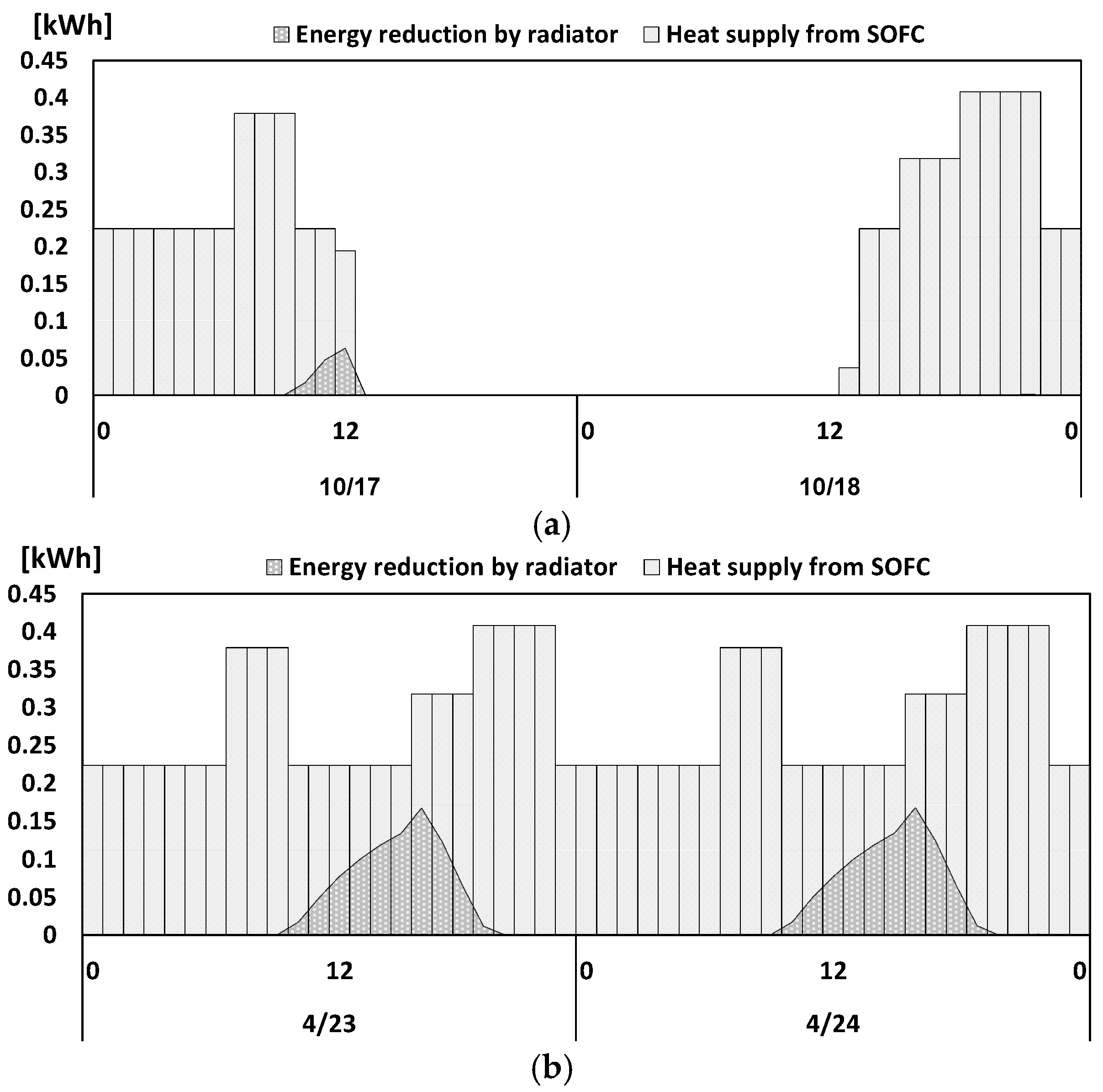
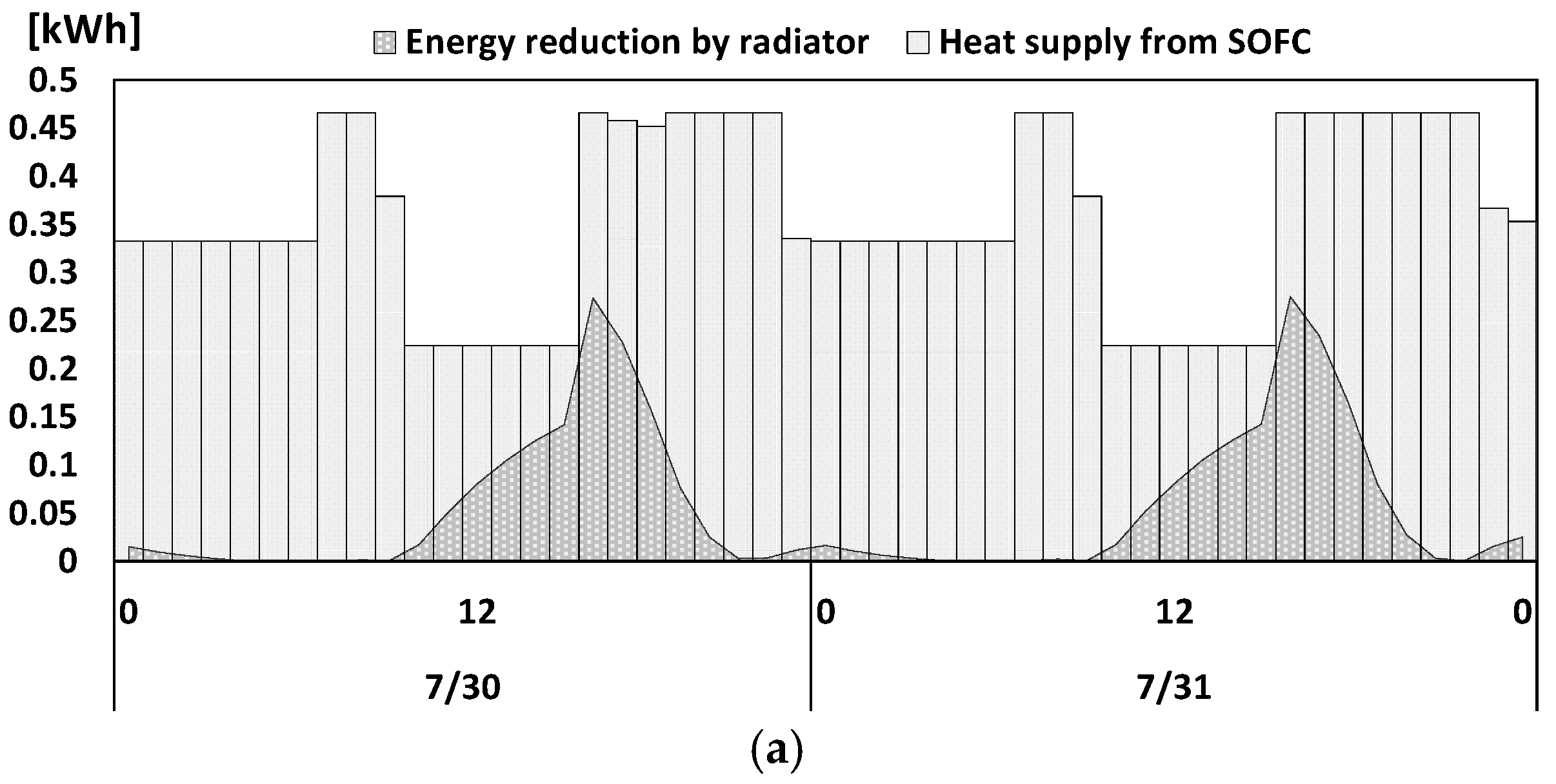
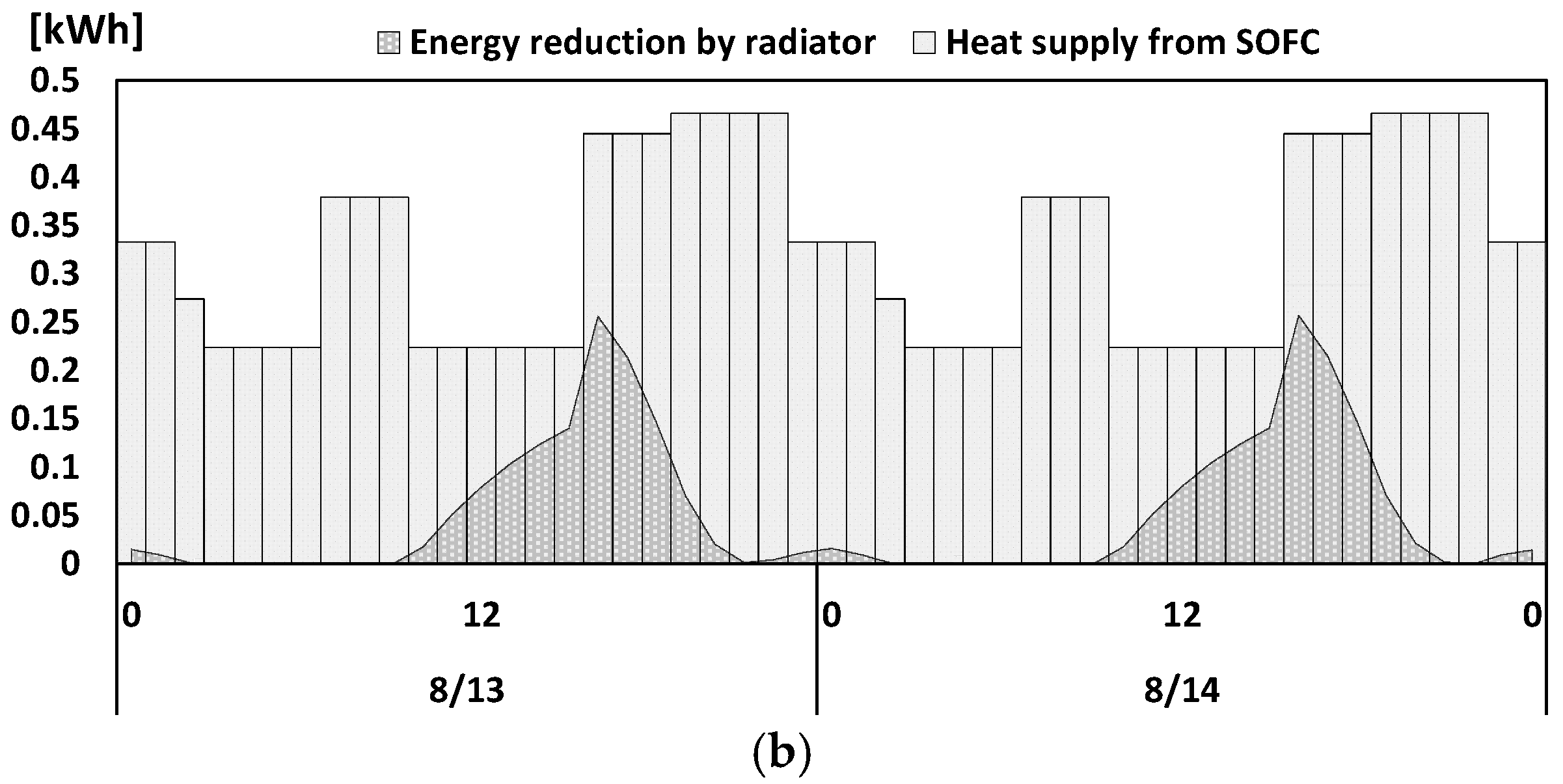
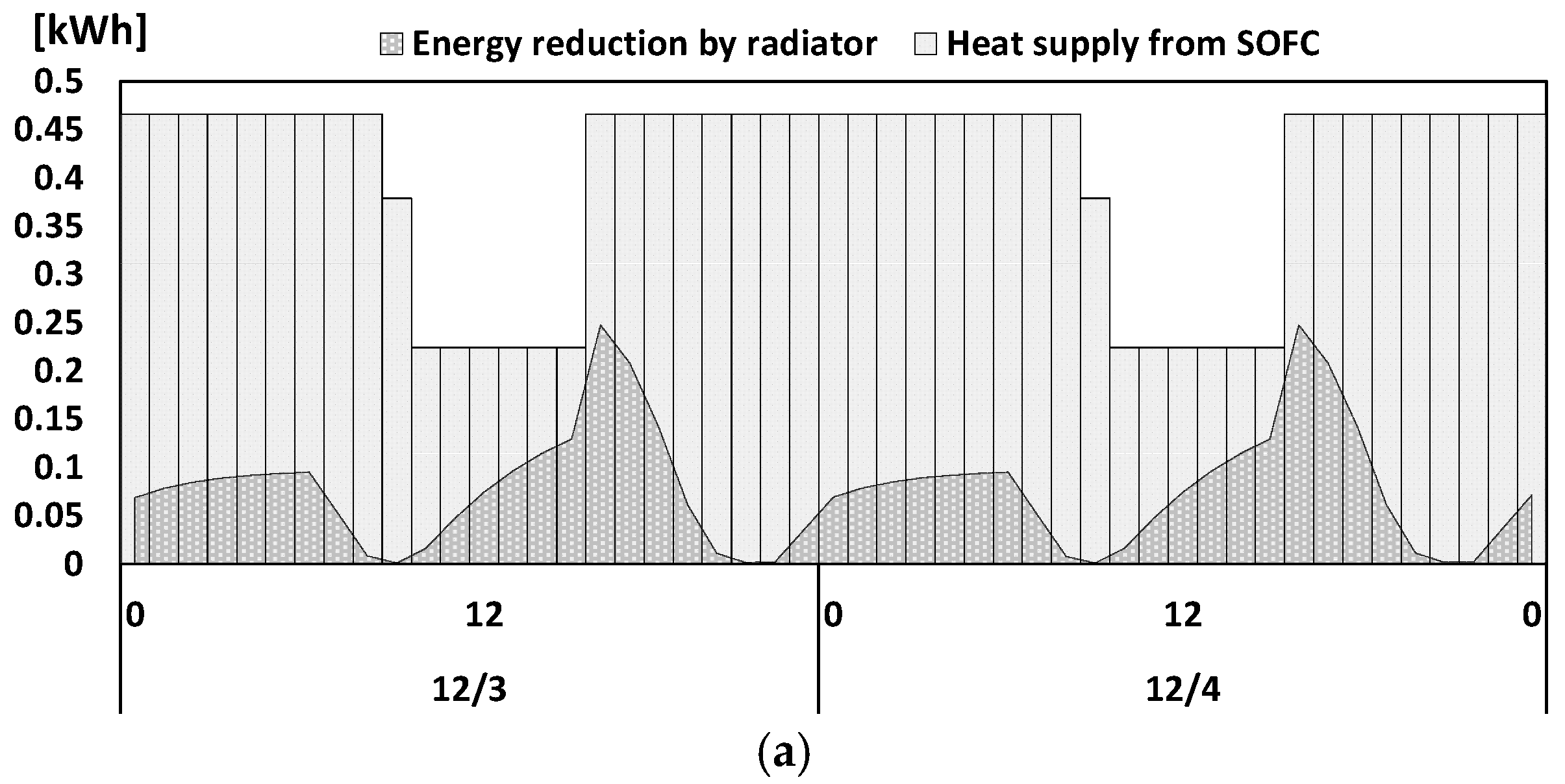
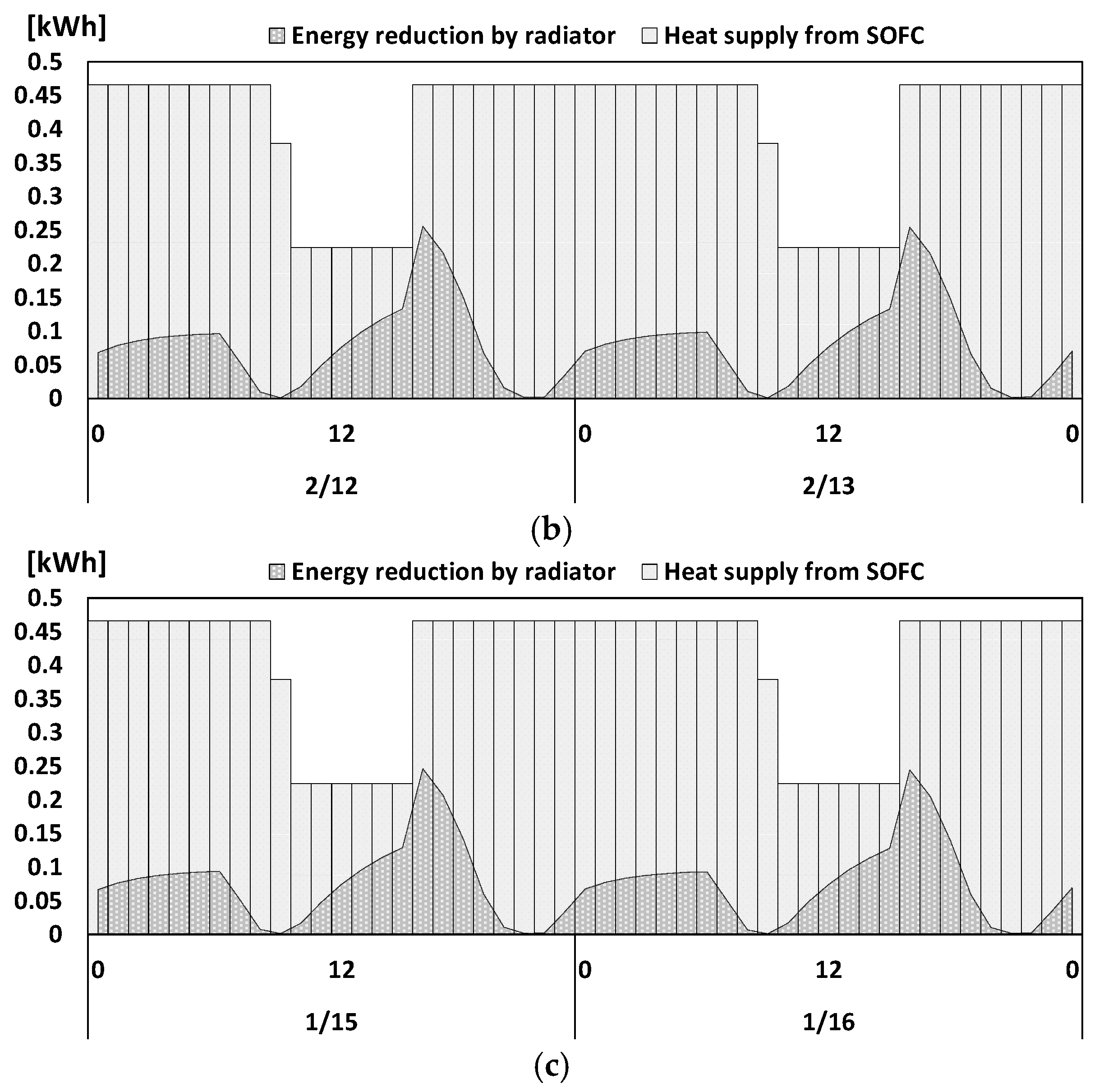
The maximum temperature control of the water storage tank is 65 °C and the water temperature in the storage tank is adjusted by controlling the water flow rate in the tube, which collects heat from the SOFC. If the input water temperature through the radiator is higher than 34 °C, the radiator reduces the water temperature to 34 °C by heat dissipation. Then, the water enters the SOFC through the tube to collect heat [46]. Otherwise, the radiator unit does not work. Figure 12 shows the hourly simulation result of the heat supply from the SOFC-CGS and the energy reduction in the radiator on representative dates in summer. Figure 13 shows the hourly simulation results of the heat supply from the SOFC-CGS and energy reduction from the radiator on representative dates in autumn and spring when directly utilizing natural gas for heating. Simulation results indicate that the heat is mainly dissipated from the radiator when there is no hot water demand but there is an electricity demand. The reason is that the heat is constantly supplied to heat the hot water when there is electricity generation from SOFC, but, if there is no hot water demand, the heat will be dissipated from the radiator because of the temperature control of the water tank. According to the pattern of the electricity demand from the household, the amount of electricity generation from the SOFC is correspondingly higher in summer than in the intermediate seasons because there is cooling energy consumption in summer. Due to the increased electrical output in summer to meet cooling loads, the SOFC simultaneously produces more recoverable waste heat, which is transferred to the water storage tank. As the temperature control of the radiator is set to 34 °C or lower, the higher heat supply from the SOFC results in relatively more heat dissipation from the radiator in summer, as shown in Figure 12. When heating energy consumption is from SOFC-CGS, the heat dissipation from the radiator becomes significantly higher in winter than in other seasons, as shown in Figure 14, because of the reason mentioned above.

3.3. Simulation of SOFC-CGS with Solar Energy System

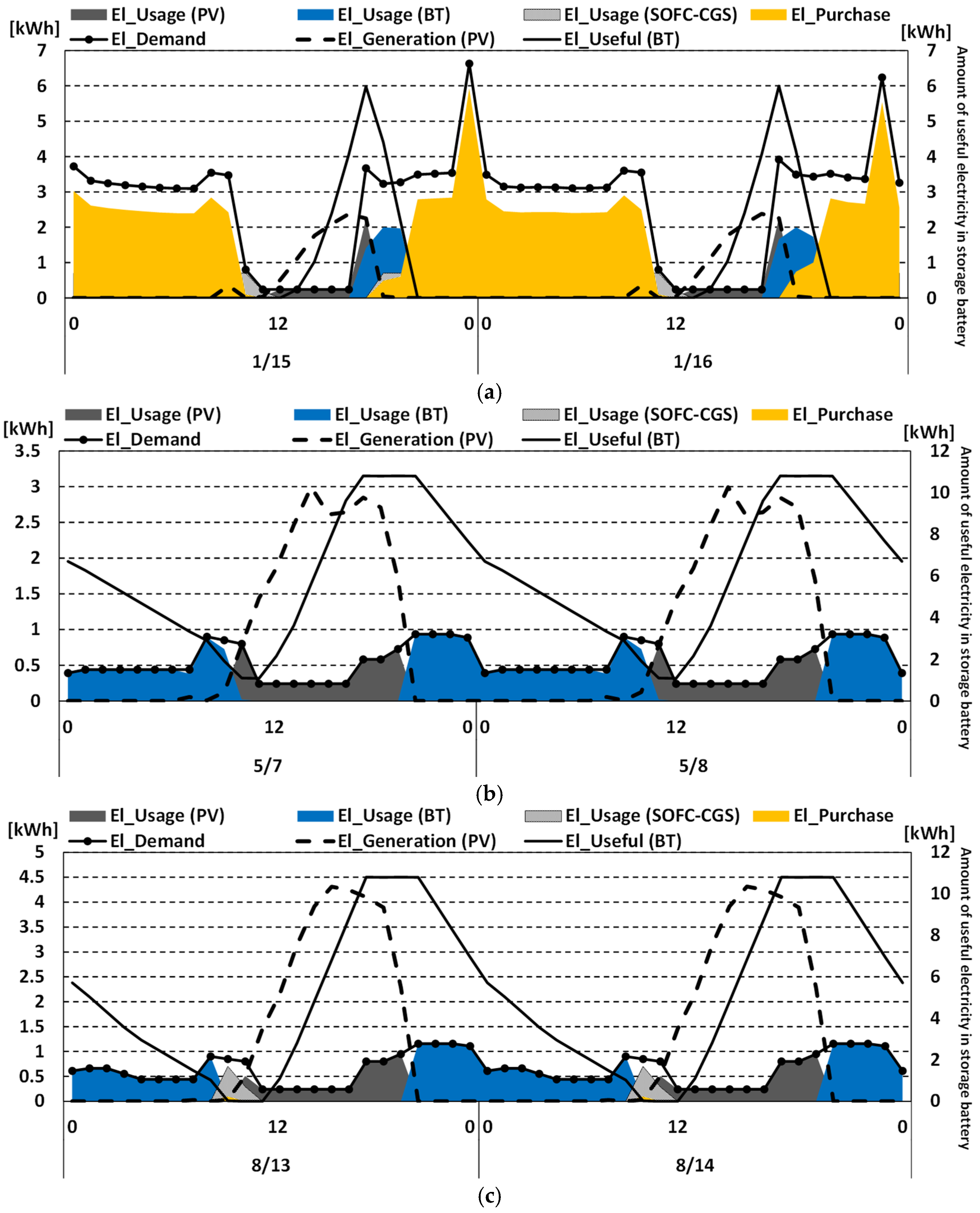
While there is significant solar energy potential in Northwestern China, to minimize electricity usage from the public power grid while maximizing efficiency and energy utilization of clean energy devices, PV, storage battery, and SOFC-CGS are simulated for integration and application in the passive-designed village house. The energy supply scenario in this section assumes that electricity is primarily generated from the PV, with electricity from the storage battery being used only when necessary, as solar energy is renewable. This means that the SOFC-CGS supplies electricity only when the PV and the storage battery cannot meet the household’s energy demand. To develop a dynamic mathematical model for the PV system in this research, the specifications of the selected PV module are provided in Table 3. These general specifications are used in the model. The PV system is assumed to have an average conversion efficiency of 0.20 for converting solar energy into electricity. The temperature-related loss factors are set to 0.90 in summer, 0.95 in winter, and 0.92 in the intermediate seasons. Since residential electricity is supplied as an alternating current (AC), the direct current (DC) generated by the PV system must be converted to an AC via an inverter. The energy loss during this DC-to-AC conversion is assumed to have a coefficient of 0.95. Additionally, other losses, including those from the PV installation angle and wiring, are estimated to have a coefficient of 0.95. The optimal installation angle for a PV module in Xi’an is 26° [46]. Equation (2) represents the electricity generation calculation for the PV module. Among different types of storage batteries in the market, lead-acid storage battery was selected for this study due to its relatively low price and relatively high energy performance [46]. Specifications of the selected lead-acid storage battery are shown in Table 4. Due to the solar altitude angle in Southwestern China, the southern-facing roofs of houses receive the most solar energy. Therefore, the size of the PV array was determined based on the south-facing roof area, which is 50 m2. Additionally, the storage capacity of the batteries is determined by dividing the depth of discharge by the average daily load and multiplying it by a sizing factor of 3, resulting in a total storage capacity of 12 kWh [47].
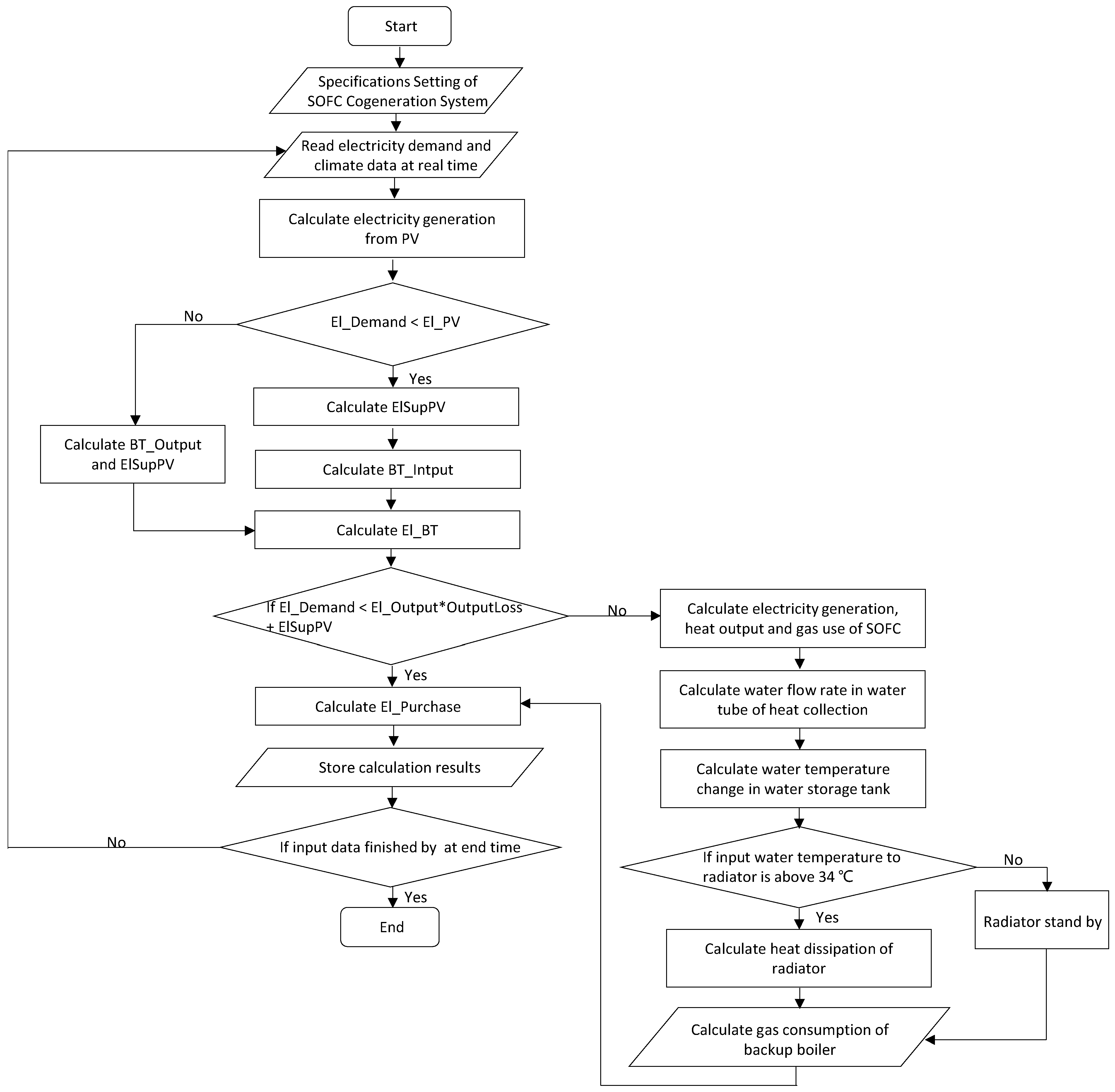
The program flowchart of the second energy supply scenario is shown in Figure 15, this flowchart depicts the system’s process of dispatching electricity according to the principle of “PV first, battery second, fuel cell supplement”, while simultaneously controlling heat recovery and heat dissipation. Table 5 shows the specifications of devices and energy resources for heating under each energy supply scenario. Under each energy supply scenario, the hot water demand is covered by the SOFC-CGS.
QPV = G × EFFPV × SPV × CT × CEx × CO
where
QPV = electricity generation of PV (kWh).
G = effective solar radiation on the tilted surface of PV (kW/m2).
EFFPV = efficiency of converting solar energy to electricity by PV (%).
SPV = area of PV (m2).
CT = the coefficient of loss by alternative temperature (constant).
CEx = the coefficient of loss by converting DC to AC (constant).
CO = the coefficient of other losses (constant).
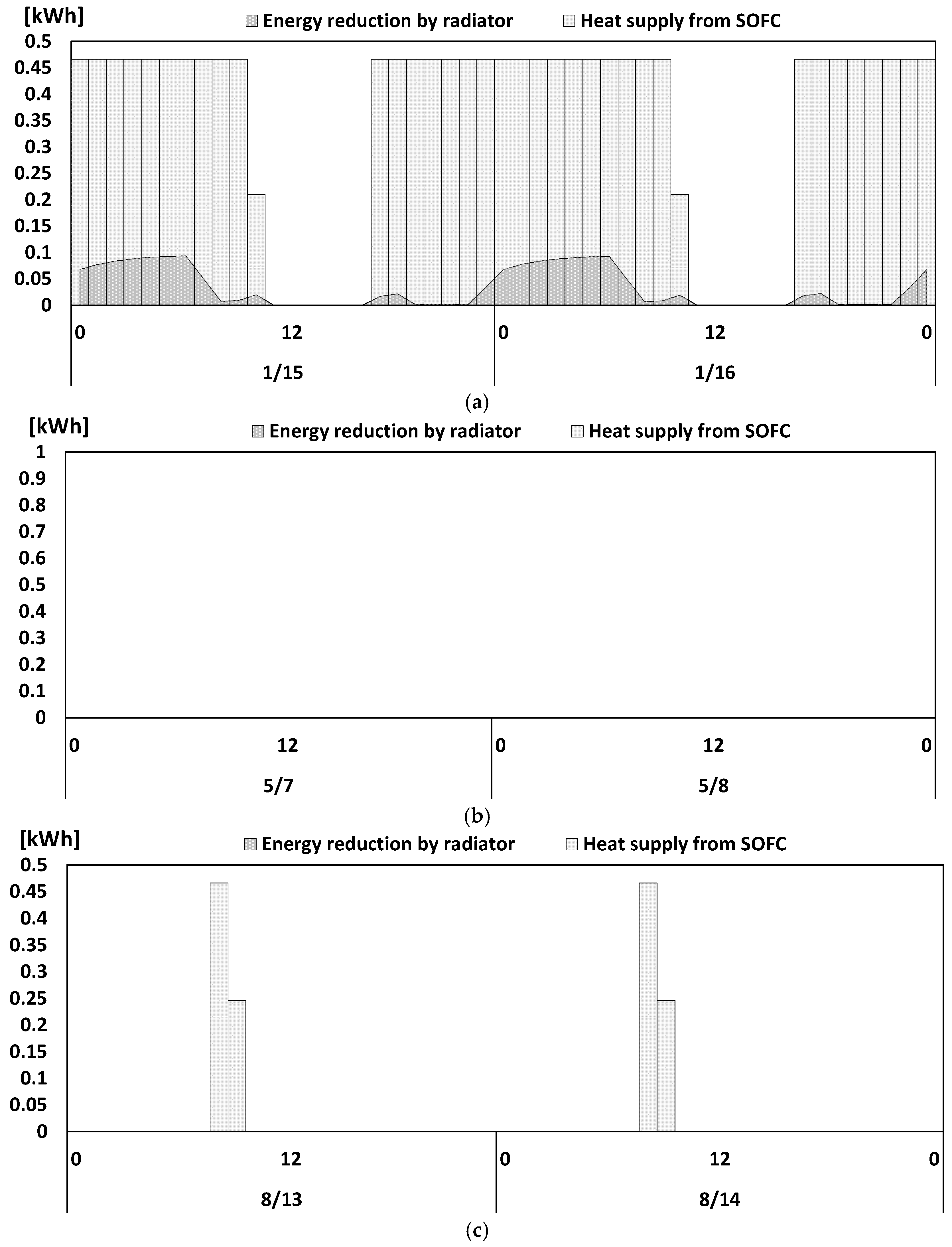
The simulation result from this energy supply scenario is shown in Figure 16 and Figure 17. According to Figure 16, only a part of the energy demand from the household can be covered by integrated DER devices and a large part of the energy demand from the household is covered by the public power plant in winter. In summer and the intermediate seasons, PV and BT can cover almost all the energy demand from the household [48]. The SOFC-CGS only needs to supply energy for a very small part of the energy demand in summer because of the cooling loads [49]. Figure 17 shows the amount of heat supply from SOFC to the hot water tank and energy dissipation from the radiator. At most hours in winter, electricity generation from SOFC is at a peak level. Therefore, the amount of heat supply from SOFC is also at a peak level in this energy supply scenario and the radiator works when the water temperature is above 34 °C. Energy reduction is constant in the early morning, late afternoon, and evening; however, the value of energy reduction from the radiator is relatively low because there is a constant hot water demand during these hours [50]. In the intermediate seasons, there is no heat supply from SOFC and energy reduction from the radiator minimizes all the energy needs from the household in the intermediate seasons. Consequently, there is no electricity generation from SOFC. In summer, electricity generation and heat supply from the SOFC occur for only a few hours because PV and BT cover almost all the energy needs of the household, and the SOFC-CGS only works when cooling loads are high. Since there is no or a small heat supply from SOFC, water temperature remains below 33 °C. As a result, there is no energy reduction from the radiator in summer.

4. Discussion

4.1. Energy Performance of Applying Standalone SOFC-CGS

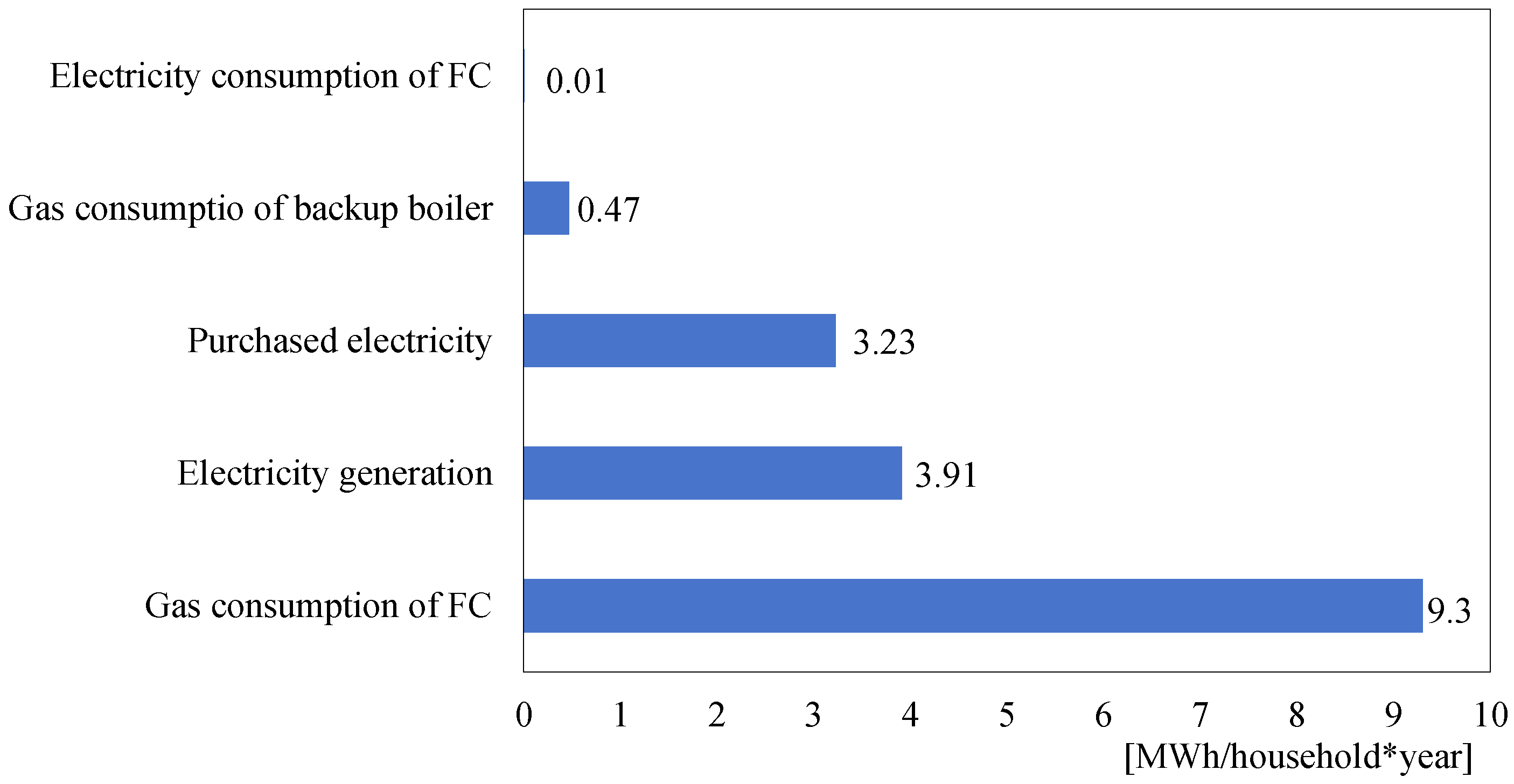
Figure 18 illustrates the main annual energy consumption and supply from the standalone SOFC-CGS, this bar chart quantifies the annual energy flows of the standalone SOFC-CGS system, showing it generates 3.91 MWh of electricity yet requires purchasing 3.23 MWh, while consuming 9.3 MWh of gas for power generation and 0.47 MWh for the backup boiler. Under this energy supply scenario, the SOFC-CGS can cover 43% of the household’s traditional energy demand, including electricity and heat requirements such as domestic hot water. Therefore, the standalone SOFC-CGS can meet a significantly large portion of the household’s conventional energy needs.
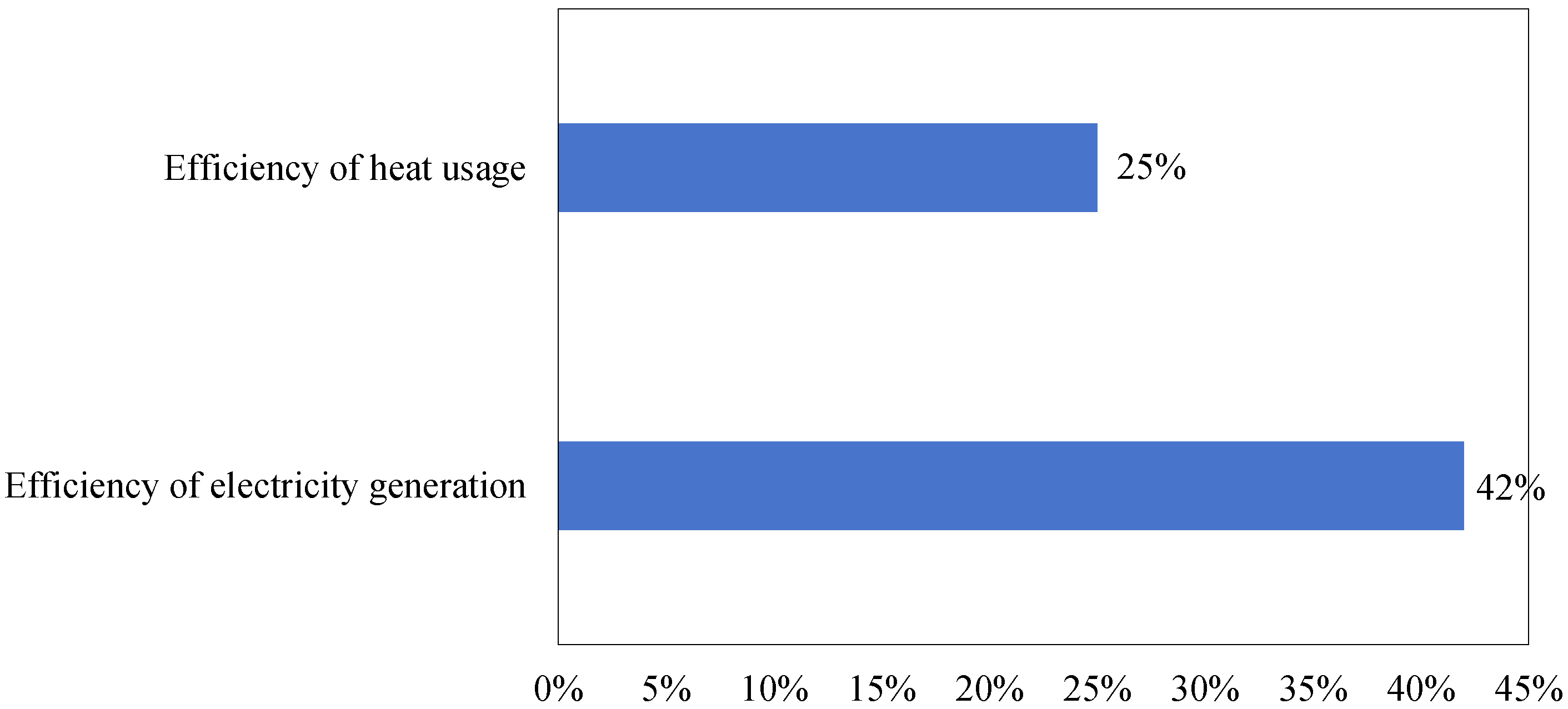
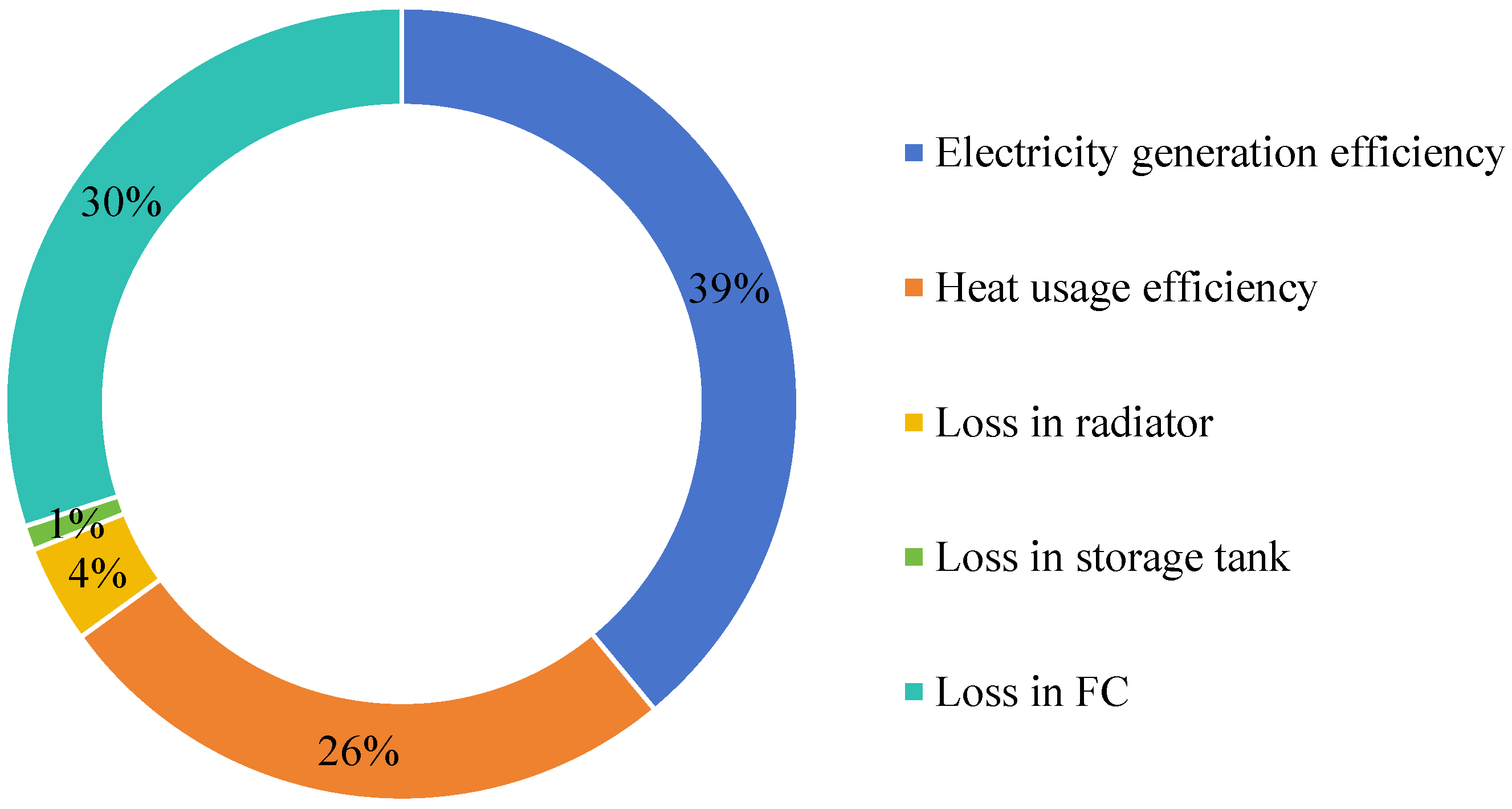
Figure 19 summarizes the annual efficiency analysis of the SOFC-CGS under this scenario, including the heat utilization efficiency and electricity generation efficiency. The results show that the heat utilization efficiency is 25%, while the electricity generation efficiency is 42%. Figure 20 presents the annual distribution of different losses from the standalone SOFC-CGS. The efficiency analysis indicates that the SOFC-CGS can operate in the house with a relatively high total efficiency of 67%.
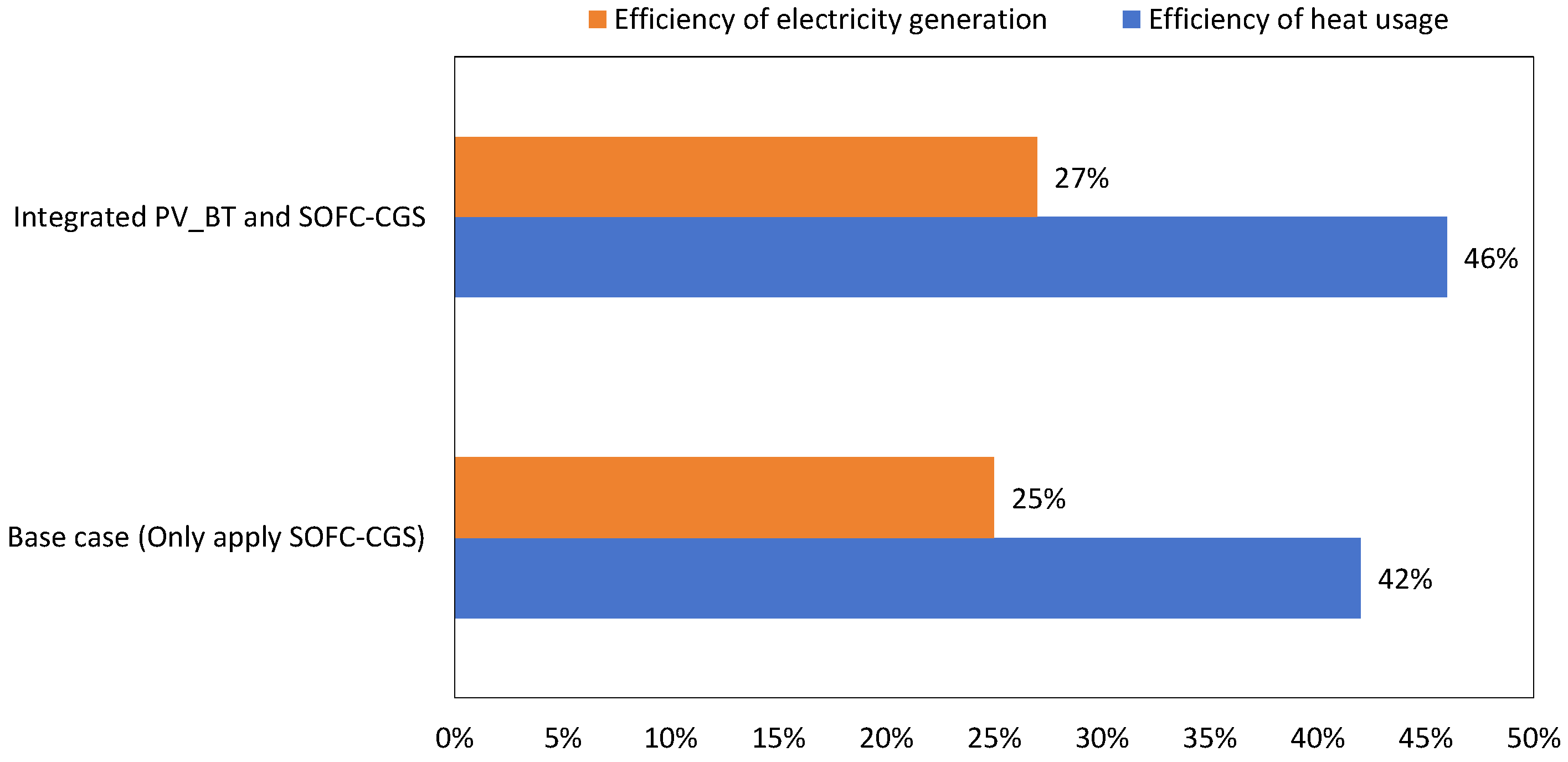
To improve the energy performance of the standalone SOFC-CGS, PV panels and a storage battery were integrated with the SOFC-CGS in the household, taking advantage of the abundant solar energy potential in Northwestern China. Figure 21 compares the efficiency of the SOFC-CGS under the base case (only applying SOFC-CGS) and the proposed case (integrating PV, storage battery, and SOFC-CGS). The results show that the heating efficiency of the SOFC-CGS in the proposed case is 2% higher than in the base case, while the electricity generation efficiency is 4% higher.
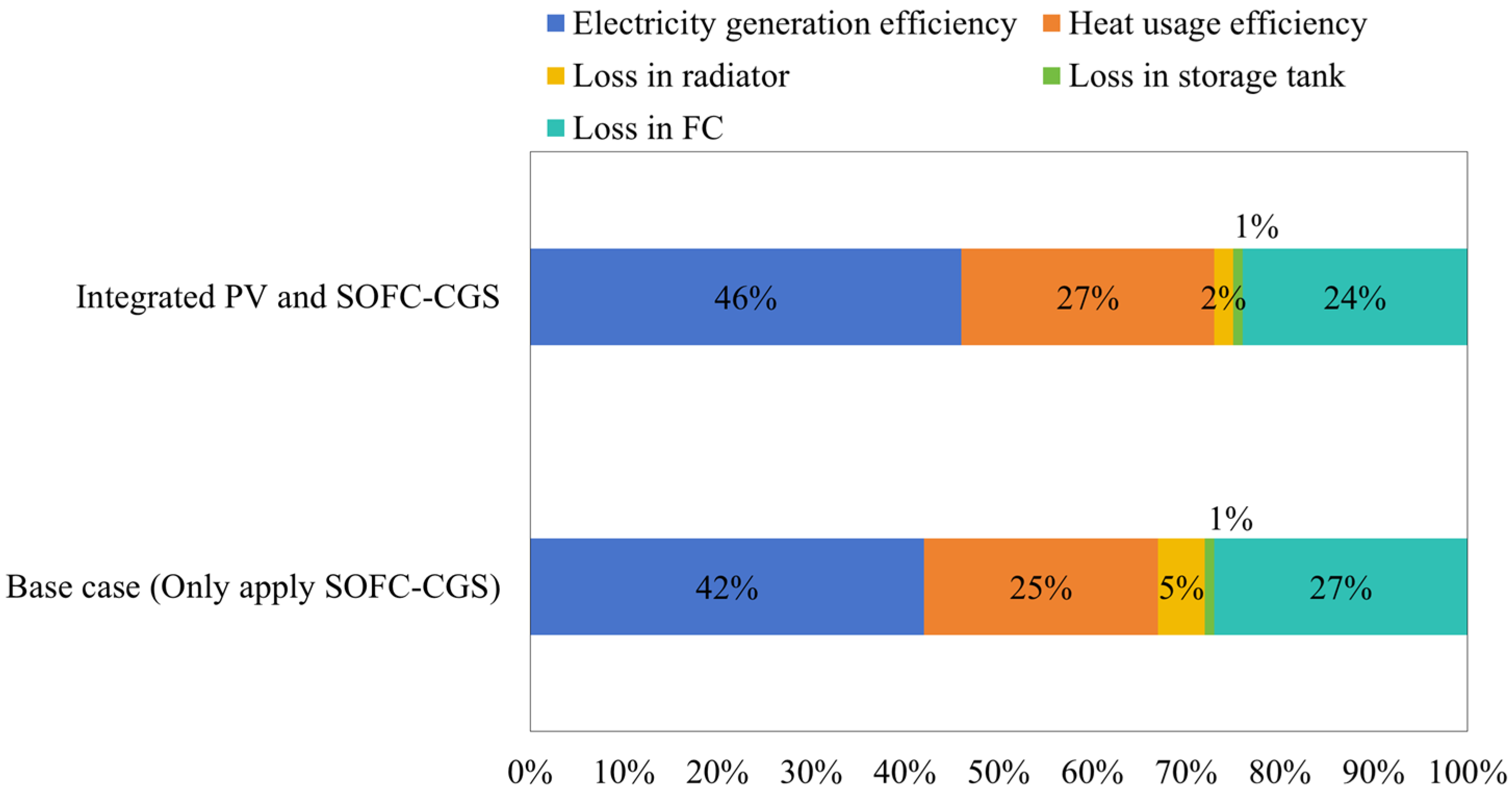
This improvement is attributed to the fact that the PV and storage battery systems can supply power during low-demand periods, avoiding inefficient part-load operation of the SOFC-CGS, which suffers from reduced efficiency at low load factors. Figure 20 illustrates the different types of energy losses from the SOFC-CGS under the two scenarios. Since the efficiency of the proposed case is higher than that of the base case, the energy losses of the SOFC-CGS are correspondingly lower in the proposed case, as shown in Figure 22.
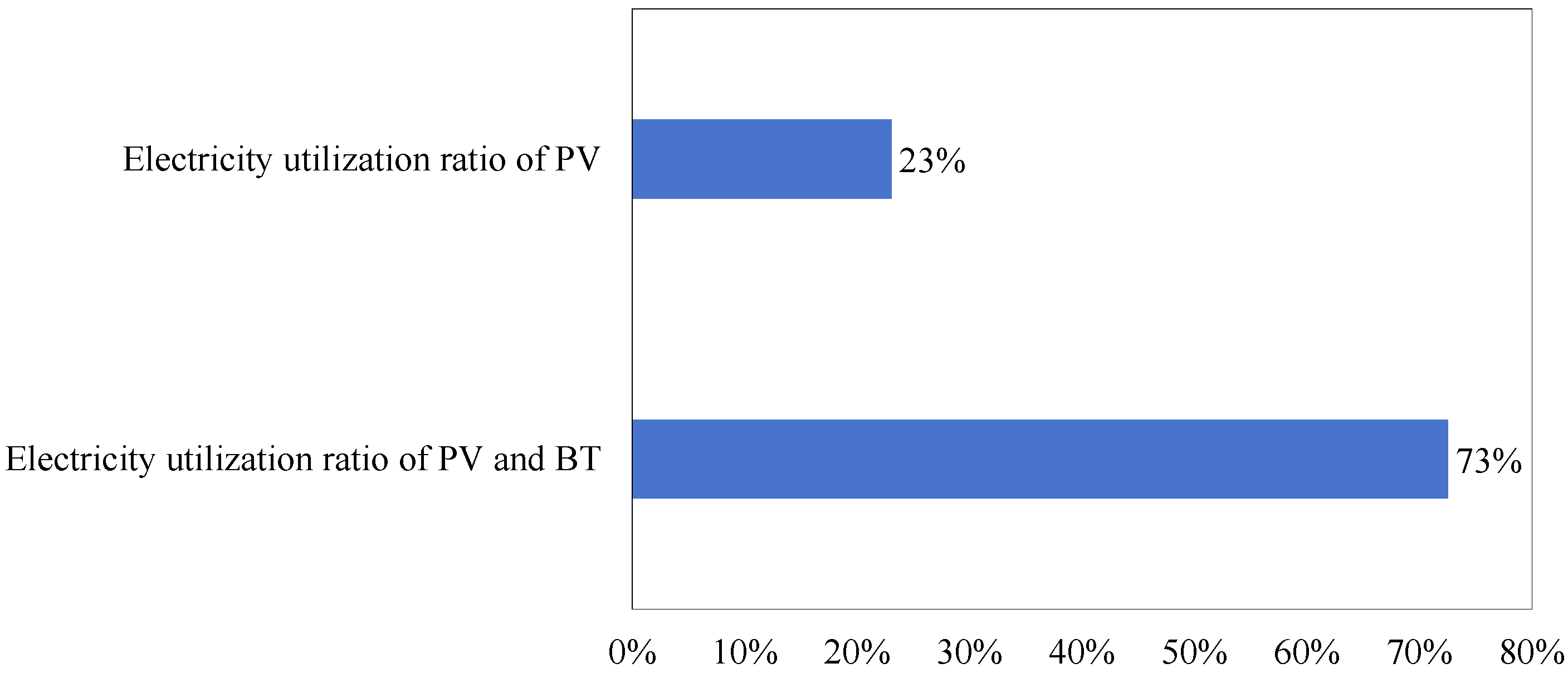
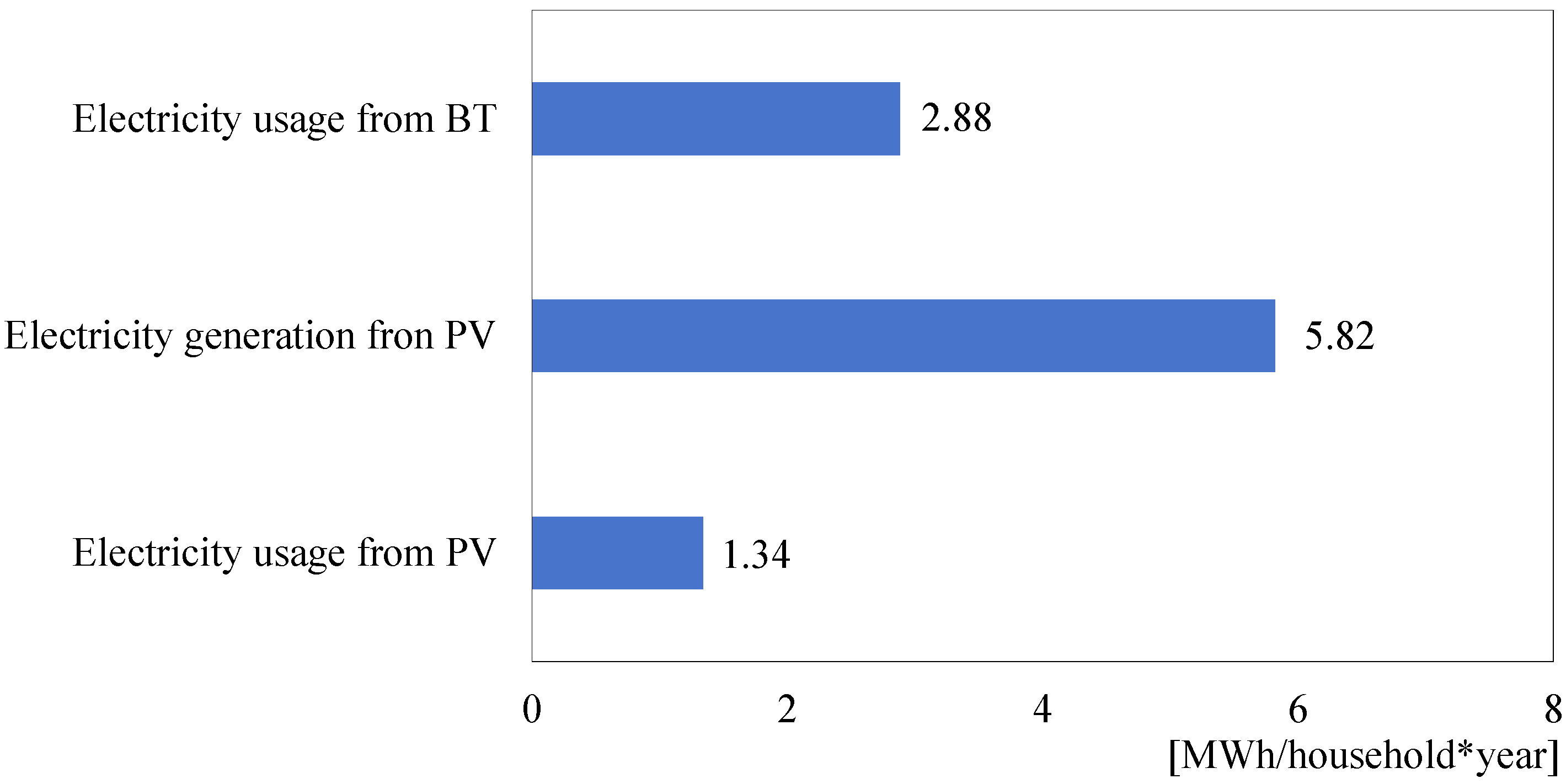
Figure 23 and Figure 24 illustrate the annual solar energy production and utilization of the integrated clean energy systems, as well as the annual utilization ratios of the PV and storage battery under the proposed case. The results show that the proposed case not only improves the energy performance of the SOFC-CGS compared to the base case but also demonstrates the strong energy performance of the solar energy system.
As shown in Figure 23, the electricity utilization ratio of the PV and storage battery system reaches 73%, while that of the standalone PV system is only 25%. Therefore, the integration of the PV and storage battery significantly enhances the overall energy performance and proves to be economically beneficial under the proposed case.

4.2. Economic Analysis

Based on the economic assessment, the initial total investment of the integrated system is estimated at approximately CNY 32,970. The breakdown of the initial investment is as follows: the SOFC-CGS system has a rated power of 0.7 kW and adopting the expert-predicted median 2035 cost of 7750 USD/kW [51], converted at an exchange rate of USD 1 = CNY 7.2, yields a cost of 0.7 kW × 7750 USD/kW × 7.2 CNY/USD = CNY 39,060. The PV system has an installed capacity of 8.3 kW, with the current domestic market mainstream unit cost of 0.7 CNY/W [52], resulting in a cost of 8300 W × 0.7 CNY/W = CNY 5810. The energy storage system consists of a 12 kWh lead-acid battery, with a unit cost of 0.8 CNY/Wh [53], corresponding to a total of 12,000 Wh × 0.8 CNY/Wh = CNY 9600. Consequently, the total investment for the integrated system amounts to 39,060 + 5810 + 9600 = CNY 54,470.
According to current rural clean energy subsidy policies in China, if the system simultaneously meets local subsidy and incentive requirements for PV generation, energy storage discharge, and storage capacity, the cumulative benefit from these three subsidies over five years could be approximately CNY 21,500. Specifically, the subsidy and revenue from distributed PV generation (subsidy rate: 0.45 CNY/kWh) over five years is estimated at CNY 18,675 [54]; the energy storage discharge subsidy (assuming eligibility under the relevant policy) over two years is approximately CNY 2628 [55]; and the one-time capacity or configuration subsidy for the storage system is about CNY 200 [56]. After deducting these subsidies, the net initial investment for a household is 54,470 − 21,500 = CNY 32,970.
In terms of operational benefits, the system can cover 75% of a household’s grid electricity demand. Based on the typical annual electricity consumption of 3870 kWh for a brick house obtained from the simulation in this study and the local electricity price of 0.50 CNY/kWh [57], the annual electricity cost savings are 3870 kWh × 75% × 0.50 CNY/kWh = CNY 1451. Regarding natural gas, the system improves the overall energy efficiency from 67% to 73% through combined heat and power. With an annual household natural gas consumption of 4924 kWh (thermal value) and a gas price of 0.21 CNY/kWh [56], the efficiency improvement translates to an annual gas saving of 4924 kWh × (1 − 67%/73%) ≈ 405 kWh, corresponding to a cost reduction of 405 kWh × 0.21 CNY/kWh = CNY 85 [58]. Therefore, the total annual energy cost saving amounts to 1451 + 85 = CNY 1536.
The static payback period of the integrated system is approximately 21.4 years (net investment: CNY 32,970; annual benefit: CNY 1536). Given the current high cost of SOFC systems, this period is relatively long, presenting practical economic challenges. Under laboratory conditions and manufacturer-rated specifications, PV modules, SOFC-CGS units, and batteries can reach a technical lifespan of 15–20 years under standard conditions. However, in rural applications, limited maintenance and support systems may affect their effective service life. Optimizing equipment selection and improving operation and maintenance frameworks are therefore essential to ensure long-term performance.
Although cost recovery over the full lifecycle currently faces pressures, the overall system cost is expected to decline significantly as SOFC technology matures, large-scale production reduces material costs, conventional energy prices rise, and local policies improve. The system’s strategic value in enhancing energy self-sufficiency and achieving emission reduction targets exceeds short-term economic returns, providing a critical technological pathway for rural low-carbon transformation. This study presents a preliminary economic assessment based on static parameters; future work will incorporate multi-dimensional energy price scenarios and policy changes to conduct a more comprehensive levelized cost of electricity (LCOE) and sensitivity analysis, thereby refining the evaluation framework.

5. Conclusions

This study evaluated the energy performance of a residential SOFC-CGS applied to a typical passive-designed village house in Xi’an and further examined the system’s optimization through integration with PV panels and battery storage. The specific results are as follows:
1. Simulation results demonstrated that, as a standalone system, the SOFC-CGS can provide stable electricity and recover waste heat for domestic use but remains limited in capacity, supplying only 43% of the total household energy demand. Under this configuration, the system achieved an electricity generation efficiency of 42%, a heating efficiency of 25%, and an overall efficiency of 67%.
2. When PV and battery systems were integrated with the SOFC-CGS, the overall energy performance significantly improved. The combined clean energy system was able to cover up to 75% of the household’s traditional energy demand, with heating and electricity generation efficiencies increasing to 27% and 46%, respectively, resulting in a total efficiency of 73%. The utilization ratio of PV and battery systems also reached 73%, confirming the high potential of this hybrid configuration in reducing reliance on external energy sources.
3. The integration of PV and battery storage effectively mitigated the operational inefficiencies of the SOFC-CGS during low-load periods by providing supplemental renewable power and optimizing system operation. This synergy not only reduced total system losses but also demonstrated that hybrid clean energy configurations are both technically feasible and economically beneficial for rural applications.
In conclusion, the integration of photovoltaic and battery energy storage with SOFC-CGS not only enhances system efficiency and the utilization rate of renewable energy but also provides a scalable and replicable model for decarbonizing rural energy systems in Northwestern China. Such integrated systems can serve as practical solutions for improving energy self-sufficiency and sustainability in rural households, supporting China’s broader goals of carbon reduction and clean energy transition.
The results obtained in this work are particularly relevant to villages in the Guanzhong region of Shaanxi, where the climate and housing types are similar to those examined in the study. The methodologies and findings presented here can be applied to regions with comparable climatic conditions and residential characteristics, providing a useful foundation for energy-performance evaluations in rural areas of Northwestern China. Moreover, the research methods employed in this assessment can also be adapted to regions with differing climatic conditions, including southern areas or the colder northern provinces, where energy-demand patterns and renewable-energy availability may differ.
In addition, the analytical approach adopted in this work can be extended to other renewable-energy applications—such as geothermal systems—to support the evaluation and optimization of energy configurations across a wider range of regions. Valuable insights into the development of sustainable, low-carbon rural-energy systems are therefore offered for diverse areas with varying energy needs and environmental conditions.
This study adopts a single household as the analysis unit, mainly because the selected 1.5 kW SOFC-CGS system is customized to meet the basic electrical and heating demand of one dwelling and scaling it up to an entire village could exceed its power generation capacity. In addition, while the PV and battery systems can be shared at a village scale through rooftop parallel connections and centralized battery banks, the SOFC units still need to be installed on a per-household basis, which limits system scalability. Future research will explore extending this single-household model to the village level, where each household retains its own fuel cell for nighttime and backup heating demand, while PV and battery systems are deployed centrally and connected to the grid to form a hybrid architecture. This approach could not only improve resource utilization efficiency but also overcome the limitations of purely household-based configurations and enhance applicability on a broader scale.
It should be noted that a detailed environmental impact assessment of the integrated system, particularly an analysis of its lifecycle carbon emissions, is crucial for comprehensively evaluating its decarbonization potential. Although photovoltaic systems achieve zero carbon emissions during operation, their manufacturing process—including material extraction, production, transportation, and assembly—relies on conventional energy sources and generates a corresponding carbon footprint. Furthermore, the end-of-life phase involving disposal and recycling also entails energy consumption and environmental impacts. Therefore, accurately determining whether the system is net energy-saving or net low-carbon over its entire lifecycle requires a comprehensive and rigorous lifecycle assessment. It must be acknowledged that conducting such assessments is complex and time-consuming, and their scope and depth extend beyond the current focus of this study. Nevertheless, this remains a critically important research direction. Consequently, subsequent research will be dedicated to an in-depth analysis of the environmental benefits and carbon emissions of these integrated clean energy systems throughout their full lifecycle.
Photovoltaic modules, SOFC-CGSs, and batteries all exhibit a technical lifetime of 15–20 years under laboratory conditions. Since the primary focus of this study is to analyze the system’s energy efficiency, rather than long-term degradation behavior, detailed lifetime modeling is not included at this stage. In rural fields, however, the absence of routine inspections, fault diagnosis, and spare-part channels may accelerate performance degradation. Future work will therefore examine specific equipment selection, operation-and-maintenance costs, reliability metrics, and technician training in detail.

Author Contributions

Conceptualization, H.C.; methodology, H.C. and Y.H.; software, Y.X.; validation, X.Z.; formal analysis, Y.H. and Y.F.; investigation, Y.F. and X.Z.; resources, H.C. and S.W.; data curation, Y.X.; writing—original draft preparation, Y.H.; writing—review and editing, H.C. and S.W.; visualization, X.Z. and B.Z.; supervision, H.C. and S.W.; project administration, H.C. All authors have read and agreed to the published version of the manuscript.

Funding

This research was funded by the Key Scientific and Technological Project of Henan Province (Grant No. 252102321149), and by the National Research Foundation of Korea (NRF) grant, funded by the Korean Government [Ministry of Science and ICT (MSIT)] under Grant RS-2024-00344506.

Data Availability Statement

The original contributions presented in this study are included in the article. Further inquiries can be directed to the corresponding author.

Conflicts of Interest

The authors declare no conflicts of interest.

References

  1. Moradmand, A.; Dorostian, M.; Shafai, B. Energy scheduling for residential distributed energy resources with uncertainties using model-based predictive control. Int. J. Electr. Power Energy Syst. 2021, 132, 107074. [Google Scholar] [CrossRef]
  2. Wang, X.; Guerrero, J.; Chen, Z.; Blaabjerg, F. Distributed energy resources in grid interactive AC microgrids. In Proceedings of the 2nd IEEE International Symposium on Power Electronics for Distributed Generation Systems (PEDG 2010), Hefei, China, 16–18 June 2010; IEEE Press: New York, NY, USA, 2010; pp. 806–812. [Google Scholar] [CrossRef]
  3. Ma, Z.G.; Værbak, M.; Rasmussen, R.K.; Jørgensen, B.N. Distributed Energy Resource Adoption for Campus Microgrid. In Proceedings of the IEEE International Conference on Industrial Informatics (INDIN 2019), Helsinki, Finland, 22–25 July 2019; IEEE: New York, NY, USA, 2020. [Google Scholar] [CrossRef]
  4. Hong, S.; Kim, S.; Park, J.S. Comparison and optimization of operating conditions in power generation integrated with thermal energy storage systems. Case Stud. Therm. Eng. 2025, 69, 106071. [Google Scholar] [CrossRef]
  5. Zhang, Z.; Duan, L.; Wang, Z.; Ren, Y. Integration optimization of integrated solar combined cycle (ISCC) system based on system/solar photoelectric efficiency. Energies 2023, 16, 3593. [Google Scholar] [CrossRef]
  6. Nakashima, R.N.; Hendriksen, P.V.; Frandsen, H.L. Optimization of energy systems sizing and operation including heat integration and storage. In Proceedings of the ECOS 2023—The 36th International Conference on Efficiency, Cost, Optimization, Simulation and Environmental Impact of Energy Systems, Las Palmas de Gran Canaria, Spain, 25–30 June 2023; Available online: https://www.proceedings.com/content/069/069564-0125open.pdf (accessed on 8 July 2025).
  7. Peng, Y.; Zhang, Y. Energy optimization of stand-alone electrical grid considering the optimal performance of the hydrogen storage system and consumers. J. Eng. Appl. Sci. 2024, 71, 61. [Google Scholar] [CrossRef]
  8. Baidu, Z. What Is Baidu Zhidao and How to Get Started, Chinafy. Available online: https://www.chinafy.com/china-tech/what-is-baidu-zhidao-and-how-to-get-started (accessed on 3 November 2025).
  9. Bornemann, L.; Lange, J.; Kaltschmitt, M. Optimizing temperature and pressure in PEM electrolyzers: A model-based approach to enhanced efficiency in integrated energy systems. Energy Convers. Manag. 2025, 325, 119338. [Google Scholar] [CrossRef]
  10. Alnawafah, H.; Alnawafah, Q.; Al Sotary, O.; Amano, R.S. Design and optimization of a lab-scale system for efficient green hydrogen production using solar energy. Int. J. Energy Effic. Eng. 2025, 1, 65–93. [Google Scholar]
  11. Karanafti, A.; Theodosiou, T.; Tsikaloudaki, K. Assessment of buildings’ dynamic thermal insulation technologies—A review. Appl. Energy 2022, 326, 119985. [Google Scholar] [CrossRef]
  12. Caballero-Peña, J.; Cadena-Zarate, C.; Parrado-Duque, A.; Osma-Pinto, G. Distributed energy resources on distribution networks: A systematic review of modelling, simulation, metrics, and impacts. Int. J. Electr. Power Energy Syst. 2022, 138, 107900. [Google Scholar] [CrossRef]
  13. Mendes, G.; Feng, W.; Stadler, M.; Steinbach, J.; Lai, J.; Zhou, N.; Marnay, C.; Ding, Y.; Zhao, J.; Tian, Z.; et al. Regional analysis of building distributed energy costs and CO2 abatement: A U.S.—China comparison. Energy Build. 2014, 77, 112–129. [Google Scholar] [CrossRef]
  14. Hughes, M.D.; Smith, D.E.; Borca-Tasciuc, D.-A. Performance of wedge-shaped luminescent solar concentrators employing phosphor films and annual energy estimation case studies. Renew. Energy 2020, 160, 513–525. [Google Scholar] [CrossRef]
  15. Cheng, X.; Tsetis, I.; Maghsudi, S. Distributed Management of Fluctuating Energy Resources in Dynamic Networked Systems. IEEE Trans. Netw. Sci. Eng. 2025, 12, 54–69. [Google Scholar] [CrossRef]
  16. Nagananda, R.; Gopiya Naik, S. Optimal power flow management in microgrids using distributed energy resources. IOP Conf. Ser. Mater. Sci. Eng. 2023, 1295, 012017. [Google Scholar] [CrossRef]
  17. Sun, Y.; Dong, B.; Wang, L.; Li, H.; Thorin, E. Technology selection for capturing CO2 from wood pyrolysis. Energy Convers. Manag. 2022, 266, 115835. [Google Scholar] [CrossRef]
  18. Yan, M.; Jia, F.; Chen, L.; Yan, F. Assurance process for sustainability reporting: Towards a conceptual framework. J. Clean. Prod. 2022, 377, 134156. [Google Scholar] [CrossRef]
  19. Crimmann, M.; Madlener, R. Assessing local power generation potentials of photovoltaics, engine cogeneration, and heat pumps: The case of a major Swiss city. Energies 2021, 14, 5432. [Google Scholar] [CrossRef]
  20. Bandeiras, F.; Pinheiro, E.; Gomes, M.; Coelho, P.; Fernandes, J. Review of the cooperation and operation of microgrid clusters. Renew. Sustain. Energy Rev. 2020, 133, 110311. [Google Scholar] [CrossRef]
  21. Zhang, J.; Lu, J.; Deng, W.; Beccarelli, P.; Lun, I.Y.F. Thermal comfort investigation of rural houses in China: A review. Build. Environ. 2023, 235, 110208. [Google Scholar] [CrossRef]
  22. Li, Y. Study on suitable heating pattern of rural residences in Shaanxi Province, China. In Proceedings of the 2018 7th International Conference on Energy, Environment and Sustainable Development (ICEESD 2018), Shenzhen, China, 30–31 March 2018; Atlantis Press: Paris, France, 2018; Volume 163, pp. 626–634. [Google Scholar] [CrossRef]
  23. Ember. China Energy Transition Review 2025. 2025. Available online: https://ember-energy.org/app/uploads/2025/09/China-Energy-Transition-Review-2025.pdf (accessed on 3 September 2025).
  24. China National Institute of Standardization. White Paper on Energy Efficiency Status of Energy-Using Products in China (2011); Zhou, N., Romankiewicz, J., Fridley, D., Eds. and Translators; Lawrence Berkeley National Laboratory: Berkeley, CA, USA, 2012; Available online: https://escholarship.org/uc/item/3xr643c8 (accessed on 3 November 2025).
  25. El-Hamalawy, A.F.; Farag, H.E.Z.; Asif, A. Optimal design and technology selection for electrolyzer hydrogen plants considering hydrogen supply and provision of grid services. IEEE Trans. Sustain. Energy 2025, 16, 2327–2343. [Google Scholar] [CrossRef]
  26. Matsuo, H.; Pandey, Y.; Md Kabir, I.; Chattopadhyay, S. Bridging complexity and accessibility: A novel model for PV and BESS capacity estimation in rural microgrids near the equatorial region. e-Prime—Adv. Electr. Eng. Electron. Energy 2025, 14, 101107. [Google Scholar] [CrossRef]
  27. Prestipino, M.; Corigliano, O.; Galvagno, A.; Piccolo, A.; Fragiacomo, P. Exploring the potential of wet biomass gasification with SOFC and ICE cogeneration technologies: Process design, simulation and comparative thermodynamic analysis. Appl. Energy 2025, 392, 125998. [Google Scholar] [CrossRef]
  28. Guo, Z.; Ye, Z.; Ni, P.; Cao, C.; Wei, X.; Zhao, J.; He, X. Intelligent Digital Twin Modelling for Hybrid PV-SOFC Power Generation System. Energies 2023, 16, 2806. [Google Scholar] [CrossRef]
  29. Gholami, M.; Muyeen, S.M.; Lin, S. Optimizing microgrid efficiency: Coordinating commercial and residential demand patterns with shared battery energy storage. J. Energy Storage 2024, 88, 111485. [Google Scholar] [CrossRef]
  30. Yazdi, M.; Ghandehariun, S.; Siavashi, M. Solar-to-power generation via fuel cells: A state-of-the-art review of hybrid conversion systems. Energy Convers. Manag. X 2025, 28, 101310. [Google Scholar]
  31. International Energy Agency (IEA). World Energy Outlook 2022; IEA Publications: Paris, France, 2022; Available online: https://www.iea.org/reports/world-energy-outlook-2022 (accessed on 8 July 2025).
  32. Duan, Y.; Zhang, T.; Yang, Y.; Li, P.; Mo, W.; Jiao, Z.; Gao, W. A multi-objective approach to optimizing the geometry and envelope of rural dwellings for energy demand, thermal comfort, and daylight in cold regions of China: A case study of Shandong province. Energy Convers. Manag. 2024, 322, 119128. [Google Scholar] [CrossRef]
  33. Liu, S.; Xiang, J.; Lin, H.; Li, Y. Comprehensive rural distribution network optimization: Tailored demand-side management via multi-agent deep reinforcement learning coupled with distributionally robust stochastic models. Sustain. Energy Technol. Assess. 2025, 82, 104516. [Google Scholar] [CrossRef]
  34. Ali, M.F.; Sheikh, M.R.I.; Biswas, D.; Mamun, A.A.; Hossen, M.J. Optimizing renewable energy-based grid-connected hybrid microgrid for residential applications in Bangladesh: Predictive modeling for renewable energy, grid stability and demand response analysis. Results Eng. 2025, 27, 106997. [Google Scholar] [CrossRef]
  35. Gerloff, N. Comparative life-cycle assessment analysis of power-to-methane plants including different water electrolysis technologies and CO2 sources while applying various energy scenarios. ACS Sustain. Chem. Eng. 2021, 9, 10123–10141. [Google Scholar] [CrossRef]
  36. Zhang, X.; Barrington-Leigh, C.P.; Robinson, B.E. Rural household energy transition in China: Trends and challenges. J. Clean. Prod. 2024, 450, 141871. [Google Scholar] [CrossRef]
  37. Palone, O.; Cosentini, C.; Conti, M.; Gagliardi, G.; Cedola, L.; Borello, D. Techno-economic comparison of Power-to-Gas systems using solid oxide and anion exchange membrane carbon dioxide/water electrolysers. Energy Convers. Manag. 2025, 345, 120370. [Google Scholar] [CrossRef]
  38. Solargis. Global Solar Atlas. 2025. Available online: https://globalsolaratlas.info/map?c=-9.275622 (accessed on 18 November 2025).
  39. Wu, Q.; Gao, W. Research on passive design optimization about an experimental rural residence in hot summer and cold winter region of China. J. Build. Constr. Plan. Res. 2016, 4, 131–156. [Google Scholar] [CrossRef]
  40. Chang, H.; Hou, Y.; Lee, I.; Liu, T.; Acharya, T.D. Feasibility study and passive design of nearly zero energy building on rural houses in Xi’an, China. Buildings 2022, 12, 341. [Google Scholar] [CrossRef]
  41. Atlanta: American Society of Heating, Refrigerating and Air-Conditioning Engineers (ASHRAE). Energy Efficient Design for Low-Rise Residential Buildings: ASHRAE Standard 90.1-2024. 2024. Available online: https://www.ashrae.org/file%20library/technical%20resources/standards%20and%20guidelines/standards%20addenda/90_2_2018_q_20240531.pdf (accessed on 27 November 2025).
  42. Mazzeo, D.; Matera, N.; Cornaro, C.; Oliveti, G.; Romagnoni, P.; De Santoli, L. EnergyPlus, IDA ICE and TRNSYS predictive simulation accuracy for building thermal behaviour evaluation by using an experimental campaign in solar test boxes with and without a PCM module. Energy Build. 2020, 212, 109812. [Google Scholar] [CrossRef]
  43. Chang, H.; Lee, I.-H. Environmental and efficiency analysis of simulated application of the solid oxide fuel cell co-generation system in a dormitory building. Energies 2019, 12, 3893. [Google Scholar] [CrossRef]
  44. Chang, H.; Lee, I.; Zhai, B.Q.; Yang, Y.J. Proposing strategies for efficiency improvement by using a residential solid oxide fuel cell co-generation system in a small-scale apartment building. Front. Energy Res. 2022, 10, 788097. [Google Scholar] [CrossRef]
  45. China Energy Storage Network. 2025. Available online: https://www.escn.com.cn/ (accessed on 3 September 2025).
  46. Lee, T.; Choi, J.; Park, T.; Choi, H.; Yoo, Y. Development and performance test of SOFC co-generation system for RPG. In Proceedings of the Korean Society for New & Renewable Energy Conference, LOTTE HOTEL JEJU, Seogwipo-si, Jeju-do, Republic of Korea, 25–27 June 2009; pp. 361–364. Available online: https://koreascience.kr/article/CFKO200935161993538.page (accessed on 3 September 2025).
  47. Chen, W.; Shen, H. Applying research of storage batteries in photovoltaic system. Chin. Labat Man 2006, 43, 21. [Google Scholar]
  48. Sumiyoshi, D.; Okuda, Y.; Akashi, Y.; Ozaki, A.; Watanabe, T. Study on the optimal specification of solid oxide fuel cells for apartment buildings and proposal for reduction of hot-water storage tank capacity using bathtubs. J. Archit. Plan. (Trans. AIJ) 2015, 80, 441–450. [Google Scholar] [CrossRef]
  49. Time and Date. Climate & Weather Averages in Xi’an, Shaanxi, China. 2025. Available online: https://www.timeanddate.com/weather/china/sian/climate (accessed on 18 November 2025).
  50. Li, B.; You, L.; Zheng, M.; Wang, Y.; Wang, Z. Energy consumption pattern and indoor thermal environment of residential building in rural China. Energy Built Environ. 2020, 1, 327–336. [Google Scholar] [CrossRef]
  51. Ministry of Finance’s Notice on Renewable Energy Price Subsidies for 2025. 2025. Available online: http://www.mof.gov.cn/zyyjsgkpt/zyddfzyzf/zfxjjzyzf/kzsnydjfjsr/202506/t20250616_3965787.htm (accessed on 19 November 2025).
  52. Whiston, M.M.; Lima Azevedo, I.M.; Litster, S.; Samaras, C.; Whitefoot, K.S.; Whitacre, J.F. Paths to market for stationary solid oxide fuel cells: Expert elicitation and a cost of electricity model. Appl. Energy 2021, 304, 117641. [Google Scholar] [CrossRef]
  53. EEO China. PV Module Shortage and Price Increase Reappeared. 2025. Available online: http://www.eeo.com.cn/2025/0815/744999.shtml (accessed on 27 November 2025). (In Chinese).
  54. Huaniu Network. Lead-Acid Battery Price Information. 2025. Available online: http://www.chinahuaniu.cn/jiage/14379.html (accessed on 18 November 2024).
  55. International Energy Network Team. Distributed PV Electricity Subsidies up to 0.45 RMB: Summary of New Energy Policies in 27 Provinces. Sina Finance, 20 May 2023. Available online: https://finance.sina.cn/2023-05-20/detail-imyumrzu3040502.d.html (accessed on 27 November 2025). (In Chinese).
  56. Digital Energy Storage Network News Center. Overview of Provincial New Energy Storage Subsidy Requirements in 2023. ESCN. 2023. Available online: https://www.escn.com.cn/news/show-1584451.html (accessed on 27 November 2025). (In Chinese).
  57. China Energy Storage Network News Center. Details of Regional Energy Storage Subsidy Policies. ESCN. 2023. Available online: https://www.escn.com.cn/news/show-1544524.html (accessed on 27 November 2025). (In Chinese).
  58. Xi’an Bendibao. Rural and Residential Electricity Tariff Standards in Xi’an for 2025. 2025. Available online: https://m.xa.bendibao.com/live/116360.shtm (accessed on 27 November 2025). (In Chinese).
Figure 1. Regions in Northwestern China under the administrative classification.
Buildings 16 00059 g001
Figure 2. Average annual direct solar radiation in China [38].
Buildings 16 00059 g002
Figure 3. Three-dimensional structure of the typical passive-designed village house in Xi’an, China.
Buildings 16 00059 g003
Figure 4. Configuration figure of the typical passive-designed village house.
Buildings 16 00059 g004
Figure 5. The annual energy demand of the typical passive-designed village house.
Buildings 16 00059 g005
Figure 6. Solid oxide fuel cell co-generation system (SOFC-CGS).
Buildings 16 00059 g006
Figure 7. Efficiency of the SOFC-CGS.
Buildings 16 00059 g007
Figure 8. Program flowchart of SOFC-CGS.
Buildings 16 00059 g008
Figure 9. Hourly electricity demand and electricity generation from SOFC-CGS in summer. (a) Representative dates in July; (b) representative dates in August.
Buildings 16 00059 g009
Figure 10. Hourly electricity demand and electricity generation from SOFC-CGS in intermediate seasons. (a) Representative dates in October; (b) representative dates in April.
Buildings 16 00059 g010
Figure 11. Hourly electricity demand and electricity generation from SOFC-CGS in winter. (a) Representative dates in December; (b) representative dates in February; (c) representative dates in January.
Buildings 16 00059 g011aBuildings 16 00059 g011b
Figure 12. Hourly heat supply from SOFC-CGS and energy reduction from radiator in summer. (a) Representative dates in July; (b) representative dates in August.
Buildings 16 00059 g012aBuildings 16 00059 g012b
Figure 13. Hourly heat supply from SOFC-CGS and energy reduction from radiator in intermediate seasons. (a) Representative dates in October; (b) representative dates in April.
Buildings 16 00059 g013
Figure 14. Hourly heat supply from SOFC-CGS and energy reduction from radiator in winter. (a) Representative dates in December; (b) representative dates in February; (c) representative dates in January.
Buildings 16 00059 g014aBuildings 16 00059 g014b
Figure 15. Program flowchart of PV, BT, and SOFC-CGS system.
Buildings 16 00059 g015
Figure 16. Simulation result of PV, BT, and SOFC-CGS system in each season. (a) Representative dates in winter; (b) representative dates in intermediate seasons; (c) representative dates in summer.
Buildings 16 00059 g016
Figure 17. Simulation result of energy supply from SOFC and energy reduction from the radiator in each season. (a) Representative dates in winter; (b) representative dates in intermediate seasons; (c) representative dates in summer.
Buildings 16 00059 g017
Figure 18. Annual energy consumption and supply from standalone SOFC-CGS.
Buildings 16 00059 g018
Figure 19. Efficiency of applying standalone SOFC-CGS in the house.
Buildings 16 00059 g019
Figure 20. Annual proportions of energy losses of SOFC-CGS.
Buildings 16 00059 g020
Figure 21. Comparison of SOFC-CGS efficiencies between base case and proposed case.
Buildings 16 00059 g021
Figure 22. Annual proportions of energy losses of SOFC-CGS under base case and proposed case.
Buildings 16 00059 g022
Figure 23. Annual utilization ratio of PV and storage battery.
Buildings 16 00059 g023
Figure 24. Annual solar energy production and usage of integrated clean energy systems.
Buildings 16 00059 g024
Table 1. Tools used in this research.
ToolsUsed For
Python, Visual Basic.NetDevelopment of dynamic models of clean energy systems
Visual Basic 17.0 for Applications, Microsoft AccessData organizing
Table 2. Input data for the SOFC-CGS program.
Input DataUnit/Value
Electricity demandkW
Hot water demandL/Time unit
Setting temperature of backup boiler40 °C
Ambient temperatureData from ASHRAE
Temperature of city water15 °C
Temperature of hot water demand40 °C
Table 3. Specifications of selected PV module.
Device SpecificationValue
Efficiency of converting solar energy to electricity0.2
Coefficient of loss by ambient temperatureIn summer (June to September):0.9
In winter (November to February): 0.95
In other seasons: 0.92
Coefficient of loss by changing direct current to alternating current0.95
Coefficient of other losses0.95
Table 4. Specifications of the selected lead-acid storage battery.
Device SpecificationValue
Maximum output capacity2 kW
Maximum charge capacity2 kW
Rate of charge loss10%
Rate of output loss10%
Rate of time loss5%/month
Table 5. Energy supply scenario of integrated clean energy system.
Size of PVSize of BTFuel Cell
50 m212 kWhSOFC-CGS
Disclaimer/Publisher’s Note: The statements, opinions and data contained in all publications are solely those of the individual author(s) and contributor(s) and not of MDPI and/or the editor(s). MDPI and/or the editor(s) disclaim responsibility for any injury to people or property resulting from any ideas, methods, instructions or products referred to in the content.