
Environmental Analysis of Traditional House with Patios in Hot Summer and Warm Winter Zone of Southern China


Abstract
1. Introduction
1.1. Current Research Status at Home and Abroad
1.2. Study Object
2. Methods and Materials
2.1. Equipment and Test Points
2.2. Outside Meteorological Parameters
2.3. Errors for Measured Values
3. Results and Discussions
3.1. Ventilation Effect
3.2. Thermal Environment
3.3. Shading and Lighting
3.4. Adaptive Comfort and Energy Saving Ratio
3.5. Ratio of Depth to Width of a Patio
4. Conclusions
- (1)
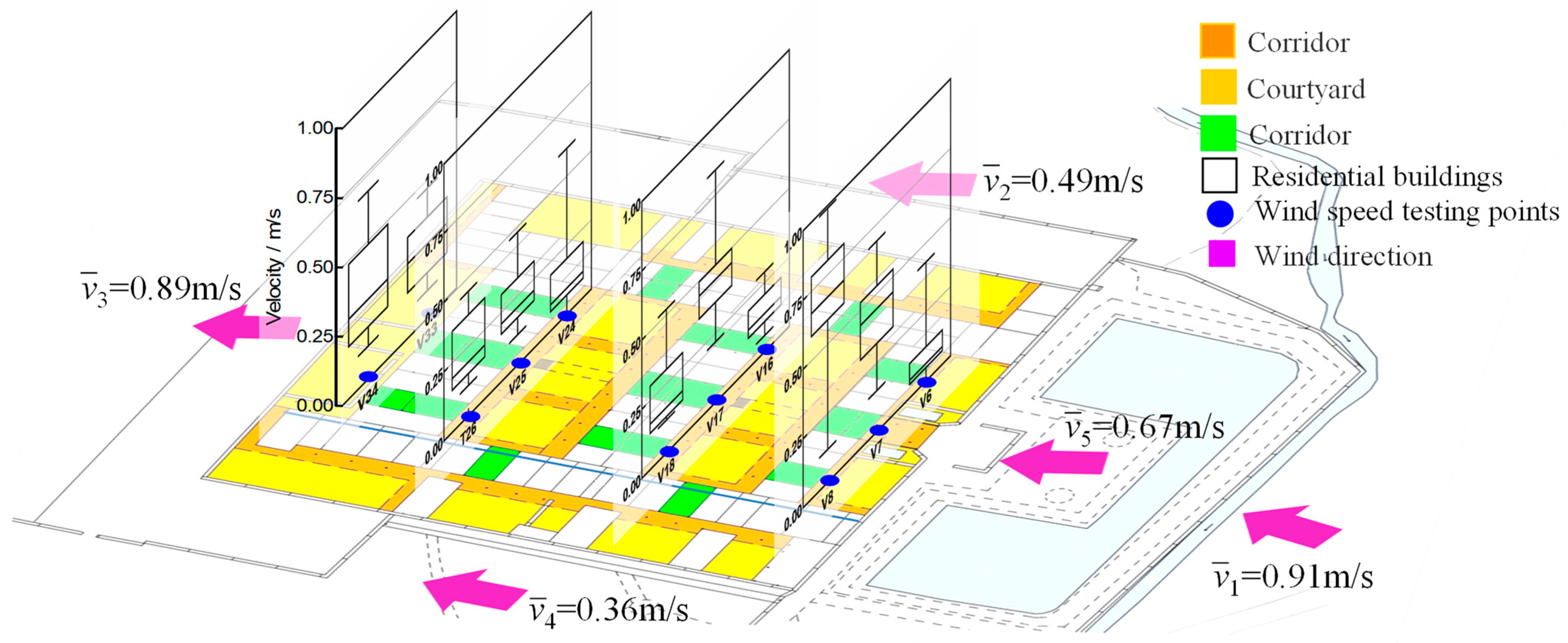
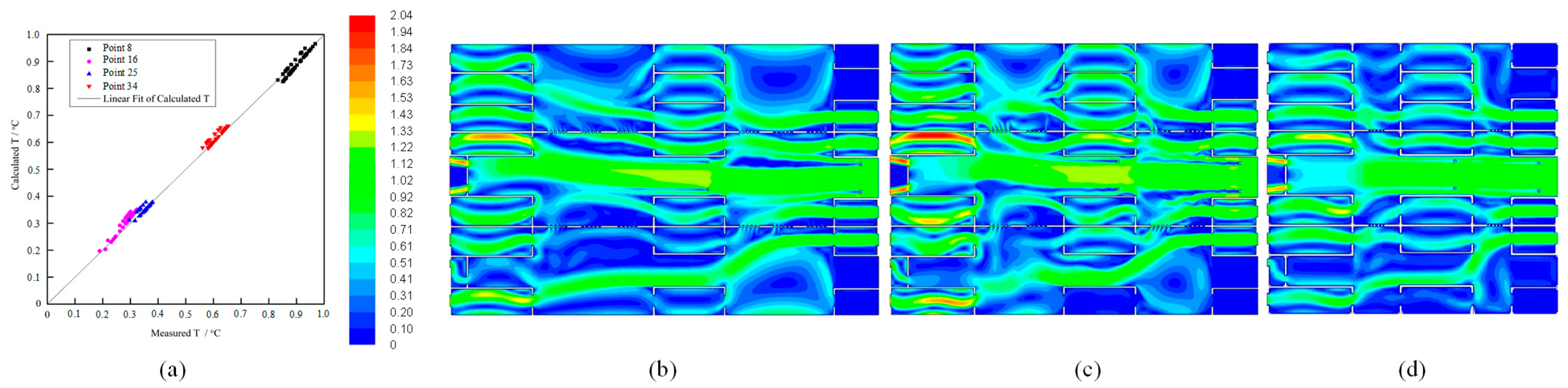
- In summer, when the air velocity at the gate entrance reaches up to 1 m/s, the air velocity in this courtyard varies from 0.25 m/s to 0.75 m/s, which is comfortable for living. This indicates that patio design can effectively reduce the interference of outdoor air velocity on indoor air velocity.
- (2)
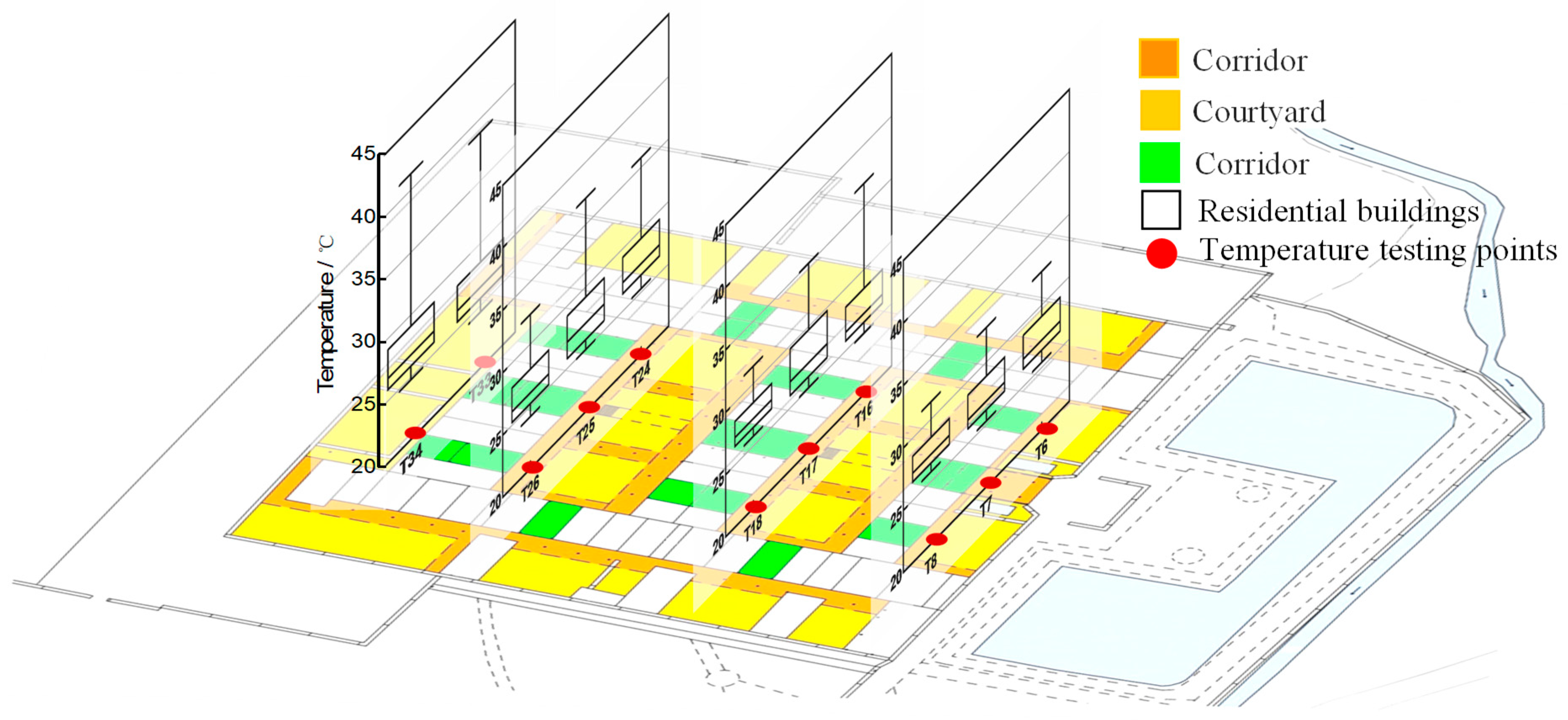
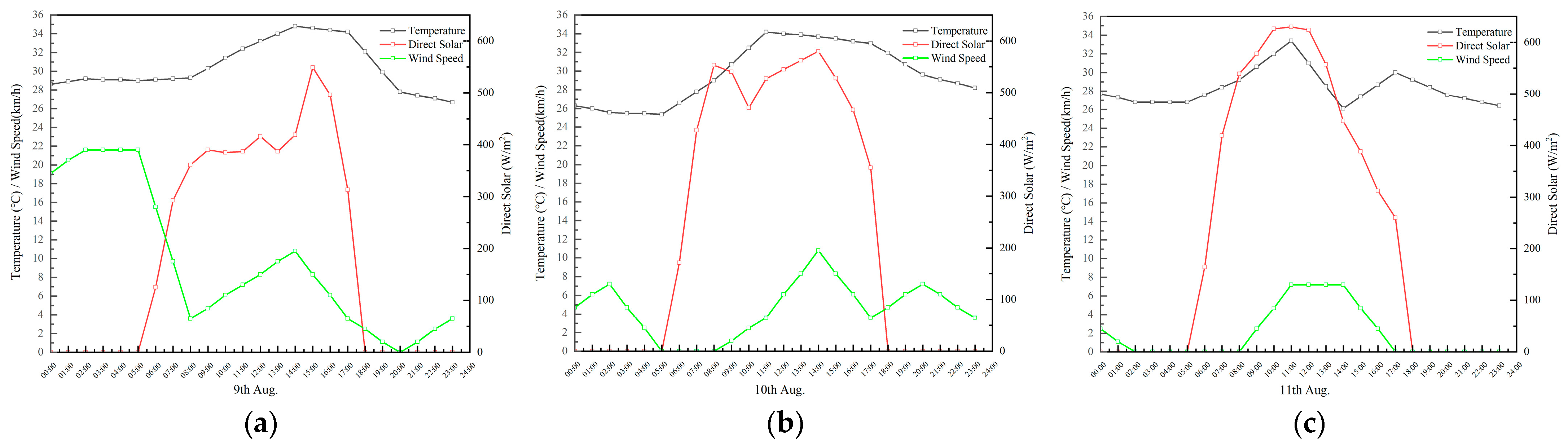
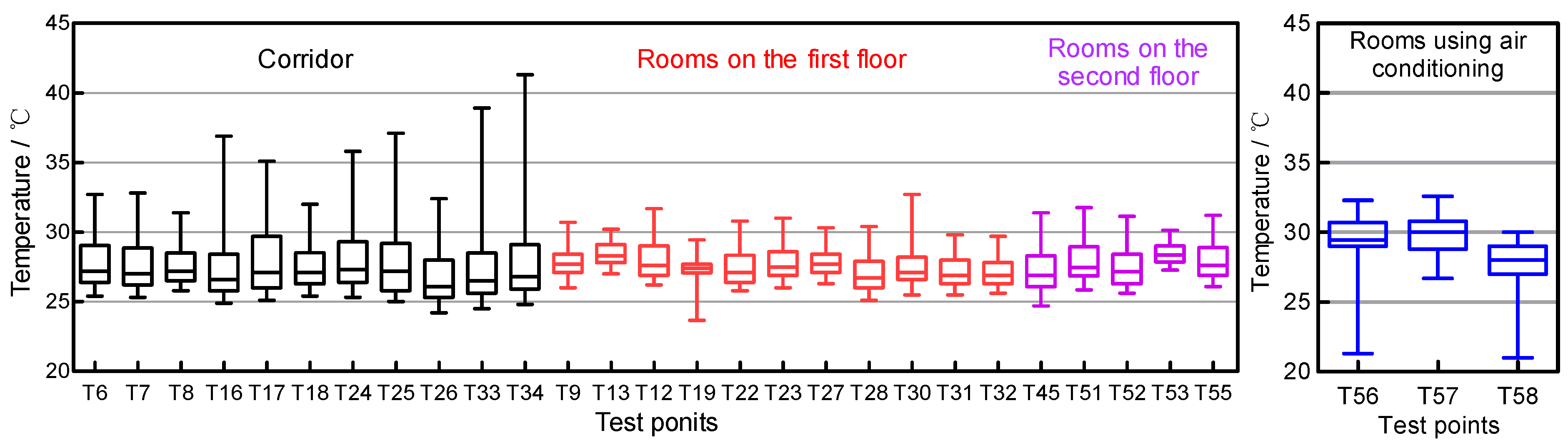
- When the outdoor ambient temperature reaches as high as 34.5 °C, the average temperature in the patios is 27 °C and the indoor air temperature is 26.7 °C. A cooling effect can be achieved through natural ventilation via the water pool at the front of the courtyard. Furthermore, the energy-saving rate of ventilation is 26.2%.
- (3)
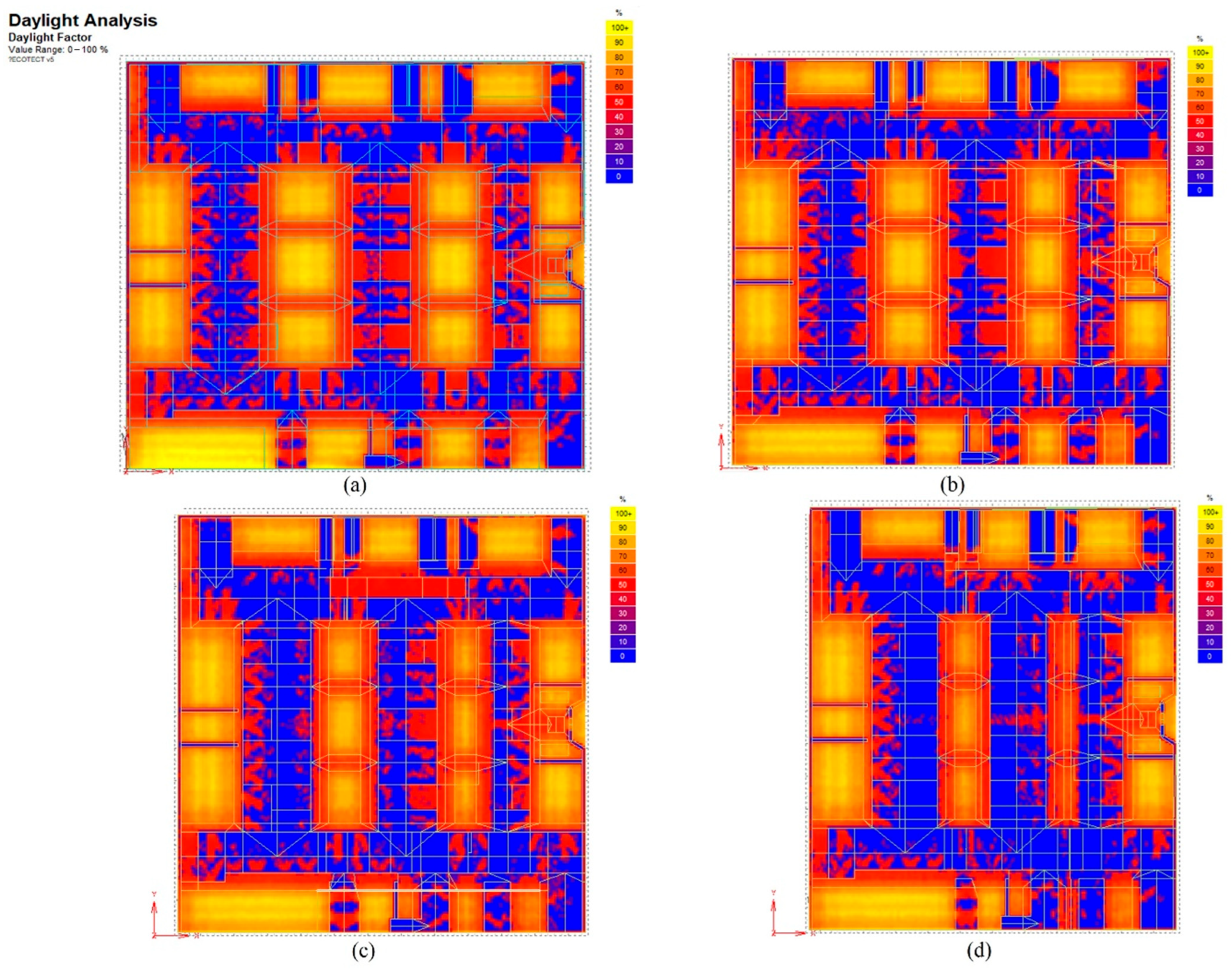
- Considering natural ventilation and daylight effects comprehensively, the depth-to-width ratio of the patio should be no less than 0.06.
- (4)
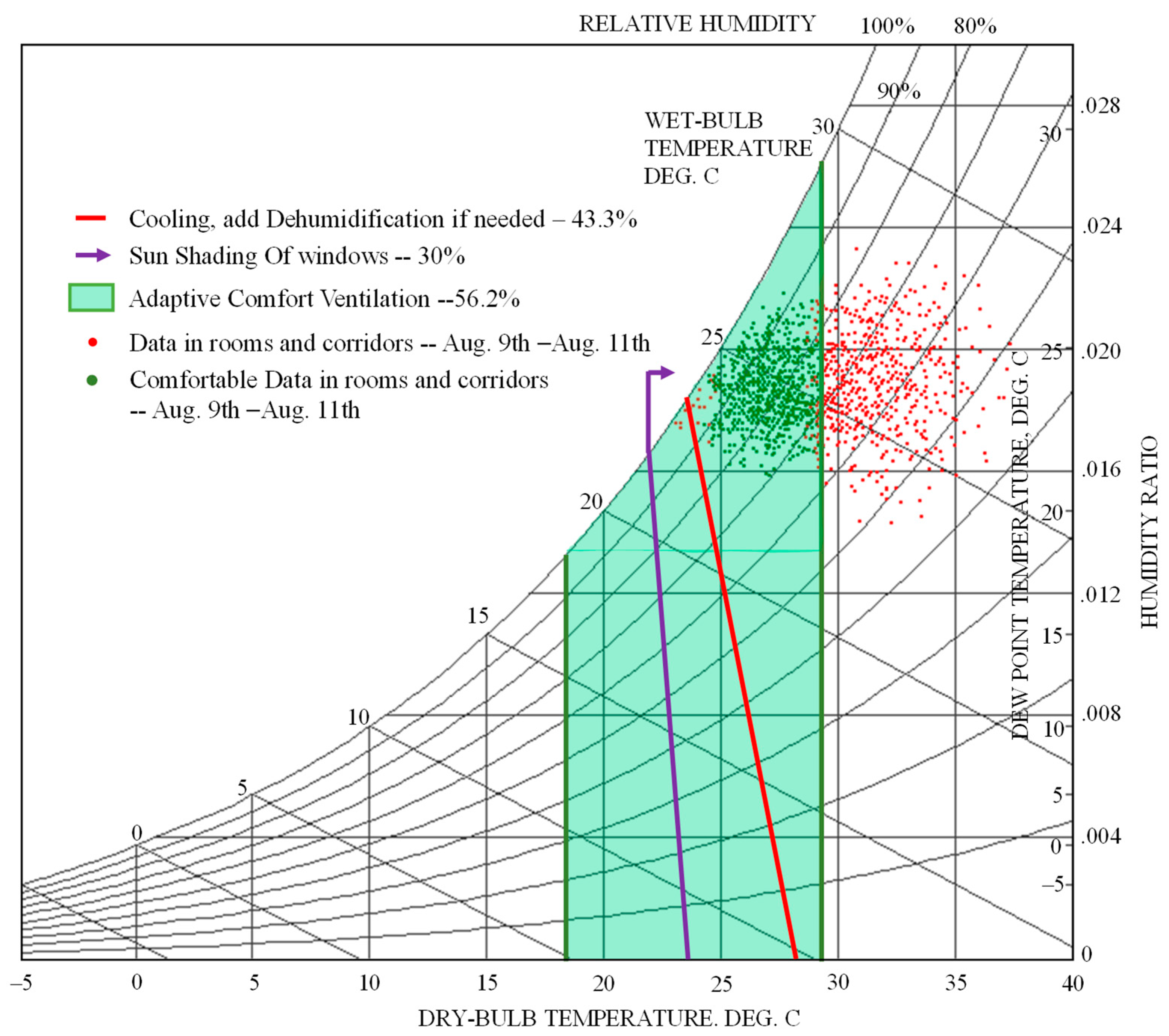
- Calculated by the adaptive comfort model, the APMV varies from 0 to 1.41. The essential elements for the ecological environment, such as sunlight, air, greenery, and water are equipped with corresponding architectural system designs. These designs can be applied to modern building design and cam promote the application of courtyards with strong regulatory functions suitable for the climatic conditions of a specific region.
Author Contributions
Funding
Data Availability Statement
Conflicts of Interest
References
- Lu, Y. Chinese Residential Architecture; South China University of Technology Press: Guangzhou, China, 2004. (In Chinese) [Google Scholar]
- Soflaei, F.; Shokouhian, M.; Zhu, W. Socio-environmental sustainability in traditional courtyard houses of Iran and China. Renew. Sustain. Energy Rev. 2017, 69, 1147–1169. [Google Scholar] [CrossRef]
- Zamani, Z.; Heidari, S.; Hanachi, P. Reviewing the thermal and microclimatic function of courtyards. Renew. Sustain. Energy Rev. 2018, 93, 580–595. [Google Scholar] [CrossRef]
- Abdulkareem, H.A. Thermal Comfort through the Microclimates of the Courtyard. A Critical Review of the Middle-eastern Courtyard House as a Climatic Response. Procedia—Soc. Behav. Sci. 2016, 216, 662–674. [Google Scholar] [CrossRef]
- Al-Hemiddi, N.A.; Al-Saud, K.A.M. The effect of a ventilated interior courtyard on the thermal performance of a house in a hot-arid region. Renew. Energy 2001, 24, 581–595. [Google Scholar] [CrossRef]
- Soflaei, F.; Shokouhian, M.; Abraveshdar, H.; Alipour, A. The impact of courtyard design variants on shading performance in hot-arid climates of Iran. Energy Build. 2017, 143, 71–83. [Google Scholar] [CrossRef]
- Mustafa, F.A.; Ali, L.A. Common architectural characteristics of traditional courtyard houses in Erbil city. Ain Shams Eng. J. 2024, 15, 103003. [Google Scholar] [CrossRef]
- Akbari, H.; Joonaghani, N.N.M. Analysis of the geometric and natural properties of courtyards in historical houses of Isfahan (Iran). J. Asian Archit. Build. Eng. 2022, 21, 1879–1890. [Google Scholar] [CrossRef]
- Martinelli, L.; Matzarakis, A. Influence of height/width proportions on the thermal comfort of courtyard typology for Italian climate zones. Sustain. Cities Soc. 2017, 29, 97–106. [Google Scholar] [CrossRef]
- El Bat, A.M.; Romani, Z.; Bozonnet, E.; Draoui, A.; Allard, F. Optimizing urban courtyard form through the coupling of outdoor zonal approach and building energy modeling. Energy 2023, 264, 126176. [Google Scholar] [CrossRef]
- Wang, G.; Cui, X.; Song, W.; Hao, Y. Spatial Climate Adaptation Characteristics and Optimization Strategies of Traditional Residential Courtyards in Cold Locations: A Case Study of Xiaoyi Ancient City in Shanxi Province, China. Buildings 2025, 15, 1659. [Google Scholar] [CrossRef]
- Sun, Q.Q.; Luo, Z.X.; Chen, J. Study on natural ventilation modes of patio spaces in residential buildings along the Maritime Silk Road in the South China Sea: A case study of Hainan. Tradit. Chin. Archit. Gard. Technol. 2023, 94–98. [Google Scholar]
- Sun, Q.; Fan, Z.; Bai, L. Influence of space properties of enclosed patio on thermal performance in hot-humid areas of China. Ain Shams Eng. J. 2024, 15, 102370. [Google Scholar] [CrossRef]
- Wieser, M.; Scaletti, A.; Montoya, T.; Villanueva, N.; Cisneros, S. Convection-based ventilation between courtyards in traditional houses in the city of Lima. The Riva-Aguero house. Inf. Constr. 2022, 74, e454. [Google Scholar] [CrossRef]
- Zheng, W.; Li, B.; Cai, J.; Li, Y.; Qian, L. Microclimate characteristics in the famous dwellings: A case study of the Hakka Tulou in Hezhou, China. Urban Clim. 2021, 37, 100824. [Google Scholar] [CrossRef]
- Rajapaksha, I.; Nagai, H.; Okumiya, M. A ventilated courtyard as a passive cooling strategy in the warm humid tropics. Renew. Energy 2003, 28, 1755–1778. [Google Scholar] [CrossRef]
- Meng, H.; Jiao, W.; Hong, J.; Anna, L. Analysis on Wind Environment in Winter of Different Rural Courtyard Layout in the Northeast. Procedia Eng. 2016, 146, 343–349. [Google Scholar] [CrossRef]
- Jiang, J.; Tang, C.; Wang, Y.; Liang, L. Measurement and Simulation Optimization of the Light Environment of Traditional Residential Houses in the Patio Style: A Case Study of the Architectural Culture of Shanggantang Village, Xiangnan, China. Buildings 2025, 15, 1786. [Google Scholar] [CrossRef]
- Gao, R.; Liu, J.; Shi, Z.; Zhang, G.; Yang, W. Patio Design Optimization for Huizhou Traditional Dwellings Aimed at Daylighting Performance Improvements. Buildings 2023, 13, 583. [Google Scholar] [CrossRef]
- Muhaisen, A.S.; Gadi, M.B. Shading performance of polygonal courtyard forms. Build. Environ. 2006, 41, 1050–1059. [Google Scholar] [CrossRef]
- Acosta, I.; Varela, C.; Molina, J.F.; Navarro, J.; Sendra, J.J. Energy efficiency and lighting design in courtyards and atriums: A predictive method for daylight factors. Appl. Energy 2018, 211, 1216–1228. [Google Scholar] [CrossRef]
- Fuertes, P.; Sauquet, R.; Salvado, N. Patio as a structural invariant: Buildings with patio facing adaptive reuse in Barcelona. In Proceedings of the 12th International Conference on Structural Analysis of Historical Constructions (SAHC 2021), Online, 29 September–1 October 2021. [Google Scholar]
- Wang, J.; Han, W.; Xia, Y.; Xuan, J.; Chen, M.; Zhang, H.; Li, S.; Wang, K. Research on the Optimization of Selecting Traditional Dwellings Patio Renovation Measures in Hot Summer and Cold Winter Zone Based on Thermal Comfort and Energy Consumption. Buildings 2025, 15, 3412. [Google Scholar] [CrossRef]
- Li, M.; Jin, Y.; Guo, J. Dynamic characteristics and adaptive design methods of enclosed courtyard: A case study of a single-story courtyard dwelling in China. Build. Environ. 2022, 223, 109445. [Google Scholar] [CrossRef]
- Aldawoud, A.; Clark, R. Comparative analysis of energy performance between courtyard and atrium in buildings. Energy Build. 2008, 40, 209–214. [Google Scholar] [CrossRef]
- Aldawoud, A. Thermal performance of courtyard buildings. Energy Build. 2008, 40, 906–910. [Google Scholar] [CrossRef]
- Taleghani, M.; Tenpierik, M.; den Dobbelsteen, A. Energy performance and thermal comfort of courtyard/atrium dwellings in the Netherlands in the light of climate change. Renew. Energy 2014, 63, 486–497. [Google Scholar] [CrossRef]
- Fang, X.M. Measuring Technology on Building Environment; China Building Industry Press: Beijing, China, 2002. (In Chinese) [Google Scholar]
- GB/T 50785-2012; Evaluation Standard for Indoor Thermal Environment in Civil Buildings. China Architecture & Building Press: Beijing, China, 2012.
- Zhu, Y. Built Environment, 4th ed.; China Architecture & Building Press: Beijing, China, 2017. (In Chinese) [Google Scholar]
- Zhang, X.; Liu, X.; Chen, B.; Zhao, J.R.; Sang, Y. Numerical Simulation of Heat Transfer Process inside the Raised Floor Heating System Integrated with a Burning Cave. Renew. Energy 2019, 132, 1104–1111. [Google Scholar] [CrossRef]
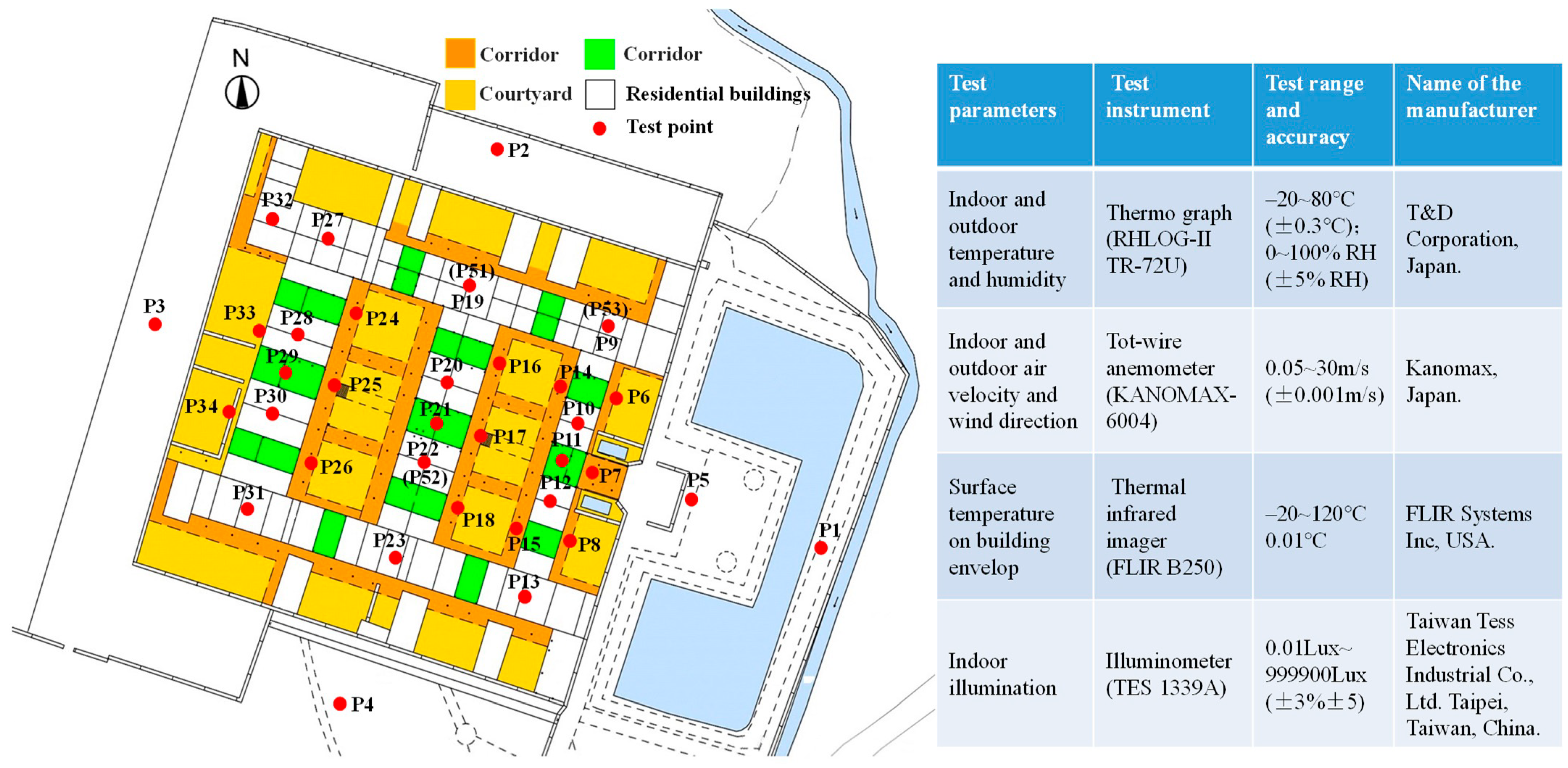





| Measured Parameters | Instrument Model | Recording Interval | Measuring Methods | Measuring Error | Manufacturer |
|---|---|---|---|---|---|
| Surface temperature of the building | FLIR B250 | 10 min | Direct measured | 0.1 °C | Teledyne FLIR LLC, Wilsonville, OR, USA |
| Air temperature | TR-72U | 10 min | Direct measured | 0.1 °C | T&D Corporation, Tokyo, Japan |
| Relative humidity | TR-72U | 10 min | Direct measured | 2% | T&D Corporation, Tokyo, Japan |
| Wind speed | KANOMAX-6004 | 1 s | Direct measured | 0.05 m/s | Kanomax, Tokyo, Japan |
| Illumination | TES 1339A | 10 min | Direct measured | 3% | TES Electrical Electronic Corporation, Taipei, Taiwan, China |
Disclaimer/Publisher’s Note: The statements, opinions and data contained in all publications are solely those of the individual author(s) and contributor(s) and not of MDPI and/or the editor(s). MDPI and/or the editor(s) disclaim responsibility for any injury to people or property resulting from any ideas, methods, instructions or products referred to in the content. |
© 2026 by the authors. Licensee MDPI, Basel, Switzerland. This article is an open access article distributed under the terms and conditions of the Creative Commons Attribution (CC BY) license.
Share and Cite
Zhang, X.; Wang, K.; Chen, B.; Zhao, J.; Wang, S.; Song, X. Environmental Analysis of Traditional House with Patios in Hot Summer and Warm Winter Zone of Southern China. Buildings 2026, 16, 212. https://doi.org/10.3390/buildings16010212
Zhang X, Wang K, Chen B, Zhao J, Wang S, Song X. Environmental Analysis of Traditional House with Patios in Hot Summer and Warm Winter Zone of Southern China. Buildings. 2026; 16(1):212. https://doi.org/10.3390/buildings16010212
Chicago/Turabian StyleZhang, Xueyan, Kaibiao Wang, Bin Chen, Jiayi Zhao, Shibo Wang, and Xiaoming Song. 2026. "Environmental Analysis of Traditional House with Patios in Hot Summer and Warm Winter Zone of Southern China" Buildings 16, no. 1: 212. https://doi.org/10.3390/buildings16010212
APA StyleZhang, X., Wang, K., Chen, B., Zhao, J., Wang, S., & Song, X. (2026). Environmental Analysis of Traditional House with Patios in Hot Summer and Warm Winter Zone of Southern China. Buildings, 16(1), 212. https://doi.org/10.3390/buildings16010212