Article

Heritage Conservation and Management of Traditional Anhui Dwellings Using 3D Digitization: A Case Study of the Architectural Heritage Clusters in Huangshan City


1
College of Architecture and Civil Engineering, West Anhui University, Lu’an 237012, China
2
School of Architecture, Southeast University, Nanjing 210018, China
3
Graduate School of Environmental Engineering, The University of Kitakyushu, Kitakyushu 808-0135, Japan
4
School of Architecture and Planning, Anhui Jianzhu University, Hefei 230601, China
*
Author to whom correspondence should be addressed.
Buildings 2026, 16(1), 211; https://doi.org/10.3390/buildings16010211 (registering DOI)
Submission received: 12 November 2025 / Revised: 19 December 2025 / Accepted: 25 December 2025 / Published: 2 January 2026
(This article belongs to the Section Construction Management, and Computers & Digitization)

Abstract

Traditional villages stand as irreplaceable treasures of global cultural heritage, embodying profound historical, cultural, and esthetic values. However, the accelerating pace of urbanization has exposed them to unprecedented threats, including structural degradation, loss of intangible cultural practices, and the homogenization of rural landscapes. In recent years, three-dimensional (3D) laser scanning, unmanned aerial vehicles (UAVs), and other advanced geospatial technologies have been increasingly applied in the conservation and restoration of architectural heritage. The digital documentation of traditional dwellings not only ensures the accuracy and efficiency of conservation efforts but also minimizes physical intervention, thereby safeguarding the authenticity and integrity of heritage sites. This study examines the architectural characteristics and conservation challenges of traditional Huizhou dwellings in Huangshan City, Anhui Province, by integrating oblique photogrammetry, terrestrial laser scanning (TLS), and 3D modeling. Close-range photogrammetry, combined with image matching algorithms and computer vision techniques, was used to produce highly detailed 3D models of historical structures. UAV-based data acquisition was further employed to generate Heritage Building Information Modeling (HBIM) from point cloud datasets, which were subsequently pre-processed and denoised for restoration simulations. In addition, HBIM was utilized to conduct quantitative analyses of architectural components, providing critical support for heritage management and decision-making in conservation planning. The findings demonstrate that 3D digitization offers a sustainable and replicable model for the protection, revitalization, and adaptive reuse of traditional villages, contributing to the long-term preservation of their cultural and architectural legacy.

1. Introduction

In the context of rapid urbanization, traditional villages, particularly those in developing countries, are facing profound challenges that threaten both their tangible and intangible heritage. Large-scale rural-to-urban migration has led to the abandonment and deterioration of vernacular architecture, while modern construction practices often undermine historical authenticity. Since the adoption of the 1972 UNESCO World Heritage Convention, the international community has increasingly recognized the urgency of safeguarding cultural landscapes as integrated entities that encompass historical, cultural, esthetic, and ecological values.
More than 4000 settlements in China have been officially designated as “National Traditional Villages” in recognition of their historical depth, cultural value, distinctive vernacular architecture, esthetic significance, and important landscape settings [1]. Research on these villages addresses multiple interrelated themes—heritage protection [2], rural landscape studies [3], tourism development in historic settlements [4], and rural revitalization strategies—but the conservation of traditional built fabric has emerged as a central concern in architectural scholarship [5]. Compared with urban contexts, rural areas display distinctive building types and landscape patterns that hold strong social and esthetic appeal; their traditional constructions commonly rely on natural materials (wood, stone, clay tiles, rammed earth), which are particularly susceptible to weathering and decay. Preservation of these resources therefore serves not only to safeguard cultural identity but also to support local economies, stimulate heritage tourism, and promote sustainable management of cultural assets [6,7]. Ensuring the authenticity and integrity of these sites is thus a primary objective, so that their material and intangible values may be transmitted as living cultural legacies to future generations.
Nevertheless, numerous challenges continue to hinder the sustainable development of traditional villages. The forces of economic globalization have introduced new pressures on heritage preservation, creating complex management and conservation issues. Addressing these challenges requires not only comprehensive protection of architectural heritage during rural development in China but also the integration of rural heritage into planning processes to preserve local identity [8]. In 2005, UNESCO introduced the notion of the Historic Urban Landscape (HUL) [9], and in 2011, formally endorsed it through the Recommendation on the Historic Urban Landscape. This document describes HUL as the cumulative outcome of successive historical layers reflecting both cultural and natural values and characteristics. It extends beyond the traditional idea of a “historic center” or “ensemble,” encompassing the wider territorial context along with its geographical setting [10].
With the rapid growth of tourism, achieving a harmonious coexistence between cultural heritage conservation and tourism development has become a critical issue. This study focuses on Lu Village, a nationally recognized traditional village in China, as a case study to investigate the practical application of 3D digital technologies in the conservation of traditional architecture. Surveying techniques for historic buildings have evolved from conventional tools such as tape measures and distance meters to advanced technologies including 3D laser scanning, Global Positioning Systems (GPS), and Geographic Information Systems (GIS). These technological advances have provided new perspectives on the observation, documentation, and analysis of traditional architecture [11].
With the advancement of the Internet and spatial information technologies, an expanding range of tools, such as Building Information Modeling (BIM), Augmented Reality (AR), and Geographic Information Systems (GIS), has been applied to the identification, documentation, conservation, and restoration of traditional village heritage. In practice, GIS has been utilized to manage rural heritage through geographic databases [12], analyze the spatial evolution of rural landscapes [13], and support decision-making through the Analytic Hierarchy Process (AHP) [14].
Remote Sensing (RS) technologies have also been employed to monitor and assess rural sites, predict natural disasters in surrounding areas, and classify rural tourism resources [15,16]. Because different RS techniques possess distinct characteristics and are suited to different application domains, they are widely used to obtain real-time data for heritage management. Therefore, the selection of appropriate surveying methods must be carefully aligned with the specific objectives and requirements of each project.
In recent years, the extensive application of digital technologies has offered valuable approaches for the conservation of traditional architectural complexes, demonstrating considerable potential for improving the management of China’s built heritage. However, systematic studies focusing on Huizhou traditional villages-particularly historic settlements dominated by timber architecture—remain relatively limited. Moreover, how high-precision point cloud data can be effectively transformed into HBIM models that support long-term maintenance and decision-making has yet to be fully explored. In response to these research gaps, this study undertakes a systematic digital modeling of Lu Village and evaluates its overall performance and advantages from an HBIM-based application perspective. This approach not only establishes a solid foundation for the development of a digital heritage archive for Lu Village, but also provides methodological references for the digital conservation of other traditional architectural heritage sites in the Huizhou region. These efforts can further assist local authorities in formulating targeted preventive conservation strategies and enhancing management efficiency.
Although the integration of HBIM and point cloud technologies has gained significant traction in the field of digital heritage documentation, several critical research gaps persist. In the case of the Huizhou region, existing studies predominantly focus on the geometric recording or visualization of individual historic buildings, with the application of HBIM often limited to descriptive modeling. Few studies provide a systematic approach to translating high-density point cloud data into parametric HBIM components, and research on the spatial relationships among multiple historic buildings at the village scale is largely absent. Additionally, while point cloud acquisition and visual representation have been emphasized, the complete technical workflow—from data registration and semantic segmentation to parametric modeling and integration within HBIM—has not been sufficiently articulated in a reproducible and scalable manner.
Furthermore, despite growing scholarly interest, research addressing the specific challenges of Huizhou timber architecture, particularly studies that combine high-precision terrestrial laser scanning, UAV oblique photography, point cloud fusion, and HBIM-based analysis, remains limited. Existing research tends to focus on individual buildings, often lacks scalable technical workflows, and seldom accounts for multi-building coordination within historical settlements. To address these gaps, this study uses the architectural heritage complex of Huangshan City as a case study, developing a comprehensive technical chain that encompasses 3D digitization, geometric processing, HBIM reconstruction, and heritage management analysis, with the aim of advancing multi-scale integration and enhancing the applicability of these techniques in heritage conservation.
This version keeps the meaning clear and concise, while also avoiding repetition and ensuring that the technical aspects are described in an academically appropriate manner. The main contributions are as follows: (1) proposing a high-fidelity digital recording workflow tailored to traditional timber architecture in Anhui; (2) constructing a multi-building HBIM model capable of supporting visualization and conservation scenario simulations. Overall, this study provides a replicable and scalable technical framework for the sustainable conservation of Huizhou architectural heritage.

2. Literature Review

On 10 December 2025, the Web of Science Core Collection was queried for Science Citation Index Expanded (SCI-E) and Emerging Sources Citation Index (ESCI) records whose topic field contained the phrases “Heritage Conservation” AND “Architectural Heritage”. Document types were restricted to “Article”, “Proceeding Paper”, or “Early Access”. The search returned 1426 records. Annual publication counts (Figure 1) show a pronounced upward inflection after 2015. The corpus was imported into CiteSpace (version 6.3.R1) and mapped with the following parameters: time slice = 1 year, node type = keyword, pruning = pathfinder + pruning sliced networks, cluster extraction algorithm = LLR (log-likelihood ratio). The resulting knowledge-domain map is displayed in Figure 1 [17,18,19,20,21].
(1)
The objects addressed in architectural heritage protection include ancient buildings, cultural relics, traditional villages, historic districts, and archeological sites. From the perspective of heritage classification, these objects can be broadly categorized into cultural landscapes, natural heritage, and historic urban landscapes.
(2)
Digital technologies applied to architectural heritage conservation can be grouped into several major categories, including three-dimensional (3D) laser scanning, Building Information Modeling (BIM), virtual reality (VR), 3D reconstruction, point cloud–based processing, UAV-based photogrammetry, and oblique photography.
A statistical analysis of keyword clustering using the log-likelihood ratio (LLR) algorithm produced seven distinct clusters: historical sites, 3D laser scanning, BIM, ancient village conservation, VR, cultural heritage, and architectural heritage. Among these, the cluster related to digital technologies for architectural and landscape heritage protection primarily encompasses BIM, 3D laser scanning, and VR.
The analysis is based on data retrieved from WoS, with clusters generated using the LLR algorithm. An analysis of these three methods in architectural heritage conservation reveals their distinct areas of focus (Table 1). Three-dimensional laser scanning is primarily used for mapping and extracting heritage features. When integrated with other digital surveying techniques, such as UAV-based oblique photography, it enables the real-time acquisition of diverse heritage records, including textual data, images, and other forms of documentation [22]. BIM emphasizes the parametric organization and management of heritage data. It is frequently connected to digital information platforms and utilizes both forward and reverse modeling to store collected data in parameterized formats, thereby improving data management efficiency. VR focuses on creating immersive navigation and interactive engagement with heritage resources. By integrating 3D modeling, VR imaging, and augmented reality, it facilitates the presentation and sharing of heritage information with both researchers and the public [23].
Compared with traditional surveying methods, oblique photogrammetry offers both higher efficiency and accuracy, while its associated data acquisition costs are generally lower. As shown in comparative studies, this technology provides a unique and cost-effective approach for collecting village-scale datasets. Moreover, the use of real-world texture mapping ensures that resulting 3D models accurately reflect the village’s current layout and environmental conditions. The three technological directions represented by these categories can be generalized as:
(1)
Heritage Data Acquisition and Collection Technologies represented by 3D laser scanning;
(2)
Management Technologies represented by HBIM;
(3)
Dissemination and Sharing Technologies represented by virtual reality.

3. Materials and Methods

3.1. Study Area

Huizhou, abbreviated as “Hui,” is recognized as one of the three major cultural systems in China. Located in the Yangtze River Delta region, it borders Jiangxi Province to the south and Zhejiang Province to the east. The area is characterized by a favorable ecological environment, featuring several rivers, including the Xin′an River and the Qingyi River. Huizhou preserves some of the oldest surviving villages in China and retains architectural heritage spanning multiple historical periods. With rapid socio-economic development, this millennia-old cultural region has undergone profound social transformations within just a few decades. These changes have created a widening gap between the material and spiritual realms, placing many traditional landscapes at significant risk [24,25,26,27,28]. Fortunately, the cultural heritage value of southern Anhui has long been recognized. In June 2021, the State Council of China designated Yixian County as a National Historic and Cultural City [29].
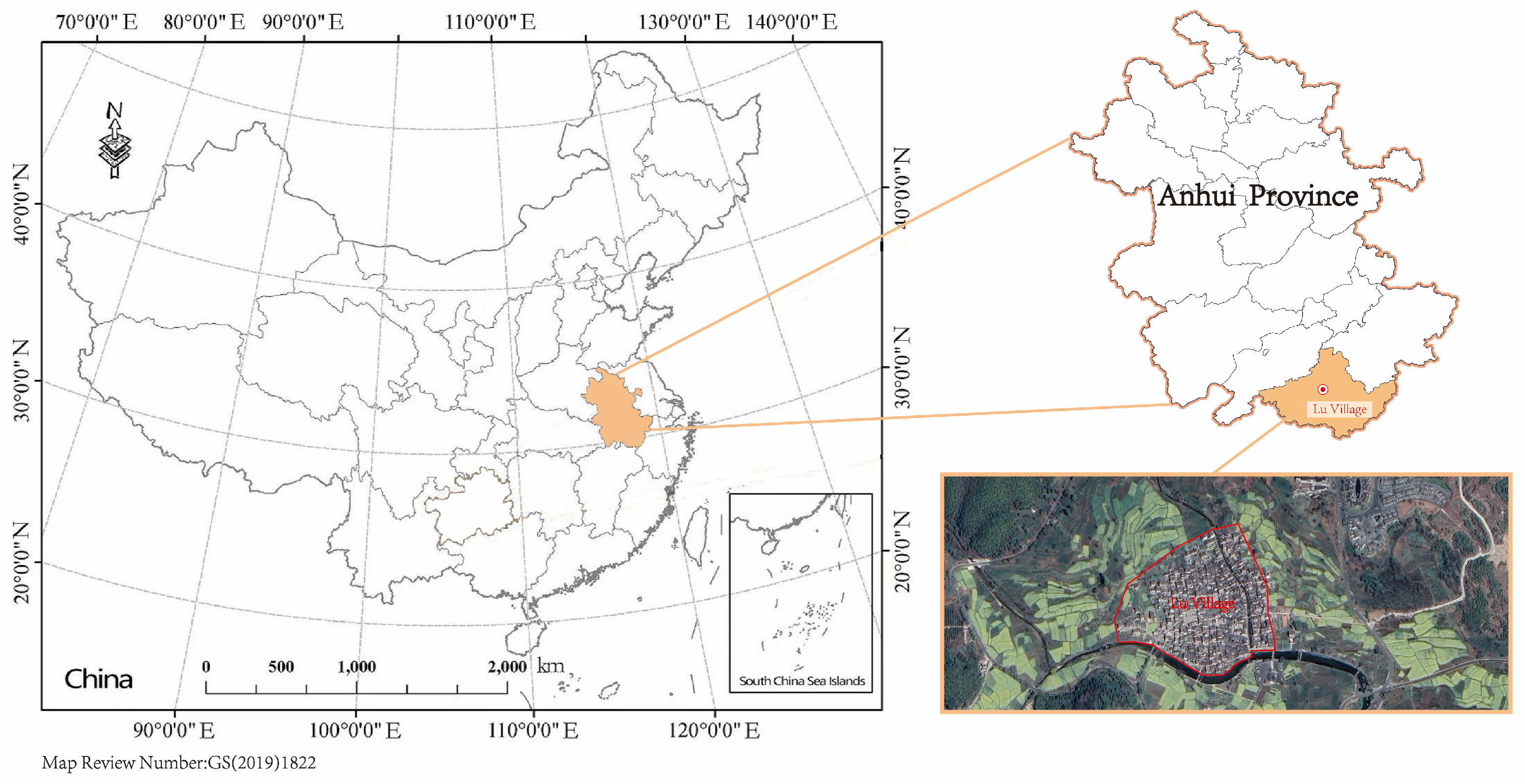
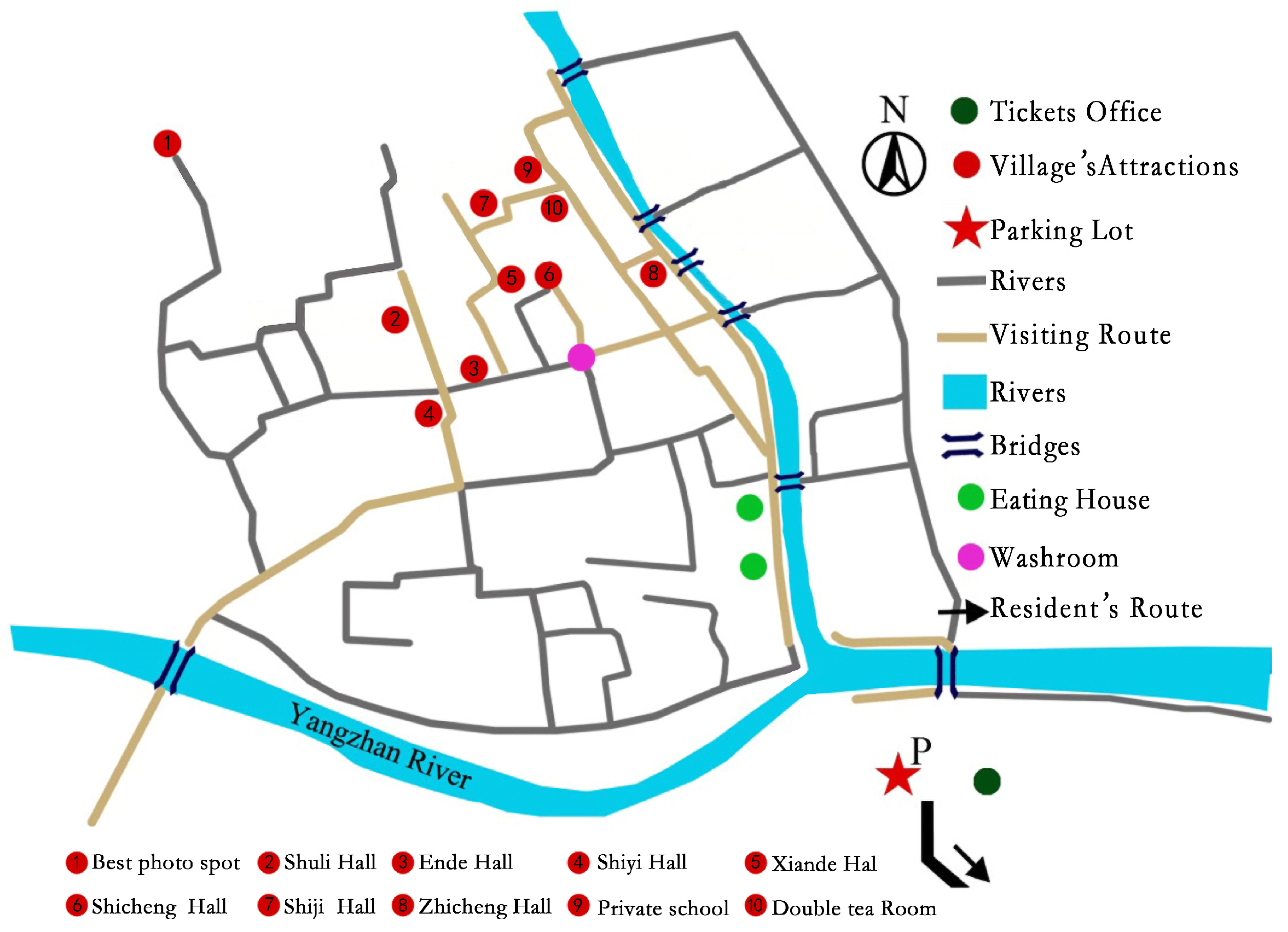
Lu Village, located in Yixian County, Huangshan City, Anhui Province, is surrounded by mountains on all sides, with its settlements arranged in a network-like pattern. Figure 2 illustrates the geographical location of Lu Village in Anhui Province, China. To date, research on Lu Village has been limited, particularly in terms of its integration into local cultural and economic revitalization strategies. Despite its long history, the value of its ancient architecture has been largely overlooked. With the rapid pace of urbanization in China, some long-term residents have gradually relocated, while numerous old houses have been abandoned. This process has led to building deterioration and the progressive erosion of the village’s historical character. In addition, archival records documenting the history of Lu Village have not been adequately preserved, highlighting the urgent need for a comprehensive heritage survey. Figure 3 illustrates the overall layout of Lu Village.
As of 2020, Lu Village retains 65 brick-wood ancient structures, 21 of which have been designated as key protected cultural relics, awaiting further research and development. Conducting a thorough survey and mapping of these historic buildings is essential for assessing their current conditions and for formulating effective conservation and revitalization strategies [30,31]. However, a comprehensive investigation of all ancient buildings would require substantial time, financial investment, and collaboration with other scholars and institutions. Due to constraints in funding and available resources, only six traditional villages with particularly high historical and cultural value were selected for scanning and modeling. Twelve historic residences have been placed on the priority protection list, while approximately 25 of the remaining 50 face serious challenges such as eviction, unclear property rights, and long-term neglect [32].
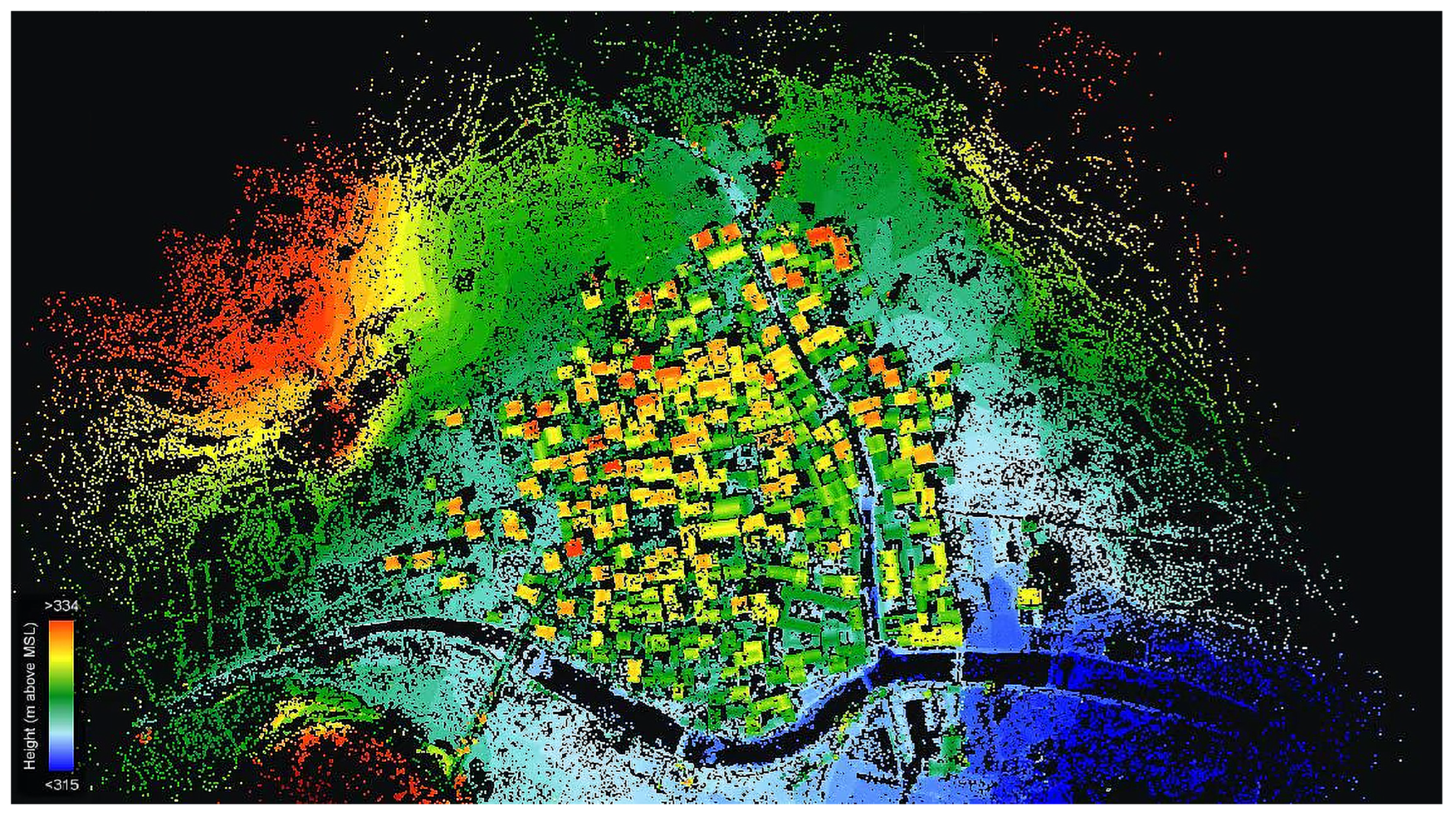
Currently, the maintenance of Lu Village’s ancient dwellings-primarily composed of brick-wood structures-relies largely on revenue generated from ticket sales. However, due to the village’s remote location and persistent threats such as rainwater infiltration, insect infestation, and structural deterioration, the cost of essential preservation work far exceeds the limited funds available from ticket income. In addition, these historic buildings remain highly susceptible to fire hazards, as many residents continue to rely on traditional wood-burning stoves for heating and cooking. Figure 4 illustrates the altitude-based thermal distribution of Lu Village [33].
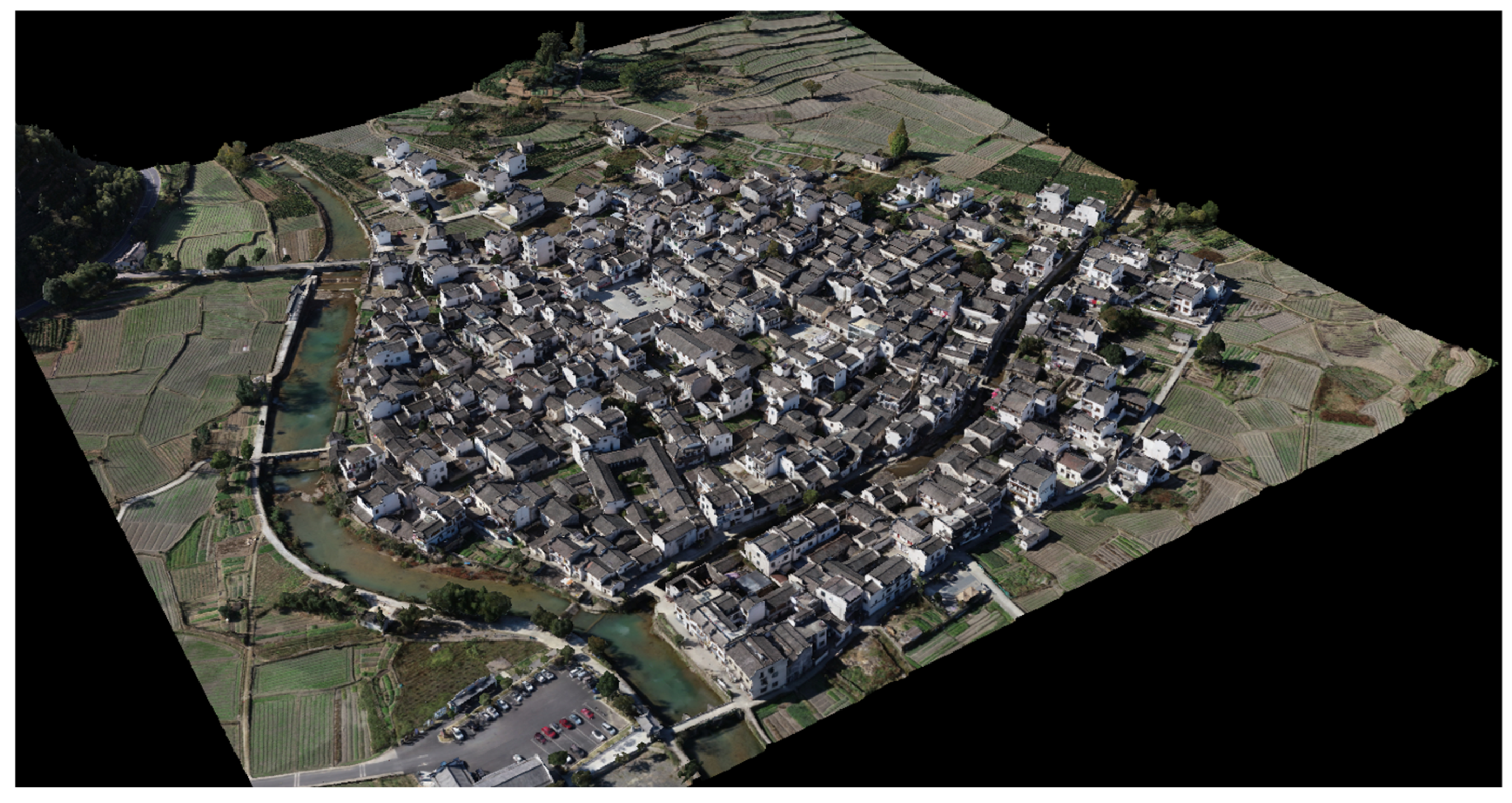
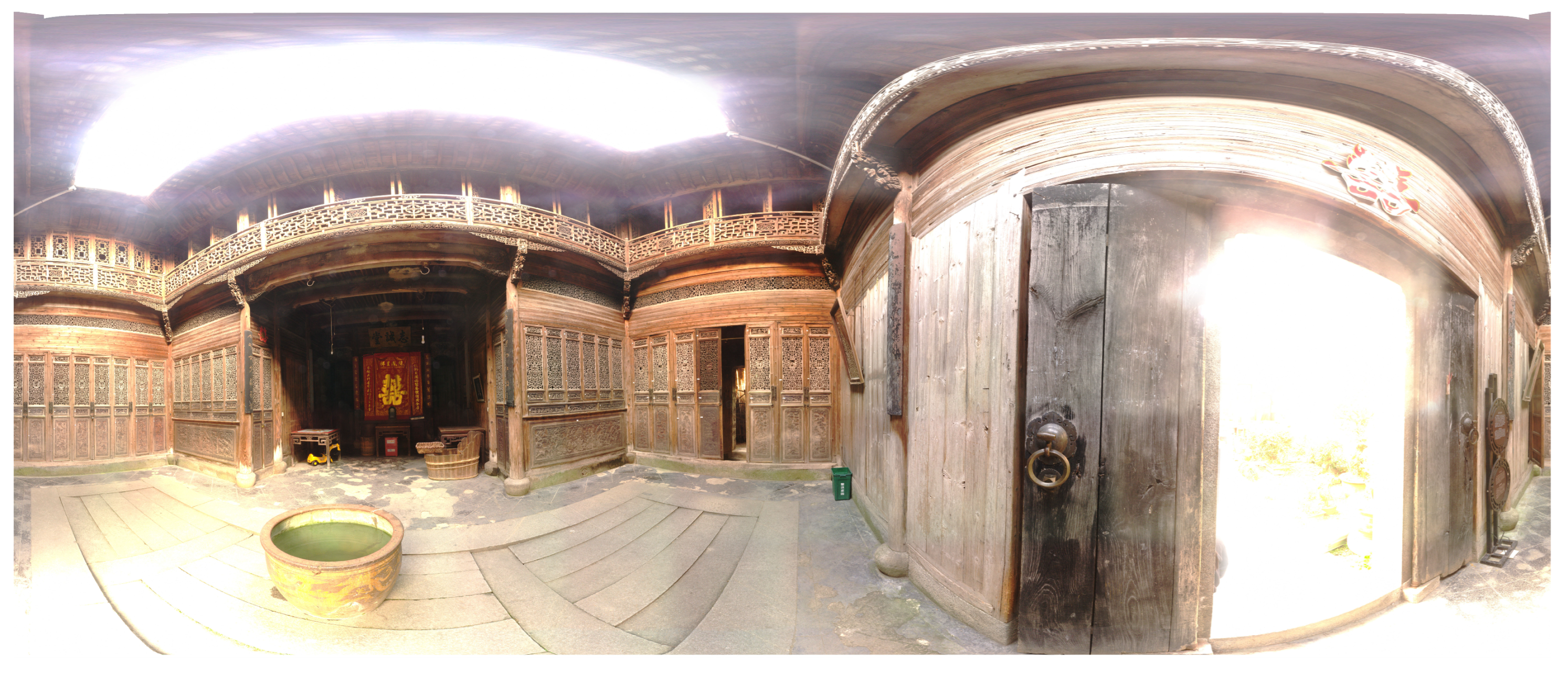
Five of the structures in Lu Village date back to the Ming Dynasty. The village derives its name from the family surname “Lu”, and its built heritage encompasses residential houses, schools, bridges, waterways, and pathways. Among these, Zhicheng Hall is particularly noteworthy. In addition to residential architecture, several historically significant non-residential structures are distributed throughout the village, embodying rich cultural connotations and serving as tangible witnesses of history. These structures are considered among the most representative examples of traditional residential architecture in the Yangtze River Delta region. Figure 5 presents an aerial view of Lu Village. Figure 6 illustrates the VR diagram of Zhicheng Hall.
Lu Village was officially included in the first batch of China’s Traditional Villages; however, it currently faces multiple challenges due to increasing urbanization pressures. Population decline and population aging have contributed to a series of interrelated problems, including ambiguous property ownership, the structural collapse of traditional buildings, overgrown courtyards, and unregulated demolition, all of which have significantly disrupted the village’s traditional spatial patterns. In addition, unplanned planting areas, combined with the deterioration of historic buildings and surrounding natural landscapes, have further weakened the distinctive characteristics of Lu Village’s original architectural forms and street spaces. The complexity of the village’s spatial structure poses considerable challenges for the acquisition of spatiotemporal data that can accurately capture its dynamic changes over time; consequently, there is an urgent need for real-time and high-precision methods of spatial data acquisition and extraction. In-depth analysis of Lu Village’s spatial configuration is therefore essential for informing effective conservation strategies and supporting its sustainable development.

3.2. Methods

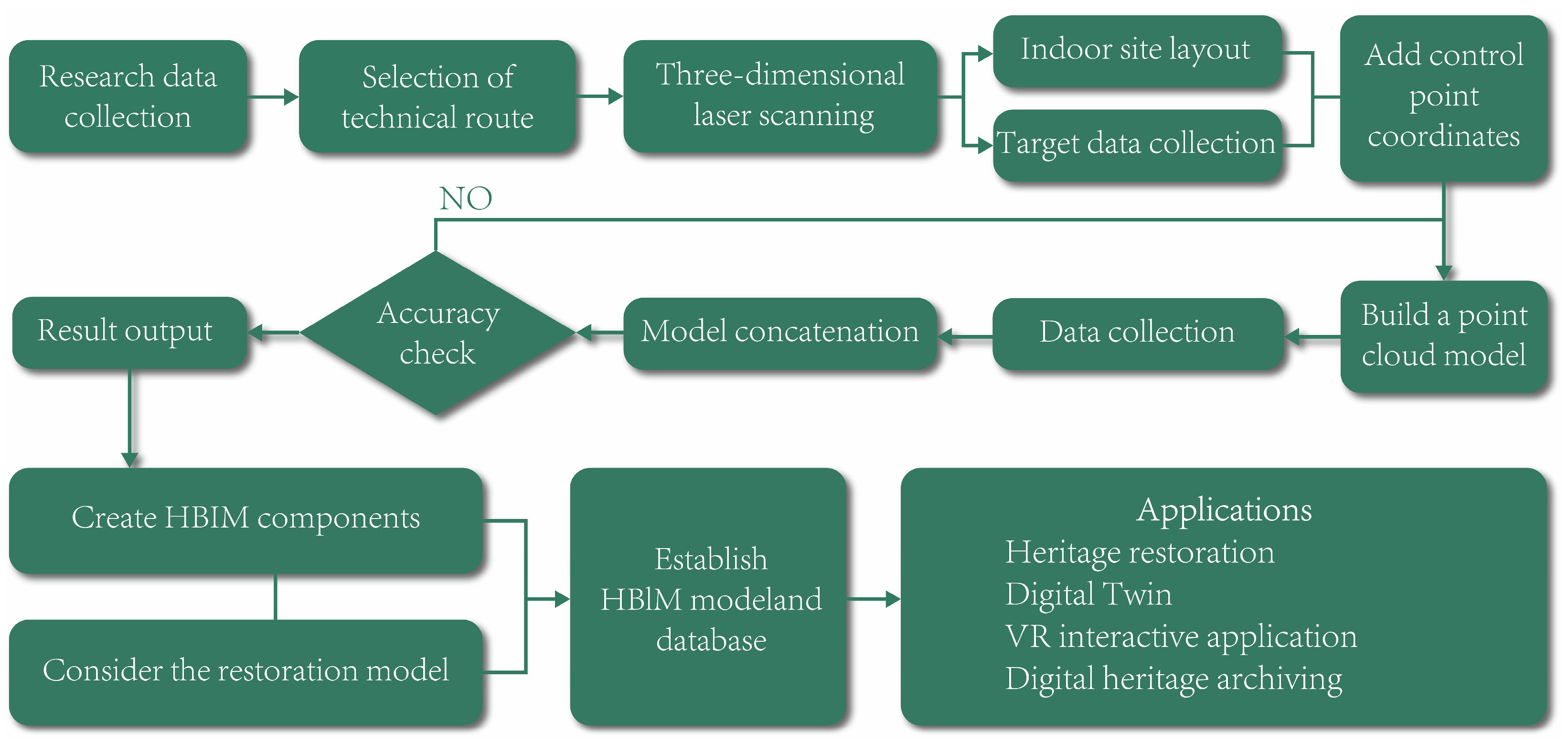
This study addresses this need by employing digital technologies and point cloud segmentation techniques to analyze the village’s spatial morphology, thereby contributing to the methodological framework for studying the spatial forms of traditional villages. Figure 7 illustrates the steps and workflow of this study.
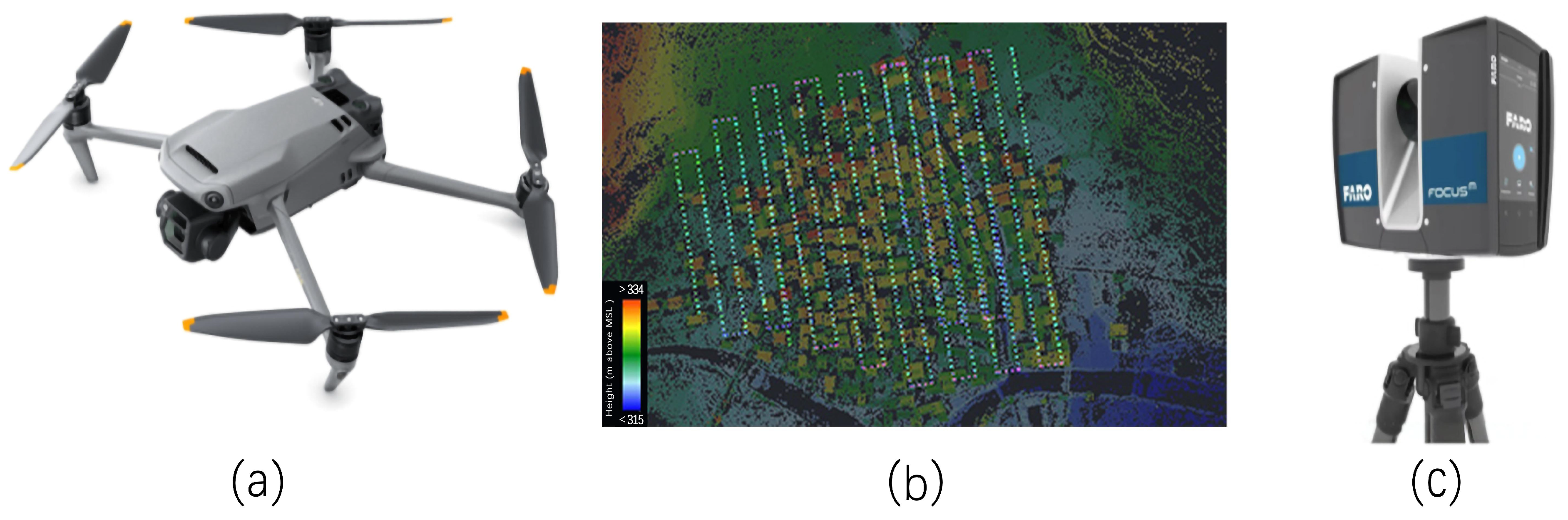
Three-dimensional laser scanning and UAV technology are emerging techniques that have gained increasing attention from researchers in China (Table 2), with UAV data acquired using a DJI Mavic 3 (SZ DJI Technology Co., Ltd., Shenzhen, China). These methods are based on the principle of laser ranging and are capable of recording a large volume of dense three-dimensional data, including spatial coordinates, reflectivity, and texture information of the measured surface. This enables the rapid reconstruction of three-dimensional models of the target object, as well as the generation of various graphical datasets such as lines, surfaces, and volumes (Figure 8). The three commonly used laser ranging principles are as follows.

3.2.1. Angle Positioning Principle

Rotary Encoder: The scanner is equipped with a high-precision encoder that records the horizontal angle (α) and vertical angle (β) of the laser beam in real time, determining the spatial direction of the laser. Inertial Navigation System (INS): The scanner’s attitude is dynamically tracked using gyroscopes and accelerometers to enhance positioning accuracy, particularly during mobile scanning applications [35]. By combining measured slant range (SSS) with angular data (α, β), the target’s 3D coordinates are derived using polar-to-Cartesian transformation:
X = S × cosβ × cosα
Y = S × cosβ × sinα
Z = S × sinβ
This process generates point cloud datasets containing positional coordinates, reflectance intensity, and texture information, and because laser pulses propagate in straight lines, optimal scanner placement is essential for achieving comprehensive coverage of target objects. The configuration of scanning stations directly affects data completeness, geometric accuracy, processing efficiency, and overall data quality; therefore, given the complex spatial layout and diverse architectural forms of Lu Village, a coordinated multi-station scanning strategy was adopted to maximize coverage and ensure dataset integrity [36]. Accordingly, the selection of scanning equipment required a careful balance between measurement accuracy and operational efficiency, as well as the capability to support multi-scale data acquisition ranging from village-scale documentation to individual buildings and architectural components. Field conditions—including scanning distance limitations, viewing angles, and spatial constraints—were evaluated alongside practical considerations such as instrument size, weight, ease of operation, personnel requirements, expected output quality, and overall project costs. Based on these criteria, the FARO Focus S350 3D laser scanner (manufactured by FARO Technologies Inc., Lake Mary, FL, USA) was selected for the documentation and modeling of Lu Village’s historic architecture.
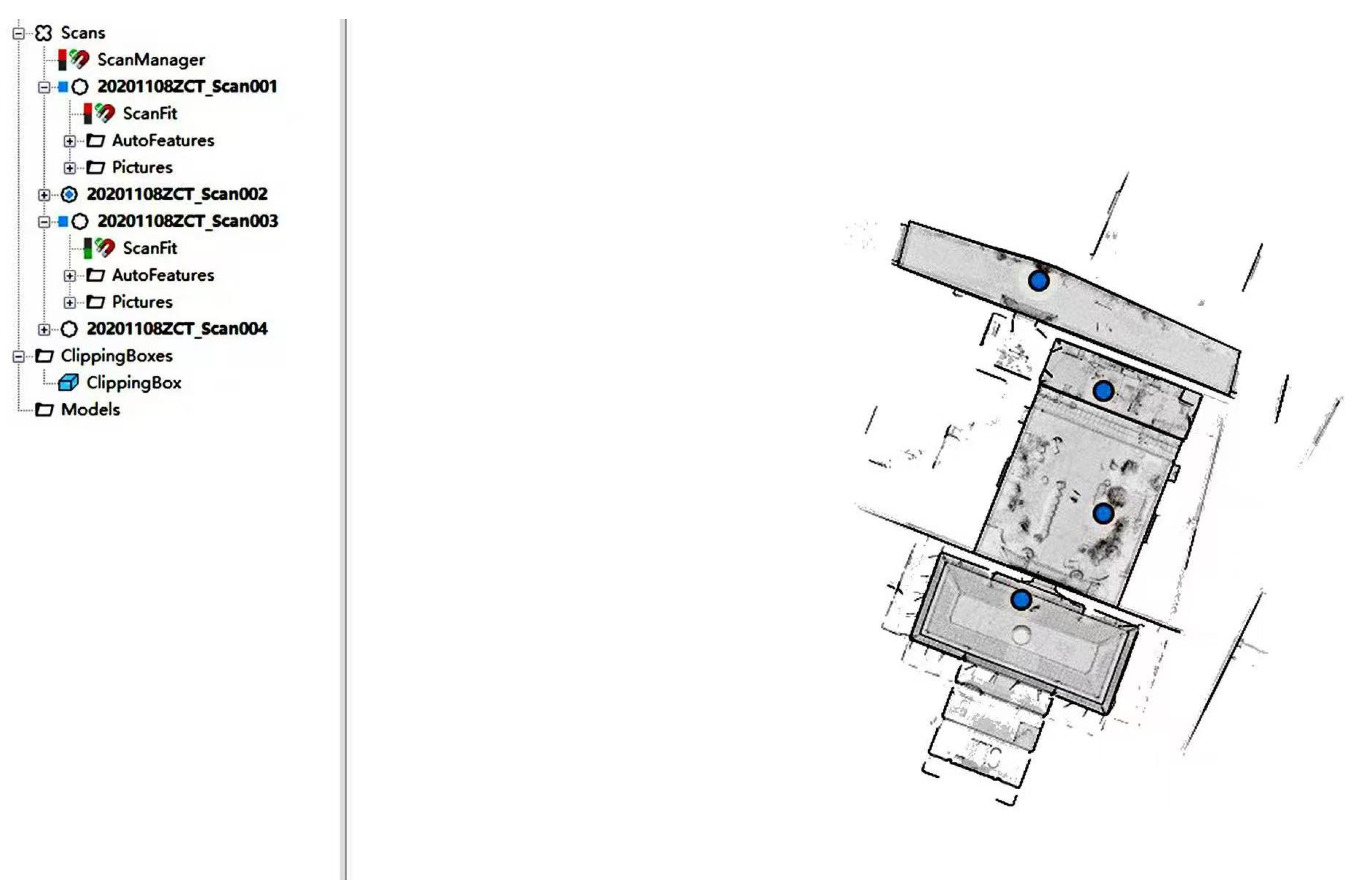
In this study, the data acquisition settings were determined based on the typical operating performance of the FARO Focus S350 (Table 3). Five indoor scan stations were deployed, with an average inter-station distance of approximately 30 m. All scans were conducted using the commonly applied medium-density mode of this instrument, corresponding to a resolution of approximately 1/4 (about 6 mm at 10 m) and an effective point spacing of 6–8 mm. The horizontal and vertical angular steps ranged from 0.035° to 0.045°. Color imagery was captured using the scanner’s default panoramic RGB mode with automatic exposure and automatic white balance enabled, and High Dynamic Range (HDR) imaging with two to three exposure levels was applied to enhance texture quality under low-light interior conditions. These parameter settings are consistent with scanning configurations reported in previous heritage digitization studies and ensure adequate geometric accuracy and texture fidelity for indoor architectural documentation. Figure 9 illustrates the scanning sites and locations of Zhicheng Hall [37,38].
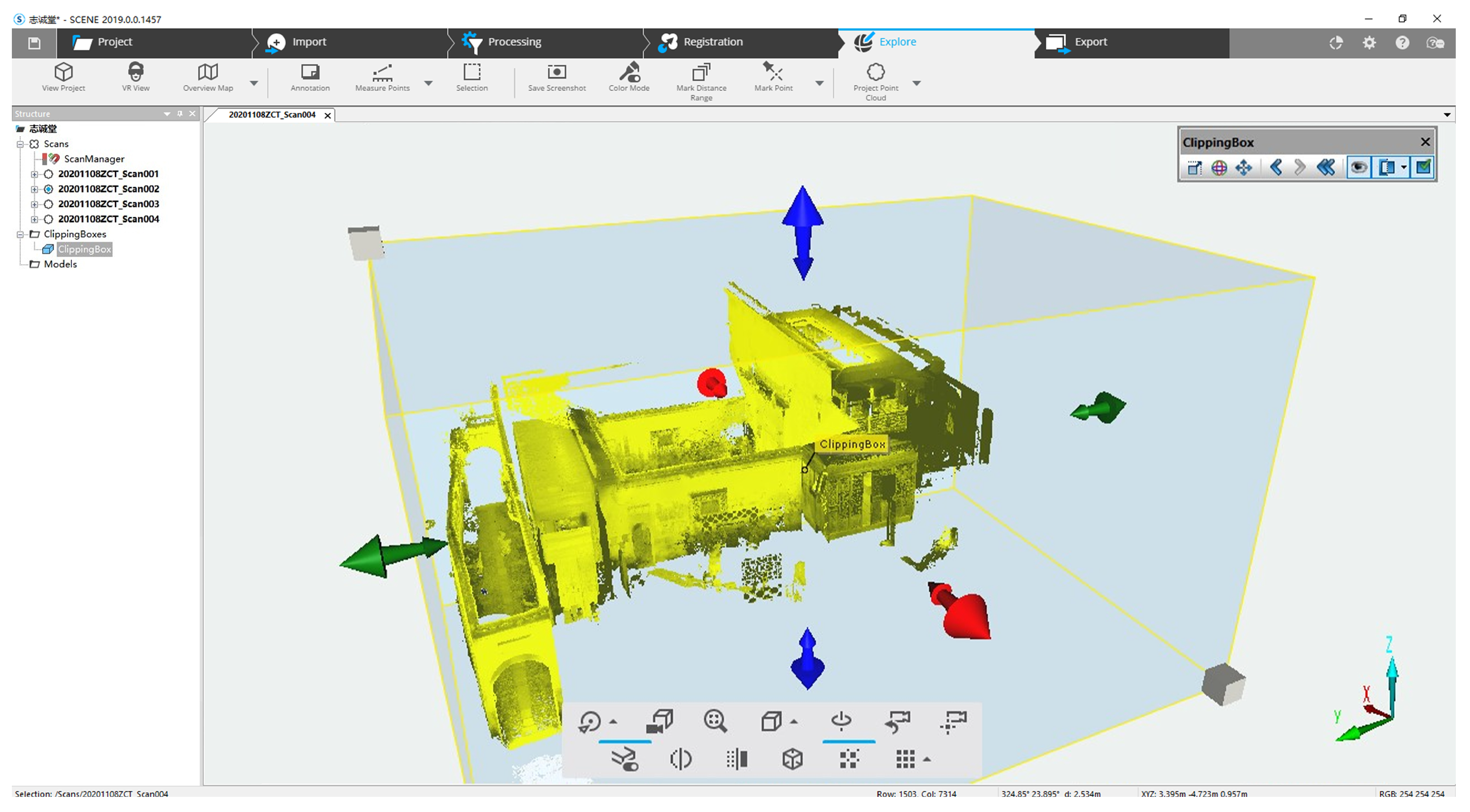
Integrated spherical camera: captures six RGB images (1920 × 1080 pixels) per scan Lightweight, compact design with easy setup and rapid station relocation-ideal for dense architectural clusters. The scanner’s proprietary processing software SCENE 2019.0.0.1457 (accessed 25 July 2025) automates point cloud processing and supports multiple export formats for 3D visualization of real-world environments. Table 4 illustrates the performance of 3D laser scanner.

3.2.2. Structural Algorithms of Network Models

A parametric 3D component library was developed to support efficient management, modification, and reuse of model elements within the BIM environment, thereby enhancing informatization, integration, and visualization in heritage documentation. This library enables parametric design workflows and automated assembly of ancient architectural models, providing a robust digital foundation for heritage conservation applications. In parallel, to overcome the limited generalization performance of existing 3D reconstruction methods, this study adopts an improved Marr Network–based approach. An encoder–decoder (autoencoder) architecture was employed to estimate depth maps from single images, with a regularization parameter introduced into the discriminator to enhance generalization. By learning feature representations through the encoding–decoding process, the model effectively captures image characteristics and generates high-quality depth reconstructions, supporting accurate 3D shape modeling.

3.2.3. Acquisition of 3D Point Cloud Data Using 3D Laser Scanning

Based on BIM technology, 3D point cloud data were acquired using TLS to enhance modeling accuracy. On-site surveys of ancient buildings were conducted, followed by noise filtering to obtain precise 3D point clouds. The noise reduction process can be represented mathematically as follows:
If the objective function is TedgeT, then:
Tedge = dgray × dgrad′
In Equation (2), dgray represents the similarity measure after high-density mixed noise filtering, while dgrad denotes the distance of the noise gradient. Equation (1) is applied to denoise the scanned point cloud of ancient buildings. During actual scanning, the limited scanning angle can lead to incomplete data acqusition. Therefore, analyses must be performed from multiple viewpoints to ensure comprehensive 3D point cloud data capture of ancient buildings from all directions [39]. Multi-station TLS was employed to capture initial point clouds of heritage structures. During data acquisition, noise points arose from factors such as vegetation and moving tourists. First, bilateral filtering was applied to each station’s dataset, reducing noise by adjusting points along their normal vectors. The bilateral filtering process is expressed as:
Let p i represent the noise point cloud and pi′ represent the filtered point cloud. The function W c ( ) denotes a Gaussian kernel that controls the smoothness between pi and its neighboring points pj based on standard deviation. Ws(●) is another Gaussian kernel function that determines the degree of feature preservation for pi and its neighborhood pj, also defined by a standard deviation. The symbol npi(pj) denotes the normal vector of the point cloud pi(pj), while <·, ·> represents the inner product of two vectors.
p i ^ = p i + p j N ( p i ) W c ( p i , j ^ ) ( p i , j n ^ ) p i p j , n j p j N ( p i ) W c ( p i , j ^ ) ( p i , j n ^ ) n i p i , j ^ = p i p j , p i , j n ^ = n i , p i p j
Due to variations in scanner positions at different stations, the acquired point cloud datasets are initially stored in independent coordinate systems, preventing direct construction of an integrated 3D model. Therefore, point clouds from each station must be aligned to a unified coordinate system through a registration process. In this study, denoised single-station point clouds were first coarsely aligned using geometric features. Subsequently, the Iterative Closest Point (ICP) algorithm was applied to achieve precise alignment and seamless fusion, ultimately generating a complete and high-fidelity point cloud model of the site.
Assume the point clouds from two stations are represented as P and Q, and the transformation between them is expressed as R (rotation) and t (translation). The optimal rigid body transformations R and t for registration are obtained by minimizing the mean square error, as formulated in Equation (3).

4. Result

4.1. HBIM Generation Based on Segmented Point Clouds

In this study, the HBIM model was not directly generated from UAV imagery; instead, it was constructed through a reverse-modeling workflow based on the high-density point clouds derived from UAV photogrammetry. Figure 10 illustrates layout of laser scanning stations of village. The raw point cloud data were first imported into specialized processing software for noise removal, density homogenization, and coordinate normalization. The denoising process resulted in a substantial reduction in noisy points across the surveyed buildings. Specifically, the filtered point cloud for Zhicheng Hall achieved a noise removal rate of 39%, while the other buildings exhibited denoising rates ranging from 37% to 44%, indicating consistent noise suppression performance across the dataset (Table 5). Subsequently, the point cloud was segmented according to the morphological features of the Hui-style dwellings. Using geometric feature extraction and spatial region partitioning, individual building components—such as roofs, walls, timber frames, gables, and openings-were isolated. For each segment, key geometric elements including boundary edges, feature lines, planar surfaces, and curved surfaces were extracted to serve as constraints for parametric reconstruction.
During the parametric modeling phase, the characteristic construction system of Huizhou vernacular architecture (e.g., horse-head gables with stepped profiles, pitched hard roofs, and proportional timber-frame elements) was incorporated into the creation of Revit family templates. The geometric information derived from the segmented point clouds-such as wall thickness, vertical subdivision of façades, roof ridge alignment, roof slope, and beam-column cross-sections-was converted into editable parameters within Revit. These parameters governed the generation of accurate, reusable architectural components. Once the parametric elements were established, they were iteratively aligned, adjusted, and assembled based on the baseline geometry and spatial relationships observed in the point cloud, enabling the reconstruction of the building’s full structural and spatial configuration.
The resulting HBIM model integrates both geometric fidelity and semantic richness, linking precise point-cloud-derived measurements with architectural knowledge specific to Huizhou traditional dwellings. This reverse-modeling workflow conforms to established HBIM practices in heritage documentation and represents a reliable approach for modeling complex vernacular structures.
The point cloud data obtained from the field surveys were imported into the HBIM platform, which provides a comprehensive suite of modeling tools for the precise reconstruction of virtual models of historic buildings. The Undet plug-in was employed to facilitate the 3D model reconstruction process. Initially, a reference plane-typically a relatively flat wall-was defined, and an appropriate fitting radius was specified. The software then automatically generated an optimally fitted plane.
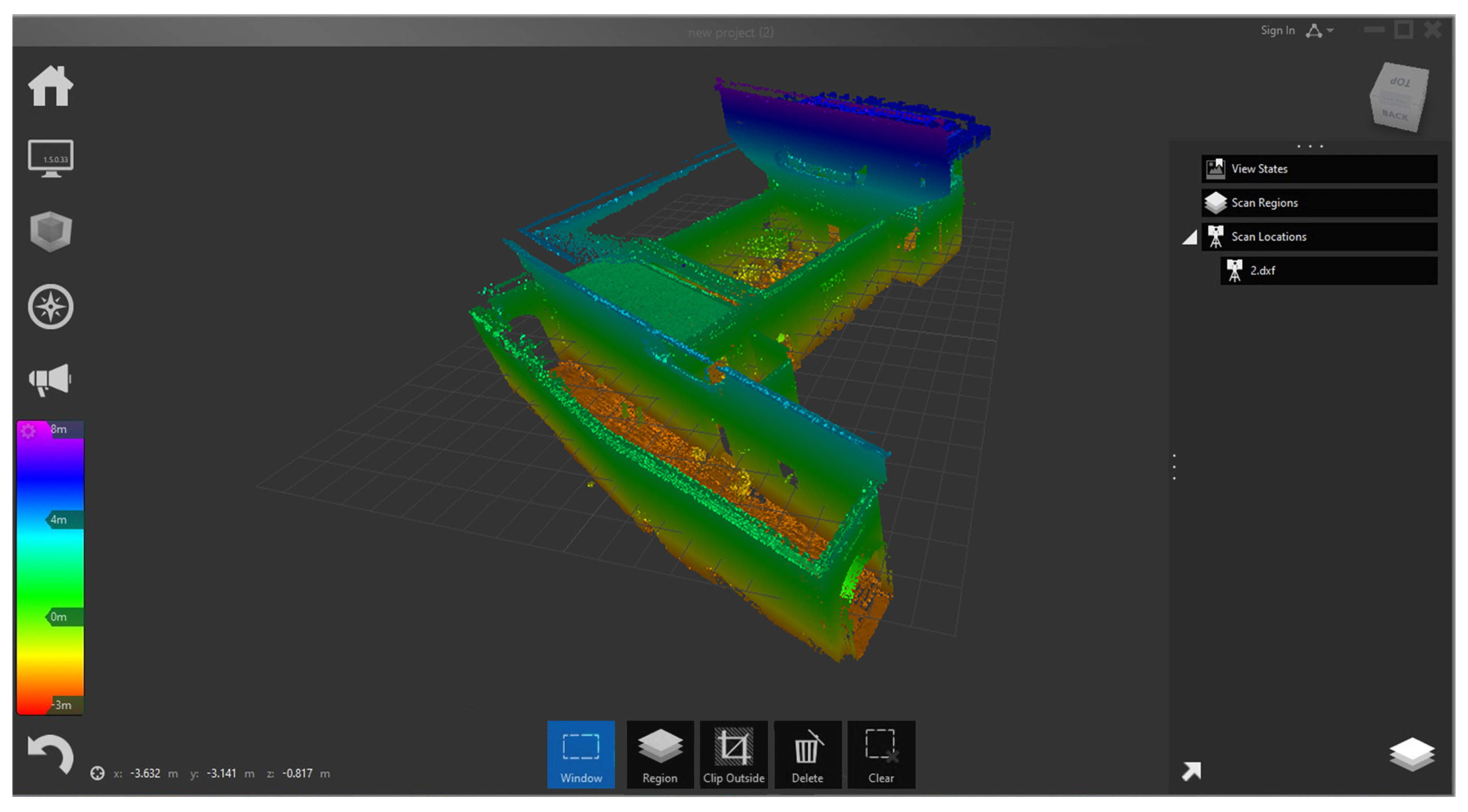
From this foundational geometry, building features were extruded and modeled in alignment with the point cloud data. Additional plug-in tools were utilized for section analysis, point cloud extraction, and contour line generation. The extracted contour data were exported in SKP format and subsequently imported into the Autodesk Revit platform, where they were aligned with the model’s origin and coordinate axes. Based on these contours, the primary building geometry was established, after which intricate architectural details-such as brick masonry textures, carved eaves, and ornamental elements-were meticulously modeled. Special emphasis was placed on accurately reproducing distinctive decorative features and elaborate carvings to ensure high fidelity to the original structure. Material attributes were assigned in accordance with the characteristics of the historic construction, and high-resolution textures were applied to enhance visual realism. Upon completion, the model underwent a rigorous verification and correction process to ensure dimensional accuracy, structural integrity, and historical authenticity. The finalized 3D model was then exported for deployment across multiple platforms, enabling precise and immersive virtual representations of the building. Figure 11 illustrates the point cloud model of Zhicheng Hall’s height. Figure 12 illustrates the point cloud model of Zhicheng Hall’s.
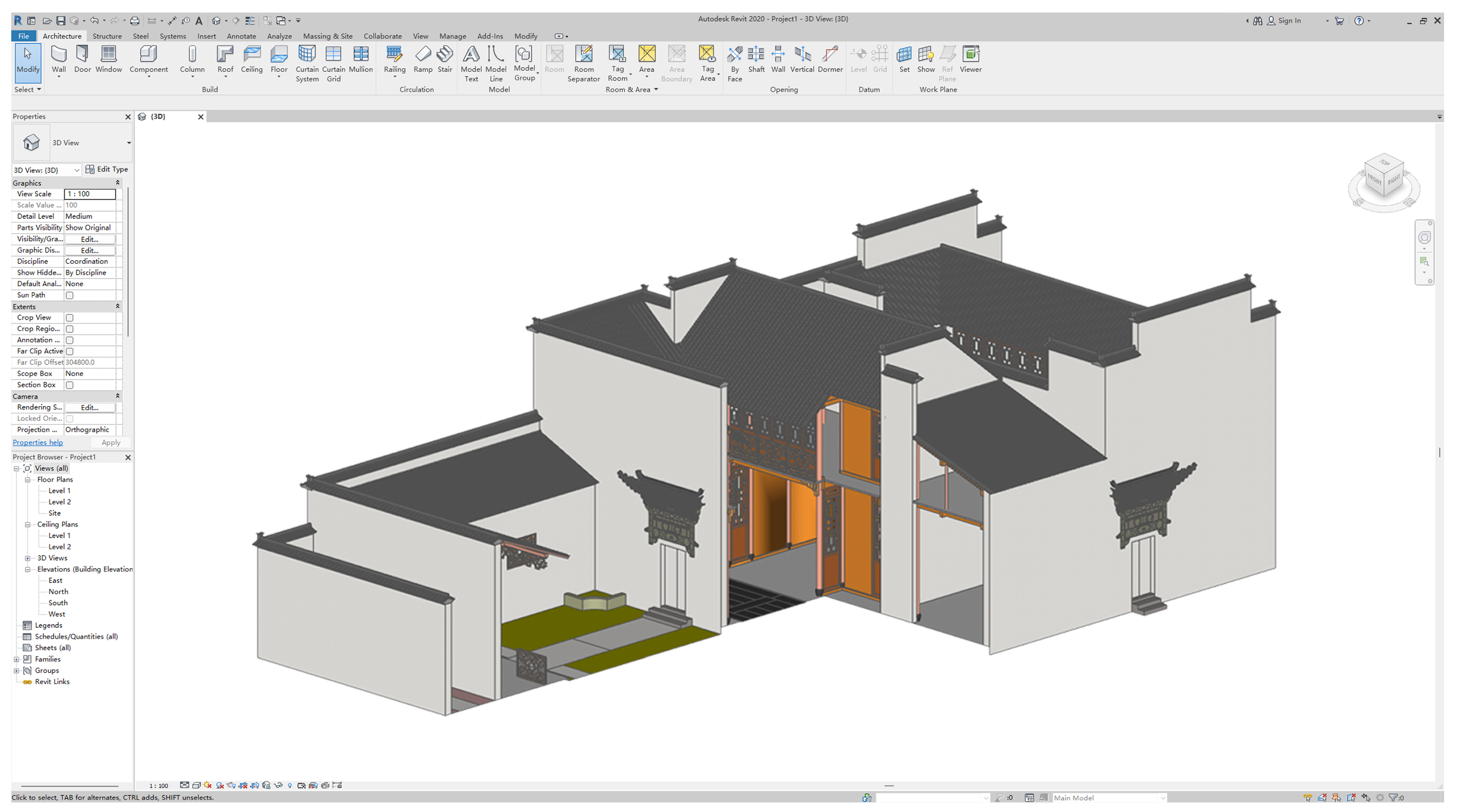
Nineteen buildings in the village were scanned and modeled, and subsequently classified into three functional groups: ancestral halls, school buildings, and residential houses. Taking the ancestral halls as an example, comparisons were conducted in terms of spatial layout, decorative elements, overall height, and roof slope. These halls generally exceed 10 m in width, with Zhicheng Hall being the most spacious at 13.8 m. It also features a private forecourt and a total depth of 16.9 m. Functionally, ancestral halls typically comprise three main sections: a front hall, a central hall, and a memorial hall. Zhicheng Hall follows the characteristic Huizhou architectural pattern of a composite complex that integrates a main hall, side rooms, corridors, and courtyards. The central hall is primarily used for ceremonies and meetings, while the memorial hall-located at the rear-serves as a dedicated space for ancestral worship. Following the modeling process, the structural details of these historic buildings can be infinitely scaled, enabling high-resolution visualization and in-depth analysis of construction features [40]. Figure 13 illustrates the HBIM model of Zhicheng Hall in Lu Village.
The process successfully restored the architectural structures and stylistic features of the heritage site. A notable example is the Wood Carving Building (Mu Diaolou), constructed during the Daoguang period of the Qing Dynasty by Lu Bangxie, the 33 rd-generation descendant of the Lu family. This two-story structure is renowned for its intricate brick, stone, and wood carvings, which depict festive themes and scenes from everyday life. The wood carving techniques include shallow relief, deep relief, and openwork carving, with some works reaching six or seven layers in depth. This exceptional craftsmanship serves as a “museum” of wood carving art, reflecting the highly developed skills and rich cultural sensibilities of Huizhou artisans [41].

4.2. Texturing in HBIM Models

TIN models or solid geometry models were textured using UV mapping in HBIM. Based on the processed texture photographs, different material “spheres” were created with specific parameters for diffuse reflectance, opacity, irregularity, and tiling. These were then assigned to different building components [39,42]. For surface components, the mapping method was carefully chosen to optimize visual quality. Figure 14a,b shows the HBIM model after texture mapping. Conservation experts can compare models from different time periods to measure changes in surface weathering or detachment, enabling targeted restoration plans before damage worsens.

5. HBIM Component Library Construction

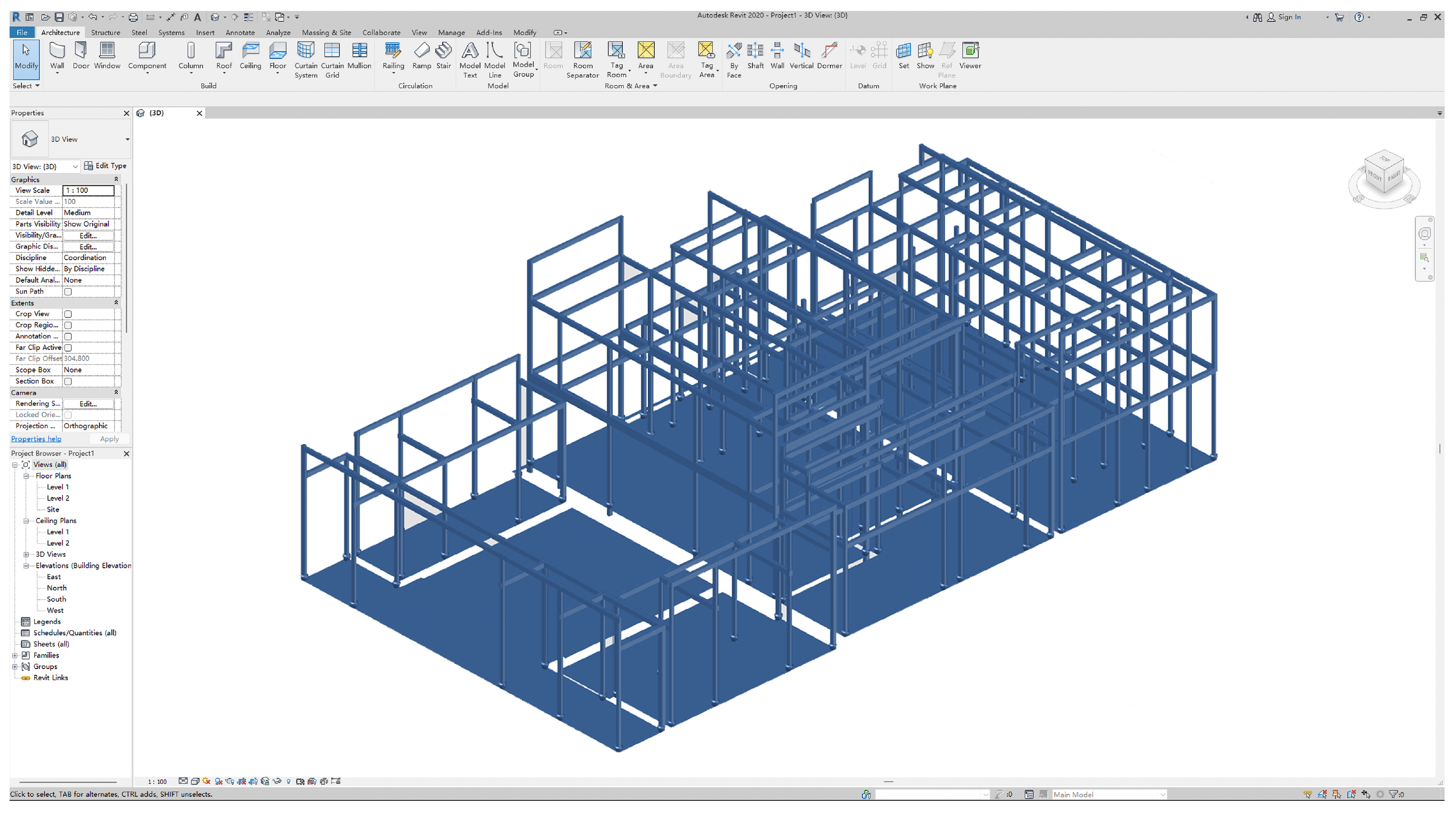
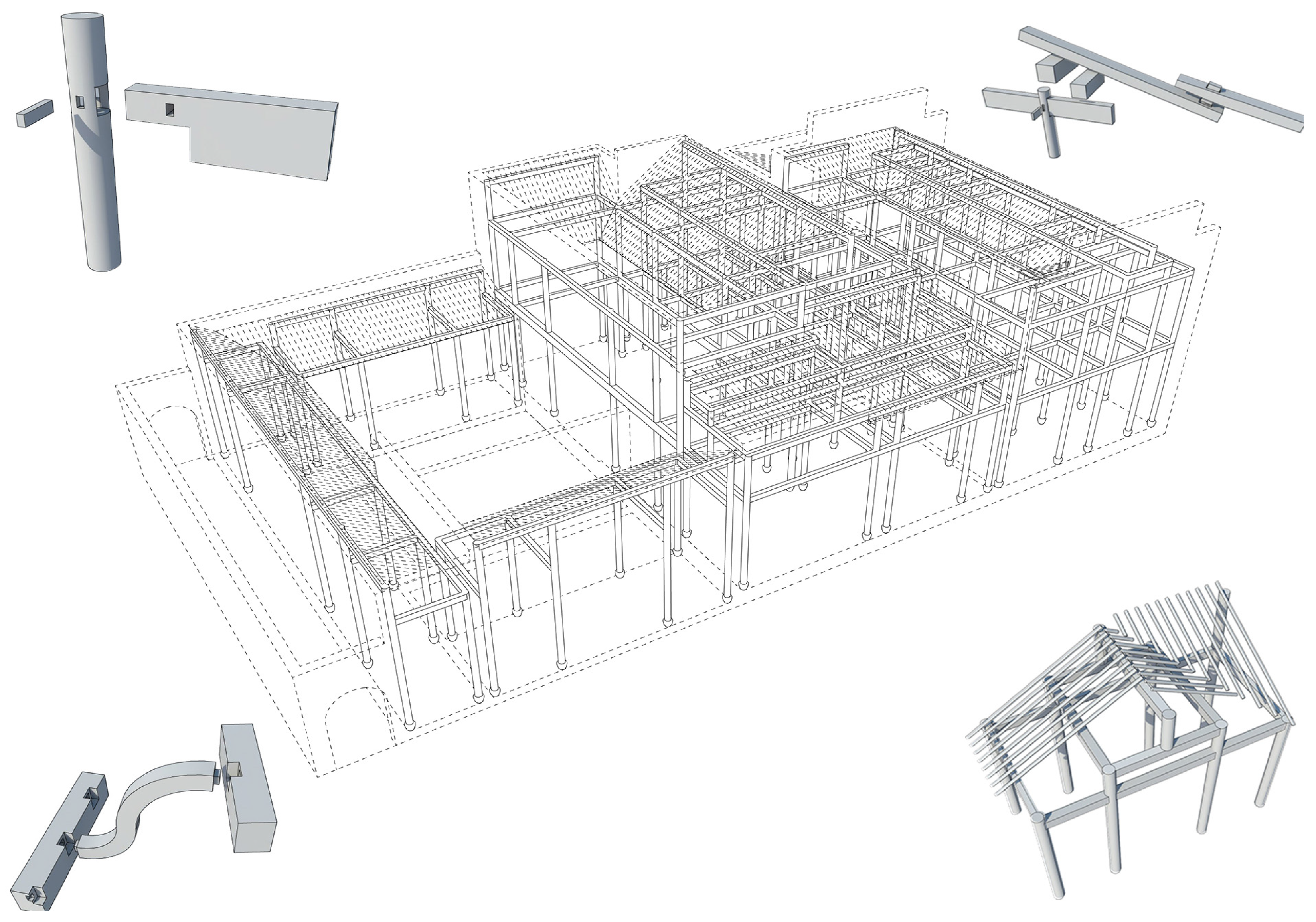
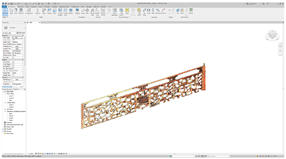
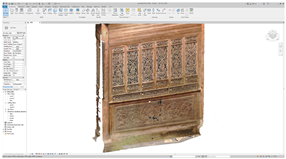
HBIM is an emerging methodology for modeling historic buildings using remote sensing datasets, consisting of a unique, reusable collection of parametric objects generated from architectural survey data. These components record complete geometric information and customizable attributes, and after creation, the element library can be deployed as a Revit plug-in to support heritage reconstruction, conservation, management, and maintenance. Although Revit contains a standard library of built-in components, the uniqueness of heritage building elements poses challenges when modeling their geometries, requiring precise survey data and appropriate determination of the Level of Detail (LOD). According to the American Institute of Architects (AIA), LOD ranges from 100 with minimal information to 400 with highly detailed representations. This study aimed to achieve LOD 300, meaning the Revit model incorporates as-built geometries and condition information derived from laser scanning and independent imagery. Within the HBIM framework, the registered point clouds were imported into the BIM environment; however, few predefined components met the modeling requirements, so new families representing traditional Huizhou architectural elements were created, facilitating 3D reconstruction for buildings with similar features. Autodesk Revit was chosen for its flexibility and powerful modeling capabilities, and the HBIM of Zhicheng Hall was conducted in two stages: first, modeling conventional architectural features such as plain walls, cylindrical and rectangular columns, and exterior façades; and second, developing a new library of parametric families representing characteristic heritage elements of Huizhou architecture. Figure 15 illustrates the wooden structure in the Revit software. Figure 16 illustrates the adjusted structural diagram of the wooden frame and components. Table 6 illustrates the detailed information about the components of Zhicheng Hall [34,40,41,42].
The geometric accuracy of the HBIM model of Zhicheng Hall was systematically evaluated in this study. Based on the point-to-surface distance analysis between the point cloud and the Revit model, the overall RMSE ranges from 3 to 5 mm, with a mean deviation of approximately 1.6–2.0 mm. Compared with the commonly reported accuracy levels of 10–20 mm (1–2 cm) in domestic and international HBIM studies on traditional timber heritage structures, the results of this study demonstrate a significantly higher level of geometric fidelity. Such accuracy fully satisfies the requirements for detailed component documentation and the digital conservation of historic wooden architecture [34].

6. Discussion

This study validates the integration of HBIM-based digital documentation for Huizhou timber architecture, combining Terrestrial Laser Scanning (TLS), on-site surveys, and Revit-HBIM reconstruction technologies. The proposed workflow effectively generates high-fidelity geometric models that support both building and settlement-scale analysis. By utilizing multi-source point cloud registration and denoising techniques, the model significantly enhances data accuracy and completeness, providing a solid foundation for heritage documentation. Unlike traditional HBIM studies focusing on single buildings, this method captures the spatial relationships between multiple buildings in a village, filling a gap in the heritage digitization field.
The workflow’s primary strength lies in the complementary use of 3D laser scanning and UAV oblique photogrammetry. TLS provides high-precision geometric data, while UAV photogrammetry compensates for areas not covered by TLS, delivering sub-centimeter-level texture and dimensional data. This hybrid strategy, tested in Lu Village, shortens modeling time by 35% while preserving the authenticity of original data, ensuring accurate structural evaluations. Additionally, the Revit-based component family library introduces specific parameter attributes unique to Huizhou architecture, allowing real-time adjustments and facilitating repair simulations and structural optimizations.
From a conservation perspective, HBIM has evolved from being a mere geometric modeling tool to an integrated information platform. In Lu Village, this platform has enhanced evidence-based restoration decision-making, identifying concealed defects such as those in “Zhicheng Hall” and providing scientific support for repair planning. The component-based modeling strategy also increases the reusability and scalability of the model, with the standardized family library offering a transferable framework for other Huizhou villages. This approach addresses a significant gap in existing research, which has predominantly focused on individual landmark buildings, while overlooking the overall treatment of historical settlements. Given that over 300 Huizhou ancient villages still need systematic documentation in southern Anhui, this work is a valuable contribution to the field.
Despite its strengths, the study has limitations. Static HBIM models cannot fully address the dynamic conservation needs of timber buildings, such as long-term changes due to wood creep or humidity deterioration. Future research should integrate real-time monitoring technologies, like IoT-based stress and deformation sensors, to enhance the temporal dimension of HBIM models. Preliminary experiments indicate that embedding FBG sensors can enable real-time structural health monitoring within five seconds. Additionally, expanding HBIM to incorporate VR/AR technologies and data-driven analytics can enhance public engagement, disaster preparedness, and the ability to predict risks such as fire and flood. These advancements will require interdisciplinary collaboration to transform HBIM from a digital documentation tool into a comprehensive digital heritage management system, ensuring the preservation of Huizhou timber architecture and providing a replicable framework for global heritage conservation.

7. Conclusions

This study presents an integrated workflow that combines 3D laser scanning, on-site investigation, and Heritage Building Information Modeling (HBIM) reconstruction to support the digital documentation and heritage modeling of traditional Huizhou timber architecture. The empirical application in Lu Village demonstrates that this approach is effective in generating high-precision, multi-dimensional HBIM models of historic buildings. By integrating multi-source spatial data, optimizing point cloud registration, and applying advanced denoising techniques, the proposed workflow significantly improves the accuracy, integrity, and reliability of architectural heritage documentation.
Compared with conventional approaches, the main contribution of this study lies in its ability to systematically represent the spatial relationships among multiple buildings within traditional settlements, thereby providing visualized, quantitative, and simulation-based support for conservation planning and restoration decision-making. The results offer a practical technical pathway for government-led heritage protection initiatives by enabling standardized storage, management, and reuse of heritage information through HBIM. Moreover, the proposed workflow constitutes a replicable and transferable framework that can be extended to the digital conservation of similar traditional timber architectural heritage in China and beyond.

Author Contributions

Conceptualization, J.C. and H.F.; methodology, Q.N.; software, J.C.; and Q.N.; formal analysis, J.Z. and Z.X.; Data curation, J.Z., Q.N. and Z.X.; writing—original draft, J.C.; writing—review and editing, H.F. and Q.N.; supervision—H.F. All authors have read and agreed to the published version of the manuscript.

Funding

The work was supported by Anhui Provincial Philosophy and Social Science Planning General Project in 2024 (Project No. AHSKYY2024D038); Anhui Province Social Science Innovation Development Research and Key Projects in 2023 (Project No. 2023CX104). Anhui West University Campus Level Social Science Key Project “Research on the Renewal and Utilization of Residential Buildings in the Dabie Mountain Area” (No. WXSK202265); The Domestic Visiting and Training Program for Outstanding Young Backbone Teachers in Colleges and Universities in 2022 (No. gxgnfx2022051); Domestic Visiting Scholar Funding Project of West Anhui University in 2025 (No. wxxygnfx2025003); 2022 Key Laboratory Open Project of Hui-style Architecture in Anhui Province (No: HPJZ-2022-05); High-Level Talent Research Startup Fund of West Anhui University under contract No. WGKQ2022053.

Data Availability Statement

The data is unavailable due to privacy. The data supporting this study’s fundings are available on request from the corresponding author. The data are not publicly available due to privacy or ethical restrictions. No datasets were generated or analyzed during the current study.

Conflicts of Interest

The authors declare that they have no known competing financial interests or personal relationships that could have appeared to influence the work reported in this paper.

References

  1. Shen, H.; Aziz, N.F.; Lv, X. Using 360-Degree Panoramic Technology to Explore the Mechanisms Underlying the Influence of Landscape Features on Visual Landscape Quality in Traditional Villages. Ecol. Inform. 2025, 86, 103036. [Google Scholar]
  2. Apollonio, F.I.; Gaiani, M.; Sun, Z. A reality integrated BIM for architectural heritage conservation. Digit. Appl. Archaeol. Cult. Herit. 2016, 3, 184–197. [Google Scholar] [CrossRef]
  3. Banfi, F. HBIM generation: Extending geometric primitives and BIM modelling tools for heritage structures and complex vaulted systems. Int. Arch. Photogramm. Remote Sens. Spat. Inf. Sci. 2019, 42, 139–148. [Google Scholar]
  4. Bruno, N.; Roncella, R. HBIM for conservation: A new proposal for information modeling. Remote Sens. 2019, 11, 1751. [Google Scholar] [CrossRef]
  5. Chen, J.; Yan, A.; Sun, H. Study on Landscape Characteristics and Formation Mechanism of Chinese Traditional Settlements Based on Niche Theory. In Proceedings of the 2023 International Conference on Green Building, Civil Engineering and Smart City, GBCESC 2023; Guo, W., Qian, K., Tang, H., Gong, L., Eds.; Lecture Notes in Civil Engineering; Springer: Singapore, 2024; Volume 328. [Google Scholar] [CrossRef]
  6. Cheng, G.; Li, Z.; Cheng, Z.; Zhang, Y.; Wang, Q.; Shao, W.; Shi, T. Similarity and stability: A study on the color features of regional built spaces—Taking Chinese Hui-style architecture as an example. J. Asian Archit. Build. Eng. 2024, 24, 3625–3653. [Google Scholar] [CrossRef]
  7. Cheng, G.; Li, Z.; Xia, S.; Gao, M.; Ye, M.; Shi, T. Research on the Spatial Sequence of Building Facades in Huizhou Regional Traditional Villages. Buildings 2023, 13, 174. [Google Scholar] [CrossRef]
  8. Chiabrando, F.; Sammartano, G.; Spanò, A. Historical buildings models and their handling via 3D survey: From points clouds to user-oriented HBIM. Int. Arch. Photogramm. Remote Sens. Spat. Inf. Sci. 2016, 41, 633–640. [Google Scholar]
  9. Dore, C.; Murphy, M. Integration of Historic Building Information Modeling (HBIM) and 3D GIS for recording and managing cultural heritage sites. In Proceedings of the 18th International Conference on Virtual Systems and Multimedia: “Virtual Systems in the Information Society”, Milan, Italy, 2–5 September 2012; pp. 369–376. [Google Scholar]
  10. Fang, J.; Zhang, Y.; Zhang, Y.; Guo, H.; Sun, Z. High-Definition Survey of Architectural Heritage Fusing Multisensors—The Case of Beamless Hall at Linggu Temple in Nanjing, China. Sensors 2022, 22, 3369. [Google Scholar] [CrossRef]
  11. Fassi, F.; Fregonese, L.; Ackermann, S.; De Troia, V. Comparison between laser scanning and automated 3d modelling techniques to reconstruct complex and extensive cultural heritage areas. Int. Arch. Photogramm. Remote Sens. Spat. Inf. Sci. 2013, 40, 73–80. [Google Scholar] [CrossRef]
  12. Dionizio, R.F.; López-Chao, V. Integrating HBIM and WebGIS for the Documentation, Visualization and Management of Modern Architectural Heritage Sites. Int. J. Archit. Herit. 2025, 19, 3530–3549. [Google Scholar] [CrossRef]
  13. Fregonese, L.; Barbieri, G.; Biolzi, L.; Bocciarelli, M.; Frigeri, A.; Taffurelli, L. Surveying and Monitoring for Vulnerability Assessment of an Ancient Building. Sensors 2013, 13, 9747–9773. [Google Scholar] [CrossRef]
  14. González-Aguilera, D.; Rodríguez-Gonzálvez, P.; Gómez-Lahoz, J. An automatic procedure for co-registration of terrestrial laser scanners and digital cameras. ISPRS J. Photogramm. Remote Sens. 2009, 64, 308–316. [Google Scholar] [CrossRef]
  15. Grussenmeyer, P.; Landes, T.; Voegtle, T.; Ringle, K. Comparison methods of terrestrial laser scanning, photogrammetry and tacheometry data for recording of cultural heritage buildings. Int. Arch. Photogramm. Remote Sens. Spat. Inf. Sci. 2008, 37, 213–218. [Google Scholar]
  16. Zhao, G.; Ryan, C.; Deng, Z.; Gong, J. Creating a softening cultural-landscape to enhance tourist experiencescapes: The case of Lu Village. Tour. Manag. Perspect. 2024, 53, 101245. [Google Scholar] [CrossRef]
  17. He, Q.; Zhang, G.; Zhou, J.; Zhao, X.; Dong, R.; Hou, Q. Study on Spatial Adaptability of Tangjia Village in the Weibei Loess Plateau Gully Region Based on Diverse Social Relationships. Land 2025, 14, 1290. [Google Scholar] [CrossRef]
  18. Jiang, C.; Hu, W.; Zhang, G. Research on fine model reconstruction method of ancient architecture based on least squares method. npj Herit. Sci. 2025, 13, 95. [Google Scholar] [CrossRef]
  19. Kersten, T.; Tschirschwitz, F.; Deggim, S.; Lindstaedt, M. Virtual reality for cultural heritage monuments—From 3D data recording to immersive visualisation. In Digital Heritage. Progress in Cultural Heritage: Documentation, Preservation, and Protection; Springer: Cham, Switzerland, 2018. [Google Scholar] [CrossRef]
  20. Kioussi, A.; Karoglou, M.; Bakolas, A. Digital technologies for the conservation and promotion of cultural heritage. J. Cult. Herit. 2019, 36, 264–267. [Google Scholar] [CrossRef]
  21. Limongiello, M.; Musmeci, D.; Radaelli, L.; Chiumiento, A.; di Filippo, A.; Limongiello, I. Parametric GIS and HBIM for Archaeological Site Management and Historic Reconstruction Through 3D Survey Integration. Remote Sens. 2025, 17, 984. [Google Scholar] [CrossRef]
  22. Lin, G.; Giordano, A.; Sang, K.; Stendardo, L.; Yang, X. Application of Terrestrial Laser Scanning in 3D Modeling of Traditional Village: A Case Study of Fenghuang Village in China. ISPRS Int. J. Geo-Inf. 2021, 10, 770. [Google Scholar] [CrossRef]
  23. Lin, G.; Li, G.; Giordano, A.; Sang, K.; Stendardo, L.; Yang, X. Three-Dimensional Documentation and Reconversion of Architectural Heritage by UAV and HBIM: A Study of Santo Stefano Church in Italy. Drones 2024, 8, 250. [Google Scholar] [CrossRef]
  24. Chiabrando, F.; Lo Turco, M.; Rinaudo, F. Modeling the decay in an hbim starting from 3d point clouds. A followed approach for cultural heritage knowledge. Int. Arch. Photogramm. Remote Sens. Spatial Inf. Sci. 2017, XLII-2/W5, 605–612. [Google Scholar] [CrossRef]
  25. Macher, H.; Landes, T. Grussenmeyer, From point clouds to building information models: 3D semi-automatic reconstruction of indoors of existing buildings. Appl. Sci. 2017, 7, 1030. [Google Scholar] [CrossRef]
  26. McCarthy, J. Multi-Image Photogrammetry for Heritage Recording: A Guide to Good Practice; English Heritage Publishing: Swindon, UK, 2014. [Google Scholar]
  27. Pritchard, D.; Sperner, J.; Hoepner, S.; Tenschert, R. Terrestrial laser scanning for heritage conservation: The Cologne Cathedral documentation project. ISPRS Ann. Photogramm. Remote Sens. Spat. Inf. Sci. 2017, IV-2-W2, 213–220. [Google Scholar] [CrossRef]
  28. Murphy, M.; McGovern, E.; Pavia, S. Historic building information modelling (HBIM). Struct. Surv. 2009, 27, 311–327. [Google Scholar] [CrossRef]
  29. Pesci, A.; Teza, G.; Casula, G. Terrestrial laser scanning for monitoring the stability of historic buildings. J. Cult. Herit. 2011, 12, 364–371. [Google Scholar] [CrossRef]
  30. Pan, X.; Lin, Q.; Ye, S. Deep learning based approaches from semantic point clouds to semantic BIM models for heritage digital twin. Herit. Sci. 2024, 12, 65. [Google Scholar] [CrossRef]
  31. Remondino, F.; Campana, S. 3D Recording and Modelling in Archaeology and Cultural Heritage: Theory and Best Practices; Archaeopress: Oxford, UK, 2014; ISBN 9781905739599. [Google Scholar]
  32. I Capó, A.J.; Gomez, J.V.; Moyà, G.; Perales, F. Rehabilitación motivacional basada en la utilización de serious games. Virtual Archaeol. Rev. 2013, 4, 167–173. [Google Scholar] [CrossRef]
  33. Lucas, R.; Medcalf, K.; Brown, A.; Bunting, P.; Breyer, J.; Clewley, D.; Keyworth, S.; Blackmore, P. Updating the Phase 1 habitat map of Wales, UK, using satellite sensor data. ISPRS J. Photogramm. Remote Sens. 2011, 66, 81–102. [Google Scholar] [CrossRef]
  34. Zhong, J.; Xu, Z. The Application of Digital Technology in the Conservation of Huizhou Traditional Architecture: The Case of Wooden Carving Building in Lu Village, Yi County. Dev. Small Cities Towns 2024, 42, 108–116. [Google Scholar]
  35. Stylianidis, E.; Remondino, F. 3D Recording, Documentation and Management of Cultural Heritage; Whittles Publishing: Dunbeath, UK, 2016; ISBN 9781849951606. [Google Scholar]
  36. Tan, R.; Jiang, B.; Liu, S.; Zhang, J. Game Engine Technology in Cultural Heritage Digitization Application Prospect–Taking the Digital Cave of the Mogao Caves in China as an Example. In Virtual, Augmented and Mixed Reality; HCII 2024; Lecture Notes in Computer Science; Chen, J.Y.C., Fragomeni, G., Eds.; Springer: Cham, Switzerland, 2024; Volume 14708. [Google Scholar] [CrossRef]
  37. Oreni, D.; Brumana, R.; Georgopoulos, A.; Cuca, B. HBIM for conservation and management of built heritage: Towards a library of vaults and wooden bean floors. ISPRS Ann. Photogramm. Remote Sens. Spatial Inf. Sci. 2013, II-5/W1, 215–221. [Google Scholar] [CrossRef]
  38. Tucci, G.; Bonora, V.; Conti, A.; Fiorini, L. High-quality 3D models and their use in a cultural heritage conservation project. Int. Arch. Photogramm. Remote Sens. Spat. Inf. Sci. 2017, XLII-2/W5, 687–693. [Google Scholar] [CrossRef]
  39. Zhou, W. Research on the Application of UAV Oblique Photography Algorithm in the Protection of Traditional Village Cultural Heritage. In Proceedings of the 6th International Conference on Computing Methodologies and Communication (ICCMC), Erode, India, 29–31 March 2022; pp. 1303–1306. [Google Scholar] [CrossRef]
  40. Yastikli, N. Documentation of cultural heritage using digital photogrammetry and laser scanning. J. Cult. Herit. 2007, 8, 423–427. [Google Scholar] [CrossRef]
  41. Zhang, C.; Xiong, W.; Shao, T.; Zhang, Y.; Zhang, Z.; Zhao, F. Analyses of the Spatial Morphology of Traditional Yunnan Villages Utilizing Unmanned Aerial Vehicle Remote Sensing. Land 2023, 12, 2011. [Google Scholar] [CrossRef]
  42. Zhang, R.; Zhang, C. Classification and Application of Digital Technologies in Landscape Heritage Protection. Land 2022, 11, 1699. [Google Scholar] [CrossRef]
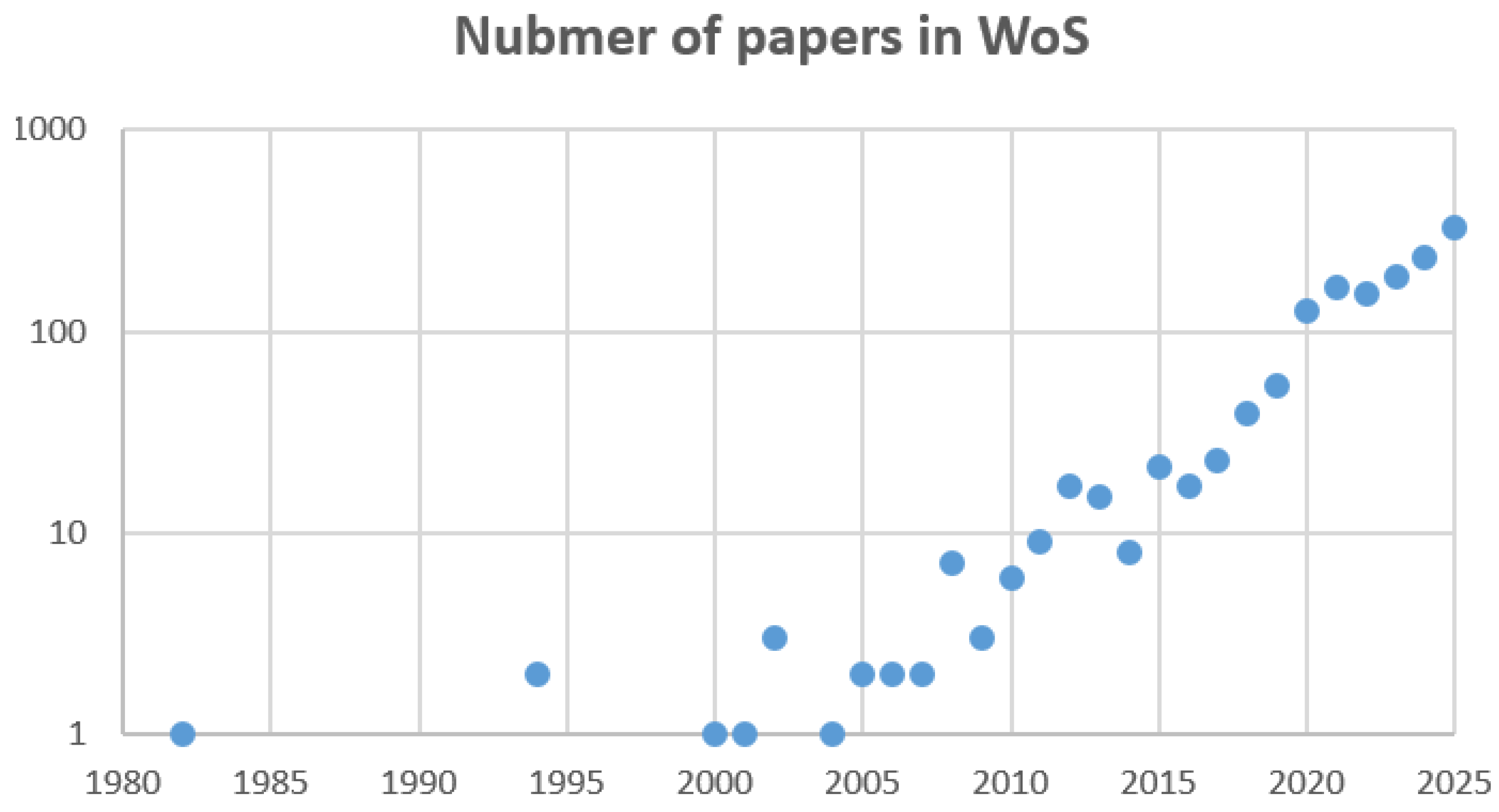
Figure 1. The number of papers in Web of Science.
Buildings 16 00211 g001
Figure 2. Location map of Lu Village in China (The picture is modified from [1]).
Buildings 16 00211 g002
Figure 3. General layout of Lu Village (The picture is modified from [1]).
Buildings 16 00211 g003
Figure 4. The altitude thermal distribution map of Lu Village. (Redrawn based on the authors’ previous work [34]).
Buildings 16 00211 g004
Figure 5. Aerial view of Lu Village.
Buildings 16 00211 g005
Figure 6. VR visualization of Zhicheng Hall.
Buildings 16 00211 g006
Figure 7. The workflow of the proposed approach.
Buildings 16 00211 g007
Figure 8. (a) UAV platform with five lens cameras; (b) The fight route; (c) FARO S350 3D laser scanner.
Buildings 16 00211 g008
Figure 9. Scanning stations and locations of Zhicheng Hall.
Buildings 16 00211 g009
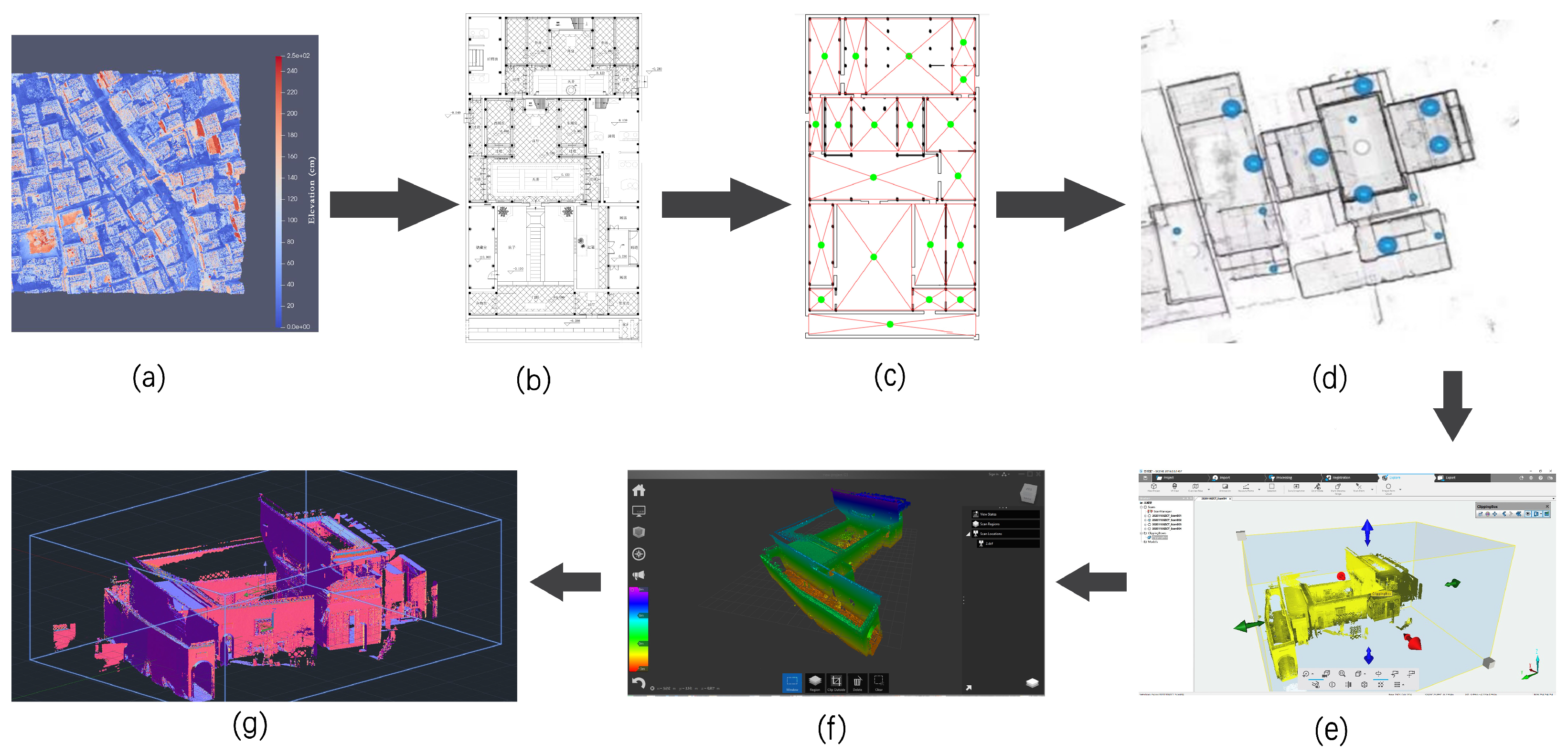
Figure 10. (a) Point cloud elevation map of the study area; (b) Ground floor plan of the building; (c) Indoor scanning station layout; (d) Layout of TLS stations; (e) The point cloud model of Zhicheng Hall; (f) Point cloud data processing; (g) Point cloud model in CAD software (redrawn based on the authors’ previous work [34]).
Buildings 16 00211 g010
Figure 11. Analysis of building height using the point cloud model of Zhicheng Hall.
Buildings 16 00211 g011
Figure 12. The point cloud model of Zhicheng Hall.
Buildings 16 00211 g012
Figure 13. HBIM model of Zhicheng Hall in Lu Village.
Buildings 16 00211 g013
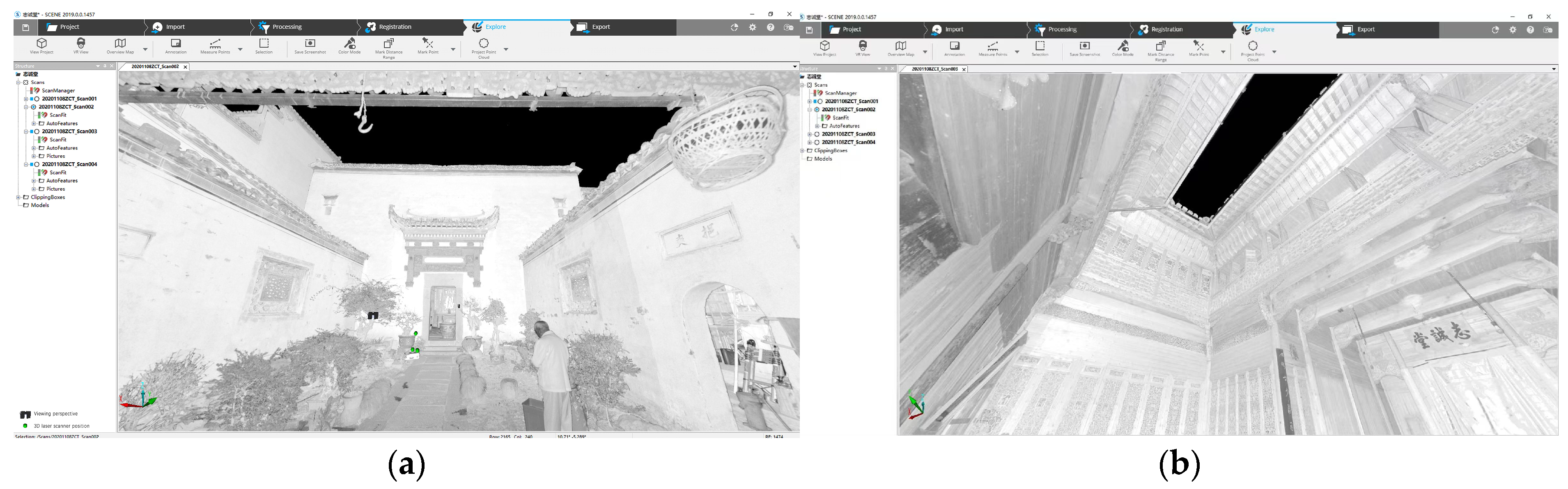
Figure 14. (a) The point cloud model of the indoor courtyard of Zhicheng Hall in Lu Village, which was opened in the Scene software; (b) The point cloud model of the outdoor courtyard of Zhicheng Hall in Lu Village, which was opened in the Scene software.
Buildings 16 00211 g014
Figure 15. The traditional wooden structure framework diagram of Zhicheng Hall.
Buildings 16 00211 g015
Figure 16. The adjusted structural diagram of the wooden frame and components.
Buildings 16 00211 g016
Table 1. Frequency of digital technology clustering information for architectural heritage.
ClusterKeywordFrequency
Three-dimensional laser scannerThree-dimensional model32
Digital technique32
3d digitalization26
Heritage building18
Point cloud17
Drone photography17
Point cloud data12
Precise measurement6
Feature extraction3
Protecting mapping and surveying2
BIMDigital protection system22
Informatization17
Architectural conservation14
Historical Building Cloud Platform13
Recover12
Digital information platform12
Parametric Component9
Informationization expression7
Point cloud denoising processing6
Simulated analysis4
Forward and backward modeling2
Virtual realityDigitalization of Cultural Heritage12
Three-dimensional technology8
VR image6
Virtual museum6
Virtual interaction5
Augmented reality (AR)4
Construction Tour2
Immersive roaming1
Table 2. The performance of UAV photography equipment.
Drone SpecificationsUAV ParametersCamera SpecificationsCamera Parameters
Diagonal wheelbaseAbout 380.1 mmModel of cameraFive global shutter sensors
Maximum take-off weight1050 gImage sensor5 × 1/2.8 inches CMOS, effective pixels 5 million
Maximum take-off altitude6000 mEquivalent focal length25 mm
Hovering accuracyVertical: ±0.1 mCamera angleForesight: Horizontal 90°, Perpendicular103°
Back vision: Horizontal 90°, Perpendicular 103°
Side-looking: Horizontal 90°, Perpendicular 85°
Upward view: Front and back 100°, Left and right 90°
Downward view: Front and back 130°, Left and right 160°
Accuracy: ±0.3 m
Battery capacity5000 mAhLens stopf/2.0
Battery life durationAbout 42 minPicture size2592 × 1944
Table 3. Main features of the FARO Focus S350 terrestrial laser scanner (TLS).
Distannce AccuracyRangeMeasurement RateLaser ClassIntegrated Color CameraOperating Temperature
Up to ±1 mm0.6 m to
350 m
Up to 976,000
points/s
1Yes+5 °C to +40 °C
Table 4. The performance of 3D laser scanner.
Limited Texture and Surface CaptureThree-Dimensional Laser ScanningThree-Dimensional Laser Scanning
Resolution Varies with RangeYesConsistent within a single flight
Slower Scanning SpeedsYesFaster data capture compared to scanning
Challenges with Reflective SurfacesYesCan be mitigated with proper scanning techniques
Bulky Traditional Scanners (Some Models)YesLightweight equipment
Lower Accuracy than Laser ScanningYesYes
Requires Reference Points for ScaleYesYes
Longer Processing Times for Complex ModelsYesFaster than processing large scan datasets
Subject to Weather Conditions and Airspace RegulationsYesYes
Table 5. Comparison of quantity before and after point cloud filtering.
ModelNumber Before FilteringNumber After FilteringFiltering Rate
Sicheng Hall6,510,111,4432,799,347,92043%
Shuangcha Hall8,043,468,1402,815,213,84935%
Siyi Hall9,456,721,1234,160,957,29444%
Chongde Hall8,237,454,0542,800,734,37834%
Zhicheng Hall6,787,908,2372,647,284,21239%
Shuli Hall31,548,481,07411,672,937,99737%
Table 6. Detailed information about the components of Zhicheng Hall.
Detailed Information of the ComponentsThe Display Results Within HBIM
The Que-ti of Zhicheng HallBuildings 16 00211 i001
The wooden railings on the second floor of Zhicheng HallBuildings 16 00211 i002
The wooden doors and windows on the first floor of Zhicheng HallBuildings 16 00211 i003
The wooden straight beams inside the hall of Zhicheng HallBuildings 16 00211 i004
Disclaimer/Publisher’s Note: The statements, opinions and data contained in all publications are solely those of the individual author(s) and contributor(s) and not of MDPI and/or the editor(s). MDPI and/or the editor(s) disclaim responsibility for any injury to people or property resulting from any ideas, methods, instructions or products referred to in the content.