Article

Performance of Cementitious Materials Subjected to Low CO2 Concentration Accelerated Carbonation Curing and Further Hydration

1
College of Civil Engineering and Architecture, Xinjiang University, Urumqi 830047, China
2
China Construction Eighth Engineering Division Corp., Ltd., Shanghai 200112, China
3
School of Civil and Transportation Engineering, Guangdong University of Technology, University Mega Center, 100 Waihuan West Road, Guangzhou 510006, China
4
Centre for Infrastructure Materials, Department of Civil and Environmental Engineering, Imperial College London, Exhibition Road, South Kensington, London SW7 2AZ, UK
*
Authors to whom correspondence should be addressed.
Buildings 2026, 16(1), 187; https://doi.org/10.3390/buildings16010187 (registering DOI)
Submission received: 10 December 2025 / Revised: 23 December 2025 / Accepted: 30 December 2025 / Published: 1 January 2026
(This article belongs to the Special Issue Innovations in Composite Material Technologies and Structural Design)

Abstract

Excessive carbonation curing can impair later-age properties; therefore, determining an appropriate carbonation duration is critical for practical low-CO2 utilization. In this study, cement paste and mortar specimens were subjected to accelerated carbonation curing under a diluted CO2 atmosphere (3%) using a concentration-controlled scheme (2.5–3.0%), followed by standard hydration curing for up to 28 d. Carbonation durations of 500, 1000, 2000, and 6000 min were examined. The results show that an early carbonation duration of 1000 to 2000 min achieves an optimal balance between performance enhancement and subsequent hydration development. Compared with the reference specimens, compressive and flexural strengths, as well as durability-related indicators (including electrical flux and EIS parameters), are improved. In addition, the surface microstructure is refined, with a higher proportion of highly crystalline CaCO3 (>70%). In contrast, prolonged carbonation (>2000 min) induces unfavorable microstructural evolution during subsequent hydration, leading to reductions in mechanical performance and durability. These findings provide a practical duration-control strategy for accelerated carbonation curing using low-concentration CO2 streams (3–10%), which are typical of light-industry flue gases.

1. Introduction

As the global trend toward low-carbon industrial development becomes inevitable, the cement and concrete industry faces increasing demands for carbon reduction. Currently, the feasible technical methods for carbon reduction in the cement and concrete industry mainly include [1,2] (1) using alternative fuels to reduce the reliance on fossil fuels; (2) developing and applying clean energy; (3) optimizing the raw material structure of cement products to reduce clinker usage; (4) developing and applying low-carbon binding materials; and (5) advancing carbon capture and storage technologies for cementitious materials. Accelerated carbonation curing (ACC) technology for cementitious materials is one of the most effective methods for achieving carbon capture and storage [3,4]. This method artificially provides a high-concentration CO2 environment, utilizing the calcium-rich and highly alkaline characteristics of cementitious materials. It facilitates a rapid carbonation reaction between the CO2 dissolved in pore liquids and the cementitious materials during the early stage of curing, thereby enhancing the performance of the substrate while achieving carbon storage in a short period.
In recent years, researchers have conducted extensive studies on the effects of various factors such as binding materials [5,6], carbonation curing environments [7,8], and pretreatment conditions [9,10] on the carbonation curing of cementitious materials. Liu et al. [6] found that during the carbonation curing process, the density of reactive magnesia cement (RMC) specimens increased, and the compressive strength of RMC specimens cured through carbonation during the early age (within 3 d) was significantly higher than that of air-cured specimens, demonstrating the necessity of early carbonation curing for RMC. Drouet et al. [8] discovered that two types of hardened cement pastes (CEM I and CEM V/A) underwent carbonation curing under different relative humidity conditions at 20 °C and 80 °C. The carbonation rate of CEM I increased with rising temperature, while the carbonation rate of CEM V/A peaked at approximately 50 °C. Chen et al. [9] identified the optimal pre-curing time as the point at which the moisture loss of cement mortar specimens reached 30–40%, which significantly enhanced the early mechanical performance of the substrate; moreover, the optimal pre-curing time would decrease as the carbonation curing time increased. In addition to focusing on the performance changes in the substrate during the carbonation curing stage, some studies have also explored the effects of pre-hydration time [11,12,13] and carbonation curing conditions [14,15,16] on the strength development and microstructural changes in cementitious materials during further curing processes (sustained hydration). Dixit et al. [11] found that the carbonation curing of specimens in the fresh state (0–24 h) improved the 1 d strength by 7% to 37%, and the 28 d strength increased by 10%. On the other hand, there was no significant change in the strength of specimens cured in the hardened state (24–48 h) at 2 d. Liu et al. [14] found that a higher degree of carbonation led to a lower degree of cement hydration, and during the subsequent 28 d of water curing, a carbonation duration of 72 h almost completely inhibited cement hydration, resulting in a slow development of strength. Ahmad et al. [16] found that the mechanical strength of OPC paste subjected to carbonation curing was linearly proportional to the CO2 absorption, while the strength gain induced by subsequent water curing was often inversely related to the initial 24 h of CO2 absorption. In summary, accelerated carbonation curing can enhance the early performance of cementitious materials; however, the duration of carbonation curing significantly impacts the development of subsequent performance, and it remains necessary to further discuss the optimal duration for carbonation curing.
At present, most studies and applications of early-stage accelerated carbonation of cement-based materials employ CO2 concentrations above 20% [17,18] to enhance surface carbonation and carbon sequestration efficiency. This approach is consistent with large-scale industrial conditions, as secondary flue gases from cement kilns, steel plants, and chemical processes typically contain CO2 concentrations exceeding 20% [19,20]. In contrast, flue gases from light-industry sources—such as natural-gas power plants, gas-fired boilers, and concrete batching plants—generally contain only 3–10% CO2 [21,22]. These streams are classified as low-concentration CO2 sources and present greater technical and economic challenges for capture. To represent the most dilute and challenging scenario and to assess whether performance benefits can be achieved without costly CO2 enrichment, this study selected a CO2 concentration of 3%. Moreover, accelerated carbonation at 3% CO2 has been reported to reflect natural carbonation in terms of mineralogical trends, while still enabling measurable acceleration within laboratory time scales. If such low-concentration CO2 can be directly utilized for accelerated carbonation of cement-based materials without compromising—and potentially enhancing—material performance, the utilization efficiency of dilute CO2 would be significantly improved, contributing to carbon reduction in cement-based materials. However, previous studies indicate that accelerated carbonation under low CO2 concentrations tends to promote the formation of vaterite and aragonite rather than calcite [23,24], thereby reducing the decarbonation stability of the resulting CaCO3. Consequently, it is necessary to investigate the evolution of CaCO3 crystallinity during subsequent hydration following low-concentration CO2 carbonation, as well as the corresponding development of mechanical properties, permeability resistance, and microstructural characteristics throughout the process.
This study investigates the evolution of mechanical performance, chloride-ion permeability resistance, and reinforcement protection in cement mortar subjected to accelerated carbonation curing (ACC) under low CO2 concentration, followed by standard curing. Although low-CO2 ACC offers the potential to directly utilize dilute flue-gas streams, the duration control required to prevent over-carbonation while preserving hydration-driven property development remains poorly quantified. This gap is particularly evident in understanding the coupled evolution of CaCO3 polymorphs and crystallinity, pore structure, and durability-related indicators. Accordingly, this work aims to (i) identify an optimal ACC duration under 3% CO2, (ii) correlate macroscopic performance with microstructural evolution during subsequent hydration, and (iii) provide practical guidance for low-CO2 curing implementation. Changes in compressive and flexural strength, electrical flux, and electrochemical impedance of embedded steel reinforcement were monitored during the carbonation-curing stage and throughout standard curing up to 28 d. In addition, microstructural characterization using TGA, XRD, SEM–EDS, and MIP was conducted to interpret macroscopic responses in terms of CaCO3 crystallinity and pore-structure evolution. This study advances the understanding of how low-CO2 ACC affects the coupled macro-micro long-term performance of cementitious materials and supports the development of feasible curing strategies for utilizing dilute CO2 sources.

2. Materials and Methods

2.1. Raw Materials and Specimens

2.1.1. Raw Materials

The cement used in the study is P·O 42.5, and it was purchased from Xinjiang Ten-zan Cement Co., Ltd (Urumqi, China). Its clinker mineral phases, physical and chemical properties are listed in Table 1 and Table 2, respectively. Standard sand was employed as the aggregate to prepare the cement mortar, and it was purchased from Xiamen Aisiou Standard Sand Co., Ltd. (Xiamen, China).

2.1.2. Preparation of Experimental Specimens

The experiments employed cement mortar and paste specimens with a water-to-binder ratio of 0.50, prepared according to the mix proportions listed in Table 3. This ratio was selected to comply with standard mortar preparation procedures and to ensure sufficient internal moisture for coupled hydration-carbonation under dilute CO2 conditions. The mortar specimens were primarily used for testing mechanical performance, electrical flux, electrochemical impedance, and thermogravimetric analysis (TGA), while the paste specimens were mainly used for X-ray diffraction (XRD), scanning electron microscopy (SEM) and mercury intrusion porosimetry (MIP) tests. The mixing followed the Chinese national standards [25], and after casting, the specimens were placed in a standard curing chamber (temperature 20 ± 1 °C, humidity > 90%) and demolded 24 h after formation.

2.1.3. Specimen Curing Regime

  • Accelerated carbonation curing (ACC)
The test specimens were placed into a carbonation curing chamber. As the specimens underwent carbonation reactions, CO2 in the chamber was gradually consumed. When the CO2 concentration detector detected that the gas concentration in the chamber dropped below the critical level, the gas flow meter controller introduced a certain amount of CO2 into the chamber, raising the gas concentration to the preset level and then stopping the gas injection. The parameters set for the accelerated carbonation test are shown in Table 4.
The chamber was operated at near-atmospheric pressure using a closed-loop concentration-control strategy. The CO2 concentration was continuously monitored with an NDIR sensor (factory calibrated; typical accuracy ±0.1% over the 0–20% range). The control range was maintained at 2.5–3.0% (Table 4), resulting in instantaneous CO2 concentrations fluctuating within this range during injection and consumption. Because the carbonation rate is primarily governed by CO2 partial pressure and moisture availability, the maximum relative variation in partial pressure within this band (approximately 20%) is limited and does not affect the main conclusions regarding the optimal carbonation duration. Nevertheless, CO2 concentration time-series data were recorded at 1-min intervals to ensure reproducibility.
Based on the previous research results [24] regarding the early carbonation absorption process of cement mortar under 3% CO2, the carbonation curing times selected for this experiment were 500 min (acceleration stage of CO2 absorption), 1000 min (transition stage—early), 2000 min (transition stage—late), and 6000 min (stabilization stage of CO2 absorption).
2.
Standard curing after accelerated carbonation curing (ACC−SC)
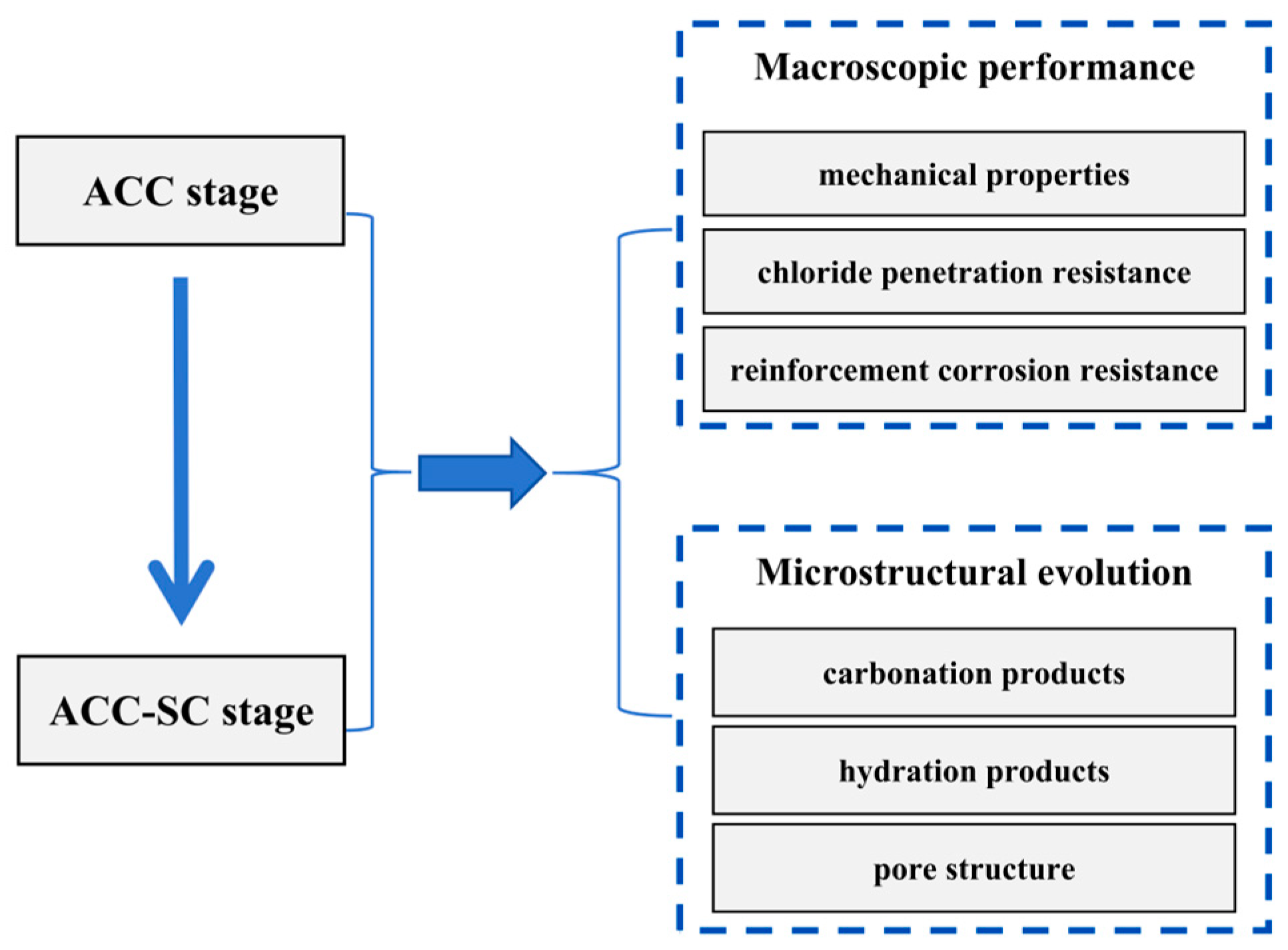
Freshly cast cement-based specimens were stored at 20 ± 2 °C and ≥95% relative humidity and demolded after 24 h. The study focuses on the accelerated carbonation stage, with specimens subjected to four carbonation durations: 500, 1000, 2000, and 6000 min. Following carbonation, the specimens were transferred to standard curing conditions (20 ± 2 °C and >90% relative humidity) until an age of 28 d. The experimental procedure is illustrated in Figure 1, and the overall research roadmap is shown in Figure 2.
The group numbering annotations in this study are as follows: for example, AC−500 and AC−500−S represent accelerated carbonation curing for 500 min and accelerated carbonation curing for 500 min followed by standard curing until the age of 28 d.

2.2. Test Methods

For each curing regime and testing age, at least three replicate specimens were prepared and tested (n = 3). All reported values are presented as the mean ± standard deviation.

2.2.1. Mechanical Properties

Compressive and flexural strengths of cement mortars (40 mm × 40 mm × 160 mm) were measured during both the ACC and ACC−SC stages, following the procedure specified in the Chinese National Standard [25]. The tests were conducted using a NELD-FC300 fully automatic flexural–compressive testing machine (Beijing NELD Intelligent Technology Co., Ltd.) (Beijing, China).

2.2.2. Chloride Ion Penetration Resistance

The electric flux of cement mortars (40 mm × 40 mm × 160 mm) was measured during the ACC and ACC−SC stages following the chloride penetration test (electric flux method) described in the Chinese National Standard [26]. The instrument used was the NELD-PEU510 concrete electric flux meter (Beijing NELD Intelligent Technology Co., Ltd.).

2.2.3. Corrosion Resistance of Embedded Steel Bars

Electrochemical impedance spectroscopy (EIS) was used to evaluate the protective capacity of the cement mortars—subjected to the curing regimes in this study—toward embedded steel reinforcement.
  • Preparation of reinforced cement mortar specimens
Steel bars were derusted and cut into small segments (φ = 10 mm, L = 120 mm). A copper wire was welded to one end of each bar, and the weld point was sealed with epoxy resin. Cylindrical molds (φ = 50 mm, h = 100 mm) were used to cast the cement mortar specimens with embedded steel bars.
2.
Electrochemical impedance testing
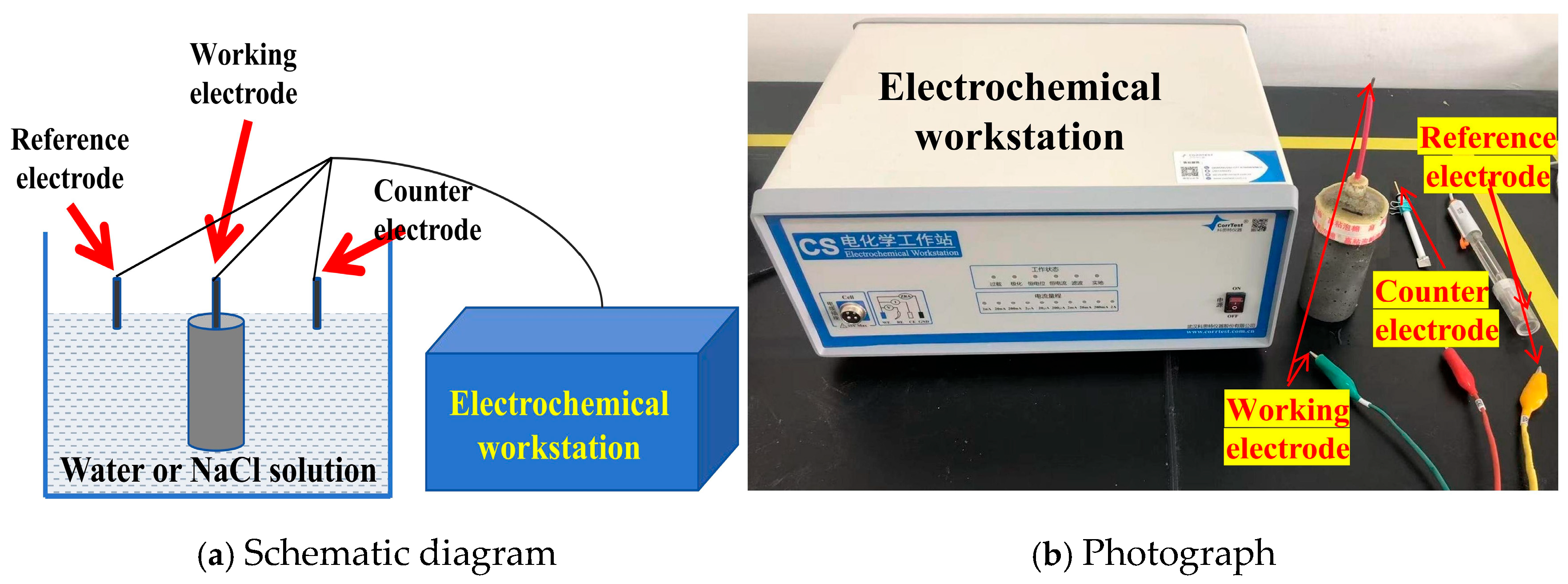
Specimens from the ACC or ACC−SC stages were immersed in distilled water for 1 h before EIS testing. A PGSTAT302N workstation was used with a three-electrode system: the steel-reinforced mortar served as the working electrode, a platinum plate as the counter electrode, and a saturated calomel electrode (SCE) as the reference electrode. A schematic and a photograph of the setup are shown in Figure 3. The frequency range was 0.1 Hz to 105 Hz with an excitation amplitude of 5 mV. Data were processed using ZView 3.1, and the impedance spectra were fitted to extract the electrochemical parameters.
In this study, corrosion protection was primarily evaluated using EIS parameters (Rm and Rct). Direct pH profiling along the depth was not performed. Accordingly, the discussion in Section 3.3 distinguishes between (i) physical pore-blocking and (ii) potential alkalinity recovery during subsequent hydration.
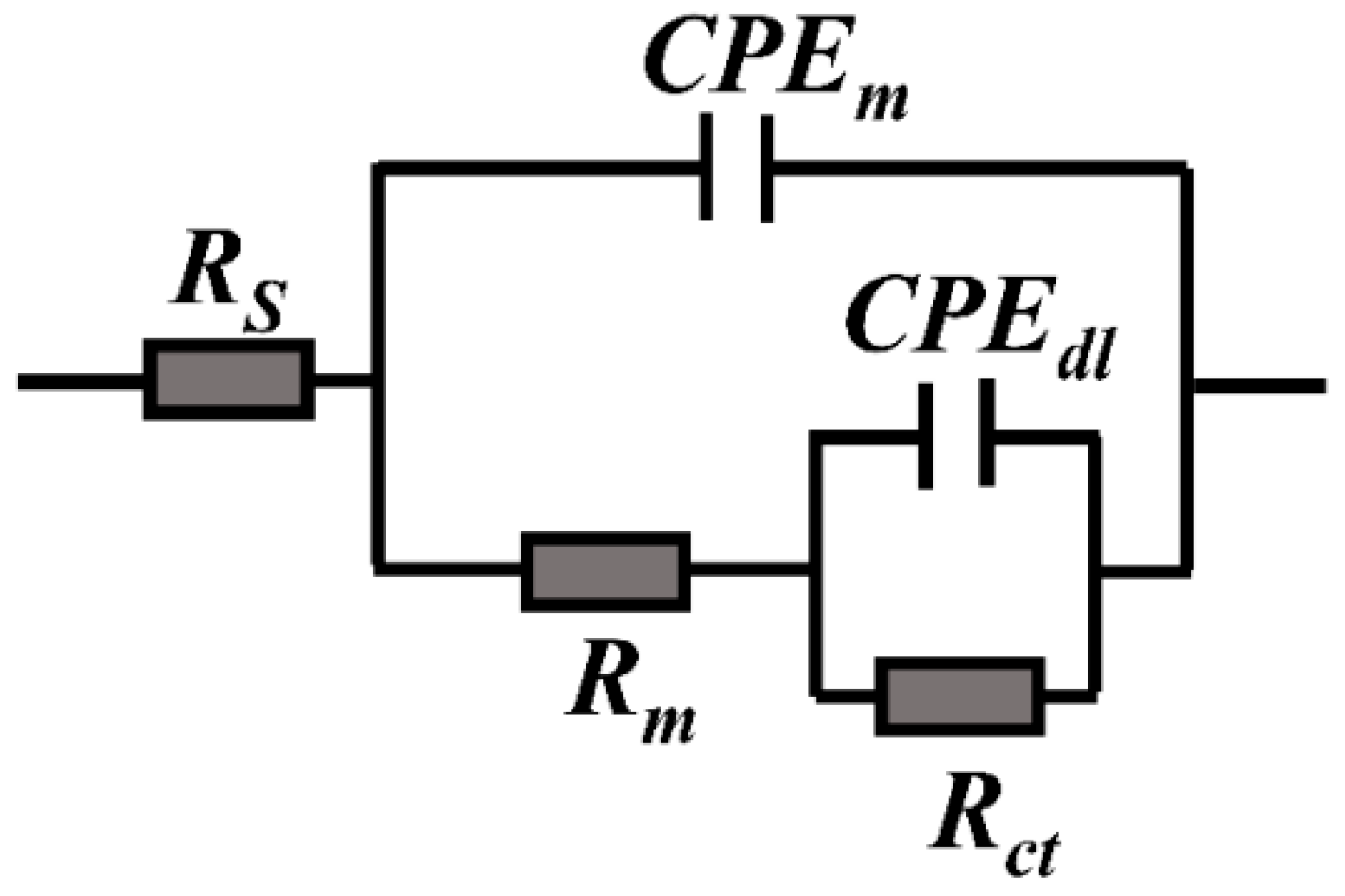
The equivalent circuit used to simulate the EIS results is illustrated in Figure 4. In this circuit, Rs represents the solution resistance, Rm denotes the mortar resistance, and Rct corresponds to the charge-transfer resistance at the steel surface. CPEm is the constant-phase element associated with the mortar/solution interface, while CPEdl represents the double-layer capacitance at the steel/solution interface.

2.2.4. Microstructural Experiments

Powder samples extracted from the top 1 mm of the carbonated surface of the cement mortar were subjected to TG–DTG analysis using a Netzsch TG209F3 thermogravimetric analyzer (Selb, Germany). The samples were first held at 30 °C for 20 min, followed by heating from 30 °C to 1000 °C at a rate of 10.00 °C/min. In addition, powder samples collected from the top 1 mm of the carbonated surface of the cement paste were analyzed by X-ray diffraction (XRD) using a PANalytical X’Pert3 diffractometer (Almelo, The Netherlands). The scanning range was 5–70° (2θ), with a step size of 0.02° and a dwell time of 5 s per step. Quantitative phase analysis was conducted using Jade 9.3 software (Materials Data, Inc. (Livermore, USA)). Meanwhile, block samples (15 mm × 15 mm × 15 mm) taken from the top 1 mm of the carbonated surface of the cement paste were used for SEM–EDS and MIP testing. After gold sputtering of the sample surface, microstructural features and product morphologies were examined using a Nova Nano SEM 450 field-emission scanning electron microscope (Brno, Czech Republic). EDS analyses were performed with an Aztec X-MaxN 80 (High Wycombe, UK) energy-dispersive spectrometer to determine the chemical composition of the products. The pore structure of the samples was characterized using a mercury intrusion porosimeter (MIP, Micromeritics AutoPore IV 9510 (Norcross, USA)), with the applied pressure gradually increased from 0.5 lbf/in2 to 3.3 × 10⁴ lbf/in2.

3. Results and Analysis

3.1. Compressive and Flexural Strength

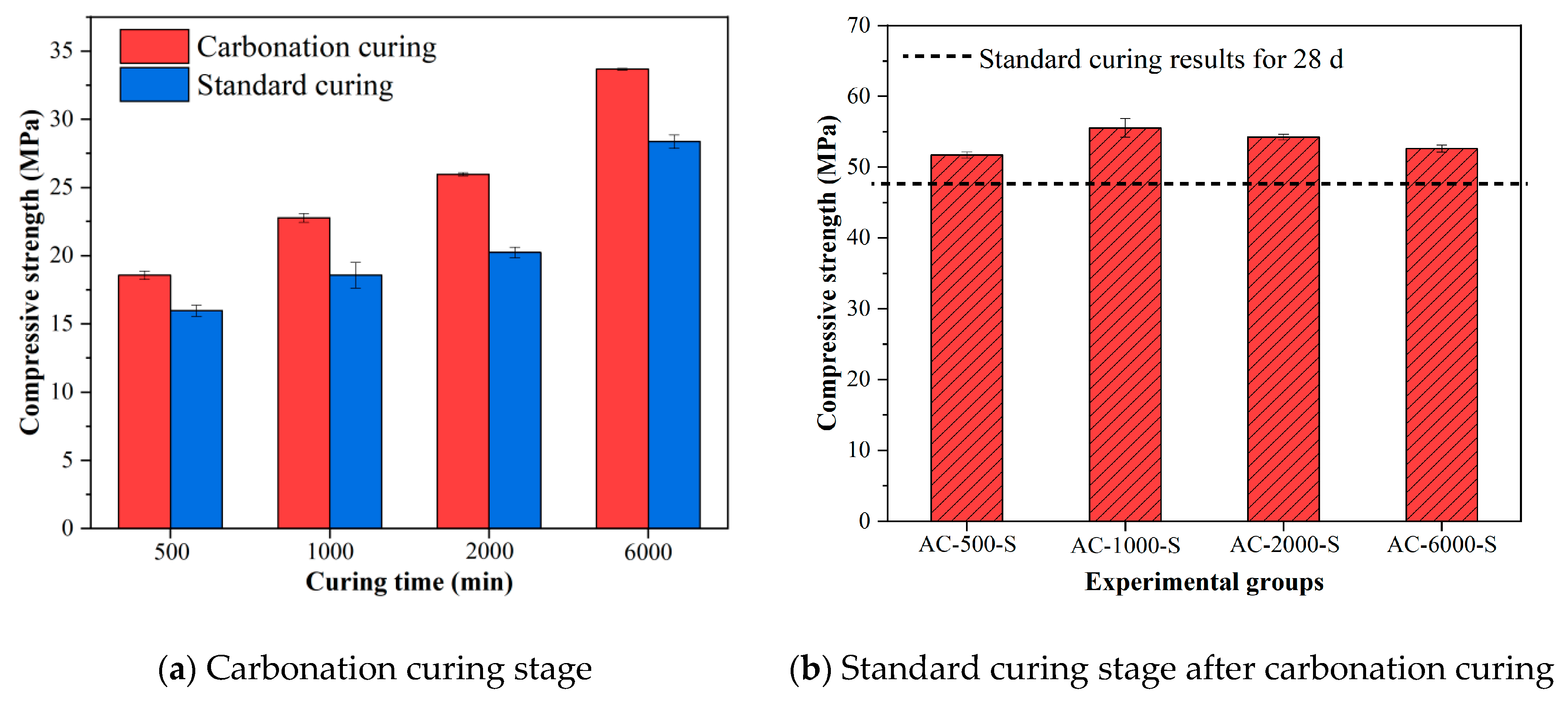
Figure 5 illustrates the changes in compressive strength of cement mortar during the ACC and ACC−SC stages. It can be observed that in the ACC stage, the compressive strength of the mortar exhibits a rapid growth trend with increasing carbonation curing time, showing improvements of 16.3%, 22.6%, 28.3%, and 18.6% compared to the standard curing group at the same age. This increase is primarily attributed to the rising amounts of carbonation products, such as CaCO3 and silica gel, as carbonation curing time extends, leading to greater densification of the cement mortar specimens and consequently a rapid increase in compressive strength compared to the standard curing group [27,28]. However, under 3% CO2 carbonation curing, the rate of increase in compressive strength initially rises and then declines, with the inflection point occurring at 2000 min of carbonation curing. This indicates that using low-concentration CO2 for carbonation curing also presents the issue of excessive carbonation; specifically, beyond a certain threshold, the performance of cement mortar subjected to carbonation curing is reduced compared to that under standard curing (where only hydration reactions occur).
In the ACC−SC stage, the compressive strength of the mortar shows an overall increasing trend with the extension of early carbonation curing time, resulting in enhancements of 8.5%, 16.6%, 13.8%, and 10.4% compared to the standard curing group at the same age. It can be observed that appropriate carbonation curing under low CO2 not only achieves better early compressive strength but also maintains significant improvements in later strength. Zhan et al. [15] also indicated that carbonation curing does not inhibit subsequent hydration reactions and strength development of cement specimens. This is primarily because after low-concentration CO2 carbonation curing, standard curing continues, allowing unhydrated mineral phases and hydration products not fully encapsulated by carbonation products [24] to participate in hydration reactions, thus enhancing the densification of the pore structure. Furthermore, upon entering the standard curing environment, sufficient moisture may also influence the changes in crystallinity of the CaCO3 generated during carbonation curing, as the accumulation of highly crystalline CaCO3, combined with newly formed hydration products, contributes to the increase in compressive strength of the substrate.
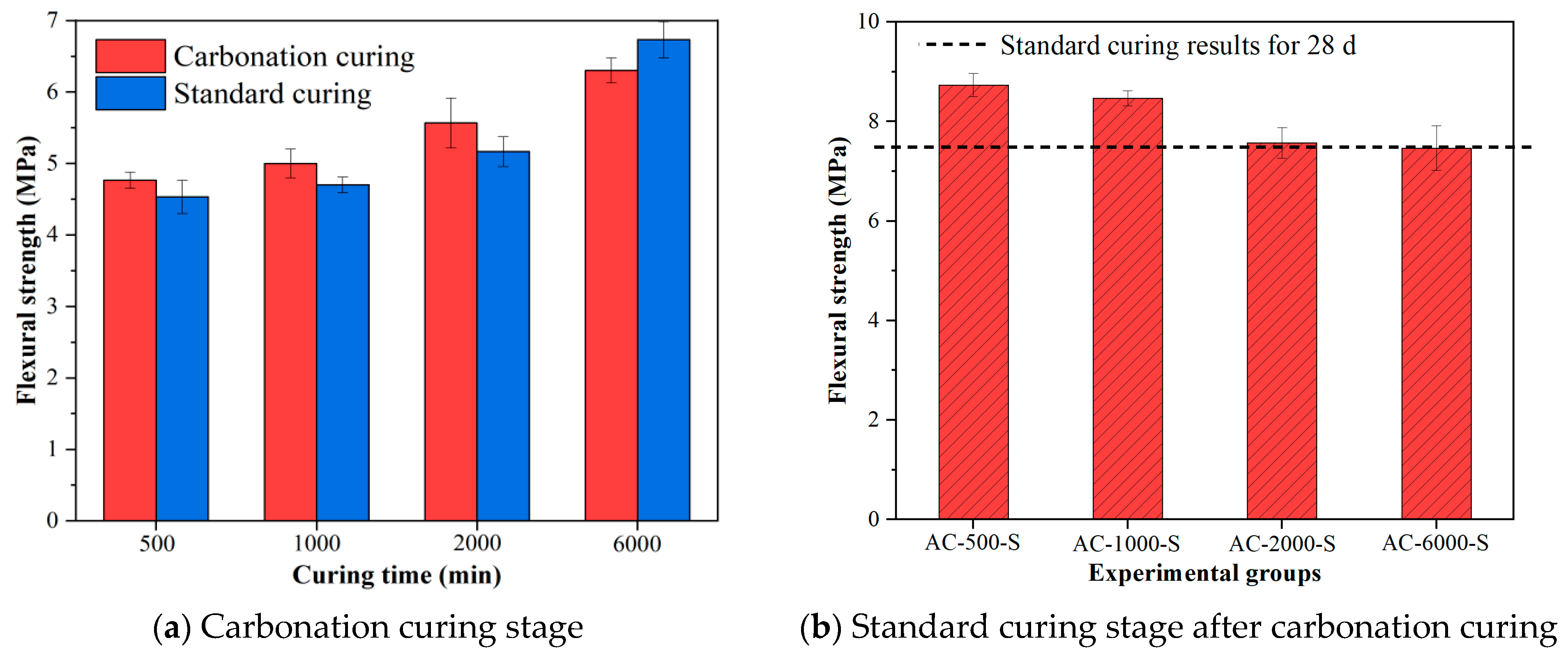
Figure 6 shows the changes in flexural strength of cement mortar during the ACC and ACC−SC stages. It can be observed that in the ACC stage, the flexural strength of the mortar exhibits a rapid growth trend with increasing carbonation curing time, with enhancement rates of 5.1%, 6.4%, 7.7%, and −6.4% compared to the standard curing group at the same age. The rate of increase first rises and then declines. This behavior is primarily attributed to the rapid filling of pores by the generated CaCO3 during the early carbonation curing stage (acceleration stage of CO2 absorption), forming a hard carbonation layer at the surface of the substrate, which enhances the overall densification and flexural strength of the material. This effect becomes evident during the mid-carbonation curing stage (transition stage of CO2 absorption), leading to an increase in flexural strength. However, as carbonation time continues to increase, a distinct transition zone forms between the carbonated and uncarbonated layers, which may create stress concentrations [29,30], resulting in a decrease in the overall flexural strength of the substrate.
Furthermore, from the flexural strength results shown in Figure 6b, it can be seen that the flexural strength of cement mortar subjected to early carbonation curing exhibits enhancement rates of 16.4%, 12.9%, 0.9%, and −0.4% compared to the standard curing group at the same age. This indicates that during carbonation curing, stress concentrations arising between the carbonated and uncarbonated layers have not been significantly alleviated even with further hydration reactions. As a result, after the carbonation curing time exceeds 2000 min, the flexural performance of the cement mortar begins to deteriorate.

3.2. Results of the Electrical Flux

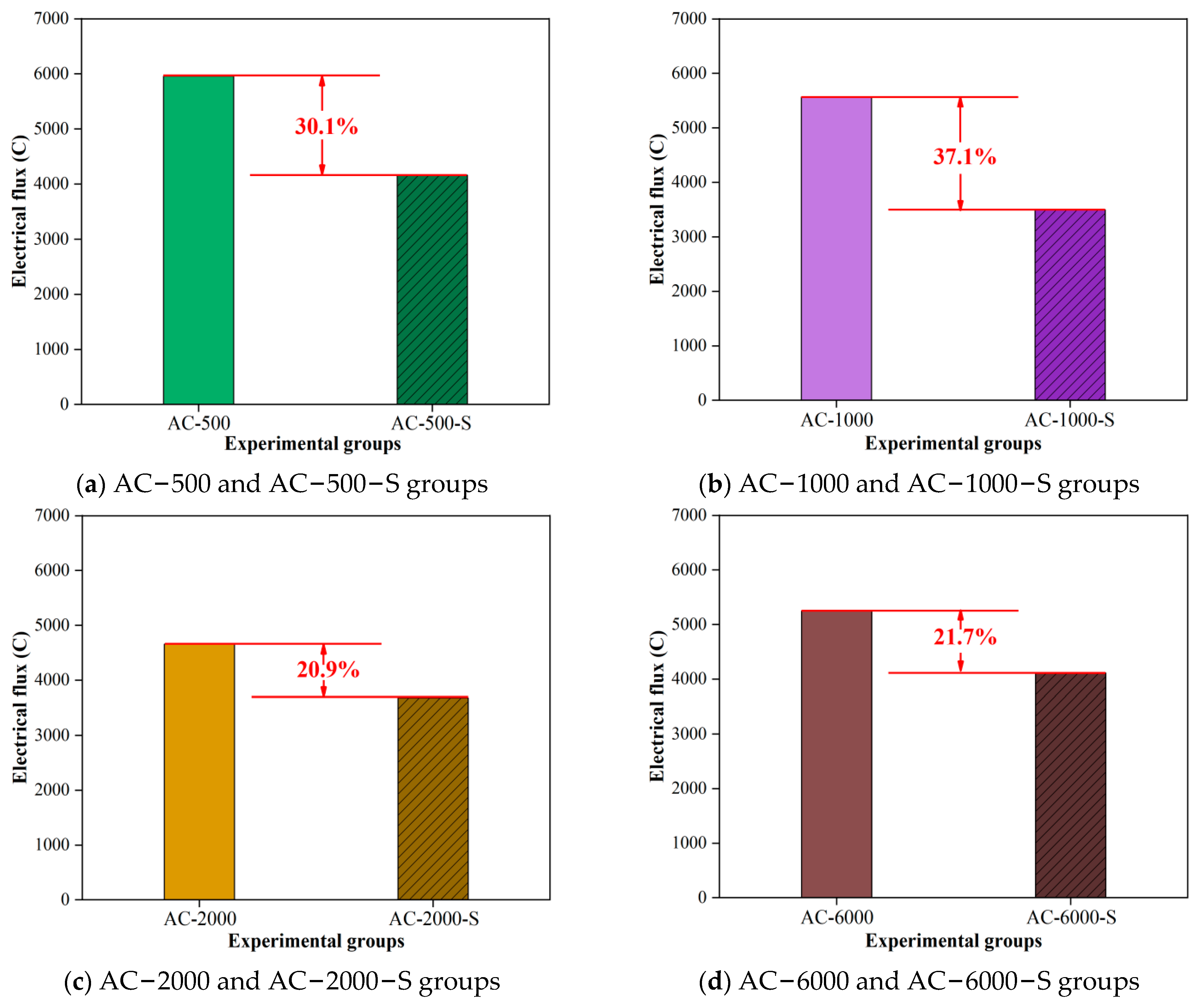
Figure 7 shows the variation in electrical charge passed (chloride ion penetration resistance) of the cement mortar during the ACC and ACC−SC stages. In the ACC stage, the charge passed first decreases and then increases with carbonation time. The lowest charge passed is observed at 2000 min of carbonation curing, indicating the strongest resistance to Cl penetration at this point. According to previous findings [24], this behavior is mainly attributed to the gradual reduction in total porosity of the mortar during the early carbonation period, which effectively suppresses the ingress and diffusion of Cl ions. However, for the AC−6000 group, the charge passed increases by 12.8% compared with the AC−2000 group, indicating that chloride resistance deteriorates when carbonation curing exceeds 2000 min.
During the ACC−SC stage, all specimens exhibit varying degrees of reduction in charge passed compared with the ACC stage. The most pronounced reduction—over 40%—occurs in specimens that underwent 1000 min of early carbonation curing. This is likely because the subsequent standard curing following carbonation promotes continued hydration, and the additional hydration products further refine the pore structure and increase the material’s compactness, thereby significantly enhancing resistance to Cl penetration.

3.3. Results of Electrochemical Tests

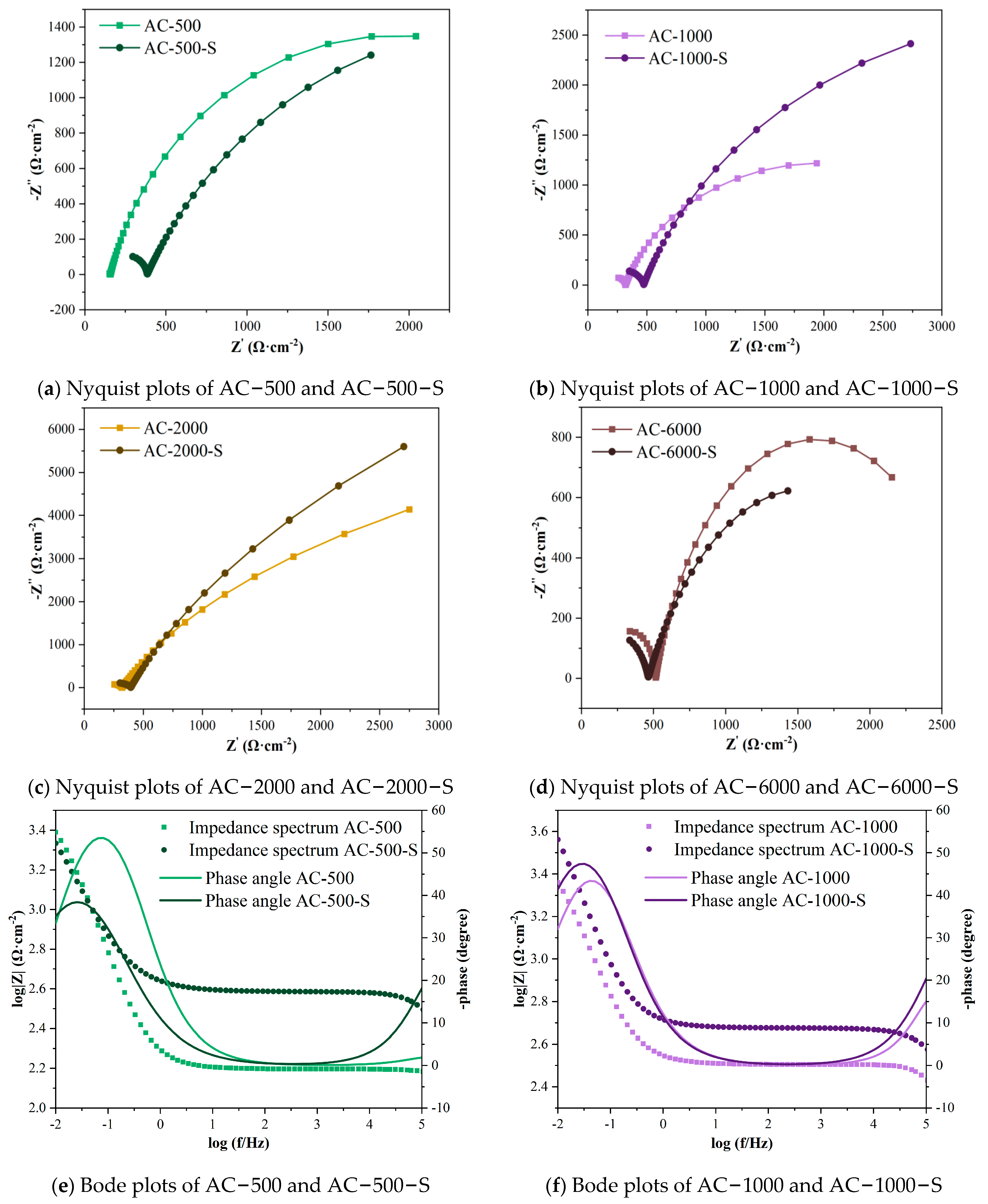
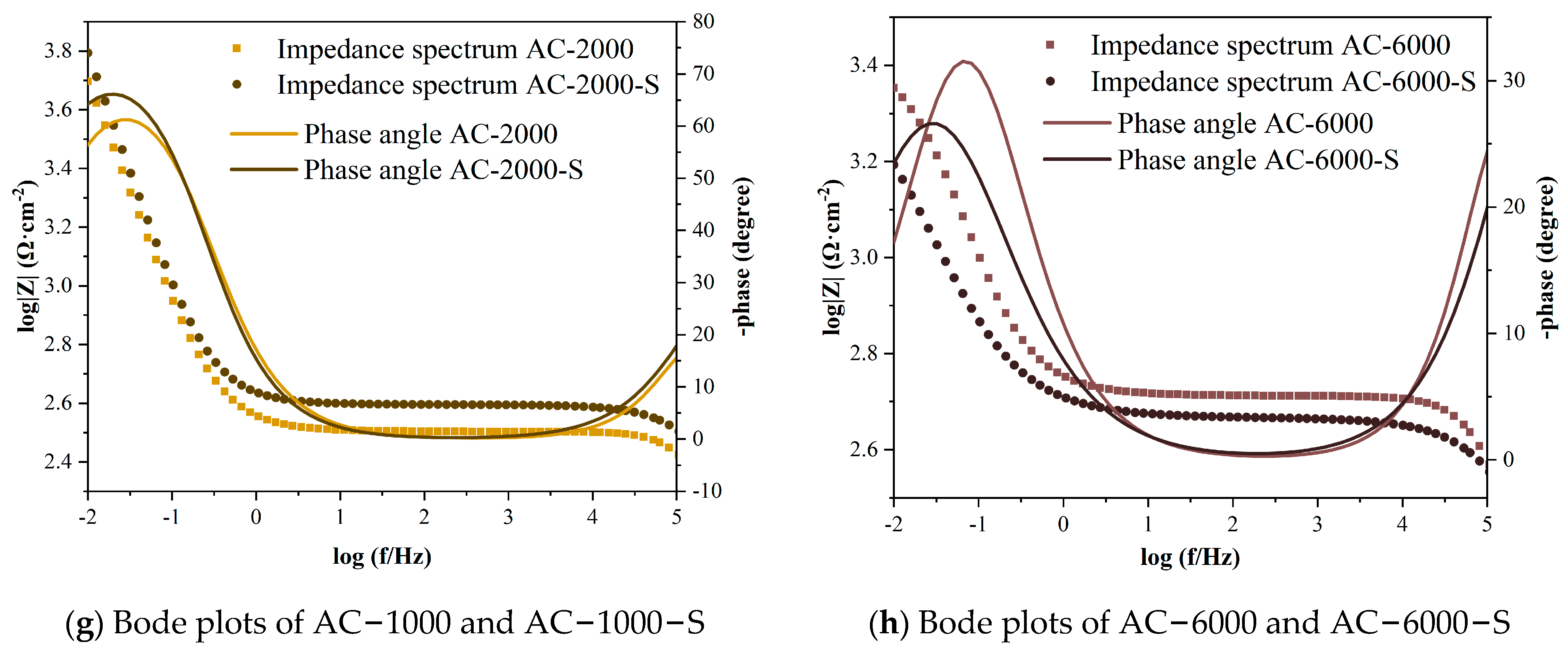
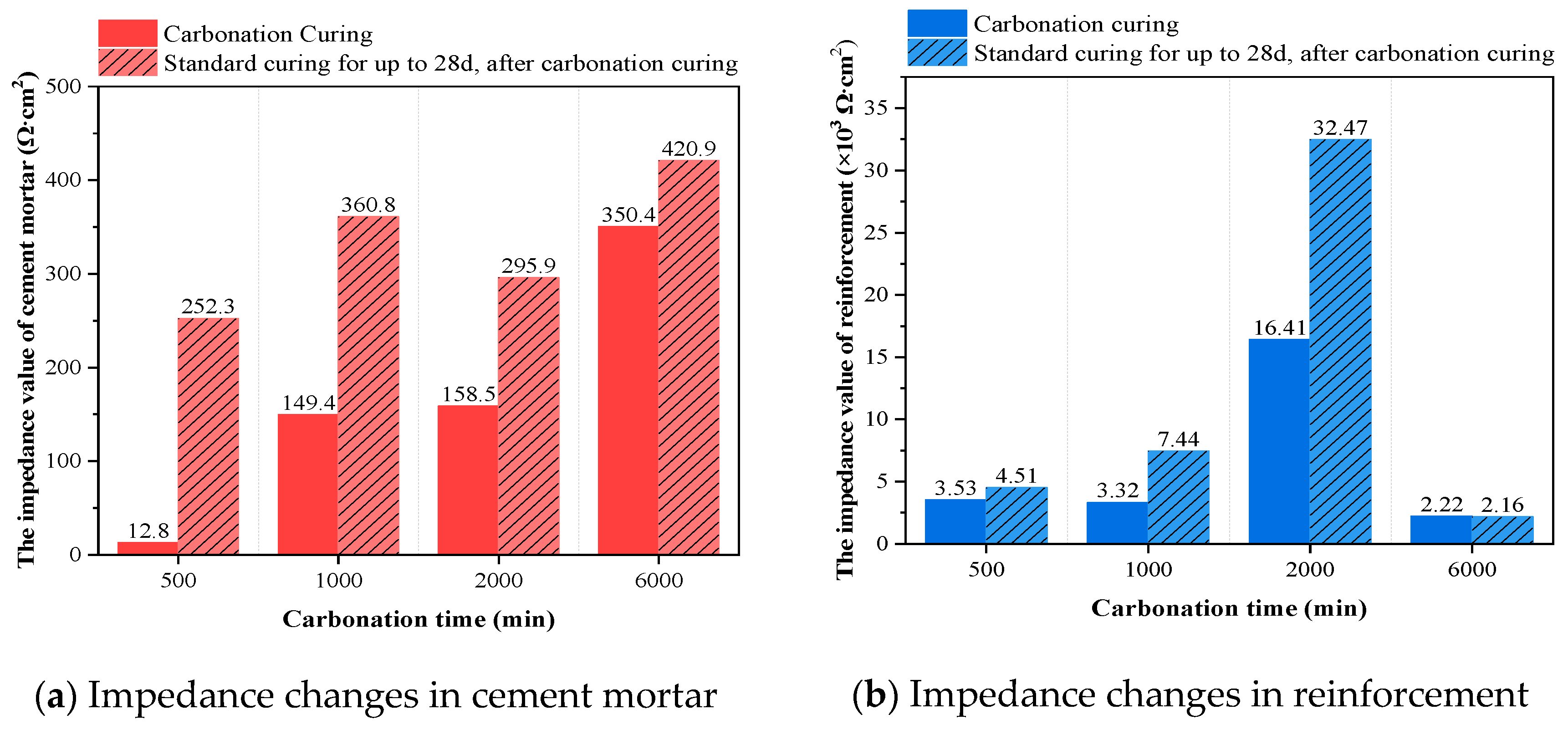
Figure 8 presents the electrochemical test results for cement mortar during the ACC and ACC−SC stages. As shown in Figure 8a–d, Nyquist plots were collected for the steel-reinforced mortar electrodes in both stages. Figure 8e–h display the corresponding Bode plots. Figure 9 illustrates the changes in impedance of cement mortar and steel reinforcement for each group at different stages, obtained through fitting calculations.
During the ACC stage, for samples in the carbon absorption acceleration stage (AC−500), after carbonation curing, the specimens were immersed in distilled water for electrochemical testing. In Figure 8a, the impedance arc of the cement paste is hardly observable, and the phase angle in the high-frequency region (Figure 8e) is close to 0 °. Combined with the calculated result of Rm (Rm = 12.8 Ω·cm2) from Figure 9, this indicates that the density of the cement paste is poor [31]. Distilled water can rapidly penetrate the cement paste, resulting in the near disappearance of the interface between the water and the paste. Under these conditions, external water or harmful ions can directly contact the steel reinforcement, leading to inadequate protection.
After carbonation curing, when standard curing was carried out until 28 d, the rightward shift of the curve in the Nyquist plot and the observable impedance arc of the cement paste, along with the phase angle approaching 20° in the high-frequency region (Figure 8e), indicate an improvement in the density of the cement paste [32]. Moreover, during this process, the diameter of the impedance arc for the steel reinforcement also increased, suggesting that the continuous hydration process enhanced the alkalinity in the region surrounding the steel, thereby improving its protective capacity [33].
As the carbonation curing time increases, entering the carbonation transition stage (AC−1000 and AC−2000), the resistive arcs and high-frequency phase angles of the cement mortar become clearly observable during the carbonation curing stage, as shown in Figure 8b,c,f,g. The impedance values of the cement mortar increase significantly by 136.6 and 145.7 Ω·cm2 compared to the carbonation acceleration stage (AC−500), indicating that the synergistic effect of hydration and carbonation effectively enhances the densification of the cement mortar, with significantly better protection for the steel reinforcement than in the carbonation acceleration stage. Additionally, the impedance value of the steel reinforcement in AC−2000 shows a notable increase. After carbonation curing followed by standard curing to 28 d, the impedance of the AC−1000−S cement mortar and steel reinforcement significantly improves, with increases of 141.5% and 124.1%, respectively. However, the impedance improvement rates for AC−2000−S cement mortar and steel reinforcement are somewhat reduced, with increases of only 86.7% and 97.8%, respectively, compared to AC−2000.
As the carbonation curing time continues to increase (entering the carbon absorption stabilization stage at AC−6000), the diameter of the impedance arc for the cement paste continues to increase, as shown in Figure 8d, indicating a further increase in the impedance value. However, the impedance value of the steel reinforcement decreases compared to the groups in the carbon absorption acceleration and transition stages. This is primarily due to the extended carbonation curing time, which reduces the alkalinity in the carbonation zone, thereby lowering the corrosion resistance of the steel reinforcement to some extent [34]. Continuing with standard curing to 28 d, the impedance increase rate for the AC−6000−S cement paste is only 20.1%, while the impedance of the steel reinforcement shows a negative growth rate of −2.57%. This indicates that after 6000 min of carbonation curing followed by standard curing to 28 d, the improvement in the performance of the cement paste becomes less significant and may even trend towards degradation.

3.4. TGA

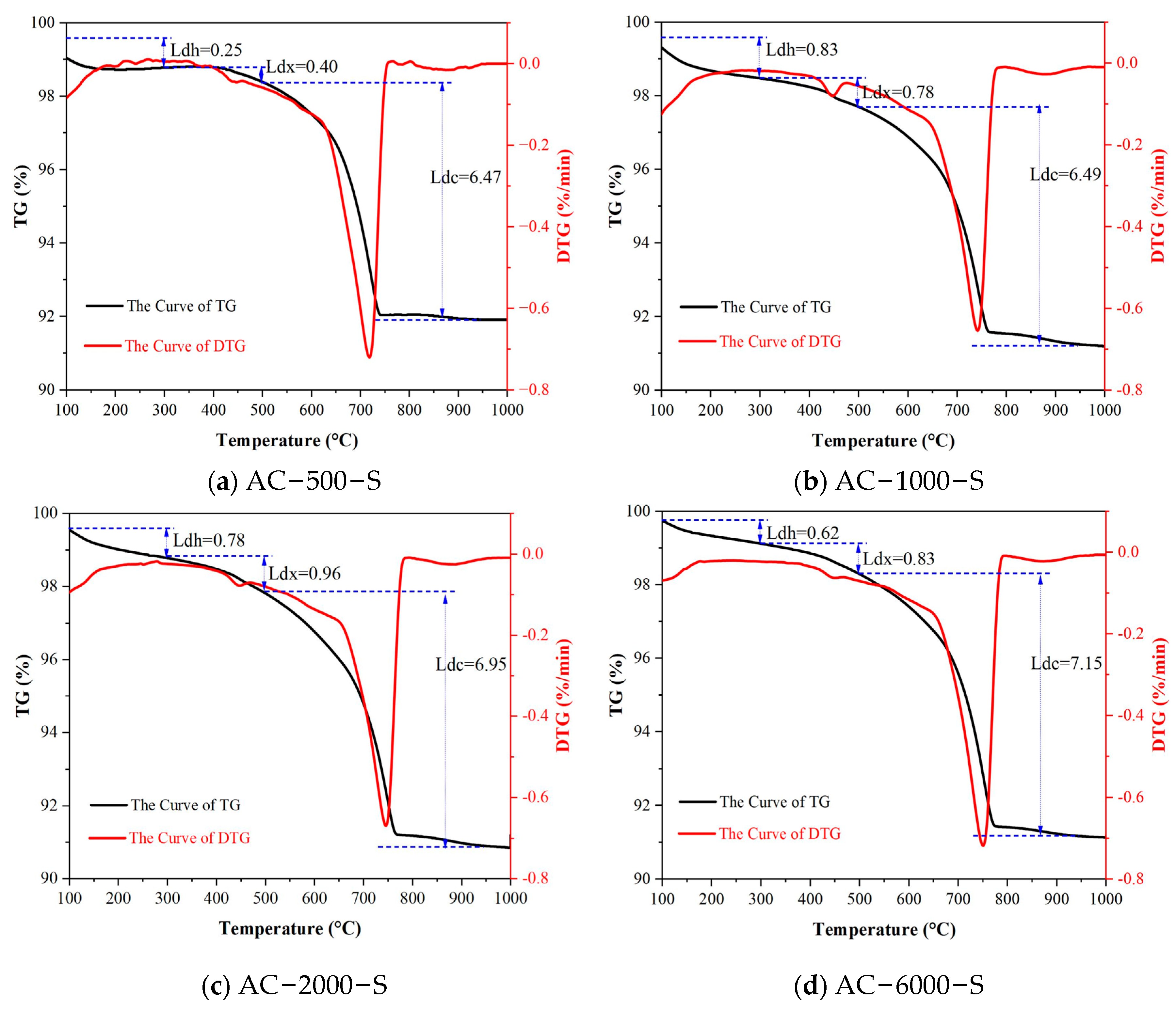
Figure 10 presents the TGA curves of the cement paste samples with a surface thickness of 1 mm, measured from 100 °C to 1000 °C during the ACC−SC stage. According to previous studies [35], the temperature range of 105 °C to 300 °C corresponds to the dehydration reaction of C-S-H (Ldh), 400 °C to 500 °C corresponds to the dehydroxylation reaction of CH (Ldx), and 500 °C to 950 °C corresponds to the decarbonation reaction of polycrystalline CaCO3 (Ldc). As shown, after carbonation curing followed by further hydration, the mass proportions of C-S-H and CH at the surface of the sample show a trend of initially increasing and then decreasing with the increase in early carbonation time. The turning points for the mass proportions of C-S-H and CH occur at carbonation curing times of 1000 min and 2000 min, respectively. This indicates that insufficient (less than 1000 min) or excessive (more than 2000 min) carbonation curing time under low-concentration CO2 can adversely affect the generation of subsequent gels like C-S-H and the establishment of an alkaline environment in the samples.
In previous research results [24], it was found that during the ACC stage, when the carbonation curing time ranged from 500 min to 6000 min, the characteristic peak of CaCO3 in the carbonation zone of the cement paste samples appeared around 650 °C, displaying a double-peak shape, indicating a relatively low degree of crystallization of CaCO3 during carbonation curing. However, in the ACC−SC stage, the shape of the CaCO3 characteristic peak changed from a double peak to a single peak, with the average peak value shifting to 730 °C. This rightward shift in the characteristic peak suggests that the degree of crystallization of CaCO3 has improved compared to the ACC stage.
Using Formulas (1) and (2), the content of low and high crystallization degrees of CaCO3 was calculated [36]. Mt1 represents the mass percentage at the corresponding temperature, while Mt0, Mt1 and Mt2 correspond to the mass percentages at the initial decomposition temperature of CaCO3, 650 °C, and 950 °C, respectively. The molar masses are MCaCO3 (100 g/mol) and MCO2 (44 g/mol).
L o w c r y s t a l l i n i t y C a C O 3 % = M C a C O 3 M C O 2 × ( M t 0 M t 1 )
H i g h c r y s t a l l i n i t y C a C O 3 % = M C a C O 3 M C O 2 × ( M t 0 M t 2 )
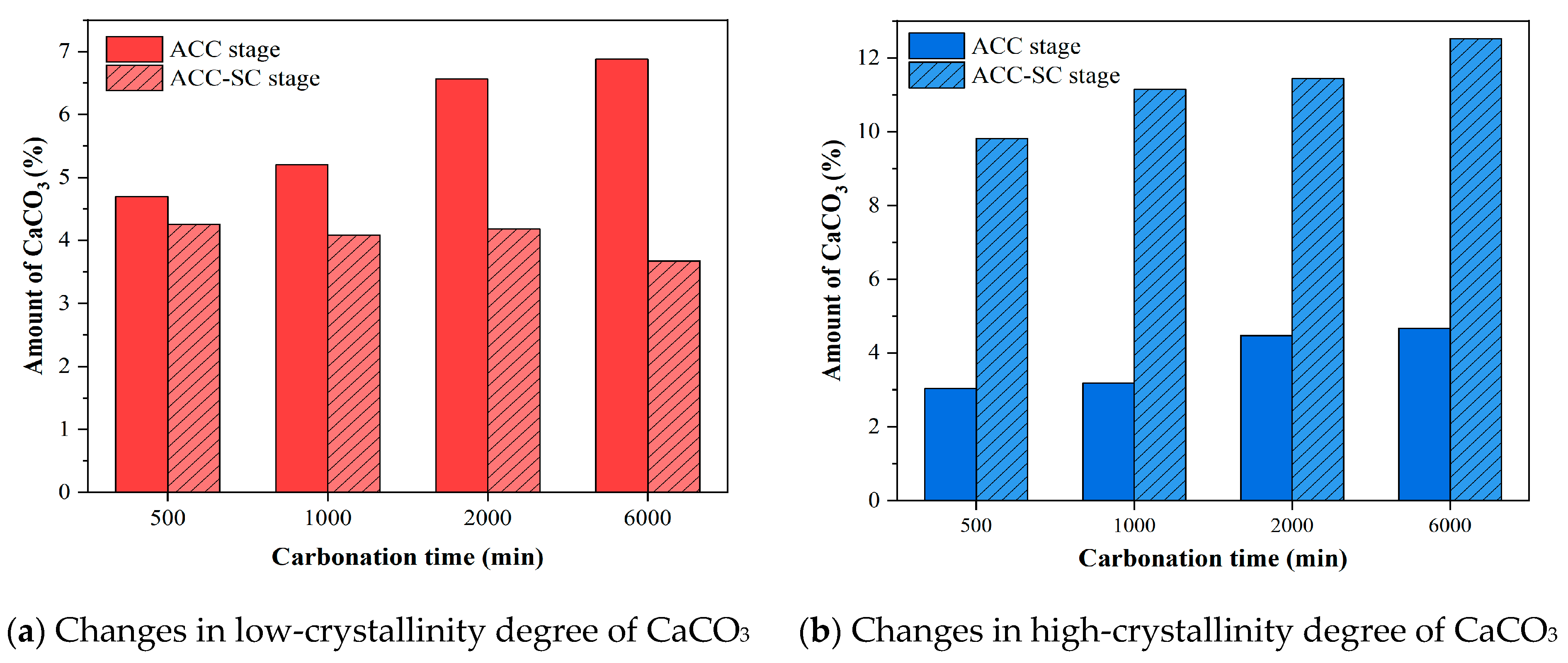
From Figure 11, it can be observed that as the early carbonation time increases, the low-crystallinity CaCO3 exhibits an overall decreasing trend, while the high-crystallinity CaCO3 shows a significant increasing trend, with enhancements of 223.1%, 255.7%, 155.9%, and 168.4% compared to the ACC stage [24]. The AC−1000−S group demonstrates the most significant growth in high-crystallinity CaCO3, corresponding with the characteristic peak values of CaCO3 in Figure 10. Research by Wang et al. [37,38] indicates that during subsequent water curing processes, the poorly crystallized CaCO3 in cement specimens that underwent carbonation curing may react with aluminum, thereby consuming some of the low-crystallinity CaCO3. Additionally, after transitioning from low-concentration CO2 carbonation curing to standard curing, the moisture content in the surface pores of the cementitious materials increases, providing conditions for the continued crystallization of CaCO3 [39]. This phase gradually transforms into a more stable, highly crystalline form, and a larger initial amount of low-crystallinity CaCO3 formed during carbonation curing accelerates the subsequent development of high-crystallinity CaCO3.

3.5. XRD

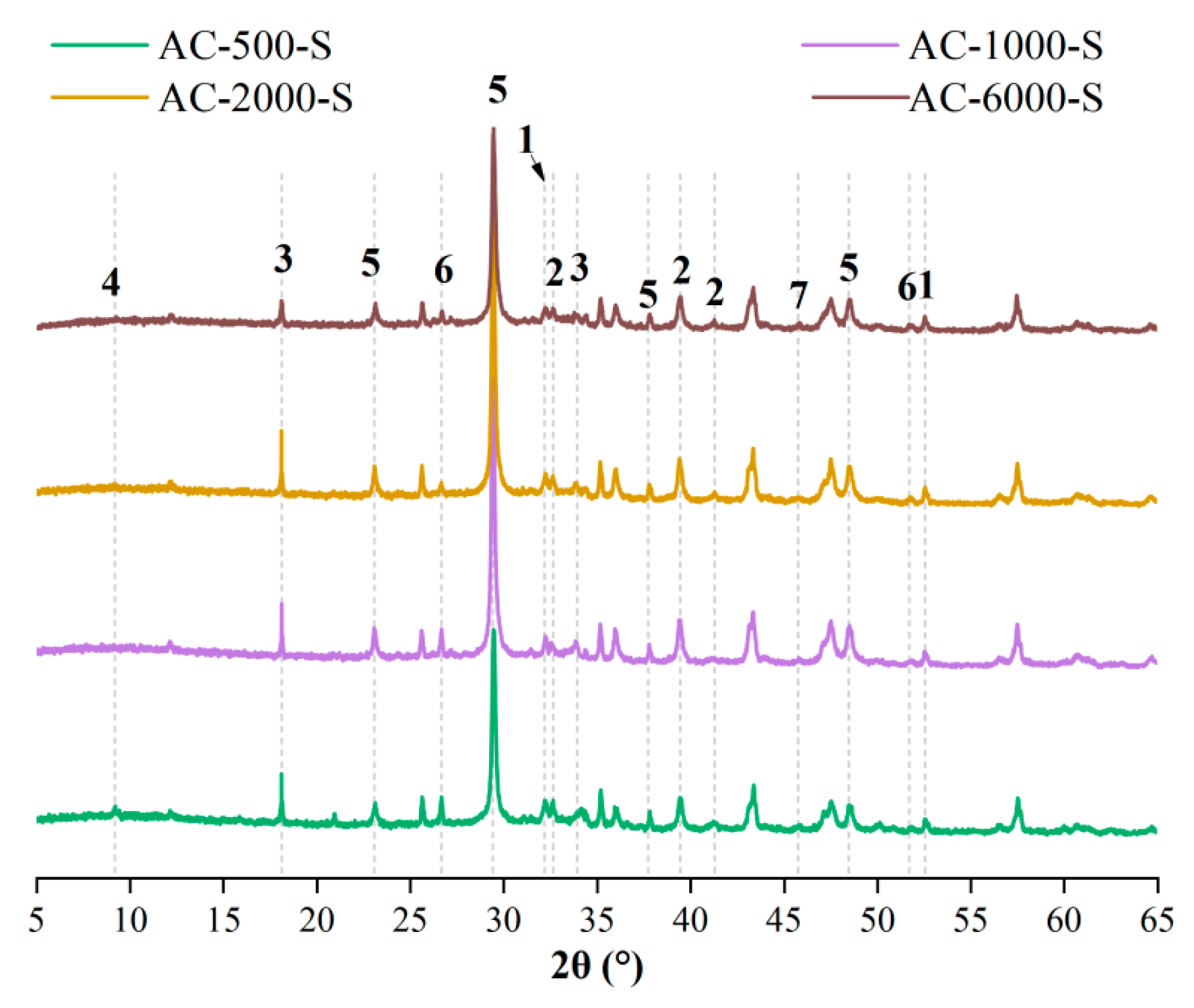
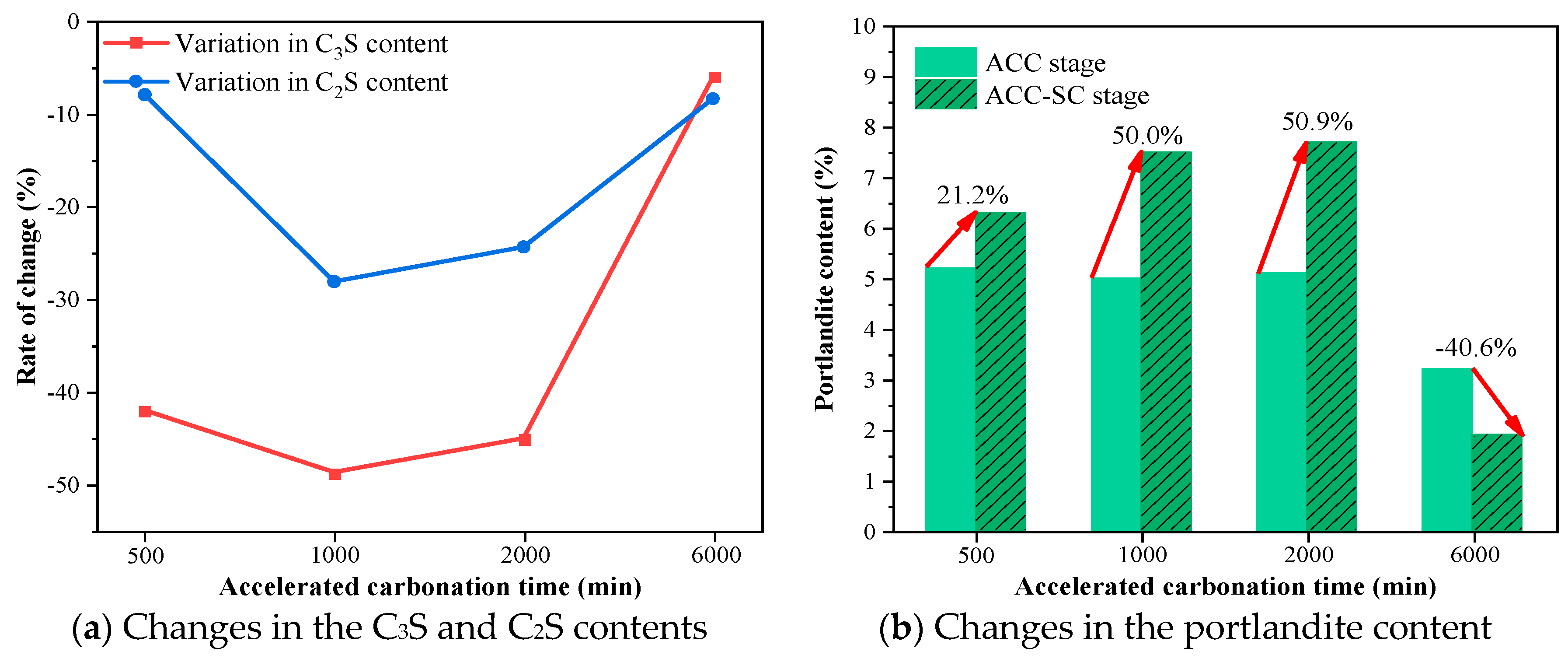
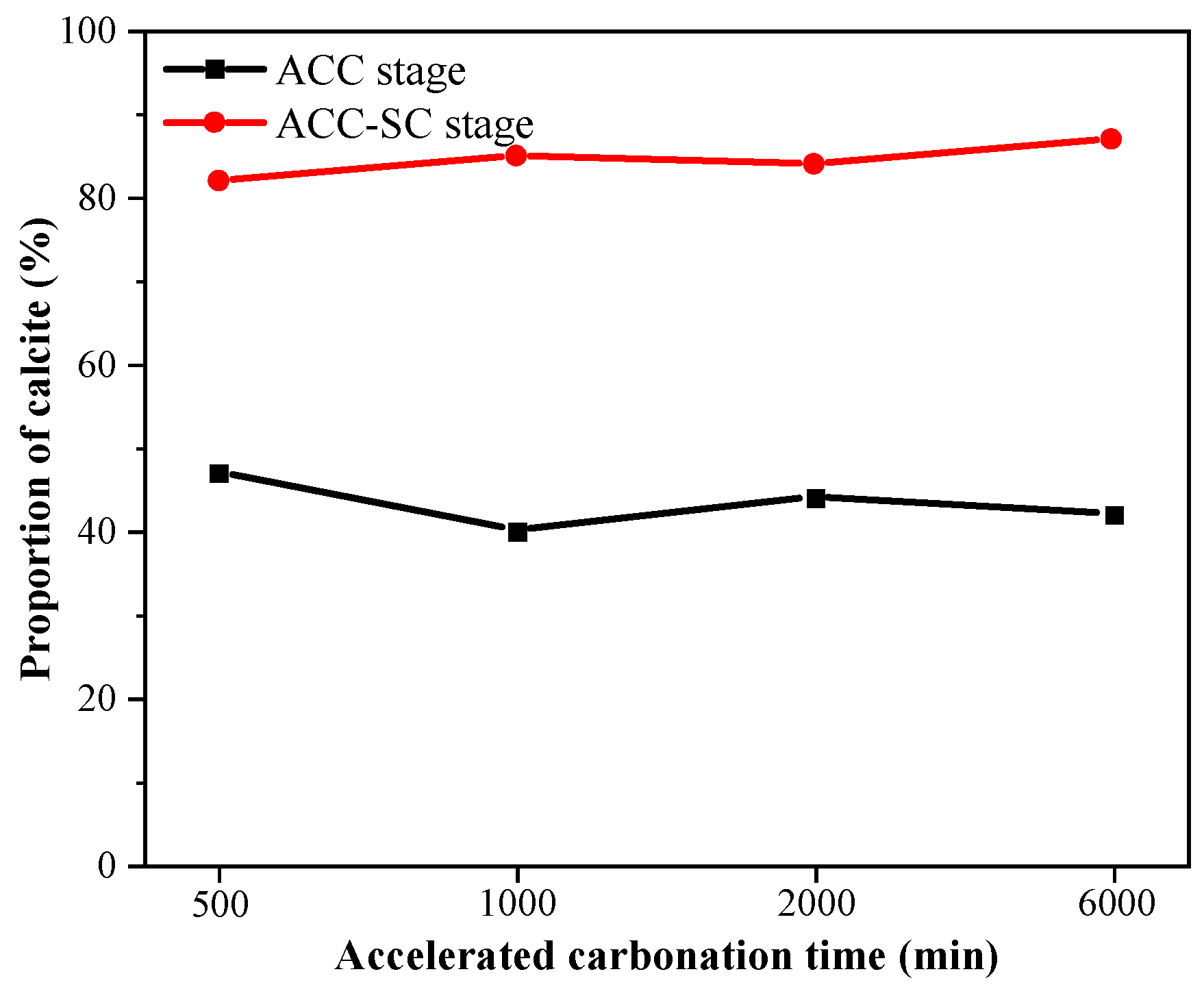
Figure 12 presents the XRD patterns of the surface 1-mm samples at the ACC−SC stage, while Table 5 summarizes the quantitative results of clinker minerals, hydration products, and carbonation products. Figure 13 and Figure 14 further compare the contents of C2S, C3S, portlandite, and calcite between the ACC−SC and ACC stages.
As shown in Figure 13a, the characteristic peaks of C3S and C2S in all specimens decrease compared with the ACC stage. With increasing carbonation time, the contents of C3S (C2S) decline by 42.1% (7.9%), 48.7% (28.1%), 45.1% (24.4%), and 5.9% (8.3%), respectively, exhibiting a trend of increasing reduction followed by a gradual decrease. This indicates that for specimens subjected to early accelerated carbonation for 1000 to 2000 min, the sufficient moisture available during subsequent standard curing enables further dissolution of unreacted C3S and C2S from the ACC stage, thereby enhancing hydration and increasing the portlandite content. However, when the carbonation duration is excessively long (6000 min), the dissolution capacity of C3S and C2S during standard curing becomes limited, resulting in a lower portlandite content in ACC−SC specimens compared with the ACC stage. This is mainly because less new portlandite is produced, and part of the portlandite continues to react with CO32− in the pore solution to undergo carbonation.
After standard curing, the proportion of calcite increases by an average factor of 1.9 compared with the ACC stage. This is primarily because the low-crystallinity vaterite transforms into the more stable calcite polymorph during standard curing. Wang et al. [40] reported that, under sufficient moisture conditions, vaterite formed during accelerated carbonation tends to convert into calcite. In addition, part of the newly formed portlandite continues to undergo carbonation, which further increases the content and proportion of calcite.
The vaterite-to-calcite transformation under moist conditions may induce localized crystallization pressure and alter the packing of carbonate particles within or around the existing C-S-H network [41]. When carbonation is moderate (1000 to 2000 min), the resulting CaCO3 acts as a microfiller, promoting a denser microstructure. In contrast, excessive precipitation and the development of heterogeneous carbonate layers can disrupt C-S-H continuity and introduce mechanical heterogeneity, contributing to the strength reduction observed after prolonged carbonation.

3.6. Microscopic Morphology Changes

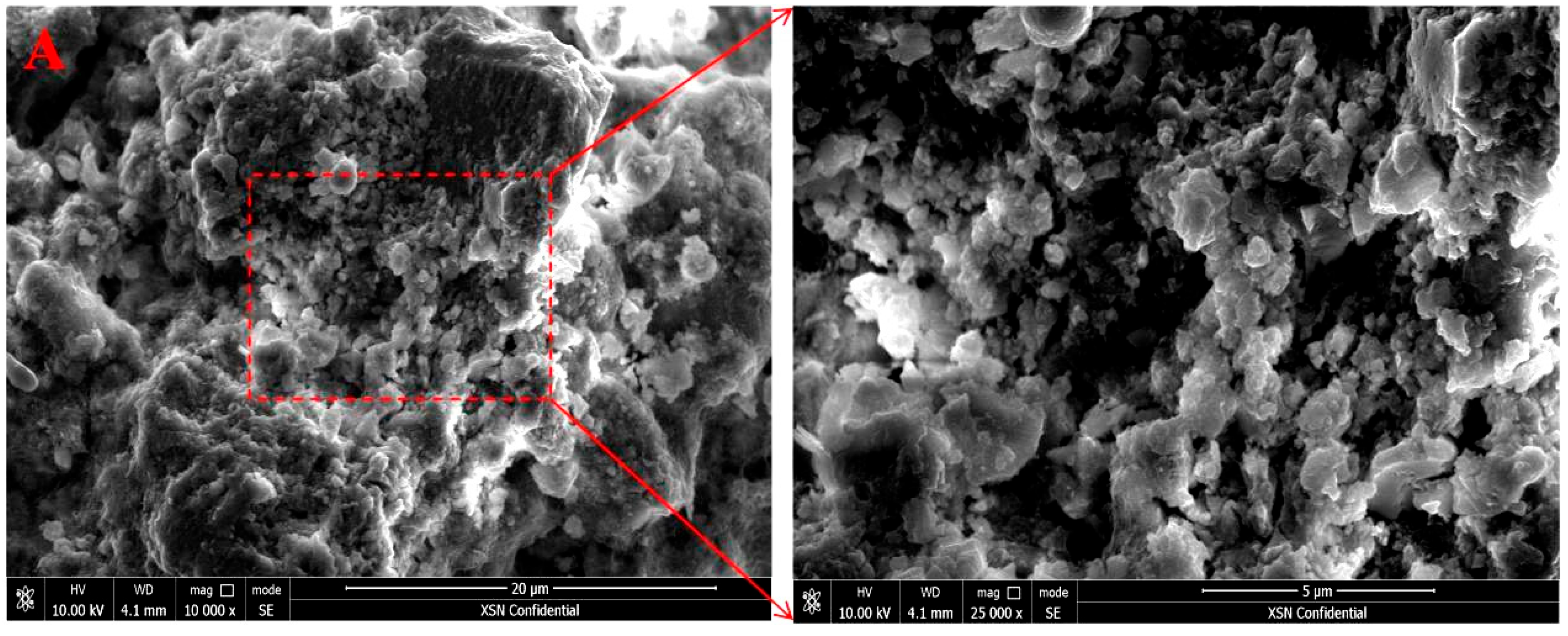
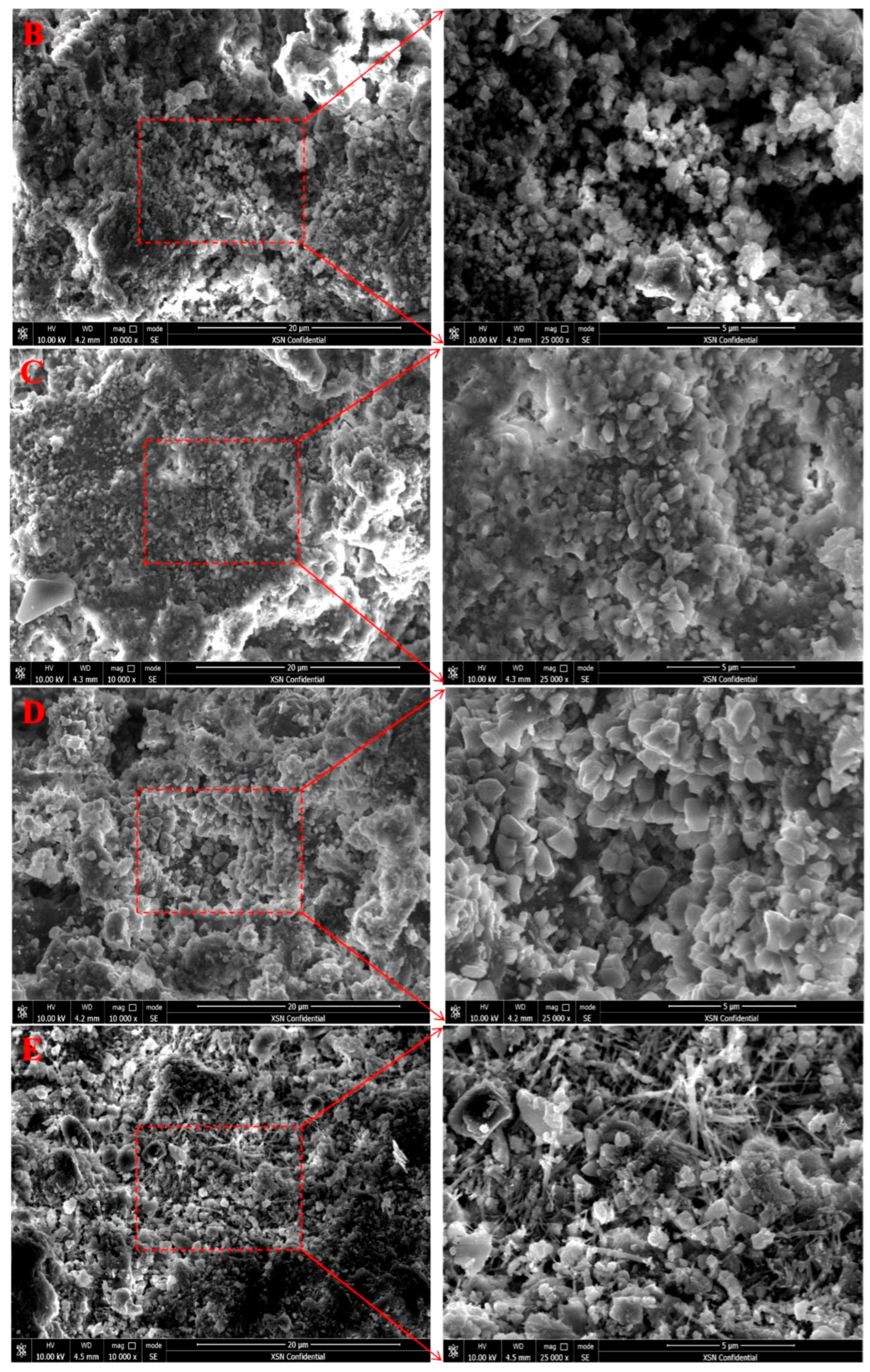
Figure 15 illustrates the changes in the microscopic morphology of the surface of cement paste specimens during the ACC−SC stage, alongside observations of the surface morphology of specimens that underwent standard curing for 28 d without carbonation treatment (Figure 15E). Comparison with Figure 15E reveals that the specimens subjected to carbonation curing followed by standard curing do not exhibit obvious needle-like or rod-like hydration products. Instead, they present flaky and granular products, which aligns with the findings of Lu et al. [42]. Elemental mapping through energy-dispersive spectroscopy confirms that these products are primarily composed of hydrated calcium silicate and CaCO3. This is a key reason for the superior mechanical properties of the specimens cured under standard conditions for 28 d after carbonation compared to those subjected to direct standard curing for the same duration. Moreover, for specimens with relatively short carbonation times shown in Figure 15A,B, the carbon content in the scanned area is significantly lower than that in Figure 15C,D. The morphology of the accumulated products also transitions from flaky to granular as carbonation time increases, primarily due to the carbonation reactions of CH produced during the early hydration, with the resulting CaCO3 gradually covering and enveloping the cement matrix surface [43]. The microscopic morphological results indicate that an increase in the amount of CaCO3 does not necessarily lead to a denser pore structure in the substrate. This situation resembles the close packing of particles, where different gradations of particles can often achieve the minimum porosity [44], which corresponds to the macro-performance test results presented in Section 3.1, Section 3.2 and Section 3.3.
Additionally, the changes in the Ca/Si ratio presented in Table 6 warrant attention. With the increase in carbonation time, the Ca/Si ratio shows a trend of initially decreasing significantly, followed by a slight increase, with the lowest Ca/Si value recorded for the AC−1000−S sample. Research by [45] indicates that the Ca/Si ratio can vary depending on the conditions and the degree of hydration. As more silicate phases hydrate and form C-S-H with a lower Ca/Si ratio, the Ca/Si ratio may decline. Furthermore, the Ca/Si ratio influences the development of the microstructure of the cement paste; a lower Ca/Si ratio is typically associated with a denser C-S-H structure.

3.7. Pore Structure Changes

3.7.1. Pore Structure of Specimens in the ACC–SC Stage

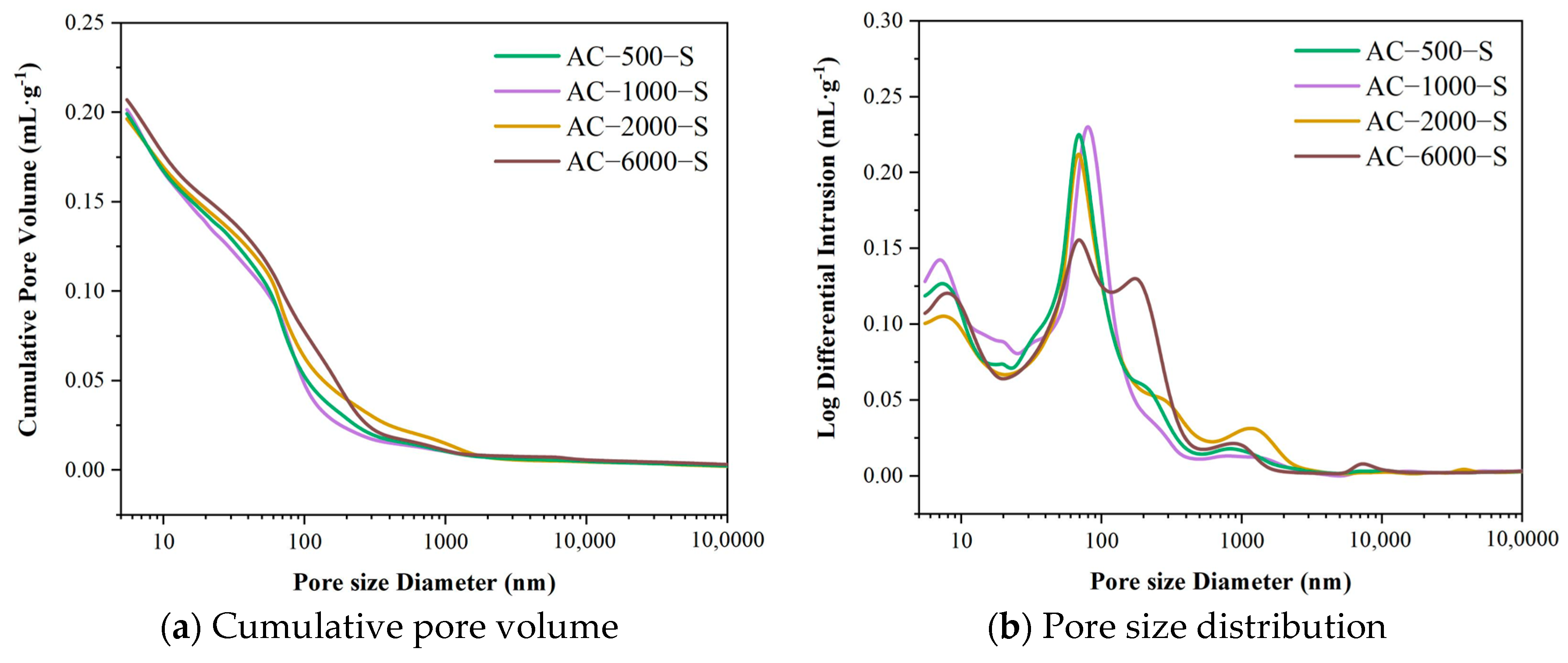
Figure 16 shows the cumulative pore volume of cement paste specimens during the ACC–SC stage. It can be observed that, compared with the ACC stage [24], the differences in cumulative pore volume among the specimens in each group are significantly reduced during the ACC–SC stage. The cumulative pore volume of AC−500−S and AC−1000−S is markedly lower than that of AC−500 and AC−1000, with reductions of 25.7% and 19.5%, respectively. In contrast, AC−2000−S exhibits a slight increase in cumulative pore volume compared to AC−2000, with an increase of −2.8%, while AC−6000−S shows a substantial increase relative to AC−6000, with a change of −25.8%.
These results indicate that when the carbonation curing duration exceeds the transition-to-final stage of CO2 uptake, the pore structure of cement mortar begins to deteriorate, leading to notable decreases in mechanical and durability performance.

3.7.2. Comparative Analysis of Pore Structures Between the ACC–SC and ACC Stages

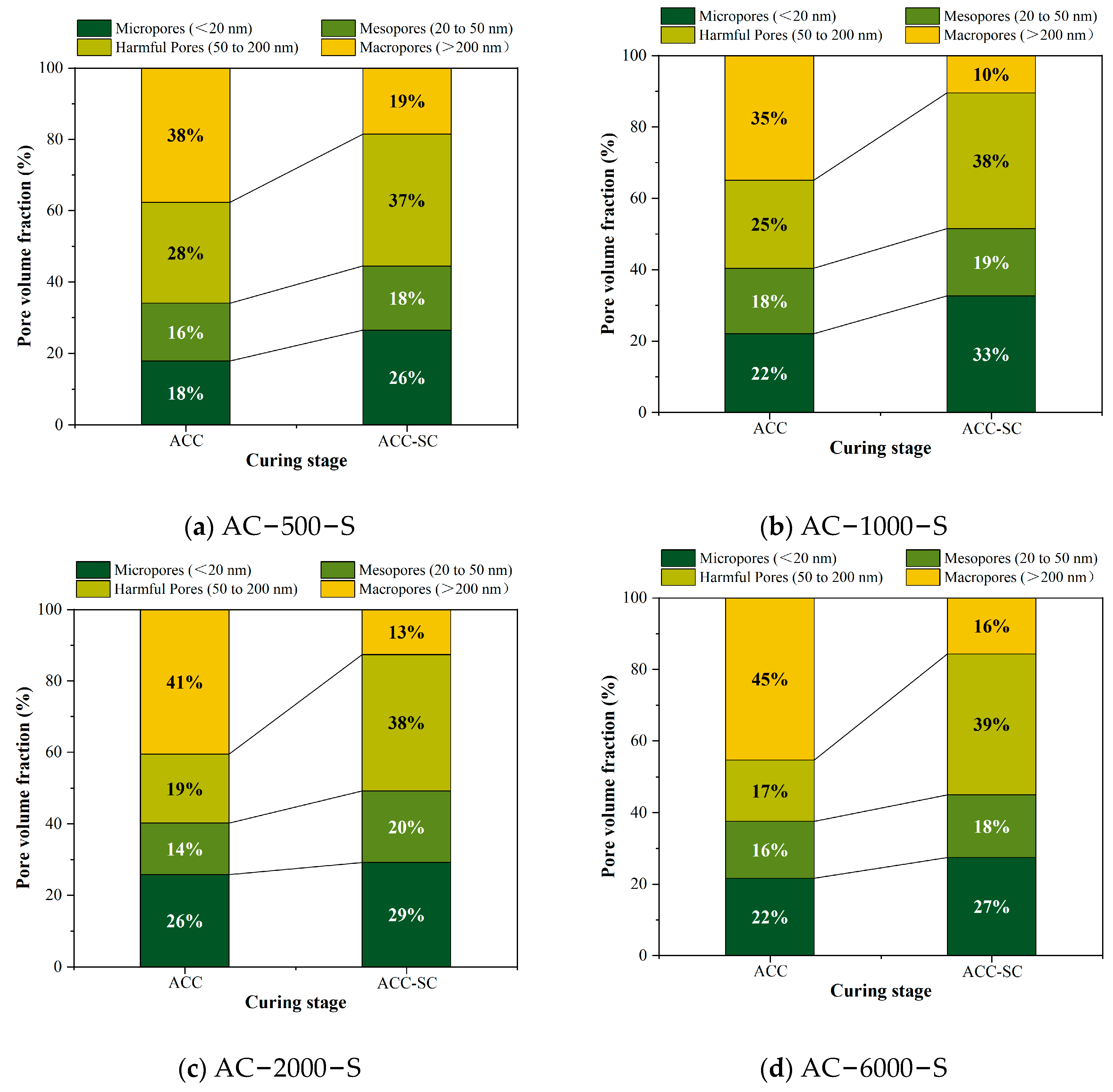
Previous research results [24] found that in the ACC stage, as carbonation curing time increased, harmful pores in the 50 nm to 200 nm range gradually decreased, while micropores and mesopores below 50 nm exhibited a trend of first increasing and then decreasing, with a turning point at 2000 min of carbonation. The changes in pore size distribution correspond to the optimal performance observed in the AC−2000 group in Section 3.1, Section 3.2 and Section 3.3. For the AC−6000 group, although the total porosity was the lowest, the presence of a significant number of large pores could impair the performance of the base material.
From the pore size distribution results in Figure 17 for the ACC–SC stage, it can be observed that as the duration of early carbonation curing increases, the proportion of micropores and mesopores smaller than 50 nm first increases and then decreases, with a turning point occurring at the group subjected to 2000 min of early accelerated carbonation. In addition, after subsequent standard curing, i.e., continued hydration, the pore structure of the cement mortar is further refined [46]. This refinement is most clearly reflected by the increase in the proportion of pores smaller than 50 nm and the decrease in the proportion of pores larger than 200 nm, as shown in Figure 17.

3.8. Research Limitations

Compared with pure or pressurized CO2 curing, low concentration CO2 results in lower dissolved CO2 and carbonate activity, which can slow the carbonation of portlandite and shift the equilibrium between H C O 3 and C O 3 2 species [47]. These changes may influence CaCO3 polymorph selection and its subsequent transformation during hydration.
The reduction in electrical flux observed after ACC and ACC followed by standard curing is mainly attributed to pore refinement and physical densification. Chemical chloride binding may also contribute, particularly in the presence of aluminate phases; however, bound chloride and Friedel’s salt contents were not quantified in this study. Future work will combine chloride profiling with phase quantification to decouple physical and chemical contributions.
Microstructural analyses were limited to the top 1 mm to characterize the near-surface carbonation zone. Direct measurement of carbonation penetration depth was not performed and is acknowledged as a key limitation. In addition, testing was restricted to 28 d; beyond this age, continued hydration and potential CaCO3 polymorph transformations may further alter pore structure and interfacial transition zones. These aspects will be addressed in future long-term investigations.
The performance decline observed after prolonged carbonation is interpreted as resulting from the formation of a mechanically heterogeneous surface layer and a transition zone between carbonated and less-carbonated regions, which may promote stress concentration. This interpretation remains qualitative, as microhardness mapping, nanoindentation, and micro-CT analyses were not conducted. Such techniques will be employed in future studies to directly verify the presence and thickness of a mechanically weak transition zone.

4. Application Scenarios

The recommended duration of 1000 to 2000 min is appropriate for precast mortar or paste products and thin-walled components, where diluted CO2 streams (3–10%) are used to achieve near-surface carbonation. For concrete containing coarse aggregates, however, the presence of interfacial transition zones (ITZs) and longer diffusion pathways may shift the optimal carbonation duration. Therefore, validation using concrete specimens and structural elements is required before engineering application.
Industrial flue gases may also contain SOx, NOx, and moisture. Dissolved SOx can form sulfates and promote gypsum or ettringite formation, potentially affecting volume stability, pore-solution chemistry, and the optimal carbonation duration. NOx may alter pH and nitrite/nitrate chemistry. Although pure CO2 was used in this study to isolate the effect of CO2 concentration, future work will incorporate controlled impurity levels to assess their interactions with cementitious matrices and associated expansion risks.
Compared with sealed chambers in which CO2 concentration decays over time, maintaining a narrow control range (2.5–3.0%) requires intermittent gas injection. The cumulative injected CO2 volume can be quantified by integrating flow-controller data, enabling direct evaluation of gas consumption per unit material and associated energy and cost analyses. For scale-up, this strategy can be implemented using gas recirculation and feedback control to minimize fresh CO2 demand; however, chamber tightness, sensor redundancy, and exhaust-gas treatment will become critical design considerations.

5. Conclusions and Recommendations

This study considered different carbonation curing times and discussed the effects of 3% CO2 curing on the mechanical properties, chloride ion penetration resistance, and protective capacity for reinforcement of cement paste at 28 d of hydration, as well as the evolution of the internal microstructure. The main conclusions are as follows:
(1)
Under accelerated carbonation curing for 2000 min in 3% CO2, the early performance of the cement paste showed the most significant improvement, with compressive and flexural strengths increasing by 28.3% and 7.7% compared to the standard curing group. The electrical flux and electrochemical results also demonstrated the strongest resistance to chloride ion penetration and protective capacity for the reinforcement. As hydration continued, the group with the most notable performance enhancement occurred at an early carbonation curing time of 1000 min, with compressive and flexural strengths increasing by 16.6% and 12.9%. The electrical flux value decreased by over 40% compared to the ACC stage, and the impedances of the cement paste and reinforcement increased by 141.5% and 124.1%.
(2)
The TG results indicate that during the ACC−SC stage, the mass proportions of C-S-H and CH at a depth of 1 mm from the surface of the specimens first increased and then decreased with the extension of early carbonation time, with turning points for C-S-H and CH occurring at carbonation durations of 1000 min and 2000 min, respectively. Under subsequent standard curing conditions, sufficient moisture provided favorable conditions for the continued crystallization of CaCO3, resulting in a maximum increase of 250.7% in the content of high-crystallinity CaCO3 in the cement mortar subjected to carbonation curing.
(3)
The density of cement mortar cured with 3% CO2 carbonation does not exhibit a linear relationship with carbonation curing time. As the early carbonation curing time increases, the Ca/Si ratio at the surface of the further hydrated cement mortar gradually decreases, while the proportions of micropores and mesopores gradually increase until the carbonation curing time exceeds 1000 min. This process also confirms that the transition in the crystallinity of CaCO3 does not adversely affect the optimization of the microstructure of the specimens.
Based on the above results, it can be concluded that under low-concentration CO2, early moderate carbonation curing (1000 min to 2000 min) of cement mortar is beneficial for achieving a pore structure and reaction conditions that favor subsequent hydration reactions. However, when the carbonation curing time exceeds a certain threshold (2000 min), it negatively affects the pore structure during the carbonation curing stage and the subsequent hydration reactions.

Author Contributions

Conceptualization: J.J. and L.L.; Methodology: J.J. and X.C.; Software: L.L. and W.Y.; Validation: L.L., W.Y. and M.Z.; Formal analysis: J.J., Z.G.; Investigation: J.J., M.Z., X.C. and Z.G.; Resources: L.L., W.Y. and Q.M.; Data curation: J.J. and M.Z.; Writing—original draft preparation: J.J. and X.C.; Writing—review and editing: X.C., J.H. and L.L.; Visualization: J.J. and X.C.; Supervision:, J.H., Q.M. and X.D.; Project administration: W.Y. and X.C.; Funding acquisition: W.Y. and X.C. All authors have read and agreed to the published version of the manuscript.

Funding

This research was funded by Basic Scientific Research Operating Fund for National College Students’ Innovation and Entrepreneurship Training Program (Grant No. 202510755070), Universities in the Xinjiang Uygur Autonomous Region (Grant No. XJEDU2025P012), The “Tianchi Talent” Young Doctor Program of Xinjiang Uygur Autonomous Region (Grant No. 5105250182G), Key R&D Program of Xinjiang Uygur Autonomous Region–Inter-departmental & Department-Local Joint Program (Grant No. 2024B04013-1), General Program of Natural Science Foundation of Xinjiang Uygur Autonomous Region (Grant No. 2025D01C11), Xinjiang Huli Jiayuan Environmental Protection Technology Co., Ltd. (Grant No. 202509140025).

Data Availability Statement

The data presented in this study are available on request from the corresponding author due to confidentiality agreements with research collaborators.

Conflicts of Interest

Author Qiangqiang Ma was employed by the company China Construction Eighth Engineering Division Corp. The remaining authors declare that the research was conducted in the absence of any commercial or financial relationships that could be construed as a potential conflict of interest.

References

  1. Guo, X.; Li, Y.; Shi, H.; She, A.; Guo, Y.; Su, Q.; Ren, B.; Liu, Z.; Tao, C. Carbon reduction in cement industry-An indigenized questionnaire on environmental impacts and key parameters of life cycle assessment (LCA) in China. J. Clean. Prod. 2023, 426, 139022. [Google Scholar] [CrossRef]
  2. Miller, S.A.; John, V.M.; Pacca, S.A.; Horvath, A. Carbon dioxide reduction potential in the global cement industry by 2050. Cem. Concr. Res. 2018, 114, 115–124. [Google Scholar] [CrossRef]
  3. Liang, C.; Li, B.; Guo, M.-Z.; Hou, S.; Wang, S.; Gao, Y.; Wang, X. Effects of early-age carbonation curing on the properties of cement-based materials: A review. J. Build. Eng. 2024, 84, 108495. [Google Scholar] [CrossRef]
  4. Kim, S.; Seo, J.; Park, S.; Lee, H.K. Effect of accelerated carbonation curing on thermal evolution of hydrates in calcium sulfoaluminate cement. Constr. Build. Mater. 2024, 416, 135201. [Google Scholar] [CrossRef]
  5. Liu, Y.; Zhang, Z.-Y.; Zheng, Y.; Zhang, X.; Wang, X.; Yin, X. Comparison of magnesium oxysulfate (MOS) cement and reactive magnesia cement (RMC) under different curing conditions: Physical properties, mechanisms, and environmental impacts. Constr. Build. Mater. 2023, 405, 133317. [Google Scholar] [CrossRef]
  6. Liu, Z.; Van den Heede, P.; Zhang, C.; Shi, X.; Wang, L.; Li, J.; Yao, Y.; Lothenbach, B.; De Belie, N. Carbonation of blast furnace slag concrete at different CO2 concentrations: Carbonation rate, phase assemblage, microstructure and thermodynamic modelling. Cem. Concr. Res. 2023, 169, 107161. [Google Scholar] [CrossRef]
  7. Xu, Z.; Zhang, Z.; Huang, J.; Yu, K.; Zhong, G.; Chen, F.; Chen, X.; Yang, W.; Wang, Y. Effects of temperature, humidity and CO2 concentration on carbonation of cement-based materials: A review. Constr. Build. Mater. 2022, 346, 128399. [Google Scholar] [CrossRef]
  8. Drouet, E.; Poyet, S.; Le Bescop, P.; Torrenti, J.-M.; Bourbon, X. Carbonation of Hardened Cement Pastes: Influence of Temperature. Cem. Concr. Res. 2019, 115, 445–459. [Google Scholar] [CrossRef]
  9. Chen, T.; Gao, X. Effect of Carbonation Curing Regime on Strength and Microstructure of Portland Cement Paste. J. CO2 Util. 2019, 34, 74–86. [Google Scholar] [CrossRef]
  10. Yang, Z.; Zhang, J.; Qin, L.; Chen, T.X.; Gao, X.J. Study on the Early Volume Stability of Cement-Based Materials During CO2 Curing. J. Build. Eng. 2024, 95, 110354. [Google Scholar] [CrossRef]
  11. Dixit, A.; Geng, G.; Du, H.; Pang, S.D. The Role of Age on Carbon Sequestration and Strength Development in Blended Cement Mixes. Cem. Concr. Compos. 2022, 133, 104644. [Google Scholar] [CrossRef]
  12. Ren, S.; Huang, G.; Zhang, W.; Sha, X.; Liu, G.; Lin, R.-S.; Chen, L. Enhancing Cement-Based Materials Hydration and Carbonation Efficiency with Pre-Carbonated Lime Mud. J. CO2 Util. 2024, 88, 102928. [Google Scholar] [CrossRef]
  13. Zhang, D.; Cai, X.; Jaworska, B. Effect of Pre-Carbonation Hydration on Long-Term Hydration of Carbonation-Cured Cement-Based Materials. Constr. Build. Mater. 2020, 231, 117122. [Google Scholar] [CrossRef]
  14. Liu, M.; Hong, S.; Wang, Y.; Zhang, J.; Hou, D.; Dong, B. Compositions and Microstructures of Hardened Cement Paste with Carbonation Curing and Further Water Curing. Constr. Build. Mater. 2021, 267, 121724. [Google Scholar] [CrossRef]
  15. Zhan, B.J.; Xuan, D.X.; Poon, C.S.; Shi, C.J. Mechanism for Rapid Hardening of Cement Pastes Under Coupled CO2-Water Curing Regime. Cem. Concr. Compos. 2019, 97, 78–88. [Google Scholar] [CrossRef]
  16. Ahmad, S.; Assaggaf, R.A.; Maslehuddin, M.; Al-Amoudi, O.S.B.; Adekunle, S.K.; Ali, S.I. Effects of Carbonation Pressure and Duration on Strength Evolution of Concrete Subjected to Accelerated Carbonation Curing. Constr. Build. Mater. 2017, 136, 565–573. [Google Scholar] [CrossRef]
  17. Bersisa, A.; Moon, K.-Y.; Kim, G.M.; Cho, J.-S.; Park, S. Microstructural Characterization of CO2-Cured Calcium Sulfoaluminate Cement. Dev. Built Environ. 2024, 19, 100518. [Google Scholar] [CrossRef]
  18. Leemann, A.; Winnefeld, F.; Münch, B.; Tiefenthaler, J. Accelerated Carbonation of Recycled Concrete Aggregates and Its Implications for the Production of Recycling Concrete. J. Build. Eng. 2023, 79, 107779. [Google Scholar] [CrossRef]
  19. Kaddah, F.; Ranaivomanana, H.; Amiri, O.; Rozière, E. Accelerated Carbonation of Recycled Concrete Aggregates: Investigation on the Microstructure and Transport Properties at Cement Paste and Mortar Scales. J. CO2 Util. 2022, 57, 101885. [Google Scholar] [CrossRef]
  20. Yin, R.; Shangguan, F.; Cui, Z. Research on low-carbon development strategies in steel industry: Review and prospect. China Metall. 2025, 35, 1–15. [Google Scholar] [CrossRef]
  21. Jiang, J. Quantitative Analysis of the Factors Influencing Carbon Emissions in the Cement Industry. Environ. Sci. Manag. 2025, 50, 52–55+88. [Google Scholar]
  22. Cheng, J. Reflections on Establishing Green and Eco-Friendly Ready-Mix Concrete Mixing Plant. Oper. Manag. 2022, 6, 174–175+179. [Google Scholar]
  23. Auroy, M.; Poyet, S.; Le Bescop, P.; Torrenti, J.-M.; Charpentier, T.; Moskura, M.; Bourbon, X. Comparison Between Natural and Accelerated Carbonation (3% CO2): Impact on Mineralogy, Microstructure, Water Retention and Cracking. Cem. Concr. Res. 2018, 109, 64–80. [Google Scholar] [CrossRef]
  24. Chen, X.; Li, S.; Hu, M.; Geng, Y.; Meng, S.; Jin, L. Early age accelerated carbonation of cementitious materials surface in low CO2 concentration condition. Constr. Build. Mater. 2024, 445, 137975. [Google Scholar] [CrossRef]
  25. GB/T 17671-2021; Test Method of Cement Mortar Strength (ISO Method). China Standard Press: Beijing, China, 2021.
  26. GB/T 50082-2009; Standard for Test Methods of Long-Term Performance and Durability of Ordinary Concrete. China Standard Press: Beijing, China, 2009.
  27. Pan, X.; Shi, C.; Hu, X.; Ou, Z. Effects of CO2 Surface Treatment on Strength and Permeability of One-Day-Aged Cement Mortar. Constr. Build. Mater. 2017, 154, 1087–1095. [Google Scholar] [CrossRef]
  28. Cho, S.; Suh, H.; Kim, G.; Liu, J.; Li, P.; Bae, S. Microstructural phase evolution and strength development of low-lime calcium silicate cement (CSC) paste incorporating ordinary Portland cement under an accelerated carbonation curing environment. Constr. Build. Mater. 2024, 411, 134248. [Google Scholar] [CrossRef]
  29. Liao, H.; Ju, Y.; Lyu, H.; Liu, T.; Han, D.; Li, Y. Compressive Strength Development and Microstructure Evolution of Mortars Prepared Using Reactivated Cementitious Materials During CO2 Curing. Dev. Built Environ. 2024, 18, 100397. [Google Scholar] [CrossRef]
  30. Effects of Sufficient Carbonation on the Strength and Microstructure of CO2-Cured Concrete. J. Build. Eng. 2023, 76, 107311. [CrossRef]
  31. Wu, S.; Liu, Q.; Li, L.; Kang, W.; Tiong, M.; Huang, T. Quantitative Characterization of Recycled Cementitious Materials Before and After Carbonation Curing: Carbonation Kinetics, Phase Assemblage, and Microstructure. Constr. Build. Mater. 2024, 421, 135596. [Google Scholar] [CrossRef]
  32. Dong, B.; Li, G.; Zhang, J.; Liu, Y.; Xing, F.; Hong, S. Non-Destructive Tracing on Hydration Feature of Slag Blended Cement with Electrochemical Method. Constr. Build. Mater. 2017, 149, 467–473. [Google Scholar] [CrossRef]
  33. Cao, Y.; Dong, S.; Zheng, D.; Wang, J.; Zhang, X.; Du, R.; Song, G.; Lin, C. Multifunctional Inhibition Based on Layered Double Hydroxides to Comprehensively Control Corrosion of Carbon Steel in Concrete. Corros. Sci. 2017, 126, 166–179. [Google Scholar] [CrossRef]
  34. Balusamy, T.; Nishimura, T. In-situ monitoring of local corrosion process of scratched epoxy coated carbon steel in simulated pore solution containing varying percentage of chloride ions by localized electrochemical impedance spectroscopy. Electrochim. Acta 2016, 199, 305–313. [Google Scholar] [CrossRef]
  35. Saremi, M.; Mahallati, E. A Study on Chloride-Induced Depassivation of Mild Steel in Simulated Concrete Pore Solution. Cem. Concr. Res. 2002, 32, 1915–1921. [Google Scholar] [CrossRef]
  36. Pane, I.; Hansen, W. Investigation of Blended Cement Hydration by Isothermal Calorimetry and Thermal Analysis. Cem. Concr. Res. 2005, 35, 1155–1164. [Google Scholar] [CrossRef]
  37. Usama, M.; Gardezi, H.; Jalal, F.E.; Rehman, M.A.; Javed, N.; Janjua, S.; Iqbal, M. Optimization of Biochar and Fly Ash to Improve Mechanical Properties and CO2 Sequestration in Cement Mortar. Constr. Build. Mater. 2023, 392, 131956. [Google Scholar] [CrossRef]
  38. Wang, D.; Shi, C.; Farzadnia, N.; Jia, H.; Zeng, R.; Wu, Y.; Lao, L. A Quantitative Study on Physical and Chemical Effects of Limestone Powder on Properties of Cement Pastes. Constr. Build. Mater. 2019, 204, 58–69. [Google Scholar] [CrossRef]
  39. Bentz, D.P.; Ferraris, C.F.; Jones, S.Z.; Lootens, D.; Zunino, F. Limestone and Silica Powder Replacements for Cement: Early-Age Performance. Cem. Concr. Compos. 2017, 78, 43–56. [Google Scholar] [CrossRef] [PubMed]
  40. Wang, X.; Chen, Z.; Chen, P.; Wang, L.; Qian, P.; Wang, S.; Wang, J. Pre-Carbonation of Ca(OH)2 for Producing Properties-Optimized CaCO3 Through Controlling Magnetic Field and Its Influence on the Performance of Mortars. Constr. Build. Mater. 2025, 469, 140496. [Google Scholar] [CrossRef]
  41. Zhu, J.-F.; Xia, Y.-N.; Ju, L.-Y.; Yang, H.; Wang, Z.-Q.; Jin, J.-Y.; Zou, Y.-C.; Liao, Y.-C. Physico-mechanical performance and micro–mechanism analysis on urban sludge modified with a low carbon binder. Acta Geotechnica 2025, 20, 5585–5601. [Google Scholar] [CrossRef]
  42. Lu, B.; He, P.; Liu, J.; Peng, Z.; Song, B.; Hu, X. Microstructure of Portland cement paste subjected to different CO2 concentrations and further water curing. J. CO2 Util. 2021, 53, 101714. [Google Scholar] [CrossRef]
  43. Kupwade-Patil, K.; Palkovic, S.D.; Bumajdad, A.; Soriano, C.; Büyüköztürk, O. Use of silica fume and natural volcanic ash as a replacement to Portland cement: Micro and pore structural investigation using NMR, XRD, FTIR and X-ray microtomography. Constr. Build. Mater. 2018, 158, 574–590. [Google Scholar] [CrossRef]
  44. Hong, F.; Yu, S.; Sun, W.; Xia, W.; Hou, D.; Wang, M. Mix proportion design based on particle compact packing theory and research on the resistance of metakaolin to chloride salt erosion in UHPC cementitious system. Constr. Build. Mater. 2024, 447, 137982. [Google Scholar] [CrossRef]
  45. Ma, Y.; Li, W.; Jin, M.; Liu, J.; Zhang, J.; Huang, J.; Lu, C.; Zeng, H.; Wang, J.; Zhao, H.; et al. Influences of leaching on the composition, structure and morphology of calcium silicate hydrate (C-S-H) with different Ca/Si ratios. J. Build. Eng. 2022, 58, 105017. [Google Scholar] [CrossRef]
  46. Cuesta, A.; Santacruz, I.; De la Torre, A.G.; Dapiaggi, M.; Zea-Garcia, J.D.; Aranda, M.A.G. Local structure and Ca/Si ratio in C-S-H gels from hydration of blends of tricalcium silicate and silica fume. Cem. Concr. Res. 2021, 143, 106405. [Google Scholar] [CrossRef]
  47. Liu, Y.; Han, Y.; Shi, T.; Lv, B.; Zhang, F.; Zhou, X. An innovative method for preparing nano steel slag powder and analysis of carbonation reaction mechanism toward enhanced CO2 sequestration. Mater. Lett. 2026, 403, 139411. [Google Scholar] [CrossRef]
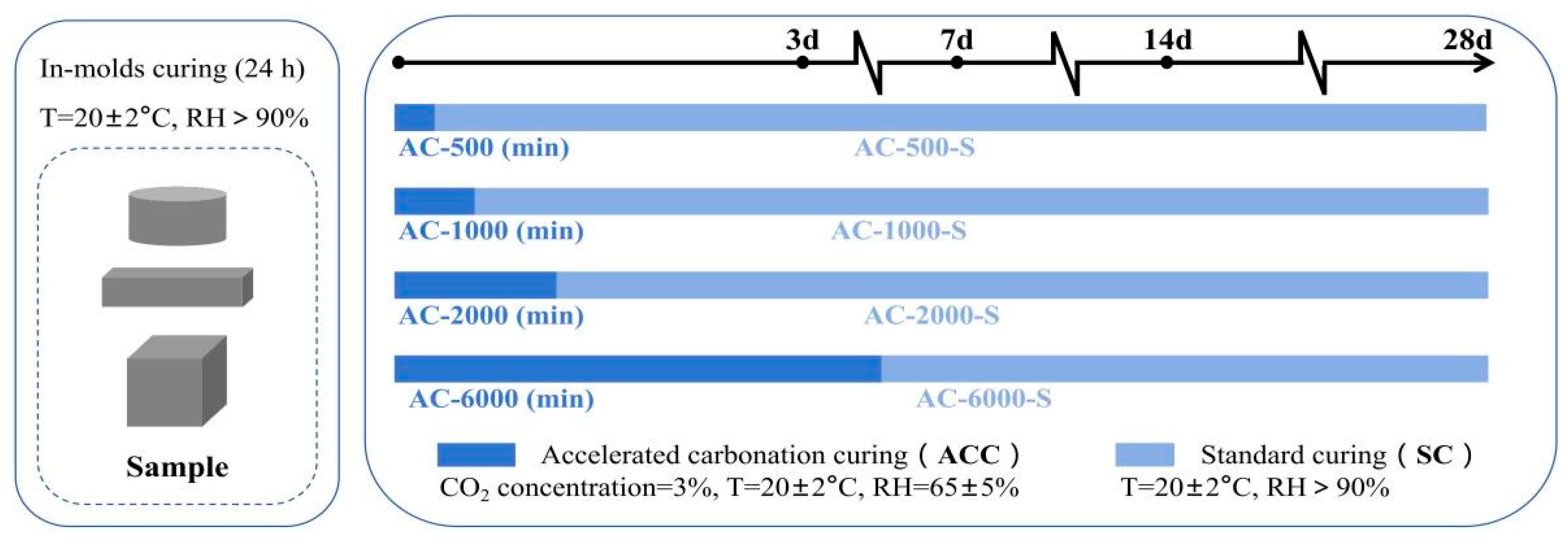
Figure 1. Curing regime of specimens.
Buildings 16 00187 g001
Figure 2. Research roadmap.
Buildings 16 00187 g002
Figure 3. Electrochemical test equipment and three-electrode system.
Buildings 16 00187 g003
Figure 4. Schematic diagram of the equivalent circuit used to simulate the EIS results.
Buildings 16 00187 g004
Figure 5. The effect of accelerated carbonation curing on the compressive strength of cement mortar in 3% CO2.
Buildings 16 00187 g005
Figure 6. The effect of accelerated carbonation curing on the flexural strength of cement mortar in 3% CO2.
Buildings 16 00187 g006
Figure 7. The effect of accelerated carbonation curing on the Cl penetration resistance of cement mortar in 3% CO2.
Buildings 16 00187 g007
Figure 8. The effect of accelerated carbonation curing on the electrochemical tests of cement mortar in 3% CO2.
Buildings 16 00187 g008aBuildings 16 00187 g008b
Figure 9. Impedance of cement mortar and reinforcement at different stages for each sample group.
Buildings 16 00187 g009
Figure 10. The effect of accelerated carbonation curing on the changes in TGA curves of cement mortar in 3% CO2.
Buildings 16 00187 g010
Figure 11. The effect of accelerated carbonation curing on the changes in crystallinity degree of CaCO3 of cement mortar in 3% CO2.
Buildings 16 00187 g011
Figure 12. XRD patterns of surface 1 mm samples from specimens during the ACC−SC stage. (1: C3S; 2: C2S; 3: Portlandite; 4: Ettringite; 5: Calcite; 6: Vaterite; 7: Aragonite).
Buildings 16 00187 g012
Figure 13. Comparison of C3S, C2S, and portlandite contents in specimens of the group between the ACC−SC stage and the ACC stage.
Buildings 16 00187 g013
Figure 14. Changes in calcite proportion in specimens of each group during the ACC−SC stage.
Buildings 16 00187 g014
Figure 15. Microscopic morphology of each group of samples. ((A) AC−500−S; (B): AC−1000−S; (C): AC−2000−S; (D): AC−6000−S; (E): Standard curing).
Buildings 16 00187 g015aBuildings 16 00187 g015b
Figure 16. The effect of accelerated carbonation curing on the cumulative pore volume of cement mortar in 3% CO2.
Buildings 16 00187 g016
Figure 17. The effects of low-concentration CO2 carbonation curing on the pore size distribution of cement mortar.
Buildings 16 00187 g017
Table 1. Composition of P·O 42.5 cement unit (%).
ItemSiO2Fe2O3Al2O3CaOMgONa2OSO3K2OLoss
Chemical Composition
(%)
22.333.454.6865.671.550.411.500.180.23
Table 2. Physical properties of the cement.
Specific Surface Area (m2·kg−1)Water Consumption for Standard Consistency (%)Setting Time (min)Compressive Strength (MPa)
Initial SettingFinal Setting3 d28 d
34023.918023027.247.4
Table 3. Mix Proportions of Test Specimens (kg/m3).
SpecimensWater–Cement RatioCementStandard SandWater
cement mortar0.54501350225
cement paste1200/600
Table 4. Accelerated carbonation test parameters.
Set Concentration
(%)
Critical Concentration
(%)
Temperature
(°C)
Humidity
(%)
Gas Injection Flow Rate
(SCCM)
Data Acquisition Time Interval
(min)
Total Gas Injection Duration
(d)
3.02.520 ± 265 ± 5100017
Table 5. QXRD results of specimens during the ACC−SC stage (%).
Carbonation Time (min)C3SC2SPortlanditeEttringiteCalciteVaterite
5007.310.56.318.14.00.3
10006.39.27.525.34.50.2
20005.69.37.723.44.50.2
60006.39.91.922.33.30.0
Table 6. The effect of accelerated carbonation curing on the regional elemental distribution of cement mortar in 3% CO2.
GroupElement Atomic (%)
CaSiCa/SiOC
AC−500−S37.264.648.0 52.654.49
AC−1000−S29.3410.522.8 51.526.87
AC−2000−S28.668.133.5 52.469.03
AC−6000−S25.547.313.5 51.0313.82
Disclaimer/Publisher’s Note: The statements, opinions and data contained in all publications are solely those of the individual author(s) and contributor(s) and not of MDPI and/or the editor(s). MDPI and/or the editor(s) disclaim responsibility for any injury to people or property resulting from any ideas, methods, instructions or products referred to in the content.