1. Introduction
Under the pressures of global warming and urbanization, the urban heat island effect in China has become increasingly severe. Heatwaves not only exacerbate energy consumption but also pose a threat to residents’ health [
1,
2]. As a key component of urban fabric, traditional blocks have witnessed the development and changes in urban areas, serving as “living fossils” of urban history. These blocks allow future generations to understand the social life and cultural context of the past through spatial environments. They carry not only material cultural heritage of historical value, such as buildings and historical sites, but also act as public platforms for residents’ interaction and communication. In this way, they play a crucial role in enhancing neighborhood trust and building close community relations [
3,
4]. The microclimate of traditional blocks directly affects the overall quality of the urban thermal environment. Creating a suitable microclimate in these areas can not only reduce the frequency of air conditioning use in summer and heating use in winter to achieve building energy conservation but also effectively lower the risk of heat-related illnesses and air circulation-related diseases. This holds great practical significance for improving the quality of urban living environments [
5,
6]. The traditional blocks in southern Hunan, which were focused on in this study, specifically refer to the settlement form created by the three-dimensional spatial network of “main streets–alleys–courtyards–squares–green spaces” in the hot-humid climate zone of southern Hunan. These blocks feature a spatial scale characterized by “low enclosure and narrow alleys” and stand as an important type of traditional settlements in southern China. Therefore, research on the thermal environment of open spaces in traditional blocks is of great necessity and practical value.
Current research on the microclimate of traditional blocks focuses on the coupling of block form and spatial pattern with microclimate and thermal comfort. However, few studies have focused on the outdoor thermal comfort of commercial pedestrian streets in the hot-summer and cold-winter zones of southern China. Studies on Taizhou Old Street indicated that the existing block was barely visitable between 8:00 and 18:00 during extreme summer, but renovation extended the comfortable periods—with 8:00–11:00 and after 18:00 identified as optimal time windows [
7]. Other research explored the renewal of Foshan’s Donghuali Block and analyzed the impact of single or composite building units on thermal comfort [
6]. Meanwhile, research in Beijing—based on 11 hutongs and 102 courtyards—proposed 20 renovation modes through seasonal measurements, with an emphasis on historical authenticity and resident participation [
8]. Internationally, studies noted that high-density buildings contribute to heat island effects, changes in radiation exchange, and impacts on energy consumption and comfort [
9]. In addition, the optimal thermal comfort of traditional Simalungun dwellings was verified through temperature-humidity measurements and Ecotech simulations [
10]. Innovative methodologies included the TensorFlow-based pix2pix GAN model—trained on 360,000 datasets—to enable efficient and refined prediction of the Universal Thermal Climate Index (UTCI) in traditional blocks [
11].
As the core of enclosed open spaces in traditional blocks, courtyard spaces serve as a key area for studying the unique mechanisms of microclimate regulation and thermal comfort. Most relevant studies combine ENVI-met simulation with on-site monitoring. Studies in hot-humid regions showed that uniform plant layout enhances cooling and ventilation effects [
12], while simulations in arid-hot areas confirmed that orientation and aspect ratio (H/W) improve comfort by regulating radiant temperature and wind speed [
13]. Research in northern China proposed 20 renovation models and revealed adaptive differences across regions [
8]. In addition, small-scale adjustments to courtyard morphology were shown to enhance thermal comfort [
14]. Meanwhile, field measurements in severe cold regions highlighted the synergistic microclimatic impact of the geometric parameters of courtyards and streets [
15]. By contrast, research on general courtyards primarily validated the reliability of ENVI-met and summarized the historical wisdom of sustainable design [
16].
Alleys, as linear corridors in traditional blocks, have their thermal comfort mainly regulated by morphological characteristics, shading strategies, and vegetation configuration. Field measurements and simulations conducted in villages of the Pearl River Delta found that alley orientation significantly impacts thermal environment quality. In those studies, thermal comfort declined sharply when the aspect ratio (H/W) is less than 2, but shading facilities could effectively improve such conditions [
17]. Other research that integrated alleys into the street canyon system confirmed the regulatory value of the synergistic effect between alleys, block layout, and orientation on pedestrian thermal comfort [
18]. Meanwhile, field measurements in severe cold regions showed that alleys oriented NE-SW had a 0.7–1.4 °C higher temperature in both winter and summer than those oriented NW-SE. Alleys with high green coverage also exhibited more significant cooling effects in summer, which requires balancing morphological parameters and adopting climate-adaptive design [
15].
Research on the thermal comfort of main living spaces in traditional blocks focuses on the synergistic effects of morphological parameters and shading strategies. Simulations and fieldwork on traditional arcade blocks in southern China verified that the synergistic effect of canyon aspect ratio, arcade width, tree coverage, and orientation can significantly improve cooling efficiency. Among these factors, arcades and greening yielded the most prominent effects. In addition, the sky view factor was negatively correlated with orientation [
18,
19]. Meanwhile, a case study in Fez, Morocco, showed that in a hot and dry climate, urban texture significantly affects street microclimate. Dense traditional neighborhoods in the old town exhibited better thermal comfort in summer than modern suburban areas with wide streets, while modern suburban areas performed slightly better in winter. The temperature difference between them was up to 2–10 °C [
20].
Currently, relatively few studies have focused on square spaces in traditional blocks, with most concentrating on the correlation between microclimate and residents’ thermal comfort as well as design applications. For the traditional village squares in Quanzhou, on-site measurements and CFD simulations showed that enclosed layout parameters—including planar permeability, height-to-width ratio, and enclosure rate—influence wind comfort by regulating wind speed. This provides concrete support for layout optimization [
21]. In contrast, research on traditional settlement squares in Cyprus’s Mediterranean climate used spatial analysis (covering solar conditions, wind patterns, and sky view factor) and seasonal image processing to explore the spatial distribution of multiple microclimate parameters. This research identified the advantages and disadvantages of traditional built forms in climate-conscious design, developed qualitative comfort tools and thermal maps, and supported architects and planners in implementing climate-oriented interventions [
22].
Green spaces, as primary cooling spaces in traditional blocks, have had their thermal comfort influence mechanisms clarified via quantitative studies. Specifically, in terms of layout patterns, studies on old blocks showed that due to inadequate planning, green spaces in these blocks are mostly dispersed, which leads to poor overall thermal comfort [
23]. Other studies—by analyzing PET thermal comfort distribution on the summer Solstice—found that in traditional blocks, areas with better thermal comfort cluster near water bodies or green clusters. This confirmed water bodies and green coverage as key influencing factors. In addition, water bodies can significantly improve settlements’ thermal environments by regulating ambient temperature and humidity [
24]. Subdivided studies on historic blocks further revealed the coupling relationship between spatial heterogeneity and green space elements. These studies found that when evaluating enclosed, linear, and corner spaces, PET values for thermal comfort were positively correlated with the sky view factor (SVF) and negatively correlated with the three-dimensional green quantity of green spaces [
25].
Research on traditional blocks has made certain progress in clarifying the correlation mechanism between microclimate and thermal comfort. However, most studies focus on the microclimatic characteristics of a single type of open space or only conduct thermal comfort comparisons among a few types. A key gap exists in the lack of systematic differential analysis of the thermal environment across multiple typical open space types. This has restricted comprehensive thermal comfort evaluation and the formulation of targeted optimization strategies for different spaces. To address this, Xinhua Old Street in Jianghua Yao Autonomous County was selected as a typical case based on three core rationales. First, its typicality: the street preserves the complete traditional spatial network of “main blocks—alleys—courtyards—squares—green spaces” and architectural styles integrated with Yao ethnic characteristics, serving as a representative of traditional blocks in southern Hunan. Second, its pertinence: it is located in a subtropical humid monsoon climate zone with significant summer heat stress, aligning with the core context of thermal comfort research. Third, its universality: its climate-adaptive spatial characteristics are shared with similar traditional blocks in southern China, ensuring the promotion value of the research findings. This aims to break through the limitation of incomplete coverage of spatial types in existing research. The objectives of this study are to reveal the temporal dynamic characteristics and spatial differentiation laws of thermal comfort across the five types of open spaces in traditional blocks in southern Hunan’s hot-humid climate zone, quantify the coupled driving mechanism of vegetation structure parameters and spatial form parameters on thermal comfort, enrich the theoretical system of thermal comfort research on traditional blocks, and provide a scientific basis for the establishment of a regional thermal comfort evaluation system and the targeted thermal environment optimization in the planning and renewal of high-density traditional blocks. Centering on this core, the study proposes the following research questions: What are the differences in thermal comfort levels among the five types of open spaces? What are the diurnal temporal dynamic characteristics of thermal comfort for each type of space, and do they exhibit consistent or differentiated variation patterns? How to propose targeted thermal comfort optimization strategies for various types of open spaces in traditional blocks?
2. Materials and Methods
2.1. Overview of the Study Area
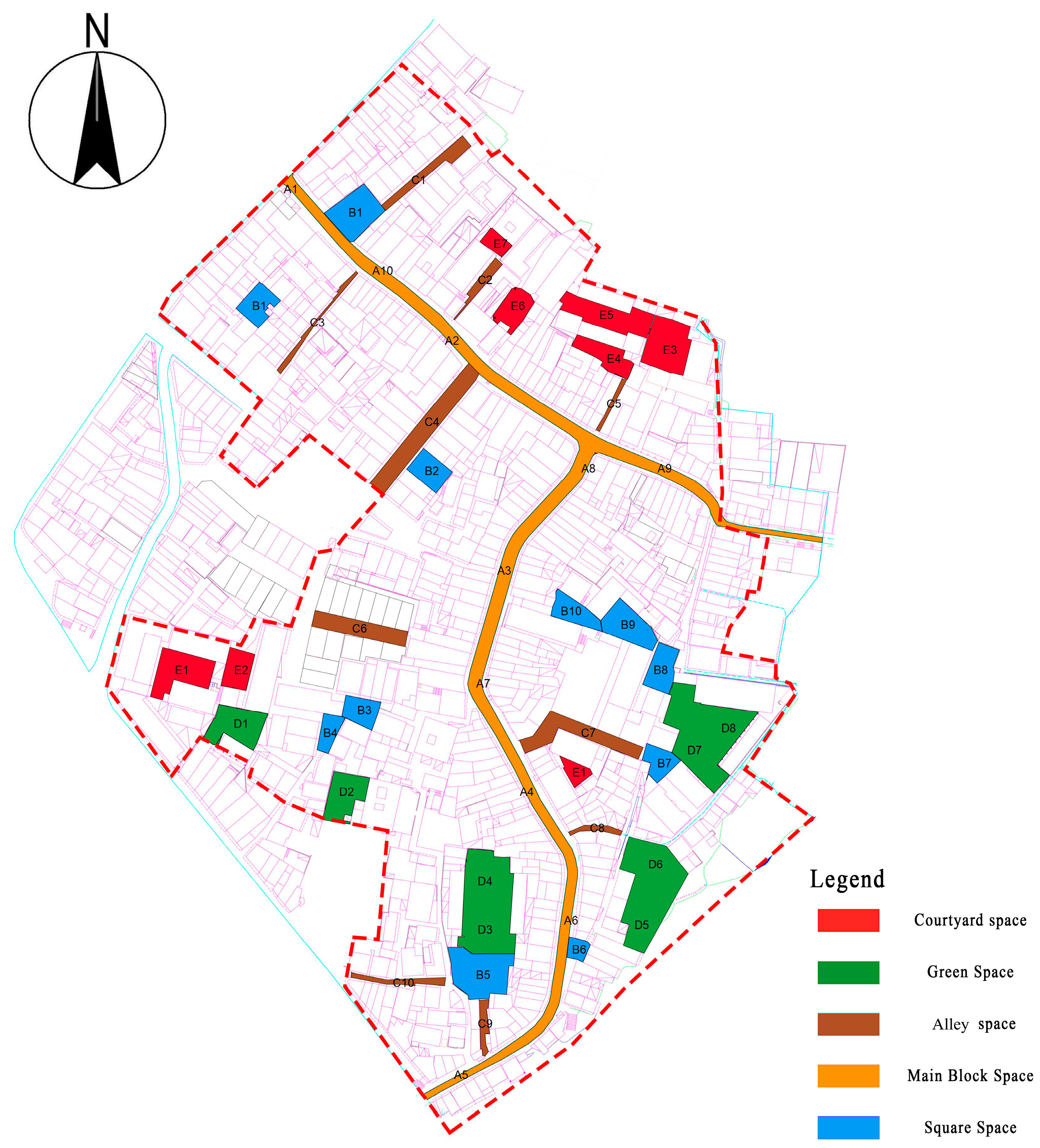
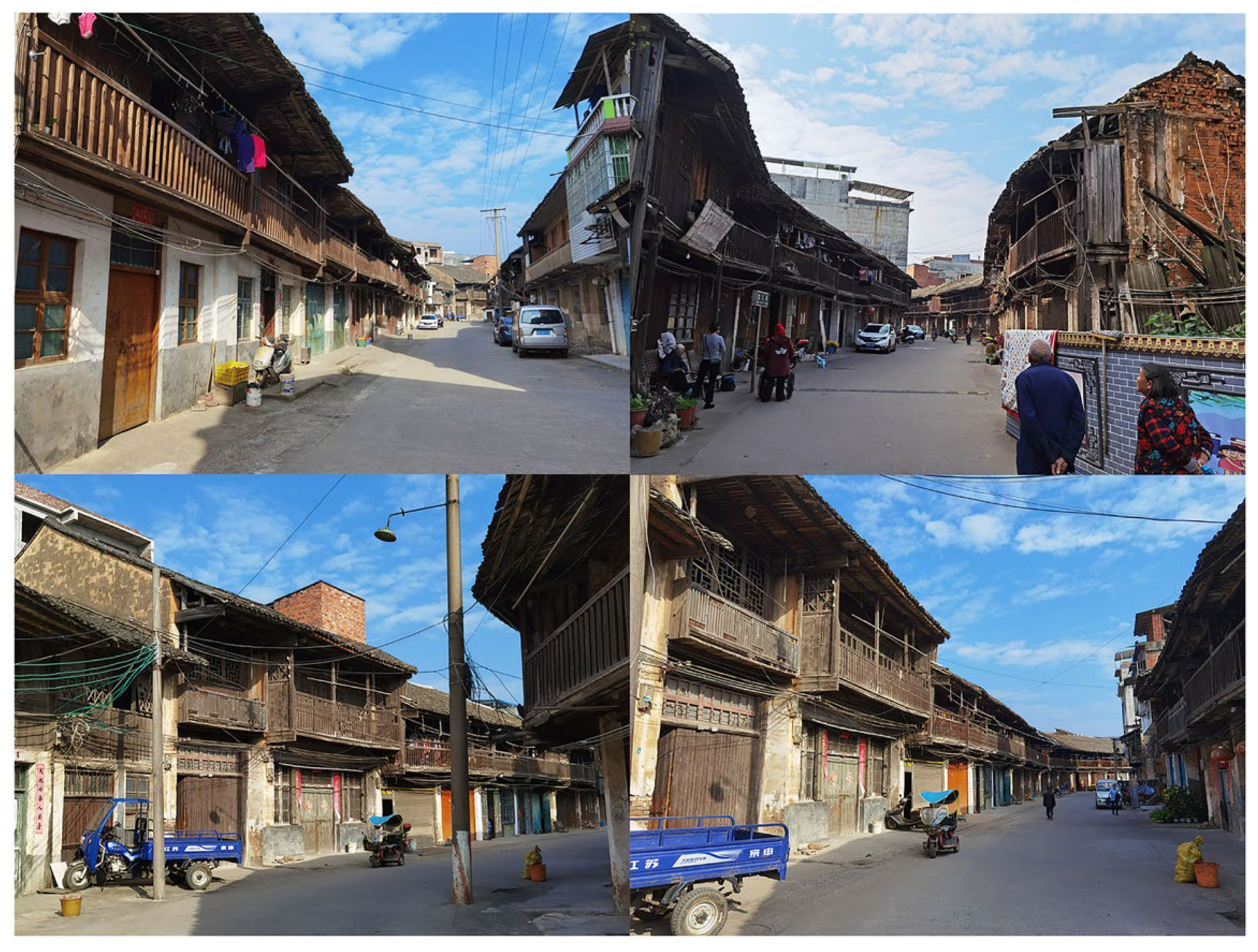
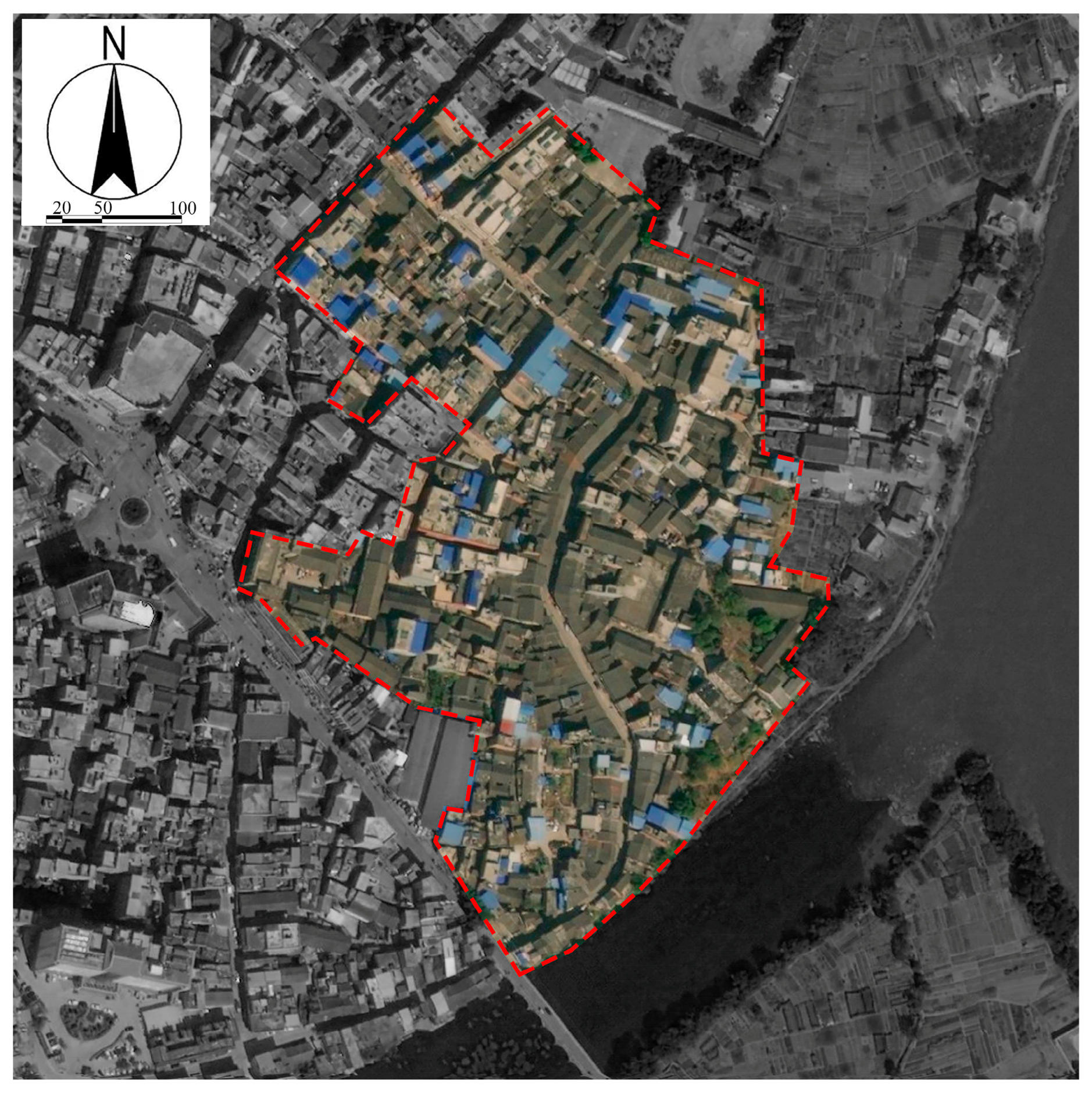
Jianghua Yao Autonomous County (Yongzhou City, Hunan Province; 111°25′–112°09′ E, 24°10′–25°10′ N) is located at the northern foot of the Nanling Mountains, at the junction of Hunan, Guangdong, and Guangxi provinces. It features a subtropical humid monsoon climate with hot summers and cold winters. summer temperatures rang from 25–35 °C, and relative humidity from 73.6–80.3%. This climate is accompanied by abundant sunlight and frequent rainfall, with annual precipitation reaching approximately 1462 mm. The study site is a 5-hectare traditional old block in southern Hunan (within Jianghua County) that fully preserves the three-dimensional spatial network of “main streets—alleys—courtyards—squares—green spaces”. Building facades integrate shading corridors of Lingnan arcades and ventilation structures of Yao ethnic stilted buildings, forming a unique microclimate regulation mechanism. Thus, it serves as an ideal carrier for exploring the microclimate and thermal comfort of traditional blocks (
Figure 1). Typical residents’ activity spaces within the block were selected as research plots (
Figure 2).
2.2. Materials Collection
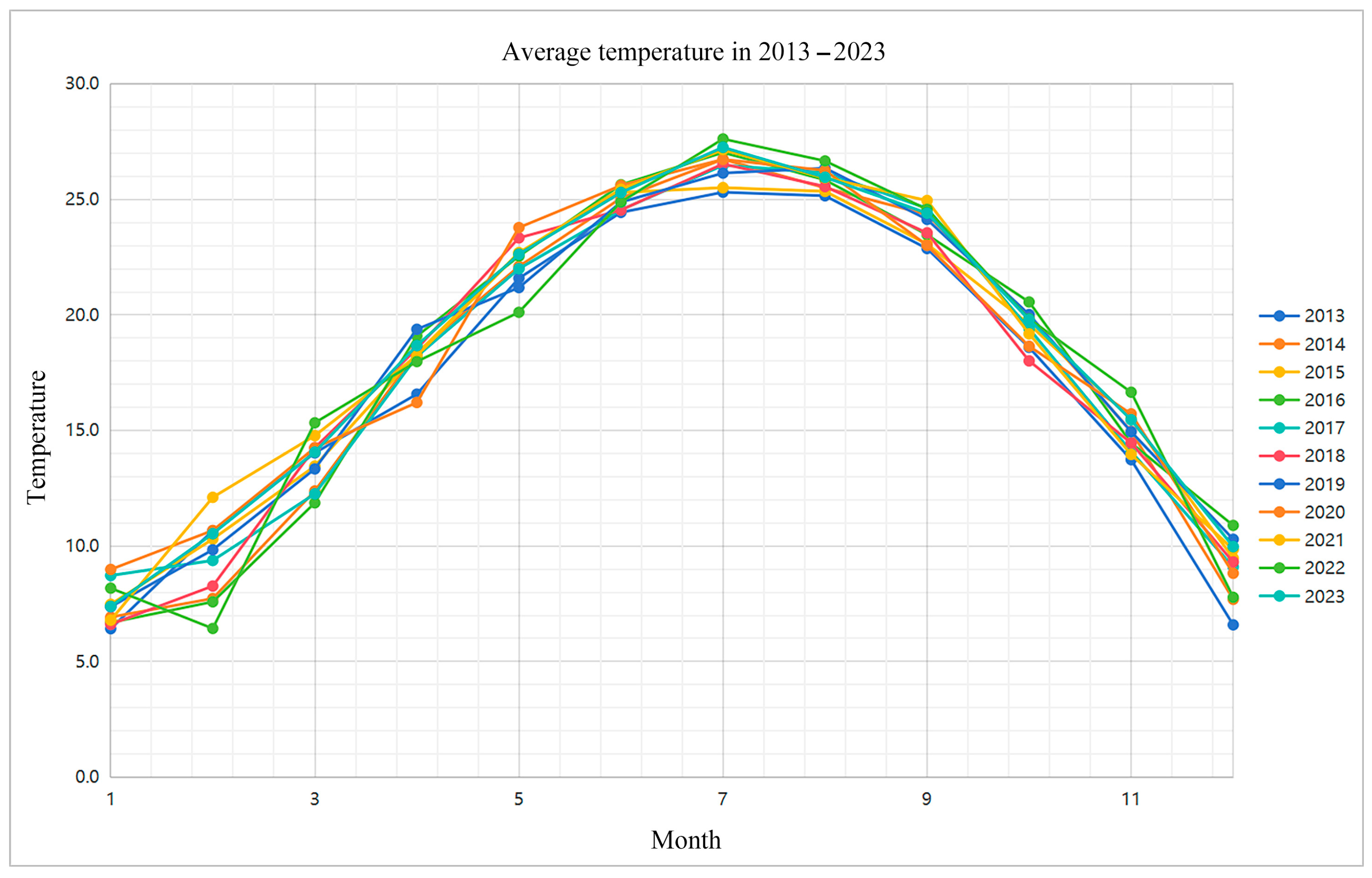
Meteorological data of Jianghua County over the past decade were retrieved from the Environmental Meteorological Data Service Platform. An analysis of its average temperature data during this period (
Figure 3) revealed that July is the hottest month of the year in the county. Based on this climatic feature, 25 July 2024 was selected as the observation date (the day with the highest temperature in Jianghua County in 2024) NK5500 (The anemometer was sourced from Nielsen-Kellerman, headquartered in Boothwyn, PA, USA.) handheld weather stations and HOBO U23 (The equipment was sourced from Onset Computer Corporation, a manufacturer headquartered in Bourne, MA, USA.) temperature-humidity data loggers were used to conduct on-site collection and recording of microclimatic parameters at each monitoring point across the five types of open spaces in Jianghua Old Street. The collected parameters specifically included ambient air temperature (Ta, °C), relative humidity (RH, %), and maximum wind speed (WS, m/s) during the observation period.
These two types of instruments are characterized by small size, high measurement accuracy, and high portability, allowing them to adapt to the complex measurement environment of traditional blocks. To ensure data reliability, the instruments were calibrated and debugged using large-scale collection equipment before the field test. During data collection, both the weather stations and data loggers were maintained in a stable vertical position relative to the ground, with the installation height controlled at around 1.5 m above ground level to ensure the acquisition of microclimatic data consistent with the human activity scale. All parameters were collected hourly, and measurements were performed simultaneously at each monitoring point.
A 1:1000 scale CAD topographic base map and building vector data were obtained from the Jianghua County Design Institute of Yongzhou City. After coordinate system conversion (CGCS2000, China Geodetic Coordinate System 2000) and topological inspection, the geometric accuracy and integrity of the data were ensured. Meanwhile, hourly meteorological data (e.g., temperature, humidity, air pressure) of 25 July 2024, from the Jianghua County Meteorological Observatory were retrieved from the China Meteorological Data Network (the official platform of the National Meteorological Information Center). These retrieved meteorological data were cross-validated with on-site measured data to guarantee the reliability and validity of the research data.
2.3. Simulation with ENVI-met 5.7.1 Software
The main research methods for block-scale microclimate include field measurement, questionnaire survey, numerical simulation, and wind tunnel test. In practical research, the advantages and disadvantages of each method must be considered, and appropriate technical approaches should be selected based on specific research conditions. According to literature studies over the past two years, research combining field measurement and numerical simulation accounts for a relatively high proportion. Among these methods, field measurement—regarded as the most primitive and direct research approach—can obtain true and reliable data, which provides a reference for the verification and comparison of other research methods. In contrast, ENVI-met numerical simulation constructs mathematical or physical models via computers to simulate real-world environments. It can also verify the influence degree of various microclimate factors through virtual regulation and thus has been widely used in recent years.
Parameter Setting
The surface feature data required for model operation were verified and confirmed. Meteorological parameters were set based on on-site measured data and meteorological station monitoring data, while boundary parameters were mainly configured around the thermal properties of the underlying surface and buildings. The core research area covered 40,000 m
2 and was approximately rhomboidal. To make the constructed model more consistent with the actual conditions of the research area (and thereby improve the accuracy of model calculation results), the modeling area was determined to be approximately 103,000 m
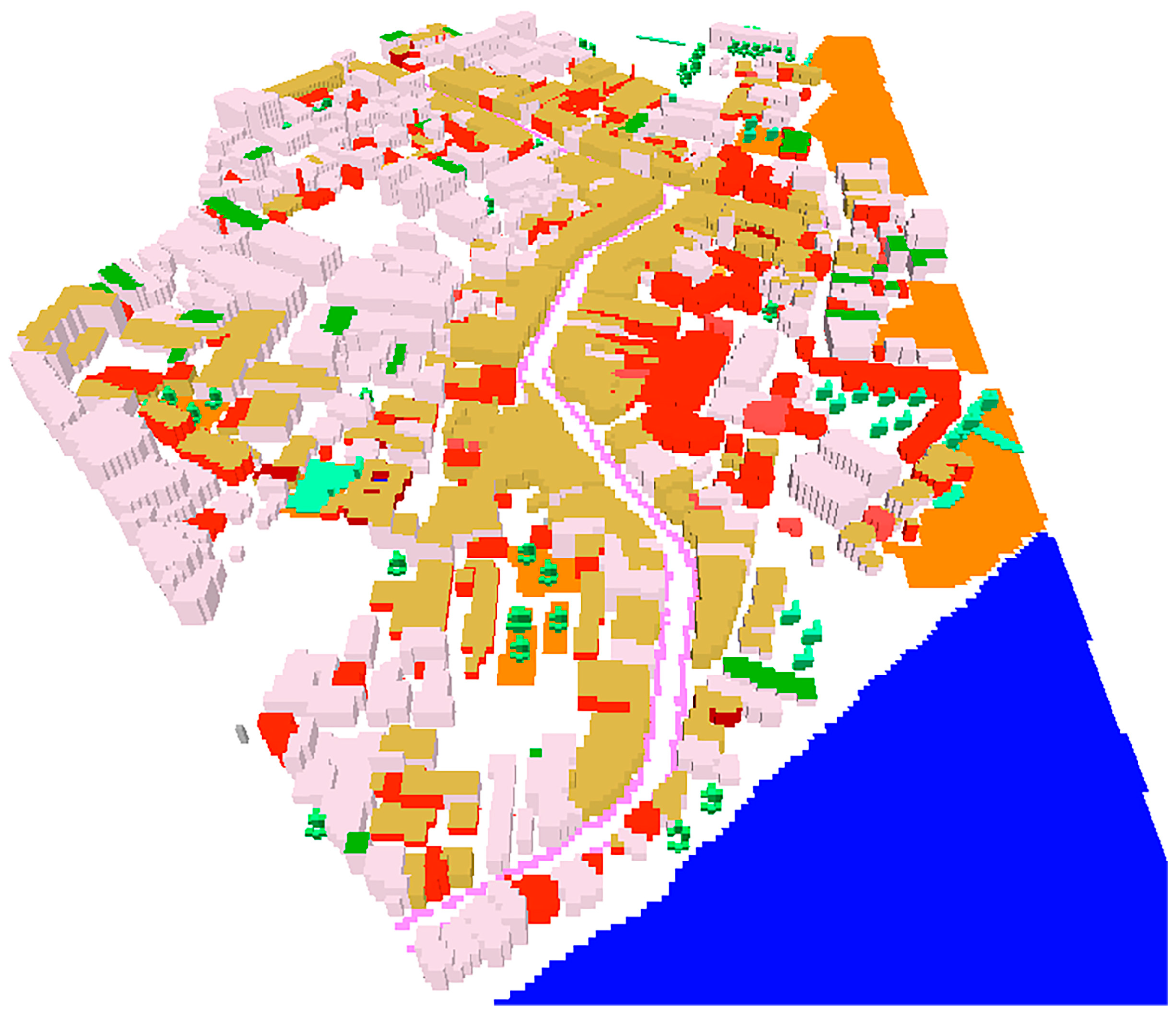
2. The existing buildings in the area are 1–4 stories high, so the research area was horizontally divided into 210 × 300 grids (resolution: dx = 1.5 m, dy = 1.5 m, dz = 3 m), with 5 nested grids set near the core research area of the model. The CAD architectural plan of the modeling area was converted into a BMP format image and imported into the software as a reference base map. Meanwhile, the computational model of the research area was constructed by integrating data obtained from field investigations, and elements such as buildings, underlying surfaces, and vegetation were drawn. Building materials adopted the software’s default settings, while underlying surface types were laid out according to field survey results—types including soil, cement, and concrete were set at their corresponding locations. Trees in the area are dominated by 5-m-tall specimens. No street trees are planted on sidewalks. lawns were set to the “grass” type, following the software’s default specification of 25 cm × 25 cm (
Figure 4).
Based on Envi-met 5.7.1 software, the microclimate of Xinhua Block on 25 July 2024, was simulated for 24 h from 00:00 to 24:00. Initial simulation meteorological parameters were set in accordance with the Environmental Meteorological Data Service Platform: the temperature at 00:00 (midnight) was 29.6 °C, relative humidity 72%, wind speed 2.0 km/h, and wind direction easterly. The highest temperature on that day was 37.4 °C at 18:00, and the lowest was 28 °C at 23:00. The roughness length was set to 0.1, and the specific humidity at 2500.0 m height adopted the default value. Hourly air temperature, relative humidity, daily average wind speed, and wind direction on 25 July 2024, were used as initial input data for the model. Details of the input parameters are shown in
Table 1.
Based on the functional attributes of and morphological differences in open spaces in traditional blocks, the open space system of Jianghua Old Street was clearly divided into five categories (main block space, square space, green space, alley space, and courtyard space). The layout of monitoring points followed the core principle of covering functional zones, considering spatial heterogeneity and ensuring data repeatability, and adopted a standardized and differentiated strategy. Core traffic sections of the main block space were equipped with 10 symmetric monitoring points—arranged 0.5 m away from the road edge with 50 m intervals—to avoid interference areas. Square, green, and courtyard spaces had 27 monitoring points evenly distributed at 1 point per 500 m
2 based on effective activity areas. Ten representative alleys, with an aspect ratio ranging from 0.5 to 2.6 and orientations covering north–south, east–west, and diagonal directions, had monitoring points placed in their middle sections. All 47 cumulative monitoring points were uniformly set at the 1.5 m pedestrian breathing height while avoiding interference sources, offering reliable data support for systematic and repeatable microclimatic research (see
Figure 5 and
Table 2).
2.4. Indicator Selection
Research on human thermal comfort indicators has become mature, with common indicators including Predicted Mean Vote (PMV)—Predicted Percentage of Dissatisfied (PPD), Standard Effective Temperature (SET), Universal Thermal Climate Index (UTCI), and Physiological Equivalent Temperature (PET). Specifically, PMV-PPD is suitable for people wearing lightweight clothing and more adapted to indoor thermal environment evaluation. SET applies to scenarios with 50% relative humidity, wind speed of 0.125 m/s (calm wind), and stable environmental parameters. UTCI has been widely used in meteorological services, public health early warning, and other fields due to its consideration of the distribution characteristics of clothing thermal resistance in different parts of the human body. In contrast, the PET index is more prominently applicable in outdoor thermal comfort evaluation. Based on a two-node human energy balance model, this indicator can detailedly depict the heat exchange process of the human body in different environments. Its calculation integrates various environmental factors such as air temperature, relative humidity, wind speed, and mean radiant temperature, enabling it to accurately reflect the comprehensive effect of complex block environments on human thermal comfort. Meanwhile, the PET index is suitable for various block spaces and climate regions, can quantify the degree of human thermal comfort [
26,
27], and has a strong correlation with human physiological parameters. This can objectively reflect the actual physiological stress level of the human body, providing reliable scientific support for the formulation of block planning strategies.
To further quantify the regulatory effect of vegetation structure on thermal comfort, on the basis of using the PET index as the core thermal comfort evaluation indicator, the Green Plot Ratio (GPR) was introduced as a key auxiliary evaluation indicator [
28]. This indicator can scientifically measure the coverage intensity and three-dimensional spatial configuration of urban green spaces and is a core quantitative parameter linking vegetation morphological characteristics and thermal environmental effects. The calculation of GPR is usually based on the Leaf Area Index (LAI), and its specific calculation formula is as follows:
2.5. Results of Non-Parametric Statistical Analysis
Non-parametric statistical methods were adopted to conduct inter-group difference analysis on the Physiological Equivalent Temperature (PET) data of five types of open spaces in traditional blocks, aiming to clarify the differentiation characteristics of thermal comfort levels among different open space types. The significance level for all tests was set at α = 0.05, and the detailed analysis results are as follows.
2.5.1. Data Overview
The analysis indicator focused on Physiological Equivalent Temperature (PET), which can comprehensively reflect the impact of the microclimatic environment on human thermal comfort. After data preprocessing to clean non-numeric identifiers from the original monitoring data, 88 valid PET samples were finally retained for each of the five space types, totaling 440 valid samples. This ensured the reliability and validity of the data for statistical analysis.
Normality test: The Shapiro–Wilk test was used to verify the distribution characteristics of PET data for each space type. The results showed that the PET data of all five types of open spaces did not conform to a normal distribution (p < 0.001 for all groups), so non-parametric test methods were selected for inter-group difference analysis.
Homoscedasticity test: The Levene test was employed to evaluate the consistency of variances among groups. The results showed F = 0.5884, p = 0.6712 > 0.05, indicating that the PET data of the five space types satisfied the homoscedasticity assumption. This provided a basis for the validity of subsequent non-parametric tests.
2.5.2. Post Hoc Multiple Comparisons
Based on the characteristics of non-normal data distribution but homoscedasticity, the Kruskal–Wallis H test was used to compare the overall differences in PET values among the five types of open spaces. The results showed that the test statistic H = 21.3964, p = 0.0003 < 0.001, indicating that there were significant overall differences in the thermal comfort levels (PET values) of the five types of open spaces.
To accurately identify the specific groups with differences, Dunn’s test with Bonferroni correction was performed for pairwise comparisons (adjusted significance level α = 0.005), and the results are as follows: All groups with significant differences were concentrated in the comparisons between green spaces and the other four types of spaces: green spaces vs. courtyards (p = 0.0014), green spaces vs. alleys (p = 0.0032), green spaces vs. main blocks (p = 0.0003), and green spaces vs. squares (p = 0.0008). There were no significant differences in pairwise comparisons among courtyards (53.15 °C), alleys (52.52 °C), main blocks (53.11 °C), and squares (53.43 °C) (all p > 0.005).
3. Results
3.1. Accuracy Analysis of ENVI-met Simulation Results
To scientifically evaluate the simulation performance of the ENVI-met model, three indicators—Pearson Correlation Coefficient (r), Root Mean Square Error (RMSE), and Mean Absolute Percentage Error (MAPE)—were selected. A comprehensive verification system was constructed from three core dimensions: “linear correlation—absolute deviation—relative deviation”. This avoided one-sided judgment of simulation accuracy by a single indicator. As the core indicator for characterizing “trend consistency” in microclimate simulation verification, the Pearson Correlation Coefficient (r) focuses on the linear correlation between simulated values and measured values. It was used first to confirm whether the model can accurately reproduce the spatiotemporal variation trends of microclimatic parameters such as PET values. The closer its absolute value is to 1, the more consistent the simulated trend is with the measured one. This laid a foundation for subsequent deviation analysis. Root Mean Square Error (RMSE) directly quantifies the “degree of absolute deviation” in the unit of the original variable, adapting to the concrete evaluation needs of microclimatic data. It intuitively reflects the actual difference between simulated values and measured values to facilitate the judgment of the model’s reliability in specific numerical values. Mean Absolute Percentage Error (MAPE) characterizes the “degree of relative deviation” in the form of a percentage, which can eliminate the influence of dimensions. It is not only suitable for comparing deviations among different microclimatic parameters but also conforms to the industry’s general judgment standard that “MAPE < 10% is considered a reliable model”. This enhances the comparability and recognition of results. in Formulae (2)–(4),
yi represents the
i-th simulated value,
represents the average of the simulated values,
yi represents the
i-th measured value, and
n is the total number of observations. Through the collaborative verification of the three indicators, the model performance can be comprehensively evaluated from three aspects: trend consistency, actual numerical deviation, and relative error ratio. This ensures the scientificity and reliability of the simulation results and provides solid data support for subsequent thermal comfort analysis.
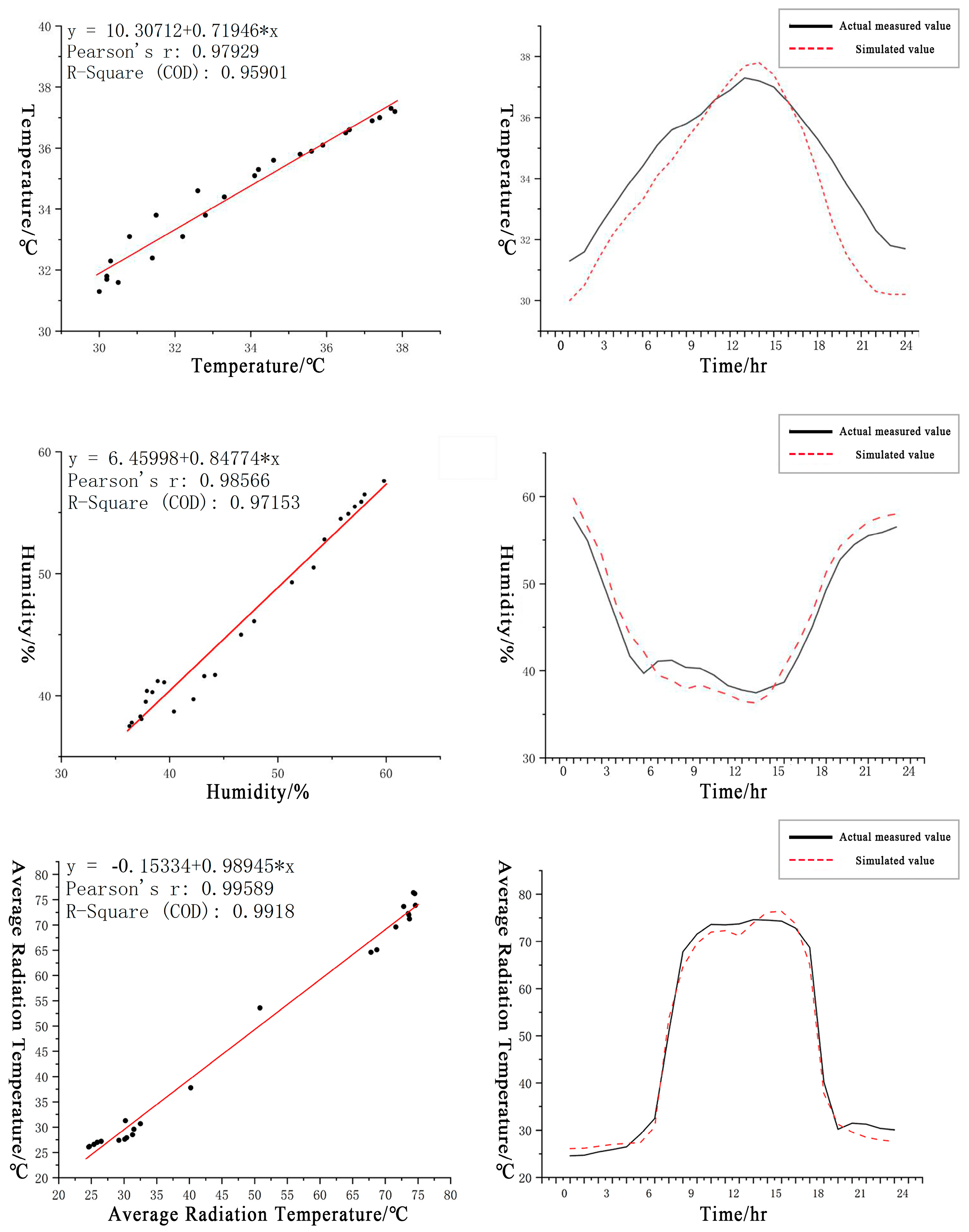
To systematically verify the accuracy correlation between the ENVI-met simulated values and measured values in this experiment, a square space within the research plot was selected for modeling. The simulated temperature for the entire day of 25 July 2024, was obtained. Subsequently, correlation analysis was conducted between the simulated and measured data. Scatter plots (
Figure 6) were constructed to visually present the variation trends of simulated and measured values, and statistical methods were used to conduct in-depth correlation analysis and error evaluation. The correlation coefficients of air temperature, relative humidity, and mean radiant temperature data obtained from ENVI-met simulation reached 0.97, 0.98, and 0.99 respectively, all passing the significance test. For air temperature, the RMSE was 0.91 and MAPE was 2.08%. For the daily average relative humidity, the RMSE was 1.8 and MAPE was 3.9%. For the mean radiant temperature, the RMSE was 3.74 and MAPE was 5.37%. The MAPE values of all three indicators were below 10%, falling within the allowable error range. This indicates that the ENVI-met simulation results can well reproduce the diurnal variation patterns of temperature and humidity and truly reflect the actual conditions of relevant meteorological elements.
3.2. Temporal Variation Trend of Thermal Comfort in Open Spaces of Traditional Neighborhoods
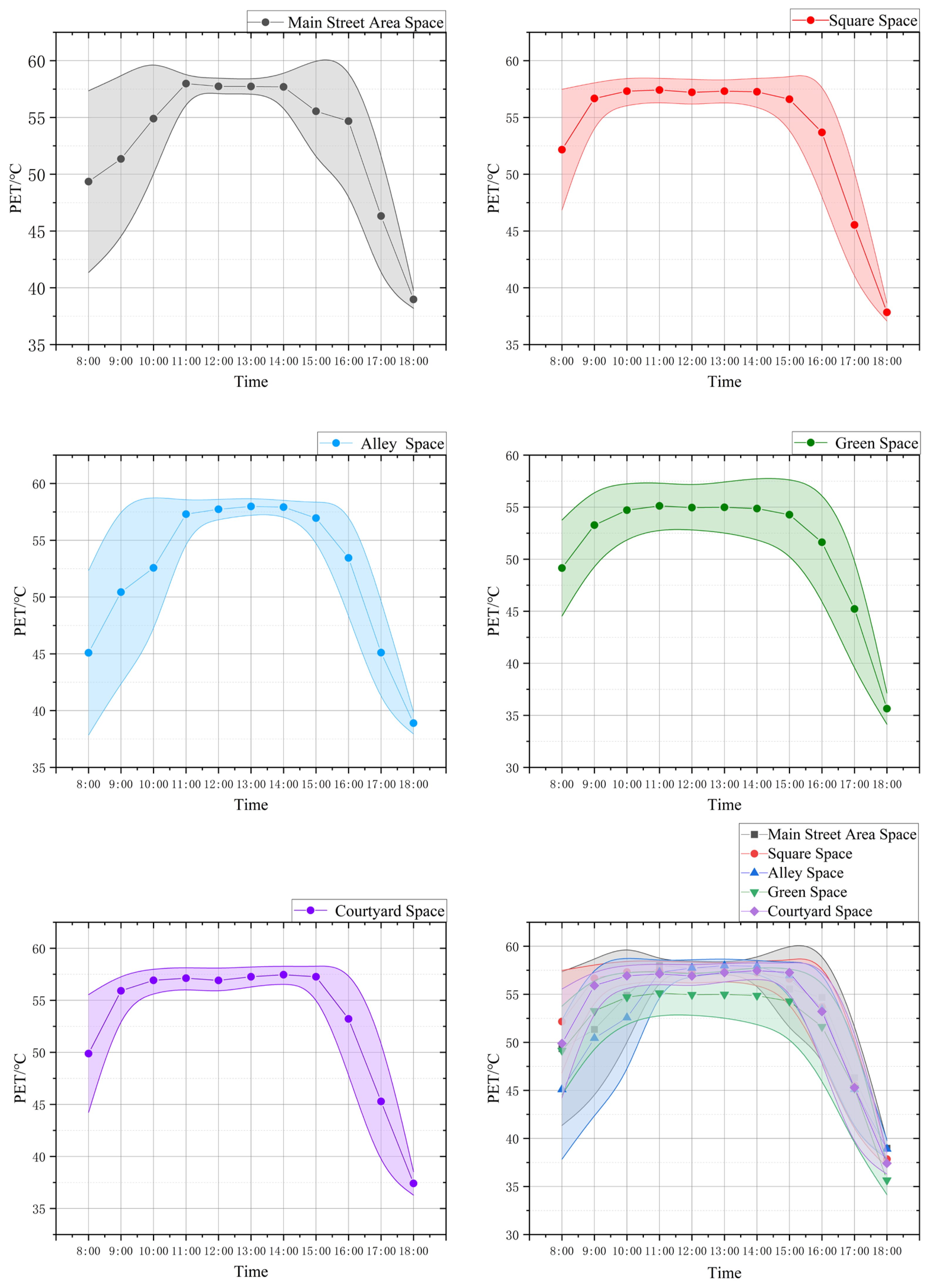
Figure 7 showed that the daily average PET values of each space presented a unimodal variation curve of “rising–stable–falling”, with peaks concentrated between 11:00 and 14:00. This intuitively reflected the diurnal temperature variation characteristics driven by solar radiation. Specifically, 8:00–11:00 was the heating stage, during which the PET values of all spaces continued to rise. Then 11:00–15:00 was the stable stage, where the PET values of all spaces maintained the highest level throughout the day. Finally 15:00–18:00 was the cooling stage, during which the PET values continued to decline and dropped to a relatively low level by 18:00 with a significant decrease range.
The diurnal PET slope changes in courtyard, square, and green space showed similar phased characteristics but significant differences in intensity (
Table 3). During the heating stage (8:00–11:00), all three showed a rapid upward trend from 8:00 to 9:00, with the courtyard slope being 6.0. This was significantly higher than the square’s 4.5 and the green space’s 4.1. These results indicated that the courtyard had the fastest PET heating rate and the most obvious decline in thermal comfort, which was related to heat accumulation caused by the enclosed structure of the courtyard. From 9:00 to 11:00, the slopes continued to narrow. Between 10:00 and 11:00, the slopes of all three were close to 0 (ranging from 0.1 to 0.4), indicating that the heating rate slowed down significantly and gradually approached the peak. Entering the transition stage of stable and cooling (11:00–14:00), negative slopes first appeared from 11:00 to 12:00 (−0.1 to −0.2), marking a slight decline in PET. From 12:00 to 14:00, the slopes fluctuated slightly (−0.1 to 0.4), maintaining an overall high and stable state. During the cooling stage (14:00–18:00), the slopes remained negative after 14:00 with increasing absolute values. From 15:00 to 16:00, the courtyard slope was −4.1, and the cooling range was significantly greater than the square’s −2.9 and the green space’s −2.7. From 16:00 to 18:00, the slopes of all three dropped to −7.7 to −9.5, the cooling rate reached the peak, and thermal comfort improved rapidly. Among them, the late cooling of the green space was slightly slower than that of the courtyard and square, which was related to the buffering effect of vegetation transpiration.
The differences in slope changes between alley space and main block space were concentrated in the heating stage and the mid-cooling stage. During the heating stage (8:00–11:00), the alley slope (5.3) from 8:00 to 9:00 was higher than that of the main block (2.0), indicating that the alley heated up faster. From 9:00 to 10:00, the main block slope (3.6) surpassed the alley (2.1), which was related to the enhanced solar radiation in the open space of the main block. From 10:00 to 11:00, the alley slope (4.8) was again significantly higher than the main block (3.1), reflecting that the alley was more likely to accumulate heat near noon. During the transition stage of stable and cooling (11:00–14:00), the alley still maintained a slight positive slope (0.4) from 11:00 to 12:00, while the main block had already shown a negative slope (−0.3). This indicated that the peak PET of the alley lagged behind the main block. From 12:00 to 14:00, the slopes of both were close to 0, showing an overall high-level fluctuation. During the cooling stage (14:00–18:00), the main block slope (−2.2) was lower than the alley (−0.9) from 14:00 to 15:00, with more significant cooling. From 15:00 to 16:00, the alley slope (−3.6) surpassed the main block (−0.8), and the cooling rate accelerated. From 16:00 to 18:00, the slopes of both dropped to −6.2 to −8.4, showing a consistent cooling trend, and the main block cooled slightly faster in the later period (17:00–18:00).
The PET value change in green space showed a significant mild characteristic: it rose slowly from 8:00 to 11:00, maintained a high-level stable state from 11:00 to 15:00, and dropped rapidly from 15:00 to 18:00. Compared with hard spaces such as the main block and square, the flatness of this variation curve was particularly prominent. The core reason lay in the vegetation coverage rate of over 70% inside the green space. The three-dimensional greening system formed by the trees–shrub–herb composite structure consumed a lot of heat energy through leaf transpiration. At the same time, the crown shade effectively reduced direct solar radiation. The dual mechanisms jointly exerted a significant cooling and humidifying effect, thereby forming a strong buffer against the sharp fluctuation of PET values.
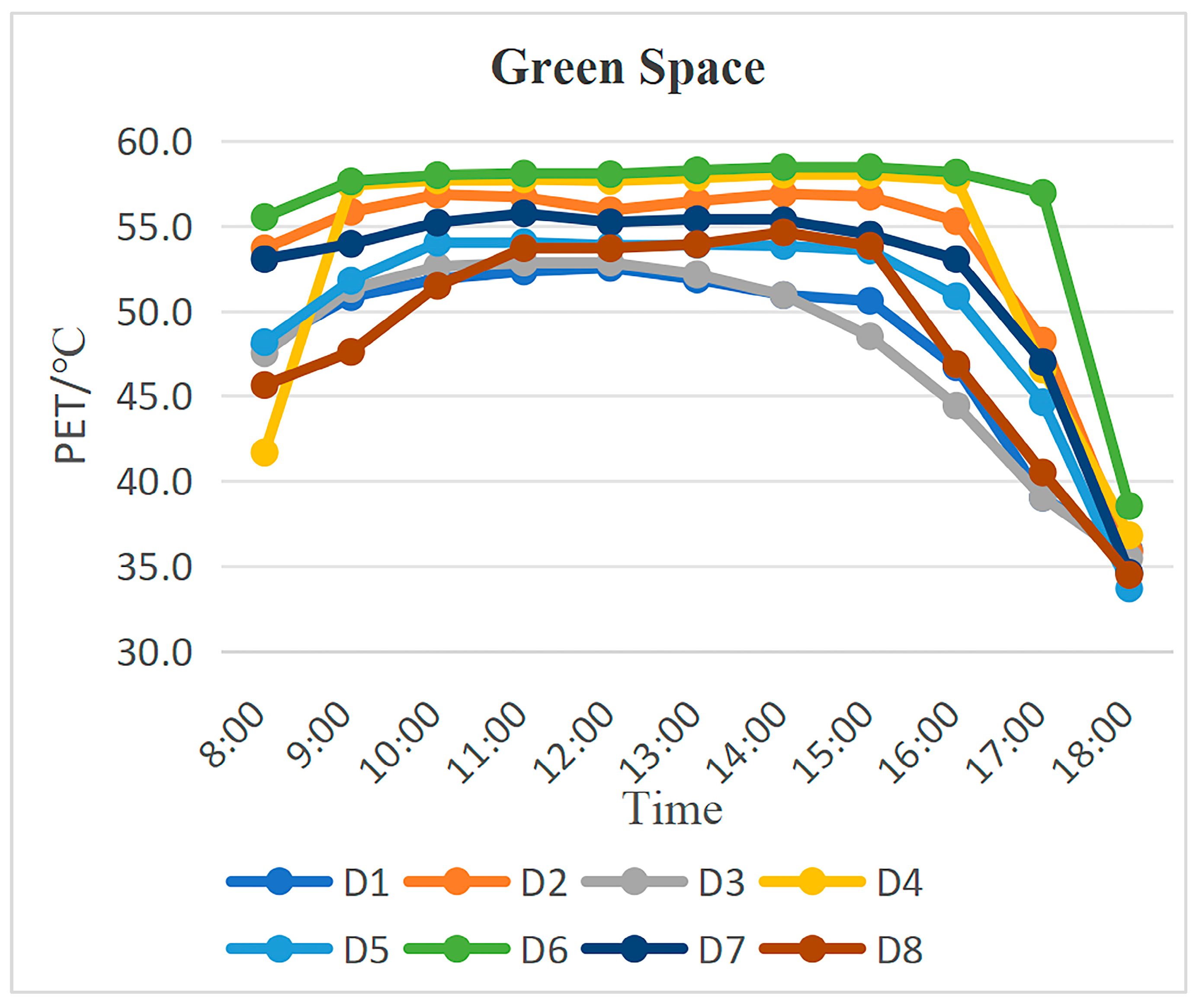
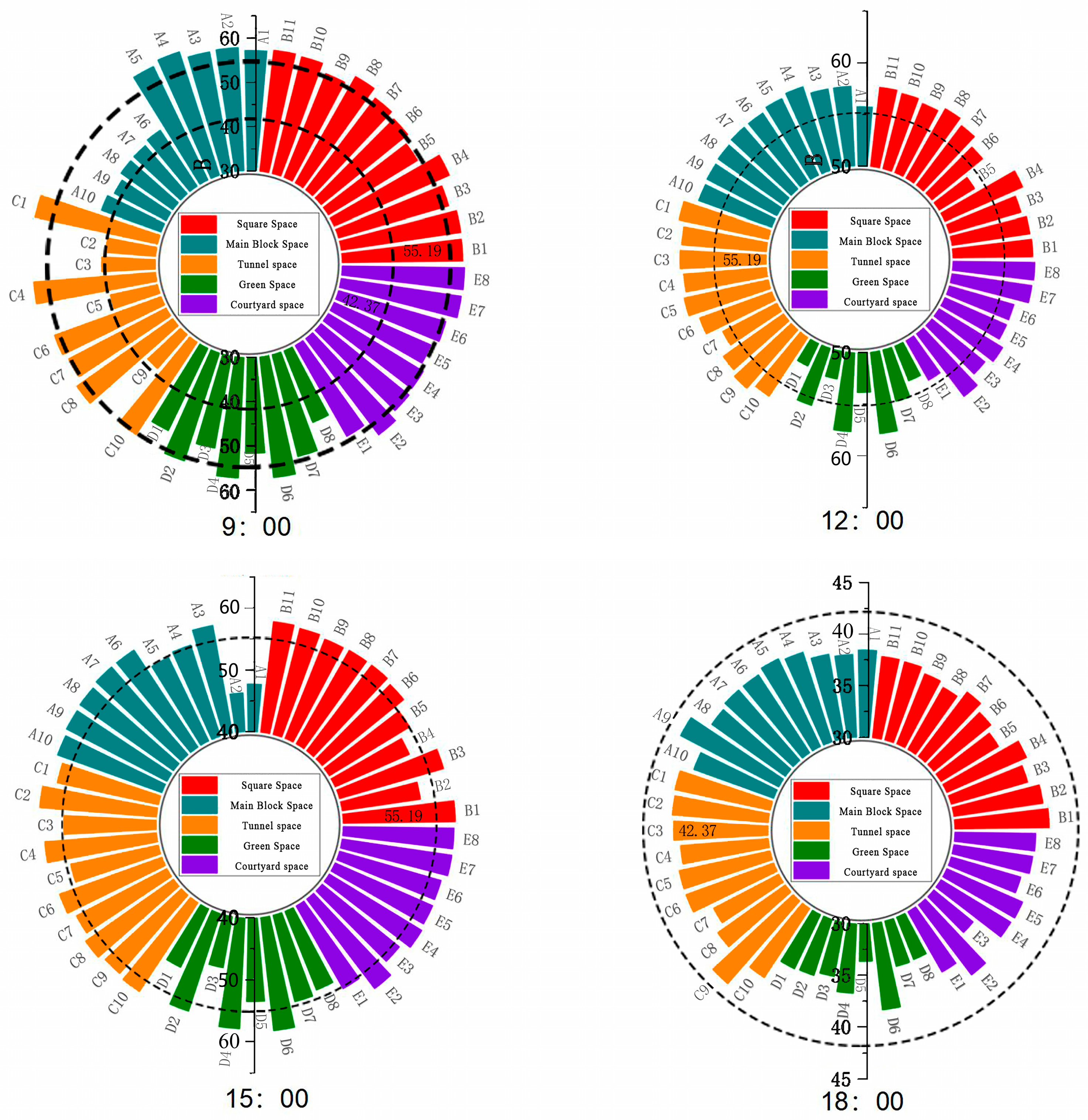
It could be seen from
Figure 8 that the PET values of monitoring points D6 and D4 were always at the highest level during the whole-day monitoring period, with peaks 3–5 °C higher than other points. From the perspective of site characteristics, both points were located in open lawn areas, with only herbaceous plants and no tall trees coverage. Their GPR was the lowest among the 8 points (
Table 4). Although lawns could reduce soil evaporation and heat dissipation through surface coverage, they could not form effective vertical shading space. In addition, the transpiration cooling efficiency per unit area was only 1/3 of that in trees–shrub combined areas. This resulted in a significantly weaker buffering capacity against solar radiation than other points with trees distribution and ultimately showing higher PET values. This phenomenon further confirmed the core role of tall trees in regulating the thermal environment of green spaces. It was also supported by the monitoring results of point D2—with a GPR of 1.41, the highest among the 8 points, but due to the lack of trees distribution in the site, its thermal comfort ranked third in PET values among the 8 points, at a relatively high level.
From the perspective of spatial morphology, the heating rate differed sharply between narrow and elongated streets (represented by alleys) and open spaces (squares, courtyards, green spaces). The former took 4 h (8:00–11:00) to rise from initial to maximum temperature, while the latter only needed 2 h (8:00–10:00) to reach the peak. The core driving force was the dynamic change in direct solar radiation angle. In the early morning (8:00–9:00), the solar altitude angle was low, and alleys had limited light reception due to shading from buildings on both sides. This resulted in a heating slope of 5.3 (higher than the main block’s 2.0) but gentler than open spaces (courtyard 6.0, square 4.5), which quickly captured morning solar radiation. As noon approached (10:00–11:00), the solar trajectory rose to form a favorable angle with alley orientations, reducing shading. the alley slope surged to 4.8 and peaked at 11:00. In contrast, open spaces, without significant shading, completed the main heating process by 8:00–10:00, with slopes narrowing to 0.1–0.4 during 10:00–11:00 and entering a peak plateau. Unique morphological parameters of alleys further amplified thermal environment differences, with the aspect ratio (H/W) as a core indicator directly determining the coverage and duration of building shadows. The larger the ratio, the more obvious the morning shading and the more delayed heat accumulation. In addition, the relative relationship between alley orientation and solar trajectory also affected heating rhythm: an acute angle improved light-receiving efficiency and shortened the heating stage, while an obtuse or near-vertical angle reduced light reception and prolonged heating. The dynamic coupling of these spatial features with solar radiation constituted the key factors regulating the thermal environment (see
Table 5).
The differences in the temporal trend of PET changes were mainly due to the combined influence of three factors. In terms of spatial morphology, the enclosed structure of courtyards and the narrow layout of alleys were prone to heat accumulation, resulting in higher slopes for both during the heating stage and a relatively delayed occurrence of PET peaks. In contrast, the main block, due to its openness, was more significantly affected by direct solar radiation and thus responded faster in the early stages of heating and cooling. In terms of vegetation and surface coverage, relying on the shading effect and transpiration of vegetation, the green space had a lower slope during the heating stage and a significant buffering effect in the late cooling stage. This was characterized by an absolute slope value smaller than that of courtyards and squares. In addition, solar radiation and building shading were also key factors. Differences in aspect ratio and orientation among different spaces led to variations in the duration and intensity of solar irradiation, which in turn affected the temporal distribution of PET slopes.
3.3. Spatial Comparison Analysis of Thermal Comfort in Open Spaces of Traditional Blocks
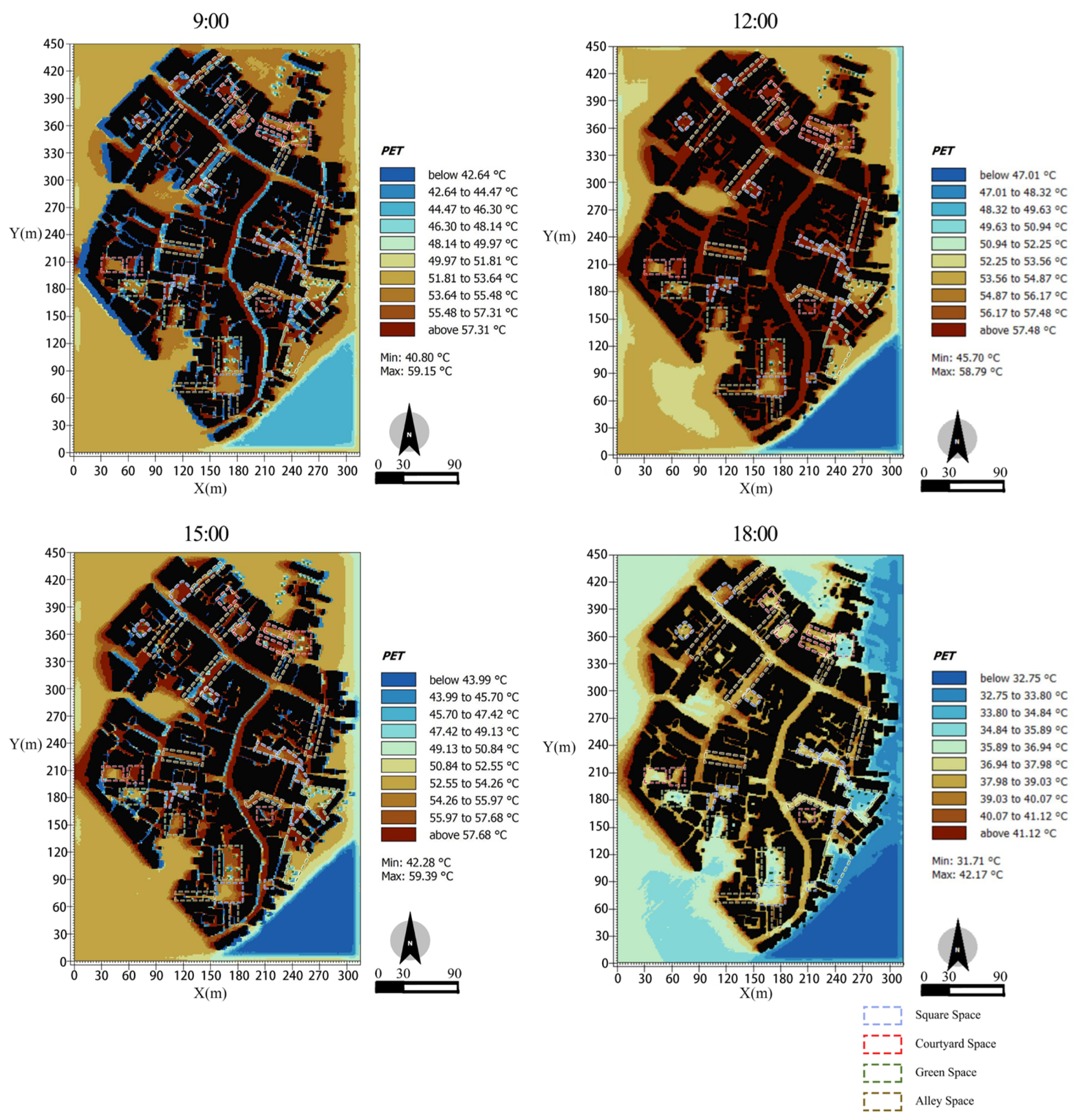
The Leonardo module of ENVI-met was used to convert thermal comfort values at different time periods into visual images. Four time points (9:00, 12:00, 15:00, and 18:00) were selected for each activity space to analyze the thermal comfort status at the pedestrian height of 1.5 m.
Figure 9 showed the simulated thermal comfort distribution of the four types of spaces at the above four time periods at this height. At a resolution of 1.5 m, buildings and surrounding vegetation could be clearly identified, which indicated that ENVI-met could provide reliable data support for micro-thermal environment research.
Monitoring data at 9:00 (
Figure 10) showed that in accordance with the Grading Standard for Thermal Sensation Scales in High-Density Blocks of Humid and Hot Areas (
Table 6) [
29], 91% of the plaza space was under “strong heat stress” and 9% under “moderate heat stress”. In addition, 75% of the courtyard space was under “strong heat stress” and 25% under “moderate heat stress”. Both spaces had relatively high PET values due to their high openness, low surrounding buildings, and heat absorption by hard pavement. Alleyways and main streets, however, showed significant differentiation. For example, 60% of the alleyway space was under “strong heat stress”, 20% under “moderate heat stress”, and 20% under “slight heat stress”. This differentiation was determined by their orientation and aspect ratio (areas perpendicular to the direct solar direction and with an aspect ratio > 4 had lower PET values). Moreover, 50% of the main street space was under “strong heat stress” and 50% under “moderate heat stress”, which was affected by the solar altitude angle (areas without shading had higher PET values under direct sunlight). For green spaces, 37% of the area was under “strong heat stress” and 63% under “moderate heat stress”, with minimal overall fluctuation. This difference stemmed from the vegetation structure (areas with trees coverage > 50% exhibited significant cooling effects).
At 12:00, over 90% of the plaza and courtyard spaces reached “strong heat stress”, and 100% of the main street and alleyway spaces were in this state. In contrast, green spaces still maintained 37% “strong heat stress” and 63% “moderate heat stress” (areas with more trees improved thermal comfort). As the solar altitude angle reached its peak, direct sunlight penetrated the alleyways, rendering building shading ineffective and causing heat accumulation. This resulted in a thermal comfort order of green spaces (locally optimal) > courtyards ≈ alleyways ≈ main streets > plazas, with spatial form, aspect ratio, and vegetation coverage as the core influencing factors.
At 15:00, over 80% of the plaza space was under “strong heat stress” and 20% under “moderate heat stress”. In addition, 100% of the courtyard space was under “strong heat stress”, 70% of the main street space was under “strong heat stress” and 30% under “moderate heat stress”, 80% of the alleyway space was under “strong heat stress” and 20% under “moderate heat stress”. Green spaces remained in the same state as at 12:00. As the solar altitude angle decreased and the sun shifted westward, small green patches and shaded areas in the plaza were under “moderate heat stress”. Dense tree areas in green spaces were under “moderate heat stress” while lawn areas were under “strong heat stress”. Shaded areas of the main street were under “moderate heat stress” while sunlit areas were under “strong heat stress”. The thermal comfort gradient thus presented a pattern where “tree areas in green spaces, shaded areas of main streets, and shaded areas of alleyways are relatively optimal, while courtyards and plazas exhibit more significant heat stress”. The core mechanism lying in the “shading potential” and “heat dissipation capacity” of spatial forms.
At 18:00, solar radiation weakened, and PET values in all spaces dropped to the “slight heat stress” range. Green spaces had the best comfort due to high vegetation coverage. Plazas, though open to facilitate ventilation, had higher PET values due to heat storage in hard pavement. Courtyards, with enclosed structures and good ventilation, had lower PET values. Main streets had higher PET values because their orientation was perpendicular to prevailing winds (blocking ventilation) and due to heat accumulation from crowds. Alleyways, being narrow and enclosed, had the slowest heat dissipation and the worst comfort. The thermal comfort gradient followed the order of green spaces > plazas > courtyards > main streets > alleyways, with the dominant factors being vegetation regulation, openness, and heat storage characteristics of pavement.
3.4. Statistical Analysis of Inter-Group Differences in Thermal Comfort of Open Spaces
To clarify the statistical differences in thermal comfort among the five types of open spaces, a One-way ANOVA was conducted based on the average PET values during the peak period (11:00–14:00). This was combined with Tukey HSD post hoc test to identify specific difference groups. Preliminary tests showed that the PET data of all groups satisfied normal distribution (Shapiro–Wilk test,
p > 0.05) and homogeneity of variances (Levene test, F = 1.12,
p = 0.368). Thus, the use of parametric test methods was statistically valid. The results of One-way ANOVA indicated that there were extremely significant overall differences in the peak-period PET values among the five types of spaces (F(4, 32) = 8.67,
p < 0.001). Further analysis of specific inter-group differences via Tukey HSD post hoc test was shown in
Table 7.
Combining statistical results and spatial characteristic analysis, the conclusions can be drawn as follows. Green space has significantly the best thermal comfort, with its average peak PET value significantly lower than that of squares, courtyards, and main blocks (p < 0.05). This is closely related to the direct regulatory effect of high vegetation coverage (trees shading + transpiration cooling) in green spaces. Although there is no statistical significance in the difference from alleys (p = 0.056), the value is still 1.89 °C lower. This suggests that the vegetation regulation potential of green spaces is superior to the spatial form regulation of alleys. There is no significant difference in thermal stress levels among squares, courtyards, and main blocks, and the differences in their average peak PET values are all non-significant (p > 0.05). This indicates that under strong noon solar radiation, their open/enclosed spatial forms and the heat storage characteristics of hard pavements jointly lead to the convergent result of “strong thermal stress”. The thermal comfort of alleys is between green spaces and hard spaces. The difference between alleys and green spaces approached significance (p = 0.056), but there was no significant difference from other hard spaces. This reflects that the coupling effect of their aspect ratio and orientation can only partially alleviate thermal stress, and the regulatory effect is weaker than the vegetation system of green spaces. In summary, the statistical analysis has statistically verified the conclusion that “green space is the optimal thermal comfort space in traditional blocks, and vegetation structure is the core driving factor”. This provides quantitative support for the subsequent proposal of thermal environment optimization strategies.
4. Discussion
In this study, trees coverage in green spaces reduced PET values through the dual effects of canopy shading and leaf transpiration. This addresses the question raised by Jian Zheng regarding whether GPR affects thermal comfort [
6]. Furthermore, quantitative analysis revealed that areas with trees coverage rate > 50% had PET values 5–8 °C lower than pure lawn areas. In addition, GPR showed a significantly positive correlation with thermal comfort. These findings provided more refined empirical support for the regulatory effect of vegetation structure on microclimates. However, in the hot-humid environment of southern Hunan, although single high-density greening can improve thermal comfort, the dual effects of high humidity inhibiting plant transpiration and strong radiation penetrating the canopy resulted in a PET difference of only 6.34 °C between green spaces and squares. Thermal stress remained at “moderate or higher”, and the cooling effect of green spaces was not significant. This challenged the traditional notion of “greening-dominated cooling” in conventional planning [
30].
The findings of this study on alley spaces in traditional blocks showed that north–south oriented alleys delayed local heating by optimizing light exposure. This strongly echoed previous research on main streets. Past studies confirmed that east–west main streets in traditional blocks receive more solar radiation in summer (especially morning and evening), while north–south, northeast–southwest, or southeast–northwest orientations are more conducive to thermal comfort [
31,
32]. This cross-space consistency verified the stable regulatory effect of orientation on solar radiation distribution in traditional blocks. For example, east–west orientations in main streets easily cause heat accumulation and higher PET due to long exposure to high solar altitudes in summer. In contrast, north–south or oblique orientations in alleys also reduce direct solar radiation and radiant heat input to improve thermal comfort. Evidently, the influence of orientation on the thermal environment is cross-spatially stable in traditional blocks, whether in open main streets or enclosed alleys. This study’s alley observations mutually confirming previous research on main streets.
For high-density narrow alleys with an aspect ratio (H/W) > 2, PET values were 2–3 °C lower than those of open spaces. This was attributed to building shading and ventilation effects. Such a finding can inform thermal environment optimization in high-density blocks. It aligned with the conclusion of a prior study that “each 1 m increase in the height of walls on both sides reduces the daily average temperature by 0.2 K” [
33]. However, for streets in cold-region residential areas, a prior study identified an optimal summer aspect ratio of 0.9 for thermal comfort. Additionally, combining aspect ratios of 0.5/0.7/0.9 with 30–50% vegetation coverage was found to synergistically optimize thermal comfort and energy consumption [
32]. Three factors account for the discrepancies between these findings. First, thermal environment balance across winter and summer is required in cold regions. Second, vegetation factors were included in the prior study. Third, the present study focused on small-scale narrow alleys, whereas the prior work targeted medium-scale streets. In addition, the cooling rate of alleys between 15:00 and 16:00 (−3.6 °C/h) exceeded that of the main block (−0.8 °C/h). This phenomenon was closely associated with the delayed release of heat stored within alleys. Heat accumulated at noon was gradually released in the afternoon as solar radiation diminished. Moreover, the enclosed spatial structure of alleys retarded the rhythm of heat dissipation and consequently led to this “surpassing” cooling rate during the afternoon stage.
Regarding the thermal comfort of courtyard spaces, this study observed that they possessed dual characteristics of “heat accumulation” and “efficient heat dissipation”. Existing studies generally hold that enclosed spaces (such as courtyards) during the daytime are prone to heat retention due to limited ventilation [
34]. However, this study found that the PET values of traditional courtyards in southern Hunan at 18:00 (35.0–38.6 °C) were actually superior to those of the main block (38.1–40.8 °C). This was attributed to their specific enclosure scale of “low enclosure” with a building eave height ≤9 m. Such a scale precisely constructed a heat dissipation flow field with a stable wind speed of 0.5–1.2 m/s. It not only avoided the interference of strong winds in open spaces on heat dissipation but also guided the orderly diffusion of heat to high altitudes through moderate enclosure. This finding indicated that the thermal environment effect of courtyards is not a single negative effect. Instead, the impact of their enclosure height and opening ratio on heat dissipation efficiency needs to break through traditional cognition and be re-evaluated in combination with specific climatic and scale conditions.
Although this study revealed the core characteristics and driving mechanisms of thermal comfort in open spaces of traditional blocks in southern Hunan, it still had the following limitations. First, the research area only focused on a single traditional block in Jianghua Yao Autonomous County. The specific climatic conditions and architectural forms of this block mean that the generalizability of the conclusions needs further verification in traditional blocks of other regions. Second, observations and simulations were only conducted on a single summer day. Long-term continuous microclimatic data for spring, autumn, winter, and the whole year were lacking. This made it difficult to fully depict the seasonal dynamics and interannual variations in the thermal environment in traditional blocks. Third, in the quantitative analysis of factors affecting the thermal environment, the independent effects of subdivided variables such as the thermal properties of building materials (e.g., differences in thermal conductivity of walls and roofs) and vegetation species were not thoroughly explored. This may have had a certain impact on the interpretation accuracy of the driving mechanisms.
Future research can be advanced in three aspects. First, the monitoring period to a full year to clarify the differences in thermal comfort across seasons and strategy adaptability. Second, dynamic variables such as building materials and pedestrian density can be incorporated to enhance the accuracy of driving mechanisms and optimization schemes. Third, specialized guidelines for thermal environment optimization can be developed based on this study’s conclusions. These can be refined through on-site verification. In addition, a digital platform for thermal environment regulation in traditional blocks can be established to facilitate the practical transformation of research outcomes.
5. Conclusions
This study investigated traditional blocks in Jianghua Yao Autonomous County, which is located in a hot-humid climate zone in southern Hunan. The investigation aimed to reveal thermal comfort patterns of five open space types, quantify core driving mechanisms, and propose optimization paths. On-site microclimate observation, ENVI-met simulation, and statistical analysis were employed to address key research questions on thermal comfort differentiation, driving factors, and improvement strategies.
Core findings showed that all five open spaces followed a unimodal “rising-stable-falling” daily PET curve, with peaks occurring at 11:00–14:00. Green spaces exhibited the best thermal comfort, as their average peak PET was significantly lower than that of hard spaces (p < 0.05). This was due to tree shading and transpiration, with tree coverage rate and GPR serving as key factors. Alleys and courtyards featured delayed PET peaks and “delayed stored heat release”, which were driven by enclosed morphology. In contrast, squares, courtyards, and main blocks suffered strong thermal stress from hard pavement and openness. The core driving mechanism was the synergistic effect of vegetation structure, spatial morphology, and external climate. Vegetation, especially trees, exerted stronger regulatory effects than spatial morphology. Notably, the “low enclosure” of traditional courtyards (with eave height ≤ 9 m) and the “solar trajectory–morphology coupling” of alleys provided novel insights for optimization.
Practically, heritage-compatible and precise optimization paths were proposed under the constraints of architectural heritage protection. Tree-dominated multi-layer greening should be prioritized to maximize cooling effects without altering the historical streetscape. For alleys, the traditional “north–south orientation + aspect ratio > 2” should be retained, and historic facades should not be modified. Instead, non-invasive shading measures can be supplemented. Courtyards’ traditional “low-enclosure” and reasonable opening patterns should be maintained, and thermal comfort can be enhanced through potted native plants rather than reconstructing historic structures. For hard spaces such as squares and main blocks, permeable pavements with textures and colors matching the heritage style should be adopted. In addition, low-profile shading facilities that do not obscure historic building facades can be installed to alleviate thermal stress. Overall, the “climate–morphology–vegetation” synergistic design paradigm should be adhered to in order to achieve improved human thermal comfort while strictly preserving the historical style, architectural structure, and cultural heritage value of traditional blocks.