Article

Inclusion and Microstructure Characteristics in a Steel Sample with TiO2 Nanoparticle Addition and Mg Treatment


1
School of Chemistry and Chemical Engineering, Southeast University, Nanjing 211189, China
2
School of Materials Science and Engineering, Anhui University of Technology, Maanshan 243002, China
3
School of Metallurgical Engineering, Anhui University of Technology, Maanshan 243002, China
*
Author to whom correspondence should be addressed.
Metals 2019, 9(2), 171; https://doi.org/10.3390/met9020171
Submission received: 4 January 2019 / Revised: 22 January 2019 / Accepted: 28 January 2019 / Published: 1 February 2019

Abstract

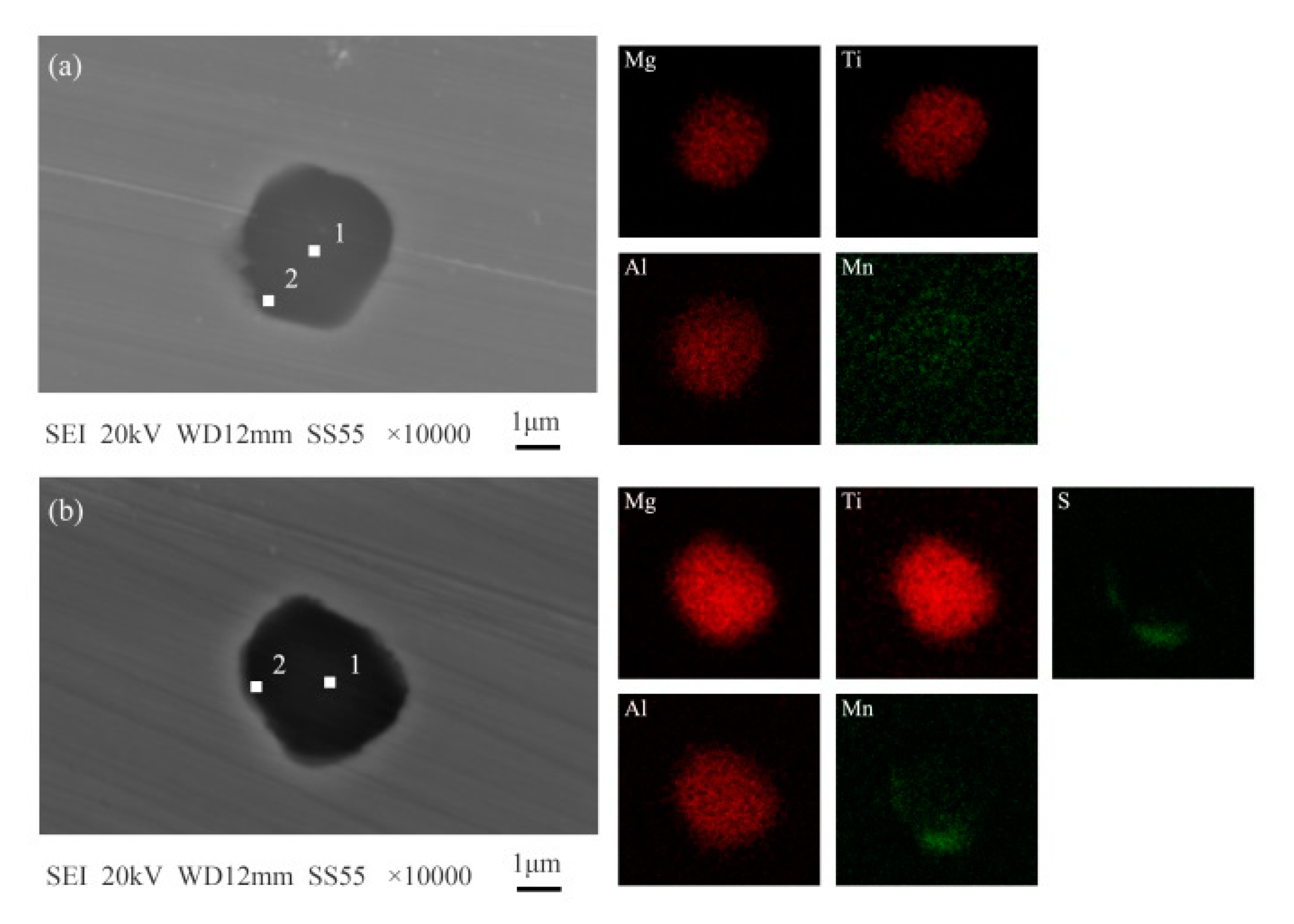
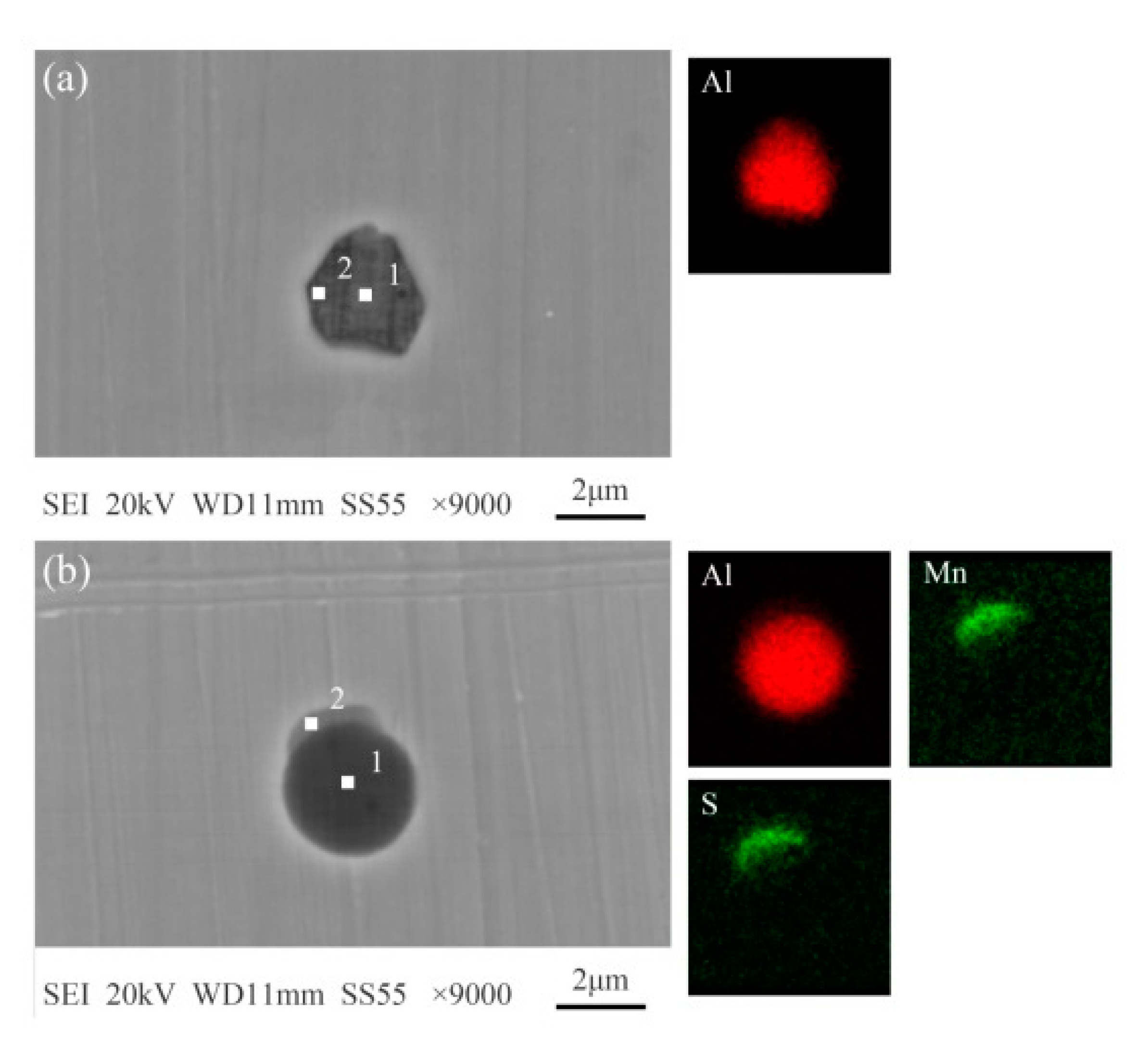
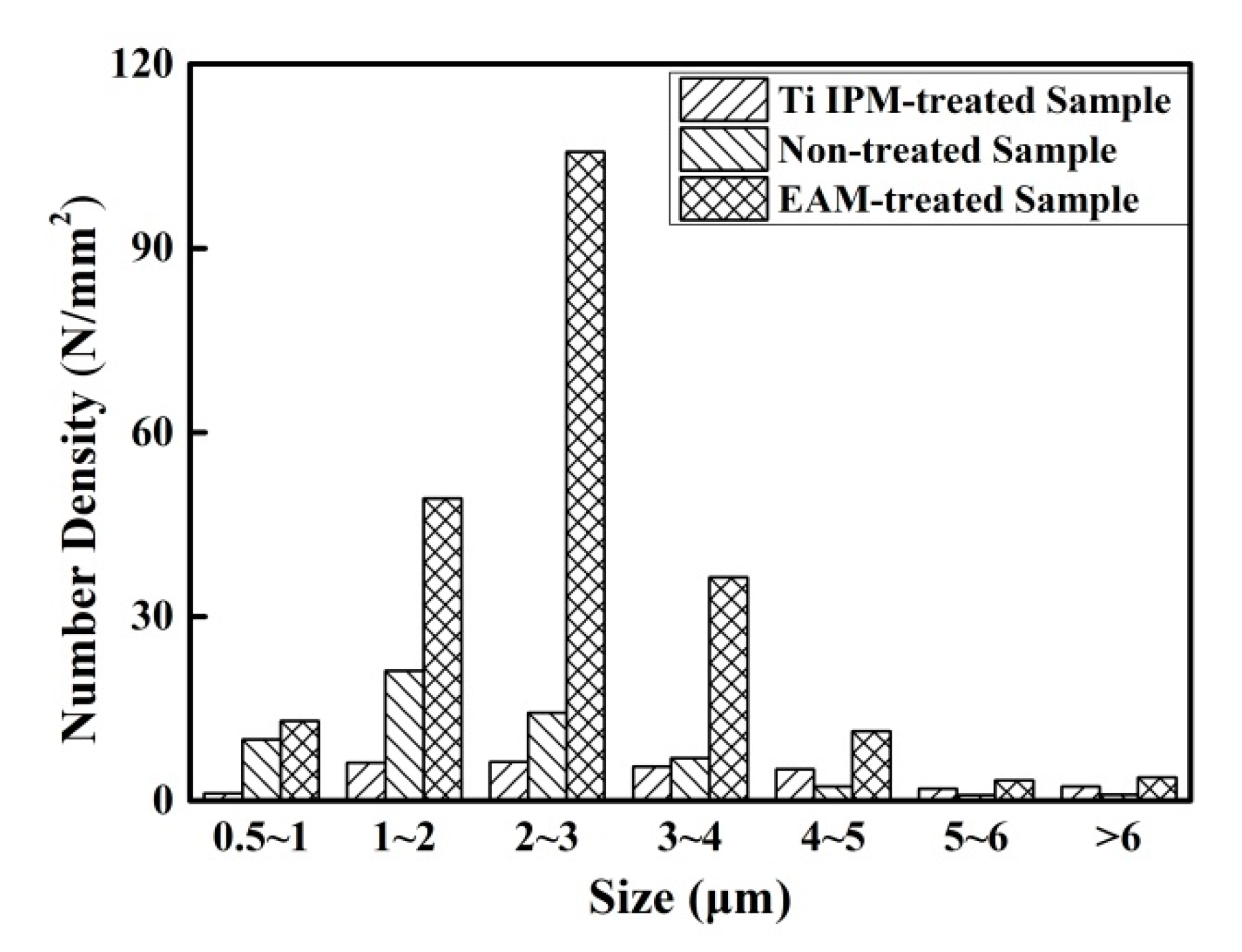
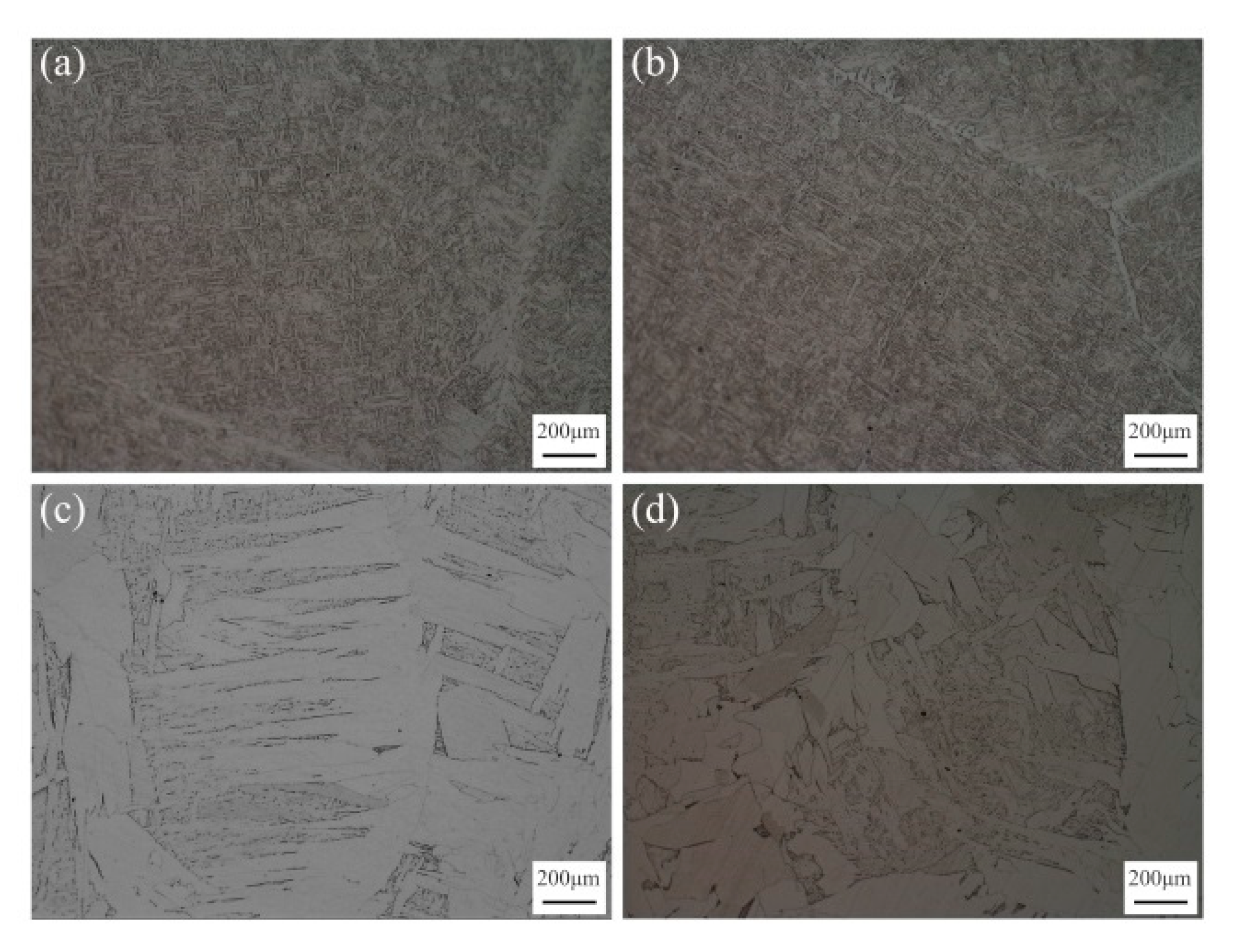
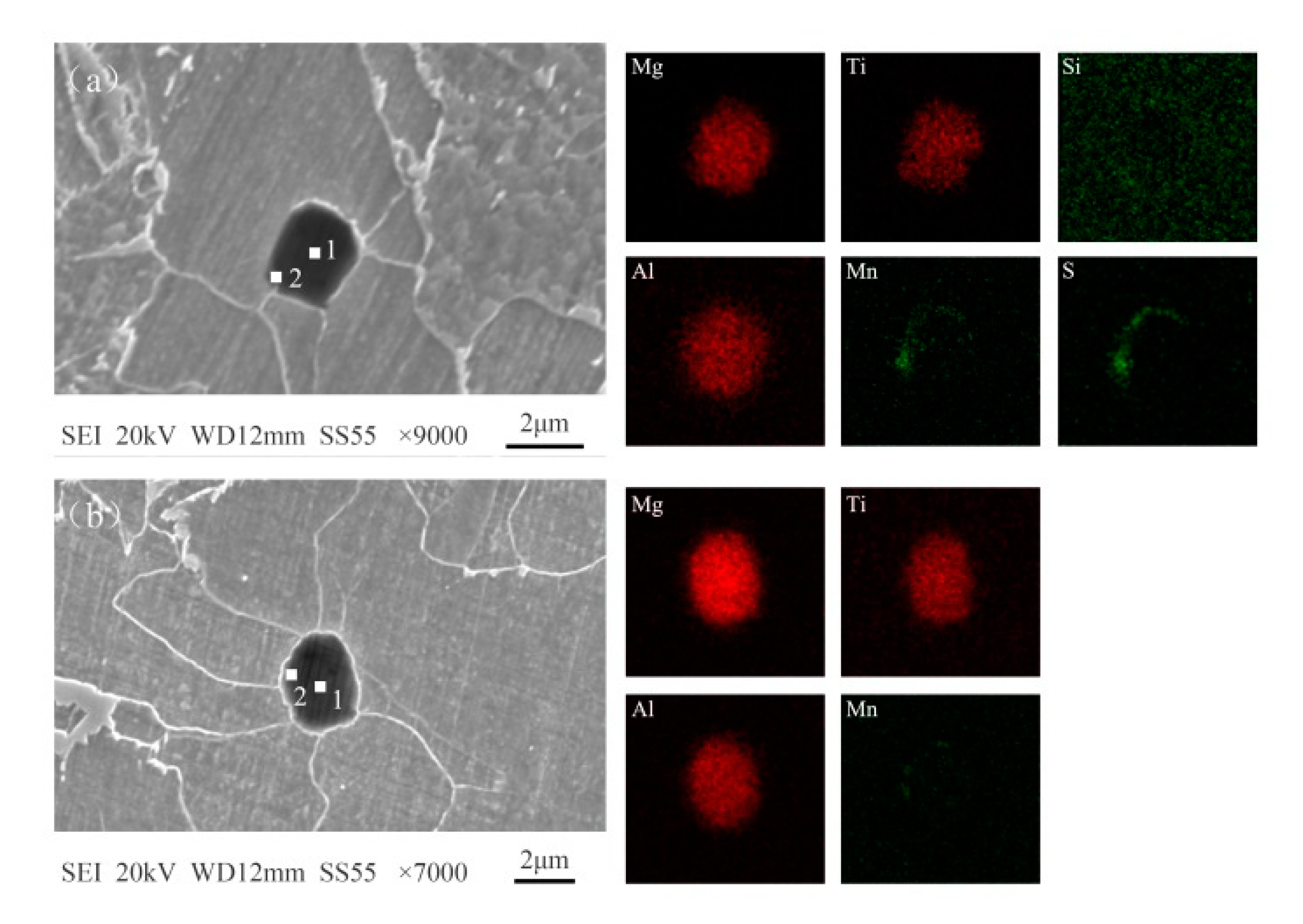
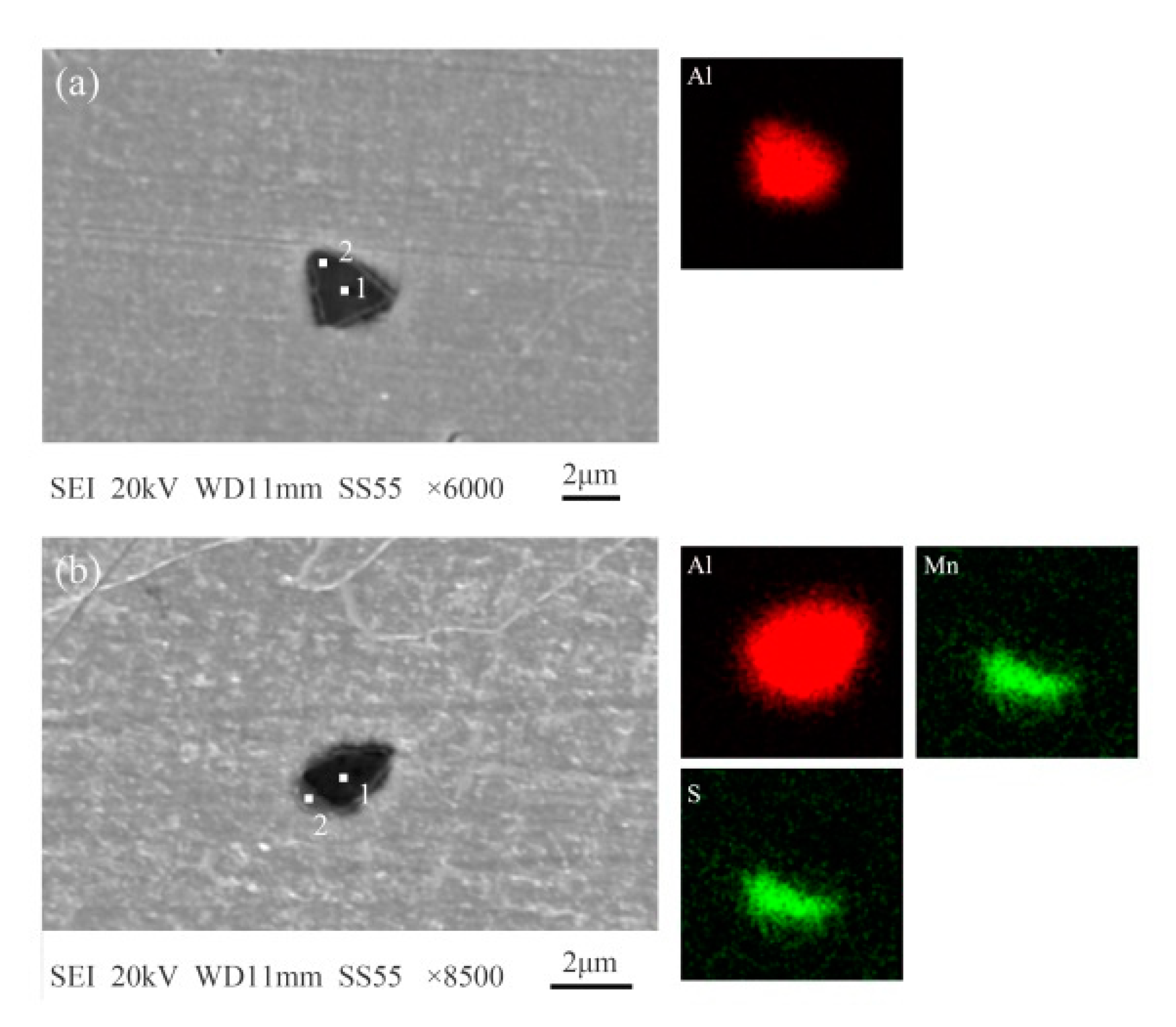
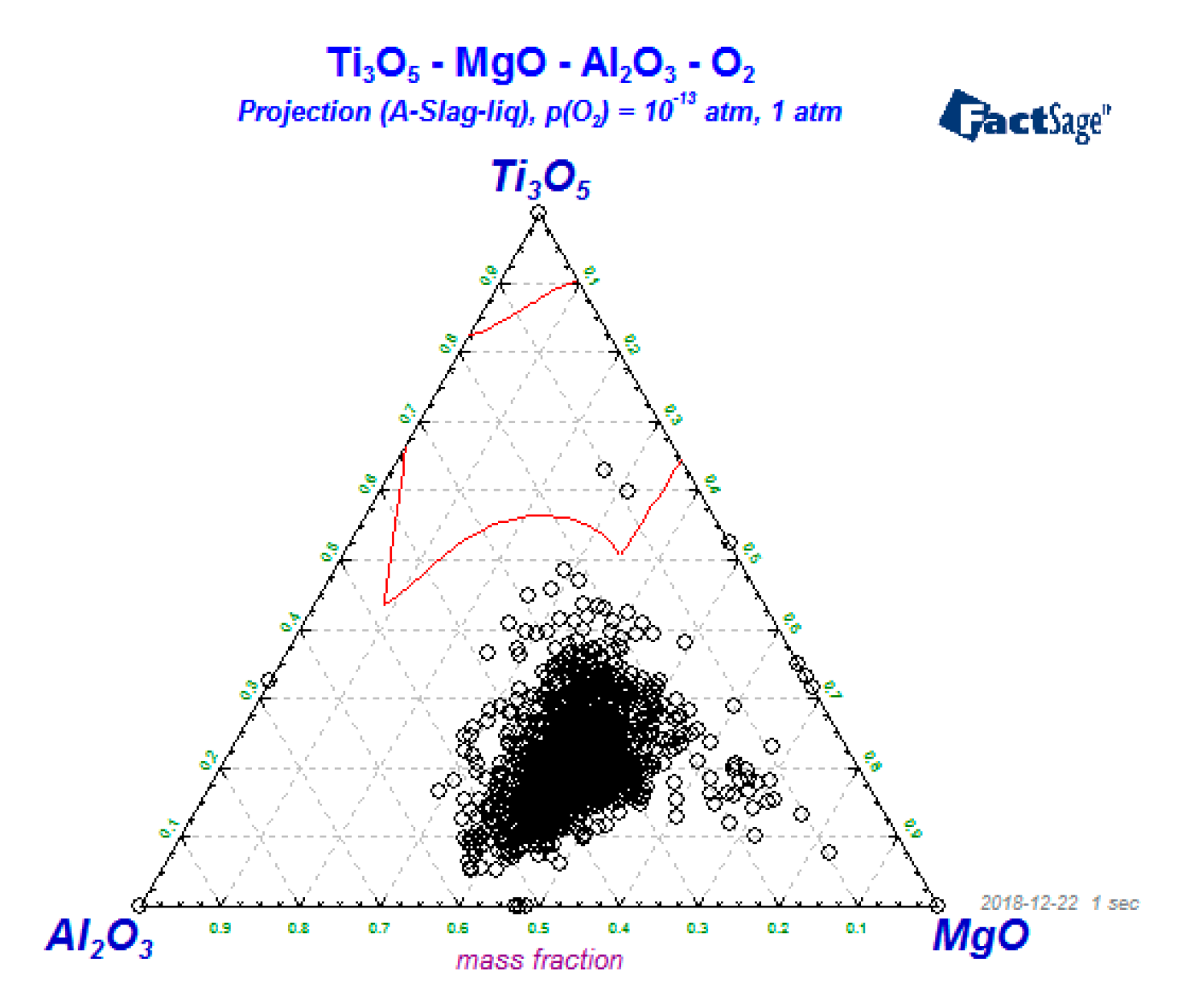
TiO2 nanoparticles and Mg alloy were added to molten steel in sequence to investigate the inclusion and microstructure characteristics. Compared with a non-treated sample, these additives resulted in the formation of Ti–Mg-bearing inclusions, which proves that the additives were valid. The size evolution from nanometer-scale TiO2 to micrometer-scale oxides hints at the agglomeration and growth of the TiO2 nanoparticles, which is due to the possible formation of a liquid-capillary force, the decomposition reaction of TiO2, and the higher Gibbs free energy of the nanoparticle. Furthermore, the statistical analysis of the oxides indicated that with the addition of the TiO2 nanoparticles and Mg alloy, the oxides were refined and their density was higher. Few pure MnS were observed in the treated sample. This is due to the fact that most oxides separated out in the liquid region at 1873 K based on the oxide composition and the calculated Al2O3–Ti3O5–MgO phase diagram. Thus, MnS preferred to segregate on them during solidification. After etching, it was found that the Ti–Mg-bearing oxide can induce the nucleation of intragranular acicular ferrites. The appearance of these acicular ferrites was not observed in the non-treated sample. This comparison indicates the effectiveness of the external adding method in oxide metallurgy.
Keywords: oxide metallurgy; intragranular acicular ferrite; external adding method oxide metallurgy; intragranular acicular ferrite; external adding method