Abstract
A chelating agent, 4-benzyloxybenzaldehyde-4-methyl-3-thiosemicarbazone (BBMTSC), containing sulphur and nitrogen donor atoms was synthesized and applied as a ligand for the chelation of Cd(II). Both the BBMTSC and its Cd(II) complex were characterized by elemental analysis, UV-Vis absorption spectra, Fourier transform infrared spectroscopy (FT-IR), mass spectra, nuclear magnetic resonance spectroscopy (NMR), X-ray powder diffraction (XRD), and field emission scanning electron microscopy (FESEM). The FTIR spectra confirmed the formation of both BBMTSC and its Cd(II) complex. XRD revealed the polycrystalline nature of the synthesized compounds. BBMTSC exhibited a flake-like micro-rod morphology, whereas the Cd(II) complex had a flower-like nanorod structure.
1. Introduction
Considerable focus has been directed towards the use of chelating agents containing sulphur and nitrogen in analytical and structural studies of metal complexes. The chelating agents containing sulphur have wide applications due to the strong nature of the electron-donating property. The presence of nitrogen and sulphur in chelating agents causes a decrease in solubility of the complexes and allows the complex to be isolated from the solution. Thiosemicarbazones have a unique place among chelating agents containing sulphur and nitrogen atoms. These chelating agents form complexes with many metal ions by bonding with thionate sulphur and hydrazine nitrogen atoms [1]. Recently, many authors have reported the complexation of thiosemicarbazones with several metal ions [2,3,4,5,6,7,8].
Cadmium is a bluish-white, malleable and ductile divalent metal. Cadmium is considered for many engineering applications due to its corrosion-resistance properties. Cadmium has been used in batteries (along with nickel), electroplating and in nuclear fission reactions as a barrier to control neutrons [9]. The toxic nature of cadmium, however, has restricted its use. Intestinal damage has been observed in rats given cadmium orally [10] and acute administration of cadmium has adverse effects on the spleen of rats [11]. The major exposure pathways of cadmium to human beings are the consumption of liver and kidney meat and cigarette smoking. Evidence exists for the association of cadmium levels and sex hormones in adult males [12]. The toxic nature of cadmium forces that it is essential to determine its concentration in environmental samples.
This paper describes the synthesis of a new ligand, 4-benzyloxybenzaldehyde-4-methyl-3-thiosemicarbazone (BBMTSC), which was used as a ligand to chelate with Cd(II). Both the ligand and its Cd(II) complex were characterized by elemental analysis, UV-Vis absorption spectra, Fourier transform infrared spectroscopy (FT-IR), mass spectra, nuclear magnetic resonance spectroscopy (NMR), X-ray powder diffraction (XRD), and field emission scanning electron microscopy (FESEM).
2. Experimental
2.1. Reagents
All chemicals used in this study were of analytical grade. The 4-Benzyloxybenzaldehyde and 4-methyl-3-thiosemicarbazide (Sigma-Aldrich, Products of Steinheim, Germany, 97%), and cadmium acetate dihydrate (Daehung, Daegu, Korea, 98%) were used for the synthesis of BBMTSC and its Cd(II) complex. A Fisher-scientific stirrer (Fisher Scientific, Dubuque, IA, USA) with a hot plate was used for stirring and heating the reactants.
2.2. Synthesis of 4-Benzyloxybenzaldehyde-4-Methylthiosemicarbazone (BBMTSC)
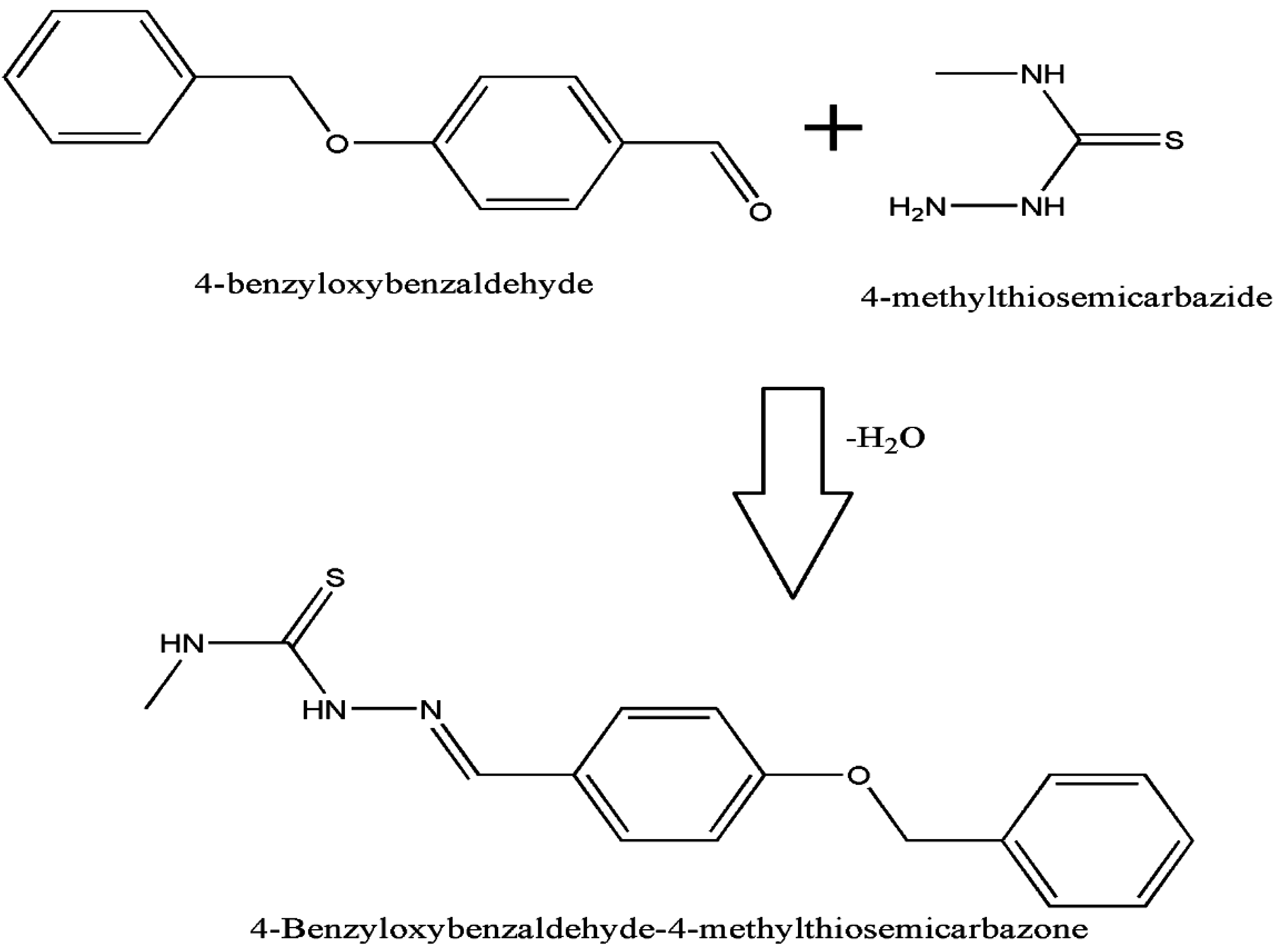
BBMTSC was synthesized by refluxing an ethanolic solution containing 2.1224 g of 4-benzyloxybenzaldehyde (Molecular Weight 212 g) and 1.0516 g of 4-methyl-3-thiosemicarbazide (Molecular Weight 05.16 g) for approximately 4 h 30 min in a round bottom flask. The light-yellow-colored product obtained (yield, 82%) was separated by filtration and dried. The product was recrystallized from ethanol. The synthesis of BBMTSC is presented in Figure 1.
Figure 1.
Synthesis of BBMTSC.
Figure 1.
Synthesis of BBMTSC.

2.3. Preparation of the Cd(II)-4-Benzyloxybenzaldehyde-4-Methylthiosemicarbazone Complex
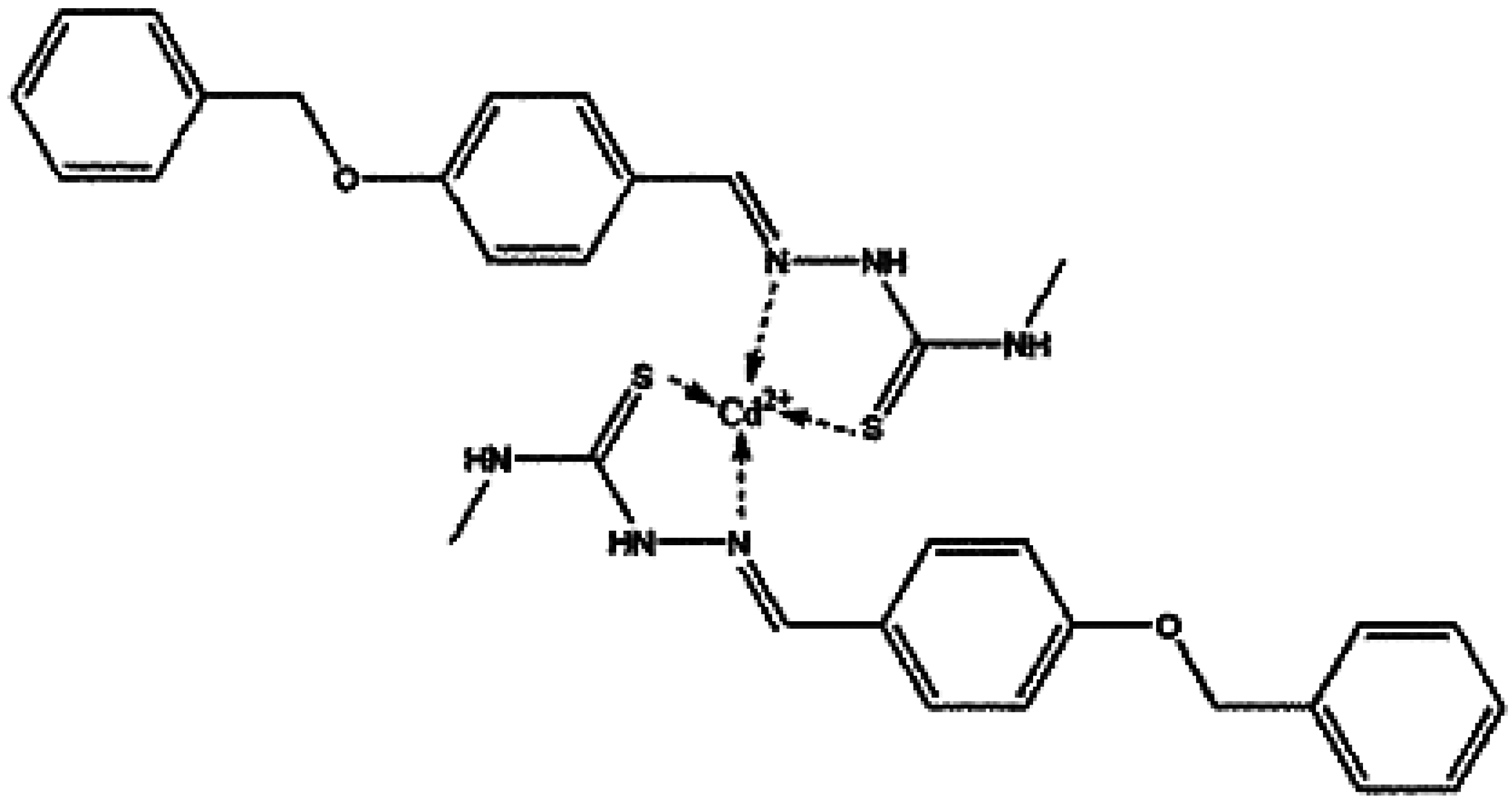
First, 100 mL of a hot ethanolic solution of 0.002 M BBMTSC (0.06 g in 100 mL) and 100 mL of an ethanolic solution of 0.001 M Cd(II) (0.0266 g of cadmium acetate dihydrate in 100 mL) were heated under reflux for 3 h and 30 min at 55 °C and cooled to room temperature. Subsequently, the above solution was filtered to obtain the Cd(II)-BBMTSC complex (yield, 73%). The complex was dried and characterized using a range of analytical techniques. Figure 2 shows the tentative structure of the Cd(II) complex of BBMTSC.
Figure 2.
Structure of the Cd(II) complex of BBMTSC.
Figure 2.
Structure of the Cd(II) complex of BBMTSC.

2.4. Characterization with Elemental Analysis, FT-IR, Mass Spectra, NMR, XRD and SEM
Elemental analyses (N, C, H and S) of both BBMTSC and its Cd(II) complex were recorded on a Thermo Scientific elemental analyzer (Thermo Eager 300 Flash EA1112, Waltham, MA, USA). UV-Vis absorption spectra of BBMTSC and its Cd complex were recorded on a Cary 5000 UV-Vis-NIR spectrophotometer (Agilent, Santa Clara, CA, USA). HRFAB mass spectra were recorded on a JMS 700 mass spectrometer (JEOL, Tokyo, Japan). The 1H NMR spectral data were recorded on a NMR-vnmrs 600 instrument (Agilent, Santa Clara, CA, USA). The FT-IR spectra were recorded on a Nicolet FT-IR 560 Magna spectrometer. Powder XRD (PAN analytical X’Pert PRO, Boulder, CO, USA) was carried out using CuKα (0.154056 nm) radiation at 40 kV and 30 mA. The data was collected between 10° and 60° 2θ with a step size of 0.02°. The morphology of the powder was examined by FESEM (S-4200, Hitachi, Tokyo, Japan). An ultra-thin layer of platinum was sputter-coated (E-1030 Ion Sputter, Hitachi, Japan) on the powder sample surface to improve the conductivity during the FESEM measurements.
3. Results and Discussion
3.1. Characterization of BBMTSC and Its Cd Complex
The synthesized ligand, BBMTSC, and its Cd(II) complex were characterized by elemental analysis, UV-Vis absorption spectra, FTIR spectroscopy, Mass Spectra, NMR, XRD, and SEM.
3.1.1. Elemental Analysis
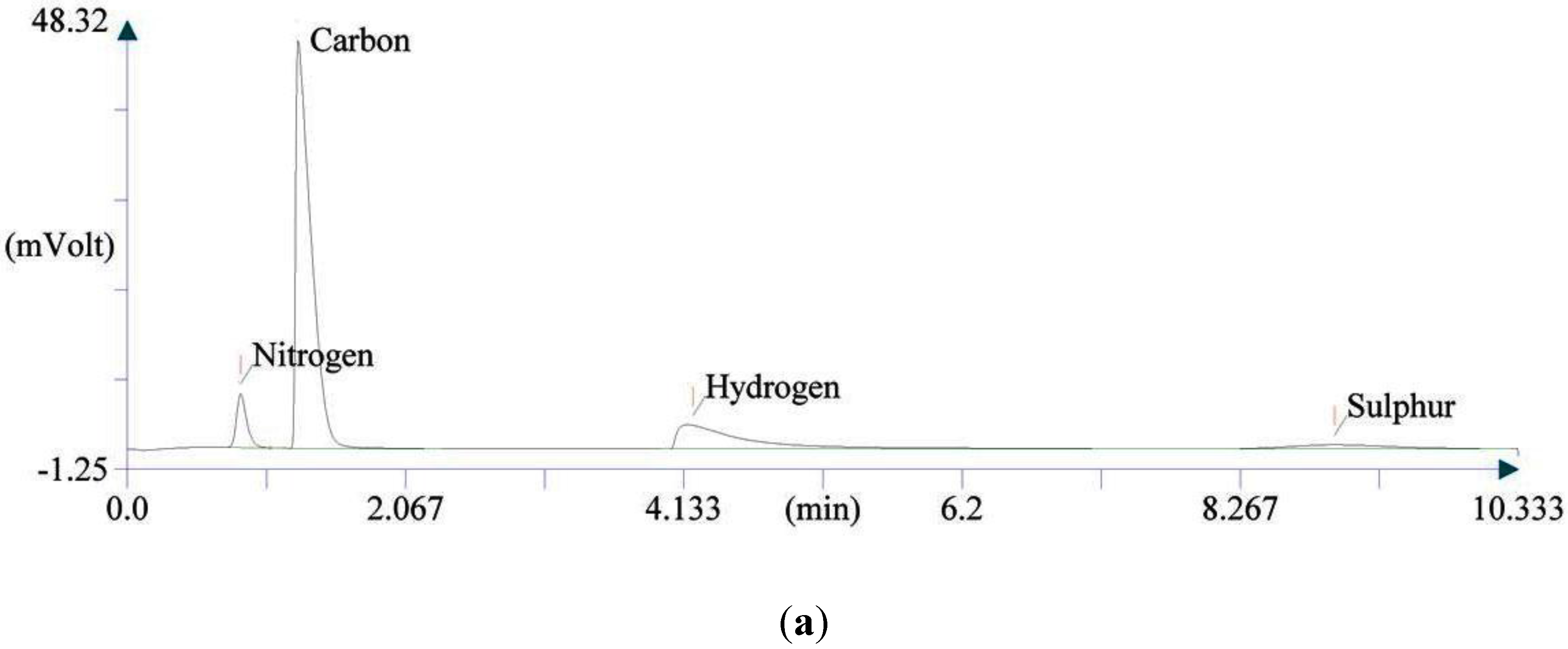
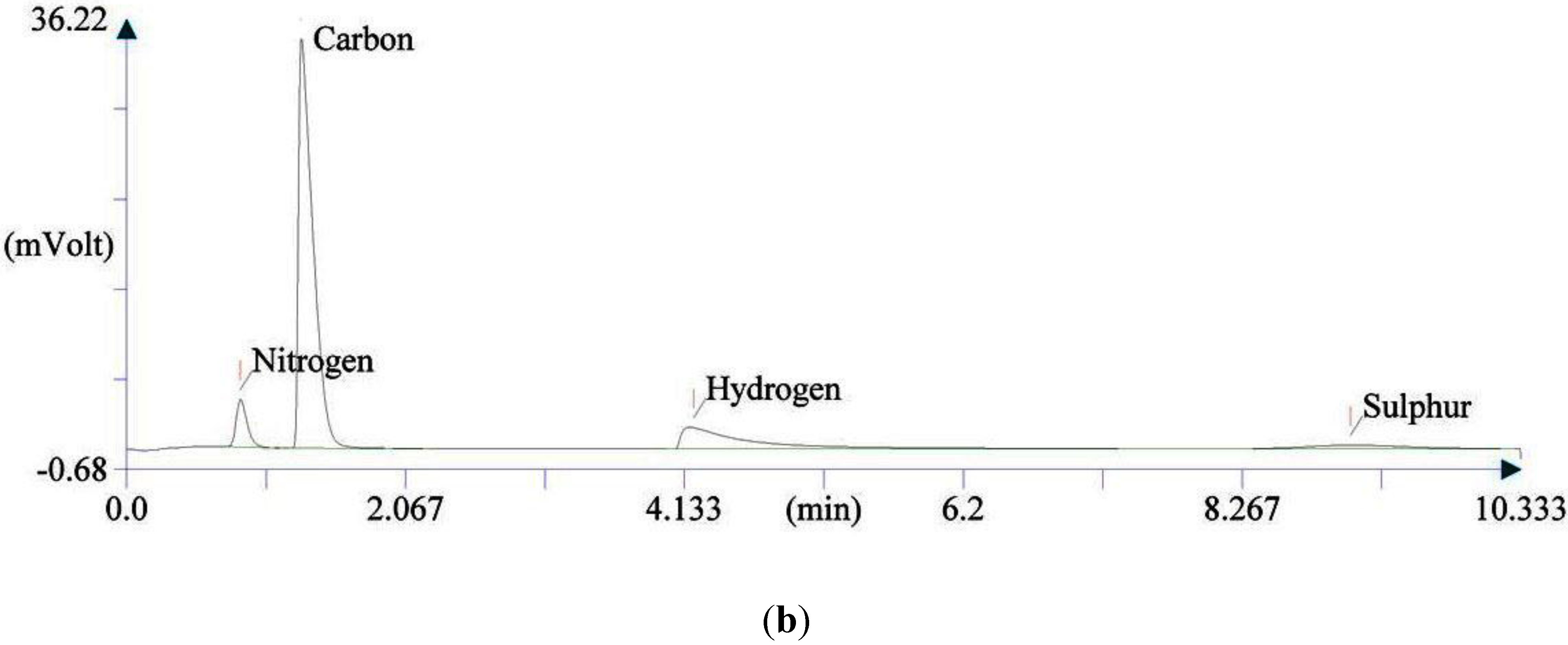
The elemental analysis reports of BBMTSC and its Cd complex are presented in Figure 3a,b. The calculated data for BBMTSC (C16H17N3SO), (C, 64.21%; H, 5.68%; N, 14.04%; S, 10.70%) is in good agreement with the experimentally found data (C, 64.39%; H, 5.69%; N, 13.70%; S, 10.43%) to the above proposed formula for BBMTSC. The calculated data for the Cd complex of BBMTSC (C32H34N6O2S2-Cd), (C, 54.05%; H, 4.78%; N, 11.82%; S, 9.00%) was also found in good agreement with the experimentally determined data (C, 51.57%; H, 4.18%; N, 10.98%; S, 7.94%).

Figure 3.
Elemental analysis reports of (a) BBMTSC and (b) Cd(II)-BBMTSC.
Figure 3.
Elemental analysis reports of (a) BBMTSC and (b) Cd(II)-BBMTSC.


3.1.2. UV-Vis Absorption Spectra
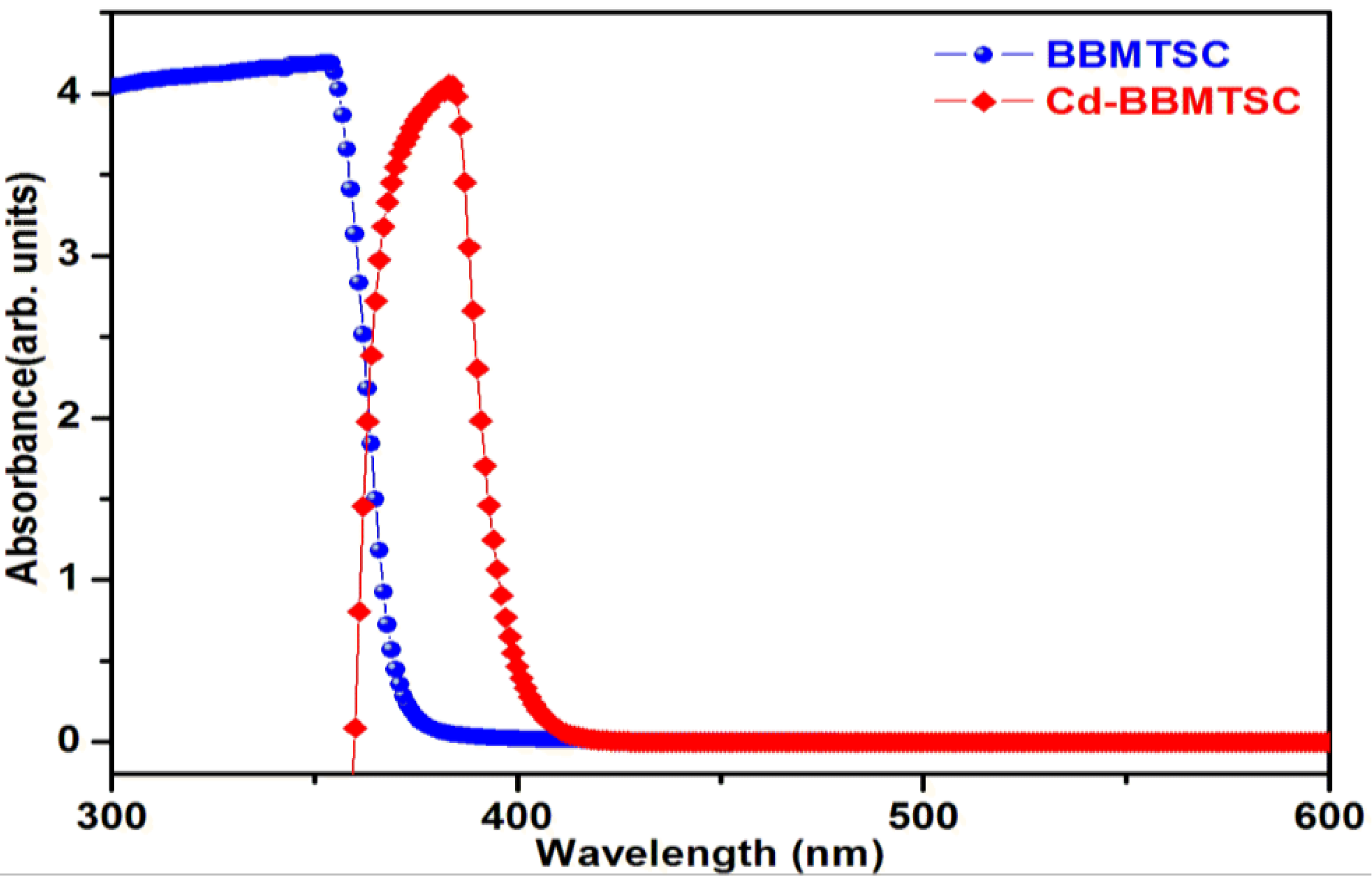
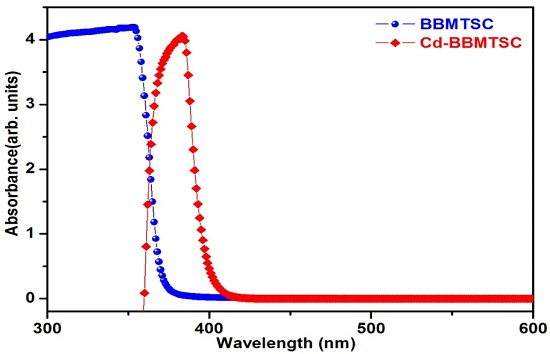
The absorption spectrum of the Cd(II)-BBMTSC complex was recorded against the reagent (BBMTSC) blank. The absorption spectra of the BBMTSC and its Cd complex are shown in Figure 4. The obtained spectra revealed that the Cd(II)-BBMTSC complex and BBMTSC have maximum absorbance at 380 and 350 nm, respectively. The BBMTSC has minimum absorbance at the maximum absorbance of its Cd complex and confirms the complexation between BBMTSC and Cd(II).
Figure 4.
Absorption spectra of BBMTSC (against solvent blank) and Cd-BBMTSC (against BBMTSC). BBMTSC = 2.8 × 10⁻³ M; Cd-BBMTSC = 5.62 × 10⁻⁴ M.
Figure 4.
Absorption spectra of BBMTSC (against solvent blank) and Cd-BBMTSC (against BBMTSC). BBMTSC = 2.8 × 10⁻³ M; Cd-BBMTSC = 5.62 × 10⁻⁴ M.

3.1.3. FT-IR Analysis
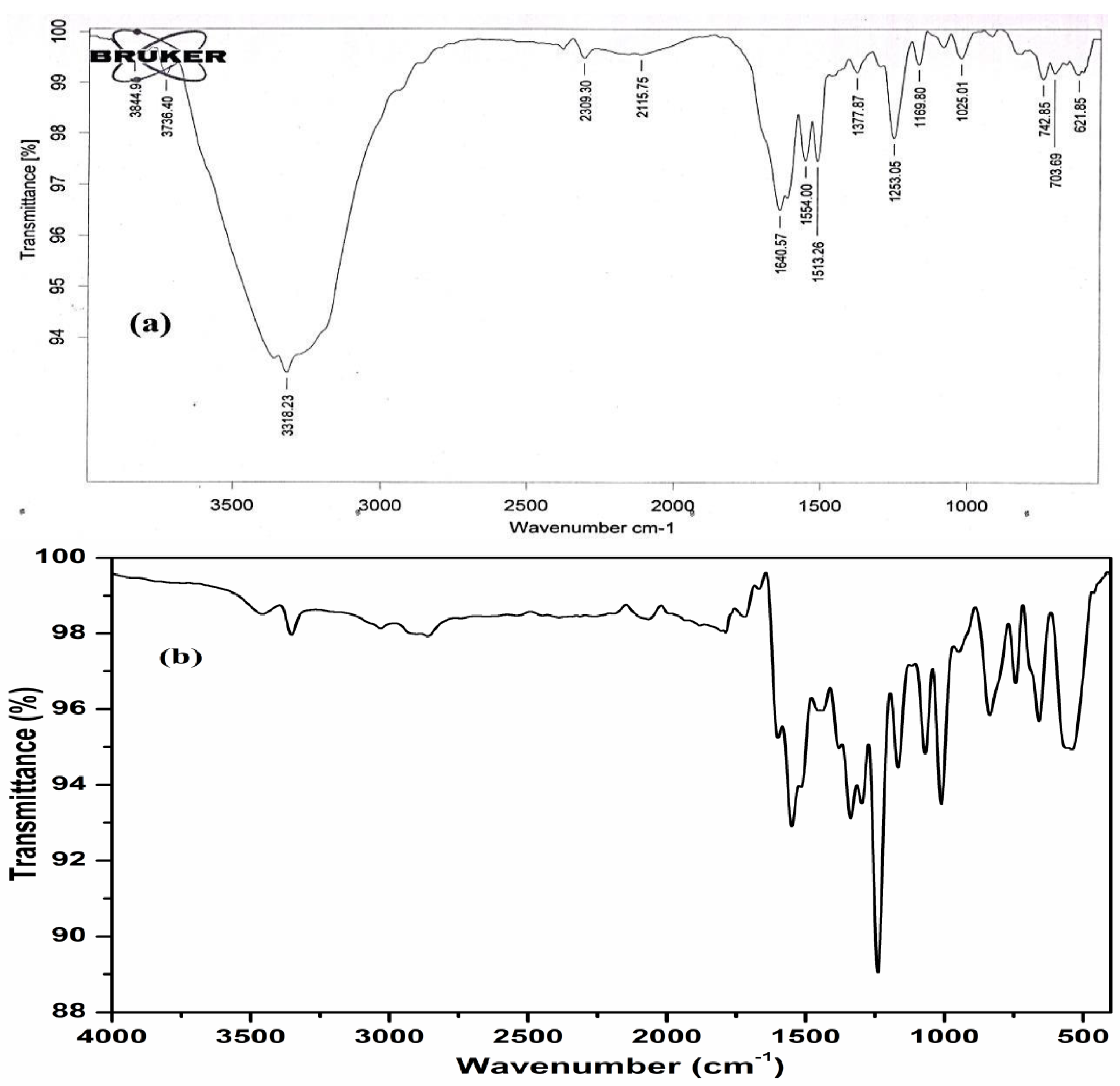
FT-IR spectral data of BBMTSC is as follows: C=N peak at 1640.57 cm−1, C=S peak at 1253.05 cm−1 and –NH peak at 3311.96 cm−1. This data confirms the formation of the chelating agent, BBMTSC. Figure 5a represents the FTIR spectrum of BBMTSC. FT-IR spectral data of Cd(II) complex with BBMTSC is as follows: C=N peak appears at 1549.95 cm−1 and C=S peak appears at 1239.75 cm−1. Figure 5b shows the FT-IR spectrum of the complex.
The FT-IR spectra confirmed the synthesis of BBMTSC and successful chelation with Cd(II) ions. The C=N peak in BBMTSC was shifted from 1640.57 cm−1 to 1549.95 cm−1, and similarly, the C=S peak was shifted from 1253.05 cm−1 to 1239.75 cm−1 due to chelation with Cd(II) ions [13,14]. The –N–H peak in BBMTSC disappeared after chelation with Cd(II) ions due to deprotonation, and the formation of Cd(II) complex of BBMTSC was confirmed [15].
Figure 5.
FTIR spectra of (a) BBMTSC and (b) Cd(II)-BBMTSC.
Figure 5.
FTIR spectra of (a) BBMTSC and (b) Cd(II)-BBMTSC.

3.1.4. Mass Spectral Analysis
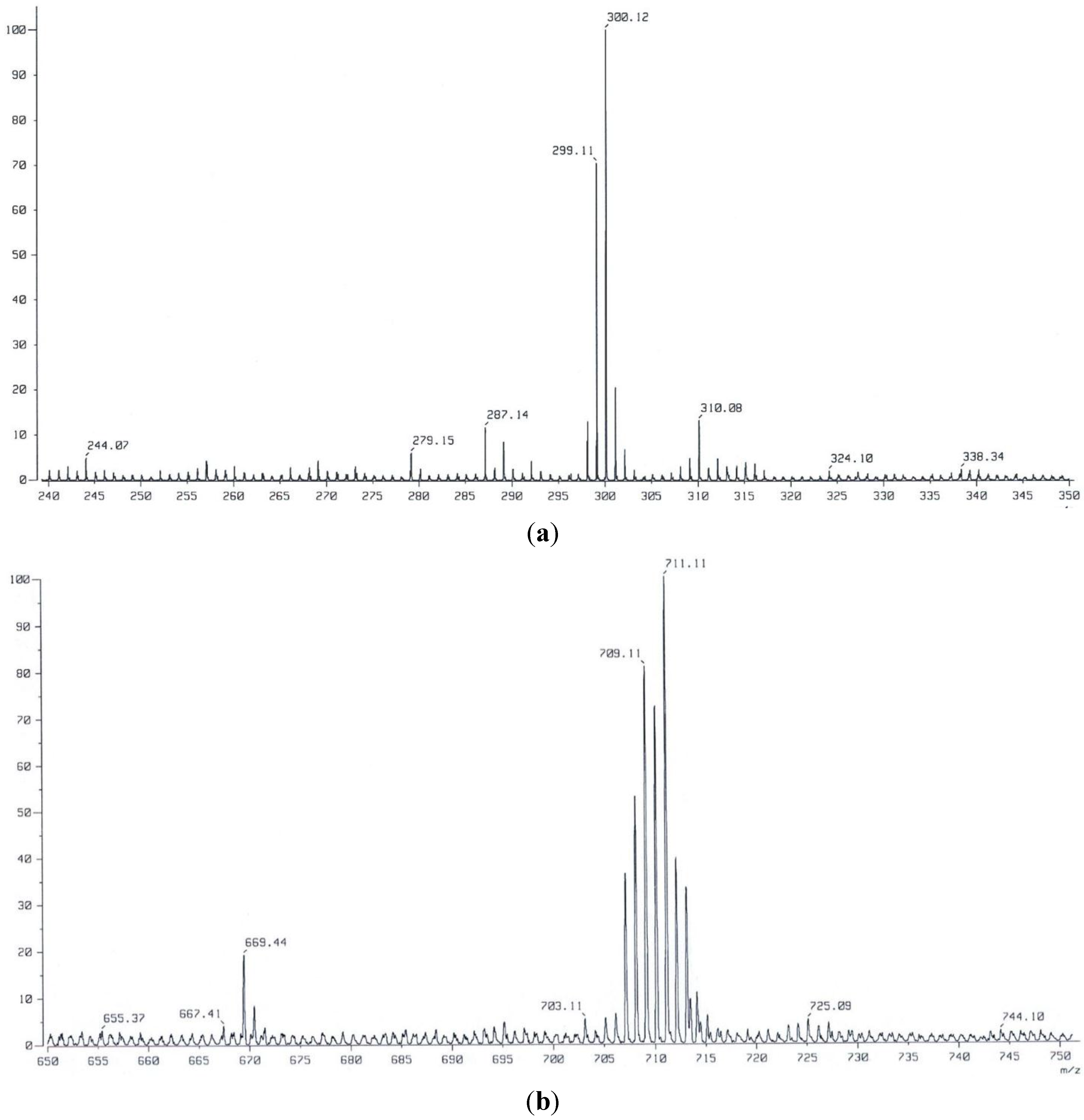
The calculated molecular weight as per the molecular formula of BBMTSC is 299. As per the mass spectrum, the molecular weight for BBMTSC is obtained as 300.12, which is in conformity with the calculated molecular weight. Similarly, the calculated molecular weight as per the molecular formula of the Cd complex of BBMTSC is 711.414. The molecular weight obtained from the mass spectrum is 711.11, which is in good agreement with the calculated molecular weight. The mass spectra of both BBMTSC and its Cd complex are shown in Figure 6a,b, respectively.
Figure 6.
Mass spectra of (a) BBMTSC and (b) Cd(II)-BBMTSC.
Figure 6.
Mass spectra of (a) BBMTSC and (b) Cd(II)-BBMTSC.

3.1.5. 1HNMR Spectral Analysis
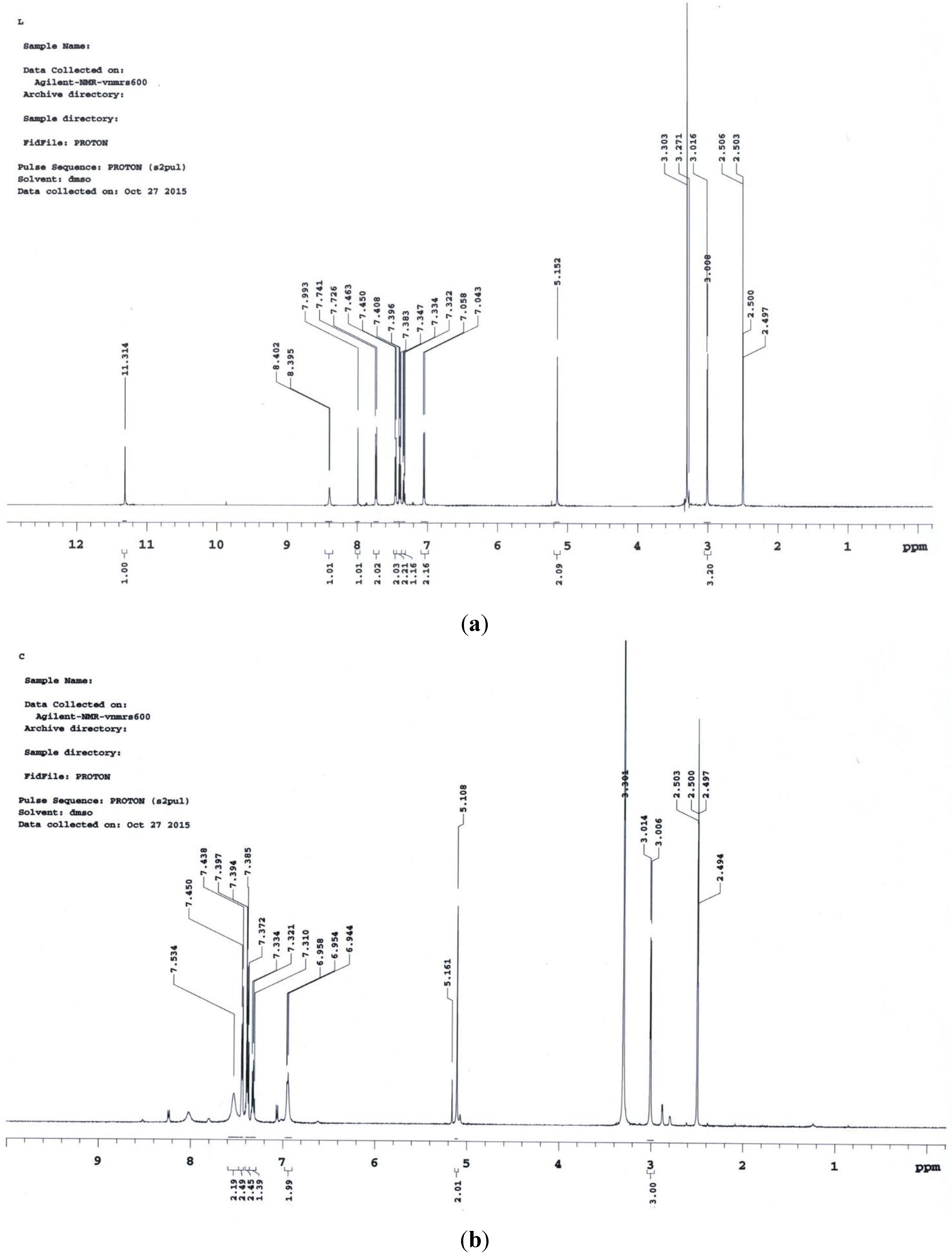
The 1H NMR data (DMSO/TMS) of BBMTSC is as follows: 11.31 (s, 1H, N–NH), 8.40 (s, 1H, SC–NH), 7.99 (s, 1H, HC=N), 7.74–7.04 (m, 9H, Ar–H), 5.15 (s, 2H, O–CH2), 3.00 (d, 3H, CH3). This 1H NMR data confirms the formation of BBMTSC. The 1H NMR data (DMSO/TMS) of the Cd-BBMTSC complex is as follows: 7.53 (s, 1H, SC–NH), 7.43 (s, 1H, HC=N), 7.45 (m, 9H, Ar–H), 5.16 (s, 2H, O–CH2), 3.01 (d, 3H, CH3). The 1H NMR spectra of both BBMTSC and its complex are presented in Figure 7a,b, respectively. From Figure 7b, the chelation of Cd with BBMTSC is confirmed. The HC=N peak in BBMTSC (Figure 7a) appears at 7.99 while in its Cd complex (Figure 7b) it was shifted towards 7.43 due to chelation with Cd. Along with this, the peaks of BBMTSC appear in the range between 9.0 and 7.0 and were were shifted towards the lower side in its Cd complex, which confirms the chelation of Cd with the nitrogen atoms in BBMTSC. Both Figure 7a,b confirm the formation of BBMTSC and its chelation with Cd.
Figure 7.
1H NMR spectra of (a) BBMTSC and (b) Cd(II)-BBMTSC.
Figure 7.
1H NMR spectra of (a) BBMTSC and (b) Cd(II)-BBMTSC.

3.1.6. XRD Analysis
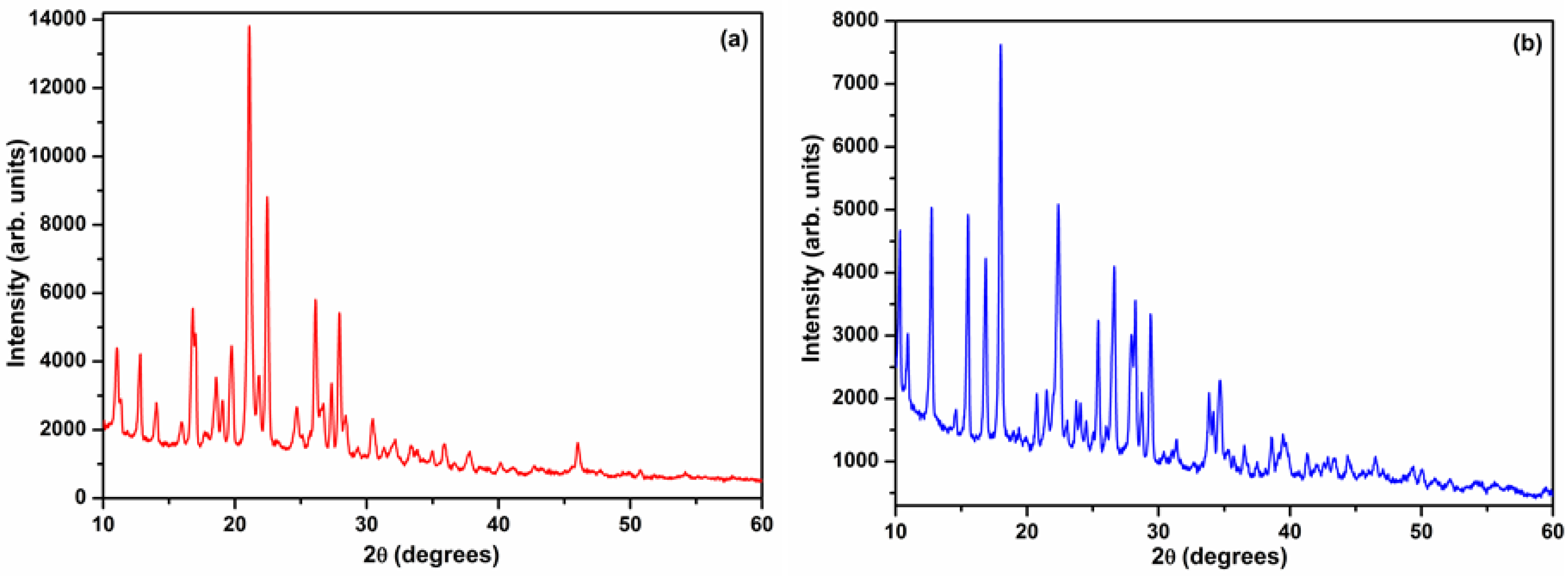
XRD was carried out to identify the polycrystalline nature of the synthesized samples. Figure 8a,b show XRD patterns of BBMTSC and its Cd(II) complex, respectively. Both the free ligand and its complexes were polycrystalline in nature. The dominant XRD peak at 21.08° 2θ was observed for BBMTSC, while the peak for its Cd(II) complex was observed at 17.9° 2θ. Therefore, the structural phase changes occurred with the chelation of Cd(II) with BBMTSC, which is apparent by the shift in the dominant 2θ value to the lower energy side. The structural properties of BBMTSC and its Cd(II) complex have not been reported in the literature so far. Therefore, crystal growth experiments are in progress for the determination of the crystal structure of BBMTSC and its Cd(II) complex, intending for a better understanding of the structural properties.
Figure 8.
XRD patterns of (a) BBMTSC and (b) Cd(II)-BBMTSC.
Figure 8.
XRD patterns of (a) BBMTSC and (b) Cd(II)-BBMTSC.

3.1.7. SEM Analysis
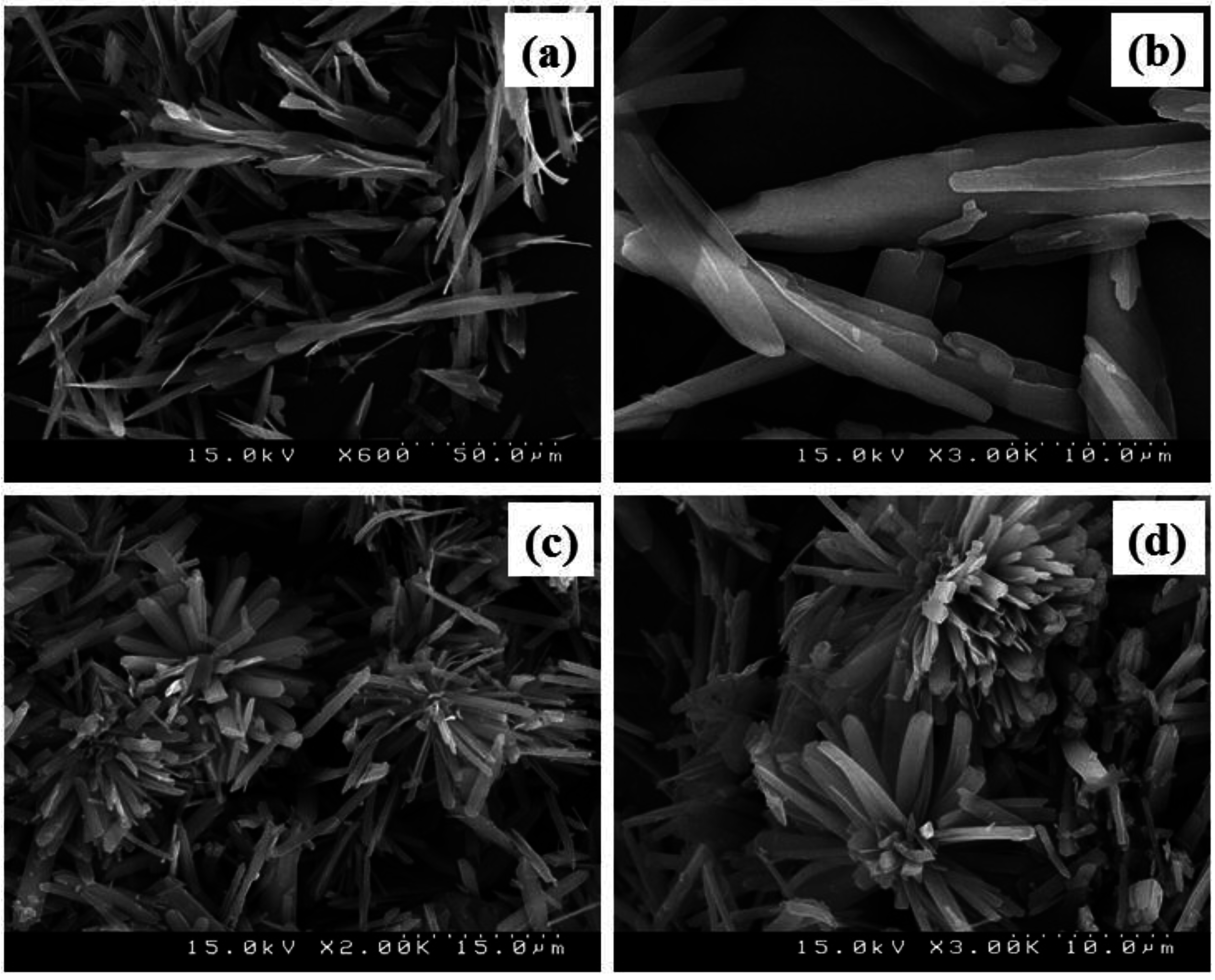
FESEM images were performed to examine the morphological variation and microstructure of the synthesized samples. Figure 9a,b present the low and high magnified images of free ligand. These images show that the free ligand (BBMTSC) possesses a flake-like morphology on the micrometer scale. On the other hand, a closer look indicated that BBMTSC was formed by micro-rod structures, and for some of them, a number of layers seems to be covered. An abrupt change in its morphology was observed after the chelation of Cd(II) to BBMTSC. Figure 9c,d show the low and high magnified FESEM images of the Cd(II) complex. The figure shows that the rod-like micro-flower hierarchical structures were obtained. A careful examination of the high magnified image certainly indicates that a bunch of nanorods are arranged to form a flower-like morphology of the Cd(II) complex.
Figure 9.
SEM images of (a,b) BBMTSC and (c,d) Cd(II)-BBMTSC.
Figure 9.
SEM images of (a,b) BBMTSC and (c,d) Cd(II)-BBMTSC.

4. Conclusions
BBMTSC and its Cd(II) complex were prepared and characterized by elemental analysis, UV-Vis absorption spectra, FT-IR spectroscopy, mass spectroscopy, NMR, XRD, and FESEM. All these characterization studies conclude the synthesis of BBMTSC and its chelation with Cd(II). In our future studies, the newly synthesized BBMTSC could be applied to determine the Cd(II) concentration in environmental samples. Furthermore, investigations on the crystal structures of BBMTSC and its Cd(II) complex will be carried out to achieve a better understanding of the structural properties.
Author Contributions
L.N. Suvarapu designed and done the experimental part of this study. S.O. Baek contributed in analysis of experimental data and Quality control part of the manuscript. L.N. Suvarapu wrote the manuscript. S.O. Baek reviewed the English corrections throughout the manuscript.
Conflicts of Interest
The authors declare no conflict of interest.
References
- Suvarapu, L.N.; Somala, A.R.; Koduru, J.R.; Baek, S.O.; Ammireddy, V.R. A critical review on analytical and biological applications of thio- and phenyl-thiosemicarbazones. Asian J. Chem. 2012, 24, 1889–1898. [Google Scholar]
- Matesanz, A.I.; Hernandez, C.; Souza, P. A new organometallic palladium(II) compound derived 2,6-deacetylpyridine mono (thiosemicarbazone): Synthesis, spectroscopic properties and crystal structure of two solvatomorphic forms. J. Organomet. Chem. 2014, 751, 374–378. [Google Scholar] [CrossRef]
- Gaal, A.; Orgovan, G.; Polgari, Z.; Reti, A.; Mihucz, V.G.; Bosze, S.; Streli, C. Complex forming competition and in vitro toxicity studies on the applicability of di-2-pyridylkethone- 4,4-dimethyl-3-thiosemicarbazone (Dp44mT) as a metal chelator. J. Inorg. Biochem. 2014, 130, 52–58. [Google Scholar] [CrossRef] [PubMed]
- Koduru, J.R.; Lee, K.D. Evaluation of thiosemicarbazone derivatives as chelating agent for the simultaneous removal and trace determination of Cd(II) and Pb(II) in food and water samples. Food Chem. 2014, 150, 1–8. [Google Scholar] [CrossRef] [PubMed]
- Moghadam, M.R.; Jahromi, S.M.P.; Darehkordi, A. Simultaneous spectrophotometric determination of copper, cobalt, nickel and iron in food stuffs and vegetables with a new bis thiosemicarbazone ligand using chemometric approaches. Food Chem. 2016, 192, 424–431. [Google Scholar] [CrossRef] [PubMed]
- Nguyen, T.B.Y.; Pham, C.T.; Trieu, T.N.; Abram, U.; Nguyen, H.H. Synthesis, structures and biological evaluation of some transitional metal complexes with a tetradentate benzamidine/thiosemicarbazone ligand. Polyhedron 2015, 96, 66–70. [Google Scholar] [CrossRef]
- Bal-Demirci, T.; Sahin, M.; Kondakci, E.; Ozyurek, M.; Ulkuseven, B.; Apak, R. Synthesis and antioxidant activities of transition metal complexes based 3-hydroxysalicylaldehyde-S-methylthiosemicarbazone. Spectrochim. Acta A 2015, 138, 866–872. [Google Scholar] [CrossRef] [PubMed]
- Kumar, D.; Singh, V.K. Application of metal complexes of Schiff bas with special reference to thiosemicarbazone: A review. J. Drug Discov. Therap. 2014, 2, 24–32. [Google Scholar]
- Cadmium. Available online: https://en.wikipedia.org/wiki/Cadmium (accessed on 28 July 2015).
- Ninkov, M.; Aleksandrov, A.P.; Demenesku, J.; Mirkov, I.; Mileusnic, D.; Petrovic, A.; Grigorov, I.; Zolotarevski, L.; Tolinacki, M.; Kataranovski, D.; et al. Toxicity of oral cadmium intake: Impact on gut immunity. Toxicol. Lett. 2015, 237, 89–99. [Google Scholar] [CrossRef] [PubMed]
- Demenesku, J.; Mirkov, I.; Ninkov, M.; Aleksandrov, A.P.; Zolotarevski, L.; Kataranovski, D.; Kataranovski, M. Acute cadmium administration to rats exerts both immunosuppressive and proinflammatory effects in spleen. Toxicology 2014, 326, 96–108. [Google Scholar] [CrossRef] [PubMed]
- Kresovich, J.K.; Argos, M.; Turyk, M.E. Associations of lead and cadmium with sex hormones in adult males. Environ. Res. 2015, 142, 25–33. [Google Scholar] [CrossRef] [PubMed]
- West, D.X.; Albert, J.N. Transitional metal ion complexes of thiosemicarbazones derived from 2-acetylpyridine N-oxide. Part III. Spectral and thermal studies of the metal complexes of 2-acetylpyridine N-oxide thiosemicarbazone. Transit. Metal Chem. 1991, 16, 1–4. [Google Scholar] [CrossRef]
- Garg, B.S.; Kurup, M.R.P. Spectroscopic studies on copper(II) complexes derived from a substituted 2-acetylpyridine thiosemicarbazone. Transit. Metal Chem. 1988, 13, 309–312. [Google Scholar] [CrossRef]
- Gujarathi, J.R.; Pawar, N.S.; Bendre, R.S. Synthesis, spectral and biological study of four and five co-ordinate copper(II) complexes derived from 5-chloro-2-hydroxy acetophenone N(4)-methyl thiosemicarbazone. Der Pharma Chem. 2013, 5, 111–117. [Google Scholar]
© 2015 by the authors; licensee MDPI, Basel, Switzerland. This article is an open access article distributed under the terms and conditions of the Creative Commons Attribution license (http://creativecommons.org/licenses/by/4.0/).