Article

Selective Mo Recovery from Spent Hydrodesulfurization (HDS) Mo-Co Catalysts: Comparison of Acidic Leaching and Oxidative Roasting


Department of Metals and Corrosion Engineering, University of Chemistry and Technology Prague, 166 28 Prague, Czech Republic
*
Author to whom correspondence should be addressed.
Metals 2026, 16(8), 833; https://doi.org/10.3390/met16080833
Submission received: 11 June 2026 / Revised: 16 July 2026 / Accepted: 16 July 2026 / Published: 30 July 2026
(This article belongs to the Special Issue Advances in Sustainable Utilization of Metals: Recovery and Recycling)

Abstract

Two alternative first-stage routes for selective molybdenum recovery from a pretreated spent Co-Mo/Al2O3 hydrodesulfurization catalyst were investigated and compared using the same feedstock: direct sulfuric-acid leaching and oxidative volatilization. The study combined single-factor process tests with XRD, SEM-EDS, XRF, ICP-OES, and particle-size analyses to relate extraction behavior to the distribution of Mo and Co within the catalyst. Direct leaching achieved 98.1% Mo extraction in 2 mol/L H2SO4 at 90 °C for 2 h, while approximately 95% extraction was obtained at only 0.1 mol/L H2SO4 and 40 °C. Co co-extraction remained at approximately 12%, and Al extraction was generally 0.6–0.9%, demonstrating a selective first-stage separation. Water leaching provided an extraction of 51.3% Mo because readily accessible MoO3 forms hydrated aqueous Mo(VI) species. Oxidative roasting removed 92.2% Mo from the coarsely ground material at 1400 °C for 1 h, while fine grinding increased Mo volatilization to 97.8%, whereas no measurable Co volatilization was observed. The two routes therefore offer different advantages: mild leaching lowers thermal demand and produces a Mo-bearing solution, whereas roasting avoids liquid reagents and produces a Mo-bearing vapor that can be collected by controlled condensation. The residual Mo fraction was associated with MoO2 and Mo-bearing regions enclosed by the stable CoAl2O4-Al2O3 matrix. The results establish a comparative basis for selecting an appropriate first-stage Mo-removal route before separate recovery of Co and possible valorization of the alumina-rich residue.

1. Introduction

Hydrodesulfurization (HDS) catalysts are widely used to remove organosulfur compounds from crude-oil fractions and transportation fuels, including diesel, gasoline, and aviation fuel [1]. These catalysts are indispensable due to stringent global regulations aimed at reducing sulphur emissions from fuels [1,2,3], driven by the adverse effects of SO2 on human health and the environment, including respiratory problems and acid rain [4,5]. With continuing fossil-fuel demand, particularly in developing countries, the use of HDS catalysts and the generation of spent catalyst waste are expected to increase significantly [6,7].
HDS catalysts, primarily composed of valuable transition metals such as Mo, Co, and Ni, supported on alumina, present a significant recycling opportunity for metal recovery once deactivated [8,9,10,11]. Despite advances in HDS catalyst development over the last century, the traditional combinations of Mo or W [5,9,12] with Co or Ni on Al2O3 supports, remain unmatched in efficiency [11,13,14,15,16]. As these catalysts become spent, they not only pose environmental disposal challenges but also represent a valuable secondary resource for metal recovery.
Landfilling of spent catalysts has historically been practiced [2,17], but it creates risks related to metal leaching, sulfur-containing emissions, and self-heating or fire [2,17,18]. The regulatory and economic burdens of such disposal methods necessitate more sustainable and economically viable recycling solutions. Current research highlights the potential of spent HDS catalysts as secondary sources of critical metals, advocating for efficient recycling processes to recover these metals and mitigate environmental impact.
Numerous recycling methods for spent HDS catalysts have been investigated, with each approach presenting unique advantages and challenges. The primary methods can be broadly categorized into hydrometallurgical and pyrometallurgical processes. Hydrometallurgical routes involve the use of mineral acids such as H2SO4 [19,20], HCl [21], and HNO3 [22] to dissolve metals from the catalysts. Organic acids such as citric and oxalic acids have also been explored for their selective leaching properties under milder conditions [23,24,25]. Alkaline leaching methods employ bases such as Na2CO3 and NaOH to form soluble metal complexes [26,27,28,29]. These techniques are known for their selectivity and non-corrosive nature, making them suitable for extracting metals like Mo and V. Additionally, innovative techniques such as bioleaching offer environmentally friendly alternatives but generally require longer operating times and careful control of microbial conditions [30,31,32]. Pyrometallurgical routes such as oxidative roasting convert metal sulphides to oxides at high temperatures, which are easier to leach [24,25,33]. Reduction roasting or melting involves reducing metal oxides to their metallic state using carbon [25,32], followed by melting to separate the metals from the slag. Roasting processes utilizing sodium and calcium salts convert metal sulphides into water-soluble compounds, thereby facilitating subsequent leaching [9,24].
The CRI-MET method [32], one of the commercially exploited technologies, involves pressure leaching and produces high-purity MoO3, V2O5, and Ni-Co residues. The Eurecat approach combines hydrometallurgical and pyrometallurgical processes and achieves high recoveries of Mo, V, Co, and Ni [34]. Moxba-Metrex and Quanzhou Jing-Tai Industry have developed acidic leaching processes to recover metals with minimal environmental impact [32].
The present study compares two alternative selective Mo-removal routes applied to the same pretreated Co-Mo/Al2O3 feedstock. Oxidative roasting was not used as a pretreatment for subsequent acid leaching; rather, direct H2SO4 leaching and oxidative MoO3 volatilization were evaluated as independent first-stage options. The novelty lies in (i) demonstrating high Mo extraction with dilute H2SO4 without an added oxidant while retaining most Co and Al in the solid, (ii) quantifying the effect of particle size on Mo/Co/Al selectivity, and (iii) linking the residual Mo fraction in both routes to the same microstructural constraints imposed by CoAl2O4 and Al2O3. The work therefore emphasizes selective separation rather than simultaneous dissolution of all valuable metals and treats the Co- and Al-rich residue as a feedstock for a subsequent recovery stage.

2. Materials and Methods

2.1. Feedstock Pretreatment and Preparation

An industrially spent hydrodesulfurization (HDS) catalyst was utilized in this study. Initially, the catalyst was cleaned of residual oils through a kerosene washing procedure. Following this, carbon (mainly coke), sulfur, and volatile organic compound (VOC) deposits were removed by roasting the catalyst at 1050 °C in the presence of air in a muffle furnace.
The pretreated catalyst was homogenized for 40 min at 50 rpm in a three-dimensional shaker mixer. The homogenized, unground material was designated ORG. Two ground fractions were prepared from the sample ORG to evaluate the effect of particle size. The coarsely ground fraction (ML1) was produced in an VM4 vibratory mill (OPS Přerov, Přerov, Czech Republic). The finely ground fraction (ML2) was produced in an XQM-2A (JJMMM Co., Ltd., Changsha, China) planetary ball mill. The milling conditions are summarized in Table 1. Thus, ORG, ML1, and ML2 do not represent three different catalyst feedstocks but rather three physical states of the same pretreated industrial sample.
Because of the limited vessel capacity, milling was performed in several batches. The batches belonging to each fraction were combined and homogenized for 30 min at 50 rpm in the three-dimensional shaker mixer before testing.

2.2. Feedstock Characterization

Chemical composition
The bulk composition of the pretreated feedstock was determined by ICP-OES after acid decomposition, with XRF used as an independent compositional check. The principal constituents were Al, Co, and Mo; minor Si, Ni, Na, Fe, Mn, Mg, Cr, and Ca were also quantified (Table 2). No analytically significant V was identified, and sulfur had been removed during pretreatment. Al was therefore monitored as the principal impurity during leaching.
Phase composition
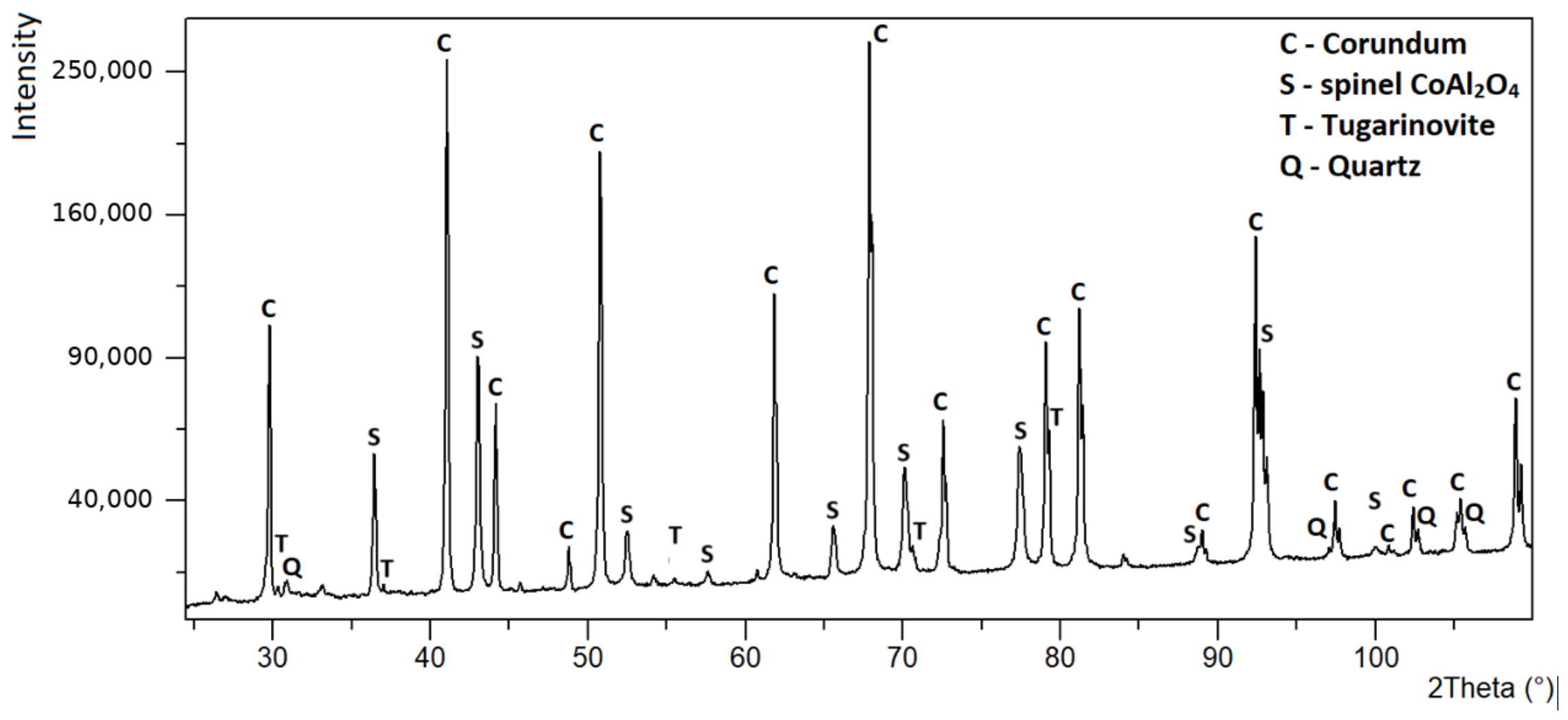
XRD analysis of the representative ML1 fraction identified corundum (Al2O3) and CoAl2O4 as the major crystalline phases, with minor MoO2 and quartz (Table 3 and Figure 1). The semiquantitative phase result does not account for all Mo measured chemically. The remaining Mo is tentatively attributed mainly to finely dispersed or poorly crystalline MoO3, which was below the practical detection limit of XRD. The presence and distribution of Mo were nevertheless confirmed by the SEM-EDS elemental maps.
The diffractogram in Figure 1 confirms the predominance of Al2O3 and the presence of the CoAl2O4 spinel phase.
Morphology and elemental distribution of the sample ORG
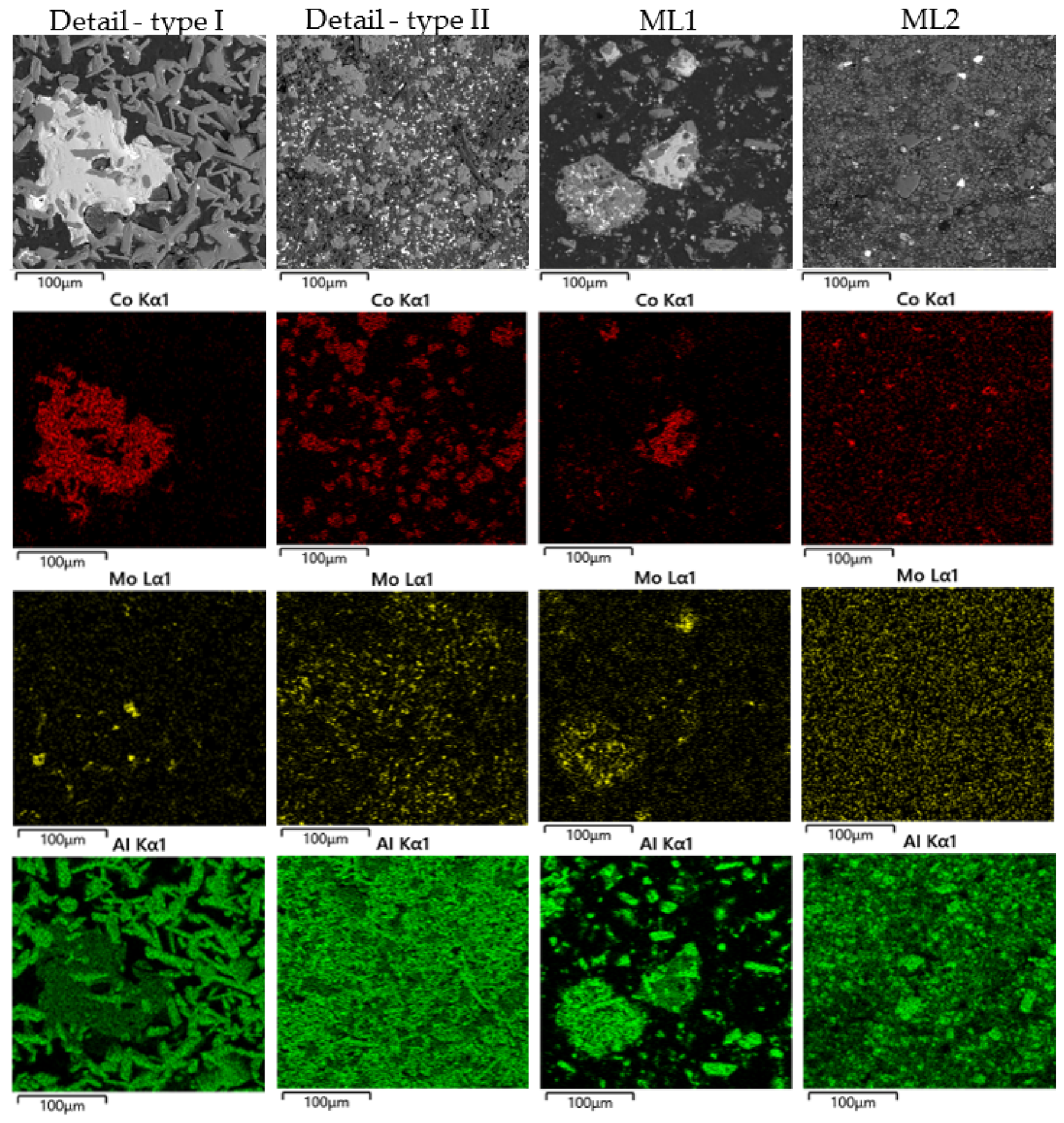
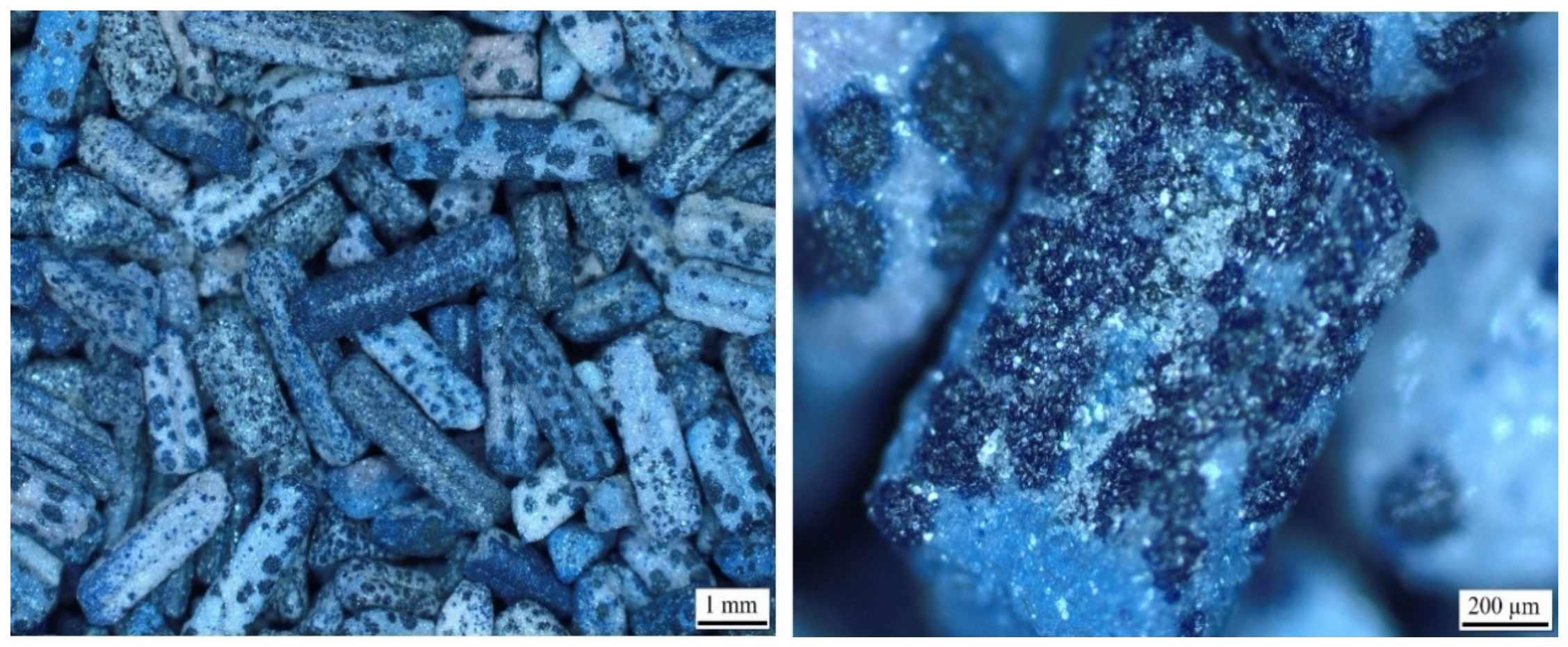
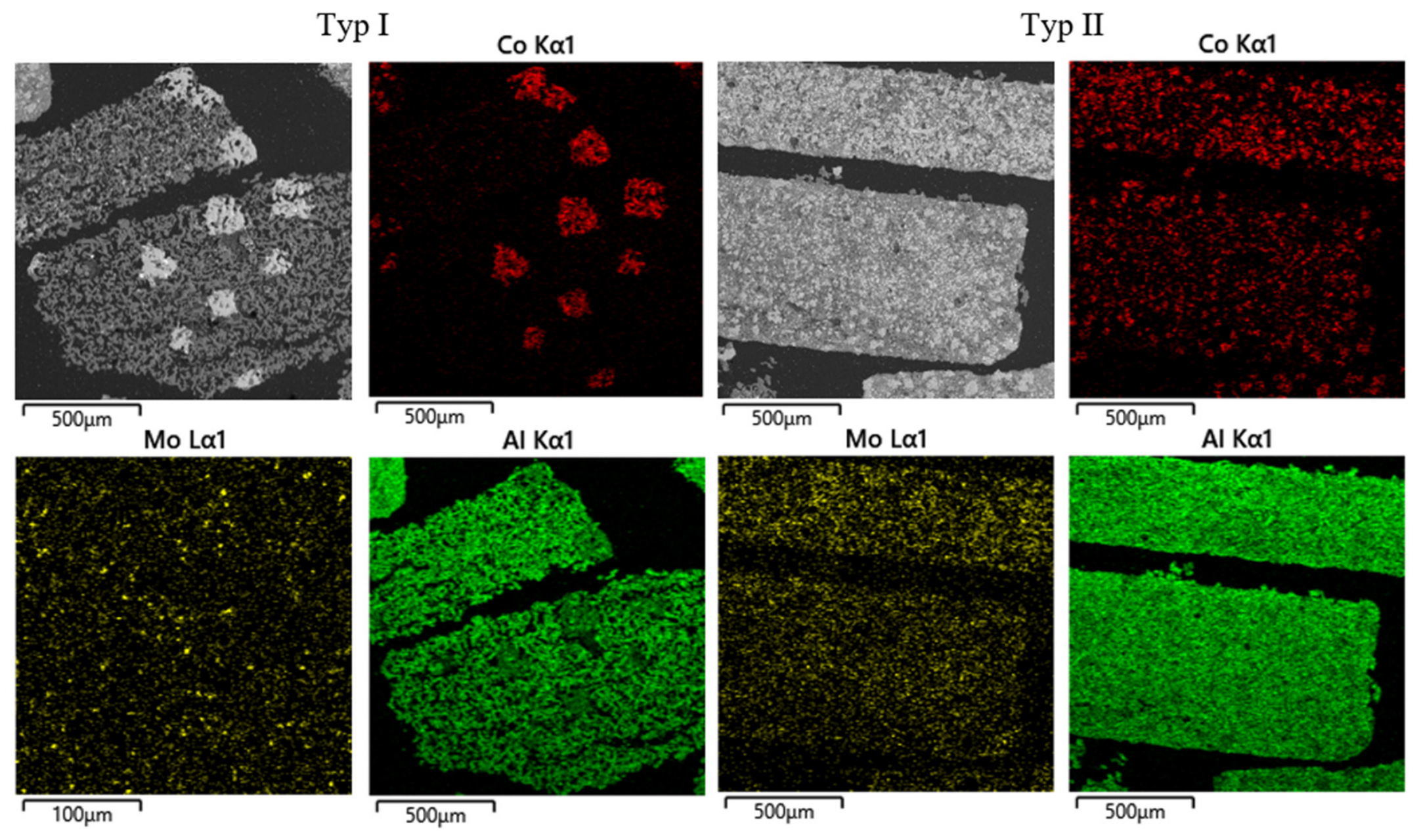
The ORG feedstock consisted primarily of cylindrical extrudates approximately 3 mm long and 0.5 mm in diameter (Figure 2). Two visually and microstructurally distinct particle types were observed. Type I particles contained blue CoAl2O4-rich domains and had a relatively porous structure, whereas type II particles were denser and showed a more uniform distribution of Co and Mo.
The stereomicroscope and SEM-EDS images (Figure 2 and Figure 3) show that macroparticles are composed of small Al2O3 particles forming the overall skeleton. SEM images and EDS maps further reveal the elemental distribution, highlighting the differences between type I and type II particles. Type I particles, characterized by their porous structure and blue spots, contain clusters of CoAl2O4, corresponding to the “cobalt blue” pigment. Molybdenum, attributed mainly to finely dispersed MoO3 based on the combined analytical evidence, is distributed throughout these particles. Type II particles exhibit significantly lower porosity and a more uniform distribution of both CoAl2O4 and MoO3, as shown in high-magnification images (Figure 3).
Particle size distribution and milling-induced microstructural changes of the samples ML1 and ML2
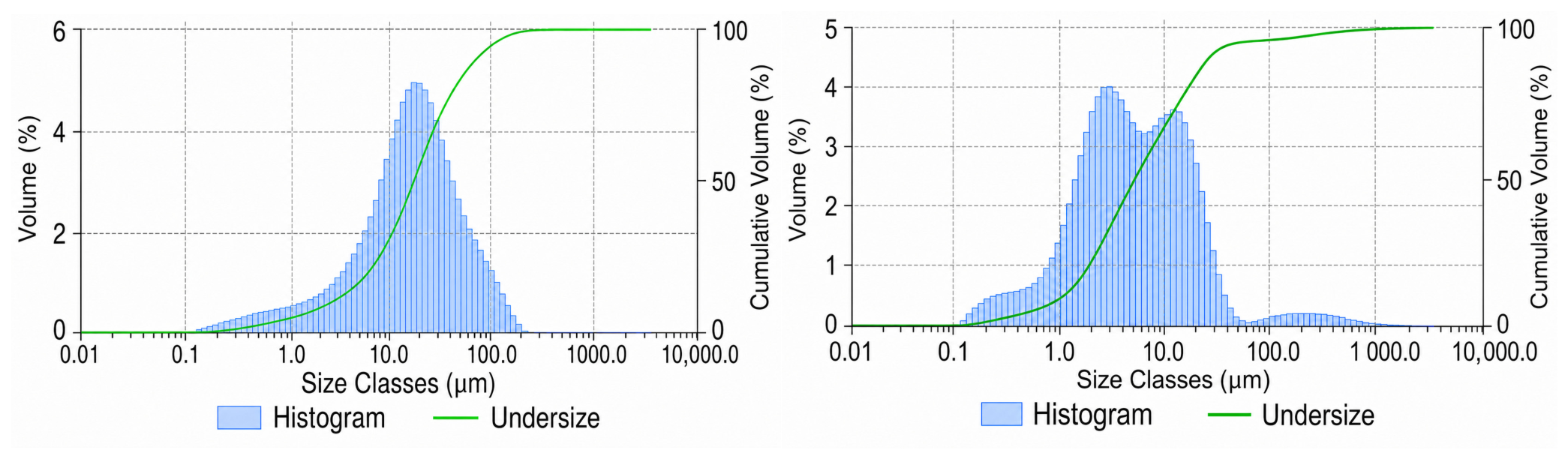
The particle size data for ORG, ML1, and ML2 are listed in Table 4 and illustrated in Figure 4. The median particle sizes of the ground samples ML1 and ML2 were 16.7 and 4.7 µm, respectively. ORG consisted of intact extrudates and was therefore reported as >100 µm in all three percentile classes.
SEM and EDS analyses of the microstructure and element distribution in Figure 5 reveal that the alumina-based structure of the spent catalysts was substantially fragmented in ML1, whereas larger CoAl2O4 clusters were further disrupted in ML2, resulting in a finer and more homogeneous particle population.

2.3. Experimental Design and Scope

The experiments were designed as sequential single-factor screening studies rather than as a full factorial optimization. ML1 was selected as the baseline material for most leaching and roasting tests because it required less intensive milling while already providing near-maximum Mo accessibility. Fine grinding was then evaluated separately to determine the upper-bound benefit of additional liberation. This choice is especially relevant to selective leaching because the increase in Mo extraction obtained with ML2 was small, whereas Co and Al co-extraction increased.
For oxidative roasting, temperature was screened with ML1; the effects of particle size and residence time were then examined at the highest tested temperature. This sequence establishes the principal trends but does not quantify interactions among temperature, time, and particle size. A factorial study using ML2 across the full temperature range would therefore be required for formal process optimization.

2.4. Direct Leaching Experiments

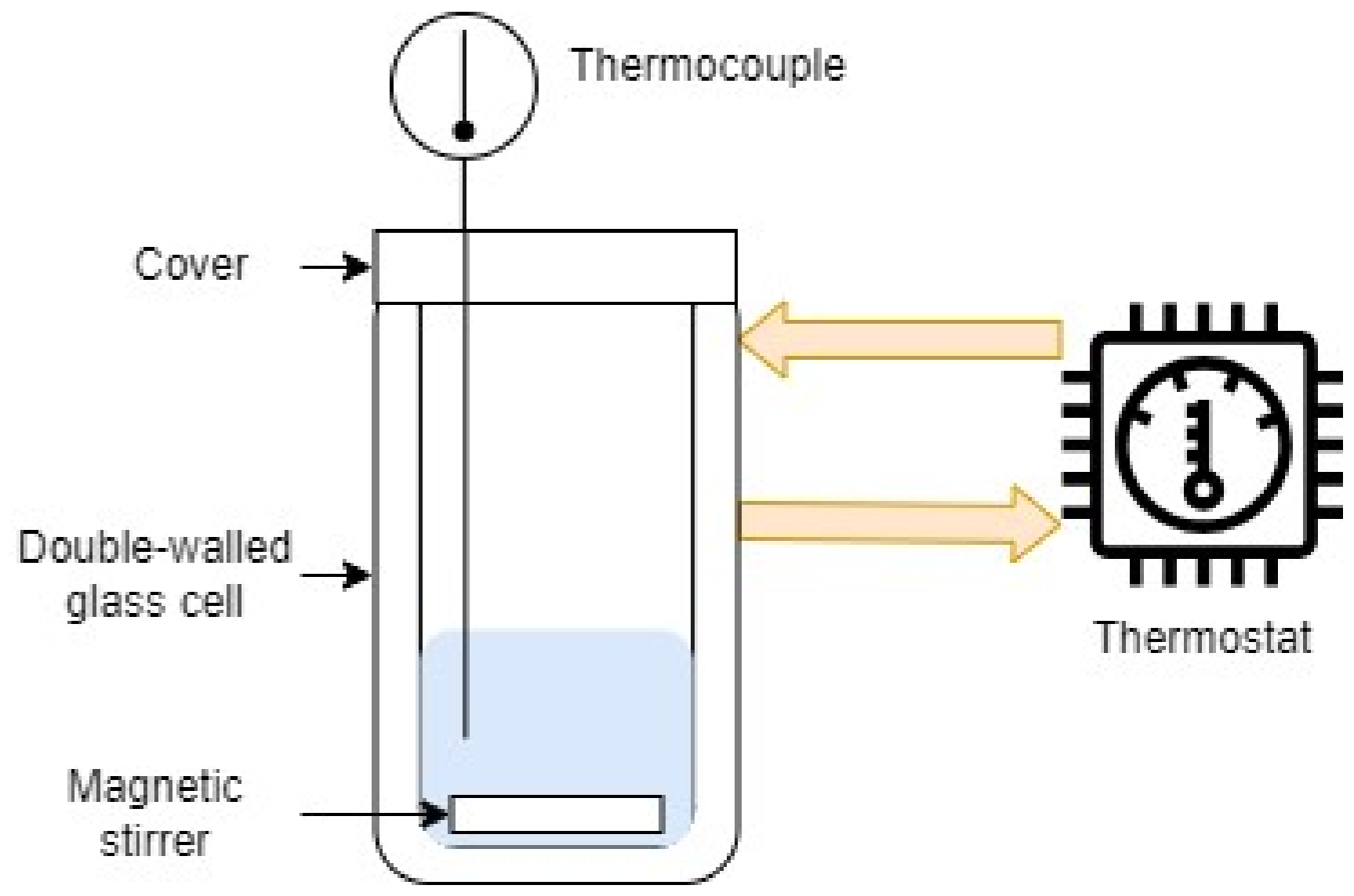
Leaching was performed in a 250 mL double-walled glass reactor heated by an external water thermostat and equipped with a thermometer and an RH basic magnetic stirrer (IKA-Werke GmbH & Co. KG, Staufen, Germany) (Figure 6). Sulfuric acid was selected as the principal lixiviant because it is widely available, comparatively inexpensive, non-volatile under the applied conditions, and commonly used in hydrometallurgical practice. A limited comparison with HNO3 was included; HCl was not tested experimentally because the objective was a selective sulfate route and published HCl systems generally dissolve both Mo and Co extensively [21].
Once the desired temperature (ranging from 25 to 90 °C) was reached, the required mass of the selected catalyst fraction was added to the leaching solution. Unless otherwise specified, the leaching solutions were prepared from 96% H2SO4 or 65% HNO3 (Lach-Ner p.a.) at concentrations varying from 0 to 3 mol/L. The slurry density was maintained between 20 and 200 g/L. The leaching duration, ranging from 1 min to 4 h, was measured from catalyst addition, when mixing was initiated at 480 rpm using a magnetic stirrer with a cylindrical agitator.
After leaching, the slurry was immediately vacuum-filtered. The leaching residues were washed with two portions of water, each equal in volume to the initial leaching solution. Before analysis, the filter cake was dried at 60 °C for 24 h.

2.5. Oxidative Roasting Experiments

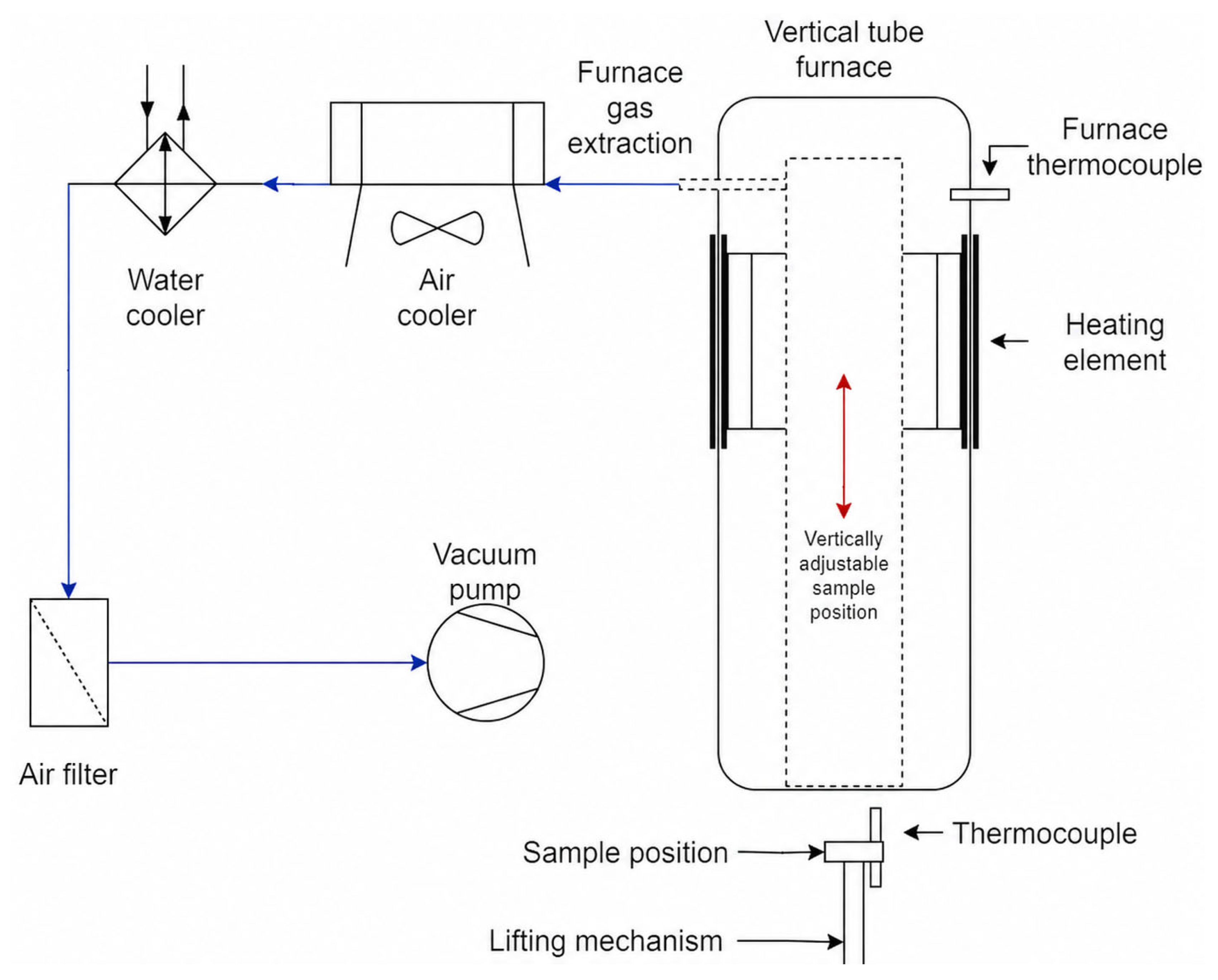
Oxidative roasting experiments were conducted in an open vertical tube furnace (CLASIC 7015 T (CLASIC CZ, spol. s r.o., Řevnice, Czech Republic)), equipped with a sample lift, a thermocouple, and a furnace-gas extraction system, to oxidize Mo species and volatilize them predominantly as MoO3. A schematic of this apparatus is presented in Figure 7. The objective was to measure Mo depletion from the solid; the purity and collection efficiency of the condensed Mo-bearing product were not determined in this initial study.
The sample, placed in a shallow platinum tray, was subjected to intensive extraction of furnace gas using a vacuum pump DA0021A14 (VAKUUM BOHEMIA s.r.o., Jihlava, Czech Republic) throughout the roasting process. The heating period to the target temperature (1160–1400 °C) was fixed at 60 min, with residence times at the target temperature varying from 1 min to 1 h. ML1 fraction was primarily used, except in particle size tests. After roasting, the sample was rapidly cooled in air.

2.6. Analytical Techniques

The bulk chemical composition was determined after acid decomposition by 5110 ICP-OES spectrometer (Agilent Technologies, Inc., Santa Clara, CA, USA) and verified by ARL Perform’X XRF (Thermo Fisher Scientific (Ecublens) SARL, Ecublens, Switzerland). Crystalline phases were identified by X’Pert PRO XRD (PANalytical B.V., Almelo, the Netherlands). Particle-size distributions were measured by laser diffraction using a Mastersizer 3000 with a Hydro LV unit (Malvern Panalytical Ltd., Malvern, UK). Morphology and elemental distribution were examined by SEM-EDS using a Vega 3 LMU (TESCAN, Brno, Czech Republic) microscope equipped with an EDS detector (Oxford Instruments NanoAnalysis, High Wycombe, UK). Macroscopic morphology was documented with an SZX10 stereomicroscope (Olympus Corporation, Tokyo, Japan). Leachates and wash solutions were analyzed by ICP-OES, and roasted solids were analyzed by XRF.

2.7. Calculation of Extraction and Volatilization Efficiencies

The extraction efficiency of Co and Mo was calculated from their concentrations in the leachate and wash solutions, determined by ICP-OES, using the equation:
η M e = V v · c v + V p v · c p v m k a t · ω M e · 100   ( % )
where ηMe is the extraction efficiency of Mo or Co, cv is the metal concentration in the leachate, Vv is the leachate volume, cpv is the metal concentration in the wash water, Vpv is the wash water volume, mkat is the mass of the catalyst, and ωMe is the mass fraction of the metal in the catalyst determined by the ICP-OES method.
The Mo volatilization efficiency was determined from the residual Mo content of the roasted solid measured by XRF according to the following equation:
η M e = ω O r g · m O r g ω r o · m r o ω O r g · m O r g · 100   ( % )
where ηMe is the apparent volatilization efficiency of metal Me, ωro is its mass fraction in the roasted solid, mro is the mass of the roasted solid, mOrg is the initial catalyst mass, and ωOrg is the initial metal content determined by XRF.

3. Results and Discussion

3.1. Direct Acid Leaching

Effect of H2SO4 concentration and water leaching
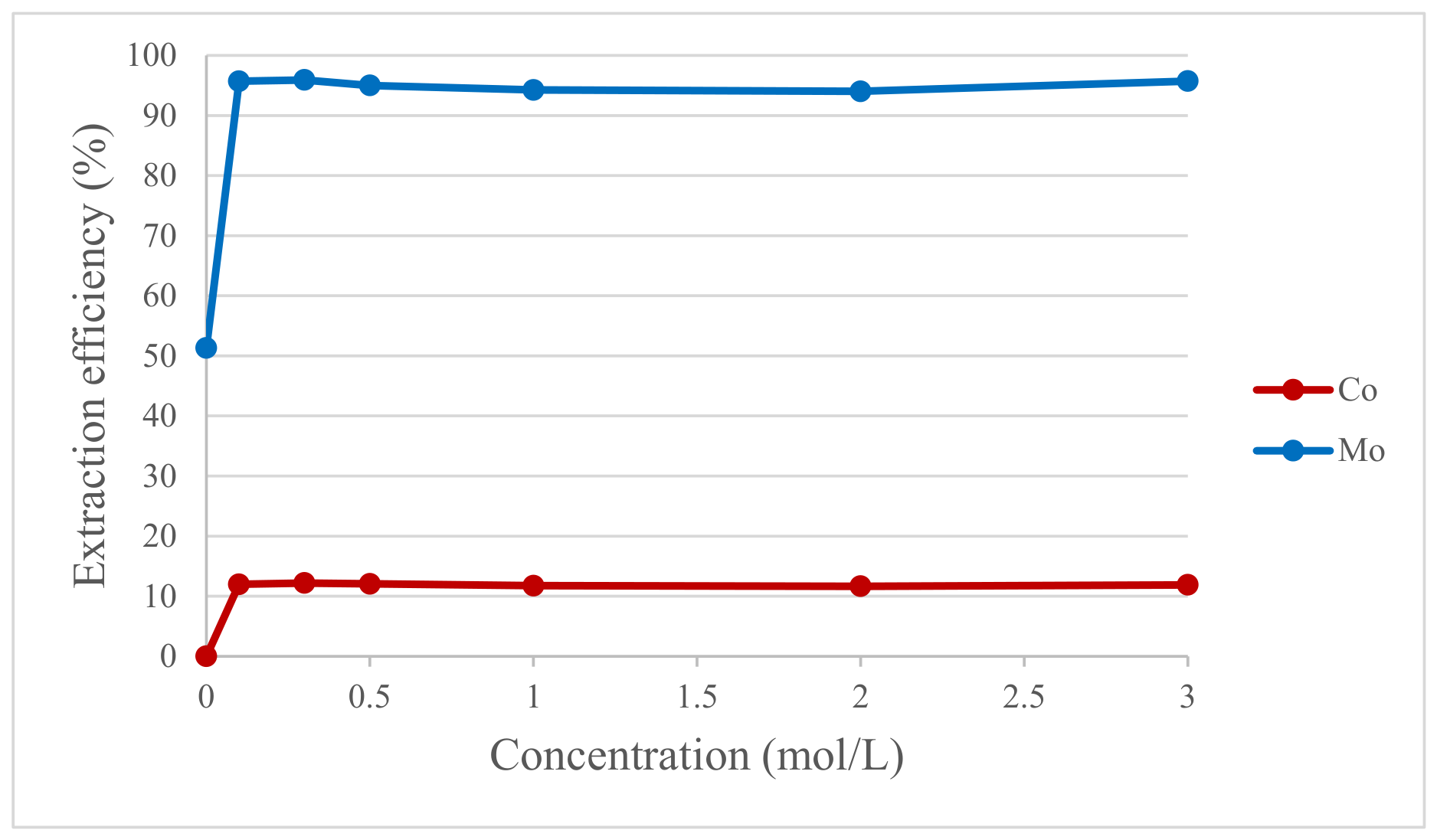
The results illustrated in Figure 8 show the relationship between the H2SO4 concentration and extraction efficiencies of Mo and Co. Notably, Mo was substantially extracted even in the absence of H2SO4, with distilled water alone achieving an extraction efficiency of 51.3%. This observation suggests that a substantial fraction of Mo can be recovered without acid addition.
The addition of only 0.1 mol/L H2SO4 increased Mo extraction to approximately 95%. Increasing the acid concentration from 0.1 to 3 mol/L produced little further improvement, indicating that acid concentration was not the controlling variable once the readily accessible Mo species were dissolved.
Co behaved differently. Its extraction was negligible in water and increased to approximately 12% after acid was added, but then remained nearly constant throughout the 0.1–3 mol/L range. This plateau is consistent with the dissolution of a limited acid-soluble Co fraction and the retention of most Co in the stable CoAl2O4 spinel.
The contrasting behavior of Mo and Co is the basis for the selectivity of this route. Finely dispersed MoO3 and accessible Mo-rich domains dissolve readily, whereas Co bound in CoAl2O4 remains in the solid. The results therefore support a two-population description for Co: a minor acid-soluble fraction, plausibly CoO or weakly bound surface Co, and a dominant spinel-bound fraction.
The high Mo extraction in water is attributed mainly to hydration and dissolution of MoO3. A simplified dissolution representation is MoO3(s) + H2O(l) ⇌ H2MoO4(aq). The actual aqueous Mo(VI) speciation depends on pH, concentration, and temperature and can include monomeric molybdic acid, molybdate, and polymolybdate species [35]. Reported MoO3 solubility increases strongly with temperature, from approximately 1.4 g/L at 20 °C to 21 g/L at 80 °C [36].
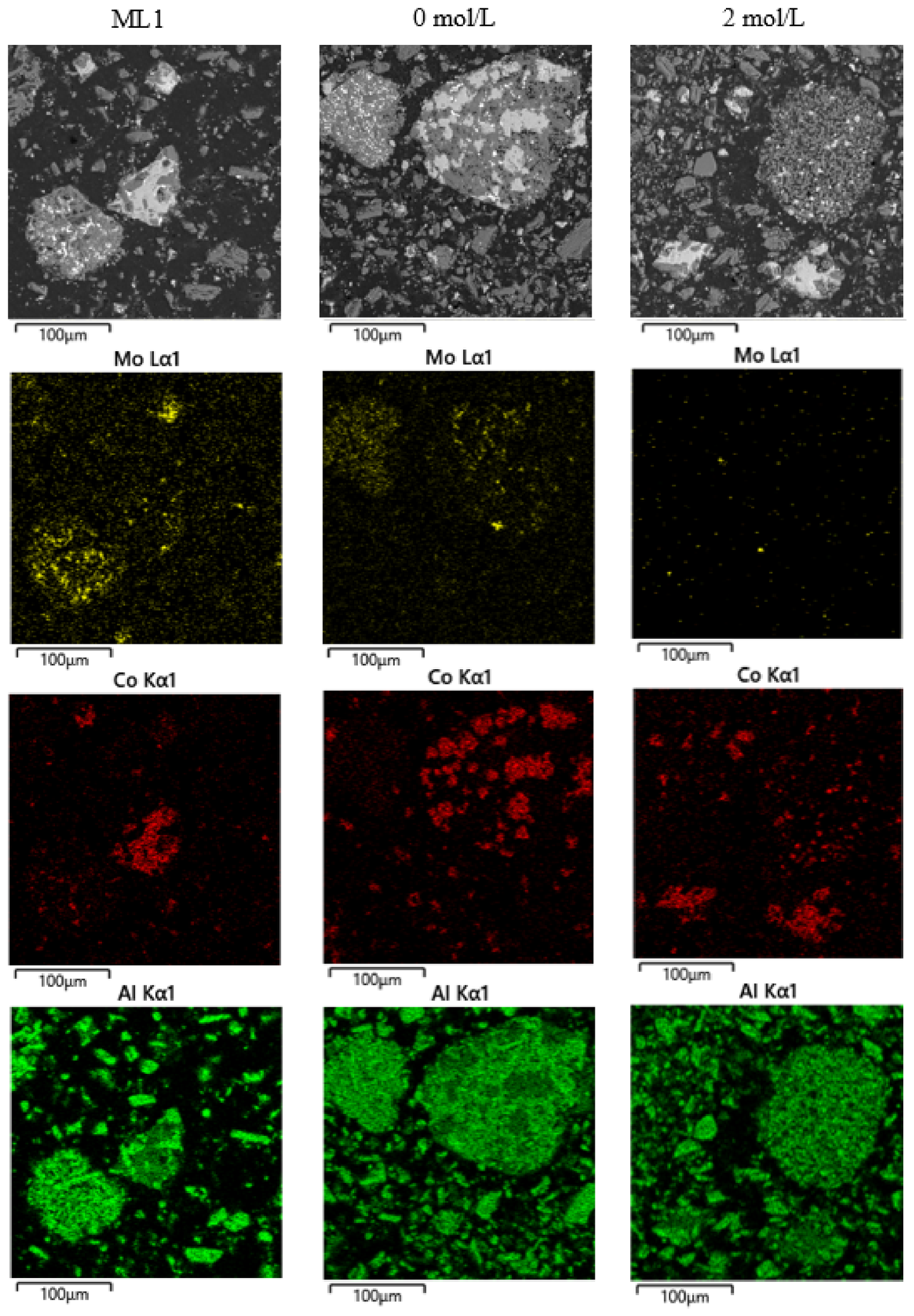
Despite the high reported solubility of MoO3, water leaching extracted only 51.3% of the total Mo. Figure 9 presents a comparative analysis of the original ground catalyst (ML1) and the residues after leaching in distilled water or 2 mol/L H2SO4, providing a plausible microstructural explanation. The SEM-EDS images indicate that water leaching removed much of the readily accessible MoO3, which was present as a finely dispersed surface phase and as discrete particles. However, the dissolution of compact Mo-rich particles and molybdenum associated with CoAl2O4 structures remained limited. This phenomenon can be attributed to mass transfer limitations in larger compact particles, resulting from the presence of physical barriers formed by Al2O3 and CoAl2O4. Furthermore, the lower solubility of MoO2 may contribute to the restricted Mo extraction, particularly in Mo-rich particles [37].
In contrast, leaching in 2 mol/L H2SO4 produced markedly higher Mo extraction. Mo was almost completely extracted, with the exception of regions adjacent to CoAl2O4 structures. As previously discussed, CoAl2O4 is chemically stable and insoluble in H2SO4, thereby impeding the effective extraction of Mo-bearing species enclosed within these structures. The higher Mo extraction can be attributed to the greater ability of H2SO4, relative to water, to dissolve both MoO3 and MoO2, the latter of which likely constitutes the main obstacle in leaching compact Mo-rich particles. The dissolution of Mo oxides proceeds according to the following reactions [4,11]:
MoO3 + H2 O = H2 MoO4
H2 MoO4 + H2 SO4 = MoO2 SO4 + 2H2 O
MoO2 + 2H2SO4 = MoO2SO4 + SO2 + 2H2O
The formation of MoO2SO4 is proposed to shift the dissolution equilibrium toward the aqueous phase and thereby enhance Mo extraction.
Effect of leaching temperature
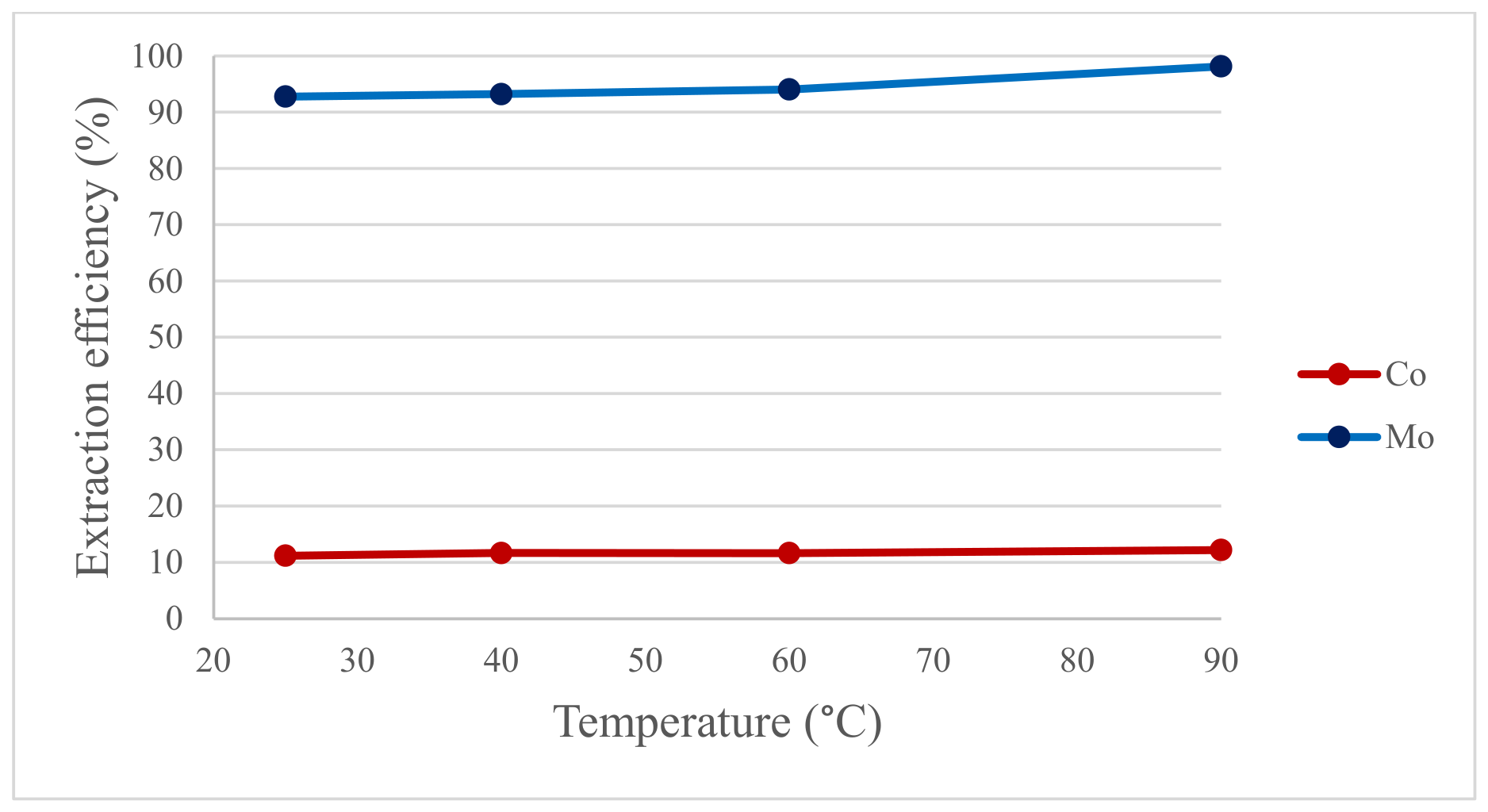
The influence of leaching temperature on extraction efficiency for Mo and Co is illustrated in Figure 10. A concentration of H2SO4 at 2 mol/L was used. The data demonstrate that increasing the leaching temperature from 25 °C to 90 °C results in a modest increase in the extraction of both metals. Specifically, Mo extraction efficiency increased from 92.8% to 98.1%, while Co extraction efficiency increased from 11.2% to 12.2%.
These findings corroborate the selectivity of direct H2SO4 leaching for Mo extraction, as evidenced by the high Mo extraction coupled with low Co extraction. The relatively constant Co extraction efficiency of approximately 12% across the temperature range investigated suggests that Co extraction from the spent catalyst exhibits low temperature sensitivity. This phenomenon can be attributed to the presence of two distinct Co species: readily soluble “free” CoO and the chemically resistant CoAl2O4 spinel phase.
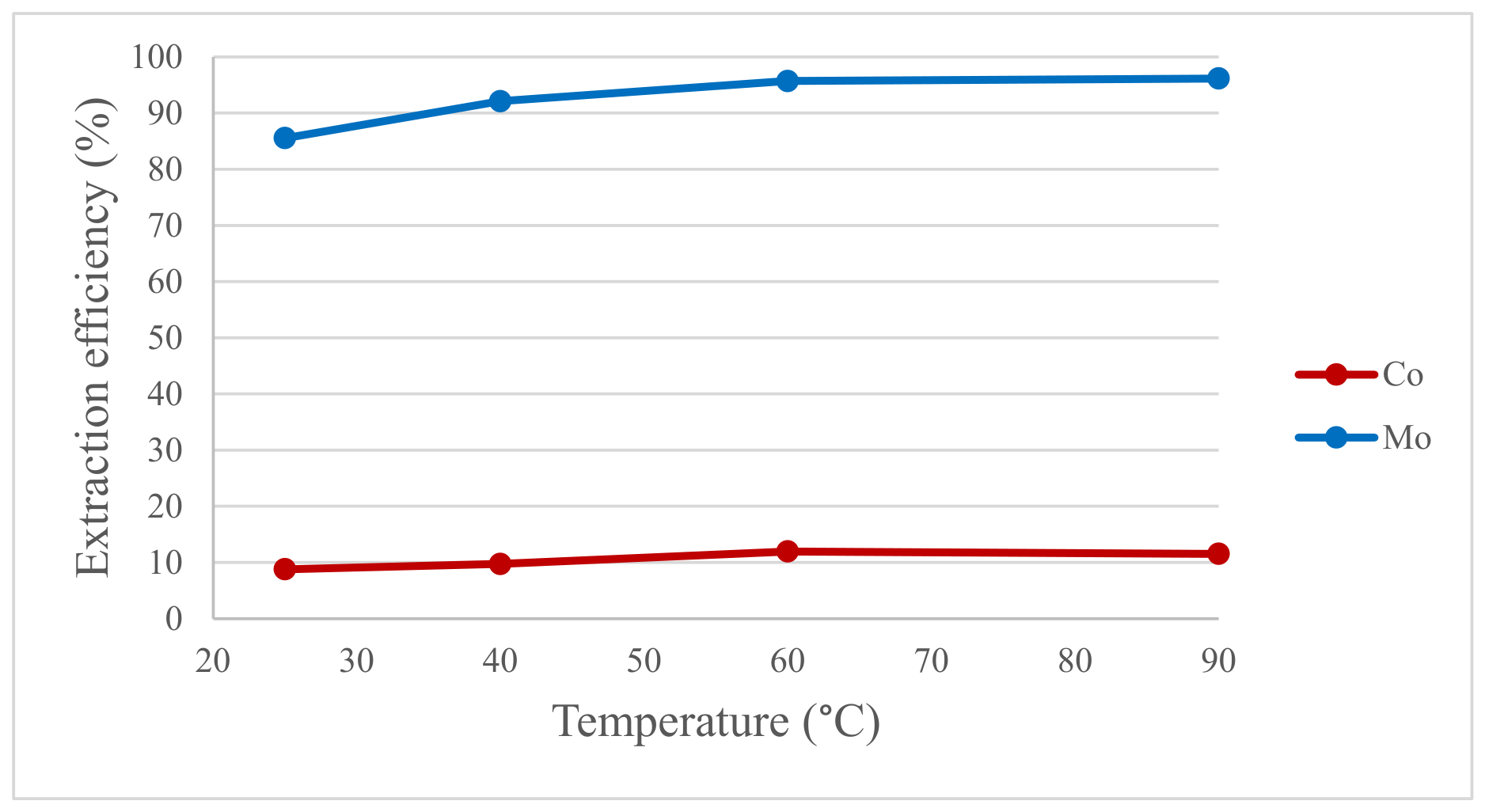
Figure 11 shows the same temperature dependence with a lower H2SO4 concentration. Using 0.1 mol/L H2SO4, Mo extraction efficiency increased from 85.6% at 25 °C to 96.2% at 90 °C. The data show a more pronounced temperature effect at lower H2SO4 concentrations. Notably, even under conditions of low temperature and H2SO4 concentration, Mo extraction efficiency remained relatively high, indicating the robustness of this leaching process for Mo recovery.
In contrast, the extraction efficiency of Co remained largely unaffected by temperature variations, even at reduced H2SO4 concentrations. This observation further supports the interpretation that most Co is present in the stable spinel structure. However, at 0.1 mol/L H2SO4, the limited dissolution of the acid-soluble Co fraction became apparent. The Co extraction efficiency increased from 8.8% at 25 °C to 12% at 90 °C, suggesting a slight temperature dependence under these conditions.
Leaching kinetics
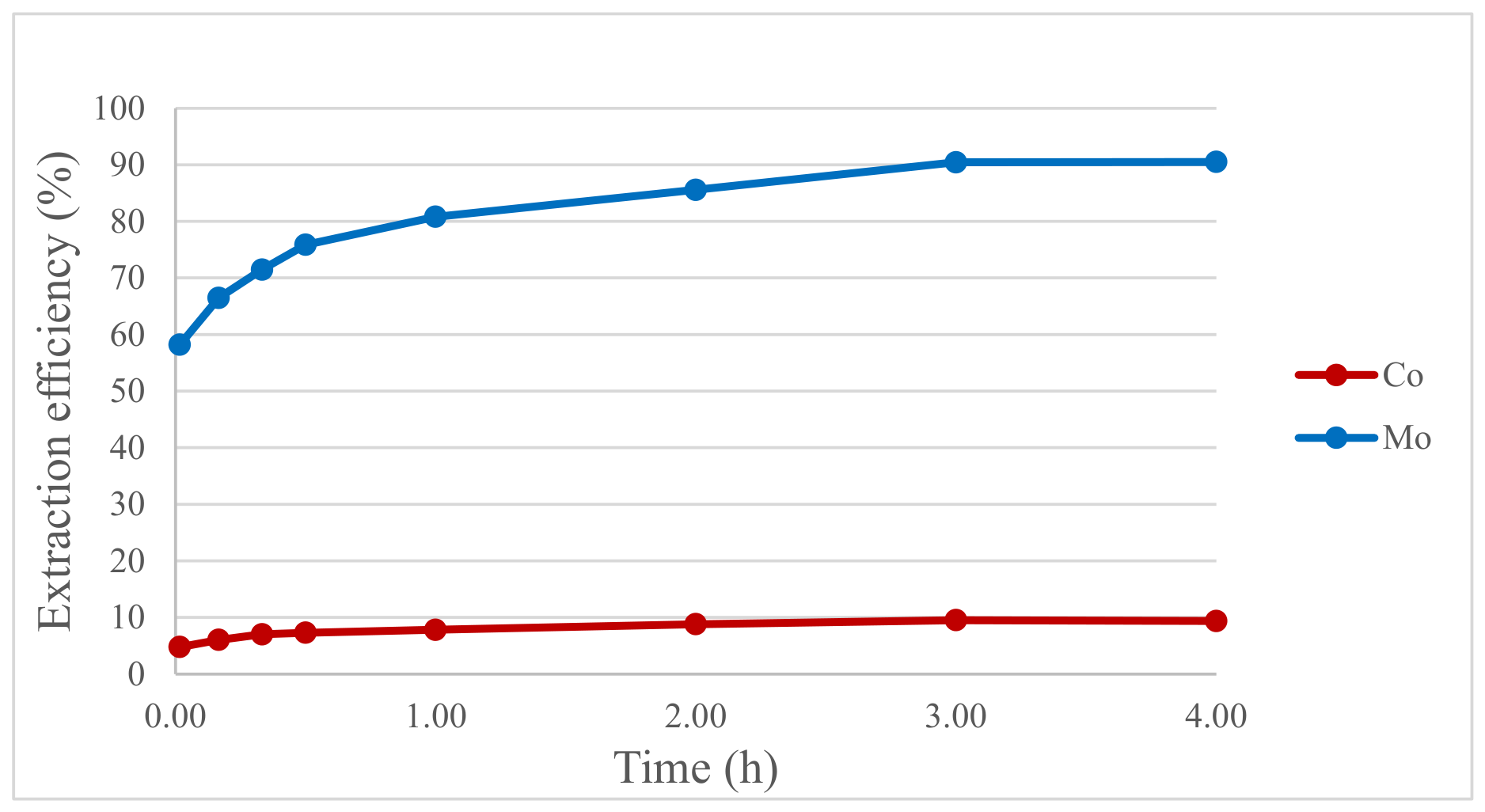
The extraction kinetics of Mo and Co are illustrated in Figure 12. The results reveal two distinct stages of Mo extraction. The initial phase, spanning approximately 30 min, is characterized by a rapid increase in extraction efficiency, with nearly 76% of Mo being leached. This is followed by a second phase exhibiting a more gradual increase in Mo extraction efficiency, reaching a maximum of 90.5% after 3 h of leaching. Further extension of the leaching time did not yield additional improvements in Mo extraction efficiency, indicating that the extraction curve had approached a plateau.
The results confirm that Co extraction efficiency was substantially lower than that of Mo throughout the investigated period. The maximum Co extraction efficiency of 9.5% was achieved after 3 h of leaching. Analogous to Mo, the most significant increase in Co extraction efficiency occurred during the initial stages of the process, with 7% of Co extracted within the first 20 min of leaching.
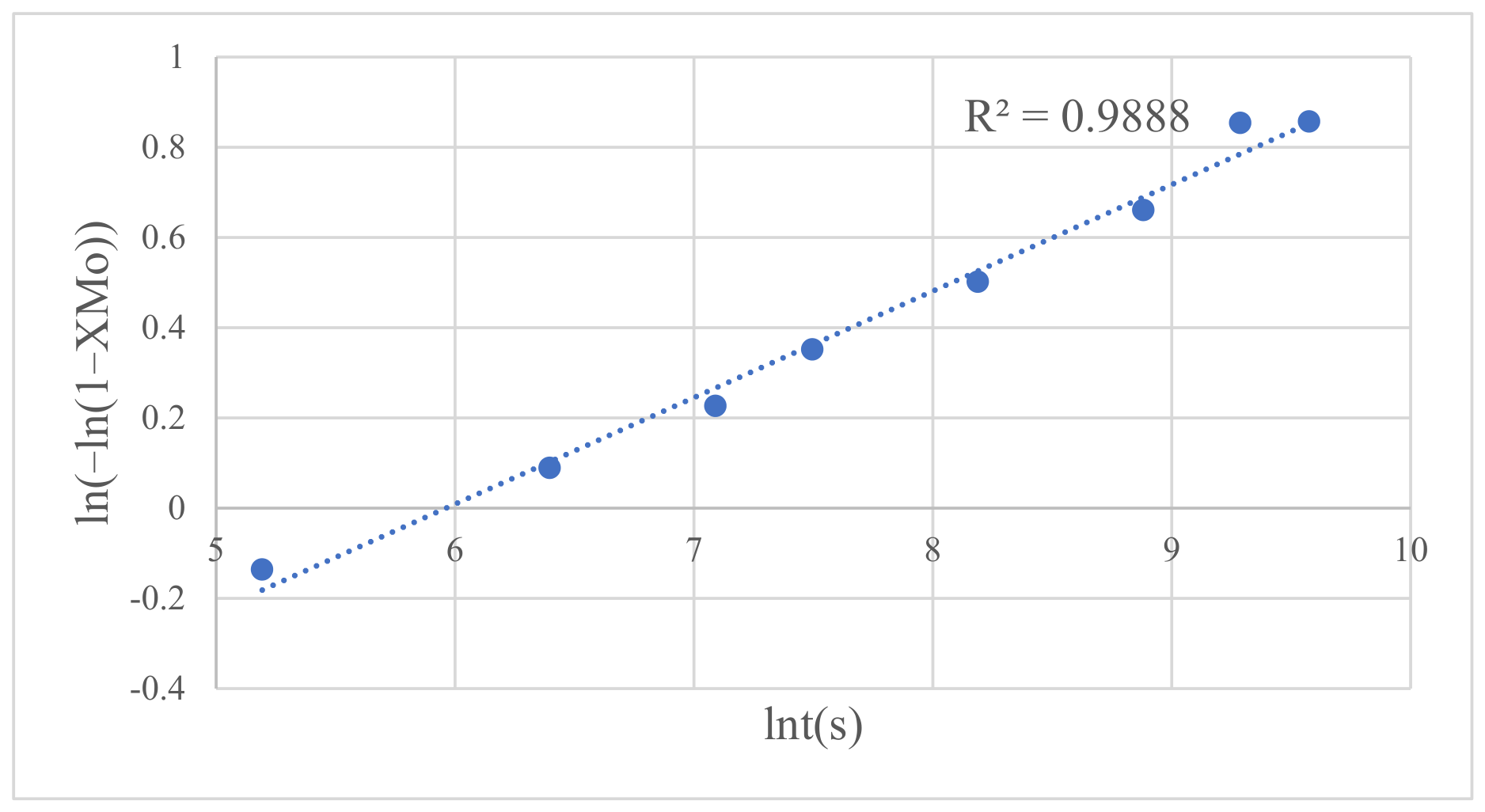
To describe the extraction kinetics, Avrami’s kinetic model was applied [38]. The model showed a high correlation coefficient when applied to the experimental data, indicating a good fit. Specifically, Avrami’s kinetic model yielded an R2 value of 0.9888, suggesting that it provides a good empirical fit to the Mo extraction data under the given conditions. The derived kinetic equation of this model for Mo extraction efficiency is:
General notation: l n 1 X M o 1 n = k · τ
where XMo is the fraction of Mo extracted, τ is the time, k is the overall reaction rate constant (s−1), and n is the Avrami coefficient.
The resulting form: l n 1 X M o 1 0.2362 = 1.4082 · τ
The corresponding linearized plot is shown in Figure 13.
The observed extraction behavior demonstrates rapid Mo extraction while limiting Co co-extraction during the early stages. The initial high reaction rate can be attributed to the rapid dissolution of readily accessible Mo species in the acidic medium. As the readily leachable Mo fraction is depleted, the extraction rate decreases and approaches a plateau.
Effect of slurry density
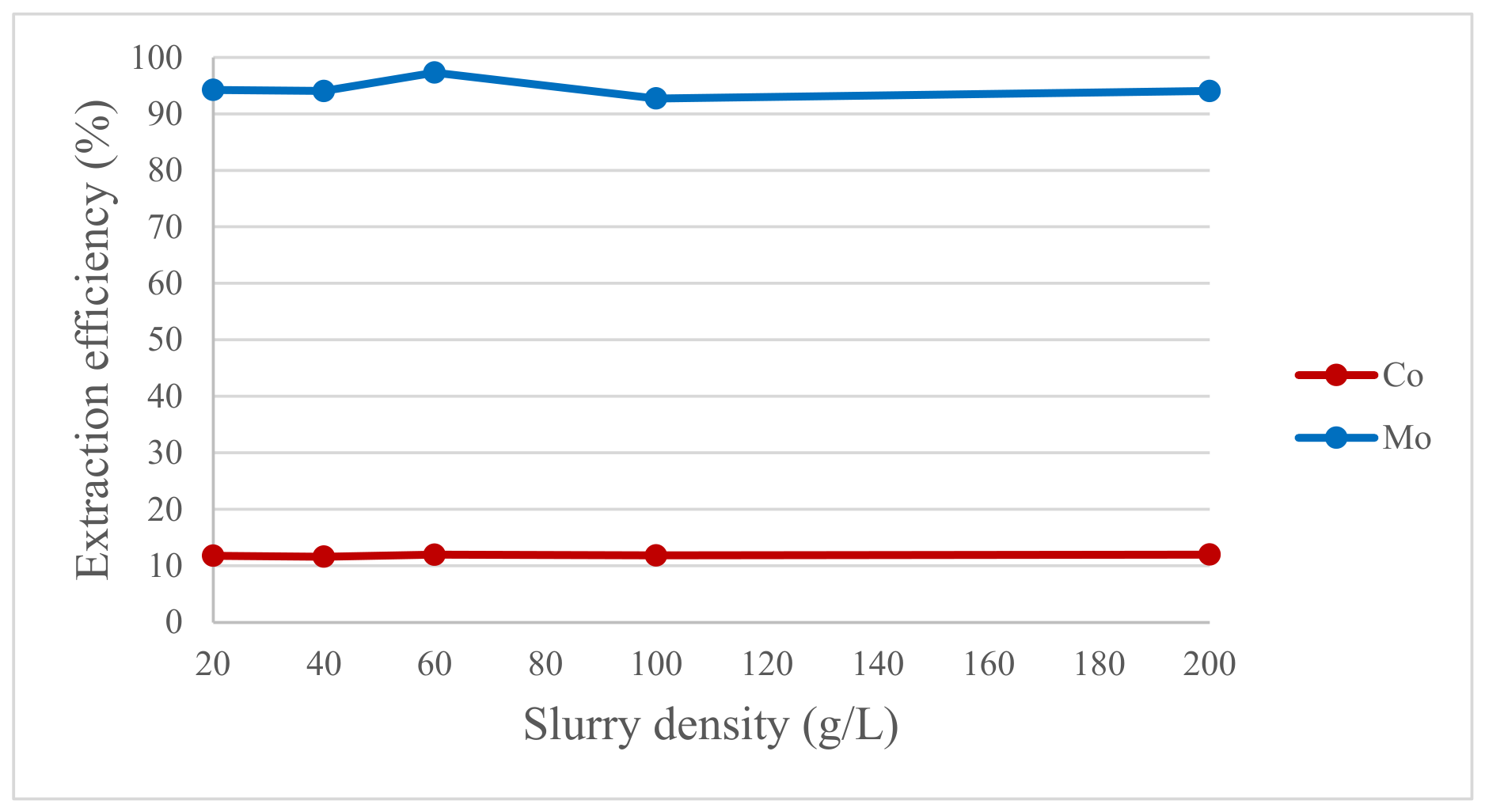
The influence of slurry density on Mo and Co extraction is illustrated in Figure 14. The data show that while a local maximum in Mo extraction efficiency (97.3%) was observed at a pulp density of 60 g/L, the overall results show no clear systematic dependence of Mo or Co extraction on slurry density. Under the specified experimental conditions and within the tested range, Mo extraction efficiency maintained a relatively constant value of approximately 95%, while Co extraction efficiency remained at approximately 12%.
Effect of particle size
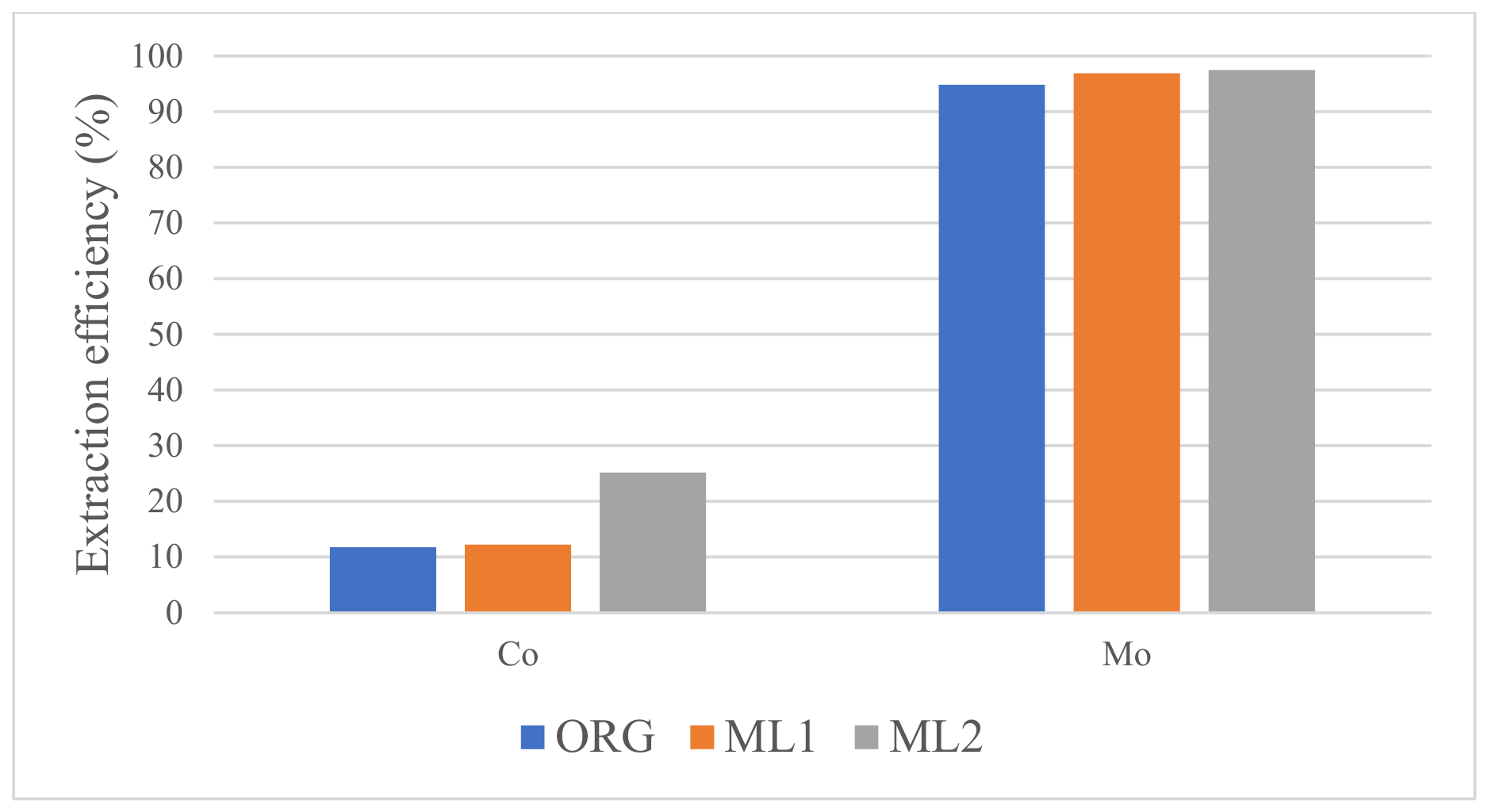
The data presented in Figure 15 demonstrate that particle size affected Mo and Co extraction differently. A high Mo extraction efficiency was observed even for the coarsely ground catalyst (ML1, Dv(50) = 16.7 µm), and further size reduction produced only a marginal improvement in Mo extraction. The maximum Mo extraction efficiency of 97.1% was achieved with the finely ground catalyst (ML2, Dv(50) = 4.7 µm). In contrast, Co extraction efficiency exhibited a significant increase only for the finely ground catalyst, rising from the baseline of approximately 12% to 20%.
These findings suggest that Mo is predominantly localized on the catalyst surface or within readily accessible catalyst sites. Conversely, the additional Co released by fine grinding may originate from acid-soluble Co species enclosed within larger and more compact catalyst particles and therefore inaccessible without intensive milling. This observed distribution pattern of Co and Mo corroborates the hypothesis derived from SEM-EDS analysis, as detailed in Section 2.2.
This differential response of Mo and Co to particle size provides insight into the structural characteristics of the catalyst and the spatial distribution of these elements within the catalyst matrix. The high extraction efficiency of Mo, even at larger particle sizes, indicates its presence in easily accessible locations, while the marked improvement in Co extraction only at finer particle sizes suggests its encapsulation within the catalyst structure.
Effect of acid type
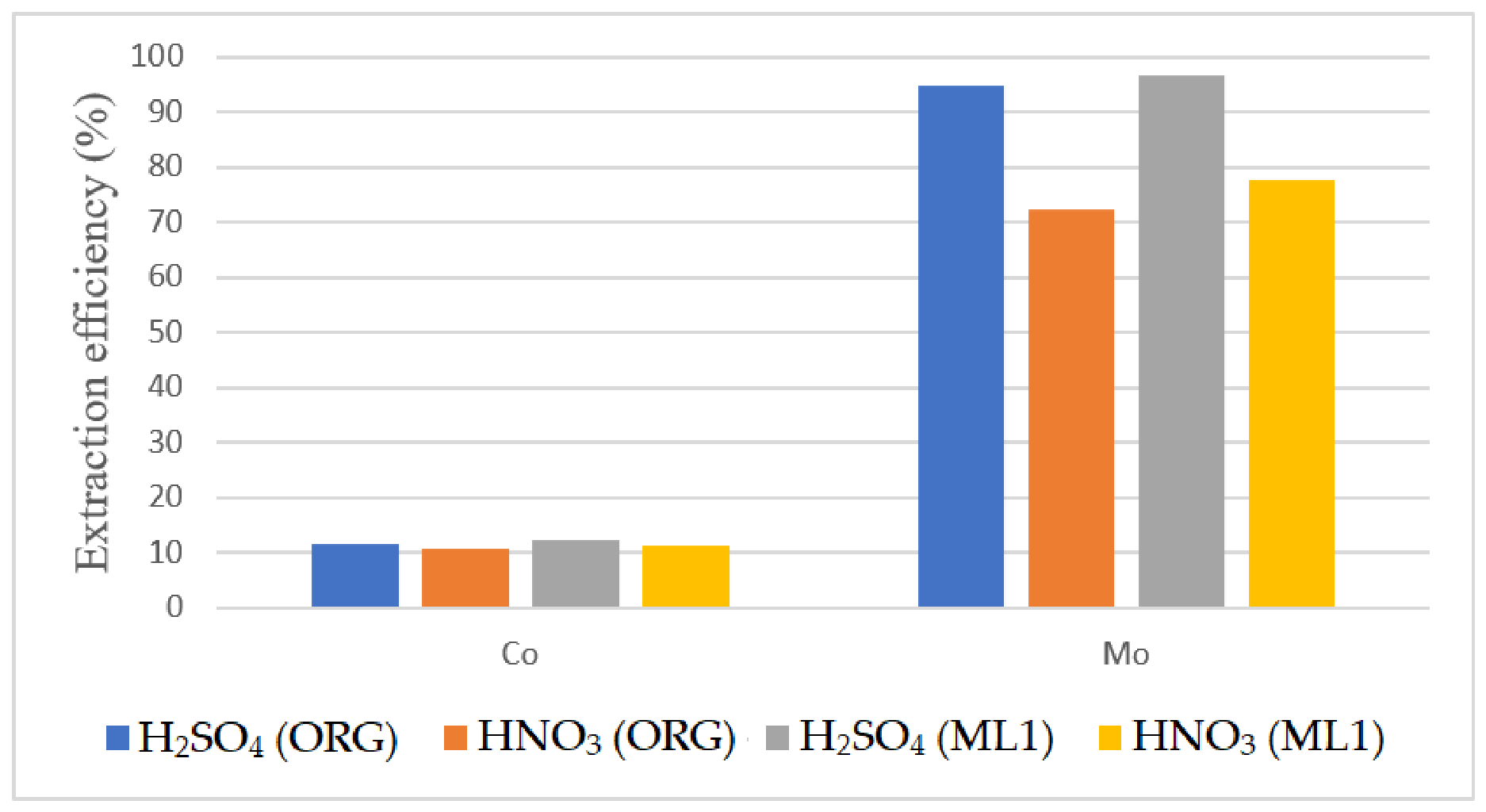
Figure 16 compares HNO3 and H2SO4 as leaching agents for Mo and Co. Under the tested conditions, H2SO4 provided higher Mo extraction than HNO3.
Quantitatively, the extraction efficiency of Mo exhibited an increase of up to 18 percentage points when H2SO4 was employed as the leaching agent, relative to HNO3. Conversely, the Co extraction efficiency remained consistent under all tested conditions, indicating that the type of acid used in the leaching process has minimal impact on Co extraction efficiency.
Selectivity and practical leaching window
The highest measured Mo extraction was 98.1% at 90 °C in 2 mol/L H2SO4 after 2 h. The single-factor results also show that approximately 95% Mo extraction can be achieved at 0.1 mol/L H2SO4 and 40 °C, and that increasing slurry density to 200 g/L does not materially reduce extraction under the tested baseline conditions.
Al extraction was 0.6–0.9% in most leaching experiments, only 0.19% in water, and approximately 3% for the finely ground ML2 material. These values, together with the low Co extraction, confirm that the process selectively transfers Mo to solution while retaining the alumina support and most Co in the residue.
The dilute-acid, moderate-temperature results are promising for scale-up because they reduce acid consumption and heating duty, while the tolerance of high slurry densities can reduce reactor and solution-handling volumes. However, the proposed combination of mild acid, high solids loading, and particle size was inferred from separate single-factor tests rather than verified in a factorial campaign. A multivariable confirmation study, followed by pilot-scale testing, is therefore required, particularly for mixing, filtration, washing, corrosion control, acid recycle, and Mo recovery from the pregnant solution.
Accordingly, this study identifies a technically attractive operating window but does not constitute a techno-economic assessment. Economic feasibility will depend on catalyst throughput, grinding energy, reagent recycle, downstream product recovery, residue value, and local energy and waste-treatment costs.

3.2. Oxidative Roasting

Effect of temperature
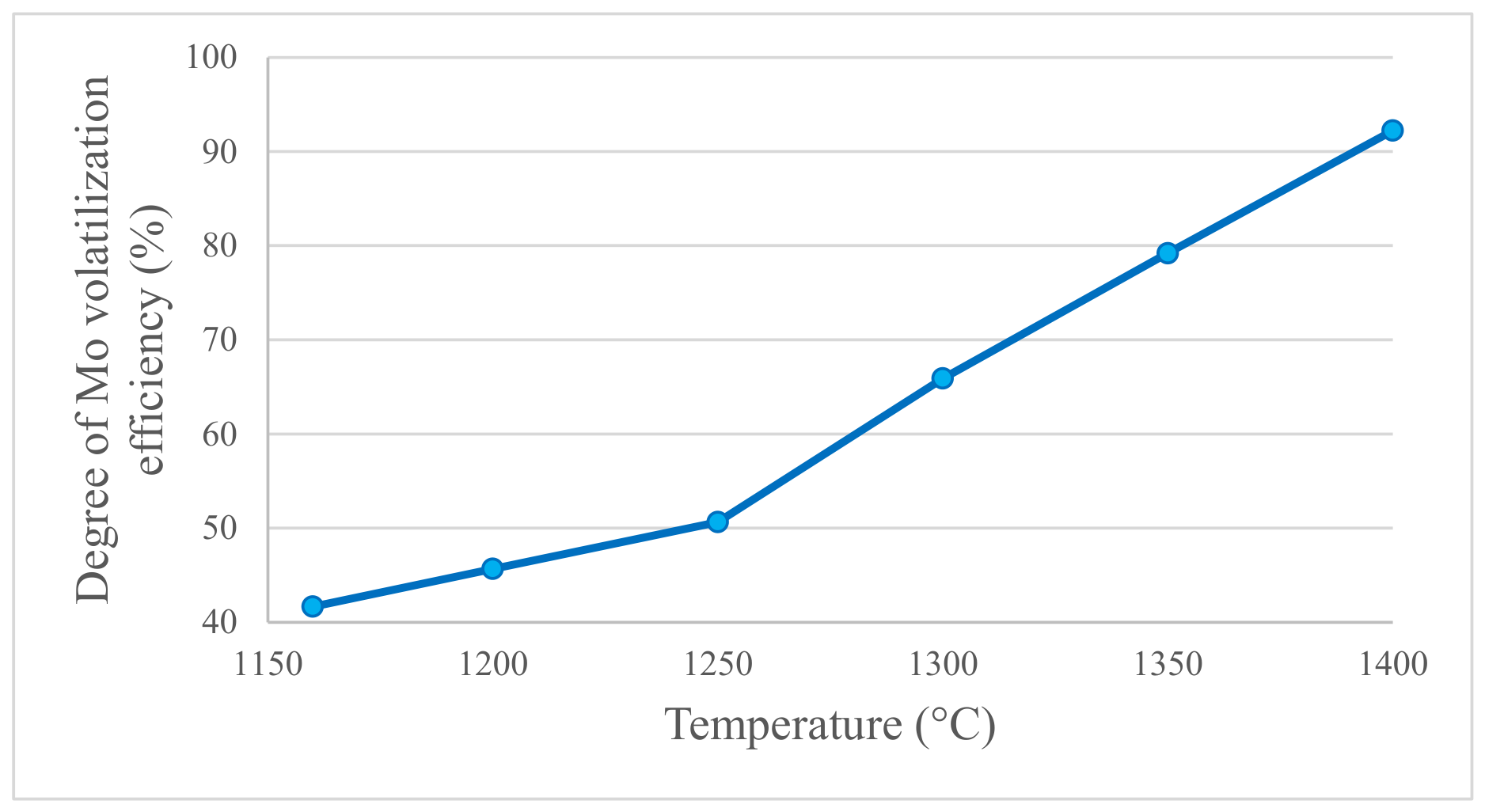
The temperature-dependent volatilization of MoO3 is depicted in Figure 17. The data reveal that at a temperature of 1160 °C, which is 5 °C above the boiling point of MoO3 (1155 °C [39,40]), the Mo volatilization efficiency was limited to 41.7%. A clear positive correlation between temperature and Mo volatilization efficiency was observed, with a marked inflection point at approximately 1250 °C. Beyond this threshold, the Mo volatilization efficiency increased approximately linearly, by about 15 percentage points for each 50 °C increase in roasting temperature. The maximum Mo volatilization efficiency of 92.2% was achieved at the upper limit of the experimental temperature range, 1400 °C.
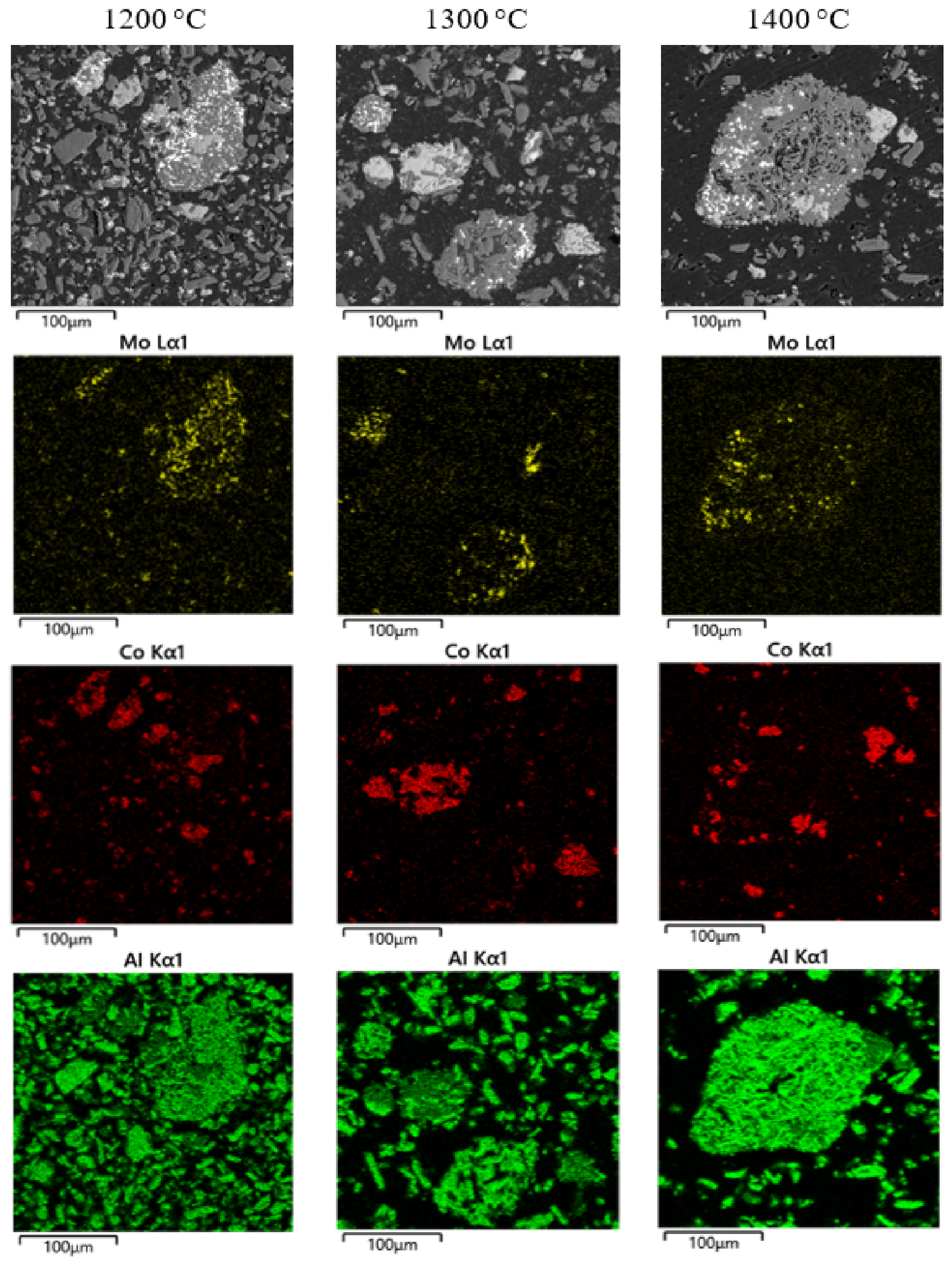
The influence of roasting temperature on the microstructure of the roasted material was assessed through SEM-EDS elemental analysis. Samples roasted at 1200, 1300, and 1400 °C were compared, as illustrated in Figure 18. At 1400 °C, significant volatilization of MoO3 was observed, even from compact, Mo-rich particles. However, the MoO3 embedded within the CoAl2O4 matrix remained largely unaffected by this high-temperature treatment. These observations support the hypothesis that the thermally stable CoAl2O4 structures impede MoO3 volatilization through physical encapsulation, whereby Mo-bearing species are enclosed within the structure, inhibiting their release.
The roasting results parallel the leaching observations, suggesting that both routes are limited by similar microstructural constraints. In addition to the physical barrier imposed by the Al2O3 matrix, the presence of MoO2 appears to play a crucial role in impeding MoO3 evaporation from the deeper layers of larger particles. This can be attributed to the high thermal stability of MoO2, which does not volatilize appreciably at temperatures up to 1500 °C [41] and maintains a solid state up to its melting point of approximately 2500 °C [42].
These findings indicate that higher roasting temperatures promote the oxidation of MoO2 to MoO3, a process that can be represented by the following reaction:
2MoO2(s) + O2(g) = 2MoO3(g)
Thus, higher temperatures facilitate MoO2 oxidation and subsequent MoO3 volatilization.
Effect of particle size
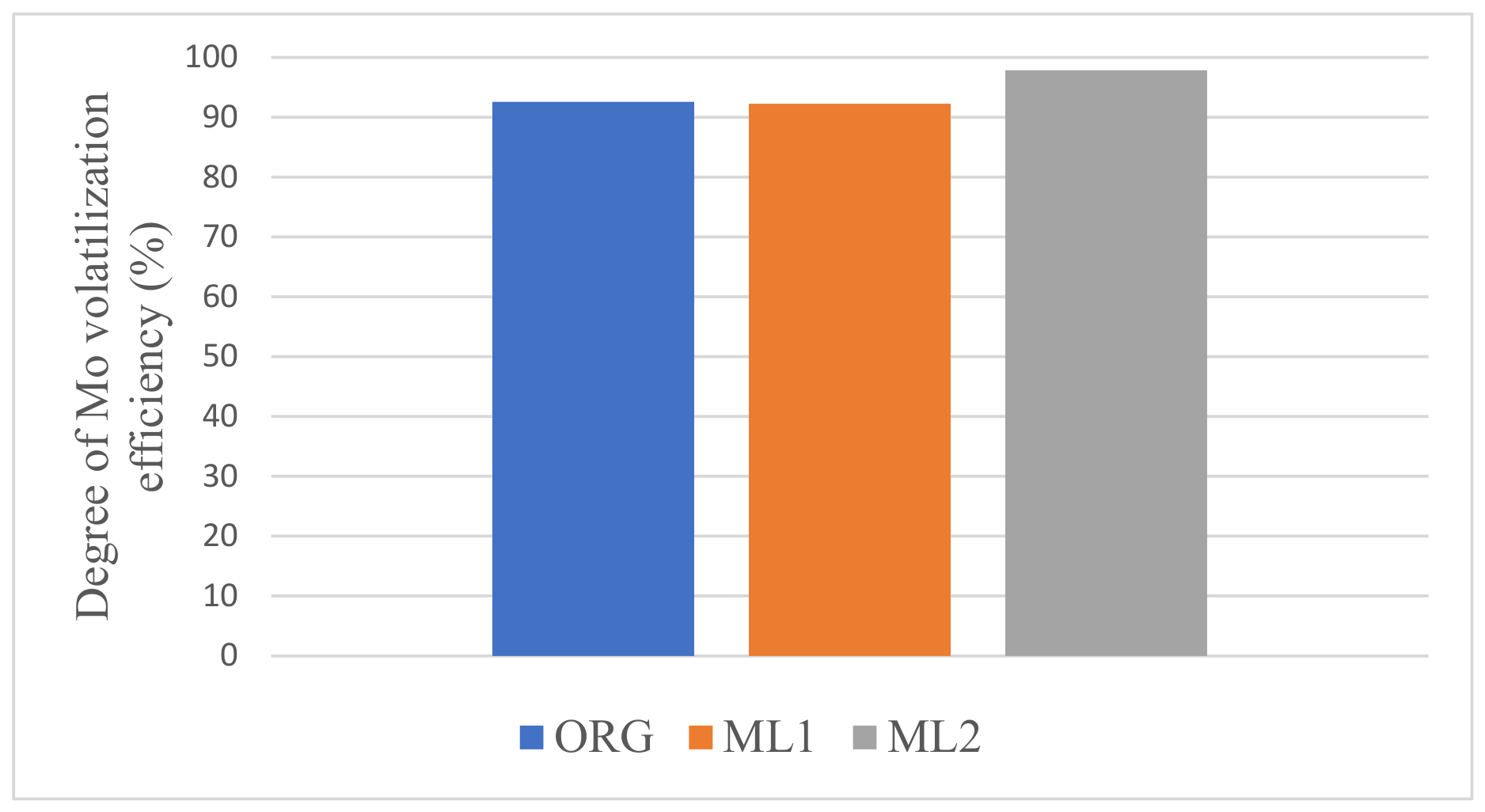
The effect of particle size on MoO3 volatilization is illustrated in Figure 19. For the unground ORG sample, a substantial MoO3 volatilization efficiency of 92.6% was achieved. The coarsely ground ML1 material, with a median particle size Dv(50) of 16.7 µm, did not yield a meaningful improvement in Mo volatilization compared with ORG. However, a clear enhancement in MoO3 volatilization efficiency was observed for the finely ground catalyst, designated as ML2, with a median particle size Dv(50) of 4.7 µm. This reduction in particle size resulted in an increase in MoO3 volatilization, reaching 97.8%, the highest efficiency recorded across all oxidative roasting experiments conducted in this study.
These findings show that high MoO3 volatilization can be achieved without preliminary size reduction; nevertheless, fine grinding further improves the maximum efficiency. The observed relationship between particle size and evaporation efficiency can be attributed to increased surface area and enhanced solid–gas interactions during the roasting process, facilitating more complete oxidation and volatilization of molybdenum species.
The roasting results are consistent with the proposed Mo distribution discussed above. They indicate that the predominant Mo species are MoO3 and, to a lesser extent, MoO2, and that approximately 92% of the total Mo occurs in readily accessible or readily volatilized regions of the catalyst. This finding is corroborated by the observation that roasting of the unground catalyst yielded comparable volatilization efficiency to that of the coarsely ground catalyst (ML1).
The data also indicate that approximately 5% of the Mo is associated with CoAl2O4-rich particles and is released upon fine grinding (ML2). Even after fine grinding, a residual Mo fraction of approximately 2% persists in the catalyst matrix, likely incorporated into complex Mo-Co-Al oxide structures.
Effect of roasting time
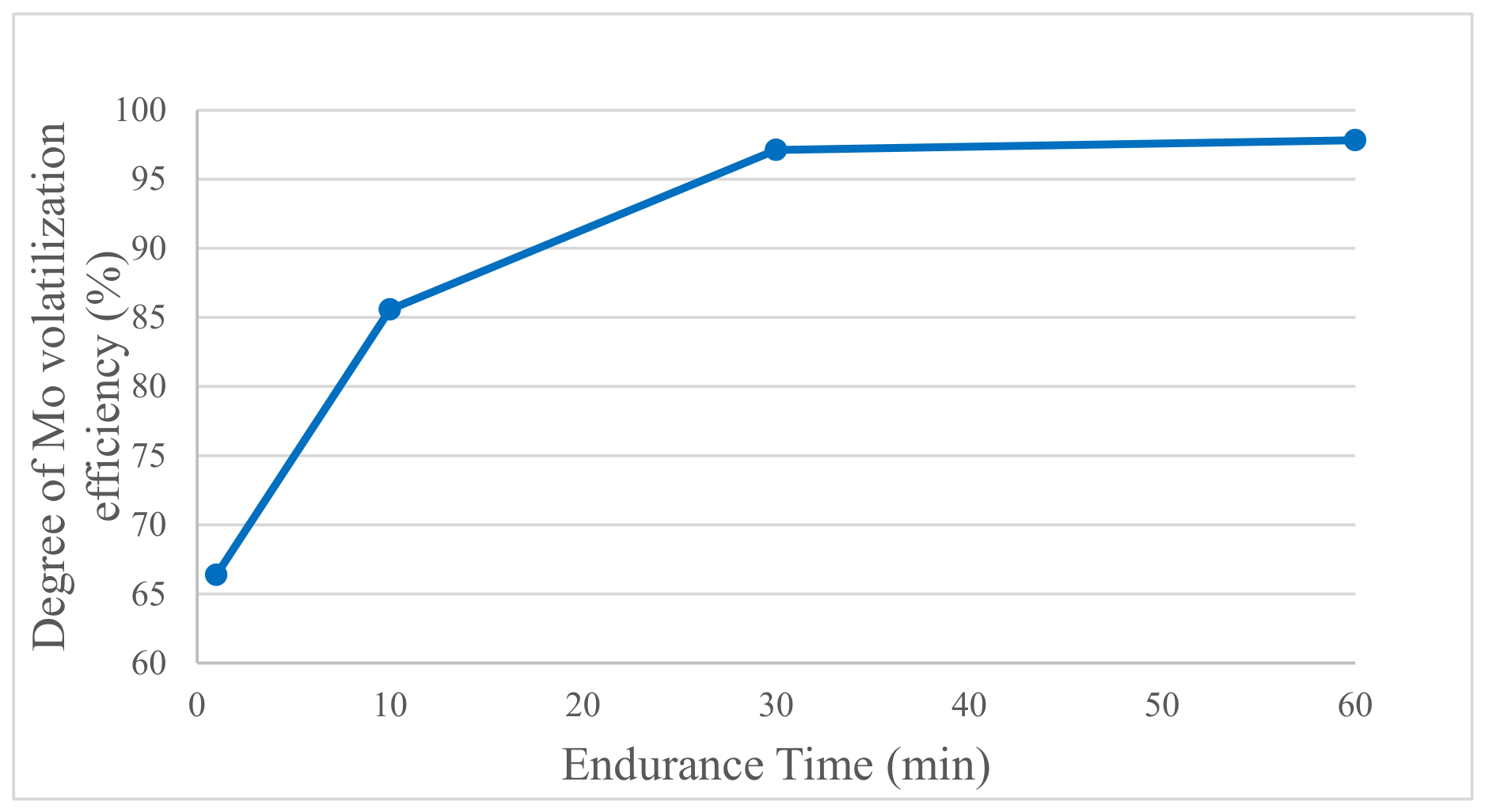
The influence of the roasting time on the extent of MoO3 volatilization is illustrated in Figure 20. The data show that at 1400 °C, extending the roasting time results in increased MoO3 volatilization throughout the observed time interval. However, the impact of residence time is most pronounced during the initial stages of the process. Specifically, MoO3 volatilization increased by more than 30 percentage points between 1 and 30 min. This steep gradient indicates rapid MoO3 liberation during the early phase of roasting. Conversely, beyond 30 min of roasting, the volatilization rate decreases significantly. Further extension of the residence time yields only marginal improvements, as evidenced by the 0.7 percentage-point increase in Mo volatilization between 30 and 60 min. This behavior is attributed to preferential volatilization of readily accessible MoO3 during the initial 30 min, leaving more refractory or structurally constrained Mo species that volatilize much more slowly.
The maximum MoO3 volatilization efficiency of 97.8% was achieved after 1 h at 1400 °C. However, the results indicate that a roasting time of 30 min is sufficient to achieve near-complete MoO3 removal from the catalyst, yielding a volatilization efficiency of 97.1%.

3.3. Comparative Assessment, Scalability, and Downstream Processing

The two studied routes are linked by a common objective but produce different intermediate products. Direct leaching transfers Mo selectively to an aqueous sulfate solution at moderate temperature, while oxidative roasting transfers Mo selectively to an Mo-bearing gas phase, expected to be dominated by MoO3, and retains Co in the solid calcine. Leaching may be favored when low thermal demand, conventional stirred-tank equipment, and integration with aqueous purification are priorities. Roasting is favored when avoidance of liquid reagents and wastewater is more important and when an efficient MoO3 condensation and dust collection system is available.
The key achievement relative to earlier acid-leaching studies is selective Mo separation without an added oxidant. Barik et al. obtained 99.87% Mo extraction from a sulfur-bearing spent catalyst using 0.5 mol/L H2SO4, a fivefold stoichiometric excess of H2O2, 50 °C, and only 1% (w/v) pulp density, but 96.25% Co was simultaneously dissolved [43]. A reported HCl route similarly dissolved approximately 97% Mo and 94% Co at 3 mol/L HCl and 90 °C [21]. By contrast, the present pretreated feedstock gave 95–98% Mo extraction with approximately 12% Co and generally < 1% Al extraction without an oxidant; separate slurry-density tests maintained approximately 95% Mo extraction at up to 200 g/L. Sulfuric-acid baking can improve total metal dissolution [33], but it adds a thermal-chemical pretreatment and is directed toward comprehensive recovery rather than selective first-stage Mo removal.
The mild leaching conditions are potentially scalable using conventional hydrometallurgical equipment, but scale-up must verify suspension quality at high solids loading, heat and mass transfer, filtration rate, wash-water demand, and acid recycle. The roasting route is also technically plausible because MoO3 sublimation and condensation are established operations in molybdenum metallurgy; however, the 1160–1400 °C range entails substantial energy and materials requirements. Heat recovery, continuous gas-solid contacting, off-gas filtration, and controlled condensation would be essential. Recent water-vapor-enhanced sublimation work achieved 99.33% MoO3 recovery at 1100 °C and reported a favorable direct-cost estimate [44], indicating that lower-temperature process intensification is possible. Nevertheless, no economic or life-cycle analysis was performed here, so economic feasibility cannot be concluded from the present laboratory data.
Downstream recovery was outside the experimental scope. Mo can be recovered from sulfate leachates by established operations such as solvent extraction, ion exchange, selective precipitation, or crystallization of ammonium molybdates [3,21,32]. Preliminary H2S precipitation observations were not included because they were not supported by a complete parameter study and product characterization. For the roasting route, the Mo-bearing vapor would require controlled cooling and filtration to collect an MoO3-rich condensate; its purity must be confirmed experimentally. The Co- and Al-rich residue should not be treated as waste. It is a feedstock for a second recovery stage, potentially using reductive or pressure-assisted pretreatment to destabilize CoAl2O4, followed by acid or chloride leaching and Co recovery by solvent extraction, precipitation, or electrowinning. After Co removal, the alumina-rich fraction may also have value, subject to impurity and application-specific quality requirements.

4. Conclusions

Direct H2SO4 leaching and oxidative roasting were investigated as the independent first-stage methods for selective Mo removal from the same pretreated spent HDS Mo-Co/Al2O3 catalyst. The combined process and microstructural analysis showed that both methods preferentially removed readily accessible MoO3 while retaining most Co in CoAl2O4 and Al in the alumina matrix.
Direct leaching achieved 98.1% Mo extraction in 2 mol/L H2SO4 at 90 °C for 2 h. Approximately 95% extraction was obtained at 0.1 mol/L H2SO4 and 40 °C, while Co extraction remained approximately 12% and Al extraction was generally 0.6–0.9%. Water alone extracted 51.3% Mo, supporting the presence of water-accessible MoO3-derived species. Fine grinding increased Mo extraction only slightly but substantially increased Co and Al co-extraction; ML1 therefore provided the more favorable compromise between liberation, milling demand, and selectivity.
Oxidative roasting removed 92.2% Mo from ML1 at 1400 °C for 1 h. Fine grinding increased Mo volatilization to 97.8%, and 97.1% was already achieved after 30 min with ML2. Co did not measurably volatilize, demonstrating strong selectivity for Mo over Co. The main limitation is the high roasting temperature and the need for efficient heat recovery, off-gas cleaning, and MoO3 condensation.
The leaching and roasting results suggest that Mo exists in the spent catalyst predominantly as MoO3. A small amount of MoO2 is likely associated with or enclosed by the CoAl2O4 spinel structure, limiting further recovery of Mo by both leaching and roasting approaches.
The study establishes a selective Mo-recovery basis rather than a complete catalyst-recycling flowsheet. Future work should verify the mild leaching window in a multivariable laboratory study followed by pilot-scale validation, collect and characterize the roasting condensate, perform techno-economic and life-cycle assessments, and develop a separate route for Co recovery and valorization of the alumina-rich residue.

Author Contributions

Conceptualization, N.H.V.; Methodology, T.F. and N.H.V.; Validation, T.F.; Formal analysis, T.F.; Investigation, T.F.; Resources, N.H.V.; Data curation, T.F.; Writing—original draft, T.F.; Writing—review & editing, N.H.V.; Visualization, T.F.; Supervision, N.H.V.; Project administration, N.H.V.; Funding acquisition, T.F. and N.H.V. All authors have read and agreed to the published version of the manuscript.

Funding

This research was funded by University of Chemistry and Technology Prague grant number [A2_FCHT_2021_091, A2_FCHT_2022_110].

Data Availability Statement

The original contributions presented in this study are included in the article. Further inquiries can be directed to the corresponding author.

Conflicts of Interest

The authors declare no conflict of interest.

References

  1. Tanimu, A.; Alhooshani, K. Advanced Hydrodesulfurization Catalysts: A Review of Design and Synthesis. Energy Fuels 2019, 33, 2810–2838. [Google Scholar] [CrossRef]
  2. Dufresne, P. Hydroprocessing catalysts regeneration and recycling. Appl. Catal. A Gen. 2007, 322, 67–75. [Google Scholar] [CrossRef]
  3. Valverde, I.M.; Paulino, J.F.; Afonso, J.C. Afonso, Hydrometallurgical route to recover molybdenum, nickel, cobalt and aluminum from spent hydrotreating catalysts in sulphuric acid medium. J. Hazard. Mater. 2008, 160, 310–317. [Google Scholar] [CrossRef] [PubMed]
  4. Marafi, M.; Stanislaus, A.; Furimsky, E. Chapter 5—Regeneration. In Handbook of Spent Hydroprocessing Catalysts, 2nd ed.; Marafi, M., Stanislaus, A., Furimsky, E., Eds.; Elsevier: Amsterdam, The Netherlands, 2017; pp. 141–220. [Google Scholar]
  5. Marafi, M.; Stanislaus, A. Spent catalyst waste management: A review: Part I—Developments in hydroprocessing catalyst waste reduction and use. Resour. Conserv. Recycl. 2008, 52, 859–873. [Google Scholar] [CrossRef]
  6. Insider, S. Hydrodesulfurization Catalysts Market Report Scope & Overview. 2022. Available online: https://www.snsinsider.com/reports/hydrodesulfurization-catalysts-market-2607?trk=article-ssr-frontend-pulse_little-text-block (accessed on 22 April 2026).
  7. StraitsResearch. Hydrodesulfurization Catalyst Market Size, Share & Growth [2030]. 2023. Available online: https://straitsresearch.com/report/hydrodesulfurization-catalyst-market (accessed on 30 April 2026).
  8. Marafi, M.; Stanislaus, A.; Furimsky, E. Chapter 10—Valuable Materials from Spent Hydroprocessing Catalysts. In Handbook of Spent Hydroprocessing Catalysts, 2nd ed.; Marafi, M., Stanislaus, A., Furimsky, E., Eds.; Elsevier: Amsterdam, The Netherlands, 2017; pp. 291–297. [Google Scholar]
  9. Akcil, A.; Vegliò, F.; Ferella, F.; Okudan, M.D.; Tuncuk, A. A review of metal recovery from spent petroleum catalysts and ash. Waste Manag. 2015, 45, 420–433. [Google Scholar] [CrossRef] [PubMed]
  10. Breysse, M.; Afanasiev, P.; Geantet, C.; Vrinat, M. Overview of support effects in hydrotreating catalysts. Catal. Today 2003, 86, 5–16. [Google Scholar] [CrossRef]
  11. Wang, J.-Z.; Du, H.; Olayiwola, A.; Liu, B.; Gao, F.; Jia, M.-L.; Wang, M.-H.; Gao, M.-L.; Wang, X.-D.; Wang, S.-N. Recent advances in the recovery of transition metals from spent hydrodesulfurization catalysts. Tungsten 2021, 3, 305–328. [Google Scholar] [CrossRef]
  12. Marafi, M.; Stanislaus, A.; Furimsky, E. Chapter 13—Environmental and Safety Aspects of Spent Hydroprocessing Catalysts. In Handbook of Spent Hydroprocessing Catalysts, 2nd ed.; Marafi, M., Stanislaus, A., Furimsky, E., Eds.; Elsevier: Amsterdam, The Netherlands, 2017; pp. 375–404. [Google Scholar]
  13. Xiao, T.; Da, J.; Cortes, S.L.G.; Malcolm, L.H.G. New method for preparing highly effective catalyst for hydrodesulfurisation (HDS). In Proceedings of the 13th Annual Saudi-Japanse Symposium—Catalysts in Petroleum Refining and Petrochemicals, Proceedings, Dhahran, Saudi Arabia, 15–16 November 2003; pp. 37–54. [Google Scholar]
  14. Oliviero, L.; Maugé, F.; Afanasiev, P.; Pedraza-Parra, C.; Geantet, C. Organic additives for hydrotreating catalysts: A review of main families and action mechanisms. Catal. Today 2020, 377, 3–16. [Google Scholar]
  15. Cabello, C.; Muñoz, M.; Payen, E.; Thomas, H.J. Influence of Cobalt Content on the Hydrotreatment Catalytic Activity of CoMo6/-Al2O3 Heteropolyoxomolybdate-Based Catalyst. Catal. Lett. 2004, 92, 69–73. [Google Scholar] [CrossRef]
  16. Shafiq, I.; Shafique, S.; Akhter, P.; Yang, W.; Hussain, M. Recent developments in alumina supported hydrodesulfurization catalysts for the production of sulfur-free refinery products: A technical review. Catal. Rev. 2020, 64, 1–86. [Google Scholar] [CrossRef]
  17. Marafi, M.; Stanislaus, A. Stanislaus, Options and processes for spent catalyst handling and utilization. J. Hazard. Mater. 2003, 101, 123–132. [Google Scholar] [CrossRef] [PubMed]
  18. Marafi, M.; Stanislaus, A.; Furimsky, E. Chapter 9—Environmental Applications of Spent Hydroprocessing Catalysts. In Handbook of Spent Hydroprocessing Catalysts, 2nd ed.; Marafi, M., Stanislaus, A., Furimsky, E., Eds.; Elsevier: Amsterdam, The Netherlands, 2017; pp. 283–289. [Google Scholar]
  19. Zhang, M.; Song, H.; Zheng, C.; Lin, Z.; Liu, Y.; Wu, W.; Gao, X. Highly efficient recovery of molybdenum from spent catalyst by an optimized process. J. Air Waste Manag. Assoc. 2020, 70, 971–979. [Google Scholar] [CrossRef] [PubMed]
  20. Mishra, D.; Chaudhury, G.R.; Kim, D.J.; Ahn, J.G. Recovery of metal values from spent petroleum catalyst using leaching-solvent extraction technique. Hydrometallurgy 2010, 101, 35–40. [Google Scholar] [CrossRef]
  21. Banda, R.; Nguyen, T.H.; Sohn, S.H.; Lee, M.S. Recovery of valuable metals and regeneration of acid from the leaching solution of spent HDS catalysts by solvent extraction. Hydrometallurgy 2013, 133, 161–167. [Google Scholar] [CrossRef]
  22. Lai, Y.C.; Lee, W.-J.; Huang, K.-L.; Wu, C.-M. Metal recovery from spent hydrodesulfurization catalysts using a combined acid-leaching and electrolysis process. J. Hazard. Mater. 2008, 154, 588–594. [Google Scholar] [CrossRef] [PubMed]
  23. Chauhan, G.; Pant, K.K.; Nigam, K.D.P. Metal Recovery from Hydroprocessing Spent Catalyst: A Green Chemical Engineering Approach. Ind. Eng. Chem. Res. 2013, 52, 16724–16736. [Google Scholar] [CrossRef]
  24. Marafi, M.; Stanislaus, A. Studies on recycling and utilization of spent catalysts: Preparation of active hydrodemetallization catalyst compositions from spent residue hydroprocessing catalysts. Appl. Catal. B Environ. 2007, 71, 199–206. [Google Scholar] [CrossRef]
  25. Zeng, L.; Cheng, C.Y. A literature review of the recovery of molybdenum and vanadium from spent hydrodesulphurisation catalysts. Hydrometallurgy 2009, 98, 1–9. [Google Scholar] [CrossRef]
  26. Hamza, M.F.; Roux, J.-C.; Guibal, E. Metal valorization from the waste produced in the manufacturing of Co/Mo catalysts: Leaching and selective precipitation. J. Mater. Cycles Waste Manag. 2018, 21, 525–538. [Google Scholar] [CrossRef]
  27. Rocchetti, L.; Fonti, V.; Vegliò, F.; Beolchini, F. An environmentally friendly process for the recovery of valuable metals from spent refinery catalysts. Waste Manag. Res. 2013, 31, 568–576. [Google Scholar] [CrossRef] [PubMed]
  28. Imam, D.M.; El-Nadi, Y.A. Recovery of molybdenum from alkaline leach solution of spent hydrotreating catalyst by solvent extraction using methyl tricaprylammonium hydroxide. Hydrometallurgy 2018, 180, 172–179. [Google Scholar] [CrossRef]
  29. Mohammed, W.; Ahmedzeki, N.; AbdulNabi, M. Extraction of Valuable Metals from Spent Hydrodesulfurization Catalyst by Two Stage Leaching Method. Iraqi J. Chem. Pet. Eng. 2011, 12, 21–35. [Google Scholar] [CrossRef]
  30. Gholami, R.M.; Borghei, S.M.; Mousavi, S.M. Bacterial leaching of a spent Mo–Co–Ni refinery catalyst using Acidithiobacillus ferrooxidans and Acidithiobacillus thiooxidans. Hydrometallurgy 2011, 106, 26–31. [Google Scholar] [CrossRef]
  31. Santhiya, D.; Ting, Y.-P. Use of adapted Aspergillus niger in the bioleaching of spent refinery processing catalyst. J. Biotechnol. 2006, 121, 62–74. [Google Scholar] [CrossRef] [PubMed]
  32. Marafi, M.; Stanislaus, A.; Furimsky, E. Chapter 11—Metal Reclamation from Spent Hydroprocessing Catalysts. In Handbook of Spent Hydroprocessing Catalysts, 2nd ed.; Marafi, M., Stanislaus, A., Furimsky, E., Eds.; Elsevier: Amsterdam, The Netherlands, 2017; pp. 299–355. [Google Scholar]
  33. Kim, H.I.; Park, K.H.; Mishra, D. Sulfuric acid baking and leaching of spent Co-Mo/Al2O3 catalyst. J. Hazard. Mater. 2009, 166, 1540–1544. [Google Scholar] [CrossRef] [PubMed]
  34. Berrebi, G.; Dufresne, P.; Jacquier, Y. Recycling of spent hydroprocessing catalysts: EURECAT technology. Resour. Conserv. Recycl. 1994, 10, 1–9. [Google Scholar] [CrossRef]
  35. Liu, X.; Cheng, J.; Sprik, M.; Lu, X. Solution structures and acidity constants of molybdic acid. J. Phys. Chem. Lett. 2013, 4, 2926–2930. [Google Scholar] [CrossRef]
  36. Fogl, J. Analytické Tabulky, 6th ed.; Volka, K., Ed.; Praha Vysoká Škola Chemicko-Technologická: Prague, Czech Republic, 1995. [Google Scholar]
  37. Housecroft, C.E. Anorganická Chemie, 1st ed.; Sharpe, A.G., Ed.; Praha Vysoká Škola Chemicko-Technologická: Prague, Czech Republic, 2014. [Google Scholar]
  38. Ilhan, S.; Akgün, D. Leaching Kinetics of Mo, Ni, and Al Oxides from Spent Nickel–Molybdenum Hydrodesulfurization Catalyst in H2SO4 Solution. J. Sustain. Metall. 2021, 7, 470–480. [Google Scholar] [CrossRef]
  39. Martins, G.; Kangsadan, T.; Scott, G.; Wagner, C.; Van Hoose, J. A 21st. Century Perspective on Molybdenum Powder Production by Hydrogen Reduction. Mater. Sci. Forum 2007, 561, 447–452. [Google Scholar] [CrossRef]
  40. Wang, L.; Li, M.-C.; Xue, Z.-L.; Zhang, G.-H.; Huang, A. Sublimation Behavior of Industrial Grade Molybdenum Trioxide. Trans. Indian Inst. Met. 2021, 74, 1469–1477. [Google Scholar] [CrossRef]
  41. Wang, L.; Xue, Z.-L.; Huang, A.; Wang, F.-F. Mechanism and Kinetic Study of Reducing MoO3 to MoO2 with CO–15 vol % CO2 Mixed Gases. ACS Omega 2019, 4, 20036–20047. [Google Scholar] [CrossRef] [PubMed]
  42. Kahruman, C.; Yusufoǧlu, I.; Oktay, E. Kinetics of oxidation of MoO2 to MoO3 by oxygen at elevated temperatures. Trans. Inst. Min. Metall. Sect. C Miner. Process. Extr. Metall. 1999, 108, C8–C14. [Google Scholar]
  43. Barik, S.P.; Park, K.-H.; Parhi, P.K.; Park, J.T. Direct leaching of molybdenum and cobalt from spent hydrodesulphurization catalyst with sulphuric acid. Hydrometallurgy 2012, 111–112, 46–51. [Google Scholar] [CrossRef]
  44. Liu, S.; Yu, H.; Yaras, A.; Hu, L.; Zhang, W.; Peng, M.; Enkhchimeg, B.; Mao, L. One-step high-efficiency recovery of high-purity MoO3 from spent hydrodesulfurization catalyst by water-vapor enhanced sublimation process. J. Hazard. Mater. 2025, 488, 137462. [Google Scholar] [CrossRef] [PubMed]
Figure 1. XRD pattern of the preheated spent catalyst.
Metals 16 00833 g001
Figure 2. Stereomicroscope images of the pretreated catalyst.
Metals 16 00833 g002
Figure 3. SEM images and EDS maps of the ORG catalyst cross-section.
Metals 16 00833 g003
Figure 4. Particle size distributions of ML1 (left) and ML2 (right).
Metals 16 00833 g004
Figure 5. SEM images and EDS maps of the ground catalysts ML1 and ML2.
Metals 16 00833 g005
Figure 6. Schematic of the direct leaching apparatus.
Metals 16 00833 g006
Figure 7. Oxidation roasting apparatus diagram.
Metals 16 00833 g007
Figure 8. Effect of H2SO4 concentration on Mo and Co extraction (60 °C, 2 h, 40 g/L, ML1).
Metals 16 00833 g008
Figure 9. SEM images and EDS maps of ML1 and residues after water or 2 mol/L H2SO4 leaching (60 °C, 2 h, 40 g/L).
Metals 16 00833 g009
Figure 10. Effect of leaching temperature at 2 mol/L H2SO4 (2 h, 40 g/L, ML1).
Metals 16 00833 g010
Figure 11. Effect of leaching temperature at 0.1 mol/L H2SO4 (2 h, 40 g/L, ML1).
Metals 16 00833 g011
Figure 12. Mo and Co extraction as a function of time (0.1 mol/L H2SO4, 25 °C, 40 g/L, ML1).
Metals 16 00833 g012
Figure 13. Linearized Avrami’s fit for Mo extraction.
Metals 16 00833 g013
Figure 14. Effect of slurry density on Mo and Co extraction (2 mol/L H2SO4, 60 °C, 2 h, ML1).
Metals 16 00833 g014
Figure 15. Effect of particle size on Mo and Co extraction (2 mol/L H2SO4, 90 °C, 2 h, 40 g/L).
Metals 16 00833 g015
Figure 16. Comparison of H2SO4 and HNO3 leaching (2 mol/L acid, 60 °C, 2 h, 40 g/L).
Metals 16 00833 g016
Figure 17. Effect of roasting temperature on Mo volatilization (1 h, ML1).
Metals 16 00833 g017
Figure 18. SEM images and EDS maps of ML1 after roasting for 1 h at different temperatures.
Metals 16 00833 g018
Figure 19. Effect of particle size on Mo volatilization (1400 °C, 1 h).
Metals 16 00833 g019
Figure 20. Effect of roasting time on Mo volatilization (1400 °C, ML2).
Metals 16 00833 g020
Table 1. Milling conditions.
ParameterML1ML2
MillVM4 (OPS Přerov, Přerov, Czech Republic)XQM-2A (JJMMM Co., Ltd., Changsha, China)
Grinding time15 min60 min
Power/speed1.2 kW670 rpm
Grinding vessel materialSteelSteel
Diameter of grinding balls-2, 5, 10 mm
Material to grinding ball weight ratio-1:10
Filling the vessel50%60%
Table 2. Chemical composition determined by ICP-OES.
MoCoAlSiNiNaFeMnMgCrCa
(wt. %)
2.604.5846.540.540.150.620.410.020.020.010.05
Table 3. Phase composition of the pretreated catalyst.
Compound NameMineral NameChem. FormulaSemiQuant. (%)
Aluminum OxideCorundum, synAl2O385
Cobalt Aluminum Oxide-CoAl2O415
Molybdenum OxideTugarinovite, synMoO2<1
Silicon OxideQuartzSiO2<1
Table 4. Particle size distribution of the catalyst fractions.
MarkDv (10)Dv (50)Dv (90)
(µm)
ORG>100>100>100
ML12.4516.763.5
ML20.954.721.9
Disclaimer/Publisher’s Note: The statements, opinions and data contained in all publications are solely those of the individual author(s) and contributor(s) and not of MDPI and/or the editor(s). MDPI and/or the editor(s) disclaim responsibility for any injury to people or property resulting from any ideas, methods, instructions or products referred to in the content.