1. Introduction
Metal matrix composites (MMCs) are increasingly utilized in major industries like aerospace and automotive because of their superior characteristics when compared to non-reinforced materials [
1]. Aluminum and its alloys are used in the aerospace, automobiles, and marine sectors due to their low cost, low density, and high corrosion resistance. However, they have drawbacks like low abrasion resistance and poor strength. Hybrid reinforcement, including nanoparticles, enhances these properties, and current research is focusing on nano-reinforcement composites [
2]. MMCs are lightweight, robust materials. However, they face challenges in machining, including minimum surface quality, fast tool wear, and expensive material removal, due to the biological and environmental hazards of traditional cutting fluids [
3]. Ononiwu et al. [
4] analyzed the performance of cast hybrid AA 6082, focusing on surface roughness and tool flank wear. Analysis of Variance (ANOVA) analysis revealed cutting speed as the main factor impacting tool wear and surface roughness. Igwe and Ozoegwu [
5] performed a dry turning process utilizing an uncoated cutting tool insert as the cutting tool material. The research examined the combined impacts of cutting speed, feed rate, depth of cut, and weight percentage of reinforcement on cutting tool wear and surface roughness. Bhushan et al. [
6] conducted a turning process on Al alloy 7075 reinforced with SiC particulates utilizing tungsten carbide tools. It was determined that achieving minimum surface roughness corresponds with maximizing tool life values at a v (90 m/min.)–f (0.15 mm/rev)–d (0.20 mm)–nose radius (0.68 mm). The study performed by Sudarsan et al. [
7] explored the relationship between machining parameter performance measures using Response Surface Methodology (RSM) for statistical analysis. The optimal parameters were found to be 1800 rpm (cutting speed), 0.30 mm/min (feed rate), and 1.5 mm (cutting depth) for maximum material removal rate with minimum surface roughness and cutting force. Setia et al. [
8] analyzed the effects of cutting speed, feed rate, depth of cut, and tool nose radius on cutting force and tool tip temperature in an aluminum-based hybrid nanocomposite utilizing PCD (Poly-Crystalline Diamond) inserts. The findings indicated that an increase in shearing plane angles and material resistance correlates with a rise in cutting temperature. Elango and Annamalai [
9] conducted high-speed cutting of Al/SiC/Gr composite using a CNC (Computer Numerical Control)-enabled machine with PCD inserts at 300, 400, and 500 m/min cutting speeds. The study concluded that elemental chips produced during the machining of hybrid composites result in minimized surface roughness, while sawtooth-type chips link with increased surface roughness values. The work by Saini and Singh [
10] studied the fabrication, characterization, and turning of an Al-4032/6% powder composite (granite marble). The research concluded that minimum surface roughness is achieved at higher cutting speeds and lower depths of cut, likely due to reduced BUE formation and diminished vibration. Kumar et al. [
11] investigated the machinability characteristics, including cutting force, surface roughness, and chip formation, during the dry turning process of Al-4Mg/in situ (magnesium aluminum spinel) MgAl
2O
4 nanocomposites using a tool. The study revealed a significant reduction in the surface roughness of the machined surface as cutting speed increased. Saini et al. [
12] investigated the effects of cutting parameters on energy consumption and surface finish when utilizing carbide inserts in the turning of Al-4032-6 weight% SiC composite. The results indicated that the machined composite is significantly affected by the formation of built-up edge (BUE) and the interfacial bonding of particles.
Sekar et al. [
13] assessed cutting forces and surface quality under different conditions, including cutting speed, feed, reinforcement volume percentage, and tool inserts. SEM analysis indicated that increased reinforcement levels (5 vol.%) intensified chip segmentation and adiabatic shear band formation, particularly with WC carbide tools. Baburaj et al. [
14] analyzed the effects of cutting speed, feed rate, depth of cut, and cutting tool nose radius on the surface roughness of (Al-SiCp-fly ash) hybrid metal matrix composite. It can be seen that nose radius has the smallest effect on surface roughness. Maruda et al. [
15] described the surface topography factors of MMCs (iron-based) reinforced with alumina, graphite, and zirconia nanoparticles depending on their percentage. Setia et al. [
8] explored the responses of an aluminum-based hybrid nanocomposite utilizing a dry turning process with PCD inserts. The findings indicated that an increase in cutting speed leads to a reduction in cutting force and an increase in tool tip temperature. Bhardwaj et al. [
16] investigated the influence of spindle speed, feed rate, and depth of cut, on surface roughness and metal removal rate during the dry turning of AA6061-TiCp. It was concluded that the increase in TiC percentage leads to a lower metal removal rate and poorer surface finish. Anasari et al. [
17] recommended improving the accessibility of machining and increasing the service quality of aerospace equipment. Tefarri et al. [
18] investigated the fabrication of Al7039/Cu/SiC composites using a novel hybrid method, which enhanced the homogenization of the Al7039 and copper matrix while ensuring uniform distribution of SiC particles. MMCs pose serious obstacles to machining due to their heterogeneous structure, including excessive tool wear, inconsistent surface quality, and unpredictable cutting dynamics [
19]. Feng et al. [
20] presented a new temperature prediction analytical model for Inconel 718 milling with the evolution of microstructure. It was concluded that the dynamic recrystallization process is the main microstructure evolution that occurs during Inconel 718 milling. Feng et al. [
21] concluded that, following both experimental measurements and a predictive model, the tool flank wear rate is larger under longer cutting length, wear length or cutting time.
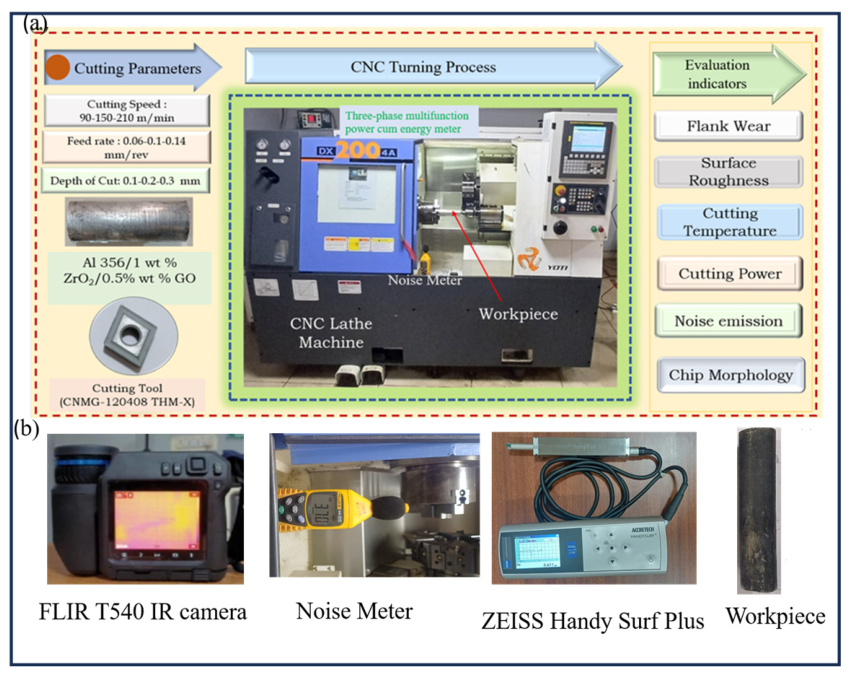
The research highlights the experimental investigation of machining performance in ZrO2–GO-reinforced A356 hybrid nanocomposites. This research evaluates the machining performance of a newly developed A356 + 1 wt% ZrO2 + 0.5 wt% GO nano-hybrid metal matrix composite. Prior studies clearly lack a detailed investigation into the influence of cutting parameters (speed, feed rate, and depth of cut) on critical responses, such as tool flank wear, surface roughness, cutting temperature, power consumption, and noise emission. To fill this gap, dry turning experiments were performed on a CNC lathe using uncoated carbide tools. The findings establish a benchmark for machinability, highlighting its potential for high-performance applications in the aerospace, automotive, and engineering sectors.
3. Results and Discussion
The experimental results are presented in
Table 2.
A machining experiment was performed under a sustainable dry cutting environment to assess the wear phenomena and mechanisms of tool failure, considering the criterion of an acceptable limit of 0.2 mm at the nose flank region. During shearing at the primary deformation zone and rubbing at chip–tool interface secondary deformation, wear occurs both at the flank and rake surface, which affects the quality of the machined parts. During dry turning of the hybrid nanocomposite, rubbing and shear deformation increase the cutting force and temperature, which leads to higher energy use, more noise, and reduced tool life. Therefore, it is important to study all machinability aspects, such as tool wear, surface roughness, energy consumption, and noise emission.
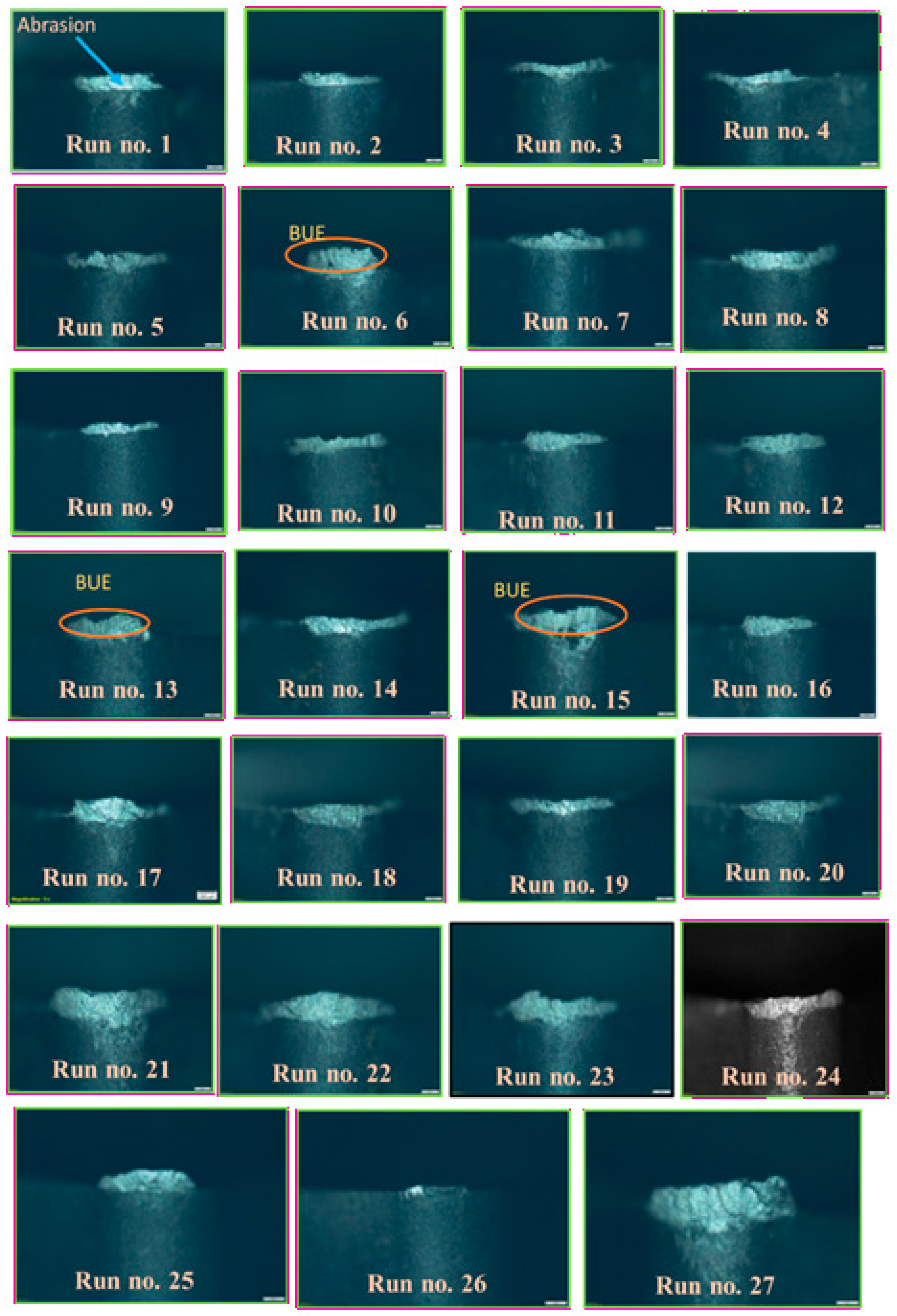
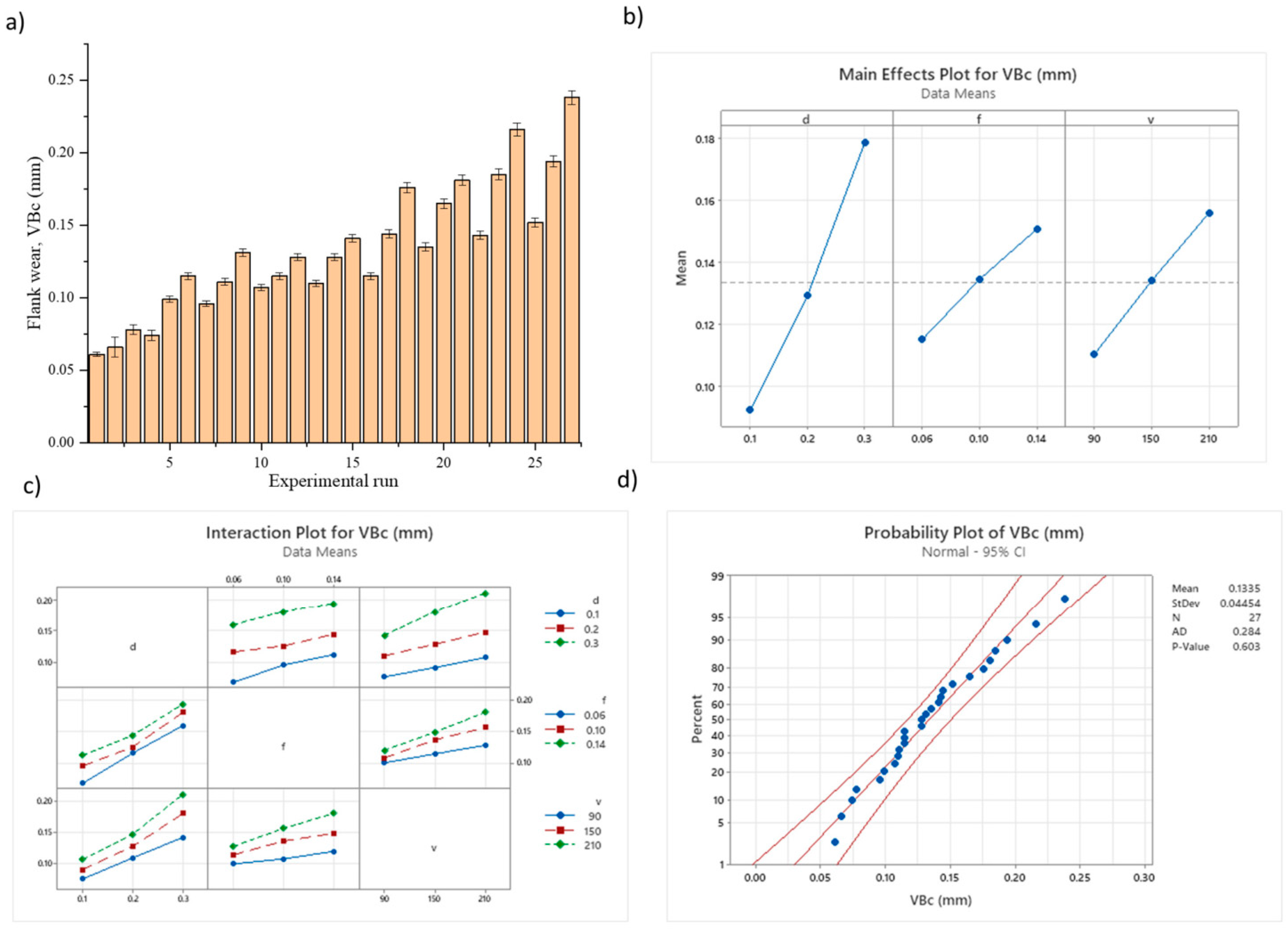
During turning, nose flank wear at the rubbing zone of the cutting tool was in the range of 0.061 mm-0.238 mm, within the 0.2 mm criteria limit in most of the runs, except Run-24 and Run-27. Tool wear exceeds the limit, particularly at higher cutting speed–feed depth of cut conditions in Run-24 and 27, where depth of cut and cutting speed are 0.3 mm and 210 m/min, respectively. The interaction between the tool and workpiece results in scratching and grooving of the tool materials, leading to abrasive wear. The evidence of built-up-edge (BUE) formation at the cutting edges is seen in almost all the runs, as shown in
Figure 2, and may be attributed to the higher friction and cutting temperature under a dry cutting environment. This accelerates the formation of BUE, which leads to adhesion or sticking of the chip material on the cutting edges and the rake surface.
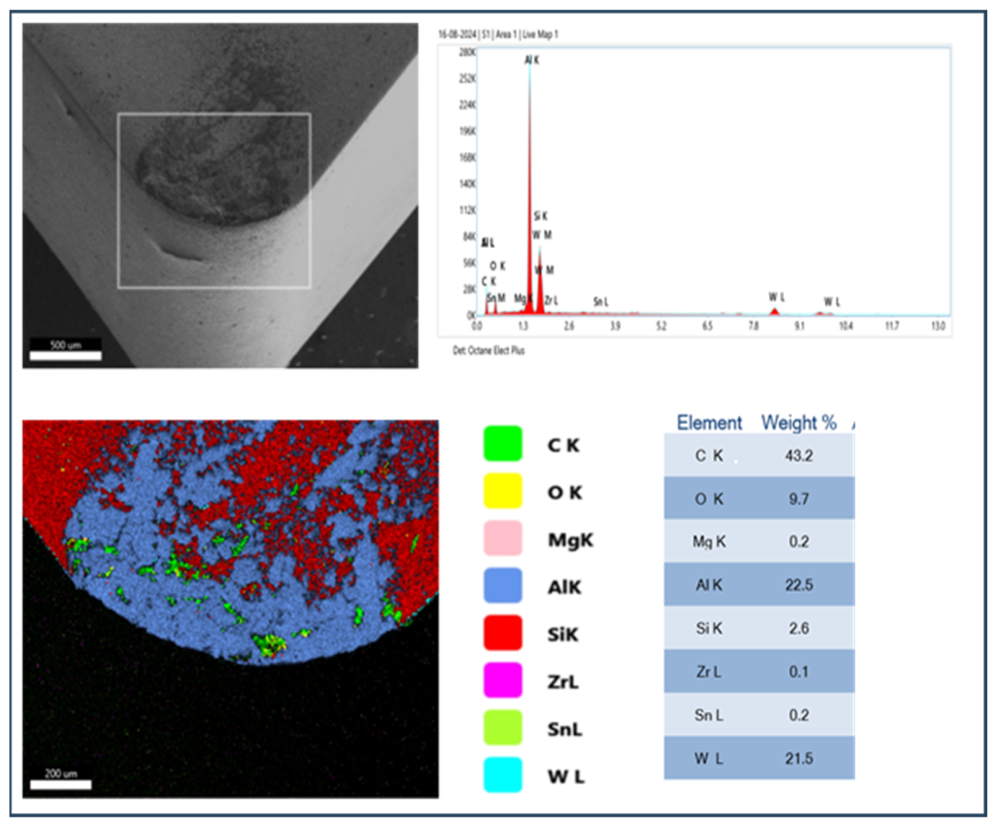
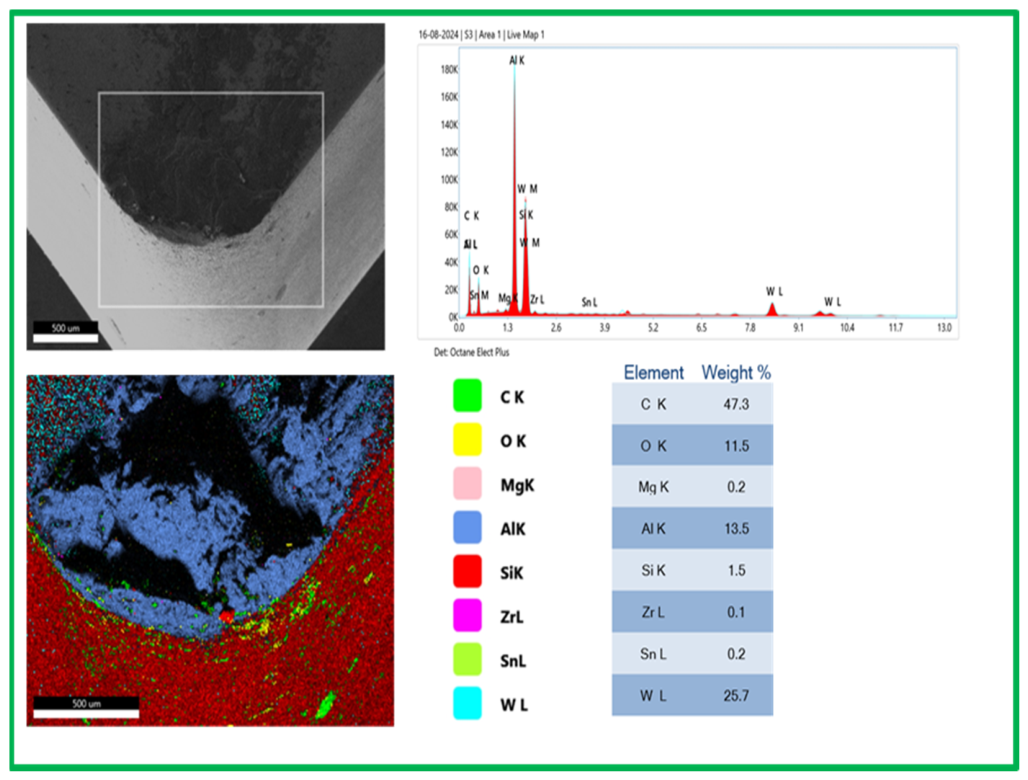
The adhesion and diffusion mechanisms of tool wear are active along with BUE formation, due to which many elements are found at the cutting edges, as seen from the EDS spectra and color spectrum of
Figure 3 and
Figure 4 at Run-1 and Run-27, respectively, at lower and higher cutting speeds of 90 m/min and 210 m/min. Elements, like C, O, Mg, Al, Si, Zr, Sn and W, are observed, which are the migration of the work material to the cutting tool at the atomic level or by mass dissolution at elevated temperature. Higher cutting speed leads to higher interfacial friction and cutting temperature, which promotes adhesion and BUE formation and raises the tool wear, as seen from the main effect plot (
Figure 5a,b). Similarly, with a rise in feed and depth of cut, flank wear rises due to higher cutting force by intense plastic deformation because of the higher cross-sectional area to be machined. However, the rise in tool wear is more effective at higher cutting speeds, as compared to feed and depth of cut. The interaction plot in
Figure 5c shows the increasing trend of flank wear with almost all cutting parameters. From the ANOVA (
Table 3) for VBc, depth of cut is found to be the most significant factor because its
p-value is less than 0.05 at the 95% confidence level [
22], as compared to feed and depth of cut. The percentages of contribution of depth of cut, cutting speed, and feed rate on tool wear were found to be 65.65%, 11.13% and 18.2%, respectively. The predictive mathematical model through multiple regression of VBc is shown in Equation (1), where the coefficient of determination R
2 value is close to 100%, i.e., R
2 = 0.987, R
2 (adj) = 0.98, R
2 (pred) = 0.967, and the model
p-value is 0.000 ≤ 0.05, which indicates the significance of the developed model.
From
Figure 5d’s probability plot, the residuals lie on the straight line, and the
p-value of the Anderson–Darling test is more than 0.05, which shows the significance of the model. In
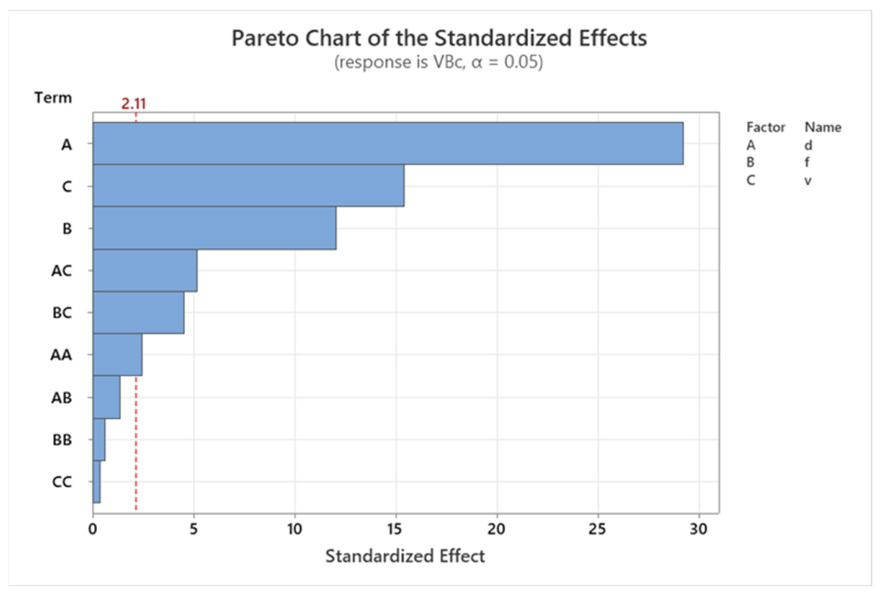
Figure 6, the Pareto diagram of the standardized effects of VBc indicates that all the cutting variables such as v, f and d along with interaction of d-v, f-v are significant as the value crosses the reference line of 2.11.
R2 = 0.987, R-sq (adj) = 0.98, R-sq (pred) = 0.967, p-value = 0.000 ≤ 0.05.
Figure 6.
Pareto chart of the standardized effects of VBc.
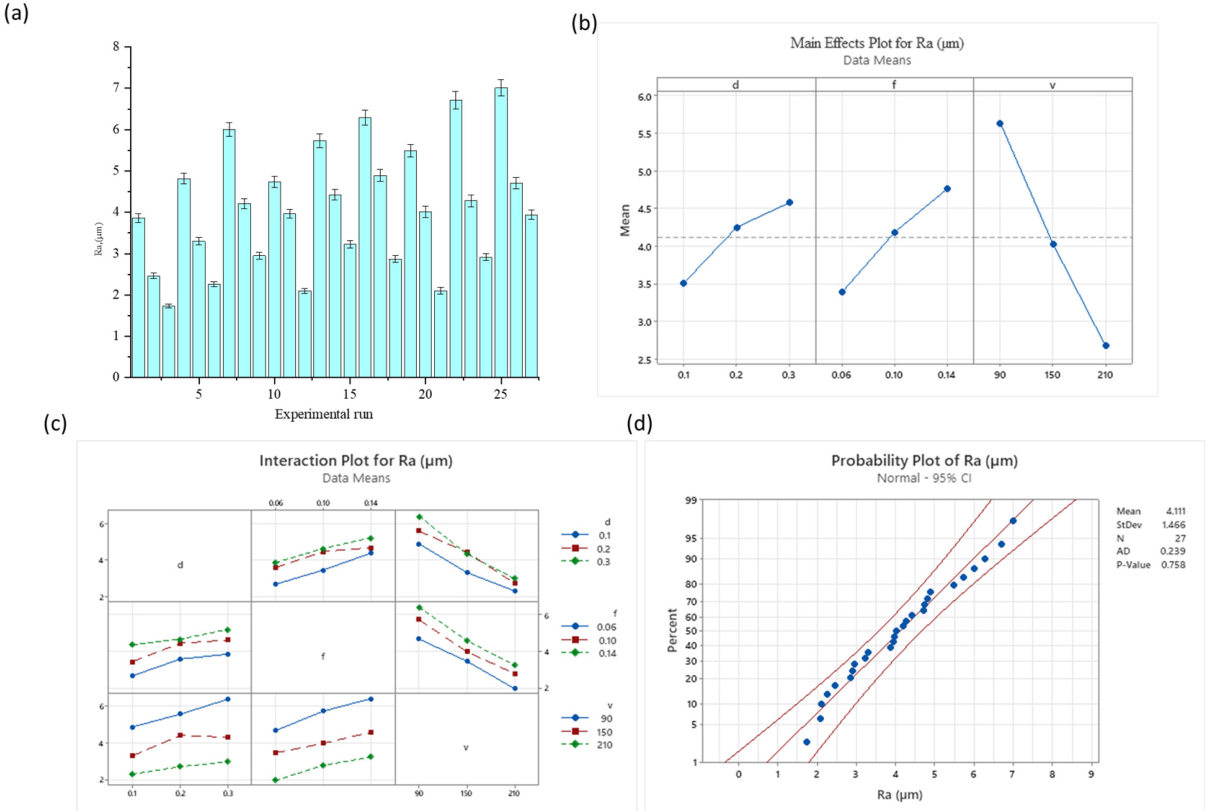
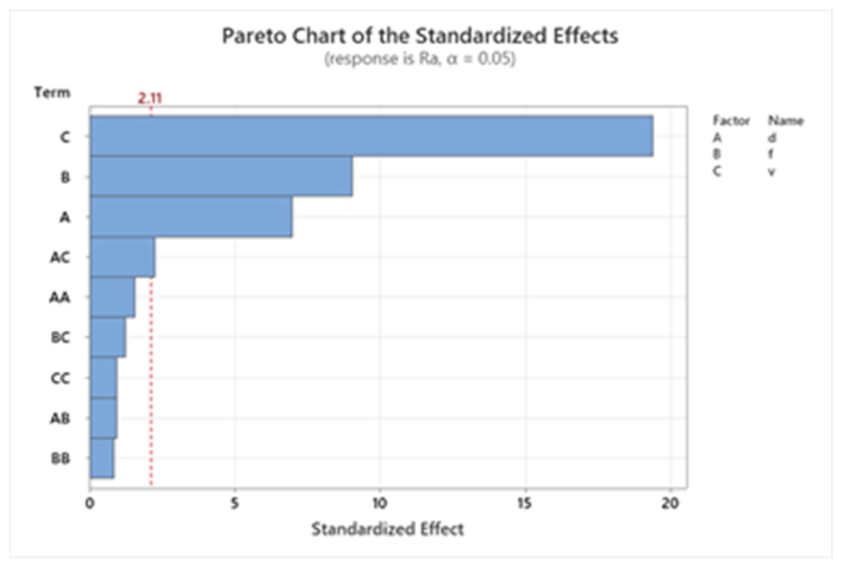
Surface roughness plays an important role during the machining of hybrid nanocomposites for applications in various engineering sectors and customer requirements. The evolution of arithmetic surface roughness average (Ra) was observed to be in the range of 1.733–7.012 microns, as seen in
Table 2 and
Figure 7. Higher roughness is noticed, particularly for lower cutting speed runs, such as Run-7 (6.002 microns), Run-13 (5.735 microns), Run-16 (6.291 microns), Run-19 (5.488 microns), Run-22 (6.716 microns) and Run-25 (7.012 microns). Higher surface roughness is mainly due to the occurrences of BUE formation, as seen in
Figure 2 and at lower cutting speed ranges. Intense interfacial friction and temperature lead to adhesion/BUE formation of chips and, thus, enhance the surface roughness. The increased surface roughness is primarily attributed to the hard ZrO
2 particles, which promote abrasive interactions at the tool–workpiece interface. Similarly, when feed and depth of cut increase, surface roughness becomes higher because the larger cutting area causes more plastic deformation and higher cutting forces. However, surface roughness is effective at higher cutting speed, as compared to feed and depth of cut, as it decreases with an increase in cutting speed, as seen from the main effect plot (
Figure 7b). At higher feed rates, the cutting tool traverses rapidly per revolution and deteriorates surface quality as Ra is directly proportional to the square of the feed. At higher cutting speed, BUE growth is lower, as compared to low cutting speed range, i.e., at 90 m/min, because of which Ra decreases at higher cutting speeds. Also, at higher cutting speed, machining is stable and the chip reduction coefficient (CRC) is small, as compared to low cutting speed due to the formation of thinner chips. Lower CRC means higher machinability, which induces less force and vibration and imparts improved product quality. The interaction plot in
Figure 7c shows the increasing trend of flank wear with d-f combination, whereas a decreasing trend of Ra is seen in d-v and f-v interactions at higher cutting speed. The ANOVA (
Table 4) of Ra indicates that cutting speed is more significant at the 95% confidence level as the probability of significance
p-value is less than 0.05, as compared to feed and depth of cut. The percentage of contribution of cutting speed, feed and depth of cut on Ra was found to be 70.42%, 15.43% and 9.56%, respectively. The predictive mathematical model through multiple regression of Ra is shown in Equation (2), where the coefficient of determination R
2 value is close to 100%, i.e., R
2 = 0.968, R-sq (adj) = 0.951, R-sq (pred) = 0.913,
p-value = 0.000 ≤ 0.05, which indicates the significance of the developed model. Also, from
Figure 7d’s probability plot, the residuals lie on the straight line, and the
p-value of the Anderson–Darling test is more than 0.05, which shows the significance of the model.
Figure 8’s Pareto diagram of the standardized effects of Ra indicates that all the cutting parameters such as v, f and d along with interaction of d-v interaction are significant as the value crosses the reference line of 2.11.
R2 = 0.968, R-sq (adj) = 0.951, R-sq (pred) = 0.913, p-value = 0.000 ≤ 0.05.
Figure 7.
(a) Experimental versus surface roughness response. (b) Main effects plot. (c) Interaction plot. (d) Probability plot for Ra.
Figure 8.
Pareto diagram of the standardized effects of Ra.
Table 4.
ANOVA for Ra.
| Source | DF
Degree of Freedom | Seq SS | Adj SS | Adj MS | F-Value | p-Value | % Contribution |
|---|
| d | 2 | 5.339 | 5.339 | 2.6696 | 20.85 | 0.000 | 9.56% |
| f | 2 | 8.618 | 8.618 | 4.3090 | 33.65 | 0.000 | 15.43% |
| v | 2 | 39.333 | 39.333 | 19.6666 | 153.58 | 0.000 | 70.42% |
| Error | 20 | 2.561 | 2.561 | 0.1281 | | | |
| Total | 26 | 55.851 | | | | | |
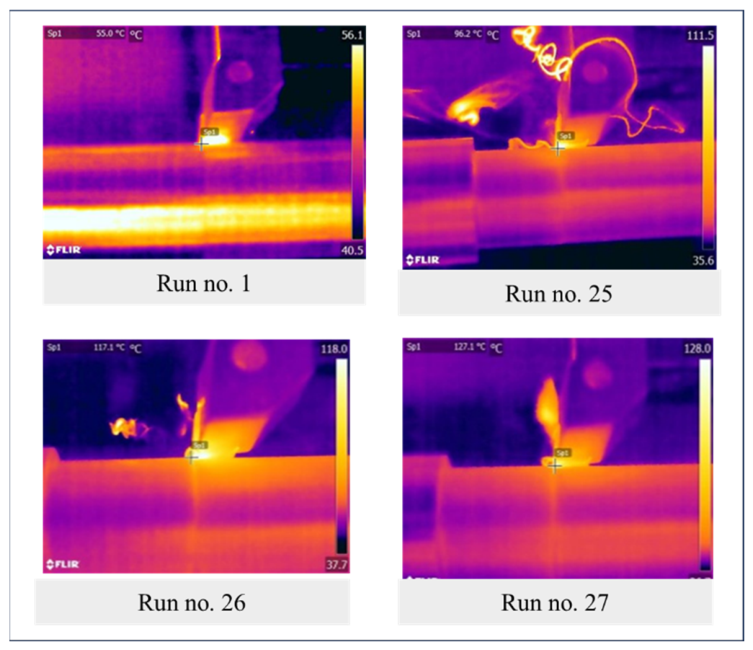
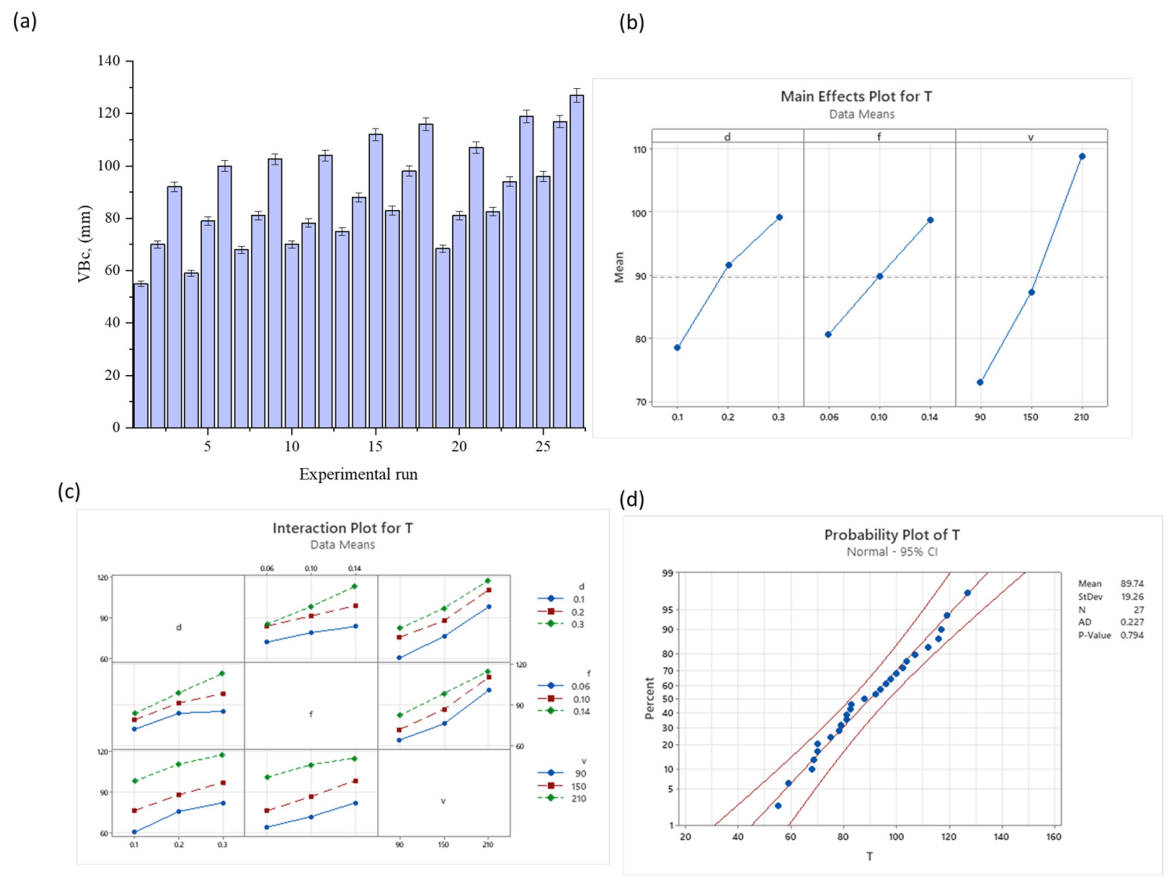
Cutting temperature generation during machining hybrid nanocomposites is in the range of 55–127 °C, as shown in
Table 2, and IR thermal images of Run-1, Run-25, Run-26 and Run-27 are shown in
Figure 9 due to friction, rubbing and power consumption from shearing the work material at both primary and secondary deformation zones. It is observed that at higher cutting speeds, temperature is maximum, particularly in Run-6 (100 °C), Run-9 (102.6 °C), Run-12 (104 °C), Run-15 (112 °C), Run-18 (116 °C), Run-21 (107 °C), Run-24 (119 °C), Run-26 (117 °C) and Run-27 (127 °C). However, maximum cutting temperature is limited to Run-27 (127 °C), and this reduction in temperature is primarily due to the higher thermal conductivity properties of reinforced zirconia and graphene oxide, where heat dissipates rapidly and effectively from the cutting zone. Also, the uniform distribution of reinforcements in the A356 matrix plays an important role in reducing the temperature as it reduces the stress concentration during machining. Higher cutting speed leads to higher interfacial friction and cutting temperature, which promotes adhesion and BUE formation, as seen from the main effect plot in
Figure 10a,b. Also, with an increase in feed and depth of cut, the cutting temperature rises due to higher cutting force from intense plastic deformation. This is because of the higher volume of material to be machined per revolution. However, the increase in cutting temperature is effective at higher cutting speed, as compared to feed and depth of cut. From the interaction plot in
Figure 10c, there is an increasing trend of cutting temperature with almost all cutting parameters. The ANOVA (
Table 5) of T indicates that cutting speed is more significant at the 95% confidence level, as the probability of significance
p-value is less than 0.05, as compared to feed and depth of cut. The percentage contribution of cutting speed, feed and depth of cut on cutting temperature was found to be 60.68%, 15.28% and 20.29%, respectively. The predictive mathematical model through multiple regression of T is shown in Equation (3), where the coefficient of determination R
2 value is close to 100%, i.e., R
2 = 0.984, R-sq (adj) = 0.976, R-sq (pred) = 0.962,
p-value = 0.000 ≤ 0.05, which indicates the significance of the developed model. Also, from
Figure 10d’s probability plot, the residuals lie on the straight line, and the
p-value of the Anderson–Darling test is more than 0.05, which shows the significance of the model.
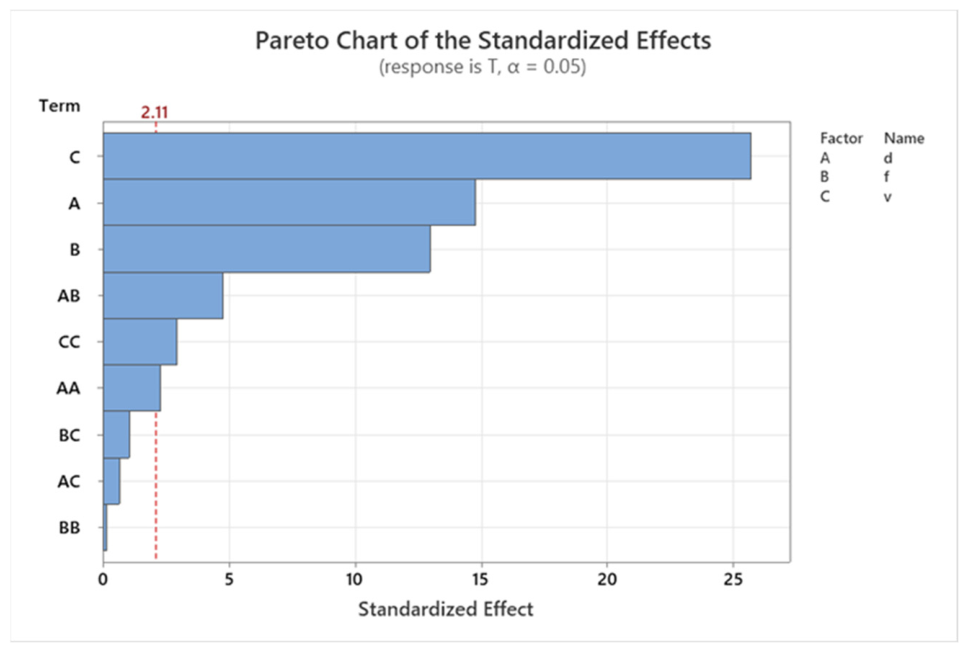
Figure 11’s Pareto chart of the standardized effects of T indicates that all the cutting parameters, such as v, f and d along with the interaction of d-f, are significant as the value crosses the reference line of 2.11.
R2 = 0.984, R-sq (adj) = 0.976, R-sq (pred) = 0.962, p-value = 0.000 ≤ 0.05.
Figure 9.
Thermal images of Run-1, Run-25, Run-26 and Run-27.
Figure 10.
(a) Experimental versus cutting temperature. (b) Main effects plot. (c) Interaction plot. (d) Probability plot for T.
Figure 11.
Pareto chart of the standardized effects of T.
Table 5.
ANOVA for T.
| Source | DF
Degree of Freedom | Seq SS | Adj SS | Adj MS | F-Value | p-Value | % Contribution |
|---|
| d | 2 | 1957.4 | 1957.4 | 978.71 | 54.13 | 0.000 | 20.29% |
| f | 2 | 1474.4 | 1474.4 | 737.20 | 40.77 | 0.000 | 15.28% |
| v | 2 | 5854.7 | 5854.7 | 2927.34 | 161.90 | 0.000 | 60.68% |
| Error | 20 | 361.6 | 361.6 | 18.08 | | | |
| Total | 26 | 9648.1 | | | | | |
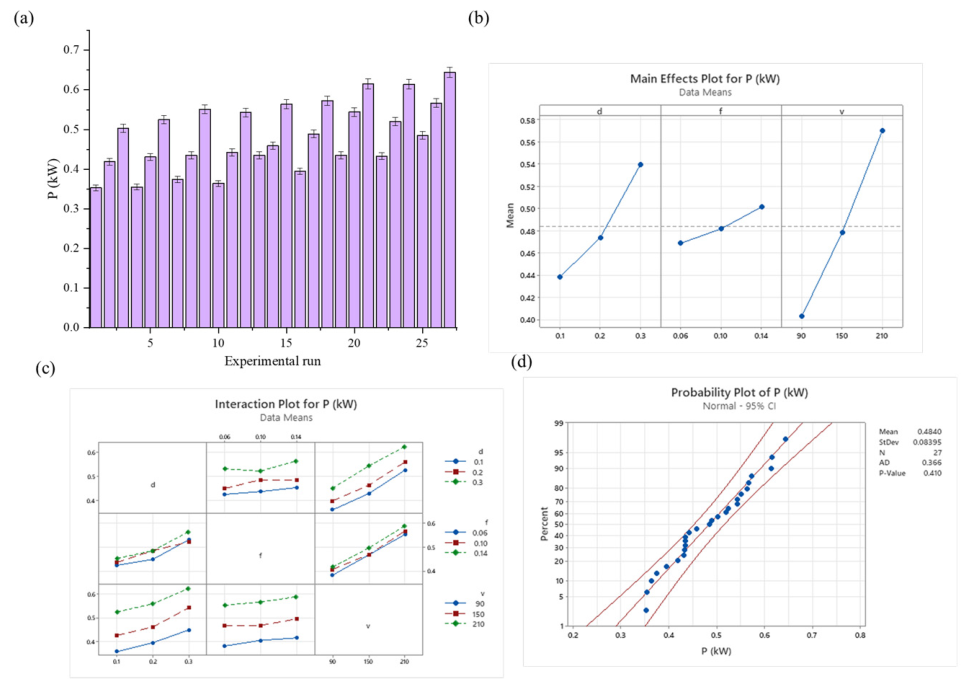
Cutting power generation during machining of hybrid nanocomposites is in the range of 0.353–0.644 kW, as shown in
Table 2 and
Figure 12. This is mainly due to the friction and rubbing when shearing the work material at both primary and secondary deformation zones, and the presence of reinforcements increases friction and forces material shear and adhesion of chips in the form of BUE. It is observed that at higher cutting speed, power consumption is maximum, particularly in Run-3 (0.503 kW), Run-6 (0.525 kW), Run-9 (0.551 kW), Run-12 (0.543 kW), Run-15 (0.564 kW), Run-18 (0.573 kW), Run-21 (0.615 kW), Run-24 (0.614 kW) and Run-27 (0.644 kW). Upon an increase in feed and depth of cut (
Figure 12b), the cutting power requirement rises due to higher cutting force during intense plastic deformation of a higher volume of material to be machined per revolution. However, the rise in cutting power is effective at higher cutting speed, as compared to feed and depth of cut. The interaction plot in
Figure 12c shows the increasing trend of cutting temperature with almost all cutting parameters. The ANOVA (
Table 6) of P indicates that cutting speed is more significant at the 95% confidence level, as the probability of significance
p-value is less than 0.05, as compared to feed and depth of cut. The percentages of contribution of cutting speed, feed and depth of cut on power consumption were found to be 68.71%, 2.67% and 25.92%, respectively. The predictive mathematical model through multiple regression of P is shown in Equation (4), where the coefficient of determination R-squared value is close to 100%, i.e., R
2 = 0.973, R-sq (adj) = 0.959, R-sq (pred) = 0.941,
p-value = 0.000 ≤ 0.05, which indicates the significance of the developed model. Also, from
Figure 12d’s probability plot, the residuals lie on the straight line, and the
p-value of the Anderson–Darling test is more than 0.05, which shows the significance of the model.
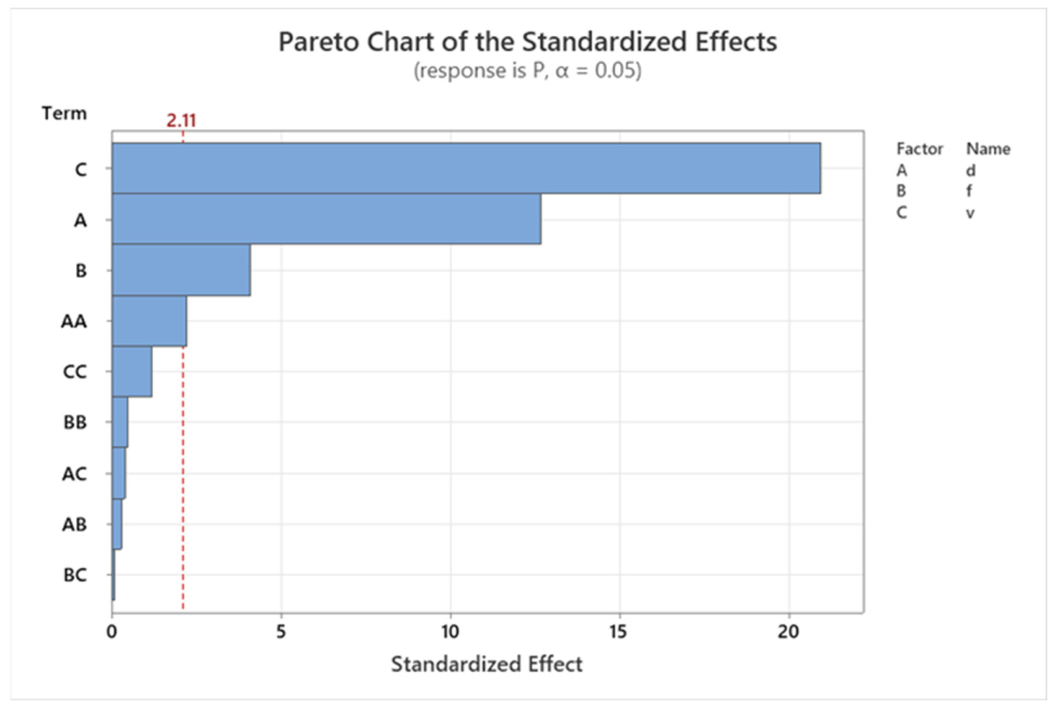
Figure 13’s Pareto chart of the standardized effects of P indicates that all the cutting parameters, such as v, f, and d, are significant, as the value crosses the reference line of 2.11.
R2 = 0.973, R-sq (adj) = 0.959, R-sq (pred) = 0.941, p-value = 0.000 ≤ 0.05.
Figure 12.
(a) Experimental versus cutting power response. (b) Main effects plot. (c) Interaction plot. (d) Probability plot for T.
Figure 13.
Pareto chart of the standardized effects of P.
Table 6.
ANOVA for P.
| Source | DF
Degree of Freedom | Seq SS | Adj SS | Adj MS | F-Value | p-Value | % Contribution |
|---|
| d | 2 | 0.047507 | 0.047507 | 0.023754 | 96.23 | 0.000 | 25.92% |
| f | 2 | 0.004899 | 0.004899 | 0.002450 | 9.92 | 0.001 | 2.67% |
| v | 2 | 0.125912 | 0.125912 | 0.062956 | 255.04 | 0.000 | 68.71% |
| Error | 20 | 0.004937 | 0.004937 | 0.000247 | | | |
| Total | 26 | 0.183255 | | | | | |
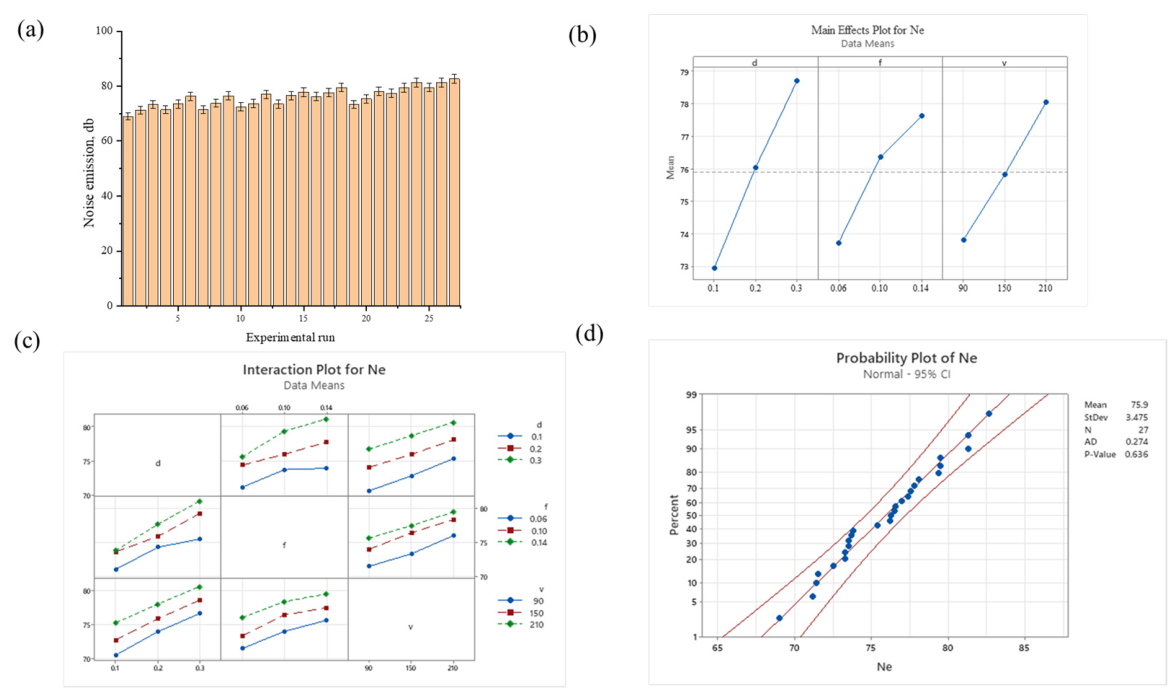
Noise emission generation during machining hybrid nanocomposites is in the range of 69–82.7 dB, as shown in
Table 2 and
Figure 14. This occurs mainly due to friction and rubbing in the primary and secondary shear zones. The reinforcements increase the friction and cutting forces, which make the material shear more and lead to chip sticking at the built-up edge (BUE). It is observed that at higher cutting speed, noise emission is maximum, particularly in Run-3 (73.3 dB), Run-6 (76.3 dB), Run-9 (76.5 dB), Run-12 (77 dB), Run-15 (77.8 dB), Run-18 (79.5 dB), Run-21 (78.1 dB), Run-24 (81.3 dB) and Run-27 (82.7 dB). However, maximum noise emission during machining was observed at Run-27 (82.7 dB), well within the acceptable limit of 85 dB. This reduction is primarily due to the higher thermal conductivity properties of reinforced zirconia and graphene oxide, where heat dissipates rapidly and effectively from the cutting zone, and the uniform distribution of reinforcements in the A356 matrix, which plays an important role in reducing the temperature and stress concentration during machining. With an increase in feed and cutting speed in
Figure 14b, noise emission rises due to higher cutting force during intense plastic deformation per revolution. However, the increase in noise emission is more effective at higher depth of cut, as compared to feed rates and depth of cut, because of the higher friction and volume of material removal per cut. Increased depth of cut induces higher tool wear, which affects surface roughness and noise generation. The interaction plot in
Figure 14c shows the increasing trend of noise generation with almost all cutting parameters, like d-f, f-v and d-v. The ANOVA (
Table 7) of Ne indicates that depth of cut is more significant at the 95% confidence level as the probability of significance
p-value is less than 0.05, as compared to feed and depth of cut. The percentage of contribution of cutting speed, feed and depth of cut on Ne was found to be 25.83%, 22.69% and 47.74%, respectively. The predictive mathematical model through multiple regression of P is shown in Equation (4), where the coefficient of determination R-squared value is close to 100%, i.e., R
2 = 0.983, R-sq (adj) = 0.975, R-sq (pred) = 0.959,
p-value = 0.000 ≤ 0.05, which indicates the significance of the developed model. Also, from
Figure 14d’s probability plot, the residuals lie on the straight line, and the
p-value of the Anderson–Darling test is more than 0.05, which shows the significance of the model.
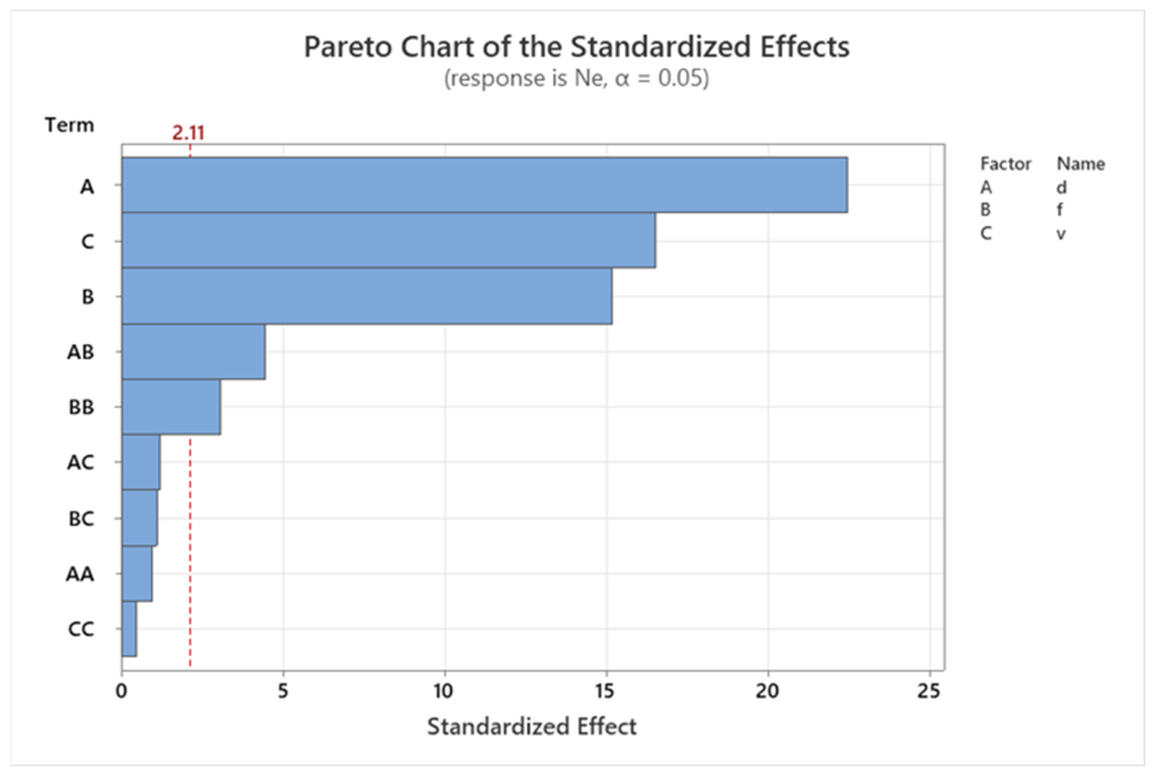
Figure 15’s Pareto chart of the standardized effects of P indicates that all the cutting parameters, such as v, f and d and d-f, are significant, as the value crosses the reference line of 2.11.
R2 = 0.983, R-sq (adj) = 0.975, R-sq (pred) = 0.959, p-value = 0.000 ≤ 0.05.
Figure 14.
(a) Experimental versus noise emission response. (b) Main effects plot. (c) Interaction plot. (d) Probability plot for Ne.
Figure 15.
Pareto chart of the standardized effects of Ne.
Table 7.
ANOVA for Ne.
| Source | DF
Degree of Freedom | Seq SS | Adj SS | Adj MS | F-Value | p-Value | % Contribution |
|---|
| d | 2 | 149.93 | 149.93 | 74.9633 | 127.73 | 0.000 | 47.74% |
| f | 2 | 71.25 | 71.25 | 35.6233 | 60.70 | 0.000 | 22.69% |
| v | 2 | 81.13 | 81.13 | 40.5644 | 69.12 | 0.000 | 25.83% |
| Error | 20 | 11.74 | 11.74 | 0.5869 | | | |
| Total | 26 | 314.04 | | | | | |
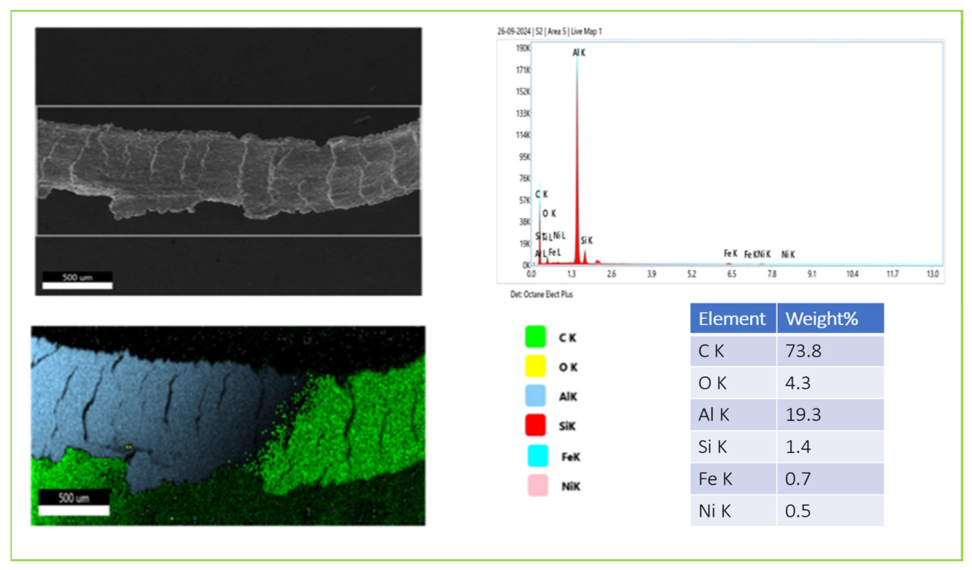
Chip morphology during turning hybrid nanocomposite is influenced by the interaction between the cutting tool and reinforced zirconia and graphene oxide, leading to higher stress concentration, which initiates crack formation and localized shear deformation. This leads to segmented sawtooth chip formation and even breakage, as seen in
Figure 16. Several elements are present in the chip particles, such as C, O, Al, Si, Ti, Fe and Ni, with their weight percentage for Run-27 shown in the EDS spectra in
Figure 16.
Utilizing the COPRAS optimization methodology [
23,
24,
25] (
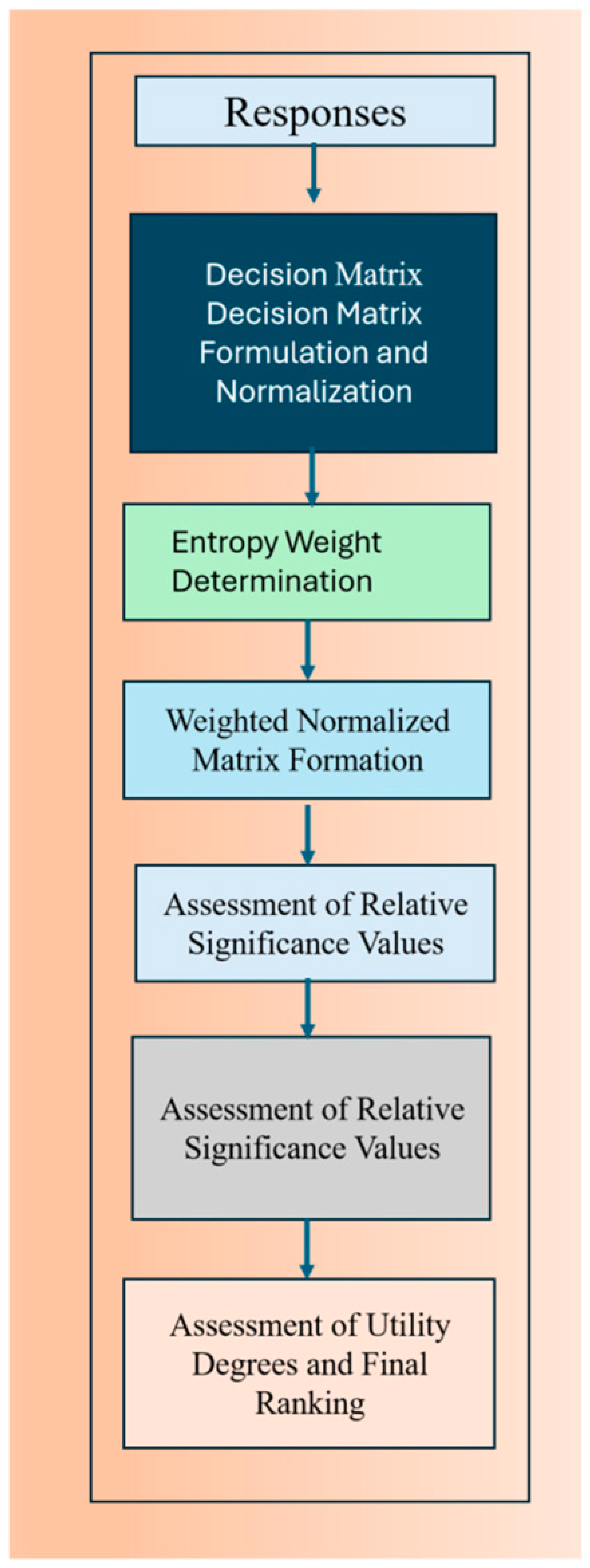
Figure 17), the optimal parametric settings for tool wear, surface roughness, power consumption, cutting temperature, and noise emission are identified as follows: depth of cut (d) = 0.1 mm; feed (f) = 0.06 mm/rev; cutting speed (v) = 90 m/min, i.e., Run no. 1 corresponding to the highest rank indicated the percentage of utility responses for COPRAS optimization, as shown in
Table 8. The COPRAS methodology [
26,
27] initiates with an assessment of alternatives (responses) and the development of a decision matrix. The matrix is subsequently normalized, and entropy weights are computed to ascertain the significance of each criterion. The computation of relative significance values for each alternative is preceded by the formation of a weighted normalized matrix. Finally, the utility degree is determined, which aids in the ranking of the alternatives and the identification of the most selected parameters.
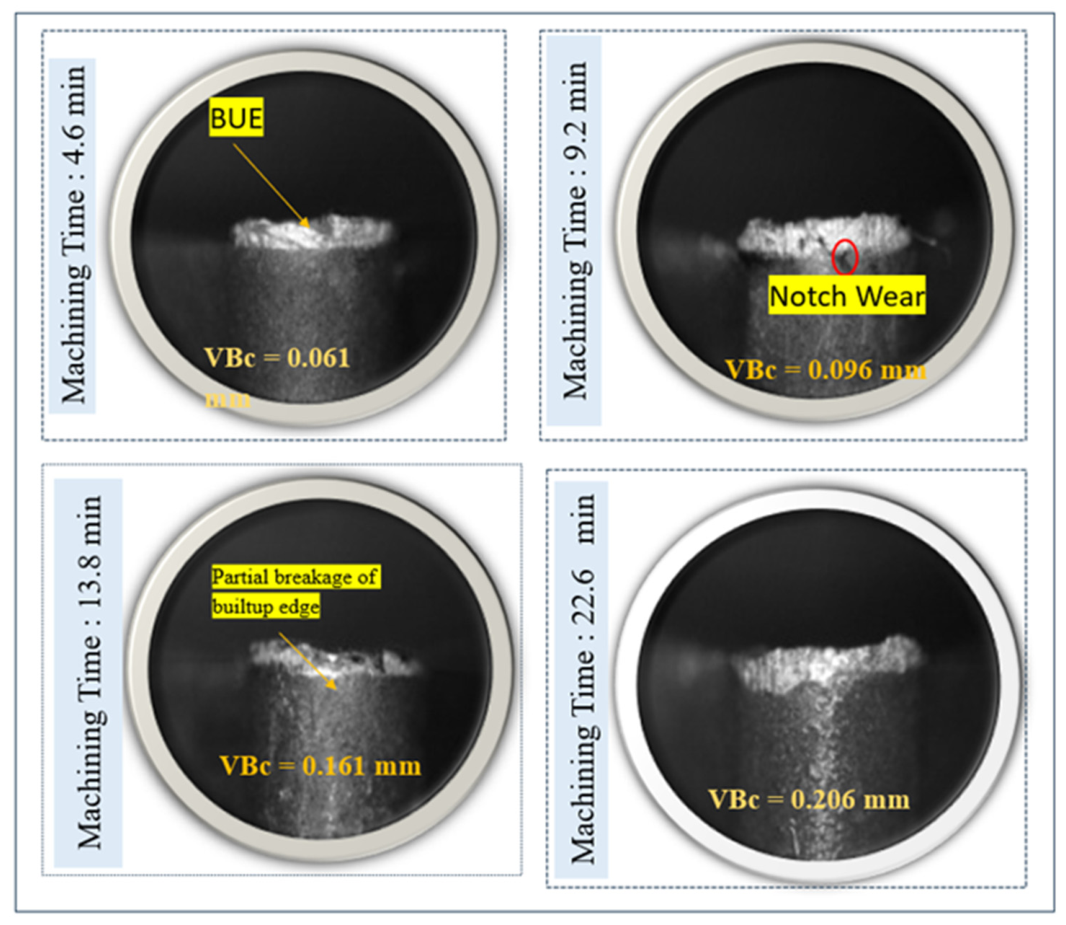
Further tool life assessment was conducted through machining at successive machining times under optimal run parametric conditions, considering the nose flank wear acceptable criteria of 0.2 mm, as shown in
Figure 18. Tool wear mechanisms are characterized by chip adhesion, BUE, abrasion, and diffusion. Flank wear exceeds the critical limit of 0.2 mm at a machining time of 22.6 min, and tool life is found to be 22.6 min during machining of the hybrid nanocomposite under a dry environment.
Through Gilbert’s technique [
28], the economics of machining was computed under optimal run for machining a length of 100 mm and a 50 mm diameter hybrid nanocomposite workpiece with a 5 min tool changing time. Different costs and their outcomes are as follows: setup cost (INR 750 per hr), machining time (INR 2.9), machining cost per part (INR 36.25), tool life (22.6 min), tool replacing cost per cut (INR 8.01), mean value of single cutting edge during machining length of 100 mm (INR 112.5), tooling cost per cut (INR 14.43), and total machining cost per part (INR 58.69), ensuring economical sustainable manufacturing.