


Abstract
In nuclear power, marine engineering, and other fields, a matching system composed of duplex steel and copper alloy is a common combination for rotating components in a seawater environment. However, this system is susceptible to galvanic corrosion that seriously threatens its service safety and service life, with ZCuAl10Fe5Ni5 being the main component corroded. Additionally, current corrosion research on this system has evident gaps. Specifically, the influence of area ratio on galvanic corrosion remains insufficiently understood, and the action mechanism of Cl− on the ZCuAl10Fe5Ni5-based corrosion product film in seawater, as well as the product evolution path, has not been fully revealed, which restricts the development of targeted protection technologies. This study explores the degradation mechanism of ZCuAl10Fe5Ni5 in a specific high-salinity environment (20,000 mg/L Cl−), characteristic of nuclear power plant service conditions. The results show that due to the significant electrode potential difference between the SAF2507 duplex steel and ZCuAl10Fe5Ni5 copper alloy, a stable galvanic couple is formed, with ZCuAl10Fe5Ni5 acting as the anode and undergoing dissolution corrosion. When the area ratio of ZCuAl10Fe5Ni5 (anode) to SAF2507 duplex steel (cathode) is 1:50, a significantly stronger galvanic effect is observed. The high concentration of Cl− in seawater can damage the surface of the ZCuAl10Fe5Ni5-based corrosion product film, leading to intensified local corrosion. The ZCuAl10Fe5Ni5-derived corrosion products have a layered structure mainly comprising a mixed system of Cu-Al-Mg oxides/hydroxides, and the corrosion process is accompanied by selective aluminum depletion corrosion. This study provides insight into the corrosion mechanism and key influencing factors of ZCuAl10Fe5Ni5 in the matching system, as well as a theoretical basis and technical support for the design of compatibility metal materials in a seawater environment and the control of corrosion in ZCuAl10Fe5Ni5.
1. Introduction
In key fields such as nuclear power, marine engineering, and shipbuilding, rotating components, as core transmission units, must withstand the harsh erosive properties of seawater for a long time, and their service reliability and service life directly determine the operational safety and economy of the entire equipment system [1]. The seawater environment has multiple corrosion-inducing factors, including high salinity, strong conductivity, complex microbial communities, and dynamic water flow scouring. High Cl− concentrations can damage the passive film on the metal surface, and the biofilm formed by microbial adhesion will cause local acidification, oxygen concentration differences, and other problems, further accelerating the corrosion process [2,3]. Thus, the corrosion resistance of materials has become a core bottleneck restricting the upgrading and long-term service of marine engineering equipment.
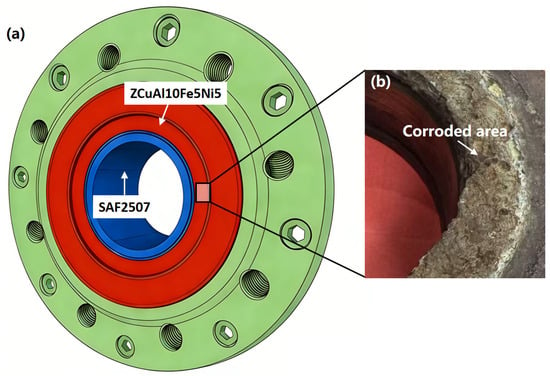
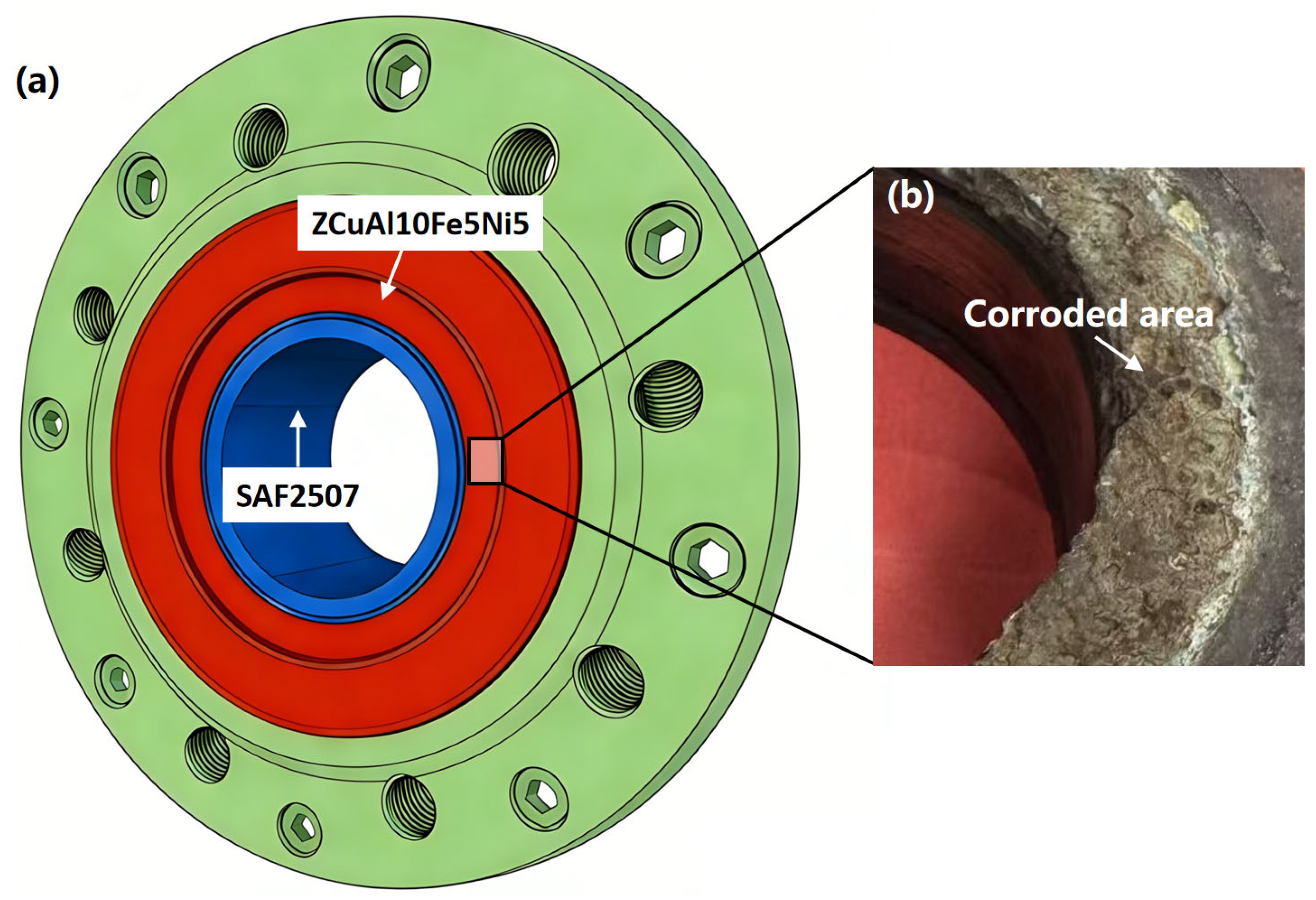
Duplex steel combines the excellent properties of ferrite and austenite. It not only has mechanical advantages such as high strength and high toughness, but the Cr2O3-MoO3 composite passive film formed on its surface can also resist seawater-induced erosion. Therefore, it is widely used in key structural components such as shafts and housings in seawater environments [4,5]. Copper alloy, with its excellent wear resistance, friction reduction, and processability, can form a certain copper oxide protective film in seawater. It is often used as a matching material for the contact interface of rotating components such as bearing bushes and bushings, forming a typical “structural part-matching part” service system with duplex steel [6,7]. However, there is a significant difference in electrode potential between duplex steel and copper alloy. When they are in contact in the seawater environment, which is a strong electrolyte, a galvanic couple is easily formed, leading to galvanic corrosion [8]. The corrosion rate of the galvanic couple is much higher than the self-corrosion rate of a single metal, which often causes local rapid failure of the anode material (copper alloy). In severe cases, it can cause major safety hazards such as jamming of rotating components and seal failure, which have become the main forms of metal component failure in marine engineering equipment [9,10]. As in Figure 1, after 6 years of service under coupling with SAF2507, the copper alloy bearing bush suffered severe corrosion failure.
Figure 1.
(a) The mating structure of bearings and bearing housings, (b) Macroscopic morphology of the corroded area.
At present, although some studies have been conducted on the duplex steel–copper alloy matching system, there are still many key scientific issues that have not been clarified. On the one hand, the regulation mechanism of the area ratio on galvanic corrosion lacks systematic research. In actual engineering, the design of structural rotating components often leads to a large deviation between the anode–cathode area ratio and the ideal experiment conditions (for example, the area ratio of the matching surface between the bearing bush and the shaft may fluctuate between 1:10 and 1:100). However, existing studies mostly focus on symmetric area ratio conditions such as 1:1. Thus, there is a lack of quantitative data support for the evolution law, current distribution characteristics, and corrosion rate changes in galvanic corrosion under asymmetric area ratios, which makes material compatibility design in actual engineering difficult [11,12]. On the other hand, the synergistic effect of multiple factors on corrosion in seawater has not been fully revealed. Cl− in seawater can not only directly erode the metal matrix but may also chemically react with corrosion products, thereby affecting the structural stability of the product film. At the same time, factors such as water flow scouring, temperature fluctuations, and microbial metabolism will be coupled with galvanic corrosion, further increasing the complexity of corrosion [13,14]. In addition, the evolution path of corrosion products and their feedback effect on the corrosion process are not clear, and existing studies have insufficiently analyzed the correlation between the composition, structure, and protective performance of corrosion products, which restricts the development and optimization of targeted protection technologies [15].
Based on the studies above, the copper alloy ZCuAl10Fe5Ni5, which is commonly used to match the SAF2507 duplex steel in nuclear energy and marine engineering, is selected as the research object. A series of corrosion experiments were carried out in a simulated seawater environment, and the self-corrosion characteristics, galvanic corrosion laws, and corrosion product evolution mechanisms were systematically explored using multi-dimensional analysis methods such as macro inspection, micro-morphology characterization, and electrochemical experiments. The focus is on clarifying the influence of laws of key factors, such as area ratio and Cl− concentration, on corrosion behavior and identifying the core factors inducing corrosion failure. We aim to provide a theoretical basis and engineering reference to construct metal materials with reasonable compatibility in a seawater environment, optimize the structure of rotating components, and advance the research and development of corrosion protection technologies. Thus, this study has important practical significance for improving the service safety and long-term effectiveness of marine engineering equipment.
2. Experiment
2.1. Experiment Materials
SAF2507 (S32750) duplex steel and ZCuAl10Fe5Ni5 copper alloy were selected for the experiment, with both materials commonly used for rotating components in a seawater environment. The chemical composition, hardness, and metallographic structure of the two materials were comprehensively analyzed to confirm that their basic performance parameters meet the requirements of engineering applications before the experiment, thus providing suitable substrates for subsequent corrosion experiments. The specific experimental results are shown below.
The chemical composition analysis results of ZCuAl10Fe5Ni5 copper alloy are shown in Table 1, with its Fe, Al, and Ni contents being 5.44 wt%, 10.45 wt%, and 4.69 wt%, respectively, all of which are within the range specified by the standard. The contents of impurity elements such as Sn, Zn, and Pb are extremely low, with values of 0.015 wt%, 0.49 wt%, and 0.048 wt%, respectively, meeting the purity requirements. The chemical composition analysis results of SAF2507 duplex steel are shown in Table 2, and its Cr, Mo, and Ni contents are 25.74 wt%, 3.54 wt%, and 7.26 wt%, respectively, suggesting excellent corrosion resistance. The contents of harmful elements such as C, S, and P are controlled at extremely low levels, and the purity of both materials meets the standards.
Table 1.
Chemical composition analysis results of ZCuAl10Fe5Ni5 (wt%).
Table 2.
Chemical composition analysis results of SAF2507 (wt%).
The average Vickers hardness of ZCuAl10Fe5Ni5 is 222.3 HV, while that of SAF2507 is 257 HV (Table 3). The results indicate that both materials meet the mechanical requirements for service in seawater environments and exhibit no abnormal hardness variations.
Table 3.
Hardness results of bearing bushes (HV).
The seawater composition during the experiment was based on the ASTM D1141-98 standard (2013 edition) [16], as shown in Table 4.
Table 4.
The composition of the experimental seawater.
2.2. Experiment Methods
2.2.1. Electrochemical Testing
To clarify the galvanic effect between copper alloy and SAF2507 alloy, as well as the severity of galvanic corrosion induced by such an effect, electrochemical tests were employed. First, electrode preparation was carried out by welding a copper wire to one side of each specimen; then, both the copper alloy and the SAF2507 alloy specimens were embedded in epoxy resin using a cylindrical mold with an inner diameter of 30 mm. When the area ratio of SAF2507 alloy to copper alloy was 1:1, the exposed working area of each material was 1 cm2 (20 mm × 5 mm). When the area ratio was 50:1 (with copper alloy theoretically more susceptible to corrosion and thus serving as the small anode), their exposed working areas were 3 cm2 (20 mm × 15 mm) and 0.06 cm2 (3 mm × 2 mm), respectively. Prior to each test, the specimen surfaces were mechanically ground sequentially with a series of silicon carbide papers (240#, 400#, 600#, and 800#), followed by rinsing with deionized water and ethanol. The two alloy specimens were then immersed in an artificial seawater medium to undergo corrosion and subsequently connected to an electrochemical workstation (Gamry Reference 600, Gamry Instruments, Warminster, PA, USA) with a working electrode (copper alloy) and a counter electrode (SAF2507 alloy) to measure the coupled potential (Eg) and current density (ig). Eg and ig were recorded for 10 min under the same flow conditions, during which the current density remained basically stable. Then, the open-circuit potential (OCP) of each specimen was monitored separately for 10 min and immediately followed by EIS testing. EIS spectra were recorded at OCP by applying a sinusoidal potential perturbation with an amplitude of 10 mV over a frequency range from 100 kHz to 100 mHz, and all potentials in this paper were referenced to the saturated calomel electrode (SCE). Upon completing the aforementioned electrochemical tests, the SAF2507 alloy and copper alloy specimens were recoupled via wire connection and continuously immersed in an artificial seawater medium until the next experimental time point. All experiments were repeated at least three times under the same conditions to ensure reproducibility, and the OCP and EIS tests were performed using a typical three-electrode system consisting of the SAF2507 alloy or copper alloy specimen as the working electrode, a platinum sheet as the counter electrode, and a saturated calomel electrode (SCE) as the reference electrode connected to the electrolytic cell via a salt bridge with a Luggin capillary.
2.2.2. Characterization
The preparation of metallographic samples was carried out through grinding and polishing. Optical microscopy (Zeiss Axio Observer. Z1m, Carl Zeiss Microscopy GmbH, Oberkochen, Germany) and SEM (FEI XL30, FEI Company, Hillsboro, OR, USA) were used to observe the microstructure and corrosion morphology of the materials, and en energy-dispersive spectroscopy (EDS, Thermo Fisher Scientific, Waltham, MA, USA) was employed to analyze the elemental composition and distribution of corrosion products and to evaluate the corrosion morphology, including pitting features and surface degradation characteristics.
3. Results and Discussion
3.1. Metallographic Structure
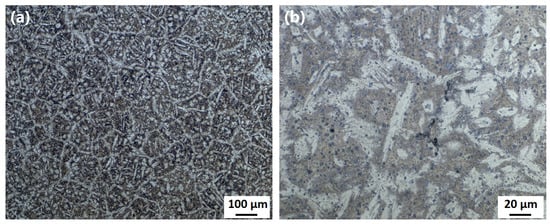
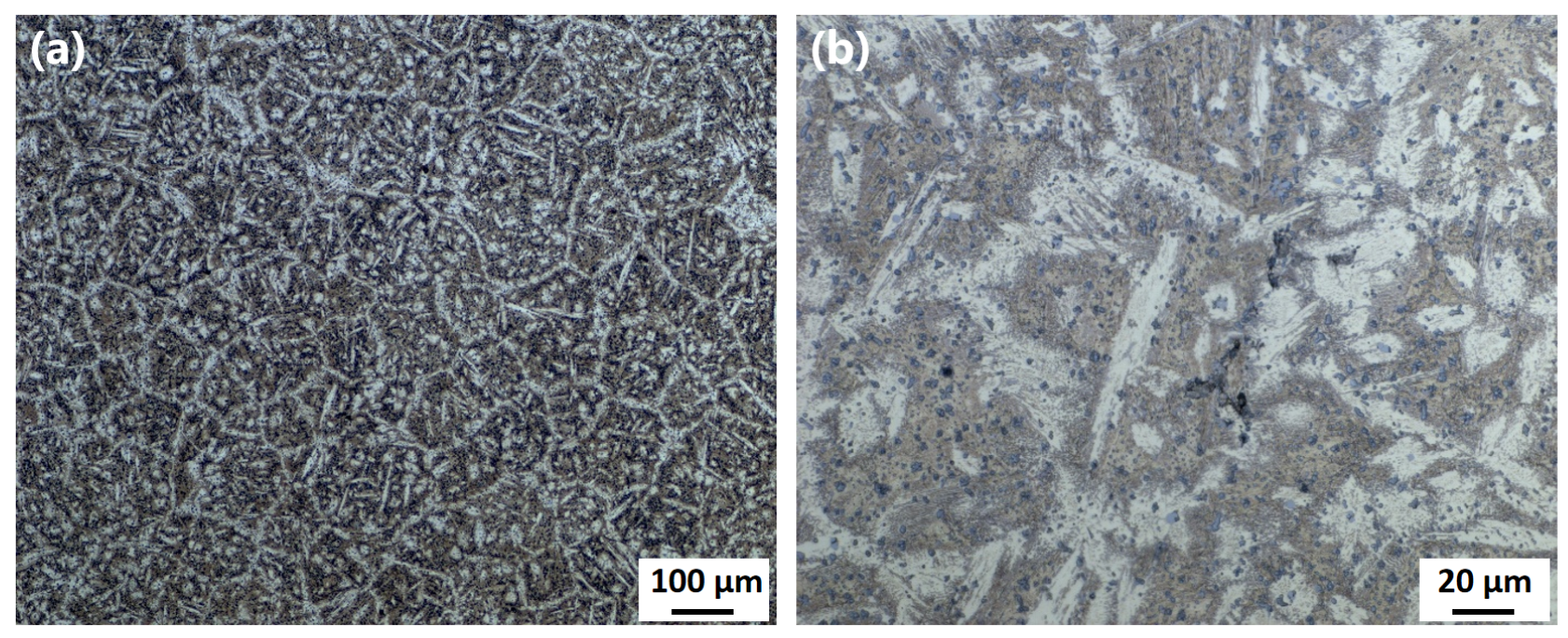
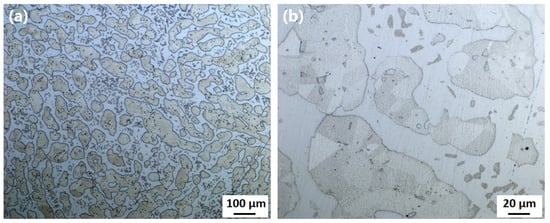
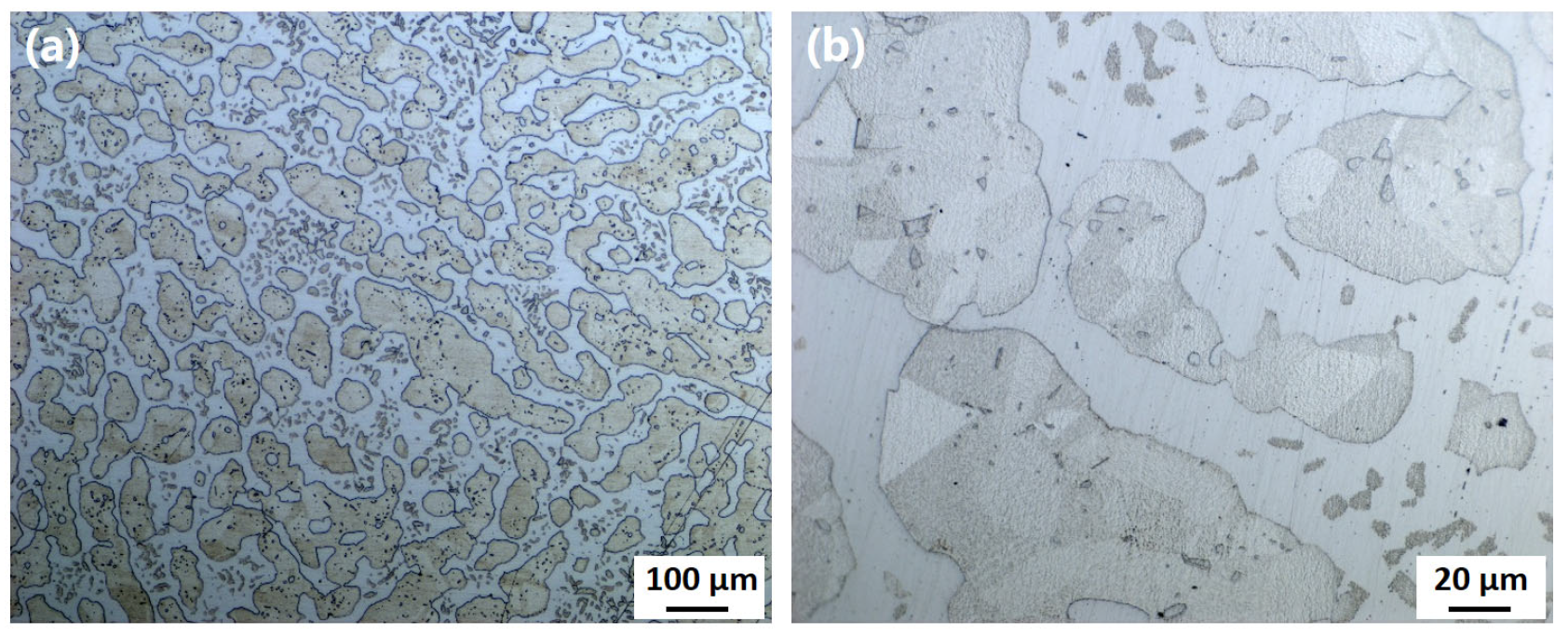
The metallographic structure of the ZCuAl10Fe5Ni5 matrix shows a typical continuous network distribution characteristic. The light gray α phase is connected in the form of continuous thin films or fine strips, forming a network skeleton throughout the entire field of view. The dark gray β’ copper matrix is divided into small, approximately equiaxed or irregular island-like regions, and each phase has a uniform size, a clear interface, no obvious segregation or coarse precipitated phases, and good microstructural uniformity (Figure 2). This microstructure contributes to both wear resistance and corrosion resistance.
Figure 2.
Metallographic structure of ZCuAl10Fe5Ni5, (a) Low-magnification optical micrograph; (b) High-magnification optical micrograph.
The metallographic structure of SAF2507 is a typical ferrite (F)–austenite (A) duplex banded structure [17]. The two phases are alternately distributed uniformly. The phase interface is straight, and the grains are refined, with no obvious inclusions. The ferrite content is approximately 55%, while the austenite content is approximately 45%, meeting the phase composition ratio requirements of SAF2507 (Figure 3). The balance of the duplex structure provides structural support that confers both excellent mechanical properties and corrosion resistance, thereby enabling it to adapt to the harsh service conditions of the seawater environment.
Figure 3.
Metallographic structure of SAF2507, (a) Low-magnification optical micrograph; (b) High-magnification optical micrograph.
3.2. Corrosion Morphology and Corrosion Product Analysis
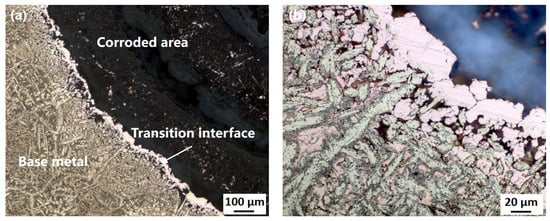
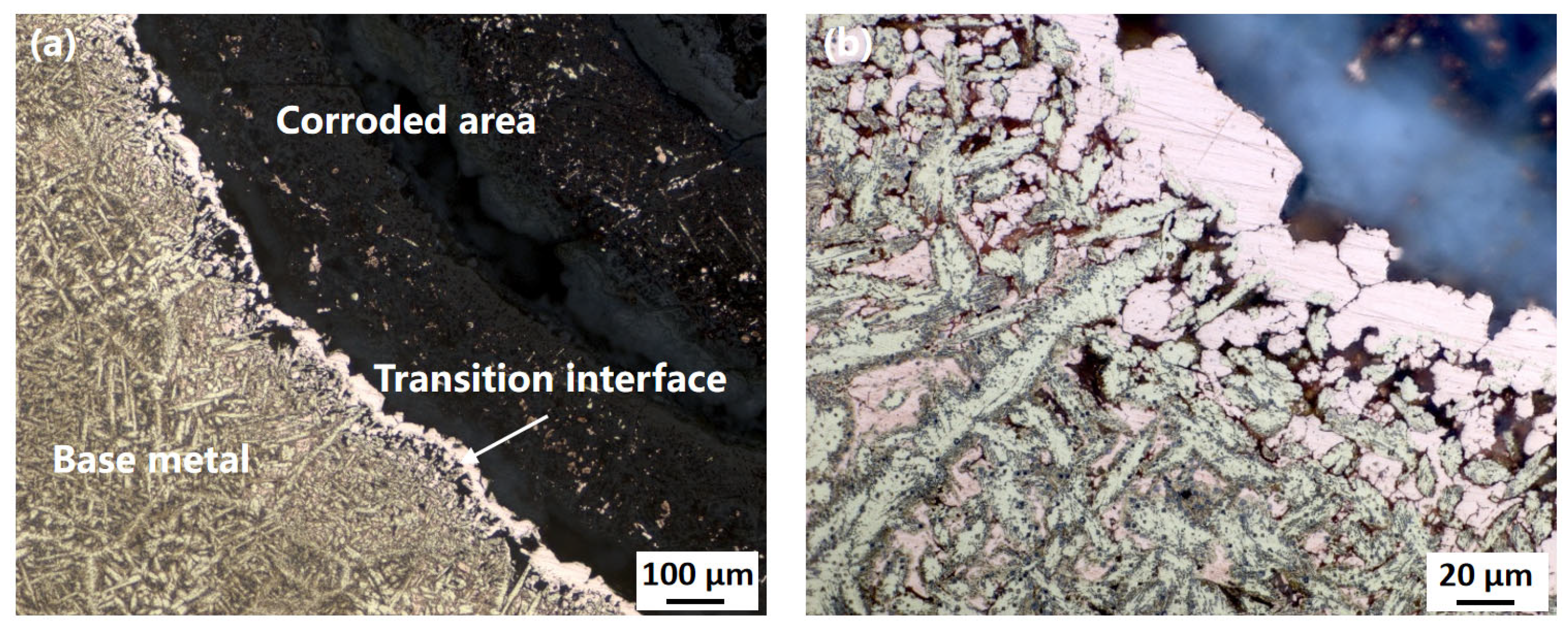
Based on the microstructure shown in Figure 4a, the bearing bush is an annular structure with a flange, and the surface exhibits non-uniform coloration. Some areas retain the original metallic luster of ZCuAl10Fe5Ni5, while some areas have turned black and discolored. The enlarged view of Figure 4b clearly shows the morphology of the corrosion pits, and these pits are uneven in size and have corrosion products attached inside, indicating pronounced localized corrosion features of the inner ring area.
Figure 4.
Metallographic structure of the corrosion zone, (a) Low-magnification optical micrograph; (b) High-magnification optical micrograph.
The metallographic structure of the corrosion zone shows that the matrix area still maintains the typical structure of the α matrix + the fine acicular/flake κ phase, while the corrosion zone is dark in color and loose in structure. The interface between the corrosion zone and the matrix is irregular and serrated, indicating progressive corrosion propagation into the matrix, and traces of corrosion spreading to the matrix side can be seen, indicating that the corrosion process has a progressive penetration characteristic (Figure 4).
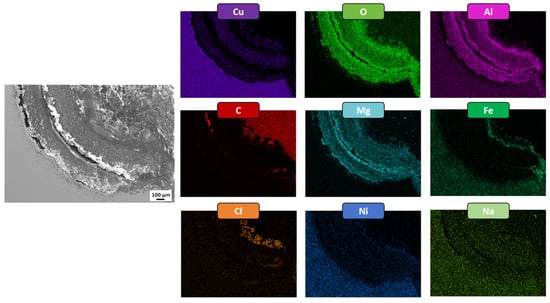
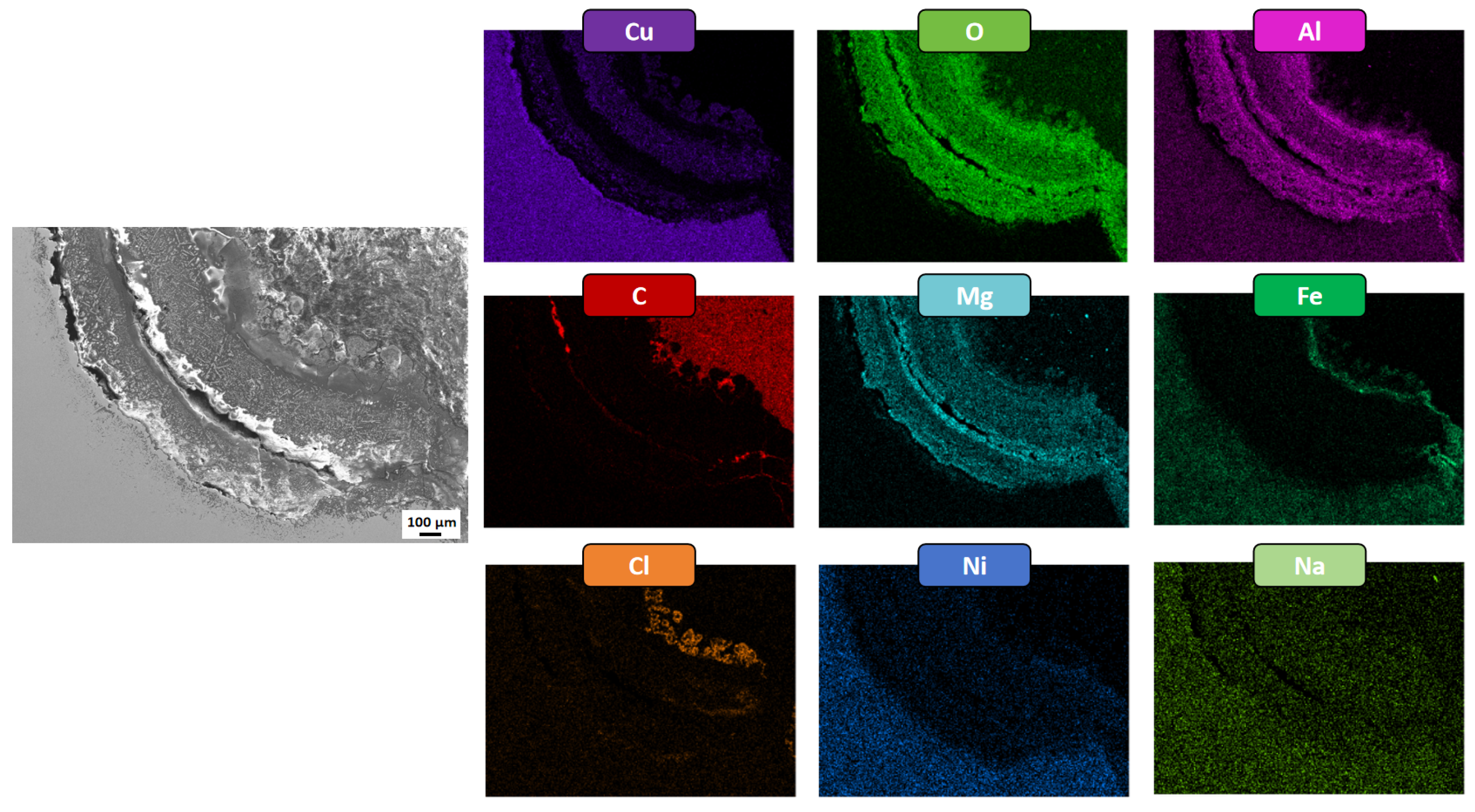
SEM observation found that the corrosion zone has corrosion products with a multi-layer, loose, and porous layer structure. The surface is uneven with obvious pores and local cracking traces, and the interface between the corrosion layer and the matrix is characterized by an irregular transition without a clear bonding boundary. This structure leads to a significant decrease in the protective performance of the film layer (Figure 5). The EDS element analysis results show that the corrosion products are mainly composed of elements such as Cu, O, Al, and Mg, as well as trace amounts of elemental Fe, Ni, and Cl. Among them, Fe and Ni are derived from the paired SAF2507 duplex steel, while elemental Cl is a characteristic residue of the seawater medium [18].
Figure 5.
SEM morphology and EDS element surface distribution of the corrosion zone.
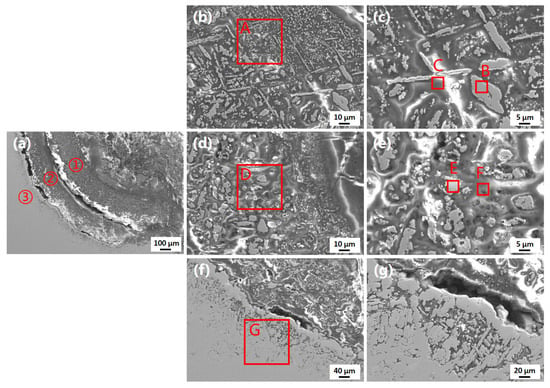
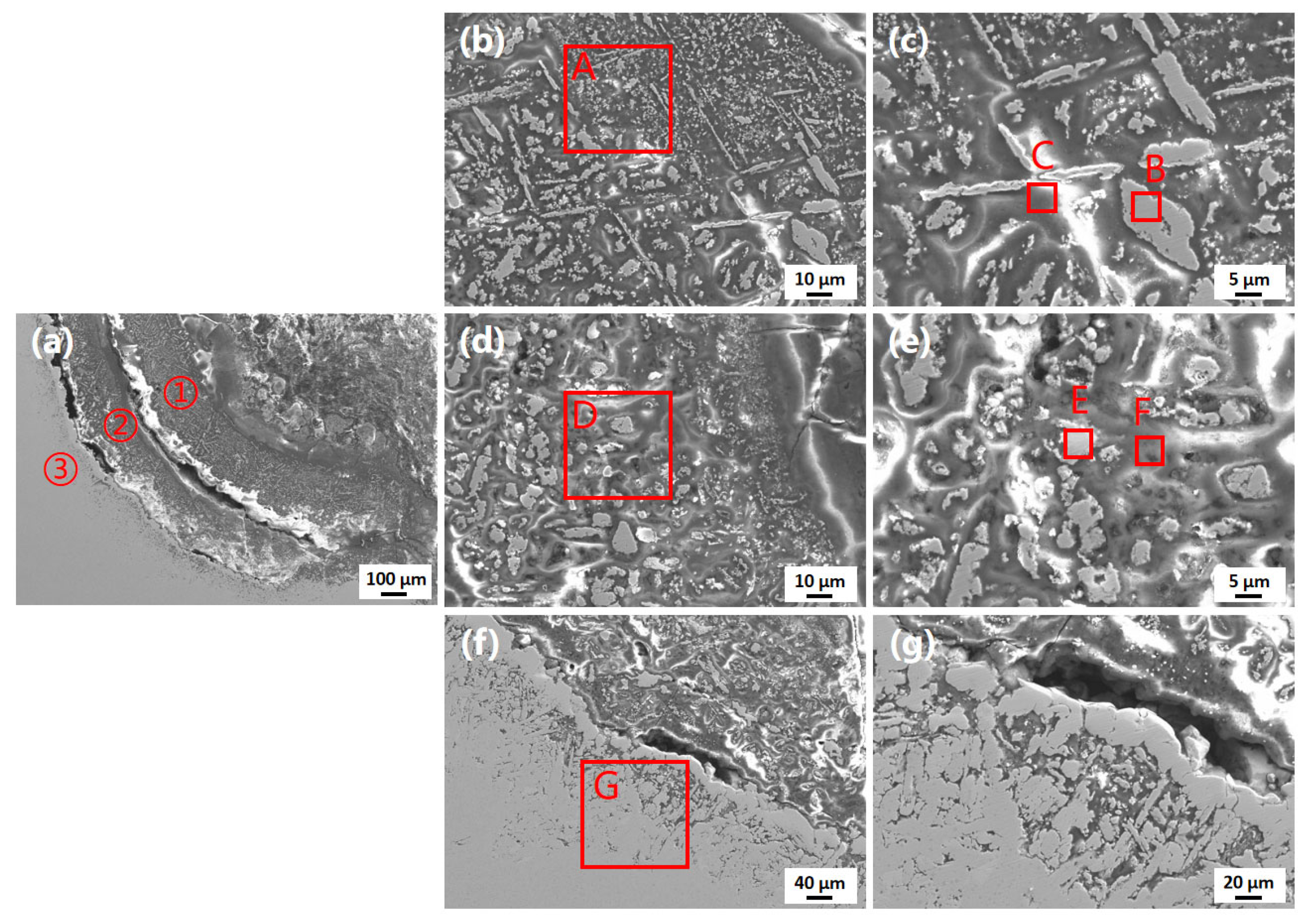
Figure 6 shows the multi-scale microstructural morphology of the corrosion area in the bearing bush and the corresponding EDS point analysis results, and Figure 6a presents the macroscopic layered characteristics of the corrosion area. Areas ①, ②, and ③ in Figure 6 correspond to the structure from the outer corrosion layer to the matrix, showing an overall gradual morphology of “loose corrosion layer → transition layer → dense matrix”. Figure 6b–g reveal the local morphologies at different magnifications, along with the EDS composition data of points A–G (Table 5). The morphologies of the areas in points B, E, and G are relatively dense, and the EDS data show that the Cu and O contents at points B, E, and G are 86.6 wt% and 0.3 wt%, 88.4 wt% and 0.3 wt%, and 80.4 wt% and 1.9 wt%, respectively. This indicates that these areas are the residual areas of the base metal that have not been completely corroded, and only slight surface corrosion has occurred. The areas where points A and D are located have a moderately loose blocky morphology. Point A contains Cu (36.7 wt%), O (37.3 wt%), Al (15.5 wt%), and Mg (8.6 wt%), while point D contains Cu (29.8 wt%), O (42.4 wt%), Al (17.5 wt%), and Mg (8.1 wt%), corresponding to the mixed corrosion product area of Cu-Al-Mg oxides/hydroxides, which results from the combined action of aluminum depletion corrosion in ZCuAl10Fe5Ni5, Cu dissolution, and Mg2+ precipitation in seawater [19,20,21]. The areas where points C and F are located have a porous, flocculent, loose morphology. Point C has high contents of O (54.3 wt%), Al (21.9 wt%), and Mg (11.3 wt%) but low Cu (9.2 wt%) content, while point F has high contents of O (51.3 wt%), Al (21.0 wt%), and Mg (9.5 wt%) but low Cu (14.1 wt%) content, corresponding to the aluminum–magnesium-rich hydroxide corrosion product area, which reflects the core area of selective aluminum depletion corrosion in ZCuAl10Fe5Ni5. At the same time, Mg2+ in seawater precipitates and becomes enriched in the alkaline corrosion environment [22]. In addition, the trace elements Fe and Ni in each point come from the paired S32750 bearing, and the Cl element is the characteristic residue of the seawater medium, which further confirms the working and medium conditions where corrosion occurs [23]. The identification of A1(OH)3, Cu2O, and other corrosion products is inferred from EDS elemental stoichiometry. Since EDS only detects elemental information and cannot confirm specific phases or compound structures, the proposed corrosion products are reasonable inferences rather than fully verified conclusions. Limitations of the current SEM/EDS characterization are acknowledged, and XRD, XPS and other phase analysis methods are suggested for further verification in future work.
Figure 6.
Microscopic morphology of corrosion products and EDS point analysis results: (a) Layered structure of corrosion area, ① → ② → ③ was loose corrosion layer → transition layer → dense matrix, (b–g) Local morphologies at different magnifications.
Table 5.
EDS element composition of different micro-areas in the corrosion zone (wt%).
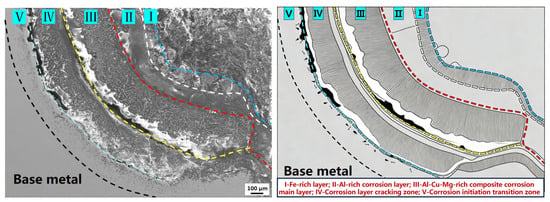
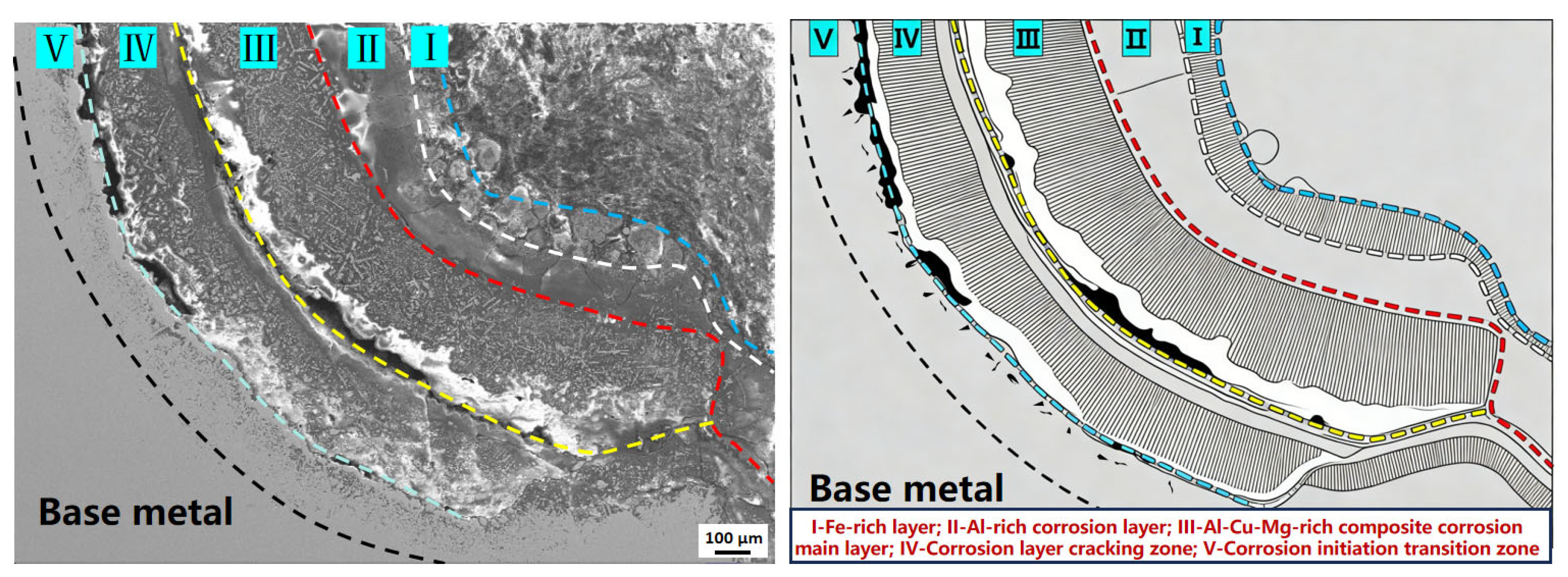
Combined with the micro-morphology and element analysis results, the corrosion products can be divided into five regions (Figure 7). Region I (Fe-rich layer) is the outermost layer of the corrosion products and is mainly composed of iron oxides or ferrite wear debris derived from the slight corrosion or wear of the paired SAF2507 material. Region II (Al-rich corrosion layer) has a dense, narrow band structure, and the main product is aluminum hydroxide, which is the intermediate layer formed by the preferential hydrolysis and accumulation of aluminum ions during the early stage of corrosion. Region III (Al-Cu-Mg-rich composite corrosion main layer) has a porous and loose block structure that is formed by the continuous corrosion of ZCuAl10Fe5Ni5 and the precipitation of magnesium ions in seawater. Region IV (corrosion layer cracking zone) is a mixed system of aluminum hydroxide, cuprous oxide, and magnesium hydroxide that is formed by peeling due to internal stress after the accumulation of corrosion products. Region V (corrosion initiation transition zone) is adjacent to the base metal and is mainly composed of the residual matrix and aluminum hydroxide generated via initial aluminum depletion corrosion. This result indicates that ZCuAl10Fe5Ni5 undergoes selective aluminum depletion corrosion in the seawater environment, and Mg2+ in seawater precipitates and becomes enriched in the alkaline corrosion environment, forming a mixed corrosion product system with a complex structure [24,25,26].
Figure 7.
SEM image and schematic diagram of corrosion product zoning. (I—Fe-rich layer; II—Al-rich corrosion layer; III—Al-Cu-Mg-rich composite corrosion main layer; IV—Corrosion layer cracking zone; V—Corrosion initiation transition zone).
3.3. Electrochemical Analysis
3.3.1. Galvanic Corrosion Characteristics
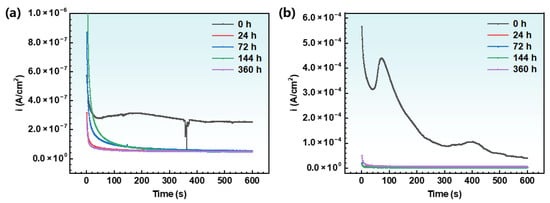
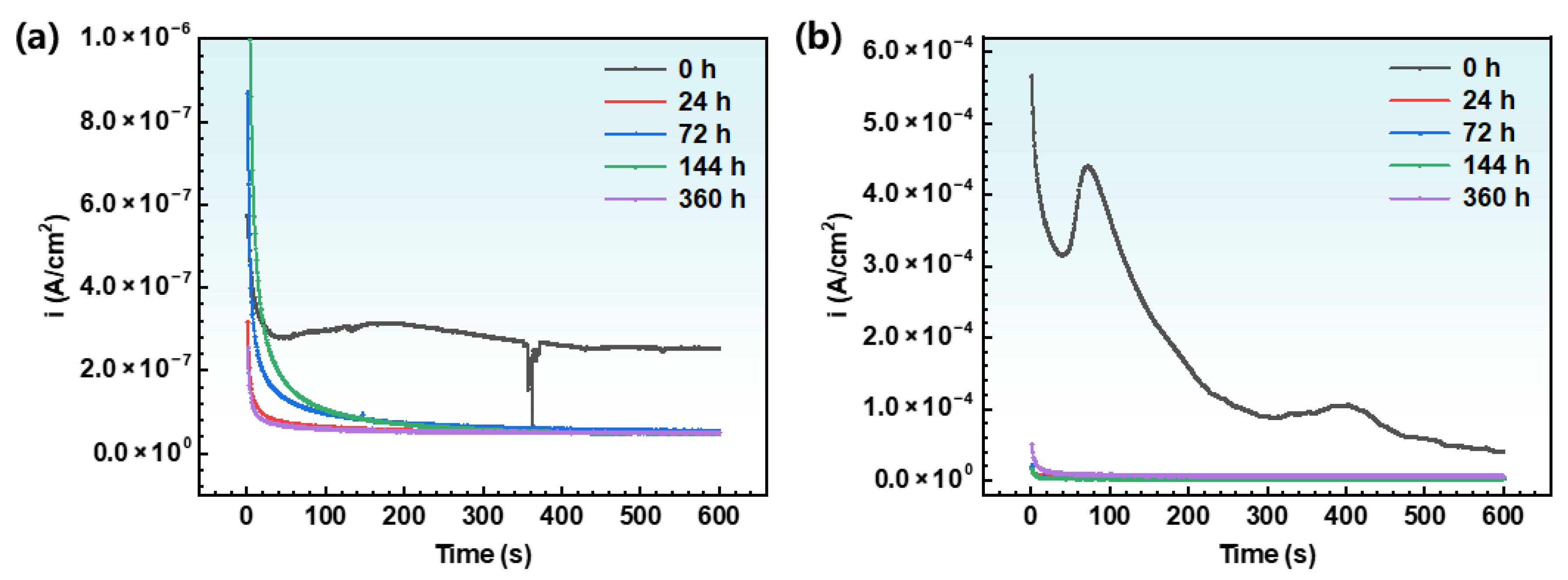
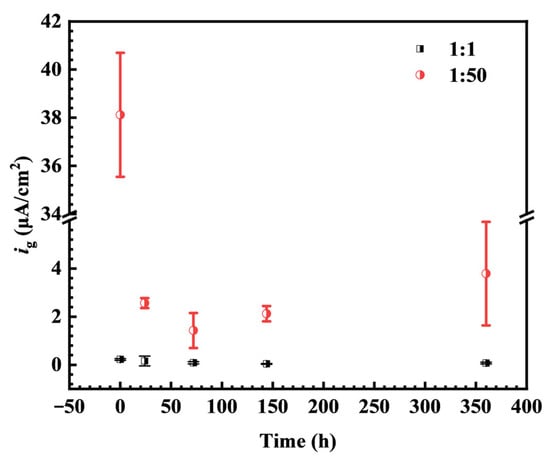
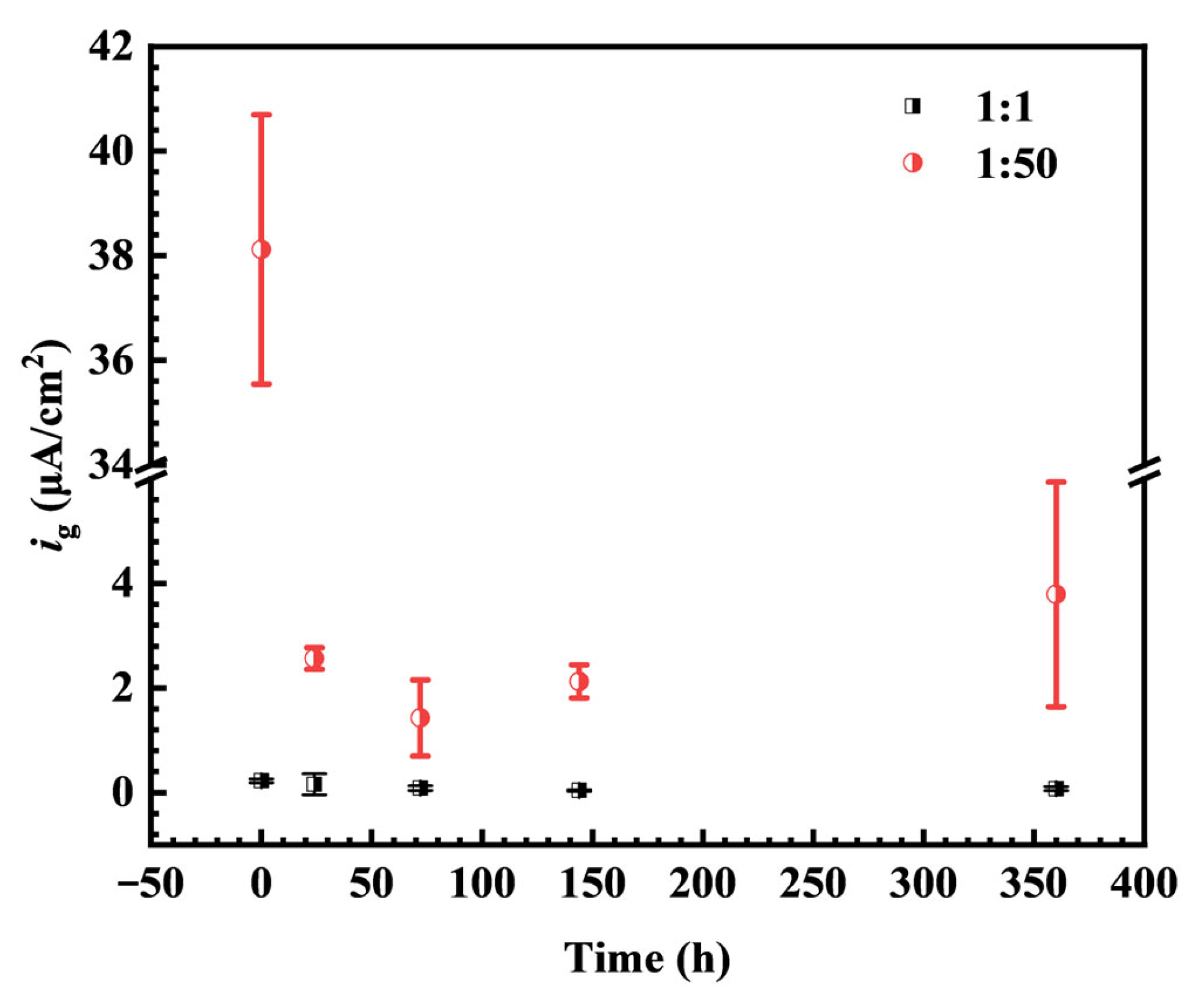
The variation in galvanic current density (ig) with time for the ZCuAl10Fe5Ni5 and SAF2507 galvanic couple is shown in Figure 8, and ig shows a significant time-dependent law. Since the test was conducted for 10 min at each time point after coupling, the stable ig at that time point could be obtained. Moreover, each test curve shows a pattern where ig gradually decreased and stabilized. This is because after the galvanic couple is coupled, processes such as the equilibration of the electric double layer and the establishment of the diffusion layer occur, causing the current to drop within a few minutes and stabilize at a lower value. This decrease and stabilization are most pronounced at 0 h, as they involved not only the aforementioned processes but also rapid film formation. To further clarify the variation in the steady-state ig, the values at the end of each curve, i.e., ig at 600 s of testing, are statistically analyzed, and the results are shown in Figure 9.
Figure 8.
Variation in corrosion current density: (a) 1:1 and (b) 1:50.
Figure 9.
Variation in the galvanic current density of the ZCuAl10Fe5Ni5-SAF2507 galvanic couple with immersion time. (Two area ratios: 1:1 and 1:50 (ZCuAl10Fe5Ni5: SAF2507)).
The changes in galvanic current density under different area ratios are significantly different. The initial galvanic current density at an area ratio of 1:50 (ZCuAl10Fe5Ni5:SAF2507) is about 38 μA/cm2, and corrosion is extremely severe. It decreases to about 2 μA/cm2 at 72 h and rises to about 4 μA/cm2 at 360 h, showing a fluctuation characteristic of “high initial value—rapid decrease—late rise”. The galvanic current density at all time points is close to 0 μA/cm2 when the area ratio is 1:1, and the galvanic effect is almost completely inhibited. This difference occurs due to the matching relationship between the anode and cathode reaction rates. The cathode surface area is much larger than that of the anode at an area ratio of 1:50, allowing it to accommodate more oxygen to undergo reduction reactions and reduce the cathode polarization resistance, thereby leading to a sharp increase in the anode dissolution rate. The anode and cathode areas are balanced at the area ratio of 1:1, indicating that the cathode reaction rate and the anode dissolution rate achieve dynamic matching. The galvanic currents cancel each other out, and the corrosion effect is effectively inhibited.
The electrochemical experiments show that the self-corrosion potential of ZCuAl10Fe5Ni5 is relatively low, and the self-corrosion potential of SAF2507 is higher than that of ZCuAl10Fe5Ni5. There is an obvious electrode potential difference between the two materials. However, a stable galvanic couple can be formed in the seawater environment [27]. ZCuAl10Fe5Ni5 undergoes dissolution corrosion and acts as the anode, while SAF2507 undergoes an oxygen reduction reaction and acts as the cathode; this phenomenon is more pronounced under the condition of “large cathode and small anode.”
3.3.2. Electrochemical Impedance Spectroscopy Analysis
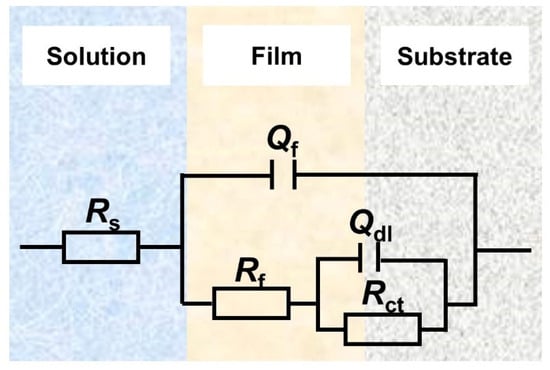
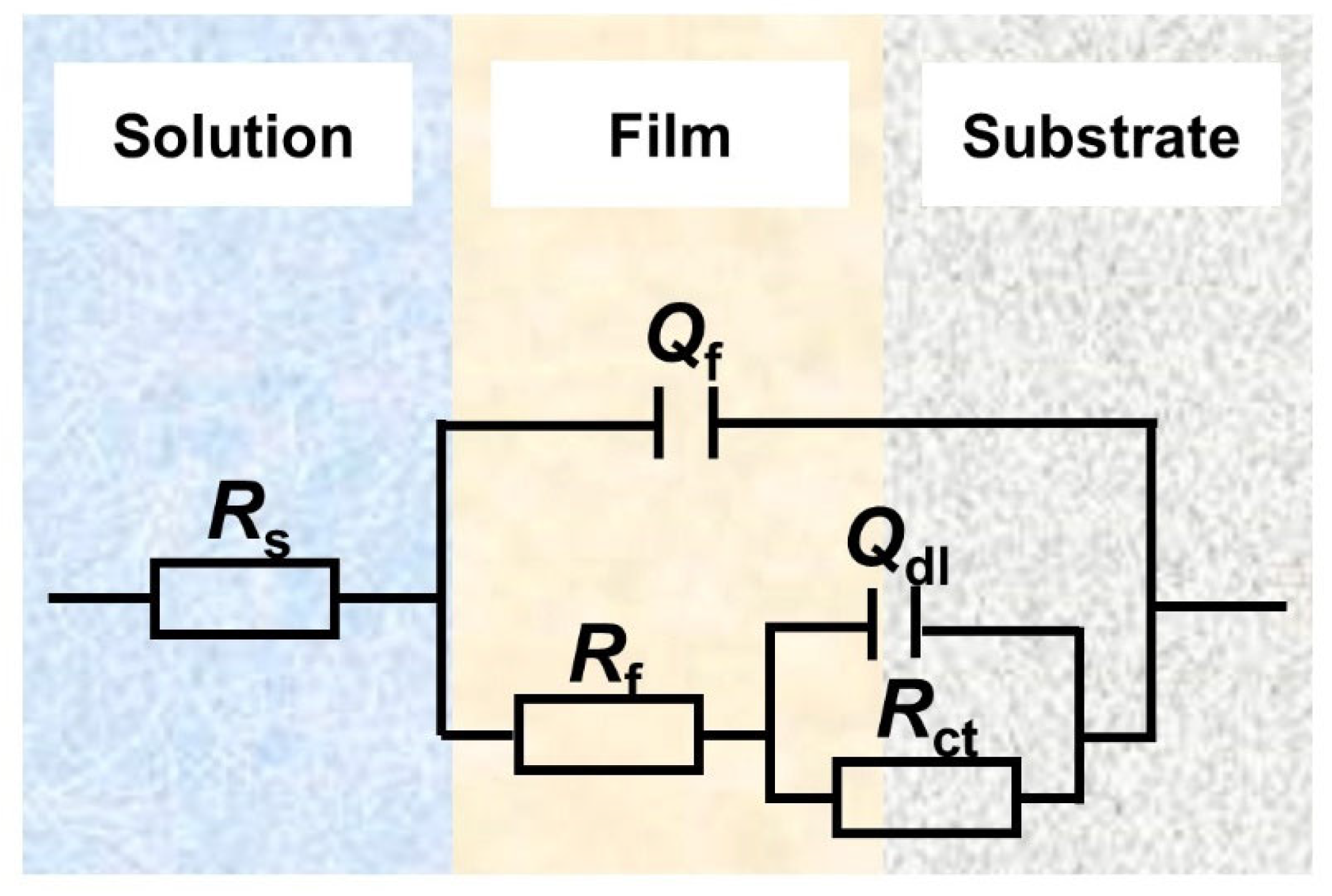
The spectra reveal that for two area ratio conditions, the electrochemical impedance spectra exhibit a single capacitive loop without any evident Warburg impedance. This indicates that under open-circuit potential conditions, the corrosion process of ZCuAl10Fe5Ni5 and SAF2507 with different galvanic corrosion times is entirely controlled by electrochemical reactions [28,29]. The size of the capacitive loop radius is indicative of their resistance to the corrosion process, with a larger radius suggesting stronger corrosion resistance. The electrochemical impedance results were further analyzed using ZsimpWin V3.60 software, and the equivalent circuit used is shown in Figure 10. In this circuit, Rs represents the solution resistance between the working and reference electrodes. Rf is the passive film resistance, while Rct is the charge transfer resistance. Qdl and Qf denote the double-layer capacitance and the capacitance of the corrosion product film layer, respectively, as determined by the constant phase element (CPE) and the dispersion factor n (0 < n < 1), with n indicating the degree of the dispersion effect. For film-layer capacitance, n is related to the density of the oxide film, and when n ≈ 1, it represents an ideal capacitor. In this study, n2 is approximately between 0.55 and 0.99, indicating a trend that the larger the Rf value, the larger the n2 value, that is, the larger the impedance of the sample, the better the density of the surface oxide film. For the double-layer capacitance n1, a value close to one indicates that the interface is close to an ideal double layer and also suggests that the interface is in a quasi-steady state without surface-inhomogeneity-induced capacitive frequency dispersion.
Figure 10.
The equivalent circuit.
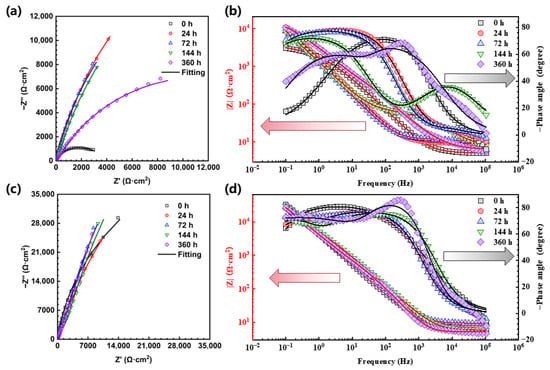
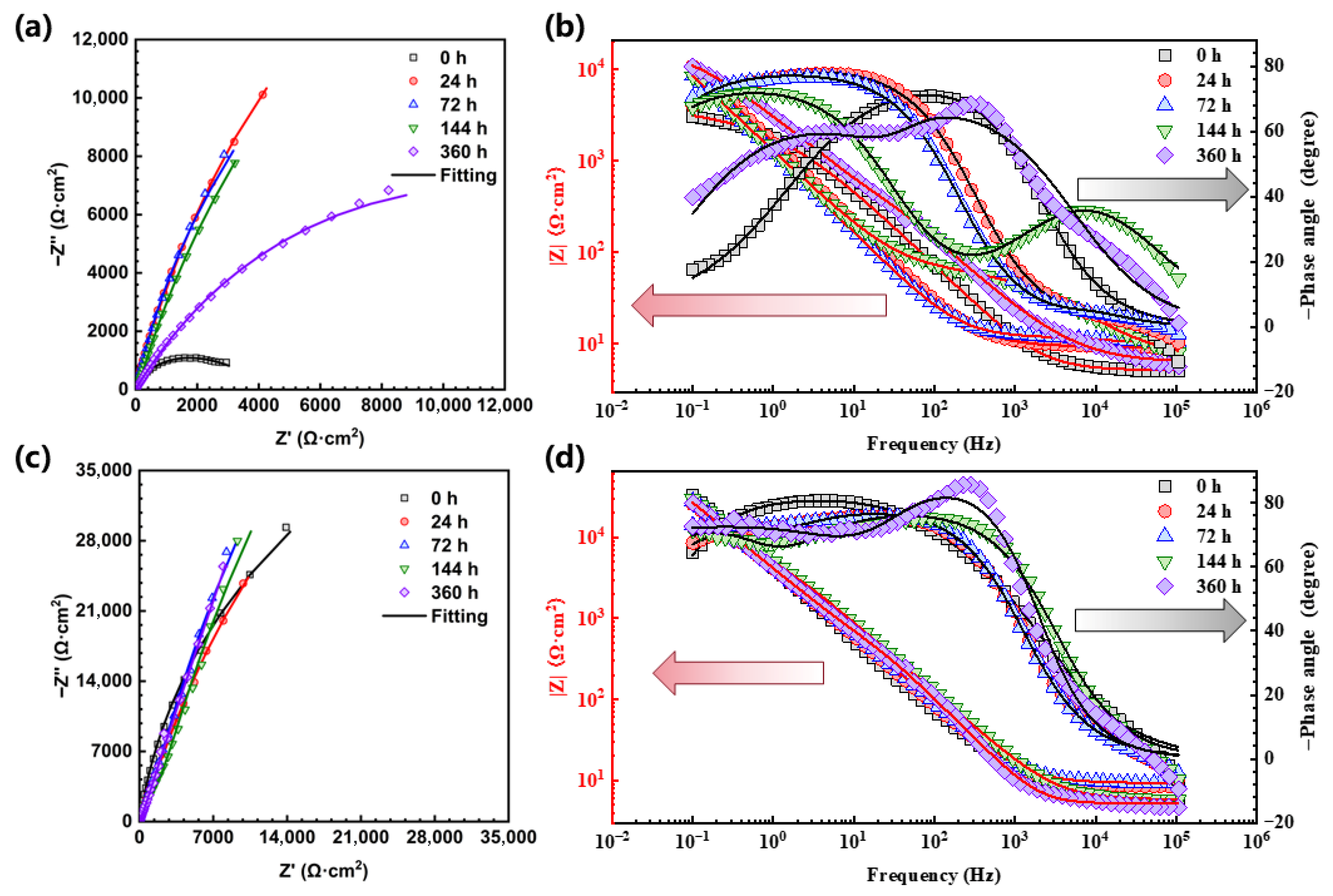
Under the 1:1 area ratio condition, both alloys exhibit typical capacitive arc characteristics in the Nyquist plots, suggesting that the corrosion process is primarily controlled by charge transfer reactions without significant diffusion control. For ZCuAl10Fe5Ni5 (Figure 11a,b), the radius of the capacitive arc gradually increases from 0 h to 144 h, suggesting continuous enhancement of corrosion resistance. This is attributed to the formation and densification of the corrosion product film on the surface. At 360 h, a slight decrease in the arc radius is observed, indicating partial degradation or instability of the film layer after long-term immersion.
Figure 11.
Nyquist and EIS Bode diagram: (a,b) ZCuAl10Fe5Ni5 and (c,d) SAF2507 at the area ratio of 1:1.
The Bode plots further confirm this trend. The impedance modulus |Z| in the low-frequency region increases with immersion time, reaching a maximum at 144 h, followed by a slight decline. Meanwhile, the phase angle maintains a relatively high value over a wide frequency range, indicating that the surface film exhibits good capacitive behavior and structural integrity.
For SAF2507 (Figure 11c,d), the capacitive arc radius remains larger than that of ZCuAl10Fe5Ni5 throughout the entire immersion period, reflecting its superior corrosion resistance. The impedance modulus only shows slight fluctuations with time, indicating that the passive film formed on SAF2507 is highly stable. This stability is associated with the self-healing ability of the Cr2O3-based passive film, which can effectively maintain protection even under long-term exposure.
Overall, under the 1:1 area ratio, both materials maintain relatively stable electrochemical behavior, and the galvanic effect is weak. The corrosion process is mainly controlled by the formation and evolution of surface films rather than accelerated galvanic interactions.
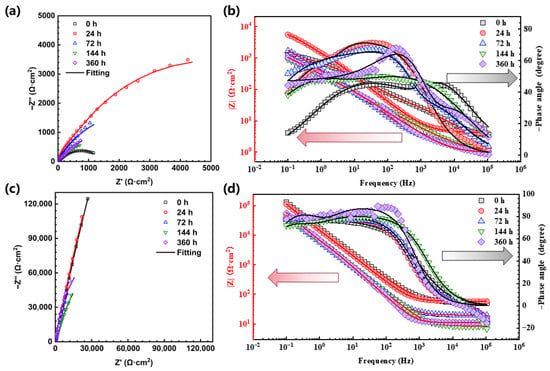
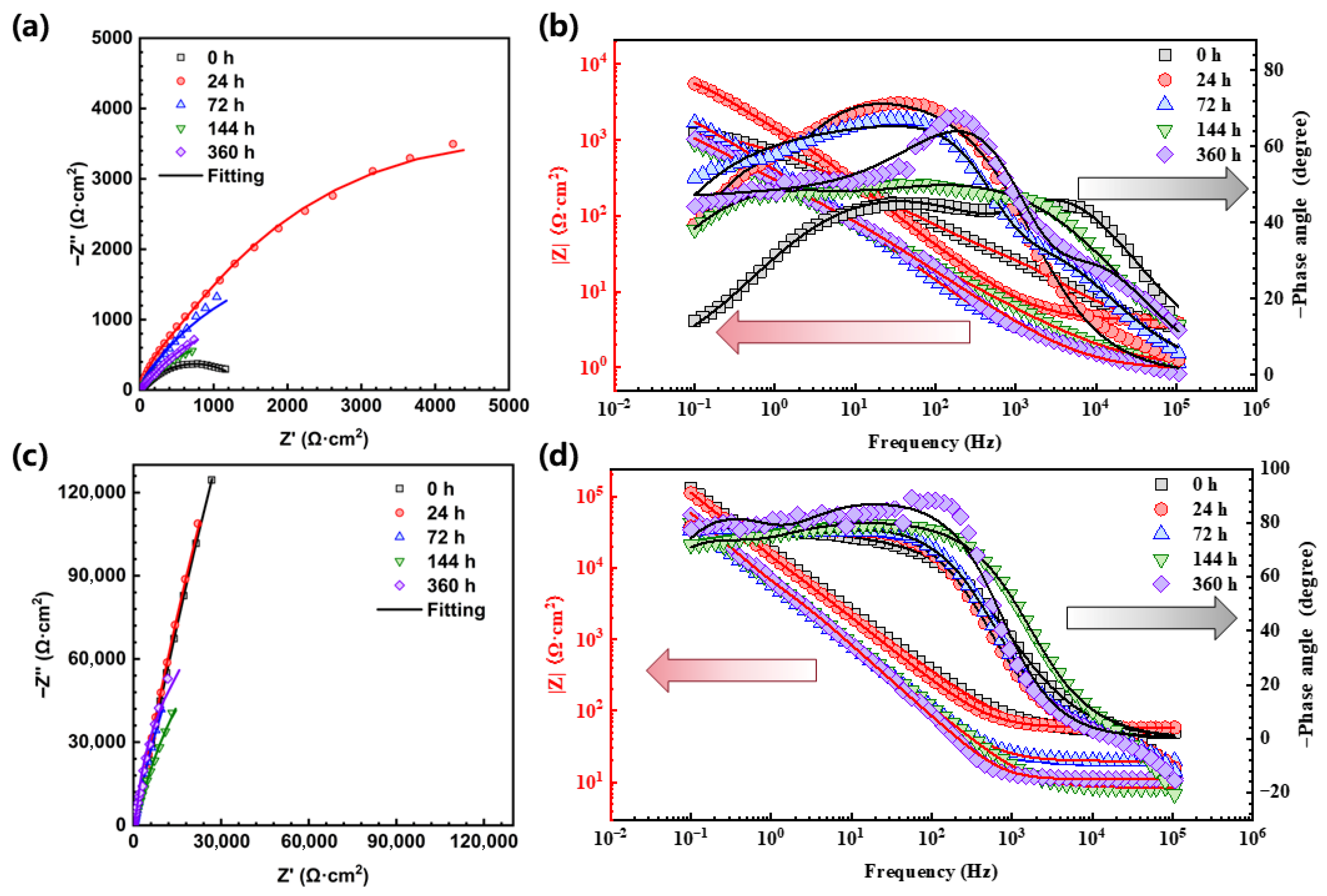
Under the 1:50 area ratio condition, the electrochemical response of ZCuAl10Fe5Ni5 shows significant deterioration compared with the 1:1 condition. In the Nyquist plots (Figure 12a), the capacitive arc radius decreases sharply after 72 h, indicating a substantial reduction in charge transfer resistance. This suggests that the corrosion product film formed on the surface is severely damaged and cannot provide effective protection.
Figure 12.
Nyquist and EIS Bode diagram: (a,b) ZCuAl10Fe5Ni5 and (c,d) SAF2507 at the area ratio of 1:50.
The Bode plots (Figure 12b) show that the impedance modulus |Z| in the low-frequency region remains at a relatively low level throughout the immersion process, without any significant recovery trend. The phase angle also decreases and narrows in the frequency range, indicating that the surface film becomes porous, discontinuous, and less capacitive. This behavior reflects a continuous cycle of film formation and breakdown driven by strong galvanic corrosion and Cl− attacks in the seawater environment.
In contrast, SAF2507 (Figure 12c,d) still maintains a large capacitive arc radius and a high impedance modulus, although slight fluctuations can be observed over time. The initial impedance is particularly high due to rapid passivation. Although some attenuation occurs at later stages, the overall impedance level remains high, indicating that the passive film retains good protective properties.
This difference highlights the fundamentally different corrosion mechanisms of the two materials. Under the extreme area ratio (1:50), the large cathode area (SAF2507) accelerates the anodic dissolution of ZCuAl10Fe5Ni5, leading to rapid degradation of its corrosion product film. However, the passive film on SAF2507 is much less affected by the galvanic coupling due to its strong self-repair capability. In summary, the impedance results reveal a significantly intensified galvanic interaction under the 1:50 condition relative to the 1:1 condition.
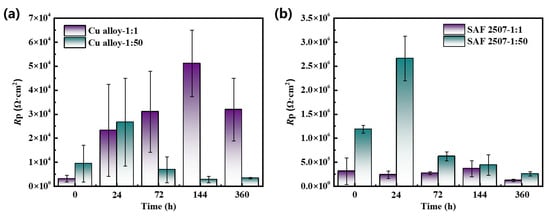
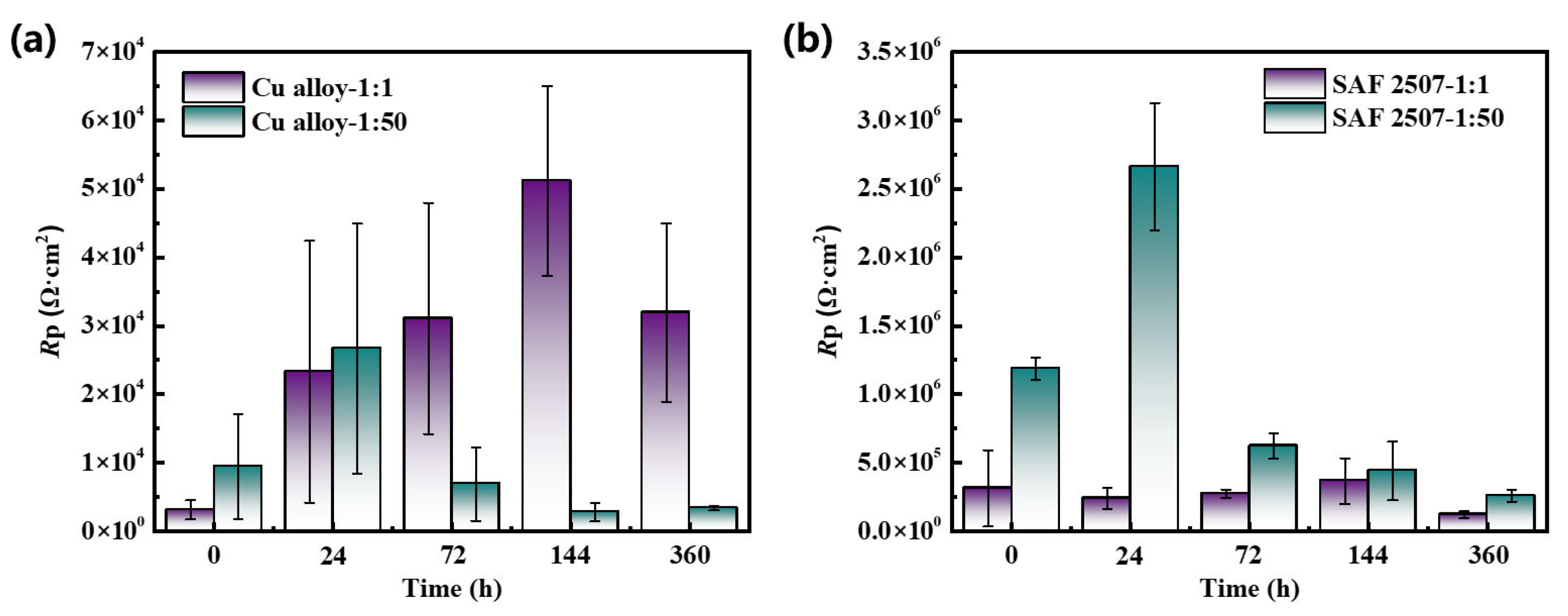
The polarization resistance analysis results further verify the laws above (Figure 13). The magnitude of the polarization resistance of SAF2507 (106 Ω·cm2) is much higher than that of ZCuAl10Fe5Ni5 (104 Ω·cm2), indicating that its basic corrosion resistance is better. However, the polarization resistance of ZCuAl10Fe5Ni5 is generally higher at the area ratio of 1:1, and the film layer’s stability is good. The area ratio of 1:50 will cause early damage to its corrosion product film, which cannot be repaired, and the polarization resistance is continuously low. SAF2507 retains better late protection at the area ratio of 1:50, reflecting the response difference in passivated metals and non-passivated metals to the area ratio. The self-healing ability of the Cr2O3 passive film on its surface is fully exerted under these working conditions. The parameter values obtained by fitting with Nyquist and Bode plots see from Table 6.
Figure 13.
Polarization resistance at different immersion times: (a) ZCuAl10Fe5Ni5 and (b) SAF2507. (Two area ratios: 1:1 and 1:50 (ZCuAl10Fe5Ni5: SAF2507)).
Table 6.
The parameter values obtained by fitting with Nyquist and Bode plots.
3.4. Corrosion Behavior Analysis
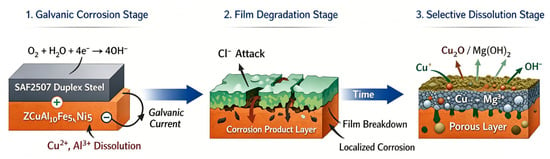
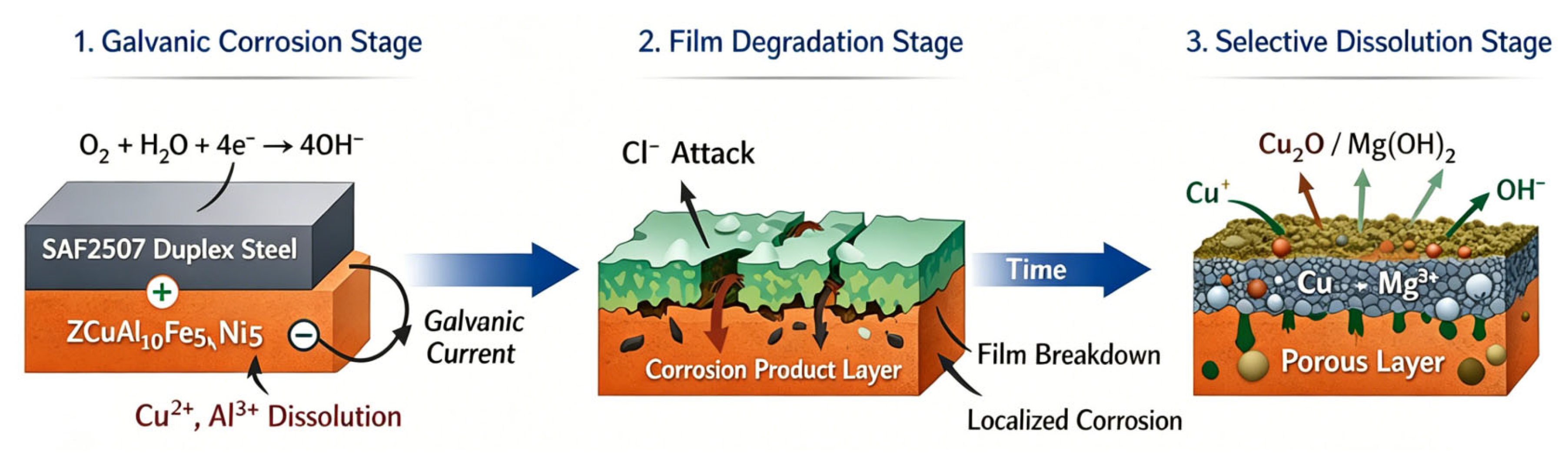
Based on the above macro-, micro-, and electrochemical experiment results, the corrosion mechanism of ZCuAl10Fe5Ni5 matched with SAF2507 in the seawater environment is driven by the synergistic effect between galvanic corrosion and seawater medium erosion, and the specific process can be divided into three stages (Figure 14).
Figure 14.
Schematic diagram of the corrosion process.
Due to the evident electrode potential difference between ZCuAl10Fe5Ni5 and SAF2507, a galvanic couple is readily established in the seawater environment. ZCuAl10Fe5Ni5 acts as the anode and undergoes preferential dissolution, while SAF2507 serves as the cathode supporting the oxygen reduction reaction. A clear difference in electrochemical response is observed between the two tested area ratios. Under the 1:50 condition, the measured galvanic current density is higher at the initial stage (Figure 9), indicating a stronger galvanic interaction and a higher anodic dissolution rate in ZCuAl10Fe5Ni5. In contrast, under the 1:1 condition, the galvanic effect remains at a very low level, suggesting that the anodic and cathodic reactions tend to reach a dynamic balance and that the effect is largely suppressed.
With increasing immersion time, corrosion products gradually form on the surface of ZCuAl10Fe5Ni5, which contributes to a temporary reduction in corrosion rate, as reflected by the evolution of current density and impedance results. However, the corrosion product film exhibits limited stability in the seawater environment. Cl− ions in the solution preferentially interact with defects in the film, promoting local disruption and a loss of compactness. Under the 1:50 condition, this effect is more pronounced, where the impedance remains at a relatively low level and does not show a clear recovery trend, indicating that the film is continuously damaged and cannot be effectively restored. In comparison, under the 1:1 condition, the impedance increases significantly at intermediate immersion times, suggesting that a relatively more stable and protective film can be maintained. Although this study focuses on the balanced (1:1) and extreme (1:50) area ratios to highlight the range of galvanic effects, the non-linear transition between these points remains an area for future investigation to map the precise threshold of rapid anodic failure.
During prolonged immersion, ZCuAl10Fe5Ni5 exhibits characteristic selective dissolution behavior, in which Al is preferentially removed from the alloy matrix. The released Al3+ reacts with OH− to form aluminum hydroxides, while Cu tends to remain or form oxides/hydroxides. Meanwhile, Mg2+ ions from seawater participate in the corrosion process and precipitate under local alkaline conditions, resulting in a multi-component corrosion product system dominated by Cu–Al–Mg oxides/hydroxides. As shown in the microstructural observations (Figure 6 and Figure 7), the corrosion products display a layered and porous structure. Such a corrosion product layer is structurally loose and prone to cracking or detachment, especially under the combined effects of galvanic interactions and Cl− attacks. Consequently, it cannot provide sustained protection to the substrate, leading to localized corrosion in ZCuAl10Fe5Ni5.
4. Conclusions
- (1)
- A galvanic couple is formed between SAF2507 duplex steel and ZCuAl10Fe5Ni5 copper alloy in the seawater environment due to their electrode potential difference. In this couple, ZCuAl10Fe5Ni5 acts as the anode and undergoes dissolution, while SAF2507 acts as the cathode, where oxygen reduction occurs. Galvanic corrosion is identified as the primary factor driving ZCuAl10Fe5Ni5 degradation in this system.
- (2)
- A significant difference in galvanic corrosion behavior is observed between the two investigated area ratios. Under the 1:50 condition (ZCuAl10Fe5Ni5:SAF2507), the galvanic current density is markedly higher, and the corrosion in ZCuAl10Fe5Ni5 is more severe. In contrast, under the 1:1 condition, the galvanic current density remains close to zero, indicating that the galvanic effect is effectively suppressed.
- (3)
- The corrosion products formed on ZCuAl10Fe5Ni5 exhibit a layered structure that mainly consists of Cu–Al–Mg oxides/hydroxides, and the corrosion process is accompanied by selective dissolution of Al, leading to the formation of aluminum hydroxides and the enrichment of Mg-containing phases.
- (4)
- Cl− ions in seawater play an important role in degrading the corrosion product film. They promote local breakdown of the film by interacting with structural defects, resulting in a porous and unstable film that cannot effectively protect the substrate.
- (5)
- SAF2507 exhibits higher corrosion resistance compared to ZCuAl10Fe5Ni5, and the corrosion product film on ZCuAl10Fe5Ni5 shows lower stability under the investigated conditions, particularly in the 1:50 configuration.
Author Contributions
Conceptualization, K.F. and W.Z.; investigation, M.Z. and S.W.; methodology, H.L.; supervision, Y.Q.; Writing—original draft, K.L. and P.Z.; Writing—review and editing, J.L. All authors have read and agreed to the published version of the manuscript.
Funding
This research received no external funding.
Data Availability Statement
The original contributions presented in this study are included in the article. Further inquiries can be directed to the corresponding authors.
Conflicts of Interest
Authors Kunjie Luo, Pu Zhao, Kewei Fang, Wanxiang Zhao, Jiachang Lu, Hongqun Liu, Shuiyong Wang and Mengmeng Zhu were employed by the company Suzhou Nuclear Power Research Institute Co., Ltd. The remaining authors declare that the research was conducted in the absence of any commercial or financial relationships that could be construed as a potential conflict of interest.
References
- Chen, S.; Qiu, L.; Sun, S.; Yang, J.; Meng, Q.; Yang, W. Research Progress on Corrosion of Equipment and Materials in Deep-Sea Environment. Adv. Civ. Eng. 2021, 2021, 7803536. [Google Scholar] [CrossRef] [Scilit]
- Gudić, S.; Vrsalović, L.; Matošin, A.; Krolo, J.; Oguzie, E.E.; Nagode, A. Corrosion behavior of stainless steel in seawater in the presence of sulfide. Appl. Sci. 2023, 13, 4366. [Google Scholar] [CrossRef] [Scilit]
- Thierry, D.; Larché, N.; Leballeur, C.; Wijesinghe, S.L.; Zixi, T. Corrosion potential and cathodic reduction efficiency of stainless steel in natural seawater. Mater. Corros. 2015, 66, 453–458. [Google Scholar] [CrossRef] [Scilit]
- Zhu, M.; He, F.; Yuan, Y.F.; Yin, S.M.; Guo, S.Y.; Pan, J. Effect of aging time on the microstructure and corrosion behavior of 2507 super duplex stainless steel in simulated marine environment. J. Mater. Eng. Perform. 2021, 30, 5652–5666. [Google Scholar] [CrossRef] [Scilit]
- Zhu, M.; Zhang, Q.; Yuan, Y.F.; Guo, S.Y.; Chen, Y.B. Study on the microstructure and alternating current corrosion behavior of SAF2507 super-duplex stainless steel in 3.5%NaCl solution. J. Mater. Eng. Perform. 2020, 29, 1366–1374. [Google Scholar] [CrossRef] [Scilit]
- Campbell, S.A.; Radford, G.J.W.; Tuck, C.D.S.; Barker, B.D. Corrosion and galvanic compatibility studies of a high-strength copper-nickel alloy. Corrosion 2002, 58, 57–71. [Google Scholar] [CrossRef] [Scilit]
- de Lima, H.M.L.F.; Tavares, S.S.M.; Martins, M.; Araújo, W.S. The effect of copper addition on the corrosion resistance of cast duplex stainless steel. J. Mater. Res. Technol. 2019, 8, 2107–2119. [Google Scholar] [CrossRef] [Scilit]
- Ye, Z.; Guan, L.; Li, Y.; Zhong, J.; Liao, L.; Xia, D.; Huang, J. Understanding the galvanic corrosion of Cu-Ni alloy/2205 DSS couple using electrochemical noise and microelectrochemical studies. Corros. Sci. 2023, 224, 111512. [Google Scholar] [CrossRef] [Scilit]
- Huang, J.; Huang, T.; Yang, L.; Ji, D.; Ding, H.; Wei, Y.; Song, Z. Electrochemical Properties and Offshore Corrosion Behavior of SAF 2304 Duplex Stainless Steel. J. Chin. Soc. Corros. Prot. 2022, 43, 630–638. [Google Scholar]
- Shinato, K.W.; Zewde, A.A.; Jin, Y. Corrosion protection of copper and copper alloys in different corrosive medium using environmentally friendly corrosion inhibitors. Corros. Rev. 2020, 38, 101–109. [Google Scholar] [CrossRef] [Scilit]
- Zhou, E.; Li, H.; Yang, C.; Wang, J.; Xu, D.; Zhang, D.; Gu, T. Accelerated corrosion of 2304 duplex stainless steel by marine Pseudomonas aeruginosa biofilm. Int. Biodeterior. Biodegrad. 2018, 127, 1–9. [Google Scholar] [CrossRef] [Scilit]
- Fang, H.; Zhou, P.; Yu, J.; Wang, Y.; Yu, B.; Pu, J. Galvanic Corrosion Behavior of Coupling Pairs of Ti80 Alloy with Various Marine Metallic Materials. J. Chin. Soc. Corros. Prot. 2024, 45, 905–915. [Google Scholar]
- Kong, D.; Dong, C.; Ni, X.; Man, C.; Xiao, K.; Li, X. Insight into the mechanism of alloying elements (Sn, Be) effect on copper corrosion during long-term degradation in harsh marine environment. Appl. Surf. Sci. 2018, 455, 543–553. [Google Scholar] [CrossRef] [Scilit]
- Platt, J.A.; Guzman, A.; Zuccari, A.; Thornburg, D.W.; Rhodes, B.F.; Oshida, Y.; Moore, B.K. Corrosion behavior of 2205 duplex stainless steel. Am. J. Orthod. Dentofac. Orthop. 1997, 112, 69–79. [Google Scholar] [CrossRef] [Scilit] [PubMed]
- Li, D.; Li, K.; Gao, J.; Liu, Y.; Qin, C.; Li, J.; Li, Y.; Cao, W.; Zhai, Y.; Huang, G. Stress corrosion cracking of copper–nickel alloys: A review. Coatings 2023, 13, 1690. [Google Scholar] [CrossRef] [Scilit]
- ASTM D1141-98; Standard Practice for the Preparation of Substitute Ocean Water. ASTM International: West Conshohocken, PA, USA, 2013.
- Tehovnik, F.; Arzenšek, B.; Arh, B.; Skobir, D.; Pirnar, B.; Zuzek, B. Microstructure evolution in SAF 2507 super duplex stainless steel. Mater. Technol. 2011, 45, 339–345. [Google Scholar]
- Kear, G.; Barker, B.D.; Walsh, F.C. Electrochemical corrosion of unalloyed copper in chloride media––A critical review. Corros. Sci. 2004, 46, 109–135. [Google Scholar] [CrossRef] [Scilit]
- Wang, L.; Liu, K.; Li, J.; Geng, S. A review on corrosion behavior and surface modification technology of nickel aluminum bronze alloys: Current research and prospects. Adv. Eng. Mater. 2025, 27, 2401779. [Google Scholar] [CrossRef] [Scilit]
- Olszewski, A.M. Dealloying of a nickel–aluminum bronze impeller. J. Fail. Anal. Prev. 2008, 8, 505–508. [Google Scholar] [CrossRef] [Scilit]
- Ma, J.; Hou, G.; Cao, H.; An, Y.; Zhou, H.; Chen, J.; Duan, W. Why does seawater corrosion significantly inhibit the cavitation erosion damage of nickel-aluminum bronze? Corros. Sci. 2022, 209, 110700. [Google Scholar] [CrossRef] [Scilit]
- Fajardo, S.; Frankel, G.S. Effect of impurities on the enhanced catalytic activity for hydrogen evolution in high purity magnesium. Electrochim. Acta 2015, 165, 255–267. [Google Scholar] [CrossRef] [Scilit]
- North, N.A.; MacLeod, I.D. Corrosion of metals. In Conservation of Marine Archaeological Objects; Butterworths: London, UK, 1987; pp. 68–98. [Google Scholar]
- Zheng, J.; Liu, R.; Ning, L. Selective corrosion of cast nickel–aluminum bronze in seawater. Mater. Corros. 2023, 74, 364–372. [Google Scholar] [CrossRef] [Scilit]
- Berlanga-Labari, C.; Claver, A.; Biezma-Moraleda, M.V.; Fernández-Palacio, J. The Effect of Kappa Phases on Tribocorrosion Behaviour of Nickel Aluminum Bronze (NAB) and Manganese Aluminum Bronze (MAB). Lubricants 2025, 13, 290. [Google Scholar] [CrossRef] [Scilit]
- Lenard, D.R.; Bayley, C.J.; Noren, B.A. Electrochemical monitoring of selective phase corrosion of nickel aluminum bronze in seawater. Corrosion 2008, 64, 764–772. [Google Scholar] [CrossRef] [Scilit]
- Walsh, F.C.; Barker, B.D.; Stokes, K.R.; Kear, G. Corrosion of Copper, Cupronickel, Nickel Aluminium Bronze and Super-Duplex Stainless Steel Rotating Cylinder Electrodes in Seawater under Turbulent Flow Conditions. J. Electrochem. Soc. 2024, 171, 101503. [Google Scholar] [CrossRef] [Scilit]
- Wang, T.; Zhang, S.; Etim, I.I.N.; Li, C.; Zhou, H.; Chen, Z.; Qiao, Y.; Zhang, Y.; Zhang, L.; Xu, Y. Corrosion behavior of pure copper as a material for high-level radioactive waste in simulated groundwater environments. J. Mater. Res. Technol. 2026, 41, 2989–3000. [Google Scholar] [CrossRef] [Scilit]
- Zhu, H.-J.; Han, J.-Y.; Fang, K.-W.; Zheng, Z.-B.; Zhou, H.-L.; Yang, L.-L.; Qiao, Y.-X.; Chen, J.; Cui, J.; Wang, Q. Corrosion behavior of CoCrCu0.1FeMoNi high entropy alloy in 0.5 mol/L NaOH solution. J. Iron Steel Res. Int. 2025, 32, 1163–1175. [Google Scholar] [CrossRef] [Scilit]

Disclaimer/Publisher’s Note: The statements, opinions and data contained in all publications are solely those of the individual author(s) and contributor(s) and not of MDPI and/or the editor(s). MDPI and/or the editor(s) disclaim responsibility for any injury to people or property resulting from any ideas, methods, instructions or products referred to in the content. |
© 2026 by the authors. Licensee MDPI, Basel, Switzerland. This article is an open access article distributed under the terms and conditions of the Creative Commons Attribution (CC BY) license.