


Abstract
High-entropy alloys (HEAs) provide a broad compositional space for tuning phase stability and surface durability. CoCrFeNiMnx (x = 0.5, 1.0, 1.5, and 2.0) alloys were fabricated by vacuum arc melting and characterized by X-ray diffraction (XRD), optical microscopy (OM), scanning electron microscopy with energy-dispersive spectroscopy (SEM/EDS), microhardness testing, electrochemical testing in 3.5 wt.% NaCl, and X-ray photoelectron spectroscopy (XPS). Density functional theory (DFT) calculations and first-principles molecular dynamics were further employed to analyze the Mn-dependent electronic structure and oxygen–metal bonding. The XRD results indicate a transition from a single FCC solid solution at x ≤ 1.0 to an FCC + BCC constitution at x ≥ 1.5. With increasing Mn, microstructures evolve from coarse dendrites toward higher fractions of equiaxed grains. Hardness decreases from 163.6 HV (x = 0.5) to 125.1 HV (x = 1.0) and then increases to 162.6 HV (x = 2.0), indicating competing solid-solution and phase/segregation effects. Electrochemical measurements show enhanced corrosion resistance with Mn addition; the x = 2.0 alloy exhibits the lowest fitted corrosion current density (icorr = 0.3482 × 10⁻⁶ μA·cm−2) and the most stable passivation response. XPS reveals passive films dominated by Fe2O3 together with Mn3+ oxides, whose synergistic formation promotes a denser barrier layer. DFT predicts a monotonic decrease in Fermi level and a narrowed conduction band range as Mn increases, consistent with reduced electron transfer activity during anodic dissolution. Interfacial simulations show that O preferentially bonds with Cr and Mn, while Ni–O bonds have the lowest estimated rupture barrier, rationalizing a tendency toward localized corrosion at Ni-associated sites.
1. Introduction
High-entropy alloys (HEAs), typically composed of five or more principal elements with near-equiatomic fractions, have attracted interest because their configurational entropy can stabilize solid solutions and enable unusual combinations of strength, ductility, and environmental resistance [1,2,3]. As a new type of metal material system, multi-principal element HEAs have unique phase stability and adjustable properties due to their breakthrough “high entropy effect” [4] and “sluggish diffusion effect” [5,6,7,8,9,10,11,12,13].
The phase composition critically determines the properties of HEAs. Tong et al. [14] reported that Al promotes BCC phase formation in AlxCoCrCuFeNi alloys, enhancing hardness at the cost of ductility. Similarly, Chen et al. [15] found that a higher BCC phase content results in greater hardness in Al0.5CrFe1.5MnNi0.5 compared to Al0.3CrFe1.5MnNi0.5. Using mechanical alloying combined with spark plasma sintering, Liu et al. [16] synthesized a MoNbTaTiV refractory HEA characterized by a uniform ultrafine-grained BCC matrix, and FCC precipitates at the submicron scale. This alloy exhibits outstanding room-temperature properties, including a microhardness of 542 HV, a compressive yield strength of 2208 MPa, a fracture strength of 3238 MPa, and a strain of 24.9%. In other systems, Ma et al. [17] studied an AlCrCuFeNi2 HEA with a dual FCC + BCC structure, achieving a fracture strength of approximately 2123 MPa and nearly 30% plastic strain. In their study, Dong et al. [18] used vacuum induction melting to prepare an Al0.6CoCrFeNi2Mo0.08V0.04 high-entropy alloy. The resulting material, comprising FCC and B2 phases, exhibited an excellent strength–ductility balance across a range of temperatures from ambient to cryogenic conditions. The stability and formation of these distinct phases can be rationalized through the principles of group theory [19], where elements with high mixing enthalpy (Co, Cr, Fe, Ni) tend to form solid solutions, while pairs with low mixing enthalpy (Al–Ni) favor intermetallic compounds. The alloy’s excellent tensile performance is thus attributed to B2 phase strengthening combined with solid-solution strengthening from secondary elements.
Further property optimization can be achieved through compositional adjustments. Chen et al. [20] increased the hardness of Al0.5CoCrCuFeNi to 640 HV by adding 1% vanadium. Senkov et al. [21,22] observed that substituting Al for Cr in MoCr0.5NbTa0.5ZrTi reduced density by 10.1% while raising hardness and yield strength by 12%. Zhang et al. [23] developed an NbMoTaTi0.5Ni0.5 HEA by incorporating Ni and Ti to suppress cracking, obtaining compressive strengths of 2297 MPa at room temperature and 651 MPa at 1000 °C.
Traditional experimental approaches often struggle to efficiently capture microstructural information in complex multicomponent systems. In contrast, atomic-scale methods, such as molecular dynamics [24,25,26] and first-principles calculations [27,28,29], offer powerful means to elucidate structure–property relationships and guide the design of new high-performance HEAs. For example, Sorkin et al. [30] introduced a pre-selected small-ordered structure (PSSOS) method based on high-fidelity and high-throughput techniques for rapid screening of stable single-phase HEAs. Zhou et al. [31] used first-principles molecular dynamics to simulate the interfacial corrosion behavior between Fe substrates and oxygenated liquid lead–bismuth eutectic (LBE), revealing that O atoms can form protective oxide layers with Cr, Al, and Si, thereby mitigating corrosion.
This study focuses on CoCrFeNiMn HEA as the main research object. An integrated experimental and computational approach is used to investigate the alloy’s phase composition, microstructure, and resulting properties. The corrosion behavior of the HEA is analyzed using first principles and molecular dynamics.
2. Materials and Methods
2.1. Material Preparation Process
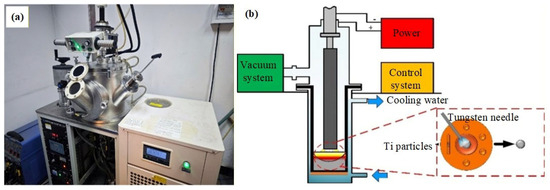
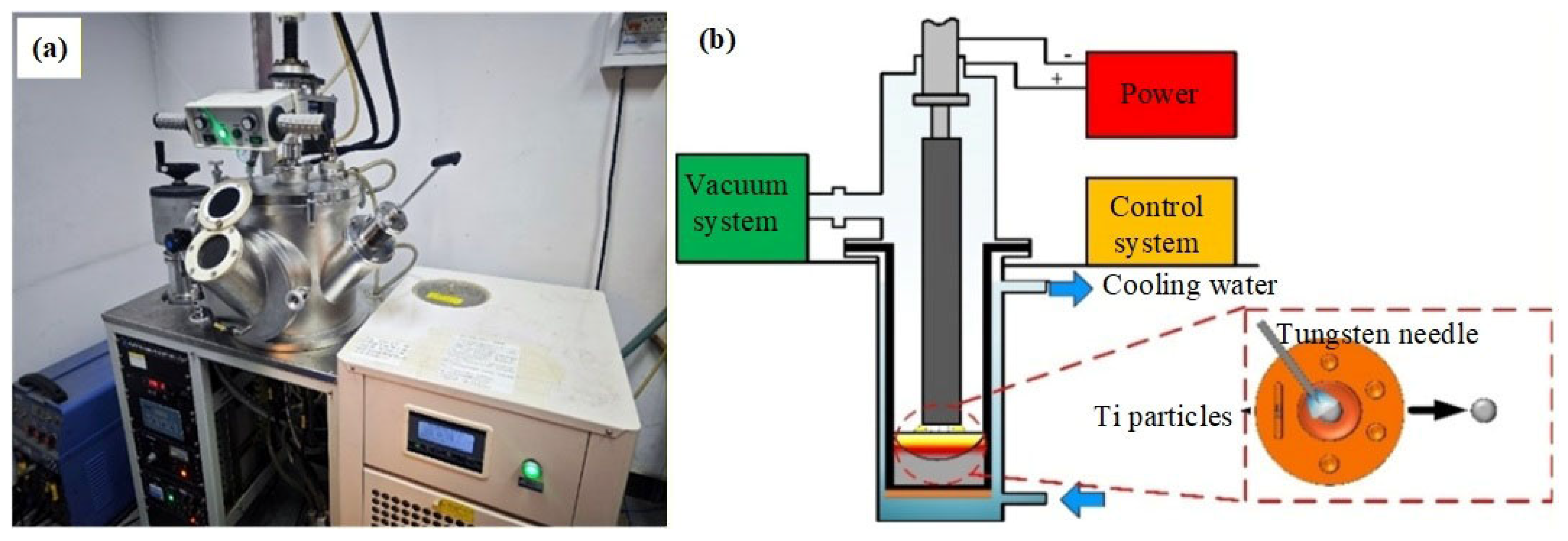
Co, Cr, Fe, Ni, and Mn particles with a purity of 99.99 wt.% were used for alloy smelting. An electronic balance with a precision of 0.1 mg was used to weigh the materials. The DHL-300 non-consumable arc vacuum melting furnace (Henan Kusite Instrument Technology Co., Ltd., Zhengzhou, China) was employed for alloy smelting. The melting equipment and its working principle are shown in Figure 1.
Figure 1.
Vacuum arc melting: (a) vacuum arc melting furnace; (b) schematic diagram of arc melting principle.
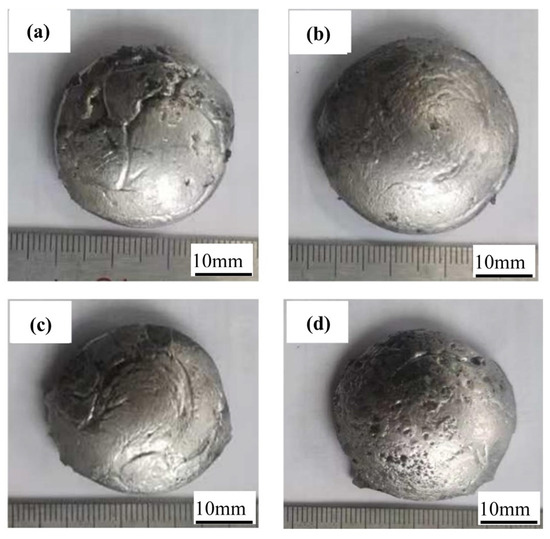
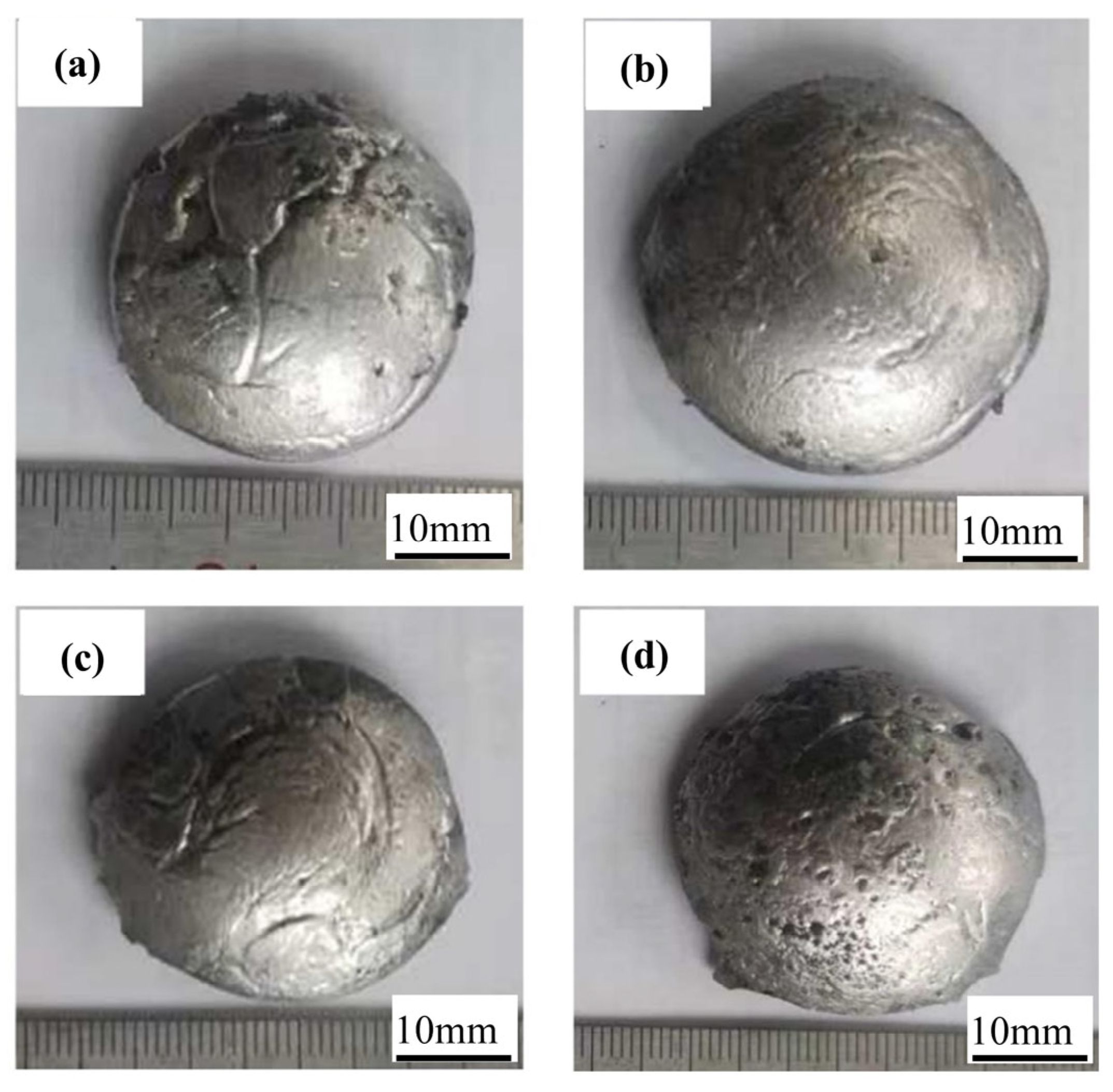
During the melting process, the intrinsic properties and microstructural integrity of the alloy material were improved by implementing a multi-stage melting and reconstitution technique. The alloy quality was enhanced through an eight-fold repeated remelting process. After melting, an optical emission spectrometer was used to test the composition of high-entropy alloys. The alloy samples obtained from the melting process are shown in Figure 2.
Figure 2.
Macroscopic morphology of CoCrNiFeMnx HEAs: (a) CoCrNiFeMn0.5; (b) CoCrNiFeMn; (c) CoCrNiFeMn1.5; (d) CoCrNiFeMn2.
2.2. Material Organization and Performance Characterization
Sample phases were identified via X-ray diffraction using a D8 Discoverer instrument (Bruker, Billerica, MA, USA). The Axio Scope A1 optical metallographic microscope (Carl Zeiss, Oberkochen, Germany) was used for preliminary observation of the microstructure of alloys. The FEG-450 field-emission scanning electron microscope system (FEI Company, Hillsboro, OR, USA) was used for detailed observation of the sample. X-ray energy dispersive spectroscopy (EDS) (FEI Company, Hillsboro, OR, USA) was used for elemental analysis. The W1102D37 fully automatic microhardness tester (Buehler, Lake Bluff, IL, USA) was used for microhardness testing, with a load of 500 g and a holding time of 15 s. Each sample was measured three times, and the average values and uncertainty were calculated, with a confidence level of 95.4%. The CHI600D electrochemical workstation (CH Instruments, Shanghai, China) was used for corrosion resistance testing. The Nexsa X-ray photoelectron spectrometer (XPS) (Thermo Fisher Scientific, Waltham, MA, USA) was used for XPS analysis, with a spot size of 500 μm.
3. Results
3.1. Phase and Microstructure Analysis
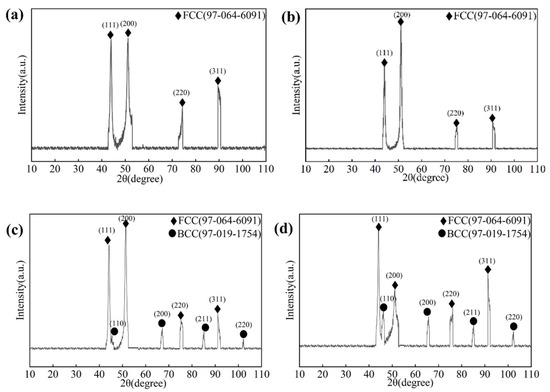
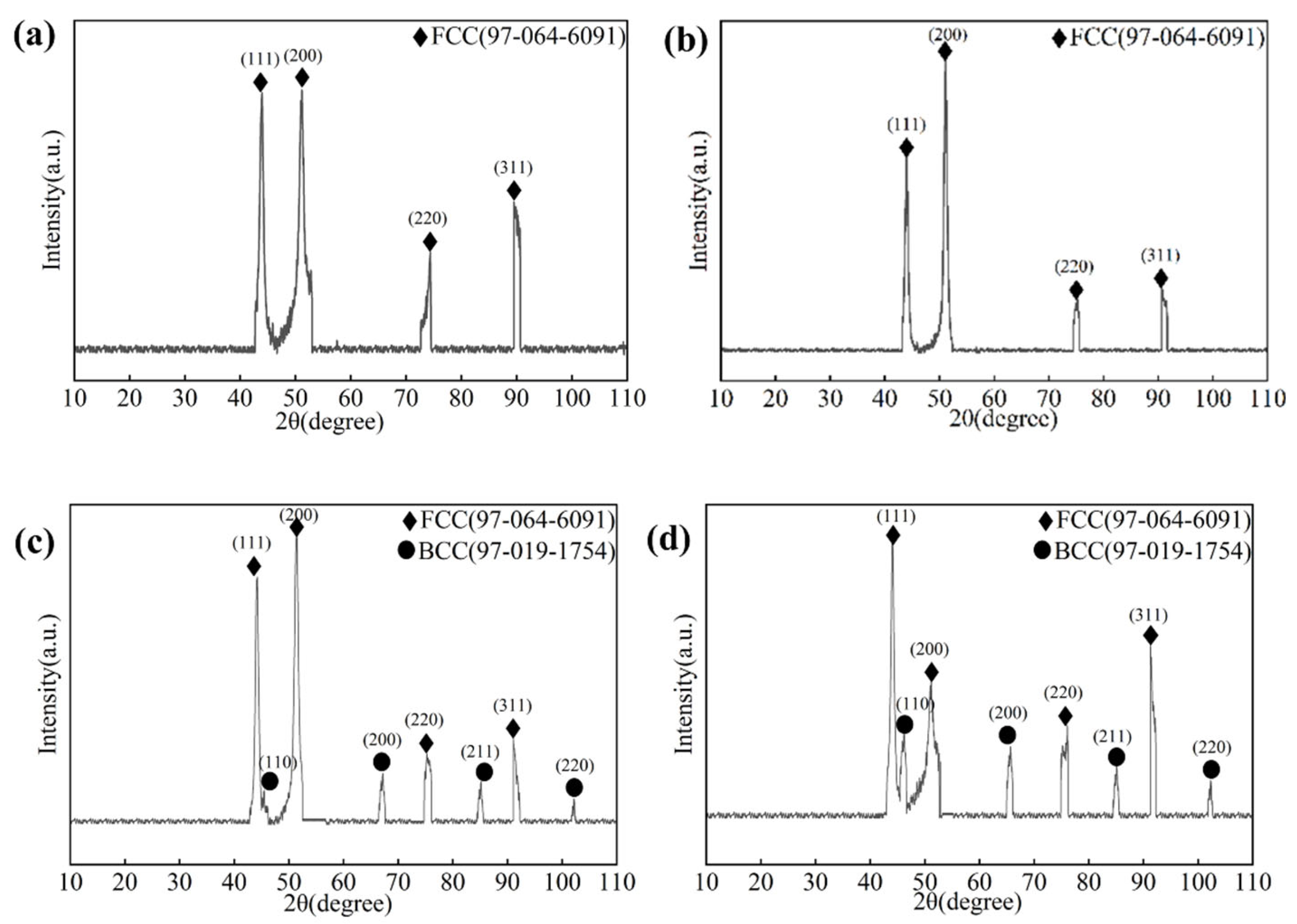
The XRD patterns of CoCrFeNiMnx (x = 0.5, 1, 1.5, 2) HEAs are shown in Figure 3. Mn0.5 and Mn1 alloys are FCC single-phase alloys. Mn1.5 and Mn2 HEAs are FCC + BCC biphasic alloys. Mn2 had a higher BCC peak intensity, indicating a higher BCC phase content.
Figure 3.
XRD pattern of CoCrFeNiMnx HEAs: (a) Mn0.5; (b) Mn1; (c) Mn1.5; (d) Mn2.
A rise in Mn concentration drives a microstructural transition from an initial single FCC phase to a final state comprising both FCC and BCC phases. This can be attributed to the significantly larger atomic radius of Mn compared to Co, Cr, Fe, and Ni. As more Mn atoms enter solid solution, they generate substantial lattice distortion. The FCC structure is a densely packed structure with low tolerance for lattice distortion, while the BCC structure is a non-dense packing structure with stronger adaptability to distortion. Therefore, when the lattice distortion exceeds the critical value that the FCC structure can withstand, some regions will undergo phase transitions, forming BCC structures.
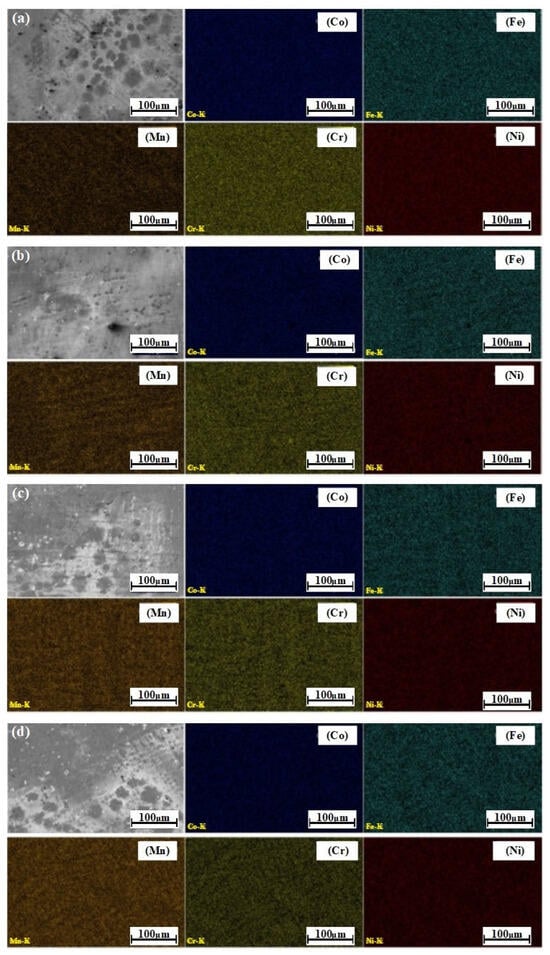
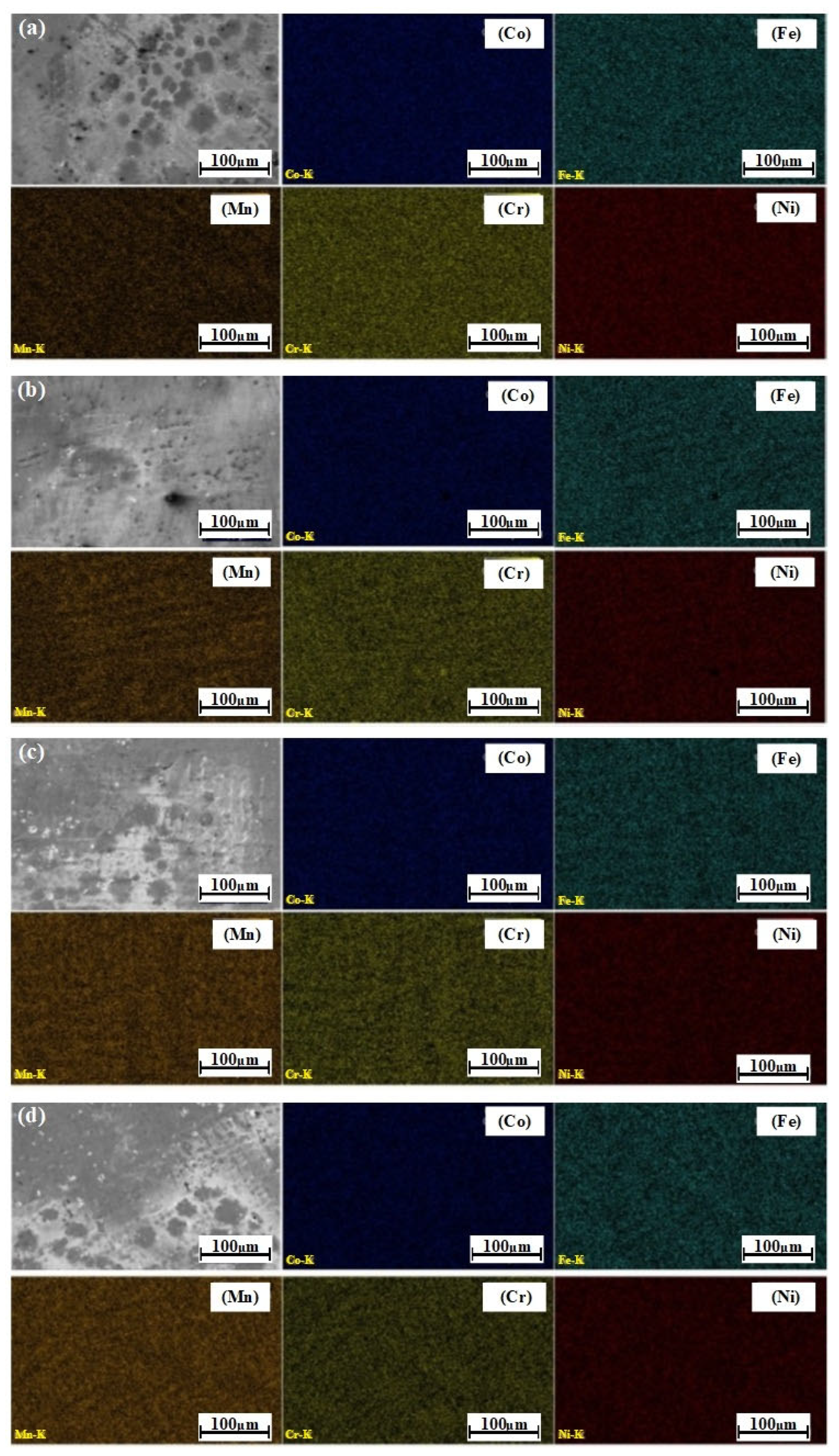
The results of the elemental surface scan analysis for the CoCrFeNiMnx HEAs are presented in Figure 4. The maps confirm that the five principal elements—Fe, Co, Ni, Cr, and Mn—are distributed continuously and uniformly across both dendritic and equiaxed regions, without detectable segregation or significant compositional fluctuations. This indicates that the alloy system has good compositional uniformity.
Figure 4.
The elemental analysis results of CoCrFeNiMnx HEAs surface scanning: (a) Mn0.5; (b) Mn1; (c) Mn1.5; (d) Mn2.
The atomic percentages of CoCrFeNiMnx HEAs are shown in Table 1. The actual atomic percentages in the alloy show a high degree of consistency with the design ratio. The fluctuation amplitude of the measured values for each element, relative to the design values, is less than 1.5%.
Table 1.
Atomic percentages of CoCrFeNiMnx HEAs.
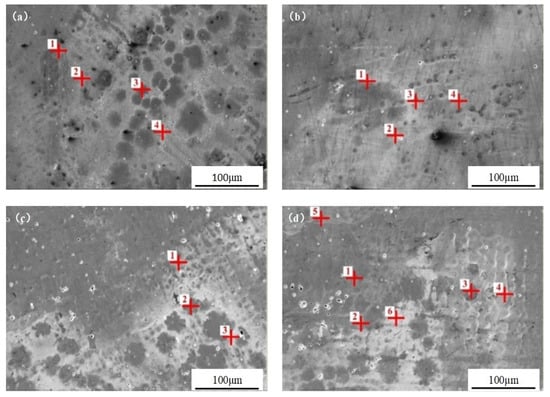
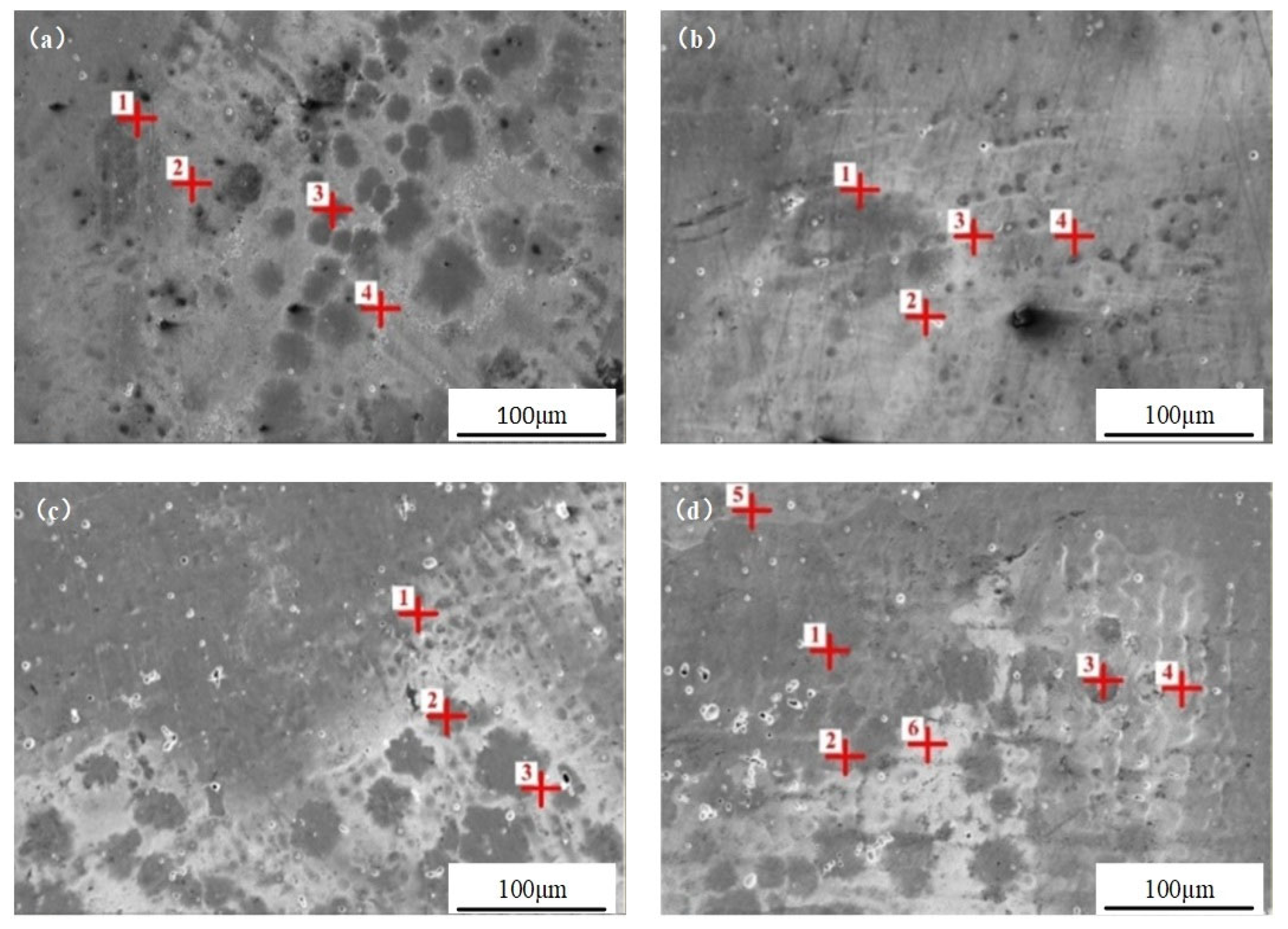
The point scan positions of the CoCrFeNiMnx HEAs are shown in Figure 5, and the corresponding point scan results are shown in Table 2. In the Mn0.5 alloy, the element compositions obtained from points 1, 2, and 3 have good consistency with the alloy design composition. The Mn element content at point 4, located in the transition zone of the grain boundary, is lower than that at other positions. This is because the point is at the boundary between two different types of microstructure, and the redistribution effect of solute elements at the solid/liquid interface during solidification leads to the development of a composition gradient in the grain boundary region. In the Mn1 alloy, points 1 and 4 are at dendritic positions, while points 2 and 3 are at different positions between the dendrites. The distribution of elements at the dendritic positions is uniform, but the presence of Mn elements between the dendrites is uneven. The main reason behind this is that during the solidification process of the alloy, Mn atoms between the dendrites fail to diffuse sufficiently. In the Mn1.5 alloy, the dendritic region (points 1, 4, 5) has a higher Mn content, while the equiaxed region (points 2, 3, 6) has a lower Mn content. This is because the atomic radii of alloy elements vary greatly, which affects the solute distribution coefficient on microstructure formation. When the cooling rate is fast, the solute redistribution is insufficient, promoting the formation of dendrites. When the cooling rate is slow, it is beneficial for the nucleation and growth of equiaxed crystals. Therefore, the alloy forms different microstructures during the solidification process. Both alloys Mn2 and Mn1.5 have similar microstructures. The areas where points 1 and 3 are located are dendritic regions with high Mn content. The area where point 2 is located is an equiaxed crystal region with low Mn content.
Figure 5.
Scanning positions of CoCrFeNiMnx HEAs: (a) Mn0.5; (b) Mn1; (c) Mn1.5; (d) Mn2.
Table 2.
Results of point scan analysis of CoCrFeNiMnx alloy (at. %).
3.2. Mechanical Performance Analysis
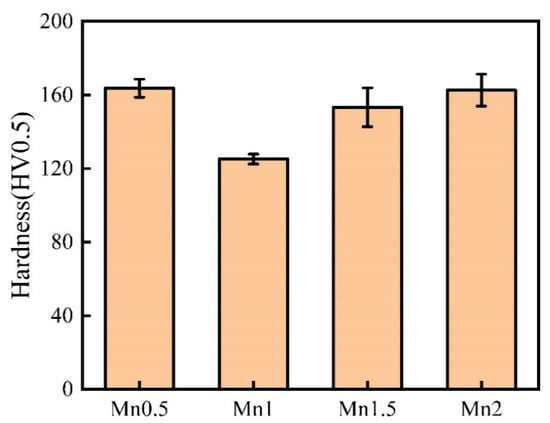
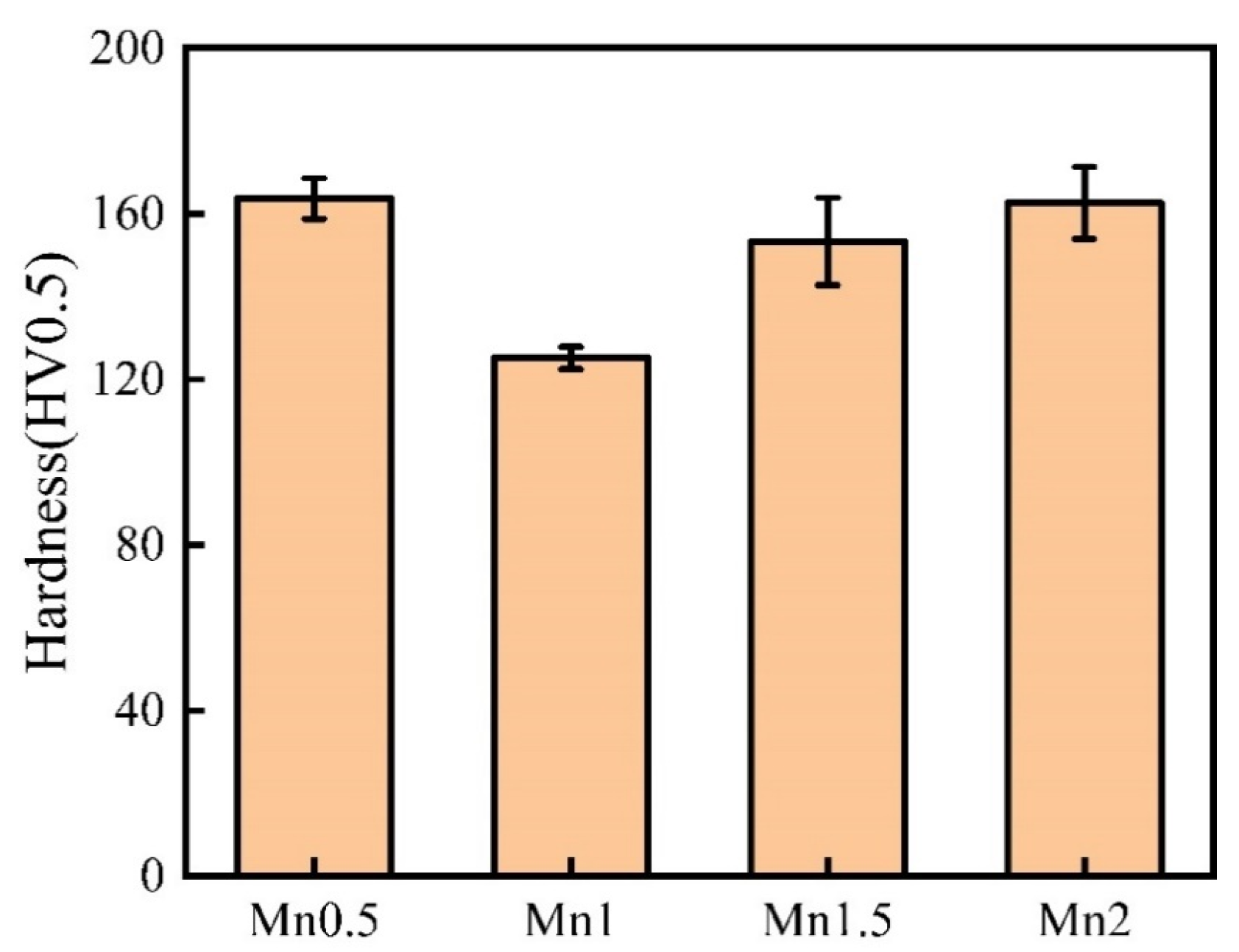
The microhardness test results are shown in Figure 6. As the Mn content rises, the alloy hardness first decreases and then increases. The Mn0.5 and Mn2 alloys exhibit comparable hardness values of 163.6 HV and 162.6 HV, respectively, while the Mn1 alloy shows the lowest hardness at 125.1 HV. This behavior is because the low Mn content in the Mn0.5 alloy does not exceed the solid solubility limit of the matrix, thus avoiding component segregation and phase separation. Solid-solution strengthening is enhanced by the lattice distortion induced by Mn. For the Mn2 alloy, the high Mn content exceeds the solid solubility limit, causing compositional fluctuations that generate additional lattice distortion. Additionally, Mn may form locally ordered clusters with other elements, hindering dislocation movement. Therefore, Mn0.5 and Mn2 alloys exhibit higher hardness. Equal atomic composition can easily achieve uniform distribution of elements, but a uniform solid solution may reduce the hindrance of grain boundaries and defects to dislocations. Due to its single-phase FCC structure without secondary phases or significant grain boundary strengthening, the Mn1 alloy displays the lowest hardness value among the series.
Figure 6.
Hardness of CoCrFeNiMnx HEAs.
3.3. Corrosion Resistance Analysis
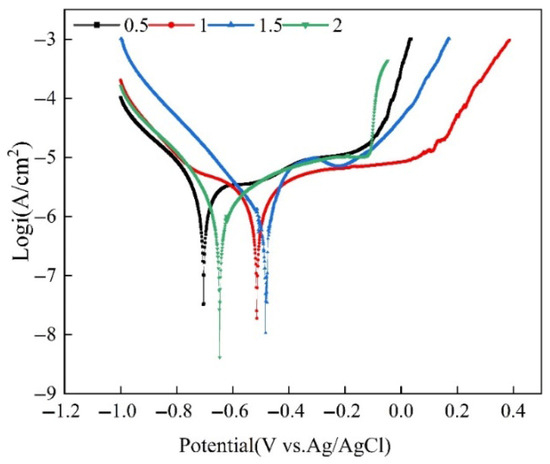
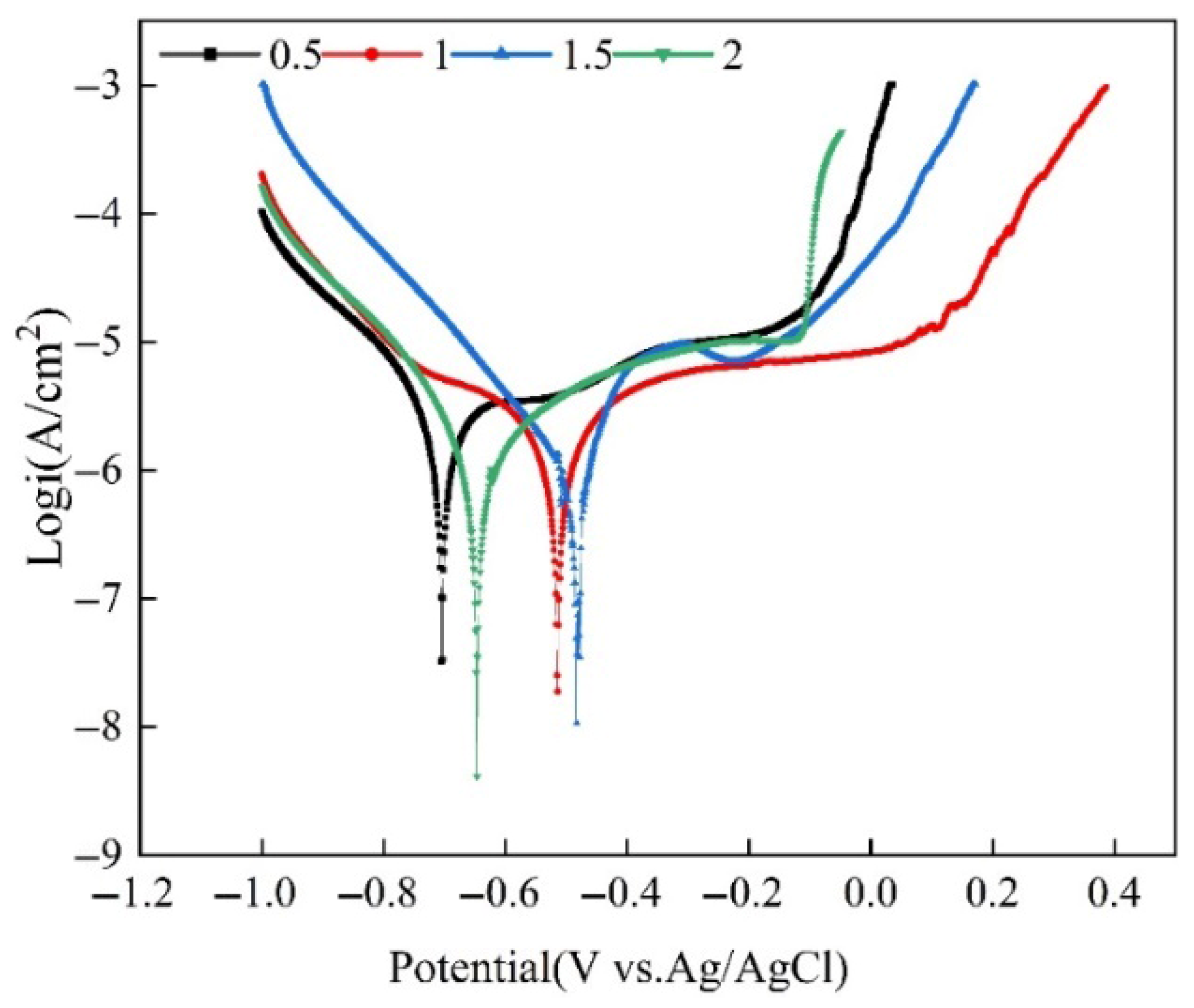
The potentiodynamic polarization curve of the alloy in a 3.5 wt.% NaCl solution at room temperature is shown in Figure 7. There is no obvious Tafel slope in the anode region, indicating that all alloy samples with different compositions exhibit significant passivation behavior.
Figure 7.
Potential polarization curve of CoCrFeNiMnx HEAs.
The fitting results of the potentiodynamic polarization curve and corrosion parameters of previously studied high-entropy alloys are shown in Table 3. Eocp is the open circuit potential, Ecorr is the corrosion potential, Icorr is the corrosion current density, and Epit is the pitting potential. The corrosion current densities of Mn0.5, Mn1, Mn1.5, and Mn2 alloys are 1.306, 0.8819, 0.7863, and 0.3482 μAcm−2, respectively. As the Mn content increases, the alloy’s corrosion resistance improves progressively, with Mn2 exhibiting the best performance and Mn0.5 the poorest. Previously studied high-entropy alloys have higher corrosion current density and poorer corrosion resistance compared to the alloys in this study.
Table 3.
Fitting results of potentiometric polarization curve and corrosion parameters of previously studied high-entropy alloys.
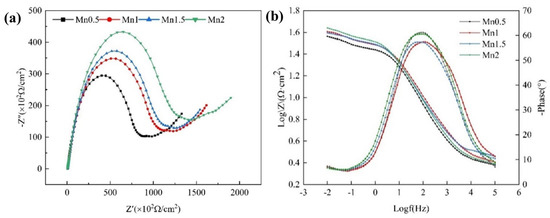
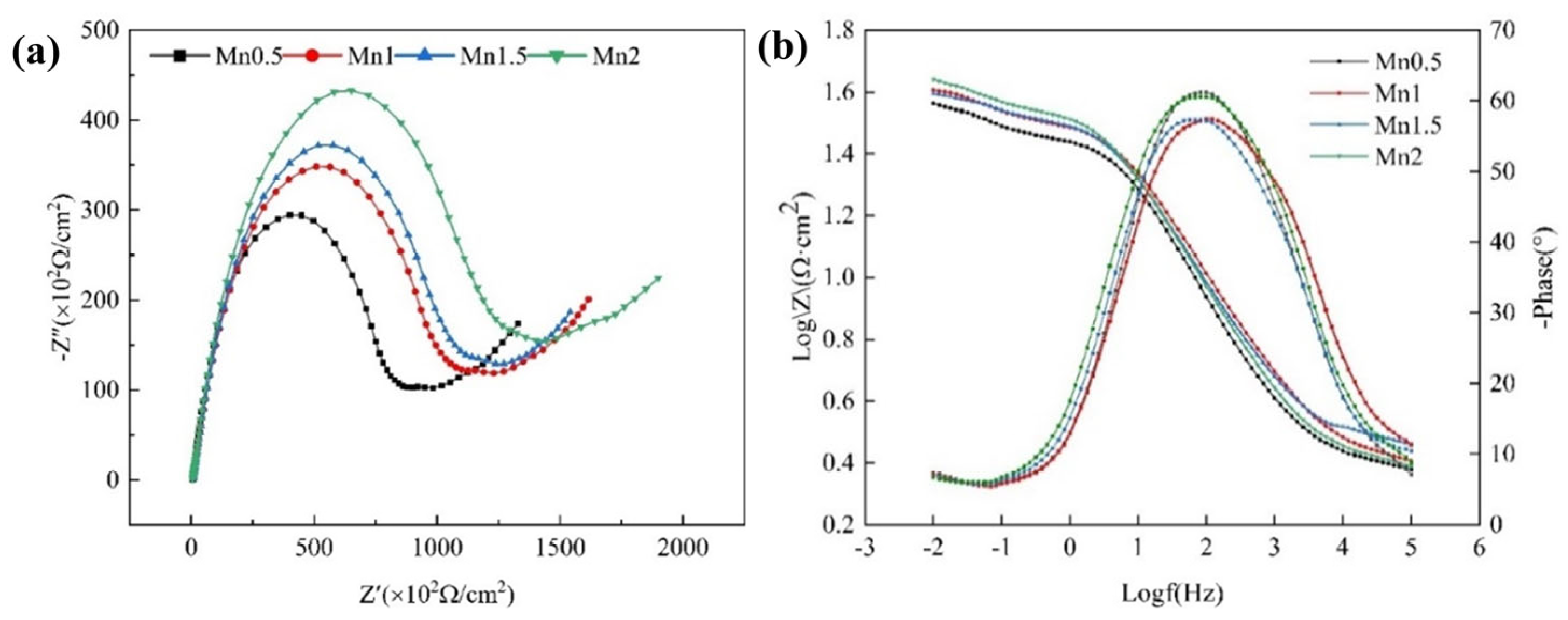
The electrochemical impedance spectroscopy analysis results are presented in Figure 8. The Nyquist plot shows that as the Mn content increases, the capacitance arc radius in both the high-frequency and low-frequency regions increases. This suggests that elevating the Mn content effectively enhances the corrosion resistance of the alloy. From the Bode plot, it can be seen that in the low-frequency range, Mn2 has the highest impedance modulus. Impedance and frequency exhibit a linear relationship in the low- and mid-frequency range, with an inclination angle of approximately 60°. In the high-frequency region, the curves converge and stabilize, indicating that electrolyte resistance is largely unaffected by variations in Mn content.
Figure 8.
Electrochemical impedance spectroscopy analysis of the alloy: (a) Nyquist plot; (b) Bode plot.
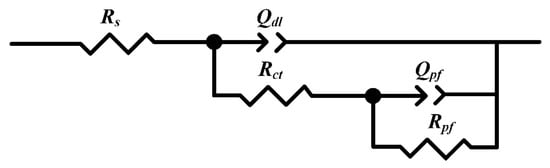
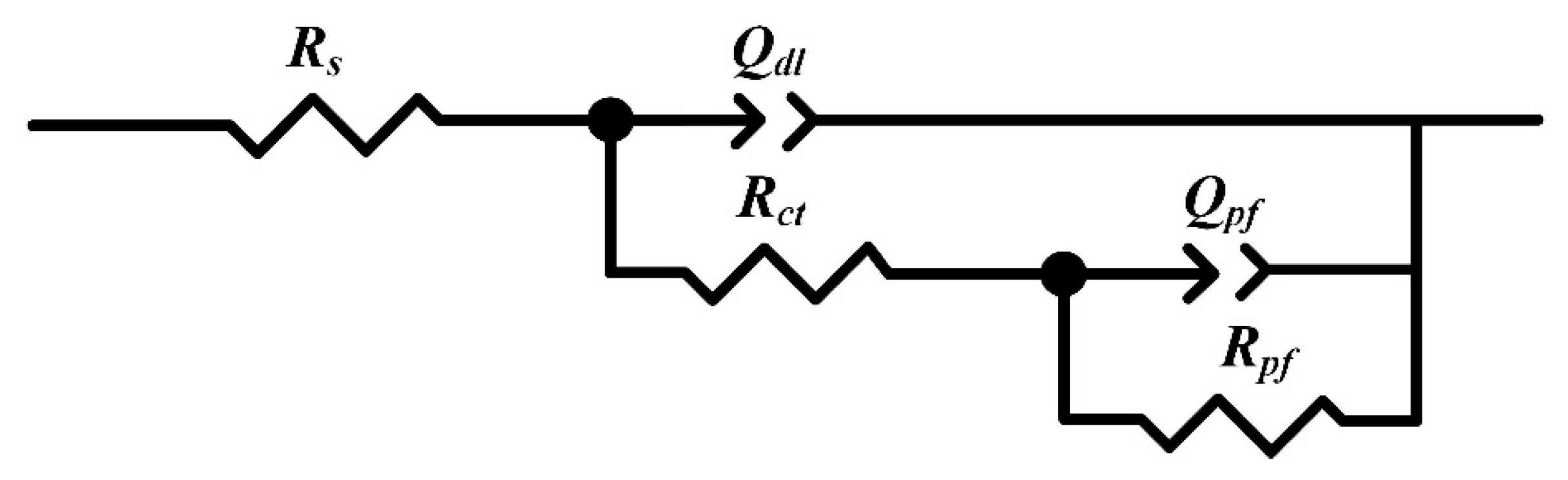
The dynamic characteristics of the physical and chemical processes in the interface reaction between HEAs and corrosive electrolytes can be systematically analyzed through electrochemical equivalent circuits. The fitted equivalent circuit diagram is shown in Figure 9. Rs represents the solution resistance, which is the internal resistance of the electrolyte. Qdl is a constant phase element (CPE) with a double-layer capacitor, representing the capacitance size at the interface between the electrode and electrolyte. Qpf represents the constant phase element of HEA passivation film, indicating the capacitive properties of high-entropy alloy passivation film. Rct is the charge transfer resistance. Rpf is the passivation film resistance, which represents the ability of the passivation film to hinder charge transfer. ndl is an index related to Qdl, reflecting the dispersion coefficient of the double layer. npf represents the dispersion coefficient of the passivation film.
Figure 9.
Electrochemical equivalent circuit diagram.
The impedance calculation formula for CPE components is
where Y0 represents the scaling factor, j is the imaginary unit, ω represents the angular frequency, and n is the dispersion coefficient.
The relationship between the effective capacitance of Qpf and the thickness of the passivation film is
where C represents the capacitance of CPE, εr represents the relative dielectric constant of the passivation film, ε0 represents the dielectric constant in vacuum, A represents the area of the passivation film, and d represents the thickness of the passivation film.
The electrical parameters of the equivalent circuit are shown in Table 4. As the Mn content increases, the values of Rct and Rpf gradually increase. This behavior indicates that the high-entropy alloys offer greater corrosion resistance. Their improved performance is attributed to a higher resistance to electrochemical reactions and the formation of a thicker, more protective passivation film. Furthermore, an ndl value closer to 1 suggests that this film is also more uniform and denser. The value of Qpf is inversely proportional to the thickness of the passivation film. The smaller the value of Qpf, the thicker the passivation film. The npf value of the Mn2 alloy is closest to 1, and the Qpf value of the Mn2 alloy is the smallest. This indicates that the Mn2 alloy has the best passivation film density and corrosion resistance.
Table 4.
Parameter values of the electrochemical equivalent circuit.
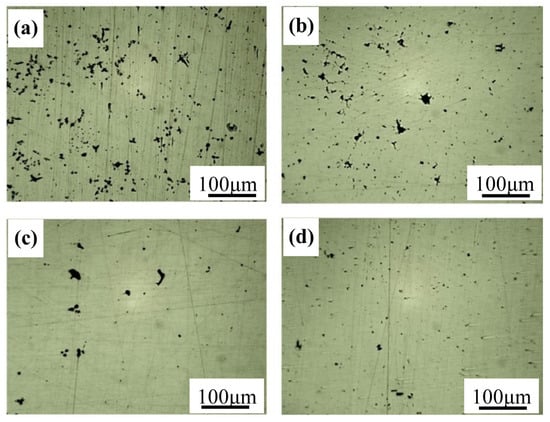
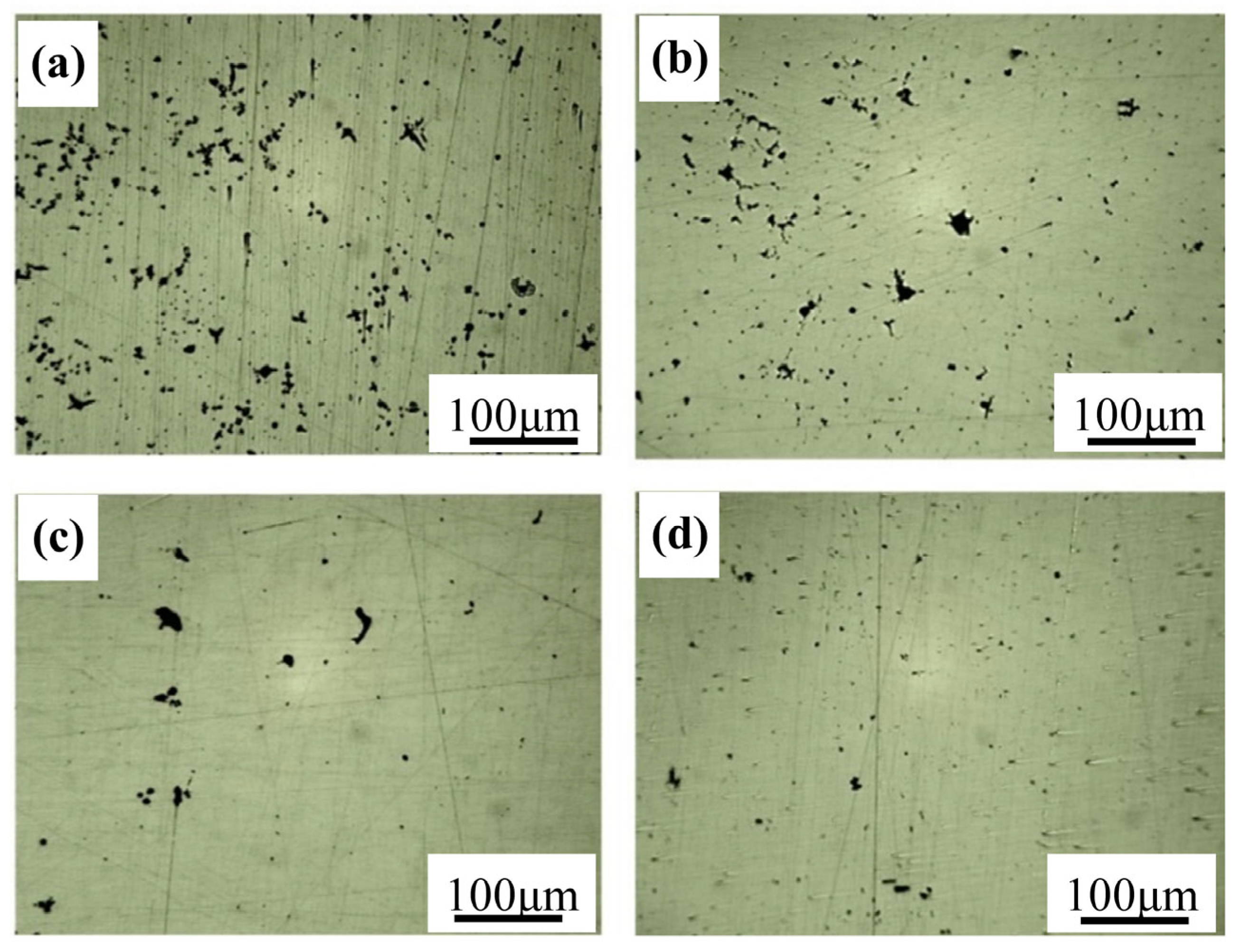
After electrochemical corrosion, the surface corrosion appearance of the alloy under an optical microscope is shown in Figure 10. With increasing Mn content, the number of corrosion pits significantly decreases.
Figure 10.
Sample morphology after electrochemical corrosion: (a) Mn0.5; (b) Mn1; (c) Mn1.5; (d) Mn2.
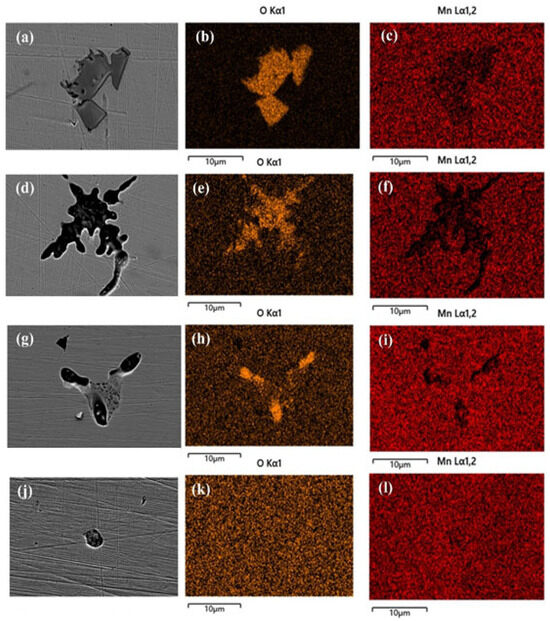
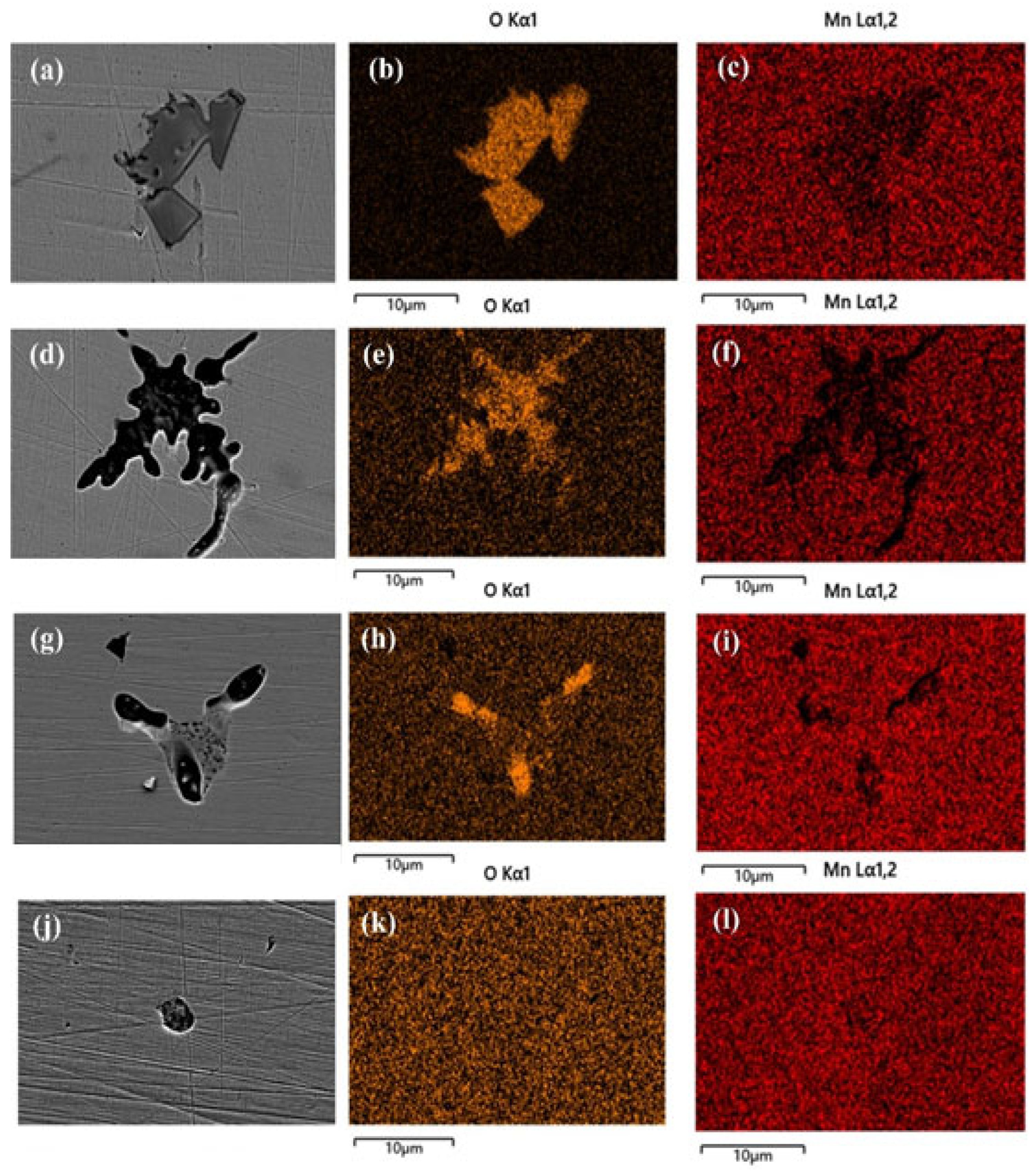
SEM and EDS images of alloys with different Mn contents after corrosion are shown in Figure 11. The planar scanning elemental analysis results for O and Mn elements reveal that O exhibits significant aggregation in the Mn0.5, Mn1, and Mn1.5 alloys, primarily distributed within corrosion pits. In contrast, the O distribution in the Mn2 alloy appears relatively uniform without obvious aggregation.
Figure 11.
SEM and EDS images of alloys with different Mn contents after corrosion: (a–c) Mn0.5; (d–f) Mn1; (g–i) Mn1.5; (j–l) Mn2.
3.4. Chemical Composition Analysis of Passivation Film
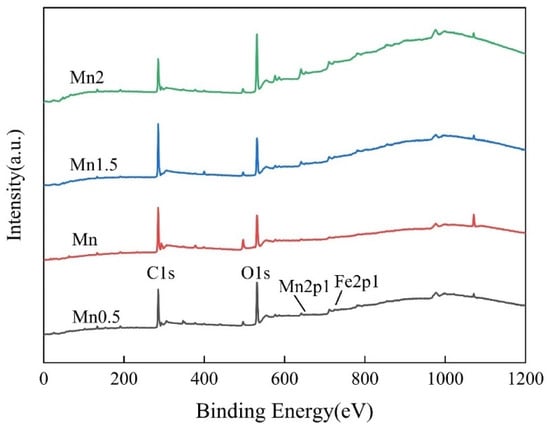
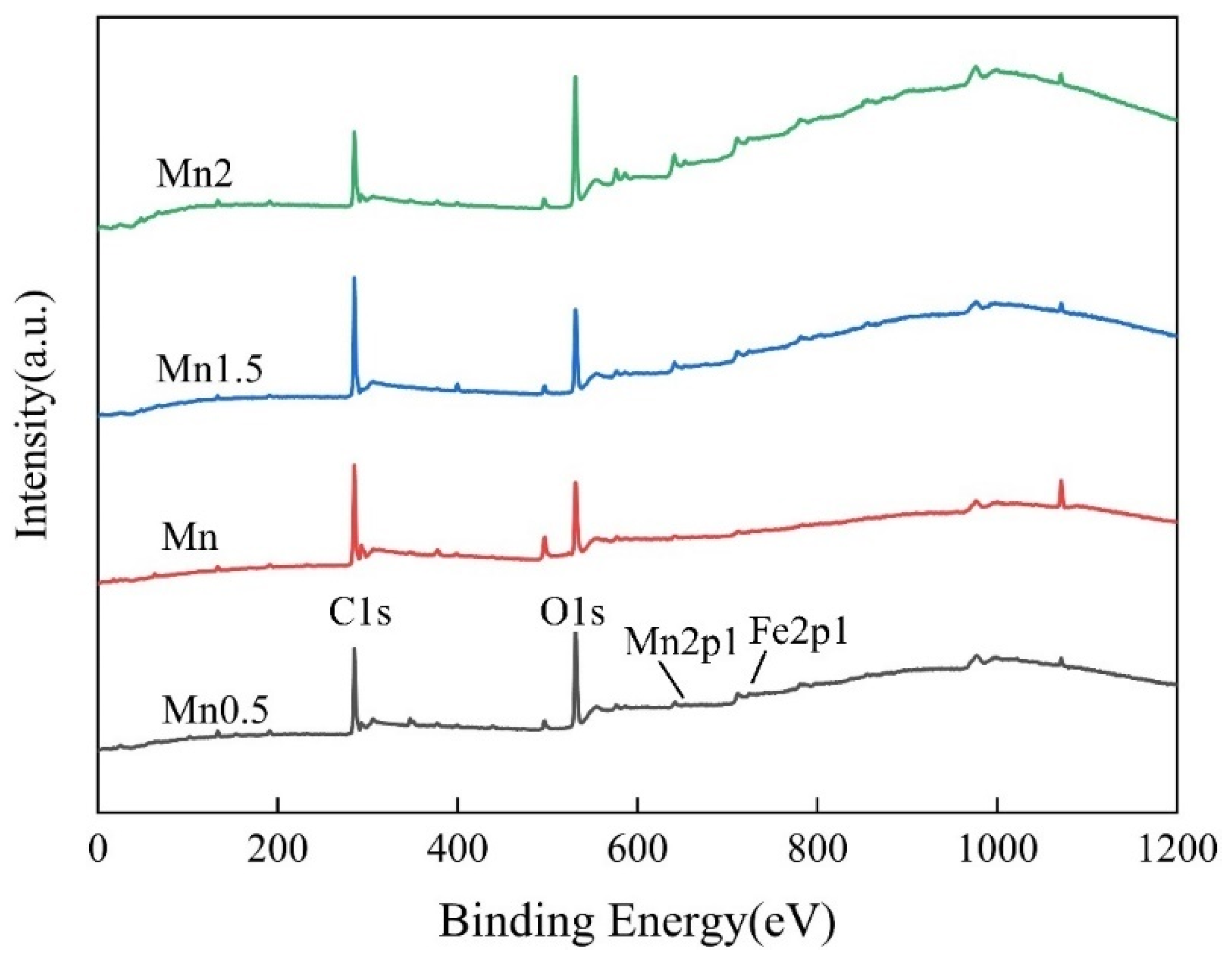
The constituent chemistry of the protective oxide films generated on alloys with varying Mn concentrations after corrosion was characterized by X-ray photoelectron spectroscopy (XPS), with the corresponding spectra displayed in Figure 12. After corrosion with a 3.5 wt.% NaCl solution, the surface film primarily consisted of Mn, O, and Fe. The Fe2p1 peak exhibits slightly higher intensity than the Mn2p1 peak, suggesting that iron oxides constituted a major fraction of the surface layer, with manganese oxides also present. As the Mn content rises, the Mn2p1 peak intensity increases markedly, reflecting a greater formation of Mn-based oxides during the corrosion process.
Figure 12.
XPS spectra of different samples.
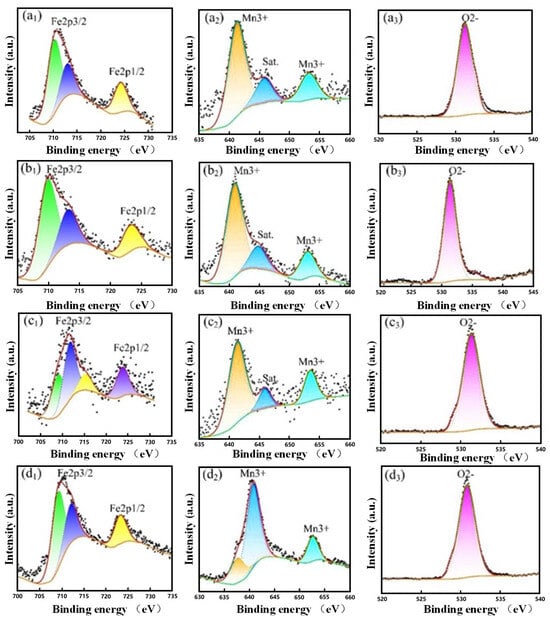
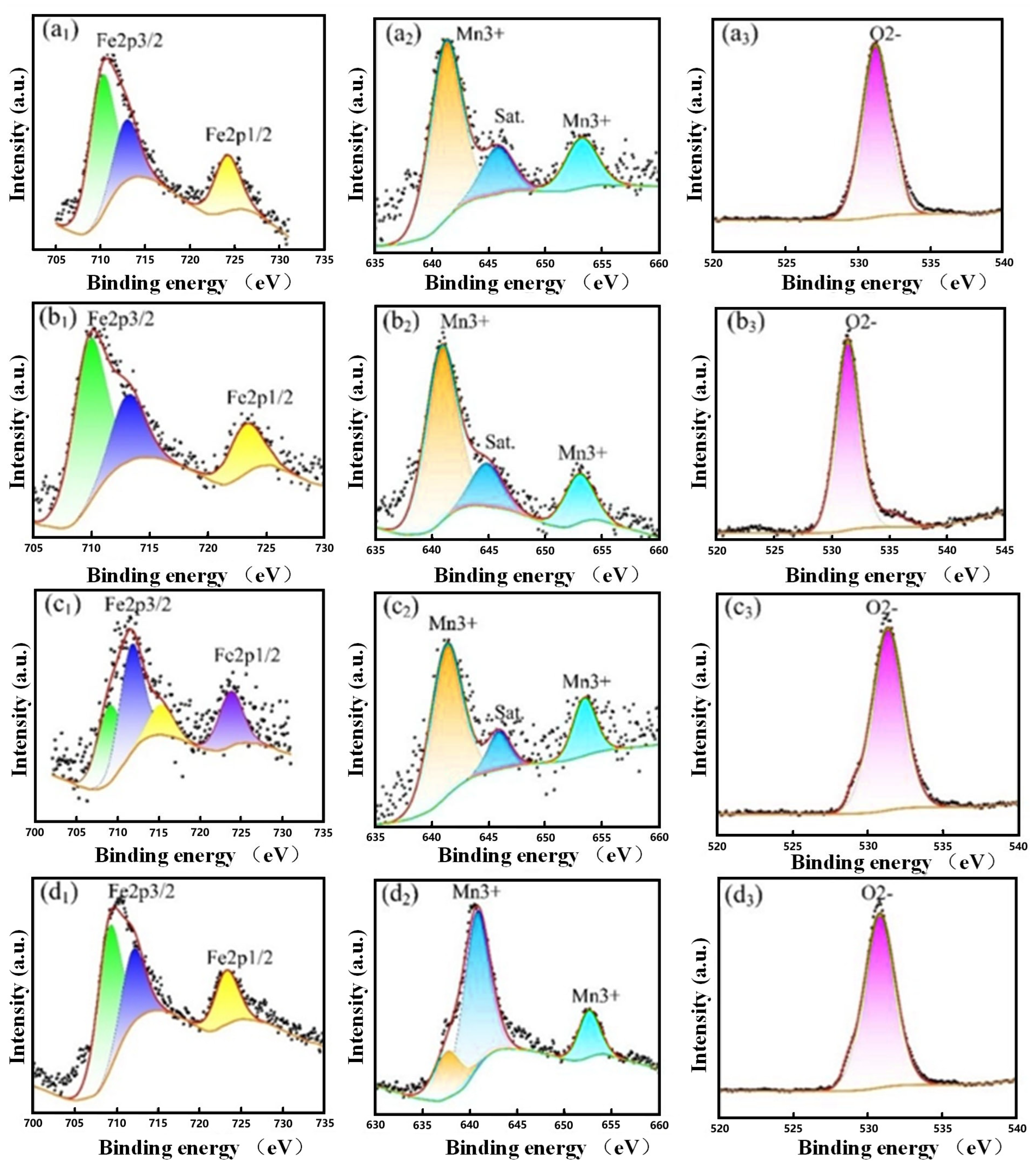
The chemical composition of the surface passivation film on alloys with different manganese contents after electrochemical corrosion was systematically analyzed using high-resolution XPS, as shown in Figure 13. The results show that the surface oxides of all samples exhibited considerable similarity in composition, and their chemical state distribution was closely linked to the protective properties of the passivation film. In the Fe2p spectrum of iron, the characteristic peaks of Fe3+ are located at 710.73 eV and 724.19 eV, corresponding to the Fe2P3/2 and Fe2p1/2 orbitals, with a binding energy difference of 13.46 eV, which is completely consistent with the standard characteristics of Fe2O3. This indicates that trivalent iron oxide dominates in the passivation film. The characteristic peak of Fe2+ was detected at 713.75 eV, which may originate from divalent iron oxides such as FeO or Fe3O4. The satellite peak at 717.05 eV further confirms the coexistence of multivalent states of iron in the passivation film. The formation of this multivalent oxide may be related to the dynamic equilibrium of local electrochemical reactions during the corrosion process. The residual Fe2+ may originate from the heterogeneous structure inside the incompletely oxidized alloy matrix or passivation film. The Mn2p spectrum analysis of manganese shows that the binding energies of the Mn2p3/2 and Mn2p1/2 orbitals are 641.17 eV and 653.01 eV, respectively, and the splitting energy is 11.84 eV. This value is highly consistent with the characteristics of the Mn3+ oxidation state. Additionally, the satellite peak appearing at 644.37 eV further reinforces the conclusion that manganese is mainly in a high oxidation state. Manganese in a high oxidation state typically has high chemical stability and can form a dense barrier layer in corrosive media, inhibiting further oxidation of the alloy matrix. The main peak of the O1s spectrum of oxygen element is located at 531 eV, which is mainly attributed to the contribution of oxygen ions in metal oxides, such as Fe-O and Mn-O bonds. This indicates that the core component of the passivation film is the metal oxide generated by the oxidation of the alloy substrate. In addition, the possible weak peak near 533 eV suggests the presence of a small amount of hydroxyl groups or adsorbed water. This type of hydrated structure may enhance the density of the passivation film by filling the lattice gaps of oxides, but it may also affect the long-term stability of the film due to local hydrolysis reactions.
Figure 13.
High-resolution XPS: (a1–a3) Mn0.5; (b1–b3) Mn1; (c1–c3) Mn1.5; (d1–d3) Mn2.
The XPS analysis results indicate that the main chemical composition of the passivation film is Fe2O3 and Mn3+ oxide, accompanied by a small amount of Fe2+ oxide and trace amounts of oxygen-containing adsorbates. Fe2O3, as a typical trivalent iron oxide, has a dense crystal structure and strong chemical inertness, which can effectively prevent contact between corrosive media and the alloy matrix. Mn3+ oxide can form a composite oxide layer with Fe oxides, such as Fe2O3, further increasing the mechanical strength and ion migration resistance of the passivation film. In addition, the presence of Fe2+ oxide indicates the existence of a certain chemical gradient or heterogeneous structure inside the passivation film. The coexistence of multivalent oxides enhances the overall stability of the oxide layer through charge compensation mechanisms, but it may also lead to local corrosion risks due to the presence of electrochemically active sites. Notably, the synergistic interaction between manganese and iron oxides promotes the formation of heterogeneous interfaces within the passivation film, which improves both its self-healing capacity and corrosion resistance.
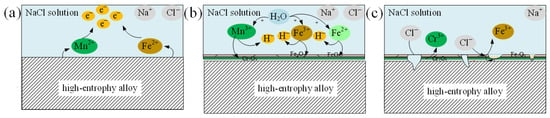
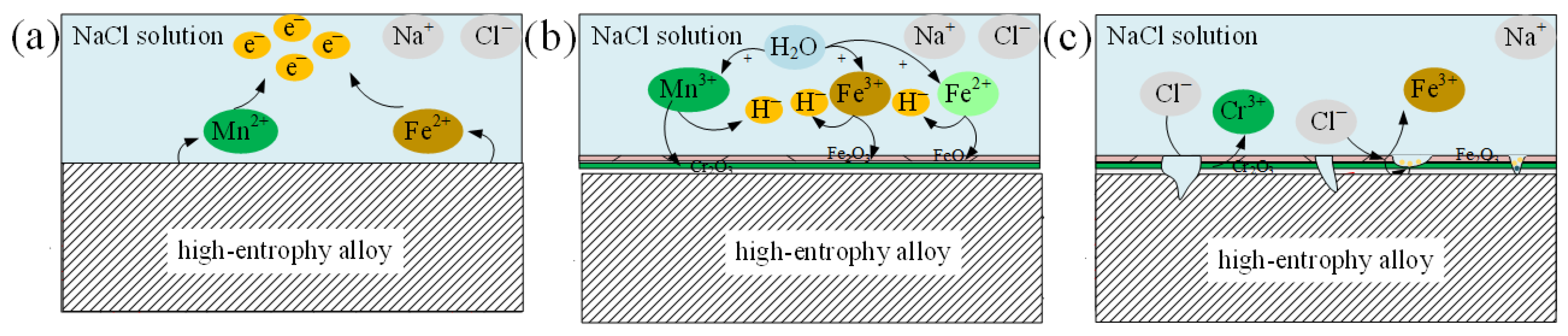
Further analysis reveals that the development of the passivation film is closely tied to redox processes during electrochemical corrosion. In the initial phase, Fe and Mn elements on the alloy surface preferentially oxidize to form Fe2+ and Mn2+. Subsequently, under the action of dissolved oxygen or applied potential in the medium, Fe2+ and Mn2+ gradually oxidize into higher valence states of Fe3+ and Mn3+. This process is accompanied by the growth and accumulation of oxide crystal nuclei, ultimately forming a continuous and dense passivation film. However, due to local differences in alloy composition or uneven distribution of corrosive media, some areas may retain low oxidation state species due to incomplete oxidation, forming microscopic defects in the film layer. Ultimately, due to the pitting effect of Cl−, the passivation film on the surface of the alloy ruptured. The corrosion mechanism is shown in Figure 14.
Figure 14.
Corrosion mechanism of CoCrFeNiMn HEAs: (a) oxidation of Fe and Mn; (b) formation of passivation film; (c) cracking of passivation film.
4. Analysis and Discussion
4.1. Establishment of an Atomic Model for High-Entropy Alloy
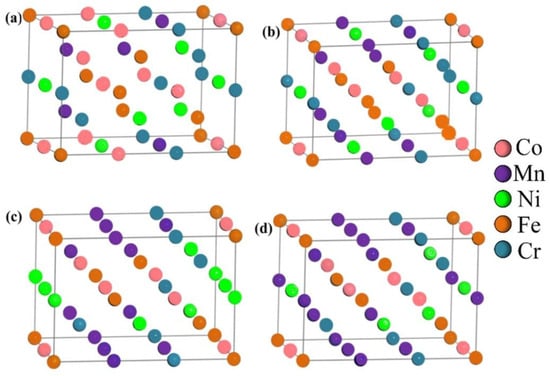
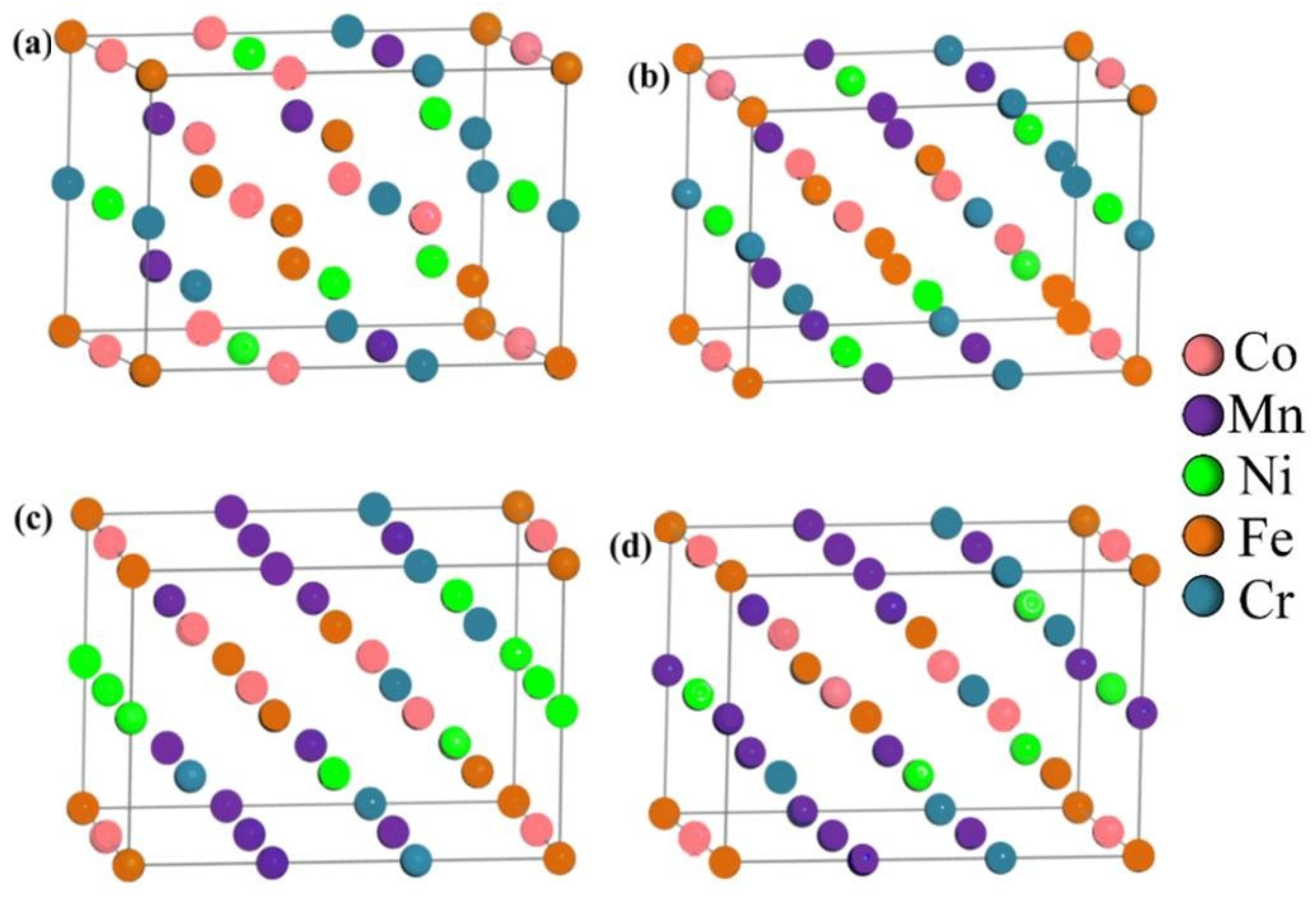
To investigate how manganese content affects the alloy’s corrosion resistance and the interfacial corrosion behavior between oxygen and alloy atoms, a CoCrFeNiMn high-entropy alloy atomic model was constructed using Material Studio V2020 software and the atomic substitution method. This random substitution method allows high-entropy elements to be randomly distributed, resulting in an effect similar to the high-entropy effect produced by mixing multiple elements in HEAs. The created model was imported into Material Studio software, and energy minimization was performed on the model to minimize its structural energy. The atomic model of CoCrFeNiMn HEA is shown in Figure 15.
Figure 15.
CoCrFeNiMn HEA atomic model: (a) Mn0.5; (b) Mn1; (c) Mn1.5; (d) Mn2.
First-principles calculations based on density functional theory (DFT) were performed using the CASTEP module. The plane-wave pseudopotential method was employed to obtain the electronic density of states and the Fermi level. The Generalized Gradient Approximation Based on Parameterization (GGA-PBE) method was employed to address exchange correlation effects in multi-electron systems. Ultra-soft pseudopotential technology was introduced to effectively replace core electrons and accurately describe the behavior of valence electrons in the interaction between atomic nuclei and electron clouds. To ensure the reliability of numerical simulation, key calculation parameters were determined through systematic convergence testing: the plane-wave basis set energy cutoff was optimized, and a value of 400 eV was selected for all calculations. In the geometric optimization process, a triple convergence criterion was set: the maximum component of atomic force had to converge to below 0.01 eV/Å to achieve mechanical equilibrium; the root mean square displacement of atoms was controlled within a threshold of 5 × 10⁻⁴ Å; the fluctuation amplitude of the system’s total energy was within 5 × 10⁻⁴ eV/atom.
The interfacial corrosion behavior between oxygen atoms and the corrosive interaction at the oxygen–alloy interface was investigated using first-principles calculations within the CP2K version 2022.1 software package. First-principles molecular dynamics simulations were performed with a mixed Gaussian and plane-wave basis set. Structural optimization was performed using the Broyden–Fletcher–Goldfarb–Shanno (BFGS) algorithm. Using the canonical ensemble, molecular dynamics simulations applied a Nose–Hoover thermostat at 773 K, a 1.5 fs time step, and periodic boundaries along all three axes.
The molecular dynamics behavior of the interfacial Co, Cr, Ni, Fe, Mn, and O atoms was analyzed through calculations of the radial distribution function (RDF), mean square displacement (MSD), and diffusion coefficient. Structural changes in the metal–O system were characterized using the RDF, expressed as [35,36,37,38]
where V, NA, NB, niB, and I are the volume (Å3), the number of A atoms, the number of B atoms, the number of B atoms located within a spherical shell between radii r and r + Δr, and the total number of central atoms in the simulated structure, respectively. Furthermore, the average effective binding energy can be calculated to estimate the energy barrier necessary to break the bond between atoms A and B, given by [39]
where R is the molar gas constant, T is the temperature, and g(r) is the radial distribution function.
Furthermore, the diffusion behavior of alloy atoms and O atoms can be measured by the transient mean square displacement (MSD) and diffusion coefficient D based on Einstein’s relationship. The defining equations for the MSD and D of atom A are as follows:
where rAi and t0 are the coordinates of the i-th atom and the origin at any time, respectively.
4.2. The Influence Mechanism of Mn Content on the Corrosion Resistance
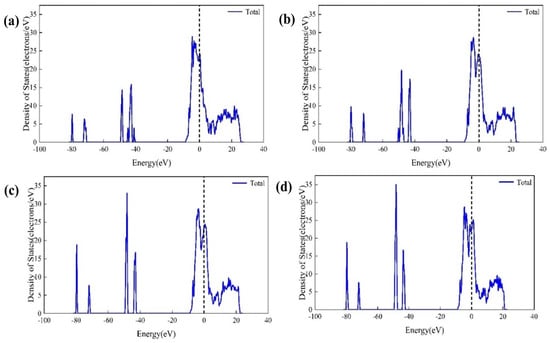
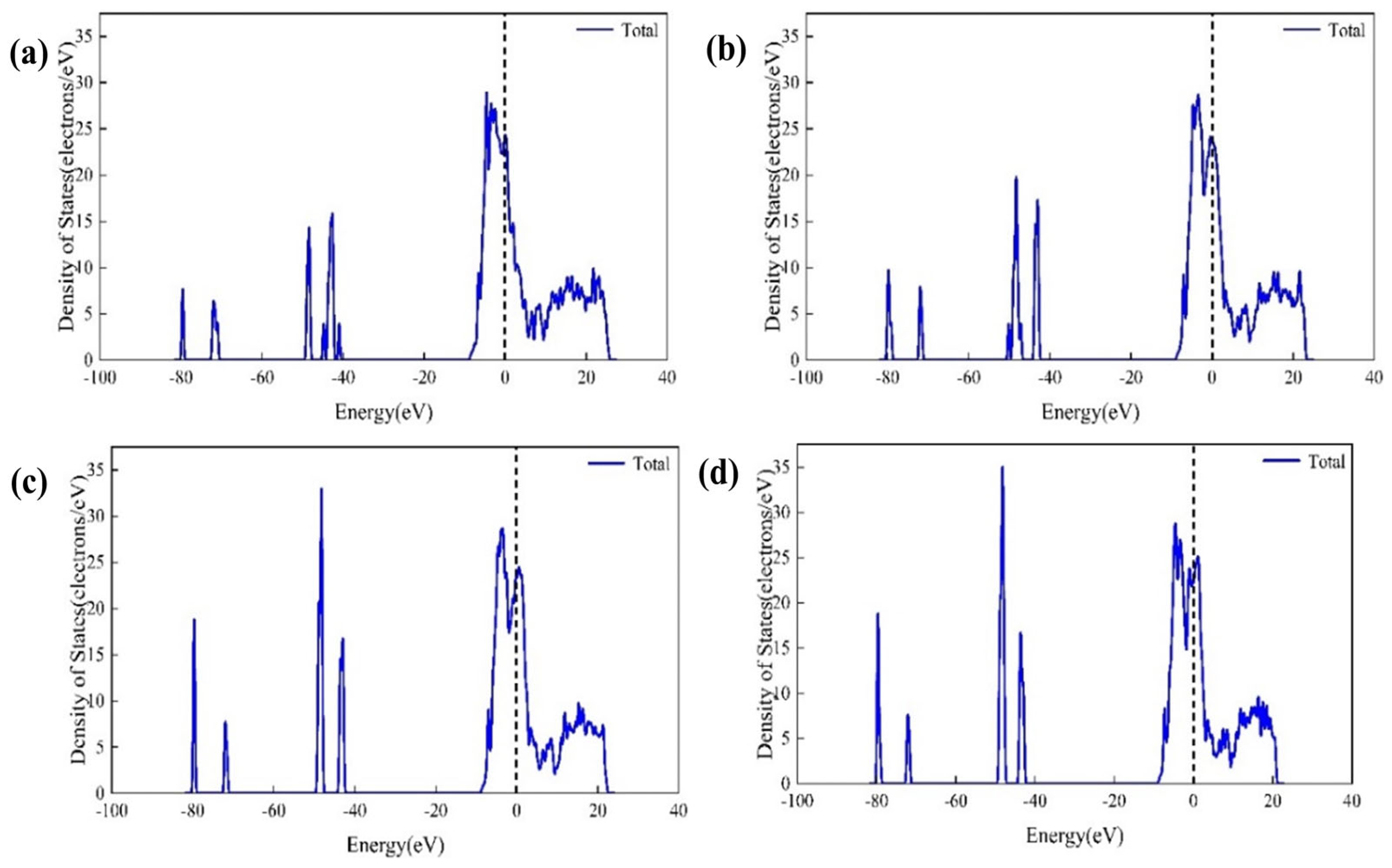
As shown in Figure 16, the total density of states reveals a contraction of the conduction band with increasing Mn content in the CoCrFeNiMn alloy. The conduction band energy range of the Mn0.5 alloy near the Fermi level is between −9.261 and 26.193 eV. The conduction band range of the Mn2 alloy shrinks to −9.358 to 21.559 eV. As the conduction band range decreases, the corresponding contraction in the kinetic energy distribution of free electrons reduces the activity of charge transfer within the electrochemical system. During the corrosion reaction process, the limited electron transfer ability weakens the driving force of the anodic reaction and has a suppressive effect on the corrosion reaction [40].
Figure 16.
Total density of states of CoCrFeNiMn HEA: (a) Mn0.5; (b) Mn1; (c) Mn1.5; (d) Mn2.
The calculated Fermi levels of the high-entropy alloy with different Mn contents are shown in Table 5. As the Mn content increases, the Fermi level continues to decrease. An elevated Fermi level decreases the work function, thereby promoting the loss of electrons from surface atoms and their subsequent oxidation.
Table 5.
Fermi levels of high-entropy alloy with different Mn contents.
4.3. Interface Corrosion Behavior Between Oxygen Atoms and Alloy Atoms
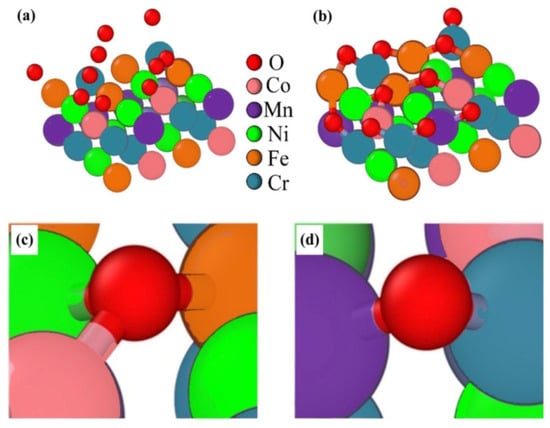
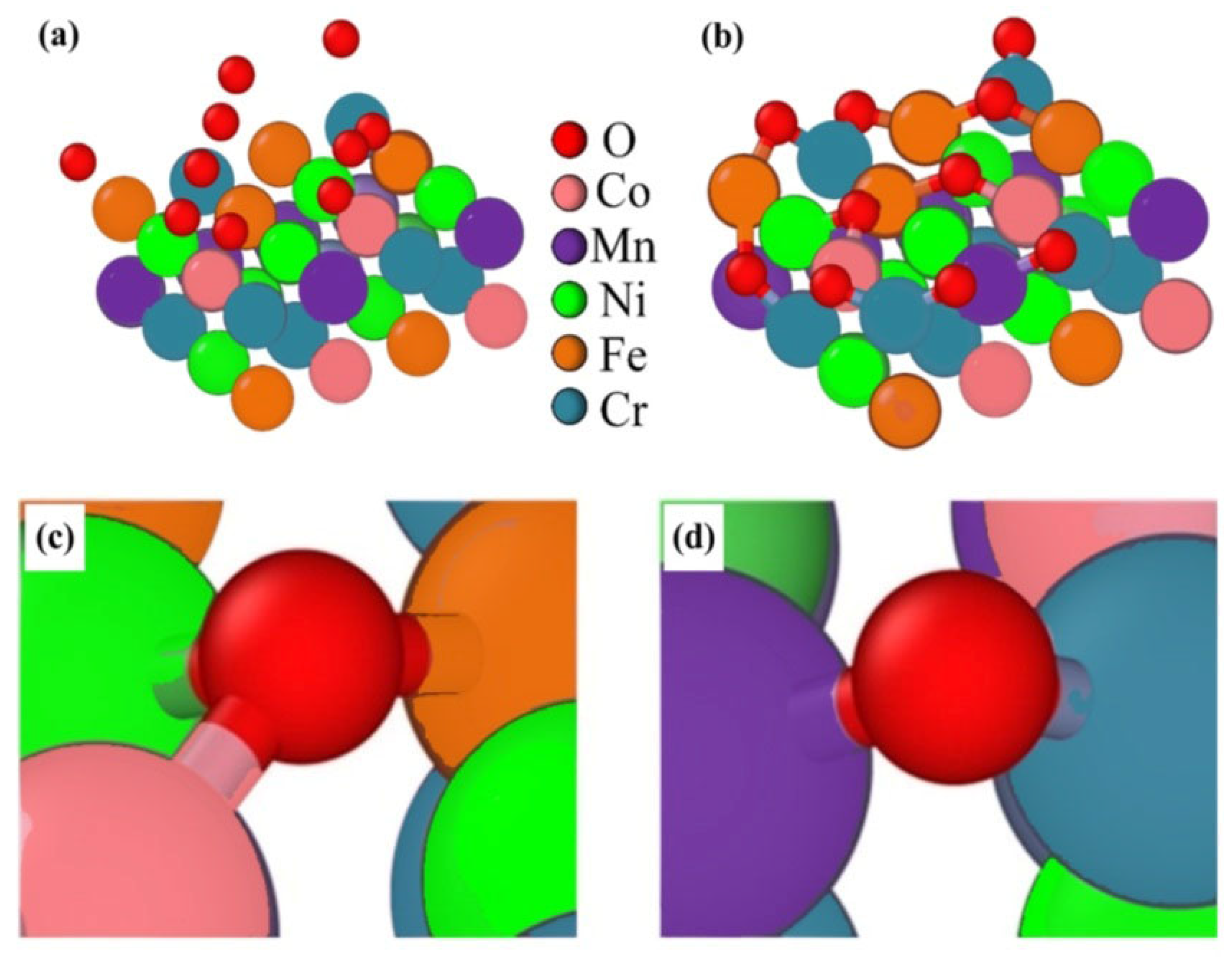
The interaction model between oxygen atoms and alloy atoms is shown in Figure 17. The model structure before the simulation is shown in Figure 17a. It consists of two parts: the upper part contains 10 O atoms, and the lower part comprises the CoCrNiFeMn matrix. The reliability of the simulation was maintained by fixing the positions of the atoms in the bottom layer. The model structure at the end of the simulation is shown in Figure 17b. Through the simulation process, it was found that chemical bonds formed between O element atoms and surface metal atoms. To further characterize the structural characteristics of the metal–O chemical bonds, two typical structural features were selected for analysis and named Case 1 and Case 2, as shown in Figure 17c,d.
Figure 17.
Model structure: (a) model structure at the beginning of the simulation; (b) model structure at the end of the simulation; (c) Case 1; (d) Case 2.
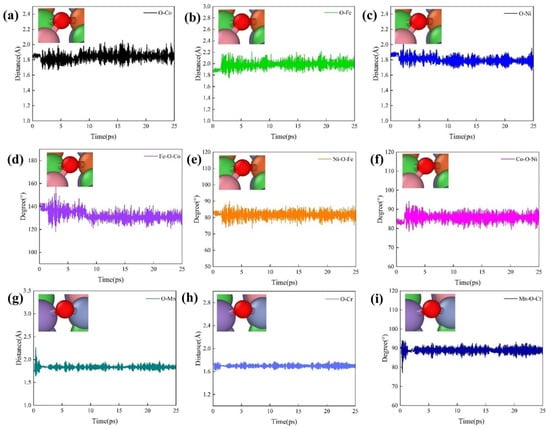
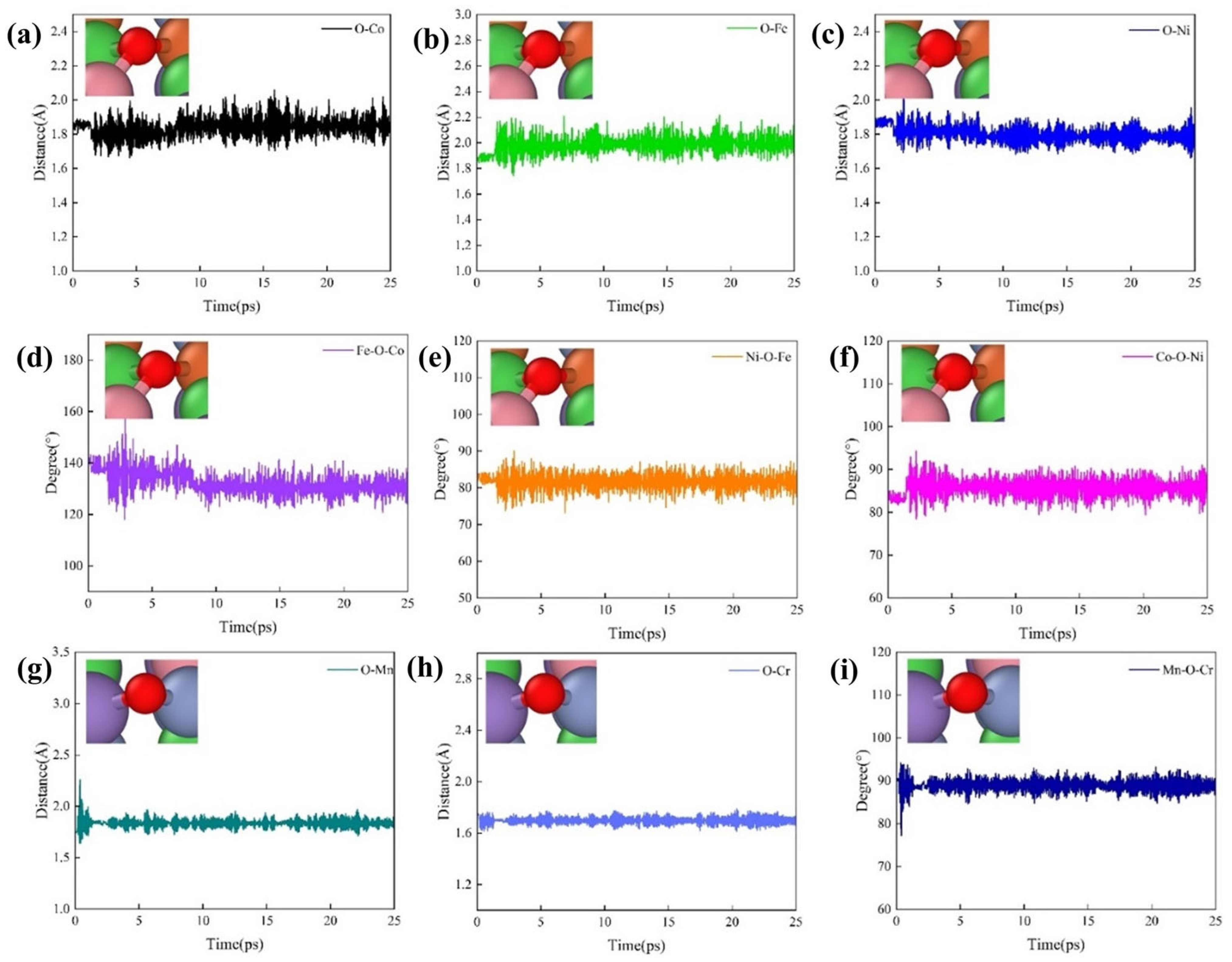
The curves of bond length and bond angle over time are shown in Figure 18. The analysis results of bond length in Case 1 indicate that O formed bonds with its nearby atoms, and no bond breakage occurred during the simulation time. The bond length variation curve over time in Case 1 reveals distinct bond lengths between oxygen and key metallic elements: Co–O measures approximately 1.78 Å, Ni–O is about 1.82 Å, and Fe–O is around 2.0 Å. In the first configuration, the four atoms form a triangular arrangement with vertex angles near 140°, 80°, and 90°, consistent with a tetrahedral geometry. In the second configuration, the O–Cr bond length is approximately 1.63 Å, while the O–Mn distance is about 1.9 Å, with the corresponding bond angle remaining close to 90°.
Figure 18.
Curves of bond length and bond angle over time: (a–f) Case 1; (g–i) Case 2.
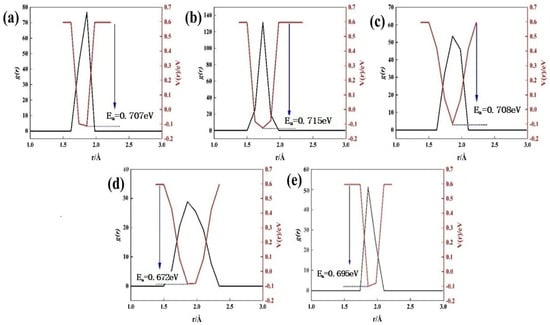
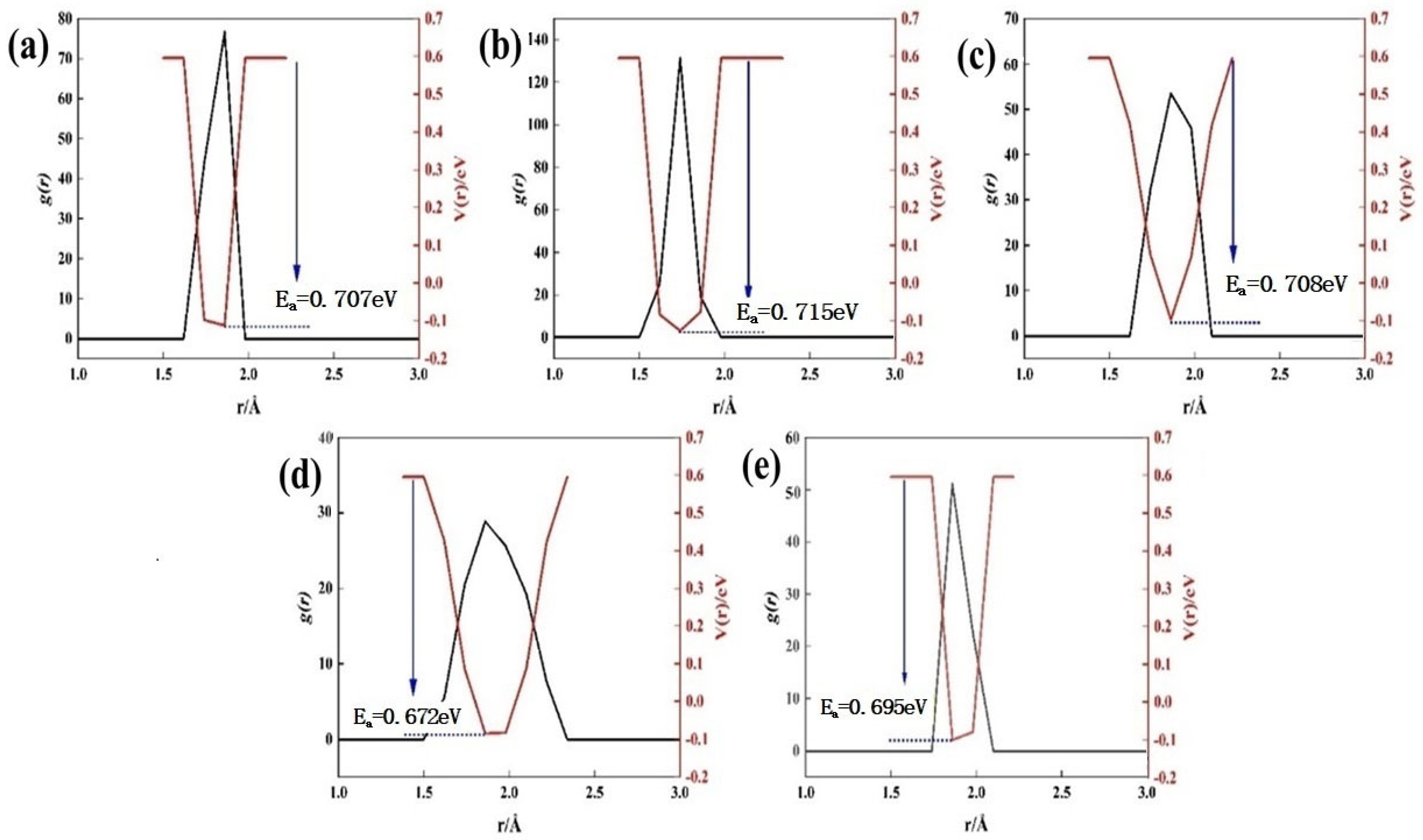
To further investigate the corrosion mechanism of O element on alloy interface elements, the radial distribution function (RDF) and the effective potential energy path between oxygen and the constituent metal elements were calculated. These results are presented in Figure 19. In the figure, the black curve corresponds to the radial distribution function. It can be observed that the radial distribution function exhibits a distinct alternating peak-valley pattern, with the valleys approaching zero, indicating that the probability of atomic nuclei appearing at the valley values is close to zero. This suggests that there is no dynamic structural fluctuation between each atomic pair, the local bonding environment is clear, and the chemical stability is high. In the figure, the red curve illustrates the average effective potential energy path between the alloying elements (Co, Cr, Ni, Fe, Mn) and oxygen. The corresponding energy barrier required to dissociate each atomic pair is annotated in blue as Ea. The calculation results of Ea indicate the difficulty of breaking each atomic pair in descending order as follows: Cr-OCr, Fe-OFe, Co-OCo, Mn-OMn, and Ni-ONi. The energy barrier of the Ni-ONi bond is lower than that required by other atomic pairs, indicating that the Ni-ONi bond is more prone to breakage compared to other atomic pairs.
Figure 19.
Radial distribution function and average effective potential energy path between alloy elements (a) Co-OCo; (b) Cr-OCr; (c) Fe-OFe; (d) Ni-ONi; (e) Mn-OMn.
5. Conclusions
To systematically study how manganese content influences microstructure and properties, a series of CoCrFeNiMnx high-entropy alloys (where x = 0.5, 1, 1.5, 2) were fabricated via arc melting. The corrosion resistance mechanism associated with varying Mn levels was elucidated through first-principles calculations. The corrosive interaction at the oxygen–alloy interface was further probed using molecular dynamics simulations, yielding the following key findings:
- (1)
- The increase in manganese content drives a phase transformation in CoCrFeNiMn alloys, shifting the crystal structure from a single FCC phase to a mixture of FCC and BCC phases. This structural evolution is largely attributed to the relatively large atomic radius of Mn, whose incorporation intensifies lattice distortion beyond the stability limit of the FCC phase.
- (2)
- Alloy hardness exhibits a non-monotonic dependence on Mn content, initially decreasing and then increasing. In CoCrFeNiMn0.5, solid-solution strengthening from Mn contributes to higher hardness. In Mn2, compositional fluctuations and local atomic ordering enhance resistance to dislocation motion, further improving mechanical performance.
- (3)
- Corrosion resistance improves progressively with Mn addition. The Mn2 alloy demonstrates the lowest corrosion current density and highest passivation film resistance, representing the optimal corrosion performance. This enhancement results from the formation of Mn3+ oxide, which synergizes with Fe2O3 to create a dense, chemically stable composite passive layer that effectively hinders the ingress of corrosive species.
- (4)
- As the Mn concentration rises, the Fermi level of the CoCrFeNiMn HEA shifts to lower energies, while the contraction of the conduction band range significantly inhibits electron migration activity. The O atom preferentially forms stable bonds with Cr and Fe, with the Cr-O bond having the highest fracture energy barrier and strong chemical stability. In contrast, the Ni-O bond has the lowest energy barrier and is prone to fracture and localized corrosion. The addition of Mn reduces the kinetic energy of conduction band electrons, thereby suppressing the driving force of anodic reactions.
Author Contributions
Conceptualization, Z.Z., S.Y. and J.H.; Methodology, S.Y., J.H., T.Z. and C.D.; Software, J.H., T.Z., C.D., A.B. and J.X.; Validation, S.Y., J.H., T.Z., C.D., A.B., J.X., X.Y. and Y.C.; Formal analysis, Z.Z., S.Y., J.H., T.Z., C.D., A.B., J.X., X.Y. and Y.C.; Investigation, Z.Z., S.Y., J.H., T.Z., C.D., A.B., J.X., X.Y. and Y.C.; Resources, J.H. and T.Z.; Data curation, Z.Z., S.Y., J.H., T.Z., C.D., A.B., J.X., X.Y. and Y.C.; Writing—original draft, S.Y. and T.Z.; Writing—review and editing, Z.Z., S.Y., J.H., T.Z., C.D., A.B., J.X., X.Y. and Y.C.; Visualization, A.B., J.X., X.Y. and Y.C.; Supervision, A.B., J.X., X.Y. and Y.C.; Project administration, J.H.; Funding acquisition, J.H. All authors have read and agreed to the published version of the manuscript.
Funding
This work was supported by the Major Science and Technological Project of Gansu Province (No. 22ZD6GA008) and the National Natural Science Foundation of China (52575392).
Data Availability Statement
The original contributions presented in this study are included in the article. Further inquiries can be directed to the corresponding authors.
Conflicts of Interest
Author Tianxiang Zhao was employed by the company Harbin Turbine. The remaining authors declare that the research was conducted in the absence of any commercial or financial relationships that could be construed as a potential conflict of interest.
References
- Zhou, J. Digitalization and intelligentization of manufacturing industry. Adv. Manuf. 2013, 1, 1–7. [Google Scholar] [CrossRef] [Scilit]
- Xiong, W.; Guo, A.X.Y.; Zhan, S. Refractory high-entropy alloys: A focused review of preparation methods and properties. J. Mater. Sci. Technol. 2023, 142, 196–215. [Google Scholar] [CrossRef] [Scilit]
- Yi, H.; Lang, T.; Si, J.; Chi, Y.; Cao, H.; Huang, Y. High-performance manufacturing of metal components via multi-field assisted wire-arc directed energy deposition. J. Manuf. Process. 2025, 143, 234–276. [Google Scholar] [CrossRef] [Scilit]
- Li, A.; Zhang, X. Thermodynamic analysis of the simple microstructure of AlCrFeNiCu high-entropy alloy with multi-principal elements. Acta Metall. Sin. 2009, 22, 219–224. [Google Scholar] [CrossRef] [Scilit]
- Kottke, J.; Brocq, M.L.; Fareed, A.; Wilde, G. Tracer diffusion in the Ni–CrFemn system: Transition from a dilute solid solution to a high entropy alloy. Scr. Mater. 2018, 159, 94–98. [Google Scholar] [CrossRef] [Scilit]
- Wang, X.; Fan, Y.; Gao, B.; Dou, Y.; Chang, A.; Kong, W. Influence of the sluggish diffusion effect on stability by analyzing the Cr diffusion behavior in (CoCrFeMnNi)3O4 films. J. Am. Ceram. Soc. 2025, 108, e20384. [Google Scholar] [CrossRef] [Scilit]
- Wan, Q.; Zhang, F.; Xiong, Y. Facile synthesis, characterization, and mechanical properties of spinel-structured high-entropy oxides: Lattice distortion and sluggish diffusion effects induced by aluminum cation. J. Eur. Ceram. Soc. 2024, 44, 6629–6640. [Google Scholar] [CrossRef] [Scilit]
- Senkov, O.N.; Miracle, D.B.; Chaput, K.J. Development and exploration of refractory high entropy alloys—A review. J. Mater. Res. 2018, 33, 3092–3128. [Google Scholar] [CrossRef] [Scilit]
- Bridges, D.; Fieser, D.; Santiago, J.J.; Hu, A. Novel frontiers in high-entropy alloys. Metals 2023, 13, 1193. [Google Scholar] [CrossRef] [Scilit]
- Gao, J.; Jin, Y.; Fan, Y. Fabricating antibacterial CoCrCuFeNi high-entropy alloy via selective laser melting and in-situ alloying. J. Mater. Sci. Technol. 2022, 102, 159–165. [Google Scholar] [CrossRef] [Scilit]
- Ocaño, P.S.; Fries, S.G.; Lopez-Galilea, I. The AlMo0.5NbTa0.5TiZr refractory high entropy superalloy: Experimental findings and comparison with calculations using the CALPHAD method. Mater. Des. 2022, 217, 110593. [Google Scholar] [CrossRef] [Scilit]
- Tian, C.; Ouyang, D.; Wang, P.; Zhang, L.; Cai, C.; Zhou, K.; Shi, Y. Strength-ductility synergy of an additively manufactured metastable high-entropy alloy achieved by transformation-induced plasticity strengthening. Int. J. Plast. 2024, 172, 103823. [Google Scholar]
- Zhang, M.; Tian, Y.; Zheng, X. Research progress on multi-component alloying and heat treatment of high strength and toughness Al–Si–Cu–Mg cast aluminum alloys. Materials 2023, 16, 1065. [Google Scholar] [CrossRef] [Scilit] [PubMed]
- Tong, C.J.; Chen, M.R.; Yeh, J.W.; Lin, S.J.; Chen, S.K.; Shun, T.T. Mechanical performance of the AlxCoCrCuFeNi high-entropy alloy system with multiprincipal elements. Metall. Mater. Trans. A 2005, 36, 1263–1271. [Google Scholar]
- Chen, S.T.; Tang, W.Y.; Kuo, Y.F.; Chen, S.Y.; Tsau, C.H.; Shun, T.T. Microstructure and properties of age-hardenable AlxCrFe1.5MnNi0.5 alloys. Mater. Sci. Eng. A 2010, 527, 5818–5825. [Google Scholar] [CrossRef] [Scilit]
- Liu, Q.; Wang, G.; Sui, X.; Liu, Y.; Yang, J. Microstructure and mechanical properties of ultra-fine grained MoNbTaTiV refractory high-entropy alloy fabricated by spark plasma sintering. J. Mater. Sci. Technol. 2019, 35, 2600–2607. [Google Scholar]
- Ma, S.G.; Jiao, Z.M.; Qiao, J.W.; Yang, H.J.; Zhang, Y.; Wang, Z.H. Strain rate effects on the dynamic mechanical properties of the AlCrCuFeNi2 high-entropy alloy. Mater. Sci. Eng. A 2016, 649, 35–38. [Google Scholar] [CrossRef] [Scilit]
- Dong, Y.; Duan, S.; Huang, X.; Li, C.; Zhang, Z. Excellent strength-ductility synergy in as-cast Al0.6CoCrFeNi2Mo0.08V0.04 high-entropy alloy at room and cryogenic temperatures. Mater. Lett. 2021, 294, 129778. [Google Scholar] [CrossRef] [Scilit]
- Wilson, S.R.; Gunawardana, K.; Mendelev, M.I. Solid-liquid interface free energies of pure bcc metals and B2 phases. J. Chem. Phys. 2015, 142, 134705. [Google Scholar] [CrossRef] [Scilit]
- Chen, M.R.; Lin, S.J.; Yeh, J.W.; Chuang, M.H.; Chen, S.K.; Huang, Y.S. Effect of vanadium addition on the microstructure, hardness, and wear resistance of Al0.5CoCrCuFeNi high-entropy alloy. Metall. Mater. Trans. A 2006, 37, 1363–1369. [Google Scholar] [CrossRef] [Scilit]
- Senkov, O.N.; Senkova, S.V.; Woodward, C. Effect of aluminum on the microstructure and properties of two refractory high-entropy alloys. Acta Mater. 2014, 68, 214–228. [Google Scholar] [CrossRef] [Scilit]
- Senkov, O.N.; Wilks, G.B.; Scott, J.M.; Miracle, D.B. Mechanical properties of Nb25Mo25Ta25W25 and V20Nb20Mo20Ta20W20 refractory high entropy alloys. Intermetallics 2011, 19, 698–706. [Google Scholar] [CrossRef] [Scilit]
- Zhang, H.; Zhao, Y.; Cai, J.; Ji, S.; Li, D. High-strength NbMoTaX refractory high-entropy alloy with low stacking fault energy eutectic phase via laser additive manufacturing. Mater. Des. 2021, 201, 109462. [Google Scholar] [CrossRef] [Scilit]
- Hollingsworth, S.A.; Dror, R.O. Molecular dynamics simulation for all. Neuron 2018, 99, 1129–1143. [Google Scholar] [CrossRef] [Scilit] [PubMed]
- Allen, M.P. Introduction to molecular dynamics simulation. Comput. Soft Matter Synth. Polym. Proteins 2004, 23, 1–28. [Google Scholar]
- Hansson, T.; Oostenbrink, C.; van Gunsteren, W.F. Molecular dynamics simulations. Curr. Opin. Struct. Biol. 2002, 12, 190–196. [Google Scholar] [CrossRef] [Scilit] [PubMed]
- Segall, M.D.; Lindan, P.J.D.; Probert, M.J.; Pickard, C.J.; Hasnip, P.J.; Clark, S.J. First-principles simulation: Ideas, illustrations and the CASTEP code. J. Phys. Condens. Matter 2002, 14, 2717. [Google Scholar] [CrossRef] [Scilit]
- Freysoldt, C.; Grabowski, B.; Hickel, T.; Neugebauer, J.; Walle, C.G.V.D. First-principles calculations for point defects in solids. Rev. Mod. Phys. 2014, 86, 253–305. [Google Scholar] [CrossRef] [Scilit]
- Giustino, F. Electron-phonon interactions from first principles. Rev. Mod. Phys. 2017, 89, 015003. [Google Scholar] [CrossRef] [Scilit]
- Sorkin, V.; Yu, Z.G.; Chen, S.; Tan, T.L.; Aitken, Z.H.; Zhang, Y.W. A first-principles-based high fidelity, high throughput approach for the design of high entropy alloys. Sci. Rep. 2022, 12, 11894. [Google Scholar] [CrossRef] [Scilit]
- Zhou, R.; Zhang, R.; Gao, T.; Chen, C. Interfacial corrosion behavior between O atoms and alloy elements at iron-liquid LBE interface by first-principles molecular dynamics. Solid State Ion. 2023, 390, 116112. [Google Scholar] [CrossRef] [Scilit]
- Zhao, Q.; Pan, Z.; Wang, X. Corrosion and passive behavior of AlxCrFeNi3−x (x = 0.6, 0.8, 1.0) eutectic high entropy alloys in chloride environment. Corros. Sci. 2022, 208, 110666. [Google Scholar] [CrossRef] [Scilit]
- Bi, D.; Chang, Y.; Luo, H.; Pan, Z.; Zhao, Q.; Cheng, H. Corrosion behavior and passive film characteristics of AlNbTiZrSix high-entropy alloys in simulated seawater environment. Corros. Sci. 2023, 224, 111530. [Google Scholar] [CrossRef] [Scilit]
- Wei, X.; Zhang, L.; Zhang, F.; Zhang, C.; Jia, Q.; Sun, K. Effect of carbon addition on the microstructure and corrosion resistance of the CoCrFeNi high-entropy alloy. Corros. Sci. 2024, 231, 15. [Google Scholar] [CrossRef] [Scilit]
- Goedecker, S.; Teter, M.; Hutter, J. Separable dual-space Gaussian pseudopotentials. Phys. Rev. B 1996, 54, 1703. [Google Scholar] [CrossRef] [Scilit]
- Hartwigsen, C.; Gœdecker, S.; Hutter, J. Relativistic separable dual-space Gaussian pseudopotentials from H to Rn. Phys. Rev. B 1998, 58, 3641. [Google Scholar] [CrossRef] [Scilit]
- VandeVondele, J.; Hutter, J. Gaussian basis sets for accurate calculations on molecular systems in gas and condensed phases. J. Chem. Phys. 2007, 127, 114105. [Google Scholar] [CrossRef] [Scilit]
- Perdew, J.P.; Burke, K.; Ernzerhof, M. Generalized gradient approximation made simple. Phys. Rev. Lett. 1996, 77, 3865. [Google Scholar] [CrossRef] [Scilit]
- Wang, Y.G.; Cantu, D.C.; Lee, M.S.; Li, J.; Glezakou, V.A.; Rousseau, R. CO oxidation on Au/TiO2: Condition-dependent active sites and mechanistic pathways. J. Am. Chem. Soc. 2016, 138, 10467–10476. [Google Scholar] [CrossRef] [Scilit]
- Schmuki, P. From Bacon to barriers: A review on the passivity of metals and alloys. J. Solid State Electrochem. 2002, 6, 145–164. [Google Scholar] [CrossRef] [Scilit]

Disclaimer/Publisher’s Note: The statements, opinions and data contained in all publications are solely those of the individual author(s) and contributor(s) and not of MDPI and/or the editor(s). MDPI and/or the editor(s) disclaim responsibility for any injury to people or property resulting from any ideas, methods, instructions or products referred to in the content. |
© 2026 by the authors. Licensee MDPI, Basel, Switzerland. This article is an open access article distributed under the terms and conditions of the Creative Commons Attribution (CC BY) license.