Article

Production and Characterization of Al Alloys Obtained Through Molten Metal Deposition

1
Department of Industrial Engineering, University of Trento, 38123 Trento, Italy
2
ValCUN BV, 9032 Ghent, Belgium
3
European Space Agency European Space Research and Technology Centre (ESTEC), Materials & Processes Section TEC-MSP, 2200 AG Noordwijk, The Netherlands
*
Author to whom correspondence should be addressed.
Metals 2026, 16(2), 238; https://doi.org/10.3390/met16020238
Submission received: 15 January 2026 / Revised: 13 February 2026 / Accepted: 17 February 2026 / Published: 20 February 2026
(This article belongs to the Special Issue Processing, Properties, Applications and Recycling of Light Alloys)

Abstract

Two aluminum alloys (4043 and 6061) were fabricated using the innovative Molten Metal Deposition (MMD) technique. Three types of samples were produced by varying selected deposition parameters. The quality of the resulting components was assessed in terms of defects, density, and microstructure. In the 4043 alloy, the microstructure consists of α-Al dendrites surrounded by an Al–Si eutectic phase. All 4043 samples exhibited this microstructure, regardless of the deposition parameters. The mechanical response was preliminarily evaluated through HV0.5 microhardness measurements. The indentations produced under a 500 g load enabled the assessment of the contribution of both the α-Al matrix and the surrounding Al–Si eutectic. As for the 6061 alloy, its microstructure is composed of an α-Al matrix containing dispersed Al–Si–Fe intermetallics. Some oxide particles were observed at the grain boundaries, indicating the need for processing under a controlled atmosphere. In this study, no inert shielding atmosphere was used for the fabrication of the samples. Thanks to its high processing speed, sustainability, and ease of deployment, MMD can be regarded as a viable alternative to more conventional additive manufacturing technologies.

1. Introduction

Additive Manufacturing (AM), recently introduced and defined by ASTM as the process of joining materials layer by layer from a 3D model, aims to overcome the drawbacks of traditional subtractive manufacturing, which produces waste, limits final component geometries, and involves high costs and lead times, especially for small batch or on-demand production. Various AM techniques are used to fabricate components from aluminum alloys due to their ability to produce complex geometries with high precision. However, aluminum alloys present challenges because of their intrinsic properties such as high reflectivity, reactivity, thermal conductivity, and oxidation tendency, which often result in porosity, cracking, and lack of fusion [1,2,3,4,5]. The most common AM technique is Laser Powder Bed Fusion (LPBF), which melts metal powder layer by layer using a laser to produce components up to half a meter in size with precision around a tenth of a millimeter [1,6,7]. Directed Energy Deposition (DED), which uses an electric arc or laser to melt filament material, offers higher deposition rates and the ability to print larger parts, though with lower accuracy compared to LPBF [7,8]. Wire Arc Additive Manufacturing (WAAM), a DED variant, utilizes electric arc welding principles to melt wire feedstock, enabling the production of large components (typically >1000 mm) at deposition rates of 50–130 g/min, with cooling rates ranging from 50 to 200 K/s, compared to 104–105 K/s for LPBF. Both LPBF and DED share the drawback of high heat input, leading to rapid cooling, high thermal gradients, residual stresses, distortions, alloying elements’ evaporation, cracks, and porosity—effects intensified in high-strength aluminum alloys like 6061 with moderate silicon content [9]. In fact, aluminum alloys that can be successfully processed by laser-based AM techniques are predominantly those with compositions close to the Al–Si eutectic system, including AA4043 [10], AlSi7Mg0.3 (A356) [11], and AlSi10Mg [12,13]. These alloys exhibit relatively good processability due to their narrow solidification ranges, enhanced castability, and reduced susceptibility to hot tearing associated with lower solidification shrinkage. However, despite their favorable printability, Al–Si near-eutectic alloys represent only a limited subset of the aluminum alloys commonly used in structural and industrial applications. In contrast, alloy families such as 2xxx, 6xxx, and 7xxx, widely employed for their superior mechanical performance, generally show poor printability when processed by laser powder bed fusion (LPBF) within practical processing windows [14,15,16,17]. Among these, commercial aluminum alloy AA6061 is widely regarded as particularly challenging for LPBF due to its strong tendency to form solidification cracks and excessive porosity during fabrication. The limited printability of AA6061 is commonly attributed to intrinsic material characteristics, including its relatively wide solidification range (approximately 140 °C) [18], poor melt flowability, high thermal conductivity, high coefficient of thermal expansion, and pronounced susceptibility to hot cracking [19]. Moreover, thermodynamically stable aluminum oxide films formed on the powder particles surface may further impair the process stability and part quality. The authors of [20,21] also reported a significant crack susceptibility in LPBF-processed AA6061, highlighting the difficulty of producing dense and defect-free components using this alloy. Microstructural studies on LPBF-fabricated AA6061 have revealed a high density of defects, particularly porosity, which can only be mitigated through careful optimization of processing parameters. Several investigations have demonstrated that grain refinement plays a key role in improving the mechanical response of additively manufactured AA6061 while significantly reducing its tendency toward hot cracking. In particular, studies by Zheng et al. [22] and Wenze Li et al. [23] showed that suppressing epitaxial columnar grain growth in favor of a more equiaxed microstructure leads to enhanced mechanical properties and reduced hot cracking susceptibility. Such microstructural refinement has been achieved through the addition of grain-refining agents, such as TiB2 and TiC, which promote heterogeneous nucleation during solidification. In addition to ceramic grain refiners, alloy modification has also been explored as an effective strategy to improve the printability of AA6061. Mehta et al. [24] reported that the addition of 1 wt.% Zr to AA6061 significantly enhances its buildability during LPBF processing. The improved printability was attributed to pronounced grain refinement, which reduces solidification cracking by hindering the epitaxial growth of long columnar grains typically observed in unmodified AA6061. However, the use of such grain refiners introduces additional complexity and cost associated with feedstock preparation and process management, which is preferably avoided in the deposition of this alloy.
To address these issues, new AM processes and aluminum alloys tailored for AM have been developed to improve the printability and mechanical performance [1,25]. Alloy design aims to reduce porosity and cracking, while mechanical properties can be enhanced via reinforcement mechanisms such as grain boundary pinning, work hardening, and precipitation hardening. Alternatively, novel AM technologies like Friction Stir Welding, which operates in the solid state without direct energy sources like lasers, have successfully produced high-strength aluminum components with desirable properties [26,27,28,29,30].
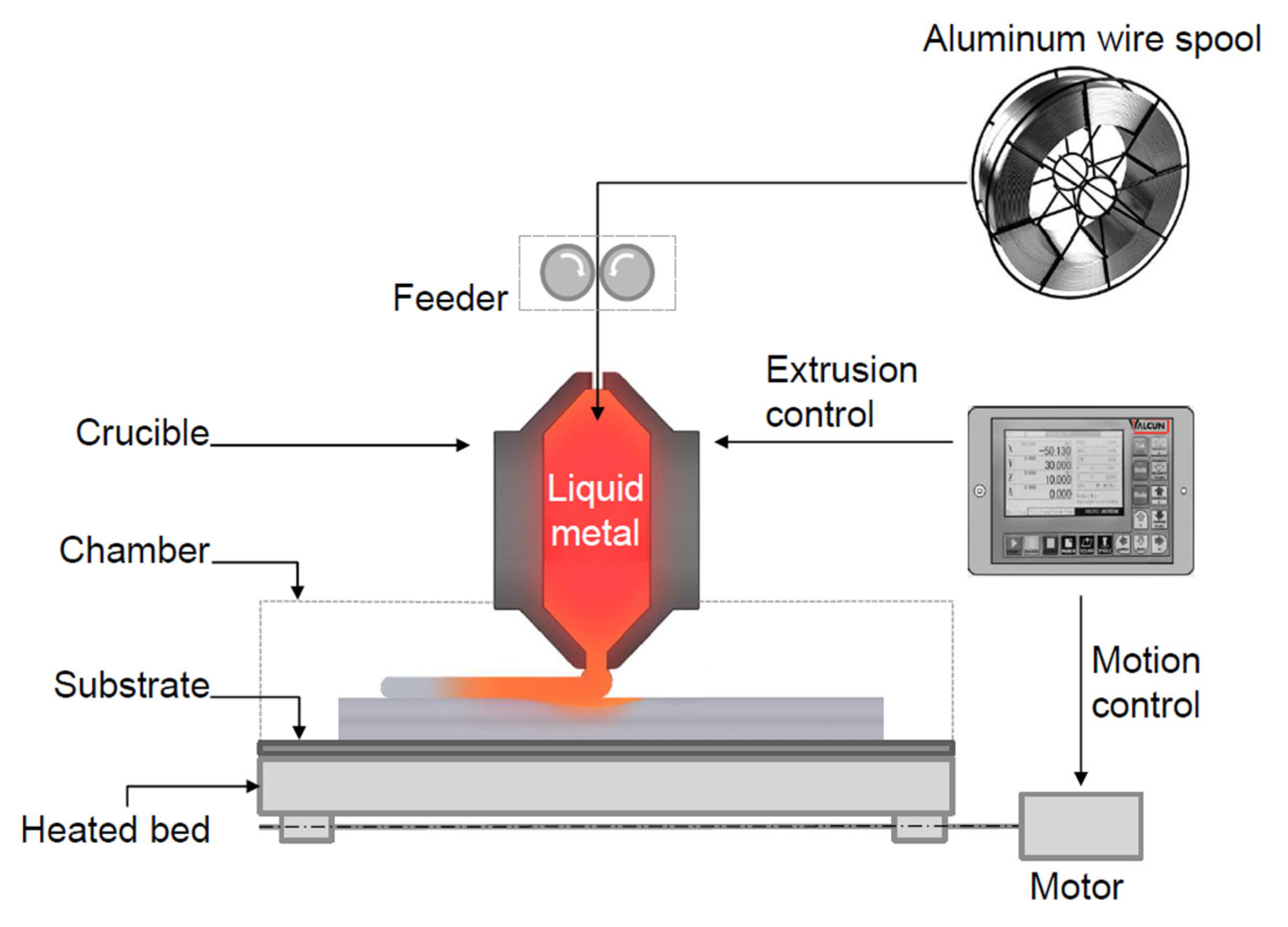
Molten Metal Deposition (MMD) (Figure 1), an innovative process developed by ValCUN, with a similar operation method as Fused Filament Fabrication (FFF) for polymers, overcomes challenges related to aluminum’s high reactivity, combustibility, health risks from inhalation, and difficulties in sintering and binder removal. MMD prints aluminum alloys supplied as filament, melted in a small crucible in the printhead at temperatures between 700 °C and 950 °C, and deposited through a nozzle on a heated bed between 400 °C and 600 °C. Local argon shielding gas can be applied up to 5 L/min if needed to prevent oxidation. The 6061 alloy is processed within these temperature ranges to control the strain rate sensitivity [31,32]. After printing, components can be easily manually removed from the substrate, facilitating production. One of the advantages of this AM technique over others is the ability to regulate both the nozzle and substrate temperatures, allowing better control over the thermal behavior of the component during printing and the thermal gradients it experiences [3,33]. The cooling rates typical of this process are around 50 K/s or often even lower. For comparison, temperatures reached during LPBF can exceed 1000 °C, with cooling rates up to 106 K/s [34]. It is well known that higher cooling rates lead to finer grain sizes, which improve strength but increase part deformation (and potential distortion) during manufacturing. However, rapid expansions and contractions also induce residual stresses (cold cracks) and solidification cracks (hot cracks), defects also observed in DED processes [1,23]. Additionally, the high temperatures in LPBF may promote pore formation due to absorption/diffusion of gases and evaporation of alloying elements with lower boiling points than pure aluminum [34,35], such as magnesium, which boils at 1091 °C compared to aluminum’s 2470 °C.
This technology offers several other advantages compared to other AM processes, including the following:
  • Flexible and rapid production for on-demand manufacturing, reducing lead times and costs while allowing parameter adjustment to meet specific customer needs, with a maximum production volume of 0.82 dm3/h, compared to 0.1–0.32 dm3/h liquid metal jetting for similar resolution. Maximum production rates for single laser LPBF are in the range of 0.02–0.05, whereas WAAM and DED are in the order of 0.5–4 dm3/h for lower resolution.
  • Sustainability and reduced environmental impact due to high energy efficiency, elimination of toxic substances, and the ability to use fully recyclable materials.
  • Economic competitiveness, achieving cost reductions of 75–90% thanks to process efficiency, the widespread availability of filaments versus expensive powders (often requiring specific formulations), and low capital and operational costs.
  • With proper process specifications for layer dimensions—height, path width, and production volume—printing is more controlled and uniform, minimizing post-processing of the “rough” parts [33]. This ensures a buy-to-fly ratio above 70%, meaning the printed product is essentially finished after printing.
  • Controlled solidification enables manufacturing of complex geometries without the need for supports, allowing maximum overhang angles of 75° and bridges up to 25 mm [36].
  • Reduced energy consumption, as the material is molten in an insulated printhead rather than on the part itself. No active melt pool is formed on the part to overcome latent heat to melt the fed material, as is the case for WAAM and DED processes. Given the high latent heat and the high thermal conductivity, resp 380–470 kJ/kg and 140–250 W/mK depending on the alloy, less energy is required compared to other thermal metal AM processes from WAAM to LPBF [37,38]. This is the main driver for the lower cooling rates and potential to process the unmodified higher strength alloys.
In light of these considerations, the present study explored the feasibility of MMD for the manufacturing of two aluminum alloys, 4043 and 6061, by analyzing the microstructure, microhardness, and porosity. Alloy 4043 was selected as an initial experimental reference due to its high castability and low tendency to form cracks during AM processes [10,24,39]. Alloy 6061, on the other hand, was chosen for its higher industrial relevance, offering superior mechanical properties, corrosion resistance, weldability, and machinability. While AA4043 is easier to process via AM, AA6061 poses significant challenges due to its poor printability, making it a critical test case in the context of additive manufacturing.

2. Materials and Methods

Two Al alloys were used for the present investigation, 4043 and 6061, whose chemical compositions are reported in Table 1 and Table 2.
In MMD, the print quality is significantly governed by five different process parameters (Table 2): layer height, track width, nozzle temperature, substrate temperature, and print speed. The layer height and track width are usually kept constant for a geometry, and the other parameters are varied to find the optimum process settings. The nozzle temperature, substrate temperature, and print speed together determine the thermal energy input at the layers. Lower values for these parameters result in low energy input, which could prevent the fusion of layers with each other. High energy input on the other hand could lead to very well-fused layers but also result in an irregular surface quality. An optimum energy input indicates that the layers are well fused but also have a repeatable surface quality. These parameters were already optimized, and most samples in this research were printed with the optimized settings. Only one sample was printed with high energy input just for comparison. Overall, six different batches were produced and analyzed with a minimum of three repetitions in each batch. The batch names are discussed in the following paragraph, and the process parameters of all the batches are shown in Table 2 The layer height and track width are fixed at 1 mm and 1.6 mm, respectively, for all the samples.
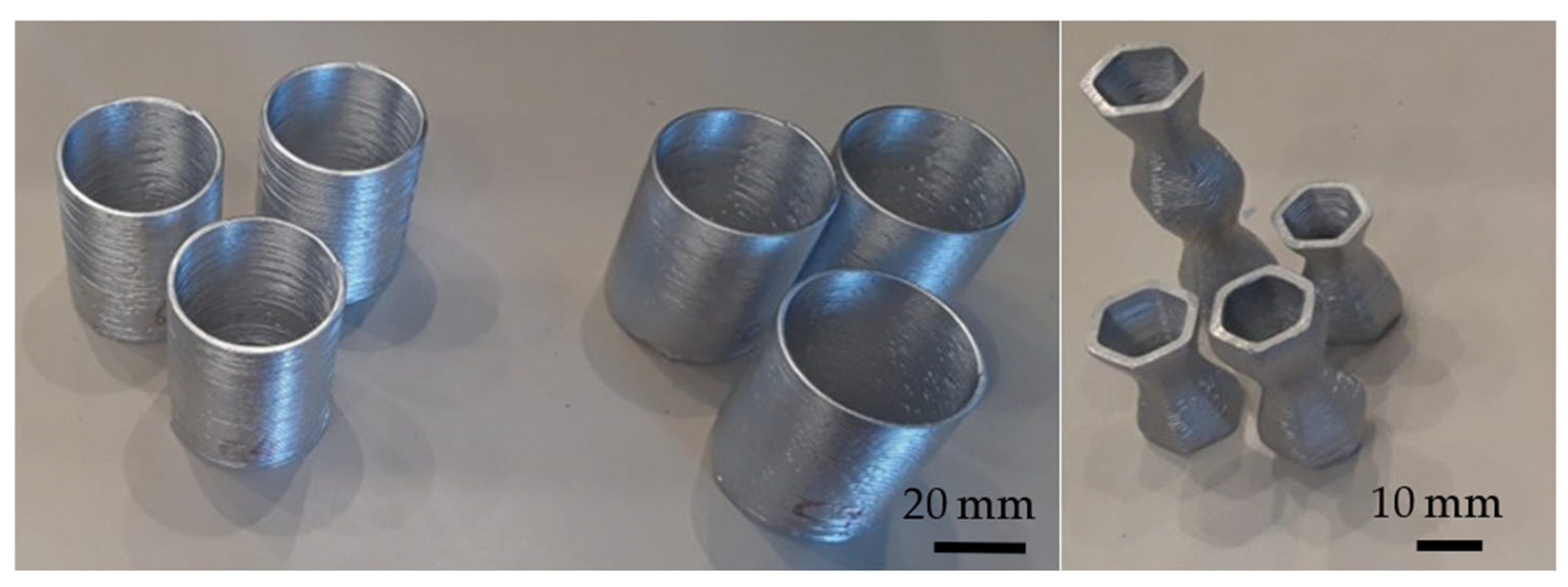
Samples of 4043 alloy were manufactured using three different deposition strategies. They are shown in Figure 2. A first batch of samples is constituted by optimized cylinders produced through deposition using a translation on three-axes (x, y, z) gantry system with a fixed nozzle orientation, further referred to as XYZ-4043 samples. A second batch used this gantry system, where the nozzle orientation followed the toolpath, further referred to as XYZC-4043 samples, and a third batch was produced using a higher deposition temperature and energy to create smoother interlayer fusion, further referred to as XYZ/H-4043 samples. This movement allows the head to tilt or rotate to better adapt to the shape of the part or the toolpath, thereby improving print quality and reducing potential defects.
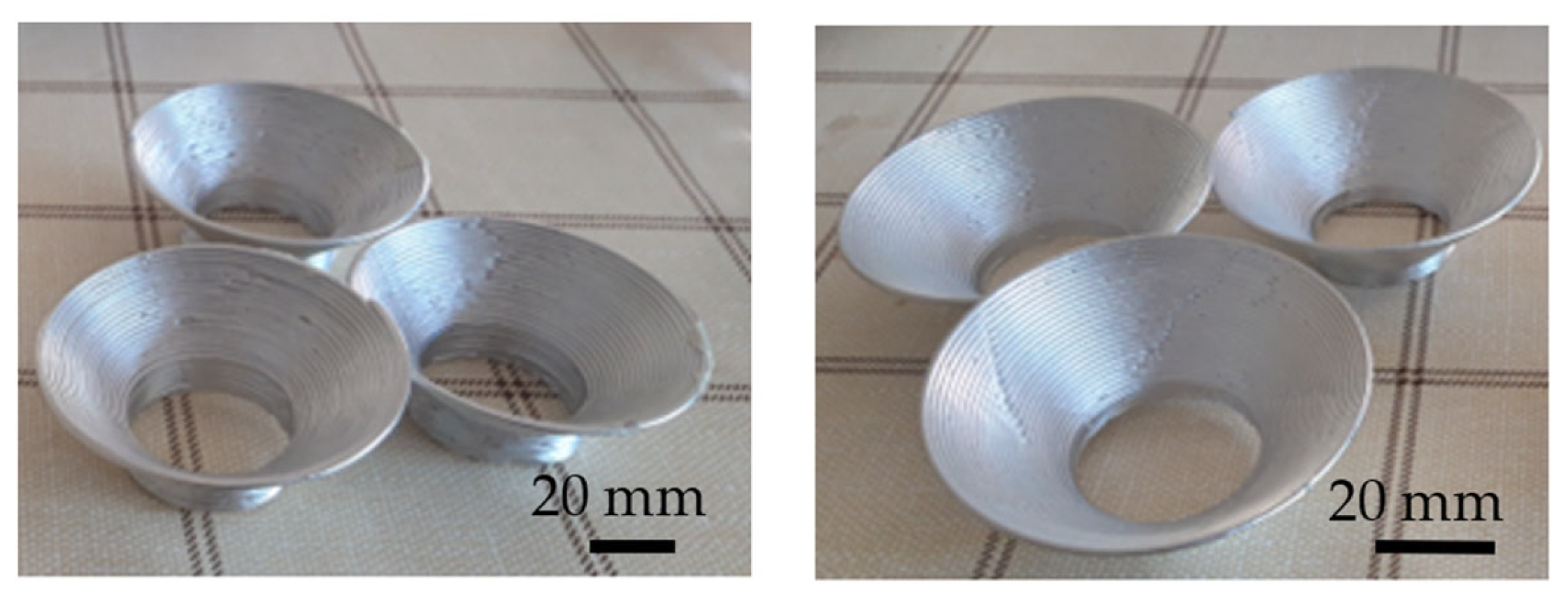
Additional samples with a wall inclined at 45° (Figure 3) were provided, manufactured using the same process parameters as the initial ones, one group with only xyz translations and another one with additional nozzle movement. They are indicated as XYZ/45-4043 and XYZC/45-4043.
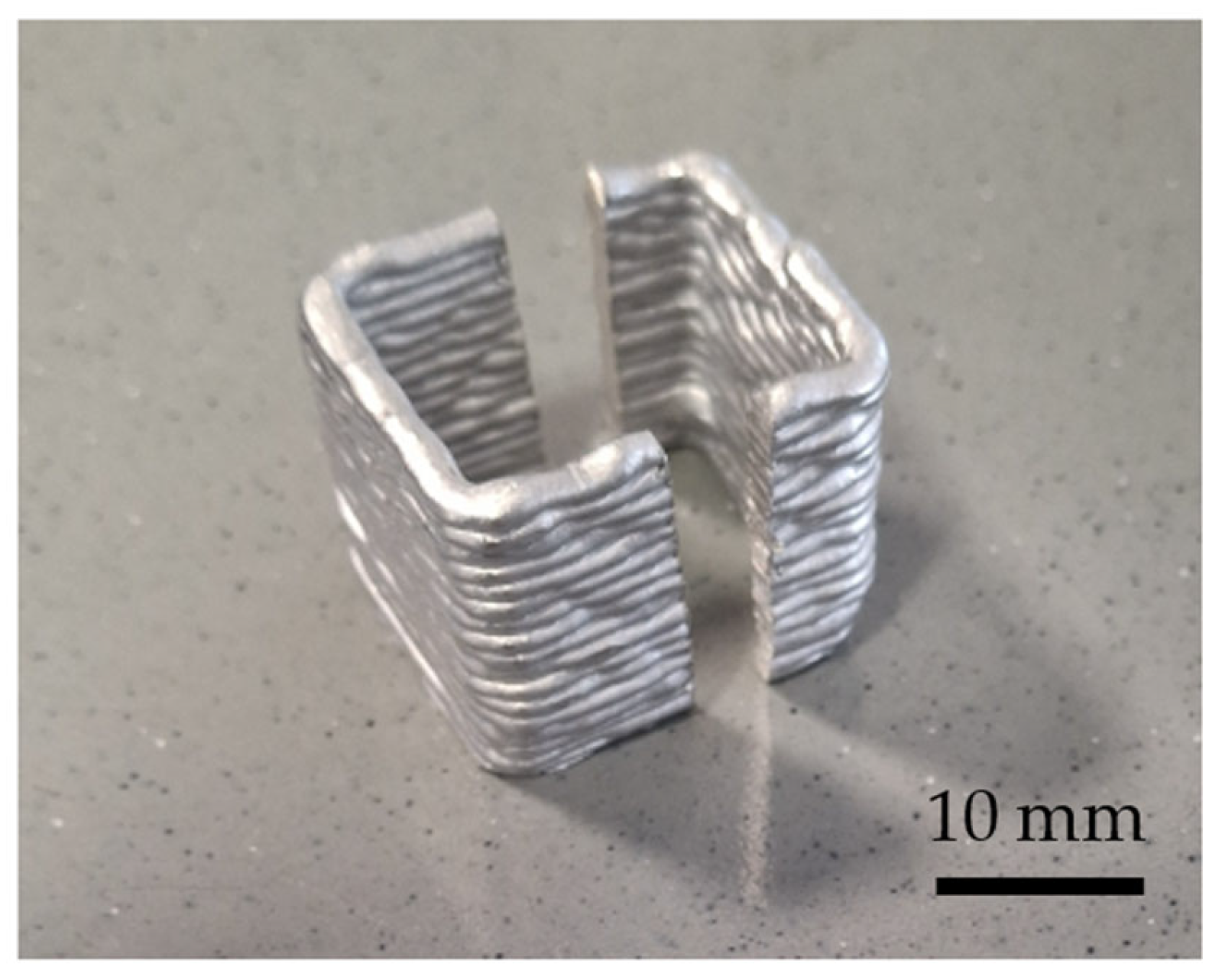
An example of the specimens prepared using the AA6061 wire is shown in Figure 4. The samples provided are tubular with a square cross section, having a side and height of approximately 20 mm and a thickness of about 2 mm.
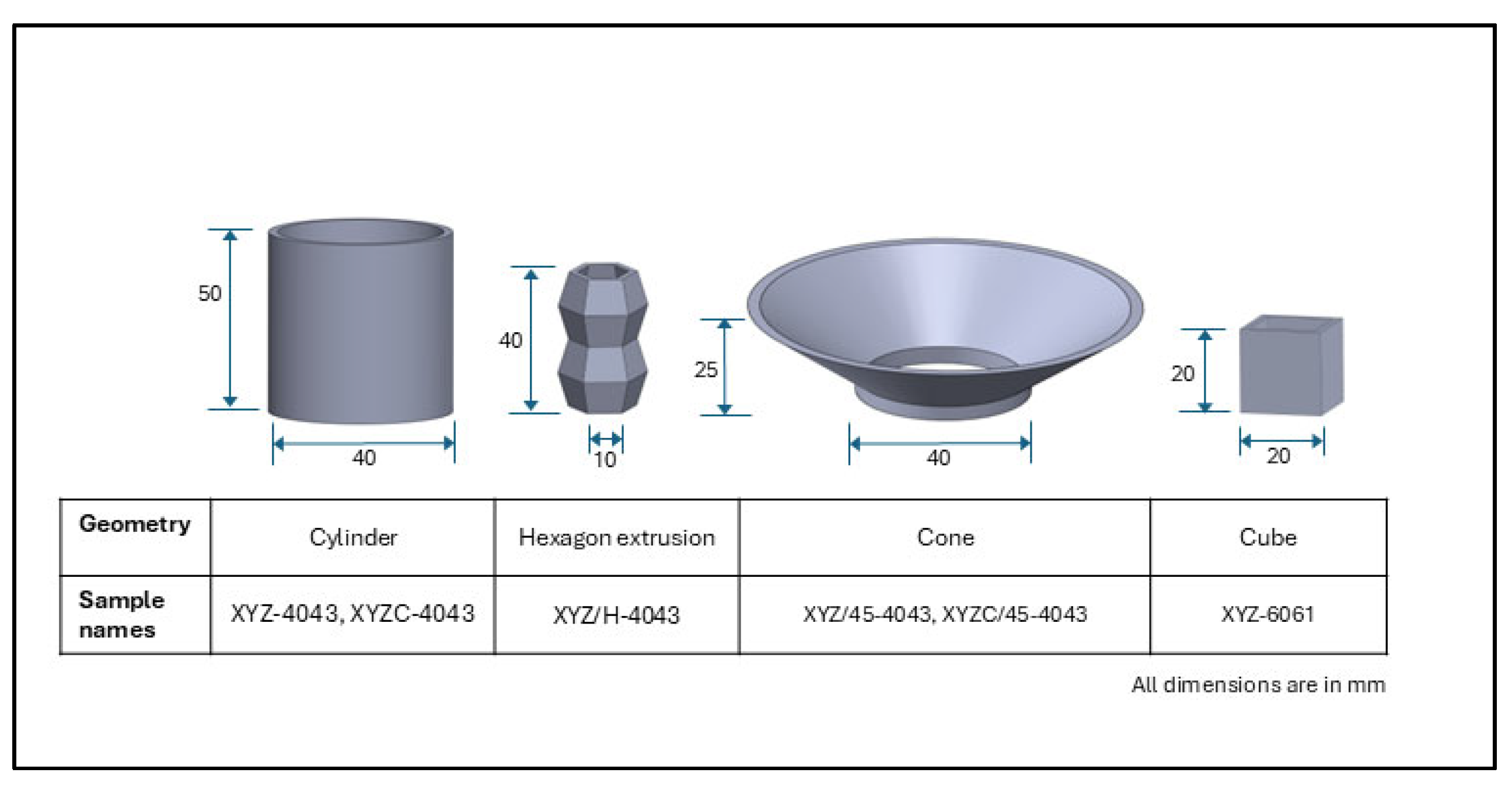
Samples dimensions are summarized in the drawings of Figure 5.
All samples were cut longitudinally along the building direction, cold mounted in resin, and grinded and polished for microstructural analysis with a light optical microscope (Zeiss Axiophot, Oberkochen, Germany) and scanning electron microscope (SEM JEOL JSM-IT300, JEOL, Tokyo, Japan). Microhardness was measured using a microhardness tester FM-310, FUTURE-TECH CORP, Kawasaki, Japan. Density was measured using the Archimedes method according to ASTM B962 [40].
The aging treatment of the 6061 alloy was carried out in a Bähr horizontal dilatometer (Bähr 805 A/D). The applied T6 cycle consisted of a solution treatment at 530 °C for 1 h, followed by rapid cooling (10 °C/s) and then two different aging conditions based on the literature data: 18 h at 160 °C (first treatment) and 10 h at 180 °C (second treatment).

3. Results

3.1. Alloy 4043

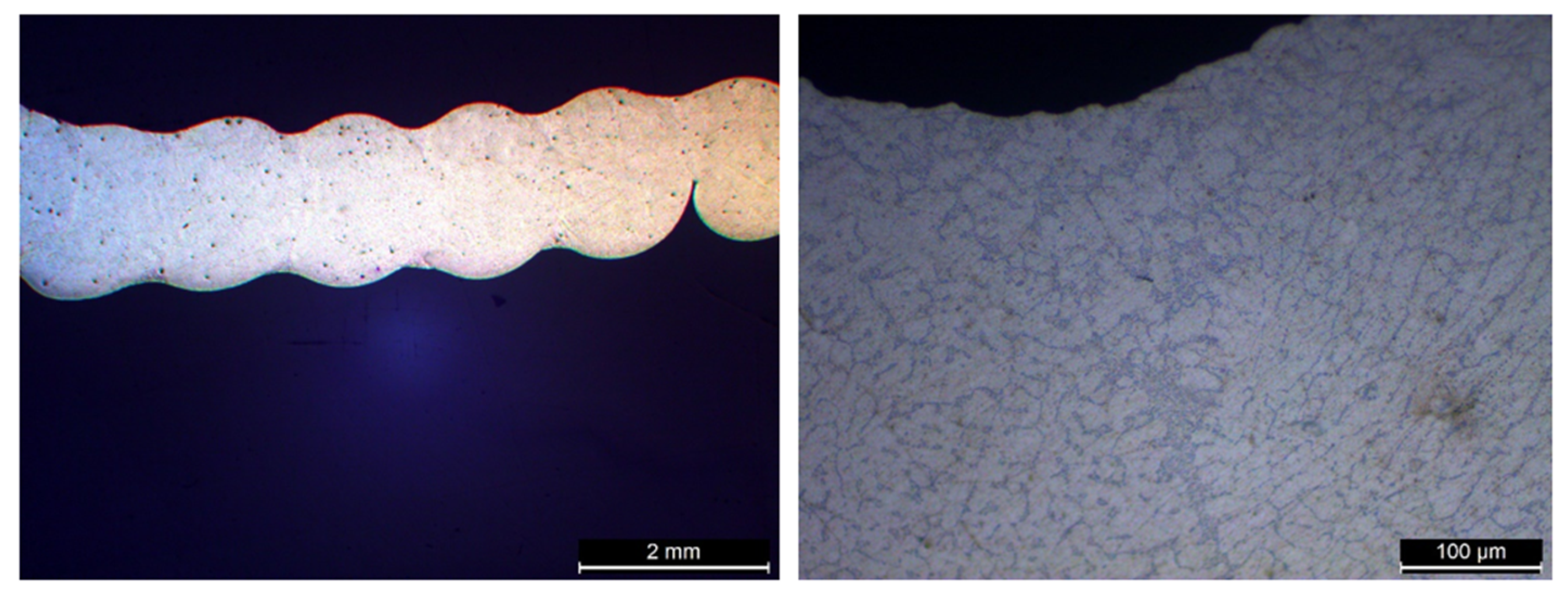
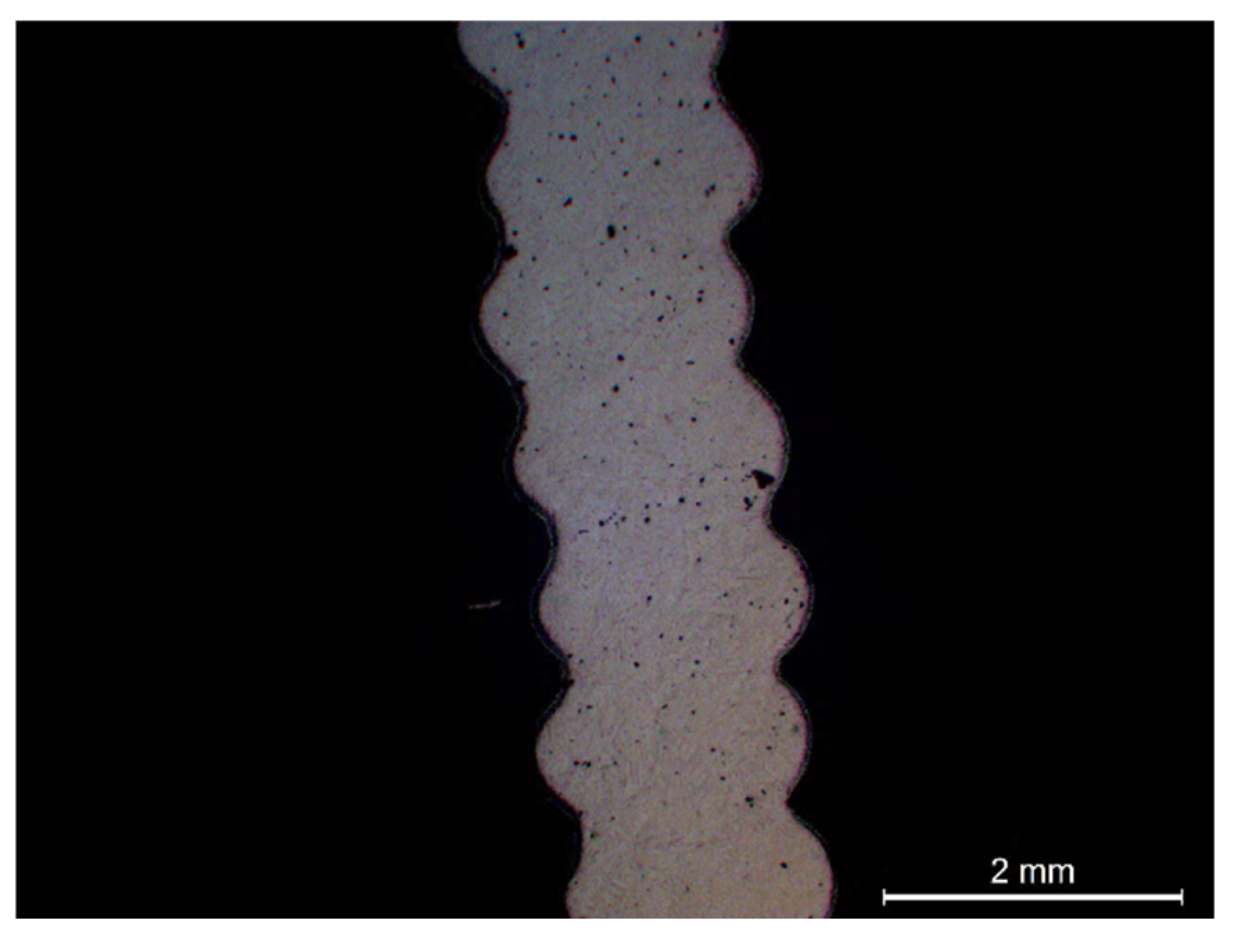
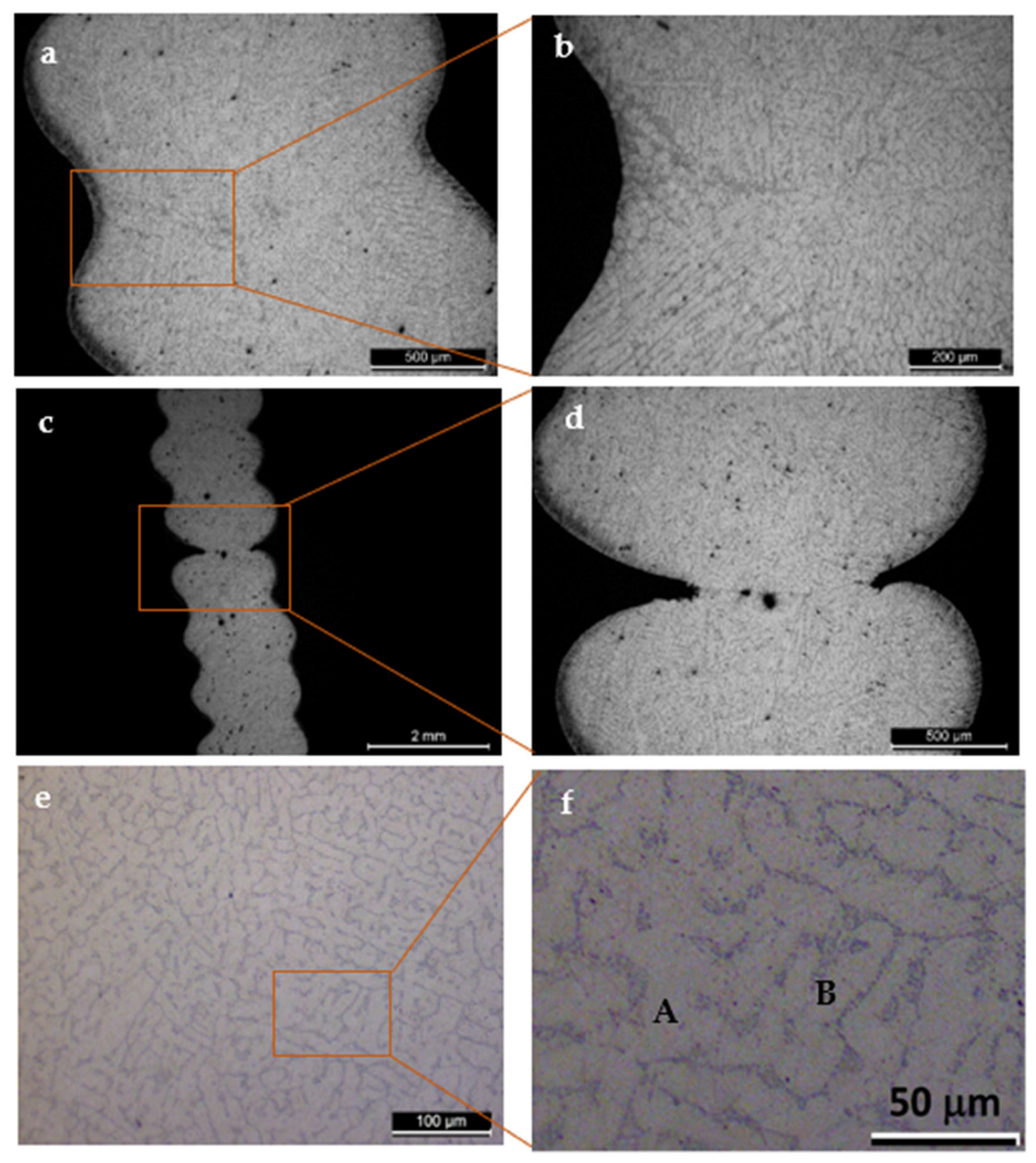
One of the first group of specimens (XYZ-4043) is shown in Figure 6 at low magnification and in Figure 7a–e at higher magnification. The longitudinal cross section of the cylindrical sample shows the “bulged” shape corresponding to the different deposition beads. In Figure 7a,b, the two layers appear well bonded together, while in Figure 7c,d, which also refers to another part of that sample, the bonding neck between some beads is very thin. As can be observed in all the micrographs, some rounded pores are present in the material. The density measured via the Archimedes method is 2.63 g/cm3, which corresponds to a porosity of 2% in volume. The microstructure of this sample is visible in Figure 8. It consists of grains of α-Al solid solution (light areas indicated with A on the micrograph) with a dendritic structure, surrounded by a network of Al–Si interdendritic eutectic (grey areas, B on the micrograph). Dendrites have different directions following the local solidification front of the melting pool. The Al-Si interdendritic phase was in liquid state up to 577 °C. When cooling down, with the transformation into a solid phase, it caused a shrinkage, responsible for some of the largest pores observed in the microstructure. During solidification of the 4043 Al–Si alloy, the α-Al phase nucleates first; once the local composition reaches the eutectic point, the Al–Si eutectic forms along the grain boundaries, producing a network that surrounds the grains. The observed microstructure is in line with the one obtained using other wire fed AM techniques [10,41,42]. The microhardness HV0.5 of the XYZ-4043 sample is 41.6 ± 4.5. This value is slightly higher than the hardness declared for the AA4043 alloy conventionally cast, which is in line with the higher cooling rates compared to casting (<10 K/s). A dendritic microstructure consisting of a matrix α phase and interdendritic Al-Si eutectic phase is also typical of conventional casting processes (sand casting or metal casting), with the only difference related to the grain size. Sand casting leads to larger dendrites compared to metal casting and to all the additive manufacturing processes. As a consequence, the microhardness, which, as a first approximation can be considered a material’s strength index, is higher in components produced through AM [43,44]. In the present investigation, the microhardness is lower than the one obtained through a similar AM process, wire arc additive manufacturing (WAAM), because of its coarser microstructure, resulting from the lower cooling rates [41], but it is higher than the one of an annealed 4043 alloy, as reported by ASM Metals Handbook (39HB) [45]. In general, the relatively coarser microstructures of the castings (both sand and steel mold castings) compared with the microstructure developed by an AM process leads to a lower hardness [46]. Primary α-phase dendrites were generally longer and thicker in the mold casting components compared with the AM microstructure; moreover, coarser Al-Si eutectic is formed with decreasing cooling rates. The microstructure of this alloy (Figure 6) is analogous to that observed by Knapp et al. [10] for the same alloy produced by laser hot-wire additive manufacturing.
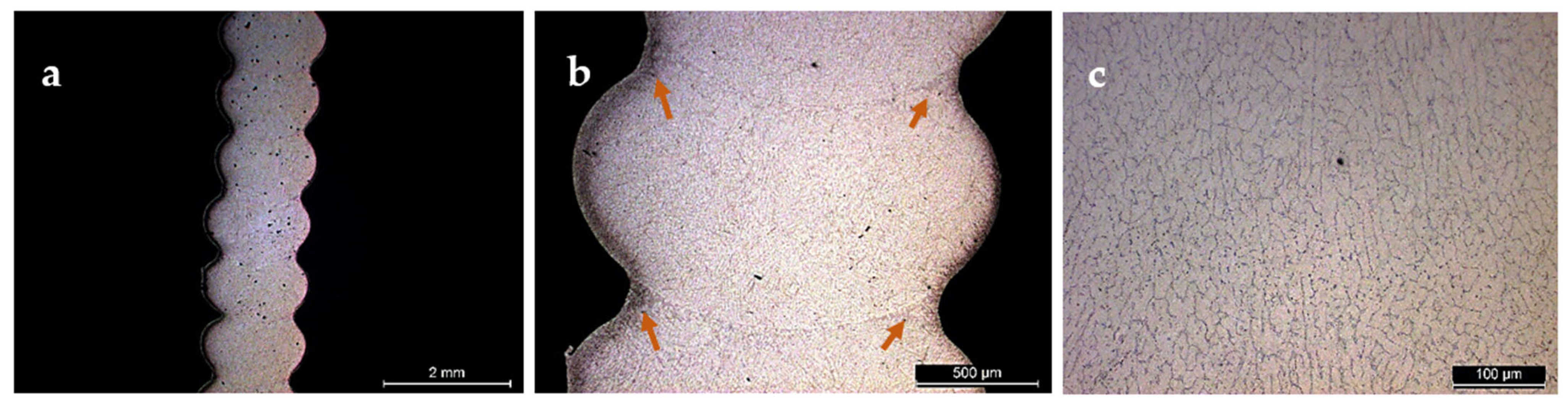
Analogous to the XYZ-4043 samples, the XYZC-4043 samples show similar macroscopic and microscopic features, as reported in Figure 8a–c. A higher concentration of the Al-Si interdendritic phase is observed in the interlayer spaces between the different beads, as indicated by arrows in Figure 8b. The density of this sample is 2.65 g/cm3, and its microhardness HV0.5 is 44.2 ± 2.2.
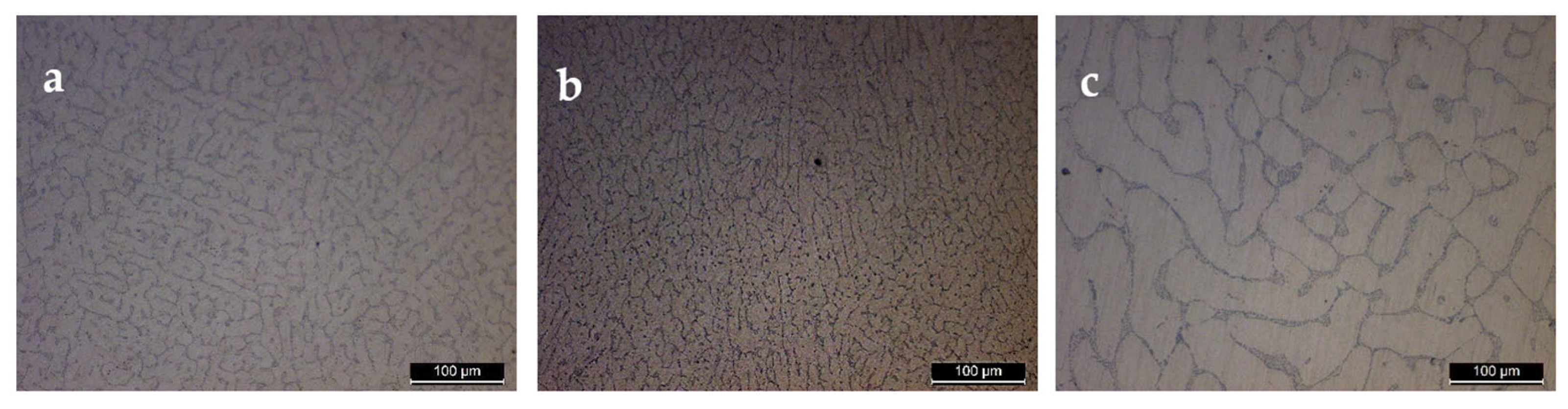
The high energy samples (XYZ/H-4043) exhibit a similar microstructure. In this case, the dendritic grains are larger, due to the higher deposition temperature. A comparison among the XYZ-4043 samples, the XYZC-4043 samples, and the XYZ/H samples is shown in Figure 9. The refined grain structure of the XYZC-4043 sample accounts for its higher microhardness (44.2 HV0.5) compared with the XYZ-4043 and XYZ/H-4043 samples. The XYZ/H-4043 specimen, characterized by its coarser grain size, shows a lower microhardness of 39.6 ± 4.0 HV0.5. However, the higher deposition temperature leads to a slightly increased density (2.66 g/cm3). The microhardness is influenced by both the grain size and elemental distribution. In the 4043 Al–Si alloy, silicon is present within the α-Al matrix as a hard constituent, and its spatial distribution affects the resulting microhardness. The fineness of the Al–Si microstructure, particularly that of the Al–Si eutectic phase, influences the hardness and overall mechanical properties of the alloy [47].
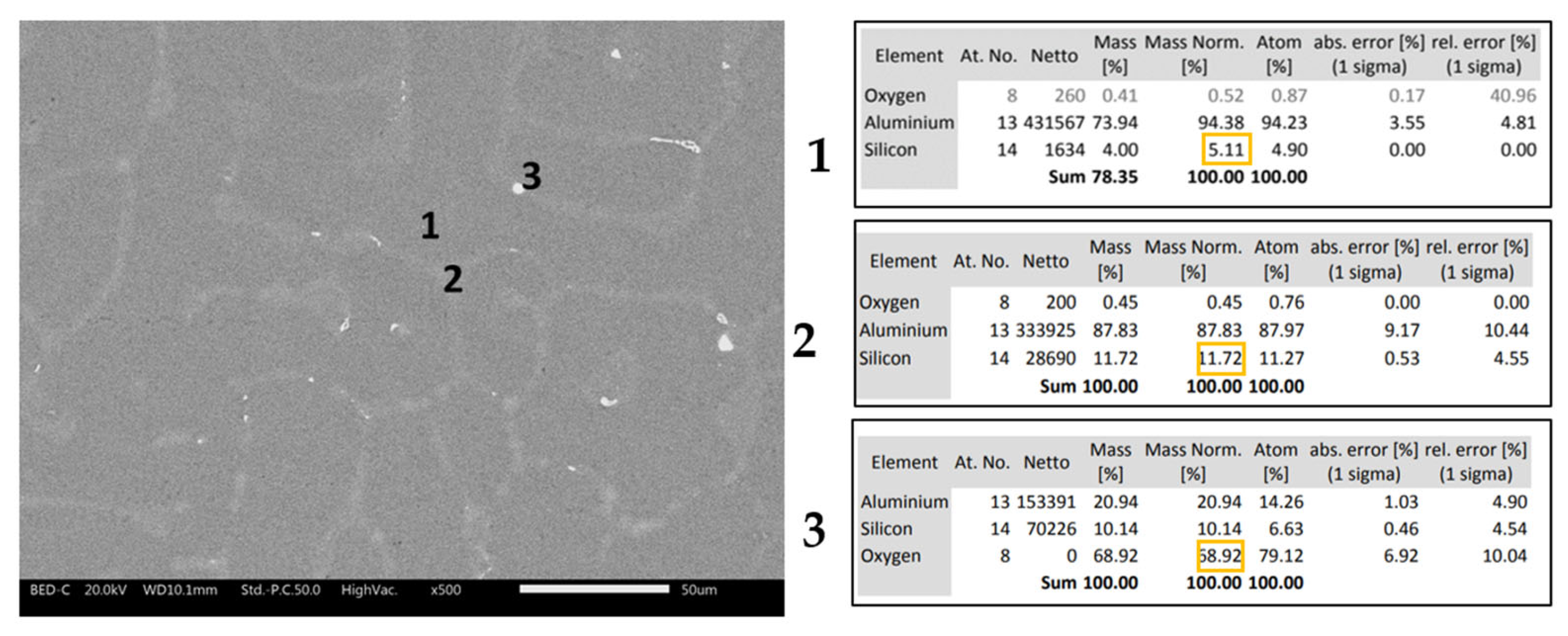
The semiquantitative composition of the two phases composing these samples was determined through EDXS analysis carried out at SEM. It is reported in Figure 10. Point 1 refers to the α phase (low amount of Si as indicated in the yellow box of EDX analysis of Figure 10), point 2 to the Al-Si interdendritic phase (higher amount of Si as indicated in the yellow box of EDXS analysis of Figure 10), and point 3 to one of the white particles observed in the microstructure (probably oxides as indicated by the high amount of oxygen in the yellow box of EDXS analysis of Figure 10). As indicated by the chemical compositions found, point 3 is an oxide particle. The composition of points 2 and 3 is very “rough”, due to the small extension of the area interacting with the electron beam, which reduces the precision of this measurement.
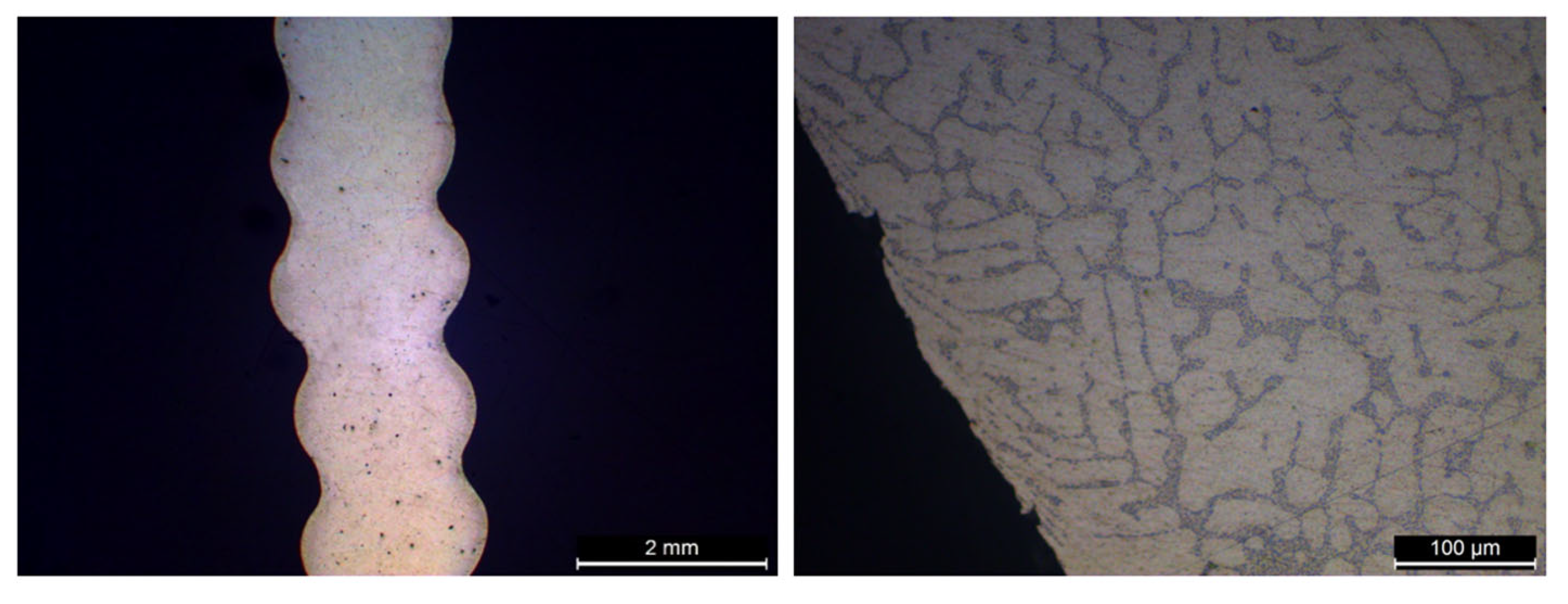
The same microstructural features observed in the previous samples were also found in the 45° overhang walls of the specimens shown in Figure 3. No macroscopic defects were detected in these specimens, which are generally more challenging to build, thus confirming that MMD technology is suitable for producing components with overhangs as well. The microstructure of a sample (XYZC/45-4043) taken from the first group of specimens of Figure 3 is shown in Figure 11, while Figure 12 reports an example of a specimen from the XYZ-4043 samples. The density and microhardness values of these specimens are reported in Table 3, which summarizes all the data regarding the AA4043 samples. In conventionally cast 4043 alloy, the microstructure generally consists of primary α-Al grains surrounded by an Al–Si eutectic [48,49,50]. A typical Al–Si microstructure with a well-defined eutectic is therefore observed. As a result, the microstructure obtained by MMD can be considered similar to that of conventional casting, but noticeably less coarse. A similar microstructural appearance is also reported by Knapp in his work [10], where laser hot-wire additive manufacturing is used, and the 4043 alloy exhibits a microstructure comparable to that observed in the present research work. In the wrought condition (e.g., hot-rolled), the eutectic phase tends to fragment and becomes finely dispersed within the microstructure when plastic deformation occurs under high strain levels [50,51]. However, when mechanical properties are considered, the hardness values obtained after extensive hot rolling are fully comparable to those measured in the samples investigated in the present study. For instance, in the work by Qian Cheng [50], hardness values ranging from 42 to 49 HV are reported. In general, when evaluating the mechanical properties and considering hardness as a reference parameter for mechanical strength—bearing in mind that these two quantities are proportional—it can be stated that the alloy produced by MMD exhibits mechanical characteristics in line with those obtained using other additive manufacturing techniques, as well as with both cast and wrought products. In addition, the MMD process offers the specific advantages discussed in the Introduction with respect to this manufacturing technology. Clearly, tensile strength measurements, followed by impact and fatigue resistance tests, will need to be carried out on the MMD-produced alloy; nevertheless, the hardness results provide a positive initial indication of its mechanical performance.

3.2. Alloy 6061

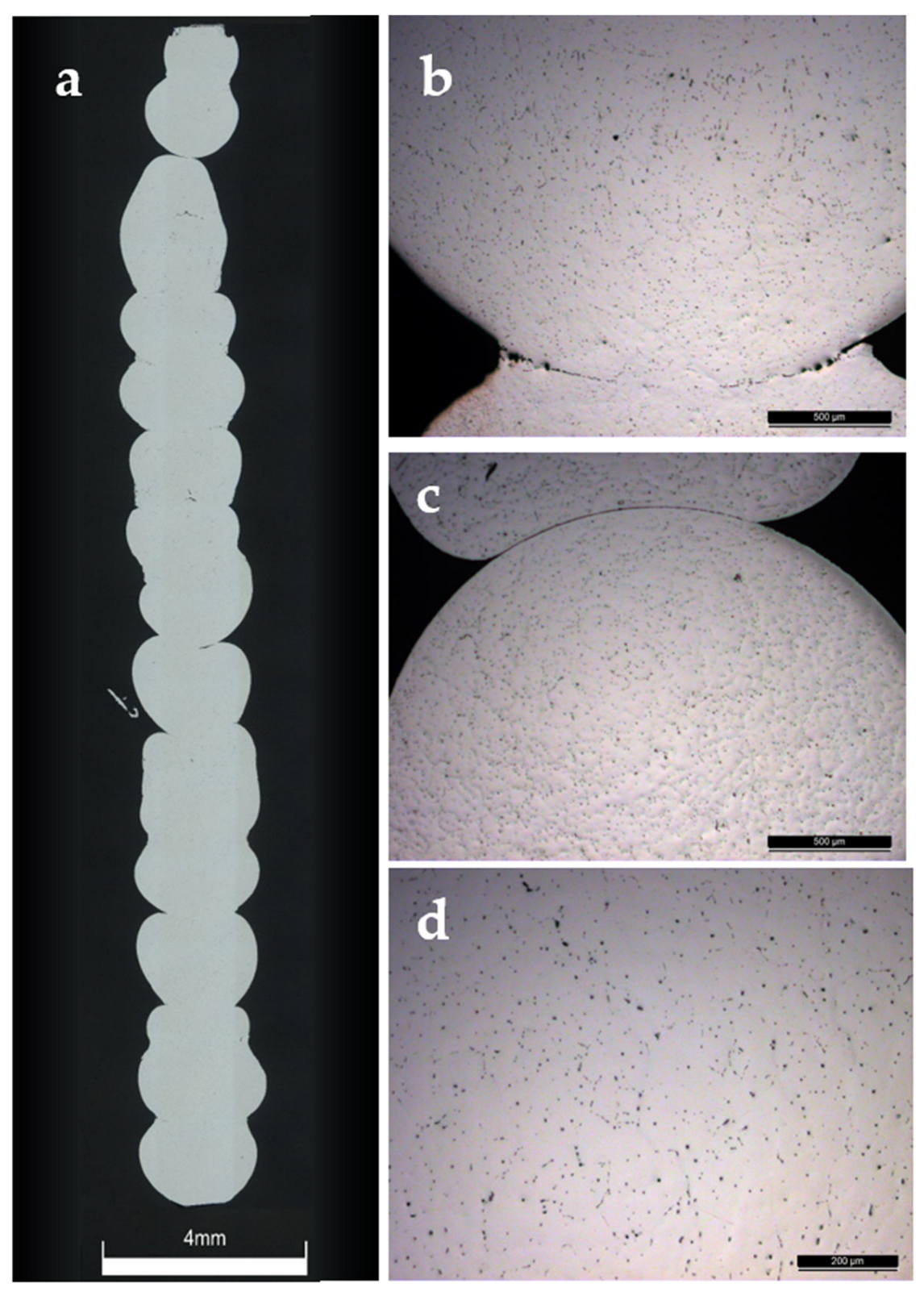
The entire metallographic section of the sample of Figure 4 is shown in Figure 13a, while two details are presented in Figure 13b,c. The bonding between adjacent beads is generally good; however, in some junctions, a few pores and a dark grey line are visible, as shown in Figure 13b,c, highlighting the bonding between adjacent tracks. The grey line was analyzed by EDXS, as reported in the following paragraph, and was found to be composed of oxides, likely formed during the deposition process. The microstructure of the alloy is shown in Figure 13d and consists of an α-Al matrix with a significant amount of precipitates, visible as dark points. The measured microhardness (HV0.5) of this sample is 90 ± 5, which is consistent with values reported for cast and wrought 6061 alloys [21,22,52,53]. The microstructure of the 6061 alloy produced by MMD is overall fine and is characterized by a uniform dispersion of intermetallic precipitates within the α-Al matrix, without the need for grain-refining agents. This microstructural feature is similar to that typically observed in the same alloy in the wrought condition [52,53]. However, in wrought conditions, especially after cold working, this alloy often exhibits pronounced anisotropy, as commonly observed in extruded or rolled products, while hot working may introduce a significant risk of hot tearing. In comparison with the same alloy produced by conventional casting, which is characterized by a coarse columnar grain structure [48,54], the samples produced by MMD do not exhibit such a coarse dendritic morphology. This represents a clear advantage, as it reduces the tendency for crack formation. Furthermore, when compared to other additive manufacturing techniques, the microstructure observed in this experimental work shows a lower defect density, being more homogeneous and less porous than that of the same alloy produced by other AM technologies, such as LPBF [24].
The analysis of the precipitates via SEM highlighted the presence of two main types of Al-Fe-Si intermetallics:
  • Spheroidal, uniformly distributed in the a-Al matrix;
  • Elongated, predominantly located along grain boundaries.
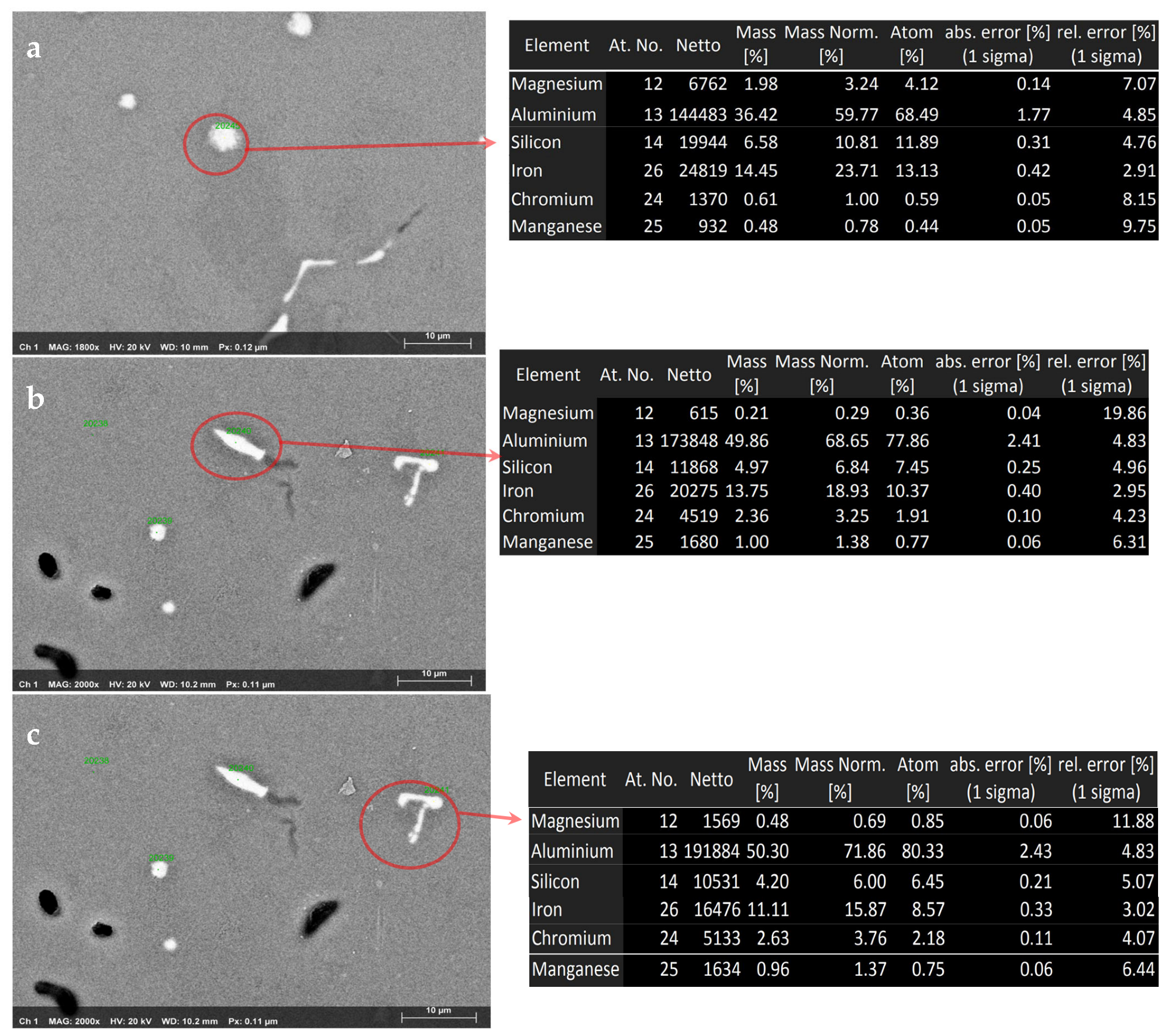
An example of the EDXS analysis of a spheroidal particle is shown in Figure 14a. The spheroidal particle corresponds to an Al-Fe-Si intermetallic phase, also containing minor amounts of Mg, Cr, and Mn. In Figure 14b, the EDXS analysis carried out on an elongated intermetallic is reported (green points indicated in Figure 14 are the points in which the electron beam of the EDXS was pointed to carry out the analyses). Elongated Al-Fe-Si intermetallics are poorer in Fe, Si and Mg than the spheroidal one, but they contain slightly higher amounts of Cr and Mn. Other precipitates detected in smaller quantities are the so-called T-bone intermetallics, as shown in Figure 14c. These Al–Fe–Si T-bone phases exhibit a composition similar to that of the elongated precipitates, although with a lower Fe content.
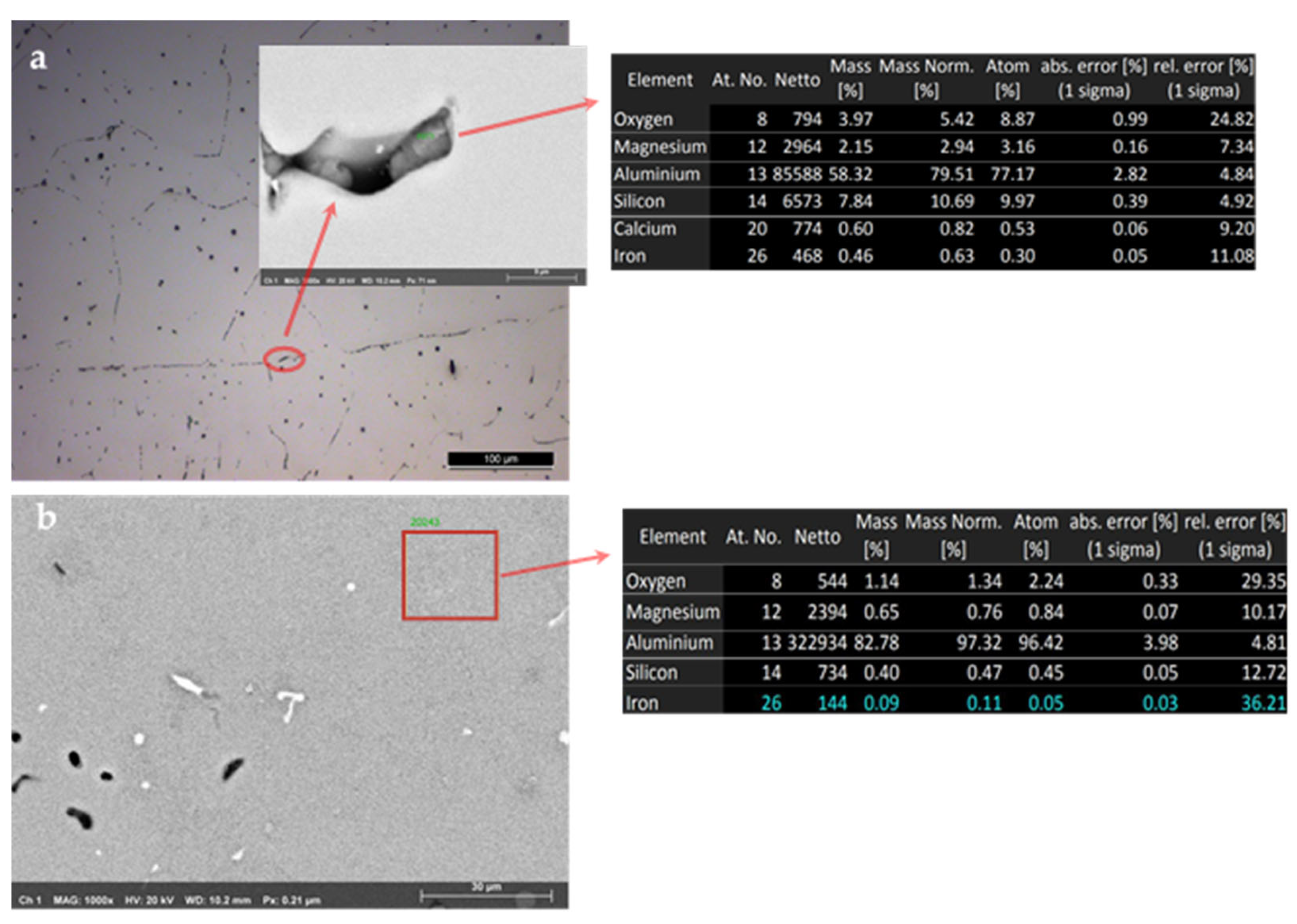
Finally, the precipitates forming dark grey lines along the grain boundaries were analyzed. EDXS analysis indicates that they are oxides, as shown in Figure 15a. The composition of the α-Al matrix was also assessed by EDXS analysis, as shown in Figure 15b, and is consistent with that of a typical 6061 alloy. Minor surface oxidation was detected, suggesting that a certain amount of oxygen may have dissolved in solid solution in the aluminum during the MMD process. The presence of oxides along grain boundaries together with the oxygen dissolution detected also in the Al matrix suggest the necessity of using a shielding gas for future deposition.

3.3. 6061 Aged Samples

Typically, 6061 aluminum alloy is subjected to a T6 heat treatment, which consists of two steps: first, a solution treatment at 500–530 °C for approximately one hour followed by water quenching and, second, an artificial aging step at 160–200 °C for periods ranging from 12 to 24 h, depending on the material thickness [54]. The water-quenching step may induce mechanical distortion, making mechanical straightening necessary prior to aging. In MMD, part deposition occurs at substrate temperatures of approximately 520–530 °C; therefore, the built component remains at solution-treatment temperatures during the process. As a result, an inherent heat treatment is already applied to the parts during printing. The precipitates observed in SEM images are a consequence of this inherent heat treatment in MMD. However, to fully benefit from precipitation hardening—namely, to promote the formation of very fine (nanometric) intermetallic compounds—a dedicated solution treatment followed by aging is required.
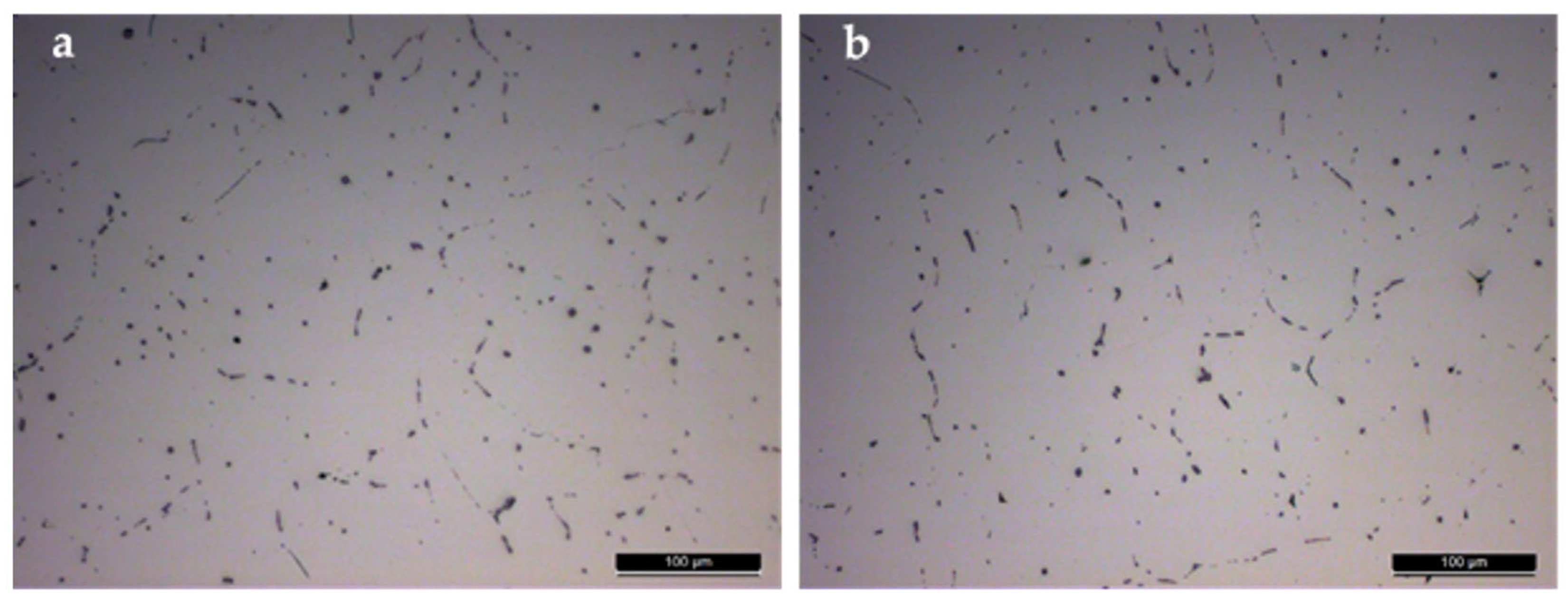
In the present study, two specific heat treatments, described in the experimental procedure, were applied: treatment A (solution treatment followed by aging at 160 °C for 18 h) and treatment B (solution treatment followed by aging at 180 °C for 10 h). The microstructures observed under an optical microscope (Figure 16a,b) after both T6 treatments appear similar to those of the samples prior to aging. Nevertheless, the microhardness increases from 90 to 113 ± 2 after treatment A and to 107 ± 1.5 after treatment B. Both T6 treatments effectively promote the formation of very fine β-Mg2Si precipitates, which cannot be detected by optical microscopy due to their nanometric size [55,56,57].
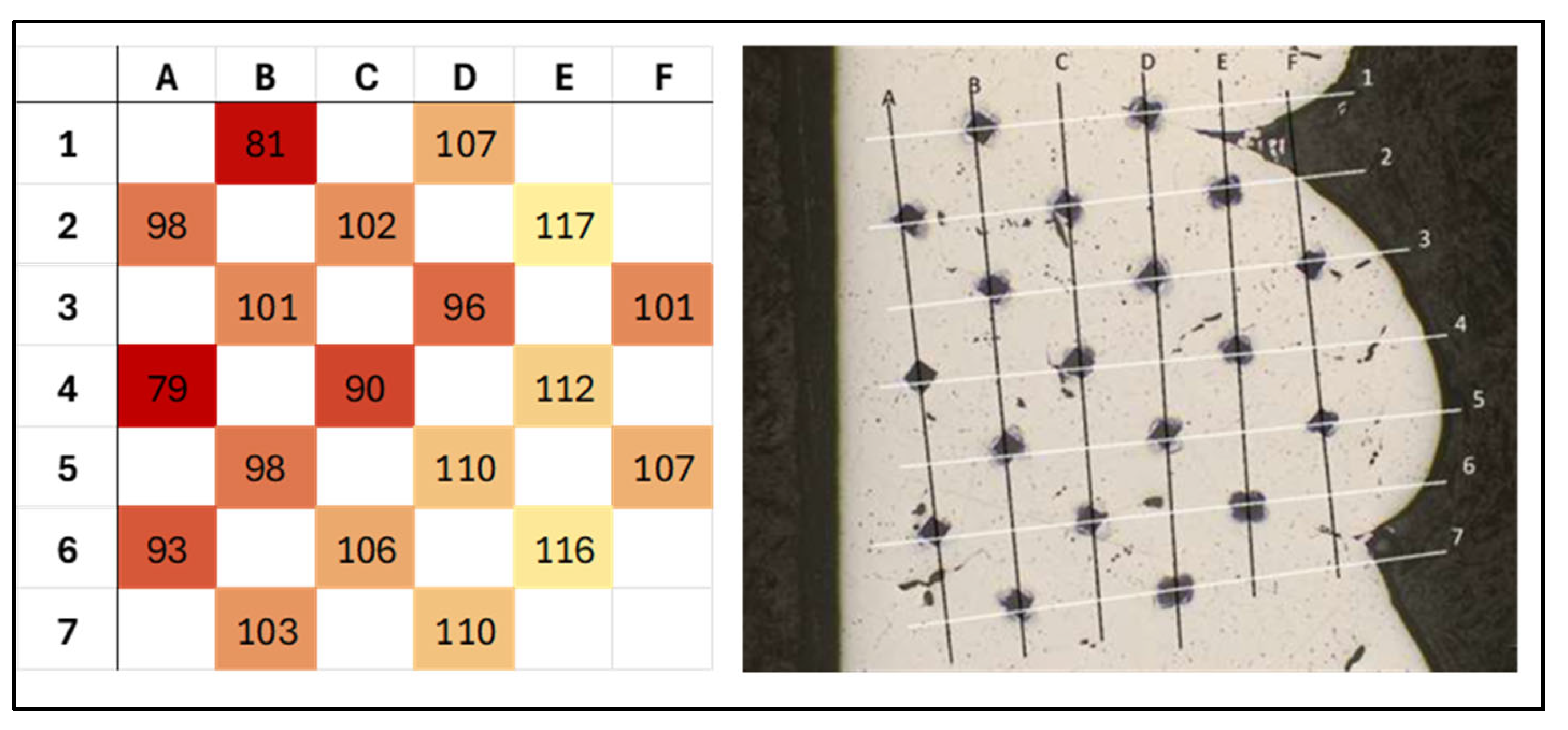
To check the uniformity of treatment within single layers and whether there are possible differences between bead interiors and bead boundaries, Vickers microhardness HV0.5 was performed. Small differences appear to be visible in the microhardness map shown in Figure 17, confirming that the alloy produced through MMD has a homogeneous microstructure, which is generally related to better mechanical properties.

4. Conclusions

In this study, the 4043 and 6061 aluminum alloys produced via the molten metal deposition (MMD) technique were investigated. The main conclusions drawn from this work are as follows:
  • Both alloys are suitable for fabrication using the MMD process, which enables reduced production times and lower energy consumption compared with conventional manufacturing routes.
  • Defect-free components featuring geometric characteristics such as overhangs can be successfully produced.
  • By selecting appropriate process parameters, fine microstructures can be achieved relative to the as-cast condition, resulting in improved mechanical performance.
  • The mechanical properties of the 6061 alloy can be further enhanced by applying a T6 precipitation-hardening heat treatment.
  • Although 6061 is crack sensitive in thermal processes such as welding, WAAM, DED and LPBF, no solidification or thermal cracking were detected.
  • Traces of oxidations were found, especially in the interlayer area, suggesting that controlling the ambient during manufacturing is important.
  • Despite the fact that no shielding gas or controlled inert ambient was used during sample fabrication, the results demonstrate the high potential of the MMD process for manufacturing high strength aluminum parts. But, in order to achieve better mechanical properties, which arise from a “cleaner” microstructure, the use of a protective gas atmosphere in the deposition chamber is envisaged for future samples preparation. Following alloy deposition optimization, tensile, impact and fatigue samples will be manufactured for mechanical testing.

Author Contributions

Conceptualization, C.M. and J.G.; methodology, C.M. and C.E.; validation, A.M. and J.G.; formal analysis, C.M. and J.G.; investigation, C.M. and J.G.; resources, J.G., C.E. and A.M.; data curation, C.M.; writing—original draft preparation, C.M. and J.G.; writing—review and editing, C.M., J.G., C.E. and A.M.; supervision, J.G. and. A.M.; project administration, J.G. All authors have read and agreed to the published version of the manuscript.

Funding

The authors gratefully acknowledge the support of the European Space Agency (ESA) for an important part of this work through the General Support Technology Programme (GSTP) Element 1 under ESA Contract No. 4000144231. The support provided by the GSTP programme was essential to the progress and results presented in this publication. This research received no external funding.

Data Availability Statement

The original contributions presented in this study are included in the article. Further inquiries can be directed to the corresponding author.

Acknowledgments

During the preparation of this manuscript the author(s) used [Chatgpt 5.2] for the purposes of checking and revising English. The authors have reviewed and edited the output and take full responsibility for the content of this publication.

Conflicts of Interest

J. Galle and C. Elangeswaran were employed by the ValCUN BV, Ghent. The remaining authors declare that the research was conducted in the absence of any commercial or financial relationships that could be construed as a potential conflict of interest.

Abbreviations

The following abbreviations are used in this manuscript:
MMDMolten metal deposition
AMAdditive manufacturing

References

  1. Zhu, Z.; Hu, Z.; Seet, H.L.; Liu, T.; Liao, W.; Ramamurty, U.; Nai, S.M.L. Recent progress on the additive manufacturing of aluminum alloys and aluminum matrix composites: Microstructure, properties, and applications. Int. J. Mach. Tools Manuf. 2023, 190, 104047. [Google Scholar] [CrossRef]
  2. Martin, J.H.; Yahata, B.D.; Hundley, J.M.; Mayer, J.A.; Schaedler, T.A.; Pollock, T.M. 3D printing of high-strength aluminium alloys. Nature 2017, 549, 365–369. [Google Scholar] [CrossRef] [PubMed]
  3. Hoekstra, E.; Elangeswaran, C.; Hodaei, A.; Dehgahi, S.; Galle, J.; Gibson, I.; Jafari, D. Additive Manufacturing of an Aluminium Alloy by Molten Metal Deposition: A Finite Element and Experimental Study. 2016. Available online: https://ssrn.com/abstract=5074770 (accessed on 22 September 2025).
  4. Cooke, S.; Ahmadi, K.; Willerth, S.; Herring, R. Metal additive manufacturing: Technology, metallurgy and modelling. J. Manuf. Process. 2020, 57, 978–1003. [Google Scholar] [CrossRef]
  5. Ngo, T.D.; Kashani, A.; Imbalzano, G.; Nguyen, K.T.Q.; Hui, D. Additive manufacturing (3D printing): A review of materials, methods, applications and challenges. Compos. Part B Eng. 2018, 143, 172–196. [Google Scholar] [CrossRef]
  6. Chowdhury, S.; Yadaiah, N.; Prakash, C.; Ramakrishna, S.; Dixit, S.; Gupta, L.R.; Buddhi, D. Laser powder bed fusion: A state-of-the-art review of the technology, materials, properties & defects, and numerical modelling. J. Mater. Res. Technol. 2022, 20, 2109–2172. [Google Scholar]
  7. Jafari, D.; Vaneker, T.H.J.; Gibson, I. Wire and arc additive manufacturing: Opportunities and challenges to control the quality and accuracy of manufactured parts. Mater. Des. 2021, 202, 109471. [Google Scholar] [CrossRef]
  8. Li, Y.; Su, C.; Zhu, J. Comprehensive review of wire arc additive manufacturing: Hardware system, physical process, monitoring, property characterization, application and future prospects. Results Eng. 2022, 13, 100330. [Google Scholar] [CrossRef]
  9. Armstrong, M.; Mehrabi, H.; Naveed, N. An overview of modern metal additive manufacturing technology. J. Manuf. Process. 2022, 84, 1001–1029. [Google Scholar] [CrossRef]
  10. Knapp, G.L.; Gussev, M.; Shyam, A.; Feldhausen, T.; Plotkowski, A. Microstructure, deformation and fracture mechanisms in Al-4043 alloy produced by laser hot-wire additive manufacturing. Addit. Manuf. 2022, 59, 103150. [Google Scholar] [CrossRef]
  11. Chou, S.C.; Trask, M.; Danovitch, J.; Wang, X.L.; Choi, J.P.; Brochu, M. Pulsed laser powder bed fusion additive manufacturing of A356. Mater. Charact. 2018, 143, 27–33. [Google Scholar] [CrossRef]
  12. Zhou, L.; Mehta, A.; Schulz, E.; McWilliams, B.; Cho, K.; Sohn, Y.H. Microstructure, precipitates and hardness of selectively laser melted AlSi10Mg alloy before and after heat treatment. Mater. Charact. 2018, 143, 5–17. [Google Scholar] [CrossRef]
  13. Zavala-Arredondo, M.; London, T.; Allen, M.; Maccio, T.; Ward, S.; Griffiths, D.; Allison, A.; Goodwin, P.; Hauser, C. Use of power factor and specific point energy as design parameters in laser powder-bed fusion (L-PBF) of AlSi10Mg alloy. Mater. Des. 2019, 182, 108018. [Google Scholar] [CrossRef]
  14. Zhou, L.; Hyer, H.; Park, S.; Pan, H.; Bai, Y.; Rice, K.P.; Sohn, Y.H. Microstructure and mechanical properties of Zr-modified aluminum alloy 5083 manufactured by laser powder bed fusion. Addit. Manuf. 2019, 28, 485–496. [Google Scholar] [CrossRef]
  15. Fulcher, B.A.; Leigh, D.K.; Watt, T.J. Comparison of AlSi10Mg and Al 6061 processed through DMLS. In Proceedings of the Solid Freeform Fabrication (SFF) Symposium; University of Texas at Austin: Austin, TX, USA, 2014. [Google Scholar]
  16. Kaufmann, N.; Imran, M.; Wischeropp, T.M.; Emmelmann, C.; Siddique, S.; Walther, F. Influence of process parameters on the quality of aluminium alloy EN AW 7075 using selective laser melting (SLM). Phys. Procedia 2016, 83, 918–926. [Google Scholar] [CrossRef]
  17. Ahuja, B.; Karg, M.; Nagulin, K.Y.; Schmidt, M. Fabrication and characterization of high strength Al-Cu alloys processed using laser beam melting in metal powder bed. Phys. Procedia 2014, 56, 135–146. [Google Scholar] [CrossRef]
  18. Kou, S. A simple index for predicting the susceptibility to solidification cracking. Weld. J. 2015, 94, 374–388. [Google Scholar]
  19. Aboulkhair, N.T.; Simonelli, M.; Parry, L.; Ashcroft, I.; Tuck, C.; Hague, R. 3D printing of aluminium alloys: Additive manufacturing of aluminium alloys using selective laser melting. Prog. Mater. Sci. 2019, 106, 100578. [Google Scholar] [CrossRef]
  20. Louvis, E.; Fox, P.; Sutcliffe, C.J. Selective laser melting of aluminium components. J. Mater. Process. Technol. 2011, 211, 275–284. [Google Scholar] [CrossRef]
  21. Hosseini, F.; Asad, A.; Yakout, M. Microstructure characterization and mechanical properties of Al6061 alloy fabricated by laser powder bed fusion. J. Manuf. Mater. Process. 2024, 8, 288. [Google Scholar] [CrossRef]
  22. Zheng, T.; Ma, C.; Killips, A.; Li, B.; Li, X. Nanoparticle-enabled additive manufacturing of high strength 6061 aluminum alloy via laser powder bed fusion. Manuf. Lett. 2024, 41, 753–757. [Google Scholar] [CrossRef]
  23. Li, W.; Pan, S.; Zhu, Y.; Qian, F.; Liang, Y.; Xu, S.; Cheng, X. Directed energy deposition of Al-Mg-Si alloys with fully equiaxed microstructure and isotropic high strength/ductility. Addit. Manuf. 2024, 81, 104020. [Google Scholar] [CrossRef]
  24. Mehta, A.; Zhou, L.; Huynh, T.; Park, S.; Hyer, H.; Song, S.; Bai, Y.; Imholte, D.D.; Woolstenhulme, N.E.; Wachs, D.M.; et al. Additive manufacturing and mechanical properties of the dense and crack-free Zr-modified aluminum alloy 6061 fabricated by laser powder bed fusion. Addit. Manuf. 2021, 41, 101966. [Google Scholar] [CrossRef]
  25. Doumenc, G.; Couturier, L.; Courant, B.; Paillard, P.; Benoit, A.; Gautron, E.; Girault, B.; Pirling, T.; Cabeza, S.; Gloaguen, D. Investigation of microstructure, hardness and residual stresses of wire and arc additive manufactured 6061 aluminium alloy. Materialia 2022, 25, 101520. [Google Scholar] [CrossRef]
  26. Li, X.; Li, X.; Hu, S.; Liu, Y.; Ma, D. Additive friction stir deposition: A review on processes, parameters, characteristics, and applications. Int. J. Adv. Manuf. Technol. 2024, 133, 1111–1128. [Google Scholar] [CrossRef]
  27. Chaudhary, B.; Jain, N.K.; Murugesan, J.; Patel, V. Friction stir powder additive manufacturing of Al 6061 alloy: Enhancing microstructure and mechanical properties by reducing thermal gradient. J. Mater. Res. Technol. 2023, 26, 1168–1184. [Google Scholar] [CrossRef]
  28. Su, Y.; Wang, Y.; Shi, J. Microstructure and mechanical properties of laser DED produced crack-free Al 7075 alloy: Effect of process parameters and heat treatment. Mater. Sci. Eng. A 2022, 857, 144075. [Google Scholar] [CrossRef]
  29. Wei, Y.-K.; Luo, X.-T.; Chu, X.; Huang, G.-S.; Li, C.-J. Solid state additive manufacturing high-performance aluminum alloy 6061 enabled by an in-situ micro-forging assisted cold spray. Mater. Sci. Eng. A 2020, 776, 139024. [Google Scholar] [CrossRef]
  30. Rezaeinejad, S.S.; Strik, D.H.; Visser, R.M.; Bor, T.C.; Luckabauer, M.; Akkerman, R. Solid state additive manufacturing of AA6060 employing friction screw extrusion additive manufacturing. JOM 2023, 75, 4199–4211. [Google Scholar] [CrossRef]
  31. Valcun. Available online: https://www.valcun.be/ (accessed on 3 March 2024).
  32. Reed-Hill, R.E.; Abbaschian, R.; Abbaschian, L. Physical Metallurgy Principles; Cengage Learning: Boston, UK, 2008. [Google Scholar]
  33. Kapil, A.; Sharma, V.; De Pauw, J.; Sharma, A. Exploring impact, spreading, and bonding dynamics in molten metal deposition for novel drop-on-demand printing. Mater. Des. 2024, 238, 112633. [Google Scholar] [CrossRef]
  34. Liu, J.; Wen, P. Metal vaporization and its influence during laser powder bed fusion process. Mater. Des. 2022, 215, 110505. [Google Scholar] [CrossRef]
  35. Yu, T.; Zhao, J. Quantifying the mechanisms of keyhole pore evolutions and the role of metal-vapor condensation in laser powder bed fusion. Addit. Manuf. 2023, 72, 103642. [Google Scholar] [CrossRef]
  36. Gibson, I.; Goulas, C.; Jonkers, S.; Elangeswaran, C.; Galle, J.; De Pauw, J. High supportless overhangs with molten metal deposition: A new single-step direct aluminium additive manufacturing technology. In Proceedings of the International Conference on Design for 3D Printing (ICD3DP 2023), Republic of Korea, 18–21 October 2023. [Google Scholar]
  37. Kutschke, Z.; Li, Z.; Berlia, R.; Hemker, K.; Weihs, T.; Mueller, J. Metal extrusion additive manufacturing: A unified framework and comprehensive review of an emerging technology. J. Manuf. Process. 2025, 156, 206–218. [Google Scholar] [CrossRef]
  38. Hendrickx, B.; Li, G.; Van Meensel, K.; Ingarao, G.; Fratini, L.; De Pauw, J.; Hosseini, P.; Duflou, J.R. Industrial symbiosis in aluminium parts manufacturing: Towards 100% material efficiency by combining friction stir extrusion and molten metal deposition. Sustain. Mater. Technol. 2025, 46, e01755. [Google Scholar] [CrossRef]
  39. Hyer, H.; Zhou, L.; Mehta, A.; Sohn, Y.H. Effects of alloy composition and solid-state diffusion kinetics on powder bed fusion cracking susceptibility. J. Phase Equilib. Diffus. 2020, 42, 5–13. [Google Scholar] [CrossRef]
  40. ASTM B962-17; Standard Test Methods for Density of Compacted or Sintered Powder Metallurgy Products Using Archimedes’ Principle. ASTM International: West Conshohocken, PA, USA, 2017.
  41. Miao, Q.; Wu, D.; Chai, D.; Zhan, Y.; Bi, G.; Niu, F.; Ma, G. Comparative study of microstructure evaluation and mechanical properties of 4043 aluminum alloy fabricated by wire-based additive manufacturing. Mater. Des. 2020, 186, 108205. [Google Scholar] [CrossRef]
  42. Wang, Y.; Yang, S.; Xie, C.; Liu, H.; Zhang, Q. Microstructure and ratcheting behavior of additive manufactured 4043 aluminum alloy. J. Mater. Eng. Perform. 2018, 27, 4582–4592. [Google Scholar] [CrossRef]
  43. Castro-Sastre, M.Á.; García-Cabezón, C.; Fernández-Abia, A.I.; Martín-Pedrosa, F.; Barreiro, J. Comparative study on microstructure and corrosion resistance of Al-Si alloy cast from sand mold and binder jetting mold. Metals 2021, 11, 1421. [Google Scholar] [CrossRef]
  44. Rahman, A.; Isanaka, S.P.; Liou, F. A comprehensive study of cooling rate effects on diffusion, microstructural evolution, and characterization of aluminum alloys. Machines 2025, 13, 160. [Google Scholar] [CrossRef]
  45. ASM International. ASM Handbook, Volume 2: Properties and Selection: Nonferrous Alloys and Special-Purpose Materials; ASM International: Materials Park, OH, USA, 1990. [Google Scholar]
  46. Langelandsvik, G.; Horgar, A.; Furu, T.; Roven, H.J.; Akselsen, O.M. Comparative study of eutectic Al-Si alloys manufactured by WAAM and casting. Int. J. Adv. Manuf. Technol. 2020, 110, 935–947. [Google Scholar] [CrossRef]
  47. Haghdadi, N.; Zarei-Hanzaki, A.; Roostaei, A.A.; Hemmati, A.R. Evaluating the mechanical properties of a thermomechanically processed unmodified A356 Al alloy employing shear punch testing method. Mater. Des. 2013, 43, 419–425. [Google Scholar] [CrossRef]
  48. Davies, J.R. Aluminium and Aluminium Alloys; ASM International: Materials Park, OH, USA, 1993. [Google Scholar]
  49. Warmuzek, M. (Ed.) Aluminum-Silicon Casting Alloys: Atlas of Microstructures; ASM International: Materials Park, OH, USA, 2016. [Google Scholar]
  50. Dash, S.S.; Chen, D. A review on processing–microstructure–property relationships of Al-Si alloys: Recent advances in deformation behavior. Metals 2023, 13, 609. [Google Scholar] [CrossRef]
  51. Cheng, Q.; Yang, W.; Zheng, S.; Peng, M.; Yang, W.; Li, M.; Li, M. Microstructure evolution, texture and mechanical properties of hot rolled 4043 aluminum-silicon alloy under short-term annealing. J. Mater. Res. Technol. 2025, 36, 2083–2095. [Google Scholar] [CrossRef]
  52. Nakai, M.; Itoh, G. The effect of microstructure on mechanical properties of forged 6061 aluminum alloy. Mater. Trans. 2014, 55, 114–119. [Google Scholar] [CrossRef]
  53. Peng, Y.; Wang, S.C.; Zhou, H.T.; Zheng, K.; Chen, H.X. Microstructure and mechanical properties of a 6061 aluminum alloy part prepared by casting-forging integrated forming technology. Mater. Sci. Forum 2014, 788, 215–222. [Google Scholar] [CrossRef]
  54. Whitney, M.A.; Jin, H.; Wells, M.A.; Benoit, M.J. Thermal analysis and characterization of cast 6061 aluminum alloy microstructures with elevated iron content. Thermochim. Acta 2025, 746, 179951. [Google Scholar] [CrossRef]
  55. Doan, L.C.; Ohmori, Y.; Nakai, K. Precipitation and dissolution reactions in a 6061 aluminum alloy. Mater. Trans. JIM 2000, 41, 300–305. [Google Scholar] [CrossRef]
  56. Edwards, G.A.; Stiller, K.; Dunlop, G.L.; Couper, M.J. The precipitation sequence in Al–Mg–Si alloys. Acta Mater. 1998, 46, 3893–3904. [Google Scholar] [CrossRef]
  57. Buchanan, K.; Colas, K.; Ribis, J.; Lopez, A.; Garnier, J. Analysis of the metastable precipitates in peak-hardness aged Al-Mg-Si(-Cu) alloys with differing Si contents. Acta Mater. 2017, 132, 209–221. [Google Scholar] [CrossRef]
Figure 1. Molten metal deposition process schematic.
Metals 16 00238 g001
Figure 2. Specimens of AA4043: (left) 3-axis gantry with fixed nozzle orientation (XYZ-4043), (middle) 3-axis gantry with toolpath following nozzle (XYZC-4043), (right) 3-axis gantry with fixed nozzle orientation and high deposition energy (XYZ/H-4043).
Metals 16 00238 g002
Figure 3. Additional 45° overhang specimens of AA4043: (left) 3-axis gantry with fixed nozzle orientation (XYZ/45-4043), (right) 3-axis gantry with toolpath following nozzle (XYZC/45-4043).
Metals 16 00238 g003
Figure 4. Specimens of AA6061 alloy (XYZ-6061).
Metals 16 00238 g004
Figure 5. Specimens’ dimensions.
Metals 16 00238 g005
Figure 6. Wall of the cylindric XYZ-4043 sample.
Metals 16 00238 g006
Figure 7. Details of the XYZ-4043 sample (a,b), another section of a XYZ-4043 sample (c,d), and typical microstructure of the XYZ-4043 samples (e,f).
Metals 16 00238 g007
Figure 8. Microstructure of XYZC-4043 sample at thrre different magnifications: (a) 12×, (b) 50×, (c) 200×.
Metals 16 00238 g008
Figure 9. Comparison between sample XYZ-4043 (a), XYZC-4043 (b), and XYZ/H-4043 (c).
Metals 16 00238 g009
Figure 10. EDXS analysis on a XYZ/H-4043 sample.
Metals 16 00238 g010
Figure 11. Details of a XYZC/45-4043 sample.
Metals 16 00238 g011
Figure 12. Details of a XYZ/45-4043 sample.
Metals 16 00238 g012
Figure 13. (a) Cross section of a 6061 alloy sample with two details of the bonding surface between two layers (b,c) and the alloy microstructure at higher magnification (d).
Metals 16 00238 g013
Figure 14. EDXS analysis of spheroidal intermetallic observed in AA6061 (a), EDXS analysis of elongated intermetallic observed in AA6061 (b), and EDXS analysis of T-bone intermetallic observed in AA6061 (c).
Metals 16 00238 g014
Figure 15. (a) EDXS analysis of intermetallic observed along the grain boundaries in AA6061 (a); EDXS analysis of AA6061 aluminum matrix (b).
Metals 16 00238 g015
Figure 16. 6061 samples after aging according to cycle A (a) and cycle B (b).
Metals 16 00238 g016
Figure 17. Vickers hardness map (HV0.5) within layer. Different colors indicate different hardness values (from red points corresponding to the lower values to light yellow points corresponding to the highest values). Hardness values are reported on each point of the map where the hardness was measured.
Metals 16 00238 g017
Table 1. Chemical composition of the two studied alloys.
Element4043 (%) wt6061 (%) wt
Albalancebalance
Si4.5–6.00.61
Fe0.800.20
Cu0.300.29
Mn0.050.03
Mg0.050.81
Zn0.100.02
Ti0.200.01
Table 2. Process parameters and geometry of different sample batches.
Batch NamesMaterialGeometryNozzle Temperature (°C)Substrate Temperature (°C)Print Speed (mm/min)
XYZ-40434043Cylinder860525900
XYZC-40434043Cylinder860525900
XYZ/H-40434043Cylinder880535900
XYZ/45-40434043Cone860525900
XYZC/45-40434043Cone860525900
XYZ-60616061Rectangle870530360
Table 3. Summary of microhardness and density of all the 4043 examined samples.
SampleXYZ-4043XYZC-4043XYZ/H-4043XYZ/45-4043XYZC/45-4043
HV0.541.6 ± 4.544.2 ± 2.239.6 ± 4.046.2 ± 1.542.5 ± 3.5
Density g/cm32.632.652.662.672.67
Disclaimer/Publisher’s Note: The statements, opinions and data contained in all publications are solely those of the individual author(s) and contributor(s) and not of MDPI and/or the editor(s). MDPI and/or the editor(s) disclaim responsibility for any injury to people or property resulting from any ideas, methods, instructions or products referred to in the content.