3.1. Thermodynamic Assessment
The thermodynamic results obtained in the present study were aimed at evaluating the influence of the temperature regime and FeSiCr dust consumption on the conditions of metallic phase formation during chromium–manganese ligature production. Thermodynamic calculations were performed using HSC Chemistry 10 software. The calculations were performed over a wide temperature range of 1400–1800 °C, which made it possible to trace the general trends of the reduction processes and to identify the region of thermodynamically favorable smelting conditions. Particular attention was paid to the role of the reducing agent consumption, as its amount directly determines the degree of manganese reduction, the composition of the metallic phase, and the stability of the metal–slag system.
In the metallic phase, the formation of both a metallic matrix containing Cr, Fe, Mn, and Si and a series of chromium, iron, and manganese silicide compounds was established, including CrSi, CrSi2, Cr3Si, Cr5Si3, FeSi, Fe3Si, Fe5Si3, MnSi, Mn3Si, and Mn5Si3. The presence of these phases indicates a deep progression of reduction and alloying reactions and reflects the high chemical activity of silicon in the investigated system.
Analysis of the slag phase showed that it represents a complex oxide assemblage predominantly belonging to the CaO–Al2O3–SiO2 system, with the formation of characteristic mineralogical phases. The slag is mainly composed of calcium aluminosilicates (CaAl12O19, CaAl2Si2O8, and CaSiO3) and manganese-bearing silicates (MnSiO3, Mn2SiO4), as well as simple oxides and spinel-type compounds (Al2O3, Cr2O3, MnO, SiO2, and MnO·Al2O3).
The diversity of oxide and silicate compounds in the slag phase indicates the establishment of a complex phase equilibrium within the metal–slag system. The ratio of basic and acidic oxides plays a decisive role in determining melt structure, slag physicochemical properties, and the distribution behavior of elements between phases, thereby confirming the active role of the slag in the metallurgical process.
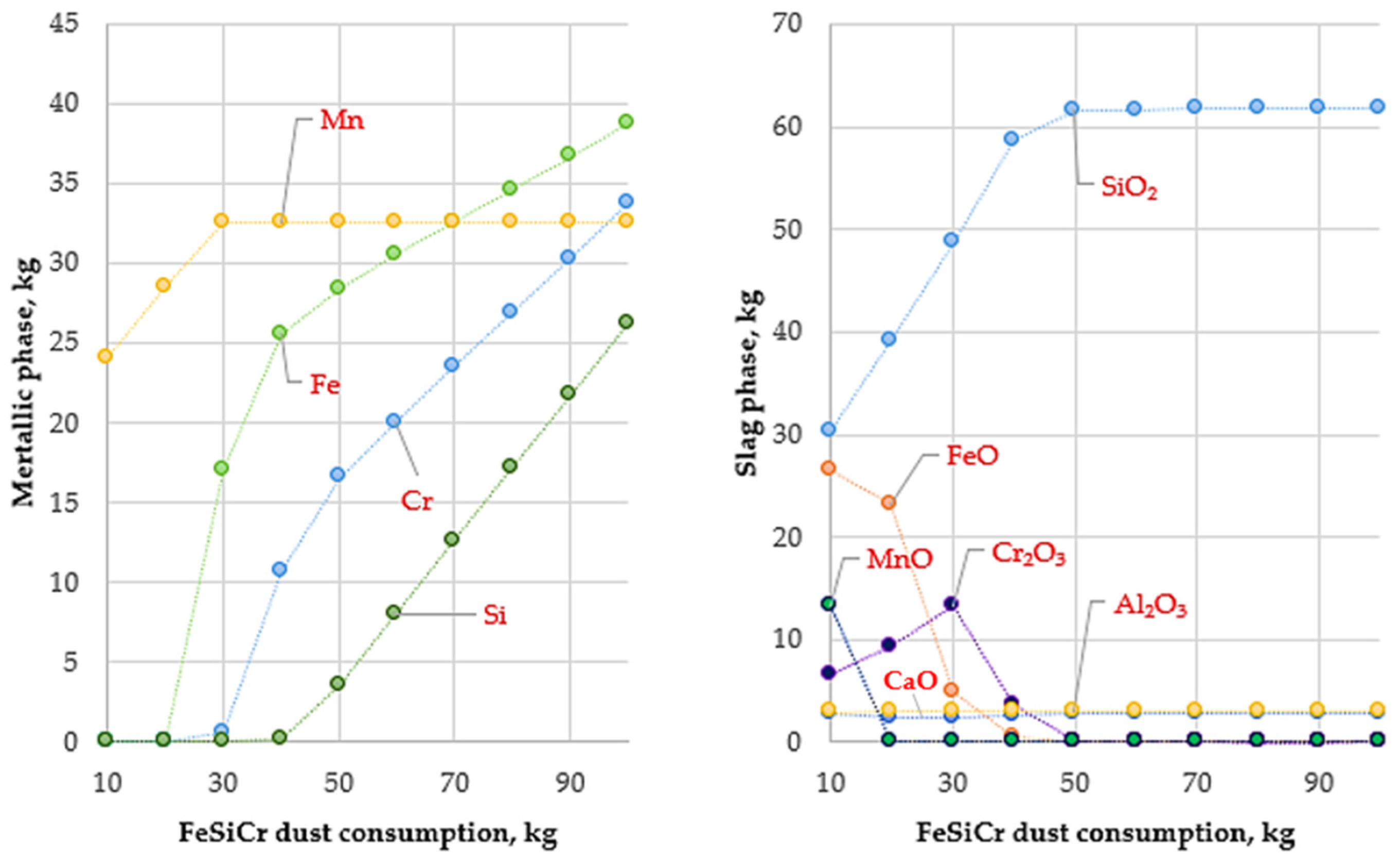
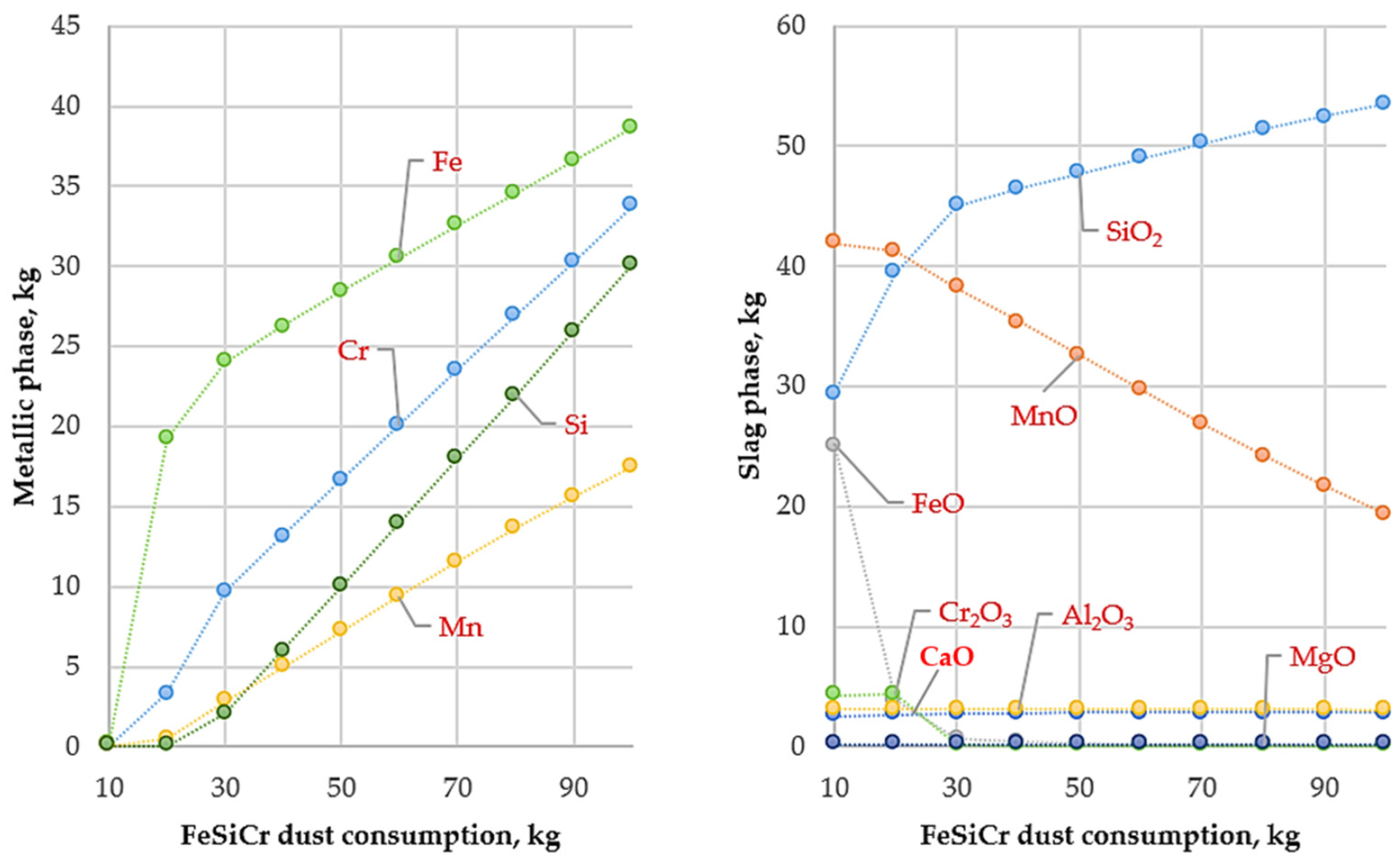
The results of thermodynamic calculations illustrating the influence of temperature and FeSiCr dust consumption on smelting conditions are presented in
Figure 3,
Figure 4 and
Figure 5.
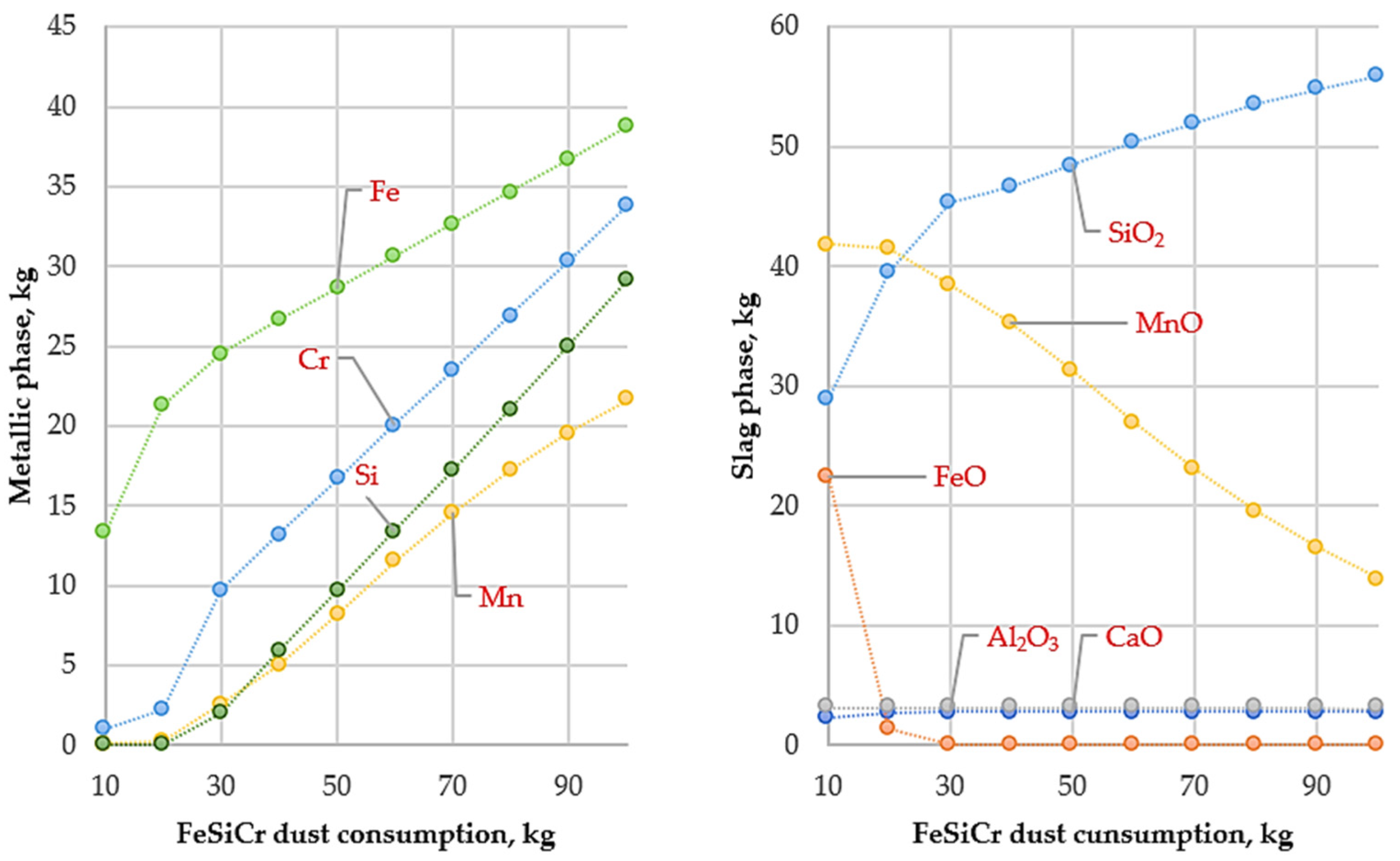
The results of thermodynamic modeling performed at 1400 °C (
Figure 3) show that the depth of reduction reactions is governed by the thermodynamic stability of metal oxides and the chemical nature of the applied reducing agent. Under these conditions, the reduction behavior of iron and manganese oxides differs significantly.
Iron oxides at 1400 °C are thermodynamically less stable compounds. According to Ellingham diagrams, the reduction reactions of iron oxides by silicon are characterized by negative Gibbs free energy values (ΔG), which ensures an almost complete reduction of iron to the metallic state and is accompanied by a steady increase in its content in the metallic phase.
In contrast, manganese oxide (MnO) exhibits considerably higher thermodynamic stability. At 1400 °C, the affinity of silicon for oxygen is insufficient to fully break the Mn–O bond; consequently, the ΔG values of MnO reduction reactions do not shift into a distinctly negative region. As a result, manganese is only partially reduced and is predominantly retained in the slag phase in the form of MnO, which is consistent with the calculated slag composition.
Under these conditions, silicon introduced with FeSiCr dust, after actively interacting with iron oxides, does not possess sufficient thermodynamic driving force to further reduce manganese and therefore accumulates in the metallic phase. This leads to silicon enrichment of the metal, while a significant fraction of manganese remains in the slag.
Thus, the modeling results at 1400 °C indicate a high efficiency of iron reduction when using FeSiCr dust, whereas deep reduction of manganese by silicon is thermodynamically limited. To increase the degree of manganese transfer into the metallic phase, an increase in smelting temperature is required to shift the Gibbs free energy of MnO reduction reactions into the negative region.
At this temperature, the reduction of manganese oxides is significantly intensified, resulting in an almost complete transfer of manganese into the metallic phase (
Figure 4). This indicates that 1600 °C provides sufficient thermodynamic potential to overcome the high stability of MnO and to achieve its complete reduction by silicon contained in the FeSiCr dust. Simultaneously, the reduction of iron and chromium oxides proceeds steadily, ensuring a high degree of their transfer into the metallic phase.
Analysis of element recovery confirms the key role of temperature, particularly with respect to manganese. Compared with 1400 °C, where the manganese recovery was approximately 66%, an increase in temperature to 1600 °C raises this value to 99.97%. At the same time, the recovery of iron and chromium remains at a high level, reaching 99.94% and 98.76%, respectively.
The high efficiency of the reduction process is further confirmed by the composition of the slag phase. At an optimal reducing agent consumption (above 30 kg, conditional units), the slag is almost completely depleted of valuable metal oxides. The reduction of MnO content in the slag to near-zero values provides direct evidence of the complete transfer of manganese into the metallic phase. As a result, the final slag represents a stable oxide system predominantly composed of SiO2, Al2O3, and CaO. Analysis of the metallic phase shows that the obtained ligature is characterized by a complex chemical composition with the presence of silicide phases such as FeSi, CrSi, MnSi, Cr5Si3, and Fe5Si3.
The study also established the optimal consumption of the reducing agent. The calculations showed that an optimal amount of FeSiCr dust was approximately 50 kg, at which the recovery of the main metals reached its maximum values (97–99%). Further increases in reducing agent consumption did not result in a significant improvement in metal recovery but led to excessive silicon accumulation in the metallic phase. Thus, a FeSiCr dust consumption of 50 kg provided an optimal balance between a high recovery of valuable components and a balanced chemical composition of the final product.
Overall, increasing the smelting temperature to 1600 °C is a key condition for the production of Cr–Mn ligatures using FeSiCr dust. This temperature regime, combined with the optimal reducing agent consumption (50 kg), ensures the nearly complete recovery of manganese, iron, and chromium from the initial raw materials and creates favorable prerequisites for achieving high technological and economic efficiency of the process.
Within the framework of the study, the effect of further increasing the temperature above the optimal level of 1600 °C up to 1800 °C on the main technological indicators of the process was analyzed (
Figure 5). The purpose of this modeling stage was to assess potential negative effects associated with excessively high temperatures and to determine the upper limit of the optimal technological window.
The modeling results demonstrated that increasing the temperature beyond the optimal value does not improve process efficiency but, on the contrary, leads to its deterioration. According to the mass balance calculations, the mass of the produced metal decreases to 119.95 kg, while the mass of the slag phase increases to 78.83 kg, indicating a reduction in the overall yield of the target product.
The key issue at 1800 °C is a sharp decrease in the degree of manganese transfer into the metallic phase. At 1600 °C, the manganese recovery exceeded 99.9%, whereas at 1800 °C, its maximum value decreased to 53.61%, which is even lower than that obtained at 1400 °C. This phenomenon is attributed, first, to a significant increase in the saturated vapor pressure of metallic manganese at high temperature, resulting in its intensive evaporation and transfer into the gas phase, and second, to the retention of a considerable amount of unreduced manganese oxide in the slag (up to 19.37 kg). Thus, the total manganese losses arise from both its evaporation and its retention in the slag phase.
An increase in temperature also negatively affects silicon distribution. The degree of silicon transfer into the metallic phase rises to 54.46%, leading to excessive silicon accumulation in the final alloy and deterioration of its chemical composition. Although the recovery of iron and chromium at 1800 °C remains high (above 98%), the substantial losses of manganese fully negate any potential advantages of this temperature regime.
Thus, increasing the smelting temperature to 1800 °C is technologically and economically unjustified. Excessively high temperatures result in intensive manganese evaporation, its retention in the slag, increased silicon content in the metallic phase, and consequently, a reduction in overall process efficiency. The obtained results confirm that 1600 °C represents the upper boundary of the optimal technological window for producing Cr–Mn ligatures using FeSiCr dust.
As a result of the conducted thermodynamic analysis using the HSC Chemistry 10 software package, effective technological conditions for producing Cr–Mn ligatures with FeSiCr dust as the reducing agent were established. According to the calculated data, the optimal smelting temperature is 1600 °C, and the rational reducing agent consumption is 50 kg (conditional units). Under these process parameters, the maximum recovery of the main metals into the metallic phase and the formation of a stable slag system are achieved. The calculated chemical compositions of the metallic and slag phases corresponding to these conditions are presented in
Table 3.
In addition to achieving a high degree of metal recovery, the regulation of the physicochemical properties of the slag—such as viscosity, melting temperature, and basicity—is of critical importance for ensuring the stability of the metallurgical process and its industrial efficiency. Under the optimal regime, the initial slag is characterized by an increased content of silicon dioxide, indicating a high level of acidity. Acidic slags generally exhibit elevated viscosity and sluggish melting behavior, which can hinder effective metal–slag separation and lead to technological complications.
To adjust the properties of the slag phase under the thermodynamically optimal operating conditions, an additional thermodynamic assessment was carried out. Using the FactSage 8.4 software package, the initially formed acidic slag was modified by adding various amounts of CaO (from 10 to 150 kg, with a step of 10 kg) in order to regulate slag basicity and viscosity. The influence of CaO addition on the chemical composition and basicity of the slag was investigated.
The modeling results illustrating changes in the normalized slag composition (wt.%) and basicity level as a function of CaO addition are presented in
Table 4.
The data presented in
Table 4 indicate that an increase in lime consumption has a decisive effect on the composition and basicity of the slag phase. In the absence of CaO addition, the slag is characterized by a high SiO
2 content and a low basicity index (B
3 ≈ 0.05), corresponding to an acidic melt. As the CaO addition increases to approximately 50 kg, the proportion of calcium-containing components rises, and a gradual decrease in slag acidity is observed, accompanied by an increase in B
3 to values close to 0.8. Further lime addition shifts the system into the region of stable basic slags: at CaO consumptions of 80–100 kg, the basicity index exceeds 1.3–1.5, while at maximum lime additions (130–150 kg), a highly basic slag is formed with B
3 > 2. This behavior indicates effective neutralization of acidic components and demonstrates the feasibility of targeted slag regime control through lime additions.
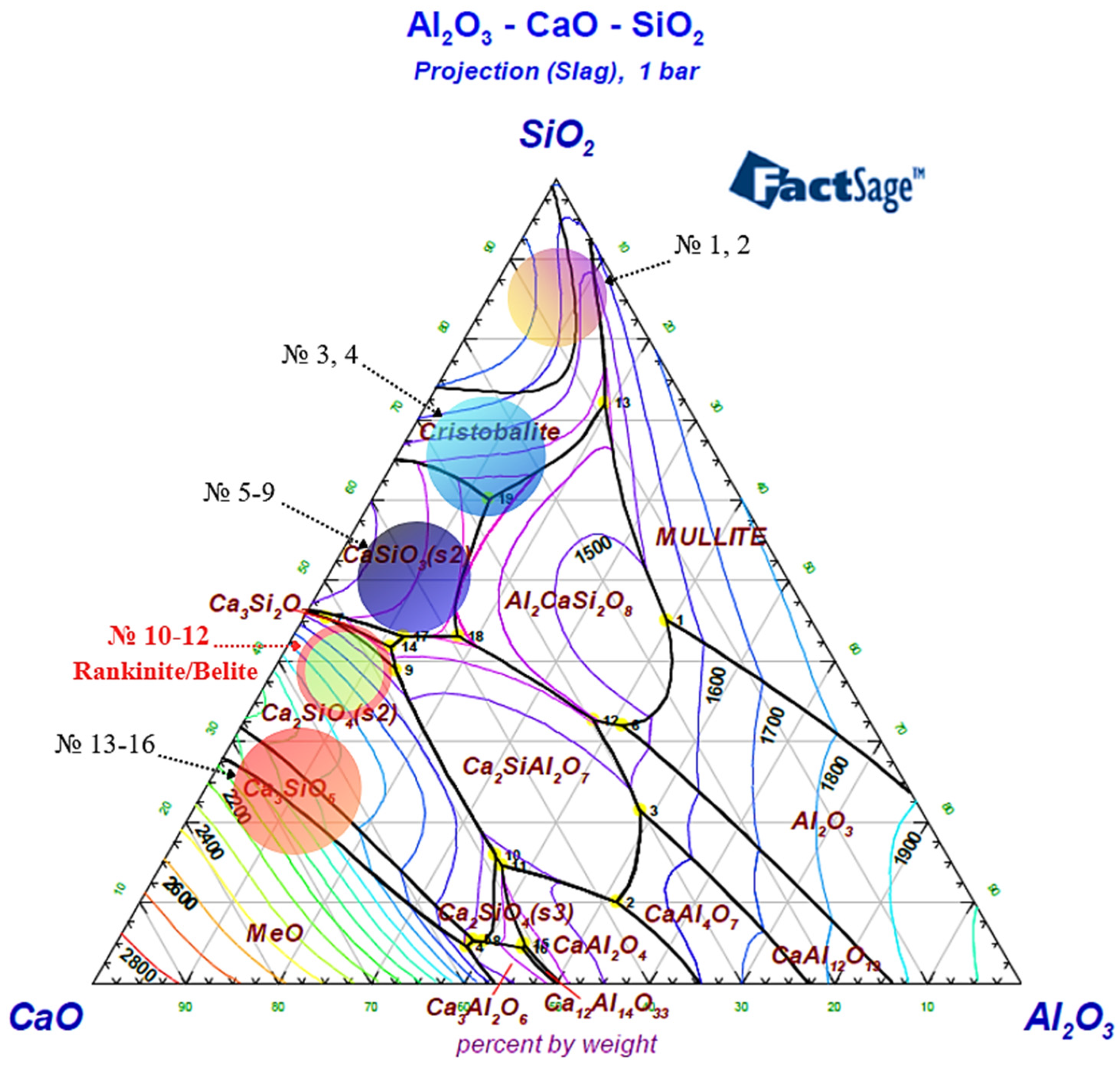
To optimize the slag regime during the production of the complex Cr–Mn ligature, a phase analysis of the Al
2O
3–CaO–SiO
2 system was carried out based on the corresponding phase diagram. To assess the effect of lime consumption on the liquidus temperature and slag phase composition, the investigated compositions were grouped into several characteristic regions, as shown in
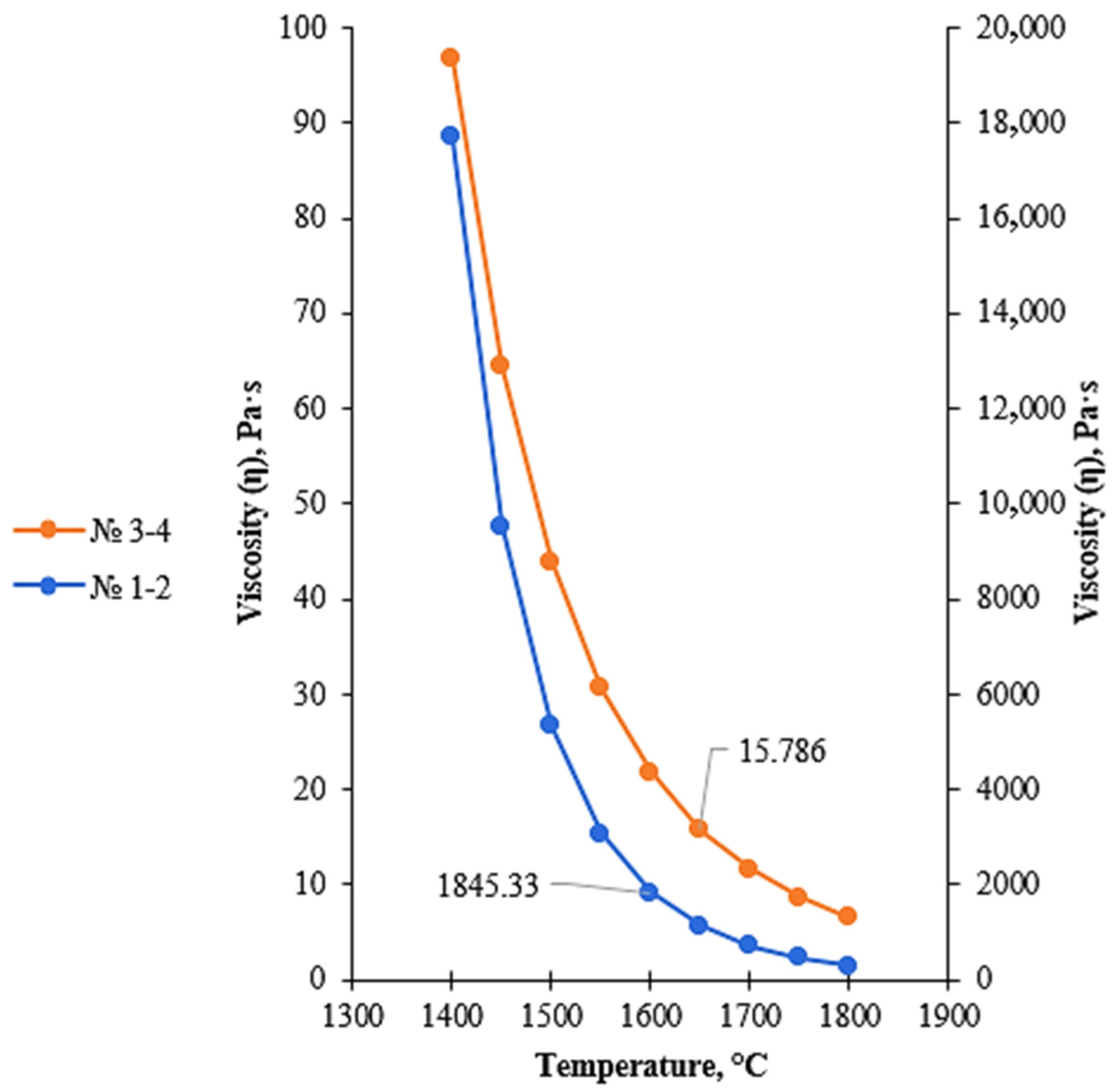
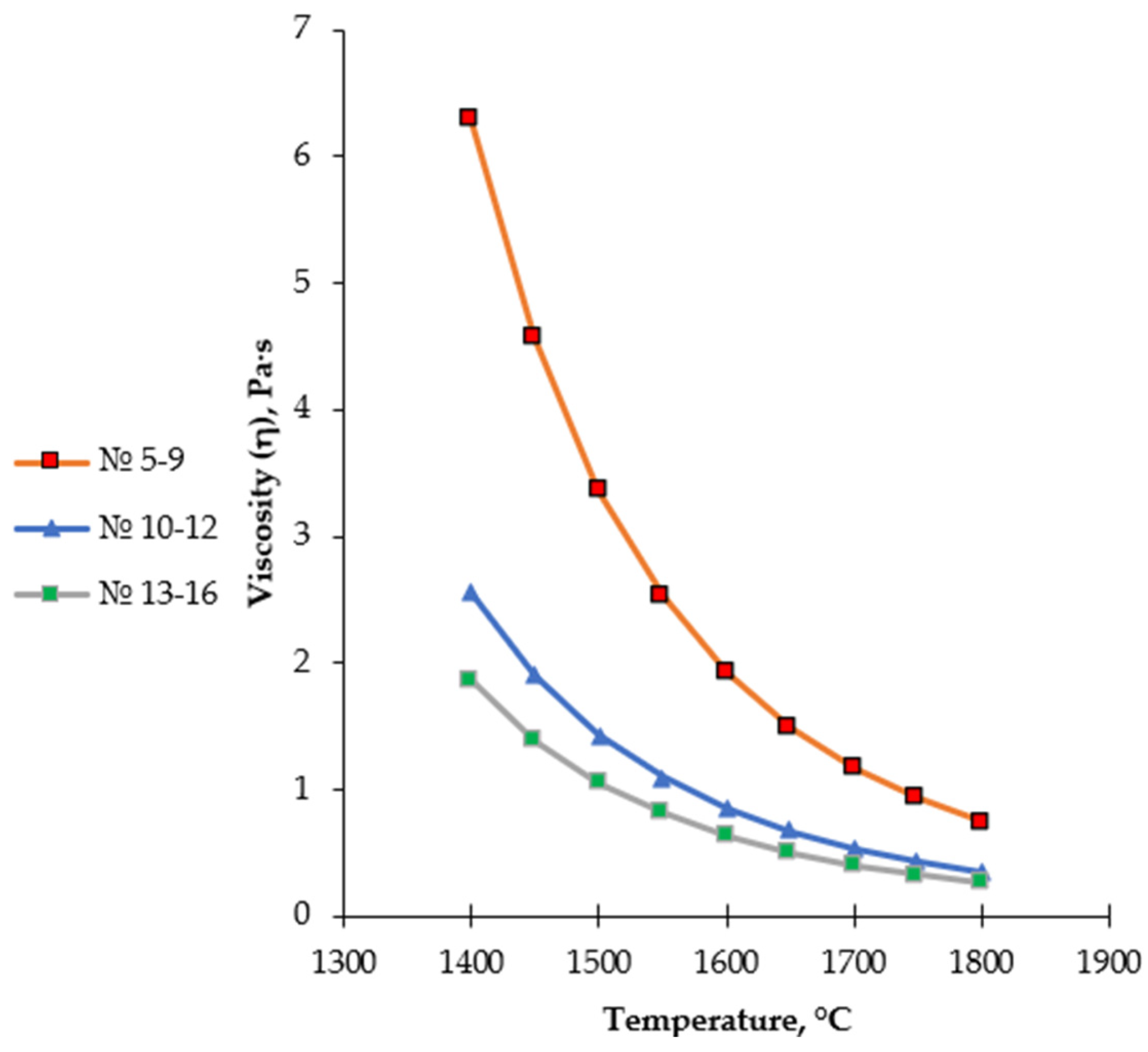
Figure 6. In addition, the viscosity of the identified slag regions was analyzed in detail over a wide temperature range (
Figure 7 and
Figure 8;
Table 5 and
Table 6).
Regions 1–2 correspond to silica-rich slags with extremely low basicity and are located near the SiO2 apex of the Al2O3–CaO–SiO2 phase diagram. These regions are characterized by a high silica content, which results in a highly polymerized silicate melt structure. The spatially extended network of [SiO4] tetrahedra leads to a sharp increase in viscosity and a reduction in slag fluidity, thereby hindering the movement of metallic droplets and impairing effective metal–slag separation.
Regions 3–4 correspond to the thermodynamic stability field of the cristobalite phase. For these compositions, SiO2 dominates the slag, promoting the formation of its high-temperature crystalline modifications. The presence of cristobalite increases the structural rigidity of the slag and maintains high viscosity values, while the transition of the melt to a fully liquid state becomes possible only at relatively high temperatures. When transitioning from regions 1–2 to regions 3–4, a decrease in activation energy of approximately 99 kJ/mol is observed, indicating the initial stage of silicate network depolymerization; however, both regions remain characterized by high viscosity and limited fluidity.
Regions 5–9 are characterized by the predominance of the CaSiO3 (wollastonite) phase and are formed with a gradual increase in CaO content. Within this range, a decrease in the degree of silicate network polymerization is observed, resulting in a noticeable reduction in slag viscosity compared to silica-rich regions. However, due to the still insufficient CaO content, the rheological properties of the slag do not yet reach an optimal technological level. Consequently, Regions 5–9 exhibit a transitional character, reflecting the evolution from low-basicity silicate systems toward high-basicity calcium-containing slags.
Regions 10–12 correspond to the thermodynamic stability fields of rankinite (Ca3Si2O7) and belite (Ca2SiO4) phases in the Al2O3–CaO–SiO2 system and were selected in the present study as the primary working range for experimental smelting. In these regions, the CaO/SiO2 ratio reaches optimal values, leading to pronounced depolymerization of the silicate melt. The breakdown of the spatial silicate network is accompanied by a substantial decrease in viscosity and the formation of a highly fluid slag, creating favorable conditions for the free movement of metallic droplets, their coalescence, and efficient metal–slag separation.
According to the thermodynamic modeling results, within this range, the slag remains fully liquid in the temperature interval of 1600–1650 °C, and the phase equilibrium is characterized by relative stability. This ensures deep reduction of chromium and manganese and facilitates the separation of the metallic phase. In this context, the rankinite–belite region represents an optimal compromise between slag rheological properties and its metallurgical functions.
The temperature dependence of slag viscosity for regions 10–12 was described using the Frenkel–Andrade equation (
Table 6). The calculated activation energy for viscous flow is E
a = 142.85 kJ/mol, indicating a relatively low degree of slag structure polymerization and reduced energy barriers for ionic transport. This activation energy value corresponds to the formation of a low-viscosity, highly fluid melt, ensuring the technological stability of the smelting process.
In this regard, precise selection and dosing of lime in experimental studies are of fundamental importance. Excessive CaO addition may shift the slag composition toward an ultra-high basicity region with an increased risk of solid phase formation, whereas insufficient CaO leads to increased viscosity and deterioration of the melt’s technological properties. Therefore, optimal CaO addition allows full realization of the advantages of the rankinite–belite region while minimizing adverse effects during system cooling.
Regions 13–16 are characterized by a further increase in CaO content and correspond to the formation of highly basic, including tricalcium, phases. In this range, the likelihood of free CaO and MeO-type phases increases, and the system shifts toward a high-temperature domain (≥1700 °C). Excessive slag basicity may enhance chemical aggressiveness, accelerate refractory lining wear, and increase the risk of phase instability, making these regions undesirable for industrial application.
Thus, slag compositions corresponding to regions 10–12 were selected for experimental investigations, as they exhibit thermodynamic stability, favorable rheological properties, and ensure efficient metal–slag separation. The calculated chemical compositions of the metallic and slag phases obtained from thermodynamic modeling are presented in
Table 7. These data provide a scientific basis for planning and implementing experimental smelting trials, enabling a preliminary assessment of the effects of charge composition, temperature regime, and slag properties on the stability and efficiency of the metallurgical process.




 ,
,