
Article

Production and Characterization of Ti-6Al-4V Foams Produced by the Replica Impregnation Method

Metallurgical and Materials Engineering, Ankara Yıldırım Beyazıt University, Ankara 06010, Türkiye
*
Author to whom correspondence should be addressed.
Metals 2025, 15(12), 1354; https://doi.org/10.3390/met15121354
Submission received: 2 October 2025 / Revised: 3 December 2025 / Accepted: 5 December 2025 / Published: 9 December 2025

Abstract

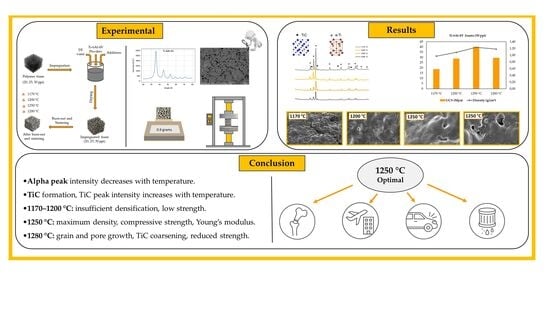
Porous Ti-6Al-4V foams are excellent materials due to their low density, high specific strength, and excellent biocompatibility. This study investigates the fabrication of open-cell Ti-6Al-4V foams using the replica impregnation method with polyurethane templates of varying pore sizes (20, 25, and 30 ppi) and sintering temperatures (1170 °C, 1200 °C, 1250 °C, and 1280 °C). The effects of these parameters on microstructural evolution, phase composition, and mechanical properties were examined. Microstructural analysis showed that optimum densification occurred at 1250 °C. However, at 1280 °C, excessive grain growth and pore coarsening were observed. XRD, SEM, and EDS analyses confirmed that α-Ti was the matrix phase, while titanium carbide formed in situ as a result of the carbon residues released from the decomposed polyurethane template. With the development of the TiC phase and enhanced interparticle bonding due to sintering, the compressive strength progressively increased up to 1250 °C. At 1280 °C, strength decreased due to excessive TiC growth, causing brittleness and pore coarsening, reducing structural integrity. Maximum compressive strength of 40.2 MPa and elastic modulus of 858.9 MPa were achieved at 1250 °C with balanced TiC dispersion and pore structure. Max density of 1.234 g/cm3 was obtained at 1250 °C. Gibson-Ashby analysis and the fracture surfaces confirmed the brittle behavior of the foams, which is attributed to the presence of TiC particles and microcracks in the structure. The study concludes that 1250 °C provides an ideal balance between densification and structural integrity, offering valuable insights for biomedical and structural applications.

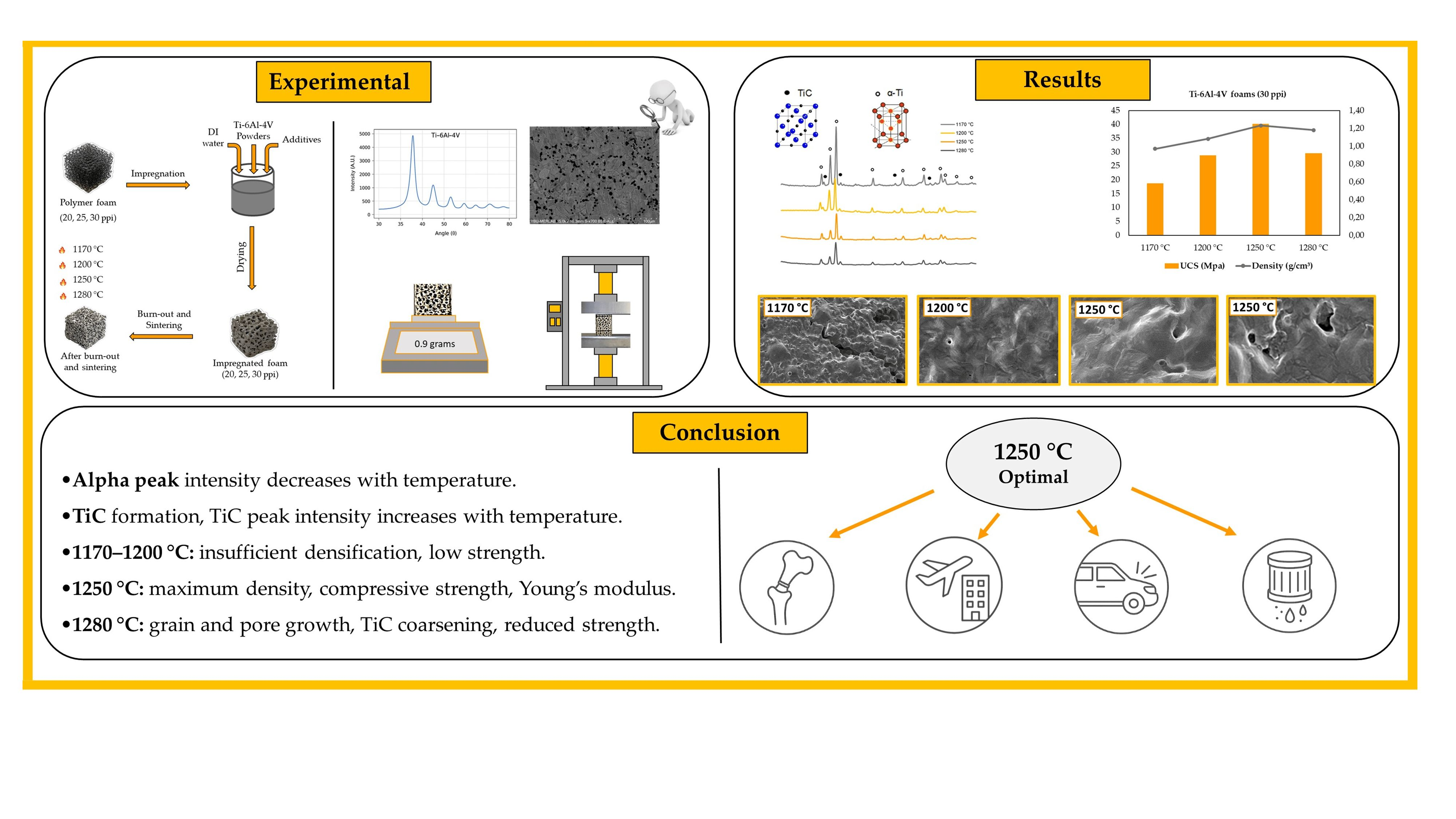
Graphical Abstract

1. Introduction

Metallic foams are a class of relatively lightweight structural materials that combine the mechanical strength of metals with the properties of a porous structure. These materials exhibit an exceptional strength-to-weight ratio. In addition, their high surface area increases their energy absorption and improves thermal and acoustic insulation capacity. Metallic foams are used in a wide range of applications, such as impact and energy absorbers, thermal and acoustic insulation, lightweight structural components, filtration, catalyst supports, heat exchangers, and electrode materials or supports in energy storage systems [1,2,3,4]. Recently, their application potential has expanded into the biomedical field, particularly for orthopedic and dental implants, due to their ability to mimic the structural and mechanical behavior of trabecular bone [5,6].
Titanium and its alloys are widely used owing to their combination of properties, such as low density, high specific strength, excellent corrosion resistance, and biocompatibility. One of these alloys is Ti-6Al-4V, which contains 6% Al (alpha, α, phase stabilizer) and 4% V (beta, β, phase stabilizer) and is also commonly used as a porous material. Aluminum increases the alloy’s strength, and vanadium stabilizes the β-phase, improving ductility, formability, and toughness. Owing to its remarkable properties, Ti-6Al-4V is a widely preferred material for critical components in the aerospace, marine, and chemical industries, as well as for orthopedic and dental implants, where long-term durability and biocompatibility are critical [6,7,8].
Several techniques are used to fabricate metallic foams, such as powder metallurgy, slip casting, freeze casting, laser-induced foaming, additive manufacturing, and the replica impregnation method [5,6,9,10,11,12].
The replica impregnation method remains a relatively simple and cost-effective approach for fabricating open-cell metal foams with porosities exceeding 80%. With this technique, a polymeric foam serves as a sacrificial template. This enables the replication of its cellular structure using metal powders of any desired composition. The pore size in the final product can be tailored by selecting template foams with different cell sizes [13].
Widely used in both research and industrial applications, the replica impregnation method offers a versatile and effective route for producing open-cell metallic foams. However, certain stages of the process, particularly manual slurry impregnation and excess slurry removal, may adversely affect the structural homogeneity of the resulting foam. As reported in a study by S.Y. Gomez et al., slurries with low viscosity may lead to insufficient coating of the template, whereas those with high viscosity may cause pore blockage. Moreover, manual removal of excess slurry may result in a nonuniform coating thickness, which can lead to structural inhomogeneity, an increased risk of cracking, and unintended variations in density [14].
These observations underscore critical importance of precise process control and the need for standardized procedures to achieve reproducible, uniform foam structures.
Additionally, Manonukul et al. reported that incomplete coating of internal surfaces or insufficient strut development in specific regions may cause variations in density and mechanical properties among samples. As a result, the expected linear increase in density with decreasing pore size was not consistently observed in all cases [13].
Polyurethane (PU) foams are widely preferred as templates due to their low cost, ease of processing, and highly uniform pore structure. They are commercially available in two forms: polyester-based and polyether-based. The physical and chemical characteristics of the polymer template play a decisive role in determining the microstructure of the final metallic foam [13]. Previous studies have shown that polyether-based PU foams decompose at higher temperatures than their polyester-based counterparts, leaving carbon residues within the structure. The residual carbon can react with the metallic matrix, leading to the in-situ formation of titanium carbide (TiC) phase [15]. On the other hand, the addition of secondary phases to enhance mechanical strength in Ti-6Al-4V alloys are a common approach, and these phases are formed through in situ reactions rather than being added externally [16,17]. Although TiC formation has been reported to influence the mechanical behavior of porous Ti-6Al-4V structures, the effect of sintering temperature on the amount and morphology of TiC, as well as its correlation with mechanical performance, remains insufficiently explored [15]. Furthermore, there is limited understanding of how sintering temperature governs diffusion mechanisms within the structure, as well as the resulting microstructural evolution and mechanical integrity. The present study addresses this gap by systematically investigating these relationships.
In this study, open-cell Ti-6Al-4V foams were fabricated using polyurethane template foams with three different pore sizes (20, 25, and 30 ppi) via the replica impregnation method. The produced samples were sintered at four different temperatures (1170 °C, 1200 °C, 1250 °C, and 1280 °C) to examine how processing conditions influence the resulting material. A systematic investigation was carried out to determine how pore size and sintering temperature affect the phase composition, microstructural characteristics, and mechanical performance of the foams, providing insights into the design of tailored porous titanium structured.

2. Materials and Methods

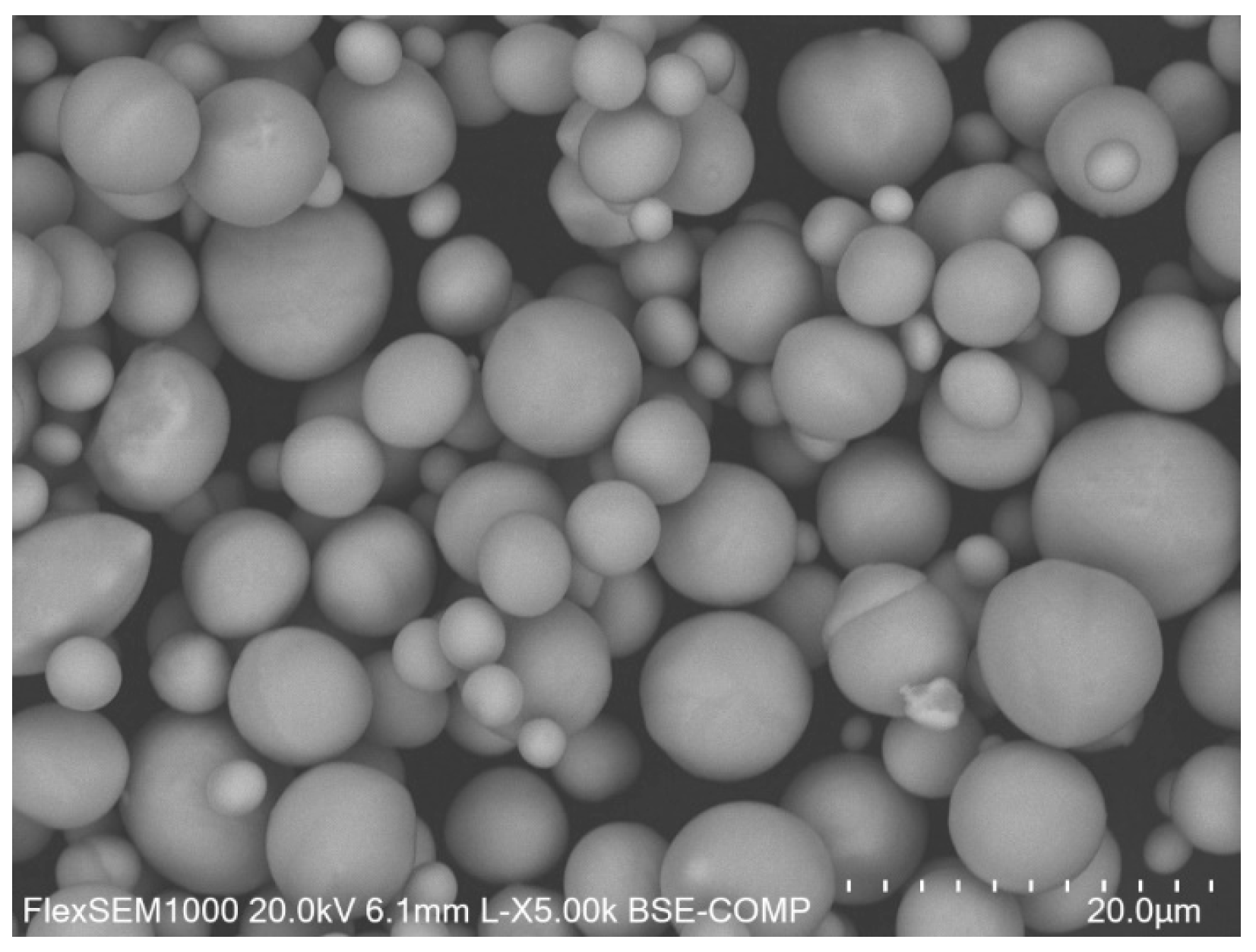
In this study, spherical commercially pure Ti-6Al-4V powders, supplied by Baoji Li Hua Non-Ferrous Metals Co., Ltd. (Baoji, China), were used as the base material. The powders have a high purity of 99.7%, and their detailed chemical composition is given in Table 1 in comparison with the ISO 5832-3:2021 standard requirement. The powders have an average particle size of approximately 5.6 µm and spherical morphology. The SEM (Scanning Electron Microscopy; Hitachi SU5000, Hitachi High-Tech Corp., Tokyo, Japan) image of the powders is shown in Figure 1. To stabilize the slurry, an anionic dispersant, Dolapix CE64 (DP64; Zschimmer & Schwarz GmbH Co. KG, Lahnstein, Germany) was employed. This dispersant, which has a density of 1.2 g/cm3, contains polycarboxylic acid as its active ingredient. The slurry pH was adjusted using a NaOH (Merck KGaA, Darmstadt, Germany) solution. Polyethylene glycol (PEG 4000; Sigma-Aldrich, St. Louis, MO, USA) and methyl cellulose (MC; Sigma-Aldrich, St. Louis, MO, USA) were incorporated as binders, and their different burnout temperatures facilitate gradual thermal decomposition during processing. The final slurry composition (by weight) was: 84% Ti-6Al-4V powder, 11% deionized water, 3.5% PEG 4000, 0.7% MC, 0.5% Dolapix CE64 and 0.3% NaOH solution [18].
Particle size measurements were carried out using image analysis on SEM images. Three different SEM micrographs, captured at ×3000 magnification, were analyzed using ImageJ software (Fiji distribution, Version 1.54×). Before measurement, the images were calibrated using the scale bar, and background noise was minimized through contrast enhancement and threshold adjustment. For each image, the equivalent circular diameter (ECD) for each particle was automatically calculated by the software [20]. Table 2 shows the distribution of particle size.
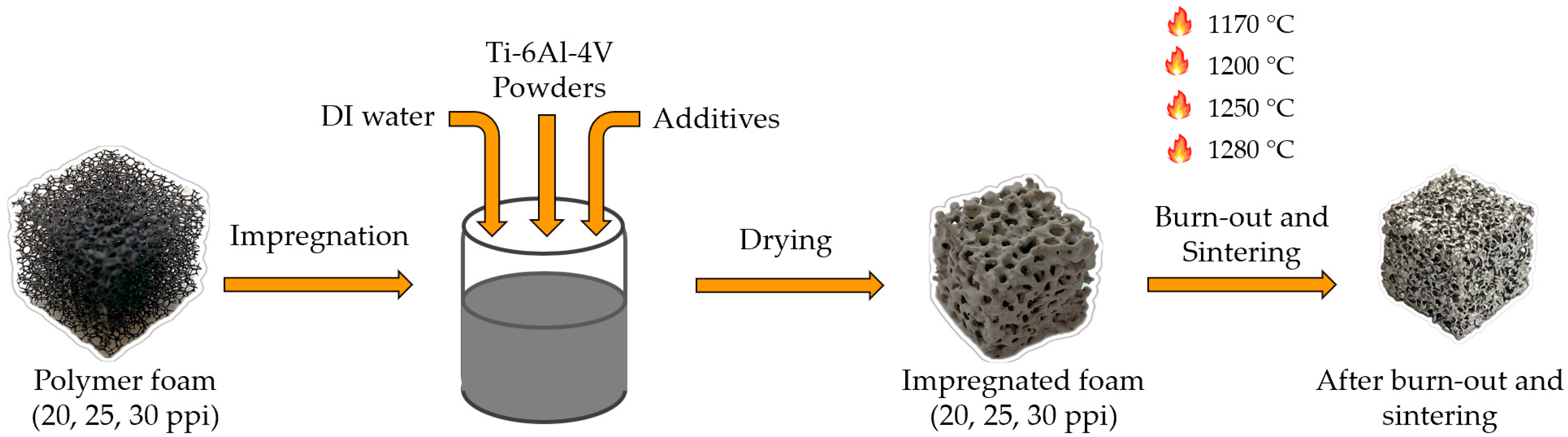
Open-cell Ti-6Al-4V foams were produced using a replica impregnation method (Figure 2). PU foams with pore sizes of 20 ppi, 25 ppi, and 30 ppi served as templates. Cubes of 14 mm × 14 mm × 14 mm were prepared for compression testing. Initially, the binders were dissolved in DI water using a magnetic stirrer for 1.5 h, after which Ti-6Al-4V powder was gradually added to prevent agglomeration. The dispersant and NaOH solution were then introduced and mixed for 1 h. Templates were dipped into the slurry three times to ensure full infiltration, and the excess slurry was removed by gentle squeezing.
The coated foams were dried in two stages: 80 °C for 1 h for structural stabilization, and 45 °C for 24 h for moisture removal. Burn-out and sintering were carried out in an atmosphere consisting of 5% hydrogen-95% argon. Before the process, the furnace (GSL-1600X, MTI Corporation, Richmond, CA, USA) was flushed with mixed gas for 15 min. A TiH2 pellet was placed near the sample to minimize oxidation [21]. The samples were heated at an average rate of ~0.9 °C/min to 600 °C and held for 1 h for debinding. Then, the heating rate was increased to ~1.5 °C/min until the target sintering temperature was reached. Burn-out was performed at 600 °C for 1 h, followed by sintering at 1170 °C, 1200 °C, 1250 °C, and 1280 °C for 120 min to examine the effects of sintering temperature [18]. A continuous gas flow of 10 L/min was maintained from the beginning of heating until the samples cooled down.
Foam density was calculated from the measured mass and volume, with dimensional measurements (six per axis) averaged to minimize geometric variability [2]. Porous samples inherently exhibit geometric variations and roughness. To reduce the effect of these variations, six measurements were taken from the length, width, and height dimensions of each sample with a digital caliper, and the average value was calculated. X-ray diffraction (XRD; Rigaku Miniflex 600, Rigaku Corporation, Tokyo, Japan) was performed in the 20–90° range at a scan rate of 2°/min using Cu Kα radiation (λ = 1.5406 Å, 40 kV, 15 mA).
Unpolished samples were examined for surface and pore morphology, while the polished and chemically etched samples (Kroll’s reagent: 2% HF, 4% HNO3, balance water) were used to evaluate grain size, phase distribution, and secondary phases [22]. Microstructural evolution with sintering temperature was investigated via field emission scanning electron microscopy (FE-SEM; Hitachi SU5000, Hitachi High-Tech Corporation, Tokyo, Japan) equipped with an energy-dispersive X-ray spectroscopy (EDS) detector, with particular attention to pore morphology, grain structure, in situ titanium carbide (TiC) formation, and elemental distribution.
Compression tests were conducted on cubic specimens (14 mm × 14 mm × 14 mm) at a constant strain rate of 1 mm/min until structural collapse. For each condition, at least four specimens were tested, and average values with standard deviations were reported. Stress (σ) and strain (ε) were calculated as:
σ = P/A
ε = δ/(L0)
where P is the applied load, A is the initial cross-sectional area, δ is the axial displacement, and L0 is the initial length. The Young’s modulus (E) of each sample was determined from the slope of the linear (elastic) region of the stress-strain curve from Equation (3).
E = (σ2σ1)/(ε2ε1)

3. Results and Discussion

3.1. Microstructure and Phase Evolution

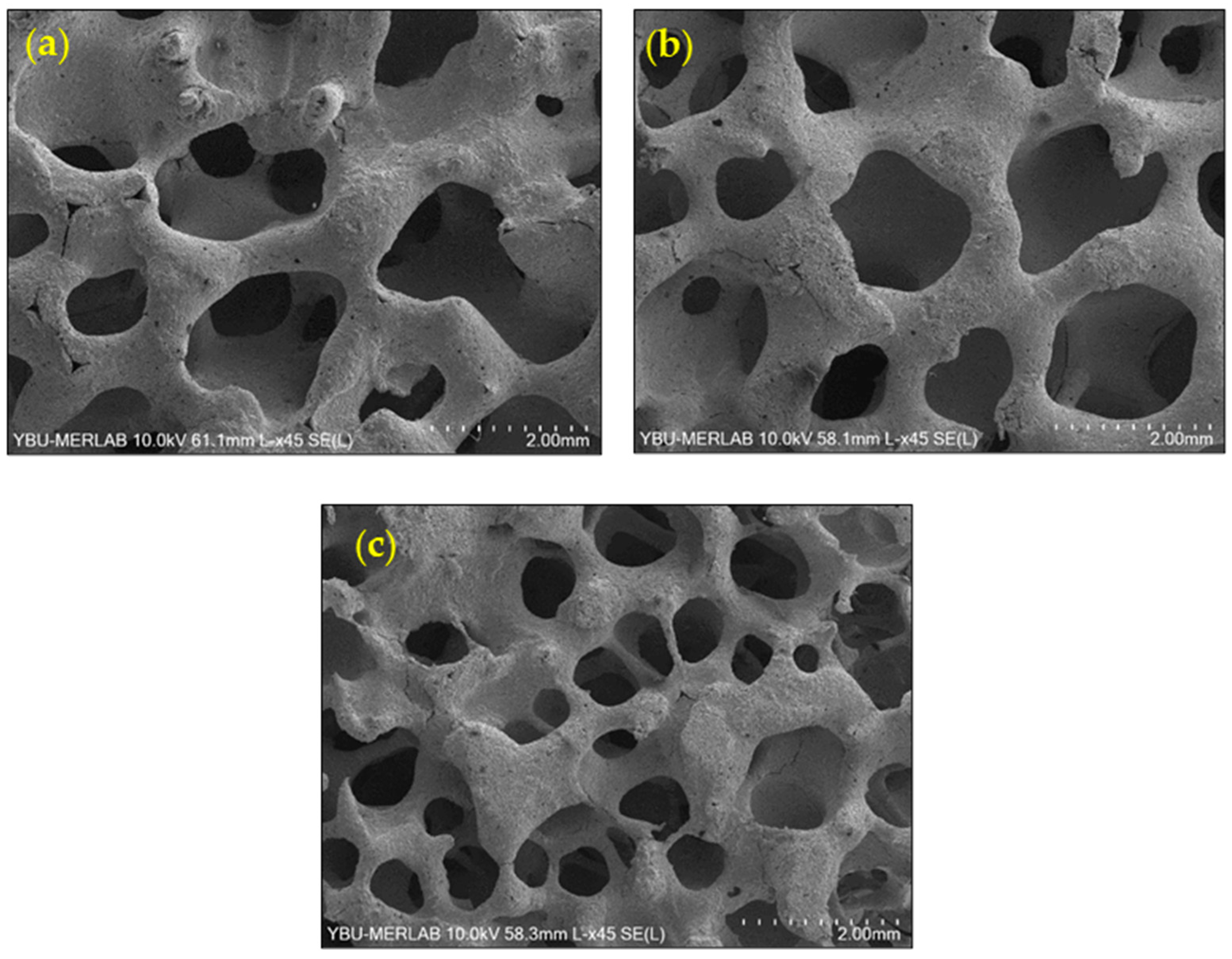
SEM images in Figure 3a–c show Ti-6Al-4V foams replicated from PU templates with 20, 25, and 30 ppi, respectively. All samples exhibit an open cell, nearly spherical pore morphology, with pore size decreasing as the ppi value increases from 20 to 30. Minor inhomogeneities in cell wall thickness originated from manual slurry squeezing during impregnation, which locally altered the final density and may have influenced mechanical response.
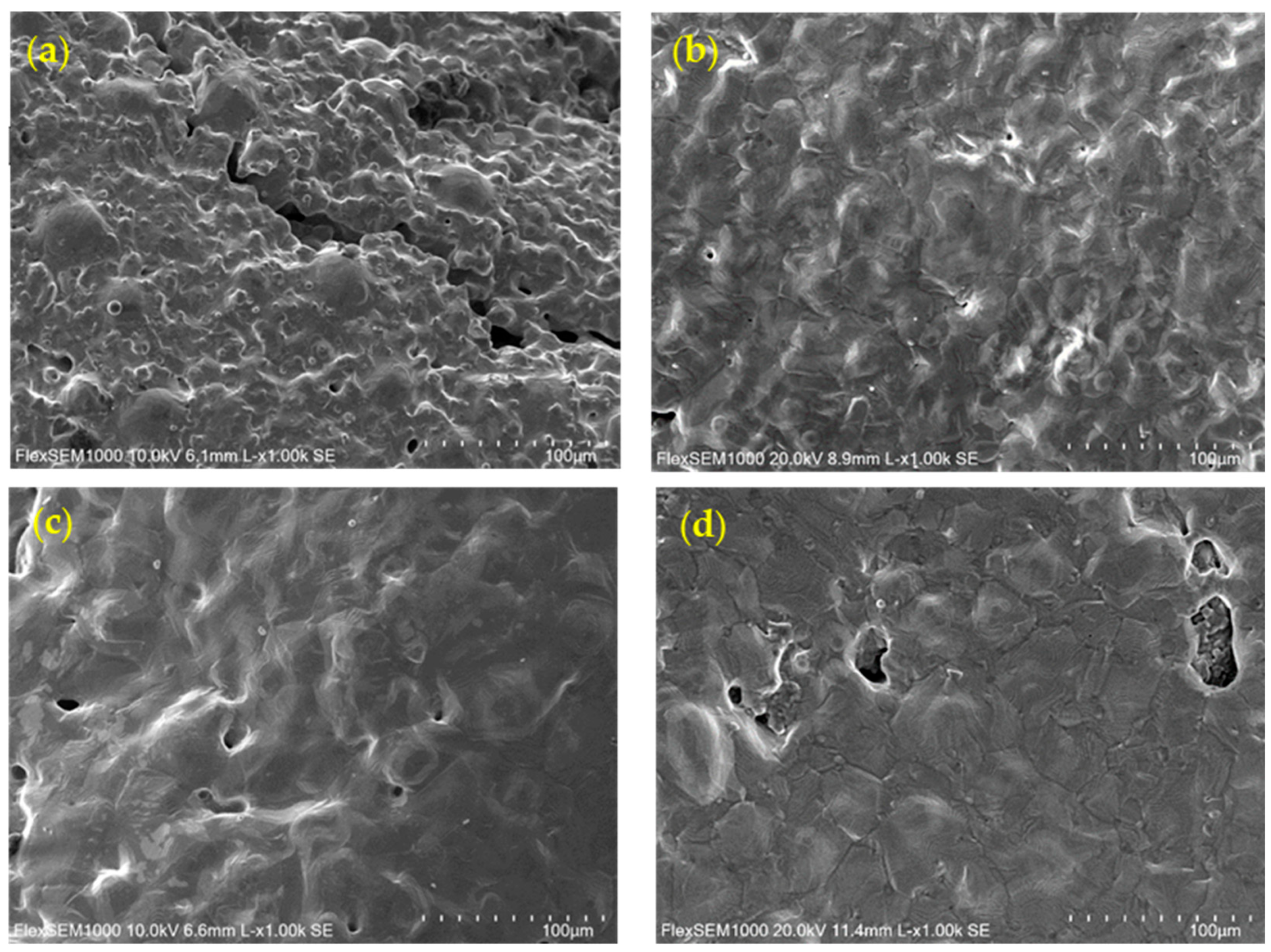
The microstructural evolution of sintered Ti-6Al-4V foams at different sintering temperatures (1170 °C, 1200 °C, 1250 °C, and 1280 °C) is primarily governed by atomic diffusion processes that promote neck growth, reduce porosity, and enhance densification, while also contributing to pore coarsening. These processes lower the overall surface energy of the system and play a key role in controlling pore morphology, grain growth, and microstructural evolution during sintering [23]. The samples produced using 20, 25, and 30 ppi templates exhibited similar microstructures at the same sintering temperature, and the 30 ppi specimen, which showed the best mechanical performance, was selected as the representative example (Figure 4). At lower temperatures (1170 °C and 1200 °C), the microstructure, shown in Figure 4a, b, exhibits small and irregularly shaped pores, indicating limited material transport and diffusion due to relatively low thermal energy. Additionally, the surface roughness is higher at these lower temperatures due to relatively limited atomic diffusion and weaker particle bonding. The lower thermal energy at these temperatures limits atomic mobility, resulting in weaker interparticle bonding and a rougher surface topography.
As the sintering temperature increases to 1250 °C and 1280 °C, the elevated thermal energy significantly accelerates diffusion processes. As a result, surface roughness decreases and a smoother surface is obtained, as shown in Figure 4c, d. The increased atomic diffusion at higher temperatures promotes smoother surface formation, as atoms migrate more effectively to fill irregularities and create a more homogeneous microstructure. All specimens produced using the 20 ppi, 25 ppi, and 30 ppi templates exhibit similar microstructural features when sintered at the same temperature. Therefore, only the microstructural images of the 30 ppi specimen, which demonstrate the best mechanical performance, are presented as representative. The increase in sintering temperature also results in a reduction in the number of small pores and an increase in the average pore size, accompanied by decreases in both overall porosity and surface roughness. Smaller pores, which have higher local curvature and surface energy, shrink and disappear as material diffuses toward larger pores, resulting in the development of more rounded and coarsened pore structures [24,25].
At the highest sintering temperature of 1280 °C, the microstructure exhibits signs of over-sintering. As seen in Figure 4, higher sintering temperatures promote sustained atomic diffusion, which drives pore enlargement through coalescence, leading to fewer pores but a significant increase in average pore size. This phenomenon, known as pore coarsening, results in the formation of larger and occasionally irregular pores [26]. It is observed that pore coarsening negatively affects the mechanical behavior during the compression test. The significant enlargement of pores reduces the structural integrity of the foam. When the sintering temperature exceeds 1250 °C, excessive sintering occurs, resulting in grain growth within the Ti-6Al-4V matrix and coarsening of the TiC particles. These microstructural changes adversely affect the mechanical properties, leading to reductions in strength and ductility. These findings highlight the need to consider the trade-off between densification and pore morphology when sintering at higher temperatures. This behavior is consistently observed for all pore sizes.
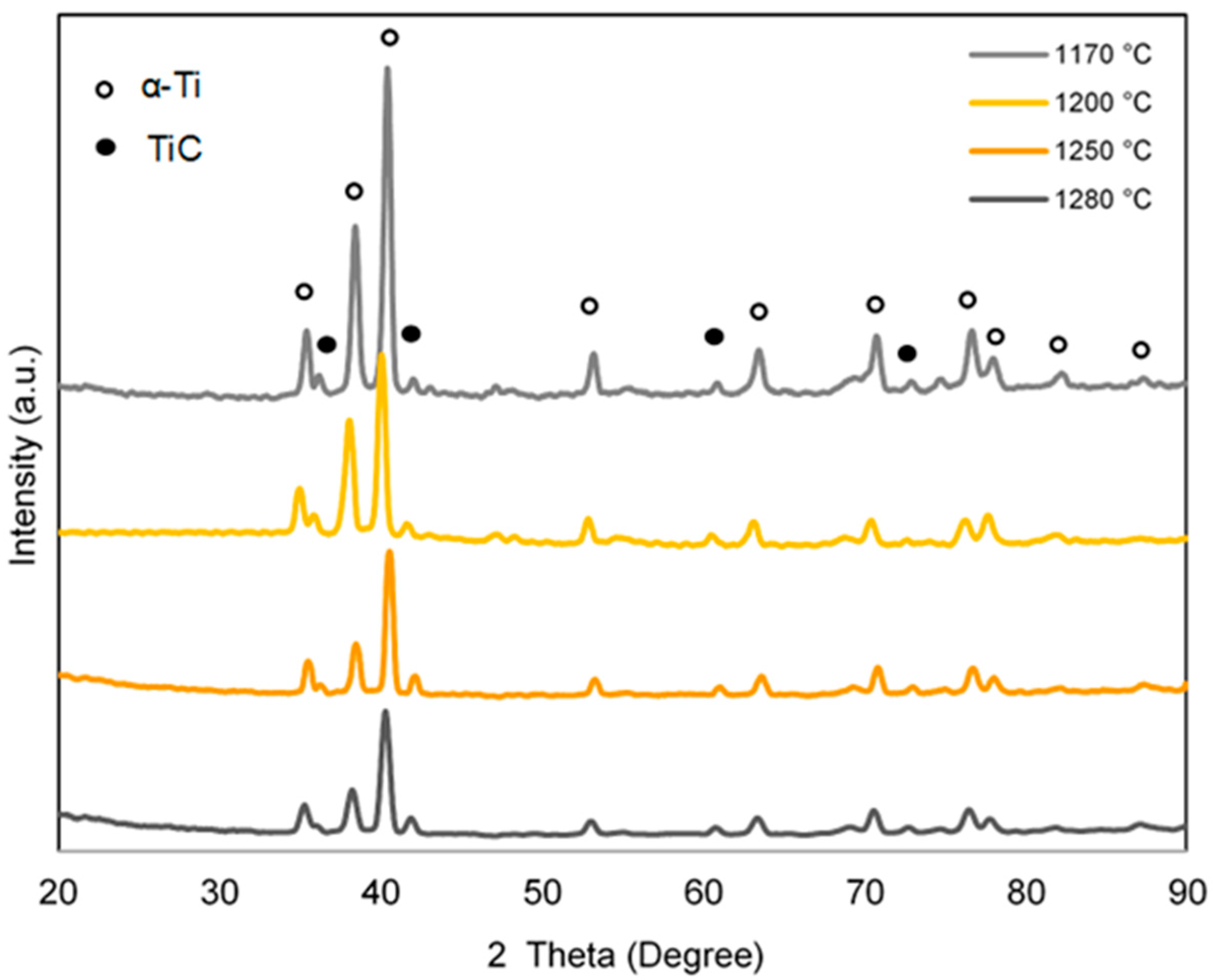
Figure 5 shows XRD patterns of sintered samples at 1170 °C, 1200 °C, 1250 °C, and 1280 °C. The XRD patterns confirm that α-Ti with a hexagonal close-packed (hcp) structure is the dominant crystalline phase in all samples. In addition, peaks corresponding to TiC are observed in the XRD patterns. These peaks indicate possible in situ titanium carbide formation, likely originating from carbon released during the decomposition of the polyurethane template [15]. The Ti-6Al-4V and TiC phases were confirmed by matching with the International Centre for Diffraction Data (ICDD) reference patterns 44-1294 and 32-1383, respectively [27,28]. XRD patterns show that the α-Ti peak intensity decreases as the sintering temperature increases. The intensity of the TiC peaks is observed to increase at higher temperatures. It can be concluded that higher sintering temperatures promote the formation and growth of the TiC phase. This occurs due to increased reactivity of residual carbon and enhanced diffusion rates at elevated temperatures. The leftward shift of the α-Ti peak at elevated temperatures can be attributed to lattice distortions and elemental redistribution resulting from carbon diffusion into the titanium matrix. Although vanadium-enriched regions were observed in the energy-dispersive X-ray spectroscopy (EDS) analysis, no β-phase peaks were detected in the XRD patterns. Although many studies report the presence of β-phase in Ti sintered above 980 °C, no β-phase peaks were detected in this study [29,30]. This absence can be attributed to the low volume fraction of the β-phase, which is below the XRD detection limit.
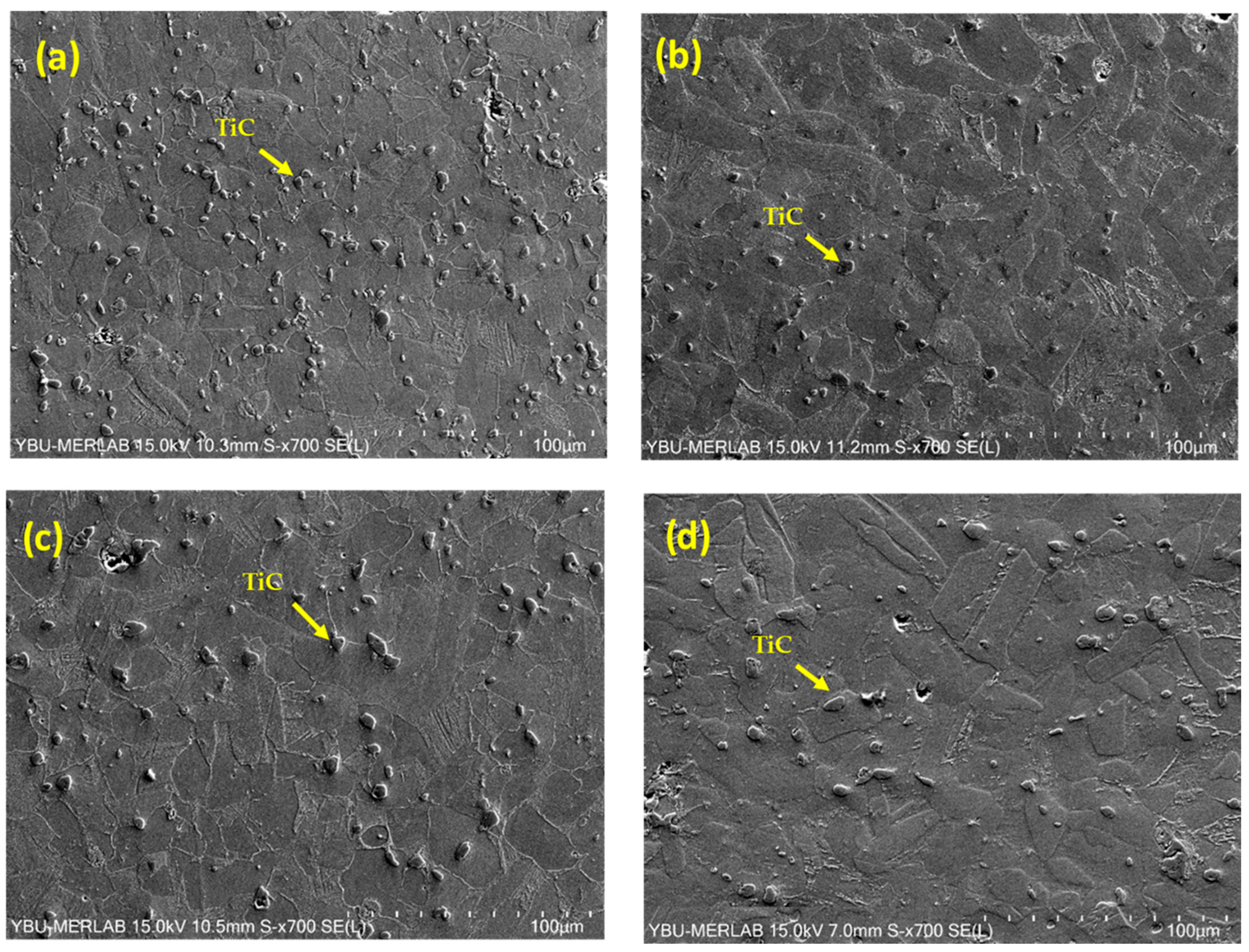
Figure 6 shows the SEM images of the specimens’ surfaces (30 ppi). Remarkable microstructural changes were observed with increasing sintering temperature. In the samples sintered at 1170 °C, the grains of the main phase and the TiC particles were relatively small; however, their sizes increased markedly at higher temperatures. Table 3 gives the mean ECDs of α-Ti grains and TiC particles at different sintering temperatures, calculated using the ImageJ analysis program [20]. The average TiC grain size was 5.63 µm at 1170 °C, while it increased to 9.3 µm at 1280 °C. This corresponds to an approximate 65% increase in diameter over this temperature range. Similarly, the α-Ti grain size increased from 17.2 µm at 1170 °C to 32.1 µm at 1280 °C, representing an increase of approximately 86.7%. These results clearly indicate that both TiC and α-Ti grains coarsen progressively with a rising sintering temperature.
This coarsening behavior can be attributed to the enhanced diffusion kinetics at elevated temperatures, which promote atomic mobility and the growth of TiC particles. These TiC particles are formed as a result of the reaction between residual carbon from the polymeric sponge template and the Ti-6Al-4V alloy during sintering. As the temperature increases, the diffusion of carbon and alloying elements increases, leading to both the growth and coarsening of TiC particles.
Such microstructural changes may influence the mechanical properties of the sintered foams. Larger TiC particles can act as stress concentrators, potentially initiating cracks under mechanical loading. In contrast, finer and more uniformly distributed TiC particles contribute to strengthening by impeding dislocation motion [17].
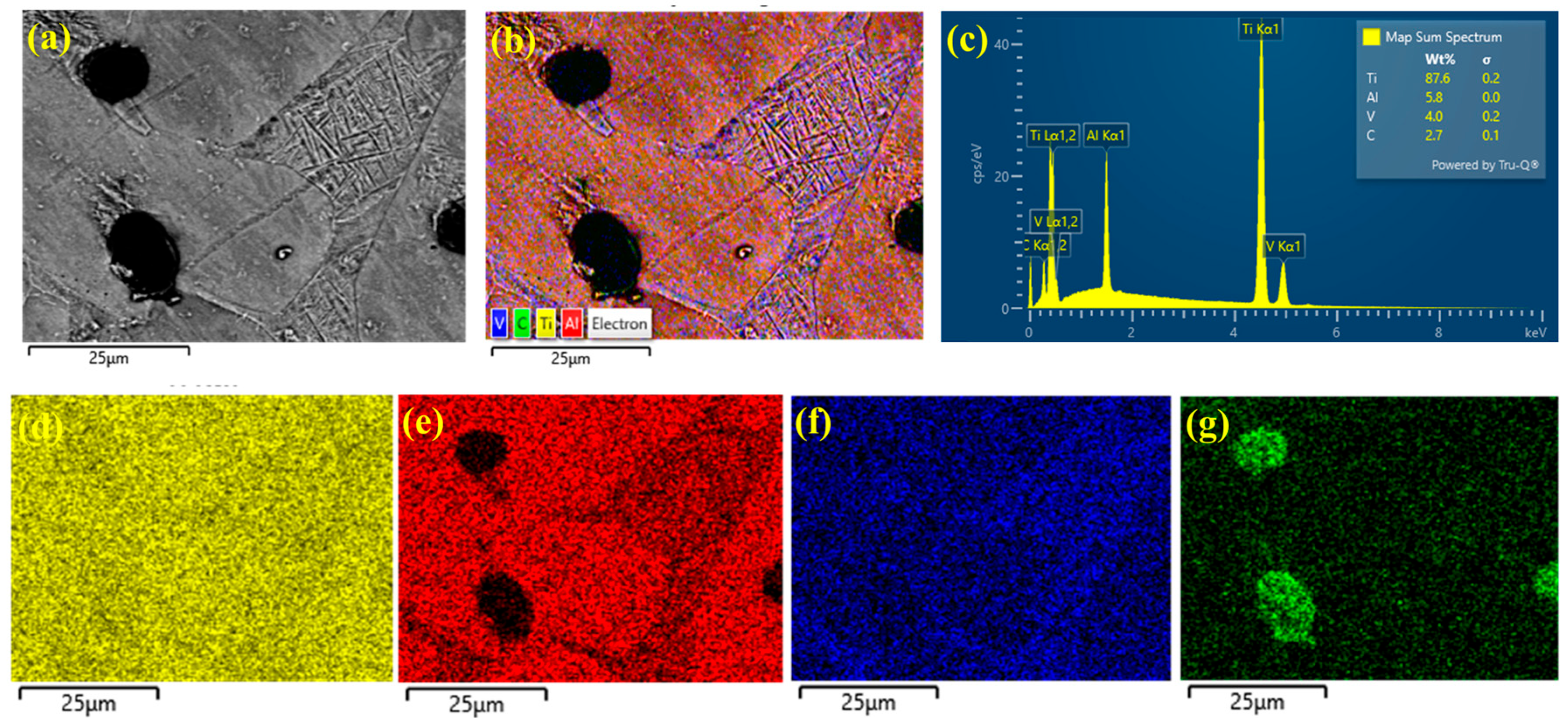
The elemental composition of Ti-6Al-4V alloy foams was examined using EDS analysis. The results for the specimen sintered at 1250 °C and 30 ppi are shown in Figure 7. In Figure 7a, the equiaxed α grains, TiC phase, and lamellar structures are observed. This microstructure is typical of Ti-6Al-4V alloys after high-temperature sintering. The EDS analysis of the foam showed that titanium, aluminum, vanadium and carbon were present (Figure 7). The area-scan results revealed that elemental concentrations varied across the surface. The EDS point analysis in Figure 7c shows 87.6 wt. % Ti, 5.8 wt. % Al, and 4.0 wt. % V, which is consistent with the nominal composition of Ti-6Al-4V alloy. The detected 2.7% carbon is attributed to residual carbon originating from the polymeric template used during foam fabrication. As shown in Figure 7d, Ti is uniformly distributed throughout the microstructure. Aluminum, which stabilizes the α phase, is enriched in certain regions (shown in red), whereas vanadium appears more concentrated in others (shown in blue), as seen in Figure 7e, f, suggesting V-enriched areas. However, these blue regions cannot be directly interpreted as β phase regions without complementary phase identification techniques. In the carbon elemental map (Figure 7g), carbon is concentrated in localized regions, consistent with the presence of TiC particles. This observation supports the in situ formation of TiC and is consistent with the XRD results [30].

3.2. Mechanical Properties

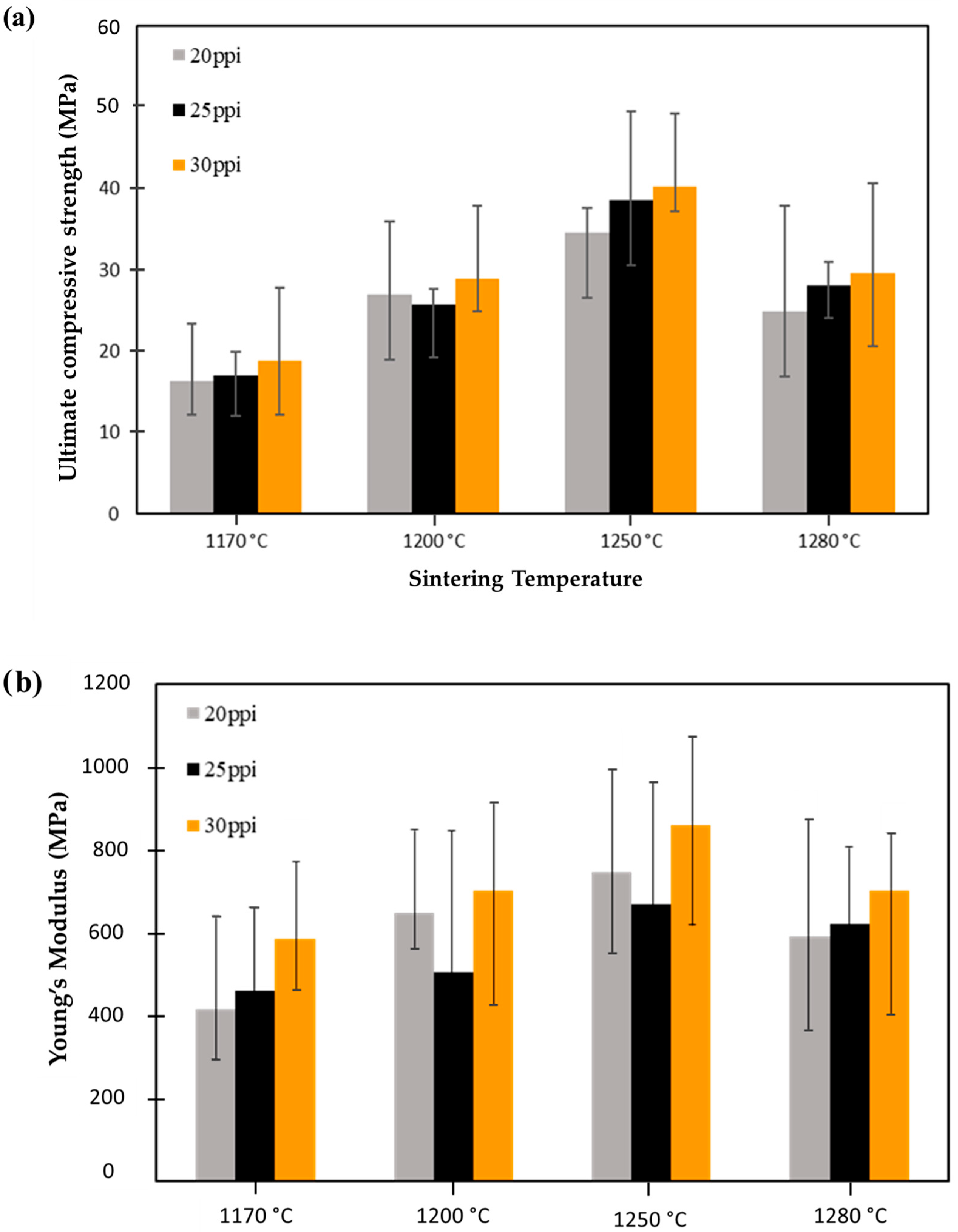
Table 4 presents the average Young’s modulus, ultimate compressive strength (UCS), and density values of all specimens. The mechanical strength and stiffness of structures generally increased with a sintering temperature up to 1250 °C. The highest UCS (40.2 MPa) and Young’s modulus (858.9 MPa) were obtained for the 30 ppi samples sintered at 1250 °C, which also exhibited the highest density (1.234 g/cm3).
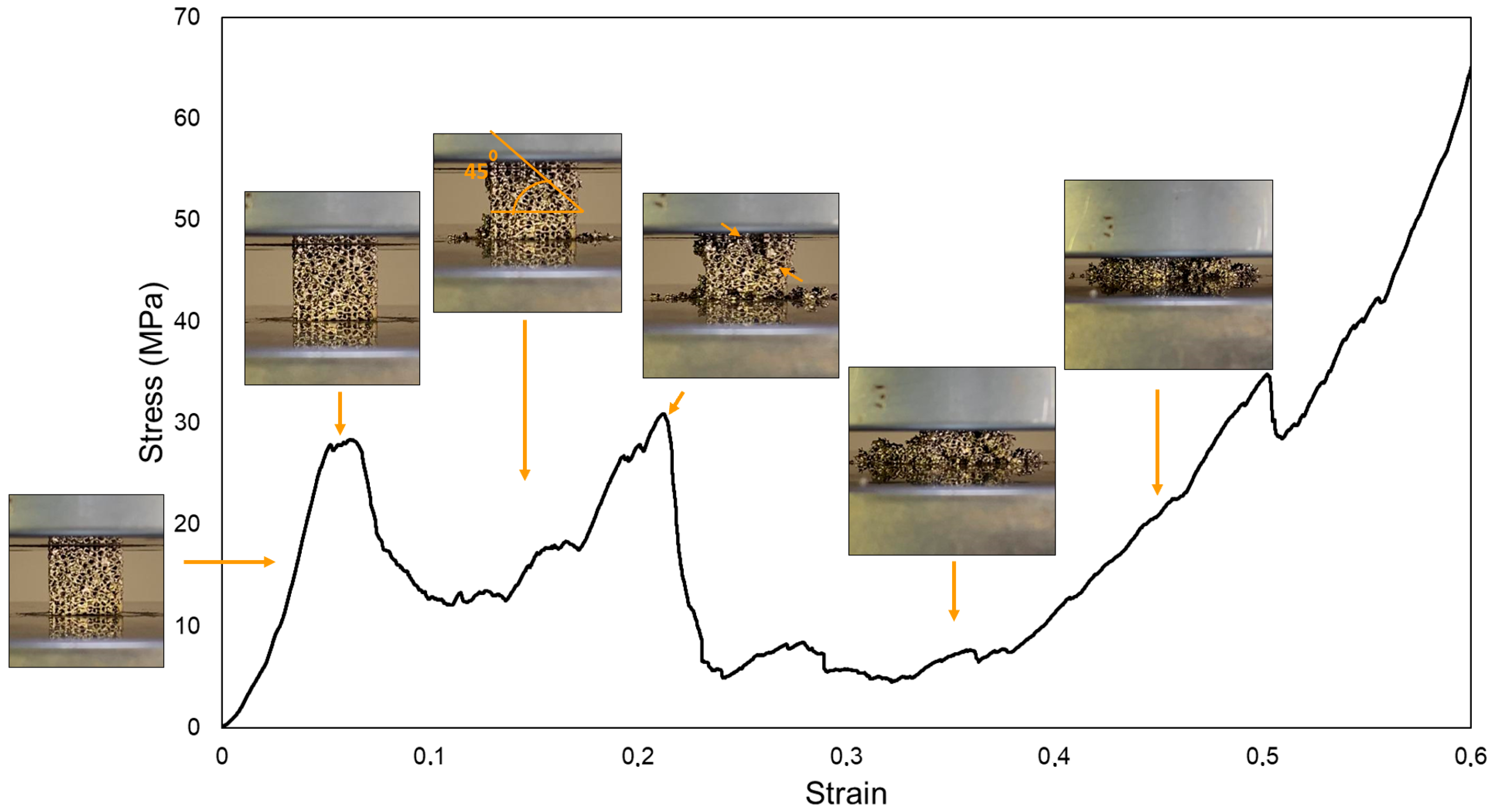
A digital camera was used to examine the deformation behavior of the porous Ti-6Al-4V samples during compression testing at 1 mm/min under room-temperature conditions. The compressive stress-strain curve shown in Figure 8 clearly demonstrates the characteristic three-step deformation behavior of porous metals. In the first step, there is a linear relationship between stress and strain observed due to the elastic deformation of the cell walls. In the second stage, a plateau region forms as the cell walls gradually collapse and buckle. During this stage, the material undergoes significant deformation while the stress remains nearly constant. This plateau region indicates the material’s energy dissipation capacity prior to the onset of densification. In the final stage, densification occurs as the structural elements become fully compressed, leading to a sudden increase in stress and causing the material to behave like a dense solid [11].
In addition, the images in Figure 8 show characteristic crush bands forming at an angle of ~45° to the loading direction. These deformation bands indicate the critical regions where the plastic deformation localizes and structural collapse initiates [31]. As shown in the graph, the metallic foam entered the densification step when the strain exceeded 0.35.
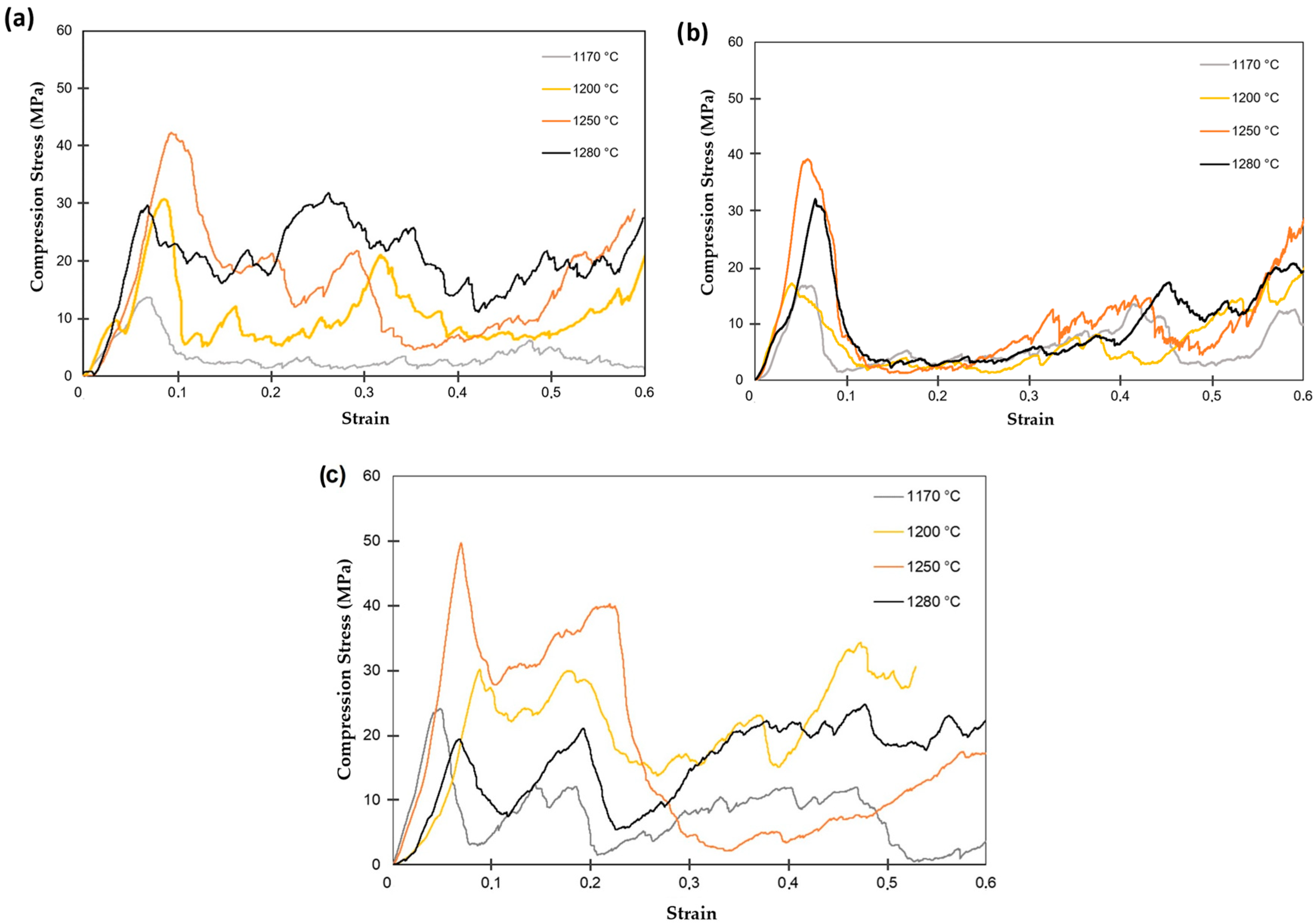
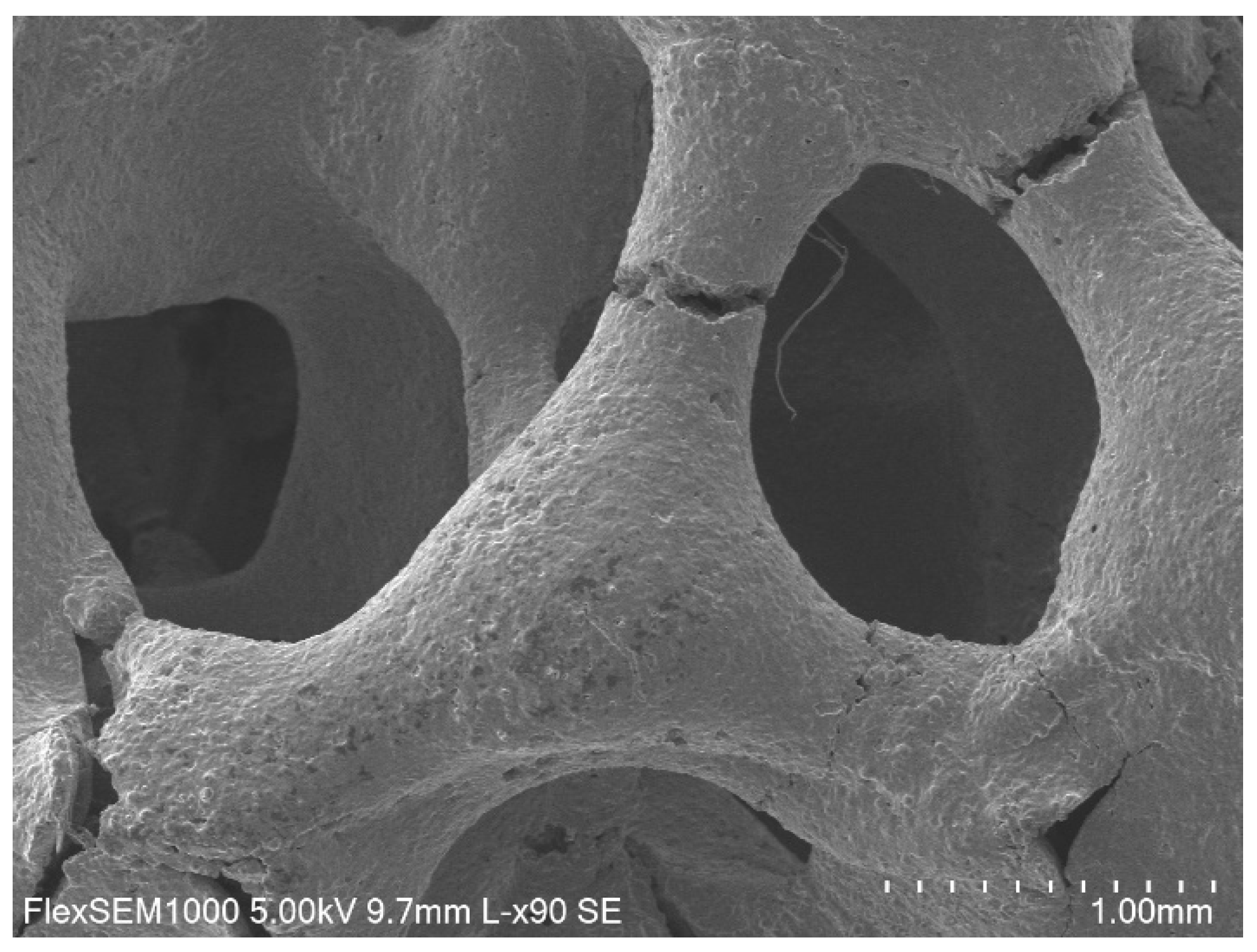
The stress-strain graphs in Figure 9 presents Ti-6Al-4V alloy foams with three different pore sizes and sintered at four different temperatures. In this study, fluctuations in the plateau region were observed at all pore sizes and sintering temperatures (Figure 9). This result is consistent with the findings of Del Guercio et al. [11], who reported that such fluctuations can be attributed to structural imperfections in metallic foams, such as wall cracking or missing cells. These features are typical indicators of brittle deformation behavior. Consistent with this finding, some cracks observed in the specimens of this study are shown in Figure 10. This figure belongs to 20 ppi foams; however, similar cracks were also observed in the other pore sizes.
The samples sintered at 1250 °C exhibited superior mechanical properties across all pore sizes compared to those sintered at other temperatures. This performance is attributed to a superior microstructure that provides a critical balance between densification and grain growth. At 1250 °C, the thermal energy was sufficient to provide effective interparticle bonding and reduce detrimental porosity. Consequently, the structural integrity and load-carrying capacity of metallic foams improved significantly.
However, the samples sintered at 1200 °C and 1280 °C exhibited lower ultimate compressive strength than those sintered at 1250 °C. Sintering at 1200 °C did not result in full densification, leaving residual porosity and weak interparticle necks. These structural defects served as stress concentrators, thereby compromising the mechanical strength of the material. In contrast, at 1280 °C, the samples reached a high level of densification. However, this was accompanied by significant grain and pore growth from excessive thermal energy. However, the excessive grain growth occurring at this temperature weakened the mechanical properties according to the Hall-Petch relationship and decreased the advantages gained from densification [19,32,33].
In this context, sintering at 1250 °C provides a good balance: it reduces porosity without initiating excessive grain growth. Ti-6Al-4V begins to melt at approximately 1604–1660 °C. Therefore, 1250 °C corresponds to a T/Tm ratio of about 0.75–0.78, which is consistent with the theoretically accepted sintering range. As a result, the mechanical properties at 1250 °C are superior to those obtained at 1170 °C, 1200 °C, and 1280 °C [32,33,34].
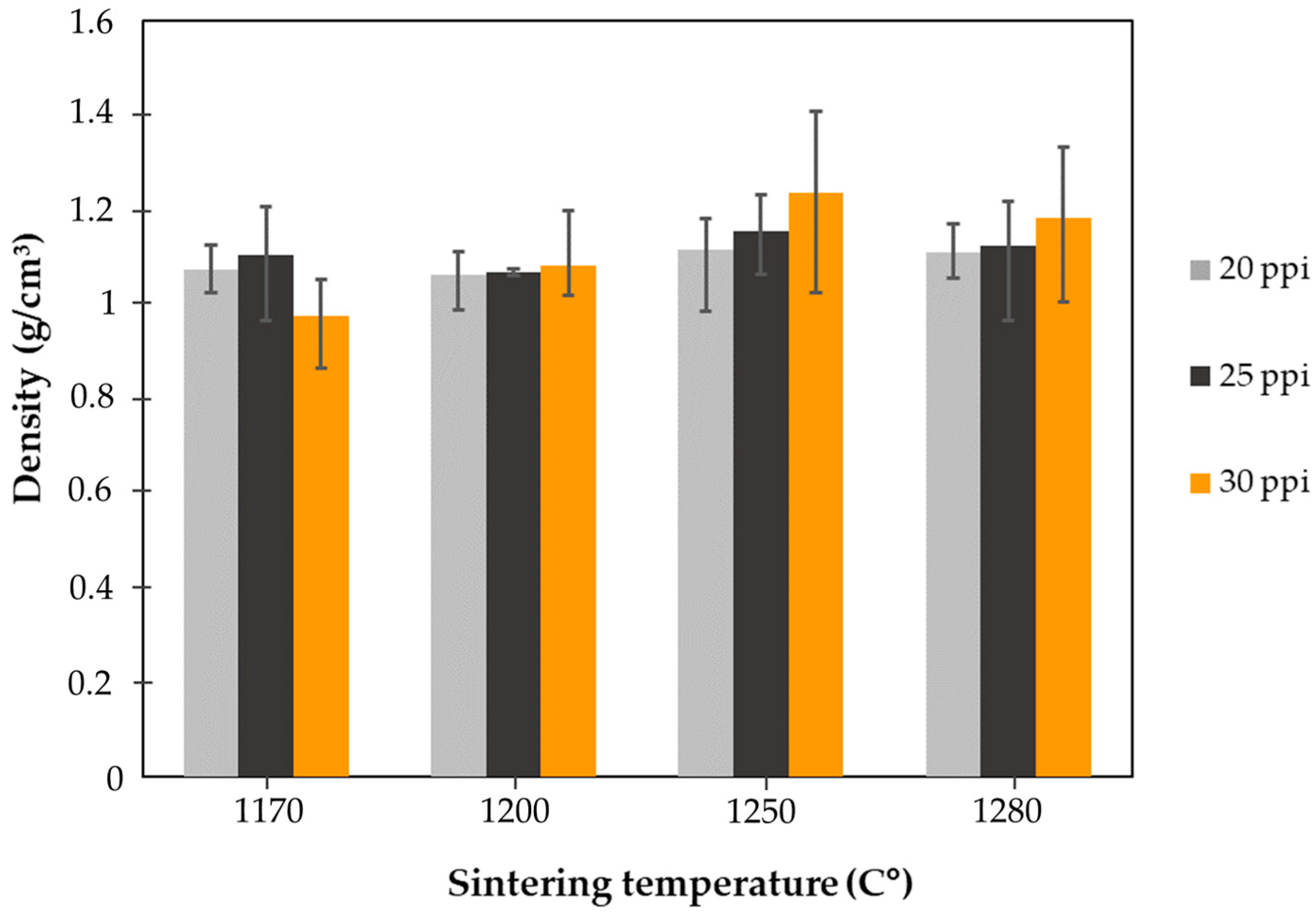
The densities of sintered Ti-6Al-4V foams varied between 0.97 g/cm3 and 1.23 g/cm3, representing the minimum and maximum values measured among all samples. As shown in Figure 11, the density differences between samples with different cell sizes were relatively small, even though their pore sizes were different. This limited effect was likely due to inhomogeneities introduced during the manual impregnation process, especially during the removal of excess slurry. Although efforts were made to standardize this step, SEM images and density measurements indicate that the 20 ppi and 25 ppi foams absorbed more slurry than intended. As a result, these samples exhibited densities that were higher than expected, which reduced the apparent influence of pore size on densification. Figure 3a, b support this interpretation, showing very similar pore morphologies and cell wall thicknesses for the 20 ppi and 25 ppi foams, despite their different template pore sizes. According to the literature, reducing the pore size generally increases the density; however, this relationship does not always exhibit a strictly linear behavior [13,35].
As the sintering temperature increased to 1250 °C and 1280 °C, the density increased more noticeably. This indicates that, in this study, densification mechanisms became more effective at elevated temperatures due to enhanced diffusion and enhanced grain bonding.
Although pore size has only a slight effect on density, the influence of sintering temperature is clearly evident. Figure 11 shows a substantial increase in the density for all structures as the sintering temperature increases. When the sintering temperature was increased from 1170 °C to 1250 °C, the density of the foams produced with the 30 ppi template increased by approximately 22% from 1.00 g/cm3 to 1.22 g/cm3. Enhanced atomic diffusion at elevated temperatures increases density by strengthening interparticle bonds and improving the overall efficiency of sintering. These accelerated diffusion processes reduce residual porosity, resulting in a more compact and homogeneous microstructure, as shown in Figure 4. This increase in density can be attributed to higher temperatures improving atomic diffusion, strengthening interparticle bonding, and improving the overall efficiency of sintering [36]. This reduces pore volume and produces a denser, more uniform structure. However, when the temperature was increased to 1280 °C, the density decreased slightly to 1.18 g/cm3. This decrease indicates that 1250 °C is the optimum sintering temperature in this study. As seen in Figure 4, pore coalescence occurred at 1280 °C due to excessive sintering.
As seen in Figure 12a, b, the ultimate compressive strength and Young’s modulus exhibit a similar behavior with density. The lowest mechanical property values were obtained at 1170 °C, with average ultimate compressive strength (UCS) values of 16–18 MPa and Young’s modulus values of 415–584 MPa, due to relatively limited sintering, as seen in Table 3. Although the effect of the template’s pore size on mechanical properties is limited, the highest UCS is obtained in 30 ppi samples. As the sintering temperature increases, both UCS and Young’s modulus rise significantly. At 1250 °C, the UCS reached an average of 40.2 MPa, and Young’s modulus reached 858.9 MPa, representing the highest mean values measured in this study. These values represent the averages; however, the maximum UCS was approximately 50 MPa, and the maximum Young’s modulus was approximately 1100 MPa. Higher sintering temperatures enhanced interparticle bonding and promoted densification through enhanced atomic diffusion. Additionally, the increase in interparticle bonding leads to higher stiffness. Moreover, TiC particles formed in the structure are considered to act as a reinforcement phase, contributing to increased strength and Young’s modulus up to 1250 °C. However, the mechanical properties decline at 1280 °C, stemming from microstructure coarsening, including carbide particles, Ti-6Al-4V grains, and pores.
It should be noted that the error bars for both Young’s modulus and compressive strength are relatively high, which can be attributed to the inherent heterogeneity of the porous structure. Variations in pore distribution, size, and interparticle bonding lead to fluctuations in mechanical performance among samples, resulting in a broader spread in data [37].
The Gibson and Ashby model is widely used to analyze the mechanical properties of cellular structures [1]. This model indicates that there is a relationship between the density and mechanical properties of porous structures. In this study, the mechanical behavior of Ti-6Al-4V foam samples produced by the replica impregnation method was analyzed within this framework. According to the model, the relationship between Young’s modulus and relative density is given by:
E/Es = C1(ρ/ρs) n
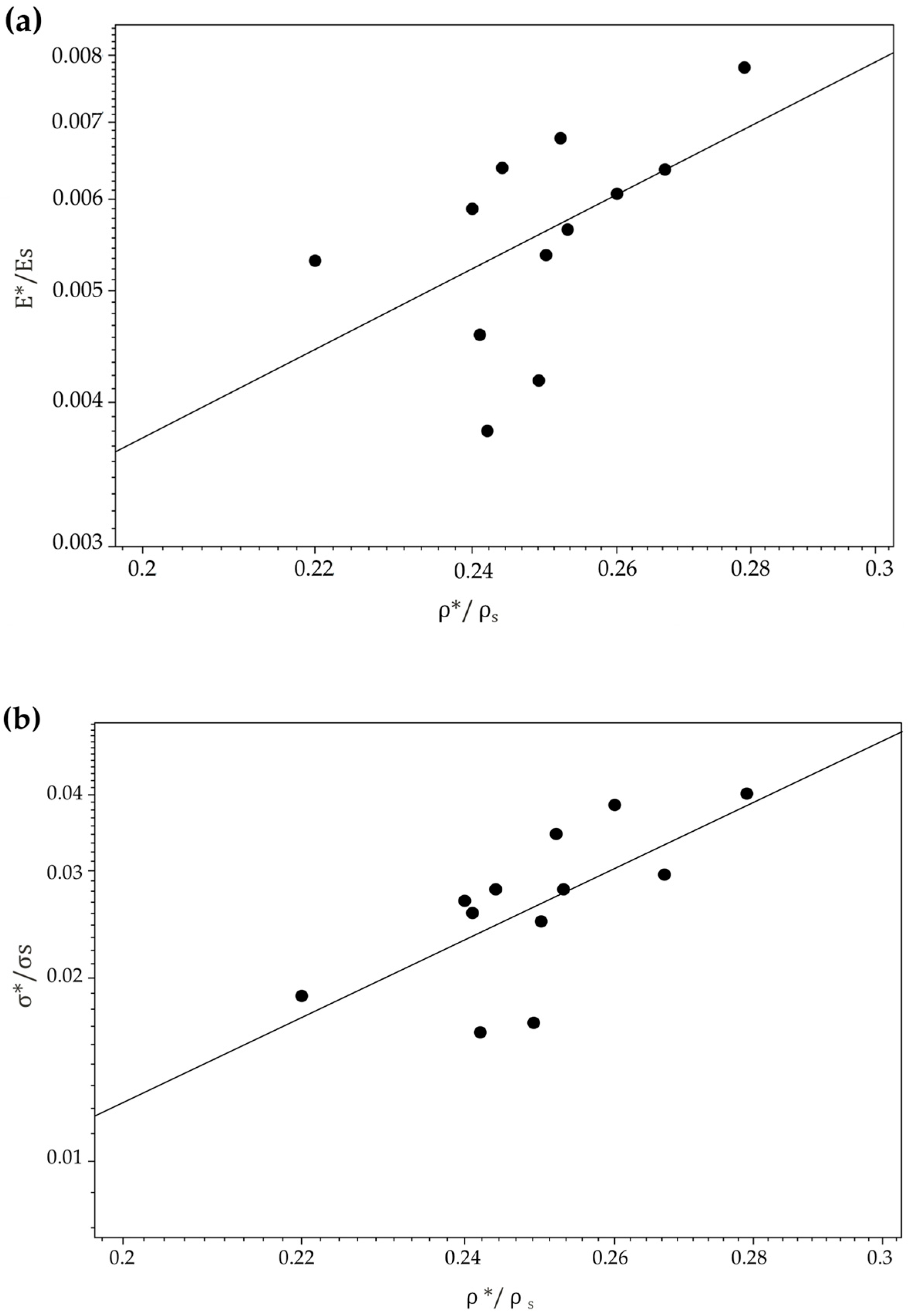
where the exponent n reflects the dominant deformation mechanism, while the coefficient C1 represents the effect of cell topology and process-induced imperfections on structural efficiency. The superscript (*) refers to the mechanical property of the porous Ti-6Al-4V foam produced in this study. Figure 13 presents the results for all cell sizes and sintering temperatures. Using a power-law trendline, E/Es = 0.073 (ρ/ρs)1.85 was obtained, and the solid line represents the mean trend of the experimental data.
The proximity of n ≈ 1.85 to the ideal bending-dominated value (n = 2) indicates that bending is the primary load-bearing mode in the structures. However, the measured elastic moduli fall below those expected for an ideal Gibson and Asbhy structure, which is attributed to factors inherent to the process. In particular, manual impregnation and removal of excess slurry led to strut thickness variability (confirmed by image analysis). Moreover, microcracks observed in the micrographs reduce the effective load-bearing cross-section and may promote stress concentrations. As a result, the effective stiffness decreases.
For compressive strength (σ∗), the same functional form is adopted but with different parameters. The relationship between compressive strength and relative density is given by:
σ/σs = C2 (ρ/ρs) m
According to the ideal Gibson-Ashby model, the expected values are m = 1.5 and C = 0.3. Our regression gives σ/σs = 2.855 (ρ/ρs)3.38, and the solid line represents the mean trend of the experimental data.
The exponent m = 3.38 is substantially higher than the GA prediction. Similar discrepancies have been reported for brittle cellular materials [38]. In the Gibson and Ashby formulation, m = 1.5 is associated with ductile behavior; the higher exponent obtained here suggests a tendency towards a brittle-like failure mode. This can be attributed to the formation of in situ TiC particles, which result from the reaction between carbon residues from PU-template decomposition and the Ti-6Al-4V matrix. These TiC phases are distributed within the matrix as hard and brittle constituents. Furthermore, processing-induced micro-defects promote stress concentrations and reduce the effective load-bearing cross-section. Collectively, these factors enhance brittleness, leading to a higher-than-theoretical scaling exponent (m = 3.38) observed in this study.
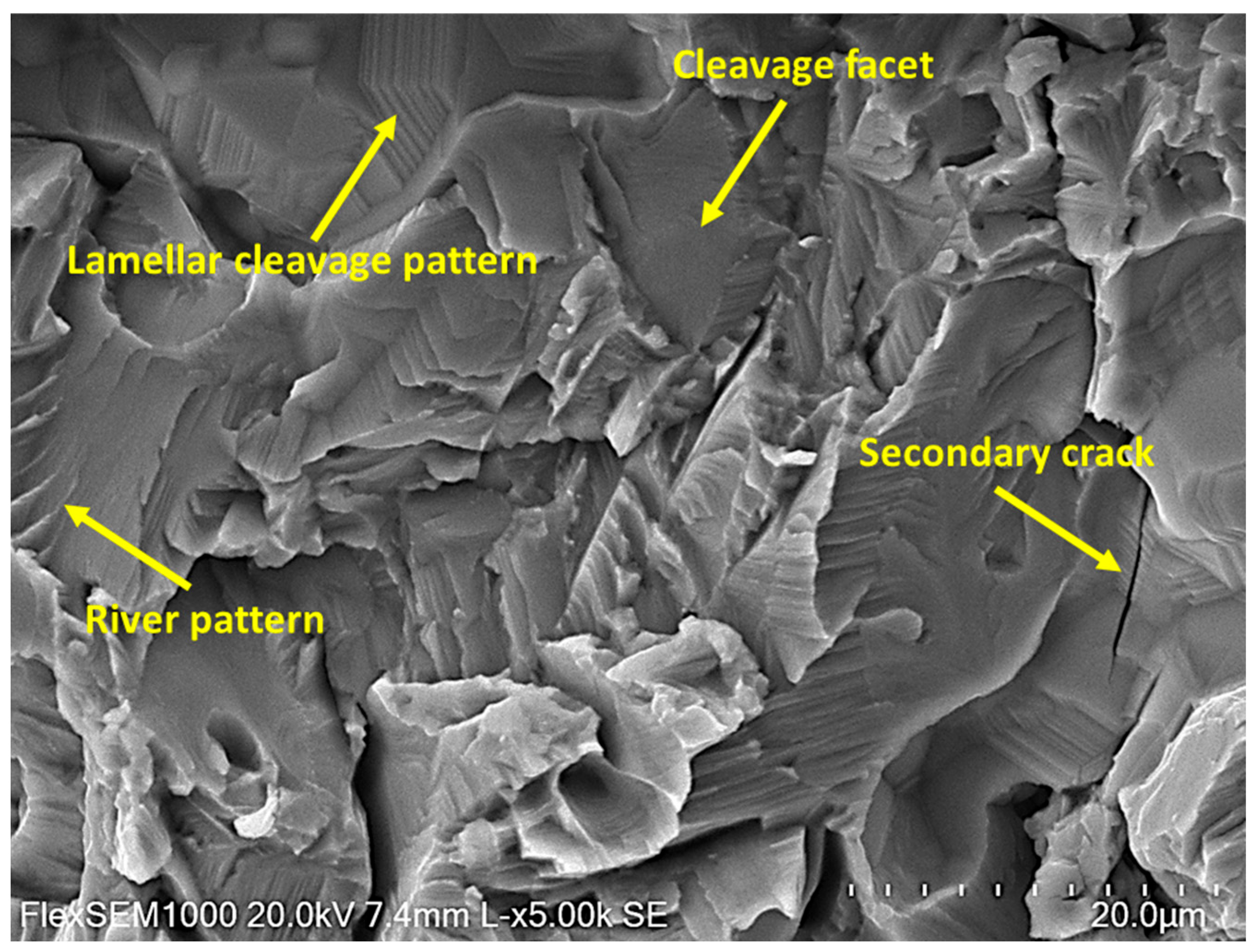
Figure 14 shows the fracture surfaces of the compressed Ti-6Al-4V foam specimen. The surface exhibits clear brittle characteristics. Cleavage like planar facets is observed across the fractured struts, accompanied by river patterns, lamellar cleavage patterns, and secondary cracks that indicate rapid crack propagation with minimal plastic deformation. No ductile features, such as dimples or tearing ridges, were detected. This brittle morphology aligns with the high strength exponent obtained from the Gibson-Ashby analysis. The presence of TiC particles and the microcracks formed within the struts likely increased local stress concentrations, leading to brittle fracture under compression [39,40,41].

4. Conclusions

In this study, open-cell Ti-6Al-4V foams were successfully produced using the replica impregnation method. Polymer templates with three different pore sizes (20 ppi, 25 ppi, and 30 ppi) were used, and the foams were sintered at four different temperatures (1170 °C, 1200 °C, 1250 °C and 1280 °C). The final structures were analyzed to evaluate the effects of pore size and sintering temperature on the mechanical properties. The following evaluations can be drawn:
  • SEM analysis showed that sintering at 1250 °C provided the best balance between densification and pore structural integrity. At lower temperatures, bond formation remained incomplete due to relatively limited atomic diffusion, whereas excessive sintering at 1280 °C led to grain growth and pore coarsening, resulting in reduced mechanical performance.
  • XRD and EDS analyses confirmed the presence of the TiC phase, formed through the reaction between titanium and residual carbon. Microstructural analyses revealed that TiC particles became significantly larger as the sintering temperature increased. The increase in TiC peak intensity in XRD patterns also supports this growth. The average TiC particle size increased from 5.63 µm at 1170 °C to 9.28 µm at 1280 °C. Up to 1250 °C, this growth did not negatively affect mechanical strength; on the contrary, strength values increased with rising temperature.
  • Mechanical tests showed that compressive strength and elastic modulus improved with increasing temperature up to 1250 °C and reached maximum values of 40.2 MPa and 858.9 MPa, respectively. However, a decrease was observed in these values at 1280 °C due to microstructural deteriorations.
  • Although pore size had a limited effect on mechanical behavior, the foams produced using the 30 ppi template exhibited relatively higher strength values, which can be attributed to their more uniform and regular pore structure.
  • Gibson-Ashby analysis and fracture surface observations revealed that the Ti-6Al-4V foams exhibited brittle behavior. The high strength exponent (m = 3.38), together with cleavage like facets, river patterns, lamellar cleavage patterns, and secondary cracks, indicates that this brittleness is associated with stress concentrations arising from TiC particles and the cracks formed in the foam after sintering.

Author Contributions

Conceptualization, H.O.; methodology, H.O.; validation, H.O. and A.İ.Ü.; investigation, A.İ.Ü.; resources, A.İ.Ü.; data curation, A.İ.Ü.; writing—original draft preparation, A.İ.Ü.; writing—review and editing, H.O.; visualization, A.İ.Ü.; supervision, H.O.; project administration, H.O. All authors have read and agreed to the published version of the manuscript.

Funding

The financial support for this study was provided by Ankara Yıldırım Beyazıt University through the Scientific Research Project FHD-2024-2712 and by TÜBİTAK under the 1002 Rapid Support Program (Project No. 221M273).

Data Availability Statement

The original contributions presented in this study are included in the article. Further inquiries can be directed to the corresponding author.

Acknowledgments

We would like to thank Bozok Mümessillik Makina Kimya San. ve Tic. A.Ş. for supplying chemicals for this study.

Conflicts of Interest

The authors declare no conflicts of interest.

Abbreviations

The following abbreviations are used in this manuscript:
DI waterDeionized water
EYoung’s modulus (elastic modulus)
ECD Equivalent circular diameter
EDS Energy-dispersive X-ray spectroscopy
hcpHexagonal close-packed
ICDDInternational Centre for Diffraction Data
MCMethyl cellulose
PEGPolyethylene glycol
ppiPores per inch
PUPolyurethane
SEMScanning Electron Microscopy
TiCTitanium carbide
UCSUltimate Compressive Strength
XRDX-ray diffraction
β-phaseBeta phase (body-centered cubic titanium phase)

References

  1. Gibson, L.J.; Ashby, M.F. Cellular Solids: Structure and Properties, 2nd ed.; Cambridge University Press: Cambridge, UK, 2014; ISBN 9781139878326. [Google Scholar] [CrossRef]
  2. Wang, J.; Liu, A.; Ao, Q.; Wu, C.; Ma, J.; Cao, P. Energy absorption characteristics and preparation of porous titanium with high porosity. Mater. Today Commun. 2023, 34, 105003. [Google Scholar] [CrossRef]
  3. Bleistein, T.; Diebels, S.; Jung, A. Parameter identification for open cell aluminium foams using inverse calculation. Comput. Math. Appl. 2020, 79, 2644–2654. [Google Scholar] [CrossRef]
  4. Efe, G.C.; Yener, T.; Ozcelik, G.; Ozkan, H. TiB-based coating formation on Ti6Al4V alloy. Mater. Test. 2024. [Google Scholar] [CrossRef]
  5. Parthasarathy, J.; Starly, B.; Raman, S.; Christensen, A. Mechanical evaluation of porous titanium (Ti6Al4V) structures with electron beam melting (EBM). J. Mech. Behav. Biomed. Mater. 2010, 3, 249–259. [Google Scholar] [CrossRef]
  6. Esen, Z.; Bor, Ş. Characterization of Ti-6Al-4V alloy foams synthesized by space holder technique. Mater. Sci. Eng. A 2011, 528, 3200–3209. [Google Scholar] [CrossRef]
  7. Fiołek, A.; Zimowski, S.; Kopia, A.; Moskalewicz, T. The influence of electrophoretic deposition parameters and heat treatment on the microstructure and tribological properties of nanocomposite Si3N4/PEEK 708 coatings on titanium alloy. Coatings 2019, 9, 530. [Google Scholar] [CrossRef]
  8. Jáquez-Muñoz, J.M.; Rosales-Leal, J.I.; Martínez-Ramos, C.; Casado-Carmona, F.A.; Ojeda, R.; Saldaña, L.; Gallardo-Moreno, A.M. Electrochemical corrosion of titanium and titanium alloys anodized in H2SO4 and H3PO4 solutions. Coatings 2022, 12, 325. [Google Scholar] [CrossRef]
  9. Ryan, G.; Pandit, A.; Apatsidis, D.P. Fabrication methods of porous metals for use in orthopaedic applications. Biomaterials 2006, 27, 2651–2670. [Google Scholar] [CrossRef]
  10. Hassan, A.; Alnaser, I.A. A review of different manufacturing methods of metallic foams. ACS Omega 2024, 9, 6280–6297. [Google Scholar] [CrossRef]
  11. Del Guercio, G.; Galati, M.; Saboori, A. Innovative approach to evaluate the mechanical performance of Ti–6Al–4V lattice structures produced by electron beam melting process. Met. Mater. Int. 2021, 27, 55–67. [Google Scholar] [CrossRef]
  12. Pape, F.; Noelke, C.; Kaierle, S.; Haferkamp, H.; Gesing, T.M. Influence of Foaming Agents on Laser Based Manufacturing of Closed-cell Ti Foam. Procedia Mater. Sci. 2014, 4, 97–102. [Google Scholar] [CrossRef]
  13. Manonukul, A.; Srikudvien, P.; Tange, M. Microstructure and mechanical properties of commercially pure titanium foam with varied cell size fabricated by replica impregnation method. Mater. Sci. Eng. A 2016, 650, 432–437. [Google Scholar] [CrossRef]
  14. Gómez, S.Y.; Alvarez, O.A.; Escobar, J.A.; Neto, J.B.R.; Rambo, C.R.; Hotza, D. Relationship between rheological behaviour and final structure of Al2O3 and YSZ foams produced by replica. Adv. Mater. Sci. Eng. 2012, 2012, 549508. [Google Scholar] [CrossRef]
  15. Tange, M.; Manonukul, A.; Srikudvien, P. The effects of organic template and thickening agent on structure and mechanical properties of titanium foam fabricated by replica impregnation method. Mater. Sci. Eng. A 2015, 641, 54–61. [Google Scholar] [CrossRef]
  16. Tang, C.Y.; Zhang, L.C.; Huang, L.; Sercombe, T.B.; Zhang, J.; Zhang, D. In situ formation of Ti alloy/TiC porous composites by rapid microwave sintering of Ti6Al4V/MWCNTs powder. J. Alloys Compd. 2013, 557, 67–72. [Google Scholar] [CrossRef]
  17. Gülenç, İ.T.; Bai, M.; Mitchell, R.L.; Todd, I.; Inkson, B.J. In situ TiC reinforced Ti6Al4V matrix composites manufactured via selective laser melting. Rapid Prototyp. J. 2024, 30, 378–392. [Google Scholar] [CrossRef]
  18. Li, J.P.; Van Blitterswijk, C.A.; De Groot, K. Factors having influence on the rheological properties of Ti6A14V slurry. J. Mater. Sci. Mater. Med. 2004, 15, 951–958. [Google Scholar] [CrossRef] [PubMed]
  19. Implants for Surgery-Metallic Materials-Part 3: Wrought Titanium 6-Aluminium 4-Vanadium Alloy Implants Chirurgicaux-Matériaux Métalliques. 2021. Available online: https://standards.iteh.ai/catalog/standards/sist/ad76586a-4754-4cee-8e09- (accessed on 26 July 2025).
  20. Rueden, C.T.; Schindelin, J.; Hiner, M.C.; DeZonia, B.E.; Walter, A.E.; Arena, E.T.; Eliceiri, K.W. ImageJ2: ImageJ for the next generation of scientific image data. BMC Bioinform. 2017, 18, 529. [Google Scholar] [CrossRef] [PubMed]
  21. Li, J.P.; Li, S.H.; Van Blitterswijk, C.A.; De Groot, K. A novel porous Ti6Al4V: Characterization and cell attachment. J. Biomed. Mater. Res. A 2005, 73, 223–233. [Google Scholar] [CrossRef]
  22. O’Keeffe, C.; Kotlarz, M.; Gonçalves, I.F.; Lally, C.; Kelly, D.J. Chemical etching of Ti-6Al-4V biomaterials fabricated by selective laser melting enhances mesenchymal stromal cell mineralization. J. Biomed. Mater. Res. A 2024, 112, 1548–1564. [Google Scholar] [CrossRef]
  23. Fuentes, G.A.; Salinas-Rodríguez, E. Realistic particle size distributions during sintering by Ostwald ripening. Stud. Surf. Sci. Catal. 2001, 139, 503–510. [Google Scholar] [CrossRef]
  24. Martin, J.W.; Doherty, R.D.; Cantor, B. Stability of Microstructure in Metallic Systems, 2nd ed.; Cambridge University Press: Cambridge, UK, 1997. [Google Scholar]
  25. Gil, F.J.; Planell, J.A. Behaviour of normal grain growth kinetics in single phase titanium and titanium alloys. Mater. Sci. Eng. A 2000, 283, 17–24. [Google Scholar] [CrossRef]
  26. German, R.M. Coarsening in sintering: Grain shape distribution, grain size distribution, and grain growth kinetics in solid-pore systems. Crit. Rev. Solid. State Mater. Sci. 2010, 35, 263–305. [Google Scholar] [CrossRef]
  27. Mengucci, P.; Gatto, A.; Bassoli, E.; Denti, L.; Fiori, F.; Girardin, E.; Bastianoni, P.; Rutkowski, B.; Czyrska-Filemonowicz, A.; Barucca, G. Effects of build orientation and element partitioning on microstructure and mechanical properties of biomedical Ti-6Al-4V alloy produced by laser sintering. J. Mech. Behav. Biomed. Mater. 2017, 71, 1–9. [Google Scholar] [CrossRef]
  28. Jin, S.; Hu, Q.; Wang, L.; Zhou, A. Comment on ‘MoS2/Ti3C2 heterostructure for efficient visible-light photocatalytic hydrogen generation. Int. J. Hydrogen Energy 2020, 45, 13559–13562. [Google Scholar] [CrossRef]
  29. Shaikh, A.; Kumar, S.; Dawari, A.; Kirwai, S.; Patil, A.; Singh, R. Effect of Temperature and Cooling Rates on the α+β Morphology of Ti-6Al-4V Alloy. Procedia Struct. Integr. 2019, 14, 782–789. [Google Scholar] [CrossRef]
  30. Tarín, P.; Gualo, A.; Simón, A.G.; Piris, N.M.; Badía, J.M. Study of Alpha-Beta Transformation in Ti-6Al-4V-ELI. Mechanical and Microstructural Characteristics. Mater. Sci. Forum 2010, 638–642, 712–717. [Google Scholar] [CrossRef]
  31. Cheng, X.Y.; Li, S.J.; Murr, L.E.; Zhang, Z.B.; Hao, Y.L.; Yang, R.; Medina, F.; Wicker, R.B. Compression deformation behavior of Ti-6Al-4V alloy with cellular structures fabricated by electron beam melting. J. Mech. Behav. Biomed. Mater. 2012, 16, 153–162. [Google Scholar] [CrossRef] [PubMed]
  32. Zhu, Y.; Luo, D.; Li, Z.; Wang, Y.; Cheng, H.; Wang, F.; Chen, T. Effect of sintering temperature on the mechanical properties and microstructures of pressure-less-sintered B4C/SiC ceramic composite with carbon additive. J. Alloys Compd 2020, 820, 153153. [Google Scholar] [CrossRef]
  33. Ergül, E.; Gülsoy, H.O.; Günay, V. Effect of sintering parameters on mechanical properties of injection moulded Ti-6Al-4V alloys. Powder Metall. 2009, 52, 65–71. [Google Scholar] [CrossRef]
  34. Keaveney, S.; Shmeliov, A.; Nicolosi, V.; Dowling, D.P. Investigation of process by-products during the Selective Laser Melting of Ti6AL4V powder. Addit. Manuf. 2020, 36, 101514. [Google Scholar] [CrossRef]
  35. Gölbaşı, Z.; Öztürk, B.; Üllen, N.B. The structural and mechanical properties of open-cell aluminum foams: Dependency on porosity, pore size, and ceramic particle addition. J. Alloys Compd. 2024, 1009, 176921. [Google Scholar] [CrossRef]
  36. Miao, T.; Zhan, S.; Chen, X.; Hu, L. Effect of Sintering Temperature on Microstructure Characteristics of Porous NiTi Alloy Fabricated via Elemental Powder Sintering. Materials 2024, 17, 743. [Google Scholar] [CrossRef]
  37. Vazic, B.; Abali, B.E.; Yang, H.; Newell, P. Mechanical analysis of heterogeneous materials with higher-order parameters. Eng. Comput. 2022, 38, 5051–5067. [Google Scholar] [CrossRef]
  38. Osorio-Hernández, J.O.; Suarez, M.A.; Goodall, R.; Lara-Rodriguez, G.A.; Alfonso, I.; Figueroa, I.A. Manufacturing of open-cell Mg foams by replication process and mechanical properties. Mater. Des. 2014, 64, 136–141. [Google Scholar] [CrossRef]
  39. Benac, D.J.; Cherolis, N.; Wood, D. Managing Cold Temperature and Brittle Fracture Hazards in Pressure Vessels. J. Fail. Anal. Prev. 2016, 16, 55–66. [Google Scholar] [CrossRef]
  40. Guo, B.; Fan, L.; Wang, Q.; Fu, Z.; Wang, Q.; Zhang, F. The role of the bainitic packet in control of impact toughness in a simulated CGHAZ of X90 pipeline steel. Metals 2016, 6, 256. [Google Scholar] [CrossRef]
  41. Yang, Y.; Zhang, N.; Wang, J. Study on the Effect of Negative Temperature Change on the Fracture Morphology of Granite under Impact. Geofluids 2022, 2022, 4918680. [Google Scholar] [CrossRef]
Figure 1. SEM micrograph of Ti-6Al-4V alloy powder in spherical morphology.
Metals 15 01354 g001
Figure 2. Schematic representation of replica impregnation method.
Metals 15 01354 g002
Figure 3. The SEM images of each produced final specimen: (a) 20 ppi foams, (b) 25 ppi foams, and (c) 30 ppi foams.
Metals 15 01354 g003
Figure 4. The SEM images of Ti-6Al-4V foam specimens (30 ppi) sintered at different temperatures: (a) 1170 °C, (b) 1200 °C, (c) 1250 °C, and (d) 1280 °C.
Metals 15 01354 g004
Figure 5. The XRD patterns of polished samples sintered at different temperatures (1170 °C, 1200 °C, 1250 °C, and 1280 °C).
Metals 15 01354 g005
Figure 6. The SEM images of polished specimens (30 ppi) sintered at different temperatures; (a) 1170 °C, (b) 1200 °C, (c) 1250 °C, and (d) 1280 °C.
Metals 15 01354 g006
Figure 7. The EDS analysis of the Ti-6Al-4V alloy foam sintered at 1250 °C with 30 ppi: (a) BSE image; (b) elemental mapping overview; (c) EDS spectrum; (dg) corresponding elemental distribution maps of Ti, Al, V, and C, respectively.
Metals 15 01354 g007
Figure 8. Stress-strain curve of 30 ppi foam sintered at 1250 °C.
Metals 15 01354 g008
Figure 9. Stress-strain curves according to sintering temperature, (a) 20 ppi, (b) 25 ppi, and (c) 30 ppi.
Metals 15 01354 g009
Figure 10. SEM image of cell wall cracks in the structure of a 20 ppi foam.
Metals 15 01354 g010
Figure 11. Density changes (ppi) of sintered Ti-6Al-4V foams depending on sintering temperature and pore size.
Metals 15 01354 g011
Figure 12. Mechanical properties of Ti-6Al-4V foams; (a) UCS, (b) Young’s modulus.
Metals 15 01354 g012
Figure 13. Relationship between the relative Young’s Modulus (a) and UCS (b) with the relative density (bi-logarithmic diagram). * refers to the mechanical property of the porous Ti64 foam produced in this study.
Metals 15 01354 g013
Figure 14. Fracture surface of the specimen (30 ppi, sintered at 1250 °C).
Metals 15 01354 g014
Table 1. Chemical composition of Ti-6Al-4V alloy powders. Adapted from Ref. [19].
TiAlVFeCNHO
Chemical Composition of As
Received Powders (wt. %)
Balance6.384.120.190.0120.0050.00230.075
ISO 5832-3:2021 (wt. %)Balance5.50–6.753.50–4.50≤0.3≤0.08≤0.05≤0.015≤0.2
Table 2. Particle Size Distribution of Ti-6Al-4V Powder (µm).
Particle Size Distribution D10D50D90D97
Powder (Ti-6Al-4V)2.44.89.211.1
Table 3. Mean Equivalent Circular Diameter of TiC Particles and Equiaxed α-Ti Grains as a Function of Sintering Temperature.
Sintering Temperature1170 °C1200 °C1250 °C1280 °C
TiC Diameter (µm)5.66.38.29.3
α-Ti Grains (µm)17.223.728.832.1
Table 4. The average mechanical and physical properties of porous Ti-6Al-4V specimens.
Sintering
Temperature
Cell Size Young’s
Modulus (MPa)
UCS (MPa)Density (g/cm3)
1170 °C20 ppi415.5 ± 175.716.3 ± 5.041.073 ± 0.051
25 ppi459.8 ± 160.216.9 ± 3.341.1045 ± 0.124
30 ppi584.1 ± 185.718.7 ± 8.820.975 ± 0.097
1200 °C20 ppi647.5 ± 172.926.8 ± 8.581.063 ± 0.066
25 ppi504.0 ± 272.025.6 ± 3.741.067 ± 0.007
30 ppi702.4 ± 278.528.0 ± 7.451.081 ± 0.303
1250 °C20 ppi745.2 ± 222.034.5 ± 5.521.114 ± 0.246
25 ppi667.6 ± 331.638.5 ± 12.821.154 ± 0.084
30 ppi858.9 ± 256.640.2 ± 7.121.234 ± 0.195
1280 °C20 ppi590.8 ± 325.224.8 ± 10.311.109 ± 0.058
25 ppi620.9 ± 301.428.0 ± 1.551.122 ± 0.115
30 ppi700.2 ± 225.629.6 ± 9.561.181 ± 0.204
Disclaimer/Publisher’s Note: The statements, opinions and data contained in all publications are solely those of the individual author(s) and contributor(s) and not of MDPI and/or the editor(s). MDPI and/or the editor(s) disclaim responsibility for any injury to people or property resulting from any ideas, methods, instructions or products referred to in the content.