Article

Mechanistic Insights into the Effect of Ca on the Oxidation Behavior of Fe3O4: A Combined DFT and AIMD Study

1
School of Metallurgical and Ecological Engineering, University of Science and Technology Beijing, 30th Xueyuan Road, Haidian District, Beijing 100083, China
2
School of Intelligence Science and Technology, University of Science and Technology Beijing, 30th Xueyuan Road, Haidian District, Beijing 100083, China
3
Department of Physics, National University of Defense Technology, Changsha 410128, China
*
Authors to whom correspondence should be addressed.
Metals 2025, 15(12), 1321; https://doi.org/10.3390/met15121321 (registering DOI)
Submission received: 3 November 2025 / Revised: 27 November 2025 / Accepted: 28 November 2025 / Published: 29 November 2025

Abstract

With the increasing adoption of traveling grate machines, increasing the proportion of pellets in blast furnace burdens has become a key strategy for reducing carbon emissions in ironmaking. Magnetite (Fe3O4) is not only the core raw material for pellet production but also serves as an important transition metal oxide catalyst, widely used in various fields due to its unique electronic structure and surface activity. This study employed density functional theory (DFT) and ab initio molecular dynamics (AIMD) to simulate the oxidation process of a Ca-doped Fe3O4 (110) surface at 1073 K, revealing the inhibition mechanism of the gangue element Ca and its impact on surface catalytic activity at the atomic scale. The results demonstrate that Ca segregates on the Fe3O4 surface, where it adsorbs and activates O2 molecules, thereby delaying O2 migration to active iron bridge sites and subsequent dissociation, which ultimately inhibits the oxidation kinetics. Electronic structure analysis indicates that the breakage of the O–O bond is accompanied by a sharp decrease in system energy (stabilizing at approximately −509 eV); it also clearly elucidates the charge transfer process and the mechanism of Fe-O bond formation during this exothermic reaction. This research provides a theoretical foundation for the development of fluxed pellets and high-temperature-resistant catalysts.

1. Introduction

Magnetite is widely used in the steel industry due to its high iron content. It is processed into artificial rich ore sinter and pellet through sintering or pelletizing and serves as an important raw material in the steel production process [1,2]. Given that the production process of pelletized ore offers more environmental benefits compared to the sintering process, the proportion of pellet in the blast furnace iron-making process is gradually increasing to optimize the structure of the furnace charge. To meet the metallurgical performance requirements of the blast furnace for the furnace charge, calcium-based fluxes have been widely added in the pelletized ore production process. The main component of pellets is Fe2O3, while the main component of iron ore powder used for pellet making is Fe3O4. In order to produce high-quality pellets, the FeO content of the roasted pellets should not exceed 1%, and the control of the magnetite oxidation process is crucial [3]. Therefore, studying the mechanism of how CaO influences the oxidation reaction of Fe3O4 at high temperatures is crucial for preparing high-quality fluxed pellets [4,5,6].
Additionally, Fe3O4 is a commonly used transition metal material in various fields due to its magnetic information storage capabilities [7], catalytic properties in chemical reactions [8], and ability to control material corrosion [9]. Consequently, understanding the effect of Ca on the oxidation reaction mechanism of magnetite is valuable for both material synthesis and the enhancement of catalyst stability. Ruiqi Zeng et al. [10] investigated the oxidative hardening process of red lattice vanadium-titanium magnetite pellets (HVTMP) with varying CaO contents, elucidating the oxidative mechanisms associated with different CaO concentrations in HVTMP. Similarly, Shurong Shi et al. [11] conducted a systematic study on the preparation and metallurgical properties of magnesium fluxed pellets, detailing the roles of CaO and MgO in oxidation and consolidation during oxidation and roasting, as well as the transformation mechanisms between magnetite and magnetohematite. Furthermore, experimental studies [12] have shown that Ca undergoes thermally induced segregation on the surface of Fe3O4 and drives the surface to undergo reconstruction, forming a stable Ca1−xFe2+xO4 surface phase to reduce the surface energy. This indicates that Ca can significantly alter the physical and chemical properties of the Fe3O4 surface. However, the microscopic mechanism by which this reconstructed surface affects the adsorption and activation of oxygen remains unclear. While most previous studies have experimentally examined the effect of different mineral veins on the oxidation of magnetite, there has been limited exploration into changes in the oxidation mechanism at the atomic level.
DFT describes the ground state properties of a system through electron density rather than wave functions, significantly reducing computational complexity [13]. DFT calculations are a quantum mechanics-based computational method at the atomic level, which does not rely on any empirical parameters [14,15]. This approach allows for a systematic study of electron transfer and hybridization between different atomic orbitals during interfacial oxidative adsorption processes [16,17]. With the ongoing advancements in supercomputer technology, both DFT and AIMD calculations have become valuable tools for evaluating the adsorption behavior of gas molecules at the interfaces of various materials [18,19]. For example, Qingxin Kang et al. [20] employed DFT and AIMD methods to investigate the oxidation reaction mechanism of CrN, calculating the surface energies of different termination surfaces. The study revealed that the top position of the Cr atom is the most energetically favorable. Similarly, Yaozu Wang et al. [21] explored the oxidation mechanism of Ti-doped Fe3O4 (111) using DFT, AIMD methods, and experimental approaches. Their findings indicated that the presence of titanium atoms in a homogeneous state stabilizes the lattice structure of magnetite and slows the migration and diffusion rates of O2− ions, thereby influencing the overall oxidation properties of magnetite.
The limitations of conventional high-temperature oxidation experiments pose significant challenges in capturing the dynamic oxidation process of magnetite at the atomic scale. Specifically, it is difficult to characterize the precise role of CaO during this process, delineate atomic migration at the interface, or elucidate the evolution of electronic structures and bond formation between atoms. To address these gaps, this study employed DFT to investigate the influence of CaO on the oxidation behavior of natural magnetite and to clarify its impact on the underlying oxidation mechanism. The computational parameters were carefully validated, and the adsorption configurations on the Fe3O4 surface were systematically explored. Furthermore, AIMD simulations were performed to examine the evolution of geometric and electronic structures during the adsorption and dissociation of O2 molecules on the Fe3O4 surface at 1073 K. This work elucidates the inhibition mechanism of the gangue element calcium on the oxidation process of iron ore pellets, thereby providing a theoretical foundation for the development of fluxed pellets and high-temperature-resistant catalysts.

2. Computational Methods and Model

The oxidation reaction mechanism of magnetite [22,23] and the influence of gangue elements such as silicon [24], magnesium [25], aluminum [26], and titanium [21] on its oxidation behavior have been extensively investigated through experimental studies. However, the microscopic reaction mechanism by which CaO affects magnetite oxidation remains to be elucidated. Previous study has demonstrated that DFT [27,28] is a stable and accurate theoretical framework for studying the properties of surface adsorption and oxidation reactions. Therefore, this study employs periodic boundary condition modeling, along with DFT and AIMD calculations, to investigate the influence mechanism of the Ca on the oxidation reaction of magnetite. In this study, the Vienna Ab initio Simulation Package [29,30] (VASP 6.2.1) was utilized for all DFT and AIMD computations, and the VESTA 3.4.5 software was employed for structural visualization. The exchange-correlation effects were treated using the Perdew–Burke–Ernzerhof (PBE [31]) generalized gradient approximation (GGA), which has been widely applied in studies of gas–solid interfacial reaction mechanisms.
During the calculations, a plane-wave cut-off energy of 500 eV was employed, and a K-point grid of 5 × 5 × 1 was used for Brillouin zone sampling. Both the cutoff energy and K-point settings were validated through convergence tests. The Brillouin zone integration was performed using the Monkhorst–Pack scheme. Given that magnetite is a magnetic material [32,33], the strong correlation effects among Fe-3d electrons were accounted for to improve the accuracy of the theoretical calculations. Specifically, the GGA + U method was applied to correct the electronic structure, with a Coulomb interaction parameter U = 3.7 eV [34] adopted in this study. In the AIMD simulations, a time step of 2 fs was used, with a total simulation duration of 4000 fs, carried out at a temperature of 1073 K.

3. Results and Discussion

3.1. Calculation Parameter Convergence Test

3.1.1. K-Point Test

The convergence of the computational parameters was first tested using an Fe3O4 unit cell (Fe6O8). For K-point sampling in the first Brillouin zone, the Monkhorst–Pack scheme was adopted. Given the significant influence of K-point density on computational accuracy, a convergence test was initially performed for K-point selection. The results are summarized in Table 1. Considering both accuracy and computational efficiency, a K-point setting of 5 was ultimately chosen, as the corresponding variation in total energy fell below 0.001 eV, satisfying the requirement for numerical precision. The relative energy (in eV/atom) is defined as the difference in average energy per atom between the current K-point and the preceding one.

3.1.2. ENCUT Test

Cut-off energy is the amount of energy obtained after plane wave expansion. The ENCUT parameter is the plane wave basis set used to describe the wave function. For the plane wave of the high-energy part, the proportion after expansion is small, and the calculation speed is greatly affected, so it is necessary to select the appropriate truncation energy. Appropriate truncation energy can not only maintain the calculation accuracy but also save the calculation time. The test results are shown in Figure 1. Based on the test results, the cut-off energy is set to 500 eV in subsequent calculations.

3.1.3. Determination of Lattice Parameters

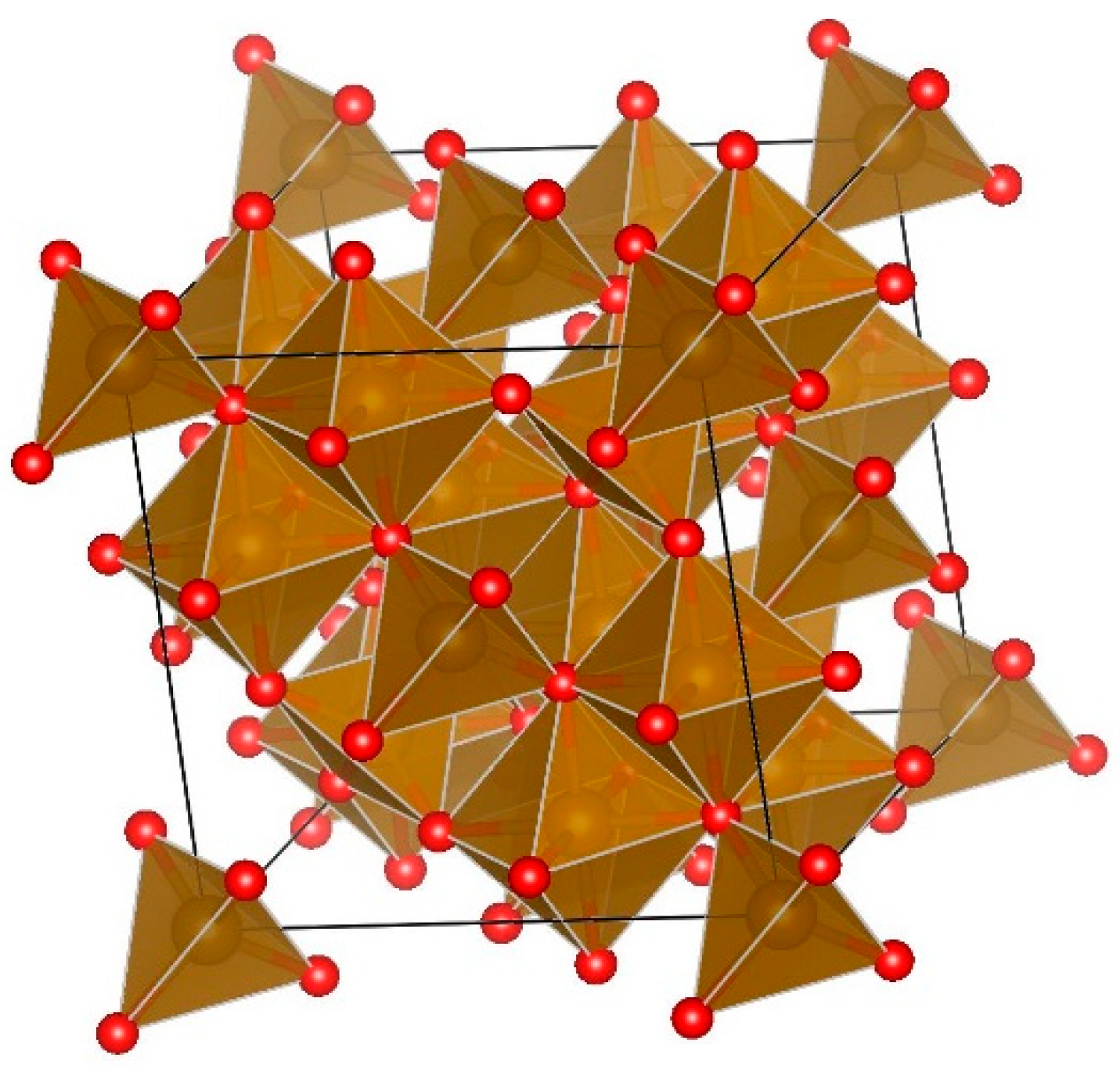
Fe3O4 crystallizes in an inverse spinel structure with the space group F d ¯ 3m [35,36]. In this configuration, O2− anions adopt a cubic close-packed arrangement, while Fe2+ and Fe3+ cations occupy the interstitial sites formed by the oxygen lattice. As illustrated in Figure 2, half of the Fe3+ ions reside in tetrahedral interstices, whereas the remaining Fe3+ ions together with all Fe2+ ions occupy octahedral interstices [37,38].
The initial structure obtained from the crystallographic database served as a reasonable starting point for the theoretical calculations; however, a discrepancy exists between this initial configuration and the stable structure achieved after system relaxation. Therefore, before constructing the surface models, the geometry of the bulk unit cell was fully optimized to obtain stable lattice parameters. The equilibrium properties of the system were subsequently determined by fitting the energy-volume (E-Å) data using the Birch-Murnaghan (BM) equation of state [39,40]. The corresponding fitting curve is presented in Figure 3.

3.2. AIMD Simulation of Surface Adsorption System

3.2.1. Geometric of System Structure Evolution

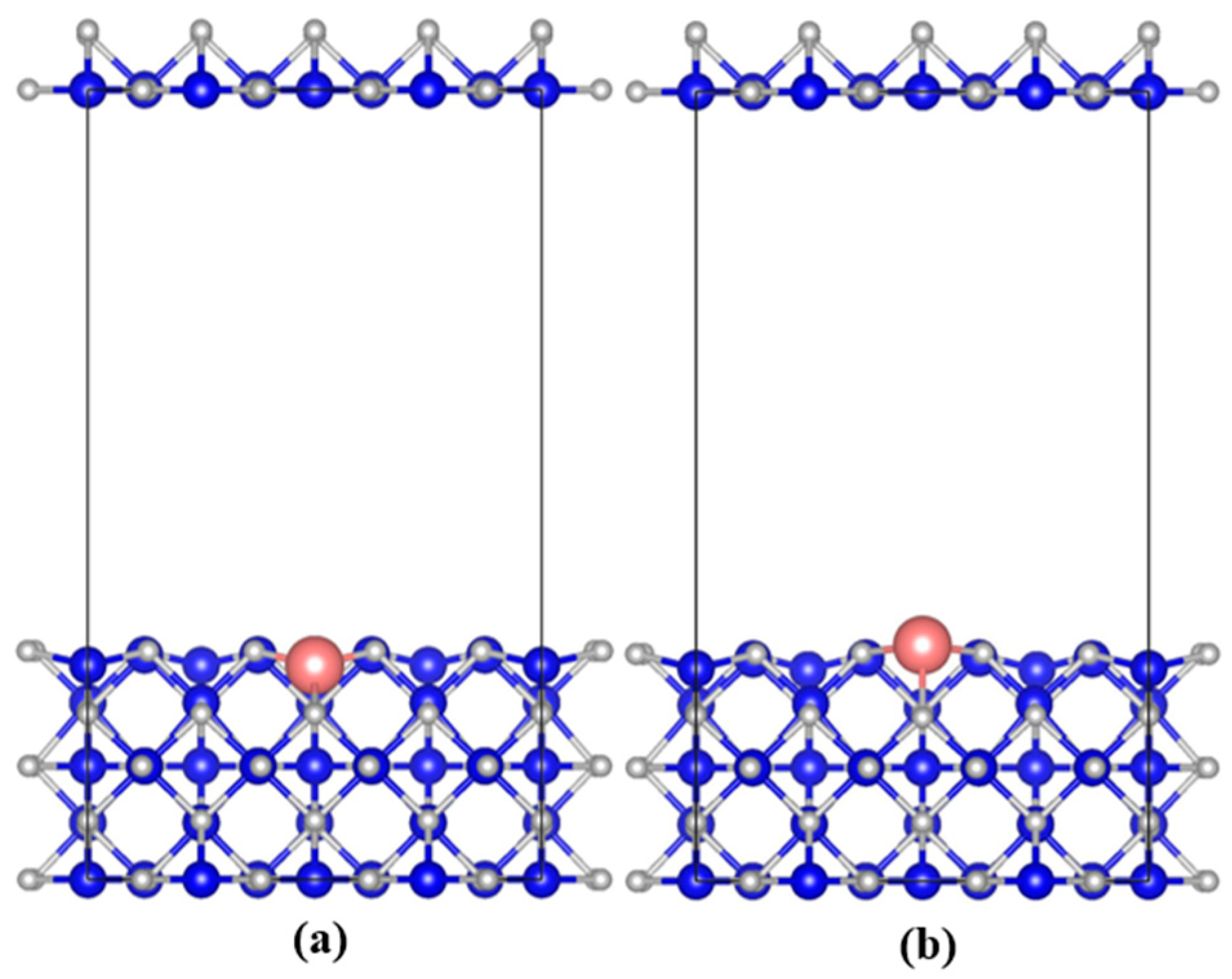
Based on previous studies [26], the Fe3O4 (110) surface has been identified as the most stable among the low-index crystallographic planes of magnetite and is thus more likely to serve as a stable adsorption site for O2 molecules. Therefore, to investigate the effect of Ca-doped on surface adsorption and oxidation mechanisms, a surface model of Fe3O4 (110) was constructed, and a Ca-doped surface model was developed by introducing a single Ca atom onto the Fe3O4 (110) surface. The model consists of five atomic layers, with the bottom two layers fixed to simulate the bulk phase and the top three layers fully relaxed to simulate the surface behavior. Prior to dynamic simulations, structural optimization of the Ca-doped system was performed to achieve the lowest energy configuration and the most stable crystal structure, thereby better representing the natural occurrence of Ca in magnetite. The geometric changes in the surface structure before and after optimization are illustrated in Figure 4. The Ca-doped Fe3O4 (110) surface model contains one calcium atom, 31 iron atoms, and 40 oxygen atoms. After relaxation, the total energy of the system decreased from −475.431 eV to −477.895 eV, meeting the convergence criteria.
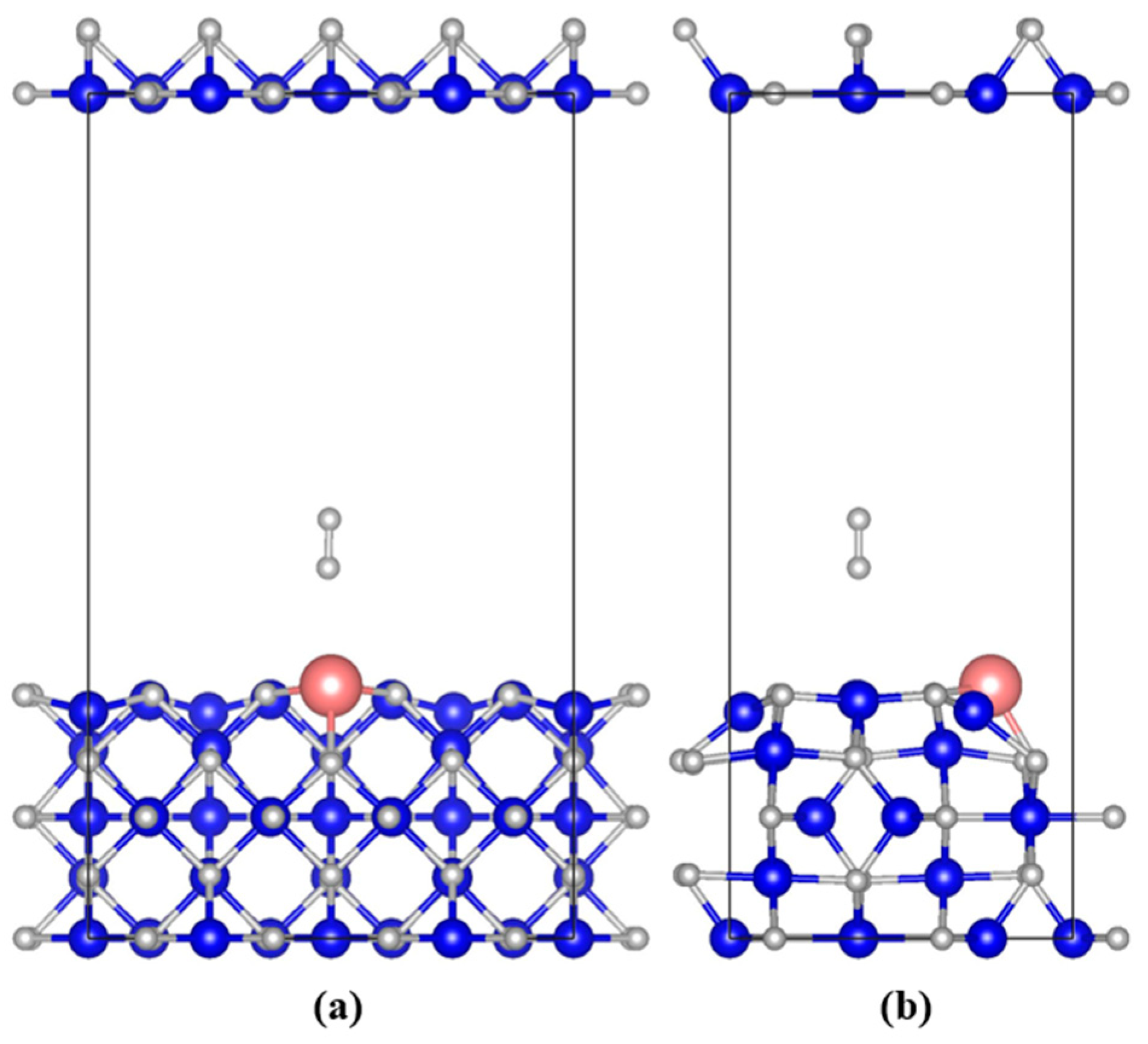
To investigate the influence of the Ca on the adsorption and oxidation mechanisms of the Fe3O4 (110) surface, a corresponding surface adsorption model was constructed. In this model, an O2 molecule was positioned vertically at the bridge site between the Ca atom and its adjacent octahedral Fe atom, with an initial adsorption height set to 2.5 Å. This distance was selected to effectively mitigate interference from the surface atomic potential while maintaining computational efficiency. The initial configuration of the model, along with its front and side views, is shown in Figure 5. Based on this model, AIMD simulations were further performed on the Ca-doped surface system at a temperature of 1073 K.
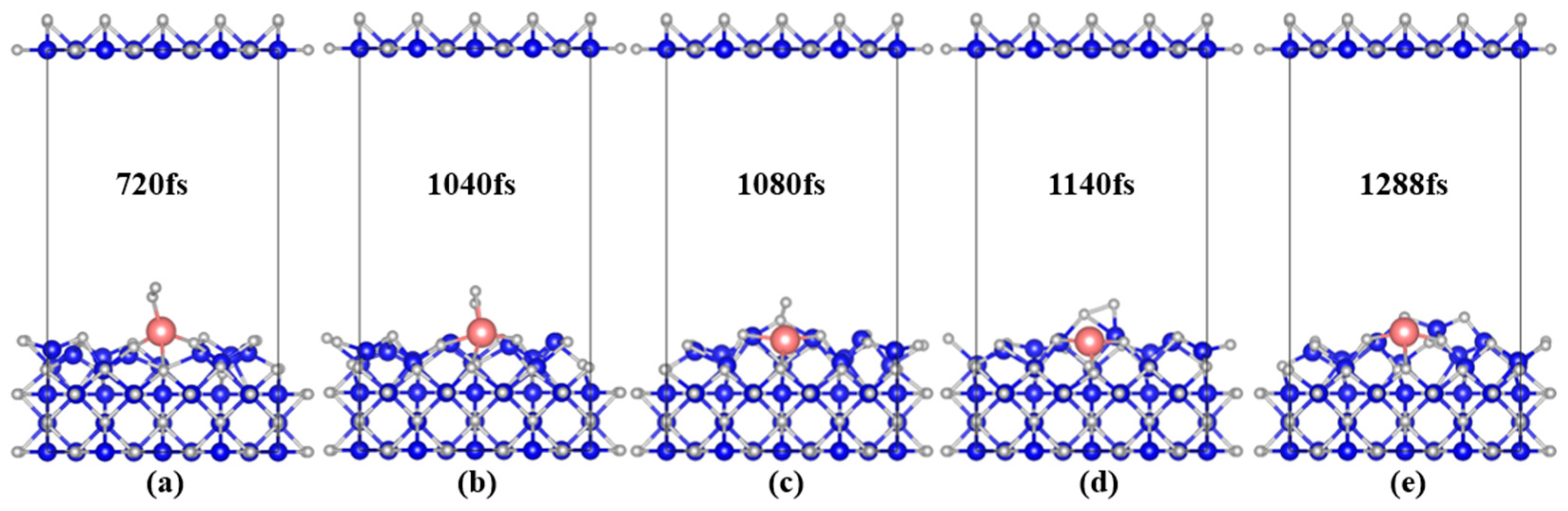
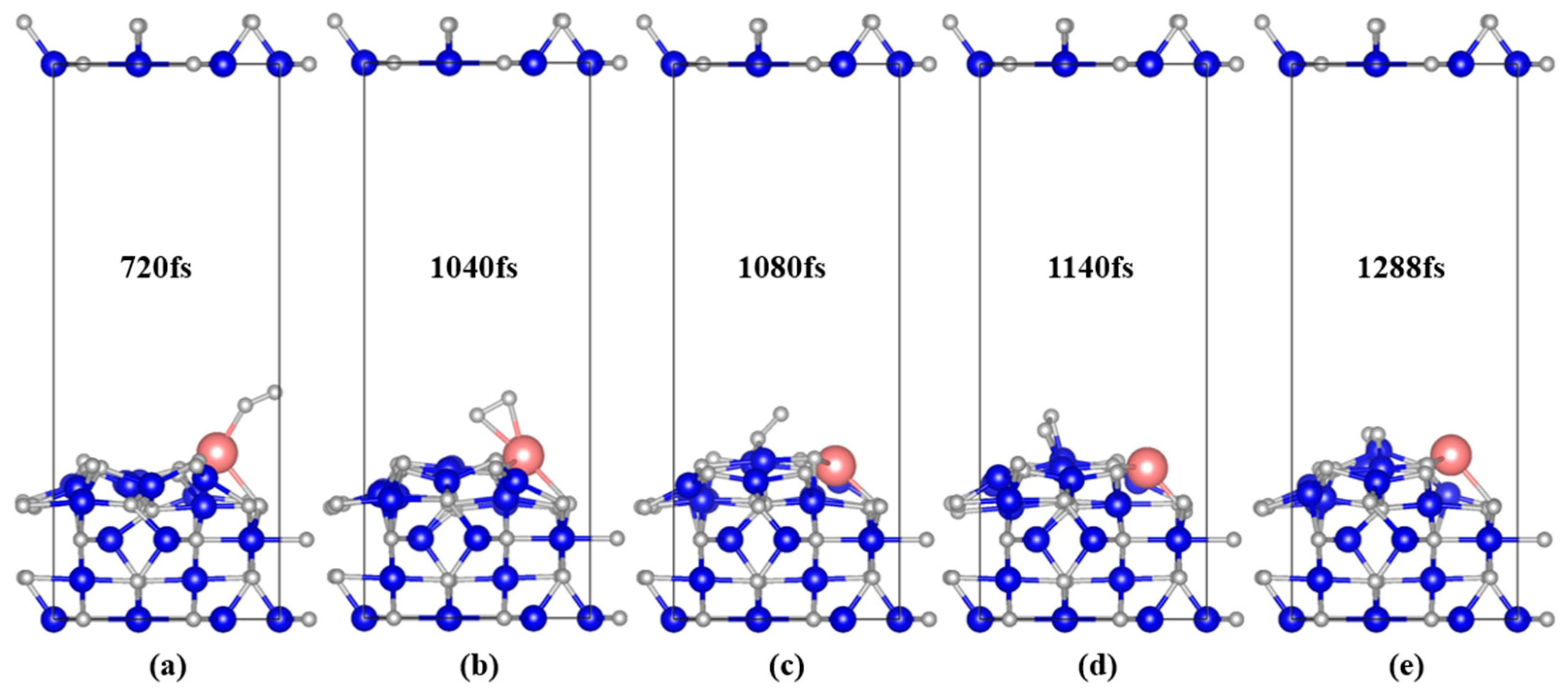
To quantitatively compare the kinetic differences in the oxidation process between pure and Ca-doped magnetite, the characteristic times for their gas–solid reactions were determined, with the results presented in Table 2. Concurrently, the dynamic evolution of the adsorption configuration on the Ca-doped surface at 1073 K is illustrated at the atomic scale in Figure 6 and Figure 7, showing the front and side views, respectively. During the period of 0–720 fs, the O2 molecule began to rotate and gradually migrated to the surrounding area of the Ca atom. At 720 fs, the interaction between the O42 atom near the Ca atom and the Ca atom itself was extremely weak. Under the influence of the Ca atom, the O–O bond length increased from the initial 1.207 Å to 1.230 Å. Subsequently, between 720 and 1040 fs, the O2 continued to rotate. By 1040 fs, the interactions of the O41 and O42 atoms with the Ca atom remained relatively weak. Under the attraction of the Ca atom, the O2 was further activated, and the O–O bond length extended from 1.230 Å to 1.365 Å.
Subsequently, driven by the Fe atoms, the O2 migrated toward the iron bridge site. During this process, the O41 atom near the surface interacted with an adjacent iron atom and formed a chemical bond. Between 1080 and 1140 fs, the O2 rotated further toward the iron bridge site, with the O42 atom approaching Fe51 and the O41 atom moving closer to Fe48. At this stage, the O–O bond length increased to 1.656 Å. Between 1140 and 1288 fs, the O–O bond broke, and the structure gradually stabilized through simulation relaxation. The O atoms eventually moved to the iron bridge sites and bonded with adjacent iron atoms.
The overall reaction process can be summarized as follows: first, the O2 adsorbed on the surface was activated under the influence of the Ca atom; it then gradually migrated to the active site, where it dissociated under the action of surface Fe atoms; finally, the O atoms moved to the iron bridge sites and formed stable bonds with adjacent iron atoms.

3.2.2. Evolution of System Electronic Structure

The study employed AIMD to simulate the oxidation kinetics of Ca-doped magnetite and to reveal the atomic migration and adsorption-dissociation pathways of O2. The research focused on studying the migration law of electrons during the oxidation reaction process. To probe the microscopic mechanism of electron transfer during bonding, the differential charge density of the doped surface system was calculated. The charge density difference map is obtained by calculating the charge density difference between the adsorption configuration, doping configuration, and oxygen molecule. This analysis aims to elucidate key electronic properties, including the charge distribution and bond polarization direction during the bond formation process.
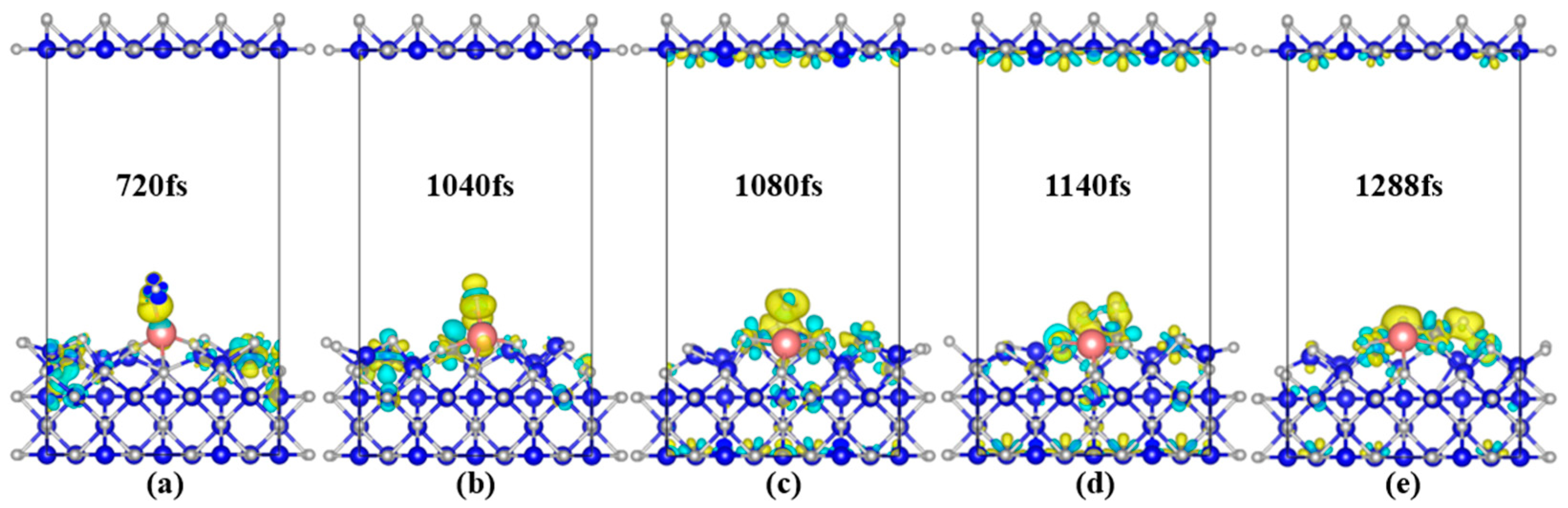
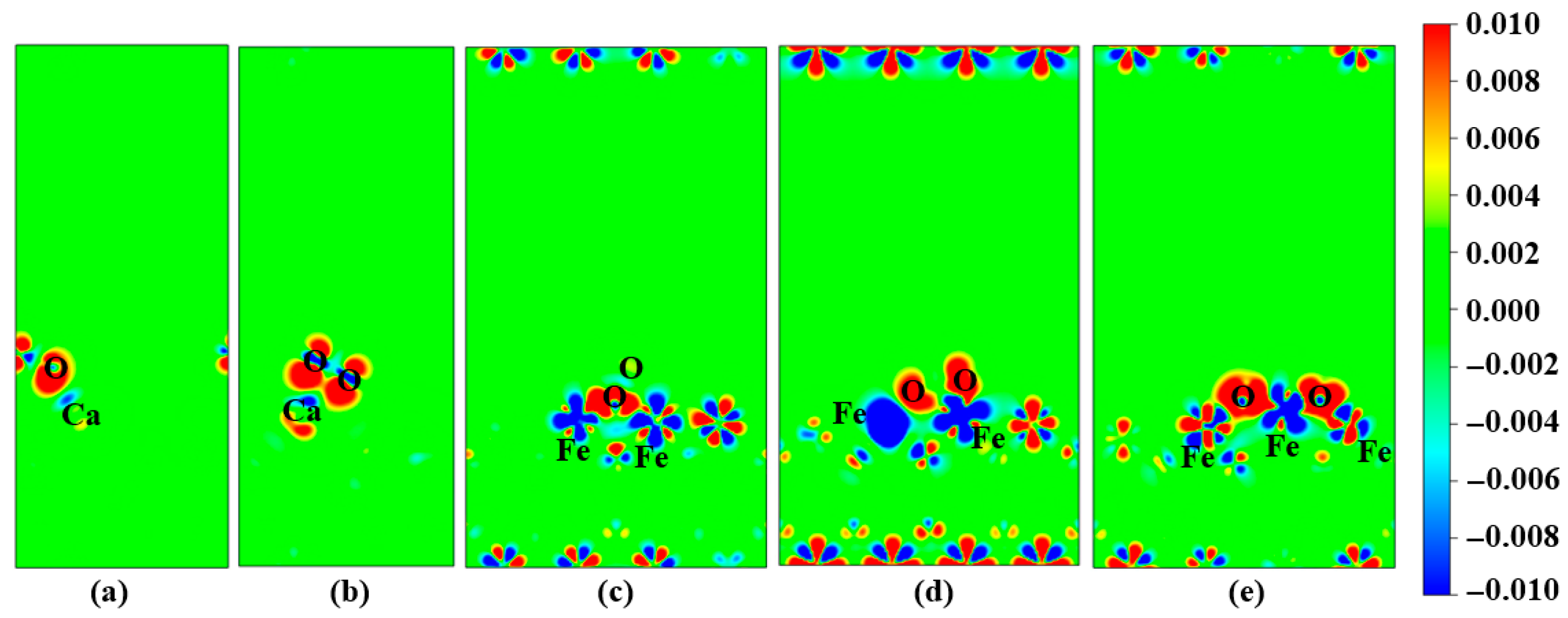
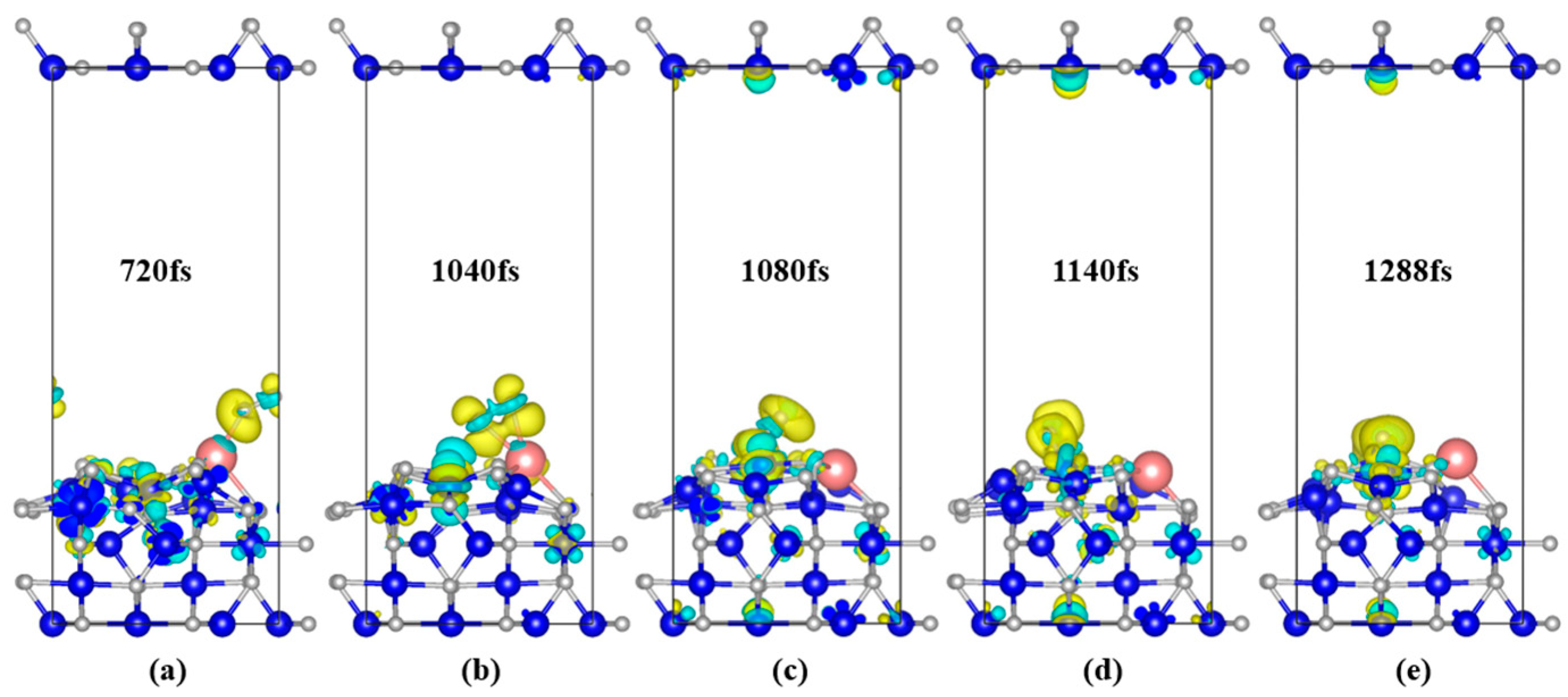
To elucidate the charge transfer behavior between atoms during the adsorption oxidation process, the differential charge density of the Ca-doped adsorption system was calculated at five characteristic time points (720 fs, 1040 fs, 1080 fs, 1140 fs, and 1288 fs). The front and side views of the differential charge density at each time point are shown in Figure 8 and Figure 9, respectively, while the corresponding slice views are displayed in Figure 10.
At 720 fs, only weak charge transfer occurred between the Ca atom and the adjacent O42 atom. By 1040 fs, the O41 and O42 atoms gained a small number of electrons from the Ca atom, and the weak chemical bonds between atoms promoted the activation of the oxygen molecule. As the reaction proceeded to 1080 fs, the O2 migrated to the iron bridge site, and significant charge redistribution between the O and Fe atoms was observed. At 1140 fs, the O42 atom approached the Fe51 atom, and the O41 atom moved closer to the Fe48 atom. Acting as an electron acceptor, the O atoms acquired electrons from the adjacent Fe atoms, leading to the initial formation of Fe–O bonds. By 1288 fs, the O atoms had stabilized at the iron bridge sites. The differential charge density maps reveal that the O atoms continued to gain electrons from the Fe atoms on both sides of the bridge site and the neighboring Fe–O bonds, marking the completion of the adsorption oxidation process.
To gain deeper insight into the atomic orbital bonding mechanism during the reaction process, the partial density of states (PDOS [41]) was calculated at several characteristic time intervals. At 720 fs (Figure 11a,b), the O42 and Ca43 atoms near the surface exhibit only a weak overlap at −2 eV, indicating a relatively weak interaction between them. Meanwhile, the O41 and O42 atoms show intense PDOS peaks with a significant overlapping area, demonstrating that the O2 remains intact without dissociation. By 1040 fs (Figure 11c,d), a certain degree of overlap is observed between the p orbitals of the two O atoms and the d orbitals of the Ca atom at −1.5 eV and 6 eV. The extent of orbital coupling is more pronounced than that at 720 fs, suggesting enhanced O–Ca interaction, although the O–O bond remains unbroken. At 1080 fs (Figure 11e,f), the orbital overlap between O41 and O42 weakens, reflecting a reduction in their bonding interaction. Nevertheless, influenced by the surface Fe atoms, the O–O bond does not break. At the same time, the p orbitals of O41 overlap with the d orbitals of Fe51 in the energy range of −5 eV to −10 eV, and with those of Fe48 between −1 eV and 1 eV, confirming the formation of chemical bonds between O41 and the adjacent Fe48 and Fe51 atoms. By 1140 fs (Figure 11g,h), the O–O bond is further weakened but not completely broken. Overlap is observed between O42 and Fe51 at −7 eV and −3 eV, suggesting the formation of a weak chemical bond, while O41 maintains bonding with Fe48 and Fe51. Concurrently, the PDOS peaks of the two oxygen atoms decrease in intensity and broaden in distribution, indicating continued weakening of the O–O bond. At 1288 fs (Figure 11i,j), as the gas–solid reaction proceeds, the adsorption–oxidation process approaches completion: the O–O bond breaks, and the O atoms stabilize at the iron bridge sites, forming stable chemical bonds with neighboring Fe atoms.

3.2.3. O–O Bond Length and System Energy Analysis

To elucidate the influence mechanism of Ca atoms on the oxidation reaction of Fe3O4, the evolution of the system energy and O–O bond length with simulation time during the adsorption-oxidation process was analyzed. The variation in O–O bond length is shown in Figure 12a, while the change in system energy is displayed in Figure 12b.
The results indicate that the O–O bond length increased abruptly at approximately 1150 fs, leading to bond breakage. Subsequently, as the simulation progressed, the two O atoms migrated to the bridge sites of octahedrally coordinated Fe atoms and stabilized, with the distance between them converging to a constant value. As observed in Figure 12b, the system energy gradually decreased as the adsorption-oxidation reaction proceeded, eventually stabilizing at around −509 eV by approximately 1500 fs. Notably, a sharp drop in system energy accompanied the breaking of the O–O bond, confirming that the oxidation process is exothermic.

3.3. Segregation Behavior of Ca Atoms on Fe3O4 (110) Surface

To investigate the segregation behavior of the Ca on the Fe3O4 (110) surface, a Ca-doped Fe3O4 (110) surface model was constructed based on DFT, and the segregation energies of the Ca atom at the topmost, subsurface, and third layers were systematically calculated. The segregation energies Eseg, for each configuration, evaluated using Equation (1), are summarized in Table 3.
E s e g = E l a y e r C a x E l a y e r C a T o p
Table 3 shows the segregation energies of Ca at the second and third layers of the Fe3O4 (110) surface. The results show positive values for both cases, indicating that the energy state of Ca atoms on the Fe3O4 surface is lower than that in the bulk phase. Therefore, Ca tends to segregate toward the material surface. This phenomenon further demonstrates that the surface-enriched Ca atoms retard the oxidation kinetics of magnetite during the reaction process.

4. Conclusions

The oxidation process of magnetite (Fe3O4) doped with the gangue element calcium at 1073 K was simulated using ab initio molecular dynamics calculations, revealing the mechanism by which Ca influences the oxidation behavior of magnetite. The main conclusions are as follows:
(1)
In the presence of Ca, the adsorption-oxidation reaction on the surface proceeds along the following pathway: oxygen molecules first adsorb near Ca atomic sites; subsequently, O2 become activated under the influence of Ca atoms; then, O2 migrate to iron bridge sites; O–O bond broken occurs with the catalytic involvement of Fe atoms; finally, the dissociated O atoms stably occupy the Fe bridge sites.
(2)
During the adsorption-oxidation reaction, the breaking of the O–O bond is accompanied by a sharp decrease in system energy, indicating that the oxidation of Ca-doped Fe3O4 is an exothermic process. By the end of the reaction, the dissociated O atoms are positioned at the iron bridge sites, and the system energy stabilizes at approximately −509 eV.
(3)
Comparison with previous studies indicates that the Ca inhibits the oxidation of magnetite. Ca tends to segregate toward the Fe3O4 surface, and its inhibition mechanism primarily stems from the adsorption of O2 molecules, which retards O2 migration to active iron bridge sites, thereby impeding the dissociation process of O2 and ultimately slowing the overall oxidation kinetics of magnetite.

Author Contributions

Conceptualization, J.Z.; Methodology, Y.W. and Z.L.; Software, H.J. and F.G.; Validation, H.J.; Formal analysis, F.G.; Investigation, X.Y.; Resources, J.Z.; Data curation, H.J.; Writing—original draft preparation, H.J.; Writing—review and editing, Y.W. and Z.L.; Visualization, X.Y.; Supervision, J.Z.; Project administration, J.Z.; Funding acquisition, Z.L. and Y.W. All authors have read and agreed to the published version of the manuscript.

Funding

This research was funded by National Natural Science Foundation of China (52174291), the National Natural Science Foundation of China (52204335), the National Natural Science Foundation of China (52374319).

Data Availability Statement

The original contributions presented in this study are included in the article. Further inquiries can be directed to the corresponding authors.

Conflicts of Interest

The authors declare no conflict of interest.

References

  1. Ferrante, J. Applications of surface analysis and surface theory in tribology. Surf. Interface Anal. 1989, 14, 809–822. [Google Scholar] [CrossRef]
  2. Agrawal, A. Blast furnace performance under varying pellet proportion. Trans. Indian Inst. Met. 2019, 72, 777–787. [Google Scholar] [CrossRef]
  3. Umadevi, T.; Kumar, P.; Lobo, N.F.; Prabhu, M.; Ranjan, M. Influence of pellet basicity (CaO/SiO2) on iron ore pellet properties and microstructure. ISIJ Int. 2011, 51, 14–20. [Google Scholar] [CrossRef]
  4. Bai, K.; Liu, L.; Pan, Y.; Zuo, H.; Wang, J.; Xue, Q. A review: Research progress of flux pellets and their application in China. Ironmak. Steelmak. 2021, 48, 1048–1063. [Google Scholar] [CrossRef]
  5. Jiang, X.; Xie, Y.; Wang, Q.; Tian, S.; Long, F.; Li, Y.; Zheng, H.; Gao, Q.; Shen, F. Experimental Investigation on the Strength of Fluxed Pellets Made by Medium-SiO2 Concentrate. ACS Omega 2025, 10, 30375–30385. [Google Scholar] [CrossRef]
  6. Fan, X.; Gan, M.; Jiang, T.; Yuan, L.S.; Chen, X.L. Influence of flux additives on iron ore oxidized pellets. J. Cent. South Univ. Technol. 2010, 17, 732–737. [Google Scholar] [CrossRef]
  7. Mallinson, J.C. The Foundations of Magnetic Recording; Elsevier: Amsterdam, The Netherlands, 2012. [Google Scholar]
  8. Geus, J.W. Preparation and properties of iron oxide and metallic iron catalysts. Appl. Catal. 1986, 25, 313–333. [Google Scholar] [CrossRef]
  9. Zhan, Y.; Zhang, J.; Wan, X.; Long, Z.; He, S.; He, Y. Epoxy composites coating with Fe3O4 decorated graphene oxide: Modified bio-inspired surface chemistry, synergistic effect and improved anti-corrosion performance. Appl. Surf. Sci. 2018, 436, 756–767. [Google Scholar] [CrossRef]
  10. Zeng, R.; Li, W.; Wang, N.; Fu, G.; Chu, M.; Zhu, M. Influence and mechanism of CaO on the oxidation induration of Hongge vanadium titanomagnetite pellets. ISIJ Int. 2020, 60, 2199–2205. [Google Scholar] [CrossRef]
  11. Shi, S.; Gao, L.; Zhang, J.; He, Z. New insights on consolidation behavior of Fe2O3 in the Fe3O4-CaO-MgO-SiO2 system for fluxed pellet production: Phase transformations and morphology evolution. Miner. Eng. 2024, 214, 108797. [Google Scholar] [CrossRef]
  12. Mariotto, G.; Murphy, S.; Berdunov, N.; Ceballos, S.F.; Shvets, I.V. Influence of Ca and K on the reconstruction of the Fe3O4 (001) surface. Surf. Sci. 2004, 564, 79–86. [Google Scholar] [CrossRef]
  13. Kohn, W. Nobel Lecture: Electronic structure of matter—Wave functions and density functionals. Rev. Mod. Phys. 1999, 71, 1253. [Google Scholar] [CrossRef]
  14. Liu, W.; Tkatchenko, A.; Scheffler, M. Modeling adsorption and reactions of organic molecules at metal surfaces. Acc. Chem. Res. 2014, 47, 3369–3377. [Google Scholar] [CrossRef]
  15. Obot, I.B.; Macdonald, D.D.; Gasem, Z.M. Density functional theory (DFT) as a powerful tool for designing new organic corrosion inhibitors. Part 1, an overview. Corros. Sci. 2015, 99, 1–30. [Google Scholar] [CrossRef]
  16. Pan, Y.; Pu, D. First-principles investigation of oxidation behavior of Mo5SiB2. Ceram. Int. 2020, 46, 6698–6702. [Google Scholar] [CrossRef]
  17. Li, Y.; Dai, J.; Song, Y.; Yang, R. Adsorption properties of oxygen atom on the surface of Ti2AlNb by first principles calculations. Comput. Mater. Sci. 2017, 139, 412–418. [Google Scholar] [CrossRef]
  18. Hu, R.; Zhou, X.; Yu, J. The effect of surface structure on Ag atom adsorption over CuO(111) surfaces: A first principles study. Appl. Surf. Sci. 2017, 425, 1111–1117. [Google Scholar] [CrossRef]
  19. Li, Y.; Dai, J.; Song, Y. First-principles investigation on stability and oxygen adsorption behavior of a O/B2 interface in Ti2AlNb alloys. J. Alloys Compd. 2020, 818, 152926. [Google Scholar] [CrossRef]
  20. Kang, Q.; Wang, G.; Liu, Q.; Sui, X.; Liu, Y.; Chen, Y.; Luo, S.; Li, Z. Investigation for oxidation mechanism of CrN: A combination of DFT and ab initio molecular dynamics study. J. Alloys Compd. 2021, 885, 160940. [Google Scholar] [CrossRef]
  21. Wang, Y.; Zhang, J.; Jiang, H.; Cheng, Q.; Niu, L.; Liu, Z. Oxidation Mechanism of Ti-Doped Fe3O4 (111): A Combined DFT and AIMD Study with an Experimental Verification. Steel Res. Int. 2023, 94, 2300132. [Google Scholar] [CrossRef]
  22. Sandeep Kumar, T.K.; Viswanathan, N.N.; Ahmed, H.; Dahlin, A.; Andersson, C.; Bjorkman, B. Investigation of magnetite oxidation kinetics at the particle scale. Metall. Mater. Trans. B 2019, 50, 150–161. [Google Scholar] [CrossRef]
  23. Bai, K.; Zuo, H.; Pan, Y.; Li, J. Investigation on Kinetic Mechanism and Oxidation Behavior of Magnesium High-Silicon Magnetite Pellets. JOM 2025, 77, 5259–5268. [Google Scholar] [CrossRef]
  24. Wang, Y.; Liu, X.; Wang, R.; Jiang, H.; Lu, L.; Zhang, K.; Jiao, K.; Guo, F. Inhibition Behavior for the Oxidation of Si-Doped Fe3O4, A Combined Ab Initio Molecular Dynamics and Experimental Study. Steel Res. Int. 2024, 95, 2300768. [Google Scholar] [CrossRef]
  25. Wang, Y.; Zhang, J.; Niu, L.; Liu, Z.J.; Jiang, H.Q. Inhibition Mechanism of MgO Addition on High-Temperature Oxidation of Magnetite: Density Functional Theory and Ab Initio Molecular Dynamics Methods Joint Research and Experimental Verification. Steel Res. Int. 2023, 94, 2200887. [Google Scholar] [CrossRef]
  26. Liu, Z.; Jiang, H.; Wang, Y.; Zhang, J.; Qiao, H.; Zheng, A.; Guo, F. O2 adsorption on Fe3O4 (110) surface and effect of gangue element Al doping: Combined study of binding experiment and ab initio molecular dynamics. J. Iron Steel Res. Int. 2024, 31, 810–827. [Google Scholar] [CrossRef]
  27. Hohenberg, P.; Kohn, W. Inhomogeneous electron gas. Phys. Rev. 1964, 136, B864. [Google Scholar] [CrossRef]
  28. Kohn, W.; Sham, L.J. Self-consistent equations including exchange and correlation effects. Phys. Rev. 1965, 140, A1133. [Google Scholar] [CrossRef]
  29. Kresse, G.; Furthmüller, J. Efficiency of ab-initio total energy calculations for metals and semiconductors using a plane-wave basis set. Comput. Mater. Sci. 1996, 6, 15–50. [Google Scholar] [CrossRef]
  30. Kresse, G.; Hafner, J. Ab initio molecular dynamics for open-shell transition metals. Phys. Rev. B 1993, 48, 13115. [Google Scholar] [CrossRef]
  31. Perdew, J.P.; Burke, K.; Ernzerhof, M. Generalized gradient approximation made simple. Phys. Rev. Lett. 1996, 77, 3865. [Google Scholar] [CrossRef] [PubMed]
  32. Zhang, Q.; Tian, W.; Nepal, R.; Huq, A.; Nagler, S.; DiTusa, J.F.; Jin, R. Polyhedral distortions and unusual magnetic order in spinel FeMn2O4. Chem. Mater. 2023, 35, 2330–2341. [Google Scholar] [CrossRef]
  33. Levy, D.; Giustetto, R.; Hoser, A. Structure of magnetite (Fe3O4) above the Curie temperature: A cation ordering study. Phys. Chem. Miner. 2012, 39, 169–176. [Google Scholar] [CrossRef]
  34. Santos-Carballal, D.; Roldan, A.; Grau-Crespo, R.; de Leeuw, N.H. A DFT study of the structures, stabilities and redox behaviour of the major surfaces of magnetite Fe3O4. Phys. Chem. Chem. Phys. 2014, 16, 21082–21097. [Google Scholar] [CrossRef]
  35. Jian, W.; Jia, R.; Wang, J.; Zhang, H.X.; Bai, F.Q. Iron oxides with a reverse spinel structure: Impact of active sites on molecule adsorption. Inorg. Chem. Front. 2019, 6, 2810–2816. [Google Scholar] [CrossRef]
  36. Wickham, D.G. The chemical composition of spinels in the system Fe3O4 Mn3O4. J. Inorg. Nucl. Chem. 1969, 31, 313–320. [Google Scholar] [CrossRef]
  37. Fleet, M.E. The structure of magnetite: Symmetry of cubic spinels. J. Solid State Chem. 1986, 62, 75–82. [Google Scholar] [CrossRef]
  38. Tu, J.; Tong, H.; Wang, P.; Wang, D.; Yang, Y.; Meng, X.; Hu, L.; Wang, H.; Chen, Q. Octahedral/Tetrahedral Vacancies in Fe3O4 as K-Storage Sites: A Case of Anti-Spinel Structure Material Serving as High-Performance Anodes for PIBs. Small 2023, 19, 2301606. [Google Scholar] [CrossRef] [PubMed]
  39. Murnaghan, F.D. Finite deformations of an elastic solid. Am. J. Math. 1937, 59, 235–260. [Google Scholar] [CrossRef]
  40. Birch, F. Finite elastic strain of cubic crystals. Phys. Rev. 1947, 71, 809. [Google Scholar] [CrossRef]
  41. Tian, X.; Wang, Y.; Li, L.; Wu, M.; Yu, Y. First principles studies of oxygen adsorption on the γ-U (1 1 0) surface and influences of Mo doping. Comput. Mater. Sci. 2020, 179, 109633. [Google Scholar] [CrossRef]
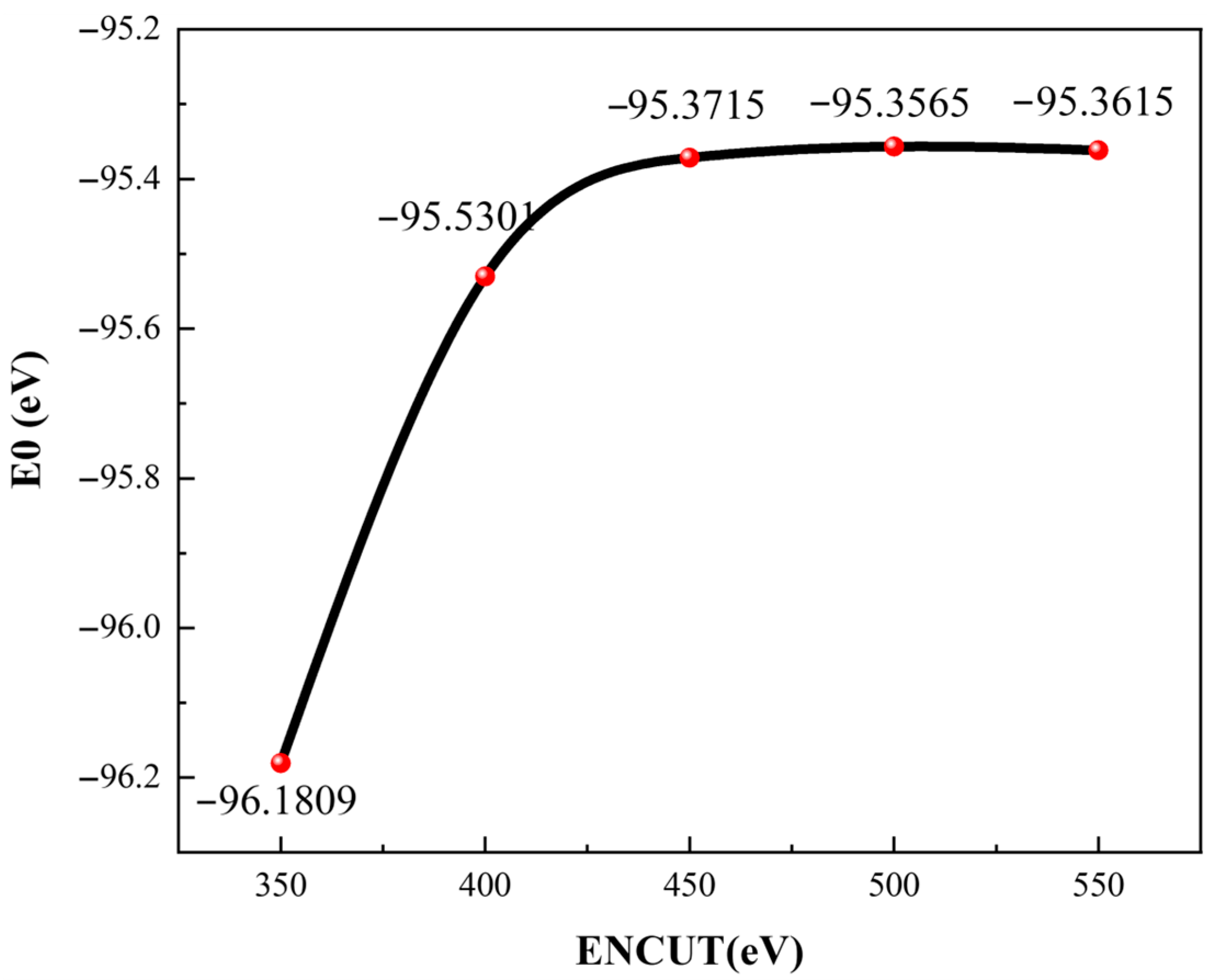
Figure 1. Change in system energy with cut-off energy.
Metals 15 01321 g001
Figure 2. Schematic diagram of Fe3O4 cell.
Metals 15 01321 g002
Figure 3. Fitted curve using the Birch-Murnaghan (BM) equation of state.
Metals 15 01321 g003
Figure 4. Relaxation structure change of calcium-doped surface model (a) before relaxation; (b) after relaxation; Fe atoms are represented by blue-colored spheres, O atoms are represented by silver-colored spheres, Ca atoms are represented by orange-colored spheres.
Metals 15 01321 g004
Figure 5. Adsorption configuration of Ca-doped Fe3O4 (110) surface; (a) Front view; (b) Side view. Fe atoms are represented by blue-colored spheres, O atoms are represented by silver-colored spheres, Ca atoms are represented by orange-colored spheres.
Metals 15 01321 g005
Figure 6. The main view of the geometric structure evolution of O2 adsorbed on Ca-doped Fe3O4 (110) surface at 1073 K (a) 720fs; (b) 1040fs; (c) 1080fs; (d) 1140fs; (e) 1288fs.
Metals 15 01321 g006
Figure 7. Side view of geometric structure evolution of O2 adsorbed on Ca-doped Fe3O4 (110) surface at 1073 K (a) 720fs; (b) 1040fs; (c) 1080fs; (d) 1140fs; (e) 1288fs.
Metals 15 01321 g007
Figure 8. Front view of differential charge density at different characteristic times of Ca-doped adsorption system at 1073 K; (a) 720fs, (b) 1040fs, (c) 1080fs, (d)1140fs, (e) 1288fs. Yellow is charge gain, Light blue is charge loss.
Metals 15 01321 g008
Figure 9. Side view of differential charge density at different characteristic times of Ca-doped adsorption system at 1073 K; (a) 720fs, (b) 1040fs, (c) 1080fs, (d)1140fs, (e) 1288fs. Yellow is charge gain, Light blue is charge loss.
Metals 15 01321 g009
Figure 10. Differential charge density slice of Ca-doped adsorption system at 1073 K; (a,b) Side view; (ce) Front view; Red is charge gain, blue is charge loss.
Metals 15 01321 g010
Figure 11. Partial density of states of O2 adsorbed on Ca-doped Fe3O4 (110) surface.
Metals 15 01321 g011
Figure 12. (a) Change in O–O bond length of Ca-doped system with simulation time at 1073 K; (b) change in energy of Ca-doped system with simulation time at 1073 K.
Metals 15 01321 g012
Table 1. Energy changes with K point.
K PointSystem Energy (eV)∆E (eV)Relative Energy (eV)Time (s)
4 × 4 × 1 (benchmark)−96.17981--141.979
5 × 5 × 1−96.179920.0001167.9 × 10−6155.135
6 × 6 × 1−96.17977−0.000151.1 × 10−5369.698
Table 2. The difference in oxidation between pure magnetite and Ca-doped magnetite.
Simulation
System
Adsorption
Time
Bonding
Time
O–O Bond Breakage
Time
Stable
Time
Magnetite [26]360 fs724 fs760 fs924 fs
Ca-magnetite720 fs1040 fs1140 fs1288 fs
Table 3. Segregation energy at different layers of Ca-doped Fe3O4 (110) surface.
Number of LayersSurfaceFirst LayerThe Second Layer
E0 (eV)−477.895−476.58771−475.17152
Eseg (eV)-1.307342.72353
Disclaimer/Publisher’s Note: The statements, opinions and data contained in all publications are solely those of the individual author(s) and contributor(s) and not of MDPI and/or the editor(s). MDPI and/or the editor(s) disclaim responsibility for any injury to people or property resulting from any ideas, methods, instructions or products referred to in the content.