Article

A Study on the Influence of the Rotating Speed and Load on the Grain Structure and Wear Properties of Bearing Steel GCr15 During Bearing Service


1
College of Shipbuilding and Marine Equipment Engineering, Shanghai Polytechnic University, Shanghai 201209, China
2
College of Energy and Materials, Shanghai Polytechnic University, Shanghai 201209, China
3
Shanghai Vocational and Technical Teacher Education School, Shanghai Polytechnic University, Shanghai 201209, China
*
Author to whom correspondence should be addressed.
Metals 2024, 14(12), 1408; https://doi.org/10.3390/met14121408
Submission received: 25 October 2024 / Revised: 29 November 2024 / Accepted: 2 December 2024 / Published: 9 December 2024

Abstract

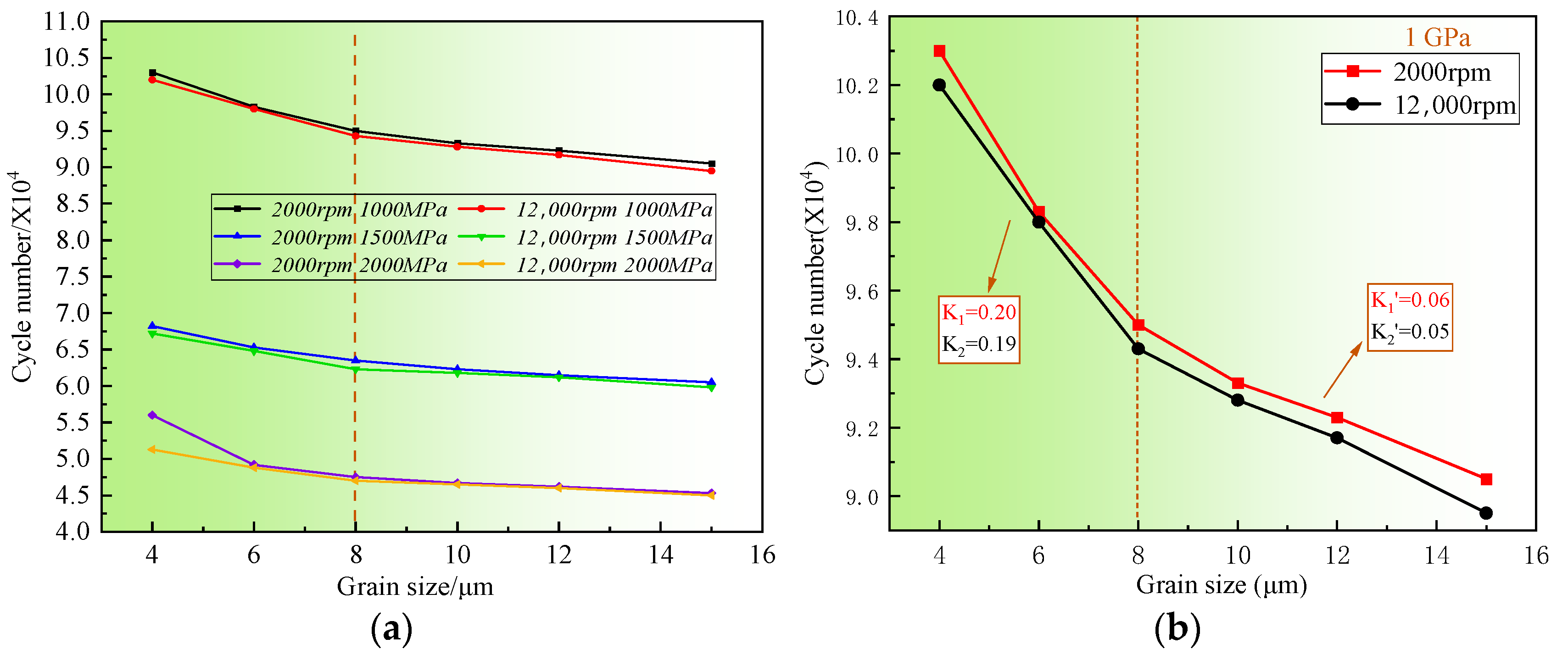
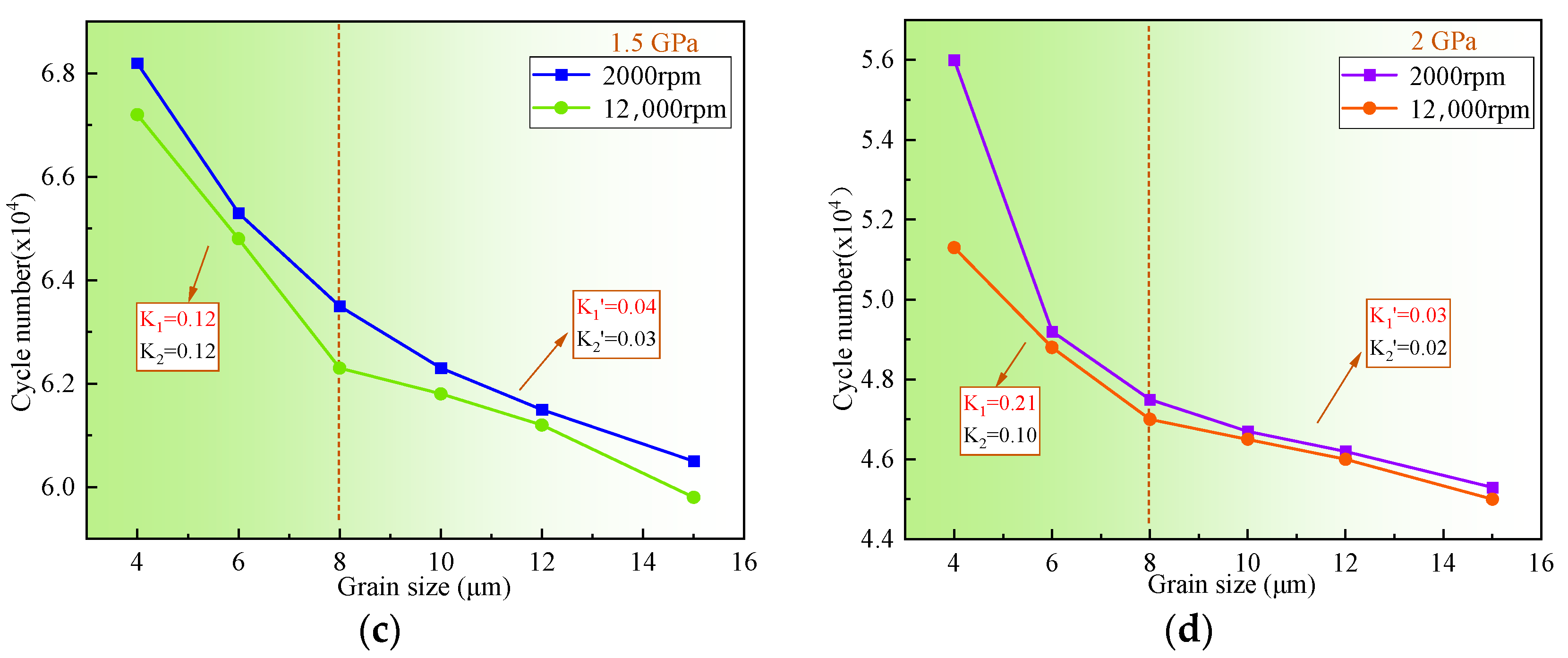
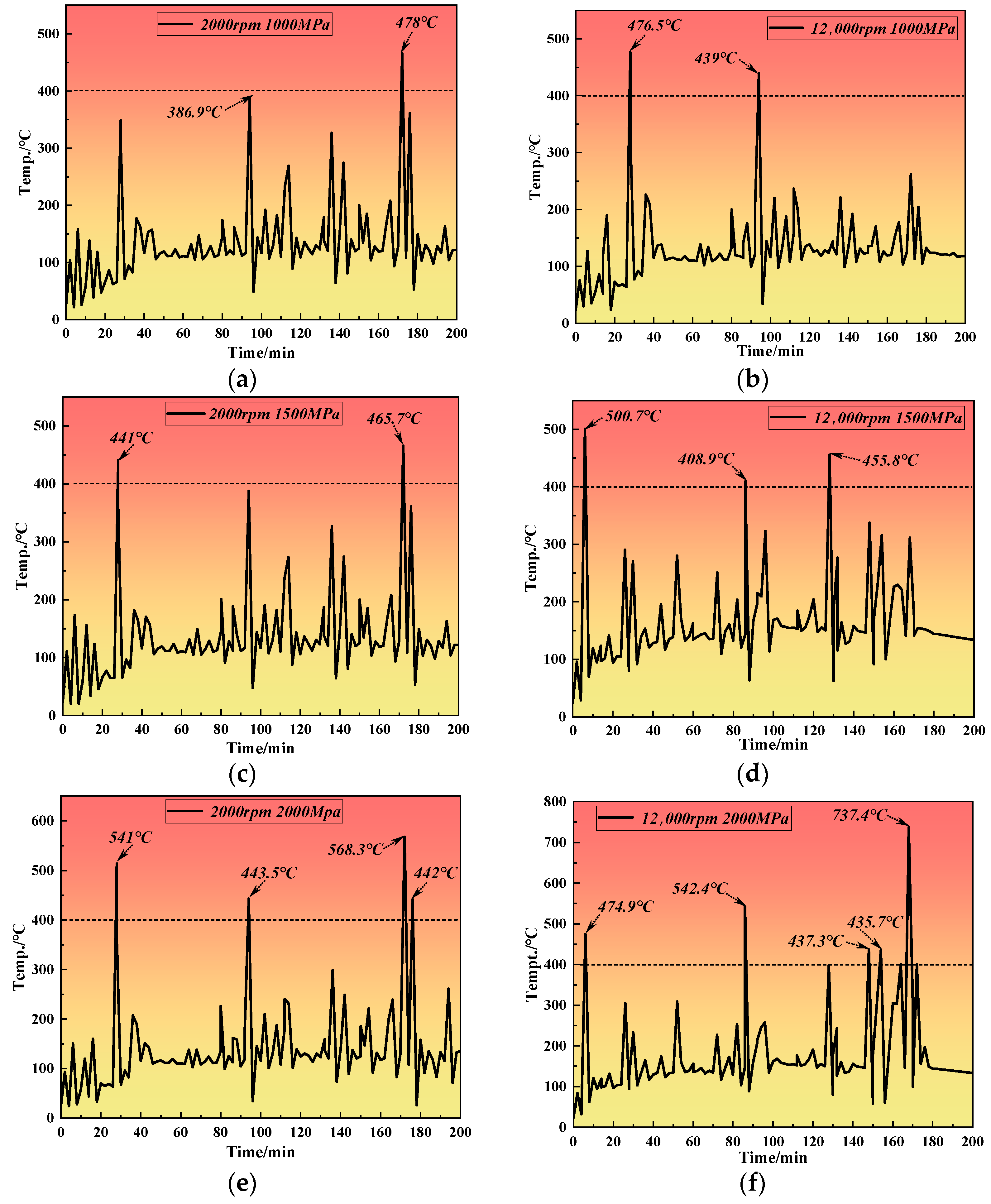
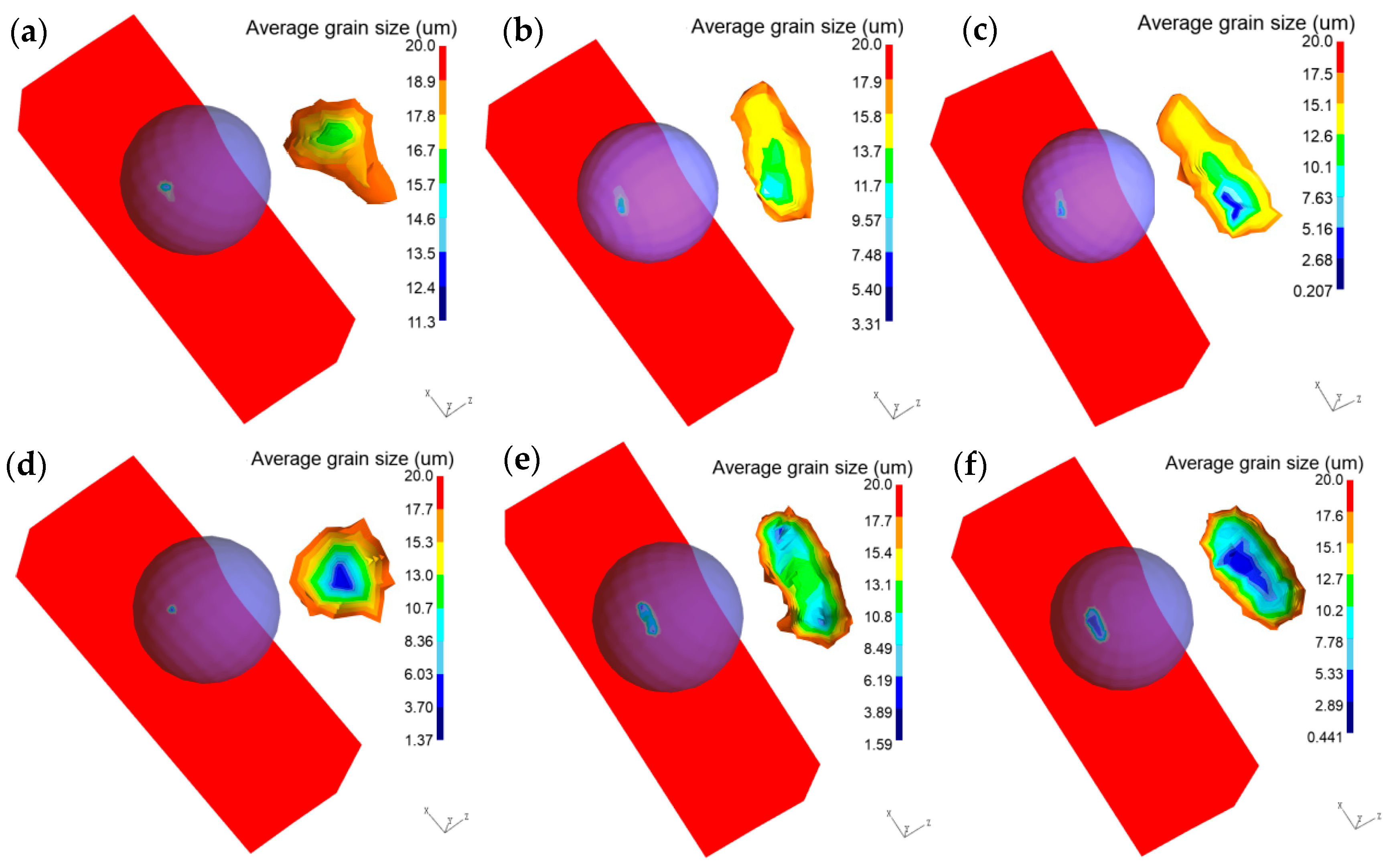
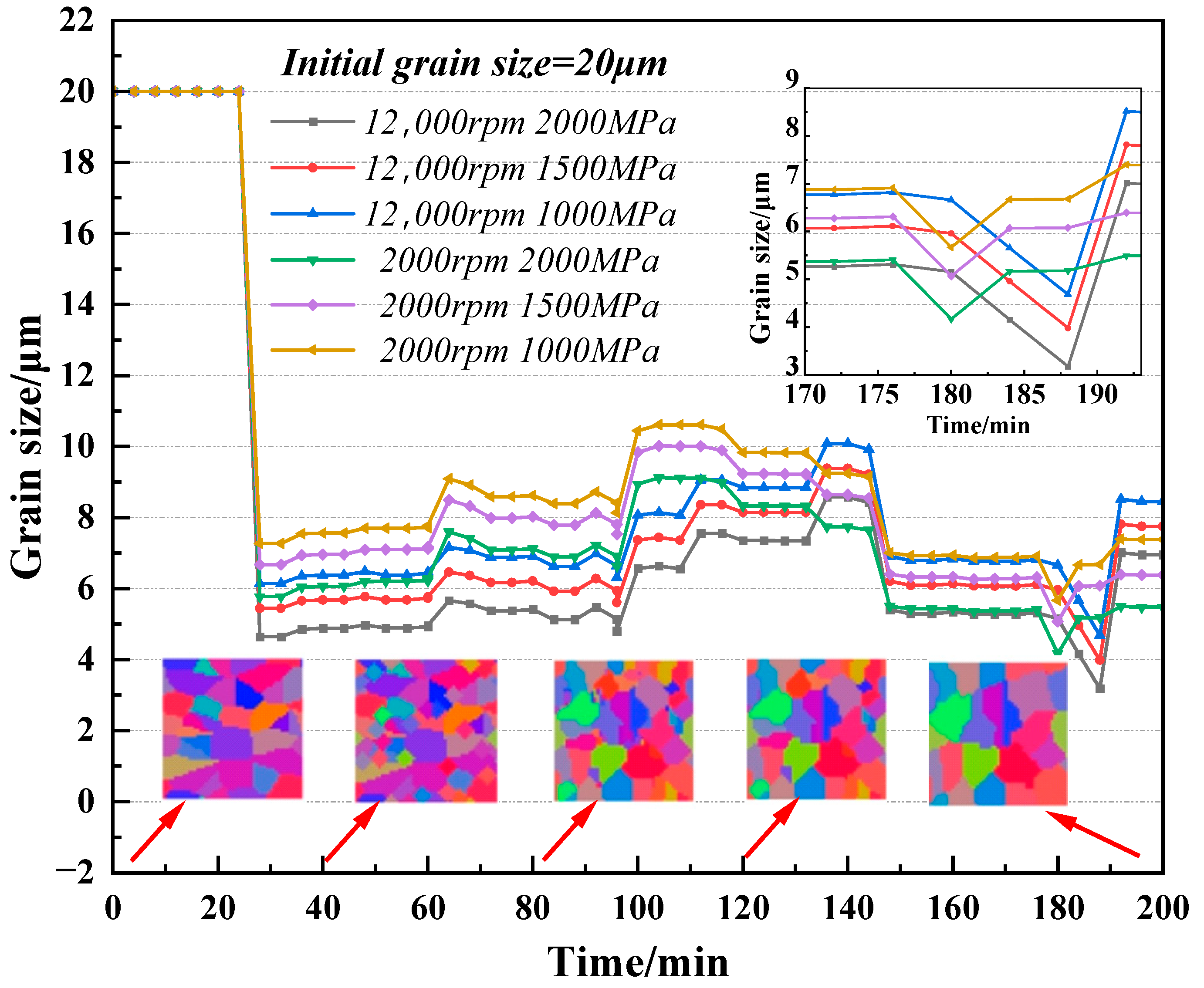
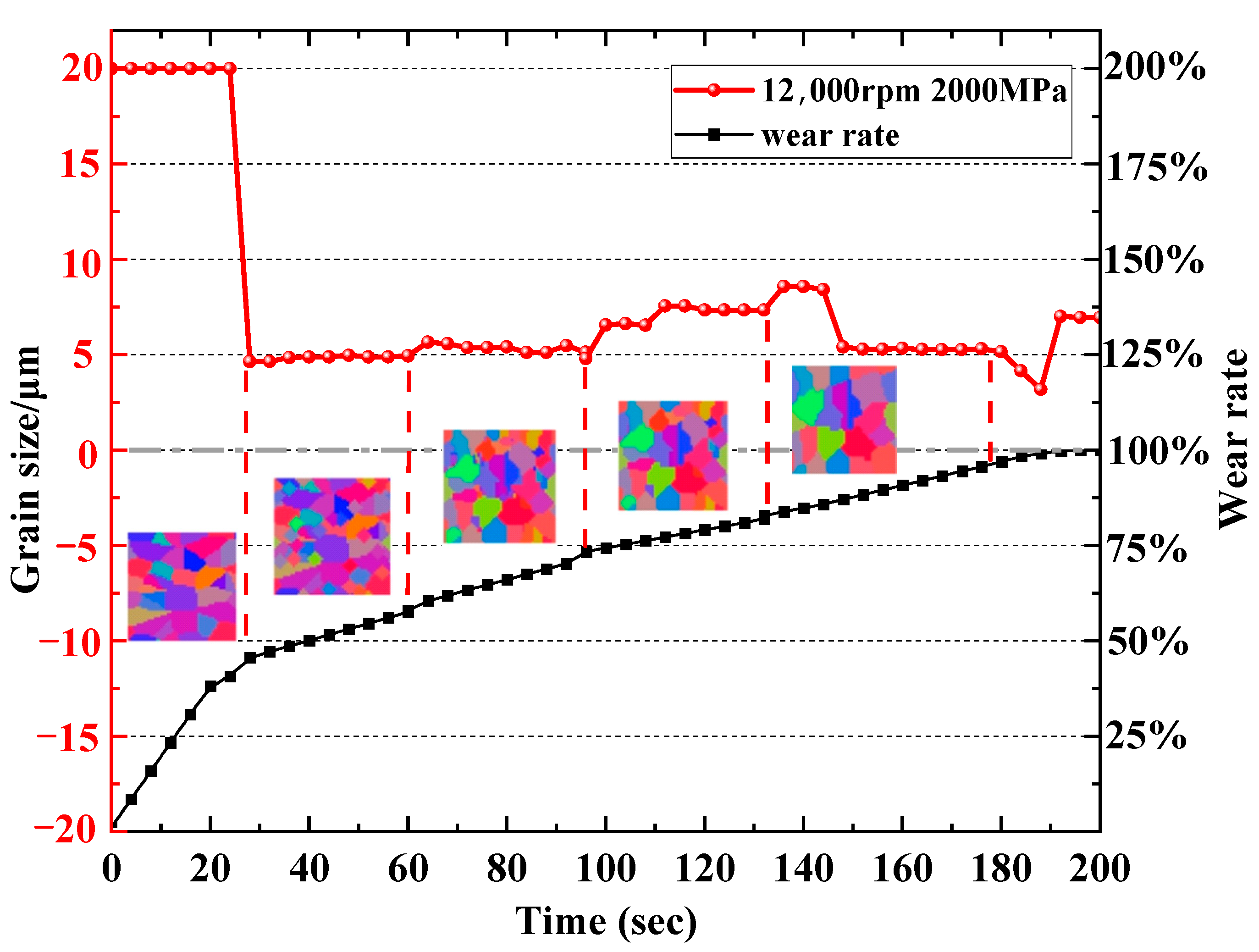
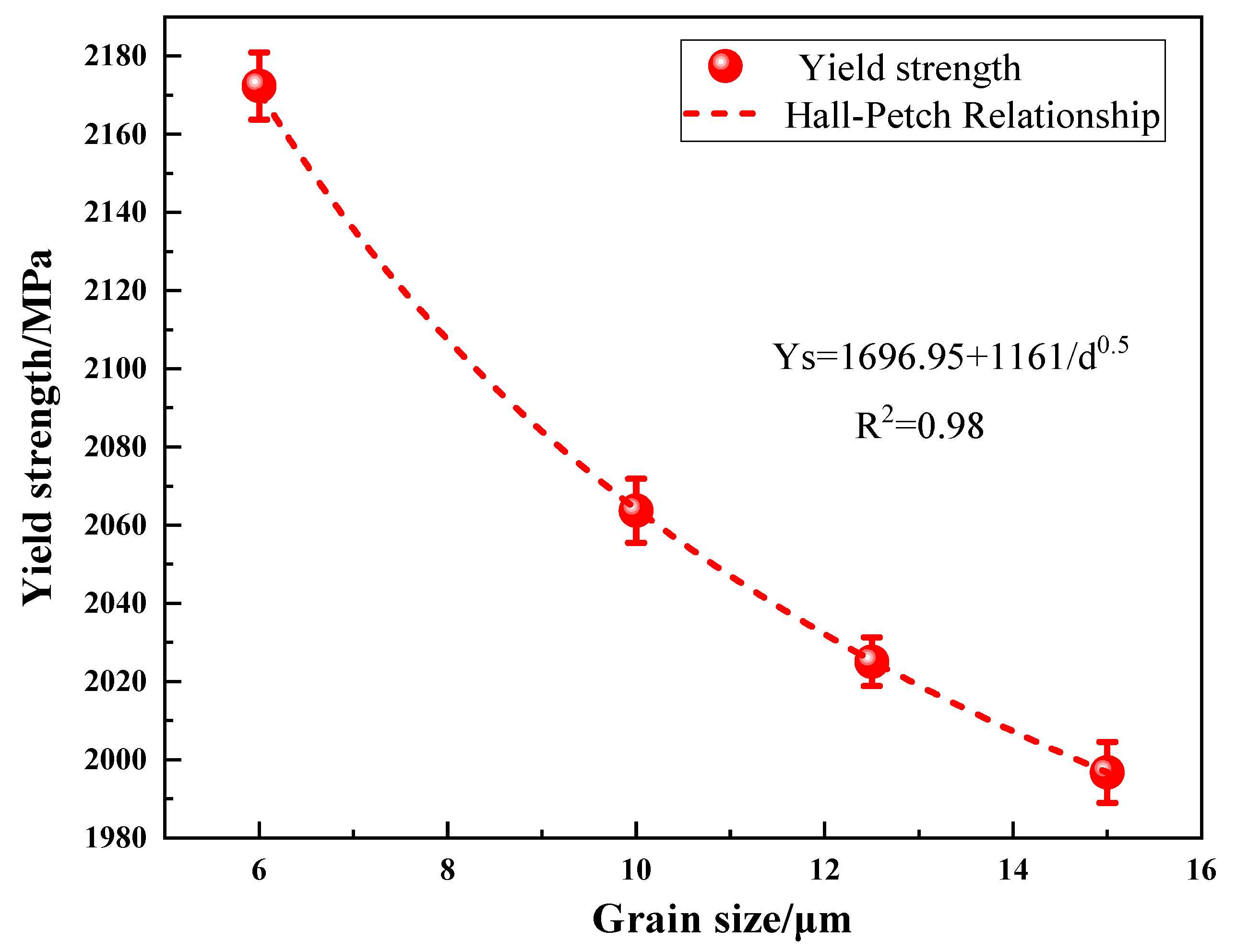
In order to study the wear failure mechanism and structure evolution law of bearings under different speeds and contact loads, an elastoplastic model of a 7009AC bearing was established in this paper. The stress, temperature rise and grain size during dry friction and wear of the bearing inner ring were simulated with the finite element method. The effects of the inner ring speed, load pressure and other parameters on the wear rate were studied. The relationship between the grain size and yield strength of GCr15 bearing steel was obtained. The effects of the initial grain size, rotational speed and load pressure on the bearing wear failure were studied. The evolutions of the grain size during service were predicted by means of the dynamic grain recrystallization (DRX), static grain recrystallization (SRX) and grain growth (GG) subprogram. The results show that the contact stress has a more significant effect on the early failure wear than the bearing speed, and the increase in the contact stress will aggravate the wear rate of the bearing inner ring. Under the same working conditions, the smaller the grain size, the more significant the influence of the cycle times on wear was. The heat-affected zone produced a local high temperature in the contact area, temperature flashes of up to 580 °C could occur in the central contact area, and the temperature decreased gradually with the increase in the depth from the contact area. It is noteworthy that both the surface and the subsurface of the material produced grain refinement; the grain size was refined from 20 μm to 0.4–12 μm under different working conditions. And the degree of refinement of the subsurface was higher than that of the surface.
Keywords: wear rate; finite element model; friction temperature rise; dynamic recrystallization; grain refinement wear rate; finite element model; friction temperature rise; dynamic recrystallization; grain refinement