
Article

Geometry Effect on Microstructure and Mechanical Properties in Laser Powder Bed Fusion of Ti-6Al-4V


1
Fraunhofer Institute for Laser Technology ILT, Steinbachstraße 15, 52074 Aachen, Germany
2
Institute of Materials Research, German Aerospace Center (DLR), Linder Höhe, 51147 Cologne, Germany
3
Chair for Laser Technology LLT, RWTH Aachen University, Steinbachstraße 15, 52074 Aachen, Germany
*
Author to whom correspondence should be addressed.
Metals 2022, 12(3), 482; https://doi.org/10.3390/met12030482
Submission received: 28 January 2022 / Revised: 8 March 2022 / Accepted: 10 March 2022 / Published: 12 March 2022
(This article belongs to the Special Issue Advances in Additive Manufacturing of Metals)

Abstract

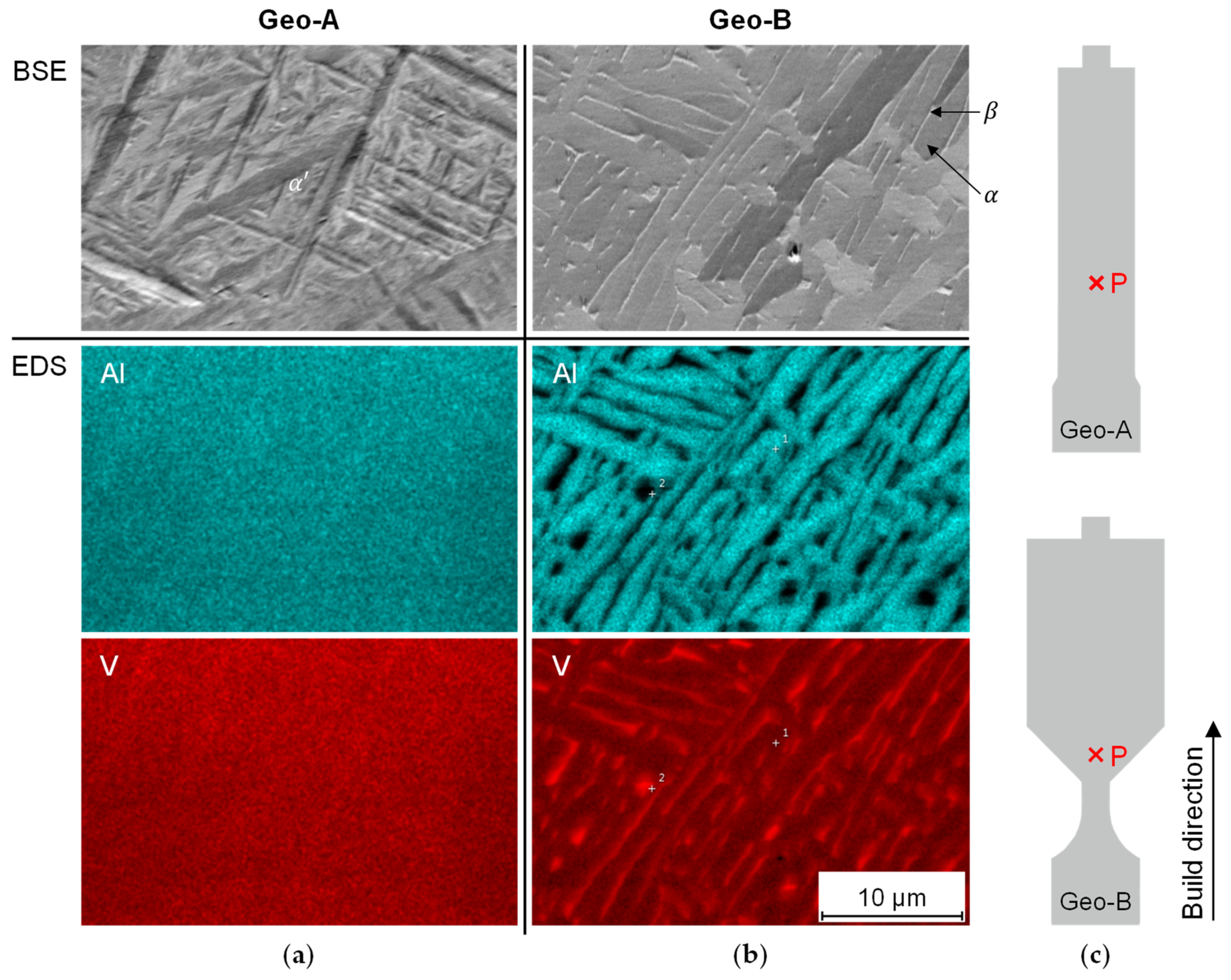
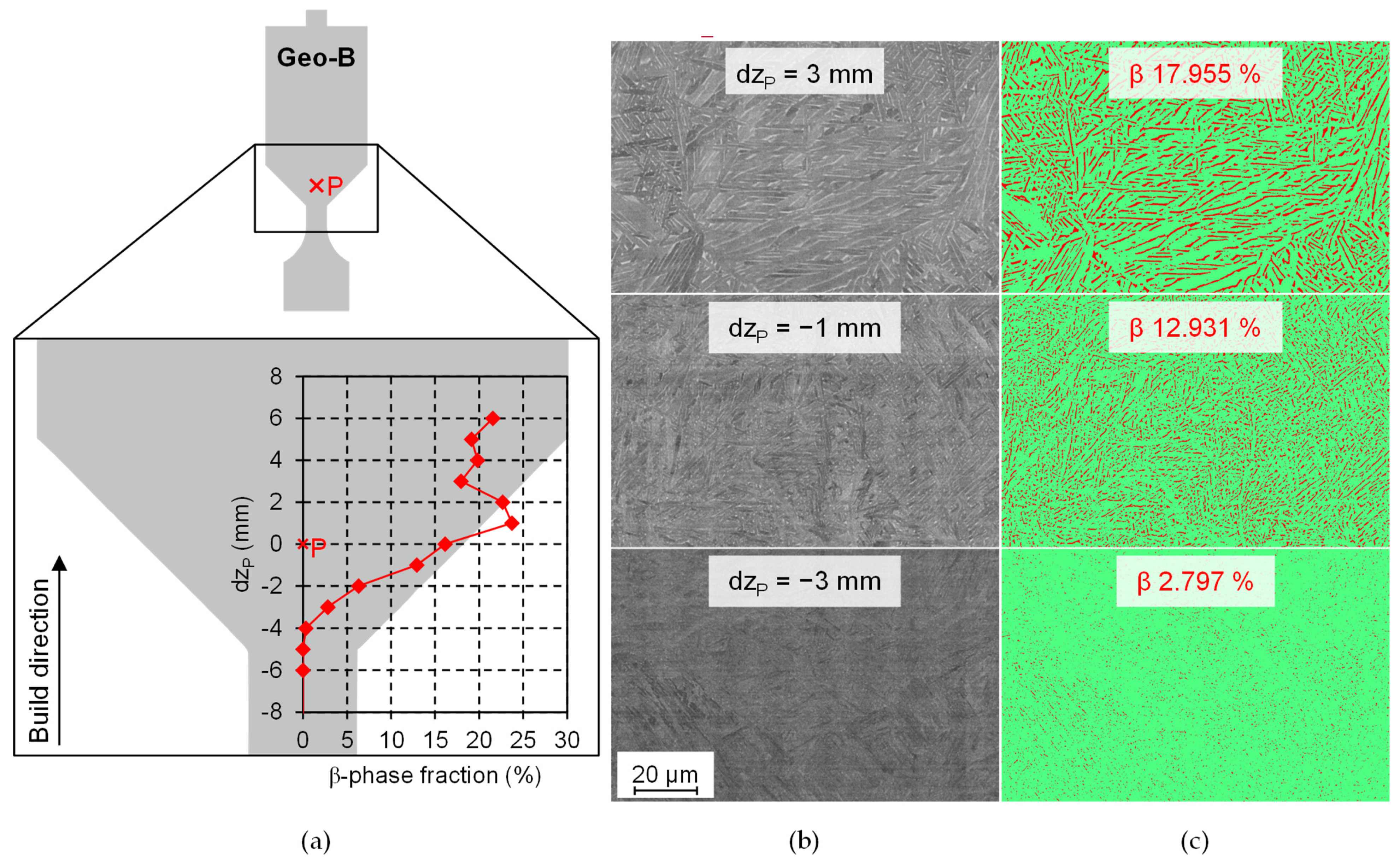
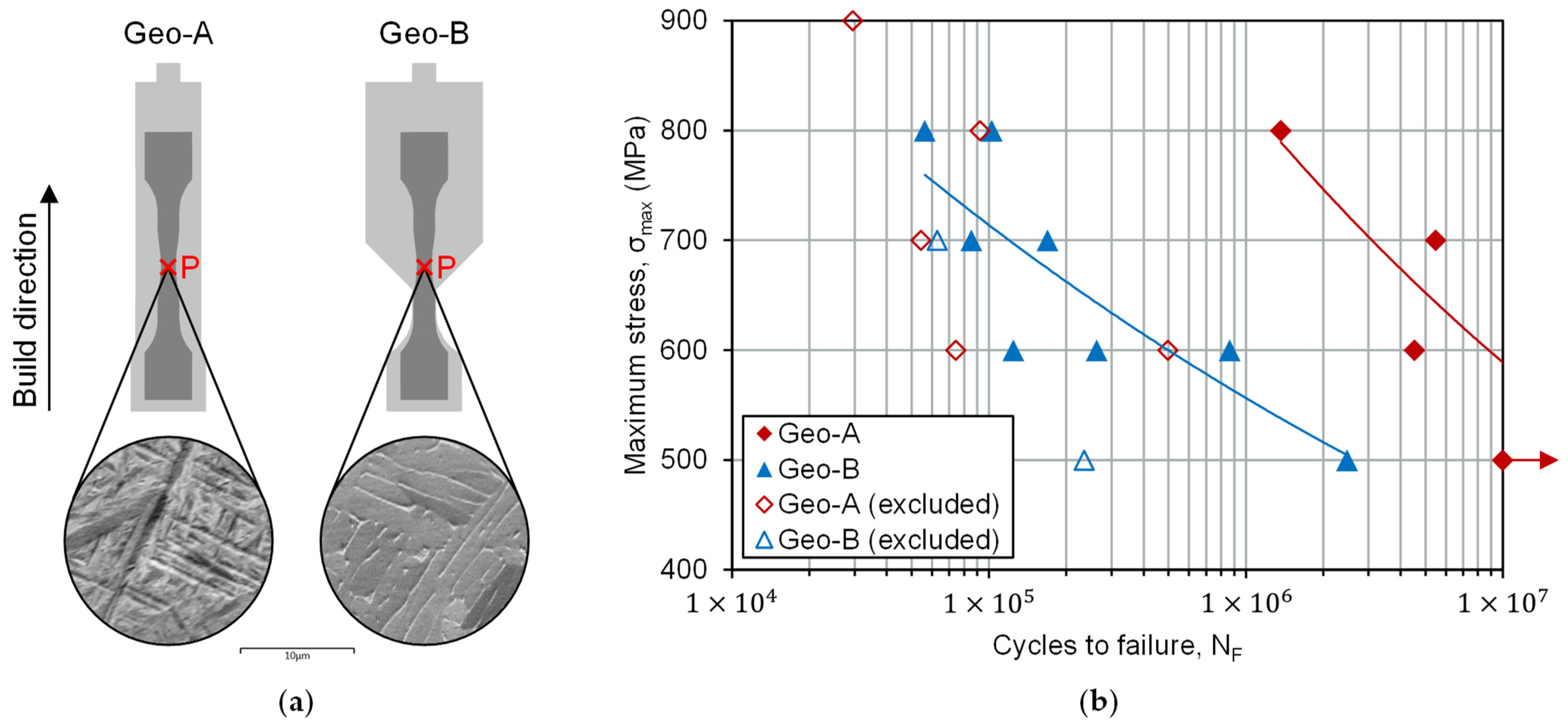
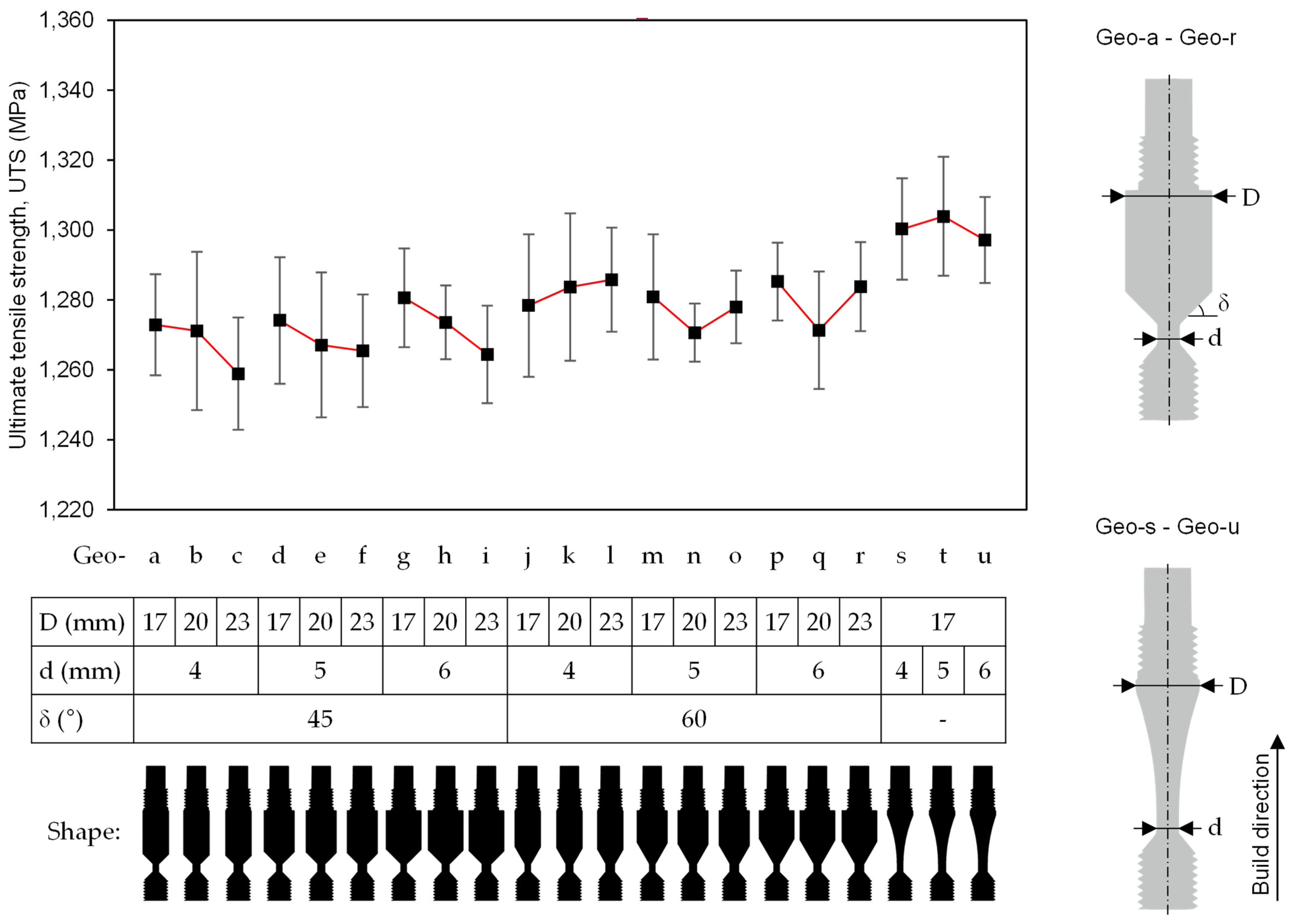
Laser Powder Bed Fusion (LPBF) of Ti-6Al-4V enables the manufacturing of complex parts for lightweight applications. The emerging microstructure in the LPBF process and thus the mechanical properties are defined by the thermal cycles, which are locally variable for complex geometries. Predictions of local mechanical properties by simulation would reduce the development time of new applications drastically but are today not possible on part scale, so new part applications must be qualified experimentally at great effort. In this study, representative geometry sections were transferred into a simplified sample shape to mechanically characterize different geometry-dependent microstructures. In areas exposed to comparatively increased heat input over time, a lamellar α + β microstructure with β fraction up to 20% was measured in contrast to the common martensitic α microstructure of LPBF-manufactured Ti-6Al-4V, resulting in reduced tensile strength and fatigue life. For the first time, a correlation was successfully established between ultimate tensile strength of multiple geometries and the corresponding temperature–time cycles. With reduced computational effort by use of simplifying assumptions in the simulation, this correlation model can theoretically be applied to the part level. This work has laid the foundation for the simulation-based prediction of mechanical properties for entire parts manufactured with LPBF.
Keywords: additive manufacturing (AM); laser powder bed fusion (LPBF); PBF-LB/M; Ti-6Al-4V; thermal history; intrinsic heat treatment; martensite decomposition; material characterization; thermal simulation additive manufacturing (AM); laser powder bed fusion (LPBF); PBF-LB/M; Ti-6Al-4V; thermal history; intrinsic heat treatment; martensite decomposition; material characterization; thermal simulation