Effect of Constraint and Crack Contact Closure on Fatigue Crack Mechanical Behavior of Specimen under Negative Loading Ratio by Finite Element Method


Abstract
1. Introduction
1.1. Background
1.2. Effects of Constraint on Fatigue Crack Growth
1.3. Research on Fatigue Crack Growth under Negative Loading Ratio
2. Finite Element Model and Verification
2.1. Research Scheme
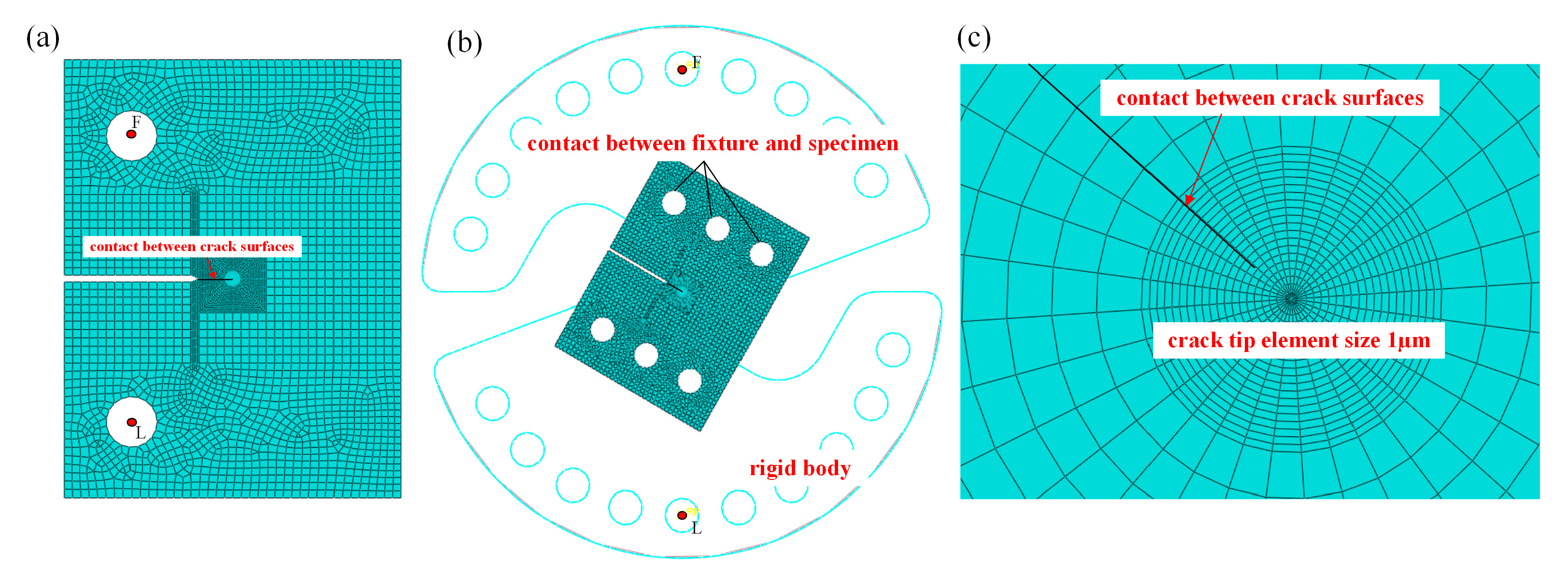
2.2. Finite Element Model
2.3. Mesh Verification
3. Quantification of Constraint, Compressive Loading and Contact Closure
3.1. Constraint Ahead of Crack Tip
3.2. Compressive Loading Effect (CL Effect)
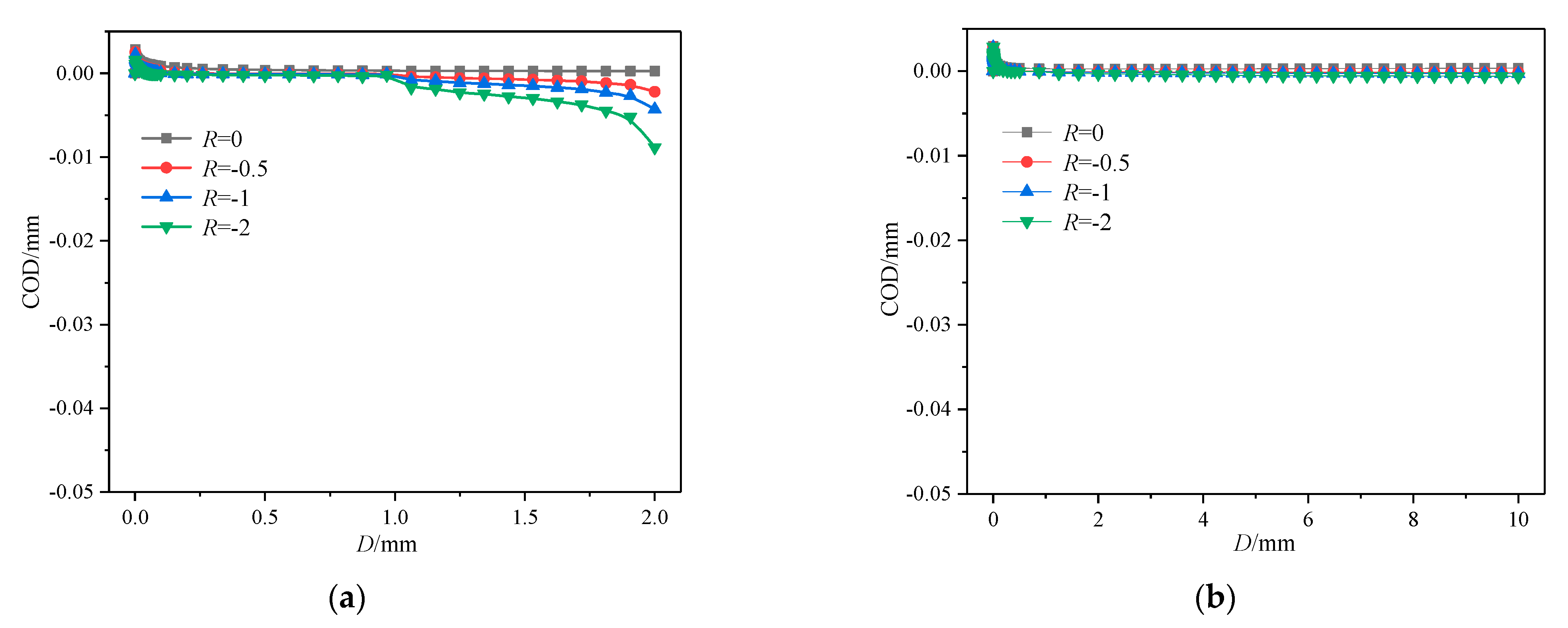
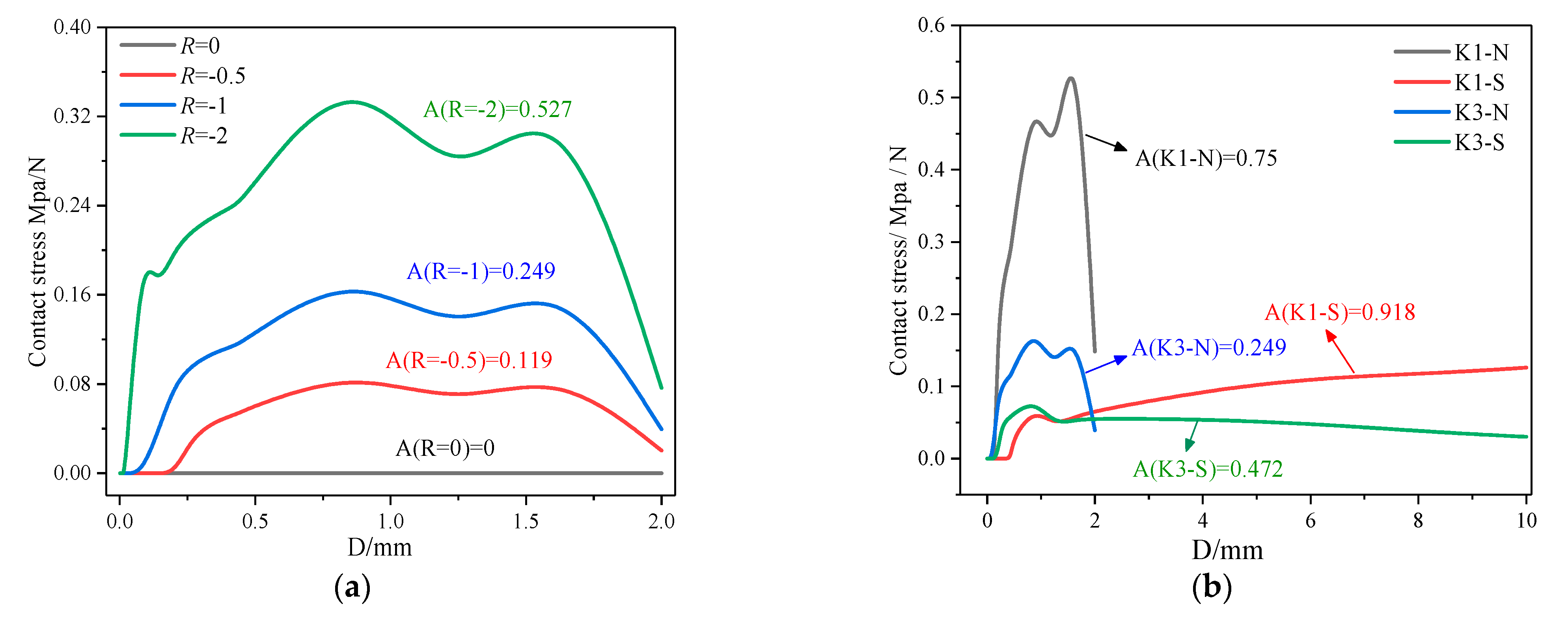
3.3. Contact Degree at Crack Tip Wake Zone
4. Study of Stress–Strain Field Ahead of Crack Tip
4.1. Strain Field Ahead of Crack Tip
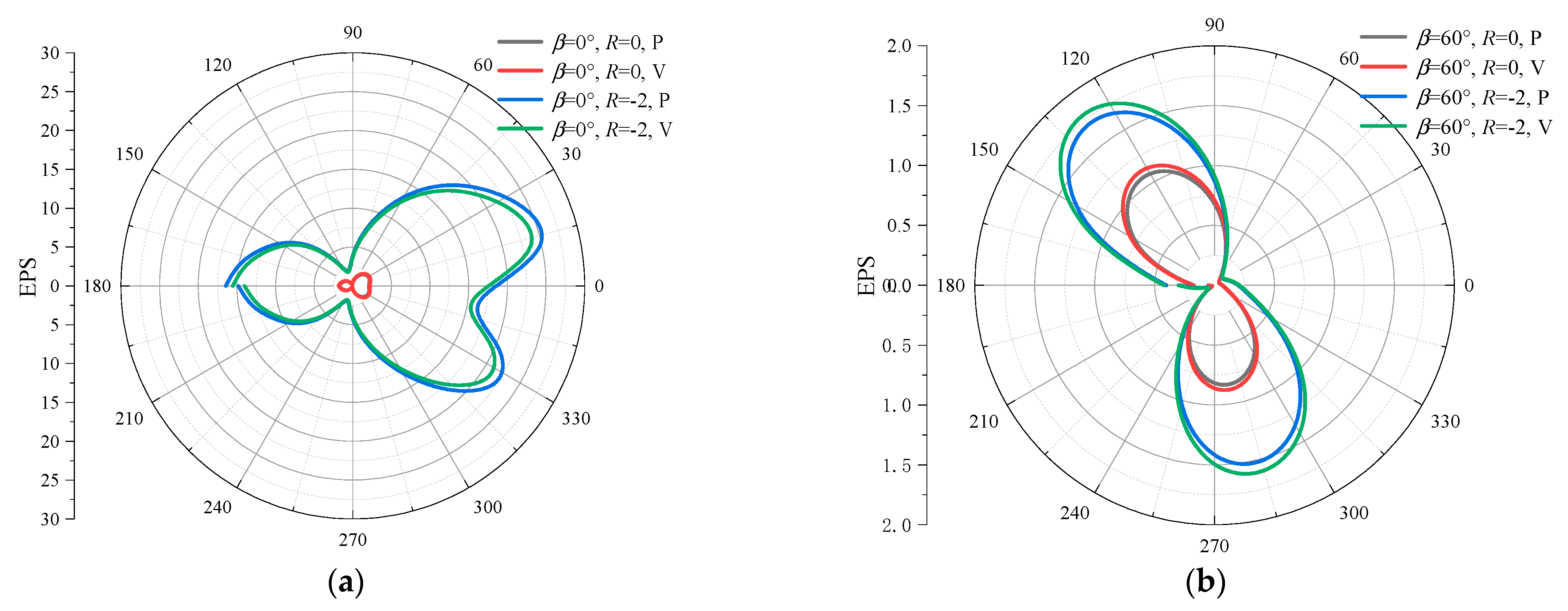
4.1.1. Circumferential Distribution of Equivalent Plastic Strain (EPS)
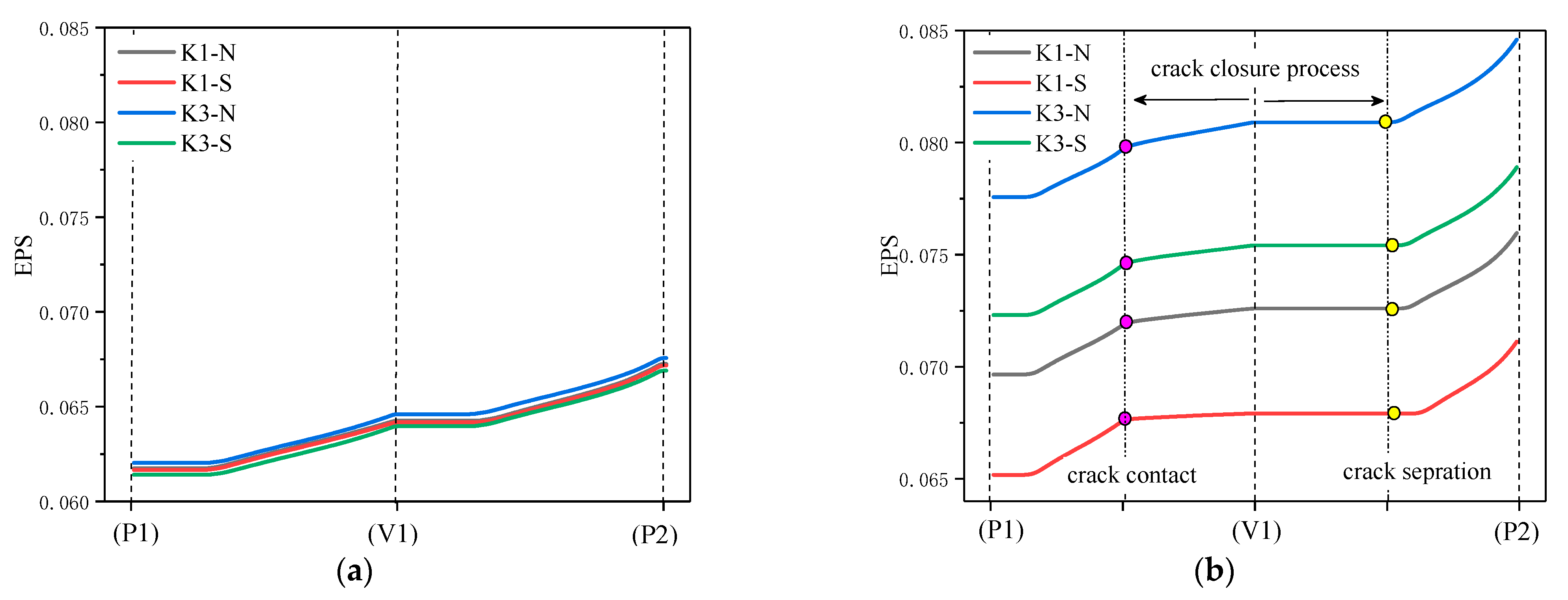
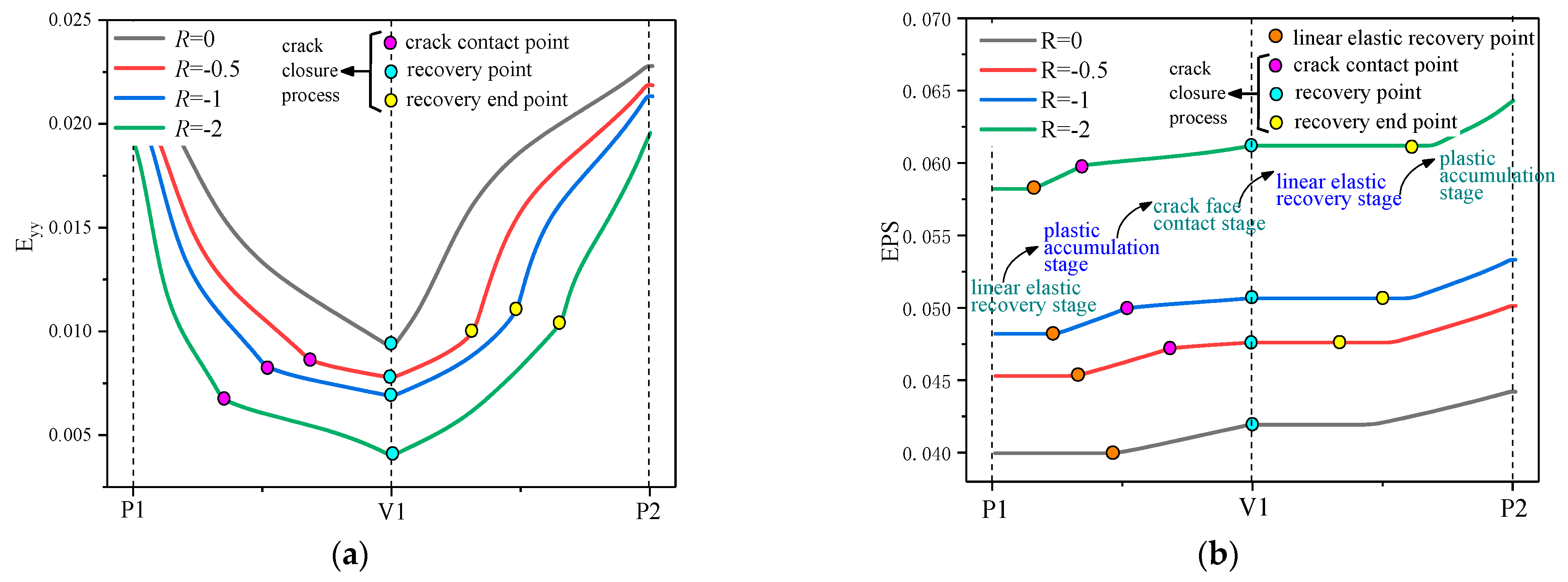
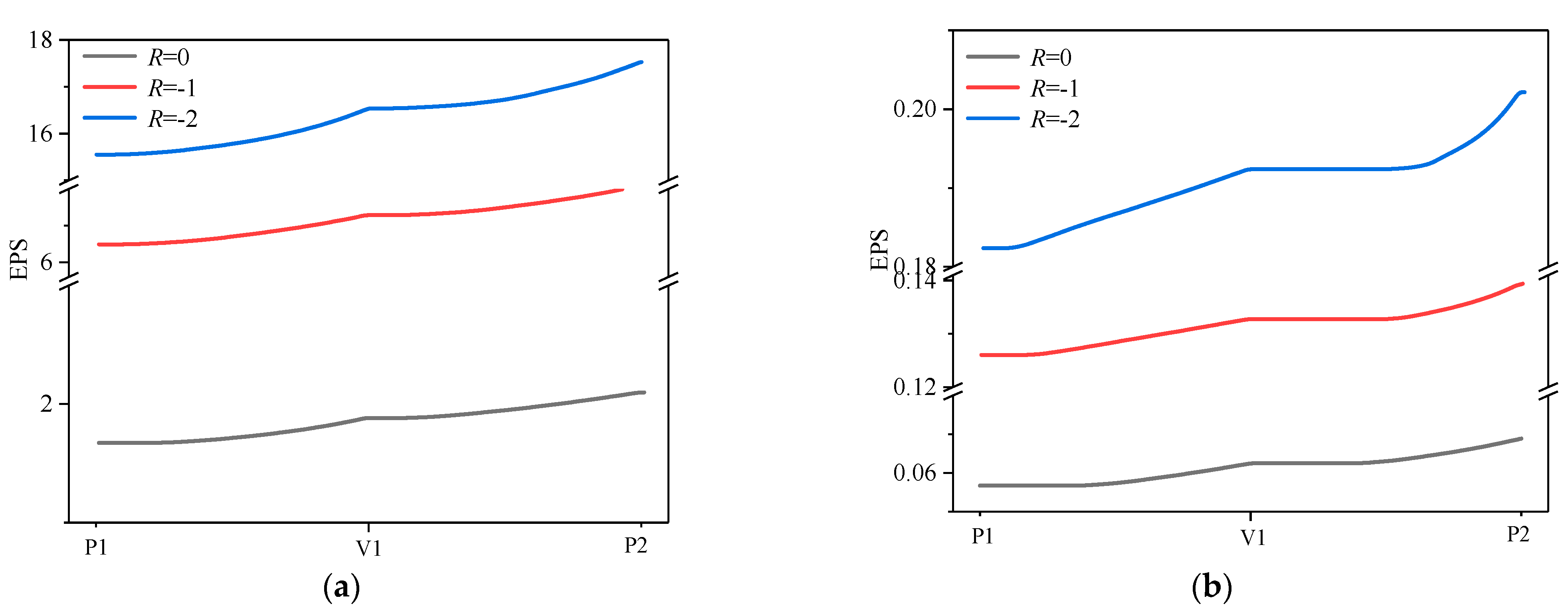
4.1.2. Effect of Loading Ratio R on Strain Evolution with Loading History
4.1.3. Effect of Specimen Type on Strain Evolution with Loading History
4.2. Stress Field Ahead of Crack Tip
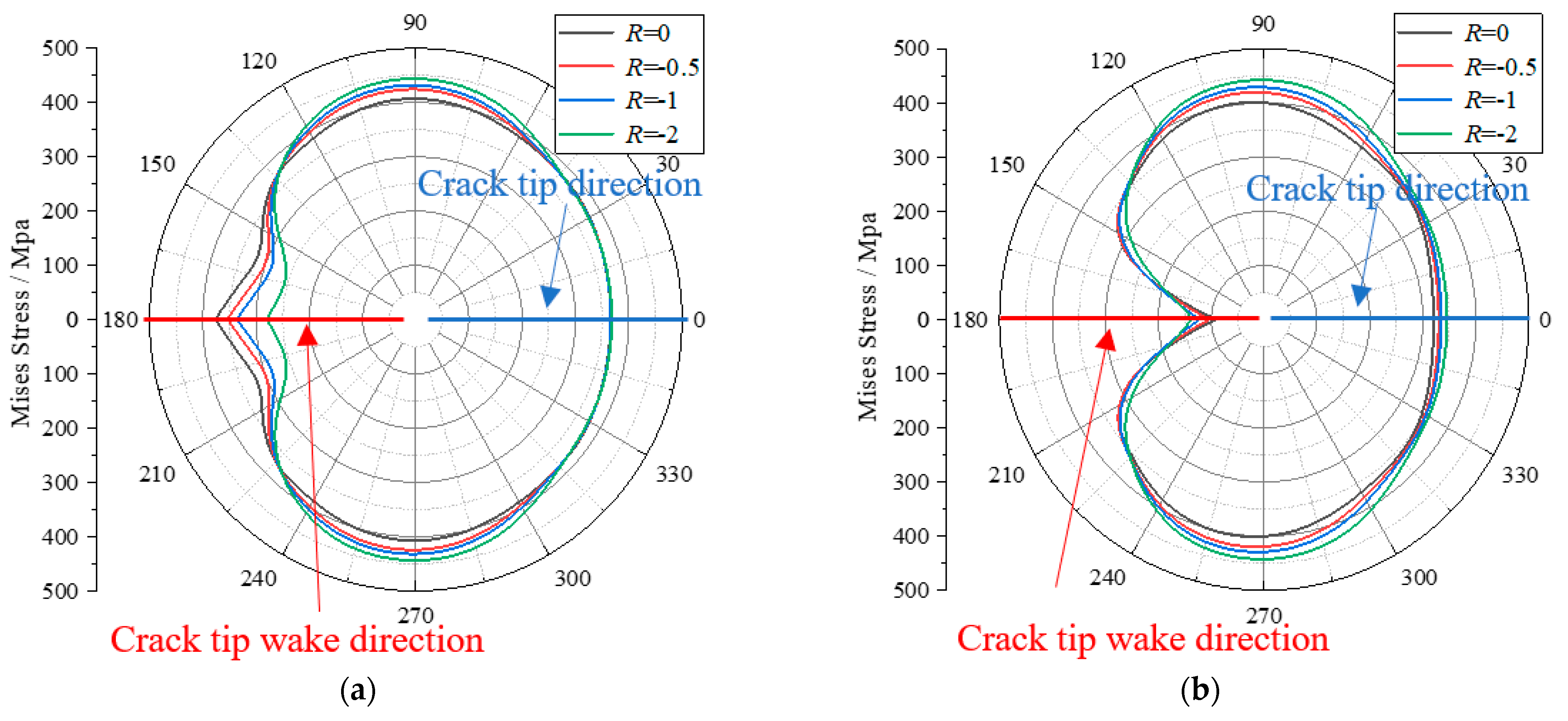
4.2.1. Circumferential Mises Stress Distribution
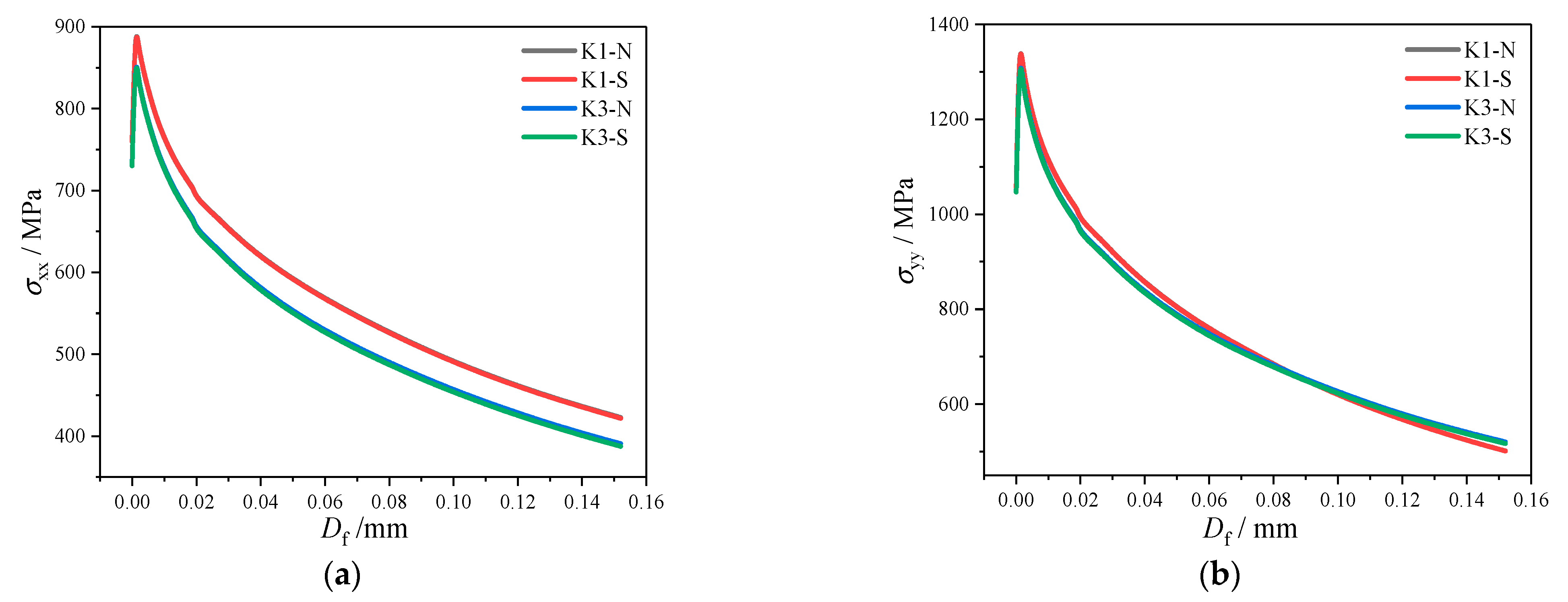
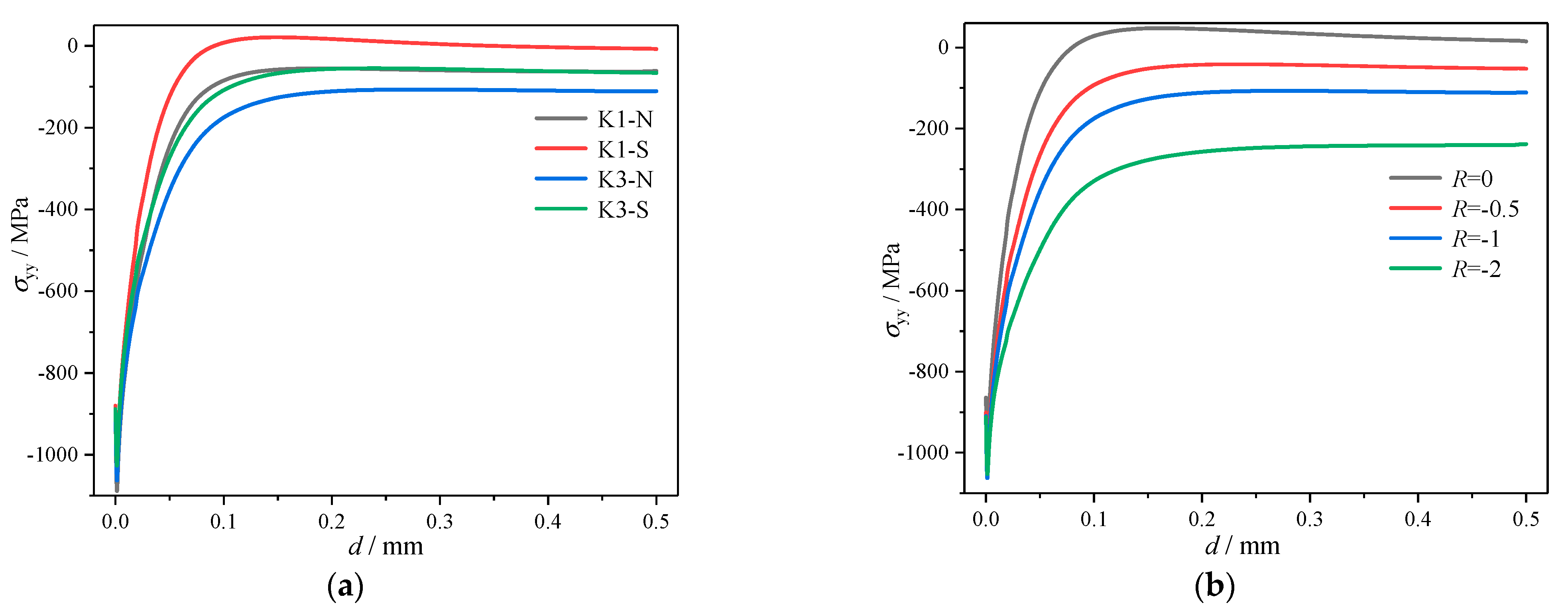
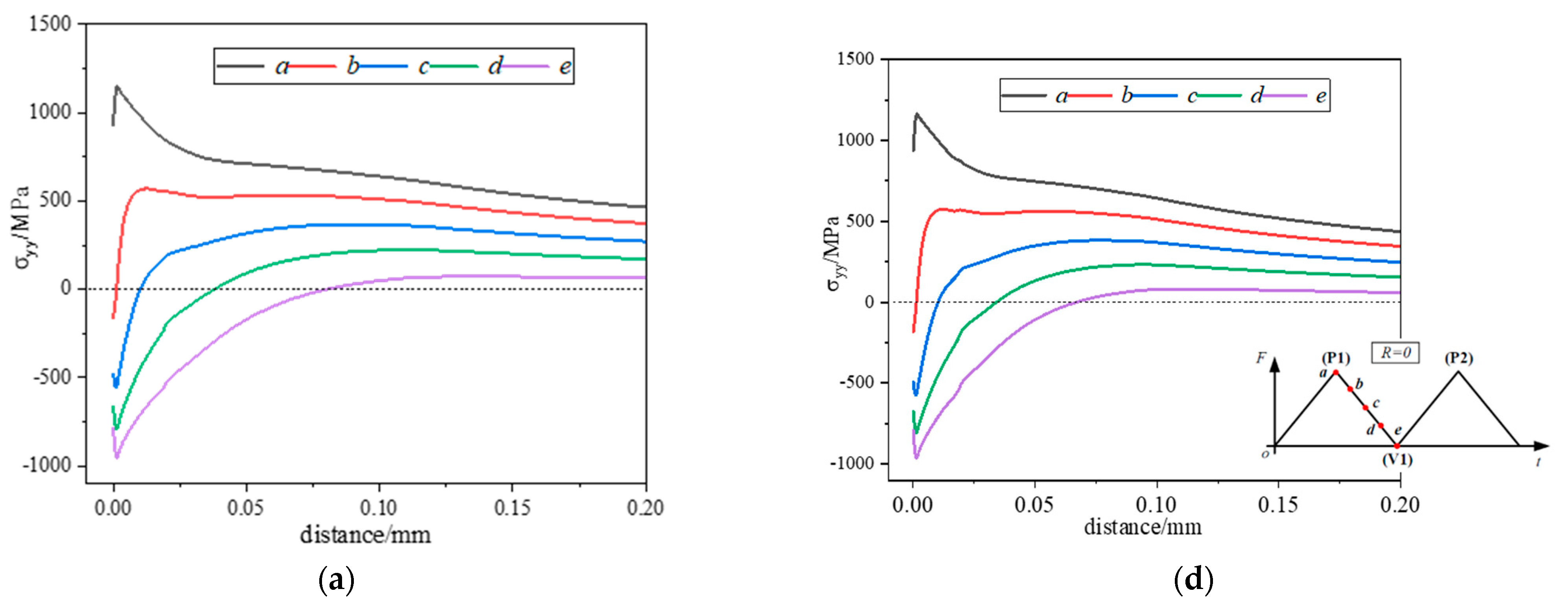
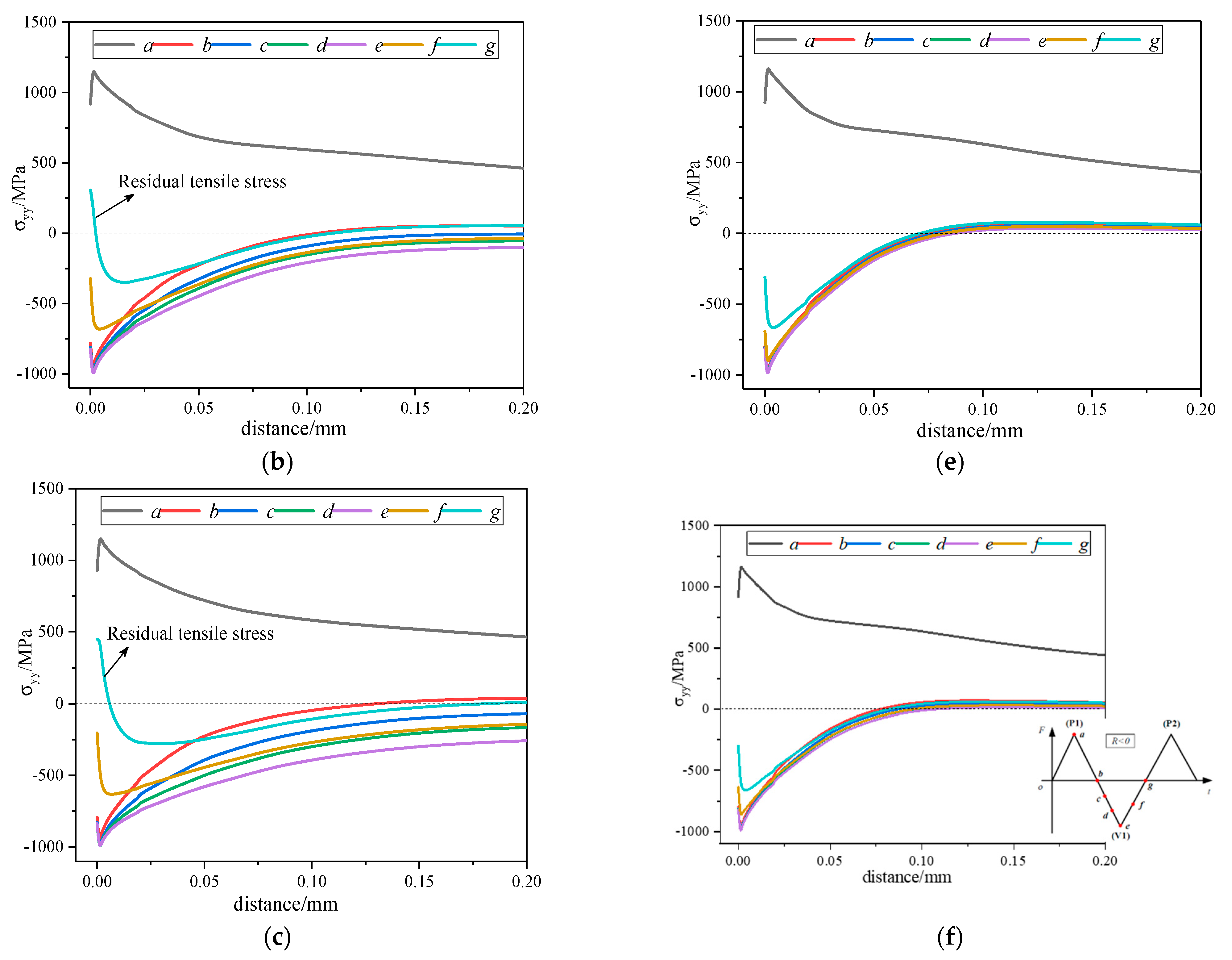
4.2.2. Normal Stress Distribution
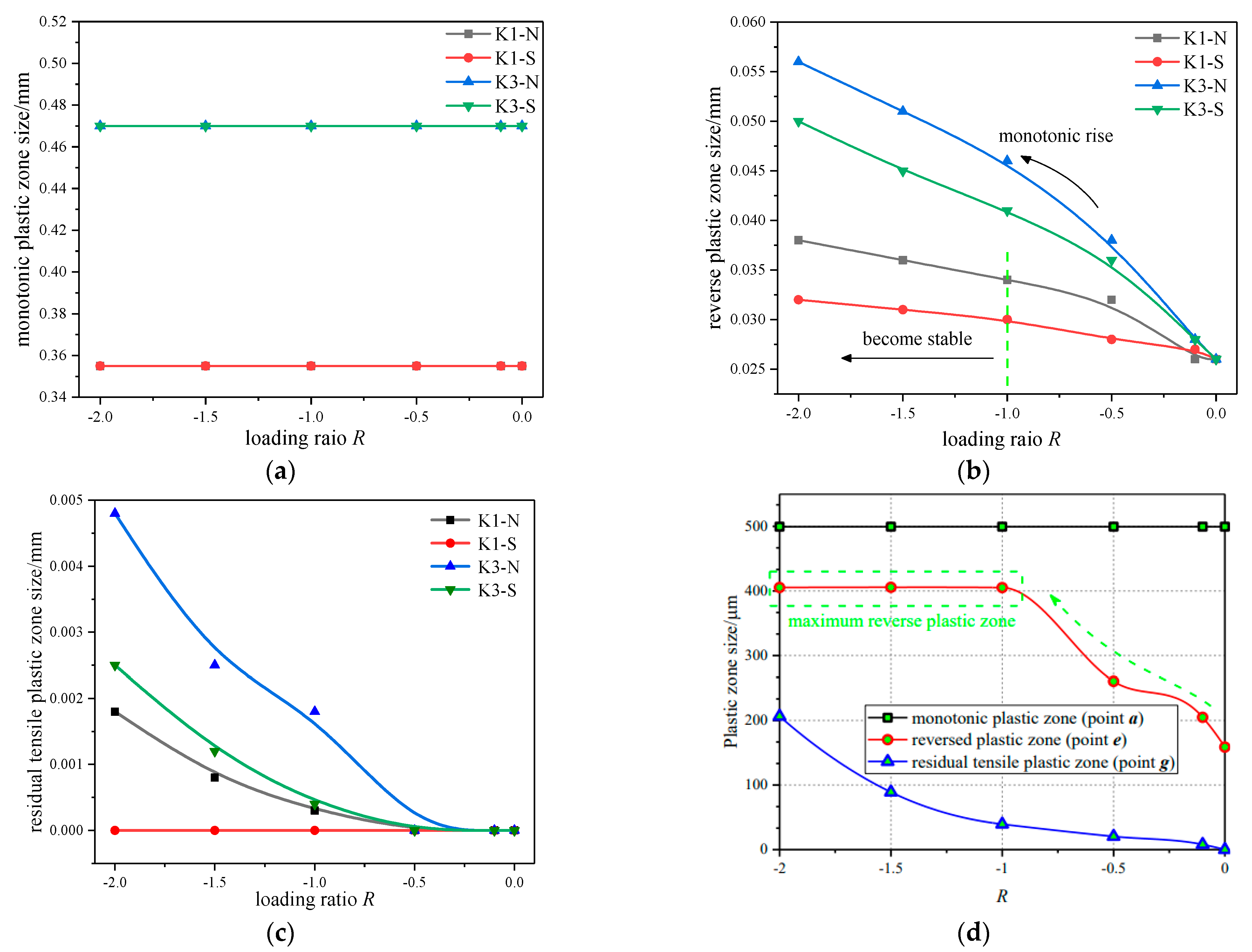
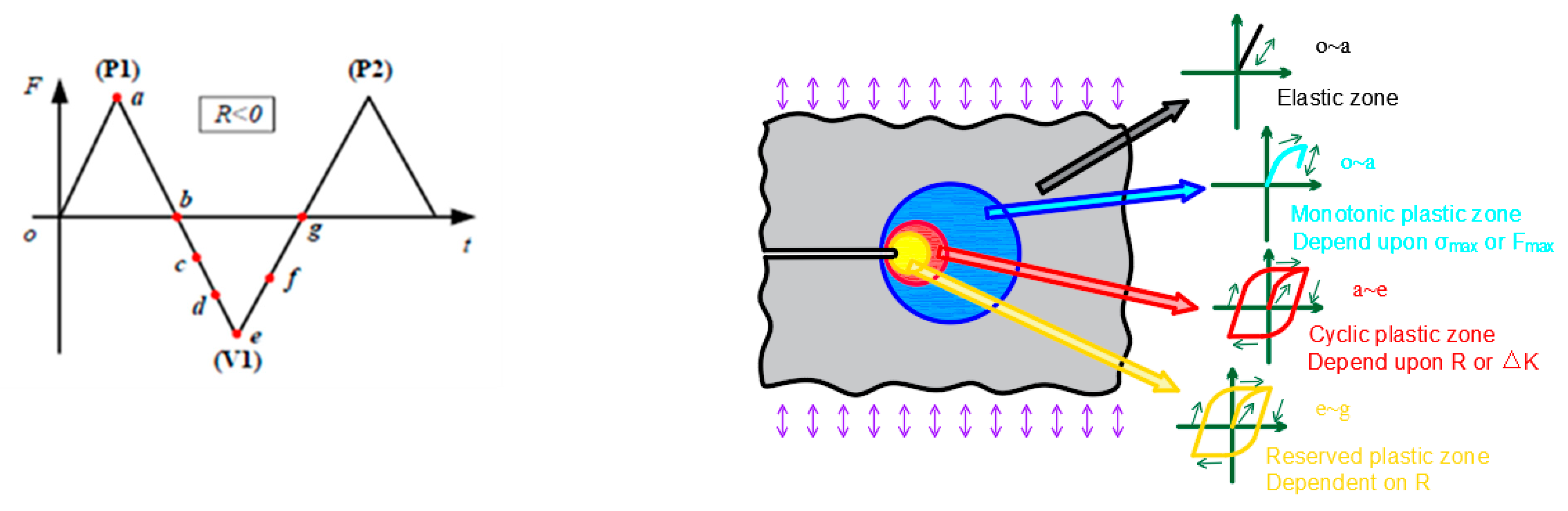
5. Monotonous Plastic Zone, Reversed Plastic Zone and Residual Tensile Plastic Zone
6. Strain Energy Analyses
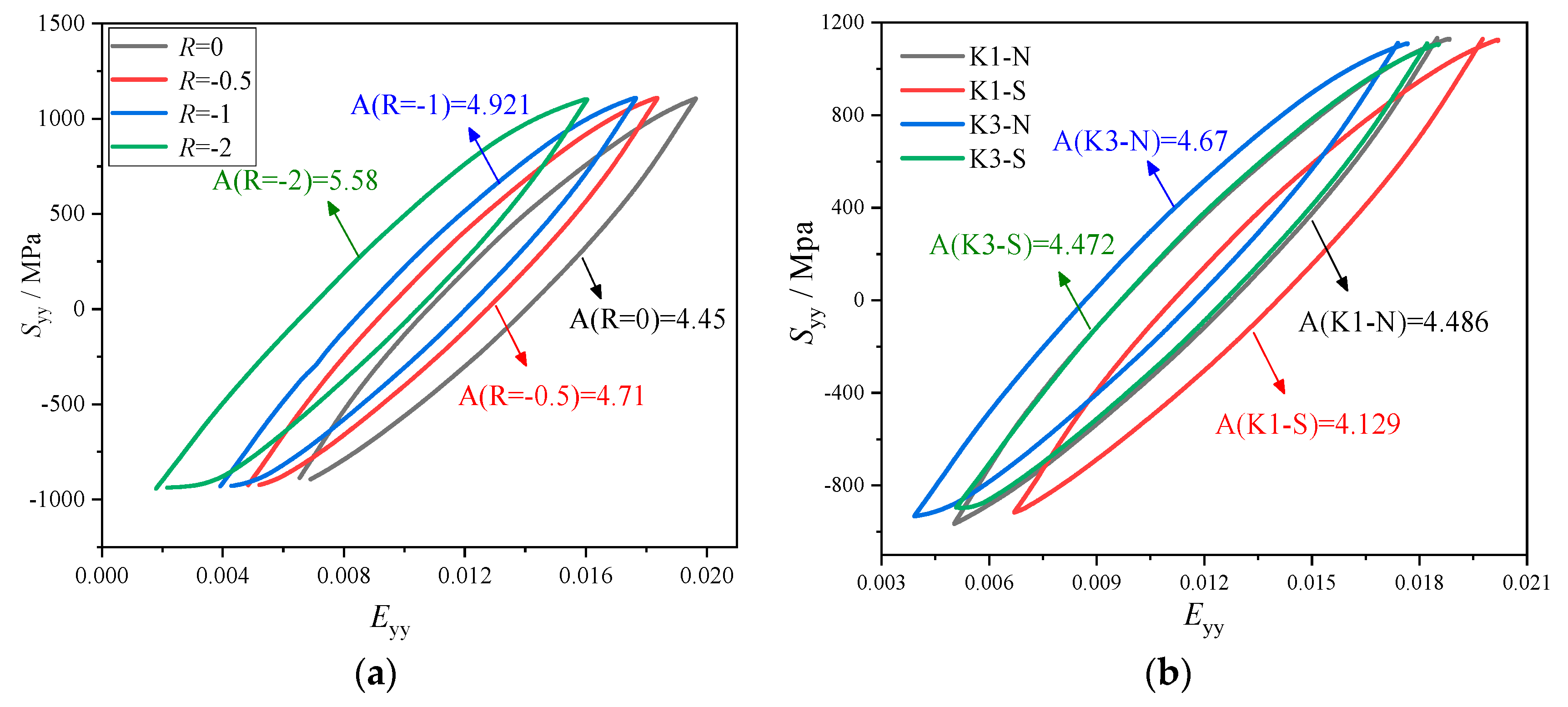
6.1. Hysteresis Loop
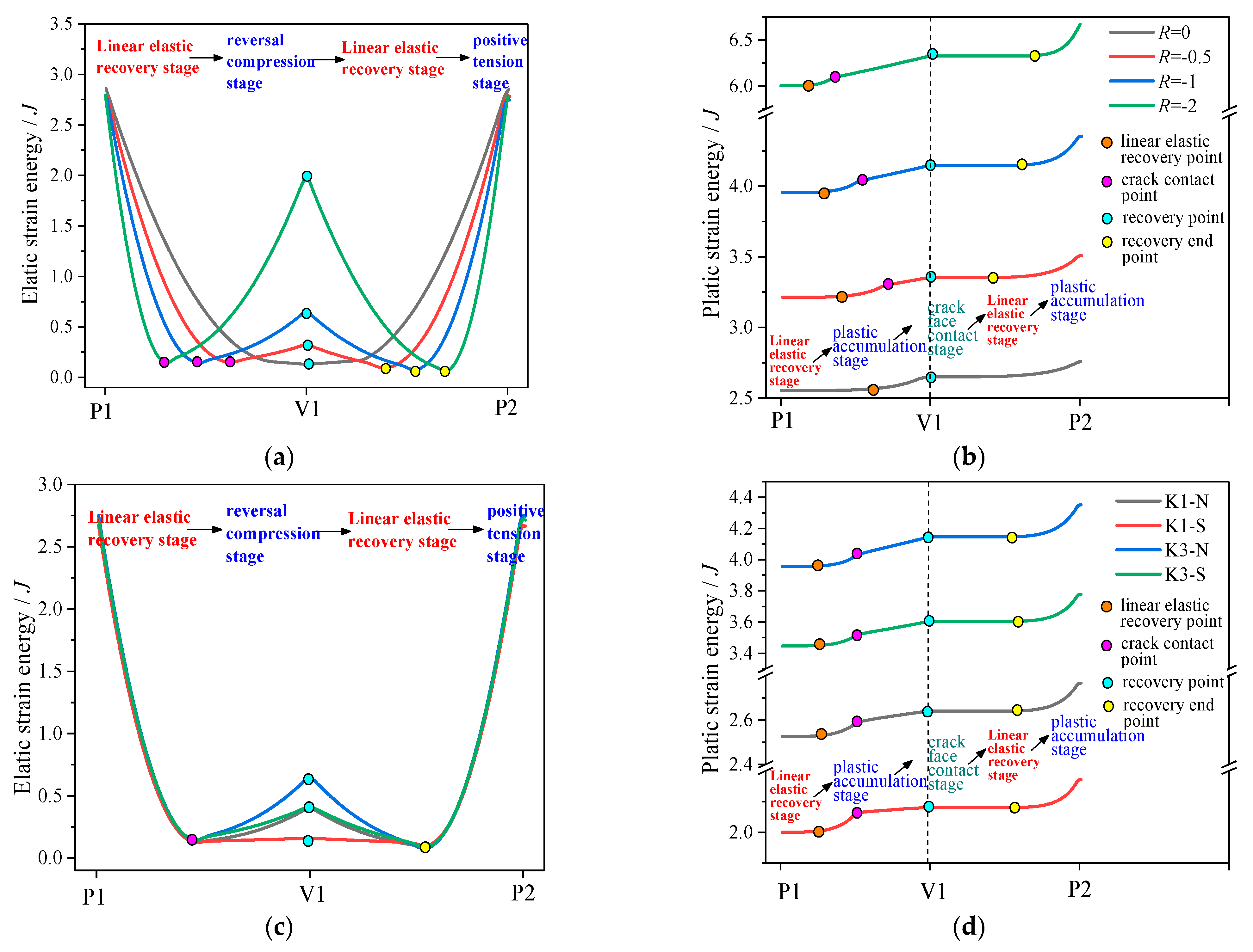
6.2. Strain Energy Analyses
7. EPS Field Analyses for I–II Mixed Mode Crack (without Considering Shear Friction)
8. Conclusions
Author Contributions
Funding
Institutional Review Board Statement
Informed Consent Statement
Data Availability Statement
Conflicts of Interest
References
- Zhang, J.; He, X.D.; Sha, Y.; Du, S.Y. The compressive stress effect on fatigue crack growth under tension–compression loading. Int. J. Fatigue 2010, 32, 361–367. [Google Scholar] [CrossRef] [Scilit]
- Rozylo, P.; Falkowicz, K. Stability and failure analysis of compressed thin-walled composite structures with central cut-out, using three advanced independent damage models. Compos. Struct. 2021, 273, 114298. [Google Scholar] [CrossRef] [Scilit]
- Zhang, P.; Zhou, C.Y.; Xie, L.Q.; He, X.H. Numerical investigation of mechanical behavior of crack tip under mode I and mixed-mode I-II fatigue loading at negative load ratios. Theor. Appl. Fract. Mech. 2020, 108, 102673. [Google Scholar] [CrossRef] [Scilit]
- Miao, X.; Jiang, C.Y.; Zhou, C.Y.; Peng, J.; Gao, G. Effects of specimen type and thickness on elastic and elastic–plastic fracture parameters for I-II and I-III mixed mode cracks. Theor. Appl. Fract. Mech. 2021, 115, 103042. [Google Scholar] [CrossRef] [Scilit]
- Larsson, S.G.; Carlsson, A.J. Influence of non-singular stress terms and specimen Geometry on small-scale yielding at crack tips in elastic-plastic materials. J. Mech. Phys. Solids 1973, 21, 263–277. [Google Scholar] [CrossRef] [Scilit]
- Varfolomeev, I.; Luke, M.; Burdack, M. Effect of specimen geometry on fatigue crack growth rates for the railway axle material EA4T. Eng. Fract. Mech. 2011, 78, 742–753. [Google Scholar] [CrossRef] [Scilit]
- Hutar, P.; Seitl, S.; Knésl, Z. Effect of constraint on fatigue crack propagation near threshold in medium carbon steel. Comput. Mater. Sci. 2006, 37, 51–57. [Google Scholar] [CrossRef] [Scilit]
- Ayatollahi, M.R.; Rashidi Moghaddam, M.; Berto, F. T-stress effects on fatigue crack growth-theory and experiment. Eng. Fract. Mech. 2018, 187, 103–114. [Google Scholar] [CrossRef] [Scilit]
- Tong, J. T-stress and its implications for crack growth. Eng. Fract. Mech. 2002, 69, 1325–1337. [Google Scholar] [CrossRef] [Scilit]
- Zhao, J.H.; Guo, W.L.; She, C.M. The in-plane and out-of-plane stress constraint factors and K-T-Tz description of stress field near the border of a semi-elliptical surfaces crack. Int. J. Fatigue 2007, 29, 435–443. [Google Scholar] [CrossRef] [Scilit]
- Xu, L. Three-Dimensional Fatigue Crack Growth Analyses Based on Crack Closure Mode. Ph.D. Thesis, Nanjing University of Aeronautics and Astronautics, Nanjing, China, 2018. (In Chinese) [Google Scholar]
- Liknes, H.O.; Stephens, R.R. Effect of geometry and load history on fatigue crack growth in Ti-62222. ASTM Spec. Tech. Publ. 2000, 1372, 175–191. [Google Scholar]
- Deka, N.; Jonnalagadda, K.N. Effect of Constraint and Latent Hardening ratio on the Plastic Flow around a Crack Tip in a Hardening FCC Single Crystal. Int. J. Plast. 2018, 115, 132–153. [Google Scholar] [CrossRef] [Scilit]
- ASTM E647-15; Test Method for Measurement of Fatigue Crack Growth Rates. ASTM International: West Conshohocken, PA, USA, 2015; Volume 3, pp. 647–695.
- Huang, X.; Wang, A.; Cui, W. The Fatigue Crack Growth under Compressive to Compressive Fluctuating Loading. In Proceedings of the ASME, International Conference on Offshore Mechanics and Arctic Engineering, 29th International Conference on Ocean, Offshore and Arctic Engineering, Shanghai, China, 21–30 July 2010. [Google Scholar]
- Pommier, S.; Bompard, P. Bauschinger effect of alloys and plasticity induced crack closure: A finite element analysis. Fatigue Fract. Eng. Mater. Struct. 2000, 23, 129–139. [Google Scholar] [CrossRef] [Scilit]
- Bian, R.G.; Cui, W.C.; Wan, Z.Q. Study on crack propagation under compressive- compressive fatigue based on two parameter unified method. Ship Mech. 2009, 5, 734–738. (In Chinese) [Google Scholar]
- Zhang, P.; Zhou, C.Y.; Li, J.; Miao, X.T.; He, X.H. Effect of compressive load and crack closure on fatigue crack growth of commercial pure titanium at negative load ratios. Eng. Fract. Mech. 2019, 219, 106622. [Google Scholar] [CrossRef] [Scilit]
- GB/T 6398-2017; Metallic Materials—Fatigue Testing—Fatigue Crack Growth Method. China Standards Press: Beijing, China, 2017. (In Chinese)
- Ivanytskyj, Y.L.; Lenkovskiy, T.M.; Molkov, Y.V.; Kulyk, V.V.; Duriagina, Z.A. Influence of 65G steel microstructure on crack faces friction factor under mode II fatigue fracture. Arch. Mater. Sci. Eng. 2016, 82, 49–56. [Google Scholar] [CrossRef] [Scilit]
- Zhang, P.; Xie, L.Q.; Zhou, C.Y.; He, X.H. Experimental and numerical investigation on fatigue crack growth behavior of commercial pure titanium under I-II mixed mode loading at negative load ratios. Int. J. Fatigue 2020, 138, 105700. [Google Scholar] [CrossRef] [Scilit]
- Chaboche, J.L. Time-independent constitutive theories for cyclic plasticity. Int. J. Plast. 1986, 2, 149–188. [Google Scholar] [CrossRef] [Scilit]
- Ostash, O.P.; Panasyuk, V.V.; Andreiko, I.M. Methods for the construction of the diagrams of fatigue crack-growth rate of materials. Mater. Sci. 2007, 43, 479–491. [Google Scholar] [CrossRef] [Scilit]
- Miao, X.T.; Zhou, C.Y.; Lv, F.; He, X.H. Three-dimensional finite element analyses of T-stress for different experimental specimens. Theor. Appl. Fract. Mech. 2017, 91, 116–125. [Google Scholar] [CrossRef] [Scilit]
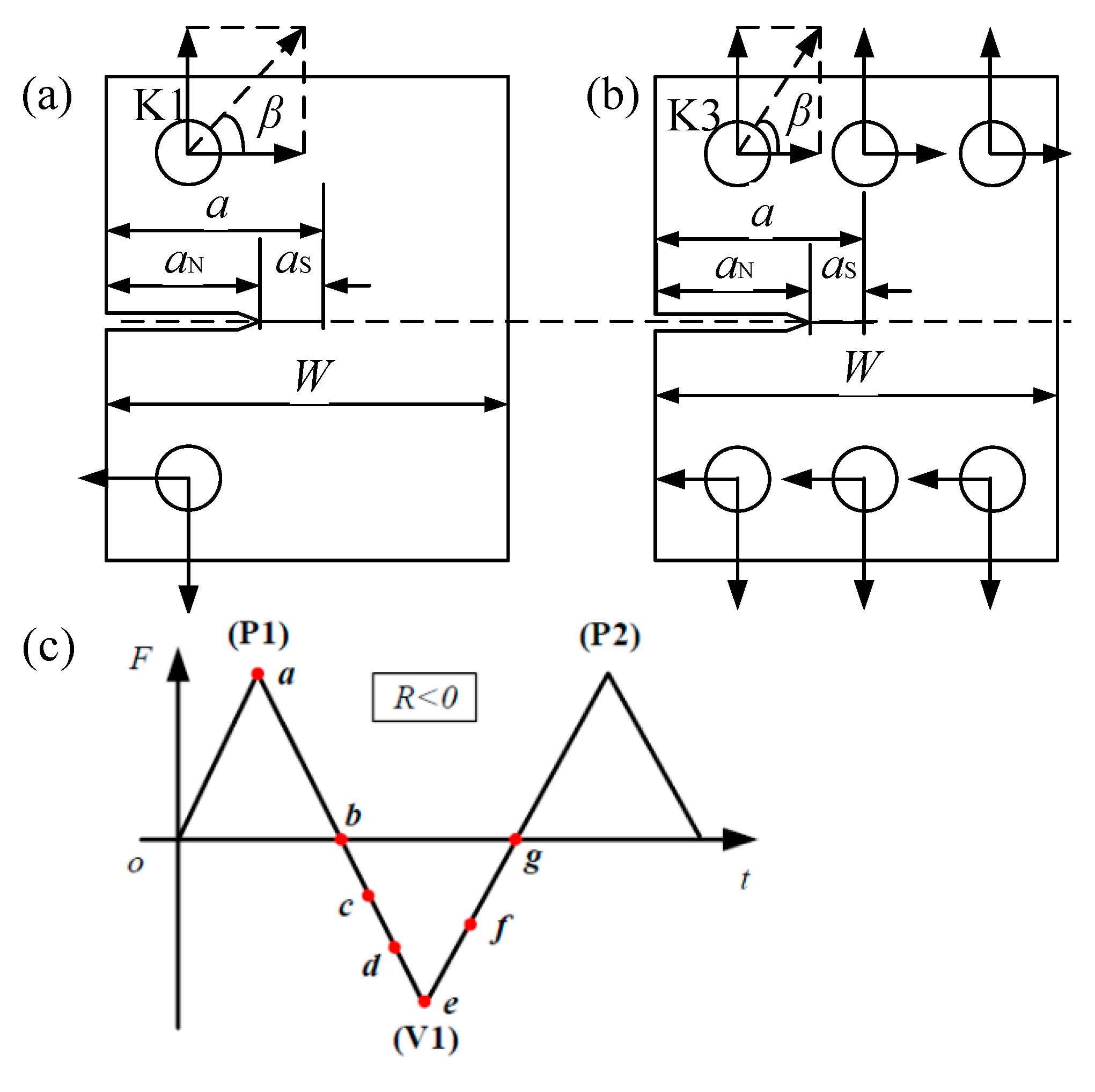


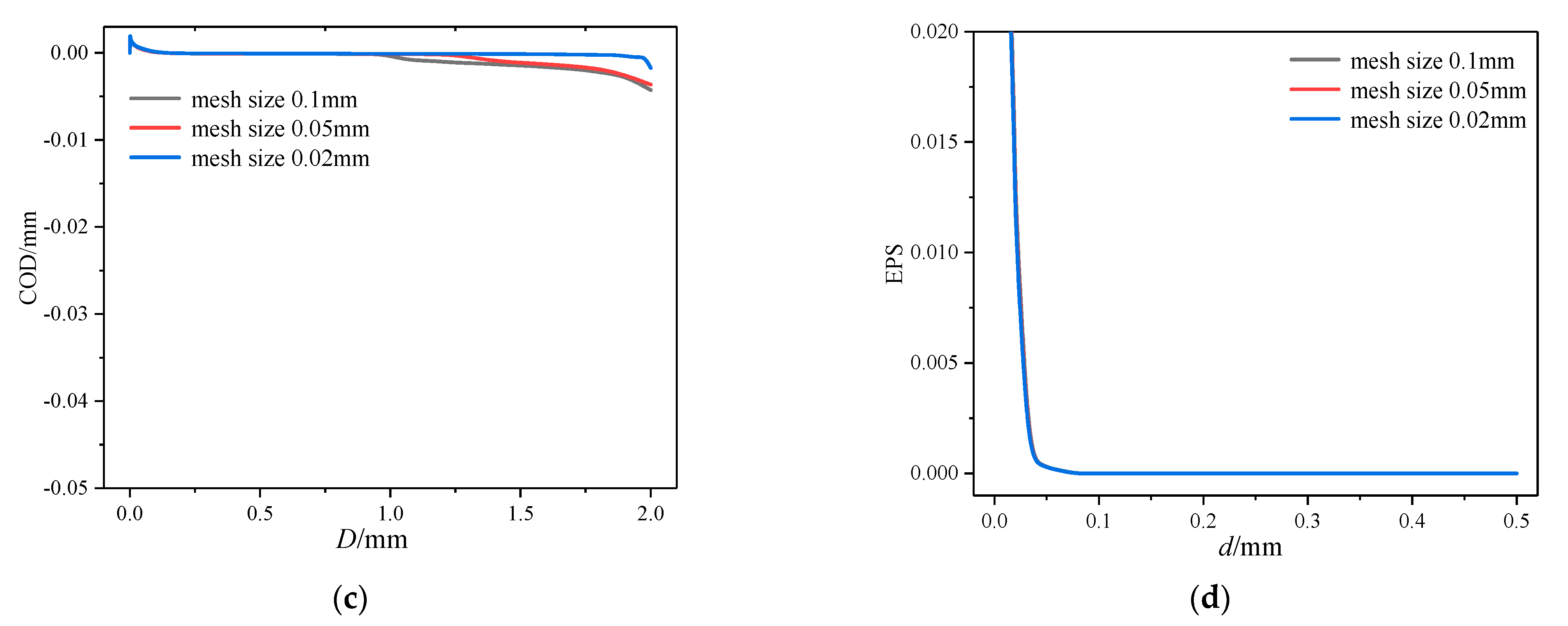


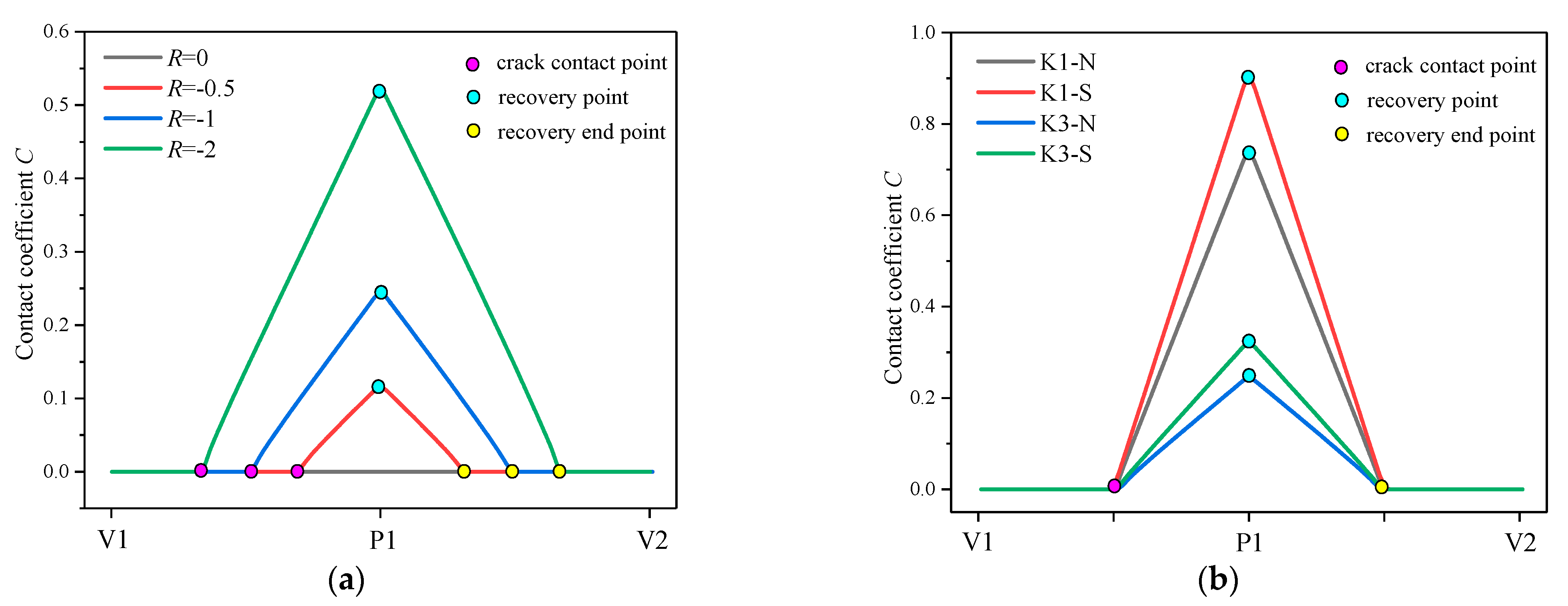
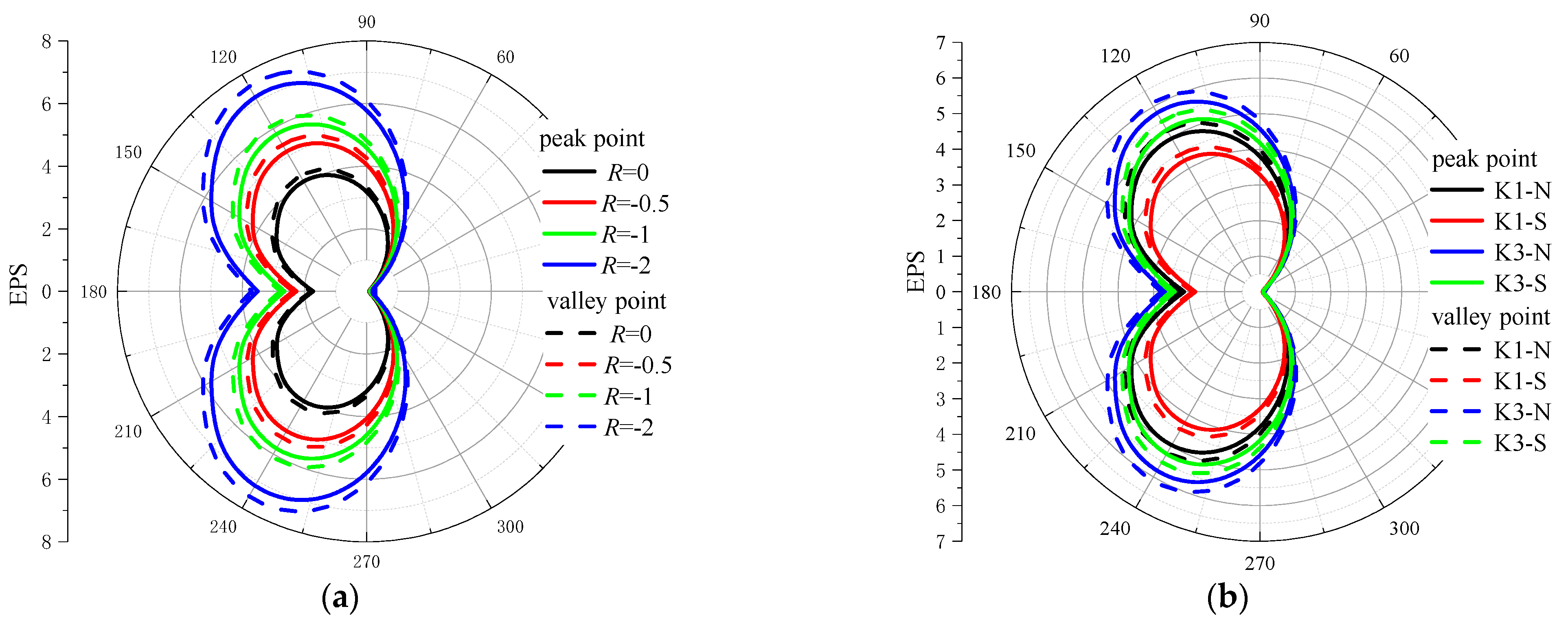




| Specimen | Loading Point Ki | Contact Type | Loading Angle β/° | Loading Ratio R |
|---|---|---|---|---|
| K1-N | K1 | N | 90 | 0, −0.1, −0.5, −1, −1.5, −2 |
| K1-S | K1 | S | 90 | 0, −0.1, −0.5, −1, −1.5, −2 |
| K3-N | K3 | N | 90, 60, 0 | 0, −0.1, −0.5, −1, −1.5, −2 |
| K3-S | K3 | S | 90 | 0, −0.1, −0.5, −1, −1.5, −2 |
Publisher’s Note: MDPI stays neutral with regard to jurisdictional claims in published maps and institutional affiliations. |
© 2022 by the authors. Licensee MDPI, Basel, Switzerland. This article is an open access article distributed under the terms and conditions of the Creative Commons Attribution (CC BY) license (https://creativecommons.org/licenses/by/4.0/).
Share and Cite
Miao, X.; Hong, H.; Hong, X.; Peng, J.; Bie, F. Effect of Constraint and Crack Contact Closure on Fatigue Crack Mechanical Behavior of Specimen under Negative Loading Ratio by Finite Element Method. Metals 2022, 12, 1858. https://doi.org/10.3390/met12111858
Miao X, Hong H, Hong X, Peng J, Bie F. Effect of Constraint and Crack Contact Closure on Fatigue Crack Mechanical Behavior of Specimen under Negative Loading Ratio by Finite Element Method. Metals. 2022; 12(11):1858. https://doi.org/10.3390/met12111858
Chicago/Turabian StyleMiao, Xinting, Haisheng Hong, Xinyi Hong, Jian Peng, and Fengfeng Bie. 2022. "Effect of Constraint and Crack Contact Closure on Fatigue Crack Mechanical Behavior of Specimen under Negative Loading Ratio by Finite Element Method" Metals 12, no. 11: 1858. https://doi.org/10.3390/met12111858
APA StyleMiao, X., Hong, H., Hong, X., Peng, J., & Bie, F. (2022). Effect of Constraint and Crack Contact Closure on Fatigue Crack Mechanical Behavior of Specimen under Negative Loading Ratio by Finite Element Method. Metals, 12(11), 1858. https://doi.org/10.3390/met12111858