Article

Fabrication and Characterization of the Modified EV31-Based Metal Matrix Nanocomposites

by
Seyed Kiomars Moheimani
1,2,*,
Mehran Dadkhah
3,
Mohammad Hossein Mosallanejad
4 and
Abdollah Saboori
3
1
Advanced Materials Research Center, Department of Materials Engineering, Islamic Azad University, Najaf Abad Branch, Najaf Aba 8514143131, Iran
2
Department of Research and Development, Nejat Darya Co., Bushehr 7513898849, Iran
3
Department of Applied Science and Technology, Politecnico di Torino, Corso Duca Degli Abruzzi 24, 10129 Torino, Italy
4
Department of Materials Engineering, Isfahan University of Technology, Isfahan 8415683111, Iran
*
Author to whom correspondence should be addressed.
Metals 2021, 11(1), 125; https://doi.org/10.3390/met11010125
Submission received: 8 December 2020 / Revised: 27 December 2020 / Accepted: 8 January 2021 / Published: 10 January 2021
(This article belongs to the Special Issue Ceramic Reinforced Metal Matrix Nanocomposites)

Abstract

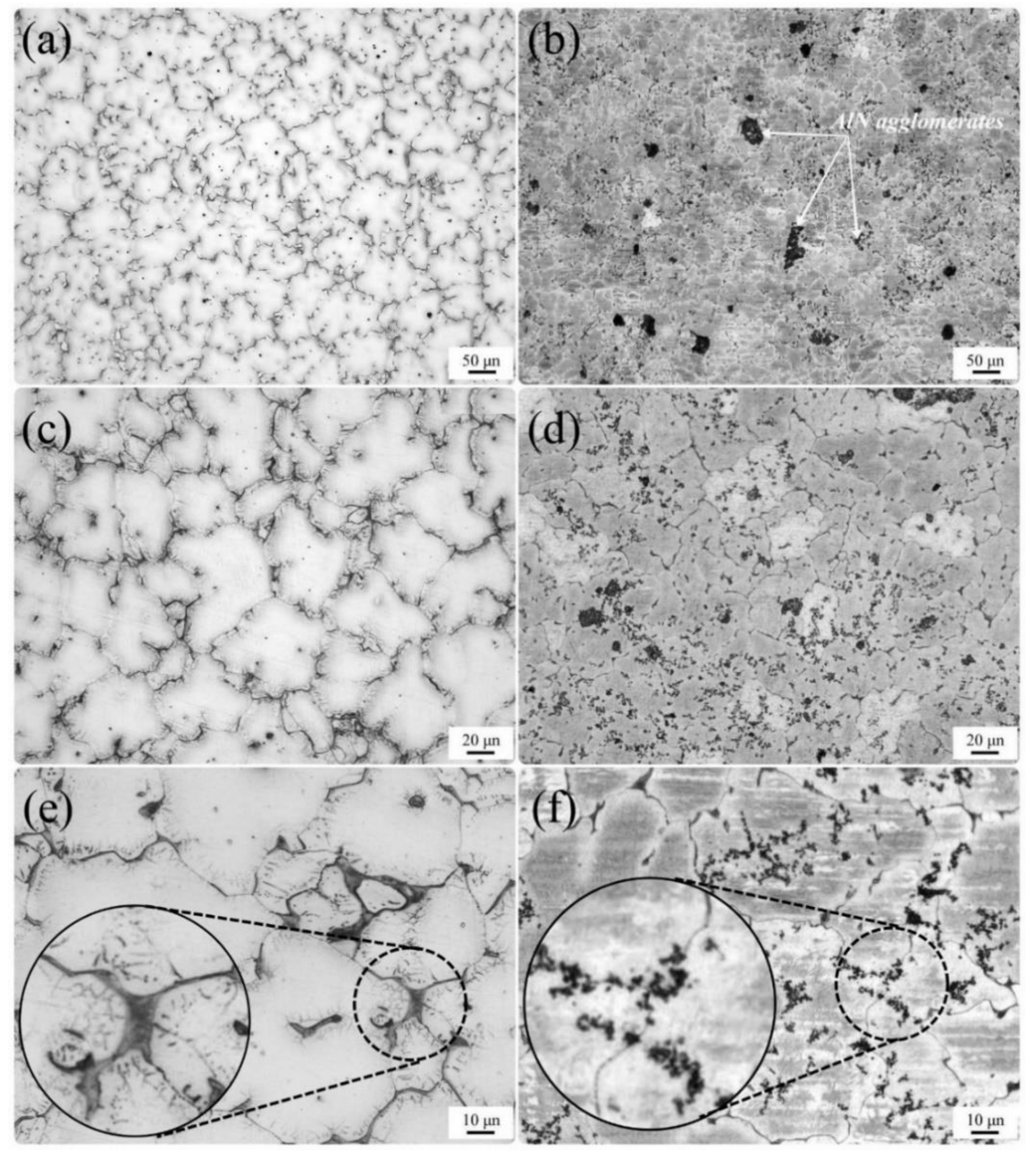
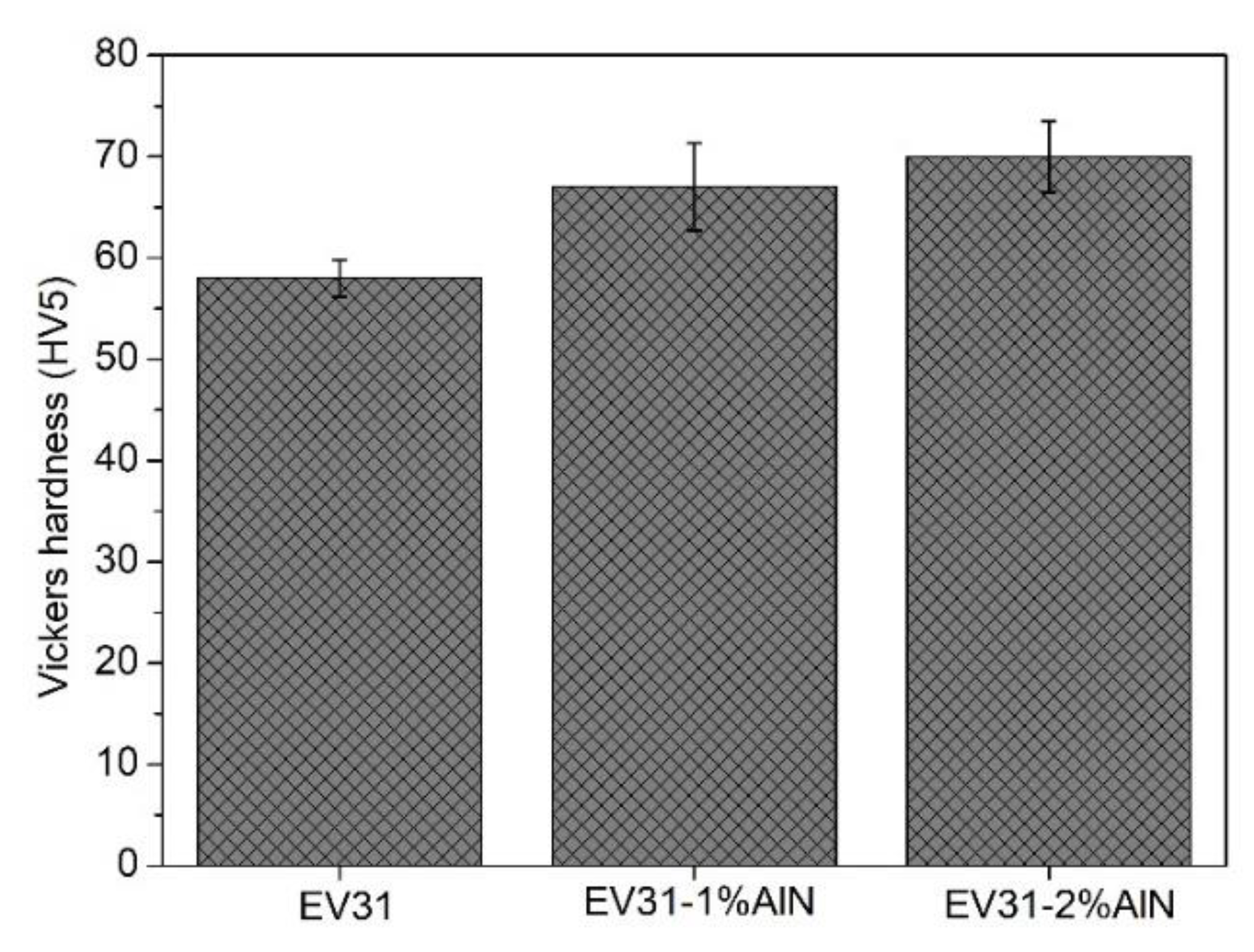
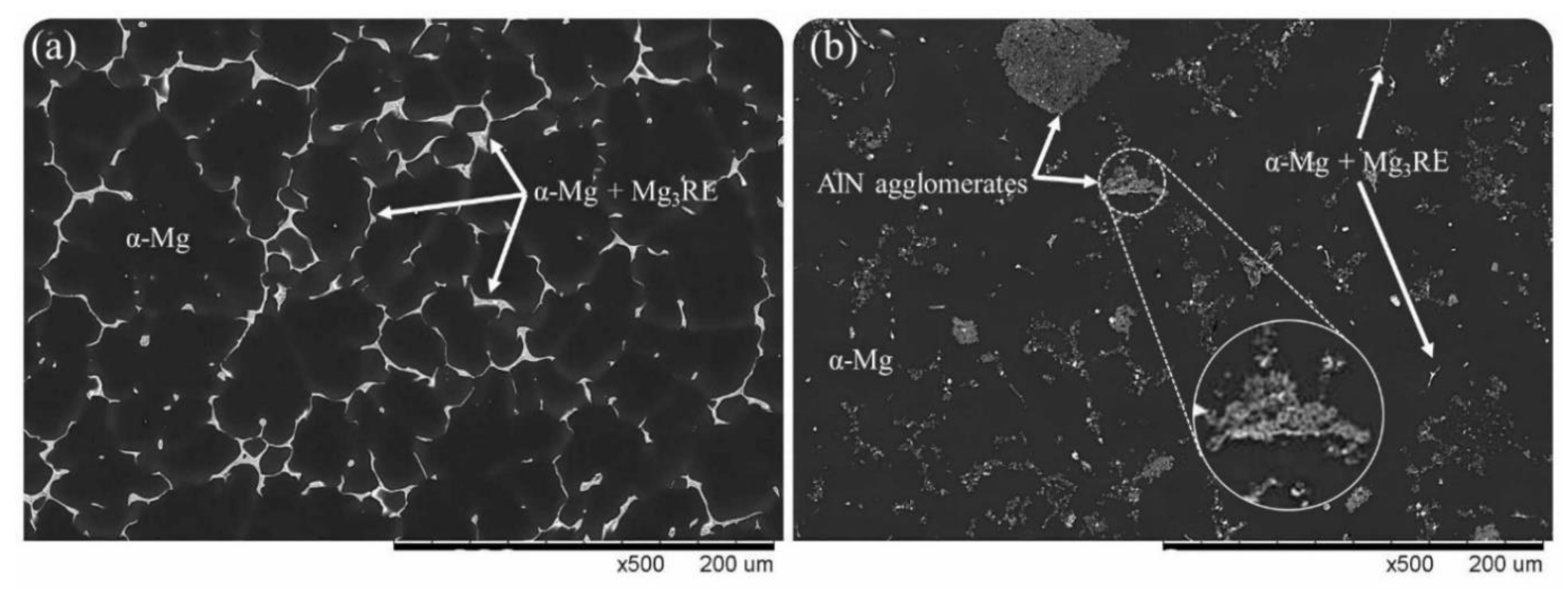
Metal matrix nanocomposites (MMNCs) with high specific strength have been of interest for numerous researchers. In the current study, Mg matrix nanocomposites reinforced with AlN nanoparticles were produced using the mechanical stirring-assisted casting method. Microstructure, hardness, physical, thermal and electrical properties of the produced composites were characterized in this work. According to the microstructural evaluations, the ceramic nanoparticles were uniformly dispersed within the matrix by applying a mechanical stirring. At higher AlN contents, however, some agglomerates were observed as a consequence of a particle-pushing mechanism during the solidification. Microhardness results showed a slight improvement in the mechanical strength of the nanocomposites following the addition of AlN nanoparticles. Interestingly, nanocomposite samples were featured with higher electrical and thermal conductivities, which can be attributed to the structural effect of nanoparticles within the matrix. Moreover, thermal expansion analysis of the nanocomposites indicated that the presence of nanoparticles lowered the Coefficient of Thermal Expansion (CTE) in the case of nanocomposites. All in all, this combination of properties, including high mechanical strength, thermal and electrical conductivity, together with low CTE, make these new nanocomposites very promising materials for electro packaging applications.
Keywords: metal matrix nanocomposite; casting; thermophysical properties; coefficient of thermal expansion metal matrix nanocomposite; casting; thermophysical properties; coefficient of thermal expansion