1. Introduction
Higher education institutions (HEIs) are increasingly recognised as key actors in the promotion of sustainable and inclusive communities. Beyond their traditional missions of teaching and research, universities contribute to social development through community engagement, civic participation, knowledge exchange, and collaborative responses to complex societal challenges. In this context, higher education has become increasingly connected to broader discussions on sustainability, inclusion, and the achievement of the Sustainable Development Goals (SDGs), particularly those related to social cohesion, participation, and sustainable communities.
Recent debates suggest that universities may contribute to sustainable communities not only through formal educational activities but also through collaborative networks that facilitate institutional learning, capacity building, and social innovation across different cultural and organisational contexts. Transnational partnerships provide opportunities for universities to exchange knowledge, co-design educational practices, and develop institutional capabilities that support inclusion, active citizenship, and long-term community engagement. As a result, internationalisation may be understood not only as mobility or academic exchange, but also as a mechanism through which universities contribute to broader social and institutional sustainability. These collaborative processes are shaped by diverse institutional, organisational and cultural contexts, requiring continuous negotiation and adaptation among participating higher education institutions.
Their implementation is further influenced by differences in academic cultures, institutional governance, and organisational priorities, which may affect how initiatives are interpreted, implemented, and sustained across national contexts [
1]. Furthermore, international cooperation frequently develops within asymmetric knowledge systems in which participating institutions differ in their capacity to influence research agendas, institutional priorities, and knowledge circulation, highlighting the importance of considering broader structural conditions when interpreting transnational collaborative experiences [
2].
Within this perspective, increasing attention has been given to collaborative initiatives that extend beyond short-term mobility activities and foster sustained forms of institutional cooperation. Such initiatives may facilitate the development of shared frameworks, educational tools, and shared practices while also supporting organisational adaptation and learning across diverse higher education environments. At the same time, these processes often involve challenges related to contextual differences, organisational asymmetries, and the long-term sustainability of project outcomes. Consequently, the transferability of experiences across higher education systems should be understood cautiously, recognising that institutional practices are shaped by specific organisational, cultural, and policy environments rather than assuming universal applicability [
3].
Although internationalisation and Erasmus+ initiatives have been widely examined in higher education research, existing studies have predominantly focused on mobility experiences, programme outcomes, participant perceptions and impact evaluation [
4]. Comparatively less attention has been paid to how the institutional documentary corpus generated throughout long-term international cooperation projects can be interpreted to understand institutional learning, organisational development and collaborative educational processes. By adopting an interpretive documentary analysis of the Erasmus+ SOLIDARIS project, this study contributes to this perspective by examining how institutional documentation reflects the collaborative processes through which universities develop capacities, strengthen cooperation and support more inclusive and sustainable communities.
The Erasmus+ SOLIDARIS project provides a relevant context for examining these dynamics. Developed through collaboration between European and Latin American universities, the initiative focused on inclusion, active citizenship, and competency development through transnational academic cooperation. Through an interpretive documentary analysis of project materials and project outputs, this study explores how transnational higher education networks may contribute to the development of more inclusive and sustainable communities through joint learning and institutional capacity building. Rather than seeking to establish universally generalisable conclusions, the study offers contextually grounded insights into how collaborative internationalisation may support inclusive and sustainable community development within a specific transnational higher education network.
The study is guided by the following research questions:
How may transnational higher education networks contribute to inclusive and sustainable communities?
What institutional conditions appear to support the continuity and sustainability of collaborative internationalisation initiatives?
3. Methodology
3.1. Research Design
This study adopts a qualitative, interpretive documentary case study approach focused on the SOLIDARIS project as a context for exploring internationalisation through cross-cultural collaboration in higher education [
7,
16]. A qualitative interpretive case study is appropriate when the purpose is to understand complex institutional and collaborative processes within their real-life context through the interpretation of multiple sources of evidence rather than to quantify outcomes or establish causal relationships [
19,
20]. The case study approach is appropriate for examining collaborative academic processes within real institutional settings and for analysing how transnational initiatives are described, interpreted and implemented across different institutional contexts [
17]. Within this design, documentary analysis constitutes the primary method of data collection and analysis, using institutional documents generated throughout the Erasmus+ SOLIDARIS project as the principal source of evidence. The project is therefore treated as a bounded case through which collaborative internationalisation processes can be examined while preserving the organisational and contextual complexity of the participating institutions [
20,
21].
Rather than seeking statistical generalisation or directly measuring institutional transformation, the study adopts an interpretive perspective aimed at identifying collaborative dynamics, institutional learning processes and recurring themes emerging from project documentation and institutional narratives [
18]. The documentary evidence is interpreted as institutional representations of collaborative practices rather than as direct evidence of their effectiveness or impact. Accordingly, the analysis seeks to understand how internationalisation processes are articulated, documented and collectively constructed throughout the implementation of the project. In this sense, the study seeks to generate analytical and context-sensitive insights that may contribute to broader discussions on internationalisation and cross-cultural collaboration in higher education. The findings are intended to provide analytical transferability to comparable higher education contexts rather than statistical generalisability beyond the case examined [
19].
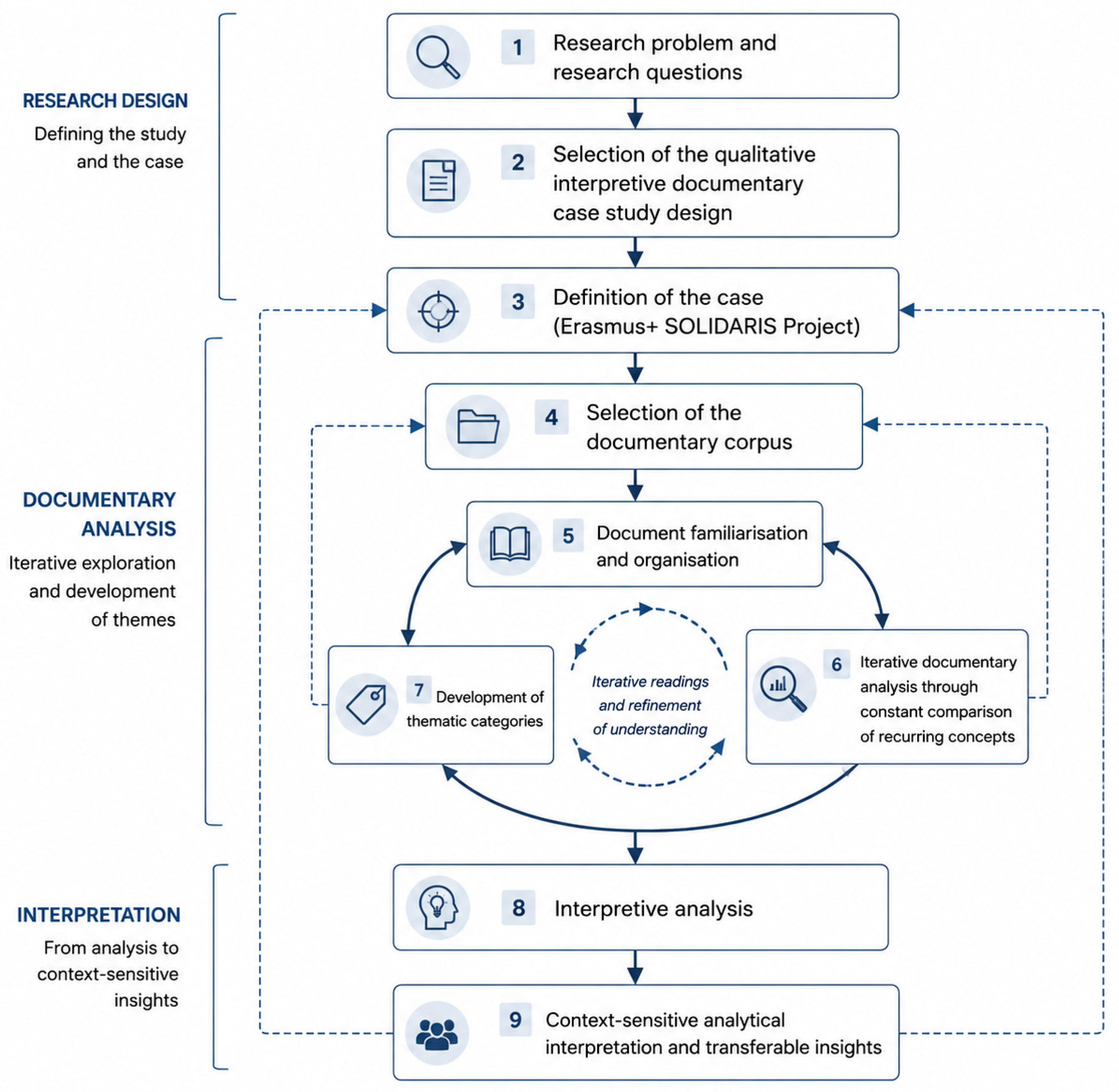
Figure 1 summarises the methodological workflow adopted in this study, illustrating the sequential stages followed from the definition of the research problem to the interpretive analysis of the documentary evidence.
As illustrated in
Figure 1, the methodological workflow was designed to ensure coherence between the research objectives, the case study design and the documentary evidence analysed throughout the study. Rather than representing a strictly linear procedure, the workflow reflects the iterative nature of qualitative inquiry, in which successive readings of the documentary corpus informed the refinement of thematic categories and the interpretation of collaborative processes. This systematic sequence enhances methodological transparency by making explicit how documentary evidence was progressively organised into recurring concepts and thematic categories before being transformed into analytically grounded interpretations. The following sections describe each stage of this workflow in detail.
3.2. Context and Participating Institutions
SOLIDARIS was a transnational Erasmus+ Capacity Building initiative coordinated by the University of Seville and developed through collaboration between universities from Europe and Latin America. According to the project documentation, the initiative involved institutions from Spain, Portugal, Italy, Germany, Argentina, Brazil and Chile and focused on inclusion, active citizenship and competency development within higher education environments. The project was implemented through an international consortium that promoted institutional cooperation, knowledge exchange and the co-development of educational strategies across diverse higher education systems.
The project combined mobility activities, collaborative academic work and the development of shared institutional tools and methodologies. Project materials describe processes involving institutional exchange, collaborative learning, competency mapping and faculty development activities implemented across participating universities. These collaborative activities generated an extensive body of institutional documentation throughout the project lifecycle, providing a rich empirical basis for examining how collaborative internationalisation processes were planned, implemented and documented across participating institutions.
This configuration is consistent with broader approaches to internationalisation that emphasise collaboration, institutional learning and cross-cultural academic cooperation beyond mobility-centred models [
4,
10]. Within this context, SOLIDARIS provides a relevant setting for examining how internationalisation initiatives may support collaborative institutional practices across different higher education environments. Furthermore, the characteristics of the project made it possible to examine the institutional dynamics underpinning collaborative internationalisation, thereby providing an appropriate empirical setting for the interpretive analysis of documented organisational processes.
3.3. Documentary Corpus and Data Sources
The study draws on multiple documentary sources generated during the SOLIDARIS project. Following Hernández-Sampieri and Mendoza (2023) [
19], the selection of the case and documentary corpus was based on the principle of opportunity, as the project provided access to a diverse and information-rich body of institutional documents produced throughout its implementation. This opportunity enabled an in-depth interpretive examination of collaborative internationalisation processes within a bounded higher education context allowing the identification of recurring concepts and the development of thematic categories grounded in the documentary corpus. The principal source consists of the collective volume Redes universitarias generadoras de inclusión: hacia la educación y la cultura de la sostenibilidad en la universidad coordinated by Valderrama and Limón (2021) [
15], which documents the experiences, reflections and institutional perspectives of participating universities.
Additional documentary materials include competency frameworks, training resources, institutional reports and collaborative outputs developed during the project. These materials provide descriptions of project activities, faculty development processes, collaborative practices and inclusion-related initiatives implemented across participating institutions. The documentary corpus comprises materials produced during the implementation of the SOLIDARIS project and reflects different institutional, pedagogical and organisational dimensions of the initiative across participating universities.
Documents were included according to four criteria: (i) they were officially produced within the framework of the SOLIDARIS project; (ii) they documented institutional, educational or collaborative processes directly related to the research objectives; (iii) they were available in complete form for systematic analysis; and (iv) they provided evidence of international collaboration, institutional learning or competency development within the consortium.
To provide greater methodological clarity regarding the documentary materials examined in this study,
Table 1 summarises the main data sources and their analytical role within the interpretive framework adopted, forming the documentary basis from which recurring concepts and thematic categories were subsequently developed.
As shown in
Table 1, the documentary corpus integrates complementary sources that capture different dimensions of the SOLIDARIS project, including institutional experiences, educational practices, competency development and project governance. Considering these materials jointly enabled a comprehensive interpretive examination of collaborative internationalisation processes by contrasting institutional narratives with operational and organisational documentation. The complementary nature of these documentary sources enriched the analytical depth of the study by facilitating the identification of recurring institutional patterns across different forms of documentary evidence, which subsequently informed the development and refinement of the thematic categories used in the interpretive analysis.
3.4. Documentary Analysis
The data were analysed through documentary analysis using an iterative thematic analytical approach, enabling the systematic examination and interpretation of documentary evidence to understand organisational and institutional phenomena [
19]. Documentary materials constitute valuable qualitative sources because they preserve institutional processes, decisions and organisational practices that can be interpreted within their original context [
19].
The analytical procedure followed an iterative interpretive process comprising four interconnected phases. The first phase involved familiarisation with the documentary corpus through repeated reading of all selected materials to gain an overall understanding of the institutional context and collaborative processes described in the project documentation.
During the second phase, documentary segments relevant to the research objectives were identified and organised according to recurring concepts associated with collaborative internationalisation, institutional learning, inclusion, governance and competency development. Following qualitative thematic analysis procedures, the identification and comparison of these recurring concepts remained iterative and flexible rather than predetermined, allowing analytical categories to emerge progressively from the documentary corpus while remaining closely linked to the research objectives [
19]. Throughout the analytical process, these recurring concepts were continuously refined as new patterns emerged from the documentary evidence.
The third phase consisted of grouping related recurring concepts into broader thematic categories that represented recurrent organisational practices, institutional dynamics and collaborative processes documented across the participating universities. This stage emphasised constant comparison across documentary sources to examine convergences, complementarities and recurring institutional patterns, thereby strengthening the coherence and transparency of the interpretive process [
21]. The resulting thematic categories were refined iteratively through repeated examination of the documentary corpus rather than being established a priori.
The fourth phase focused on the interpretive integration of the thematic categories, examining how documentary evidence collectively represented the processes of collaborative internationalisation within the SOLIDARIS project and how these institutional processes were articulated across different documentary sources. This interpretive stage sought to understand the relationships among themes and their contribution to explaining the institutional dynamics documented throughout the project, rather than quantifying the frequency of specific documentary elements [
19].
The analysis focused on how participating institutions described collaborative practices, academic cooperation processes, competency development initiatives and perceived institutional challenges. Particular attention was given to themes related to contextual adaptation, collaborative learning and the continuity of initiatives beyond the formal project framework.
To strengthen the transparency of the analytical process,
Table 2 presents the main thematic categories used during the documentary analysis. Rather than being established a priori, these categories emerged through an iterative process of identifying recurring concepts, constant comparison and interpretive refinement of the documentary corpus. This approach follows current recommendations for transparent reporting of qualitative document and artifact analysis, whereby the development of thematic categories and interpretive procedures are explicitly described to enhance methodological rigour and trustworthiness [
21]. These categories provided an analytical framework for organising and interpreting the documentary evidence in relation to the research objectives.
As shown in
Table 2, the thematic categories integrate complementary dimensions of collaborative internationalisation identified across the documentary corpus. Their iterative development enabled the analysis to move beyond the description of isolated project activities by identifying broader institutional patterns and relationships between collaboration, organisational learning, inclusion and sustainability. Consequently, the thematic framework provided a systematic basis for interpreting how collaborative internationalisation was documented and institutionalised throughout the SOLIDARIS project, with the representative documentary indicators serving to illustrate the interpretive basis of each thematic category.
3.5. Trustworthiness
To enhance the trustworthiness of the study, several methodological strategies were implemented throughout the documentary analysis. Particular attention was paid to the systematic definition of the documentary corpus, the transparency of the analytical procedures, the consistency of the interpretive process and the traceability of the decisions made during the analysis. In accordance with the recommendations of Hernández-Sampieri and Mendoza Torres (2023) [
19] and Buckler and Gilmore (2026) [
21], the study incorporated specific strategies to strengthen credibility, dependability, confirmability and transferability, together with an audit trail and collaborative review of the analytical process. These strategies are summarised in
Table 3.
As shown in
Table 3, trustworthiness was not treated as a general declaration of methodological quality but as a set of concrete procedures applied across the different stages of the study. The combined use of a clearly delimited corpus, iterative documentary comparison, the progressive development of thematic categories, explicit analytical documentation and collaborative review strengthens the connection between the evidence and the interpretations presented. The audit trail and public accessibility of the documentary sources are particularly important because they allow readers to follow the analytical process, understand how recurring concepts were progressively organised into thematic categories, inspect the underlying evidence and assess whether the conclusions are adequately supported. At the same time, the clarification of the authors’ independence from the SOLIDARIS project addresses the potential influence of prior involvement in the production or interpretation of the documents. Together, these strategies increase the transparency, consistency and evaluability of the documentary análisis [
19,
21].
3.6. Scope and Methodological Limitations
This study adopts an interpretive qualitative documentary case study design. Its purpose is to understand how processes of inclusion, sustainability, internationalisation and institutional collaboration are represented and articulated within the documentary corpus of the SOLIDARIS project. It is therefore not designed as an impact evaluation or as an assessment of programme effectiveness (Hernández-Sampieri & Mendoza Torres, 2023) [
19].
Accordingly, the findings do not measure the impact of SOLIDARIS on participating institutions, academic staff, students or local communities. The documentary evidence identifies and interprets institutional processes, recurring organisational patterns stated objectives, collaborative practices and reported outputs, but it does not provide the type of longitudinal, comparative or outcome-based evidence required to determine the magnitude or effectiveness of project impact.
The research also does not demonstrate causal relationships between the activities developed within SOLIDARIS and any subsequent institutional or educational outcomes. Documentary analysis makes it possible to examine how processes and meanings are constructed and represented, but it cannot establish that a particular activity caused a specific organisational change or social result.
Furthermore, the findings are not intended to be statistically generalised to other Erasmus+ projects, university networks or higher education systems. The study examines a single transnational initiative within its specific institutional and documentary context. Its contribution lies instead in providing a contextualised interpretation that may inform the analysis of comparable initiatives. The detailed description of the case, corpus and analytical process enables readers to assess the extent to which the findings may be relevant to other settings [
21]. Within these methodological boundaries, the following section presents the recurring themes and collaborative dynamics identified across the documentary corpus.
4. Results
To facilitate the interpretation of the documentary analysis, the findings are organised around a set of recurring themes and thematic categories identified across the SOLIDARIS project documents. Rather than representing a fixed or linear model, these themes and thematic categories reflect recurrent patterns associated with mobility, collaboration, co-design and institutional learning within transnational higher education initiatives.
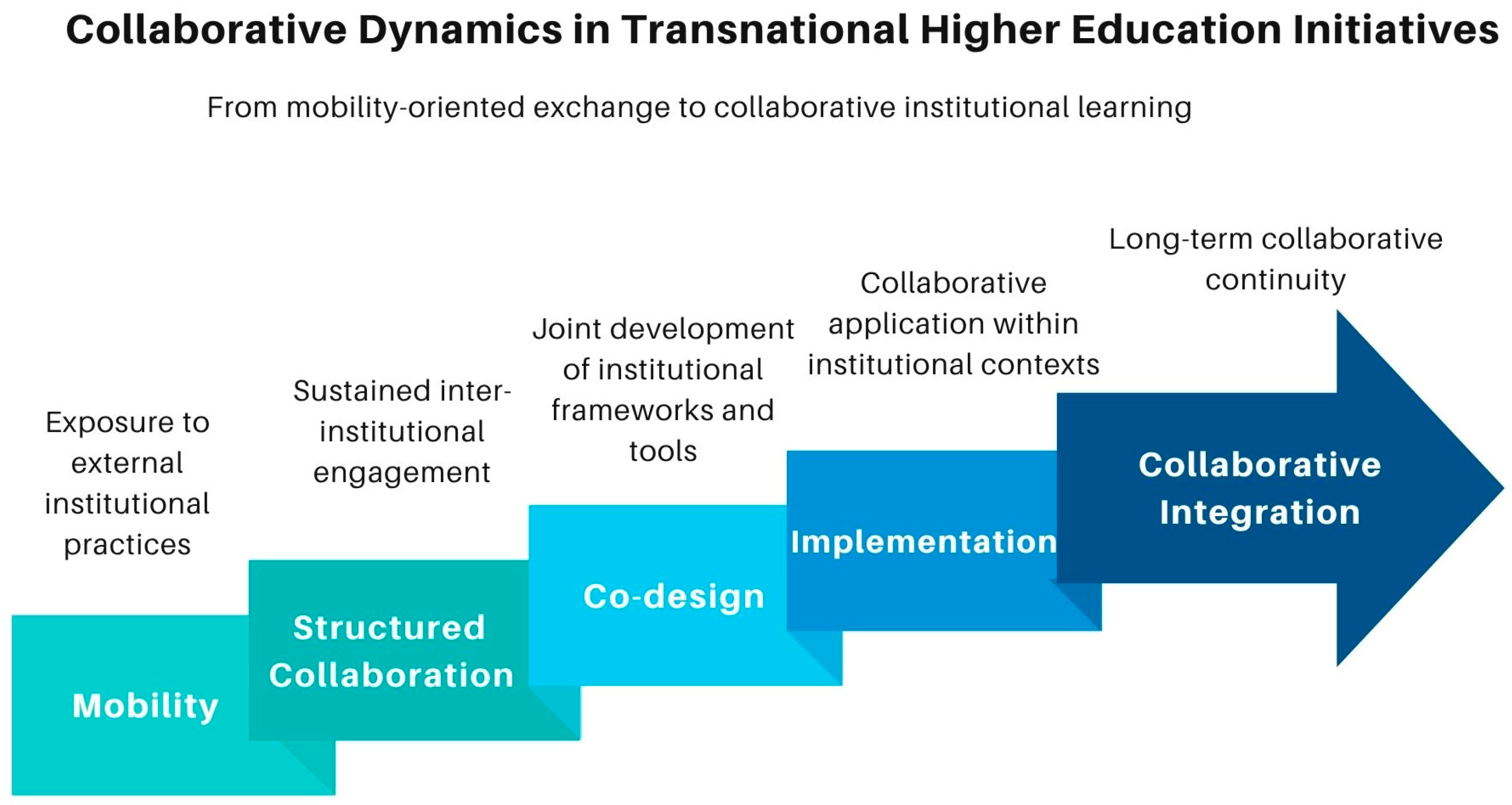
Figure 2 presents these relationships as an interpretive framework that supports the organisation of the findings and highlights possible relationships between cross-cultural interaction, collaborative practices and institutional learning processes. The framework serves as an analytical guide for presenting the findings rather than as a prescriptive or causal model.
As illustrated in
Figure 2, the documentary corpus associated with the SOLIDARIS project suggest a set of collaborative dynamics through which internationalisation may evolve beyond mobility-oriented activities towards broader forms of cross-cultural collaboration and institutional learning. The framework organises recurring patterns identified across project narratives, collaborative practices and institutional outputs without implying a fixed or strictly linear sequence.
The framework begins with mobility, where participants are exposed to external institutional practices and academic environments [
7]. This is followed by structured collaboration, in which participating institutions engage in sustained interaction and shared academic activities [
4]. The process then develops into co-design, characterised by the collaborative development of institutional frameworks, tools and educational methodologies [
10]. These outputs are subsequently applied within institutional contexts, allowing their contextual adaptation and collaborative implementation. Finally, the framework highlights collaborative integration, where some practices and forms of institutional learning appear to extend beyond specific project activities through sustained academic cooperation and ongoing inter-institutional engagement.
While
Figure 2 presents these dimensions sequentially for analytical clarity, the documentary analysis suggests that the relationships between them were often overlapping, iterative and context-dependent. The framework therefore provides an interpretive structure through which the findings are organised in the following sections.
4.1. Mobility: Exposure to External Institutional Practices
The first interpretative dimension identified in the documentary analysis corresponds to mobility as exposure to external institutional practices and academic environments. Within the SOLIDARIS project, mobility was not limited to the physical movement of academic staff and institutional representatives, but was interpreted throughout the documentary corpus as an opportunity for intercultural interaction, institutional observation and collaborative exchange between participating universities [
22].
The project was funded through the Erasmus+ Capacity Building programme of the European Commission and coordinated by the University of Seville in collaboration with universities from Argentina, Brazil, Chile and several European institutions over a three-year period. Project documentation describes mobility activities as part of broader collaborative processes associated with institutional learning and international academic cooperation.
One example described in the project materials is the first meeting of project partners held in April 2017 in Rome, Italy. According to the documentation, participants engaged in institutional meetings, academic exchanges and observation visits to European universities. These activities appear to have provided opportunities for comparing institutional practices and discussing possible approaches that could later be adapted within different university contexts.
The documentary materials also suggest that mobility activities were connected to subsequent collaborative outputs developed within the project. Following the initial meetings, participating institutions began collaborative work related to competency mapping and the development of self-assessment tools associated with the initiative. In this sense, mobility may be interpreted as part of a broader process of collaborative institutional learning and transnational academic cooperation The documentary evidence suggests that these activities created conditions that may have facilitated subsequent forms of structured collaboration, co-design and collaborative implementation within participating institutions, without implying that mobility itself directly produced institutional transformation.
4.2. Structured Collaboration: Inter-Institutional Engagement
The second dimension identified in the documentary analysis relates to structured collaboration and sustained inter-institutional engagement within the SOLIDARIS project [
4]. According to the project documentation, SOLIDARIS was organised as a coordinated Erasmus+ Capacity Building initiative implemented between 2017 and 2020 and focused on inclusion, active citizenship and competency development within higher education contexts.
The documentary materials suggest that collaboration within the project extended beyond occasional interaction or isolated mobility activities. The initiative involved universities from Europe and Latin America, including the University of Seville, Roma Tre University, the University of Lisbon, Bielefeld University, Universidad Viña del Mar, Universidad Austral de Chile, Universidad Nacional de Tres de Febrero, Universidad del Salvador, Universidade de Pernambuco, Universidade Estadual da Paraíba and the external agency INCOMA. These institutional partnerships are interpreted as reflecting a structured network of academic cooperation and shared responsibilities across the consortium [
23].
The collaborative dimension of the project is also reflected in the organisation of activities through Work Packages. Project documents describe collaborative processes associated with competency mapping, the development of self-assessment tools, faculty training activities and competency-based educational approaches. Rather than functioning independently, participating institutions appear to have contributed through coordinated tasks, shared academic discussions and collaborative implementation processes.
One example described in the project materials is Work Package 3 (WP3), coordinated by Universidad Viña del Mar in collaboration with the University of Seville. According to the documentation, the programme and its associated materials were discussed collectively during a face-to-face meeting held in Viña del Mar in May 2019, after which participating institutions continued collaborative work through online interaction. The activities associated with WP3 included the preparation of training materials, methodological discussions and the development of online collaborative resources.
The documentary analysis suggests that this dimension of structured collaboration functioned as a bridge between initial mobility-oriented interaction and broader forms of collaborative academic work. Through coordinated meetings, collaborative tasks and sustained inter-institutional engagement, the project appears to have created opportunities for shared academic practices and cross-cultural cooperation across participating universities.
4.3. Co-Design: Collaborative Development of Frameworks and Tools
The third dimension identified in the documentary analysis corresponds to co-design, understood as the collaborative development of competency frameworks, institutional tools and educational methodologies across participating institutions [
10]. Within the SOLIDARIS project, this process appears closely linked to the collaborative dynamics established during previous stages of mobility and structured inter-institutional cooperation.
A central element of this phase involved the development of a transversal competency framework associated with inclusion, participation and active citizenship within higher education environments. According to the project materials, the competencies were discussed collectively across participating institutions through comparative reflection, collaborative meetings and shared academic dialogue. The framework appears to have emerged through processes of negotiation, adaptation and cross-cultural academic exchange rather than being imposed by a single institution.
The documentary materials also indicate that this collaborative work contributed to the development of institutional tools such as student self-assessment instruments and competency-based resources. Project narratives describe iterative processes of discussion, revision and contextual adaptation associated with these outputs across different universities.
The co-design dimension was also reflected in the sequential organisation of the Work Packages. Early collaborative activities focused on defining competencies and preparing assessment structures, while later stages incorporated these materials into training activities and institutional applications. In this sense, the project documentation suggests that co-design functioned as an ongoing and collaborative academic process rather than as a single isolated stage.
One example described in the project materials relates to the collaborative preparation and revision of competency-based training resources associated with Work Package 3. According to the documentation, these materials were collectively reviewed during institutional meetings, including the face-to-face session held in Viña del Mar in 2019, where participating institutions discussed possible adaptations and implementation approaches before subsequent implementation activities within the project.
Co-design is therefore interpreted as a collaborative academic process through which participating institutions developed shared frameworks, methodologies and educational tools within a transnational higher education context. This interpretation is grounded in the documentary corpus and reflects recurring organisational patterns rather than demonstrating institutional transformation or outcomes.
4.4. Implementation: Collaborative Application Within Institutional Contexts
The fourth dimension identified in the documentary analysis relates to the collaborative application of the tools, frameworks and training activities developed during the co-design phase. Within the SOLIDARIS project, this process appears associated with the adaptation and use of competency-based approaches, self-assessment tools and faculty development activities across participating institutions.
Project materials indicate that one of the central elements of this phase involved the application of competency-related assessment instruments within student contexts, including the use of pre- and post-assessment approaches associated with competency development activities. Rather than functioning exclusively as measurement tools, these applications appear to have supported reflection, contextual adaptation and the exploration of competency-based educational practices across different university settings.
The documentary materials also describe the implementation of training activities for academic and non-academic staff through a training-of-trainers approach. One example associated with this process is Work Package 3, coordinated by Universidad Viña del Mar, which included the preparation of training resources, online collaborative materials and training activities linked to the competency framework.
The analysis further suggests that the implementation of project outputs varied across participating institutions according to local organisational conditions, institutional priorities and available resources. While the frameworks and methodologies were developed collaboratively, their application appears to have involved different forms of contextual adaptation within each university environment.
Implementation should not be interpreted as direct evidence of institutional transformation. Instead, the documentary analysis suggests that this dimension may be understood as a collaborative process through which project outputs were adapted, applied and explored within different higher education contexts. In this sense, implementation appears closely connected to institutional learning processes and contextual academic practices within the participating universities.
4.5. Collaborative Integration: Continuity and Institutional Learning
The final dimension identified in the documentary analysis relates to collaborative integration and the continuity of institutional learning processes beyond specific project activities. Rather than assuming a uniform process of institutionalisation, the project materials suggest that some collaborative practices, training approaches and competency-based activities continued through different forms of institutional adaptation and ongoing academic cooperation.
One example described in the documentation relates to Work Package 3, coordinated by Universidad Viña del Mar in collaboration with the University of Seville. According to the project documentation, this work package focused on the collaborative development of training programmes, methodological resources and online materials that were subsequently used during pilot training activities across participating institutions. Similarly, project narratives associated with the University of Seville describe its role in the collaborative activities developed throughout the SOLIDARIS project. According to the documentation, these activities contributed to the collaborative processes developed during the initiative.
The documentary analysis also suggests that the continuity of collaborative practices varied across participating institutions. While some universities appear to have maintained aspects of the frameworks and training activities developed during the initiative, other contexts faced organisational limitations, contextual constraints or competing institutional priorities that may have affected long-term continuity.
Rather than presenting collaborative integration as a fixed institutional outcome, the analysis suggests that the continuity of project-related practices depended on contextual conditions, institutional engagement and the capacity of participating institutions to adapt collaborative initiatives within their own organisational environments. In this sense, the findings highlight the context-dependent and uneven nature of collaborative internationalisation processes within transnational higher education initiatives.
4.6. Cross-Cutting Challenges: Contextual Adaptation and Sustainability Constraints
Alongside the collaborative dynamics described above, the documentary evidence also indicates the presence of several cross-cutting challenges that interacted with mobility activities, collaborative processes, co-design practices and institutional implementation. These challenges do not appear as isolated issues but recur across different phases of the SOLIDARIS initiative, reflecting the complexity of transnational collaboration across diverse higher education contexts [
24].
One recurring theme identified in the project materials relates to contextual adaptation. Although competency frameworks and collaborative tools were developed collectively, their application appears to have required adjustments to different institutional structures, educational systems and student realities. The project documentation indicate that participating universities adapted project activities according to their own organisational conditions, institutional priorities and academic cultures.
A second challenge concerns institutional capacity and resource availability. Project narratives indicate that the implementation of collaborative activities, faculty training and competency-based approaches depended on factors such as staff availability, institutional support and organisational coordination. In some cases, the materials suggest that integrating new practices into existing academic routines may have represented an additional challenge for participating staff and institutions.
The analysis also highlights issues related to continuity beyond the formal duration of the project. While some collaborative practices and institutional initiatives appear to have continued after the conclusion of SOLIDARIS in 2020, the documentary materials also identifies that long-term continuity varied across institutions according to local engagement, organisational support and the availability of resources associated with ongoing implementation efforts.
Another recurring theme involves differences in institutional expectations, working cultures and implementation approaches across participating universities. The project documentation suggests that collaboration between European and Latin American institutions involved ongoing processes of negotiation, contextual adaptation and intercultural coordination, particularly during collaborative design and implementation activities.
Finally, the documentary materials shows that student participation and engagement were not entirely uniform across institutional contexts. The use of competency-based self-assessment tools and related activities appears to have depended on how these practices were integrated into local academic and pedagogical environments.
These contextual challenges should not be interpreted as evidence of project failure or success. Instead, the analysis suggests that they reflect the context-dependent nature of collaborative internationalisation processes within transnational higher education initiatives. In this sense, the findings highlight how cross-cultural collaboration may involve ongoing negotiation, adaptation and institutional learning across diverse organisational environments.
4.7. Contribution to Inclusive and Sustainable Communities
The results indicate that the collaborative practices developed within the SOLIDARIS project extended beyond institutional learning and academic cooperation and may also be interpreted as contributions to more inclusive and sustainable communities. Across project materials, inclusion, active citizenship, participation, and competency development were consistently presented as interconnected dimensions of social sustainability within higher education contexts (Valderrama & Limón, 2021) [
15].
The competency frameworks, faculty development activities, and collaborative educational resources generated through the initiative sought to strengthen students’ and educators’ capacities to engage with social challenges, participate in community life, and promote inclusive practices within their institutional environments. In this sense, the project appears to have contributed to forms of sustainability that extend beyond environmental concerns and encompass social inclusion, civic participation, and community resilience.
The documentary materials further suggest that transnational collaboration facilitated the exchange of experiences and educational approaches related to inclusion and active citizenship across diverse cultural and institutional contexts. These processes may have strengthened the capacity of participating universities to act as agents of social engagement and community development, supporting broader discussions on the role of higher education institutions in advancing more inclusive and sustainable societies [
25].
Sustainability should not be interpreted as a direct outcome of the project. Instead, the analysis suggests that SOLIDARIS contributed to the development of collaborative practices, educational competencies, and institutional networks that may support long-term social sustainability through participation, inclusion, and cross-cultural cooperation [
15,
25]. The following discussion examines the broader implications of these findings for collaborative internationalisation processes in higher education.
5. Discussion
5.1. Internationalisation as a Context-Dependent and Collaborative Process
The documentary analysis suggests that internationalisation may be interpreted not as a single institutional activity, but as a collaborative and context-dependent process involving mobility-oriented exchange, structured collaboration, co-design, implementation and forms of collaborative integration [
17]. Within the SOLIDARIS project, mobility activities appear to have created initial opportunities for exposure, institutional observation and intercultural interaction, although the documentary materials do not suggest that mobility alone directly produced institutional transformation.
Instead, the analysis indicates that collaborative practices associated with sustained inter-institutional engagement, shared academic work and contextual adaptation may have supported broader forms of institutional learning across participating universities (Chankseliani et al., 2025) [
7]. In this sense, the findings appear consistent with perspectives that discuss internationalisation as a process connected to institutional practices, collaborative academic environments and organisational learning rather than exclusively to isolated mobility activities [
6,
26].
At the same time, the documentary materials suggest that these collaborative dynamics were neither uniform nor linear across institutional contexts. Although
Figure 1 presents the dimensions sequentially for analytical clarity, the relationships between mobility, collaboration, co-design and implementation appear to have been iterative and influenced by local institutional conditions, organisational capacities and contextual priorities [
18].
This interpretation also highlights tensions between structured internationalisation initiatives and the uneven realities of participating institutions. While transnational projects such as SOLIDARIS may provide collaborative structures, shared objectives and institutional networks, the documentary materials suggest that participating universities differed in terms of organisational capacity, implementation conditions and institutional engagement [
14]. As a result, similar collaborative activities appear to have been interpreted and applied differently across contexts.
These findings therefore support an interpretive understanding of internationalisation as a context-sensitive collaborative process rather than a universally replicable model. In this sense, the study offers an interpretive perspective on how internationalisation may evolve beyond mobility-oriented approaches within contemporary higher education environments.
5.2. Collaborative Practices and Institutional Learning Processes
The documentary analysis highlights several collaborative practices that appear associated with institutional learning processes within the SOLIDARIS initiative. These include the collaborative development of competency frameworks, faculty learning activities, institutional tools and sustained inter-institutional cooperation across participating universities.
First, the collaborative preparation of competency frameworks appears to have provided participating institutions with a shared conceptual language associated with inclusion, communication and active participation within higher education contexts [
10,
27]. At the same time, the documentary materials suggest that the interpretation and application of these frameworks varied according to local institutional conditions and academic priorities, highlighting the importance of contextual adaptation within transnational initiatives [
28].
Second, faculty learning activities, particularly those associated with training-of-trainers approaches, appear to have supported the dissemination of collaborative practices and competency-based methodologies within participating universities. However, the documentary analysis also suggests that the continuity of these practices may have depended on organisational support, staff availability and institutional engagement across different contexts.
Third, the project materials indicate that institutional tools such as competency-based self-assessment resources contributed to the operational application of collaborative outputs within educational settings. These tools are interpreted not as direct evidence of institutional transformation but as collaborative mechanisms through which participating institutions explored competency-based approaches and institutional learning practices [
29].
Finally, the documentary materials suggest that inter-institutional collaboration itself constituted a central dimension of the project. Collaborative meetings shared academic discussions and ongoing cooperation activities appear to have supported forms of cross-cultural academic engagement extending beyond isolated mobility activities. At the same time, the analysis also highlights asymmetries, contextual differences and uneven organisational capacities across participating institutions.
Overall, the findings suggest that the institutional implications associated with transnational collaboration were neither uniform nor guaranteed. Instead, they appear to have depended on the interaction between collaborative practices, organisational conditions and contextual adaptation within participating higher education environments.
5.3. Beyond Mobility: From Symbolic Engagement to Collaborative Institutional Practices
The documentary analysis reinforces distinctions between mobility-oriented internationalisation activities and broader forms of collaborative institutional engagement. Within the SOLIDARIS project, mobility and initial exchanges appear to have contributed to institutional visibility, intercultural interaction and the development of collaborative academic networks [
7]. However, the documentary materials suggest that these activities alone were not necessarily associated with sustained institutional learning processes across participating universities.
Instead, the analysis indicates that more substantial collaborative dynamics emerged when project activities became connected to faculty learning processes, competency-based approaches and contextual adaptation within institutional environments [
30]. In this sense, the findings appear consistent with perspectives suggesting that internationalisation may extend beyond mobility indicators towards broader forms of cross-cultural academic collaboration and institutional engagement.
At the same time, the documentary materials also suggest that the continuity and depth of these collaborative practices varied across participating institutions. While implementation varied across participating institutions, some universities appear to have integrated aspects of the project into ongoing academic activities, other contexts experienced more partial or temporary forms of implementation. This variation highlights the uneven and context-dependent nature of collaborative internationalisation processes within transnational higher education initiatives.
A further theme emerging from the analysis concerns tensions between institutional visibility and deeper forms of collaborative integration. The project documentation suggests that internationalisation activities may enhance institutional networking and international engagement without necessarily producing equivalent levels of organisational adaptation or continuity [
31]. In this sense, the findings highlight the importance of examining not only the existence of international activities, but also the ways in which collaborative practices are interpreted, adapted and sustained within institutional environments.
Overall, the findings suggest that mobility-oriented activities may function as an important starting point for collaborative engagement, although their institutional implications appear closely linked to subsequent processes of collaboration, contextual adaptation and ongoing institutional participation [
17].
5.4. Implications for Higher Education Policy and Institutional Strategy
The documentary analysis identifies several implications for discussions surrounding internationalisation policy and institutional strategy within higher education contexts. First, the findings appear to support perspectives that encourage moving beyond exclusively mobility-centred approaches towards forms of internationalisation that emphasise collaborative learning, cross-cultural cooperation and institutional engagement [
6].
Within the SOLIDARIS initiative, collaborative practices associated with competency frameworks, faculty learning activities and institutional tools appear to have functioned as mechanisms supporting ongoing academic interaction and institutional adaptation across participating universities. At the same time, the documentary materials indicate that the continuity of these practices depended on institutional priorities, organisational conditions and local implementation contexts rather than on international collaboration alone.
A second implication concerns the importance of contextual alignment within transnational initiatives. The analysis indicates that collaborative activities appeared more sustainable when connected to broader institutional priorities such as inclusion, student support or educational innovation. In contrast, the continuity of project-related practices appears more limited when collaborative activities remained weakly integrated into institutional structures or local organisational routines [
32].
The findings also highlight the importance of organisational support and institutional capacity within collaborative internationalisation processes. Project narratives show that faculty engagement, staff availability, leadership support and institutional coordination influenced how collaborative activities were interpreted and adapted across participating universities [
33,
34]. In this sense, the continuity of collaborative practices appears closely connected to institutional conditions and long-term organisational engagement.
Another recurring implication involves the need for flexibility within internationalisation strategies. The project documentation shows that participating institutions differed considerably in organisational structures, academic cultures and implementation conditions. As a result, collaborative initiatives appear to require ongoing adaptation and contextual negotiation rather than standardised implementation models applied uniformly across institutions [
3,
24].
Finally, the analysis highlights the central role of academic and administrative staff within collaborative internationalisation initiatives. Faculty learning activities, training approaches and inter-institutional cooperation appear to have depended substantially on the participation and engagement of institutional actors responsible for adapting collaborative practices within local educational environments [
35].
Overall, the findings show that collaborative internationalisation initiatives may be better understood as context-dependent and adaptive processes shaped by institutional conditions, organisational priorities and sustained forms of cross-cultural academic cooperation within higher education environments. Accordingly, internationalisation strategies may benefit from prioritising long-term collaborative capacity, contextual responsiveness and institutional learning over the exclusive expansion of mobility-based indicators.
5.5. Transferability to Other Higher Education Contexts
The documentary analysis suggests that the relevance of the SOLIDARIS experience may lie less in the direct replication of specific project activities and more in the adaptation of collaborative practices and institutional learning approaches within different higher education contexts [
17]. In this sense, the interpretive framework presented in this study may offer a flexible perspective for examining how internationalisation initiatives evolve beyond mobility-oriented activities through collaboration, co-design and institutional engagement.
The continuity of collaborative practices appears to be associated with several interconnected conditions, including sustained inter-institutional cooperation, the development of shared academic resources and the participation of institutional actors capable of adapting collaborative outputs within local contexts [
10]. At the same time, the documentary materials indicate that these dynamics were shaped by organisational differences, institutional priorities and contextual conditions across participating universities.
Transferability should therefore not be understood as the direct reproduction of a fixed model. Instead, collaborative internationalisation initiatives appear to require contextual adaptation and ongoing institutional negotiation. Differences in governance structures, resource availability and academic cultures appear to have influenced how collaborative activities were interpreted and implemented across European and Latin American institutions.
These interpretations may be particularly relevant for higher education contexts interested in strengthening collaborative academic environments related to inclusion, collaborative learning and cross-cultural cooperation. At the same time, the documentary materials also suggest that transnational collaboration may facilitate forms of mutual institutional learning rather than unidirectional knowledge transfer between participating institutions.
This interpretive perspective also indicate that sustainability within higher education may be understood not only in environmental terms but also as a process linked to social inclusion, active citizenship, community engagement, and institutional capacity building. This interpretation is consistent with perspectives that view higher education networks as important contributors to sustainable development through collaborative learning and transnational cooperation [
25]. Within the SOLIDARIS initiative, sustainability appears closely associated with the strengthening of inclusive educational practices and collaborative engagement that support long-term community engagement [
15].
Overall, the study offers an interpretive perspective on collaborative internationalisation processes within transnational higher education initiatives, highlighting the importance of contextual adaptation, institutional engagement and sustained academic cooperation across diverse organisational environments.
6. Conclusions
Building on these interpretations, this study explored internationalisation within higher education through an interpretive analysis of the SOLIDARIS project, a transnational initiative involving universities from Europe and Latin America. Rather than approaching internationalisation exclusively through mobility-oriented activities, the documentary analysis examined how collaborative practices, co-design processes and institutional learning dynamics were represented within project materials and institutional narratives.
The findings suggest that mobility activities alone may not fully explain the broader collaborative dynamics associated with internationalisation processes. Instead, the documentary materials indicate that sustained inter-institutional engagement, collaborative academic work, competency-based approaches and contextual adaptation appeared closely connected to ongoing forms of institutional learning across participating universities.
The analysis also suggests that collaborative internationalisation processes were neither uniform nor linear. Their continuity and institutional implications appear to have depended on contextual conditions, organisational support, local priorities and the capacity of participating institutions to adapt collaborative practices within their own academic environments.
At the same time, the study highlights the uneven and context-dependent nature of collaborative internationalisation initiatives. While some collaborative practices and institutional activities appear to have continued beyond the formal duration of the project, the documentary materials also indicate variations related to institutional engagement, resource availability and organisational conditions across participating universities.
Beyond institutional learning, the findings suggest that transnational higher education networks may also contribute to the development of more inclusive and sustainable communities. Through collaborative capacity building, active citizenship initiatives, competency development and cross-cultural cooperation, universities may strengthen their role as agents of social engagement and long-term community development. In this sense, the SOLIDARIS experience illustrates how internationalisation initiatives may support broader sustainability objectives associated with social inclusion, participation and community resilience [
15,
25].
This study does not propose a definitive model of institutional transformation. Instead, it offers an interpretive framework for examining collaborative dynamics within transnational higher education initiatives. The paper contributes to broader discussions on higher education institutions as actors of social sustainability, highlighting the potential of collaborative internationalisation to support inclusive educational practices and sustainable communities across diverse cultural and institutional contexts.
The study is also subject to important limitations. The analysis is based primarily on documentary materials, institutional narratives and project outputs associated with a single transnational initiative. As a result, the findings should be interpreted as context-sensitive and exploratory rather than as direct empirical evidence of long-term institutional transformation. Future research may benefit from comparative studies, longitudinal approaches and additional empirical data examining how collaborative internationalisation practices evolve across different higher education contexts over time.
Finally, the findings suggest that emerging forms of digital collaboration, online cooperation and technological infrastructures may increasingly shape future internationalisation processes within higher education [
36]. These developments may create new possibilities for collaborative engagement and accessibility while also raising questions related to institutional capacity, digital inequalities and the evolving nature of cross-cultural academic cooperation. Future research may also explore how digital and transnational university networks contribute to sustainable cities and communities through new forms of civic participation, knowledge exchange and inclusive social innovation.