
Article

Advocacy and Representation Claims in Social Media Campaigns

School of Communication, Ariel University, Ariel 40700, Israel
Societies 2026, 16(8), 258; https://doi.org/10.3390/soc16080258
Submission received: 24 June 2026 / Revised: 8 August 2026 / Accepted: 13 August 2026 / Published: 17 August 2026
(This article belongs to the Special Issue Digital Media, Narrative, and Social Change)

Abstract

Social media has become a central arena for civic activism, yet relatively little attention has been paid to the specific claims activists make to justify their actions and legitimize their public role. This study distinguishes between two complementary forms of claim-making in digital activism: advocacy claims, which seek to persuade and mobilize support for a cause, and representation claims, through which activists position themselves as speaking or acting on behalf of others. Using the Justice for Roman Zadorov movement as a case study, the article examines how these claims are constructed through both textual and visual communication. The study employs a netnographic approach based on seven years of online observation (2015–2022), systematic content analysis of posts published in fifteen Facebook groups dedicated to the campaign, and ongoing interactions with group administrators and leading activists. The analysis focuses on recurring rhetorical and visual patterns used to construct legitimacy, mobilize participation, and challenge institutional narratives. The findings demonstrate that activists simultaneously advanced multiple advocacy claims, including support for Roman Zadorov, justice for Tair Rada and her family, and broader criticism of the Israeli criminal justice system. At the same time, representation claims emerged from a diverse range of actors, including family members, legal professionals, experts, acquaintances, and ordinary citizens, each claiming authority to speak on behalf of different individuals, communities, or principles of justice. By distinguishing analytically between advocacy and representation claims, the study contributes to scholarship on digital activism and social movement communication, offering a framework for understanding how activists construct legitimacy, authority, and collective identity through multimodal communication in social media campaigns.

1. Introduction

While research has examined how social media facilitates activism [1,2,3,4], little attention has been paid to the specific claims activists make in social media to justify their actions. This study addresses this gap by distinguishing between advocacy claims—focused on persuasion and mobilization—and representation claims—concerned with speaking on behalf of others. Understanding these distinctions illuminates how digital activism legitimizes itself and mobilizes support. By bridging this gap, this study provides a deeper understanding of how digital activism functions in high-profile justice campaigns. Using the Justice for Roman Zadorov movement as a case study, this research examines how activists construct and deploy advocacy and representation claims to mobilize support, challenge legal institutions, and influence public narratives.
The Zadorov case, concerning the 2006 murder of 13-year-old Tair Rada in Israel, became one of the country’s most controversial legal affairs. The conviction and later acquittal of Roman Zadorov triggered widespread public debate and mobilized thousands of social media users demanding justice. This case thus provides a rich context for examining how digital activism shapes legal narratives and public trust in institutions [5,6]. The movement provides a particularly suitable case study because of its sustained social media activity and the public’s deep involvement in legal discourse. By analyzing how activists advocate for Zadorov and claim to represent different stakeholders, this study develops an analytical framework for examining advocacy and representation claims within digital justice campaigns. Although grounded in a single case study, the framework may serve as a useful point of departure for examining similar forms of claim-making in other activist contexts.
The distinction between advocacy and representation claims highlights different ways in which activists seek to influence public discourse and legitimize their participation. Advocacy claims focus on persuading others and mobilizing support for a cause, whereas representation claims involve asserting the authority to speak or act on behalf of specific individuals or groups. Examining how these claims are constructed and communicated contributes to a better understanding of the discursive processes through which digital activism builds legitimacy and mobilizes collective engagement.
In the context of social movements, advocacy involves persuasive efforts to promote a cause and mobilize others toward action [7,8]. Representation, in contrast, entails claiming the authority to speak or act on behalf of specific individuals or groups [9,10]. Both forms of claim-making are essential for constructing legitimacy and public resonance in activist discourse.
Accordingly, this study addresses the following research question: How are advocacy and representation claims constructed and communicated in the Justice for Roman Zadorov social media campaign, and what forms do these claims take within this digital justice movement?
In summary, this article develops a conceptual framework distinguishing between advocacy and representation claims to analyze how digital activists mobilize legitimacy and support. Drawing on the Justice for Roman Zadorov movement, it explores how textual and visual discourses construct authority, empathy, and collective identity. The article proceeds by reviewing relevant literature on social media activism, outlining the methodological approach, and presenting findings that illustrate the diversity of advocacy and representation in digital justice campaigns. The findings section presents a thematic analysis structured into three parts: (i) activists’ framing as justice-seekers; (ii) the diversity of advocacy claims; and (iii) the variety of representation claims.

2. Literature Review

2.1. Social Media and Activism

As social media has surged in popularity, it has emerged as a primary platform for activists and social movements. Moreover, it has become a vital communication channel for social actors who might otherwise struggle to gain access to mainstream media. Extensive literature has explored the diverse ways in which social media, along with the Internet as a whole, contributes to social movements [1,11,12].
One important aspect of social media is that it provides an accessible “address” and gathering space where like-minded individuals can find one another, build connections, and mobilize around shared interests and goals. This function is particularly valuable for individuals who might otherwise struggle to locate peers and form collective efforts [12]. In addition, social media enables direct, top-down communication from leaders to supporters, bypassing traditional media filters and thereby reducing the risk of message distortion. This allows movements to disseminate non-mainstream or dissenting messages that may encounter barriers in legacy media ecosystems. At the same time, social media platforms facilitate bottom-up communication, enabling activists and participants on the ground to share real-time updates with organizers and broader audiences [12,13,14]. Together, these interactive communication flows strengthen coordination, visibility, and collective action dynamics.
Recent scholarship further emphasizes that these processes are shaped by the specific communicative environments of social media platforms. Li et al. [15] show that platform affordances create different discursive opportunities for movement visibility, resonance, and legitimacy, thereby shaping the forms that social media activism can take. Similarly, Hau [16], examining grassroots activism on Facebook, demonstrates how social media can reshape established relations of authority and legitimacy by enabling activists to mobilize through personal narratives, affect, and participatory communication.
Moreover, social media complements traditional methods of mobilizing resources, supporters, and activists [17,18,19]. By reducing the costs associated with traditional protest practices, social media has made it easier for people to engage in activism. Additionally, social media has enabled new online protest practices, such as profile picture swapping, which were not possible before the advent of social media.
Researchers have also explored why social media motivates collective action. Some argue that social media reduces the costs for protest organizers and participants, making it easier for the protest to take shape [20,21]. Others suggest that social media makes previously private activities public, enabling people to participate in actions they may have avoided in the past [22]. Furthermore, some researchers emphasize that social media allows for successful collective action even when there are only loose ties between participants [2,3,23,24].
While these studies highlight the role of social media in mobilizing activists and shaping digital discourse, they do not differentiate between the types of claims activists make in online movements. This study builds on these insights by specifically examining the advocacy and representation claims used in the Justice for Roman Zadorov campaign, filling an important gap in the literature on social media activism. As Melucci [25] argued, the plurality of voices and fragmented identities within social movements is central to their dynamics. The Justice for Zadorov campaign reflects this diversity, where multiple and sometimes competing claims coexist within a shared struggle for justice.

2.2. Visual and Textual Strategies of Online Movements

Social movements employ a range of textual and visual strategies to communicate their goals and mobilize support. These strategies may include the use of slogans, compelling narratives, and emotional appeals. Rhetorical tools play a crucial role in social movements, helping to shape their message and increase their visibility and support [26]. These tools are used to balance competing aims, such as growing the movement while maintaining its core message [26]. They also serve as cultural resources, with the rhetoric of the “public good” being a key example [27]. The strategic framing of injustice and grievances is a central aspect of this relationship, highlighting the importance of ideas and cultural elements in mobilizing participation [28].
Scholars in rhetorical studies have emphasized that social movements operate through the construction of persuasive discourses that invite identification and collective agency [29,30]. Recent research in digital rhetoric highlights how social media afford new rhetorical forms—memes, hashtags, and visual vernaculars—that shape affective publics and modes of civic engagement [31,32]. This body of work provides a foundation for analyzing how activists use language and imagery not only to persuade but to define who counts as a legitimate representative.
In addition to textual rhetorical tools, social movements also use visual elements such as photos, memes, and videos to convey their goals and action plans. Visual tools may be even more significant than texts in reaching a broader audience and spreading awareness, because images have the power to evoke emotions and convey complex ideas in a succinct and easily digestible way. Research on social movements indeed shows that visual materials are of great importance when it comes to attracting the attention of activists and the media and motivating them to action [33,34,35,36]. For example, a viral meme can quickly gain traction on social media and generate widespread attention for a social movement [37,38]. Videos can also be a powerful tool, allowing social movements to show real people and events, adding a human element to their cause [39]. By using such visual elements, social movements can not only effectively communicate their message but also engage and inspire people in a way that words alone cannot.

2.3. Advocacy Claims

Advocacy claims constitute one of the central rhetorical strategies used by activists. This section examines the specific advocacy claims made by activists, highlighting how they frame their causes and seek to engage supporters.
The distinction between activism and advocacy is noteworthy. While activism involves actions that may operate both within and outside conventional legal or institutional channels, advocacy focuses more directly on persuading others of the justness of a cause. It works when advocates can persuade others of the justness of their cause and connect the cause with the goals and interests of other actors in the arena. This includes gaining support from third parties such as the media and other interest groups for the cause they advocate [8].
Social activists are often seen as advocates for various causes, and their motivations for advocacy can be multifaceted. For example, a study by Plan to Thrive surveyed nearly 200 activists in 2014, revealing that many activists advocated a utopian vision for society, aiming for a world characterized by justice, equality, and sustainability. Personal experiences with injustice, discrimination, or identification with particular struggles and social movements also play a significant role in their advocacy [7].
The motivations for social activism are multifaceted, encompassing both instrumental and expressive dimensions. Scholars have argued that rhetorical identification [40] and moral commitment [41] often sustain activism beyond strategic calculation. Activists are driven not only by the desire to effect social change but also by a need to construct meaningful identities and communities [42,43]. These motivations align with rhetorical approaches that emphasize affect, narrative, and moral stance as integral to activist persuasion.
In some instances, however, the motivations of activists might appear self-serving. For example, some activists might engage in advocacy due to a sense of guilt about their privileges, leading them to address suffering and contribute positively. Others might find a sense of purpose or a way to express their emotions through activism. In these cases, activism can be seen as a way for individuals to address their own needs, whether they are emotional, psychological, or related to their sense of identity and purpose.
Overall, while social activists often advocate for victims, communities, or societal changes, these can sometimes be intertwined with personal reasons, making the character of advocacy a complex and multifaceted phenomenon [7,8].

2.4. Representation Claims

While the previous section addressed the diversity of advocacy claims in social media groups, the current section explores the diversity of representation claims among activists. It emphasizes who they claim to speak or act on behalf of and how they position themselves within the social media activity.
Research has shown that activists frequently have a personal stake in the issues they fight for, with their own experiences and identities shaping their motivations and actions [44]. This is particularly evident in the stereotypes applied to activists from disadvantaged and advantaged groups, with the former often seen as strong and aggressive and the latter as altruistic and superficial [45]. Personal loss and inclusive victim beliefs have also been found to predict peace activism, highlighting the role of individual experiences in shaping activism [46]. These findings underscore the complex interplay between personal experiences, social identities, and activism.
Other activists may come from outside the social group they are advocating for but still feel that they represent the cause or issue. This can be due to personal connections to the cause, such as having a friend or family member who has been affected, or simply a belief in justice and equality for all. A range of studies have explored the motivations and actions of activists who advocate for social justice, often in the absence of personal stakes. For example, Borshuk [47] found that these individuals often feel a sense of social responsibility and a shared human connection with marginalized groups. Warren [48] delves into the moral and relational motivations of white activists in embracing racial justice, underscoring the importance of personal values and relationships in driving action.

2.5. Obstruction of Justice Campaigns Online

In recent years, social media has become a powerful tool for organizing campaigns to demand justice in cases where people believe innocent individuals have been wrongfully accused and convicted. The Internet, and social media in particular, provide platforms for information dissemination, discussion, recruitment, and organization for such causes [5,49,50,51].
Some campaigners promote specific claims about wrongful convictions, focusing on fact-checking, discussing evidence, and exploring alternative versions of the case. These activists work to build a compelling case for the innocence of the accused. Others advance broader, more critical discourses, arguing that there is systemic corruption in the criminal justice system. They express a general lack of faith in the legal system’s ability to properly investigate and convict real criminals [52,53]. An example is the campaign for the acquittal of Amanda Knox and Raffaele Sollecito, where activists continuously criticized the Italian media and justice system as a whole [51]. These campaigns examine legal materials, discuss case-related issues, endorse alternative scenarios, and promote a perception of a structurally corrupt legal system [54].
While numerous studies have examined the use of rhetoric and images by social movements, limited research has focused on their use in campaigns perceived by authorities as attempts to obstruct official legal proceedings. These campaigns often involve complex legal language and technical details, but rhetoric and images can make them more accessible to the general public. By examining the textual and visual tools used to make advocacy and representation claims, scholars can better understand how these campaigns communicate their message.

3. Case Study: The Social Media Activity for Justice for Roman Zadorov

On 6 December 2006, 13-year-old Tair Rada was found dead at the school where she studied in Katzrin, Israel. Roman Zadorov, a flooring installer who worked at the school, was arrested six days after the murder and confessed a week later. After a second confession and immediate recantation, he consistently denied any connection to the murder. In 2010, Zadorov was convicted of murder and sentenced to life in prison [55].
The verdict cited a “high-quality, dense and real fabric of evidence” against Zadorov, including his confessions to an informant and police investigators, reconstruction of the murder, and a shoe imprint on the victim’s pants that police experts claimed likely matched Zadorov’s shoe [56]. His confessions revealed concealed details such as the toilet stall number where the murder occurred, the resting position of the victim’s body, specific incisions, knowledge that the victim was not raped, the inability to lock the stall from outside, and the killer’s escape route. Circumstantial evidence also linked Zadorov to the murder decisively, according to the court. Zadorov’s appeal to the Supreme Court was rejected in 2015 by a 2–1 majority. In 2021, the Supreme Court granted Zadorov a retrial, and in 2023, he was acquitted [55].
Despite the court’s initial ruling, public opinion overwhelmingly believed in Zadorov’s innocence. Opinion polls consistently showed this sentiment. The case attracted significant public attention immediately after the murder, partly due to the victim being a young girl murdered in broad daylight at school—a place expected to be safe. This was the first and only case in Israel of a murder occurring on school grounds while hundreds of students, teachers, and staff were present [55].
Tair Rada’s mother also cast doubt on Zadorov’s involvement shortly after his confession, which contributed to public skepticism. Over the years, inconsistencies in Zadorov’s confession and reconstruction raised further doubts. Alternative narratives about the identity of the murderer, the manner of the murder, and the motives also emerged. In 2012, Adir Habani testified that his then-girlfriend, Ola Kravchenko, confessed to him on the night of the murder that she was the actual killer and showed him the murder tools and her blood-stained clothes [55].
Public and media interest in the case remained high throughout the period between the murder and Zadorov’s eventual acquittal. One significant factor is the intensive social media activity advocating for the quashing of Zadorov’s conviction. Since 2009, and especially since 2013, numerous Facebook groups have been established to discuss the case. Following the rejection of Zadorov’s Supreme Court appeal in 2015, the number of group members surged, with the largest group, “The whole truth about the murder of the late Tair Rada,” becoming the largest Facebook-based justice movement in Israel [57]. Investigation materials were made available on the “Truth Today” website starting in 2016, and several YouTube channels featured related video materials, including investigative videos, conversations with the police informer, and the reconstruction [55].
The activity on social media for Zadorov is unique in several ways [5,58,59]:
  • Context: The activity takes place within the context of a murder trial and a call for justice for wrongful convictions, from the activists’ perspective. Typically, police investigations and legal proceedings are far from public view.
  • Identity of Participants: Public discourse on law and justice usually involves “insiders” like police officers, lawyers, judges, reporters, and legal commentators. In the Zadorov case, however, “outsiders,” including activists who developed detailed familiarity with both minor and major aspects of the case, play a significant role.
  • Significant Effects: Elsewhere I demonstrate that the activity has impacted public perceptions and opinions. For example, the place where the murder occurred and friends of Tair Rada were accused online without foundation. It also influenced opinions about the functioning of state institutions and Zadorov’s guilt or innocence [59].
Thus, the activity on behalf of Zadorov provides a useful case for examining the characteristics and effects of social media activism and, in particular, studying activists’ textual and visual expressions [5,60].

4. Method

This study employs netnographic methods for its investigation. Netnography is an interpretative, qualitative research technique focused on examining online communities and their communicative and behavioral dynamics [61,62]. The analysis was guided by a theory-informed analytical framework derived from the literature on advocacy and representation. These concepts served as the initial analytical categories, while the specific forms through which they were expressed emerged through iterative qualitative analysis of the empirical material.
Data were collected through sustained netnographic observation and systematic content analysis of posts within fifteen Facebook groups dedicated to the Justice for Zadorov campaign. This combination of long-term observation and textual/visual analysis enabled identification of recurring rhetorical patterns and themes of advocacy and representation across the movement’s digital activity. This netnographic study unfolded over a seven-year period, commencing in December 2015, coinciding with the intensification of activism subsequent to the Supreme Court’s rejection of Zadorov’s appeal. The study persisted until December 2022, involving the continuous monitoring of activist movements, thorough analysis of posts within social media groups, and interviews with the administrators of these groups [63].
Data collection was conducted continuously throughout the research period rather than at a single point in time. The more active Facebook groups were monitored daily, whereas less active groups were reviewed weekly, and notifications were enabled to capture newly published posts in real time. Because administrators routinely removed posts that violated group policies, relevant textual and visual materials were archived as soon as possible after publication. Until mid-2018, posts were extracted using NetVizz v1.2+, a Facebook data-extraction application. Following Facebook’s restriction of data access, all subsequent documentation and archiving were conducted manually throughout the remainder of the research period. The analysis drew on posts, comments, memes, group descriptions, and other campaign materials collected across fifteen Facebook groups comprising more than 300,000 members. In addition, large-scale quantitative analyses of participation patterns and textual content were based on a dataset of 3992 posts extracted from the group’s early activity.

4.1. Observations of Activism

Throughout the study, I maintained ongoing communication with group administrators and leading activists. Discussions with these administrators often revolved around various topics and challenges related to the content and activities within these groups. The netnographic approach proved especially valuable in uncovering insights about divisions within the groups and breakthroughs made by the activists.

4.2. Analysis of Content from Social Media Groups

Fifteen active Facebook groups dedicated to the Justice for Zadorov campaign were identified, comprising more than 300,000 members. Data collection combined continuous participant observation with systematic content analysis. Highly active groups were monitored daily, whereas less active groups were reviewed weekly, and notifications were enabled to capture newly published posts in real time.
Because group administrators routinely removed defamatory, offensive, or otherwise problematic content as part of the groups’ self-regulation, relevant posts, comments, memes, and visual materials were archived as soon as possible after publication to preserve material that might later disappear. Additional campaign materials, including documents shared through Google Docs, Google Maps, crowdfunding initiatives, and visual content no longer available on Facebook, were also collected when relevant.
Until mid-2018, posts were extracted using NetVizz v1.2+. Following Facebook’s restriction of data access, all subsequent documentation and archiving were conducted manually throughout the remainder of the research period.
The findings presented in this article are based on qualitative content analysis of posts, comments, memes, and other visual materials that addressed justice for Roman Zadorov. Rather than selecting isolated examples, the analysis identified recurring rhetorical and visual patterns across the collected corpus. The figures presented in the findings were chosen because they exemplify broader themes that repeatedly emerged during the seven-year observation period, including advocacy claims, representation claims, and activists’ framing of justice, truth, and institutional criticism.

5. Findings

The findings section is organized into three thematic areas. First, it examines how activists frame themselves as justice-seekers and challenge state institutions, highlighting the broader narratives of truth and justice within the movement. Second, it explores the diversity of advocacy claims, detailing the specific causes and goals pursued by activists, including individual, familial, and systemic justice. Finally, it analyzes the variety of representation claims, showcasing the multifaceted ways activists position themselves as advocates for individuals, communities, and societal principles. Because several of the analyzed visuals include extensive textual elements, the analysis below unpacks key rhetorical components—language, imagery, and symbolism—to clarify how these multimodal texts articulate advocacy and representation claims.

5.1. Activists and the Pursuit of Truth and Justice

An analysis of the common words in the social media activities for justice for Zadorov [55] shows that alongside the mention of the names of the central characters involved in the affair, Roman Zadorov (the wrongfully convicted) and Tair Rada (the victim), expressions related to truth and justice appear frequently.
Consistent with this pattern, activists constantly argued that the original legal process (where Zadorov was found guilty) may have established the legal truth—a result of the legal procedure as conducted according to accepted rules. However, the “natural” truth differed dramatically from this legal truth, and the original legal procedure did not lead to its disclosure. The activists’ struggle was aimed at exposing this truth, hence the extensive use of expressions concerning truth and justice.
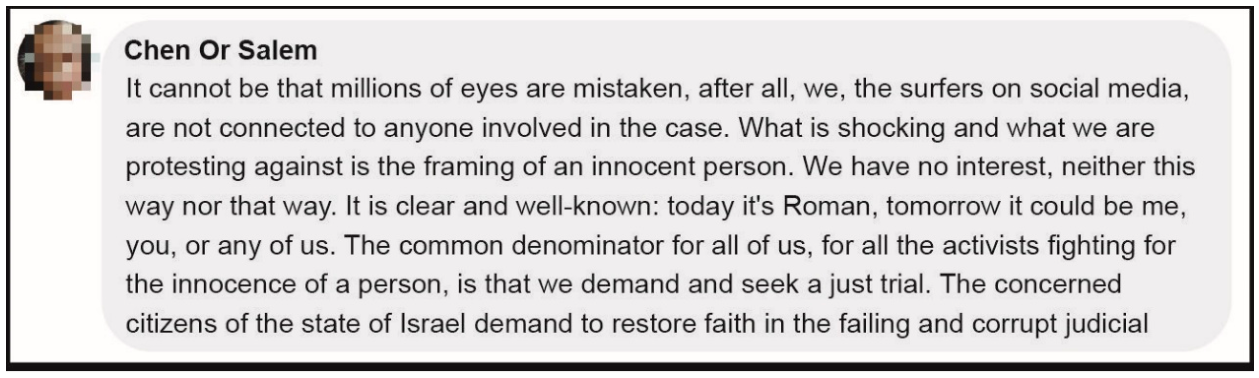
For example, in Figure 1, the post’s author contends that it is difficult to believe that ‘millions of eyes’—activists who are not personally involved but are focused on the broader implications of the case—could all be mistaken. Figure 1 exemplifies an advocacy frame in which activists collectively position themselves as moral witnesses of truth. The metaphor of “millions of eyes” conveys both surveillance of institutional power and communal insistence on transparency. This rhetorical imagery transforms the pursuit of legal truth into a collective moral mission, thus connecting digital participation with broader cultural ideals of justice and accountability.
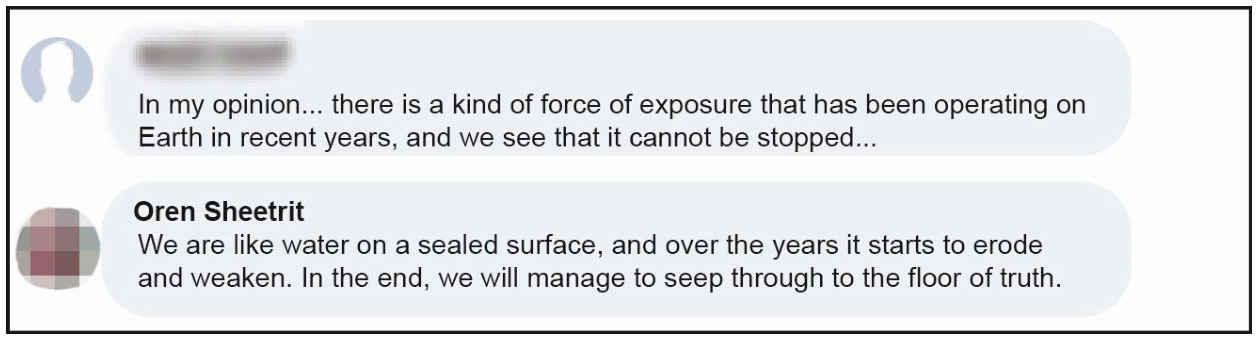
In Figure 2, the writer likens the establishment to an opaque surface and the activists to water seeping through it. Like water gradually penetrating a sealed surface, the metaphor suggests that activists’ persistence would eventually help uncover the truth and achieve justice for Zadorov, even though, at the time of the post, they believed that the truth had yet to emerge.
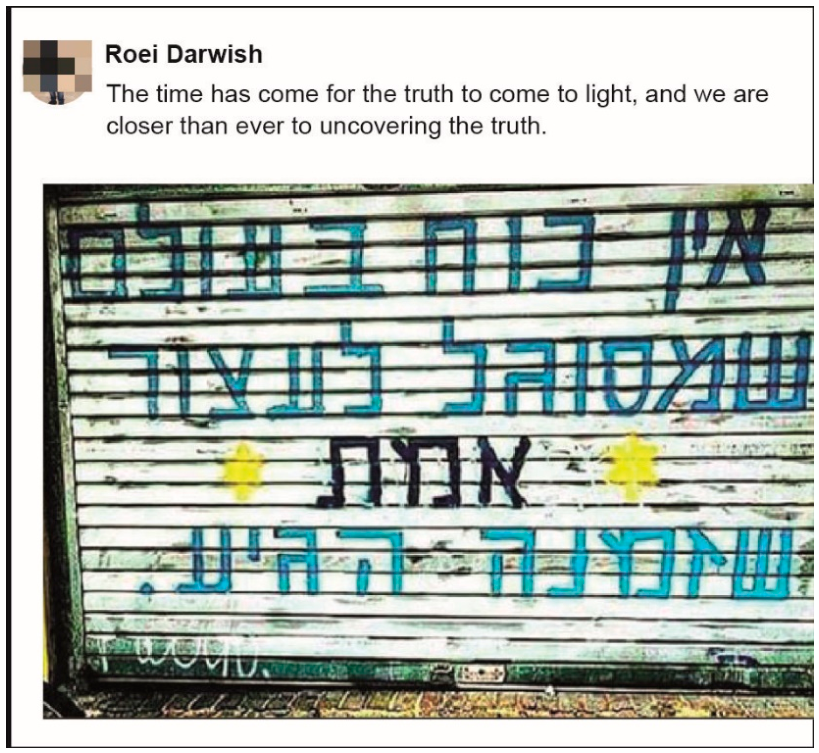
Activists also construct their self-image as ‘pursuers of truth and justice’ through visual content, as in Figure 3. The figure includes a graffiti inscription on a garage door that says: “There is no power in the world that can stop the truth whose time has come.”
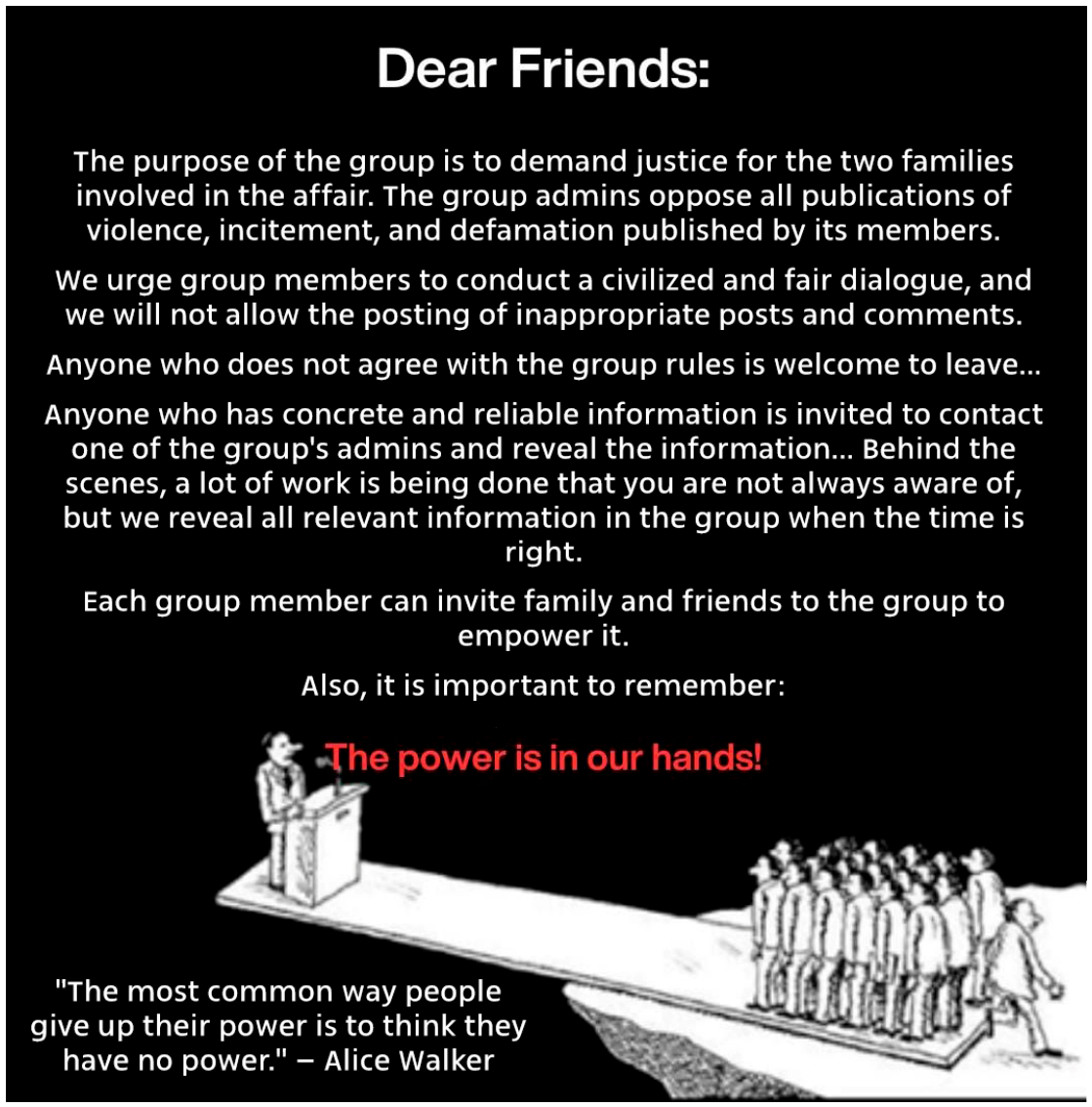
Figure 4 reinforces the message that activists see themselves as the true seekers of justice, emphasizing that public involvement is crucial in uncovering the truth and achieving justice. In contrast, the establishment is portrayed as an impediment, actively delaying justice. The illustration vividly conveys this message: A figure representing the establishment, depicted with a long Pinocchio-like nose indicating deceit, stands on a plank over an abyss. This plank is supported by the collective weight of the public. The potential for collapse, as one person steps off the plank, symbolizes the power of the citizens to challenge and destabilize the establishment.
This visual metaphor underscores the idea that while establishment figures may appear powerful, the true strength lies with the people, who can bring about significant change. The image served as the featured post in the largest Facebook group dedicated to the Zadorov case from 2019 through at least 2024. It serves as a constant reminder to group members of their role in the pursuit of justice and the collective power they hold.

5.2. Diversity of Advocacy Claims

Activists involved in the Justice for Zadorov campaign pursue multiple causes. They advocate for Zadorov by exposing judicial flaws and asserting his innocence, while also seeking justice for Tair Rada and closure for her family. Moreover, they address broader systemic issues within the Israeli justice system, reflecting the movement’s multifaceted approach to justice and community welfare.

5.3. Tair Rada as a Symbol of Purity and Light

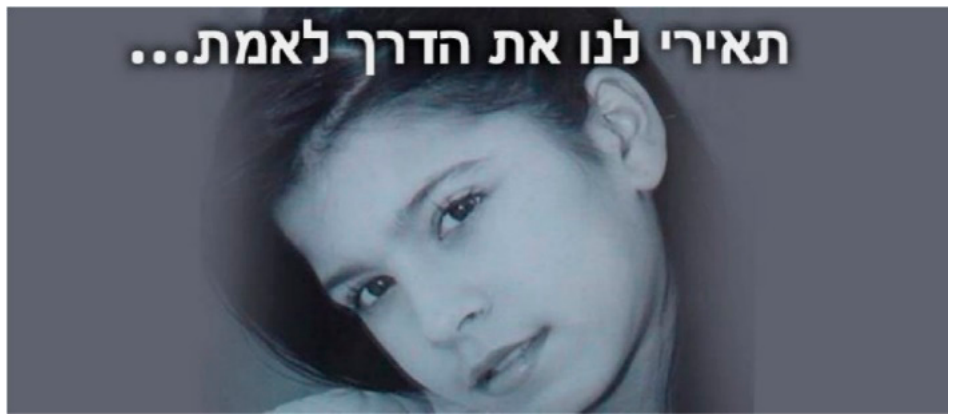
Many visuals refer to Tair Rada and include her image, presenting her as a symbol of light and purity (note that the name “Tair” resembles “Light” in Hebrew). Such memes claim that the public is ‘obliged’ to reveal the real culprits in her death—for her and her family. For example, one meme plays on her name, asking Tair to “light the way to the truth” (Figure 5). The image’s use of poetic language and the play on Tair’s name (“light”) serve as a rhetorical appeal to pathos, inviting audiences to see her as a symbol of purity and moral truth. This emotional framing strengthens the activists’ advocacy claim by linking their search for justice with compassion and moral duty.

5.4. Roman Zadorov as a Victim

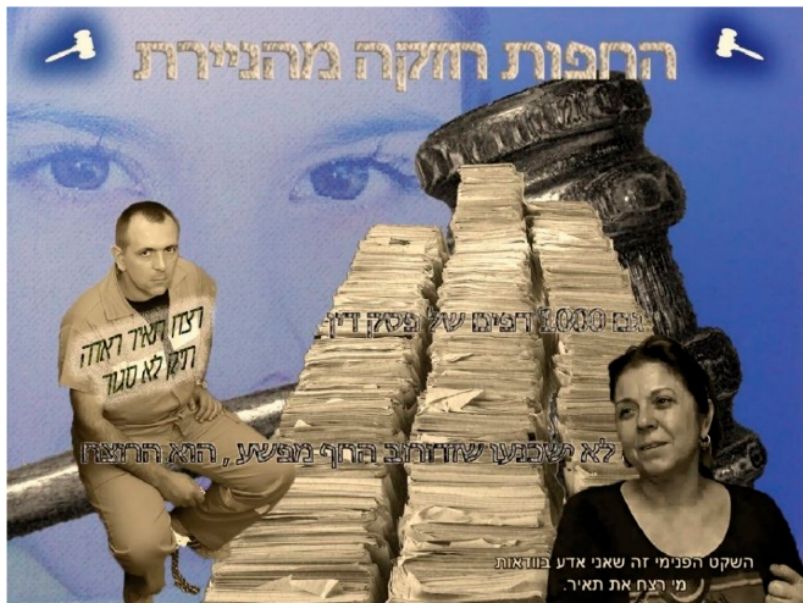
Texts and images frequently depicted Roman Zadorov as a victim. Some memes include a short statement or a picture of Zadorov with a caption asserting his innocence and demanding justice. For instance, Figure 6 combines stacks of pages representing the extensive verdict with images of Zadorov, Tair Rada and Ilana Rada, together with prominent gavel imagery. The text says: “Innocence is stronger than paperwork. Even 1000 pages of a verdict will not convince that the innocent Zadorov is the murderer… The murder of Tair Rada is an open case”. The juxtaposition of legal imagery (verdict pages, gavels) with emotional appeals (“innocence is stronger than paperwork”) encapsulates the rhetorical tension between institutional authority and moral conviction. This visual composition functions as an advocacy frame that questions the credibility of legal institutions and reclaims moral authority for the public.
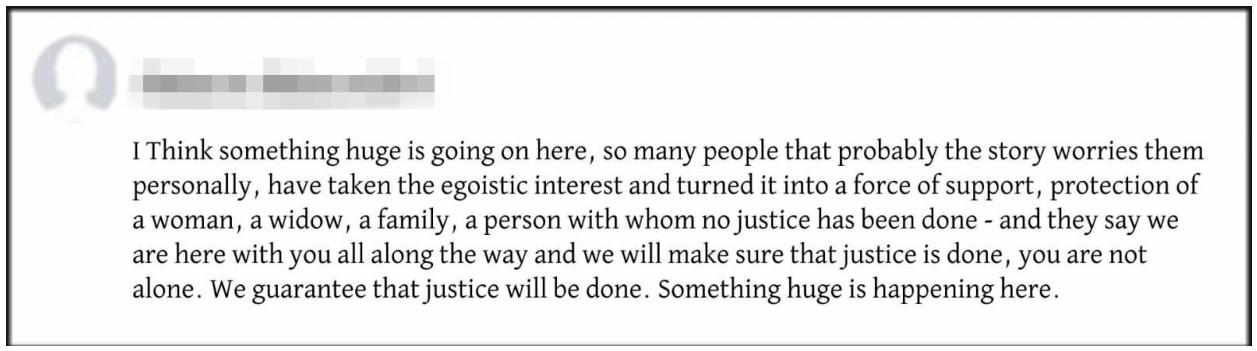
In addition to advocacy on behalf of the wrongfully accused or the victim and her family, the analysis demonstrates that activists sometimes advocate for justice as a broader principle—that is, not only justice for Zadorov but also the broader societal good. For example, the author of Figure 7 stated, “I think something huge is going on here; so many people… [turned the affair] into a force of support, protection for a woman, a widow, a family, a person with whom no justice has been done.” This post shifts from a personal to a collective register, reframing the pursuit of justice for Zadorov as a civic responsibility. By invoking empathy for “a woman, a widow, a family,” the rhetoric expands the advocacy claim beyond the individual case toward communal and ethical solidarity.
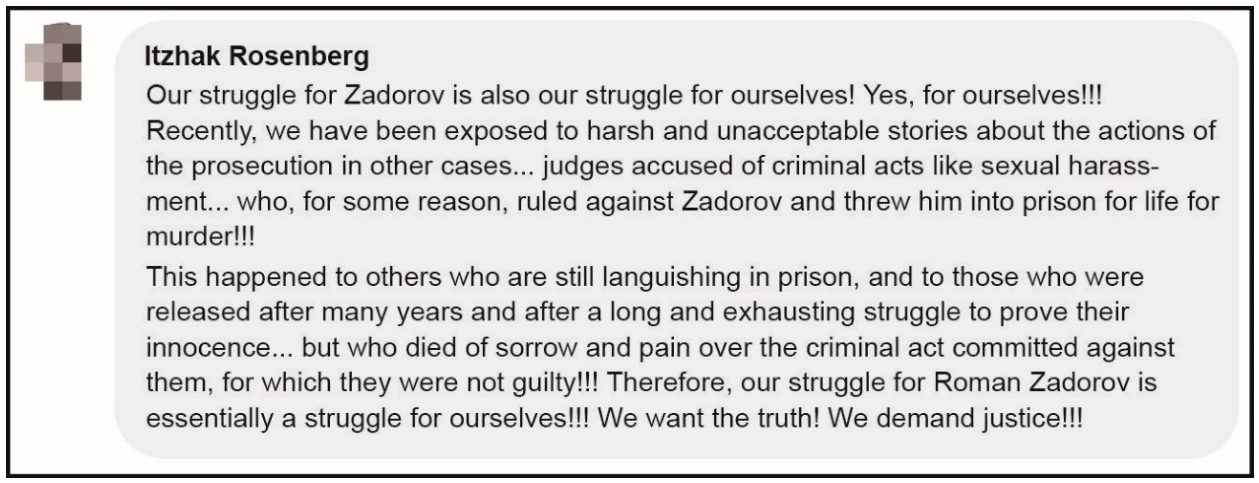
Other activists express the belief that their struggle for Zadorov is also a struggle for themselves, emphasizing the potential for wrongful convictions to affect anyone. Itzhak Rosenberg explicitly framed the campaign as ‘our struggle for ourselves,’ concluding: ‘We want the truth! We demand justice!!!’ (Figure 8).” The direct first-person statement creates a sense of shared identity and emotional alignment. This rhetorical move transforms advocacy into identification, blurring the line between supporting Zadorov and asserting a collective moral self.
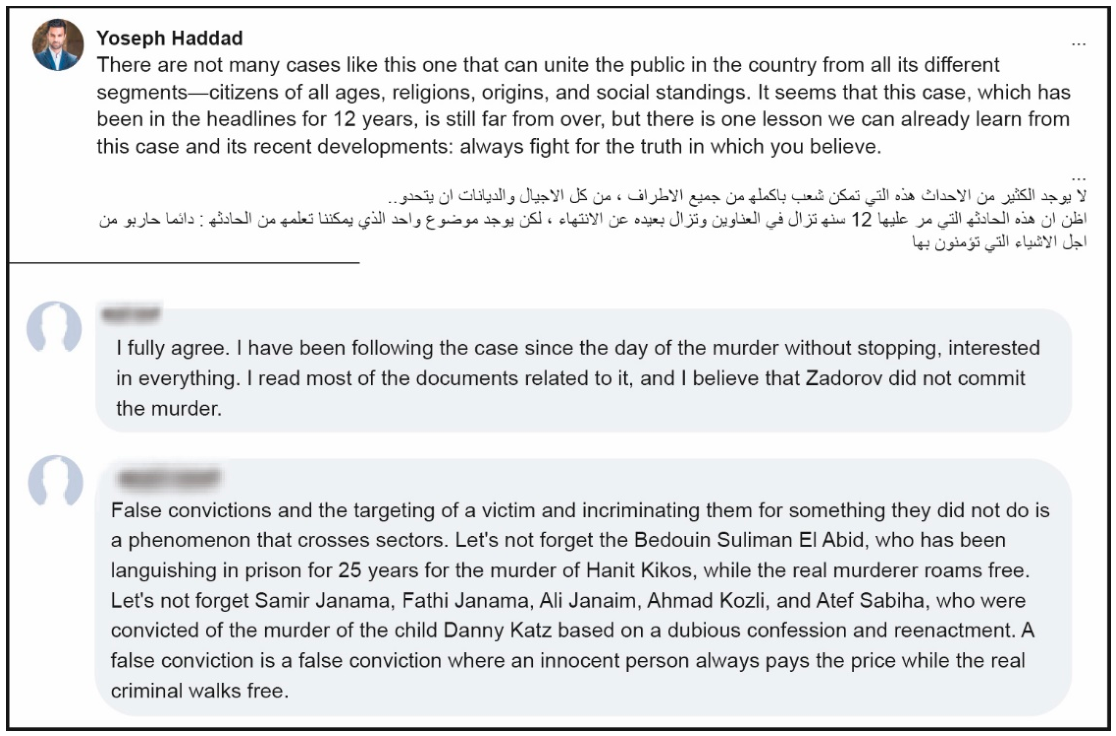
The danger of wrongful convictions is seen as a cross-sectoral issue. For example, Yoseph Haddad (an Arab activist and Israeli citizen) highlighted how the Zadorov case united people from different backgrounds in the fight for justice. He stated that there are not many cases like this one that unite “citizens of all ages, religions, origins, and social standings.” (Figure 9). In response, a few Arab-Israelis expressed agreement, some using Arabic script to symbolize the pursuit of a cross-sectoral cause. The use of inclusive language and multilingual comments (Hebrew and Arabic) enact representation through rhetorical inclusivity. Here, the image illustrates how advocacy transforms into representation by visually and linguistically enacting social cohesion.

5.5. Diversity of Representation Claims

In addition to advocacy claims, representation claims also appeared frequently in the social media groups advocating justice for Zadorov. In the pre-social media era, individuals connected to the case communicated primarily through courtrooms and traditional media. Social media altered this communicative environment by providing a continuous and accessible forum for these actors.
The study identifies a wide range of representation claims among activists, highlighting their varied positions in the advocacy landscape. Key participants include family and friends of both the victim and the accused, adding a personal dimension as they represent their loved ones and seek to correct perceived injustices. Legal professionals and experts, such as attorneys and crime scene investigators, contribute their specialized knowledge, challenging the legal system’s handling of the case. Additionally, the movement draws individuals from diverse backgrounds who view the Zadorov case as a symbol of broader justice system issues, advocating for systemic change and representing wider public interests.
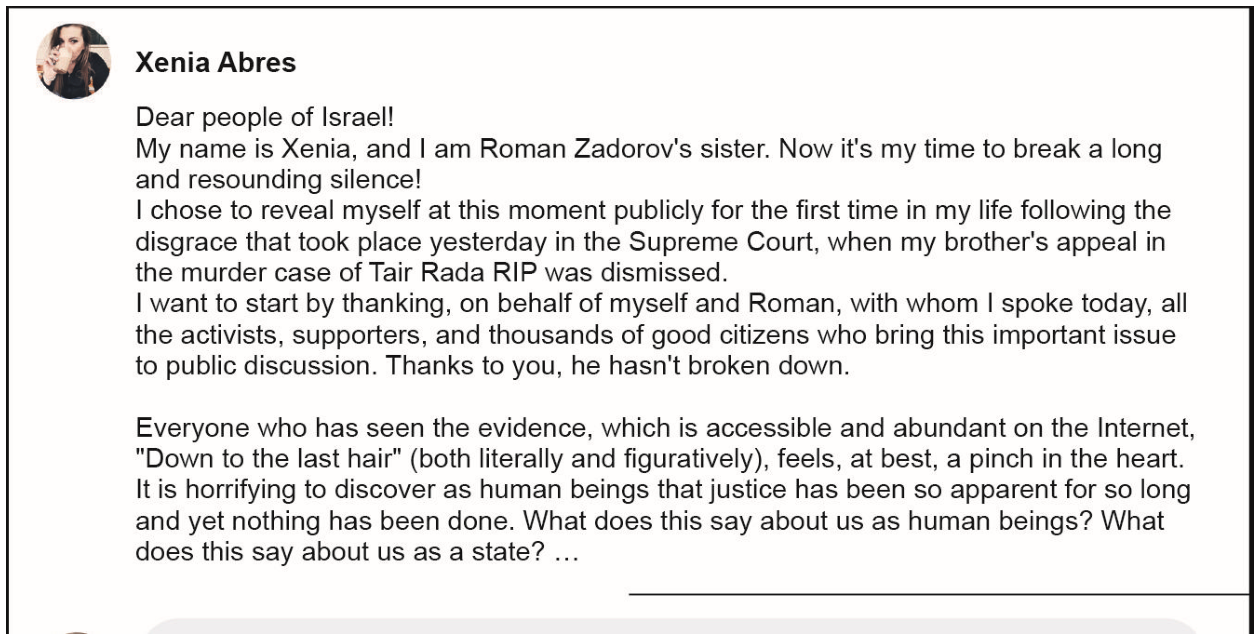
One example of an actor making representation claims is Xenia Abras, Roman Zadorov’s sister, who occasionally posted in the social media groups calling for justice for her brother. After Zadorov’s appeal to the Supreme Court was rejected in 2015, she thanked the activists for supporting her brother and expressed her anger at the legal system and the police. The post was named one of the ‘posts that stirred up the web’ that year [64] according to the MAKO website; it was shared over 4000 times and received many comments (Figure 10).
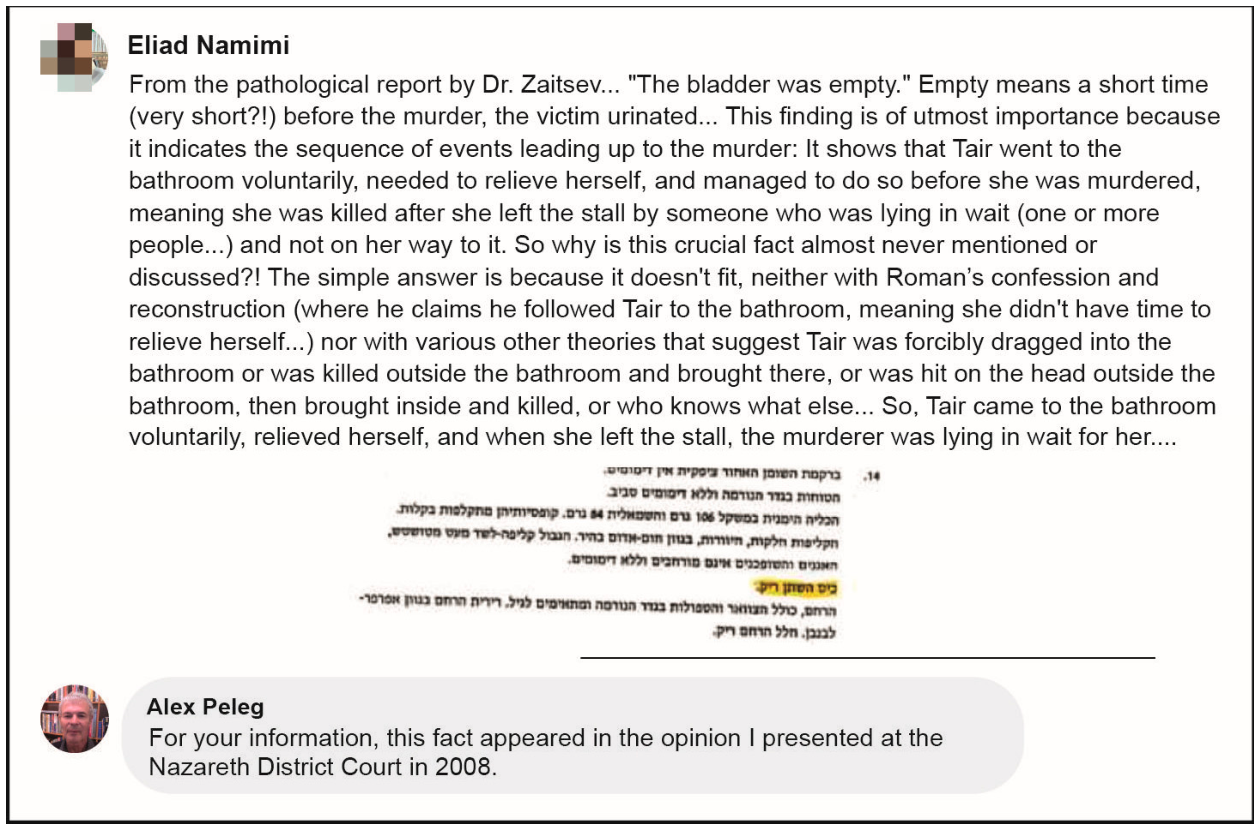
Additional representation claims come from legal representatives and experts. Figure 11 shows a post discussing the claim, based on the pathological report, that Rada’s bladder was empty at the time of death and exploring its implications for the reconstruction of the crime. Alex Peleg, a former crime-scene investigator who served as a defense expert, responded that this fact had appeared in the opinion he presented to the Nazareth District Court in 2008. The exchange illustrates how forensic details were mobilized in social-media discussions to challenge the official account of the case.
Other representation claims were made by friends and acquaintances of individuals involved in the case. For example, several of Tair Rada’s friends, particularly those who testified that they were near the bathroom around the time of the murder, participated in the discussions. Over the years, many on social media have accused them of being involved in the murder, despite the absence of evidence implicating them. Some of them shared information about the turn of events on the day of the murder and answered group member questions.
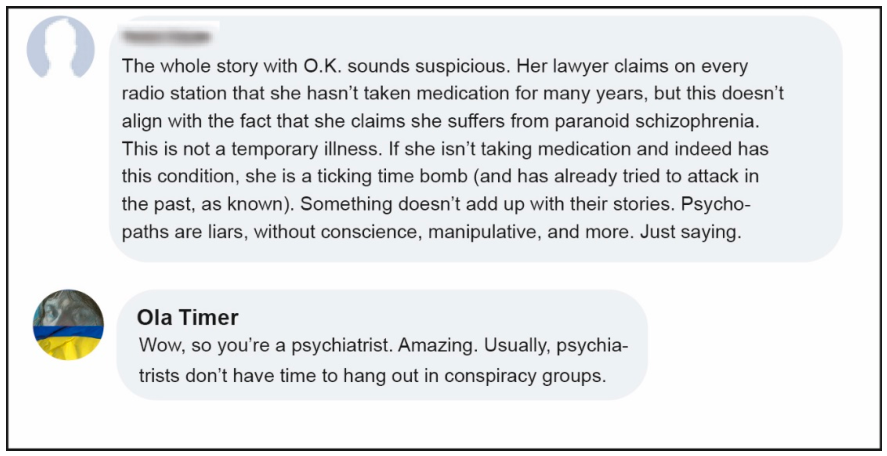
Another example of a representation claim came from Ola Kravchenko, whose then-boyfriend accused her of being the actual killer. Kravchenko, posting here under the name ‘Ola Timer’, occasionally participated in the social media discussions. Below, she responded sarcastically to accusations that she was psychopathic and manipulative, and stated that “psychiatrists don’t have time to hang out in conspiracy groups” (Figure 12).

6. Discussion and Conclusions

This study examined how activists in the Justice for Roman Zadorov movement employed both advocacy and representation claims to shape public discourse around justice. Through this dual lens, the research demonstrated that advocacy claims function rhetorically to mobilize moral urgency and collective identification, while representation claims construct authority and legitimacy to speak for others. Together, these modes of claim-making illuminate how digital activism generates credibility and sustains engagement within networked publics. By distinguishing analytically between advocacy and representation claims, the study contributes to social movement research and highlights the plurality of meanings and actors that shape digital justice campaigns.
Social media provides an important platform for activists to achieve objectives that previously required larger, more organized groups. Unlike traditional activism, which often depended on hierarchical organizations and significant financial resources, social media allows for decentralized, rapid mobilization. Activists can disseminate information, recruit supporters, coordinate actions, and sustain momentum with minimal resources [2,21]. This capability can broaden opportunities for participation, enabling diverse actors to help shape public discourse and advocating for change.
This study builds on established literature examining the dynamics of collective action on social media. By extending the work of Benkler [20] and Wolfsfeld et al. [65], the findings illustrate how collective action on social media is not only facilitated technologically but also shaped rhetorically through the interaction between advocacy and representation. This perspective advances debates in digital activism scholarship by showing how meaning, legitimacy, and moral authority circulate in hybrid publics. These findings are consistent with arguments that social media can broaden opportunities for participation [5], while emphasizing the platform’s role in facilitating varied forms of activism. Notably, while the textual and visual strategies of social media activism have been studied [26,33], limited attention has been given to distinctions between advocacy and representation claims. This study addresses this gap, demonstrating how activists strategically use rhetoric and visuals to engage diverse audiences and articulate complex claims of justice.
The distinction proposed in this study should not be understood as an exhaustive classification of all possible claims that may emerge across different forms of social media activism. Rather, it identifies two analytically useful dimensions that proved particularly salient within the context of a digital justice campaign. Other forms of activism may generate additional or different categories of claims that fall beyond the scope of the present study. Future comparative research may examine whether these dimensions also characterize identity-based movements, such as disability rights, LGBTQ+ activism, or migrant rights campaigns, or whether additional forms of claim-making emerge in those contexts.
Building on scholarship in visual rhetoric, this study shows how activists employ images, memes, and digital vernaculars to evoke empathy, outrage, and solidarity. Such multimodal rhetoric engages diverse audiences through affective and symbolic appeals that transcend linguistic boundaries. Furthermore, the cultural meanings of “justice” are rhetorically constructed through these visuals, blending moral, emotional, and civic dimensions.
The primary objective of this study was to examine the textual and visual claims made by activists in social media campaigns and to distinguish between advocacy and representation claims. This objective has been achieved through a detailed netnographic analysis of the Justice for Zadorov movement, which illustrates how activists employed diverse strategies to advocate for Zadorov, represent various stakeholders, and critique systemic injustices in the Israeli legal system. By addressing these dimensions, the study offers a nuanced understanding of the multifaceted character of social media activism, contributing to the literature on advocacy, representation, and digital activism [28,46].
While this research offers valuable insights, it has certain limitations. As a single case study focused on Israel, the findings may not be easily generalized to other contexts or campaigns. Future studies should examine similar movements across different legal, cultural, and sociopolitical contexts to better understand how varying access to digital tools influences the dynamics of activism. Accordingly, the categories of advocacy and representation identified here should be understood as analytically grounded in this particular case rather than as an exhaustive typology applicable to all forms of social media activism. Future comparative studies may examine the extent to which similar patterns emerge across different movements and sociopolitical contexts.
To conclude, this study analyzed the textual and visual claims in social media activism, focusing on the Justice for Roman Zadorov movement. By distinguishing between advocacy and representation claims, this research provided a structured way to understand the multifaceted nature of digital activism. The study employed a netnographic approach, gathering qualitative data over several years to offer a nuanced perspective on activist engagement.
The findings indicate that activists use a combination of textual and visual strategies to position themselves as justice-seekers while advocating for individual and systemic changes. Moreover, representation claims in social media activism are highly diverse, including direct stakeholders and broader societal interests.
Ultimately, this study underscores the growing role of digital citizen participation in debates over public truth and justice. In an era of online citizen sleuthing—that is, the independent investigation and analysis of evidence by ordinary citizens through digital platforms—and participatory media, understanding how advocacy and representation operate rhetorically helps clarify both the participatory opportunities and the ethical challenges associated with social media activism.
The dual framework of advocacy and representation can thus be interpreted as a form of frame alignment, through which activists seek resonance between personal narratives, public values, and institutional critique. Understanding this alignment enriches the study’s explanatory power and supports its relevance to broader social movement research.
The research contributes to ongoing discussions in digital activism studies by offering a framework to analyze how advocacy and representation claims function in online campaigns. Future research should examine whether advocacy and representation claims identified in this study also emerge in other forms of social media activism, including disability rights, LGBTQ+ activism, migrant rights campaigns, and other identity-based movements. Comparative studies could assess the extent to which these analytical categories travel across different activist contexts or whether additional forms of claim-making become salient in other types of social movements. By doing so, this study aims to deepen the understanding of how digital activism shapes perceptions of justice and social change.

Funding

This research received no external funding.

Institutional Review Board Statement

The study was conducted in accordance with the Declaration of Helsinki, and the protocol was approved by Ariel University Ethics committee (Project identification code AU-COM-ALO-20230829) on 29 August 2023.

Informed Consent Statement

The broader research project included interviews with group administrators and leading activists. Interviewees provided recorded verbal consent to participate and to the use of anonymized quotations. No interview quotations or identifiable interview-derived material are reported in the present article. Permissions for reproduced social-media posts and images were obtained separately from the relevant creators/rightsholders.

Data Availability Statement

Data available on request from the author.

Acknowledgments

The author thanks Esther Mark, Inbar Malka, Joannah S. John and Tslil Shalom for their assistance in preparing the manuscript for publication.

Conflicts of Interest

The author declares no conflicts of interest.

Notes

1
From the Facebook group: “The whole truth about the murder of the late Tair Rada”, 10 January 2016.
2
From the Facebook group: “The whole truth about the murder of the late Tair Rada”, 21 January 2016.
3
From the Facebook group: “The whole truth about the murder of the late Tair Rada”, 4 March 2017.
4
From the Facebook group: “The whole truth about the murder of the late Tair Rada”, 20 April 2016.
5
From the Facebook group: “Who killed Tair Rada? Zadorov trial!”, 11 April 2013. Photo: Emi Bonnie.
6
From the Facebook group: “Demanding a fair trial in the case of the murder of the late Tair Rada”, 2015. Photo: Shani Daos.
7
From the Facebook group: “The whole truth about the murder of the late Tair Rada”, 2016.
8
See note 7.
9
From the Facebook group: “The whole truth about the murder of the late Tair Rada”, 6 November 2018.
10
From the Facebook group: “The whole truth about the murder of the late Tair Rada”, 24 December 2015.
11
From the Facebook group: “The truth today—in memory of the late Tair Rada”, 26 June 2016.
12
From the Facebook group: “The whole truth about the murder of the late Tair Rada”, 15 July 2021.

References

  1. Cammaerts, B. Protest logics and the mediation opportunity structure. Eur. J. Commun. 2012, 27, 117–134. [Google Scholar] [CrossRef] [Scilit]
  2. Bennett, W.L.; Segerberg, A.; Walker, S. Organization in the crowd: Peer production in large-scale networked protests. Inf. Commun. Soc. 2014, 17, 232–260. [Google Scholar] [CrossRef] [Scilit]
  3. Tufekci, Z. Twitter and Tear Gas: The Power and Fragility of Networked Protest; Yale University Press: New Haven, CT, USA, 2017. [Google Scholar]
  4. Papacharissi, Z.; de Fatima Oliveira, M. Affective news and networked publics: The rhythms of news storytelling on #Egypt. J. Commun. 2012, 62, 266–282. [Google Scholar] [CrossRef] [Scilit]
  5. Lev-On, A. Democratizing the discourse on criminal justice in social media: The activity for justice for Roman Zadorov as a case study. Humanit. Soc. Sci. Commun. 2023, 10, 770. [Google Scholar] [CrossRef] [Scilit]
  6. Lev-On, A. Online communities as arenas of “amateur expertise”: Examples from the social media activity for justice for Roman Zadorov. Front. Sociol. 2024, 9, 1455130. [Google Scholar] [CrossRef] [Scilit] [PubMed]
  7. Cox, H. What Motivates Us to Engage in Activism. The Commons. 2014. Available online: https://commonslibrary.org/what-motivates-us-to-engage-in-activism/ (accessed on 24 June 2026).
  8. Gulliver, P.; Fielding, K.; Louis, W. Advocacy and activism. In Public Interest Communication; University of Queensland Pressbooks: Brisbane, Australia, 2020; Available online: https://uq.pressbooks.pub/publicinterestcomm/chapter/advocacy-and-activism/ (accessed on 24 June 2026).
  9. Pitkin, H.F. The Concept of Representation; University of California Press: Oakland, CA, USA, 1967. [Google Scholar]
  10. Saward, M. The representative claim. Contemp. Political Theory 2006, 5, 297–318. [Google Scholar] [CrossRef] [Scilit]
  11. Harlow, S.; Harp, D. Collective action on the Web: A cross-cultural study of social networking sites and online and offline activism in the United States and Latin America. Inf. Commun. Soc. 2012, 15, 196–216. [Google Scholar]
  12. Lev-On, A.; Hardin, R. Internet-based collaborations and their political significance. J. Inf. Technol. Politics 2007, 4, 5–27. [Google Scholar] [CrossRef] [Scilit]
  13. Sandoval-Almazan, R.; Gil-Garcia, J.R. Toward cyberactivism 2.0? Understanding the use of social media and other information technologies for political activism and social movements. Gov. Inf. Q. 2014, 31, 365–378. [Google Scholar] [CrossRef] [Scilit]
  14. Valenzuela, S. Unpacking the use of social media for protest behavior: The roles of information, opinion expression, and activism. Am. Behav. Sci. 2013, 57, 920–942. [Google Scholar]
  15. Li, M.; Suk, J.; Zhang, Y.; Pevehouse, J.C.; Sun, Y.; Kwon, H.; Lian, R.; Wang, R.; Dong, X.; Shah, D.V. Platform affordances, discursive opportunities, and social media activism: A cross-platform analysis of #MeToo on Twitter, Facebook, and Reddit, 2017–2020. New Media Soc. 2026, 28, 119–147. [Google Scholar] [CrossRef] [Scilit]
  16. Hau, M.F. Like, share, lead: The impact of social media on authority and legitimacy in the labor movement. Soc. Media Soc. 2025, 11, 20563051251337869. [Google Scholar] [CrossRef] [Scilit]
  17. Carty, V. New information communication technologies and grassroots mobilization. Inf. Commun. Soc. 2010, 13, 155–173. [Google Scholar] [CrossRef] [Scilit]
  18. Van Laer, J.; Van Aelst, P. Internet and social movement action repertoires. Inf. Commun. Soc. 2010, 13, 1146–1171. [Google Scholar] [CrossRef] [Scilit]
  19. Vissers, S.; Stolle, D. The Internet and new modes of political participation: Online versus offline participation. Inf. Commun. Soc. 2014, 17, 937–955. [Google Scholar] [CrossRef] [Scilit]
  20. Benkler, Y. The Wealth of Networks: How Social Production Transforms Markets and Freedom; Yale University Press: New Haven, CT, USA, 2006. [Google Scholar]
  21. Lupia, A.; Sin, G. Which public goods are endangered? How evolving communication technologies affect the logic of collective action. Public Choice 2003, 117, 315–331. [Google Scholar] [CrossRef] [Scilit]
  22. Bimber, B.; Flanagin, A.J.; Stohl, C. Reconceptualizing collective action in the contemporary media environment. Commun. Theory 2005, 15, 365–388. [Google Scholar] [CrossRef] [Scilit]
  23. Haythornthwaite, C. Crowds and communities: Light and heavyweight models of peer production. In Proceedings of the Hawaii International Conference on System Sciences, Waikoloa, HI, USA, 5–8 January 2009; IEEE: New York, NY, USA, 2009. [Google Scholar]
  24. Haythornthwaite, C. Democratic process in online crowds and communities. J. eDemocracy Open Gov. 2012, 4, 160–170. [Google Scholar] [CrossRef] [Scilit]
  25. Melucci, A. Nomads of the Present: Social Movements and Individual Needs in Contemporary Society; Temple University Press: Philadelphia, PA, USA, 1989. [Google Scholar]
  26. Wilkins, D.J.; Livingstone, A.G.; Levine, M. Whose tweets? The rhetorical functions of social media use in developing the Black Lives Matter movement. Br. J. Soc. Psychol. 2019, 58, 786–805. [Google Scholar] [CrossRef] [Scilit] [PubMed]
  27. Williams, R.H. Constructing the public good: Social movements and cultural resources. Soc. Probl. 1995, 42, 124–144. [Google Scholar] [CrossRef] [Scilit]
  28. Foust, C.R.; Alvarado, R.F. Rhetoric and social movements. In Oxford Research Encyclopedia of Communication; Oxford University Press: Oxford, UK, 2018. [Google Scholar]
  29. Charland, M. Constitutive rhetoric: The case of the Peuple Québécois. Q. J. Speech 1987, 73, 133–150. [Google Scholar] [CrossRef] [Scilit]
  30. Cloud, D.L. Control and Consolation in American Culture and Politics: Rhetorics of Therapy; Sage: Thousand Oaks, CA, USA, 1998. [Google Scholar]
  31. Edwards, J.; Lang, A. Hashtag activism and the rhetoric of connection. Rhetor. Rev. 2018, 37, 36–49. [Google Scholar]
  32. Ott, B.; Dickinson, G. The Twitter Presidency: Rhetoric and Governance in the Age of Social Media; Routledge: Oxfordshire, UK, 2019. [Google Scholar]
  33. Mattoni, A.; Teune, S. Visions of protest: A media-historic perspective on images in social movements. Sociol. Compass 2014, 8, 876–887. [Google Scholar] [CrossRef] [Scilit]
  34. Doerr, N.; Mattoni, A.; Teune, S. Visuals in social movements. In The Oxford Handbook of Social Movements; Della Porta, D., Diani, M., Eds.; Oxford University Press: Oxford, UK, 2015; pp. 557–566. [Google Scholar]
  35. Neumayer, C.; Rossi, L. Images of protest in social media: Struggle over visibility and visual narratives. New Media Soc. 2018, 20, 4293–4310. [Google Scholar] [CrossRef] [Scilit]
  36. Kilgo, D.K.; Harlow, S.; García-Perdomo, V.; Salaverría, R. From #Ferguson to #Ayotzinapa: Analyzing differences in domestic and foreign protest news shared on social media. Mass Commun. Soc. 2018, 21, 606–630. [Google Scholar] [CrossRef] [Scilit]
  37. Mielczarek, N. The “Pepper-Spraying Cop” icon and its Internet memes: Social justice and public shaming through rhetorical transformation in digital culture. Vis. Commun. Q. 2018, 25, 67–81. [Google Scholar] [CrossRef] [Scilit]
  38. Fang, K. Turning a communist party leader into an Internet meme: The political and apolitical aspects of China’s toad worship culture. Inf. Commun. Soc. 2020, 23, 38–58. [Google Scholar] [CrossRef] [Scilit]
  39. George, J.; George, T.; Moquin, R. I can’t breathe: How digital video becomes an emancipatory technology. In Proceedings of the 54th Hawaii International Conference on System Sciences, Online, 5–8 January 2021. [Google Scholar]
  40. Burke, K. A Rhetoric of Motives; University of California Press: Oakland, CA, USA, 1969. [Google Scholar]
  41. Hauser, G.A. Introduction to Rhetorical Theory; Waveland Press: Long Grove, IL, USA, 2002. [Google Scholar]
  42. Polletta, F.; Jasper, J. Collective identity and social movements. Annu. Rev. Sociol. 2001, 27, 283–305. [Google Scholar] [CrossRef] [Scilit]
  43. Melucci, A. Challenging Codes: Collective Action in the Information Age; Cambridge University Press: Cambridge, UK, 1996. [Google Scholar]
  44. Miller, D.T.; Effron, D.A.; Zak, S.V. From moral outrage to social protest: The role of psychological standing. In The Psychology of Justice and Legitimacy; Psychology Press: Oxfordshire, UK, 2011; pp. 103–123. [Google Scholar]
  45. Burrows, B.; Selvanathan, H.P.; Lickel, B. My fight or yours: Stereotypes of activists from advantaged and disadvantaged groups. Personal. Soc. Psychol. Bull. 2021, 49, 110–124. [Google Scholar] [CrossRef] [Scilit] [PubMed]
  46. Shnabel, N.; Belhassen, Y.; Mor, S. From victimhood to peace activism: The potential role of personal loss and inclusive victim beliefs. Group Process. Intergroup Relat. 2018, 21, 1144–1154. [Google Scholar] [CrossRef] [Scilit]
  47. Borshuk, C. An interpretive investigation into motivations for outgroup activism. Qual. Rep. 2004, 9, 300–319. [Google Scholar]
  48. Warren, M.R. Fire in the Heart: How White Activists Embrace Racial Justice; Oxford University Press: Oxford, UK, 2010. [Google Scholar]
  49. Buozis, M. Doxing or deliberative democracy? Evidence and digital affordances in the Serial subReddit. Convergence 2019, 25, 357–373. [Google Scholar] [CrossRef] [Scilit]
  50. Gerbaudo, P. Cahiers de doleance 2.0: Crowd-sourced social justice blogs and the emergence of a rhetoric of collection in social media activism. In Media Activism in the Digital Age; Pickard, V., Yang, G., Eds.; Routledge: Oxfordshire, UK, 2017; pp. 139–150. [Google Scholar]
  51. Gies, L. Miscarriages of justice in the age of social media: The Amanda Knox and Raffaele Sollecito innocence campaign. Br. J. Criminol. 2017, 57, 723–740. [Google Scholar] [CrossRef] [Scilit]
  52. Lev-On, A. Role expansion of social media groups: Example from the online activity for Roman Zadorov in Israel. In Social Informatics; Hara, N., Fichman, P., Eds.; Routledge: London, UK, 2025; pp. 198–210. [Google Scholar]
  53. Savage, S.P.; Grieve, J.; Poyser, S. Putting wrongs to right: Campaigns against miscarriages of justice. Crim. Crim. Justice 2007, 7, 83–105. [Google Scholar]
  54. Wood, M.J.; Douglas, K.M. Online communication as a window to conspiracist worldviews. Front. Psychol. 2015, 6, 836. [Google Scholar] [CrossRef] [Scilit] [PubMed]
  55. Lev-On, A. Crowdsourced Justice: Social Media and the Overturning of a Wrongful Murder Conviction; forthcoming; Bloomsbury: New York, NY, USA, 2027. [Google Scholar]
  56. Nazaret District Court. Ruling in Court Case 502/07; Nazaret District Court: Nazareth, Israel, 2010.
  57. Ben-Israel, D. The Tube Celebrates 900K and Ynet is in a Hysterical Pressure: Ranking of Facebook Pages for January 2016. Mizbala. Available online: http://mizbala.com/digital/social-media/109150 (accessed on 15 February 2016).
  58. Grossman, N.; Lev-On, A. Social media jurors: Conceptualizing and analyzing online public engagement in reference to legal cases. Crime Law Soc. Chang. 2023, 79, 223–240. [Google Scholar] [CrossRef] [Scilit]
  59. Lev-On, A.; Steinfeld, N. The power of the visual Web: Watching online videos influences viewers’ opinion about what’s in the videos and also about what’s not in the videos. Heliyon 2024, 10, e27895. [Google Scholar] [PubMed]
  60. Lev-On, A. Making sense of murder: Stories in social media groups dedicated to justice for wrongfully convicted. Media Cult. Soc. 2023, 45, 1708–1719. [Google Scholar]
  61. Kozinets, R. Netnography: The Essential Guide to Social Media Research; Sage: Thousand Oaks, CA, USA, 2019. [Google Scholar]
  62. Rageh, A.; Melewar, T.C. Using netnography research method to reveal the underlying dimensions of the customer/tourist experience. Qual. Mark. Res. An. Int. J. 2013, 16, 126–149. [Google Scholar] [CrossRef] [Scilit]
  63. Lev-On, A. Ad-hoc activism: Characteristics of administrators of activist groups on social media. Int. J. Media Cult. Politics 2024, 19, 183–196. [Google Scholar] [CrossRef] [Scilit]
  64. Levi, M. Year’s end: The Posts that Shook the Internet. Mako, 3 October 2016. Available online: https://www.mako.co.il/news-money/tech-q4_2016/Article-5c60befd2f88751004.htm (accessed on 24 June 2026).
  65. Wolfsfeld, G.; Segev, E.; Sheafer, T. Social media and the Arab Spring: Politics comes first. Int. J. Press. 2013, 18, 115–137. [Google Scholar] [CrossRef] [Scilit]
Figure 1. From the Facebook group “The whole truth about the murder of the late Tair Rada” 1.
Societies 16 00258 g001
Figure 2. From the Facebook group “The whole truth about the murder of the late Tair Rada” 2.
Societies 16 00258 g002
Figure 3. From the Facebook group “The whole truth about the murder of the late Tair Rada” 3.
Societies 16 00258 g003
Figure 4. From the Facebook group “The whole truth about the murder of the late Tair Rada” 4.
Societies 16 00258 g004
Figure 5. From the Facebook group “Who killed Tair Rada? Zadorov trial!” 5.
Societies 16 00258 g005
Figure 6. From the Facebook group “Demanding a fair trial in the case of the murder of the late Tair Rada” 6.
Societies 16 00258 g006
Figure 7. From the Facebook group “The whole truth about the murder of the late Tair Rada” 7.
Societies 16 00258 g007
Figure 8. From the Facebook group “The whole truth about the murder of the late Tair Rada” 8.
Societies 16 00258 g008
Figure 9. From the Facebook group “The whole truth about the murder of the late Tair Rada” 9.
Societies 16 00258 g009
Figure 10. From the Facebook group “The whole truth about the murder of the late Tair Rada” 10.
Societies 16 00258 g010
Figure 11. From the Facebook group “The truth today—in memory of the late Tair Rada” 11.
Societies 16 00258 g011
Figure 12. From the Facebook group “The whole truth about the murder of the late Tair Rada” 12.
Societies 16 00258 g012
Disclaimer/Publisher’s Note: The statements, opinions and data contained in all publications are solely those of the individual author(s) and contributor(s) and not of MDPI and/or the editor(s). MDPI and/or the editor(s) disclaim responsibility for any injury to people or property resulting from any ideas, methods, instructions or products referred to in the content.