Article

‘COVID Can’t Be COVID Without George Floyd’: A Photovoice Exploration of Black Women’s Mental Health During the Dual Pandemics


1
Department of Health Behavior, Gillings School of Global Public Health, University of North Carolina at Chapel Hill, Chapel Hill, NC 27599, USA
2
Independent Researcher, Durham, NC 21517, USA
3
Community-Campus Partnerships for Health, Raleigh, NC 27605, USA
4
Project Momentum, Inc., Rocky Mount, NC 27801, USA
5
Independent Researcher, Cary, NC 27511, USA
6
Department of Epidemiology, Gillings School of Global Public Health, University of North Carolina at Chapel Hill, Chapel Hill, NC 27599, USA
*
Author to whom correspondence should be addressed.
These authors contributed equally to this work and share co-senior authorship.
Societies 2026, 16(8), 251; https://doi.org/10.3390/soc16080251
Submission received: 18 May 2026 / Revised: 21 July 2026 / Accepted: 27 July 2026 / Published: 6 August 2026

Abstract

Black women faced disproportionate social, emotional, and structural burdens during the dual pandemics of COVID-19 and racial injustice, yet their mental health experiences remain underexamined. This study explores how Black women understood, navigated, and coped with these intersecting crises. Seven Black women in North Carolina participated in a seven-session virtual photovoice study, including four photo discussion sessions. Participants generated four photo assignments, took photos, and discussed them using the SHOWeD framework. Recorded discussions were analyzed using Reflexive Thematic Analysis and Sort and Sift, Think and Shift, with participants supporting theme development. Narratives revealed multi-level mental health impacts: at the individual level, caregiving overload, compounded grief, and constant vigilance; at the interpersonal level, invisibility, racial misreading, and everyday racism that intensified distress and made help-seeking itself a labor of confronting providers’ biases; at the community level, trauma from witnessing racial violence and pandemic loss; and structural factors such as inequity, food insecurity, and policing as primary drivers of mental health strain. Participants employed healing as resistance through faith, nature, sister circles, and culturally concordant care. Black women’s mental health during the dual pandemics is inseparable from structural racism and gendered labor; healing is individual and collective, and crisis preparedness requires system-level change driven by Black communities.

1. Introduction

The COVID-19 pandemic disproportionately impacted Black communities across nearly every measured dimension—infection, hospitalization, mortality, economic hardship, and mental health burden [1,2]. In an analysis of 353 U.S. counties, 93% of counties experienced higher age-adjusted death rates among the Black population than among the White population [2]. State-level data mirrored these patterns. In a large Louisiana health system where Black patients comprised 31% of the routinely served population, they accounted for 76.9% of COVID-19 hospitalizations and 70.6% of in-hospital deaths [3]. Disparate outcomes such as this reflect the historical structural conditions that have disproportionately affected the daily lives of Black people every day: occupational segregation into high-risk frontline jobs, residential segregation that limits healthcare access and concentrates disinvestment, mass incarceration, and the embodied chronic stress of racism, which independently undermine immune function and cardiometabolic health [1,2,4,5]. These inequities reflect policy choices that contributed to differential vulnerability to the worst harms of the COVID-19 pandemic [4].
The COVID-19 pandemic coincided with a wave of highly publicized racial violence: the murders of George Floyd, Breonna Taylor, Ahmaud Arbery, and countless others that sparked a resurgence of the Black Lives Matter (BLM) movement, nationwide demonstrations, and a militarized police response [6,7]. For Black communities already navigating structural inequities, these crises were compounding burdens, a convergence that scholars and activists came to name the “dual pandemics” [8,9,10].
Black women were overrepresented in frontline healthcare, education, and service industries, which meant heightened exposure to both COVID-19 and economic precarity [11], while they simultaneously bore disproportionate caregiving responsibilities—for children learning remotely, for elderly and ill relatives, and for broader community networks—alongside their own grief, fear, and exhaustion [12,13].
Gender-specific stressors such as sexual harassment, workplace marginalization, and caregiving burden layer onto racial discrimination to produce distinctive patterns of chronic stress exposure in women [14,15]. During the dual pandemics, these chronic stressors intersected with other racialized traumas, resulting in a compounding mental health burden for Black women [8,16,17].
Despite growing recognition of Black women’s pandemic experiences, significant gaps remain in understanding their mental health navigation strategies, meaning-making processes, and resilience practices [18,19,20]. Existing research has documented disparities in outcomes but has rarely centered Black women’s own frameworks for understanding their experiences or the community-generated strategies they use for healing and resistance [20,21]. Few studies have examined how Black women themselves conceptualized the relationship between COVID-19 and racial injustice, what they identified as most harmful, or what practices sustained them through crisis [18]. Addressing this gap requires research approaches that position Black women as experts on their own lives and that are accountable to the communities they aim to serve [22].
The present study draws on exactly that kind of accountability. The National Institutes of Health Community Engagement Alliance (NIH CEAL) was established early in the pandemic to address COVID-19 in communities through the work of 21 regional research teams across the United States [23]. This study emerged from North Carolina Community Engagement Alliance (NC CEAL) advisory coalition discussions in which members observed that researchers and policymakers had largely moved on from COVID-19 while community members remained in its aftermath; coalition members specifically advocated for research centering Black women, citing their disproportionate caregiving responsibilities, essential worker exposure, and proximity to racialized violence [11,19]. Using photovoice, a community-based participatory research method [24], we examined how Black women in North Carolina understood, navigated, and coped with the COVID-19 pandemic, and what mental health needs and strategies they identified for themselves and their communities.

2. Materials and Methods

2.1. Study Design

This study used photovoice, a community-based participatory research (CBPR) method that integrates documentary photography, feminist epistemology, and Freirean critical pedagogy to position participants as co-researchers and catalyze action through visual storytelling [24,25,26]. Photovoice was selected for three reasons: alignment with the CBPR principles guiding the broader NC CEAL initiative; participant-directed inquiry, which proved consequential when participants refused to separate COVID-19 from concurrent racial violence and reshaped the study’s analytical focus toward the dual pandemics [8,9]; and its commitment to action-oriented dissemination [23,24]. This study received exempt status from the University of North Carolina at Chapel Hill Institutional Review Board (IRB #23-2641). The study was conducted entirely via Zoom in response to participants’ geographic dispersion across North Carolina and the ongoing public health emergency. Research suggests photovoice can maintain its core principles in virtual environments when researchers deliberately attend to trust-building [27]. Virtual delivery eliminated transportation barriers, accommodated participants’ demanding schedules [19], and enabled participation from familiar settings, thereby increasing overall comfort, allowing accommodations such as lying down after a long day at work, and facilitating the discussion of sensitive topics [28]. To compensate for a lack of physical connection in virtual space, the team built in extended ice-breakers, dedicated community-building time at each session’s opening and closing, and scheduling flexibility—accepting less efficient sessions, more variable session timing, and a longer overall study duration as tradeoffs for not unduly burdening participants [27,29].
The initial research question was: How did Black women navigate their mental health during the COVID-19 pandemic? Within minutes of the first photovoice session, participants made clear they had not experienced COVID-19 in isolation. One participant articulated, “COVID can’t be COVID without George Floyd. I forgot about that.” This assertion, immediately validated by others, signaled that separating the pandemic from racial violence was neither possible nor desirable from participants’ perspectives. Honoring CBPR’s commitment to community-directed inquiry, the question evolved to: How did Black women cope with the dual pandemics of COVID-19 and racial injustice? [24,26].
Photovoice employs small samples to enable trust-building, in-depth dialogue, and collaborative analysis, with recommended sample sizes of 7–10 participants [24]. This study was therefore capped at 10 participants. Eligibility criteria included self-identification as a Black or African American woman, age 18 or older, residence in North Carolina, access to a phone or digital camera, and ability to join virtual meetings via Zoom. Recruitment occurred between December 2023 and April 2024 using convenience sampling and proved challenging due to the same barriers this research highlighted—research mistrust, competing work and caregiving demands, and limited capacity [8,30]. Participants were recruited primarily through the personal network of a local community leader who has collaborated with the research team for over a decade, with additional outreach via study flyers distributed at local events hosted or attended by NC CEAL staff. The community leader, a longtime resident and trusted community health advocate, shared study information across her personal and professional networks—family, friends, church congregations, and community organizations. Because recruitment relied on word-of-mouth referral rather than a fixed sampling frame, the number of women who received study information was not tracked, and distribution and response rates cannot be calculated. Potential participants reached out to the study coordinator for an introductory call and were officially enrolled after completing an informed consent process via phone or Zoom. Enrolled participants received $35 per session attended (including member checking and dissemination sessions) in recognition of their time and expertise. Ten women enrolled at the beginning of the study. Three women dropped out before the first photovoice session due to limited capacity and caregiving responsibilities. Seven women completed the study, ranging in age from college-age to retirees, and representing urban, suburban, and rural communities across central and eastern North Carolina. Participants also varied in educational attainment, employment sector, and relationship and parenting status.
Data collection occurred between April and July 2024 across seven Monday-evening Zoom sessions: a two-hour orientation, four 90-min photo discussion sessions, a member checking session, and a community dissemination session at the NC CEAL annual meeting. Some weeks were skipped to accommodate participant capacity and holiday weekends. All sessions were audio- and video-recorded via Zoom and professionally transcribed verbatim, and participants received an incentive of $35 per session via digital gift card.
The primary facilitator was a Black woman, licensed therapist, and community engagement expert. Cultural concordance was essential given the study’s focus on Black women’s mental health and racialized trauma, and participants explicitly noted during sessions that sharing experiences with someone who shared their racial identity eliminated the need to explain or translate the nuances of racism, microaggressions, and navigating predominantly white systems [31,32,33]. The facilitator’s clinical training also enabled skillful real-time attunement to participants’ well-being. The first author served as study coordinator and co-facilitated, managed logistics, screen-sharing, and documentation. Additional support for the sessions was provided by the senior co-author with photovoice expertise.
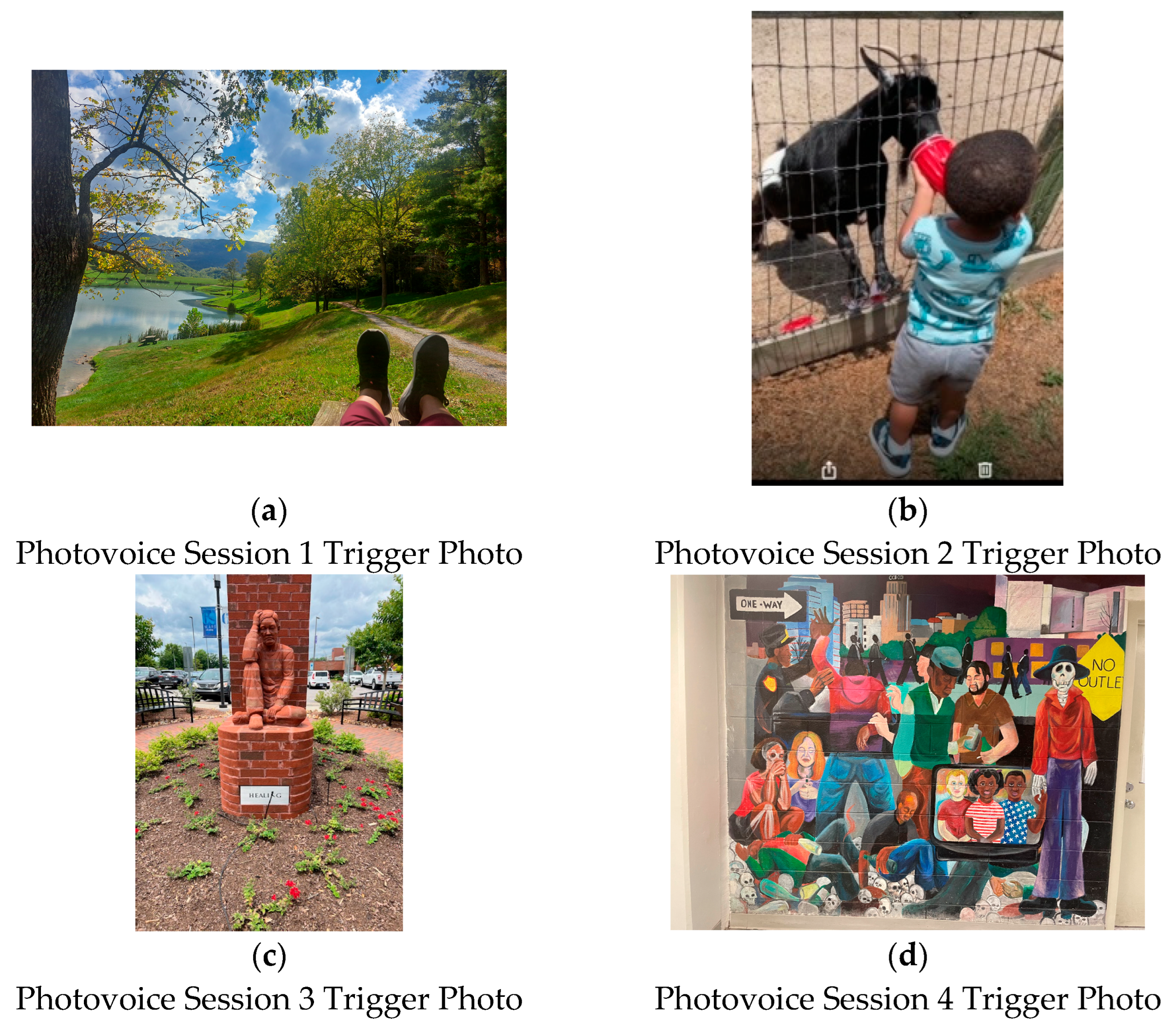
The orientation session introduced participants to the photovoice methodology and its theoretical foundations, established group norms and confidentiality agreements, oriented participants to the ethics of photographing in research contexts [34], obtained informed consent, and concluded with the group collaboratively generating the first photo assignment—beginning the participatory pattern that would structure each subsequent session. Each photo discussion session followed a consistent procedural arc. In the days preceding each session, participants submitted their photograph(s) via email or text to the study coordinator, who compiled the images into a shared PowerPoint slideshow for screen-sharing. Each session opened with an ice-breaker designed to ease participants back into the group and build companionship amongst participants and facilitators alike. The facilitator then introduced the week’s assignment and invited each participant who had submitted an image to present it: what they chose to photograph, why or how the image addressed the assignment, and what they hoped the group would understand from it. Open dialogue followed, with the facilitator inviting reactions, parallels, and questions across participants’ contributions. The group of participants then collectively selected one or more “trigger photographs” for in-depth analysis through open discussion and democratic voting. When voting in a single session resulted in a three-way tie, participants elected to discuss all three images rather than choose one, recognizing the deep interconnections among the issues each image raised. For each trigger photo, the facilitator guided the group through the SHOWeD framework, asking participants what they Saw, what was Happening, how the image related to Our lives, Why the situation existed, how it might Empower us, and what we could Do [24]. Each session closed with the collaborative generation of next week’s photo assignment, with participants proposing prompts grounded in what had emerged during the discussion and refining them to reach consensus—a procedural commitment that positions participants as drivers of the inquiry. The four assignments (Figure 1) generated through this process were: (1) What provided you joy during COVID-19? (2) What was challenging about COVID-19, and how did we cope? Who did we become? (3) How do you deal with the taboo around therapy and mental health as a Black or African American woman? and (4) What can we do as Black or African American women to prepare for the next national crisis? Not every participant submitted a photo every session due to scheduling, technical, or capacity constraints; all who attended contributed to the collective analysis regardless. The member checking session presented preliminary themes for participant validation and refinement, with participants confirming themes and offering clarifications that were incorporated into the analysis. The dissemination session, jointly presented with participants, shared findings with NC CEAL coalition members, staff, leadership, and broader community attendees.

2.2. Data Analysis

Analysis proceeded in two phases reflecting the team’s dual commitments to community dissemination timelines and interpretive depth. Phase 1, conducted immediately following data collection, prioritized breadth over depth to meet the NC CEAL annual meeting dissemination deadline [35]. A three-member team, comprising the study coordinator, Co-Principal Investigator, and a subject-matter expert consultant, independently coded transcripts in Dedoose, then convened to discuss interpretations through constant comparison and iteratively refine a shared codebook [36,37]. Themes were generated from frequently occurring codes and code pairings and reviewed with participants during member checking. The team recognized that significant richness in the data remained unexplored.
Phase 2 was conducted by a two-member team, the study coordinator and a second analyst using Reflexive Thematic Analysis (RTA), whose interpretive and reflexive commitments align closely with photovoice’s participatory foundations and allow for deeper interpretation of rich findings [38,39]. To prevent photographs from being reduced to illustrations of textual themes [40], the team built episode profiles (Figure S1) for each session, combining photographs, powerful quotes, narrative summaries, and analytic memos that anchored visual and dialogic context throughout analysis [41]. The two analysts followed the six steps of RTA: they familiarized themselves with the data through at least three readings of each transcript with embedded photographs, generated approximately 150 semantic and latent codes inline in Microsoft Word, collapsed codes into broader themes through reflexive dialogue, reviewed themes against coded data and the full dataset, refined and named themes drawing on participants’ in-vivo language, and wrote up findings using episode profiles as the primary reduced dataset.

2.3. Positionality, Reflexivity, and Trustworthiness

As a white doctoral student conducting research with Black women about racialized experiences, the first author occupied a position of structural privilege requiring ongoing critical reflection about power, representation, and voice. The decision to center a Black woman licensed therapist as primary facilitator was deliberate, grounded in the recognition that cultural concordance was essential to creating psychological safety where Black women could speak about trauma, resistance, and survival without censoring, translating, or educating white researchers [32,33]. Throughout both phases of the analysis, the team engaged in ongoing reflexive dialogue about how positionality shaped interpretation, with explicit attention to avoiding both romanticization of Black women’s resilience and pathologization of their suffering. Several strategies enhanced trustworthiness [42]: credibility through prolonged engagement across seven sessions, member checking, and collaborative coding; transferability through deep description of context, participants, and processes; dependability through detailed documentation of analytic decisions via memos and ongoing team dialogue; and confirmability through reflexive practice and the participatory validation processes inherent to photovoice.

3. Results

We generated five interconnected themes that illuminate how Black women navigated their mental health during intersecting crises.
A notable feature of the sessions was the degree of resonance among participants. Despite diversity in age, geographic location, employment sector, and life stage, participants consistently validated and built upon one another’s experiences rather than challenging or contradicting them. When one participant described feeling invisible at work, others offered parallel examples; when another articulated the exhaustion of caring for everyone while neglecting herself, heads nodded across the Zoom screen. This pattern of affirmation and elaboration characterized all four sessions. The consensus suggests that the experiences participants described reflect shared structural conditions of Black womanhood in North Carolina. The collective meaning-making process—democratic voting on trigger photographs and collaborative SHOWeD analysis—produced themes that were genuinely co-constructed rather than individually reported and later aggregated by researchers. Each theme below is presented through how we generated it analytically, how participants articulated it through their photographs and dialogue, and how it developed across the four sessions.

3.1. “COVID Can’t Be COVID Without George Floyd”: The Impossibility of Separating Crises

The realization that reshaped this study’s research question (Section 2.1) also reshaped its analysis. Initial rapid coding had categorized references to racial violence under “structural racism,” but that missed the psychological complexity participants were articulating—the impossibility of experiencing joy in isolation from collective trauma, the way one crisis could not be separated from another in lived experience.
Participants described experiencing COVID-19 and racial violence not as parallel crises but as compounding, inseparable experiences. Participant 1 articulated the weight: “It’s very difficult to be extremely joyful when you saw so many other people suffering… When you saw how it was impacting individuals that looked like you. I mean, the numbers were just crazy in terms of who was dying, who was getting sick.” This awareness shaped how participants experienced all other aspects of their lives. The murder of George Floyd intensified these dynamics. Participant 6 described her psychological state: “I was ready to fight at all times… don’t let me see any foolishness. Let me see somebody with an opinion that I don’t agree with, and it’s probably going to get addressed.” This hypervigilance was a response to compounded threats—biological danger from the virus and physical danger from racialized violence. Years later, the fear and hypervigilance had not subsided so much as transformed, as Participant 2 observed: “If it hasn’t subsided, it’s probably just been replaced with all the new fears that have been exposed.”
Across sessions, this integrated reading deepened. In Session 1, participants initially offered individual sources of joy—nature, faith, family—but Participant 6’s George Floyd remark shifted the group toward holding joy alongside awareness of suffering. By Session 2, coping mechanisms were narrated in relation to compounded stressors; the goat farm narrative where a participant reconnected with childlike joy, for example, functioned as a response not just to COVID isolation but to the accumulated weight of pandemic, racial violence, and personal loss. In Session 3, the connection between dual pandemics and mental health access became explicit, as participants discussed how compounded trauma created a greater need for support while simultaneously making such support harder to access. By Session 4, participants had developed a sophisticated analysis connecting personal experience to systemic patterns, introducing the “groundwater” metaphor [43] to capture how racism flows through all systems simultaneously, creating the conditions in which crises compound rather than occurring in isolation.

3.2. “All That and Some More”: What Black Womanhood Demands

The Superwoman Schema (SWS) [14] showed up as an organizing pattern threading through every session. Its five characteristics—obligation to manifest strength, obligation to suppress emotions, resistance to vulnerability or dependence, determination to succeed despite limited resources, and obligation to help others—appeared repeatedly in participants’ narratives, though participants did not name the pattern directly [14]. Instead, they described its effects: exhaustion, physical symptoms, and the psychological and physiological weight of caring for everyone while their own needs went unaddressed.
Participants articulated these expectations with striking clarity. Participant 6 captured the essence: “As Black women, we feel like we have to be all that and some more. We do not stop… We are taking care of everybody else but not ourselves.” The phrase “all that and some more” became a touchstone for understanding the infinite nature of these demands. The pandemic intensified these pressures exponentially. Many participants were frontline workers who could not stay home; simultaneously, they were managing households, caring for children learning remotely, supporting elderly parents, and maintaining community connections, all while navigating their own fears and grief. Participant 4 described the moment she recognized something had to change: “I came to a point where I said I have to take charge… I have to stop being the wife, the mother, the nana, the pastor.” The physical toll was significant. Participant 1 described the embodied consequence of constant giving: “As women we can sacrifice so much of ourselves and give and give and give that we literally waste away [from the] inside out.”
In early sessions, participants described SWS expectations almost as facts of life—simply what Black womanhood requires. By Session 2, the conversation shifted toward consequences and resistance. The goat farm narrative surfaced here: Participant 6 described becoming “the goat lady,” visiting the farm repeatedly to escape human interaction. “I tapped so very much so back into my childlike side… I had to stop seeing things from the angle that was presented to me and go back to this childlike state for my own mental health, for my own healing.” This spoke to the active resistance to the SWS mandate, choosing innocence and rest over constant productivity. By Session 3, participants were explicitly naming their resistance. Participant 6 declared: “I was being so resistant to going back to status quo… I still won’t let anybody—you will not bog down my schedule. I will choose what I do.” Session 4 connected individual resistance to collective action: if Black women are depleted by these expectations, the community as a whole suffers, and recommendations for systemic change must include structural supports rather than merely individual self-care.

3.3. “I Must Not Know Because I Am Black”: Everyday Racism and Professional Delegitimization

Experiences of everyday racism wove through all four sessions, becoming most prominent in Session 3 when discussing mental health stigma. Analysis revealed three distinct but related patterns: being rendered invisible in professional and public spaces, having one’s demeanor misread as threatening or aggressive, and having one’s competence questioned despite credentials and expertise. These patterns connected directly to why accessing mental health care, and being truly seen within it, was so challenging. One of the trigger photos (Figure 1c) for Session 3 was a statue of a figure blending into a brick background, with the word “HEALING” at its base, which captured invisibility in ways words alone could not.
Participant 1 described the statue: “It looks like the person is blending into the background… This person is invisible almost. They are not being seen… Feeling that invisibleness can really affect you. I have come home from work sometimes crying and upset.” This invisibility operated in multiple ways—being overlooked, having one’s expertise dismissed, and feeling unseen in one’s full humanity. Professional delegitimization was particularly salient for participants with advanced degrees and credentials. The phrase anchoring this theme came from Participant 1 describing how customers at a wine bar would ask her white colleague the same question she had just answered, as if her knowledge could not be trusted: “I must not know because I am Black.” Participant 2, a healthcare professional, noted: “We are not smart, even if we do have an MD behind our name. We still just flip out and throw things.” Physical presence itself became a site of misreading. Participant 6 described: “When people see my stature, I am a tall woman… People already perceive me as ‘do not mess with me’… They have already assumed that I am a mean Black woman.” The cumulative weight was significant; as Participant 7 noted, it was not any single incident but “the repetitiveness of it all” that wore them down.
In earlier sessions, racism appeared as context—the backdrop against which joy was pursued, coping mechanisms developed, and crises navigated. By Session 3, with its focus on mental health stigma, racism moved to the foreground, and participants engaged in sustained collective analysis of how it shaped both their mental health needs and their ability to access care. The conversation about needing therapists who shared their racial identity was directly connected to experiences of being misread, seeking someone who would not require education about the nuances of Black women’s lives. As Participant 6 explained: “If you are going to somebody to try to get them to help you through your mental issue, then you have to educate them or debunk their stigma that they have about you. That can be a part of the taboo.” Session 4 brought the most structural analysis, connecting individual experiences of racism to the groundwater metaphor—recognizing that the same structural and systemic racism that produced dismissal in professional settings also shaped healthcare, criminal justice, education, and every other institution.

3.4. “Talk It Out”: Healing as Resistance Through Nature, Faith, and Sister Circles

Across all four sessions, participants identified sources of healing and strength that sustained them through the dual crises. These moved beyond simple coping mechanisms to embodied acts of resistance against systems that demand constant productivity from Black women while providing inadequate support. Finding time for rest, seeking spaces of restoration, and maintaining connections with other Black women represented deliberate choices to prioritize wellbeing in contexts designed to deplete it.
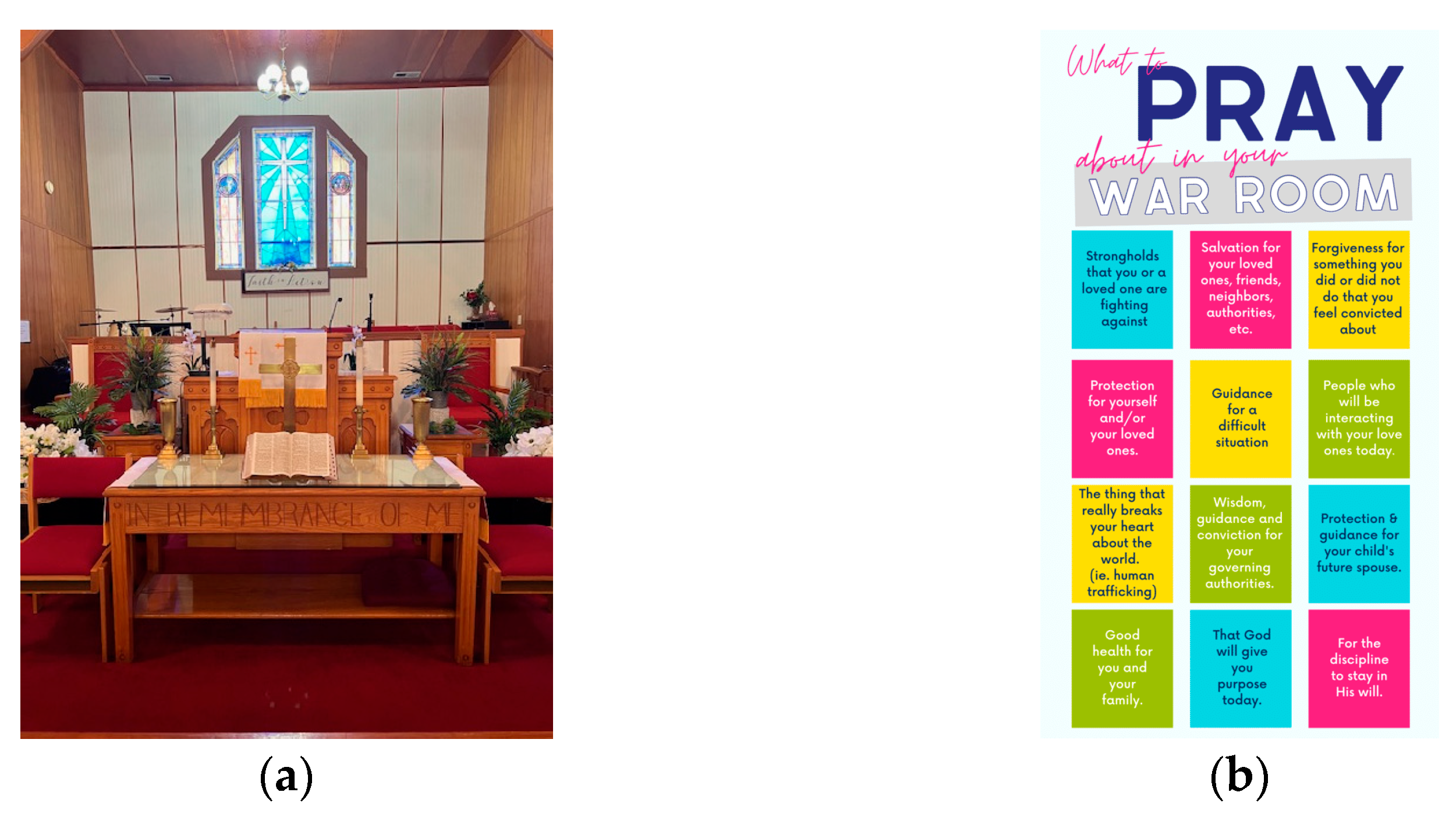
Nature was identified as a consistent refuge. The trigger photo for Session 1—a serene lake scene with feet propped up on a bench (Figure 1a)—captured the need for respite. Participant 2 described it as a chance “to slow down… and to really appreciate the things that are around you.” This slowing down was intentional, a claiming of time and space for restoration. The goat farm narrative exemplified healing through return to innocence. Participant 6 described her transformation: “I became the goat lady… They’re calmer. They’re just… nonverbal… I needed to get away from people… I tapped so very much so back into my childlike side.” The goats offered respite from the constant emotional labor of human interaction. Faith communities provided both spiritual sustenance and practical support. Participant 4 described visiting an empty church sanctuary (Figure 2a) during COVID-19: “I saw the blue as heavenly, and the cross as being a hope to get us through that period.” Another shared a “War Room” prayer guide (Figure 2b), explaining: “I want to be proactive. These are ways that I can be proactive. It is tied to my faith because I feel like that is what really is going to take me through whatever the next crisis is that I am headed towards.”
Sister circles—informal networks of Black women providing mutual support—proved particularly vital [44]. Participant 5 traced their history: “Late eighties or nineties, these sister circles started forming… women who started to get together to simply talk about their lives… It was just to sit down together, usually over a meal and talk. Talk it out.” The range of topics addressed was notable: “That is the way we dealt with the taboo of mental health issues… It was everything from adultery to divorce, depression, bipolar issues, and everything. It all came out right there.” These circles served as proto-therapeutic spaces, addressing mental health needs before formal services were accessible or acceptable.
In Session 1, healing practices appeared as responses to pandemic isolation. By Session 2, they were understood as coping with compounded traumas such as accumulated grief, racial violence, and caregiving roles. Session 3 brought explicit discussion of how the photovoice sessions themselves functioned as a sister circle. The facilitator modeled vulnerability: “As a therapist, I also have a therapist… I think it’s very important that we seek solace in someone else from time to time. And there is no shame in that.” By Session 4, healing practices were reframed not just as individual coping but as community resources that should be valued, resourced, and expanded as essential components of a comprehensive mental health ecosystem rather than substitutes for formal care, recognizing that formal services alone cannot meet Black women’s needs without the cultural safety that these informal networks provide.

3.5. “It’s in the Groundwater”: Structural Racism and Rebuilding Community Infrastructure

This theme was generated primarily from Session 4, when participants engaged the prompt they had collaboratively developed: “What can we do as Black or African American women to prepare for the next national crisis?” The question invited a shift from describing what happened to envisioning what could be different. The groundwater metaphor became central. This framework, which several participants had encountered through the Racial Equity Institute, posits that racism operates like contaminated groundwater, flowing through all systems simultaneously, such that addressing any single manifestation without addressing the underlying contamination will not produce lasting change [43,45].
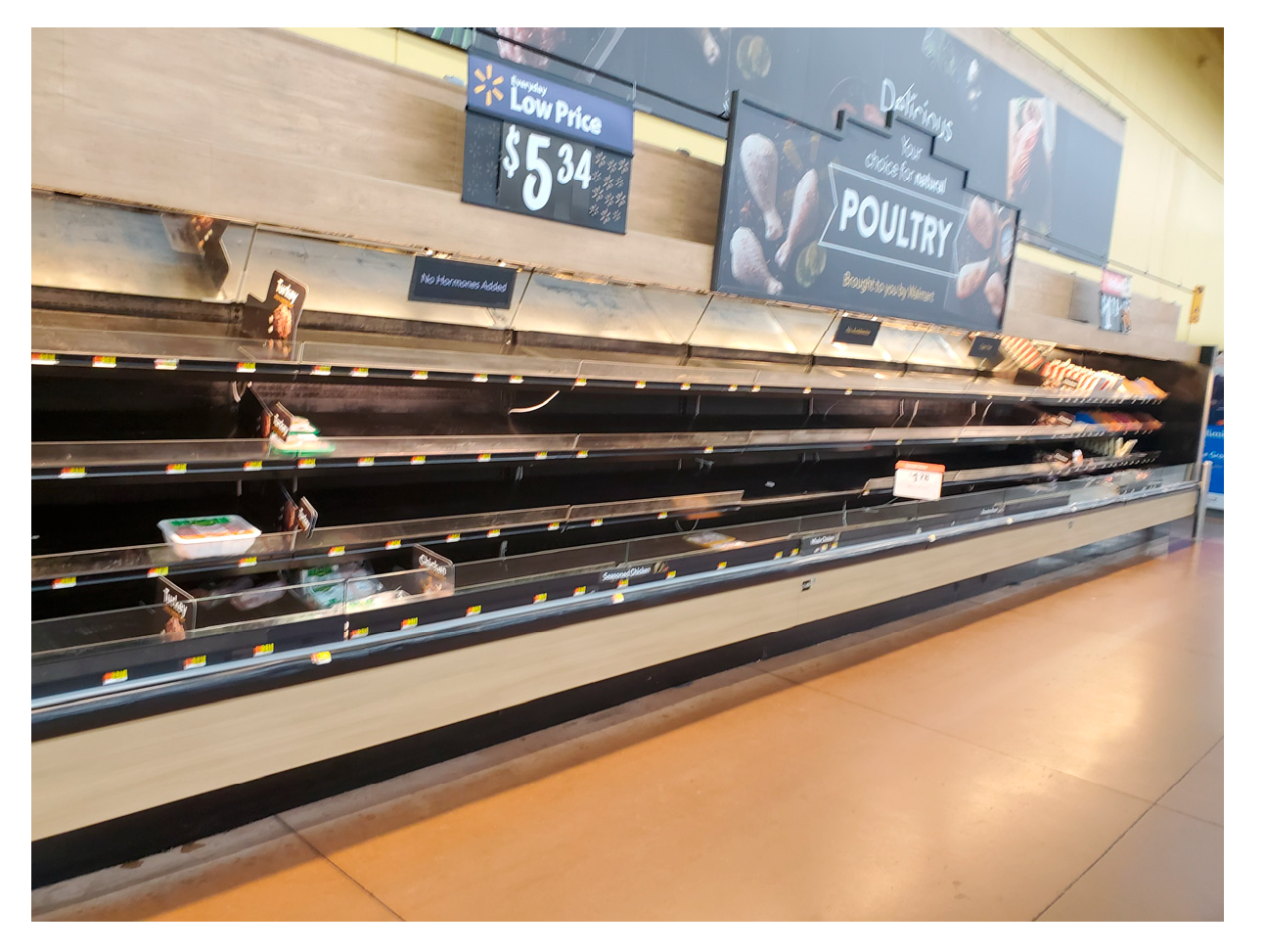
The Session 4 trigger photo, a mural depicting people experiencing various forms of violence, with suit-clad figures walking past obliviously and a “NO OUTLET” sign prominent, catalyzed deep collective analysis. The participant who took the photo explained: “The skeleton caught my attention… I think people of color, when it comes to healthcare, we have a lot of skeletons that plague us. To best prepare for upcoming crises, I think we need to address issues that plague us now.” Participants traced layers in the image: the businessmen walking past the suffering, the bones beneath everyone, the police officer and arrested man at the edge. Participant 7 observed: “The ‘ONE WAY’ sign caught my attention… sometimes people think this is the way it was as a kid. This is the way I have to live. There is no way out.” Participant 1 saw generational dimensions: “I saw generational curses. When I thought about the kids, I thought about their purpose for being in the picture.” Participant 6 articulated the groundwater analysis directly: “It is all of our systems. It is our criminal justice system. It is our healthcare system… It is in the groundwater. It is in the water that is going through these systems. You have to check the water. You have to clean that water out.” When asked how to clean the water, she emphasized representation with genuine power: “We have to be in these rooms, but the trick is we cannot just be invited into these rooms… You have to actually listen to what we are saying and then implement what we are saying. It does nothing to hear somebody and then do absolutely nothing that they say.” The empty grocery store shelves photograph (Figure 3) sparked discussion of systemic fragility. Participant 1, who took it early in the pandemic, reflected four years later: “We are still very, very empty as a country. We are disconnected from each other more than we ever have been before… We need to have systems in place to help those that do not have food. Help those that do not have services. Help those that do not have access to broadband internet.” Participant 2 framed change as generational: “You have to start small… It changes over time, but it is the consistency… Just do one thing differently. Teach it to your children. Each generation will refine it.”
The foundations for Session 4’s structural analysis were laid throughout the earlier sessions. In Session 1, participants connected individual experiences to broader patterns—joy was complicated by awareness of community suffering. Session 2 deepened this, as coping mechanisms were understood in relation to systemic failures. Session 3 revealed how individual struggles connected to inadequate systems of care. Session 4 synthesized these threads into coherent recommendations. The collaborative development of the photo assignment itself, with participants debating whether to focus on “pandemic,” “crisis,” or underlying health disparities, demonstrated their sophisticated understanding of how specific events connect to ongoing structural conditions, with Participant 4 reframing the question entirely: “What can we do as a people to prepare for—the elephant in the room—health disparit[ies] among us anyway?”
From this analysis, participants generated five interconnected recommendations: (1) proactively address structural racism before the next crisis rather than waiting for emergencies to expose existing vulnerabilities; (2) expand access to culturally responsive mental health care, addressing both provider diversity and financial barriers; (3) diversify the mental health workforce so that Black professionals are available to those who do not wish to spend therapy educating their provider; (4) center Black women in crisis planning and response as leaders and experts, not solely as recipients of services; and (5) uplift and resource community-rooted healing practices such as faith communities, sister circles, and grassroots support systems as essential complements to formal care that provide cultural safety formal systems often cannot.
These five themes are interconnected dimensions of how Black women navigated the dual pandemics. The Superwoman Schema operated as a through-line, shaping how participants experienced compounded crises, navigated racist systems, sought healing, and envisioned change. Photovoice enabled movement between personal experience and structural analysis, using images as entry points for collaborative meaning-making. Together, the themes describe a multi-level reality: individual exhaustion and grief; interpersonal misreading and invisibility; community trauma from witnessing racialized violence and pandemic loss; and structural racism flowing as groundwater through every system Black women were forced to navigate.

4. Discussion

This study examined how Black women in North Carolina navigated mental health during the intersecting crises of COVID-19 and racial violence. Five interconnected themes emerged: the impossibility of separating crises, the burdens of and resistance to Superwoman expectations, the mental-health toll of everyday racism, healing as active resistance, and a structural analysis identifying racism as “groundwater” flowing through every system. Together, these findings extend existing scholarship on Black women’s pandemic experiences, advance participatory methodology, and generate concrete recommendations for policy, practice, and crisis preparedness.

4.1. The Dual Pandemic Framework

Participants’ insistence that “COVID can’t be COVID without George Floyd” challenges how public health conceptualizes and responds to crises. From the study’s outset, participants refused to discuss COVID-19 in isolation, articulating instead that pandemic and racial violence were experienced as compounded, inseparable traumas. This finding aligns with recent scholarship on dual pandemics [8,9,10] but extends it by demonstrating the active psychological work required to navigate this entanglement. The impossibility participants described was not merely intellectual awareness that both crises were occurring; it was the psychological inability to experience joy, plan for the future, or find respite when collective suffering remained visible and ongoing. Participant 1’s observation that “it’s very difficult to be extremely joyful when you saw so many other people suffering” captures this dynamic. This suggests that mental health responses focusing solely on individual symptom reduction miss the core issue: Black women’s distress during this period reflected an appropriate response to impossible circumstances rather than individual pathology in need of clinical correction.
These findings have implications for how mental health care is conceptualized and delivered to Black communities. Standard trauma-informed approaches that treat pandemic stress and racial trauma as separate, additive experiences misunderstand participants’ lived reality [46]. Healing cannot mean returning to a pre-crisis baseline when crisis conditions persist, nor can treatment focus on individual resilience when structural violence continues. Mental health support must instead acknowledge the ongoing nature of structural violence while creating space for processing compounded grief, validating anger as an appropriate response to injustice, and supporting collective resistance rather than individual accommodation [21,46].

4.2. Gendered Dimensions of Crisis

The SWS operated throughout participants’ narratives as both burden and site of resistance. Woods-Giscombé’s [14] framework identifies five characteristics—obligation to manifest strength, obligation to suppress emotions, resistance to vulnerability, determination to succeed despite limited resources, and obligation to help others—and all five appeared in participants’ experiences, intensified by pandemic conditions that dramatically increased caregiving demands while eliminating support systems [18,47]. Participants described being “all that and some more”: working frontline jobs, managing remote learning, caring for elderly relatives, and supporting grieving community members, all while suppressing their own fear and exhaustion. This extends existing literature on unpaid care labor during COVID-19 [19] by showing how cultural schemas specifically shaped Black women’s caregiving burden: the expectation was not merely that they would care for others, but that they would do so without complaint, without acknowledgment of their own needs, and without seeking reciprocal support.
The physical health consequences participants described—Participant 1’s account of giving until one “literally waste[s] away [from the] inside out”—register what the weathering and allostatic-load frameworks describe somatically. Weathering theory posits that cumulative exposure to social and economic disadvantage drives premature health deterioration among Black people [48,49]; the physiological wear of this sustained stress, termed allostatic load, manifests in elevated blood pressure, cortisol, and inflammatory markers that predict cardiovascular disease, diabetes, and mental health conditions [48]. Yet participants also demonstrated sophisticated resistance to this depletion. The “goat lady” narrative exemplifies this: by repeatedly visiting a farm to interact with nonverbal animals, Participant 6 actively created space free from human demands, choosing childlike innocence over constant productivity. This represents active resistance to systems demanding endless labor rather than passive coping. Healthcare systems and employers must recognize that promoting individual “resilience” or “self-care” without addressing structural conditions that create unsustainable demands is inadequate and potentially harmful [21]. Black women do not need more exhortations to be strong; they need material support such as paid family leave, affordable childcare, mental health services that do not require additional labor to access, and validation that their exhaustion reflects impossible circumstances rather than personal failure.

4.3. Everyday Racism and Mental Health Access

The theme of invisibility, misreading, and professional delegitimization illuminates how racism operates through accumulated daily indignities that compound over time. Participants described being overlooked despite credentials, having their demeanor misread as threatening, and experiencing the cumulative psychological and physiological toll of navigating predominantly white spaces that constantly question Black women’s competence and belonging. These experiences directly shaped help-seeking. If participants could not trust white colleagues to recognize their expertise, how could they trust white therapists to understand their racialized experience? The stated need for therapists who shared their intersectional identities, including racial identity and life-stage, reflected on the shortage of culturally concordant providers who would not require education about microaggressions, would not pathologize appropriate responses to racism, and could offer culturally grounded healing [31,50,51].
This finding challenges mental health systems to move beyond diversity rhetoric toward substantive change. Simply hiring more Black therapists, while necessary, is insufficient if systemic barriers remain: insurance reimbursement rates that make private practice unsustainable, credentialing requirements that exclude community-based healers, and clinical training that pathologizes cultural expressions of distress [50,52]. Mental health equity requires not just diverse workforces but transformed systems that value community-rooted healing, eliminate financial barriers, and center Black women’s definitions of wellbeing rather than imposing standardized psychiatric frameworks [21].

4.4. Healing as Resistance

Participants’ healing practices, such as nature immersion, faith communities, and sister circles, are best understood as healing justice: wellness work as resistance to systems designed to deplete marginalized communities [21]. Participants explicitly rejected the framing of these practices as mere “coping,” insisting that healing represented active resistance rather than passive adaptation. The distinction is theoretically consequential. Framing community-rooted healing as coping implicitly accepts unjust conditions as fixed and positions individuals as needing better adaptation strategies. Framing it as resistance acknowledges that Black women’s need for healing reflects structural violence rather than individual deficit, and that sustaining wellness despite systemic harm is itself political action [21].
The sister circles described by participants—traced to late-twentieth-century Black feminist organizing—created spaces where Black women could process everything from infidelity to depression without stigma, judgment, or the burden of translation required in predominantly white therapeutic spaces [44]. Faith communities similarly provided both spiritual sustenance and practical mutual aid, drawing on traditions of collective care that have sustained Black communities across generations. The participant who found hope in the blue ceiling and cross of an empty church sanctuary engaged what Page [21] identifies as Black women’s healing lineages, spiritual practices that sustained ancestors through previous crises, adapted to contemporary needs. Public health and healthcare systems must recognize these practices not as alternatives to formal mental health care but as essential components of a comprehensive mental health ecosystem. This means resourcing community-based healing spaces, compensating community healers for their expertise, and integrating culturally grounded practices into formal healthcare rather than treating them as inferior substitutes.

4.5. Structural Analysis and Recommendations

The groundwater metaphor participants employed demonstrates sophisticated structural analysis that links individual experience to systemic patterns. Rather than viewing their struggles as personal failures or isolated incidents, participants understood racism as contamination flowing through all systems simultaneously (healthcare, criminal justice, food access, employment), creating the conditions in which crises compound [4,53,54]. This analysis led to concrete recommendations for structural change. Participants did not ask primarily for better individual services but for proactive dismantling of systems causing harm: addressing structural racism before the next crisis rather than scrambling during emergencies, expanding culturally responsive mental health care, diversifying provider workforces, centering Black women in crisis planning, and resourcing community-rooted healing practices.
Notably, participants emphasized representation with power—not merely being invited to planning tables but having decision-making authority and genuine implementation of community-generated solutions. This challenges organizations and policymakers to examine whether community engagement is performative consultation or authentic power-sharing. The emphasis on generational change—“you have to start small… it changes over time, but it is the consistency”—acknowledges that structural transformation requires sustained effort across decades while still emphasizing that action must begin now. For policymakers and institutions, this means long-term investment in Black-led initiatives even when results are not immediately measurable through conventional metrics.

4.6. Methodological Contributions

This study demonstrates virtual photovoice’s capacity to maintain methodological rigor and participatory integrity despite pandemic-era constraints on in-person research [27,28,29]. Successful virtual implementation required intentional trust-building, extended timelines, and technological support, but ultimately produced rich visual and narrative data. The integration of RTA with Sort and Sift episode profiling proved particularly valuable for photovoice data [38,41]. Episode profiles preserved the wholeness of each session’s visual–narrative content while RTA enabled systematic pattern identification across sessions, addressing a persistent challenge in photovoice research: photographs often become mere illustrations for textual themes rather than being analyzed as data in their own right [40]. The statue photograph (Figure 1c) exemplifies this; the image captured dimensions of invisibility that verbal descriptions alone could not convey, and required visual analysis alongside textual interpretation. Together, the architecture honored both participatory commitments and interpretive rigor, rapid enough to meet community dissemination timelines, deep enough to capture latent meaning, and reflexive enough to attend to power throughout [39].

4.7. Limitations

Several limitations warrant acknowledgment. The sample size (n = 7), while appropriate for photovoice methodology [24,40], limits generalizability. Small samples are not incidental to photovoice but constitutive of it: the method’s originators recommend groups of no more than 7–10 participants, because the trust-building, sustained dialogue, and collaborative analysis at its core depend on small groups [24,40]. All participants resided in North Carolina and were sufficiently engaged with community health to participate in a seven-session study, potentially excluding perspectives of Black women most isolated or facing the greatest barriers to participation. Relatedly, network-based convenience sampling through a trusted community leader—while essential to establishing the trust that sustained seven sessions of intimate disclosure—may have yielded participants with shared social ties and more similar perspectives than a more dispersed sample would provide. The resulting group nonetheless varied in age, geography, and community type, and themes were reviewed and validated with participants through member checking. Data collection occurred four years after the peak pandemic period, meaning participants’ reflections were shaped by hindsight and distance from acute crisis. Virtual implementation, while enabling broad geographic participation, may have excluded women without reliable internet access or private spaces for confidential discussion. The first author’s position as a white researcher analyzing Black women’s racialized experiences required ongoing reflexive attention to power dynamics, interpretation, and representation; while structural safeguards (Black-woman primary facilitator, community co-researchers as co-authors, member checking) were built into the design, we cannot assume that all instances of misinterpretation or imposition of external framing were avoided.

4.8. Future Directions

Future research should examine how Black women’s mental-health strategies and needs differ across geographic contexts, particularly rural versus urban settings and regions with differing racial demographics and political climates. Comparative studies examining how other marginalized groups such as Latine, Indigenous, and queer and trans people of color navigated the dual pandemics would illuminate both shared experience and group-specific dynamics. Longitudinal research tracking how Black women’s mental health and coping strategies have evolved from acute crisis through “recovery” periods is particularly needed, given participants’ observation that pandemic-era hypervigilance has transformed but not subsided. Finally, intervention research examining which of participants’ recommendations most effectively reduce mental-health burden would translate these findings into evidence-based practice. Future photovoice studies might also convene multiple concurrent groups across sites, preserving the small-group intimacy the method requires while broadening the range of networks and perspectives represented.

5. Conclusions

Black women’s mental health during the dual pandemics of COVID-19 and racial violence cannot be understood apart from structural racism, gendered labor, and the compounded emotional burdens they carry. Participants in this study refused to separate pandemic from racial trauma, named the SWS as both burden and site of resistance, traced everyday racism to barriers in formal mental health care, and identified faith, nature, and sister circles as forms of healing that constitute active resistance rather than passive coping. Their structural analysis, which positioned racism as groundwater flowing through every system, yielded concrete recommendations for crisis preparedness rooted in the proactive dismantling of inequity, culturally responsive care, workforce diversification, Black women’s leadership in crisis planning, and substantive investment in community-rooted healing. Meaningful response to the next national crisis will require integrating these elements not as add-ons to existing systems but as the foundation of system-level change driven by Black communities themselves.

Supplementary Materials

The following supporting information can be downloaded at: https://www.mdpi.com/article/10.3390/soc16080251/s1, Figure S1: Session 1 Episode Profile.

Author Contributions

Conceptualization, H.C.D., A.F.L., A.I.V., M.W., C.J., T.B., W.C.-B., W.F., L.L., G.P.-M. and J.W.; methodology, H.C.D., A.F.L., A.I.V. and M.W.; validation, H.C.D., A.I.V., K.V., C.J., T.B., W.C.-B., W.F., L.L., G.P.-M. and J.W.; formal analysis, H.C.D., A.I.V., K.V. and M.E.P.; investigation, H.C.D., M.W., C.J., T.B., W.C.-B., W.F., L.L., G.P.-M. and J.W.; resources, A.F.L., A.I.V. and M.W.; data curation, H.C.D.; writing—original draft preparation, H.C.D.; writing—review and editing, H.C.D., A.F.L., A.I.V., M.W., K.V., C.J., T.B., W.C.-B., W.F., L.L., G.P.-M., J.W. and M.E.P.; visualization, H.C.D.; supervision, A.F.L. and A.I.V.; project administration, H.C.D., A.F.L. and A.I.V.; funding acquisition, A.F.L. and A.I.V. A.F.L. and A.I.V. contributed equally to this work and share co-senior authorship. All authors have read and agreed to the published version of the manuscript.

Funding

This research was, in part, funded by the National Institutes of Health (NIH) Agreement OT2HL158287. The APC was funded by the same agreement.

Institutional Review Board Statement

This study was determined to be exempt from further review by the Office of Human Research Ethics Institutional Review Board at the University of North Carolina at Chapel Hill (Study #23-2641; exemption determination granted 29 November 2023) under 45 CFR 46.104, Exemption Category 2 (research involving survey procedures, interview procedures, or observation of public behavior).

Informed Consent Statement

Informed consent was obtained from all participants involved in the study. Written informed consent has been obtained from the community co-researchers to be identified as named co-authors and to publish the photographs and quotations that appear in this paper.

Data Availability Statement

The data generated and analyzed during this study, including session transcripts, participant-generated photographs, and analytic memos, are not publicly available due to the participatory nature of the research, the small sample size, and the identifiability of the seven community co-researchers, who are named as co-authors of this manuscript. Sharing transcripts or photographs would compromise participants’ privacy and the trust relationships foundational to the community-based participatory research approach. De-identified excerpts presented in this article are shared with the consent of the community co-researchers. Reasonable requests for additional information about the study methodology, codebook, or analytic procedures may be directed to the corresponding author.

Acknowledgments

We are grateful to Linda Riggins for community partnership and recruitment support that made participant engagement possible. We also thank the NC CEAL Black/African American Community Response Team, the broader NC CEAL coalition, and NC CEAL leadership for institutional support and community connections that made this work possible. During the preparation of this manuscript, the author(s) used Claude (Anthropic, ver. Fable 5) and Grammarly (ver. 1.2.281.1928) for the purposes of editorial assistance in language tightening and ensuring proper spelling and grammar. The authors reviewed and edited all content and take full responsibility for the content of this publication. The views and conclusions contained in this document are those of the authors and should not be interpreted as representing the official policies, either expressed or implied, of the NIH.

Conflicts of Interest

Two pairs of authors are immediate family members: H.C.D. and M.E.P., and A.I.V. and K.V. Both pairs contributed to data analysis. In Phase 1, H.C.D., A.I.V., and K.V. coded transcripts independently before convening to discuss interpretations and refine a shared codebook. In Phase 2, M.E.P. served as the second analyst; she was trained in Reflexive Thematic Analysis before the analysis began, and the two analysts coded independently before convening to negotiate consensus. The authors declare no other conflicts of interest. The funders had no role in the design of the study; in the collection, analyses, or interpretation of data; in the writing of the manuscript; or in the decision to publish the results.

Abbreviations

The following abbreviations are used in this manuscript:
BLMBlack Lives Matter
CBPRCommunity-Based Participatory Research
COVID-19Coronavirus Disease 2019
IRBInstitutional Review Board
NC CEALNorth Carolina Community Engagement Alliance
NIHNational Institutes of Health
NIH CEALNational Institutes of Health Community Engagement Alliance
RTAReflexive Thematic Analysis
SHOWeDSee, Happening, Our lives, Why, Empower, Do
SWSSuperwoman Schema

References

  1. Egede, L.E.; Walker, R.J. Structural Racism, Social Risk Factors, and COVID-19—A Dangerous Convergence for Black Americans. N. Engl. J. Med. 2020, 383, e77. [Google Scholar] [CrossRef] [PubMed]
  2. Siegel, M.; Critchfield-Jain, I.; Boykin, M.; Owens, A.; Nunn, T.; Muratore, R. Actual Racial/Ethnic Disparities in COVID-19 Mortality for the Non-Hispanic Black Compared to Non-Hispanic White Population in 353 US Counties and Their Association with Structural Racism. J. Racial Ethn. Health Disparities 2022, 9, 1697–1725. [Google Scholar] [CrossRef] [PubMed]
  3. Price-Haywood, E.G.; Burton, J.; Fort, D.; Seoane, L. Hospitalization and Mortality among Black Patients and White Patients with COVID-19. N. Engl. J. Med. 2020, 382, 2534–2543. [Google Scholar] [CrossRef] [PubMed]
  4. Bailey, Z.D.; Krieger, N.; Agénor, M.; Graves, J.; Linos, N.; Bassett, M.T. Structural Racism and Health Inequities in the USA: Evidence and Interventions. Lancet 2017, 389, 1453–1463. [Google Scholar] [CrossRef] [PubMed]
  5. Williams, D.R.; Mohammed, S.A. Racism and Health I: Pathways and Scientific Evidence. Am. Behav. Sci. 2013, 57, 1152–1173. [Google Scholar] [CrossRef] [PubMed]
  6. Wu, H.H.; Gallagher, R.J.; Alshaabi, T.; Adams, J.L.; Minot, J.R.; Arnold, M.V.; Welles, B.F.; Harp, R.; Dodds, P.S.; Danforth, C.M. Say Their Names: Resurgence in the Collective Attention toward Black Victims of Fatal Police Violence Following the Death of George Floyd. PLoS ONE 2023, 18, e0279225. [Google Scholar] [CrossRef] [PubMed]
  7. Nguyen, T.T.; Criss, S.; Michaels, E.K.; Cross, R.I.; Michaels, J.S.; Dwivedi, P.; Huang, D.; Hsu, E.; Mukhija, K.; Nguyen, L.H.; et al. Progress and Push-Back: How the Killings of Ahmaud Arbery, Breonna Taylor, and George Floyd Impacted Public Discourse on Race and Racism on Twitter. SSM—Popul. Health 2021, 15, 100922. [Google Scholar] [CrossRef] [PubMed]
  8. Castelin, S.; Jacquez, F.; Burlew, A.K.; Cunningham, S.R. Dual Pandemics: Race-Related COVID Stress and Mental Health Outcomes in Black Individuals. J. Racial Ethn. Health Disparities 2024, 11, 2141–2153. [Google Scholar] [CrossRef] [PubMed]
  9. Donnelly, R.; Remani, B.; Erving, C.L. Dual Pandemics? Assessing Associations between Area Racism, COVID-19 Case Rates, and Mental Health among U.S. Adults. SSM—Ment. Health 2023, 4, 100248. [Google Scholar] [CrossRef] [PubMed]
  10. Laurencin, C.T.; Walker, J.M. A Pandemic on a Pandemic: Racism and COVID-19 in Blacks. Cell Syst. 2020, 11, 9–10. [Google Scholar] [CrossRef] [PubMed]
  11. Obinna, D.N. ‘Essential and Undervalued: Health Disparities of African American Women in the COVID-19 Era’. Ethn. Health 2021, 26, 68–79. [Google Scholar] [CrossRef] [PubMed]
  12. Jacoby, A.; Sen, A.; Kelley, G.; Montoya-Boyer, A. Unseen Work, Unmet Needs: Exploring the Intersections of Gender, Race and Ethnicity in Unpaid Care Labor and Paid Labor in the U.S.; Oxfam America: Washington, DC, USA, 2024. [Google Scholar]
  13. Leap, B.; Stalp, M.C.; Kelly, K. Reorganizations of Gendered Labor During the COVID-19 Pandemic: A Review and Suggestions for Further Research. Sociol. Inq. 2023, 93, 179–200. [Google Scholar] [CrossRef] [PubMed]
  14. Woods-Giscombé, C.L. Superwoman Schema: African American Women’s Views on Stress, Strength, and Health. Qual. Health Res. 2010, 20, 668–683. [Google Scholar] [CrossRef] [PubMed]
  15. Brownlow, B.N. How Racism “Gets Under the Skin”: An Examination of the Physical- and Mental-Health Costs of Culturally Compelled Coping. Perspect. Psychol. Sci. 2023, 18, 576–596. [Google Scholar] [CrossRef] [PubMed]
  16. Eichstaedt, J.C.; Sherman, G.T.; Giorgi, S.; Roberts, S.O.; Reynolds, M.E.; Ungar, L.H.; Guntuku, S.C. The Emotional and Mental Health Impact of the Murder of George Floyd on the US Population. Proc. Natl. Acad. Sci. USA 2021, 118, e2109139118. [Google Scholar] [CrossRef] [PubMed]
  17. Thomas, S.P. Black Mental Health Matters: Addressing Post-COVID Mental Health Needs of Black Americans. Issues Ment. Health Nurs. 2021, 42, 707–708. [Google Scholar] [CrossRef] [PubMed]
  18. Godoy, S.M.; Dukes, L.; Chapman, M.; Day, S.; Goode, R.W. “You Have to Continue Doing the Work”: Black Women Essential Workers Coping amidst the Dual Pandemics of COVID-19 and Racism. Qual. Soc. Work 2023, 23, 14733250231167822. [Google Scholar] [CrossRef]
  19. Kalinowski, J.; Wurtz, H.; Baird, M.; Willen, S.S. Shouldering the Load yet Again: Black Women’s Experiences of Stress during COVID-19. SSM—Ment. Health 2022, 2, 100140. [Google Scholar] [CrossRef] [PubMed]
  20. Walton, Q.L.; Campbell, R.D.; Blakey, J.M. Black Women and COVID-19: The Need for Targeted Mental Health Research and Practice. Qual. Soc. Work 2021, 20, 247–255. [Google Scholar] [CrossRef] [PubMed]
  21. Page, C. Healing Justice Lineages: Dreaming at the Crossroads of Liberation, Collective Care, and Safety; North Atlantic Books: New York, NY, USA, 2023. [Google Scholar]
  22. Lockett, G.M.; Klein, K.G.; Mejia, J.; Sostre, J.P.; Abreu, R.L. Coming Home to Black Feminist Qualitative Methodology: A Reflexive Perspective. Qual. Psychol. 2025, 12, 215–233. [Google Scholar] [CrossRef]
  23. Mensah, G.A.; Johnson, L.E. Community Engagement Alliance (CEAL): Leveraging the Power of Communities During Public Health Emergencies. Am. J. Public Health 2024, 114, S18–S21. [Google Scholar] [CrossRef] [PubMed]
  24. Wang, C.; Burris, M.A. Photovoice: Concept, Methodology, and Use for Participatory Needs Assessment. Health Educ. Behav. 1997, 24, 369–387. [Google Scholar] [CrossRef] [PubMed]
  25. Freire, P. Pedagogy of the Oppressed: 50th Anniversary Edition, 4th ed.; Bloomsbury Publishing USA: New York, NY, USA, 2018. [Google Scholar]
  26. Israel, B.A.; Schulz, A.J.; Parker, E.A.; Becker, A.B. Review of Community-Based Research: Assessing Partnership Approaches to Improve Public Health. Annu. Rev. Public Health 1998, 19, 173–202. [Google Scholar] [CrossRef] [PubMed]
  27. Black, K.Z.; Faustin, Y.F. How Community-Based Participatory Research Can Thrive in Virtual Spaces: Connecting Through Photovoice. Hum. Organ. 2022, 81, 240–247. [Google Scholar] [CrossRef]
  28. Valdez, E.S.; Gubrium, A. Shifting to Virtual CBPR Protocols in the Time of Corona Virus/COVID-19. Int. J. Qual. Methods 2020, 19, 1609406920977315. [Google Scholar] [CrossRef]
  29. Pocock, T.; Smith, M.; Wiles, J. Recommendations for Virtual Qualitative Health Research During a Pandemic. Qual. Health Res. 2021, 31, 2403–2413. [Google Scholar] [CrossRef] [PubMed]
  30. Jaiswal, J. Whose Responsibility Is It to Dismantle Medical Mistrust? Future Directions for Researchers and Health Care Providers. Behav. Med. 2019, 45, 188–196. [Google Scholar] [CrossRef] [PubMed]
  31. Watson-Singleton, N.N. Strong Black Woman Schema and Psychological Distress: The Mediating Role of Perceived Emotional Support. J. Black Psychol. 2017, 43, 778–788. [Google Scholar] [CrossRef]
  32. Carter, L.; Rossi, A. Embodying Strength: The Origin, Representations, and Socialization of the Strong Black Woman Ideal and Its Effect on Black Women’s Mental Health. Women Ther. 2019, 42, 289–300. [Google Scholar] [CrossRef]
  33. Watson, N.N.; Hunter, C.D. Anxiety and Depression among African American Women: The Costs of Strength and Negative Attitudes toward Psychological Help-Seeking. Cult. Divers. Ethn. Minor. Psychol. 2015, 21, 604–612. [Google Scholar] [CrossRef] [PubMed]
  34. Wang, C.C.; Redwood-Jones, Y.A. Photovoice Ethics: Perspectives from Flint Photovoice. Health Educ. Behav. 2001, 28, 560–572. [Google Scholar] [CrossRef] [PubMed]
  35. Hamilton, A.B.; Finley, E.P. Qualitative Methods in Implementation Research: An Introduction. Psychiatry Res. 2019, 280, 112516. [Google Scholar] [CrossRef] [PubMed]
  36. Charmaz, K. Introducing qualitative methods. In Constructing Grounded Theory, 2nd ed.; SAGE: Los Angeles, CA, USA, 2014. [Google Scholar]
  37. Vander Linden, K.L.; Tompkins, C.J. Collaborative Grounded Theory. Grounded Theory Rev. 2021, 20, 32–42. Available online: https://groundedtheoryreview.org/index.php/gtr/article/view/391 (accessed on 26 July 2026). [CrossRef] [PubMed]
  38. Braun, V.; Clarke, V. Reflecting on Reflexive Thematic Analysis. Qual. Res. Sport Exerc. Health 2019, 11, 589–597. [Google Scholar] [CrossRef]
  39. Evans-Agnew, R.A.; Rosemberg, M.-A.S.; Boutain, D.M. Emancipatory Photovoice Research: A Primer. Health Promot. Pract. 2022, 23, 211–220. [Google Scholar] [CrossRef] [PubMed]
  40. Catalani, C.; Minkler, M. Photovoice: A Review of the Literature in Health and Public Health. Health Educ. Behav. 2010, 37, 424–451. [Google Scholar] [CrossRef] [PubMed]
  41. Maietta, R.; Mihas, P.; Swartout, K.; Petruzzelli, J.; Hamilton, A. Sort and Sift, Think and Shift: Let the Data Be Your Guide An Applied Approach to Working With, Learning From, and Privileging Qualitative Data. Qual. Rep. 2021, 26, 2045–2060. [Google Scholar] [CrossRef]
  42. Lincoln, Y.S.; Guba, E.G. Naturalistic Inquiry. In Nachdr; Sage: Newbury Park, CA, USA, 1985. [Google Scholar]
  43. Breathett, K.; Spatz, E.S.; Kramer, D.B.; Essien, U.R.; Wadhera, R.K.; Peterson, P.N.; Ho, P.M.; Nallamothu, B.K. The Groundwater of Racial and Ethnic Disparities Research. Circ. Cardiovasc. Qual. Outcomes 2021, 14, e007868. [Google Scholar] [CrossRef] [PubMed]
  44. Cupid, S.; Bogues, K. “No Filters Needed…”: A Qualitative Study Exploring Sister Circles and Workplace Messages for Black Women Healthcare Professionals during the Double Pandemic. Womens Health 2023, 19, 17455057231181017. [Google Scholar] [CrossRef] [PubMed]
  45. Racial Equity Institute Upcoming Trainings. Available online: https://www.racialequityinstitute.org/trainings (accessed on 10 May 2026).
  46. Comas-Díaz, L.; Hall, G.N.; Neville, H.A. Racial Trauma: Theory, Research, and Healing: Introduction to the Special Issue. Am. Psychol. 2019, 74, 1–5. [Google Scholar] [CrossRef] [PubMed]
  47. Allen, S.; Julian, Z.; Coyne-Beasley, T.; Erwin, P.C.; Fletcher, F.E. COVID-19′s Impact on Women: A Stakeholder-Engagement Approach to Increase Public Awareness Through Virtual Town Halls. J. Public Health Manag. Pract. 2020, 26, 534–538. [Google Scholar] [CrossRef] [PubMed]
  48. Geronimus, A.T.; Hicken, M.; Keene, D.; Bound, J. “Weathering” and Age Patterns of Allostatic Load Scores Among Blacks and Whites in the United States. Am. J. Public Health 2006, 96, 826–833. [Google Scholar] [CrossRef] [PubMed]
  49. Geronimus, A.T. The Weathering Hypothesis and the Health of African-American Women and Infants: Evidence and Speculations. Ethn. Dis. 1992, 2, 207–221. [Google Scholar] [PubMed]
  50. Modeste-James, A.; McClain, T.; Hanna, M. “The System Isn’t Set up for Us”: Stories of Young Black Women’s Mental Health Journey. Womens Health 2024, 20, 17455057241297106. [Google Scholar] [CrossRef] [PubMed]
  51. Avent Harris, J.R.; Haskins, N.; Parker, J.; Lee, A. Womanist Theology and Relational Cultural Theory: Counseling Religious Black Women. J. Creat. Ment. Health 2023, 18, 458–476. [Google Scholar] [CrossRef]
  52. Hankerson, S.H.; Moise, N.; Wilson, D.; Waller, B.Y.; Arnold, K.T.; Duarte, C.; Lugo-Candelas, C.; Weissman, M.M.; Wainberg, M.; Yehuda, R.; et al. The Intergenerational Impact of Structural Racism and Cumulative Trauma on Depression. Am. J. Psychiatry 2022, 179, 434–440. [Google Scholar] [CrossRef] [PubMed]
  53. Forde, A.T.; Crookes, D.M.; Suglia, S.F.; Demmer, R.T. The Weathering Hypothesis as an Explanation for Racial Disparities in Health: A Systematic Review. Ann. Epidemiol. 2019, 33, 1–18.e3. [Google Scholar] [CrossRef] [PubMed]
  54. Crenshaw, K. Mapping the Margins: Intersectionality, Identity Politics, and Violence against Women of Color. Stanf. Law Rev. 1991, 43, 1241–1299. [Google Scholar] [CrossRef]
Figure 1. Photovoice Trigger Photos. Trigger photographs selected by community co-researchers, reproduced with co-researcher consent as participant-generated research data. (a) Session 1: a photograph of a serene lake, selected to capture nature as refuge during the pandemic’s relentless pressures. (b) Session 2: a photograph of a child feeding a goat, selected to illustrate the return to childlike innocence as a coping mechanism. (c) Session 3: one of three selected trigger photos, a photograph of a statue of a human figure blending into a brick background beneath the word “HEALING,” selected to convey the invisibility of Black women’s mental health struggles. (d) Session 4: a photograph of a community mural, selected to symbolize systemic barriers and the need to address root causes.
Societies 16 00251 g001
Figure 2. Faith as healing during the dual pandemics. Participant-submitted photographs reproduced with community co-researcher consent as participant-generated research data. (a) A co-researcher’s photograph of an empty church sanctuary, selected to convey faith as a source of hope and spiritual grounding through periods of compounded crisis. (b) A co-researcher’s photograph of a “What to Pray About in Your War Room” prayer guide, selected to illustrate faith-based proactive preparation for future crises.
Societies 16 00251 g002
Figure 3. Empty shelves and systemic fragility. A co-researcher’s photograph of empty grocery store shelves taken early in the pandemic, selected four years later to illustrate enduring disconnection and the absence of systemic infrastructure to support those without access to food, services, and broadband internet.
Societies 16 00251 g003
Disclaimer/Publisher’s Note: The statements, opinions and data contained in all publications are solely those of the individual author(s) and contributor(s) and not of MDPI and/or the editor(s). MDPI and/or the editor(s) disclaim responsibility for any injury to people or property resulting from any ideas, methods, instructions or products referred to in the content.