1. Introduction
From Merleau-Ponty’s phenomenology of the body theory, the body holds different meanings and expressions from sociocultural and mechanistic aspects; this body expresses various reflections on its conception, understood not as an object but as a primary means for interaction in the world, where positive or negative aspects marked by experiences interact [
1]. Therefore, the body represents the human condition in the world, being a sensitive place, in continuous flow, which translates into meanings and transformations in images, sounds, bodily expressions, sensations, and landscapes, from each individual or from the environment [
2]. This holistic vision of the body, understood as corporality, marks the importance of the continuous interaction of the physical, emotional, and cognitive dimensions of each individual [
3], which are important for emotional balance and quality of life, configuring the body as a vehicle for mental health [
4].
To holistically approach the body, physiotherapists advance their understanding of and ability to address people’s health conditions from different perspectives, not only from the view of the body as a machine. Since the 1980s, the need to confront the reductionist view of the profession has been discussed [
5]. It is important to highlight that Western physiotherapy has made great advances in evidence-based practice, but perspectives of the body as a biomechanical and chemical system remain, which must be repaired by an external agent [
6,
7].
In university classrooms, physiotherapy students must consider not only this but also contextual factors, movement, its quality, and transfer in teaching, as well as the lived bodily experience in the classroom, self-knowledge, and their lived experience throughout life, which impact training [
8]. It is worth noting that university students face particular situations in their transition to adulthood [
9], such as changes in city, separation from their families, new learning environments, and social relationships [
10,
11].
This aligns with the conception of experiential learning through the body, emphasizing that knowledge is constructed through the transformation of lived experience—a process involving concrete experience, reflective observation, abstract conceptualization, and active experimentation [
12]. Moreover, the body, physical activity, thought, and memory are interconnected and inseparable in learning, and they actively contribute to the development of clinical reasoning for professional practice [
13,
14]. Thus, in physiotherapist training, the body is not only an object of study but also a source of knowledge and a means for professional development.
From this perspective, it is important to understand the lived experience of physiotherapy students through their embodiment in an undergraduate course at a university in Santiago de Cali, and body mapping can contribute to this objective, as it has become an innovative and rigorously documented methodology to explore lived experiences, integrating phenomenological analysis [
15]. This method privileges exploring lived experiences through the self-reflective awareness of physiotherapy students in such studies, surpassing the mechanistic limitations of traditional methods [
16]. From Merleau-Ponty’s perspective, these findings confirm that the experience of the lived body is constituted in the dynamic and meaningful interaction with the environment, showing that corporality is not simply a physical object but the basis from which subjects perceive, understand, and act in the world. From Merleau-Ponty’s perspective, these findings confirm that the experience of the lived body is constituted through dynamic and meaningful interaction with the environment, revealing that corporality is not merely a physical object but the very foundation from which subjects perceive, understand, and act in the world. For physiotherapists in training, this embodied understanding fosters the development of clinical reasoning [
17]. Furthermore, for physiotherapy students, the lived body experience is important in developing clinical skills and knowledge. They learn not only from theory but also through action and motor adaptation in practical and therapeutic situations, which allows re-signifying their own body and the corporality of their patients. The ability to bodily situate themselves in the world, understand limits and possibilities for action, and develop an intuitive, practical sense is fundamental to providing person-centered care as professionals [
18].
2. Materials and Methods
This research followed a qualitative phenomenological design. Participants were purposively selected from a mental health elective at a private university in Cali, Valle del Cauca, Colombia, to analyze the lived experiences of 20 university students through body mapping as a research methodology. This technique allowed participants to graphically represent their sensations, emotions, and memories associated with their experiences in a body scheme, facilitating deep exploration of their subjective perceptions.
Data were interpreted through thematic analysis, identifying patterns and shared meanings in their visual narratives. Students were also asked to mark their exercises with a unique, randomly assigned code to safeguard anonymity and freely express any feelings, memories, or sensations related to the exercise.
Guidelines for Body Mapping:
Draw a silhouette representing your body.
Using colors, freely mark parts of your body with positive or negative representations, experiences, or memories, regardless of elapsed time.
On the back of the page, list or cite events related to the body drawing and the colors used.
What have been important positive or negative experiences in your life, and how would you relate them to your body?
2.1. Selection of Key Informants
The selection of key informants was carried out in the mental health elective course of the physiotherapy program at a university in Santiago de Cali, Colombia, who voluntarily agreed to participate in the exercise, after signing the informed consent.
For the inclusion criteria, it was taken into account that they were students enrolled in said elective and that they voluntarily wished to participate in the exercise.
As exclusion criteria, students who had any limitations or did not desire to participate in this research were considered.
The body mapping exercise was conducted in a single session for around two hours with 24 participants. Twenty of these students consented to the dissemination of their data and formally signed the informed consent document.
2.2. Ethical Considerations
This research was developed taking into account all the ethical considerations outlined in human rights and international guidelines mentioned by the Council for International Organizations of Medical Sciences (CIOMS). Additionally, the national regulations established in resolution 8430 of 1993 for health research were followed, which safeguard participants’ identity, respect for all participants, voluntary participation, informed consent, confidentiality, justice, and equity. According to Article 15 of Chapter 1 of this regulation, this research is considered minimal risk, informed consent was obtained from each participant, and there was no discrimination based on ethnicity, social or economic status, cultural origin, or any other factor.
2.3. Information Analysis
Data analysis was performed using a data extraction matrix to systematically organize the qualitative information from the body maps. In this matrix, the rows represented each of the 20 student participants (coded E1 to E20), and the columns corresponded to the pre-established analytical categories: “Conflicting or Traumatic Events,” “Important Significant Events,” “Difficult Situations,” and “External Symbols or Accessory Elements”. The cells were populated with specific evidence from each participant, including the colors used (e.g., black for pain, blue for stability), the body parts marked (e.g., shoulders for emotional burden), and the symbolic elements drawn (e.g., bicycles, landscapes). This structured approach enabled data triangulation, facilitating the identification of recurrent visual and chromatic patterns and the comparison of narratives across cases to uncover thematic convergences, divergences, and relationships for a comprehensive interpretation of the lived body experiences.
3. Results
A matrix was used to analyze the narratives of the body maps created by the participants. The established categories included “Conflicting or traumatic events,” “Important significant events,” “Important events,” “Difficult situations,” and “External symbols or accessory elements”. From these categories, the information was triangulated with symbolism, emotional representation, emotional impact, and frequency in the narratives, which allowed the identification of patterns, coincidences, and relationships, taking into account the recurring themes and colors in each category, the crossing of patterns related to how different events associate with accessory elements, and the significance of possible recurrences (
Table 1).
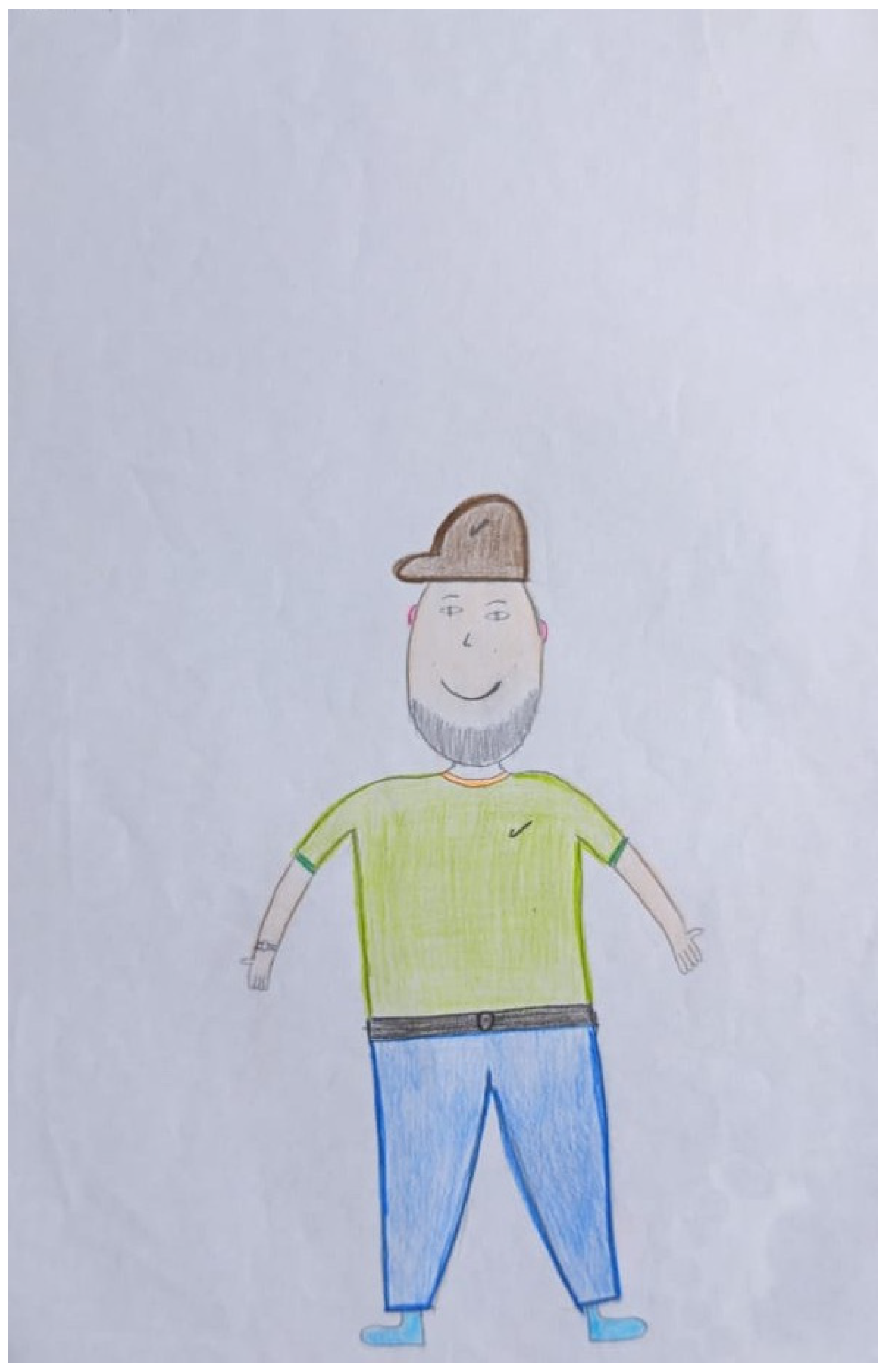
Considering the above, it was found that the majority of participants recorded both traumatic and positive events in the same narrative or image. Thus, in most cases (E1, E3, E4, E5, E6, E8, E9, E11, E12, E17, E22) (
Figure 1), the narratives are not defined solely by trauma but by alternation with positive experiences. Loss (death of loved ones, breakups, illnesses) appears as a moment that does not paralyze the life trajectory but coexists with academic achievements, life projects, family reunions, and celebrations. This reveals a pattern of resilience, understood as the capacity to maintain or reconstruct projects despite adversities.
Regarding the connections and recurrences found, it can be noted that E1, E3, E7, and E15 exhibit a strong presence of black and red in traumatic and difficult events but incorporate colors such as green or blue in positive ones, showing marked emotional contrasts; E4, E9, and E18 maintain a lighter and cooler palette (blues, greens) even in difficult situations; E5, E12, and E20 reiterate brown and gray in several categories; and E10, E14, and E22 present chromatic coincidence between traumatic events and accessory elements.
The main findings were organized as follows:
3.1. Conflicting or Traumatic Events and Their Symbolism
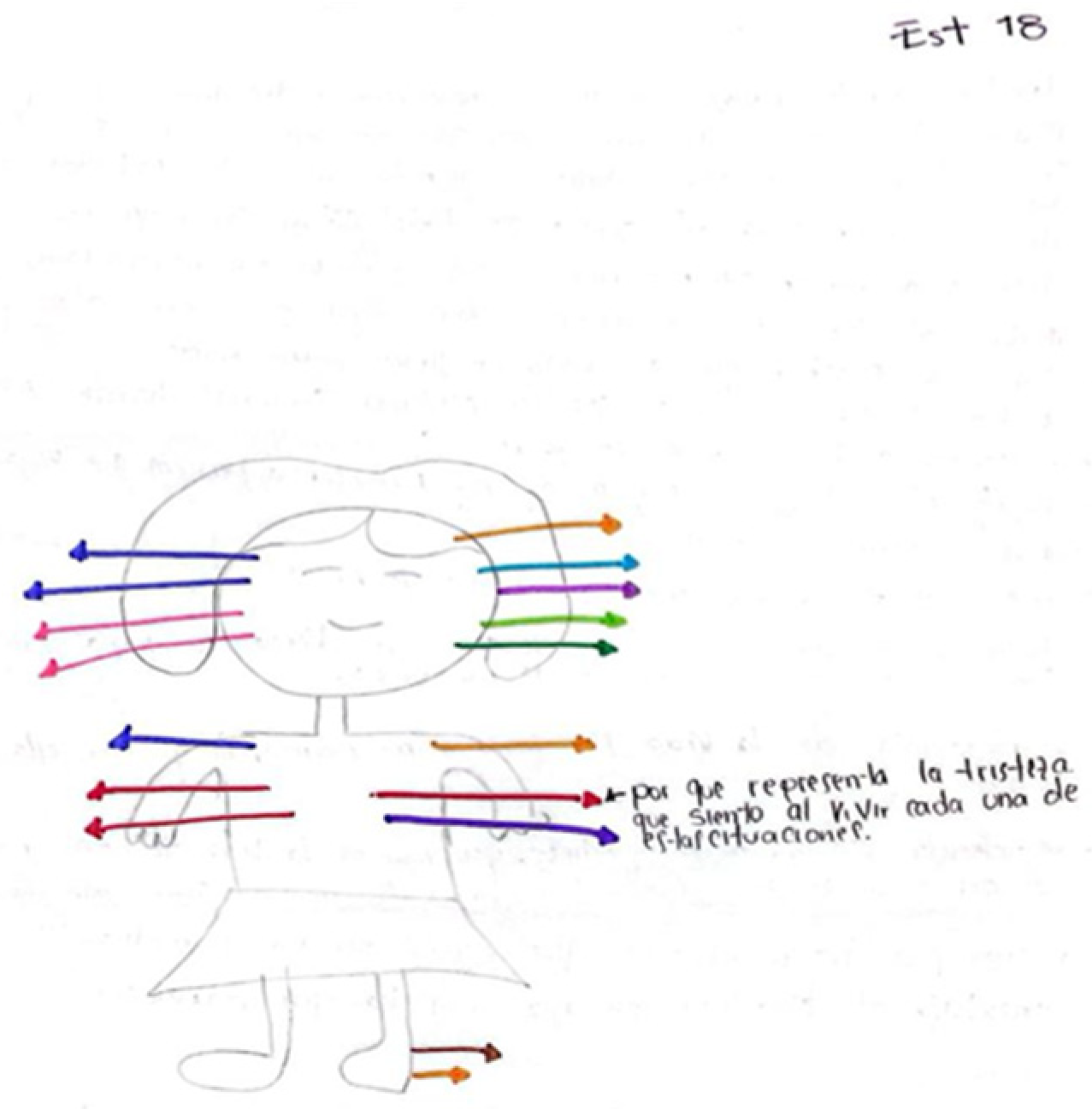
Colors were used as key emotional representations in the body maps. For example, yellow was associated with the loss of loved ones, decision-making, and significant milestones, suggesting energy and change, while black and brown symbolized pain, abandonment, death, family conflicts, low self-esteem, illness, and separation; gold represented discrimination and physical rejection (
Figure 2). Red appeared both in intense positive emotions such as decision-making and in conflicts and emotional ruptures. Orange was linked to separation, illnesses, and family frustrations. Similarly, blue and green were associated with positive events, achievements, and stability.
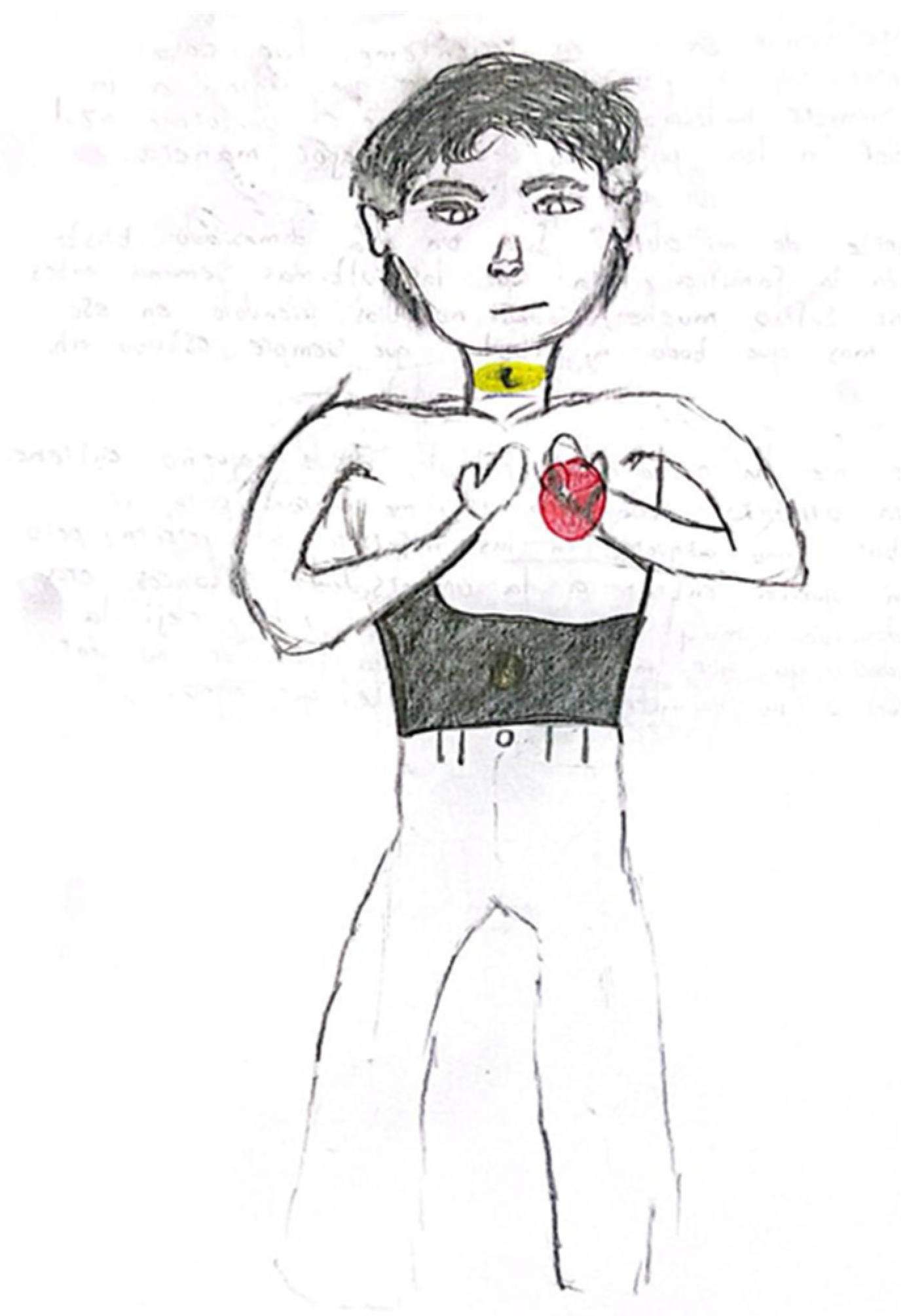
In addition to colors, certain body parts were associated with these events (
Figure 3). The heart, head, and chest are related to deep emotions, death, and mourning. Shoulders and back symbolized emotional burden and unassumed responsibilities; feet and legs represented movement, processes, and blockages; and hands were linked to unperformed actions and frustration from lack of control.
3.2. Important Events and Their Emotional Impact
Important events were associated with colors such as red, green, orange, and brown, and with body areas including the heart, head, stomach, and legs. Red in the chest was linked to affective losses or sentimental breakups. Green in the stomach and head is related to significant relationships, achievements, and reflection. Brown in the heart and head represented family and sentimental conflicts.
3.3. Most Frequent Difficult Situations
Body areas such as the skin, face, neck, shoulders, legs, and abdomen symbolized vulnerability and tension. Blue color in the neck, face, and abdomen was associated with language management, expression, and “emotional digestion”.
3.4. External Symbols and Accessory Elements
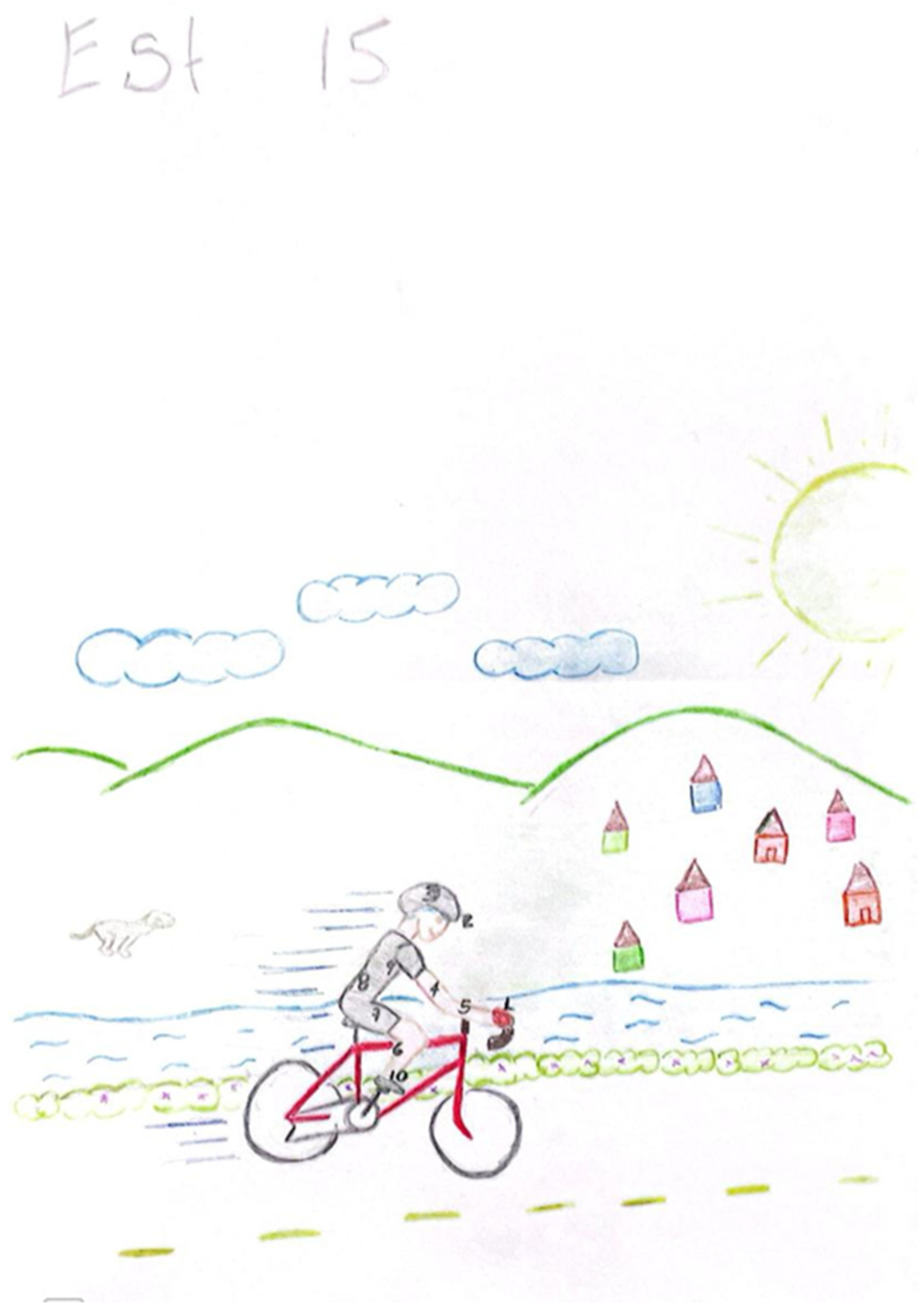
External symbols represent the emotional weight and symbolism of the everyday environment, highlighting the importance of accessory elements as complementary narratives. Elements such as landscapes, animals, or flowers function as symbols of protection, emotional anchors, refuge, or desires for freedom. In several cases, the accessory is not directly linked to the narrated event but complements the emotional charge; for example, the bicycle as a symbol of autonomy and personal achievement is present in E15, E5, and E6, where the objects appear connected to a personally meaningful memory. In E14 and E15 (
Figure 4), the natural landscape functions as a space for reunion or escape; in E16 and E17, natural elements (sun, flowers, butterflies) convey change and well-being. These accessories enrich the narrative and, although not always directly related to the event, act as symbolic resources that connect the participant to more stable or protective emotions.
3.5. Transitions and Life Redefinitions
Some participants (E12, E17, E20, and E22) reported events signifying transitions or redefinitions in their lives, such as acquiring a home, starting academic programs, shifting educational objectives, and making significant life choices. In these cases, the use of colors and accessories reflects themes of movement, transformation, or completion of cycles. Conversely, the narrative of participant E18 shows an absence of positive events and accessory items, which may suggest a concentrated focus on adverse experiences. This difference from other, more balanced narratives could point to the necessity for tailored psychosocial intervention.
Table 1.
Triangulation according to categories.
Table 1.
Triangulation according to categories.
| Category | Symbolic Element | Example | Associated Emotional Meaning |
|---|
| 1. Conflictive or Traumatic Events | Colors | Yellow | Loss of loved ones, deaths |
| | | Black | Pain, abandonment, death, family conflicts, absences |
| | | Red | Significant loss, emotional rupture, intense emotions, deaths, decision-making |
| | | Brown | Low self-esteem, illness, separation |
| | | Gold | Discrimination, physical rejection |
| | | Orange | Separation, illness, family frustration, breakups |
| | | Blue | Encounters, protection, memories |
| | | Fuchsia/Purple | Emotional nuances, identity, introspection |
| | Body parts | Heart, head, chest | Deep emotions, death, mourning |
| | | Shoulders, back | Emotional burden, unassumed responsibilities |
| | | Feet, legs | Movement, processes, blockages |
| | | Hands | Unexecuted actions, frustration due to lack of control |
| 2. Important Events and Emotional Impact | Colors and body parts | Red (chest) | Affective losses, sentimental breakups |
| | | Green (stomach, head) | Significant relationships, conflicts with important figures, reflection, achievements, shared time |
| | | Brown (heart, head) | Family and sentimental conflicts |
| 3. Most Frequent Difficult Situations | Body location | Skin, face, neck, shoulders, legs, abdomen | Vulnerability, self-image, tensions |
| | | Blue (neck, face, abdomen) | Language management, emotional expression, symbolic digestion |
| | External symbols | Clothes, shoes, accessories, objects, houses, landscape, context | Emotional weight, symbolism of daily environment |
4. Discussion
Findings from the research “Body, Phenomenology and Development” [
19] were analyzed from a critical phenomenological perspective.
The study “Body, Phenomenology and Development” [
19] integrates analyses from the philosophy of mind and cognitive psychology to reformulate the body–cognition relationship. It posits that the body functions as a natural, integrated unit that precedes sensorimotor action, whereby corporality unifies perceptions and actions. These reflections align with the present study, which revealed that students’ bodies constitute a field of signification and unveiled that the body—beyond being an anatomical structure—operates as a narrative support wherein the subject’s affective history is deposited, even beyond verbal language.
Similarly, the study “Liminality: Thinking Through Creative Practice, Unpredictability and Pedagogy of Collaboration” adopts a phenomenological perspective, proposing that the body is an immediate and felt presence in the “here and now”. However, each individual detaches from prior experiences without yet having acquired a new status, thus leaving room for transformation through creative learning in the classroom—although generalizability beyond artistic spaces remains limited [
20]. This construction of the lived body, which emerges from experiences, memories, and identity tensions, is also evidenced in the present research as a collective construction within the health sciences context.
Meanwhile, Pérez-Padilla and García-Alandete (2020) demonstrated a correlation between body awareness and emotional well-being in 200 university students [
21]. Using the Body Awareness Questionnaire (BAQ) and the Emotional Well-Being Scale (EBE), they concluded that body awareness acts as a protective factor for emotional well-being in university students, promoting self-care and mental health [
21]. Their findings also reveal that the body preserves the memory of distress, echoing the evocations and associations made by other populations facing pain and negative experiences, grounded in phenomenological theoretical reflections [
22].
In parallel, a study within the field of physiotherapy—Phenomenological Physiotherapy: Extending the Concept of Bodily Intentionality—conducted a qualitative theoretical–philosophical analysis based on Merleau-Ponty’s phenomenology and enactivism, integrating observations from clinical physiotherapy practice. It concluded that physiotherapy achieves clinical effectiveness when there is interaction and bodily empathy that guides the patient toward rediscovering their bodily experience. This underscores the need to integrate phenomenology into physiotherapy training to foster holistic, relational care, although the study acknowledges the absence of data from controlled case studies [
23]. Such bodily empathy is also revealed among physiotherapy trainees in the present study, who expressed that the body functions as affective memory for positive experiences such as love, achievement, and connection.
Furthermore, the systematic review and meta-analysis “Prevalence and Associated Factors of Depression and Anxiety Symptoms Among College Students: A Systematic Review and Meta-Analysis” (2022) assessed the global prevalence of depression and anxiety symptoms in university students and their associated factors. Including 64 studies with 10,187 participants, it evidenced a high burden of depression and anxiety among university students, calling for urgent preventive and interventional actions [
24]. Similar findings were reported in “Anxiety and Depression Among University Students in Cali, Colombia: A Cross-Sectional Analysis of the Prevalence and Contributing Factors”, conducted at a university in Cali, Colombia, with a sample of 394 university students (new reference). These symptoms were also reflected in the present study when students portrayed their lived experiences through body mapping—although this was not an original objective, it remains a finding that cannot be dismissed [
25].
Likewise, the 2023 qualitative meta-synthesis “Perceptions of Learning and Teaching Human Movement in Physiotherapy: A Systematic Review and Meta-Synthesis of Qualitative Studies” analyzed 17 qualitative studies, extracting 147 primary findings and synthesizing them into four core themes. It concluded that the teaching and learning of movement in physiotherapy must continuously consider contextual factors, movement quality and transfer, and the embodied presence within motor experience. The study’s limitations include the quality and high heterogeneity of the included studies. These findings resonate with the present research, as each participant’s lived experience was reflected throughout their learning process and converged within learning spaces, illustrating a transformation of emotional meaning and, consequently, of experience itself [
26].
Additionally, the study “Body Mapping as a Participatory Method to Explore Health Provider Beliefs and Understanding About Sexual and Reproductive Health and Rights in Timor-Leste” employed body mapping with 24 participants and suggested the existence of “affective norms” and social identity, wherein socially accepted ways of processing emotions are established. Limitations included a small sample size, logistical challenges, and a lack of broader community perspectives [
27]. Similar conclusions were drawn from “The Formation of Positive Group Affective Tone: A Narrative Practice”, a narrative analysis of 72 weekly diaries from graduate students, which inferred a subtle hierarchy of affective states: being resilient, making decisions, and reconnecting with family figures are positively valued, whereas feelings such as guilt, blockage, fear, or frustration may be perceived as part of an unresolved process or as negativity. This generates normative models of emotional subjectivity [
28]. The body mapping exercise conducted with students in the present study also revealed the intersubjective dimension of the body, as many experiences are mediated by relationships with others. The presence or absence of significant figures profoundly shapes bodily experience, rendering the body a mediator of affectivity within the social world.
From the perspective of art and phenomenology, Guzmán (2025), in her ethnographic-feminist study employing body mapping with an Indigenous population of 12 girls and adults, highlights that elements such as form, composition, strokes, and color are used as visual narratives in which anatomical drawing is emotionally linked to the lived body experience and its memory [
29]. This contains a creation of meanings derived from a social construction of reality shared with others, thereby configuring an intersubjective affective map. In this sense, the subject emerges as a discursive being, mediated between grief, achievement, and reconfiguration—less passive and more performative [
29]. Similarly, Azim, Yusoff, and Roslan (2025) emphasize that, through symbolic actions and elements added to drawings (flowers, landscapes, objects), participants seek to re-signify what they have lived [
30]. This symbolic expressiveness enables a way of saying without saying, of remembering without reliving. Trauma does not present as a coherent narrative but as a constellation of visual symbols, coinciding with the idea that trauma disrupts the temporal and verbal sequence of discourse [
30]. These revelations are likewise reflected by participants in this study, wherein the body is not a passive object but a living semiotic construction of context. These drawn bodies do not merely delineate silhouettes; they narrate the intimate and subjective. Thus, disproportionate hands are read as amplifications of desire, or blurred faces as traces of the elusive.
5. Conclusions
Body mapping enables the identification of the narrative resources of memory and experience that participants employ through graphic elements, colors, and incorporated accessories, as well as the connections students make between emotions and symbolic expressions associated with the body. It is therefore proposed as an effective technique for recognizing the body as the “chronicle of existence” and a living archive of experience. Each zone, color, and symbolic object used in the maps reflects a continuous process of meaning-making [
31].
Likewise, this type of strategy, through visual narratives, not only allows for expression but also for the recognition of what the subject is unable to verbalize. Thus, understanding these lived experiences strengthens future physiotherapists not only in technical skills but also in their sensitivity toward corporeality as a lived, relational, and cultural phenomenon [
32]. From a phenomenological perspective, the body is not an external witness but an agent of existence. The marks of experiences—whether of trauma or well-being—enable individuals to narrate and re-signify their world. The body reveals emotional life in its unfolding. Through this symbolic language, subjectivity is constructed in the tension between privation and action, and between trauma and the desire for reconstruction.
Similarly, bodies also operate as forms of resistance. Their representation is regulated by cultural norms that delimit what is visible and sayable, but these norms can be transgressed through performative acts [
33,
34]. From this perspective, the bodies drawn here are in “transit or becoming”—bodies that do not fit the mold, that defy normative expectations of wholeness, symmetry, or legibility.
Understanding meaningful experiences and their recognition through emotions and memories inscribed on the body becomes a narrative and pedagogical support which, when made visible, can significantly enrich the processes of professional and holistic training of physiotherapy students. This provides them not only with mechanical and operative knowledge of the body but also with a perspective that incorporates critical and humanistic dimensions.
Limitations
This study was conducted at a single university in Cali, Colombia, with a small sample of students enrolled in a mental health elective, which may reflect particular interests and experiences. The body mapping technique, while rich in symbolic and narrative depth, is inherently interpretative and does not aim for statistical generalizability. Additionally, the cross-sectional design offers a snapshot rather than a longitudinal view of embodied narratives. Nevertheless, these contextual parameters do not diminish the depth and transferability of the findings to similar educational settings, and the study provides meaningful insights into the pedagogical potential of body mapping in physiotherapy training.



 ,
,