1. Introduction
Rather than being treated solely as normative violations, dishonest behaviors are increasingly conceptualized as complex socio-cognitive and organizational phenomena shaped by the interaction between individual moral processes, situational pressures, and institutional environments. This perspective is consistent with developments in behavioral ethics and organizational behavior, which suggest that unethical behavior stems not only from a lack of moral standards, but also from cognitive mechanisms that enable individuals to justify, neutralize, or rationalize actions that conflict with their self-concepts (personal values) and organizational expectations [
1,
2,
3]. Recent scholarship has further emphasized the contextual, cross-domain, and increasingly global character of ethical and unethical behavior research, while also pointing to the need for more structured syntheses of its conceptual organization [
4,
5]. Against this background, key constructs such as moral disengagement, ethical leadership, ethical climate, performance pressure, and unethical pro-organizational behavior have gained increasing prominence in this research area.
Taken together, existing evidence indicates that dishonest behavior in organizational settings cannot be reduced either to individual moral failure or to contextual pressure alone. Rather, it emerges at the intersection of identity-related processes, justificatory mechanisms, and organizational signals. This has generated a substantial body of literature structured around recurrent explanatory frameworks, including moral disengagement, ethical climate, ethical leadership, performance pressure, and unethical pro-organizational behavior. Existing review-based syntheses have made important contributions by clarifying the scope of behavioral ethics in organizations and by synthesizing major antecedents, correlates, and consequences of unethical behavior at work [
1]. Likewise, meta-analytical work has helped consolidate evidence on specific mechanisms, particularly moral disengagement in organizational settings [
4]. However, what remains insufficiently clarified is the structural organization of these dominant explanatory frameworks within this segment of the literature. More specifically, the literature still lacks an integrated view of how these mechanisms are positioned relative to one another, which ones function as central or bridging references, how they cluster conceptually, and how their configuration has evolved over time. A recent bibliometric study has examined ethical behavior research across broader contexts [
6]. However, that contribution addresses ethical behavior at a more general and cross-contextual level, whereas the present study focuses specifically on workplace dishonesty and on a theory-informed corpus centered on dominant socio-cognitive and organizational explanatory frameworks. In this context, bibliometric science-mapping is particularly appropriate because the objective is not to estimate causal effects or summarize findings mechanism by mechanism, but to examine the conceptual, thematic, and intellectual structure of this body of work and its evolution over time. By adopting a theory-informed bibliometric approach, this study examines how this selected segment has evolved and consolidated, without claiming to represent the full heterogeneous architecture of all workplace dishonesty research.
Accordingly, this research seeks to answer the following research questions (RQs):
RQ1: What are the main patterns of scientific development within this theory-filtered segment of workplace dishonesty research?
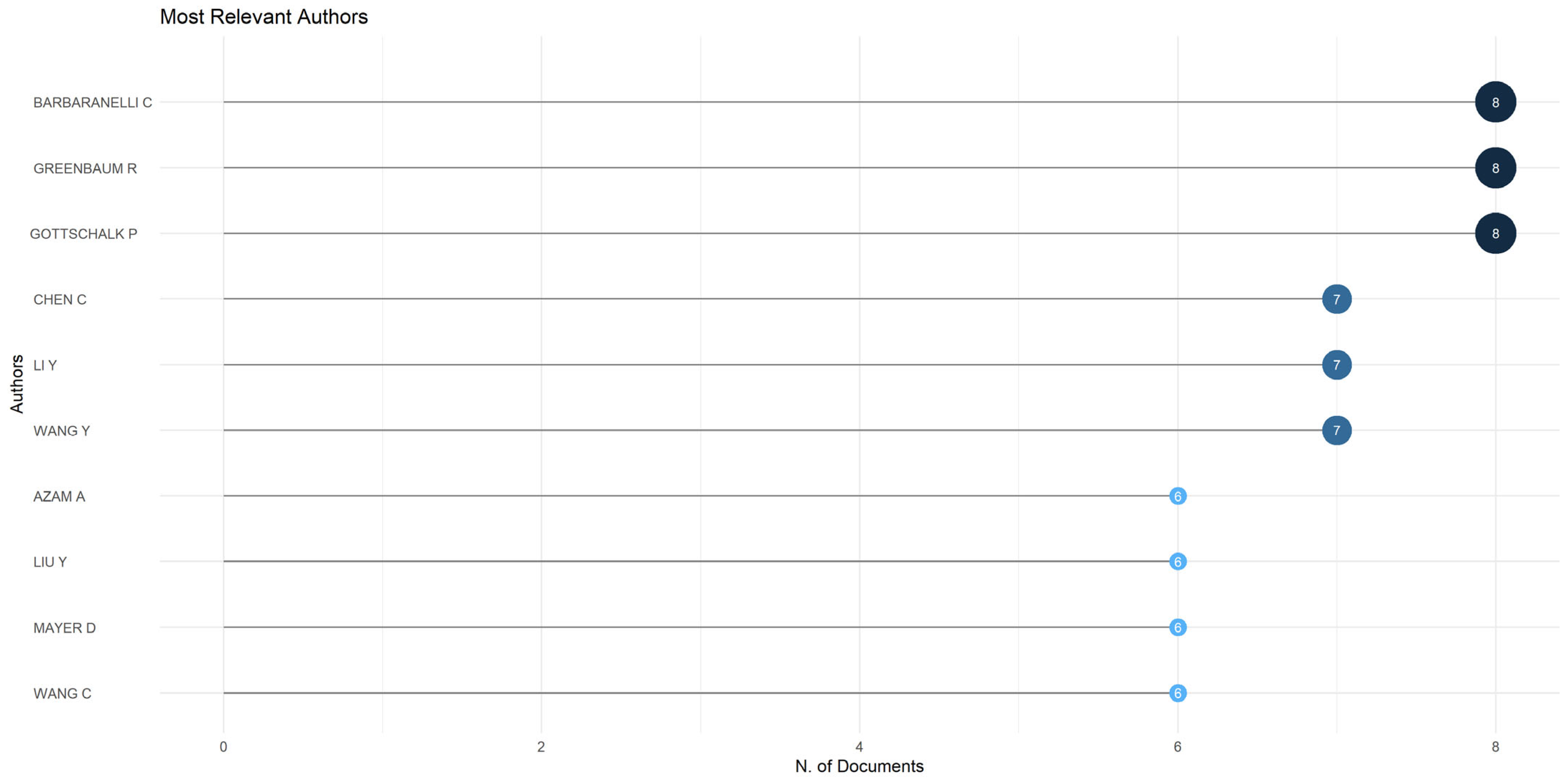
RQ2: How is knowledge production structured in terms of authorship, sources, and collaboration networks?
RQ3: What conceptual and thematic structures organize this corpus, and which explanatory mechanisms and intellectual anchors function as central or bridging elements within it?
RQ4: How have these conceptual structures evolved over time, and what does this evolution suggest about the consolidation and transformation of this research domain?
This study extends the scope of a standard bibliometric report by offering a theory-based structural mapping of a carefully selected segment of the literature. The selection was guided by the objective of focusing on contributions that explicitly mobilize key justificatory and socio-cognitive mechanisms, such as moral disengagement, ethical climate, and related constructs. Its contribution is twofold. First, at the empirical level, it offers an integrated overview of the growth, organization, conceptual clustering, thematic positioning, and longitudinal evolution of this corpus. Second, at the interpretive level, it clarifies how dominant explanatory mechanisms are distributed and interconnected within this segment, thereby identifying both areas of consolidation and persistent structural tensions. By combining complementary science-mapping techniques, the study seeks to provide a more robust account of the conceptual architecture of this body of work. Accordingly, the findings should be interpreted as reflecting the structure and evolution of this selected segment rather than the entirety of workplace dishonesty research.
2. Materials and Methods
2.1. Data Sources and Search Strategy
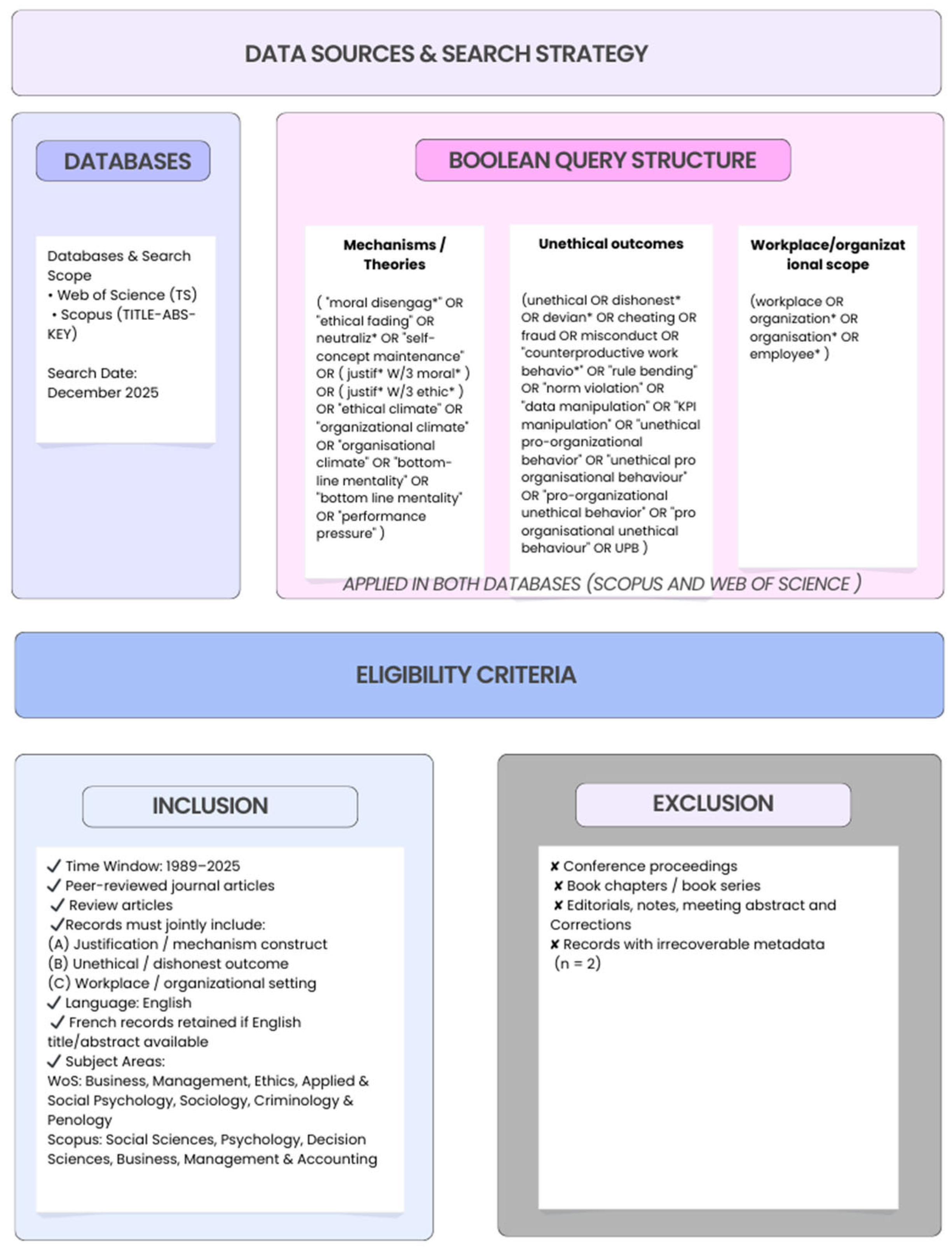
Data were collected from Scopus and the Web of Science Core Collection on 15 December 2025. Rather than attempting to capture every study on workplace dishonesty, this theory-filtered approach is a deliberate methodological choice to prioritize conceptual depth over descriptive breadth. It allows for a more precise examination of the mechanisms through which organizational environments shape individual justificatory processes. These include core frameworks such as moral disengagement, ethical climate, ethical fading, neutralization theory, self-concept maintenance, bottom-line mentality and performance pressure. To operationalize this scope, we used a three-block Boolean query applied consistently across databases: mechanism/theory terms AND unethical outcome terms AND organizational/workplace scope terms, with syntax adapted to each platform (TITLE-ABS-KEY in Scopus and TS in WoS, with W/3 and NEAR/3 proximity operators, respectively). To maximize retrieval sensitivity and ensure comprehensive coverage, spelling variants, orthographic differences, and synonymous expressions were explicitly incorporated into the search strategy. This included American and British forms (e.g., “behavior/behaviour”, “organizational/organisational”) and alternative formulations of key constructs to capture contextual associations between justification-related terms and moral or ethical references. The UPB family was explicitly included to capture justificatory logics oriented toward organizational goals. To ensure full transparency and reproducibility, the exact Boolean search queries used in each database are reported below: {Scopus (TITLE-ABS-KEY): TITLE-ABS-KEY (“moral disengag*” OR “ethical fading” OR neutraliz* OR “self-concept maintenance” OR (justif* W/3 moral*) OR (justif* W/3 ethic*) OR “ethical climate” OR “organizational climate” OR “organisational climate” OR “bottom-line mentality” OR “bottom line mentality” OR “performance pressure”) AND (“unethical” OR dishonest* OR deviant* OR cheating OR fraud OR misconduct OR “counterproductive work behavior” OR “rule bending” OR “norm violation” OR “data manipulation” OR “KPI manipulation” OR “unethical pro-organizational behavior” OR “unethical pro organisational behaviour” OR “pro-organizational unethical behavior” OR “pro organisational unethical behaviour” OR UPB) AND (workplace OR organization* OR organisation* OR employee*)}. {Web of Science (TS): TS = (“moral disengag*” OR “ethical fading” OR neutraliz* OR “self-concept maintenance” OR (justif* NEAR/3 moral*) OR (justif* NEAR/3 ethic*) OR “ethical climate” OR “organizational climate” OR “organisational climate” OR “bottom-line mentality” OR “bottom line mentality” OR “performance pressure”) AND (“unethical” OR dishonest* OR deviant* OR cheating OR fraud OR misconduct OR “counterproductive work behavior” OR “rule bending” OR “norm violation” OR “data manipulation” OR “KPI manipulation” OR “unethical pro-organizational behavior” OR “unethical pro organisational behaviour” OR “pro-organizational unethical behavior” OR “pro organisational unethical behaviour” OR UPB) AND (workplace OR organization* OR organisation* OR employee*)}.
2.2. Eligibility Criteria and Screening Procedure
The consolidated time window covered 1989–2025 to leverage Scopus’ earlier coverage while preserving comparability with WoS. To align the corpus with organizational research criteria and minimize publication-format heterogeneity, we retained solely peer-reviewed journal articles and review articles. We omitted conference proceedings, book chapters, book series, editorials, notes, meeting abstracts, and corrections. Searches were conducted primarily in English, while French records were retained when an English title and/or abstract was available, enabling consistent screening and text-based analyses. The extraction of data was restricted to specific subject categories and thematic areas. In Web of Science, the search criteria were narrowed down to categories such as Business, Management, Ethics, Applied/Social Psychology, Sociology, and Criminology & Penology. To maintain consistency across databases, the Scopus retrieval was similarly constrained to Social Sciences, Psychology, Decision Sciences, Business and Management & Accounting. The overall data sources, three-block Boolean query structure, inclusion criteria, and exclusion criteria are summarized in
Figure 1.
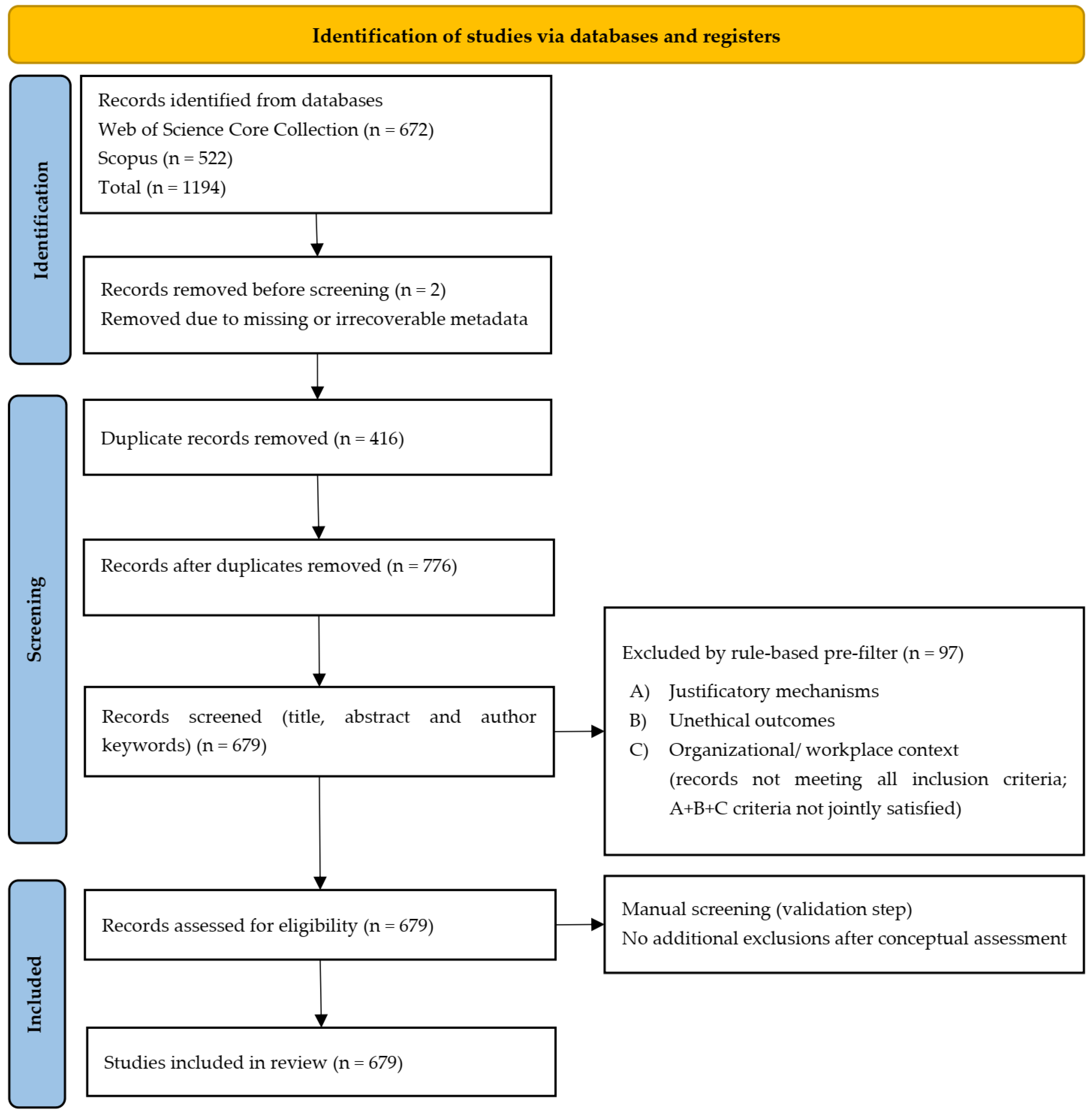
The database search, conducted using predefined query terms and search filters, yielded 1194 records: a total of 672 documents from WoS and 522 from Scopus. Two records from WoS were removed due to irrecoverable metadata, resulting in 1192 records for deduplication. Records were merged and processed in R using the Bibliometrix package [
7,
8]. Duplicate records were identified using automated matching based on title similarity, author names and publication year. Deduplication removed 416 duplicates; a total of 776 unique records were identified for screening. To ensure reproducibility, the inclusion logic was formalized through a three-category decision rule applied consistently across both automated and manual screening stages. The automated pre-filter was implemented by applying a keyword-based filtering procedure to the textual fields (title, abstract and author keywords), requiring the simultaneous presence of at least one term from each of the three predefined categories: (A) justificatory mechanisms, (B) unethical or dishonest outcomes and (C) an organizational or workplace context. This rule-based filtering operationalizes the theoretical scope of the study and ensures that all selected records reflect the intersection of cognitive justification processes, behavioral outcomes and contextual embedding; it excluded 97 records and retained 679 for analysis.
Following the automated pre-filtering stage, a manual screening procedure was conducted to validate the conceptual alignment of each record with the predefined inclusion criteria using a structured dataset exported into an Excel file containing the title, abstract and author keywords of each document. This stage did not primarily aim to further reduce the dataset, but rather to ensure consistency in the application of the three analytical dimensions. In cases where one dimension was not explicitly stated, inclusion was determined only when sufficient conceptual evidence could be identified in the title, abstract or author keywords to support its presence. Although theoretical frameworks are not explicitly coded as structured variables in bibliometric datasets, they can be reliably inferred from the title, abstract, and author keywords, which summarize the conceptual orientation and explanatory logic of each study. For example, a record could be retained when organizational context was implicit through references to employees, leadership, workplace climate, or organizational practices, or when a justificatory mechanism was expressed through terms related to rationalization, neutralization, moral disengagement or ethical fading rather than through the exact query wording. The screening process was conducted independently by two of the authors and disagreements were resolved through discussion to ensure consistency in the application of the inclusion criteria. Given the high specificity of the initial Boolean query, which was deliberately designed to retrieve studies simultaneously addressing justificatory mechanisms, unethical outcomes and organizational contexts, the manual screening stage did not lead to a substantial reduction in the corpus. Rather, it functioned as a validation phase, confirming the conceptual coherence of the final dataset (n = 679). The identification, screening, eligibility assessment, and reporting of the study selection process were guided by the PRISMA 2020 statement [
9]. The corresponding flow diagram (
Figure 2) summarizes the number of records identified, removed, screened, excluded, and included in the final bibliometric corpus. For transparency and reproducibility, the processed dataset, screening file, and R scripts used in the present study have been archived in a public repository and are cited in the Data Availability Statement.
2.3. Bibliometric Analysis and Analytical Techniques
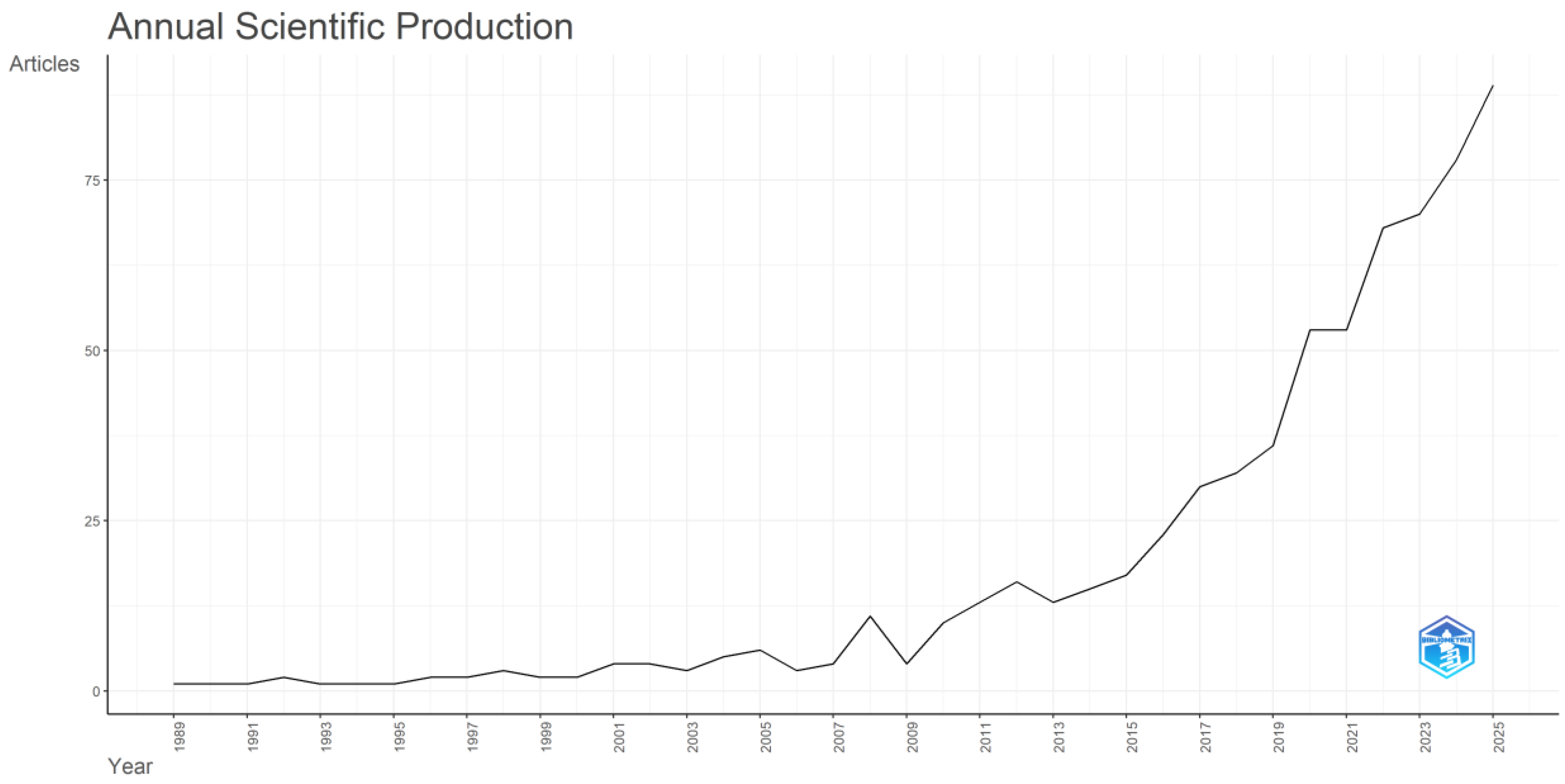
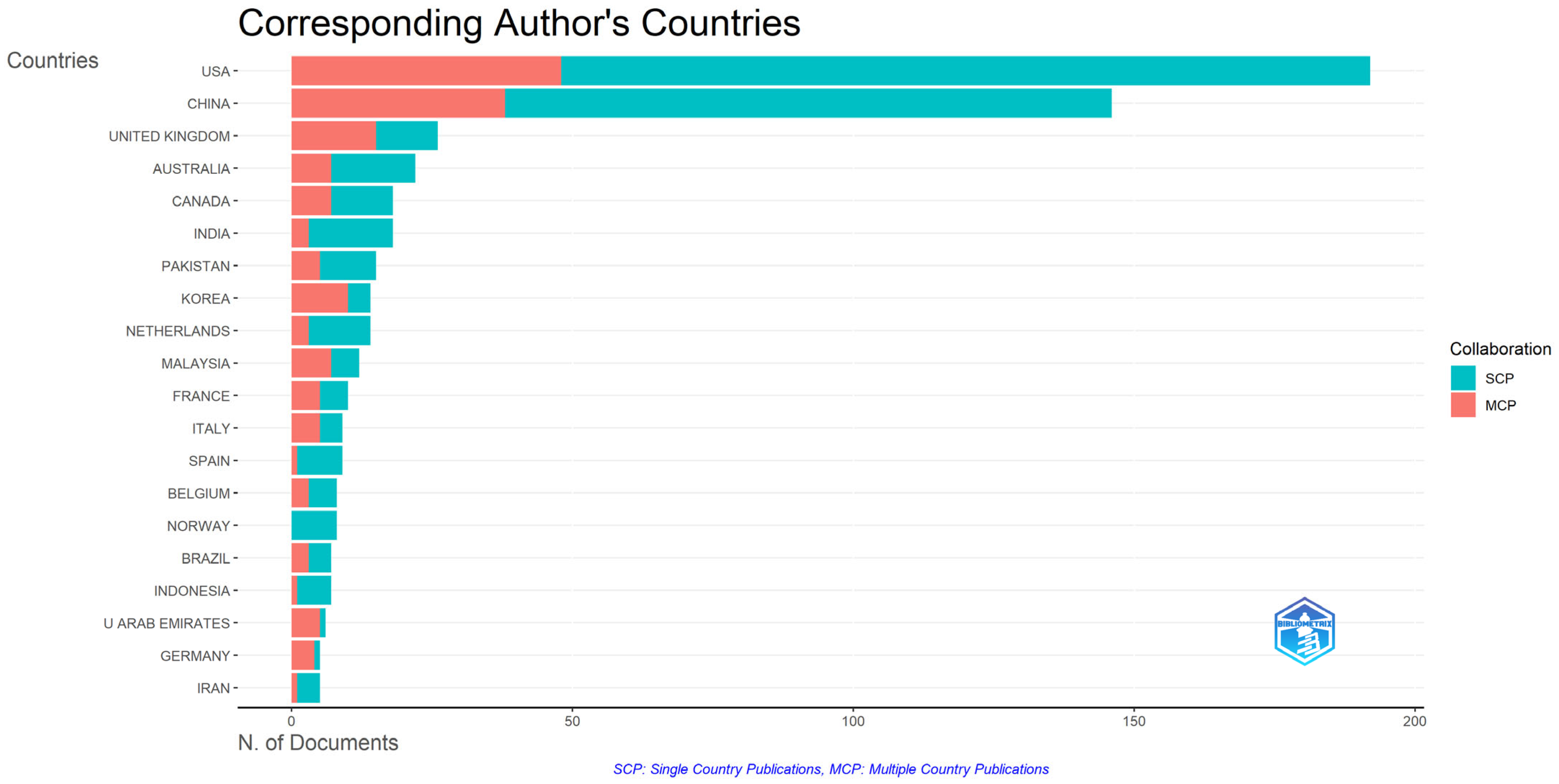
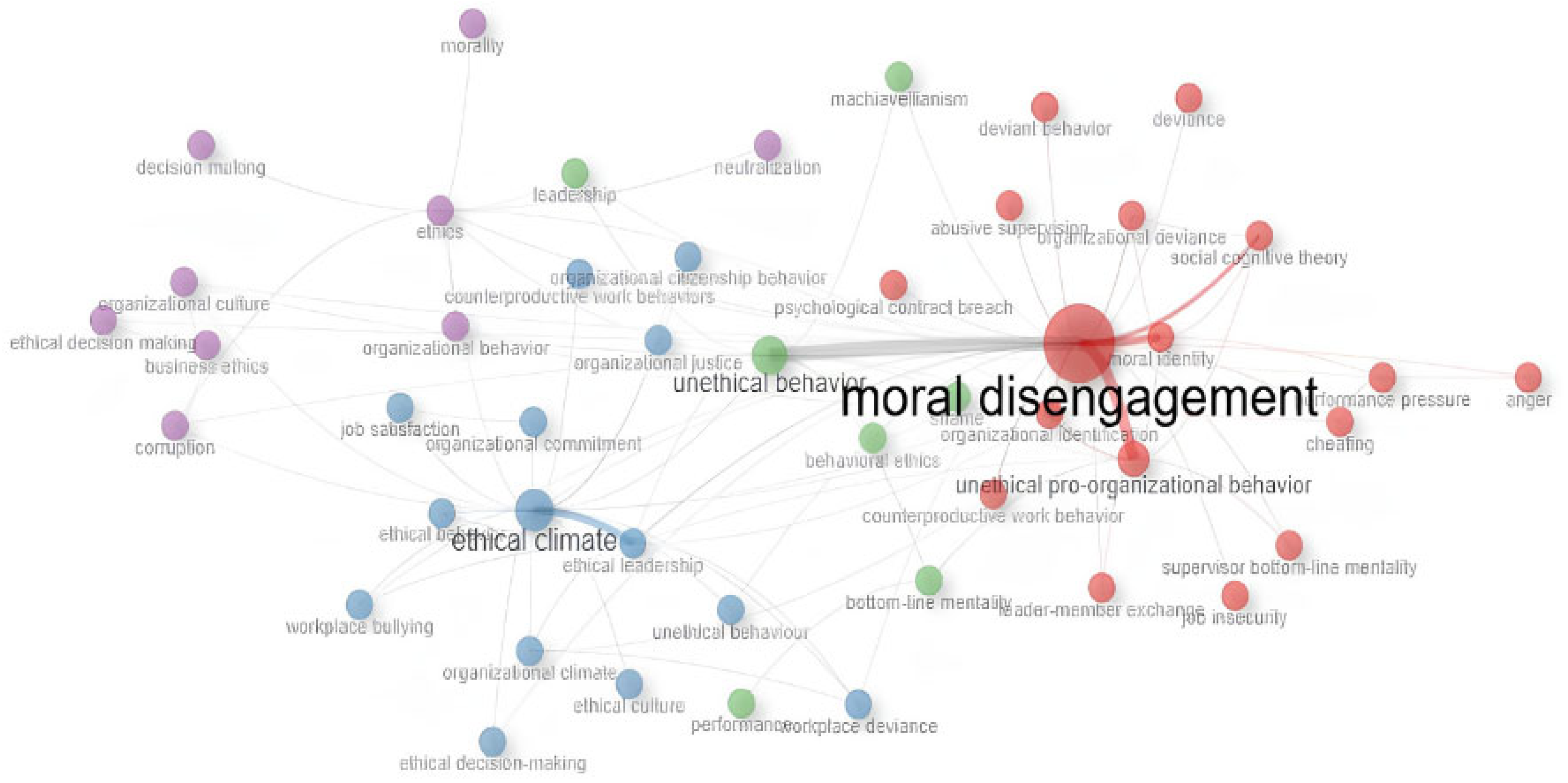
Analyses were conducted using the Bibliometrix package and its Biblioshiny interface to ensure consistent computation of performance indicators and science-mapping outputs. Following a theory-informed design, we sequentially examined descriptive performance and the structure of this corpus, its conceptual structure, thematic configuration, temporal and longitudinal dynamics and intellectual anchors. Descriptive performance and structural characteristics were summarized through annual production, core sources and corresponding-author countries, complemented by concentration diagnostics following Bradford- and Lotka-consistent patterns to characterize outlet dispersion and author productivity. The conceptual structure was examined using author keywords (DE). Author keywords (DE) were examined for consistency prior to analysis. The dataset did not present significant duplication, spelling inconsistencies, or conflicting abbreviations that could affect the co-occurrence networks. Therefore, no extensive harmonization procedure was required, and the analysis was conducted on the original keyword set, with minor variations considered during interpretation. Co-occurrence matrices were normalized using association strength. Network visualizations were then constructed using a network size of 50 nodes, with Louvain clustering for community detection. Keywords were filtered based on their frequency of occurrence, retaining the 50 most frequent terms to ensure a robust and interpretable structure. Isolated nodes were removed, and a minimum edge threshold of 2 was applied to reduce weak connections and improve interpretability.
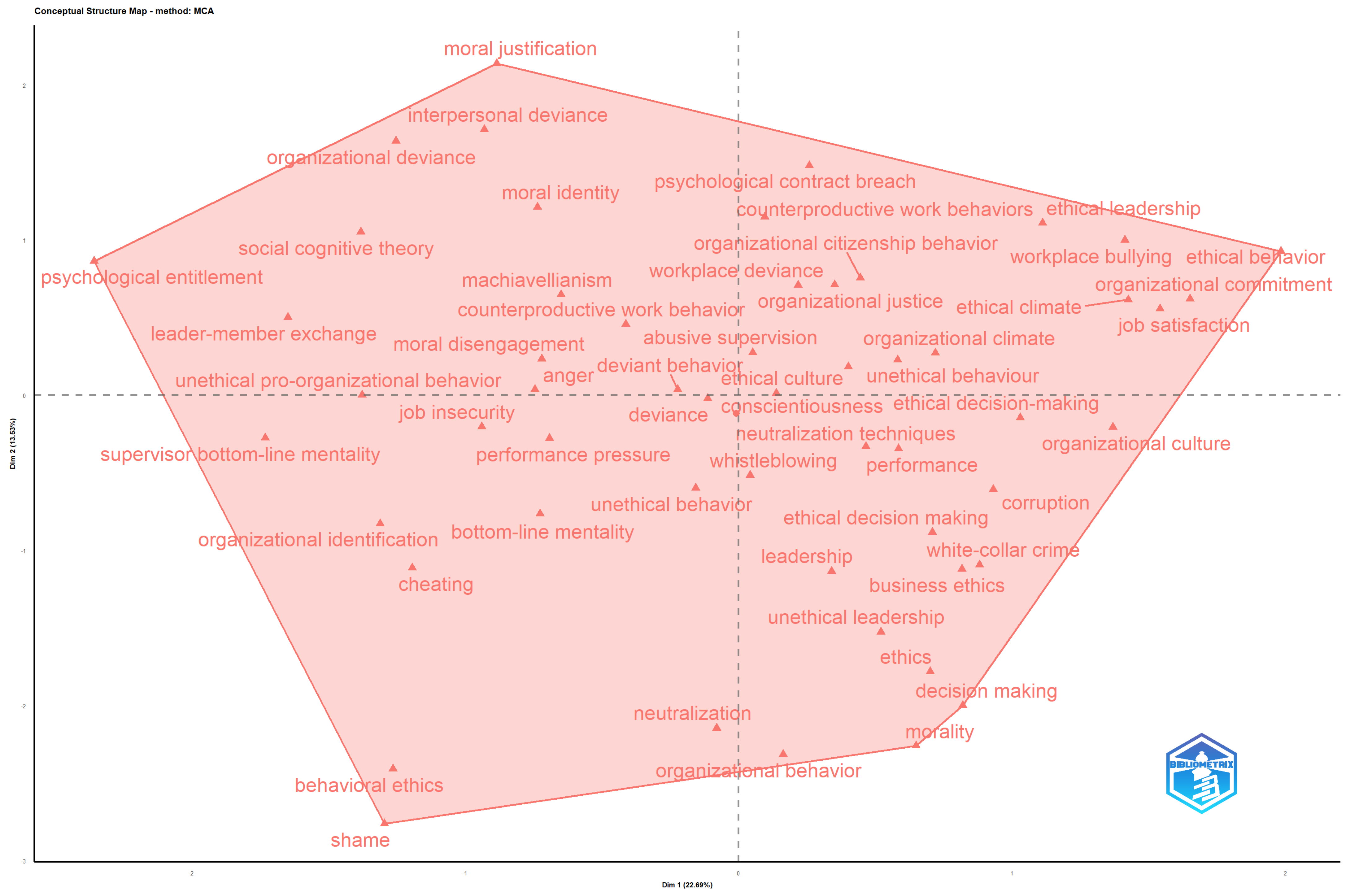
To move beyond local co-occurrence ties, we triangulated results using Multiple Correspondence Analysis (MCA) applied to author keywords (DE), projecting terms and documents into a factorial space. This approach suggests latent dimensions organizing this corpus, including recurring contrasts between micro- and macro-level perspectives. The interpretation of the retained dimensions was based on the terms making the strongest contributions to each axis, rather than on visual proximity alone. To improve transparency, the principal term contributions supporting the interpretation of the MCA structure are reported in
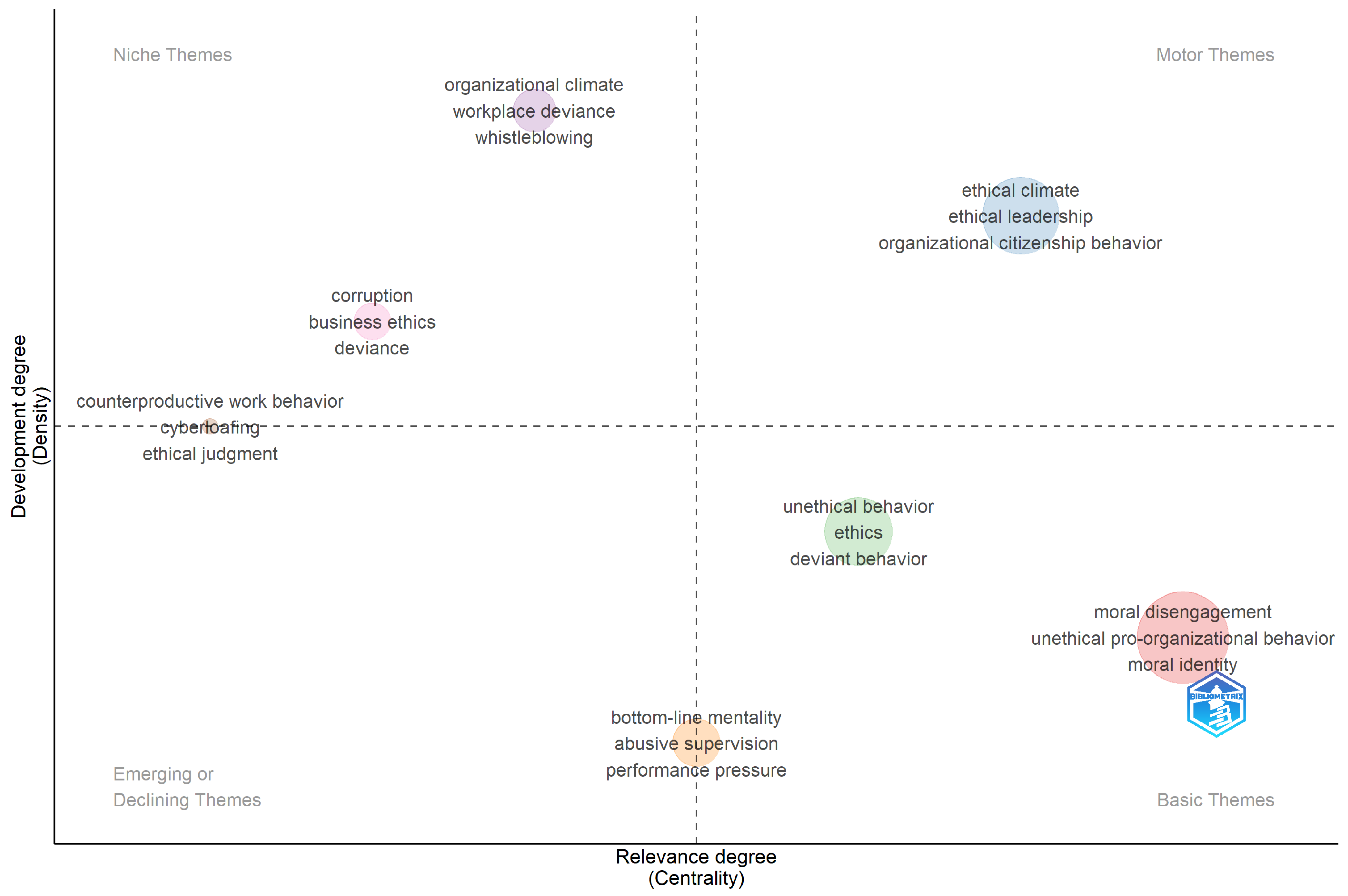
Supplementary Table S1. The first two dimensions were retained, explaining 36.22% of the total inertia (Dim 1 = 22.69%, Dim 2 = 13.53%), providing a meaningful representation of the conceptual structure of the dataset. Strategic thematic positioning was assessed using thematic mapping based on centrality and density (motor, basic, niche and emerging or declining themes).
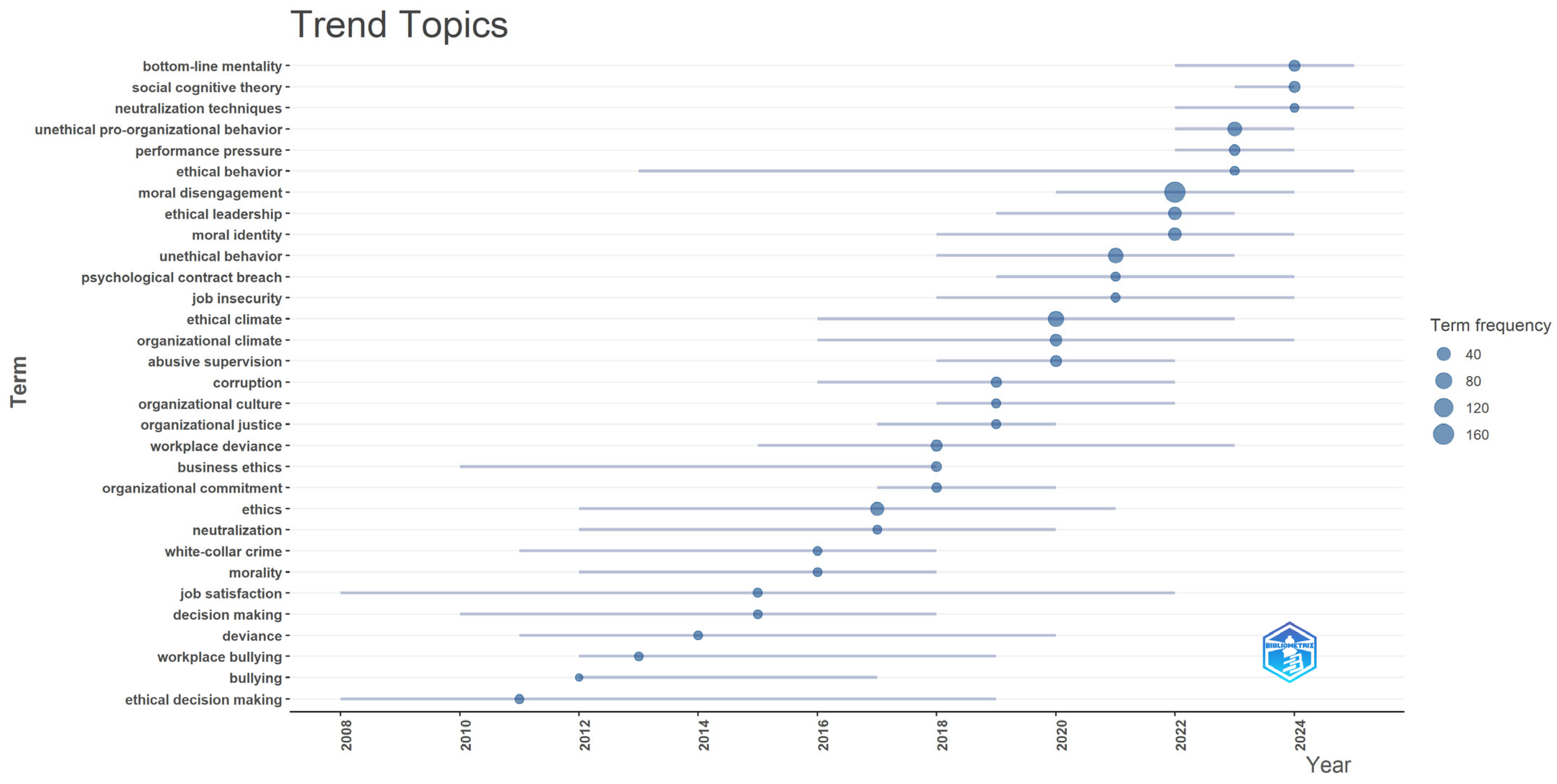
The thematic map was constructed using a set of 250 keywords, with a minimum cluster frequency of 5 occurrences per thousand documents to ensure the inclusion of relevant thematic structures while reducing noise. Clusters were identified using the Louvain algorithm, and layout parameters (repulsion force = 0.5) were adjusted to improve the readability and separation of thematic areas. To capture the kinetic evolution of this corpus, we integrated a Trend Topics analysis, which examines the relative prominence of specific keywords by plotting their median year of occurrence and frequency. This allows for the detection of emerging “Hot Topics” and the shift from foundational to contemporary concepts.
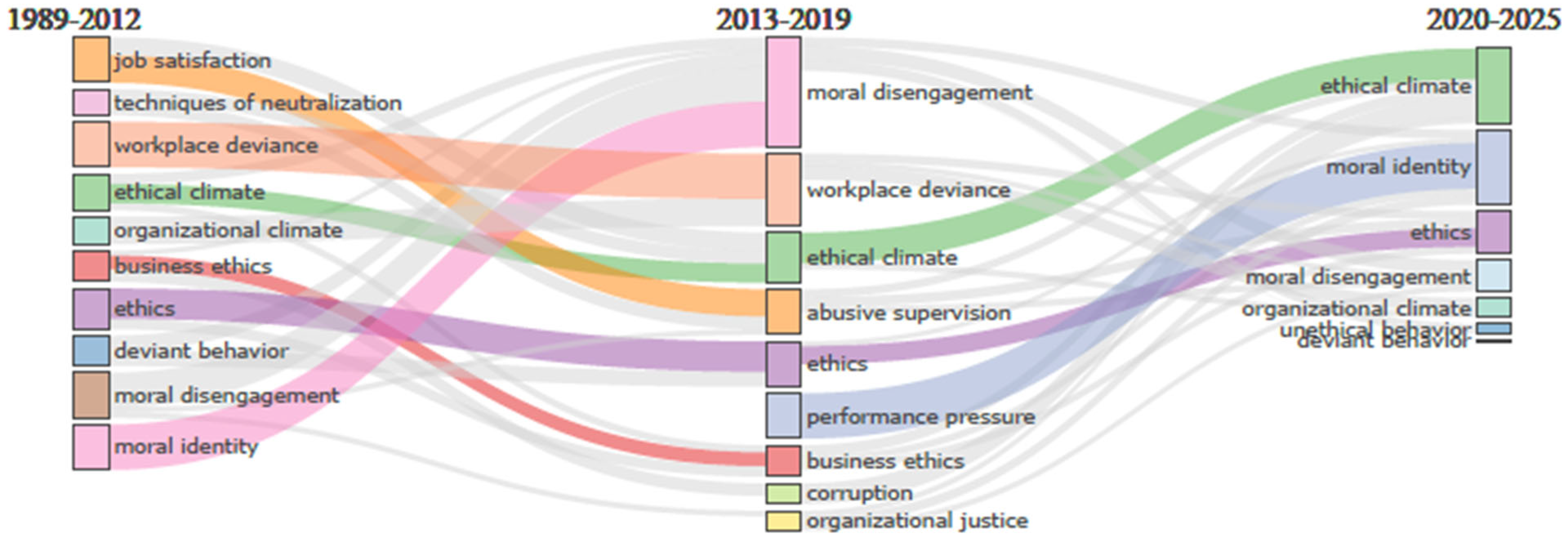
Longitudinal dynamics were further examined through thematic evolution across three publication-balanced periods (tertile-based segmentation) to ensure comparability despite the post-2020 acceleration of output. The thematic evolution was conducted using 250 keywords, with a minimum cluster frequency of 5 occurrences per thousand documents to ensure the selection of relevant themes. Theme connections were weighted using the inclusion index (weighted by word occurrences) with a minimum threshold of 0.1 to retain significant relationships. A Sankey-style visualization was used to interpret shifts in thematic salience and consolidation.
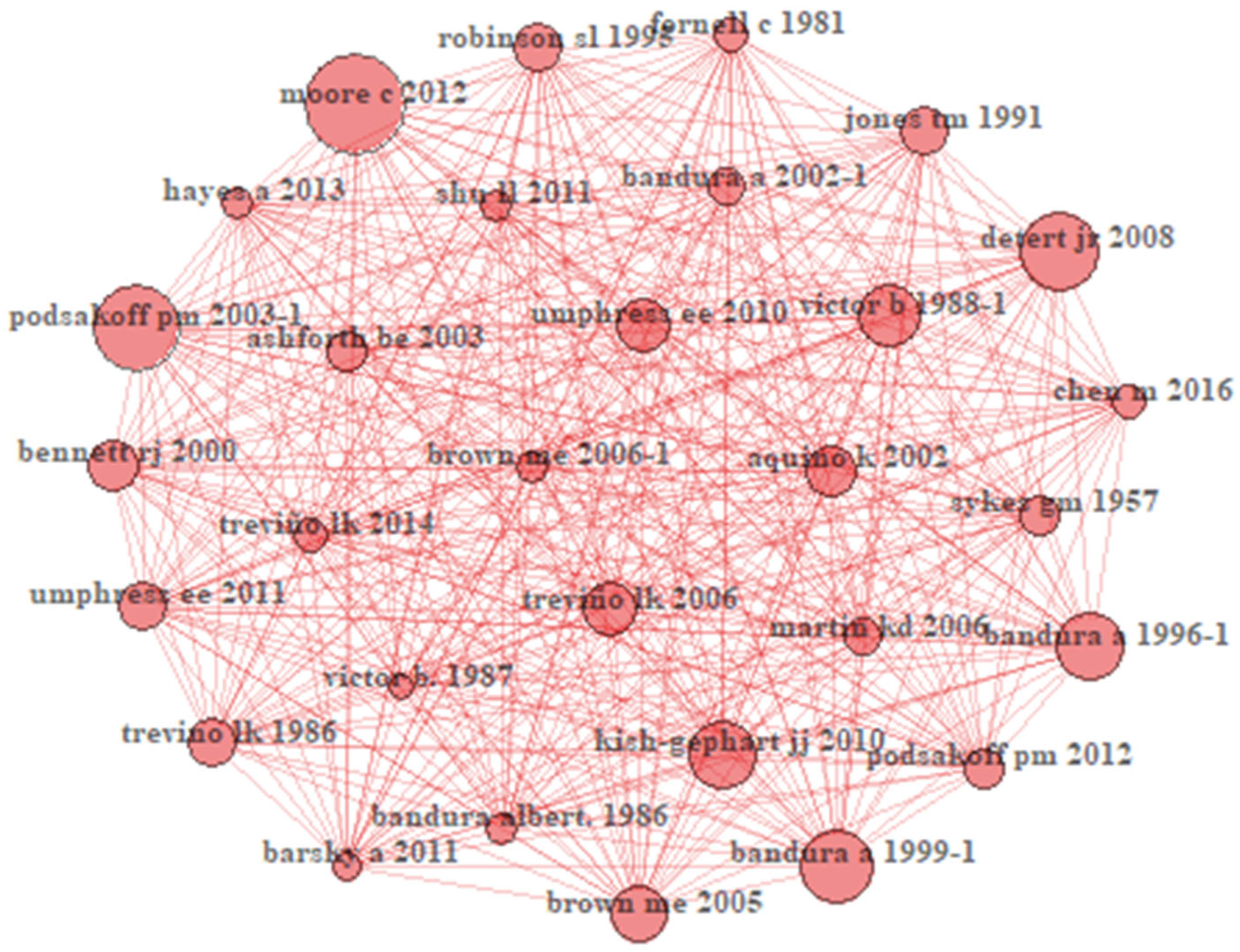
The documents related to the intellectual anchors of the corpus were initially identified on the basis of their high Global Citation Scores (GCS) in the merged corpus. Their interpretation was then refined through reference co-citation analysis conducted on the Web of Science dataset only. This choice reflects a methodological preference for network reliability over database coverage in co-citation analysis. Although the merged corpus was cleaned through deduplication and metadata harmonization, these procedures mainly improve document-level consistency and do not fully resolve heterogeneity in cited-reference strings across databases. In line with Bibliometrix guidance, citation and co-citation analyses were not conducted on the merged database because merged datasets remain unsuitable for such analyses at present, and Scopus reference data in particular require extensive cleaning to match equivalent reference items [
10]. The merged corpus was therefore retained for coverage and citation-impact indicators, whereas the Web of Science dataset was used for co-citation analysis in order to improve the stability and interpretability of the reference network. The co-citation network was constructed using the Bibliometrix package in R. Node size reflects co-citation frequency, while links represent the strength of co-citation relationships between references. Co-citation prominence was derived from co-citation frequency within the Web of Science network based on co-citation counts obtained using the Bibliometrix package in R 4.5.2. References were ranked according to these counts and subsequently grouped into broad prominence levels based on their relative position in the distribution. This measure is used here as an interpretive indicator of the relative visibility and structural embeddedness of references within the co-citation network. Each paper was subsequently associated with a conceptual cluster through qualitative interpretation, based on the correspondence between its core theoretical contribution and the dominant conceptual configurations identified in the keyword co-occurrence network and thematic map. Its broader thematic positioning was then interpreted in light of the location of the corresponding cluster within the thematic map, using Callon’s centrality and density as indicative dimensions of thematic importance and development. Taken together, this procedure provides a more robust interpretation of intellectual anchors by integrating citation impact, co-citation prominence, and conceptual embeddedness.
While classical bibliometric indicators such as author-level h-indices, citation counts or even source-specific impact metrics can provide descriptive insights, they were not treated as primary analytical outputs. In terms of both our analytical focus and our reporting strategy, we prioritized structural and relational interpretations over a simple and exhaustive list of metrics. This study places emphasis on science-mapping methods, specifically those capable of capturing how the domain is conceptually organized, how its themes are configured and how its knowledge dynamics shift over time. This reflects a deliberate choice toward methodological parsimony. We wanted to avoid redundant indicators and to keep the spotlight firmly on epistemic structures rather than overemphasizing individual performance metrics. The scripts deposited in the public repository document the main preprocessing and analytical steps used to generate the reported bibliometric outputs.
4. Discussion
In this section, the bibliometric outputs are treated as descriptive and relational evidence, while broader claims about field development are presented as literature-informed interpretations rather than direct outputs of the science-mapping results. It is important to note that these interpretations are derived from a theory-informed and deliberately selective corpus. Accordingly, the findings reflect this specific body of work rather than the entirety of workplace dishonesty research.
From a scientometric perspective, the publication trajectory observed in this theory-filtered segment suggests a movement from limited early production toward more sustained growth and thematic concentration. This pattern can be interpreted, in light of Price’s work on the growth of scientific fields [
22], as consistent with a gradual process of field organization, although the bibliometric evidence alone cannot establish full intellectual maturity. Over time, this body of work appears to have become increasingly concentrated around a prominent conceptual reference point, while broader interpretive frameworks initially remained more fragmented.
This evolution may be read in relation to increasing organizational complexity and heightened performance regimes, both of which may help contextualize the growing prominence of justificatory dynamics. The current state suggests that issues of moral justification and governance may be increasingly salient within this segment of the literature [
2,
23]. The distribution of contributors in this segment of the literature does not necessarily indicate fragmentation; rather, it reflects the interdisciplinary appeal of the topic. Rather than being organized around a single dominant voice, this segment of the literature brings together several theoretical traditions that coexist while remaining broadly comparable. This configuration may be read as a form of theoretical plurality rather than as definitive evidence of paradigmatic pluralism. In Whitley’s terms, such plurality can be understood as the coexistence of partially differentiated research traditions [
14], but the present bibliometric results should be treated as indicative of this pattern rather than as direct proof of it. Such plurality may be beneficial for this line of research insofar as it opens up avenues for connecting cognitive, organizational and institutional views [
1]. In practical terms, this plurality is reflected in the coexistence of several major theoretical traditions within this theory-filtered segment. Prominent among them are socio-cognitive explanations of dishonest behavior, organizational ethics frameworks focusing on ethical climate and leadership, and research on workplace deviance and misconduct. Together, these perspectives offer different but interconnected lenses through which dishonest practices are conceptualized within organizations.
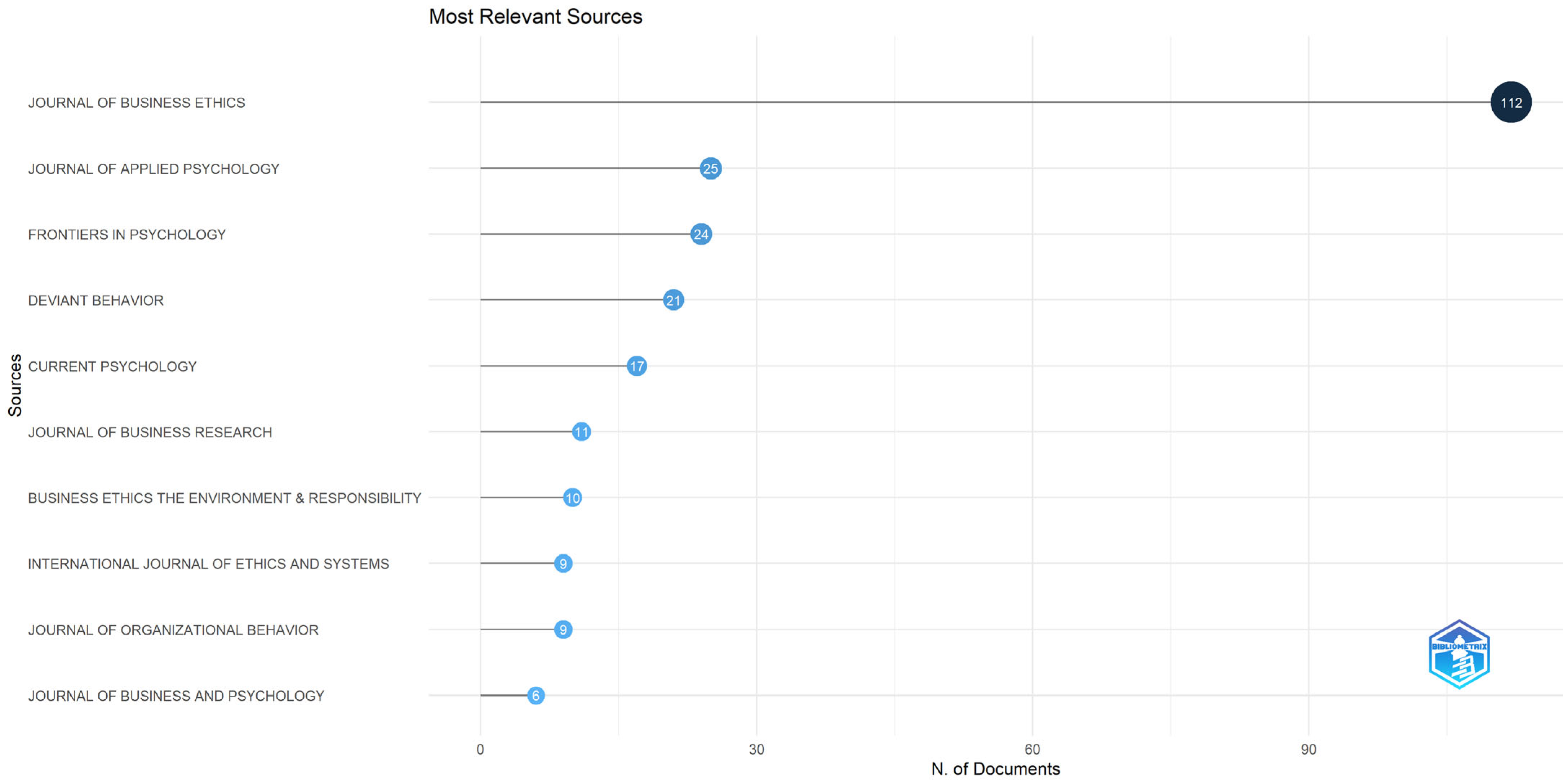
The concentration of publications within a limited set of outlets may indicate a degree of institutional stabilization within this theory-filtered segment. However, this should be understood as an inferential interpretation of publication patterns rather than as direct evidence that the field has reached maturity. Such concentration may reflect a broader process of institutionalization in which evaluation standards, legitimate frameworks, and methodological expectations become increasingly stabilized [
24]. The presence of research on business ethics and organizational psychology suggests a differentiated division of intellectual labor. This corpus therefore reflects both normative and mechanism-oriented orientations. This dual anchoring may help explain the sustained expansion of this segment of the literature. As measurement tools and analytical models become more standardized, the literature may become more cumulative and more readily coordinated across journals.
The patterns emerging from the co-lexical and factorial analyses suggest a coherent conceptual organization of this theory-filtered segment around a relatively small number of frequently associated explanatory mechanisms. The co-citation analysis provides convergent support for this interpretation by indicating a relatively stable set of influential references underlying these conceptual patterns. In particular, several of the most highly co-cited references identified in
Table 2 appear as central anchors in the network. This convergence between co-occurrence, factorial and co-citation analyses reinforces the robustness of the identified structure, suggesting that the observed clusters are unlikely to be solely artifacts of author-keyword aggregation and are consistent with recurrent conceptual proximities. Within this structure, moral disengagement appears as a particularly central reference point. It can be interpreted as a bridging construct within this corpus, linking several strands of research including organizational pressures, leadership dynamics, identity-related processes and behavioral manifestations of workplace dishonesty. The prominence of moral disengagement theory may also indicate a shift within this segment of the literature toward a more socio-cognitive interpretation of unethical behavior. Recent empirical and meta-analytical research has further reinforced the explanatory power of moral disengagement in predicting unethical workplace behavior, particularly in high-pressure and performance-oriented organizational contexts [
5]. From this perspective, such behaviors cannot be reduced to individual moral deficiencies or weak regulatory frameworks (rules). Instead, they are often discussed in relation to mental justification processes that attenuate moral self-regulation as described by Bandura [
19]. This socio-cognitive orientation appears particularly visible in recent studies examining digital work environments [
25]. The recurrent association between moral disengagement, results-oriented thinking, abusive supervision, and unethical outcomes further suggests that this corpus may increasingly appear to reflect a context-sensitive understanding of these behaviors, highlighting their organizationally situated and occasionally instrumentalized dimensions [
12].
These patterns become even more meaningful when viewed in light of the rapid development of this theory-filtered segment of the literature that occurred over the past decade. The chronological analysis suggests a gradual movement beyond a mainly descriptive orientation toward more explicit theoretical explanation. Earlier studies tended to focus mainly on broad themes such as job satisfaction and white-collar crime, whereas more recent works appear to engage more explicitly with theoretical explanation. The increased visibility of moral disengagement since 2022 may reflect a stronger stabilization of moral disengagement as a recurring interpretive lens within this corpus, particularly when considered alongside prior theoretical and meta-analytical work and in relation to earlier explanatory frameworks such as neutralization theory [
26]. A marked transition becomes visible between 2023 and 2025 with the joint emergence of concepts such as bottom-line mentality, unethical pro-organizational behavior and performance pressure. This pattern is also in line with recent review-based scholarship showing that unethical pro-organizational behavior has become a more clearly consolidated line of inquiry, with growing attention to its antecedents, boundary conditions and theoretical integration within organizational ethics research [
27]. Taken together, these patterns may signal a growing research interest in the intersection between performance-oriented organizational demands and justificatory mechanisms [
28]. Rather than demonstrating a turning point in the field, the observed trend should be interpreted more cautiously as an emerging emphasis that is consistent with recent literature on bottom-line mentality, unethical pro-organizational behavior, and performance pressure. Recent work on bottom-line mentality supports this reading by showing that performance-focused organizational frames can channel employee cognition and behavior in both constructive and dysfunctional directions, thereby reinforcing the relevance of pressure-based explanatory mechanisms in this segment of the literature [
29]. The proliferation of studies since 2022 suggests an increasing tendency to mobilize moral disengagement theory as an interpretive lens for examining ethical frictions associated with post-pandemic productivity demands and economic uncertainty. Ultimately, the results of this analysis suggest that moral disengagement is increasingly mobilized within this corpus as an interpretive lens for examining high-pressure organizational contexts.
Our thematic mapping suggests the presence of a potential structural tension; there appears to be a gap between the visibility of a theory and its internal development. This theory-filtered segment identifies moral disengagement and moral identity theories as its main topics, yet their status as fundamental themes suggests that they may often be used as a standardized framework rather than being deeply expanded [
23]. Other important themes like performance pressure and abusive supervision appear to be in an early stage of structural consolidation. They are clearly relevant, but they have not yet reached the same level of structural maturity or widespread use as the dominant frameworks. They are gaining ground, but their further development may depend on additional conceptual clarification regarding the processes through which they are linked to unethical outcomes [
12].
The persistent compartmentalization of certain related topics suggests the existence of internal boundaries within this line of research that may limit the development of more integrative models linking ethical degradation, justification and regulation [
23]. MCA offers additional, but necessarily interpretive, support for this reading by identifying latent dimensions whose interpretation is anchored in the strongest contributing terms (
Supplementary Table S1). While the first dimension appears clearly structured, the second dimension reflects a more diffuse and less strongly differentiated contrast. It helps move beyond a purely algorithmic reading of clusters, as discussed by Hedström et al. [
13], by highlighting broader conceptual dimensions within this corpus. The convergence between three different analytical methods (co-occurrence networks, thematic positioning and factorial structure) suggests that the identified architecture is consistent with recurring theoretical contrasts within this line of organizational ethics research.
The analysis of thematic development suggests that this architecture did not emerge abruptly, but rather developed through gradual maturation. The shift from fragmented terminology toward a unified framework centered on moral disengagement theory may reflect the increasing theoretical coherence of this body of work. For many years, researchers relied on Robinson and Bennett’s scales [
30,
31], which became widely used reference instruments for measuring dishonesty in the workplace. This move toward standardization may have helped stabilize the way different outcomes are categorized.
Our scientific mapping suggests an increasing emphasis on linking individual behavior to broader organizational conditions rather than examining behavior in isolation. Instead, there appears to be a shift in the literature toward linking psychological-level processes more closely with broader organizational conditions. This transition may indicate a growing interest in capturing a broader perspective by moving beyond isolated individual behavior to understand the interaction between the broader work environment and a person’s own internal moral framework. One of the most striking results was the consistency between recent trending topics and the most frequently cited classics, which is consistent with the presence of a relatively stable intellectual base that has guided our understanding of deviance within this line of research for decades. However, this stability does not imply that this line of research is closed; rather, it may provide a relatively solid foundation for further theoretical development. This consistency is further reinforced by the co-citation structure, which suggests that contemporary developments remain anchored in a relatively stable set of highly co-cited foundational references.
6. Conclusions
This study provides a theory-informed bibliometric mapping of a deliberately selective segment of the literature on workplace dishonesty, centered on dominant socio-cognitive and organizational explanatory mechanisms. Rather than aiming at an exhaustive synthesis, the analysis focuses on how this theory-filtered corpus is structured, how it has evolved, and which conceptual configurations currently organize this line of research.
The results highlight three main insights. First, this corpus shows signs of increasing organization, both in scientific production and conceptual structure. The literature has moved beyond an exploratory phase toward a more structured configuration anchored in a limited set of recurrent explanatory frameworks. Second, this configuration is organized around a small number of central constructs, most notably moral disengagement and ethical climate, which emerge as key reference points at the intersection of individual-level processes and organizational contexts. Third, despite this consolidation, the analysis indicates the persistence of structural contrasts between socio-cognitive, organizational, and normative perspectives, suggesting that the integration of these dimensions remains only partial.
Taken together, these findings suggest a degree of consolidation within this theory-filtered segment, particularly around recurrent constructs such as moral disengagement and ethical climate. However, this consolidation should be understood as an interpretive inference from publication patterns, keyword structures, thematic positioning, and co-citation anchors, rather than as direct evidence of full field maturity. The coexistence of recurrent frameworks and unresolved structural contrasts suggests that this research area may be evolving through the organization of existing explanatory logics rather than through the replacement of one dominant paradigm by another.
By combining multiple science-mapping techniques within a theory-informed design, this study contributes to the literature in two ways. Empirically, it provides a structured overview of the performance, organization, and evolution of this corpus. Conceptually, it identifies how dominant explanatory mechanisms are positioned and interconnected within this segment, thereby offering a structured interpretation of its conceptual organization.
Overall, the findings suggest that, within this corpus, dishonest behavior is increasingly examined in relation to cognitive justification mechanisms, organizational conditions, and performance-related pressures. Future research may therefore benefit less from expanding the range of constructs than from refining the conditions under which existing frameworks operate, and from examining how their explanatory roles vary across organizational contexts.
7. Limitations
This study is based on a theory-informed and deliberately selective corpus and therefore does not aim to represent the full scope of workplace dishonesty research. Instead, it provides a focused mapping of dominant socio-cognitive and organizational explanatory mechanisms within this specific segment of the literature. The findings should therefore be interpreted within the boundaries of this analytical design.
First, the scope of the analysis is partly determined by the databases used and by their respective indexing protocols. It is inevitable that some relevant works published outside Scopus and Web of Science may have been excluded.
Second, the composition of the dataset is also influenced by the search strategy adopted for the review. We adopted a theory-informed query to focus on specific theoretical perspectives. However, this approach may have unintentionally favored certain theoretical traditions over others that did not explicitly employ our designated search terms.
Third, methodological constraints related to scientometric mapping should also be acknowledged. Accordingly, co-occurrence networks, thematic maps and MCA are interpreted here as tools for identifying patterns of association, clustering and conceptual proximity, rather than as direct evidence of causal, generative or statistically confirmed theoretical mechanisms. These analytical approaches rely strongly on author-defined keywords and on citation patterns, which often reflect disciplinary labeling conventions rather than the raw conceptual core of the research itself.
An additional limitation concerns the reference co-citation analysis, which was conducted on the Web of Science dataset only rather than on the merged corpus. This was a deliberate methodological choice made to improve the stability and interpretability of the co-citation network, in line with Bibliometrix guidance regarding the limitations of citation and co-citation analysis for merged databases [
10]. However, this also means that some works with high citation impact in the merged corpus may appear less prominent in the co-citation structure. The co-citation results should therefore be interpreted as reflecting the intellectual structure captured within the Web of Science reference network rather than the entirety of citation relationships across the merged dataset.
Finally, citation-based indicators naturally exhibit a time-lag bias favoring older and established publications. This can create a visibility bias where foundational theoretical anchors appear disproportionately prominent compared to more recent and innovative contributions that have not yet had sufficient time to accumulate a comparable volume of citations.