1. Introduction
Rural tourism has emerged as a critical driver for sustainable development, particularly in developing countries where agriculture and traditional livelihoods dominate [
1,
2]. In Indonesia, rural tourism offers opportunities to diversify local economies while preserving cultural and natural heritage [
3,
4]. Yogyakarta, as a cultural hub, has pioneered community-based initiatives to strengthen its tourism ecosystem [
5]. Homestay programs have become one of the most popular approaches in rural tourism due to their potential for direct community involvement [
6,
7]. These programs are increasingly viewed as strategic tools for balancing economic growth with cultural sustainability [
8,
9,
10].
Homestays provide unique opportunities for visitors to experience authentic local lifestyles while simultaneously benefiting host communities [
11]. Proper management of homestays ensures that local families can gain financial returns without compromising traditional values [
12,
13]. In Yogyakarta, homestay networks have expanded rapidly, particularly in villages with strong cultural attractions [
14]. However, management practices often remain informal, with limited attention to professional standards [
15,
16,
17]. This imbalance poses challenges to long-term sustainability and competitiveness [
11,
18,
19,
20,
21].
Community empowerment through homestay management extends beyond economic outcomes [
22,
23]. It enables residents to take ownership of tourism processes and build resilience against external market fluctuations [
24,
25,
26]. Empowerment also nurtures local pride and cultural identity, which are essential for creating meaningful visitor experiences [
27,
28,
29]. Yet, empowerment is not automatic, as it requires structured participation and knowledge-sharing systems [
30,
31,
32,
33]. The success of homestay initiatives depends largely on the degree to which communities are empowered to manage tourism resources effectively [
34,
35,
36].
Globally, homestay models have been used as examples of inclusive and responsible tourism practices [
37]. Countries such as Thailand, Nepal, and Vietnam have showcased the benefits of integrating homestay management into rural tourism strategies [
38,
39,
40]. In Indonesia, government programs have encouraged rural communities to adopt homestay businesses as part of national tourism development [
41,
42,
43]. Despite these efforts, there is still a lack of systematic understanding of how homestay management translates into sustainable community empowerment [
44,
45]. This indicates a pressing need for deeper research, particularly in cultural destinations like Yogyakarta [
46].
Based on our critical review of the literature, existing studies on rural tourism and homestays in Indonesia predominantly emphasize economic outcomes, while providing limited insight into the managerial and governance processes through which empowerment is enacted. In particular, there remains a lack of qualitative research examining how communities negotiate decision-making, cultural preservation, and capacity development within homestay management. This gap highlights the need for context-sensitive research that conceptualizes empowerment as a lived and relational process rather than as a purely economic result. Most existing studies on rural tourism in Indonesia focus on economic benefits without examining the management dimensions of homestays [
47,
48,
49]. Few works investigate how homestay management contributes to long-term sustainability beyond financial gains [
50,
51,
52]. The dynamics of local participation, empowerment, and cultural preservation are often overlooked in current literature [
52,
53,
54,
55]. Moreover, there is limited qualitative exploration of the lived experiences of community members managing homestays [
56,
57,
58]. This study addresses that gap by providing in-depth insights into community empowerment through homestay management in Yogyakarta [
59,
60,
61].
This study examines how homestay management functions as a mechanism of community empowerment in rural Yogyakarta through an in-depth qualitative approach. Drawing on prior research on community-based tourism and empowerment, the study advances understanding by analysing empowerment as a multidimensional and processual phenomenon embedded in local socio-cultural contexts. The novelty of this study lies in its integration of homestay management with community empowerment as a lens for sustainable rural tourism [
59]. While previous research tends to analyze economic impacts, this study highlights empowerment processes such as decision-making, skill development, and cultural safeguarding [
59,
62]. It also emphasizes the innovative role of homestay management in linking traditional hospitality practices with modern sustainability strategies [
63,
64]. By focusing on Yogyakarta, a region rich in cultural heritage, the research provides a unique contextual contribution to tourism studies [
65]. This novelty positions the research as a valuable addition to both academic debates and policy discourses [
64,
66].
The research question consists of (1) How does homestay management empower local communities as an innovative strategy for sustainable rural tourism in Yogyakarta? (2) What forms of empowerment emerge from homestay management? (3) How do homestay initiatives balance economic benefits with cultural preservation? (4) What challenges and opportunities do communities encounter in sustaining homestay operations? These questions allow for a comprehensive exploration of empowerment as both a process and an outcome [
57,
58]. They also ensure that the study addresses theoretical, practical, and policy-oriented dimensions [
55,
56].
The primary aim of this research is to investigate how homestay management empowers rural communities to achieve sustainable tourism development in Yogyakarta. Specifically, the study seeks to identify strategies that enhance local participation, cultural continuity, and economic resilience [
63]. It also aims to highlight innovative practices that strengthen the link between traditional hospitality and sustainable tourism models [
50,
52]. By doing so, the research aspires to provide actionable insights for tourism policymakers, practitioners, and local stakeholders [
55,
57]. Ultimately, the study contributes to the broader discourse on rural tourism as a tool for inclusive development [
16,
17].
2. Literature Review
This literature review synthesizes key debates on community-based tourism, homestay management, empowerment frameworks, and sustainable rural tourism. The literature review is organized into five thematic areas that collectively inform the conceptual framing of this study and justify its analytical focus on empowerment through homestay management.
2.1. Community-Based Tourism (CBT) and Empowerment
Community-Based Tourism (CBT) has gained recognition as a sustainable approach that integrates local participation in tourism planning and operations. Research shows that CBT initiatives can strengthen social cohesion and empower communities when implemented with inclusivity and transparency [
67,
68]. Empowerment in this context refers to community control over resources, decision-making, and benefits distribution [
69,
70]. However, challenges arise when external stakeholders dominate, leading to reduced community ownership and inequitable benefit sharing [
71,
72,
73]. This highlights the importance of designing CBT projects that prioritize local empowerment as a foundation for long- term sustainability.
2.2. Homestay Management as a Sustainable Model
Homestay programs represent a vital mechanism of CBT by directly linking tourism benefits with household-level economic opportunities. Effective homestay management contributes to enhanced visitor experiences while ensuring that cultural practices are preserved [
18,
74,
75]. Studies suggest that well-managed homestays create economic resilience by diversifying rural income sources [
66,
76,
77]. Yet, informal management practices and a lack of professional training often hinder their scalability and competitiveness [
64,
78]. Addressing these challenges through structured capacity building is crucial for the sustainability of homestay enterprises.
2.3. Tourism Empowerment Frameworks
Empowerment within tourism research has been conceptualized in economic, social, psychological, and political dimensions. Refs. [
79,
80] proposed an empowerment framework that highlights how tourism can serve as a pathway for communities to gain confidence, participation, and financial independence. Recent research confirms that empowerment through tourism fosters resilience and collective pride, especially among marginalized groups [
66,
70]. In rural tourism settings, empowerment is also associated with preserving cultural identity while navigating modernization pressures [
63,
81]. This framework is particularly relevant for analyzing homestay management in Yogyakarta, where cultural and community values play a central role.
2.4. Sustainability and Homestays in Rural Tourism
Homestays contribute to sustainability by promoting low-impact accommodation, authentic cultural interaction, and equitable distribution of benefits. Empirical studies in Malaysia and Sri Lanka indicate that homestays enhance environmental and cultural sustainability when integrated with strong community governance [
82,
83]. However, sustainability outcomes depend on how well homestays balance visitor demand with community capacity [
68,
79,
80]. Over-commercialization risks eroding cultural authenticity and undermining long-term sustainability goals [
84]. Therefore, homestay models must integrate sustainable practices, from resource management to cultural preservation.
2.5. Rural Tourism in the Southeast Asian Context
Southeast Asia provides fertile ground for analyzing the intersection between rural tourism, empowerment, and sustainability. In countries like Thailand and Vietnam, homestay programs have been integrated into rural development strategies with mixed outcomes [
85,
86,
87]. Indonesian studies highlight that while rural tourism boosts local economies, gaps remain in capacity building and formalized governance [
88,
89,
90,
91]. Yogyakarta, with its cultural richness, illustrates both the opportunities and challenges of linking tourism with community empowerment [
65]. Comparative insights from the region emphasize that sustainable homestay management requires tailored strategies reflecting cultural and institutional contexts.
3. Method
This study adopted a qualitative research design to capture the lived experiences, perceptions, and practices of local communities engaged in homestay management. A qualitative approach was chosen because it enables researchers to explore complex social realities and uncover meanings that quantitative methods might overlook [
92]. This design is particularly suitable for analyzing empowerment processes, cultural preservation, and community participation within the tourism context. The study is exploratory in nature, aiming to generate insights rather than test hypotheses. Such an approach aligns with understanding how homestay management fosters sustainable rural tourism.
The research was conducted in several rural villages in Yogyakarta that have established homestay programs as part of their tourism development initiatives. Yogyakarta was selected because of its strong cultural heritage, established community-based tourism networks, and increasing popularity among domestic and international tourists. Villages were purposively chosen to reflect variation in homestay maturity levels, from long-established operators to recently developed programs. This diversity provided a comprehensive perspective on how homestay management contributes to community empowerment. Contextual factors such as cultural richness and community governance structures were central to the site selection process.
Participants included homestay owners, community leaders, local government tourism officers, and tourism stakeholders such as Pokdarwis (tourism awareness groups). Purposive sampling was applied to ensure the inclusion of individuals directly involved in or knowledgeable about homestay operations. A total of 25 participants were interviewed, representing diverse genders, ages, and occupational backgrounds. The selection of participants was based on the principle of information-rich cases, ensuring that the data collected would provide meaningful insights into empowerment and sustainability. Recruitment was facilitated through local tourism offices and community organizations.
Data collection was carried out using three primary techniques: semi-structured interviews, focus group discussions (FGDs), and participant observation. Semi-structured interviews allowed participants to express their experiences and perspectives in their own words while enabling the researcher to probe deeper into emerging issues. FGDs provided a platform for collective discussion, revealing community dynamics and shared perspectives on homestay management. Participant observation involved the researcher living in homestays, attending community meetings, and observing daily operations to capture contextual insights. Data were collected over three months, ensuring depth and richness of information.
Data were analyzed using thematic analysis following [
93,
94] six-phase framework: familiarization with the data, generating initial codes, searching for themes, reviewing themes, defining and naming themes, and producing the report. All interviews and discussions were transcribed verbatim and coded manually and with the aid of NVivo 15 software. Codes were organized into broader categories such as economic empowerment, cultural preservation, and governance participation. Themes were then constructed to reflect the central dimensions of empowerment through homestay management. The analysis process was iterative, allowing refinement of themes as new insights emerged.
To ensure the credibility and trustworthiness of findings, several strategies were applied. Member checking was conducted by sharing preliminary results with participants to validate interpretations. Triangulation was achieved by comparing data from interviews, FGDs, and observations. Peer debriefing with academic colleagues helped refine coding and thematic development. Dependability was enhanced by maintaining a detailed audit trail of the research process, including field notes and coding decisions. Transferability was supported by providing thick descriptions of the research context, enabling readers to assess applicability to other settings.
A purposive sampling strategy was employed to identify information-rich cases, defined as individuals who were directly involved in homestay management, had a minimum of two years’ experience in tourism activities, and actively participated in community decision-making related to tourism. The study was conducted in four rural tourism villages in Yogyakarta, selected to reflect variation in homestay maturity levels and governance structures. Data collection continued until thematic saturation was achieved; saturation was reached after the 22nd interview, and three additional interviews were conducted to confirm analytical stability, resulting in a total of 25 participants.
Data were analysed using reflexive thematic analysis following Braun and Clarke’s six-phase framework. Initial open coding generated codes such as “income diversification,” “cultural pride,” “shared governance,” and “digital promotion.” These codes were iteratively clustered into higher-order themes, including economic empowerment, social empowerment, institutional support, and intergenerational innovation, which were iteratively refined into higher-order themes. NVivo software supported systematic coding and theme development. Analytical consistency was ensured through peer debriefing and iterative discussion rather than statistical inter-coder reliability, in line with reflexive qualitative research principles.
Member checking was conducted with twelve participants, who reviewed preliminary findings and thematic interpretations. Feedback resulted in minor refinements to theme naming and interpretation, particularly regarding cultural preservation and governance roles. This theme emerged consistently across interviews, focus group discussions, and participant observations, indicating a shared experience among community members. This narrative illustrates economic empowerment not only as income generation but also as enhanced household resilience and autonomy. At the same time, the expressed need for training reveals capability constraints, underscoring empowerment as an ongoing and negotiated process rather than a completed outcome.
4. Results and Discussion
4.1. Results
The qualitative interviews revealed four interconnected themes that illustrate how homestay management empowers local communities in Yogyakarta. These themes include economic empowerment, social empowerment, institutional support, and intergenerational innovation. Although individual quotations are presented for illustrative purposes, this theme reflects patterns observed across multiple participants, data sources, and villages.
Across the dataset, participants expressed varying degrees of engagement and benefit, indicating that empowerment outcomes are shaped by household capacity, access to institutional support, and generational roles. These variations highlight empowerment as uneven and negotiated rather than uniformly experienced.
4.2. Economic Empowerment
Informant 1, a 42-year-old homestay owner, shared how operating a homestay has transformed her household economy: “Before opening our homestay, we relied only on farming, and income was uncertain. Now, with guests staying here, I can earn regularly, pay for my children’s school, and still cook traditional meals for visitors.” She also emphasized cultural pride in her hospitality practices: “I like to teach them how to make traditional snacks or join our family for local ceremonies.” However, she also recognized challenges: “Sometimes guests expect hotel-like facilities, but we are just a family. We need more training.”
This finding reflects the role of homestays in enhancing financial stability and diversifying income sources, consistent with [
95,
96,
97], who found that rural homestays reduce dependence on agriculture. Women’s involvement in homestay operations also contributes to gender empowerment, in line with [
98], who highlight tourism’s capacity to support women’s entrepreneurship. Nevertheless, as Informant 1 acknowledged, inadequate skills and lack of formal training limit service quality, echoing [
49,
99,
100] who argue that informal management practices undermine long-term sustainability. Thus, economic empowerment through homestays is evident, but requires structured training and professionalization to ensure lasting impacts.
4.3. Social Empowerment
Informant 2, a 55-year-old community leader, highlighted the importance of collective benefit-sharing: “We decided that income should not go only to a few houses. That’s why we rotate guests and share benefits among members.” He also emphasized social solidarity: “When we prepare cultural festivals together, we feel united, not just as individual households but as one village.” Yet, he admitted challenges: “Not everyone wants tourists inside their homes. Some worry about privacy or cultural disruption.”
These narratives show how homestay initiatives foster collective identity and solidarity, aligning with [
101,
102,
103] who frames social empowerment as enhanced community cohesion through tourism. Similar dynamics are reported in Vietnam, where CBT strengthened village solidarity [
104,
105]. However, Informant 2’s mention of resistance mirrors findings by [
106] who observed that CBT participation is often uneven due to household concerns about cultural intrusion. Therefore, while social empowerment is strengthened through homestay projects, sustainable outcomes require inclusive governance mechanisms to address resistance and promote equitable involvement.
4.4. Institutional Support
Informant 3, a 36-year-old local government officer, explained the government’s role in facilitating homestay development: “We organize training in hospitality and digital promotion, and sometimes we provide small grants for homestay improvements.” However, she acknowledged inconsistencies: “Budget is limited, so not all villages receive equal support each year.” She emphasized policy alignment: “Homestays are not only about money but about community resilience. They align with our goal to reduce poverty while keeping traditions alive.”
Her perspective highlights the critical role of institutions in enabling community-based tourism, consistent with [
10,
107], who found that government support is essential for sustaining CBT in Indonesia. Similar to [
63,
108,
109,
110] in Nepal, limited resources constrain the continuity of such programs, raising questions about long-term sustainability. Informant 3’s testimony underscores the gap between policy ambition and practical implementation, suggesting that institutional empowerment must be accompanied by consistent monitoring and collaboration with community stakeholders. Therefore, while institutional involvement acts as a catalyst, its effectiveness depends on stronger governance frameworks and equitable distribution of resources.
4.5. Intergenerational Innovation
Informant 4, a 28-year-old homestay manager, emphasized the role of digital transformation: “I promote our homestay on Instagram and TikTok. Young tourists like to see authentic experiences online before booking.” He highlighted its impact: “Before, guests came only from travel agents, now they contact us directly.” At the same time, he expressed caution: “Some neighbors want to make homestays like hotels, but if we lose our traditions, then what makes us different?” He concluded: “We must modernize, but still respect our culture. That is what makes Yogyakarta special.”
This perspective illustrates how younger generations contribute to innovation by leveraging digital tools, echoing [
37,
111,
112] who argue that CBT sustainability depends on integrating cultural authenticity with digital transformation. Such practices expand market access while reframing cultural narratives for younger tourists, as also noted by [
113]. Yet, Informant 4’s concerns reflect the risks identified by [
114], who caution that commercialization may dilute cultural authenticity. Thus, intergenerational innovation provides opportunities to modernize tourism strategies, but maintaining cultural integrity remains essential for differentiation and long-term sustainability. These findings show that empowerment through homestay management in Yogyakarta is multi-dimensional. Economic empowerment strengthens household resilience, social empowerment builds solidarity, institutional support provides enabling structures, and intergenerational innovation ensures adaptability in a digital era. However, each dimension is accompanied by challenges such as skill gaps, cultural resistance, inconsistent governance, and risks of over-commercialization. By analysing empowerment holistically, this study contributes to the literature by demonstrating how homestay management fosters sustainable rural tourism when tradition, innovation, and governance are effectively balanced.
4.6. Empowerment Through Homestay Management
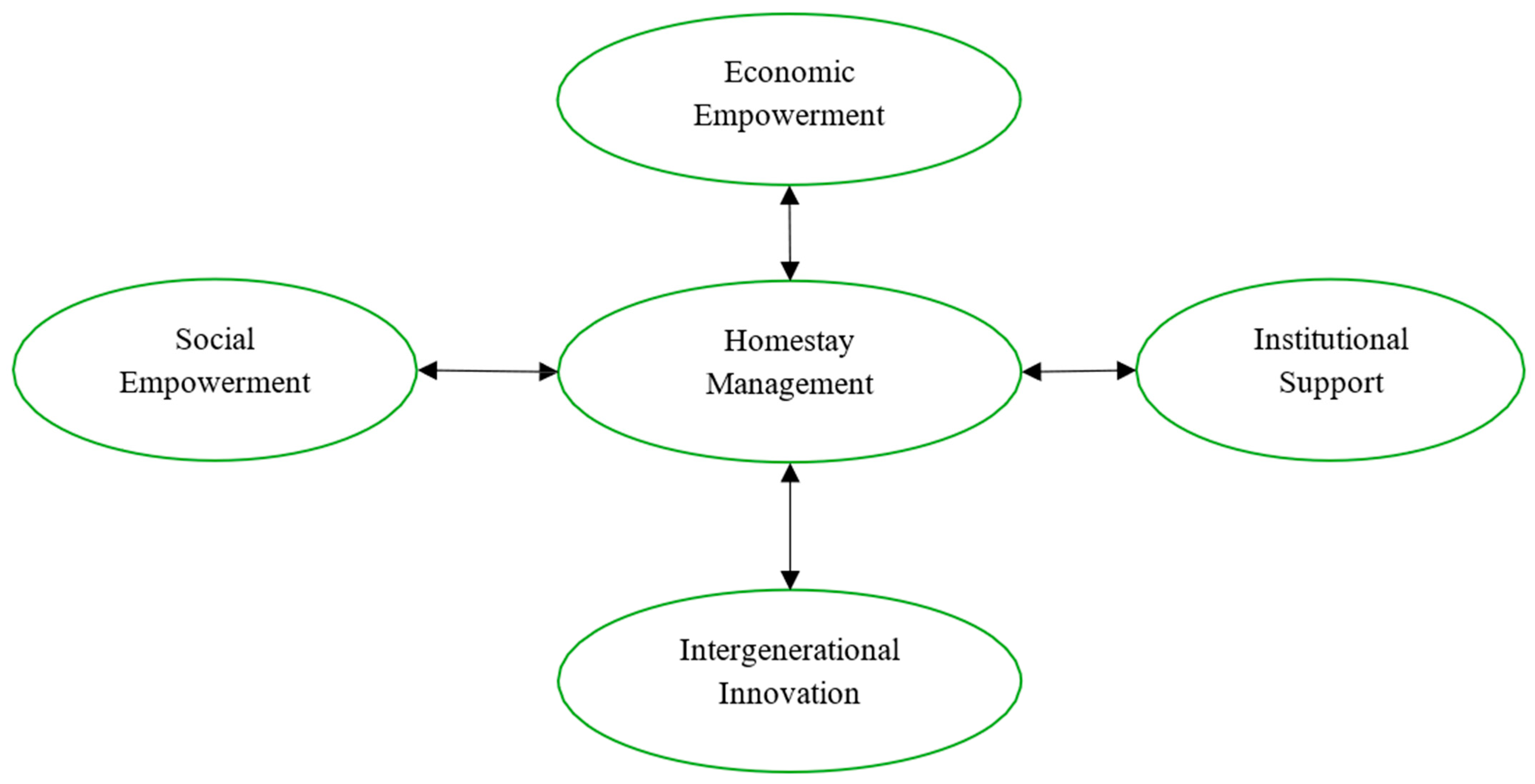
Figure 1 conceptualizes empowerment through homestay management as a dynamic and interrelated process. Bidirectional arrows indicate reciprocal relationships, whereby economic empowerment reinforces social cohesion, social and institutional empowerment strengthen governance capacity, and intergenerational innovation mediates adaptation to market changes while safeguarding cultural integrity.
5. Discussion
Synthesizing insights from interviews, focus group discussions, and participant observation reveals that empowerment through homestay management is collectively constructed. While individual narratives provide depth, broader patterns indicate shared processes of negotiation, collaboration, and constraint that shape community empowerment outcomes.
5.1. Economic Empowerment Through Homestay Management
The results from Informant 1 reveal how homestay management directly contributes to household economic empowerment by providing an alternative income stream. This finding resonates with [
95,
96,
97], who argue that homestays diversify rural livelihoods and reduce economic vulnerability. Informant 1 also highlighted the acquisition of new skills, such as digital booking management, which enhances both competitiveness and sustainability. This aligns with [
80,
82], who demonstrated that professionalized homestay management improves tourist loyalty and economic resilience. However, economic empowerment must be supported with structured training and financial literacy programs, as informal practices may limit long-term growth [
67,
79].
5.2. Social Empowerment and Community Solidarity
Informant 2 emphasized the collective benefits of homestay initiatives, particularly in strengthening social cohesion through
Pokdarwis (tourism awareness groups). This reflects the concept of social empowerment as proposed by [
79], where tourism enhances community solidarity and shared decision-making. Similar outcomes were observed in Vietnam, where collective tourism initiatives fostered stronger community bonds [
83,
91]. The interview also revealed resistance among some households concerned about privacy, which echoes [
67,
69,
70], who note that community participation in CBT is uneven due to social and cultural factors. Thus, while homestays foster unity, inclusive governance and communication remain critical for ensuring equitable participation.
5.3. Institutional Support and Governance
The perspective of Informant 3 highlights the vital role of local government in capacity building, training, and promotion. This corresponds with [
59,
62,
63], who found that institutional support is a key determinant of sustainable CBT in Indonesia, though continuity is often disrupted by budget limitations. The alignment of homestay initiatives with regional tourism strategies, as noted by Informant 3, reflects broader policy goals for poverty alleviation and rural development. Yet, inconsistent support risks undermining community trust, a challenge also identified in Nepal by Tiwari [
63]. Effective governance thus requires stronger collaboration between community leaders, government bodies, and tourism stakeholders to institutionalize empowerment practices.
5.4. Intergenerational Innovation and Digital Transformation
Informant 4’s testimony underscores the role of youth in integrating digital innovation into homestay management. His use of Instagram and booking apps illustrates how intergenerational collaboration ensures tourism remains relevant to modern markets. This finding aligns with [
9,
115,
116], who emphasize that sustainable community-based tourism requires blending cultural authenticity with digital hospitality strategies. Younger homestay managers not only expand market reach but also introduce new cultural narratives appealing to urban and international tourists [
37]. However, commercialization risks cultural dilution, as noted by [
117], suggesting that innovation must remain anchored in local values to preserve authenticity.
These findings suggest that empowerment through homestay management is multi-dimensional. Economic empowerment enhances household resilience, social empowerment strengthens solidarity, institutional support provides governance frameworks, and intergenerational innovation ensures adaptability in the digital era. This study contributes to existing literature by showing how these dimensions intersect in Yogyakarta’s rural tourism landscape. While prior research has often examined empowerment in isolation, this study demonstrates how economic, social, institutional, and intergenerational elements collectively sustain homestay initiatives. These insights reinforce the argument that sustainable rural tourism requires holistic strategies that balance tradition, innovation, and inclusive governance.
The findings systematically address the four research questions. First, homestay management empowers communities by embedding economic participation, cultural engagement, and governance involvement in everyday tourism practices. Second, empowerment emerges in economic, social, institutional, and intergenerational forms that operate simultaneously. Third, economic benefits are balanced with cultural preservation by integrating tourism into daily household and community life rather than commodifying culture in isolation. Fourth, communities face challenges related to skill gaps, uneven participation, and institutional dependency, alongside opportunities arising from digital platforms and growing demand for authentic rural experiences.
6. Conclusions
This study explored how homestay management empowers local communities in Yogyakarta as a strategy for sustainable rural tourism. Findings reveal that empowerment occurs across four dimensions: economic empowerment through improved household resilience and women’s entrepreneurship; social empowerment through solidarity and collective governance; institutional support through training and policy initiatives; and intergenerational innovation through digital marketing and cultural preservation. Together, these dimensions demonstrate that homestay management is more than an economic activity; it is a transformative tool that integrates tradition, community cohesion, and modernization. Despite challenges such as skill gaps, inconsistent government support, and risks of cultural dilution, the study confirms that homestay management has the potential to promote inclusive and sustainable rural development when supported by holistic strategies.
The practical implications of this study highlight the need for targeted training programs to improve hospitality skills, financial literacy, and digital competencies among homestay operators. For policymakers, the research emphasizes the importance of consistent institutional support and equitable resource allocation to ensure long-term sustainability of community-based tourism initiatives. Local communities are encouraged to strengthen inclusive governance mechanisms to address internal resistance and ensure that all households benefit from tourism. For industry practitioners, the study underscores the role of digital transformation as a means to reach wider markets while maintaining cultural authenticity. Collectively, these implications provide actionable insights for advancing rural tourism policies in Indonesia and beyond.
This research contributes to the academic literature in three main ways. First, it extends the understanding of community empowerment in rural tourism by integrating four empowerment dimensions into a holistic framework. Second, it introduces the perspective of intergenerational innovation, highlighting the role of younger managers in bridging traditional hospitality and digital marketing—a relatively underexplored area in community- based tourism studies. Third, the research enriches the contextual knowledge of sustainable tourism in Yogyakarta, offering empirical evidence from Indonesia that contributes to comparative studies across Southeast Asia. These contributions strengthen theoretical debates on empowerment frameworks and provide a practical model for policymakers and community stakeholders.
Future research could expand this study by incorporating a larger number of villages to compare variations in empowerment outcomes across different cultural and institutional contexts. A mixed-methods approach combining qualitative insights with quantitative measurements could provide a more robust assessment of empowerment indicators, such as household income growth, women’s participation rates, or digital engagement outcomes. Longitudinal studies would be particularly valuable in examining how empowerment evolves over time and in response to changing market dynamics. Comparative studies between Indonesia and other Southeast Asian countries, such as Thailand or Vietnam, could also offer broader insights into the regional potential of homestay-based tourism. Finally, future research could explore the role of environmental sustainability practices within homestay operations, such as waste management and green infrastructure.
This study has several limitations that must be acknowledged. First, the qualitative design, while rich in depth, limits the generalizability of findings beyond the selected communities in Yogyakarta. Second, the relatively small number of informants restricts the diversity of perspectives, particularly regarding gender, socioeconomic background, and household participation levels. Third, the reliance on self-reported data introduces the possibility of bias, as participants may have emphasized positive outcomes over challenges. Fourth, institutional perspectives were limited to local government officials, while insights from national or provincial policymakers were not included. Lastly, the study primarily focused on empowerment dimensions, leaving environmental sustainability practices as an area for future exploration. Rather than proposing a universal model, this study contributes context-specific insights into how empowerment through homestay management unfolds in rural Yogyakarta. The study extends existing community-based tourism literature by illustrating how economic, social, institutional, and intergenerational dimensions of empowerment interact in practice, offering an empirically grounded understanding that complements—rather than replaces—broader theoretical frameworks.
Author Contributions
Conceptualization, R.S., J.J. and I.B.H.; methodology J.J., D.M.L. and I.B.H.; software, D.M.L. and J.J.; validation, I.B.H. and J.J.; formal analysis, R.S. and J.J.; investigation, J.J., R.S., I.B.H., D.M.L. and A.P.; resources, J.J., D.M.L., I.B.H. and R.S.; data curation, J.J. and R.S.; writing—original draft, R.S., J.J., D.M.L., A.P. and I.B.H.; writing—review and editing, R.S., J.J., D.M.L., A.P. and I.B.H.; supervision, J.J. and D.M.L.; funding acquisition, R.S., J.J., D.M.L., A.P. and I.B.H. All authors have read and agreed to the published version of the manuscript.
Funding
This research received no external funding.
Institutional Review Board Statement
Informed Consent Statement
Informed consent was obtained from all subjects involved in the study.
Data Availability Statement
The original contributions presented in the study are included in the article. Further inquiries can be directed to the corresponding author.
Acknowledgments
The authors would like to thank the respondents who participated in this research and who were willing to be data sources. During the preparation of this manuscript, the authors used AI (ChatGPT 5.2) for the purposes of language refinement, such as grammar correction, improving readability, and polishing sentence structure. AI tools were not used to generate research ideas, analyze data, create conceptual frameworks, or produce core scientific content. All substantive content including research design, conceptual development, fieldwork, data interpretation, findings, and scholarly arguments was developed entirely by the authors. The authors have reviewed and edited the output and take full responsibility for the content of this publication.
Conflicts of Interest
The authors declare no conflicts of interest.
References
- Ibănescu, B.; Stoleriu, O.; Munteanu, A.; Iatu, C. The Impact of Tourism on Sustainable Development of Rural Areas: Evidence from Romania. Sustainability 2018, 10, 3529. [Google Scholar] [CrossRef]
- Knežević, M.; Vujko, A.; Borovčanin, D. Community-Centered Farm-Based Hospitality in Agriculture: Fostering Rural Tourism, Well-Being, and Sustainability. Agriculture 2025, 15, 1613. [Google Scholar] [CrossRef]
- Kausar, D.; Nishikawa, Y. Heritage Tourism in Rural Areas: Challenges for Improving Socio-economic Impacts. Asia Pac. J. Tour. Res. 2010, 15, 195–213. [Google Scholar] [CrossRef]
- Blapp, M.; Mitas, O. Creative tourism in Balinese rural communities. Curr. Issues Tour. 2018, 21, 1285–1311. [Google Scholar] [CrossRef]
- Djakasaputra, A.; Pramono, R. Green Perceived Risk, Green Viral Communication, Green Perceived Value Against Green Purchase Intention Through Green Satisfaction. J. Ind. Eng. Manag. Res. JIEMAR 2020, 1, 2722–8878. [Google Scholar]
- Prentice, C.; Dominique-Ferreira, S.; Ferreira, A.; Wang, A.X. The role of memorable experience and emotional intelligence in senior customer loyalty to geriatric hotels. J. Retail. Consum. Serv. 2022, 64, 102788. [Google Scholar] [CrossRef]
- Barač-Miftarević, S. Undertourism vs. Overtourism: A Systematic Literature Review. Tourism 2023, 71, 178–192. [Google Scholar] [CrossRef]
- Juliana; Hubner, I.B.; Lemy, D.M.; Pramezwary, A.; Djakasaputra, A. Antecedents of Happiness and Tourism Servicescape Satisfaction and the Influence on Promoting Rural Tourism. Int. J. Sustain. Dev. Plan. 2024, 19, 4041–4059. [Google Scholar] [CrossRef]
- Juliana; Sihombing, S.O.; Antonio, F. Determinants and Consequences of Memorable Tourism Experiences: A Systematic Literature Review BT-Achieving Sustainable Business Through AI, Technology Education and Computer Science: Volume 1: Computer Science, Business Sustainability, and Competitive; Hamdan, A., Ed.; Springer Nature: Cham, Switzerland, 2025; pp. 311–324. [Google Scholar] [CrossRef]
- Lemy, D.M.; Pramezwary, A.; Juliana; Pramono, R.; Qurotadini, L.N. Explorative Study of Tourist Behavior in Seeking Information to Travel Planning. Int. J. Sustain. Dev. Plan. 2021, 16, 1583–1589. [Google Scholar] [CrossRef]
- Goswami, V.; Manisha, M.; Singh, S.; Negi, M.S. Homestay Tourism in Ukhimath Block: An Assessment of Current Status and Economic Impact on Local Stakeholders. J. Mt. Res. 2025, 20, 399–407. [Google Scholar] [CrossRef]
- Ijose, O.; Kc, B. Community-Based Homestay as a Form of Sustainable Tourism in Nigeria. Sustainability 2025, 17, 5217. [Google Scholar] [CrossRef]
- Kafle, D.R. Exploring Homestay Tourism in Nepal: Unveiling Opportunities and Challenges. Hist. J. 2023, 14, 54–64. [Google Scholar] [CrossRef]
- Thipsingh, S.; Srisathan, W.A.; Wongsaichia, S.; Ketkaew, C.; Naruetharadhol, P.; Hengboriboon, L. Social and sustainable determinants of the tourist satisfaction and temporal revisit intention: A case of Yogyakarta, Indonesia. Cogent Soc. Sci. 2022, 8, 2068269. [Google Scholar] [CrossRef]
- Kunjuraman, V.; Hussin, R. Challenges of community-based homestay programme in Sabah, Malaysia: Hopeful or hopeless? Tour. Manag. Perspect. 2017, 21, 1–9. [Google Scholar] [CrossRef]
- Bhattacharya, P.; Mukhopadhyay, A.; Haldar, S.; Saha, J.; Mondal, M.; Samanta, B.; Bhattacharya, S.; Paul, S. Commercialization of Home Through Homestay Tourism: A Study on Chatakpur of Darjeeling District (India) in Commensurate to ASEAN Standard and Revisit Intention. Hist. J. 2023, 1–14. [Google Scholar] [CrossRef]
- Choenkwan, S.; Rambo, A. Has Promotion of Community-based Tourism been A Successful Rural Development Strategy in Northeast Thailand? For. Soc. 2025, 9, 146–163. [Google Scholar] [CrossRef]
- Pasanchay, K.; Schott, C. Community-based tourism homestays’ capacity to advance the Sustainable Development Goals: A holistic sustainable livelihood perspective. Tour. Manag. Perspect. 2021, 37, 100784. [Google Scholar] [CrossRef]
- KC, R.; Lama, S.; Dahal, A.; Darjee, A.; Tamang, M. Sustainable tourism development through community homestays: A case study of Ayodhyapuri Community Homestay in Madi, Chitwan, Nepal. J. Ecotourism 2024, 24, 228–236. [Google Scholar] [CrossRef]
- Khan, N.I.; Kamaluddin, A.; Saad, S.; Ismail, A.H.; Mahmud, R.; Ibrahim, N. Homestays as Catalysts for Local Economic Growth and Environmental Conservation: A Study of Selangor and Perlis. Account. Financ. Res. 2025, 14. [Google Scholar] [CrossRef]
- Gautam, S. A community-based tourism strategy: Homestays towards sustainable development. J. Rural Tour. 2025, 4. [Google Scholar] [CrossRef]
- Ardani, N.N.; Poetranto, I.W.D. Homestay development strategy at Yeh Gangga Beach tourist destination Tabanan-Bali. J. Appl. Sci. Travel Hosp. 2022, 5, 76–87. [Google Scholar] [CrossRef]
- Pribudi, A.; Pravita, V.D.; Supardal, S. Cultural Village Management Model to Enhance Cultural Tourism in The Special Region of Yogyakarta. Int. J. Soc. Serv. Res. 2023, 3, 1191–1200. [Google Scholar] [CrossRef]
- Dolezal, C.; Novelli, M. Power in community-based tourism: Empowerment and partnership in Bali. J. Sustain. Tour. 2022, 30, 2352–2370. [Google Scholar] [CrossRef]
- Khalid, S.; Ahmad, M.S.; Ramayah, T.; Hwang, J.; Kim, I. Community empowerment and sustainable tourism development: The mediating role of community support for tourism. Sustainability 2019, 11, 6248. [Google Scholar] [CrossRef]
- Purnomo, S.; Rahayu, E.S.; Riani, A.L.; Suminah, S.; Udin, U. Empowerment model for sustainable tourism village in an emerging country. J. Asian Financ. Econ. Bus. 2020, 7, 261–270. [Google Scholar] [CrossRef]
- Ketut, N.; Ab, A.; Suwena, K. Local Community Participation in Management of Tourism Villages: A Case Study of Penglipuran Village in Bali. J. Posit. Sch. Psychol. 2022, 6, 3723–3736. [Google Scholar]
- Woodall, J.; White, J.; South, J. Improving health and well-being through community health champions: A thematic evaluation of a programme in Yorkshire and Humber. Perspect. Public Health 2013, 133, 96–103. [Google Scholar] [CrossRef] [PubMed]
- Wijijayanti, T.; Agustina, Y.; Winarno, A.; Istanti, L.N.; Dharma, B.A. Rural tourism: A local economic development. Australas. Accounting, Bus. Financ. J. 2020, 14, 5–13. [Google Scholar] [CrossRef]
- Chen, C.-C.; Chook, J.W.; Nguyen, L.B.; Lee, C.-H. Integrating Locals’ Importance–Performance Perception of Community Resilience into Sustainable Indigenous Tourism Management. Sustainability 2024, 16, 5070. [Google Scholar] [CrossRef]
- Weis, K.; Chambers, C.; Holladay, P. Social-ecological resilience and community-based tourism in the commonwealth of Dominica. Tour. Geogr. 2021, 23, 458–478. [Google Scholar] [CrossRef]
- Tuyen, Q.D.; Phan, C.; Hieu, N.D.; Le Anh, T. How Has Community-Based Tourism Evolved Over Three Decades (1995–2025): A Bibliometric and Systematic Literature Review on Evolution and Future Research Directions. Sustain. Dev. 2025, 33, 8870–8893. [Google Scholar] [CrossRef]
- Cvijanović, D.; Karabašević, D.; Vujko, A.; Vukotić, S.; Popović, G.; Mirčetić, V. The Future Is Community-Led: Rethinking Rural Tourism Sustainability Through the Bregenzerwald Model. Sustainability 2025, 17, 5450. [Google Scholar] [CrossRef]
- Kc, B.; Thapa, S. The power of homestay tourism in fighting social stigmas and inequities. J. Sustain. Tour. 2024, 33, 1430–1448. [Google Scholar] [CrossRef]
- Azmi, A.; Abdullah, A.; Kamal, S.B.; Isa, N.M.; Sirait, N.N.; Purba, M.H. The Critical Success Factors Towards Homestay Development in Penang. J. Ecohumanism 2024, 3, 3235–3250. [Google Scholar] [CrossRef]
- Luekveerawattana, R. Key factors facilitating homestay success: A focus on cultural and natural values. Cogent Soc. Sci. 2024, 10, 2341479. [Google Scholar] [CrossRef]
- Juliana, J.; Pramezwary, A.; Djakasaputra, A.; Anwar, M.M.; Jie, F. The missing link in urban tourism: Connecting leisure, accessibility and resident participation for enhanced value. Cogent Soc. Sci. 2025, 11, 2556473. [Google Scholar] [CrossRef]
- Regmi, S.; Neupane, A.; Neupane, R.; Pokharel, A. Potentiality of Community-Based Tourism Homestay for Sustainable Livelihood in Nepal: A Review. Econ. Growth Environ. Sustain. 2023, 2, 01–04. [Google Scholar] [CrossRef]
- Jujia, S.; Somwang, C.; Sulaim, S. Enhancing the potential of creative community-based tourism to develop the area based on the local identity of the Si Ayutthaya group. Humanit. Arts Soc. Sci. Stud. 2025, 25, 102–113. [Google Scholar] [CrossRef]
- Pokhrel, K.R.; Mahat, K. Eco-Tourism and Homestays in Nepal: Socio-Economic and Motivational Factors in Ghalegau and Sirubari. ShodhPrabandhan J. Manag. Stud. 2025, 2, 1–10. [Google Scholar] [CrossRef]
- Nor, R.M. Sustainability of community-based tourism through the lens of homestays operators in rural area of Penang, Malaysia. Malaysian J. Soc. Sp. 2024, 20, 121–139. [Google Scholar] [CrossRef]
- Chatterjee, P.; Chakrabortty, N.; Ghosh, S. Rural Tourism and Homestays in India: Impact on Local Economy, Culture and Ecology. Int. J. Tour. Hosp. Rev. 2024, 11, 12–18. [Google Scholar] [CrossRef]
- Fang, H.; Wang, X. Research on the reuse mode of ‘homestay type’ of idle rural houses under the background of rural revitalization. Acad. J. Humanit. Soc. Sci. 2025, 8, 9–16. [Google Scholar] [CrossRef]
- Parani, R.; Hubner, I.B.; Juliana; Purba, H. The Kebo Ketan ritual art as a communication process in delivering the message of social cohesiveness in the Sekaralas village community, Ngawi, East-Java. Cogent Soc. Sci. 2024, 10, 2297724. [Google Scholar] [CrossRef]
- Juliana, J.; Aditi, B.; Nagoya, R.; Wisnalmawati, W.; Nurcholifah, I. Tourist visiting interests: The role of social media marketing and perceived value. Int. J. Data Netw. Sci. 2022, 6, 469–476. [Google Scholar] [CrossRef]
- Mackett, R. As We Recover from the Pandemic We Must Consider the Travel Needs of People with Anxiety Issues. Local Transport Today. 2021. Available online: https://discovery.ucl.ac.uk/id/eprint/10132768/1/C281 LTT829_Viewpoint.pdf (accessed on 20 January 2021).
- Paul, I.; Roy, G. Tourist’s engagement in eco-tourism: A review and research agenda. J. Hosp. Tour. Manag. 2023, 54, 316–328. [Google Scholar] [CrossRef]
- Gallarza, M.G.; Arteaga, F.; Gil-Saura, I. Customer value in tourism and hospitality: Broadening dimensions and stretching the value-satisfaction-loyalty chain. Tour. Manag. Perspect. 2019, 31, 254–268. [Google Scholar] [CrossRef]
- Chan, J.K.L.; Marzuki, K.M.; Mohtar, T.M. Local community participation and responsible tourism practices in ecotourism destination: A case of lower kinabatangan, sabah. Sustainability 2021, 13, 13302. [Google Scholar] [CrossRef]
- Khuc, V.Q.; Doan, N.D.; Kim, N.; Hoang, S. Fostering Sustainable Tourism Associated with Satisfaction and Financial Improvement Using a Novel CPBM Approach: A Case Study of Lac Village, Vietnam. Tour. Hosp. 2026, 7, 1. [Google Scholar] [CrossRef]
- Zamzuki, F.A.; Lola, M.S.; Aruchunan, E.; Muthuvalu, M.S.; Jubilee, R.V.W.; Zainuddin, N.H.; Hamid, A.A.K.A.; Mokhtar, N.A.; Abdullah, M.T. Assessing the sustainability of the homestay industry for the East Coast of Malaysia using the Delphi approach. Heliyon 2023, 9, e21433. [Google Scholar] [CrossRef]
- Kataria, P.; Gupta, V.P.; Kumar, S.; Gupta, R. Effect of collaborative consumption on sustainable homestay development: An empirical study. Consum. Behav. Tour. Hosp. 2023, 18, 515–531. [Google Scholar] [CrossRef]
- Yanan, L.; Ismail, M.A.; Aminuddin, A. How has rural tourism influenced the sustainable development of traditional villages? A systematic literature review. Heliyon 2024, 10, e25627. [Google Scholar] [CrossRef]
- Ancuța, C.; Jucu, I. Sustainable Rural Development through Local Cultural Heritage Capitalization—Analyzing the Cultural Tourism Potential in Rural Romanian Areas: A Case Study of Hărman Commune of Brașov Region in Romania. Land 2023, 12, 1297. [Google Scholar] [CrossRef]
- Turčinović, M.; Vujko, A.; Stanišić, N. Community-Led Sustainable Tourism in Rural Areas: Enhancing Wine Tourism Destination Competitiveness and Local Empowerment. Sustainability 2025, 17, 2878. [Google Scholar] [CrossRef]
- Voon, B.H.; Jee, T.W.; Joseph, C.; Hamzah, M.I.; Jussem, P.M.; Teo, A.K. Homestay Service Experience for Tourist Satisfaction and Sustainability Amidst Covid-19 Challenges. Int. J. Bus. Soc. 2022, 23, 1127–1146. [Google Scholar] [CrossRef]
- Ogucha, E.B.; Kamau, S.; Kambona, O. Effect of Homestay Management Style on Sustainable Community Development in Lake Region Economic Bloc, Kenya. J. Hosp. Tour. 2025, 5, 1–14. [Google Scholar] [CrossRef]
- Pramanik, P.; Maudiarti, S.; Achmadi, M.; Adriani, H. Exploring A Sustainable Homestay: A Qualitative Study of Owner’s Participation. TRJ Tour. Res. J. 2022, 6, 20–38. [Google Scholar] [CrossRef]
- Pribudi, A.; Sugiarto, E. Community Resilience for Disaster Risk Management in Rural Tourism in Yogyakarta: Challenges and Opportunities. East Asian J. Multidiscip. Res. 2025, 4, 3507–3520. [Google Scholar] [CrossRef]
- Kia, Z. Ecotourism in Indonesia: Local Community Involvement and The Affecting Factors. J. Gov. Public Policy 2021, 8, 93–105. [Google Scholar] [CrossRef]
- Sucipto, S. Empowerment Based on Social Solidarity in the Management System of Sharia Homestay by the Muslim Community in Dieng Kulon Village. Prosper. J. Soc. Empower. 2025, 5, 38–52. [Google Scholar] [CrossRef]
- Karki, K.; Chhetri, B.B.K.; Chaudhary, B.; Khanal, G. Assessment of Socio-economic and Environmental Outcomes of the Homestay Program at Amaltari Village of Nawalparasi, Nepal. J. For. Nat. Resour. Manag. 2019, 1, 77–87. [Google Scholar] [CrossRef]
- Tiwari, D.R.; Devkota, N.; Lawaju, P. Tourist Satisfaction and Sustainable Homestay Management: Insights from Six Rural Communities in Western Nepal. Quest J. Manag. Soc. Sci. 2025, 7, 182–200. [Google Scholar] [CrossRef]
- Lakhera, K. Integrating Indian Knowledge Systems with Homestay Tourism to Achieve Sustainable Development Goals for Hill Communities in Uttarakhand. Gurukul Bus. Rev. 2025, 20, 190–201. [Google Scholar] [CrossRef]
- Juliana, J.; Indra, F.; Sianipar, R.; Djakasaputra, A. Reimagining Heritage Tourism Through Co-Creation: Insights from Prenggan Tourism Village, Yogyakarta. Sustainability 2025, 17, 11112. [Google Scholar] [CrossRef]
- Asyraff, M.A.; Hanafiah, M.H.; Zain, N.A.M.; Suhartanto, D. Malaysian homestay experience programme: A qualitative investigation on operator’s crisis management practices and resiliency strategies. Int. J. Disaster Risk Reduct. 2024, 111, 104736. [Google Scholar] [CrossRef]
- Strydom, A.J.; Mangope, D. Making Community-Based Tourism Sustainable: Evidence from the Free State Province, South Africa. Asoc. De Geogr. Tur. Si Sport 2019, 24, 7–18. [Google Scholar]
- Available, K. Mobilising Knowledge: Determining key elements for success and pitfalls in developing Community Based Tourism. Curr. Issues Tour. 2016, 21, 1547–1568. [Google Scholar]
- Juma, L.O.; Khademi-vidra, A. Community-Based Tourism and Sustainable Development of Rural Regions in Kenya; Perceptions of the Citizenry. Sustainability 2019, 11, 4733. [Google Scholar] [CrossRef]
- Ngo, T.H.; Creutz, S. Assessing the sustainability of community-based tourism: A case study in rural areas of Hoi An, Vietnam Assessing the sustainability of community-based tourism: A case study in rural areas of Hoi An. Cogent Soc. Sci. 2022, 8, 2116812. [Google Scholar] [CrossRef]
- Parani, R.; Juliana. A Storytelling-Based Marketing Strategy Using the Sigale-Gale Storynomics as a Communication Tool for Promoting Toba Tourism. Int. J. Sustain. Dev. Plan. 2023, 18, 1209–1217. [Google Scholar] [CrossRef]
- Juliana, J.; Nagoya, R.; Bangkara Anaconda, B.M.A.S.; Purba, J.T.; Fachrurazi, F. The role of supply chain on the competitiveness and the performance of restaurants. Uncertain Supply Chain. Manag. 2022, 10, 445–452. [Google Scholar] [CrossRef]
- Jackson, L.A. Community-Based Tourism: A Catalyst for Achieving the United Nations Sustainable Development Goals One and Eight. Tour. Hosp. 2025, 6, 29. [Google Scholar] [CrossRef]
- Lama, S.; Pradhan, S. Community Homestay Platform to enhance Sustainable Tourism in Developing Countries. ACIS 2022, Proceedings 59. Available online: https://aisel.aisnet.org/acis2022/59 (accessed on 16 November 2025).
- Set, K.; Ray, K. Enhancing tourist satisfaction through service quality in rural homestays. J. Hosp. Tour. Res. 2021, 45, 432–448. [Google Scholar]
- Kamarudin, K.H.; Wahid, S.N.A.; Chong, N.O. Challenges for Community Based Rural Tourism Continuity and Resilience in Disaster Prone Area: The Case of Mesilou, Sabah. IOP Conf. Ser. Earth Environ. Sci. 2020, 409, 012003. [Google Scholar] [CrossRef]
- Fafurida, F.; Purwaningsih, Y.; Mulyanto, M.; Suryanto, S. Tourism Village Development: Measuring the Effectiveness of the Success of Village Development. Economies 2023, 11, 133. [Google Scholar] [CrossRef]
- Czernek-Marszałek, K. Social embeddedness and its benefits for cooperation in a tourism destination. J. Destin. Mark. Manag. 2020, 15, 100401. [Google Scholar] [CrossRef]
- Scheyvens, R.; Van Der Watt, H. Tourism, Empowerment and Sustainable Development: A New Framework for Analysis. Sustainability 2021, 13, 12606. [Google Scholar] [CrossRef]
- Megawati, V.; Otok, B.W. Moderating Technology Acceptance Model on Resident Empowerment in Support for Sustainable Tourism. Sustainability 2025, 17, 4217. [Google Scholar] [CrossRef]
- Shore, A.; Tiwari, M.; Tandon, P.; Foropon, C. Building entrepreneurial resilience during crisis using generative AI: An empirical study on SMEs. Technovation 2024, 135, 103063. [Google Scholar] [CrossRef]
- Dahal, B.; Anup, K.C.; Sapkota, R. Environmental Impacts of Community-Based Home stay Ecotourism in Nepal. J. Tour. Hosp. 2020, 11, 60–80. [Google Scholar] [CrossRef]
- Thakur, S.; Sood, S.; Singh, R.K.; Singh, R. Status of homestay tourism in Indian Himalayan region: Analysis of customer review and policy support for sustainable tourism. Tour. Hosp. Res. 2023, 24, 588–601. [Google Scholar] [CrossRef]
- Juliana, J.; Sihombing, S.O.; Antonio, F. What Drives Memorable Rural Tourism Experience: Evidence from Indonesian Travelers. Int. J. Sustain. Dev. Plan. 2022, 17, 2401–2411. [Google Scholar] [CrossRef]
- Rakpathum, W.; Siripipatthanakul, S.; Phuangsuwan, P.; Charoenporn, C. Enhancing Sustainable Development Goals (SDGs) for Rural Tourism Communities: The Case of Mae Kampong Village, Chiang Mai, Thailan. J. Lifestyle SDGs Rev. 2025, 5, e04755. [Google Scholar] [CrossRef]
- Kontogeorgopoulos, N.; Churyen, A.; Duangsaeng, V. Homestay Tourism and the Commercialization of the Rural Home in Thailand. Asia Pac. J. Tour. Res. 2015, 20, 29–50. [Google Scholar] [CrossRef]
- Dai, Q.; Chen, J.; Zheng, Y. Assessing the impact of community-based homestay experiences on tourist loyalty in sustainable rural tourism development. Sci. Rep. 2025, 15, 122. [Google Scholar] [CrossRef]
- Ma, H.; Huang, S.; Wang, M.; Chan, C.; Lin, X. Evaluating Tourist Experience of Rural Homestays in Coastal Areas by Importance–Performance Analysis: A Case Study of Homestay in Dapeng New District, Shenzhen, China. Sustainability 2022, 14, 6447. [Google Scholar] [CrossRef]
- Li, Y.; Xia, L.; Wang, L.; Qiu, M.; Utomo, S. How Are Rural Homestays Achieving Sustainable Development in the Post-COVID-19 Period: Value Co-Creation by Operators, Tourists, and Government. Sustainability 2024, 16, 1088. [Google Scholar] [CrossRef]
- Nugroho, I.; Julitasari, E.; Hanafie, R. The Resilience of Rural Tourism and Adjustment Measures for Surviving The COVID-19 Pandemic: Evidence from Bromo Tengger Semeru National Park, Indonesia. For. Soc. 2022, 6, 67–83. [Google Scholar] [CrossRef]
- Quang, T.; Phan Tran, N.M.; Sthapit, E.; Thanh Nguyen, N.T.; Le, T.M.; Doan, T.N.; Thu-Do, T. Beyond the homestay: Women’s participation in rural tourism development in Mekong Delta, Vietnam. Tour. Hosp. Res. 2023, 24, 499–514. [Google Scholar] [CrossRef]
- Creswell, J.W.; Creswell, J.D. Research Design: Qualitative, Quantitative, and Mixed Methods Approaches, 6th ed.; SAGE Publications, Inc.: Thousand Oaks, CA, USA, 2023; Volume SE-xxvii, 291p, Available online: https://worldcat.org/title/1334726603 (accessed on 16 November 2025).
- Braun, V.; Clarke, V. Using thematic analysis in psychology. Qual. Res. Psychol. 2006, 3, 77–101. [Google Scholar] [CrossRef]
- Braun, V. One size fits all? What counts as quality practice in (reflexive) thematic analysis? Qual. Res. Psychol. 2021, 18, 328–352. [Google Scholar] [CrossRef]
- Magar, D.A. Economic Contribution of Homestay Tourism: A Case Study of Magar Homestay of Naruwal, Lamjung. Marsyangdi J. 2021, 129–139. [Google Scholar] [CrossRef]
- Lakhera, K.; Kumar, S.; Tripathy, R. Analysis of government guidelines on homestays for rural economic development in the Himalayan state of Uttarakhand, India. Discov. Sustain. 2025, 6, 956. [Google Scholar] [CrossRef]
- Luan, D.X.; Hai, T.M.; An, D.H.; Thuy, P. Transformation of Heritage into Assets for Income Enhancement: Access to Bank Credit for Vietnamese Community-based Tourism Homestays. Int. J. Rural Manag. 2022, 19, 339–360. [Google Scholar] [CrossRef]
- Kanel, C.N.; Bhattarai, P.; Gnawali, L. Enhancing Rural Women’s Technical and Vocational Capability through Homestay Initiatives in Nepal. J. Train. Dev. 2025, 7, 3–17. [Google Scholar] [CrossRef]
- Suttikun, C.; Meeprom, S. Examining the effect of perceived quality of authentic souvenir product, perceived value, and satisfaction on customer loyalty. Cogent Bus. Manag. 2021, 8, 1976468. [Google Scholar] [CrossRef]
- Supian, K.; Ahmad, A.; Yunus, I.F.M.; Munir, A.N. Community-Based Homestay Activities: Sustainable Or Perishable Tourism? In Proceedings of the International Conference on Sustainable Practices, Development and Urbanisation (IConsPADU 2021), Bestari Jaya, Malaysia, 16 November 2021; Volume 3, pp. 1–11. [Google Scholar] [CrossRef]
- Kodir, A.; Ahmad, R.; Pratama, N.H. The dynamics access on tourism governance in wakatobi national park. Geoj. Tour. Geosites 2020, 32, 1376–1383. [Google Scholar] [CrossRef]
- Azni, U.S.; Alfitri, A. The implementation of community based tourism model in the development of the Semambu Island tourism village, Ogan Ilir Regency, South Sumatra. Simulacra 2020, 3, 109–120. [Google Scholar] [CrossRef]
- Hung, V.V.; Dey, S.K.; Vaculcikova, Z.; Anh, L.T.H. The influence of tourists’ experience on destination loyalty: A case study of hue city, vietnam. Sustainability 2021, 13, 8889. [Google Scholar] [CrossRef]
- Mtapuri, O.; Camilleri, M.A.; Dłużewska, A. Advancing community-based tourism approaches for the sustainable development of destinations. Sustain. Dev. 2022, 30, 423–432. [Google Scholar] [CrossRef]
- Do, T.T.M.D.; Pinto, P.; Silva, J.A.; Pereira, L.N. What influences Vietnamese Airbnb travelers’ positive electronic word-of-mouth intentions? An extension of the Mehrabian—Russell model. Consum. Behav. Tour. Hosp. 2022, 17, 143–160. [Google Scholar] [CrossRef]
- Juliana, J.; Sihombing, S.O.; Antonio, F. Examined The Relationship Between Travel Anxiety and Destination Choice: Implications for Tourism Marketing: A Qualitative Study. J. Ecodemica J. Ekon. Manaj. dan Bisnis 2023, 7, 272–280. [Google Scholar] [CrossRef]
- Juliana, R.; Parani, J.; Irene, N.; Sitorus, B.; Pramono, R.; Maleachi, S. Study of Community Based Tourism in the District West Java. Int. J. Sustain. Dev. Plan. 2021, 16, 277–285. [Google Scholar] [CrossRef]
- Bangwal, D.; Tiwari, P.; Chamola, P. Workplace design features, job satisfaction, and organization commitment. SAGE Open 2017, 7, 2158244017716708. [Google Scholar] [CrossRef]
- Tiwari, A.V.; Bajpai, N.; Singh, D.; Vyas, V. Antecedents of hedonism affecting memorable tourism experience (MTE) leading to revisit intention in tourists. J. Tour. Cities 2021, 8, 588–602. [Google Scholar] [CrossRef]
- Tiwari, M. COVID-19 trepidation: Repercussions on air travel anxiety, anger and trust among travellers. Int. J. Spa Wellness 2022, 5, 271–284. [Google Scholar] [CrossRef]
- Lemy, D.M.; Juliana, J.; Pramezwary, A. Cultural Value in the Digital Age: Combining Smart Travel Technology with Traveler Satisfaction and Loyalty. Int. J. Sustain. Dev. Plan. 2025, 20, 607–621. [Google Scholar] [CrossRef]
- Juliana, J.; Sihombing, S.O.; Antonio, F.; Juliana, J.; Sihombing, S.O.; Antonio, F. Unveiling memorable tourism experiences effect on positive EWOM: Focus on the role of positive and negative emotion. Cogent Soc. Sci. 2025, 11, 2557073. [Google Scholar] [CrossRef]
- Tsaur, S.H.; Yen, C.H.; Teng, H.Y. Tourist–resident conflict: A scale development and empirical study. J. Destin. Mark. Manag. 2018, 10, 152–163. [Google Scholar] [CrossRef]
- Pramono, R.; Juliana, J. Beyond Tourism: Community Empowerment and Resilience in Rural Indonesia. Tour. Hosp. 2025, 6, 210. [Google Scholar] [CrossRef]
- Lemy, D.M.; Pramono, R.; Juliana. Acceleration of environmental sustainability in tourism village. Int. J. Sustain. Dev. Plan. 2022, 17, 1273–1283. [Google Scholar] [CrossRef]
- Juliana; Djakasaputra, A.; Pramezwary, A.; Lemy, D.M.; Hubner, I.B.; Fachrurazi. Halal Awareness and Lifestyle on Purchase Intention BT-Technology: Toward Business Sustainability; Alareeni, B., Hamdan, A., Eds.; Springer Nature: Cham, Switzerland, 2024; pp. 469–479. [Google Scholar]
- Pramono, R.; Hidayat, J.; Dharmawan, C.; Juliana. Hybrid bamboo and batik handicraft development as creative tourism product. Int. J. Des. Nat. Ecodynamics 2021, 16, 601–607. [Google Scholar] [CrossRef]
| Disclaimer/Publisher’s Note: The statements, opinions and data contained in all publications are solely those of the individual author(s) and contributor(s) and not of MDPI and/or the editor(s). MDPI and/or the editor(s) disclaim responsibility for any injury to people or property resulting from any ideas, methods, instructions or products referred to in the content. |




 ,
,