
Article

Psychological Capital, Workplace Stress, and Mobbing in the Context of Workers’ Mental Health

1
Faculty of Law and Political Sciences, Széchenyi István University, 9026 Győr, Hungary
2
Faculty of Humanities, Education and Social Sciences, Széchenyi István University, 9026 Győr, Hungary
*
Author to whom correspondence should be addressed.
Societies 2025, 15(9), 244; https://doi.org/10.3390/soc15090244
Submission received: 5 July 2025 / Revised: 13 August 2025 / Accepted: 26 August 2025 / Published: 2 September 2025

Abstract

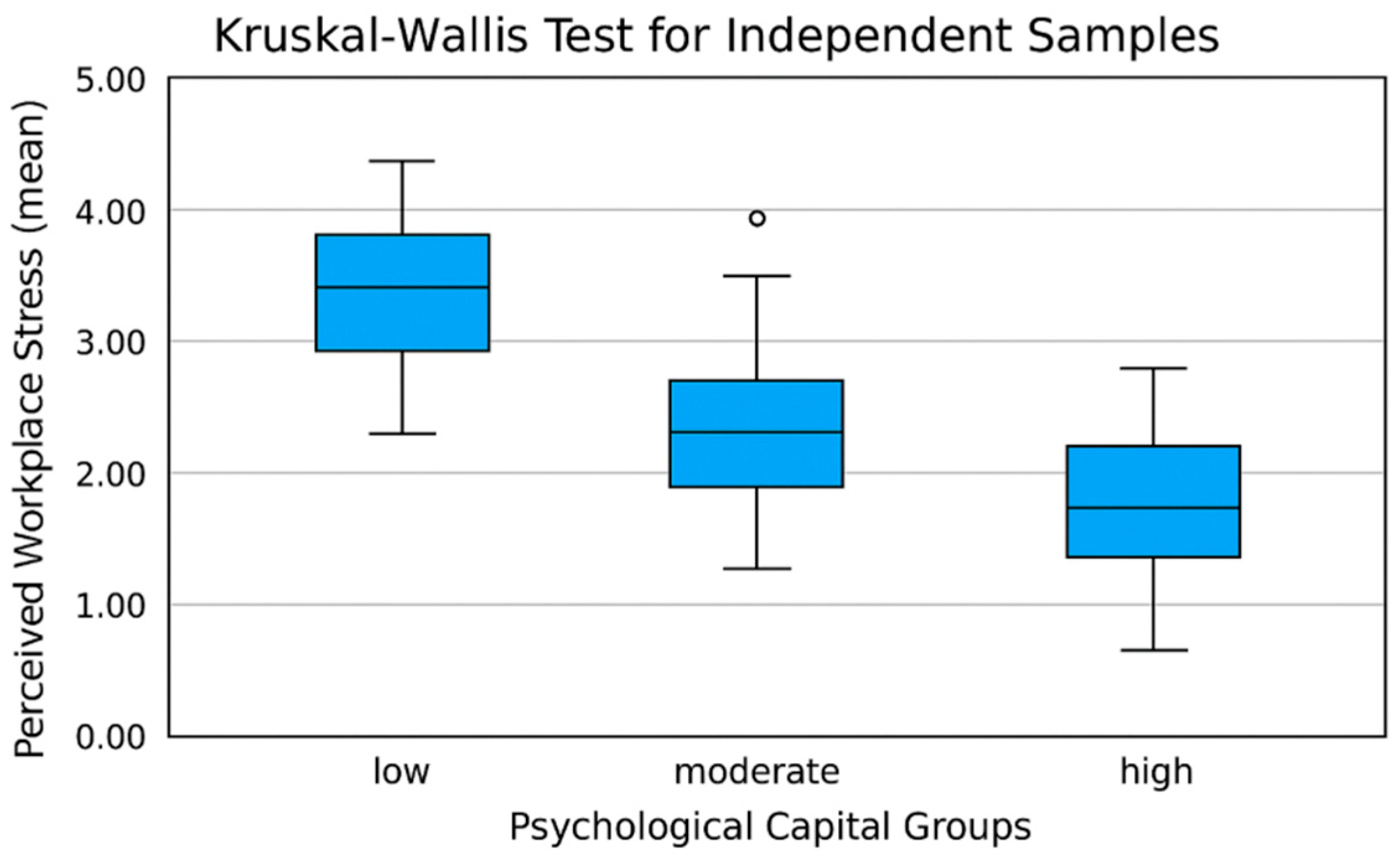
This study examines how employees’ psychological capital relates to workplace stress and mobbing (also known as workplace bullying) across three European countries. Stress has become an increasingly dominant issue globally since the second half of the 20th century, moving from clinical contexts into public awareness. It is now recognized as a significant health risk factor, particularly in work environments. While positive forms of stress (eustress) can enhance performance, chronic workplace stress is linked to serious mental and physical health problems. This study investigates the relationship between psychological capital (PsyCap), workplace stress, and mobbing among employees in Germany, Austria, and Hungary. Based on a cross-sectional survey (N = 89), the research applied validated instruments (PCQ, PSS-10, COPSOQ II) to measure PsyCap, perceived workplace stress, and experiences of mobbing. Results show a high average PsyCap level (M = 4.64, SD = 0.70) and a moderate perceived workplace stress level (M = 2.73, SD = 0.62) across the sample. A strong negative correlation was identified between PsyCap and workplace stress (r = −0.573, p < 0.001), while a moderate positive correlation was found between workplace stress and mobbing experiences (r = 0.323, p = 0.002). Although PsyCap moderated stress levels, it did not significantly moderate the relationship between mobbing and perceived stress. These findings emphasize the role of PsyCap in reducing workplace stress and underline the necessity of organizational interventions in promoting psychological resilience and mobbing prevention. The results also indicate a need to further examine the causal relationship between mobbing, stress, and PsyCap.
Keywords: mobbing; psychological capital; stress; workplace stress; well-being mobbing; psychological capital; stress; workplace stress; well-being