
Impact of High-Intensity Interval Training on Aerobic Capacity, Muscle Strength, and Agility Among Football Athletes: A Systematic Review and Meta-Analysis

Abstract
1. Introduction
- What are the effects of HIIT on aerobic fitness, muscular strength and agility in football players across different competitive levels?
- Do the included HIIT studies provide direct evidence regarding injury outcomes in football players, and what injury-related implications, if any, can be considered only exploratory in the absence of direct injury data?
2. Materials and Methods
2.1. Literature Identification
2.1.1. Inclusion Criteria and Exclusion Criteria
2.1.2. Types of Intervention
2.1.3. Types of Outcome Measures
2.2. Methodological Quality Assessment
2.3. Data Extraction
2.4. Data Analysis and Evidence Synthesis
3. Results
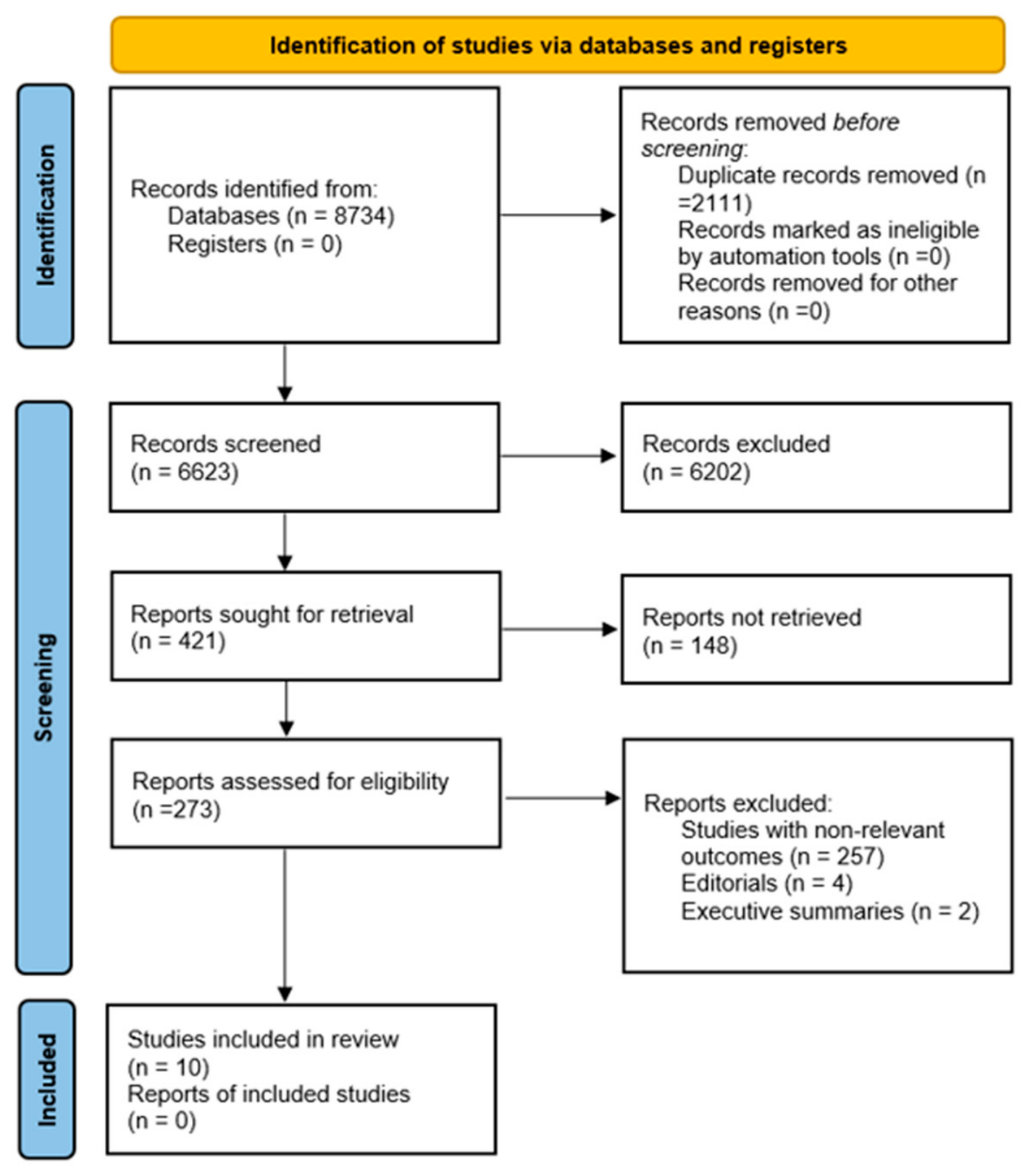
3.1. Study Selection and Characteristics
3.1.1. Qualitative Analysis of Pre- and Postintervention Differences
Aerobic Capacity: Descriptive Pre- and Post-Intervention Findings
Muscle Strength: Descriptive Pre- and Post-Intervention Findings
Agility: Descriptive Pre- and Post-Intervention Findings
3.2. Methodological Quality of Included Studies
3.2.1. Effects of HIIT on Aerobic Capacity
Quantitative Synthesis of Aerobic Fitness
Reporting Bias and Overall Interpretation of Quantitative Evidence
3.2.2. Effects of HIIT on Muscle Strength
3.2.3. Effects of HIIT on Agility
3.2.4. Limited Meta-Analysis of Agility
3.3. Certainty of Evidence (GRADE)
4. Discussion
4.1. Aerobic Capacity
4.2. Muscle Strength
4.3. Agility
4.4. Injury-Related Implications and Evidence Gaps
4.5. Strengths and Limitations
4.6. Practical Applications and Future Directions
5. Conclusions
- High-intensity interval training (HIIT) is an effective and time-efficient conditioning method for football players, producing meaningful improvements in aerobic capacity, muscular strength and agility across different age groups and competitive levels.
- HIIT programmes incorporating football-specific multidirectional drills and resistance components yield the greatest performance benefits and stronger transfer to match demands.
- Physiological adaptations associated with HIIT, including enhanced cardiovascular efficiency, neuromuscular control and fatigue resistance, may contribute to reduced injury risk during high-intensity play.
- To optimise outcomes, HIIT should be integrated two to three times per week within periodised football training frameworks, with appropriate load monitoring and progression to support both performance and rehabilitation goals.
- Further research is needed to standardise HIIT protocols, examine long-term adaptations and explore sex- and age-specific responses to improve evidence-based application in football conditioning and injury prevention.
Author Contributions
Funding
Institutional Review Board Statement
Informed Consent Statement
Data Availability Statement
Acknowledgments
Conflicts of Interest
Abbreviations
| 1RM | One-repetition maximum |
| ACL | Anterior cruciate ligament |
| CI | Confidence interval |
| COD | Change of direction |
| ES | Effect size |
| GRADE | Grading of Recommendations Assessment, Development and Evaluation |
| HFG | High-frequency group |
| HIIT | High-intensity interval training |
| HIT | High-intensity training |
| HR | Heart rate |
| HRmax | Maximum heart rate |
| I2 | I-squared statistic |
| JBI | Joanna Briggs Institute |
| LFG | Low-frequency group |
| MAS | Maximal aerobic speed |
| MICT | Moderate-intensity continuous training |
| NRCT | Non-randomised controlled trial |
| OSF | Open Science Framework |
| PGC-1α | Peroxisome proliferator-activated receptor gamma coactivator 1-alpha |
| PRISMA | Preferred Reporting Items for Systematic Reviews and Meta-Analyses |
| RCT | Randomised controlled trial |
| RoB 2 | Risk of Bias 2 |
| ROBINS-I | Risk of Bias in Non-randomised Studies of Interventions |
| SMD | Standardised mean difference |
| VIFT | Vameval Intermittent Fitness Test |
| VO2max | Maximal oxygen uptake |
Appendix A

| Section and Topic | Item # | Checklist Item | Location Where Item Is Reported |
|---|---|---|---|
| TITLE | |||
| Title | 1 | Identify the report as a systematic review. | Pg No. 1 |
| ABSTRACT | |||
| Abstract | 2 | See the PRISMA 2020 for Abstracts checklist. | Pg No. 2 |
| INTRODUCTION | |||
| Rationale | 3 | Describe the rationale for the review in the context of existing knowledge. | Pg Nos. 3,4 |
| Objectives | 4 | Provide an explicit statement of the objective(s) or question(s) the review addresses. | Pg No. 4 |
| METHODS | |||
| Eligibility criteria | 5 | Specify the inclusion and exclusion criteria for the review and how studies were grouped for the syntheses. | Pg Nos. 4,5 |
| Information sources | 6 | Specify all databases, registers, websites, organisations, reference lists and other sources searched or consulted to identify studies. Specify the date when each source was last searched or consulted. | Pg No. 4 |
| Search strategy | 7 | Present the full search strategies for all databases, registers and websites, including any filters and limits used. | Pg No. 4 |
| Selection process | 8 | Specify the methods used to decide whether a study met the inclusion criteria of the review, including how many reviewers screened each record and each report retrieved, whether they worked independently, and if applicable, details of automation tools used in the process. | Pg No. 4 |
| Data collection process | 9 | Specify the methods used to collect data from reports, including how many reviewers collected data from each report, whether they worked independently, any processes for obtaining or confirming data from study investigators, and if applicable, details of automation tools used in the process. | Pg Nos. 5,7 |
| Data items | 10a | List and define all outcomes for which data were sought. Specify whether all results that were compatible with each outcome domain in each study were sought (e.g., for all measures, time points, analyses), and if not, the methods used to decide which results to collect. | Pg Nos. 5,7,8 |
| 10b | List and define all other variables for which data were sought (e.g., participant and intervention characteristics, funding sources). Describe any assumptions made about any missing or unclear information. | Pg No. 5 | |
| Study risk of bias assessment | 11 | Specify the methods used to assess risk of bias in the included studies, including details of the tool(s) used, how many reviewers assessed each study and whether they worked independently, and if applicable, details of automation tools used in the process. | Pg Nos. 5,6,7 |
| Effect measures | 12 | Specify for each outcome the effect measure(s) (e.g., risk ratio, mean difference) used in the synthesis or presentation of results. | Pg Nos. 7,8 |
| Synthesis methods | 13a | Describe the processes used to decide which studies were eligible for each synthesis (e.g., tabulating the study intervention characteristics and comparing against the planned groups for each synthesis (item #5)). | Pg Nos. 8,9,10,11 |
| 13b | Describe any methods required to prepare the data for presentation or synthesis, such as handling of missing summary statistics, or data conversions. | Pg Nos. 8,9 | |
| 13c | Describe any methods used to tabulate or visually display results of individual studies and syntheses. | Pg Nos. 10,11 | |
| 13d | Describe any methods used to synthesise results and provide a rationale for the choice(s). If meta-analysis was performed, describe the model(s), method(s) to identify the presence and extent of statistical heterogeneity, and software package(s) used. | Pg No. 15 | |
| 13e | Describe any methods used to explore possible causes of heterogeneity among study results (e.g., subgroup analysis, meta-regression). | Pg No. 15 | |
| 13f | Describe any sensitivity analyses conducted to assess robustness of the synthesised results. | NA | |
| Reporting bias assessment | 14 | Describe any methods used to assess risk of bias due to missing results in a synthesis (arising from reporting biases). | Pg Nos. 5,6,7 |
| Certainty assessment | 15 | Describe any methods used to assess certainty (or confidence) in the body of evidence for an outcome. | NA |
| RESULTS | |||
| Study selection | 16a | Describe the results of the search and selection process, from the number of records identified in the search to the number of studies included in the review, ideally using a flow diagram. | Pg Nos. 8,9 |
| 16b | Cite studies that might appear to meet the inclusion criteria, but which were excluded, and explain why they were excluded. | Pg No. 9 | |
| Study characteristics | 17 | Cite each included study and present its characteristics. | Pg Nos. 10,11 |
| Risk of bias in studies | 18 | Present assessments of risk of bias for each included study. | Pg Nos.5,6,7 |
| Results of individual studies | 19 | For all outcomes, present, for each study: (a) summary statistics for each group (where appropriate) and (b) an effect estimate and its precision (e.g., confidence/credible interval), ideally using structured tables or plots. | Pg Nos. 13,14,16–20 |
| Results of syntheses | 20a | For each synthesis, briefly summarise the characteristics and risk of bias among contributing studies. | Pg Nos. 16–20 |
| 20b | Present results of all statistical syntheses conducted. If meta-analysis was done, present for each the summary estimate and its precision (e.g., confidence/credible interval) and measures of statistical heterogeneity. If comparing groups, describe the direction of the effect. | Pg Nos. 16–20 | |
| 20c | Present results of all investigations of possible causes of heterogeneity among study results. | Pg Nos. 16–20 | |
| 20d | Present results of all sensitivity analyses conducted to assess the robustness of the synthesised results. | NA | |
| Reporting biases | 21 | Present assessments of risk of bias due to missing results (arising from reporting biases) for each synthesis assessed. | Pg Nos. 5,6,7 |
| Certainty of evidence | 22 | Present assessments of certainty (or confidence) in the body of evidence for each outcome assessed. | NA |
| DISCUSSION | |||
| Discussion | 23a | Provide a general interpretation of the results in the context of other evidence. | Pg Nos. 20–23 |
| 23b | Discuss any limitations of the evidence included in the review. | Pg Nos. 23,24 | |
| 23c | Discuss any limitations of the review processes used. | Pg Nos. 23,24 | |
| 23d | Discuss implications of the results for practice, policy, and future research. | Pg Nos. 24,25 | |
| OTHER INFORMATION | |||
| Registration and protocol | 24a | Provide registration information for the review, including register name and registration number, or state that the review was not registered. | Pg No. 4 |
| 24b | Indicate where the review protocol can be accessed, or state that a protocol was not prepared. | NA | |
| 24c | Describe and explain any amendments to information provided at registration or in the protocol. | NA | |
| Support | 25 | Describe sources of financial or nonfinancial support for the review, and the role of the funders or sponsors in the review. | Pg No. 26 |
| Competing interests | 26 | Declare any competing interests of review authors. | Pg No. 26 |
| Availability of data, code and other materials | 27 | Report which of the following are publicly available and where they can be found: template data collection forms; data extracted from included studies; data used for all analyses; analytic code; any other materials used in the review. | NA |
| Source | Search Strategy | Limits |
|---|---|---|
| PubMed/MEDLINE | (“high-intensity interval training”[Title/Abstract] OR “high intensity interval training”[Title/Abstract] OR HIIT[Title/Abstract] OR “interval training”[Title/Abstract]) AND (football[Title/Abstract] OR footballer*[Title/Abstract] OR soccer[Title/Abstract] OR “soccer player”[Title/Abstract] OR “soccer players”[Title/Abstract]) AND (“aerobic capacity”[Title/Abstract] OR “aerobic fitness”[Title/Abstract] OR VO2max[Title/Abstract] OR “maximal oxygen uptake”[Title/Abstract] OR “muscle strength”[Title/Abstract] OR “muscular strength”[Title/Abstract] OR “isokinetic strength”[Title/Abstract] OR agility[Title/Abstract] OR “change of direction”[Title/Abstract]) | 1 January 2010–31 December 2024 |
| CINAHL Plus, EBSCOhost | S1: TI/AB (“high-intensity interval training” OR “high intensity interval training” OR HIIT OR “interval training”); S2: TI/AB (football OR footballer* OR soccer OR “soccer player*”); S3: TI/AB (“aerobic capacity” OR “aerobic fitness” OR VO2max OR “maximal oxygen uptake” OR “muscle strength” OR “muscular strength” OR “isokinetic strength” OR agility OR “change of direction”); S4 = S1 AND S2 AND S3 | January 2010–December 2024 |
| SPORT Discus, EBSCOhost | S1: TI/AB (“high-intensity interval training” OR “high intensity interval training” OR HIIT OR “interval training”); S2: TI/AB (football OR footballer* OR soccer OR “soccer player*”); S3: TI/AB (“aerobic capacity” OR “aerobic fitness” OR VO2max OR “maximal oxygen uptake” OR “muscle strength” OR “muscular strength” OR “isokinetic strength” OR agility OR “change of direction”); S4 = S1 AND S2 AND S3 | January 2010–December 2024 |
| ProQuest | (“high-intensity interval training” OR “high intensity interval training” OR HIIT OR “interval training”) AND (football OR footballer* OR soccer OR “soccer player*”) AND (“aerobic capacity” OR “aerobic fitness” OR VO2max OR “maximal oxygen uptake” OR “muscle strength” OR “muscular strength” OR “isokinetic strength” OR agility OR “change of direction”) | January 2010–December 2024 |
| Sports Medicine and Education Index, ProQuest | Same three-concept Boolean strategy as ProQuest above | January 2010–December 2024 |
| Google Scholar | Three searches conducted separately for aerobic fitness, muscle strength and agility using the HIIT + football/soccer concept with the corresponding outcome terms shown above | Custom range 2010–2024 |
| Study Details | |
| Author/year | |
| objectives | |
| Participants (characteristics/ total number) | |
| Setting/context | |
| Description of Interventions/ phenomena of interest | |
| Search Details | |
| Sources searched | |
| Range (years) of included studies | |
| Number of studies included / | |
| Types of studies included | |
| Country of origin of included studies | |
| Appraisal | |
| Appraisal instruments used | |
| Appraisal rating | |
| Analysis | |
| Method of analysis | |
| Outcome assessed | |
| Results/Findings | |
| Significance/direction | |
| Heterogeneity | |
| Comments |
References
- Yan, S.; Kim, Y.; Choi, Y. Aerobic and Anaerobic Fitness According to High-Intensity Interval Training Frequency in Youth Soccer Players in the Last Stage of Rehabilitation. Int. J. Environ. Res. Public Health 2022, 19, 15573. [Google Scholar] [CrossRef] [Scilit]
- Arazi, H.; Keihaniyan, A.; Eatemady Boroujeni, A.; Oftade, A.; Takhsha, S.; Asadi, A.; Ramirez-Campillo, R. Effects of Heart Rate vs. Speed-Based High Intensity Interval Training on Aerobic and Anaerobic Capacity of Female Soccer Players. Sports 2017, 5, 57. [Google Scholar] [CrossRef] [Scilit]
- Zhang, G.; Kim, Y.; Lee, J. Impact of Short Term High-Intensity Interval Training on the Aerobic and Anaerobic Fitness of Young Male Football Players in the Final Stages of Rehabilitation. J. Men’s Health 2024, 20, 108. [Google Scholar] [CrossRef] [Scilit]
- Ekstrand, J.; Hägglund, M.; Waldén, M. Epidemiology of Muscle Injuries in Professional Football (Soccer). Am. J. Sports Med. 2011, 39, 1226–1232. [Google Scholar] [CrossRef] [Scilit]
- Nassis, G.P.; Brito, J.; Figueiredo, P.; Gabbett, T.J. Injury Prevention Training in Football: Let’s Bring It to the Real World. Br. J. Sports Med. 2019, 53, 1328–1329. [Google Scholar] [CrossRef] [Scilit]
- Kwakye, S.K.; Mostert, K.; Garnett, D.; Masenge, A. Risk Factors Associated with Football Injury among Male Players from a Specific Academy in Ghana: A Pilot Study. Sci. Rep. 2023, 13, 8070. [Google Scholar] [CrossRef] [Scilit]
- Buchheit, M.; Laursen, P.B. High-Intensity Interval Training, Solutions to the Programming Puzzle: Part I: Cardiopulmonary Emphasis. Sports Med. 2013, 43, 313–338. [Google Scholar] [CrossRef] [Scilit]
- Hamdani, S.G.A.; Anjum, G.S.; Mughal, E.A.; Shah, I. The Impact of High-Intensity Interval Training (HIIT) on the Aerobic Capacity of National Football Players. Pak. J. Med. Sci. 2014, 9, 39–51. [Google Scholar]
- Dai, L.; Xie, B. Adaptations to Optimized Interval Training in Soccer Players: A Comparative Analysis of Standardized Methods for Individualizing Interval Interventions. J. Sports Sci. Med. 2023, 22, 760–768. [Google Scholar] [CrossRef] [Scilit]
- Bangsbo, J. Fitness Training in Football: A Scientific Approach; August Krogh Institute, University of Copenhagen: Copenhagen, Denmark, 1994. [Google Scholar]
- Weston, K.S.; Wisløff, U.; Coombes, J.S. High-Intensity Interval Training in Patients with Lifestyle-Induced Cardiometabolic Disease: A Systematic Review and Meta-Analysis. Br. J. Sports Med. 2014, 48, 1227–1234. [Google Scholar] [CrossRef] [Scilit]
- Zhou, Y.; Liu, J.; Yang, L.; Zheng, B. Can Maturation Level Influence Long-Term Physiological and Physical Adaptations in Youth Female Soccer Players Exposed to Combined Sided Games and HIIT? A Comparison Across Maturation Statuses. J. Sports Sci. Med. 2025, 24, 634–644. [Google Scholar] [CrossRef] [Scilit]
- Alwi, M.; Mazalan, N.S.; Karunamoorthy, R.A.P.; Naeimmuddi Zakaria, M. The Effectiveness of High-Intensity Interval Training (HIIT) Program in Weight Loss, Muscle Strength, and Reducing Injury Risks. Int. J. Acad. Res. Progress. Educ. Dev. 2024, 13, 1395–1410. [Google Scholar] [CrossRef] [Scilit]
- Thomakos, P.; Tsekos, P.; Tselios, Z.; Spyrou, K.; Katsikas, C.; Tsoukos, A.; Bogdanis, G.C. Effects of Two In-Season Short High-Intensity Interval Training Formats on Aerobic and Neuromuscular Performance in Young Soccer Players. J. Sports Sci. Med. 2024, 23, 812–821. [Google Scholar] [CrossRef] [Scilit]
- Manuel Clemente, F.; Ramirez-Campillo, R.; Nakamura, F.Y.; Sarmento, H. Effects of High-Intensity Interval Training in Men Soccer Player’s Physical Fitness: A Systematic Review with Meta-Analysis of Randomized-Controlled and Non-Controlled Trials. J. Sports Sci. 2021, 39, 1202–1222. [Google Scholar] [CrossRef] [Scilit]
- Thorborg, K.; Krommes, K.K.; Esteve, E.; Clausen, M.B.; Bartels, E.M.; Rathleff, M.S. Effect of Specific Exercise-Based Football Injury Prevention Programmes on the Overall Injury Rate in Football: A Systematic Review and Meta-Analysis of the FIFA 11 and 11+ Programmes. Br. J. Sports Med. 2017, 51, 562–571. [Google Scholar] [CrossRef] [Scilit]
- Vartak, H.S.; Amaravadi, S.K. Impact of High-Intensity Interval Training (HIIT) on Aerobic Capacity, Muscle Strength and Agility Performance for Injury Prevention among Football Athletes: A Systematic Review and Meta-Analysis. OSF Regist. 2025. [Google Scholar] [CrossRef]
- Rethlefsen, M.L.; Kirtley, S.; Waffenschmidt, S.; Ayala, A.P.; Moher, D.; Page, M.J.; Koffel, J.B.; PRISMA-S Group; Blunt, H.; Brigham, T.; et al. PRISMA-S: An Extension to the PRISMA Statement for Reporting Literature Searches in Systematic Reviews. Syst. Rev. 2021, 10, 39. [Google Scholar] [CrossRef] [Scilit]
- Page, M.J.; McKenzie, J.E.; Bossuyt, P.M.; Boutron, I.; Hoffmann, T.C.; Mulrow, C.D.; Shamseer, L.; Tetzlaff, J.M.; Akl, E.A.; Brennan, S.E.; et al. The PRISMA 2020 Statement: An Updated Guideline for Reporting Systematic Reviews. BMJ 2021, 372, n71. [Google Scholar] [CrossRef] [Scilit]
- Downs, S.H.; Black, N. The Feasibility of Creating a Checklist for the Assessment of the Methodological Quality Both of Randomised and Non-Randomised Studies of Health Care Interventions. J. Epidemiol. Community Health 1998, 52, 377–384. [Google Scholar] [CrossRef] [Scilit]
- Munn, Z.; Tufanaru, C.; Aromataris, E. JBI’s Systematic Reviews: Data Extraction and Synthesis. AJN Am. J. Nurs. 2014, 114, 49–54. [Google Scholar] [CrossRef] [Scilit]
- Fekete, J.T.; Győrffy, B. MetaAnalysisOnline.Com: Web-Based Tool for the Rapid Meta-Analysis of Clinical and Epidemiological Studies. J. Med. Internet Res. 2025, 27, e64016. [Google Scholar] [CrossRef] [Scilit]
- Schünemann, H.J.; Higgins, J.P.; Vist, G.E.; Glasziou, P.; Akl, E.A.; Skoetz, N.; Guyatt, G.H. on behalf of the Cochrane GRADEing Methods Group (formerly Applicability and Recommendations Methods Group) and the Cochrane Statistical Methods Group. Completing ‘Summary of Findings’ Tables and Grading the Certainty of the Evidence. In Cochrane Handbook for Systematic Reviews of Interventions; Higgins, J.P.T., Thomas, J., Chandler, J., Cumpston, M., Li, T., Page, M.J., Welch, V.A., Eds.; Wiley: Hoboken, NJ, USA, 2019; pp. 375–402. [Google Scholar]
- Wong, P.; Chaouachi, A.; Chamari, K.; Dellal, A.; Wisloff, U. Effect of Preseason Concurrent Muscular Strength and High-Intensity Interval Training in Professional Soccer Players. J. Strength Cond. Res. 2010, 24, 653–660. [Google Scholar] [CrossRef] [Scilit]
- Howard, N.; Stavrianeas, S. In-Season High-Intensity Interval Training Improves Conditioning in High School Soccer Players. Int. J. Exerc. Sci. 2017, 10, 713–720. [Google Scholar] [CrossRef] [Scilit]
- Slettaløkken, G.; Rønnestad, B.R. High-Intensity Interval Training Every Second Week Maintains V[Combining Dot Above] O2max in Soccer Players During Off-Season. J. Strength Cond. Res. 2014, 28, 1946–1951. [Google Scholar] [CrossRef] [Scilit]
- Gökkurt, K.; Kıvrak, A.O. The Effect of High Intensity Interval Training During Eight Weeks on Speed, Agility, and Acceleration in U19 Soccer Players. Pak. J. Med. Health Sci. 2021, 15, 2390–2395. [Google Scholar] [CrossRef] [Scilit]
- Wright, M.D.; Hurst, C.; Taylor, J.M. Contrasting Effects of a Mixed-Methods High-Intensity Interval Training Intervention in Girl Football Players. J. Sports Sci. 2016, 34, 1808–1815. [Google Scholar] [CrossRef] [Scilit]
- John, G.; AlNadwi, A.; Georges Abi Antoun, T.; Ahmetov, I.I. Injury Prevention Strategies in Female Football Players: Addressing Sex-Specific Risks. Sports 2025, 13, 39. [Google Scholar] [CrossRef] [Scilit]
- Paprancová, A.; Šimonek, J.; Paška, Ľ.; Czaková, M.; Krčmár, M. The Impact of Running-Based High-Intensity Interval Training with Changes of Direction on Physical Performance of Female Soccer Players. Retos 2025, 65, 262–270. [Google Scholar] [CrossRef] [Scilit]
- Ouertatani, Z.; Selmi, O.; Marsigliante, S.; Aydi, B.; Hammami, N.; Muscella, A. Comparison of the Physical, Physiological, and Psychological Responses of the High-Intensity Interval (HIIT) and Small-Sided Games (SSG) Training Programs in Young Elite Soccer Players. Int. J. Environ. Res. Public Health 2022, 19, 13807. [Google Scholar] [CrossRef] [Scilit]
- Donelon, T.A.; Dos’Santos, T.; Pitchers, G.; Brown, M.; Jones, P.A. Biomechanical Determinants of Knee Joint Loads Associated with Increased Anterior Cruciate Ligament Loading During Cutting: A Systematic Review and Technical Framework. Sports Med.-Open 2020, 6, 53. [Google Scholar] [CrossRef] [Scilit]
- Dos’Santos, T.; Thomas, C.; Comfort, P.; Jones, P.A. The Effect of Training Interventions on Change of Direction Biomechanics Associated with Increased Anterior Cruciate Ligament Loading: A Scoping Review. Sports Med. 2019, 49, 1837–1859. [Google Scholar] [CrossRef] [Scilit]
- Young, W.; Dos’Santos, T.; Harper, D.; Jeffreys, I.; Talpey, S. Agility in Invasion Sports: Position Stand of the IUSCA. Int. J. Strength Cond. 2022, 2. [Google Scholar] [CrossRef] [Scilit]
- Su, W.; Wang, J.; Ying, Y.; Lu, B.; Liu, H.; Zhou, Z.; Liu, C.; Yun, H. Injury Risk Reduction Programs Including Balance Training Reduce the Incidence of Anterior Cruciate Ligament Injuries in Soccer Players: A Systematic Review and Meta-Analysis. J. Orthop. Surg. Res. 2025, 20, 248. [Google Scholar] [CrossRef] [Scilit]
- Sanchez-Sanchez, J.; Raya-González, J.; Martín, V.; Rodríguez Fernández, A. Understanding Injuries in Young Female Soccer Players: A Narrative Review on Incidence, Mechanism, Location Risk Factors, and Preventive Strategies. Appl. Sci. 2025, 15, 1612. [Google Scholar] [CrossRef] [Scilit]
- Chesterton, P.; Wright, M.; Liddle, N.; Hardin, S.; Richards, S.; Draper, G. Practitioners’ Perspective of Non-Contact Injury Risk Factors and Injury Prevention Programming in Professional North American Male Soccer. Phys. Ther. Sport. 2024, 68, 51–59. [Google Scholar] [CrossRef] [Scilit]
- Egan, B.; Sharples, A.P. Molecular Responses to Acute Exercise and Their Relevance for Adaptations in Skeletal Muscle to Exercise Training. Physiol. Rev. 2023, 103, 2057–2170. [Google Scholar] [CrossRef] [Scilit]


| No. | Author and Year | Study Type | Sample Size | Player Level | Age (Mean ± SD) | Type of Intervention | Tests Used | Outcomes Measured | Duration |
|---|---|---|---|---|---|---|---|---|---|
| 1 | Thomakos & Pierro’s (2024) [14] | RCT | 26 | Youth amateur | Exp: 18.7 ± 1.1 Ctrl: 18.1 ± 0.7 | Control: Usual soccer training Experimental: 10 s/10 s linear running HIIT or 15 s/15 s COD HIIT at 100% MAS, twice per week | Yo-Yo Intermittent Recovery Test Level 1 | VO2max | 6 weeks |
| 2 | Zhang, Gaofei (2024) [3] | NRCT | 50 | Amateur | 16.4 ± 1.3 | Control: MICT (12 sessions) + resistance training Experimental: HIIT (12 sessions) + resistance training (squats, lunges, core exercises, crunches) | Isokinetic Strength Test | Body-mass-normalised isokinetic knee strength and power | 4 weeks |
| 3 | Yan, Shuren (2022) [1] | NRCT | 54 | Amateur | Exp: 15.8 ± 0.9 Ctrl: 15.7 ± 0.8 | Control: Low-frequency HIIT (2 sessions/week, 50–60 min) Experimental: High-frequency HIIT (5 sessions/week, 50–60 min) | Isokinetic Dynamometer | Body-mass-normalised isokinetic knee strength and power | 4 weeks |
| 4 | Gokkurt, Kadir (2021) [27] | RCT | 22 | Semiprofessional | Exp: 17.55 ± 0.69 Ctrl: 18.36 ± 0.51 | Control: Regular training Experimental: HIIT three times per week + regular training | Pro-Agility Test | Agility time (s) | 8 weeks |
| 5 | Howard, Neal (2017) [25] | RCT | 32 | Amateur | Exp: 14.81 ± 1.22 Ctrl: 15.06 ± 0.77 | Control: Team conditioning + endurance training (long runs, 3×/week) Experimental: HIIT (30 s sprints with 4.5 min recovery; 4 reps increasing to 6 reps by week 5) | 1. Yo-Yo Intermittent recovery Test Level 1 2. Illinois Agility Test | 1. VO2max 2. Agility (s) | 10 weeks |
| 6 | Arazi, Hamid (2017) [2] | RCT | 16 | Semiprofessional | Exp: 23.4 ± 1.3 Ctrl: 23.4 ± 1.1 | Control: HR-based HIIT (90% HRmax for 90 s, 90 s walk × 3 sequences/session) Experimental: Speed-based HIIT (90% max speed, 90 s work, 90 s walk × 2 sequences/session) | 1. Hoff Test 2. 30–15 Intermittent Fitness Test | VO2max | 6 weeks |
| 7 | Wright, Matthew (2016) [28] | RCT | 37 | Amateur | 13.4 ± 1.5 | Control: Football-specific training Experimental: HIIT | Modified T Test | Agility time (s) | 8 weeks |
| 8 | Hamdani, Syed Ghayoor Ali (2014) [8] | NRCT | 36 | Professional | Exp: 26.1 ± 2.5 Ctrl: 25.4 ± 2.3 | Control: Regular football training Experimental: HIIT | Beep Test | VO2max | 8 weeks |
| 9 | Slettalokken, Gunnar (2014) [26] | RCT | 17 | Semiprofessional | Exp: 21.8 ± 2.2 Ctrl: 19.7 ± 3.1 | HIT 0.5:1 HIIT session every second week; HIT 1:1 HIIT session per week. Both added to normal off-season activity | 1. VO2max treadmill test 2. 20 m Shuttle Run | VO2max | 6 weeks |
| 10 | Wong, Pui-Lam (2010) [24] | NRCT | 39 | Professional | Exp: 21.0 ± 1.0 Ctrl: 24.6 ± 1.5 | Control: Regular soccer training Experimental: Strength training (2×/week; high pull, jump squat, bench press, back half squat, chin-ups, 4 sets × 6RM) + HIIT (15 s sprints × 16 intervals at 120% MAS with 15 s rest) | 1RM Half Squat and Bench Press | Maximum weight lifted | 8 weeks |
| (a) | ||||||
| Outcome Measure | Author | Test Used | Group | Pre (Mean ± SD) | Post (Mean ± SD) | Effect Size (Cohen’s d) |
| Yo-Yo IR1 distance (m) | Thomakos & Pierro’s [14] | Yo-Yo Intermittent Recovery Test (YYIR1) | 10 s/10 s HIIT | 2083 ± 411 | 2434 ± 345 | 0.92 |
| 15 s/15 s HIIT | 2225 ± 262 | 2418 ± 275 | 0.72 | |||
| Estimated VO2max (ml·kg−1·min−1) | Thomakos & Pierro’s [14] | Derived from Yo-Yo IR1 | 10 s/10 s HIIT | 53.9 ± 3.5 | 56.8 ± 2.9 | 0.92 |
| 15 s/15 s HIIT | 55.1 ± 2.2 | 56.7 ± 2.3 | 0.72 | |||
| VO2max (ml·kg−1·min−1) | Hamid Arazi [2] | Hoff Test | HR-based | 48.6 ± 6.2 | 54.8 ± 10.6 | 0.59 |
| Speed-based | 49.2 ± 4.1 | 53.6 ± 11.6 | 0.15 | |||
| VO2max (mL·kg−1·min−1) | Syed Ghayoor Ali Hamdani [8] | VIFT/Beep Test | HR-based | 50.6 ± 7.7 | 53.6 ± 8.2 | 0.59 |
| Speed-based | 50.3 ± 6.1 | 59.0 ± 6.5 | — | |||
| VO2max (mL·kg−1·min−1) | Gunnar Slettalokken [26] | Maximal treadmill VO2max test | HIT 0.5 | 63.4 ± 5.9 | 64.0 ± 5.9 | — |
| HIT 1 | 65.6 ± 2.1 | 64.3 ± 1.3 | — | |||
| Yo-Yo IR1 distance (m) | Neal Howard [25] | Yo-Yo Intermittent Recovery Test (YYIR1) | Control | 733.2 ± 318.8 | 1165.2 ± 252.8 | — |
| HIIT | 741.6 ± 307.6 | 1067.6 ± 356.8 | 0.68 | |||
| (b) | ||||||
| Outcome Measure | Author | Test Used | Group | Pre (Mean ± SD) | Post (Mean ± SD) | Effect Size (Cohen’s d) |
| Isokinetic knee strength at 60°/s, body-mass-normalised | Gaofei Zhang [3] | Isokinetic Dynamometer—60°/s | HIIT | 391.8 ± 42.1 | 431.9 ± 37.2 | 0.58 |
| MICT | 388.8 ± 51.2 | 401.7 ± 44.4 | — | |||
| Isokinetic knee power at 180°/s, body-mass-normalised | Gaofei Zhang [3] | Isokinetic Dynamometer—180°/s | HIIT | 645.9 ± 72.4 | 695.1 ± 72.8 | — |
| MICT | 636.6 ± 80.8 | 671.6 ± 82.8 | — | |||
| Peak isokinetic knee torque at 60°/s, normalised | Shuren Yan [1] | Isokinetic Dynamometer | LFG | 466.2 ± 58.9 | 482.7 ± 36.4 | 0.46 |
| HFG | 464.9 ± 77.6 | 498.3 ± 64.5 | — | |||
| Average isokinetic knee power at 180°/s, normalised | Shuren Yan [1] | Isokinetic Dynamometer | LFG | 613.4 ± 95.5 | 632.9 ± 53.3 | — |
| HFG | 629.8 ± 98.8 | 647.8 ± 90.3 | — | |||
| 1 Repetition Maximum (1RM)—Half Squat (kg) | Pui-Lam Wong [24] | 1RM Strength Test | — | 123.0 ± 1.5 | 148.0 ± 1.9 | 0.65–0.74 |
| 1 Repetition Maximum (1RM)—Bench Press (kg) | Pui-Lam Wong [24] | 1RM Strength Test | — | 65.3 ± 1.5 | 70.4 ± 1.1 | 0.65–0.74 |
| (c) | ||||||
| Outcome Measure | Author | Test Used | Group | Pre (Mean ± SD) | Post (Mean ± SD) | Effect Size (Cohen’s d) |
| Agility Time (s) | Kadir Gokkurt [27] | Pro-Agility Test | Experimental | 4.73 ± 0.39 | 4.69 ± 0.39 | 0.88 |
| Control | 4.56 ± 0.24 | 4.54 ± 0.24 | — | |||
| Agility Time (s) | Neal Howard [25] | Illinois Agility Test | Experimental | 16.26 ± 1.02 | 16.29 ± 0.92 | 0.66 |
| Control | 16.67 ± 0.76 | 16.15 ± 0.49 | — | |||
| Agility Time (s) | Matthew Wright [28] | Modified T Test | HIIT | 7.12 ± 0.38 | 6.57 ± 0.35 | 0.57 |
| Control | — | — | — | |||
| Study | Study Design | Reporting (0–10) | External Validity (0–3) | Internal Validity—Bias (0–7) | Internal Validity—Confounding (0–6) | Power (0–2) | Total Score | Quality Rating |
|---|---|---|---|---|---|---|---|---|
| Thomakos & Pierro’s (2024) [14] | RCT | 10 | 3 | 6 | 5 | 2 | 26 | Excellent |
| Arazi, Hamid (2017) [2] | RCT | 10 | 3 | 6 | 5 | 2 | 26 | Excellent |
| Zhang, Gaofei (2024) [3] | NRCT | 9 | 2 | 5 | 5 | 2 | 23 | Good |
| Yan, Shuren (2022) [1] | NRCT | 9 | 2 | 5 | 5 | 2 | 23 | Good |
| Gokkurt, Kadir (2021) [27] | RCT | 9 | 2 | 5 | 5 | 2 | 23 | Good |
| Howard, Neal (2017) [25] | RCT | 9 | 2 | 5 | 5 | 2 | 23 | Good |
| Wright, Matthew (2016) [28] | RCT | 9 | 2 | 5 | 5 | 2 | 23 | Good |
| Slettalokken, Gunnar (2014) [26] | RCT | 9 | 2 | 5 | 5 | 2 | 23 | Good |
| Wong, Pui-Lam (2010) [24] | NRCT | 8 | 2 | 4 | 3 | 2 | 19 | Fair |
| Hamdani, Syed Ghayoor Ali (2014) [8] | NRCT | 6 | 1 | 2 | 2 | 2 | 13 | Poor |
| Outcome | No. of Studies (Design) | Participants (n) | Effect Estimate/Synthesis Effect (Pooled SMD [95% CI]) | Certainty of Evidence (GRADE) | Reasons for Downgrading |
|---|---|---|---|---|---|
| Aerobic capacity (VO2max) | 5 studies: 4 RCTs [2,14,25,26] and 1 NRCT [8] | 127 | No pooled effect estimate. Individual studies reported favourable changes in aerobic fitness following HIIT, but effects varied according to intervention protocol, comparator condition and outcome measure. Some studies reported improvements in VO2max or Yo-Yo IR1 performance, whereas others demonstrated maintenance or no clear superiority over comparator training. | Low | Downgraded for methodological limitations and imprecision. Evidence was derived from small studies with heterogeneous HIIT protocols, comparator conditions and aerobic-fitness measures. One study was non-randomised and rated poor methodological quality. Outcome measures included directly or indirectly estimated VO2max and field-based aerobic-performance tests, limiting comparability. Source-verifiable data were insufficiently comparable for reliable quantitative pooling, and superiority of HIIT over comparator training was not consistently demonstrated. |
| Muscle strength (isokinetic torque/1-RM) | 3 NRCTs [1,3,24] | 143 participants across studies | No pooled estimate. Narrative evidence reported favourable changes in selected strength outcomes, but findings could not be quantitatively pooled because of heterogeneous assessment methods and intervention characteristics. | Low | Evidence derived entirely from non-randomised studies. Strength outcomes were measured using different methods, including isokinetic dynamometry and 1RM testing. Some interventions combined HIIT with resistance training, limiting attribution of effects specifically to HIIT. Small study samples and the absence of independent comparable datasets are further reduced certainty. |
| Agility performance (time, s) | 2 RCTs [25,27,28] narrative only | 54 in quantitative synthesis | −0.29 [−0.83 to 0.25] | Low | Downgraded for imprecision because only two small RCTs contributed to the pooled estimate and the CI crossed the null. The corrected analysis did not demonstrate superiority of HIIT over comparator training. |
| Injury prevention (indirect evidence) | No direct eligible outcome data | Not applicable | Not applicable | Not graded | No included study directly quantified injury incidence. Injury-prevention implications are therefore indirect. |
Disclaimer/Publisher’s Note: The statements, opinions and data contained in all publications are solely those of the individual author(s) and contributor(s) and not of MDPI and/or the editor(s). MDPI and/or the editor(s) disclaim responsibility for any injury to people or property resulting from any ideas, methods, instructions or products referred to in the content. |
© 2026 by the authors. Licensee MDPI, Basel, Switzerland. This article is an open access article distributed under the terms and conditions of the Creative Commons Attribution (CC BY) license.
Share and Cite
Vartak, H.S.; Costa, J.; Amaravadi, S.K. Impact of High-Intensity Interval Training on Aerobic Capacity, Muscle Strength, and Agility Among Football Athletes: A Systematic Review and Meta-Analysis. Sports 2026, 14, 398. https://doi.org/10.3390/sports14090398
Vartak HS, Costa J, Amaravadi SK. Impact of High-Intensity Interval Training on Aerobic Capacity, Muscle Strength, and Agility Among Football Athletes: A Systematic Review and Meta-Analysis. Sports. 2026; 14(9):398. https://doi.org/10.3390/sports14090398
Chicago/Turabian StyleVartak, Himani Sanjay, Jorge Costa, and Sampath Kumar Amaravadi. 2026. "Impact of High-Intensity Interval Training on Aerobic Capacity, Muscle Strength, and Agility Among Football Athletes: A Systematic Review and Meta-Analysis" Sports 14, no. 9: 398. https://doi.org/10.3390/sports14090398
APA StyleVartak, H. S., Costa, J., & Amaravadi, S. K. (2026). Impact of High-Intensity Interval Training on Aerobic Capacity, Muscle Strength, and Agility Among Football Athletes: A Systematic Review and Meta-Analysis. Sports, 14(9), 398. https://doi.org/10.3390/sports14090398