Article

Predictability and Complexity of Fine and Gross Motor Skills in Fibromyalgia Patients: A Pilot Study


by
Nancy Brígida
1,2,3,4,*,
David Catela
1,2,3,4,
Cristiana Mercê
1,2,3,4,5 and
Marco Branco
1,2,3,4,5
1
ESDRM Escola Superior de Desporto de Rio Maior, Instituto Politécnico de Santarém, Santarem Polytechnic University, 2040-413 Rio Maior, Portugal
2
SPRINT Sport Physical Activity and Health Research & Innovation Center, Centro de Investigação e Inovação em Desporto Atividade Física e Saúde, 2001-904 Santarém, Portugal
3
Educação e Treino, Centro de Investigação em Qualidade de Vida (CIEQV), Instituto Politécnico de Santarém, 2001-904 Santarém, Portugal
4
Psicologia Aplicada, Unidade de Investigação do Instituto Politécnico de Santarém, 2001-904 Santarém, Portugal
5
Centro Interdisciplinar de Estudo da Performance Humana (CIPER), Faculdade de Motricidade Humana, Universidade de Lisboa, Cruz Quebrada-Dafundo, 1499-002 Lisboa, Portugal
*
Author to whom correspondence should be addressed.
Sports 2024, 12(4), 90; https://doi.org/10.3390/sports12040090

Submission received: 30 October 2023 / Revised: 6 March 2024 / Accepted: 14 March 2024 / Published: 25 March 2024

Abstract

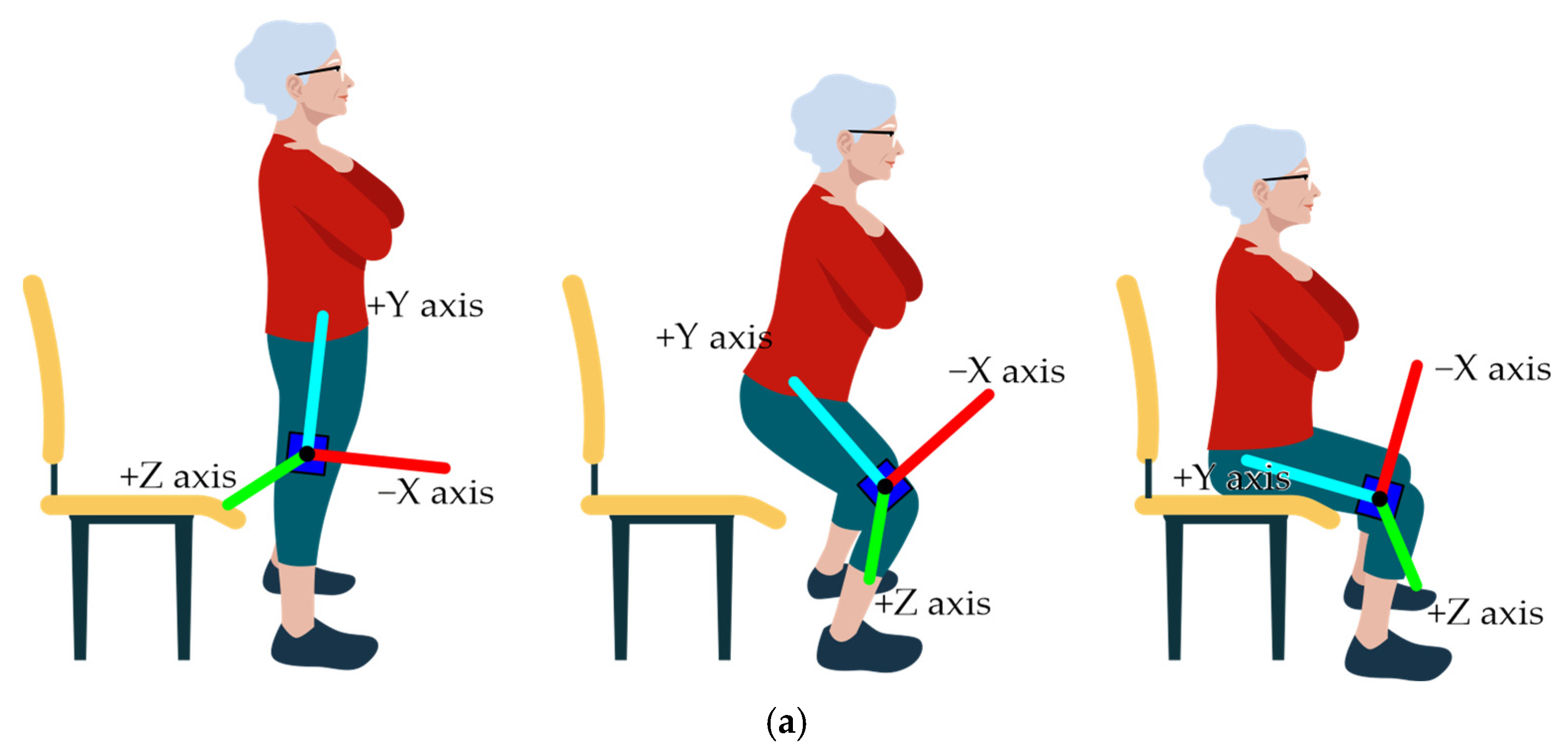
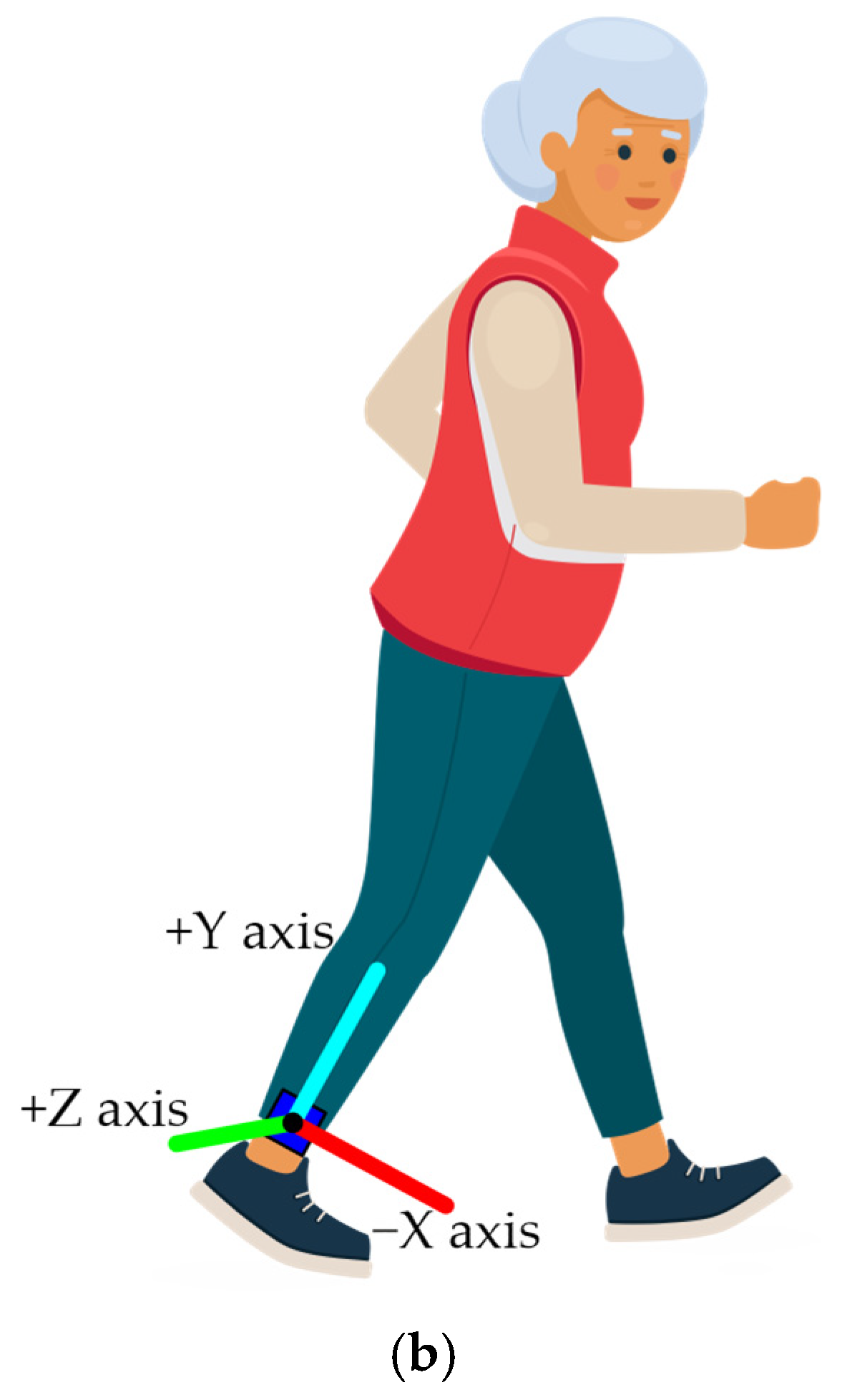
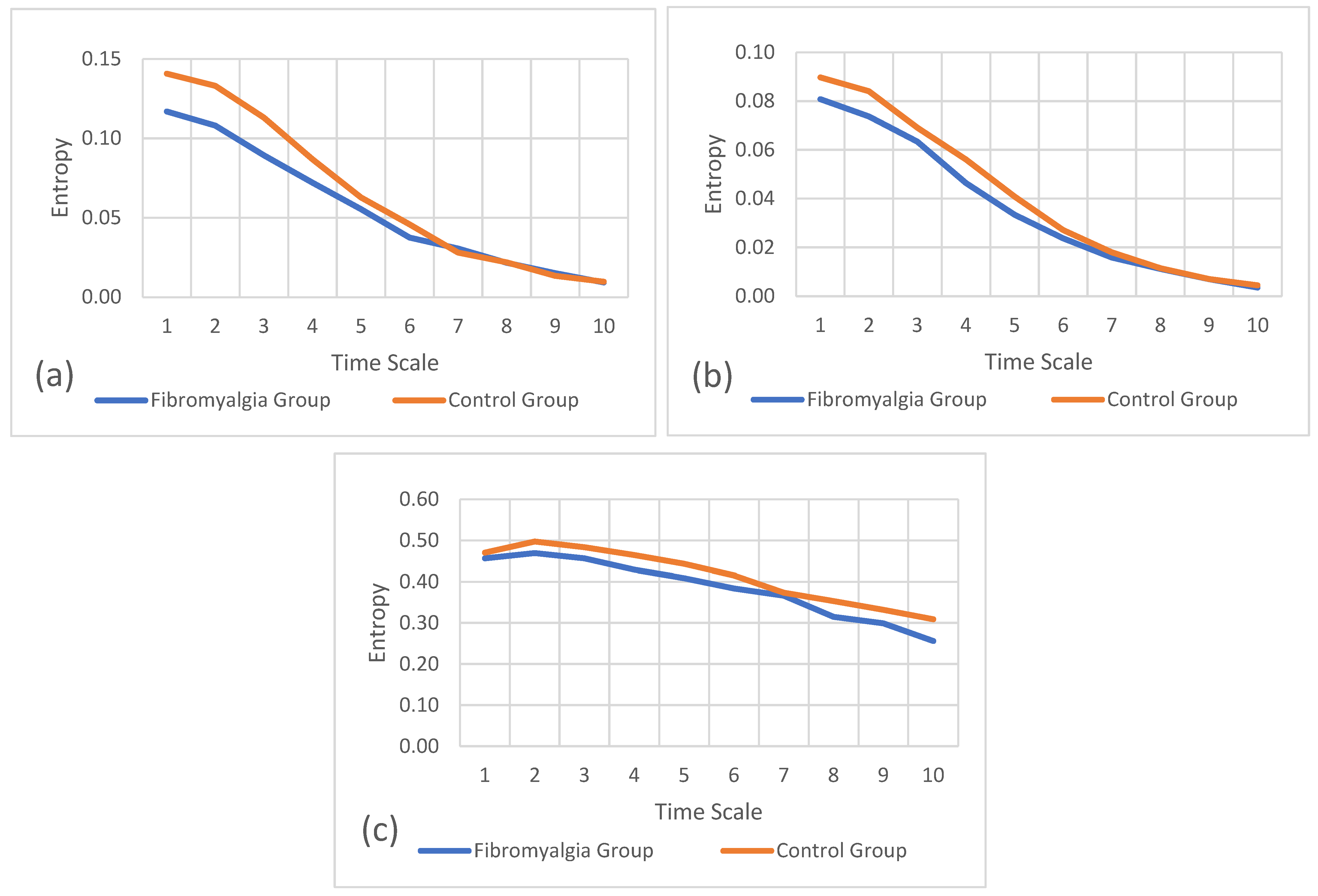
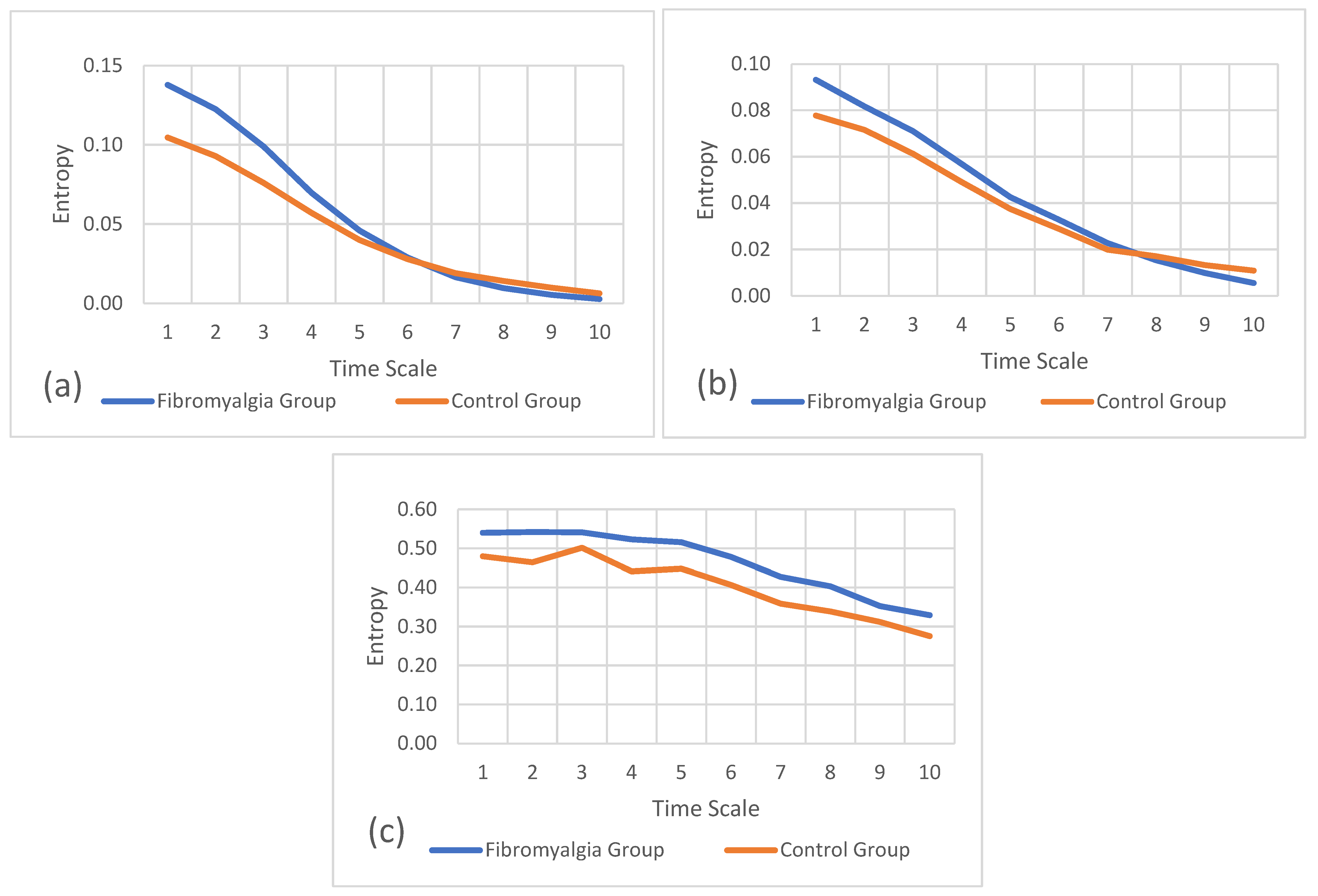
Background: Fine and gross motor tasks are usually used to evaluate behavioral dysfunctions and can be applied to diseases of the central nervous system, such as fibromyalgia (FM). Non-linear measures have allowed for deeper motor control analysis, focusing on the process and on the quality of movement. Therefore, to assess uncertainty, irregularity, and structural richness of a time series, different algorithms of entropy can be computed. The aim of this study was to (i) verify the single-scale and multiscale entropy values in fine and gross motor movements and (ii) to verify whether fine and gross motor tasks are sensitive to characterizing FM patients. Methods: The sample consisted of 20 females (46.2 ± 12.8 years) divided in two groups, an experimental group with 10 FM subjects and a control group with 10 subjects without FM. Inertial sensors were used to collect the finger tapping test (FTT), walking, and sit-and-stand task data. Results: Regarding fine motor skills, patients with FM showed a loss of structural richness (complexity), but they had information processing with greater control in the FTT, probably to simplify task execution and for correction of the movement. On the other hand, people without FM seemed to have more automatic control of the movement when performed with the preferred hand and exhibited similar difficulties to the FM group when performed with the non-preferred hand. Gross motor tasks showed similar entropy values for both groups. Conclusions: The results show that FM patients have movement controls primarily at the level of the motor cortex, whereas people without FM perform movement at the medullary level, especially in fine motor tasks, indicating that the FTT is sensitive to the presence of FM, especially when performed with the preferred hand.
Keywords: fibromyalgia; fine motor control; gross motor control; entropy; single scale; multiscale; IMU fibromyalgia; fine motor control; gross motor control; entropy; single scale; multiscale; IMU