Male and Female Cat Fleas (Ctenocephalides felis) Differ in Bacterial Control, Survival, and Circulating Hemocyte Responses Following Systemic Challenge

Department of Biology, Georgia Southern University, 4324 Old Register Rd., Statesboro, GA 30460, USA
*
Author to whom correspondence should be addressed.
Insects 2026, 17(9), 952; https://doi.org/10.3390/insects17090952
Submission received: 10 August 2026
/
Revised: 10 September 2026
/
Accepted: 10 September 2026
/
Published: 12 September 2026
(This article belongs to the Special Issue Insect Vector Physiology and Competence: Interactions and Adaptations)
Simple Summary
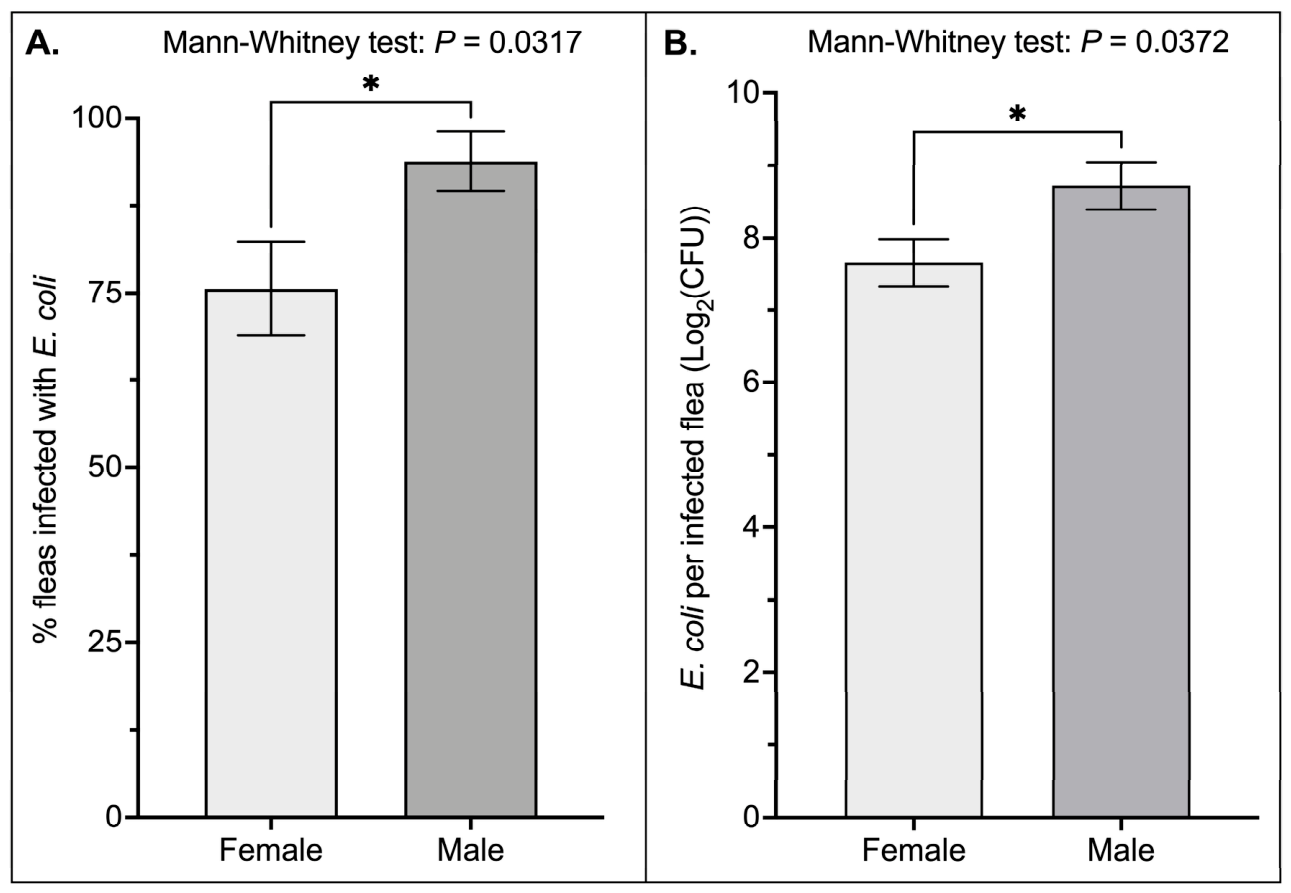
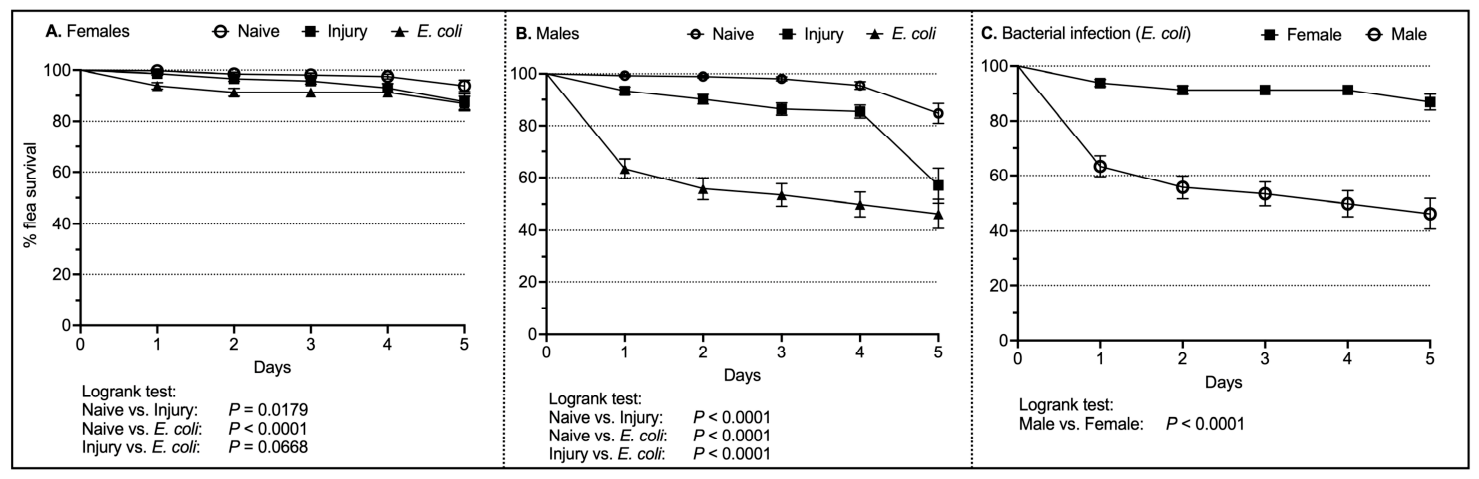
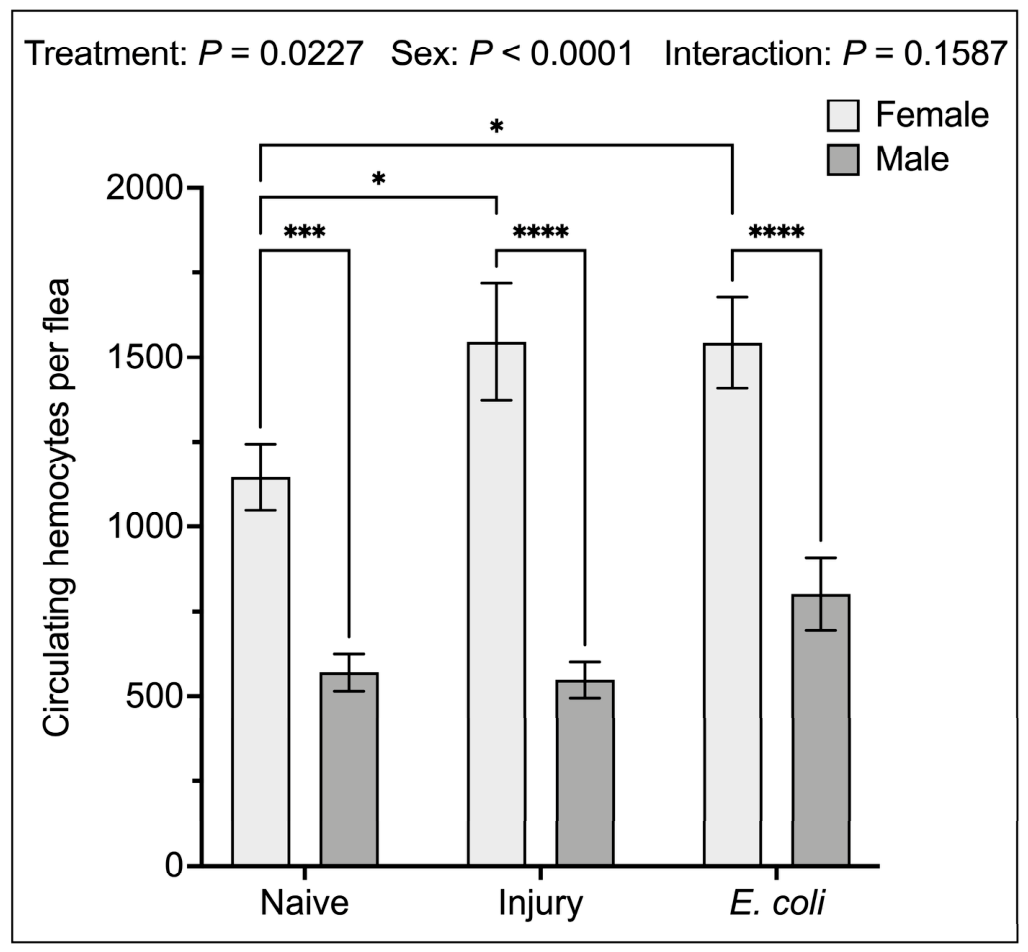
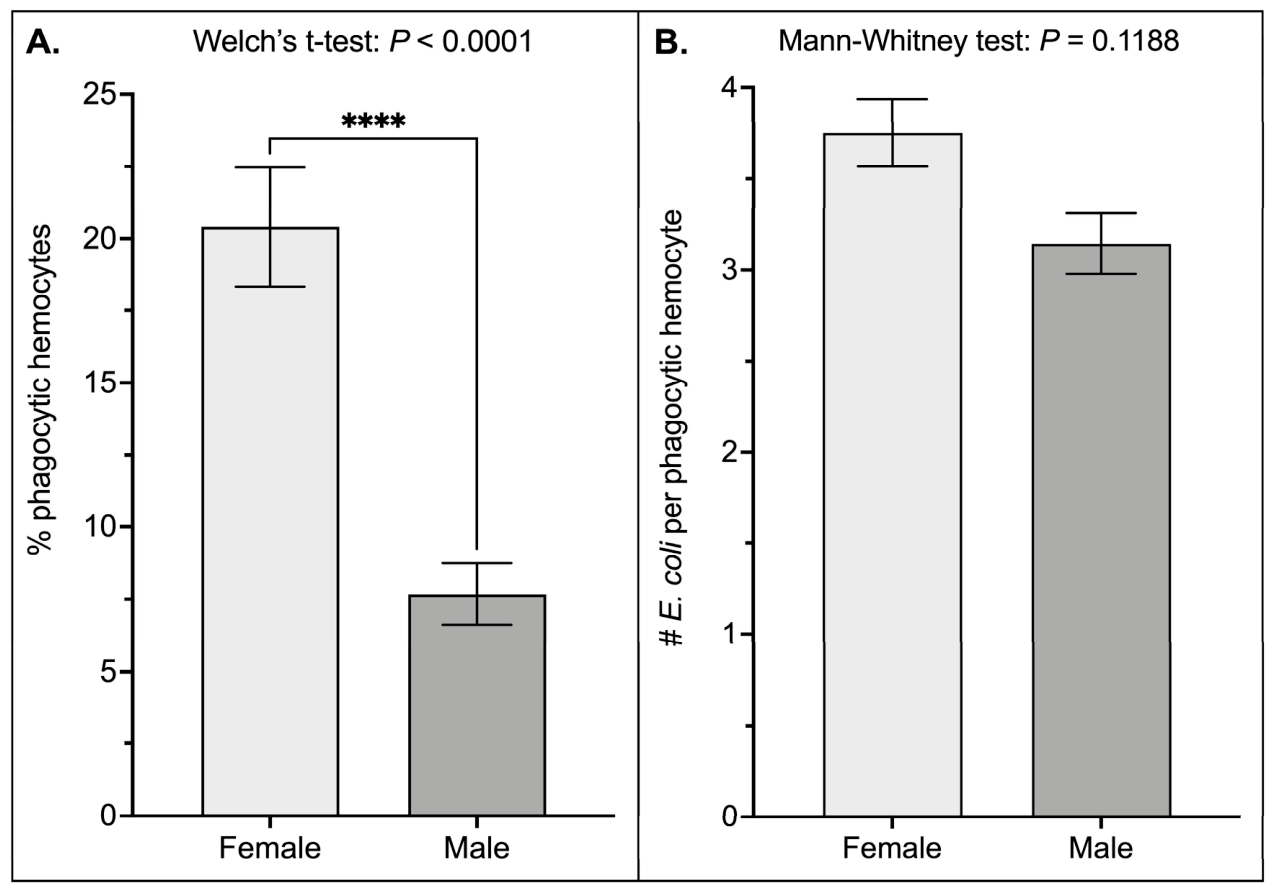
Fleas transmit several microorganisms that cause disease in humans and animals, yet relatively little is known about how their immune systems respond to infection. Previous studies of cat flea immunity have focused primarily on females, leaving unanswered the question of whether males and females respond similarly to invading microorganisms. In this study, we compared the responses of male and female cat fleas after bacteria were experimentally introduced directly into their body cavity. Female fleas maintained lower levels of bacterial infection and survived better than males. Females also had higher circulating immune cell counts and increased these counts following injury and bacterial challenge, whereas males did not. In addition, a greater proportion of female immune cells captured and consumed bacteria, although individual immune cells from males and females consumed similar numbers of bacteria. These findings demonstrate that male and female cat fleas differ in their responses to experimental bacterial infection. Understanding variation in immune function between the sexes provides new insight into flea biology and establishes a foundation for future studies examining whether similar differences occur when fleas encounter disease-causing microorganisms through natural routes of infection.
Abstract
Although both male and female cat fleas (Ctenocephalides felis) consume vertebrate blood throughout adulthood, previous studies of flea immunity have focused primarily on females, leaving whether systemic immune responses differ between the sexes largely unknown. To address this knowledge gap, we compared bacterial persistence, survival, circulating hemocyte abundance, and phagocytic activity in male and female C. felis following microinjection of Escherichia coli into the hemocoel. Females exhibited significantly lower infection prevalence and bacterial burdens than males 24 h post-challenge. Consistent with these differences, bacterial infection reduced survival in both sexes but had a substantially greater effect on males, while sterile injury alone significantly reduced male survival but had little effect on females. Across all treatment groups, females possessed significantly higher circulating hemocyte abundance than males and were the only sex to exhibit an increase in circulating hemocyte numbers following injury or bacterial challenge. Additionally, a significantly greater proportion of female hemocytes participated in phagocytosis, although the number of bacteria internalized per hemocyte did not differ between the sexes. Together, these findings demonstrate sex-specific differences in the systemic antibacterial responses of C. felis, with females exhibiting lower bacterial burdens, greater survival, higher circulating hemocyte abundance, and a greater proportion of phagocytic hemocytes than males. These results identify sex as a biological variable influencing systemic immune responses in cat fleas and provide a foundation for determining whether similar differences occur following natural routes of microbial exposure.
Keywords:
fleas; hemocytes; phagocytosis; sex differences; systemic infection; bacterial infection