Impact of Non-Floral Sugar Sources and Feeding Protocols on the Longevity, Reproduction, and Parasitism of Mastrus ridens (Hymenoptera: Ichneumonidae)


Simple Summary
Abstract
1. Introduction
2. Materials and Methods
2.1. Parasitoid and Host Origin and Handling
2.2. Sugar Sources and Presentation Mode
2.3. Male Longevity with Different Food Sources
2.4. Female Longevity, Parasitism, and Reproductive Output with Different Food Sources
2.5. Data Analysis
3. Results
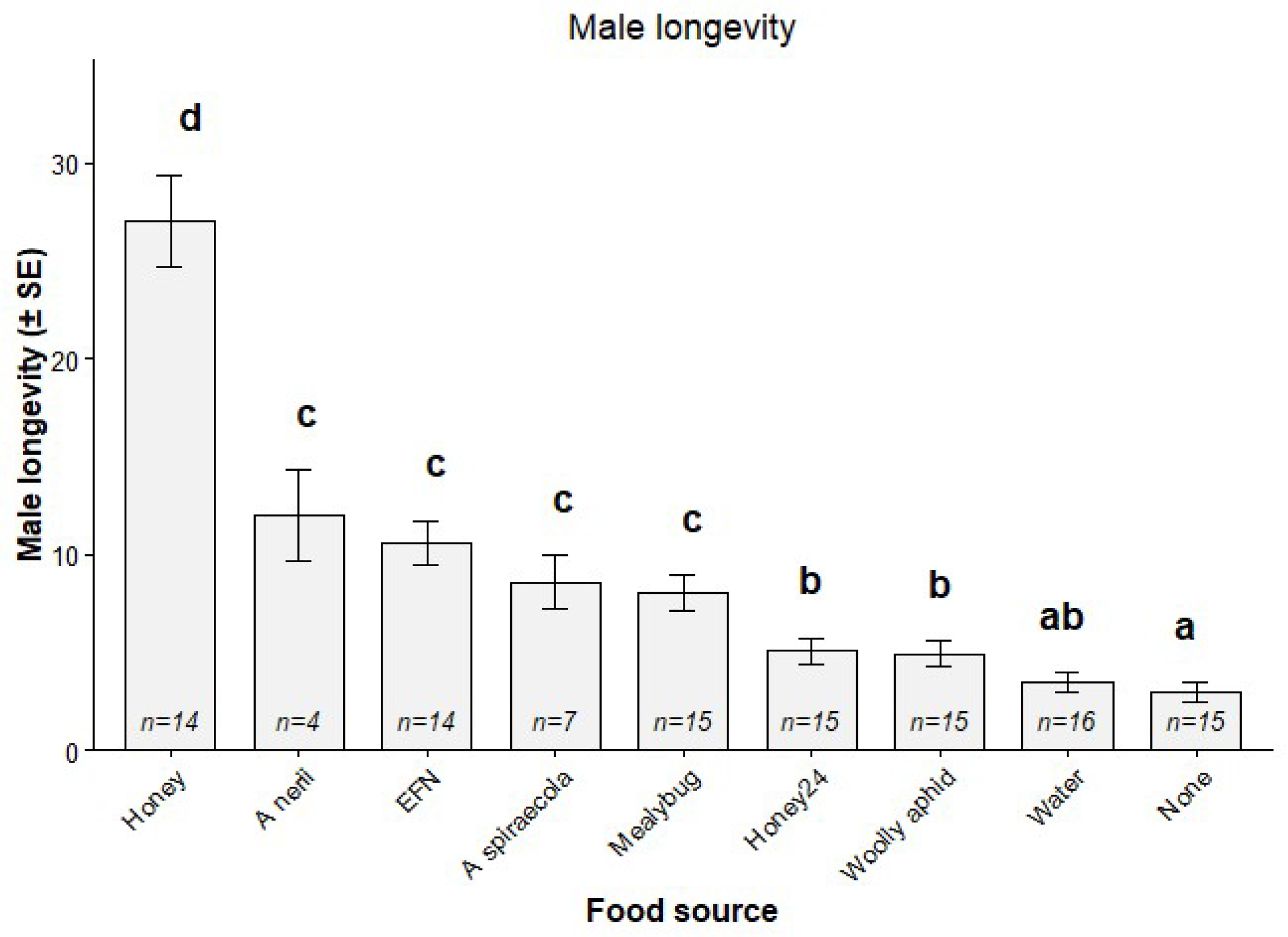
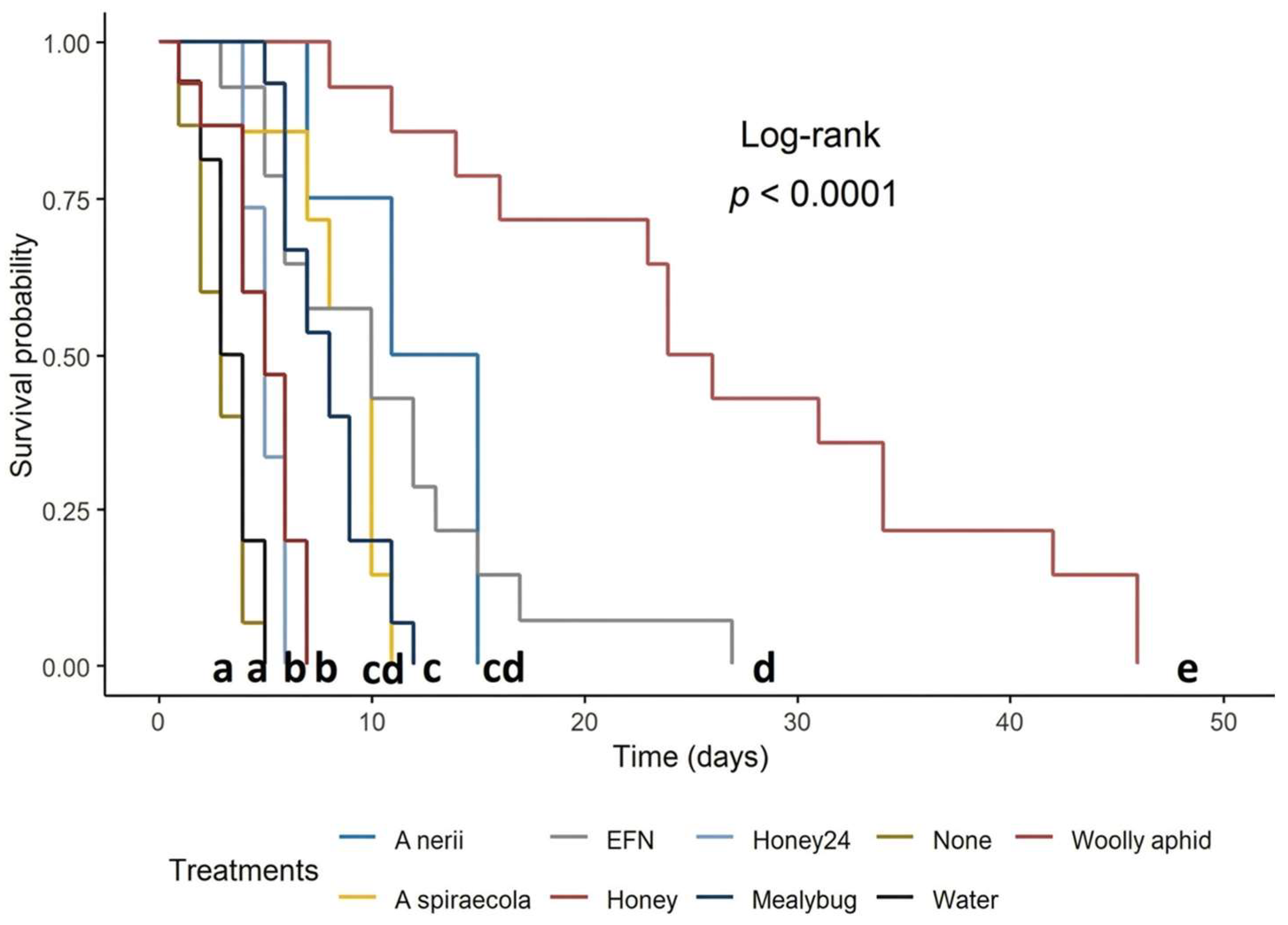
3.1. Effect of Food Sources and Size on Male Longevity
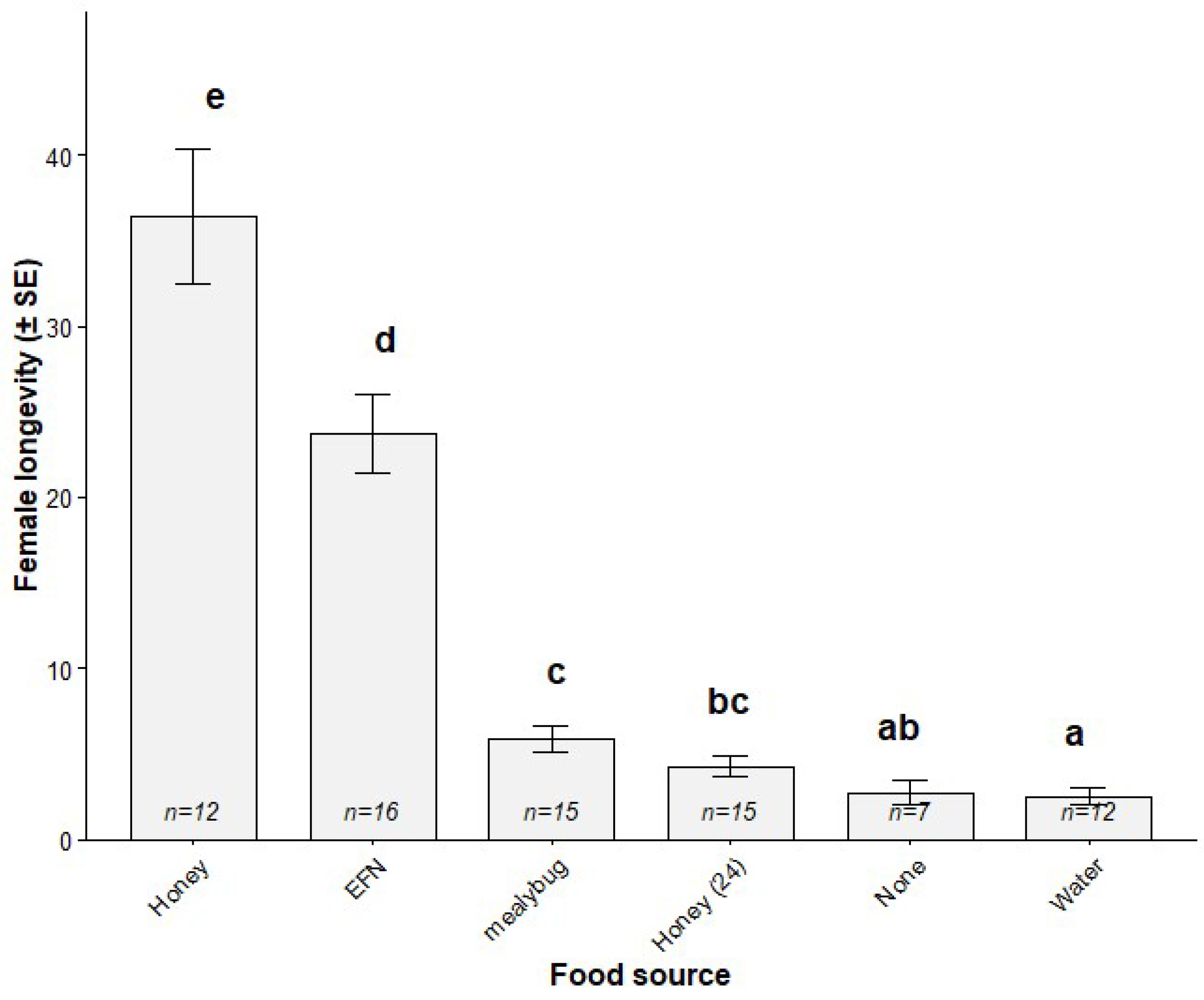
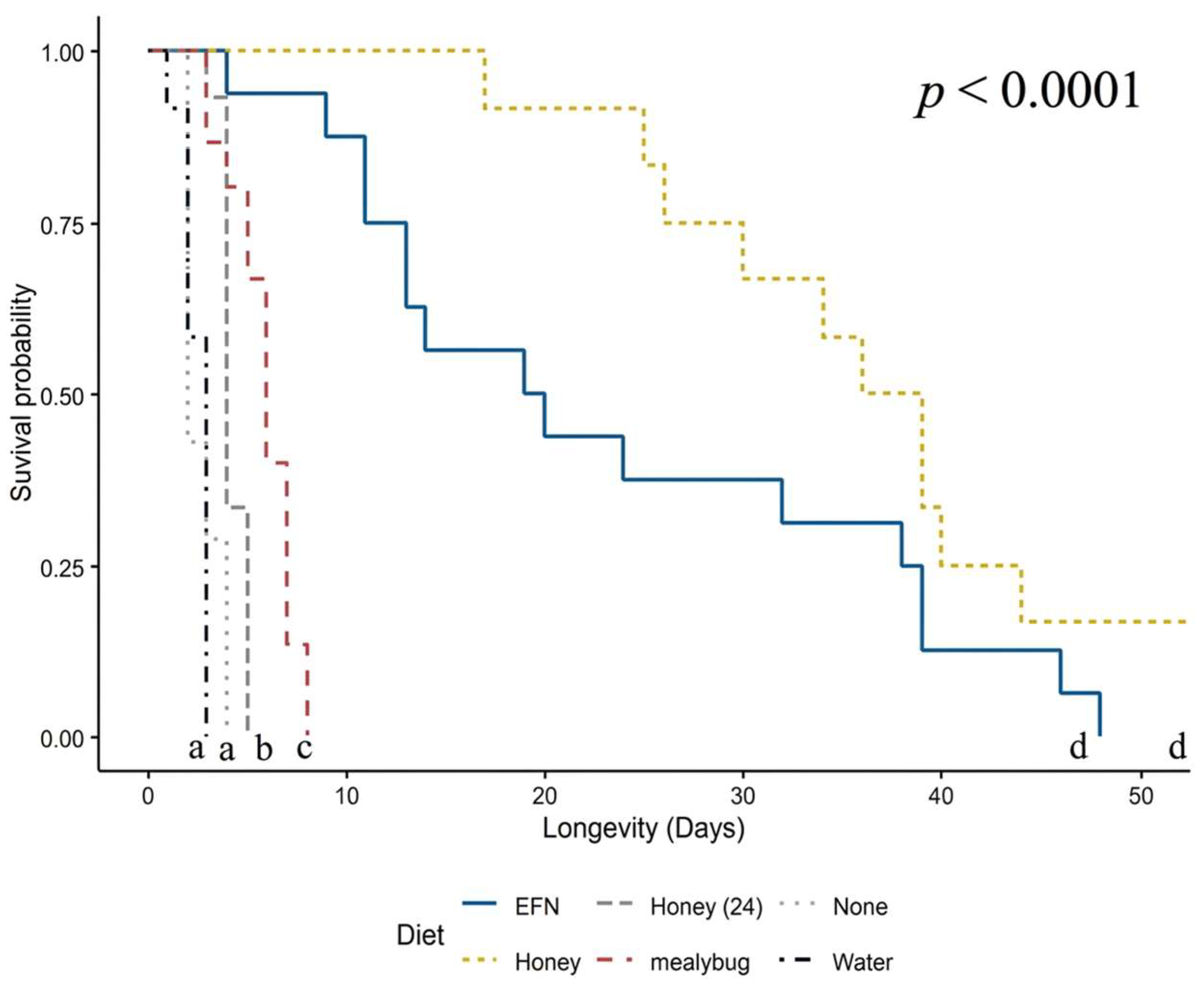
3.2. Effect of Food Sources and Size on Female Longevity
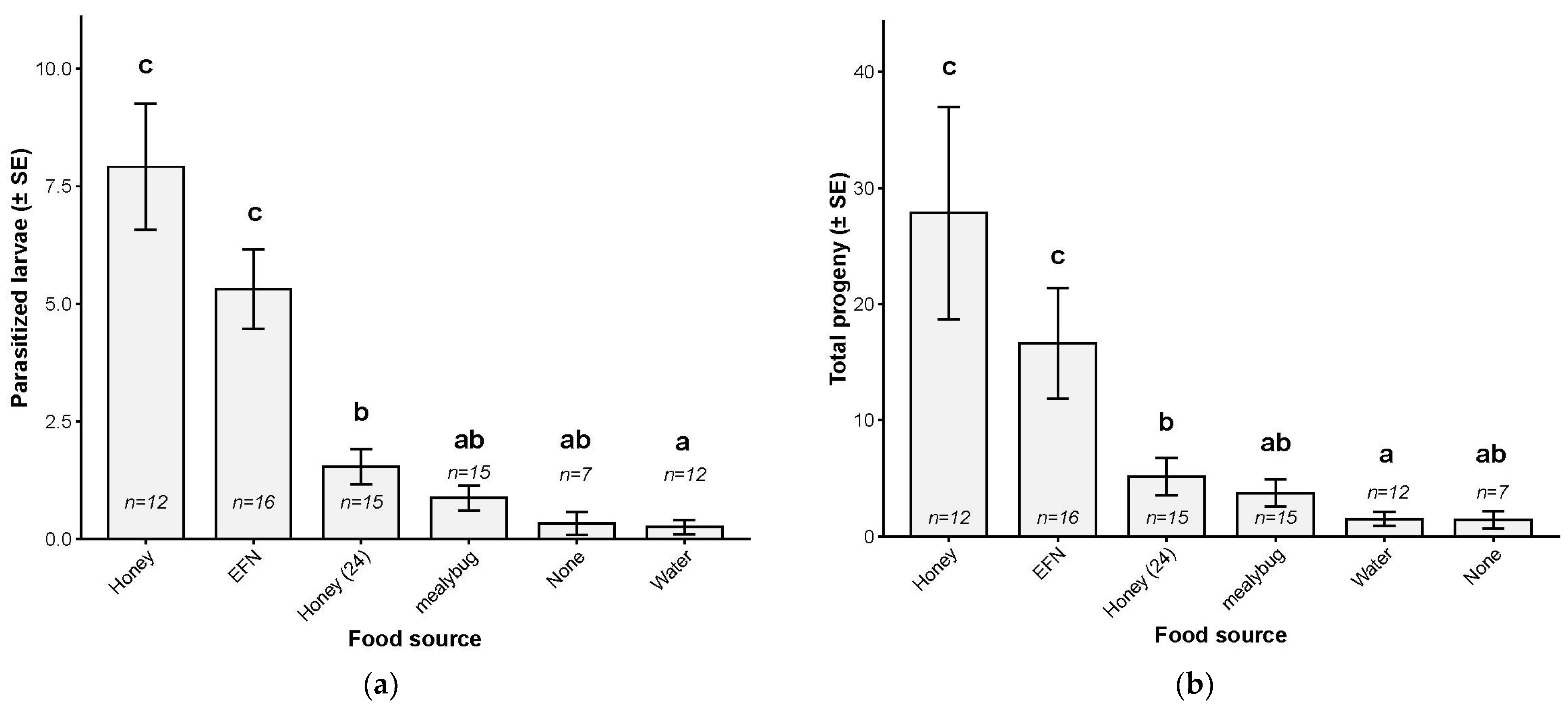
3.3. Effect of Food Sources on Parasitism and Female Reproductive Output
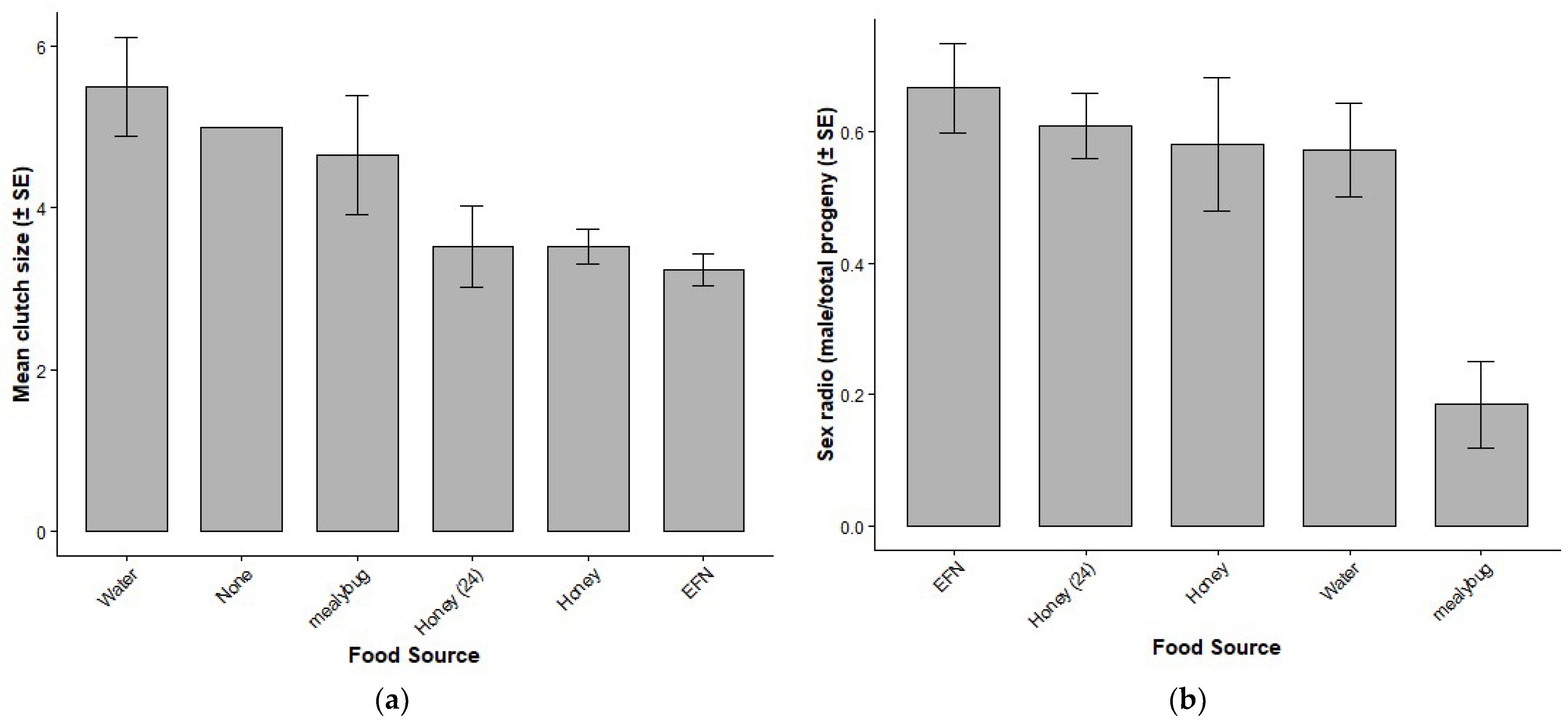
3.4. Effect of Food Sources on Clutch Size and Offspring Sex Ratio
4. Discussion
5. Conclusions
Supplementary Materials
Author Contributions
Funding
Data Availability Statement
Acknowledgments
Conflicts of Interest
References
- Jervis, M.A.; Kidd, N.A.C. Host-Feeding Strategies in Hymenopteran Parasitoids. Biol. Rev. 1986, 61, 395–434. [Google Scholar] [CrossRef] [Scilit]
- Jervis, M.A.; Ellers, J.; Harvey, J.A. Resource Acquisition, Allocation, and Utilization in Parasitoid Reproductive Strategies. Annu. Rev. Entomol. 2008, 53, 361–385. [Google Scholar] [CrossRef] [Scilit] [PubMed]
- Wäckers, F.L. A Comparison of Nectar- and Honeydew Sugars with Respect to Their Utilization by the Hymenopteran Parasitoid Cotesia glomerata. J. Insect Physiol. 2001, 47, 1077–1084. [Google Scholar] [CrossRef] [Scilit] [PubMed]
- Lee, J.C.; Heimpel, G.E.; Leibee, G.L. Comparing Floral Nectar and Aphid Honeydew Diets on the Longevity and Nutrient Levels of a Parasitoid Wasp. Entomol. Exp. Appl. 2004, 111, 189–199. [Google Scholar] [CrossRef] [Scilit]
- Bezemer, T.M.; Harvey, J.A.; Mills, N.J. Influence of Adult Nutrition on the Relationship between Body Size and Reproductive Parameters in a Parasitoid Wasp. Ecol. Entomol. 2005, 30, 571–580. [Google Scholar] [CrossRef] [Scilit]
- Russell, M. A Meta-Analysis of Physiological and Behavioral Responses of Parasitoid Wasps to Flowers of Individual Plant Species. Biol. Control 2015, 82, 96–103. [Google Scholar] [CrossRef] [Scilit]
- Benelli, G.; Giunti, G.; Tena, A.; Desneux, N.; Caselli, A.; Canale, A. The Impact of Adult Diet on Parasitoid Reproductive Performance. J. Pest Sci. 2017, 90, 807–823. [Google Scholar] [CrossRef] [Scilit]
- Zaviezo, T.; Romero, A.; Calleja, F.; Calvo, C.; Osorio, R.; Casanoves, F.; Irles, P. Intraspecific Variation in Biocontrol Traits in Mastrus ridens (Hymenoptera: Ichneumonidae) Laboratory Populations. BioControl 2021, 66, 475–485. [Google Scholar] [CrossRef] [Scilit]
- Mátray, S.; Herz, A. Flowering Plants Serve Nutritional Needs of Ascogaster quadridentata (Hymenoptera: Braconidae), a Key Parasitoid of Codling Moth. Biol. Control 2022, 171, 104950. [Google Scholar] [CrossRef] [Scilit]
- Lee, J.C.; Andow, D.A.; Heimpel, G.E. Influence of Floral Resources on Sugar Feeding and Nutrient Dynamics of a Parasitoid in the Field. Ecol. Entomol. 2006, 31, 470–480. [Google Scholar] [CrossRef] [Scilit]
- Lee, J.C.; Heimpel, G.E. Floral Resources Impact Longevity and Oviposition Rate of a Parasitoid in the Field. J. Anim. Ecol. 2008, 77, 565–572. [Google Scholar] [CrossRef] [Scilit] [PubMed]
- Winkler, K.; Wäckers, F.L.; Kaufman, L.V.; Larraz, V.; van Lenteren, J.C. Nectar Exploitation by Herbivores and Their Parasitoids Is a Function of Flower Species and Relative Humidity. Biol. Control 2009, 50, 299–306. [Google Scholar] [CrossRef] [Scilit]
- Peñalver-Cruz, A.; Satour, P.; Jaloux, B.; Lavandero, B. Honeydew Is a Food Source and a Contact Kairomone for Aphelinus mali. Insects 2023, 14, 426. [Google Scholar] [CrossRef] [Scilit] [PubMed]
- Lundgren, J.G. Relationships of Natural Enemies and Non-Prey Foods; Springer: Dordrecht, The Netherlands, 2009. [Google Scholar]
- Wiens, D.J. The Influence of Tannins on the Extrafloral Nectar Characteristics and Insect Mutualists of Vicia faba L. Master’s Thesis, University of Saskatchewan, Saskatoon, SK, Canada, 2016. [Google Scholar]
- van Rijn, P.C.J.; Wäckers, F.L. Nectar Accessibility Determines Fitness, Flower Choice and Abundance of Hoverflies That Provide Natural Pest Control. J. Appl. Ecol. 2016, 53, 925–933. [Google Scholar] [CrossRef] [Scilit]
- Zaviezo, T.; Muñoz, A.E.; Bueno, E. Availability, Accessibility, and Suitability of Native Flowers from Central Chile to Mastrus ridens, a Parasitoid of Codling Moth. Insects 2025, 16, 665. [Google Scholar] [CrossRef] [Scilit] [PubMed]
- Mondor, E.B.; Addicott, J.F. Conspicuous Extra-Floral Nectaries Are Inducible in Vicia faba. Ecol. Lett. 2003, 6, 495–497. [Google Scholar] [CrossRef] [Scilit]
- Mondor, E.B.; Tremblay, M.N.; Messing, R.H. Extrafloral Nectary Phenotypic Plasticity Is Damage- and Resource-Dependent in Vicia faba. Biol. Lett. 2006, 2, 583–585. [Google Scholar] [CrossRef] [Scilit] [PubMed]
- Kwok, K.E.; Laird, R.A. Plant Age and the Inducibility of Extrafloral Nectaries in Vicia faba. Plant Ecol. 2012, 213, 1823–1832. [Google Scholar] [CrossRef] [Scilit]
- Jamont, M.; Crépellière, S.; Jaloux, B. Effect of Extrafloral Nectar Provisioning on the Performance of the Adult Parasitoid Diaeretiella rapae. Biol. Control 2013, 65, 271–277. [Google Scholar] [CrossRef] [Scilit]
- Jones, I.M.; Koptur, S.; von Wettberg, E.J. The Use of Extrafloral Nectar in Pest Management: Overcoming Context Dependence. J. Appl. Ecol. 2017, 54, 489–499. [Google Scholar] [CrossRef] [Scilit]
- Ruhanen, H.M.; Räty, E.; Mäkinen, J.; Kasurinen, A.; Blande, J.D. Effect of Faba Bean Nectar on Longevity and Fecundity of Plutella xylostella and Its Parasitoid Cotesia vestalis. Arthropod. Plant Interact. 2024, 18, 455–468. [Google Scholar] [CrossRef] [Scilit]
- Álvarez-Pérez, S.; Lievens, B.; de Vega, C. Floral Nectar and Honeydew Microbial Diversity and Their Role in Biocontrol of Insect Pests and Pollination. Curr. Opin. Insect Sci. 2024, 61, 101138. [Google Scholar] [CrossRef] [Scilit] [PubMed]
- Fernández de Bobadilla, M.; Ramírez, N.M.; Calvo-Agudo, M.; Dicke, M.; Tena, A. Honeydew Management to Promote Biological Control. Curr. Opin. Insect Sci. 2024, 61, 101151. [Google Scholar] [CrossRef] [Scilit] [PubMed]
- Fischer, M.K.; Shingleton, A.W. Host Plant and Ants Influence the Honeydew Sugar Composition of Aphids. Funct. Ecol. 2001, 15, 544–550. [Google Scholar] [CrossRef] [Scilit]
- Tena, A.; Wäckers, F.L.; Heimpel, G.E.; Urbaneja, A.; Pekas, A. Parasitoid Nutritional Ecology in a Community Context: The Importance of Honeydew and Implications for Biological Control. Curr. Opin. Insect Sci. 2016, 14, 100–104. [Google Scholar] [CrossRef] [Scilit] [PubMed]
- Wäckers, F.L.; Van Rijn, P.C.J.; Bruin, J. Plant-Provided Food for Carnivorous Insects: A Protective Mutualism and Its Applications; Cambridge University Press: Cambridge, UK, 2005; pp. 1–356. [Google Scholar] [CrossRef] [Scilit]
- Faria, C.A.; Wäckers, F.L.; Turlings, T.C.J. The Nutritional Value of Aphid Honeydew for Non-Aphid Parasitoids. Basic Appl. Ecol. 2008, 9, 286–297. [Google Scholar] [CrossRef] [Scilit]
- Wäckers, F.L.; Alberola, J.S.; Garcia-Marí, F.; Pekas, A. Attract and Distract: Manipulation of a Food-Mediated Protective Mutualism Enhances Natural Pest Control. Agric. Ecosyst. Environ. 2017, 246, 168–174. [Google Scholar] [CrossRef] [Scilit]
- Golan, K.; Najda, A. Differences in the Sugar Composition of the Honeydew of Polyphagous Brown Soft Scale Coccus hesperidum (Hemiptera: Sternorrhyncha: Coccoidea) Feeding on Various Host Plants. Eur. J. Entomol. 2011, 108, 705–709. [Google Scholar] [CrossRef] [Scilit]
- Schillewaert, S.; Vantaux, A.; Van den Ende, W.; Wenseleers, T. The Effect of Host Plants on Genotype Variability in Fitness and Honeydew Composition of Aphis fabae. Insect Sci. 2017, 24, 781–788. [Google Scholar] [CrossRef] [Scilit] [PubMed]
- Schillewaert, S.; Parmentier, T.; Vantaux, A.; Van den Ende, W.; Vorburger, C.; Wenseleers, T. The Influence of Facultative Endosymbionts on Honeydew Carbohydrate and Amino Acid Composition of the Black Bean Aphid Aphis fabae. Physiol. Entomol. 2017, 42, 125–133. [Google Scholar] [CrossRef] [Scilit]
- Blanchard, S.; Verheggen, F.; Van De Vreken, I.; Richel, A.; Detrain, C. Combined Elevation of Temperature and CO2 Impacts the Production and Sugar Composition of Aphid Honeydew. J. Chem. Ecol. 2022, 48, 772–781. [Google Scholar] [CrossRef] [Scilit] [PubMed]
- Fernández de Bobadilla, M.; Millán-Leiva, A.; Porcu, E.; Filippello, F.G.; Tena, A. Environmental Exposure Alters the Nutritional Quality of Honeydew for a Parasitoid. BioControl 2025, 71, 153–162. [Google Scholar] [CrossRef] [Scilit]
- Wäckers, F.L. Do Oligosaccharides Reduce the Suitability of Honeydew for Predators and Parasitoids? A Further Facet to the Function of Insect-Synthesized Honeydew Sugars. Oikos 2000, 90, 197–201. [Google Scholar] [CrossRef] [Scilit]
- Wäckers, F.L.; van Rijn, P.C.J.; Heimpel, G.E. Honeydew as a Food Source for Natural Enemies: Making the Best of a Bad Meal? Biol. Control 2008, 45, 176–184. [Google Scholar] [CrossRef] [Scilit]
- Lenaerts, M.; Abid, L.; Paulussen, C.; Goelen, T.; Wäckers, F.; Jacquemyn, H.; Lievens, B. Adult Parasitoids of Honeydew-Producing Insects Prefer Honeydew Sugars to Cover Their Energetic Needs. J. Chem. Ecol. 2016, 42, 1028–1036. [Google Scholar] [CrossRef] [Scilit] [PubMed]
- Agirbov, Y.I.; Mukhametzyanov, R.R.; Arzamastseva, N.V.; Kovaleva, E.V.; Khezhev, A.M.; Ostapchuk, T.V.; Snegirev, D.V. Apple Production: Area, Gross Yield, Productivity in the World and Main Countries. Timiryazev Biol. J. 2024, 1, 34–46. [Google Scholar] [CrossRef] [Scilit]
- Most Produced Fruits in the World (2025 Global Rankings). Available online: https://worldostats.com/global-stats/most-produced-fruits-in-the-world-2025/ (accessed on 29 May 2026).
- Apple Market Growth, Trends Analysis Report by 2035. Available online: https://www.marketgrowthreports.com/market-reports/apple-market-112927 (accessed on 29 May 2026).
- Catastro Frutícola—Ciren. Available online: https://www.ciren.cl/proyectos/catastros/catastro-fruticola/ (accessed on 29 May 2026).
- Herz, A.; Cahenzli, F.; Penvern, S.; Pfiffner, L.; Tasin, M.; Sigsgaard, L. Managing Floral Resources in Apple Orchards for Pest Control: Ideas, Experiences and Future Directions. Insects 2019, 10, 247. [Google Scholar] [CrossRef] [Scilit] [PubMed]
- Bugg, R.L.; Waddington, C. Using Cover Crops to Manage Arthropod Pests of Orchards: A Review. Ecosyst. Environ. 1994, 50, 11–28. [Google Scholar] [CrossRef] [Scilit]
- Granatstein, D.; Sanchez, E. Research Knowledge and Needs for Orchard Floor Management in Organic Tree Fruit Systems. Int. J. Fruit Sci. 2009, 9, 257–281. [Google Scholar] [CrossRef] [Scilit]
- Granatstein, D.; Davenport, J.R.; Kirby, E. Growing Legumes in Orchard Alleys as an Internal Nitrogen Source. HortScience 2017, 52, 1283–1287. [Google Scholar] [CrossRef] [Scilit]
- Keeler, K.H.; Porturas, L.D.; Weber, M.G. World List of Plants with Extrafloral Nectaries—Home. Available online: http://www.extrafloralnectaries.org/ (accessed on 29 May 2026).
- Artigas, J.N. Entomología Económica. Insectos de Interés Agrícola, Forestal, Médico y Veterinario (Nativos, Introducidos y Susceptibles de Ser Introducidos); Universidad de Concepción: Concepción, Chile, 1994. [Google Scholar]
- Agnello, A.M. Apple Pests and Their Management. In Encyclopedia of Entomology; Springer: Dordrecht, The Netherlands, 2004; pp. 162–176. [Google Scholar] [CrossRef] [Scilit] [PubMed]
- Jönsson, Å. Insects and Insect Damage in an Apple Orchard Converted from Integrated Production to Organic Production. Acta Agric. Scand. Sect. B-Soil Plant Sci. 2006, 56, 70–80. [Google Scholar] [CrossRef] [Scilit]
- Barnes, M.M. Codling Moth Occurrence, Host Race Formation and Damage. In World Crop Pests. Tortricid Pest, Their Biology, Natural Enemies and Control; van der Geest, L.P.S., Evenhuis, H.H., Eds.; Elseiver: Amsterdam, The Netherlands, 1991; Volume 5, pp. 313–338. [Google Scholar]
- CABI. Cydia pomonella (Codling Moth). Available online: http://www.cabidigitallibrary.org/doi/10.1079/cabicompendium.11396 (accessed on 3 April 2025).
- Retamal, R.; Zaviezo, T.; Malausa, T.; Fauvergue, X.; Le Goff, I.; Toleubayev, K. Genetic Analyses and Occurrence of Diploid Males in Field and Laboratory Populations of Mastrus ridens (Hymenoptera: Ichneumonidae), a Parasitoid of the Codling Moth. Biol. Control 2016, 101, 69–77. [Google Scholar] [CrossRef] [Scilit]
- Zaviezo, T.; Retamal, R.; Urvois, T.; Fauvergue, X.; Blin, A.; Malausa, T. Effects of Inbreeding on a Gregarious Parasitoid Wasp with Complementary Sex Determination. Evol. Appl. 2018, 11, 243–253. [Google Scholar] [CrossRef] [Scilit] [PubMed]
- Sandanayaka, W.R.M.; Jenkins, H.K.; Davis, V.A.; Page-Weir, N.E.M.; Chhagan, A.; Blin, A.; Zaviezo, T. Assessment of Fitness Traits of Pure and Mixed Crosses of Mastrus ridens Populations to Improve Classical Biological Control of Codling Moth. Biol. Control 2022, 169, 104899. [Google Scholar] [CrossRef] [Scilit]
- Chhagan, A.; Davis, V.A.; Hunt, S.; MacDonald, F.; Santos, K.; Richards, K.; Bell, V.A. Effect of Floral Resources and Mealybug Honeydew on the Longevity of the Parasitoid, Anagyrus fusciventris. Biocontrol Sci. Technol. 2024, 34, 316–322. [Google Scholar] [CrossRef] [Scilit]
- Schneider, C.A.; Rasband, W.S.; Eliceiri, K.W. NIH Image to ImageJ: 25 Years of Image Analysis. Nat. Methods 2012, 9, 671–675. [Google Scholar] [CrossRef] [Scilit] [PubMed]
- Benjamini, Y.; Hochberg, Y. Controlling the False Discovery Rate: A Practical and Powerful Approach to Multiple Testing. J. R. Stat. Soc. Ser. B Stat. Methodol. 1995, 57, 289–300. [Google Scholar] [CrossRef] [Scilit]
- Kleinbaum, D.G.; Klein, M. Kaplan-Meier Survival Curves and the Log-Rank Test. In Survival Analysis; Kleinbaum, D.G., Klein, D., Eds.; Springer: New York, NY, USA, 2012; pp. 55–96. [Google Scholar]
- R Core Team. R: The R Project for Statistical Computing; R Core Team: Vienna, Austria, 2024. [Google Scholar]
- Posit Team. RStudio Integrated Development Environment for R; Posit Team: Boston, MA, USA, 2025. [Google Scholar]
- Kost, C.; Heil, M. Increased Availability of Extrafloral Nectar Reduces Herbivory in Lima Bean Plants (Phaseolus lunatus, Fabaceae). Basic Appl. Ecol. 2005, 6, 237–248. [Google Scholar] [CrossRef] [Scilit]
- Kocira, A.; Staniak, M.; Tomaszewska, M.; Kornas, R.; Cymerman, J.; Panasiewicz, K.; Lipińska, H. Legume Cover Crops as One of the Elements of Strategic Weed Management and Soil Quality Improvement. A Review. Agriculture 2020, 10, 394. [Google Scholar] [CrossRef] [Scilit]
- Katayama, N.; Hembry, D.H.; Hojo, M.K.; Suzuki, N. Why Do Ants Shift Their Foraging from Extrafloral Nectar to Aphid Honeydew? Ecol. Res. 2013, 28, 919–926. [Google Scholar] [CrossRef] [Scilit]
- Mathews, C.R.; Bottrell, D.G.; Brown, M.W. Interactions between Extrafloral Nectaries, Ants (Hymenoptera: Formicidae), and Other Natural Enemies Affect Biological Control of Grapholita molesta (Lepidoptera: Tortricidae) on Peach (Rosales: Rosaceae). Environ. Entomol. 2011, 40, 42–51. [Google Scholar] [CrossRef] [Scilit] [PubMed]
- Iasczczaki, R.S.; Pallini, A.; Venzon, M.; Modesto Beghelli, G.; de Assis, C.B.; Pio, G.H.; Janssen, A. Ants Do Not Prey upon an Extrafloral-Nectar-Feeding Predatory Mite. Ecol. Entomol. 2025, 50, 876–885. [Google Scholar] [CrossRef] [Scilit]
- Zaviezo, T.; Muñoz, A.E. Conservation Biological Control of Arthropod Pests Using Native Plants. Curr. Opin. Insect Sci. 2023, 56, 101022. [Google Scholar] [CrossRef] [Scilit] [PubMed]
- McDougall, S.J.; Mills, N.J. The Influence of Hosts, Temperature and Food Sources on the Longevity of Trichogramma platneri. Entomol. Exp. Appl. 1997, 83, 195–203. [Google Scholar] [CrossRef] [Scilit]
- Wyckhuys, K.A.G.; Strange-George, J.E.; Kulhanek, C.A.; Wäckers, F.L.; Heimpel, G.E. Sugar Feeding by the Aphid Parasitoid Binodoxys communis: How Does Honeydew Compare with Other Sugar Sources? J. Insect Physiol. 2008, 54, 481–491. [Google Scholar] [CrossRef] [Scilit] [PubMed]
- Torres-Moreno, R.; Moya-Raygoza, G. Effects of Food Resources on the Longevity, Survival, and Fecundity of Paracentrobia Subflava Adults, an Egg Parasitoid of the Corn Leafhopper Pest Dalbulus maidis. Ann. Appl. Biol. 2024, 185, 231–241. [Google Scholar] [CrossRef] [Scilit]
- Tena, A.; Senft, M.; Desneux, N.; Dregni, J.; Heimpel, G.E. The Influence of Aphid-Produced Honeydew on Parasitoid Fitness and Nutritional State: A Comparative Study. Basic Appl. Ecol. 2018, 29, 55–68. [Google Scholar] [CrossRef] [Scilit]
- Rand, T.A.; Senior, L.B. Honeydew Associated with Four Common Crop Aphid Species Increases Longevity of the Parasitoid Wasp, Bracon cephi (Hymenoptera: Braconidae). Can. Entomol. 2023, 155, e20. [Google Scholar] [CrossRef] [Scilit]
- Irvin, N.A.; Hoddle, M.S. The Effects of Floral Nectar, Extrafloral Nectar and Hemipteran Honeydew on the Fitness of Tamarixia radiata (Hymenoptera: Eulophidae), a Parasitoid of Diaphorina citri. Biol. Control 2021, 163, 104753. [Google Scholar] [CrossRef] [Scilit]
- Fuchsberg, J.R.; Yong, T.H.; Losey, J.E.; Carter, M.E.; Hoffmann, M.P. Evaluation of Corn Leaf Aphid (Rhopalosiphum maidis; Homoptera: Aphididae) Honeydew as a Food Source for the Egg Parasitoid Trichogramma ostriniae (Hymenoptera: Trichogrammatidae). Biol. Control 2007, 40, 230–236. [Google Scholar] [CrossRef] [Scilit]
- Pinheiro, L.A.; Pereira, J.A.; Medina, P.; Santos, S.A.P. Longevity and Parasitism Capacity of Psyttaliaconcolor (Hymenoptera: Braconidae) Fed on Sugar Solutions and Insect Honeydew. Agronomy 2022, 12, 2401. [Google Scholar] [CrossRef] [Scilit]
- Urbaneja-Bernat, P.; González-Cabrera, J.; Hernández-Suárez, E.; Tena, A. Honeydew of HLB Vector, Trioza erytreae, Increases Longevity, Egg Load and Parasitism of Its Main Parasitoid Tamarixia dryi. Biol. Control 2023, 179, 105169. [Google Scholar] [CrossRef] [Scilit]
- Monticelli, L.S.; Tena, A.; Idier, M.; Amiens-Desneux, E.; Desneux, N. Quality of Aphid Honeydew for a Parasitoid Varies as a Function of Both Aphid Species and Host Plant. Biol. Control 2020, 140, 104099. [Google Scholar] [CrossRef] [Scilit]
- Bezemer, T.M.; Mills, N.J. Clutch Size Decisions of a Gregarious Parasitoid under Laboratory and Field Conditions. Anim. Behav. 2003, 66, 1119–1128. [Google Scholar] [CrossRef] [Scilit]
- Sevenster, J.G.; Ellers, J.; Driessen, G. An Evolutionary Argument for Time Limitation. Evolution 1998, 52, 1241–1244. [Google Scholar] [CrossRef] [Scilit] [PubMed]
- Rivero, A.; Casas, J. Incorporating Physiology into Parasitoid Behavioral Ecology: The Allocation of Nutritional Resources. Res. Popul. Ecol. 1999, 41, 39–45. [Google Scholar] [CrossRef] [Scilit]
- Papaj, D.R. Ovarian Dynamics and Host Use. Annu. Rev. Entomol. 2000, 45, 423–448. [Google Scholar] [CrossRef] [Scilit] [PubMed]
- Zaviezo, T.; Mills, N. Factors Influencing the Evolution of Clutch Size in a Gregarious Insect Parasitoid. J. Anim. Ecol. 2000, 69, 1047–1057. [Google Scholar] [CrossRef] [Scilit]
- Van Alphen, J.J.M.; Bernstein, C.; Driessen, G. Information Acquisition and Time Allocation in Insect Parasitoids. Trends Ecol. Evol. 2003, 18, 81–87. [Google Scholar] [CrossRef] [Scilit]
- Wajnberg, É. Time Allocation Strategies in Insect Parasitoids: From Ultimate Predictions to Proximate Behavioral Mechanisms. Behav. Ecol. Sociobiol. 2006, 60, 589–611. [Google Scholar] [CrossRef] [Scilit]
- Rosenheim, J.A.; Jepsen, S.J.; Matthews, C.E.; Smith, D.S.; Rosenheim, M.R. Time Limitation, Egg Limitation, the Cost of Oviposition, and Lifetime Reproduction by an Insect in Nature. Am. Nat. 2008, 172, 486–496. [Google Scholar] [CrossRef] [Scilit] [PubMed]
- Godfray, H.C.J. Parasitoids: Behavioral and Evolutionary Ecology; Princeton University Press: Princeton, NJ, USA, 1994; Volume 12. [Google Scholar]
- Zang, W.; Stelinski, L.L.; Mohamed, A.; Wang, G.; Tettamanti, G.; Chen, M.; Hong, M.; Daly, E.Z.; Bruin, J.; Renault, D.; et al. Unlocking agro-ecosystem sustainability: Exploring the bottom-up effects of microbes, plants, and insect herbivores. Integr. Zool. 2025, 20, 465–484. [Google Scholar]



Disclaimer/Publisher’s Note: The statements, opinions and data contained in all publications are solely those of the individual author(s) and contributor(s) and not of MDPI and/or the editor(s). MDPI and/or the editor(s) disclaim responsibility for any injury to people or property resulting from any ideas, methods, instructions or products referred to in the content. |
© 2026 by the authors. Licensee MDPI, Basel, Switzerland. This article is an open access article distributed under the terms and conditions of the Creative Commons Attribution (CC BY) license.
Share and Cite
Galdames, M.M.; Zaviezo, T. Impact of Non-Floral Sugar Sources and Feeding Protocols on the Longevity, Reproduction, and Parasitism of Mastrus ridens (Hymenoptera: Ichneumonidae). Insects 2026, 17, 693. https://doi.org/10.3390/insects17070693
Galdames MM, Zaviezo T. Impact of Non-Floral Sugar Sources and Feeding Protocols on the Longevity, Reproduction, and Parasitism of Mastrus ridens (Hymenoptera: Ichneumonidae). Insects. 2026; 17(7):693. https://doi.org/10.3390/insects17070693
Chicago/Turabian StyleGaldames, Macarena M., and Tania Zaviezo. 2026. "Impact of Non-Floral Sugar Sources and Feeding Protocols on the Longevity, Reproduction, and Parasitism of Mastrus ridens (Hymenoptera: Ichneumonidae)" Insects 17, no. 7: 693. https://doi.org/10.3390/insects17070693
APA StyleGaldames, M. M., & Zaviezo, T. (2026). Impact of Non-Floral Sugar Sources and Feeding Protocols on the Longevity, Reproduction, and Parasitism of Mastrus ridens (Hymenoptera: Ichneumonidae). Insects, 17(7), 693. https://doi.org/10.3390/insects17070693