Metabolomics-Based Analysis Reveals Flavonoid-Mediated Defence in Alfalfa (Medicago sativa ‘Gannong No. 5’) Against Pea Aphid (Acyrthosiphon pisum) Infestation

 ,
,
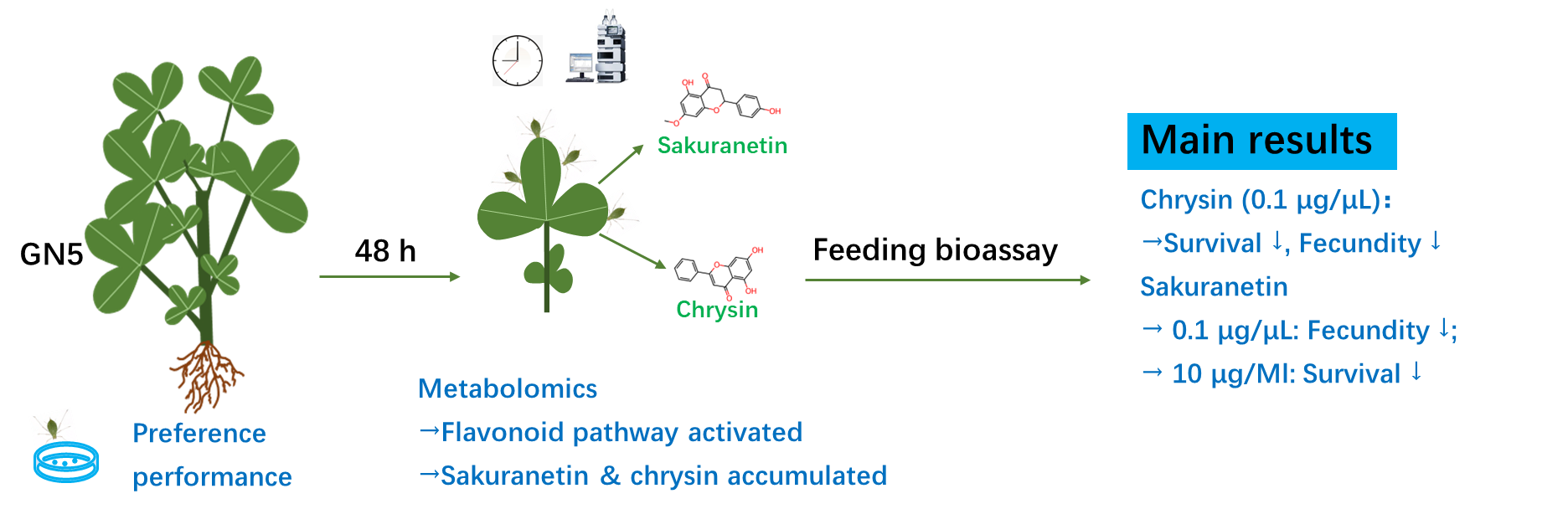
Simple Summary
Abstract
1. Introduction
2. Materials and Methods
2.1. Insects and Plants
2.2. Alfalfa Plants Infested with A. pisum
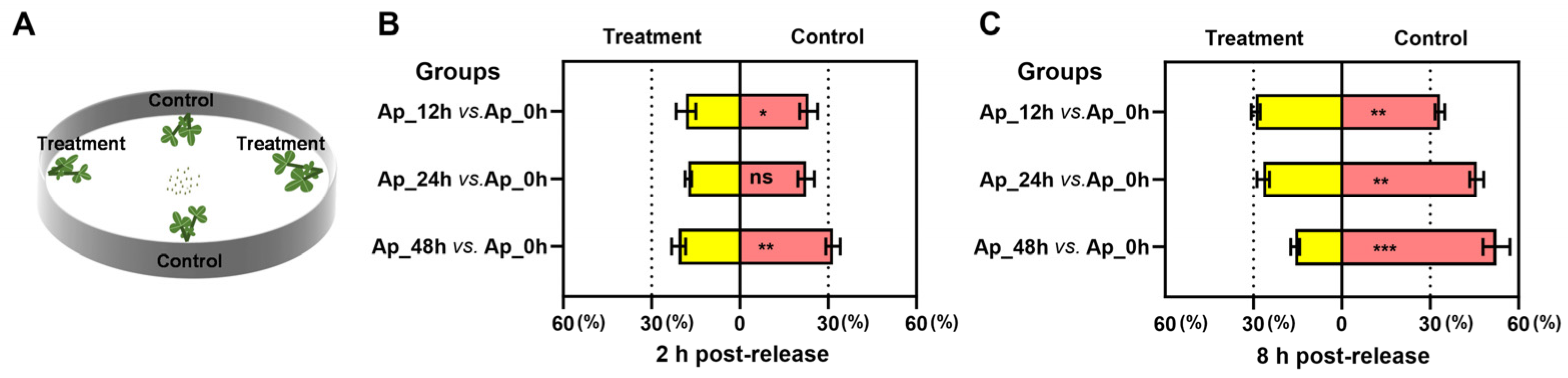
2.3. Acyrthosiphon pisum Preference to Conspecific-Infested Alfalfa Plants
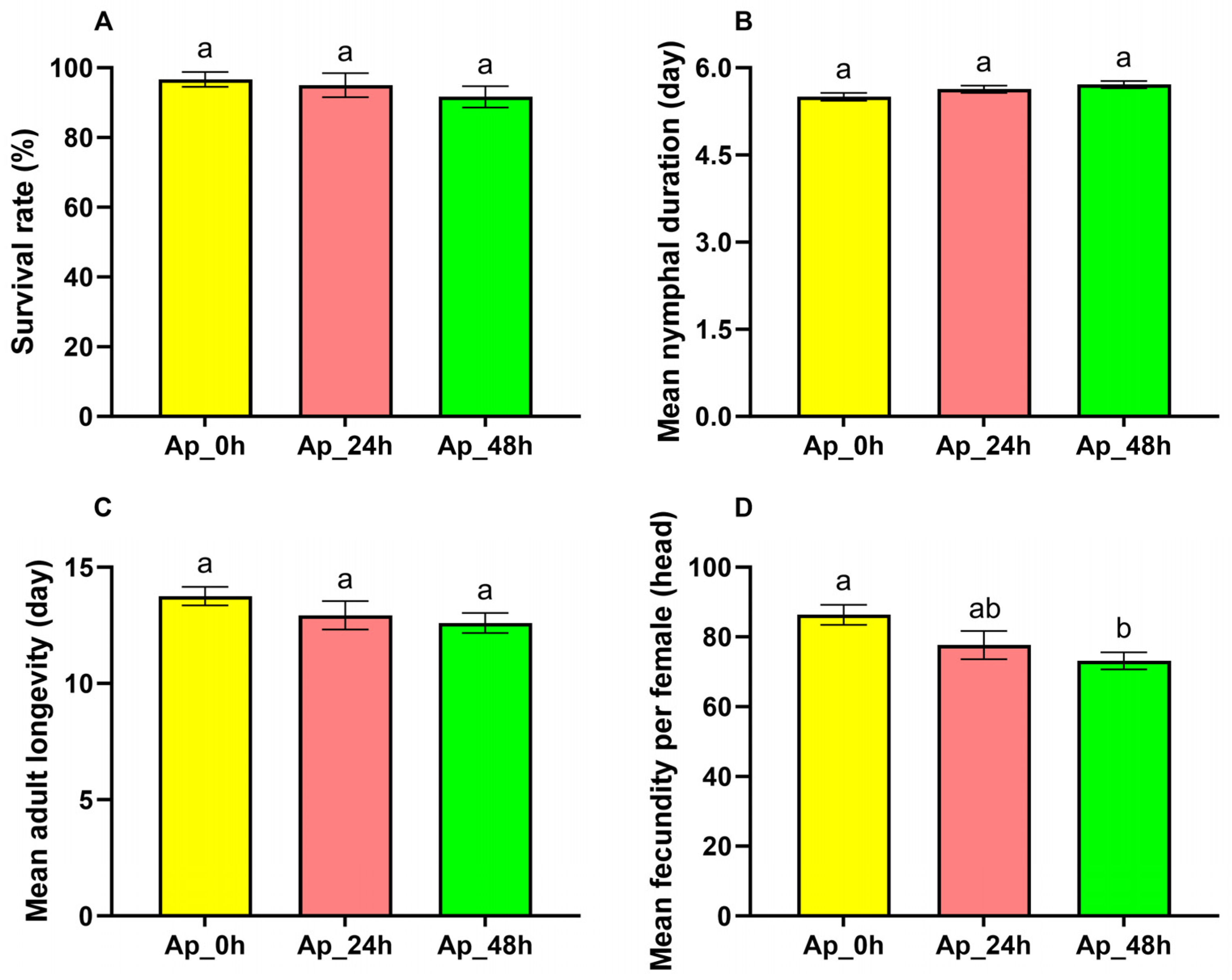
2.4. Acyrthosiphon pisum Performance on Conspecific-Infested Alfalfa Plants
2.5. Metabolite Extraction and UHPLC-Based Mass Spectrometry Analysis of Alfalfa Plants Infested by A. pisum
2.5.1. Untargeted Metabolomics
2.5.2. Targeted Metabolomics of Flavonoids
2.6. Effects of Flavonoids on the Performance of A. pisum
2.7. Statistical Analysis
3. Results
3.1. Preference of A. pisum to Conspecific-Infested Alfalfa Plants
3.2. Performance of A. pisum on Conspecific-Infested Alfalfa Plants
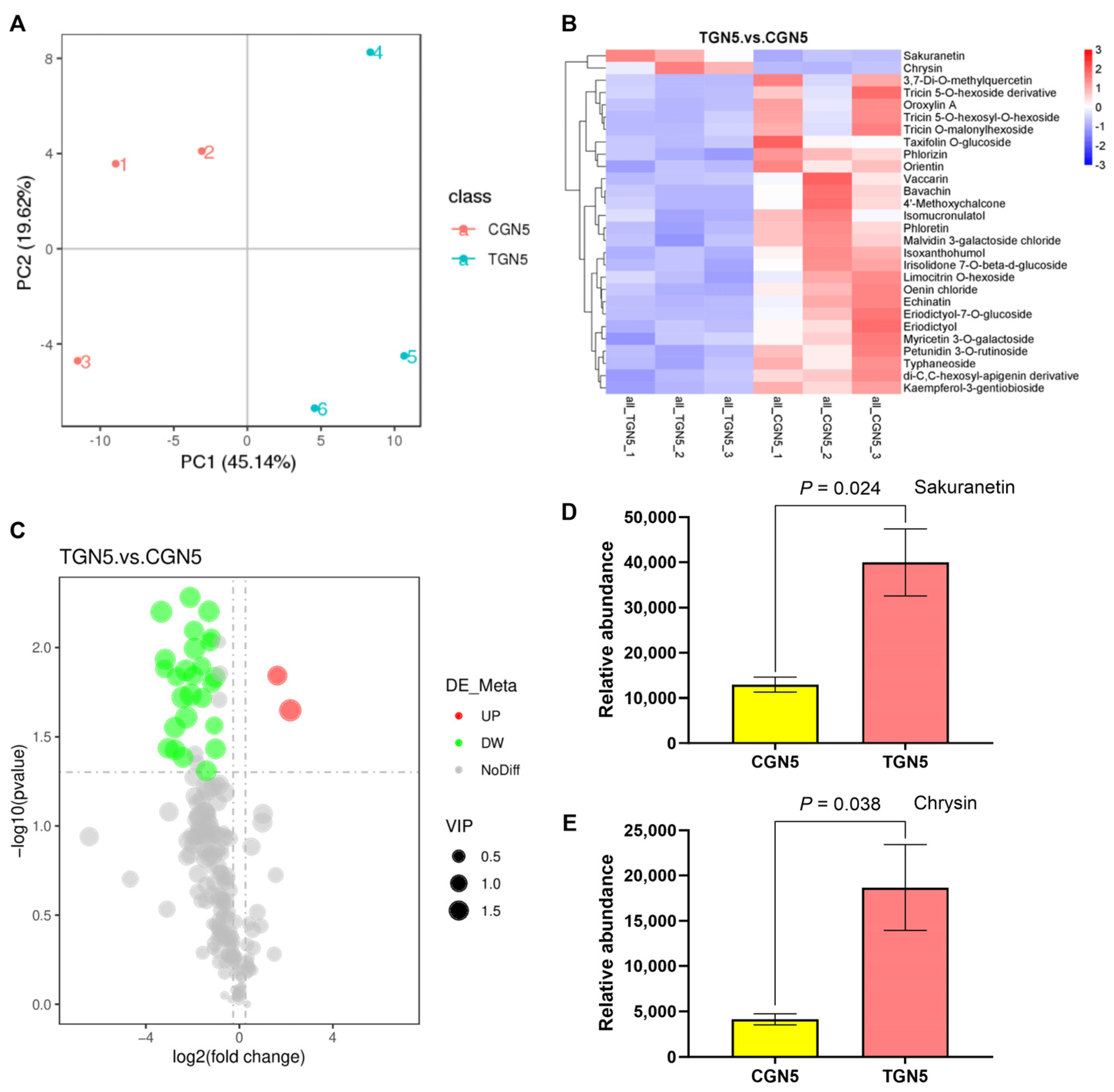
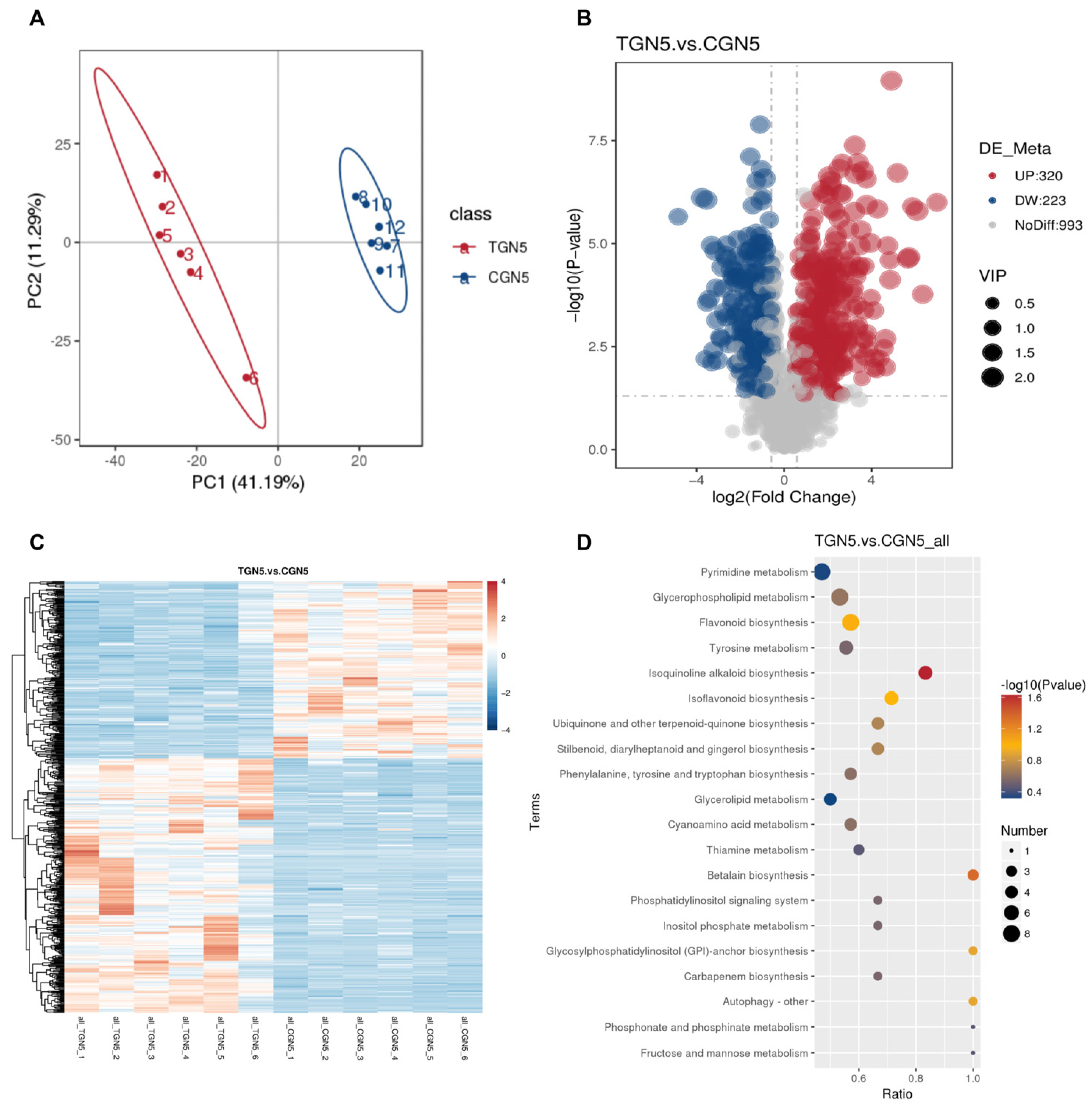
3.3. Untargeted Metabolomic Analysis of Alfalfa Leaves in Response to A. pisum Infestation
3.4. Targeted Flavonoid Metabolomic Analysis of Alfalfa Leaves in Response to Aphid Infestation
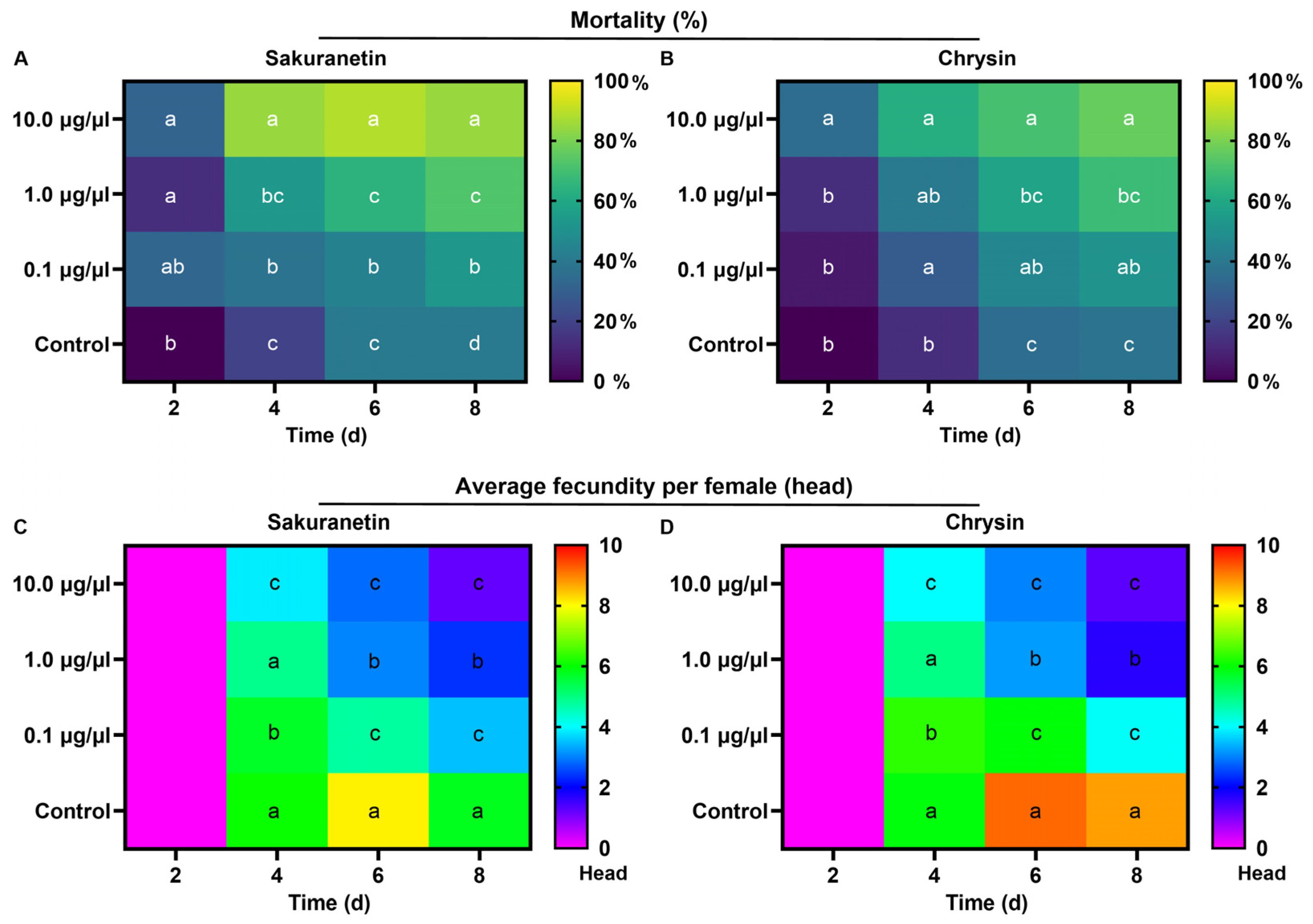
3.5. Effects of Sakuranetin and Chrysin Mediated by Faba Bean Leaves on A. pisum
4. Discussion
5. Conclusions
Supplementary Materials
Author Contributions
Funding
Data Availability Statement
Conflicts of Interest
References
- Sandhi, R.K.; Reddy, G.V.P. Biology, ecology, and management strategies for pea aphid (Hemiptera: Aphididae) in pulse crops. J. Integr. Pest Manag. 2020, 11, 18. [Google Scholar] [CrossRef]
- Brault, V.; Uzest, M.; Monsion, B.; Jacquot, E.; Blanc, S. Aphids as transport devices for plant viruses. Comptes Rendus Biol. 2010, 333, 524–538. [Google Scholar] [CrossRef] [PubMed]
- Bhandari, K.B.; Rusch, H.L.; Heuschele, D.J. Alfalfa stem cell wall digestibility: Current knowledge and future research directions. Agronomy 2023, 13, 2875. [Google Scholar] [CrossRef]
- Ma, R.; Wu, Y.T.; Liu, H.; Sun, Q.Z.; Song, L.W.; Liu, L.; Wang, S.S.; Dewer, Y. The cuticular protein gene ApCP7 and ApCP62 are essential for reproduction in Acyrthosiphon pisum, affecting ecdysis and survival. Int. J. Biol. Macromol. 2024, 276, 133402. [Google Scholar] [CrossRef] [PubMed]
- Shi, B.M.; Liu, Y.; Bai, G.D.; Shan, A.S. Research progress on toxicity of pesticide residues in feed to animals and its elimination technology. Chin. J. Anim. Nutr. 2020, 32, 4785–4792. [Google Scholar] [CrossRef]
- Mithöfer, A.; Boland, W. Plant defense against herbivores: Chemical aspects. Annu. Rev. Plant Biol. 2012, 63, 431–450. [Google Scholar] [CrossRef] [PubMed]
- De Bobadilla, M.F.; Vitiello, A.; Erb, M.; Poelman, E.H. Plant defense strategies against attack by multiple herbivores. Trends Plant Sci. 2022, 27, 528–535. [Google Scholar] [CrossRef] [PubMed]
- Nakayama, T.; Takahashi, S.; Waki, T. Formation of flavonoid metabolons: Functional significance of protein-protein interactions and impact on flavonoid chemodiversity. Front. Plant Sci. 2019, 10, 821. [Google Scholar] [CrossRef] [PubMed]
- Zhang, Y.; Wang, X.H.; Bian, Z.P.; Se, C.C.; Yang, G.Q.; Lu, Y.H. Application of flavonoid compounds suppresses the cotton aphid, Aphis gossypii. Front. Plant Sci. 2025, 16, 1545499. [Google Scholar] [CrossRef] [PubMed]
- Gautam, H.; Sharma, A.; Trivedi, P.K. The role of flavonols in insect resistance and stress response. Curr. Opin. Plant Biol. 2023, 73, 102353. [Google Scholar] [CrossRef] [PubMed]
- Brown, D.E.; Rashotte, A.M.; Murphy, A.S.; Normanly, J.; Tague, B.W.; Peer, W.A.; Taiz, L.; Muday, G.K. Flavonoids act as negative regulators of auxin transport in vivo in Arabidopsis. Plant Physiol. 2001, 126, 524–535. [Google Scholar] [CrossRef] [PubMed]
- Yang, F.B.; Shen, H.W.; Huang, T.Y.; Yao, Q.X.; Hu, J.Y.; Tang, J.; Zhang, R.; Tong, H.; Wu, Q.J.; Zhang, Y.J.; et al. Flavonoid production in tomato mediates both direct and indirect plant defences against whiteflies in tritrophic interactions. Pest Manag. Sci. 2023, 79, 4644–4654. [Google Scholar] [CrossRef] [PubMed]
- Onkokesung, N.; Reichelt, M.; van Doorn, A.; Schuurink, R.C.; van Loon, J.J.A.; Dicke, M. Modulation of flavonoid metabolites in Arabidopsis thaliana through overexpression of the MYB75 transcription factor: Role of kaempferol-3,7-dirhamnoside in resistance to the specialist insect herbivore Pieris brassicae. J. Exp. Bot. 2014, 65, 2203–2217. [Google Scholar] [CrossRef] [PubMed]
- Pereira, V.; Figueira, O.; Castilho, P.C. Flavonoids as insecticides in crop protection—A review of current research and future prospects. Plants 2024, 13, 776. [Google Scholar] [CrossRef] [PubMed]
- Dai, Z.Y.; Tan, J.; Zhou, C.; Yang, X.F.; Yang, F.; Zhang, S.J.; Sun, S.C.; Miao, X.X.; Shi, Z.Y. The OsmiR396-OsGRF8-OsF3H-flavonoid pathway mediates resistance to the brown planthopper in rice (Oryza sativa). Plant Biotechnol. J. 2019, 17, 1657–1669. [Google Scholar] [CrossRef] [PubMed]
- Hao, P.Y.; Feng, Y.L.; Zhou, Y.S.; Song, X.M.; Li, H.L.; Ma, Y.; Ye, C.L.; Yu, X.P. Schaftoside interacts with NlCDK1 protein: A mechanism of rice resistance to brown planthopper, Nilaparvata lugens. Front. Plant Sci. 2018, 9, 710. [Google Scholar] [CrossRef] [PubMed]
- Hao, P.Y.; Ma, Y.; Feng, Y.L.; Lu, C.F.; Yu, X.P. NlCDK1 gene is required for the ovarian development and survival of the brown planthopper, Nilaparvata lugens Stål, as revealed by RNA interference. J. Asia-Pac. Entomol. 2018, 21, 316–321. [Google Scholar] [CrossRef]
- Zhang, Z.; Cui, B.; Yan, S.; Li, Y.; Xiao, H.; Li, Y.; Zhang, Y. Evaluation of tricin, a stylet probing stimulant of brown planthopper, in infested and non-infested rice plants. J. Appl. Entomol. 2017, 141, 393–401. [Google Scholar] [CrossRef]
- Zhang, Z.F.; Cui, B.Y.; Zhang, Y. Electrical penetration graphs indicate that tricin is a key secondary metabolite of rice, inhibiting phloem feeding of brown planthopper, Nilaparvata lugens. Entomol. Exp. Appl. 2015, 156, 14–27. [Google Scholar] [CrossRef]
- Li, X.W.; Zhang, J.; Lin, S.B.; Xing, Y.X.; Zhang, X.; Ye, M.; Chang, Y.L.; Guo, H.W.; Sun, X.L. (+)-Catechin, epicatechin and epigallocatechin gallate are important inducible defensive compounds against Ectropis grisescens in tea plants. Plant Cell Environ. 2022, 45, 496–511. [Google Scholar] [CrossRef] [PubMed]
- Zhang, Q.; Wang, Q.Q.; Wyckhuys, K.A.G.; Jin, S.X.; Lu, Y.H. Flavonoids mediate systemic defenses induced by root feeding in cotton. Entomol. Gen. 2024, 44, 591–600. [Google Scholar] [CrossRef]
- Shi, Y.; Liu, Q.Q.; Lu, W.J.; Yuan, J.; Yang, Y.H.; Oakeshott, J.; Wu, Y.D. Divergent amplifications of CYP9A cytochrome P450 genes provide two noctuid pests with differential protection against xenobiotics. Proc. Natl. Acad. Sci. USA 2023, 120, e2308685120. [Google Scholar] [CrossRef] [PubMed]
- Romanelli, G.P.; Virla, E.G.; Duchowica, P.R.; Gaddi, A.L.; Ruiz, D.M.; Bennardi, D.O.; Del Valle Ortiz, E.; Autino, J.C. Sustainable synthesis of flavonoid derivatives, QSAR study and insecticidal activity against the fall armyworm, Spodoptera frugiperda (Lep.: Noctuidae). J. Agric. Food Chem. 2010, 58, 6290–6295. [Google Scholar] [CrossRef] [PubMed]
- Goławska, S.; Łukasik, I.; Leszczyński, B. Effect of alfalfa saponins and flavonoids on pea aphid. Entomol. Exp. Appl. 2008, 128, 147–153. [Google Scholar] [CrossRef]
- Goławska, S.; Łukasik, I.; Goławski, A.; Kapusta, I.; Janda, B. Alfalfa (Medicago sativa L.) apigenin glycosides and their effect on the pea aphid (Acyrthosiphon pisum). Pol. J. Environ. Stud. 2010, 19, 913–919. [Google Scholar]
- Goławska, S.; Sprawka, I.; Łukasik, I.; Goławski, A. Are naringenin and quercetin useful chemicals in pest-management strategies? J. Pest Sci. 2014, 87, 173–180. [Google Scholar] [CrossRef] [PubMed]
- Tu, X.B.; Liu, Z.K.; Zhang, Z.H. Comparative transcriptomic analysis of resistant and susceptible alfalfa cultivars (Medicago sativa L.) after thrips infestation. BMC Genom. 2018, 19, 116. [Google Scholar] [CrossRef] [PubMed]
- Bentivenha, J.P.F.; Canassa, V.F.; Baldin, E.L.L.; Borguini, M.G.; Lima, G.P.P.; Lourenção, A.L. Role of the rutin and genistein flavonoids in soybean resistance to Piezodorus guildinii (Hemiptera: Pentatomidae). Arthropod-Plant Interact. 2018, 12, 311–320. [Google Scholar] [CrossRef]
- Golawska, S.; Lukasik, I.; Czerniewicz, P. Genistein and naringenin as defense molecules. Molecules 2024, 29, 5505. [Google Scholar] [CrossRef] [PubMed]
- Wang, Q.; Wu, X.R.; Shi, Z.W.; Xia, Y.L.; Liu, L.F.; Liu, Y.Y.; Liu, X.B.; Liu, W.R.; Lu, X.J.; Guo, W.; et al. Genistein induced by Frankliniella occidentalis feeding confers resistance to insect herbivores in peanut. New Plant Prot. 2025, 2, e70014. [Google Scholar] [CrossRef]
- Sylwia, G.; Leszczynski, B.; Wieslaw, O. Effect of low and high-saponin lines of alfalfa on pea aphid. J. Insect Physiol. 2006, 52, 737–743. [Google Scholar] [CrossRef] [PubMed]
- Li, G. Research progress in Medicago sativa L. Anhui Agri. Sci. Bull. 2019, 25, 71–75. [Google Scholar] [CrossRef]
- Wang, Y.J.; Li, Y.D.; Tian, Z.; Duan, T.Y. Arbuscular mycorrhizal fungus alters alfalfa (Medicago sativa) defense enzyme activities and volatile organic compound contents in response to pea aphid (Acyrthosiphon pisum) infestation. J. Fungi 2022, 8, 1308. [Google Scholar] [CrossRef] [PubMed]
- Cui, J.W.; Wang, X.S.; Wei, Z.Y.; Jin, B. Medicago truncatula (model legume), Medicago sativa (alfalfa), Medicago polymorpha (bur clover), and Medicago ruthenica. Trends Genet. 2022, 38, 782–783. [Google Scholar] [CrossRef] [PubMed]
- Wu, Y.T.; Ma, R.; Liu, L.; Wang, S.S. Expression analysis of pea aphid cuticular protein genes in response to “resistant” and “susceptible” alfalfa cultivars. Pratac. Sci. 2025, 42, 942–950. [Google Scholar] [CrossRef]
- Liu, X.B.; Zhang, Y.M.; Francis, F.; Cheng, Y.M.; Liu, Y.X.; Chen, J.L.; Zhang, Y. Induced Bowman-Birk trypsin inhibitor TaBBTI-1 in wheat during poor-host interactions with aphids confers broad-spectrum resistance to insect herbivores. Int. J. Biol. Macromol. 2026, 340, 150204. [Google Scholar] [CrossRef] [PubMed]
- Ye, C.; Jiang, Y.D.; An, X.; Yang, L.; Shang, F.; Niu, J.Z.; Wang, J.J. Effects of RNAi-based silencing of chitin synthase gene on moulting and fecundity in pea aphids (Acyrthosiphon pisum). Sci. Rep. 2019, 9, 3694. [Google Scholar] [CrossRef] [PubMed]
- Liu, M.Y.; Hong, G.J.; Li, H.J.; Li, R. Sakuranetin protects rice from brown planthopper attack by depleting its beneficial endosymbionts. Proc. Natl. Acad. Sci. USA 2023, 120, e2305007120. [Google Scholar] [CrossRef] [PubMed]
- Lattanzino, V.; Lattanzino, V.M.T.; Cardinali, A. Role of phenolics in the resistance mechanisms of plants against fungal pathogens and insects. In Phytochemistry: Advances in Research; Jetter, R., Ed.; Research Signpost: Thiruvananthapuram, India, 2006; pp. 23–67. [Google Scholar]
- Hu, J.; Lu, J.T.; Yang, N.N.; Liu, B.M.; Fu, P.Y.; Yang, J.J.; Zhang, Y.J.; Jiao, X.G. Avoidance of previously infested cabbage by MEAM1 cryptic species of Bemisia tabaci species complex. J. Pest Sci. 2023, 96, 81–92. [Google Scholar] [CrossRef]
- Shih, P.; Sugio, A.; Simon, J.C. Molecular mechanisms underlying host plant specificity in aphids. Annu. Rev. Entomol. 2023, 68, 431–450. [Google Scholar] [CrossRef] [PubMed]
- Marti, G.; Erb, M.; Boccard, J.; Glauser, G.; Doyen, G.R.; Villard, N.; Robert, C.A.M.; Turlings, T.C.J.; Rudaz, S.; Wolfender, J.L. Metabolomics reveals herbivore-induced metabolites of resistance and susceptibility in maize leaves and roots. Plant Cell Environ. 2013, 36, 621–639. [Google Scholar] [CrossRef] [PubMed]
- Chatterjee, D.; Colvin, C.; Lesko, T.; Peiffer, M.; Felton, G.W.; Chopra, S. Plant defense against insect herbivory: Flavonoid-mediated growth inhibition of Helicoverpa zea. Plant Stress 2025, 15, 100738. [Google Scholar] [CrossRef]
- Li, J.C.; Liu, X.L.; Xiao, W.H.; Huangfu, J.Y.; Schuman, M.C.; Baldwin, I.T.; Lou, Y.G. Nymphal feeding suppresses oviposition-induced indirect plant defense in rice. Nat. Commun. 2025, 16, 508. [Google Scholar] [CrossRef] [PubMed]
- van Loon, J.J.A.; Wang, C.Z.; Nielsen, J.K.; Gols, R.; Qiu, Y.T. Flavonoids from cabbage are feeding stimulants for diamondback moth larvae additional to glucosinolates: Chemoreception and behaviour. In Proceedings of the 11th International Symposium on Insect-Plant Relationships; Nielsen, J.K., Kjær, C., Schoonhoven, L.M., Eds.; Springer: Dordrecht, The Netherlands, 2002; pp. 27–34. [Google Scholar]
- Wang, Q.; Liu, X.B.; Liu, H.; Fu, Y.; Cheng, Y.M.; Zhang, L.J.; Shi, W.P.; Zhang, Y.; Chen, J.L. Transcriptomic and metabolomic analysis of wheat kernels in response to the feeding of orange wheat blossom midges (Sitodiplosis mosellana) in the field. J. Agric. Food Chem. 2022, 70, 1477–1493. [Google Scholar] [CrossRef] [PubMed]
- Riddick, E.W. Evaluating the effects of flavonoids on insects: Implications for managing pests without harming beneficials. Insects 2024, 15, 956. [Google Scholar] [CrossRef] [PubMed]
- Tyagi, S.; Rathinam, M.; Shashank, P.R.; Chaudhary, N.; Shasany, A.K.; Sreevathsa, R. Deciphering of pod borer [Helicoverpa armigera (Hübner)] resistance in Cajanus platycarpus (Benth.) offers novel insights on the reprogramming and role of flavonoid biosynthesis pathway. Toxins 2022, 14, 455. [Google Scholar] [CrossRef] [PubMed]
- Stompor, M. A review on sources and pharmacological aspects of sakuranetin. Nutrients 2020, 12, 513. [Google Scholar] [CrossRef] [PubMed]
- Jiang, L.H.; Zhang, X.Y.; Zhao, Y.T.; Zhu, H.Y.; Fu, Q.J.; Lu, X.Q.; Huang, W.Y.; Yang, X.Y.; Zhou, X.; Wu, L.X.; et al. Phytoalexin sakuranetin attenuates endocytosis and enhances resistance to rice blast. Nat. Commun. 2024, 15, 3437. [Google Scholar] [CrossRef] [PubMed]
- Hu, J.T.; Li, L.Y.; Zhao, Y.; Zhang, X.Y.; Wang, H.; Wang, J.M.; Sun, P.; Jiang, L.; Wang, J.Q.; Chen, L.L.; et al. OsSTK-mediated sakuranetin biosynthesis and carbon flux orchestrate growth and defence in rice. Plant Biotechnol. J. 2026, 24, 455–471. [Google Scholar] [CrossRef] [PubMed]
- Puri, S.; Singh, S.; Sohal, S.K. Inhibitory effect of chrysin on growth, development and oviposition behaviour of melon fruit fly, Zeugodacus cucurbitae (Coquillett) (Diptera: Tephritidae). Phytoparasitica 2022, 50, 151–162. [Google Scholar] [CrossRef]
- Wiwattanawanichakun, P.; Saehlee, S.; Yooboon, T.; Kumrungsee, N.; Nobsathian, S.; Bullangpoti, V. Toxicity of isolated phenolic compounds from Acorus calamus L. to control Spodoptera litura (Lepidoptera: Noctuidae) under laboratory conditions. Chem. Biol. Technol. Agric. 2022, 9, 10. [Google Scholar] [CrossRef]
- Xie, W.Q.; Tao, W.C.; Zhang, H.L.; Luo, J.T.; Deng, X.Y.; Li, D.Q.; Li, Q.; Wang, H.J.; Yue, Y.L.; Jiang, S.R.; et al. Transcriptome and metabolome profiling reveal the chlorogenic acid as a resistance substance for rice against the white-backed planthopper Sogatella furcifera (Horváth). Front. Plant Sci. 2025, 16, 1571893. [Google Scholar] [CrossRef] [PubMed]





| Biological Parameters | Source of Variation * | df | F | p |
|---|---|---|---|---|
| Sakuranetin-Mortality | C | 3 | 81.737 | <0.0001 |
| T | 3 | 83.160 | <0.0001 | |
| C × T | 9 | 5.968 | <0.0001 | |
| Error | 64 | |||
| Sakuranetin-Aphid fecundity | C | 3 | 300.454 | <0.0001 |
| T | 3 | 946.394 | <0.0001 | |
| C × T | 9 | 55.910 | <0.0001 | |
| Error | 64 | |||
| Chrysin-Mortality | C | 3 | 44.357 | <0.0001 |
| T | 3 | 62.254 | <0.0001 | |
| C × T | 9 | 0.639 | 0.759 | |
| Error | 64 | |||
| Chrysin-Aphid fecundity | C | 3 | 714.820 | <0.0001 |
| T | 3 | 1440.543 | <0.0001 | |
| C × T | 9 | 164.030 | <0.0001 | |
| Error | 64 |
Disclaimer/Publisher’s Note: The statements, opinions and data contained in all publications are solely those of the individual author(s) and contributor(s) and not of MDPI and/or the editor(s). MDPI and/or the editor(s) disclaim responsibility for any injury to people or property resulting from any ideas, methods, instructions or products referred to in the content. |
© 2026 by the authors. Licensee MDPI, Basel, Switzerland. This article is an open access article distributed under the terms and conditions of the Creative Commons Attribution (CC BY) license.
Share and Cite
Liu, H.; Yu, Z.-Z.; Sun, Q.-Z.; Liu, L.; Xiang, X.; Song, L.-W.; Wang, S.-S.; Chen, W.-B. Metabolomics-Based Analysis Reveals Flavonoid-Mediated Defence in Alfalfa (Medicago sativa ‘Gannong No. 5’) Against Pea Aphid (Acyrthosiphon pisum) Infestation. Insects 2026, 17, 679. https://doi.org/10.3390/insects17070679
Liu H, Yu Z-Z, Sun Q-Z, Liu L, Xiang X, Song L-W, Wang S-S, Chen W-B. Metabolomics-Based Analysis Reveals Flavonoid-Mediated Defence in Alfalfa (Medicago sativa ‘Gannong No. 5’) Against Pea Aphid (Acyrthosiphon pisum) Infestation. Insects. 2026; 17(7):679. https://doi.org/10.3390/insects17070679
Chicago/Turabian StyleLiu, Huan, Zhan-Zi Yu, Qin-Zhe Sun, Lei Liu, Xing Xiang, Li-Wen Song, Sen-Shan Wang, and Wan-Bin Chen. 2026. "Metabolomics-Based Analysis Reveals Flavonoid-Mediated Defence in Alfalfa (Medicago sativa ‘Gannong No. 5’) Against Pea Aphid (Acyrthosiphon pisum) Infestation" Insects 17, no. 7: 679. https://doi.org/10.3390/insects17070679
APA StyleLiu, H., Yu, Z.-Z., Sun, Q.-Z., Liu, L., Xiang, X., Song, L.-W., Wang, S.-S., & Chen, W.-B. (2026). Metabolomics-Based Analysis Reveals Flavonoid-Mediated Defence in Alfalfa (Medicago sativa ‘Gannong No. 5’) Against Pea Aphid (Acyrthosiphon pisum) Infestation. Insects, 17(7), 679. https://doi.org/10.3390/insects17070679