Review

Plant–Aphid Interactions in Cereal Crops: Wheat Plant Defense and Aphid Saliva-Mediated Coevolutionary Arms Race

1
State Key Laboratory for Biology of Plant Diseases and Insect Pests, Institute of Plant Protection, Chinese Academy of Agricultural Sciences, Beijing 100193, China
2
Functional and Evolutionary Entomology, Gembloux Agro-BioTech, University of Liège, 5030 Gembloux, Belgium
3
College of Plant Protection, Hebei Agricultural University, Baoding 071000, China
4
College of Plant Protection, Shandong Agricultural University, Taian 271018, China
5
Center for Biosafety, Chinese Academy of Inspection and Quarantine, Sanya 572024, China
*
Authors to whom correspondence should be addressed.
Insects 2026, 17(7), 672; https://doi.org/10.3390/insects17070672
Submission received: 15 May 2026 / Revised: 19 June 2026 / Accepted: 25 June 2026 / Published: 27 June 2026

Simple Summary

Wheat aphids are among the most damaging pests of wheat worldwide. Although resistant cultivars provide an environmentally friendly and sustainable method of aphid control, the molecular mechanisms underlying durable resistance remain incompletely understood. In recent years, increasing evidence has demonstrated that aphid salivary proteins serve as critical mediators in the interaction between wheat and aphids. This review synthesizes current advances in our understanding of how wheat perceives aphid attack and activates multiple defense layers, including signaling pathways, physical and chemical defenses, resistance genes, and non-host resistance mechanisms. We further discuss key knowledge gaps and emerging research opportunities that may facilitate the development of durable aphid-resistant wheat varieties and more sustainable pest management strategies.

Abstract

Wheat aphids are among the most destructive pests of wheat, posing a serious threat to wheat production and global food security. The development of aphid-resistant wheat varieties is widely regarded as one of the most economical and sustainable strategies for aphid management. A comprehensive understanding of the plant defense mechanisms is fundamental to the breeding of resistant wheat germplasm. Recent studies have revealed that aphid salivary proteins play critical roles in manipulating host defenses, whereas wheat has evolved multiple layers of defense to perceive and respond to aphid attack. In this review, we summarize current advances in wheat–aphid interactions, focusing on the roles of aphid salivary effectors, aphid-induced immune signaling, physical and chemical defense barriers, herbivore-induced plant volatiles (HIPVs), resistance genes, and non-host resistance mechanisms. By integrating aphid effector biology with host immunity and resistance mechanisms, this review provides a conceptual framework for understanding wheat–aphid interactions and for developing durable and environmentally sustainable resistance strategies.

1. Introduction

Wheat is an important crop widely cultivated around the world and plays a critical role in global food security [1]. Wheat aphids are among the most destructive pests of wheat, as they feed directly on phloem sap [2]. Characterized by their small body size, short generation time, high reproductive capacity, and rapid population growth, they pose a serious threat to wheat production throughout all stages of crop development [2]. The main species of wheat aphids include Sitobion avenae, Rhopalosiphum padi, Schizaphis graminum, Metopolophium dirhodum, and Diuraphis noxia. Currently, chemical pesticides remain heavily relied upon for the management of wheat aphids, leading to a series of problems including pest resistance, adverse effects on beneficial insects and environmental pollution [3]. Therefore, it is urgent to reduce the use of chemical pesticides and enhance the ecological benefits of wheat-based agroecosystems. Breeding and utilizing aphid-resistant wheat varieties is one of the most cost-effective strategies for sustainable aphid management. However, there is a lack of aphid-resistant germplasm among existing wheat varieties.
In the “arms race” of coevolution between plants and herbivorous insects, plants have evolved diverse direct and indirect defense mechanisms to counter insect feeding, thereby enhancing plant resistance to insect pests [4]. During plant defense responses, signaling molecules such as phytohormones play crucial roles in regulating defense signaling networks [5]. Plant resistance can be categorized into non-host and host resistance, of which the latter has been more extensively studied. Host resistance to aphids is generally exhibited through antixenosis, antibiosis, and tolerance, which are mediated by a combination of constitutive and inducible defense mechanisms [6].
Considerable progress has been made in understanding wheat resistance to aphids, particularly in the areas of plant defense signaling, resistance genes, and aphid-induced defense responses. However, the molecular mechanisms governing wheat–aphid interactions remain incompletely understood. In recent years, aphid salivary proteins have emerged as key determinants of plant–aphid interactions, functioning either as elicitors that activate host defenses or as effectors that suppress plant immunity [7,8]. However, current identification of aphid salivary effectors and elicitors is limited to functional studies of individual salivary proteins. Their molecular targets in wheat have not been explored in depth, and the signaling network connecting aphid perception and effective resistance response has not been fully elucidated. In addition, only a limited number of aphid-resistance genes have been characterized and utilized in breeding programs, which has constrained the development of wheat cultivars with durable and broad-spectrum resistance. Meanwhile, non-host resistance, which is often more durable and broad-spectrum than host resistance [9,10], remains relatively underexplored in wheat–aphid systems despite its considerable potential for resistance breeding.
To address these challenges, this review summarizes current knowledge of wheat–aphid interactions from the perspective of the molecular arms race between aphids and their host plants. We focus on the roles of aphid salivary proteins in modulating plant defenses and discuss the multiple layers of wheat resistance, including defense signaling pathways, physical and chemical barriers, herbivore-induced plant volatiles, resistance genes, and non-host resistance mechanisms. This review aims to provide new insights for further research on aphid resistance mechanisms and the genetic basis of resistance in wheat, ultimately supporting efficient and sustainable crop protection.

2. Plant Immune Perception and Anti-Defense Strategies Mediated by Aphid Saliva

Aphids are piercing-sucking insects that penetrate the sieve elements of the phloem with their stylets to ingest plant sap, acquiring sugars, amino acids, and other nutrients. During probing and feeding, aphids secrete two types of saliva: gelling saliva and watery saliva. The gelling saliva hardens to form a sheath around the stylets with a protective function. Watery saliva contains complex proteins, including detoxification enzymes, hydrolases, proteases, calcium-binding proteins, and salivary proteins.
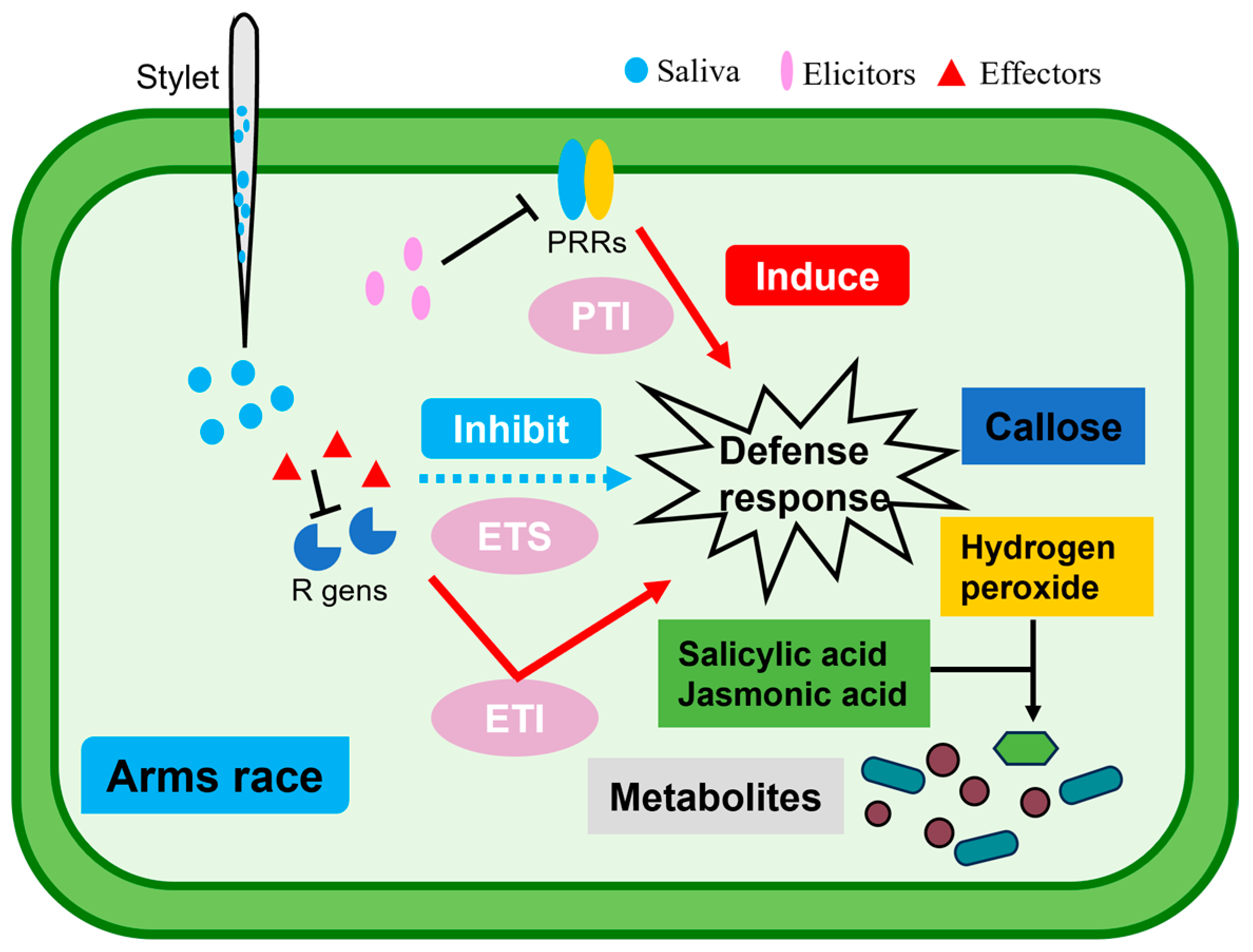
There is a complex dynamic interaction between pathogens and host plants, and the “zig-zag model” provides a conceptual framework for understanding this relationship [11]. Some conserved molecules in aphid saliva resemble pathogen-associated molecular patterns (PAMPs) and are recognized by pattern-recognition receptors (PRRs) on the plant cell surface, thereby triggering PAMP-triggered immunity (PTI). Aphids subsequently secrete salivary effectors into the host plant to interfere with PTI, resulting in effector-triggered susceptibility (ETS). However, certain plants have evolved resistance (R) genes encoding proteins capable of recognizing these effectors and activating effector-triggered immunity (ETI), thereby restricting aphid infestation. Aphids modulate plant defense responses by secreting salivary proteins into host tissues through the stylets. These salivary proteins are generally classified into two functional categories: elicitors, which activate plant defense responses, and effectors, which suppress host immunity [7,8]. Recent advances in salivary gland transcriptomics and proteomics have greatly expanded the identification of candidate salivary proteins in wheat aphids, providing an essential foundation for functional characterization of aphid salivary proteins [12,13,14]. Integrative transcriptomic and proteomic analyses have identified 76 and 114 salivary proteins from the watery saliva of S. avenae and S. graminum, respectively [12,14]. Recently, RNA interference (RNAi) has emerged as a promising strategy for silencing target genes and holds great potential for the research of salivary proteins [15,16]. The use of double-stranded RNA (dsRNA) to specifically silence key genes essential for pest growth and development not only facilitates pest control but also minimizes risks to non-target organisms, particularly the natural enemies of pests. This will facilitate the discovery of key virulence effectors and salivary elicitors, which are of great significance for the breeding and utilization of aphid-resistant wheat varieties.

2.1. Wheat Defense Responses Induced by Salivary Elicitors

Plants possess the ability to rapidly and specifically perceive herbivore-derived cues, such as herbivore-associated molecular patterns (HAMPs) and salivary elicitors, which play pivotal roles in activating plant defense responses against herbivore attack [17]. Recognition of these signals typically initiates PTI, leading to a cascade of downstream defense responses. A previous study found that treatment of A. thaliana with 3–10 kDa salivary protein fractions from M. persicae significantly upregulated the expression of defense-related genes, including PAD3, PR2, and WRKY28, while simultaneously reducing aphid fecundity [18]. Similarly, the symbiont-derived protein GroEL from M. euphorbiae was shown to induce PTI response in Arabidopsis, including callose deposition and ROS accumulation, ultimately suppressing aphid performance [19]. The salivary protein Me47 from M. euphorbiae induced the expression of PTI-associated genes, including Lrr22, Pti5, Gras2, and PR1a, in tomato plants [20]. Moreover, the salivary protein Cathepsin B from M. persicae interacts with the phloem-associated protein EDR1, resulting in sustained activation of ROS signaling in vascular tissues. This interaction interferes with aphid feeding behavior and reduces host suitability [21]. Collectively, these findings highlight that aphid salivary elicitors function as key modulators of plant immune signaling.
Advances in functional genomics have greatly facilitated the identification and characterization of aphid salivary effectors in cereal systems. For instance, the Type III secretion system (T3SS) of Pseudomonas fluorescens EtAnH has been successfully employed to deliver candidate effectors into wheat leaves for transient expression, providing a powerful platform for functional validation [22]. In wheat, the identification and functional characterization of aphid salivary elicitors are essential for elucidating plant defense mechanisms and facilitating the discovery of resistance-associated genes. Infiltration of watery saliva from S. avenae into wheat leaves significantly upregulated the expression of salicylic acid (SA)-related genes, including PAL and PR1, thereby negatively affecting aphid feeding behavior and development. These findings demonstrate that aphid salivary proteins can directly participate in the induction of wheat defense responses [23]. To date, only two salivary protein elicitors of S. avenae have been identified (Table 1). Among them, the small molecular protein GroES, derived from the primary endosymbiont Buchnera aphidicola of S. avenae, induces hydrogen peroxide (H2O2) accumulation and callose deposition in wheat, thereby enhancing wheat resistance to aphids [24]. In addition, the salivary protein SmCSP4 from S. avenae interacts with the wheat transcription factor TaWRKY76, activating SA-mediated defense responses and further strengthening host resistance [25].

2.2. Salivary Effector-Mediated Anti-Defense Strategies of Wheat Aphids

During evolution, aphid salivary effectors have acquired critical roles in modulating aphid–plant interactions by suppressing host defense responses and thereby enhancing aphid adaptability. Early functional characterization of aphid salivary effectors was conducted in the pea aphid A. pisum [26]. RNAi-mediated silencing of the salivary gland-specific gene C002 in A. pisum impaired phloem feeding and significantly reduced aphid survival and fecundity, demonstrating that C002 is essential for host colonization [27]. Subsequent studies further demonstrated that multiple aphid salivary proteins function as effectors that suppress plant immunity. Transient overexpression of M. persicae salivary proteins MpC002, Mp1/PIntO1, and PIntO2, as well as M. euphorbiae salivary proteins Me10 and Me23, in tobacco and Arabidopsis significantly increased aphid reproduction, suggesting important roles in suppressing host defense responses [28,29]. Similarly, overexpression of salivary protein Mp55 in A. thaliana enhanced aphid performance and host preference, whereas silencing Mp55 markedly reduced aphid reproduction, confirming its function as a key effector promoting infestation [30]. In addition to directly modulating plant immunity, some aphid effectors function through metabolic interference. For example, the salivary protein diacetyl/L-xylulose reductase (DCXR) from Aphis craccivora participates in methylglyoxal detoxification, and its transient expression in pea significantly increased aphid fecundity [31]. Furthermore, previous studies have shown that other important piercing-sucking pests, such as B. tabaci and the Nilaparvata lugens, also secrete salivary effectors that suppress host plant defense responses [32,33], suggesting that effector-mediated immune suppression represents a conserved strategy among phloem-feeding insects.
Several salivary effectors have subsequently been functionally characterized in wheat aphids (Table 1). The salivary protein Rp1 from R. padi suppresses defense responses in barley, thereby facilitating aphid colonization [34]. Likewise, transient expression of the salivary protein Sg2204 from S. graminum significantly reduced callose deposition in wheat leaves [12]. Two salivary effectors from S. avenae, Sm10 and SmC002, enhance host plant susceptibility and promote aphid growth by suppressing jasmonic acid (JA)-mediated defense responses [35]. In addition, the salivary effector Sm9723 suppresses the expression of defense-related genes associated with both JA and SA signaling pathways, enabling aphids to evade plant immunity [36]. Furthermore, nanocarrier-mediated RNAi has successfully identified several genes that play crucial roles in wheat aphid growth and development, highlighting their potential as RNAi targets for aphid control. For example, silencing the salivary effector genes Sg2204 in S. graminum and Sm9723 in S. avenae effectively suppressed aphid population growth [12,36].
Table 1. Salivary elicitors and effectors of wheat aphids.
Salivary ProteinAphid SpeciesFunctionsReferences
SmCSP4S. avenaeActivate SA defense pathway[25]
GroESS. avenaeTrigger defense responses[24]
Sm10S. avenaeEnhance host plant susceptibility[35]
SmC002S. avenaeEnhance host plant susceptibility[35]
Sm9723S. avenaeSuppress plant immunity[36]
SaCDKS. avenaeInhibit host defense response[37]
SaE23S. avenaeSuppress wheat plant defenses[38]
SaApo AIS. avenaeInhibit plant hypersensitive response[39]
Sg2204S. graminumSuppress wheat defense[12]
RP1R. padiSuppress barley defense responses[34]
Figure 1 illustrates how salivary proteins manipulate the immune regulation of plants. Compared with salivary elicitors, salivary effectors are secreted by aphids to suppress or evade host immunity, thereby facilitating successful feeding and reproduction. This represents an evolutionarily acquired anti-defense strategy employed by aphids to overcome plant resistance. Moreover, the outcome of plant–aphid interactions is determined not by individual salivary proteins but by the coordinated action of complex salivary protein mixtures integrating both defense-inducing and defense-suppressing functions. A deeper understanding of the dynamic balance and interplay between salivary elicitors and effectors will be essential for elucidating the molecular mechanisms underlying aphid adaptation and for developing durable strategies for crop resistance.
At present, functional studies on salivary proteins in wheat aphids remain at an early stage, particularly in S. avenae, S. graminum, and R. padi. Notably, these three major wheat aphid species exhibit distinct feeding preferences and damage characteristics on wheat, suggesting that they may employ different salivary effector strategies during infestation. Although several salivary proteins with potential roles in suppressing host immunity, inducing plant defense response, or facilitating phloem feeding have been identified, most studies remain limited to the functional characterization of individual candidate proteins. A systematic understanding of aphid effector repertoires, effector cooperation, and species-specific virulence strategies among wheat aphids is still lacking. Consequently, research on salivary effector-mediated aphid virulence and host adaptation remains far less advanced than that in other plant–insect systems.

3. Early Defense Signaling in Wheat Under Aphid Infestation

Plant hormones play an important role in the plant immune response [5]. In response to insect infestation, wheat activates defense pathways mediated by phytohormones such as JA, SA, ethylene (ET), and abscisic acid (ABA), as well as signaling molecules like reactive oxygen species (ROS). These signaling pathways subsequently promote the accumulation of secondary metabolites, thereby affecting aphid growth and development [40]. H2O2, as a broad-spectrum signaling molecule, accumulates in plant tissues in response to both pest and pathogen infestation [41]. Feeding by S. avenae and S. graminum leads to a significant increase in H2O2 content in wheat leaves, with S. graminum inducing a stronger accumulation of H2O2 [42].
The JA and SA pathways are two crucial hormone signaling pathways involved in plant defense against insects. Dynamic interactions between these pathways modulate the levels of defensive metabolites and further influence plant resistance. The SA pathway is reported to primarily mediate plant defense against aphids. For instance, feeding by S. avenae induces elevated expression of pathogenesis-related protein 1 (PR1) in the SA signaling pathway of wheat [43]. Transcriptome sequencing and liquid chromatography-tandem mass spectrometry (LC-MS/MS) analyses have also revealed that infestation by both S. avenae and S. graminum activates an SA-mediated defense response in wheat, accompanied by increased SA accumulation [44]. Previous studies have shown that wheat aphid infestation also induces the expression of JA-related genes and elevates JA levels [45,46]. Spraying wheat seedlings with JA induces the accumulation of defensive compounds in wheat, such as DIMBOA, thereby significantly inhibiting aphid development and fecundity [47]. Although JA and SA were previously considered to act antagonistically, increasing evidence suggests that they can also function synergistically or independently, depending on factors such as plant species [48,49,50]. Additionally, ET enhances plant defense against aphids by promoting cell wall thickening [51]. Feeding by wheat aphids can induce upregulation of the ET pathway marker gene EIN2 in harpin transgenic wheat lines and suppress aphid performance [52].

4. Multi-Layered Wheat Defense Strategies Against Aphids

The perception of aphid attack and the activation of downstream signaling pathways ultimately lead to the deployment of diverse defense responses in wheat. These defense responses represent the functional outputs of plant immunity and play crucial roles in limiting aphid colonization, feeding, and population growth. Following aphid recognition, wheat activates a multilayered defense system that includes structural barriers, the production of defensive metabolites, and indirect defenses mediated by herbivore-induced plant volatiles (HIPVs). Physical defense traits that contribute to resistance against aphids include morphological characteristics, epicuticular waxes, trichomes, and internal structures. These physical barriers constitute the first line of plant defense, interfering with aphid host selection, feeding behavior, growth, and development. Similarly, chemical defense plays a critical role in the plant defense system, involving secondary metabolites, nutrient composition, and other biochemical factors that adversely affect aphid physiology and survival.

4.1. Morphological and Physical Defense Against Aphids in Wheat Plants

When aphids migrate into wheat fields in spring, they initially locate host plants using olfactory and visual cues, such as plant color and volatile organic compounds released by wheat plants [53]. Plant coloration serves as an important visual cue influencing aphid host selection. After landing on plant surfaces, tactile cues provide critical information for assessing host suitability for colonization. Morphological traits of wheat, including leaf trichomes, flag leaf characteristics, awn length, and surface wax composition, are key factors influencing aphid colonization. The length and density of leaf trichomes are significantly and positively correlated with wheat resistance to aphids [54]. Leaf trichomes act as a physical barrier to aphid feeding and represent an important component of wheat defense. For example, aphids preferentially feed on older leaves, which generally exhibit lower trichome density [55]. Plant surface wax also plays a crucial role in aphid host selection and feeding behavior. In wheat, leaf wax can inhibit aphid feeding behavior and may exert toxic effects on aphids [56]. Callose is a β-1,3-linked glucan that is typically deposited in small amounts at the cell wall or around the sieve pores of phloem sieve plates, and its deposition is closely associated with plant defense against pests and pathogens [57,58]. Feeding by S. avenae and S. graminum induces substantial callose accumulation in wheat leaf cells [42]. However, the precise mechanism of callose involvement in wheat–aphid interactions remain unclear. It is hypothesized that aphid-induced callose deposition may obstruct the transport of phloem sap to aphid stylets, thereby inhibiting aphid feeding and enhancing wheat resistance.

4.2. Chemical Defense Against Aphids in Wheat Plants

4.2.1. Nutritional Components

The nutrients ingested by aphids from wheat leaves significantly influence their growth performance after colonization. Soluble proteins, sugars, amino acids, and inorganic salts in wheat tissues directly affect aphid growth and development, thereby shaping plant resistance to aphid infestation [59]. A previous study reported that the total protein content in the leaves of aphid-resistant wheat varieties was significantly lower than that in susceptible varieties, whereas the concentration of free amino acids in the phloem was higher in resistant varieties [60]. Under high-temperature and drought stress, wheat plants exhibit increased levels of soluble sugars and amino acids, while aphids show reduced net reproductive rates, intrinsic rates of increase, and finite rates of population growth [61]. Both the diversity and composition of amino acids in wheat are associated with resistance to aphids. β-aminobutyric acid has been demonstrated to exert an inhibitory effect on wheat aphids. For example, root application of β-aminobutyric acid during the seedling stage significantly suppressed aphid weight gain. Moreover, adding β-aminobutyric acid into the artificial diet reduced aphid body weight by 55%, indicating a direct toxic effect [62]. However, the relationships between individual amino acids and wheat resistance levels are not always consistent. For instance, the contents of glutamic acid, alanine, lysine, and aspartic acid in wheat leaves are positively correlated with the intrinsic growth rate of aphids, whereas the contents of leucine, isoleucine, valine, and proline are negatively correlated with aphid intrinsic growth rates [63].

4.2.2. Secondary Metabolites

Plant secondary metabolites are products of complex branched metabolic pathways, and many of these compounds contribute to plant resistance against pests and pathogens [5]. A substantial proportion of secondary metabolites function as phytoalexins, thereby strengthening plant defense responses [57]. The major secondary metabolites associated with wheat defense include phenolic compounds, flavonoids, benzoxazinoids (Bxs), and alkaloids.
Among plant secondary metabolites, phenolic compounds constitute one of the most common and widespread groups of defense-related chemicals [59]. Previous studies indicate that phenol levels are positively correlated with plant resistance to insects, as these compounds exert detrimental effects on aphid feeding behavior, growth, and development [64]. The biosynthesis of phenolic compounds is largely regulated by the phenylpropanoid pathway, which plays a crucial role in plant defense. For example, the phenylpropanoid pathway has been shown to contribute to wheat kernel resistance against Sitodiplosis mosellana infestation [65]. Lignin, a phenolic heteropolymer, confers resistance to herbivores by forming a mechanical barrier through increased leaf toughness and by reducing leaf nutritional content [66]. The content of p-coumaric acid and vanillic acid in wheat seedling leaves was significantly and positively correlated with the resistance level against aphids [67]. Flavonoids, a major subclass of phenolic compounds, play important roles in mediating plant responses to both biotic and abiotic stresses [68]. As cytotoxic secondary metabolites, flavonoids protect plants from insect damage by influencing insect behavior and development [69]. For instance, the flavone tricin in wheat exerted strong antifeedant effects against S. graminum [70]. Similarly, supplementation of artificial diets with catechins and quercetin significantly reduced the survival rate of S. avenae and R. padi, and negatively affected their growth and development [71]. Consistent with these findings, high-performance liquid chromatography (HPLC) analysis revealed a significant positive correlation between quercetin accumulation in wheat kernels and flag leaves and plant resistance to aphids [40].
Bxs represent an important class of secondary metabolites that play a crucial role in chemical defense against a wide range of biotic stresses [72]. Integrative transcriptomic and metabolomic analyses have demonstrated that Bxs function as direct defensive compounds against Ostrinia furnacalis in maize [73]. In wheat, Bxs accumulate at higher concentrations in older leaves than in younger leaves, and these compounds are key determinants of wheat resistance to aphids [55]. Among Bxs, hydroxamic acids are considered the most biologically active subgroup [74]. The compound 2,4-dihydroxy-7-methoxy-1,4-benzoxazin-3-one (DIMBOA) is the predominant hydroxamic acid derivative in wheat. Elevated DIMBOA levels are positively correlated with enhanced resistance to R. padi and S. avenae [75]. DIMBOA functions as a digestive toxin by inhibiting trypsin activity in Ostrinia nubilalis larvae [76]. In addition, both DIMBOA and its precursors have been shown to reduce UDP-glucuronosyltransferase activity in S. avenae [77]. Furthermore, Bxs content in wheat is altered by aphid feeding, thereby affecting callose deposition and subsequently influencing plant resistance to aphids [78].

4.2.3. Herbivore-Induced Plant Volatiles (HIPVs)

Herbivore attack triggers a wide array of plant defense responses, among which herbivore-induced plant volatiles (HIPVs) represent one of the most rapid and ecologically relevant responses [79]. Volatile compounds released by host plants serve as crucial cues for aphids in locating suitable hosts for settlement. In response to aphid infestation, plants emit complex blends of volatile organic compounds (VOCs), particularly terpenoids, including (E)-4,8-dimethyl-1,3,7-nonatriene (DMNT), (E)-β-farnesene (EBF), and linalool. HIPVs mediate tritrophic interactions by simultaneously affecting herbivores and their natural enemies. For example, EBF functions both as an alarm pheromone for aphids and as a signaling molecule in plant–insect interactions. It repels aphids while attracting predatory and parasitoid natural enemies, thereby playing an important role in regulating plant–aphid dynamics [80]. Aphid infestation has been shown to induce the emission of multiple VOCs, including 2-camphene, 6-methyl-5-hepten-2-one (MHO), and methyl salicylate (MeSA), as well as increased levels of S-linalool, trans-2-hexenal, and benzaldehyde. Behavioral assays have demonstrated that MHO and MeSA emitted by aphid-resistant wheat varieties exert significant repellent effects on wheat aphids [81]. Similarly, the monoterpene linalool released by octoploid dwarf wheat exerted a repellent effect on wheat aphids [82]. Importantly, field applications of HIPVs such as MeSA and EBF have been shown to repel aphids while simultaneously attracting natural enemies, thereby reducing aphid damage in wheat agroecosystems [83].
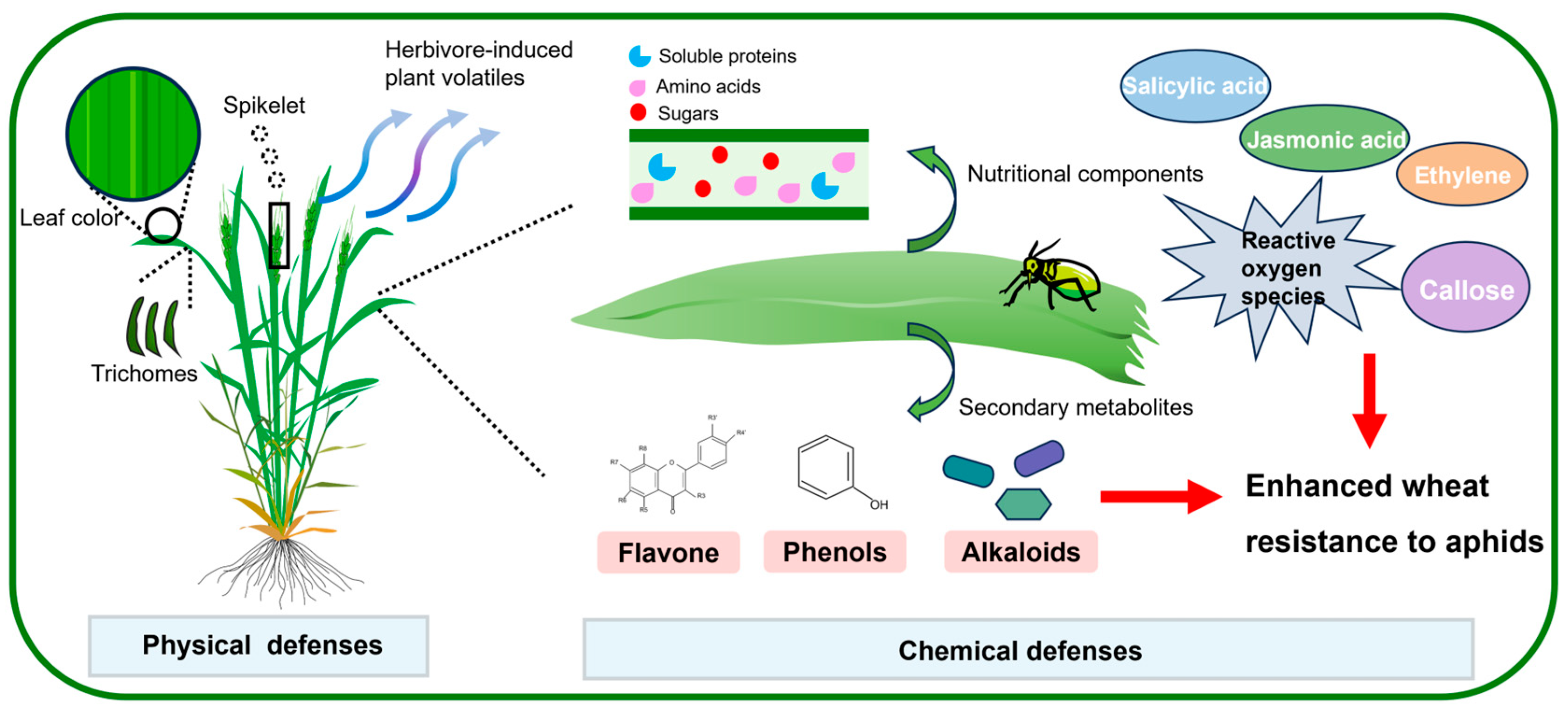
Taken together, wheat’s defense against aphids is not mediated by a single mechanism but rather by the coordinated activation of multiple defense layers. Following aphid attack, defense signaling pathways trigger a series of downstream responses, including physical and chemical defenses and HIPV-mediated indirect defenses (Figure 2). These responses reshape aphid host selection, feeding behavior, survival, and fecundity, thereby contributing to wheat resistance. Importantly, the activation of these defense responses is under genetic control, suggesting that resistance genes play a central role in shaping resistance outcomes.

5. Genetic Basis of Wheat Resistance

Although the defense mechanisms described above are phenotypic manifestations of resistance, their effectiveness is ultimately determined by underlying genetic factors. Resistance genes represent a direct form of plant defense against herbivorous insects [84]. Molecular breeding for crop resistance to pests and pathogens is considered one of the most economical and effective approaches for crop protection. Molecular mapping of aphid resistance genes facilitates the identification and selection of resistant traits, thereby significantly accelerating the breeding of aphid-resistant wheat varieties [85]. The complex genetic background of wheat, together with its allopolyploid nature, confers high tolerance to genomic modifications. Previous studies have demonstrated that genes conferring resistance to pests, pathogens and abiotic stresses can be successfully introduced into wheat from other cereal crops, including rye, barley and oats [84].
Dn1 was identified as the first resistance gene against D. noxia in wheat. To date, more than 10 resistance genes against D. noxia and 15 resistance genes against S. graminum have been identified in wheat (Table 2) [84,86]. Currently, the identified resistance genes to S. avenae are mainly located on wheat chromosomes 6A and 7D (Table 2). For example, the resistance gene RA-1, conferring resistance to S. avenae and derived from the durum wheat accession C273, was localized to chromosome 6AL through linkage mapping [87]. In addition, the resistance gene Sa2, identified in the Chinese wheat accession XN98-10-35, is on chromosome 7D [85]. In addition, combined analyses of aphid performance and wheat genotypes identified broad-spectrum resistance genes against S. avenae, R. padi, and S. graminum in the wheat lines E12165, Amigo, and Presto triticale, which were mapped to chromosome 1AL.1RSam [88]. By reducing genome complexity using restriction endonucleases, genotyping by sequencing (GBS) provides an efficient platform for gene mapping in wheat. Researchers at the International Maize and Wheat Improvement Center (CIMMYT) used GBS to analyze a recombinant inbred line (RIL) population derived from the aphid-resistant wheat accession CWI76364 and the susceptible accession Seri M82. The analysis identified a quantitative trait locus (QTL) conferring antibiosis resistance to R. padi (QRp.slu.4BL) on wheat chromosome 4BL, as well as two QTLs associated with tolerance to R. padi (QRp.slu.5AL and QRp.slu.5BL) on chromosomes 5AL and 5BL, respectively [89]. In addition, evaluation of an F6 RIL population (n = 226) derived from a cross between the S. graminum-resistant line Sokoll and the susceptible line Weebill1 led to the identification of a major resistance locus on chromosome 7DL. Subsequent linkage and QTL analyses enabled the preliminary mapping of the resistance gene, designated GbSkl [90].
Although many resistance genes have been identified, the underlying molecular mechanisms remain unclear. The completion of the wheat whole-genome sequencing, together with the emergence of genome-wide association study (GWAS) approaches, has greatly advanced functional genomics research in wheat [109]. A previous study reported that TaDIR-B1, a gene associated with resistance to Fusarium crown rot in wheat, was first identified using GWAS and QTL mapping [110]. Similarly, GWAS combined with QTL analysis revealed that TaMTB, a gene encoding an m6A methyltransferase, is significantly associated with resistance to wheat yellow mosaic virus (WYMV) [111]. These approaches provide valuable insights for the mapping and functional characterization of aphid resistance genes in wheat. Nevertheless, most studies on the genetic background and linkage mapping of resistance genes remain at a preliminary stage, and limited progress has been made in fine mapping and functional validation.

6. Non-Host Resistance: A Promising Source of Durable Aphid Resistance

Unlike host resistance, which is often governed by specific resistance genes and may be overcome by aphid adaptation, non-host resistance (NHR) refers to the resistance exhibited by all genotypes within a plant species against all isolates of a given pathogen [9]. Because NHR is typically mediated by multiple defense layers and coordinated action of numerous genes, it is widely regarded as one of the most durable and broad-spectrum forms of plant resistance [9,10]. Similar to the infection phase of pathogens on non-host plants, aphids attempt to penetrate the leaf surface using their stylets regardless of plant species, suggesting that defense responses in non-host plants are induced at the molecular level [112,113]. To date, studies on plant resistance to insects have focused predominantly on the mechanisms underlying compatible plant–insect interactions. Therefore, understanding the mechanisms underlying NHR may provide valuable resources for the development of durable aphid-resistant wheat cultivars.

6.1. The Molecular Framework Associated with Non-Host Resistance Against Insects

NHR reflects the overall effectiveness of plant defense systems against diverse biotic challenges and should be regarded as a phenomenon arising from the collective action of multiple defense layers, rather than as a distinct branch of plant immune pathways attributable to a single mechanism [114]. Similar to host resistance, NHR involves aphid recognition, activation of defense signaling pathways and defense proteins. However, these responses are often stronger, more rapid, and more effective in non-host interactions, thereby preventing successful aphid colonization.
Aphid non-host resistance begins with aphids being unable to successfully locate, penetrate or utilize host tissues. Aphid stylet penetration of plant tissue is well characterized using the electrical penetration graph (EPG), which can distinguish different types of plant–aphid interactions. For example, in the Arabidopsis-R. padi (non-host) interaction, aphid stylets fail to reach the phloem for feeding [115]. However, in the barley-M. persicae (poor-host) interaction, the aphid can successfully penetrate sieve-tube elements and ingest phloem sap, but the level of ingestion is reduced compared with that in host interactions, suggesting that resistance in different interaction types likely occurs at distinct plant cell layers [115,116]. Aphid salivary components are considered signaling molecules that trigger defense activation in non-host plants [7,27]. Silencing the tomato gene TFT7, which interacts with the salivary protein Me10 of M. euphorbiae, has no effect on host susceptibility to the potato aphid but enhances the survival and fecundity of the non-host aphid Aphis gossypii [117]. These findings suggest that NHR can operate at multiple stages of aphid feeding and may involve distinct defense barriers in different plant tissues.
Following aphid probing, non-host plants activate defense signaling pathways similar to those involved in host resistance. Among the signaling pathways implicated in NHR, JA is a key regulatory factor of NHR. For example, suppression of JA-dependent defense enabled colonization by previously non- adapted herbivore species capable of successful feeding and reproduction, highlighting the critical role of JA in shaping herbivore host selection [118]. When the poor-host plant wheat was fed by M. persicae, a strong immune response was activated, with differentially expressed genes (DEGs) significantly enriched in alpha-linolenic acid metabolism and accompanied by a marked increase in JA accumulation [119]. The activation of defense signaling pathways ultimately leads to the accumulation of defense-related proteins that restrict aphid performance. For instance, transcriptional analyses in barley revealed that infestation by M. persicae (a non-host interaction) triggered stronger defense responses, and several thionins were found to contribute to aphid resistance [120]. Similarly, transcriptomic analyses of the Arabidopsis-R. padi non-host interaction identified multiple DEGs associated with aphid resistance, including the toxic protein-related gene Vegetative Storage Protein 1 (VSP1), which contributed to non-host resistance against aphids [121]. In addition, Bowman–Birk trypsin inhibitor (TaBBTI-1), specifically induced during M. persicae infestation on wheat (a poor-host interaction), significantly suppressed the fecundity of both S. avenae and M. persicae, as well as the feeding capacity of Helicoverpa armigera, demonstrating broad-spectrum resistance against herbivorous insects [119]. Collectively, these findings suggest that defense proteins represent important downstream components of aphid NHR.

6.2. Exploiting NHR for Durable Wheat Resistance

Taken together, current evidence suggests that aphid non-host resistance is not mediated by a single defense mechanism but rather by the coordinated action of multiple defense layers. Notably, many of these mechanisms overlap with those involved in host resistance, but they appear to be activated more effectively during non-host interactions. The widespread adoption of genome editing and omics approaches has provided a strong foundation for the precise and efficient utilization of NHR-associated traits in agriculture. Exploiting non-host resistance genes represents a promising strategy for breeding crops with broad-spectrum and durable resistance. Genes involved in NHR have already been successfully applied in plant breeding to confer resistance against pathogens [122,123]. Given the mechanistic similarities between aphid–plant and pathogen–plant interactions, NHR is increasingly regarded as a promising strategy for developing broad-spectrum and durable aphid-resistant crops [124].

7. Conclusions and Perspectives

Current evidence indicates that wheat resistance to aphids is governed by a multilayered defense system involving aphid recognition, immune signaling, physical and chemical defenses, resistance genes, and non-host resistance mechanisms. Aphid salivary proteins play an important role in wheat–aphid interaction, acting either as elicitors that activate plant defenses or as effectors that suppress host immunity. Importantly, resistance is not determined by a single defense component but by the coordinated action of multiple defense layers that collectively influence aphid performance and host suitability. Despite substantial progress, several major bottlenecks continue to hinder the development of durable aphid-resistant wheat. Firstly, only a limited number of aphid salivary effectors have been functionally characterized, and their molecular targets in wheat remain largely unknown. Secondly, the regulatory networks linking aphid perception to downstream defense responses are still poorly understood. Thirdly, relatively few resistance genes have been effectively utilized in breeding programs, and resistance conferred by individual genes may be overcome by aphid adaptation. Finally, the mechanisms underlying non-host resistance remain insufficiently explored despite their considerable potential for durable resistance breeding.
Future research should move beyond conventional germplasm screening to uncover the core biological mechanisms underlying durable aphid resistance. Priority should be given to the combinatorial action of salivary effectors, rather than single effector proteins. It is likely that aphid salivary proteins function cooperatively to manipulate host plant immunity and hormone signaling. Therefore, future studies should aim to construct “aphid salivary effector networks” through integrated transcriptomics, proteomics, and protein–protein interaction analyses, combined with functional validation in wheat. In parallel, elucidating the molecular basis of NHR may reveal novel defense mechanisms and resistance-associated genes that can be incorporated into wheat breeding programs. The integration of multi-omics approaches, spatial transcriptomics, genome-wide association studies, and functional genomics tools such as RNAi and CRISPR-based genome editing will greatly accelerate the discovery and validation of resistance determinants. Ultimately, combining host resistance genes, endogenous defense pathways, and NHR mechanisms may provide a promising strategy for developing wheat cultivars with durable and broad-spectrum resistance to aphids. Such advances will contribute to environmentally sustainable aphid management and global food security.

Author Contributions

X.L.: Writing—original draft, Writing—review & editing, Data curation, Conceptualization. Q.W.: Data curation. Y.L.: Writing—review and editing. Y.Z.: Writing—review and editing, Supervision, Conceptualization. F.F.: Writing—review and editing, Supervision. J.C.: Writing—review and editing, Supervision, Conceptualization. All authors have read and agreed to the published version of the manuscript.

Funding

This study was financially supported by the National Natural Science Foundation of China (32472558); the Central Public-interest Scientific Institution Basal Research Fund (Y2025QC02; S2026XM23); the National Key Research and Development Program of China (2023YFD1400801); Beijing Natural Science Foundation (6242026).

Data Availability Statement

No new data were created or analyzed in this study.

Acknowledgments

We sincerely thank Yidi Zhan for her valuable and insightful comments on this review.

Conflicts of Interest

The authors declare no conflicts of interest.

References

  1. Zhang, Q.Q.; Men, X.Y.; Hui, C.; Ge, F.; Ouyang, F. Wheat yield losses from pests and pathogens in China. Agric. Ecosyst. Environ. 2022, 326, 107821. [Google Scholar] [CrossRef] [Scilit]
  2. Blackman, R.L.; Eastop, V.F. Aphids on the World’s Herbaceous Plants and Shrubs; John Wiley & Sons Ltd.: New York, NY, USA, 2006. [Google Scholar]
  3. Bass, C.; Jones, C.M. Editorial overview: Pests and resistance: Resistance to pesticides in arthropod crop pests and disease vectors: Mechanisms, models and tools. Curr. Opin. Insect Sci. 2018, 27, 4–7. [Google Scholar] [CrossRef] [Scilit] [PubMed]
  4. Mithöfer, A.; Boland, W. Plant defense against herbivores: Chemical aspects. Annu. Rev. Plant Biol. 2012, 63, 431–450. [Google Scholar] [CrossRef] [Scilit] [PubMed]
  5. Erb, M.; Kliebenstein, D.J. Plant secondary metabolites as defenses, regulators, and primary metabolites: The blurred functional trichotomy. Plant Physiol. 2020, 184, 39–52. [Google Scholar] [CrossRef] [Scilit] [PubMed]
  6. Painter, H. Insect Resistance in Crop Plants; The Mcmillan Company: New York, NY, USA, 1951. [Google Scholar]
  7. Hogenhout, S.A.; Bos, J.I.B. Effector proteins that modulate plant-insect interactions. Curr. Opin. Plant Biol. 2011, 14, 422–428. [Google Scholar] [CrossRef] [Scilit] [PubMed]
  8. Snoeck, S.; Guayazán-Palacios, N.; Steinbrenner, A.D. Molecular Tug-of-War: Plant immune recognition of herbivory. Plant Cell 2022, 34, 1497–1513. [Google Scholar] [CrossRef] [Scilit] [PubMed]
  9. Mysore, K.S.; Ryu, C. Nonhost resistance: How much do we know. Trends Plant Sci. 2004, 9, 97–104. [Google Scholar] [CrossRef] [Scilit] [PubMed]
  10. Senthil-Kumar, M.; Mysore, K.S. Nonhost resistance against bacterial pathogens: Retrospectives and prospects. Annu. Rev. Phytopathol. 2013, 51, 407–427. [Google Scholar] [CrossRef] [Scilit] [PubMed]
  11. Jones, J.; Dangl, J. The plant immune system. Nature 2006, 444, 323–329. [Google Scholar] [CrossRef] [Scilit] [PubMed]
  12. Zhang, Y.; Liu, X.B.; Francis, F.; Xie, H.C.; Fan, J.; Wang, Q.; Liu, H.; Sun, Y.; Chen, J.L. The salivary effector protein Sg2204 in the greenbug Schizaphis graminum suppresses wheat defense and is essential for enabling aphid feeding on host plants. Plant Biotechnol. J. 2022, 20, 2187–2201. [Google Scholar] [CrossRef] [Scilit] [PubMed]
  13. Zhang, Y.; Fan, J.; Sun, J.R.; Francis, F.; Chen, J.L. Transcriptome analysis of the salivary glands of the grain aphid, Sitobion avenae. Sci. Rep. 2017, 7, 15911. [Google Scholar] [CrossRef] [Scilit] [PubMed]
  14. Zhang, Y.; Fu, Y.; Francis, F.; Liu, X.B.; Chen, J.L. Insight into watery saliva proteomes of the grain aphid, Sitobion avenae. Arch. Insect Biochem. Physiol. 2021, 106, e21752. [Google Scholar] [CrossRef] [Scilit] [PubMed]
  15. Niu, D.; Hamby, R.; Sanchez, J.N.; Cai, Q.; Yan, Q.; Jin, H. RNAs—A new frontier in crop protection. Curr. Opin. Biotechnol. 2021, 70, 204–212. [Google Scholar] [CrossRef] [Scilit] [PubMed]
  16. Yan, S.; Qian, J.; Cai, C.; Ma, Z.; Li, J.; Yin, M.; Ren, B.; Shen, J. Spray method application of transdermal dsRNA delivery system for efficient gene silencing and pest control on soybean aphid Aphis glycines. J. Pest Sci. 2020, 93, 449–459. [Google Scholar] [CrossRef] [Scilit]
  17. Acevedo, F.E.; Rivera-Vega, L.J.; Chung, S.H.; Ray, S.; Felton, G.W. Cues from chewing insects—The intersection of DAMPs, HAMPs, MAMPs and effectors. Curr. Opin. Plant Biol. 2015, 26, 80–86. [Google Scholar] [CrossRef] [Scilit] [PubMed]
  18. de Vos, M.; Jander, G. Myzus persicae (green peach aphid) salivary components induce defense responses in Arabidopsis thaliana. Plant Cell Environ. 2009, 32, 1548–1560. [Google Scholar] [CrossRef] [Scilit] [PubMed]
  19. Chaudhary, R.; Atamian, H.S.; Shen, Z.X.; Briggs, S.P.; Kaloshian, I. GroEL from the endosymbiont Buchnera aphidicola betrays the aphid by triggering plant defense. Proc. Natl. Acad. Sci. USA 2014, 111, 8919–8924. [Google Scholar] [CrossRef] [Scilit] [PubMed]
  20. Kettles, G.J.; Kaloshian, I. The potato aphid salivary effector Me47 is a glutathione-S-transferase involved in modifying plant responses to aphid infestation. Front. Plant Sci. 2016, 7, 1142. [Google Scholar] [CrossRef] [Scilit] [PubMed]
  21. Guo, H.J.; Zhang, Y.J.; Tong, J.H.; Ge, P.P.; Wang, Q.Y.; Zhao, Z.H.; Zhu-Salzman, K.; Hogenhout, S.A.; Ge, F.; Sun, Y. An aphid-secreted salivary protease activates plant defense in phloem. Curr. Biol. 2020, 30, 4826–4836. [Google Scholar] [CrossRef] [Scilit] [PubMed]
  22. Bai, X.; Zhan, G.; Tian, S.; Peng, H.; Cui, X.; Islam, M.A.; Goher, F.; Ma, Y.; Kang, Z.; Xu, Z.S.; et al. Transcription factor BZR2 activates chitinase Cht20.2 transcription to confer resistance to wheat stripe rust. Plant Physiol. 2021, 187, 2749–2762. [Google Scholar] [CrossRef] [Scilit] [PubMed]
  23. Zhang, Y.; Fan, J.; Francis, F.; Chen, J.L. Watery saliva secreted by the grain aphid Sitobion avenae stimulates aphid resistance in wheat. J. Agric. Food Chem. 2017, 65, 8798–8805. [Google Scholar] [CrossRef] [Scilit] [PubMed]
  24. Li, Q.; Fu, Y.; Liu, X.B.; Sun, J.X.; Hou, M.L.; Zhang, Y.; Chen, J.L. Activation of wheat defense response by Buchnera aphidicola-derived small chaperone protein GroES in wheat aphid saliva. J. Agric. Food Chem. 2022, 70, 1058–1067. [Google Scholar] [CrossRef] [Scilit] [PubMed]
  25. Zhang, Y.; Fu, Y.; Liu, X.; Francis, F.; Fan, J.; Liu, H.; Wang, Q.; Sun, Y.; Zhang, Y.; Chen, J. SmCSP4 from aphid saliva stimulates salicylic acid-mediated defence responses in wheat by interacting with transcription factor TaWKRY76. Plant Biotechnol. J. 2023, 21, 2389–2407. [Google Scholar] [CrossRef] [Scilit] [PubMed]
  26. Mutti, N.S.; Park, Y.; Reese, J.C.; Reeck, J.R. RNAi knockdown of a salivary transcript leading to lethality in the pea aphid, Acyrthosiphon pisum. J. Insect Sci. 2006, 6, 38. [Google Scholar] [CrossRef] [Scilit] [PubMed]
  27. Mutti, N.S.; Louis, J.; Pappan, L.K.; Pappan, K.; Begum, K.; Chen, M.S.; Park, Y.; Dittmer, N.; Marshall, J.; Reese, J.C.; et al. A protein from the salivary glands of the pea aphid, Acyrthosiphon pisum, is essential in feeding on a host plant. Proc. Natl. Acad. Sci. USA 2008, 105, 9965–9969. [Google Scholar] [CrossRef] [Scilit] [PubMed]
  28. Bos, J.I.B.; Prince, D.; Pitino, M.; Maffei, M.E.; Win, J.; Hogenhout, S.A. A functional genomics approach identifies candidate effectors from the aphid species, Myzus persicae (green peach aphid). PLoS Genet. 2010, 6, e1001216. [Google Scholar] [CrossRef] [Scilit] [PubMed]
  29. Atamian, H.S.; Chaudhary, R.; Cin, V.D.; Bao, E.; Girke, T.; Kaloshian, I. In planta expression or delivery of potato aphid Macrosiphum euphorbiae effectors Me10 and Me23 enhances aphid fecundity. Mol. Plant-Microbe Interact. 2013, 26, 67–74. [Google Scholar] [CrossRef] [Scilit] [PubMed]
  30. Elzinga, D.A.; De Vos, M.; Jander, G. Suppression of plant defenses by a Myzus persicae (green peach aphid) salivary effector protein. Mol. Plant-Microbe Interact. 2014, 27, 747–756. [Google Scholar] [CrossRef] [Scilit] [PubMed]
  31. MacWilliams, J.R.; Dingwall, S.; Chesnais, Q.; Sugio, A.; Kaloshian, I. AcDCXR is a cowpea aphid effector with putative roles in altering host immunity and physiology. Front. Plant Sci. 2020, 11, 605. [Google Scholar] [CrossRef] [Scilit] [PubMed]
  32. Huang, H.J.; Wang, Y.Z.; Li, L.L.; Lu, H.B.; Lu, J.B.; Wang, X.; Ye, Z.X.; Zhang, Z.L.; He, Y.J.; Lu, G.; et al. Planthopper salivary sheath protein LsSP1 contributes to manipulation of rice plant defenses. Nat. Commun. 2023, 14, 737. [Google Scholar] [CrossRef] [Scilit] [PubMed]
  33. Xu, H.; Qian, L.; Wang, X.; Shao, R.X.; Hong, Y.; Liu, S.S.; Wang, X.W. A salivary effector enables whitefly to feed on host plants by eliciting salicylic acid-signaling pathway. Proc. Natl. Acad. Sci. USA 2019, 116, 490–495. [Google Scholar] [CrossRef] [Scilit] [PubMed]
  34. Escudero-Martinez, C.; Rodriguez, P.A.; Liu, S.; Santos, P.A.; Stephens, J.; Bos, J.I.B. An aphid effector promotes barley susceptibility through suppression of defence gene expression. J. Exp. Bot. 2020, 71, 2796–2807. [Google Scholar] [CrossRef] [Scilit] [PubMed]
  35. Fu, Y.; Liu, X.B.; Wang, Q.; Liu, H.; Cheng, Y.M.; Li, H.M.; Zhang, Y.; Chen, J.L. Two salivary proteins Sm10 and SmC002 from grain aphid Sitobion miscanthi modulate wheat defense and enhance aphid performance. Front. Plant Sci. 2023, 14, 1104275. [Google Scholar] [CrossRef] [Scilit] [PubMed]
  36. Zhang, Y.; Liu, X.B.; Fu, Y.; Crespo-Herrera, L.; Liu, H.; Wang, Q.; Zhang, Y.M.; Chen, J.L. Salivary effector Sm9723 of grain aphid Sitobion miscanthi suppresses plant defense and is essential for aphid survival on wheat. Int. J. Mol. Sci. 2022, 23, 6909. [Google Scholar] [CrossRef] [Scilit] [PubMed]
  37. Zhang, Y.M.; Liu, X.B.; Sun, Y.; Liu, Y.; Ding, T.B.; Chen, J.L. Salivary protein cyclin-dependent kinase-like from grain aphid Sitobion avenae suppress wheat defense response and enhance aphid adaptation. Int. J. Mol. Sci. 2024, 25, 4579. [Google Scholar] [CrossRef] [Scilit] [PubMed]
  38. Shang, Z.M.; Yang, J.Y.; Zhang, R.F.; Liu, D.G. Functional analyses of the salivary protein SaE23 in Sitobion avenae. Int. J. Biol. Macromol. 2025, 307, 142068. [Google Scholar] [CrossRef] [Scilit] [PubMed]
  39. Zheng, S.; Wen, X.; Huang, T.; Yuan, J.; Shi, X.; Liu, D. Molecular characterizations and functional analyses of the novel salivary effector SaApo AI from the cereal aphid Sitobion avenae. Pest Manag. Sci. 2026, 82, 4907–4919. [Google Scholar] [CrossRef] [Scilit] [PubMed]
  40. Hu, X.S.; Zhao, H.Y. The reviews of wheat resistant mechanism to cereal aphid in China. Chin. J. Appl. Entomol. 2014, 51, 1459–1469. [Google Scholar] [CrossRef]
  41. Choudhury, S.; Panda, P.; Sahoo, L.; Panda, S.K. Reactive oxygen species signaling in plants under abiotic stress. Plant Signal. Behav. 2013, 8, e23681. [Google Scholar] [CrossRef] [Scilit] [PubMed]
  42. Zhang, Y.; Fu, Y.; Fan, J.; Li, Q.; Francis, F.; Chen, J.L. Comparative transcriptome and histological analyses of wheat in response to phytotoxic aphid Schizaphis graminum and non-phytotoxic aphid Sitobion avenae feeding. BMC Plant Biol. 2019, 19, 547. [Google Scholar] [CrossRef] [Scilit] [PubMed]
  43. Zutter, N.D.; Audenaert, K.; Ameye, M.; De Boevre, M.; De Saeger, S.; Haesaert, G.; Smagghe, G. The plant response induced in wheat ears by a combined attack of Sitobion avenae aphids and Fusarium graminearum boosts fungal infection and deoxynivalenol production. Mol. Plant Pathol. 2017, 18, 98–109. [Google Scholar] [CrossRef] [Scilit] [PubMed]
  44. Zhang, Y.; Fan, J.; Fu, Y.; Francis, F.; Chen, J.L. Plant-mediated interactions between two cereal aphid species: Infestation of phytotoxic aphid Schizaphis graminum in wheat promotes aphid performance but attracts more parasitoids. J. Agric. Food Chem. 2019, 67, 2763–2773. [Google Scholar] [CrossRef] [Scilit] [PubMed]
  45. Liu, F.H.; Kang, Z.W.; Tan, X.L.; Fan, Y.L.; Tian, H.G.; Liu, T.X. Physiology and defense responses of wheat to the infestation of different cereal aphids. J. Integr. Agric. 2020, 19, 1464–1474. [Google Scholar] [CrossRef] [Scilit]
  46. Reddy, S.K.; Weng, Y.; Rudd, J.C.; Akhunova, A.; Liu, S.Y. Transcriptomics of induced defense responses to greenbug aphid feeding in near isogenic wheat lines. Plant Sci. 2013, 212, 26–36. [Google Scholar] [CrossRef] [Scilit] [PubMed]
  47. Yin, J.; Chen, J.L.; Cao, Y.Z.; Li, L.B.; Hu, Y.; Sun, J.R. Wheat resistance induced by exogenous chemicals to the wheat aphid, Sitobion avenae (F.) and the oriental armyworm, Mythimna separata (Walker). Acta Entomol. Sin. 2005, 48, 718–724. [Google Scholar]
  48. Thaler, J.S.; Humphrey, P.T.; Whiteman, N.K. Evolution of jasmonate and salicylate signal crosstalk. Trends Plant Sci. 2012, 17, 260–270. [Google Scholar] [CrossRef] [Scilit] [PubMed]
  49. Moreira, X.; Abdala-Roberts, L.; Castagneyrol, B. Interactions between plant defence signalling pathways: Evidence from bioassays with insect herbivores and plant pathogens. J. Ecol. 2018, 106, 2353–2364. [Google Scholar] [CrossRef] [Scilit]
  50. Jiao, L.; Bian, L.; Luo, Z.; Li, Z.; Xiu, C.; Fu, N.; Cai, X.; Chen, Z. Enhanced volatile emissions and anti-herbivore functions mediated by the synergism between jasmonic acid and salicylic acid pathways in tea plants. Hortic. Res. 2022, 9, uhac144. [Google Scholar] [CrossRef] [Scilit] [PubMed]
  51. Rasool, B.; McGowan, J.; Pastok, D.; Marcus, S.E.; Morris, J.A.; Verrall, S.R.; Hedley, P.E.; Hancock, R.D.; Foyer, C.H. Redox control of aphid resistance through altered cell wall composition and nutritional quality. Plant Physiol. 2017, 175, 259–271. [Google Scholar] [CrossRef] [Scilit] [PubMed]
  52. Xu, M.; Zhou, T.; Zhao, Y.; Xu, H.; Dong, H.; Zhang, C. Transgenic expression of a functional fragment of harpin protein Hpal in wheat represses English grain aphid infestation. J. Integr. Agric. 2014, 13, 2565–2576. [Google Scholar] [CrossRef] [Scilit]
  53. Dorling, T.F. How aphids find their host plants, and how they don’t. Ann. Appl. Biol. 2014, 165, 3–26. [Google Scholar] [CrossRef] [Scilit]
  54. Wang, Y.; Wang, J.; Wu, Q.W.; Zhao, H.Y.; Hu, X.S.; Zhang, G.S. Correlations between physical characters of wheat leaf hairs in SEM and the biological parameters of grain aphid Stiobion avenae. Acta Phytophy. Sin. 2014, 41, 474–481. [Google Scholar] [CrossRef]
  55. Singh, A.; Dilkes, B.; Sela, H.N.; Tzin, V. The effectiveness of physical and chemical defense responses of wild emmer wheat against aphids depends on leaf position and genotype. Front. Plant Sci. 2021, 12, 667820. [Google Scholar] [CrossRef] [Scilit] [PubMed]
  56. Wojcicka, A. Effect of epicuticular waxes from triticale on the feeding behaviour and mortality of the grain aphid, Sitobion avenae (Fabricius) (Hemiptera: Aphididae). J. Plant Prot. Res. 2016, 56, 39–44. [Google Scholar] [CrossRef] [Scilit]
  57. Nalam, V.; Louis, J.; Shah, J. Plant defense against aphids, the pest extraordinaire. Plant Sci. 2019, 279, 96–107. [Google Scholar] [CrossRef] [Scilit] [PubMed]
  58. Malinpvsky, F.G.; Fangel, J.U.; Willats, W.G.T. The role of the cell wall in plant immunity. Front. Plant Sci. 2014, 5, 178. [Google Scholar] [CrossRef] [Scilit] [PubMed]
  59. Yang, X.; Zhang, L.; Li, Y.; Liu, X.; Chen, C.; Deng, Y.; Zhou, W.; Sohail, H.; Qiu, L.; Gu, J.; et al. Fortifying crop defenses: Unraveling the molecular arsenal against aphids. Hortic. Adv. 2024, 2, 22. [Google Scholar] [CrossRef] [Scilit]
  60. Liu, F.H.; Kang, Z.W.; Hu, X.S.; Zhang, Z.F.; Liu, T.X. Effects of foliage nutrients of different wheat cultivars on the grain aphid Sitobion avenae (Hemiptera: Aphididae). J. Plant Prot. 2017, 44, 305–311. [Google Scholar] [CrossRef]
  61. Xie, H.C.; Shi, J.Q.; Shi, F.Y.; Hu, H.Y.; He, K.L.; Wang, Z.Y. Aphid fecundity and aphid defenses in wheat exposed to a combination of heat and drought stresses. J. Exp. Bot. 2020, 71, 2713–2722. [Google Scholar] [CrossRef] [Scilit] [PubMed]
  62. Cao, H.H.; Zhang, M.; Zhao, H.; Zhang, Y.; Wang, X.X.; Guo, S.S.; Zhang, Z.F.; Liu, T.X. Deciphering the mechanism of β-aminobutyric acid-induced resistance in wheat to the grain aphid, Sitobion avenae. PLoS ONE 2014, 9, e91768. [Google Scholar] [CrossRef] [Scilit] [PubMed]
  63. Gao, C.S.; Liu, S.Y.; Hou, Y.M. Types of free amino acids in winter wheat varieties and their relationship with resistance to Sitobion avenae. Acta Phytophy. Sin. 1998, 25, 1–5. [Google Scholar] [CrossRef]
  64. Tlak Gajger, I.; Dar, S.A. Plant allelochemicals as sources of insecticides. Insects 2021, 12, 189. [Google Scholar] [CrossRef] [Scilit] [PubMed]
  65. Wang, Q.; Liu, X.; Liu, H.; Fu, Y.; Cheng, Y.; Zhang, L.; Shi, W.; Zhang, Y.; Chen, J. Transcriptomic and metabolomic analysis of wheat kernels in response to the feeding of orange wheat blossom midges (Sitodiplosis mosellana) in the field. J. Agric. Food Chem. 2022, 70, 1477–1493. [Google Scholar] [CrossRef] [Scilit] [PubMed]
  66. Johnson, M.T.J.; Smith, S.D.; Rausher, M.D. Plant sex and the evolution of plant defenses against herbivores. Proc. Natl. Acad. Sci. USA 2009, 106, 18079–18084. [Google Scholar] [CrossRef] [Scilit] [PubMed]
  67. Gebretsadik, K.G.; Zhang, Y.; Chen, J.L. Screening and evaluation for antibiosis resistance of the spring wheat accessions to the grain aphid, Sitobion miscanthi. J. Integr. Agric. 2022, 21, 2329–2344. [Google Scholar] [CrossRef] [Scilit]
  68. Shen, N.; Wang, T.F.; Gan, Q.; Liu, S.; Wang, L.; Jin, B. Plant flavonoids: Classification, distribution, biosynthesis, and antioxidant activity. Food Chem. 2022, 383, 132531. [Google Scholar] [CrossRef] [Scilit] [PubMed]
  69. Simmonds, M.S.J. Flavonoid-insect interactions: Recent advances in our knowledge. Phytochemistry 2003, 64, 21–30. [Google Scholar] [CrossRef] [Scilit] [PubMed]
  70. Dreyer, D.L.; Jones, K.C. Feeding deterrency of flavonoids and related phenolics towards Schizaphis graminum and Myzus persicae: Aphid feeding deterrents in wheat. Phytochemistry 1981, 20, 2489–2493. [Google Scholar] [CrossRef] [Scilit]
  71. Chen, J.L.; Ni, H.X.; Sun, J.R. Resistance thresholds and interactions of major secondary metabolites to wheat aphids. Acta Phytophy. Sin. 2002, 29, 7–12. [Google Scholar] [CrossRef]
  72. Zhou, S.; Richter, A.; Jander, G. Beyond defense: Multiple functions of benzoxazinoids in maize metabolism. Plant Cell Physiol. 2018, 59, 1528–1537. [Google Scholar] [CrossRef] [Scilit] [PubMed]
  73. Guo, J.; Qi, J.; He, K.; Wu, J.; Bai, S.; Zhang, T.; Zhao, J.; Wang, Z. The Asian corn borer Ostrinia furnacalis feeding increases the direct and indirect defense of mid-whorl stage commercial maize in the field. Plant Biotechnol. J. 2019, 17, 88–102. [Google Scholar] [CrossRef] [Scilit] [PubMed]
  74. Niemeyer, H.M. Hydroxamic acids derived from 2-hydroxy-2H-1,4-benzoxazin-3(4H)-one: Key defense chemicals of cereals. J. Agric. Food Chem. 2009, 57, 1677–1696. [Google Scholar] [CrossRef] [Scilit] [PubMed]
  75. Yan, F.M. Research progress on DIMBOA. Chin. Bull. Entomol. 1995, 3, 178–180. [Google Scholar]
  76. Houseman, J.G.; Campos, F.; Thie, N.M.R.; Philogène, B.J.R.; Atkinson, J.; Morand, P.; Arnason, J.T. Effect of the maize-derived compounds DIMBOA and MBOA on growth and digestive processes of European corn borer (Lepidoptera: Pyralidae). J. Econ. Entomol. 1992, 85, 669–674. [Google Scholar] [CrossRef] [Scilit]
  77. Leszczynski, B.; Matok, H.; Dixon, A.F. Resistance of cereals to aphids: The interaction between hydroxamic acids and UDP-glucose transferases in the aphid Sitobion avenue (Homoptera: Aphididae). J. Chem. Ecol. 1992, 18, 1189–1200. [Google Scholar] [CrossRef] [Scilit] [PubMed]
  78. Zhang, Z.F.; Lan, H.; Cao, H.H.; Hu, X.S.; Fan, Y.; Song, Y.L.; Wu, L.J.; Liu, T.X. Impacts of Constitutive and Induced Benzoxazinoids Levels on Wheat Resistance to the Grain Aphid (Sitobion avenae). Metabolites 2021, 11, 783. [Google Scholar] [CrossRef] [Scilit] [PubMed]
  79. War, A.R.; Sharma, H.C.; Paulraj, M.G.; War, M.Y.; Ignacimuthu, S. Herbivore induced plant volatiles: Their role in plant defense for pest management. Plant Signal. Behav. 2011, 6, 1973–1978. [Google Scholar] [CrossRef] [Scilit] [PubMed]
  80. Jiang, X.; Jiang, J.; Yu, M.; Zhang, S.; Qin, Y.; Xu, Y.; Francis, F.; Fan, J.; Chen, J. Functional analysis of odorant-binding proteins for the parasitic host location to implicate convergent evolution between the grain aphid and its parasitoid Aphidius gifuensis. Int. J. Biol. Macromol. 2023, 226, 510–524. [Google Scholar] [CrossRef] [Scilit] [PubMed]
  81. Li, S.R.; Shang, Z.M.; Liu, D.G.; Cui, X.N. Behavioral responses of Sitobion avenae to aphid alarm pheromone and wheat volatiles induced by aphid feeding. J. Northwest AF Univ. Nat. Sci. Ed. 2017, 45, 94–100. [Google Scholar]
  82. Zhan, Y.D.; Zhao, L.; Zhao, X.J.; Liu, J.H.; Francis, F.; Liu, Y. Terpene synthase gene OtLIS confers wheat resistance to Sitobion avenae by regulating linalool emission. J. Agric. Food Chem. 2021, 69, 13734–13743. [Google Scholar] [CrossRef] [Scilit] [PubMed]
  83. Dong, J.; Liu, Y.J.; Li, P.L.; Lin, F.J.; Chen, J.L.; Liu, Y. Ecological effects of wheat-oilseed rape intercropping combined with methyl salicylate release on Sitobion avenae and its main natural enemies. Chin. J. Appl. Ecol. 2012, 23, 1940–1944. [Google Scholar] [CrossRef]
  84. Radchenko, E.E.; Abdullaev, R.A.; Anisimova, I.N. Genetic resources of cereal crops for aphid resistance. Plants 2022, 11, 1490. [Google Scholar] [CrossRef] [Scilit] [PubMed]
  85. Wang, C.; Luo, K.; Wang, L.; Zhan, H.Y.; Zhang, J.S. Molecular mapping of resistance gene to the English grain aphid, Sitobion avenae, in a Chinese wheat line XN98-10-35. Mol. Breed. 2015, 35, 203. [Google Scholar] [CrossRef] [Scilit]
  86. du Toit, F. Resistance in wheat (Triticum aestivum) to Diuraphis noxia (Hemiptera: Aphididae). Cereal Res. Commun. 1987, 15, 175–179. [Google Scholar]
  87. Liu, X.L.; Yang, X.F.; Wang, C.Y.; Wang, Y.J.; Zhang, H.; Ji, W.Q. Molecular mapping of resistance gene to English grain aphid (Sitobion avenae F.) in Triticum durum wheat line C273. Theor. Appl. Genet. 2012, 124, 287–293. [Google Scholar] [CrossRef] [Scilit] [PubMed]
  88. Crespo-Herrera, L.A.; Smith, C.M.; Singh, R.P.; Ahman, I. Resistance to multiple cereal aphids in wheat-alien substitution and translocation lines. Arthropod-Plant Interact. 2013, 7, 535–545. [Google Scholar] [CrossRef] [Scilit]
  89. Crespo-Herrera, L.A.; Akhunov, E.; Garkava-Gustavsson, L.; Jordan, K.W.; Smith, C.M.; Singh, R.P.; Ahman, I. Mapping resistance to the bird cherry-oat aphid and the greenbug in wheat using sequence-based genotyping. Theor. Appl. Genet. 2014, 127, 1963–1973. [Google Scholar] [CrossRef] [Scilit] [PubMed]
  90. Crespo-Herrera, L.A.; Singh, R.P.; Reynolds, M.; Huerta-Espino, J. Genetics of greenbug resistance in synthetic hexaploid wheat derived germplasm. Front. Plant Sci. 2019, 10, 782. [Google Scholar] [CrossRef] [Scilit] [PubMed]
  91. Tyler, J.M.; Webster, J.A.; Merkle, O.G. Designations for genes in wheat germplasm conferring greenbug resistance. Crop Sci. 1987, 27, 526–527. [Google Scholar] [CrossRef] [Scilit]
  92. Hollenhorst, M.M.; Joppa, L.R. Chromosomal location of genes for resistance to greenbug in ‘Largo’ and ‘Amigo’ wheats. Crop Sci. 1983, 23, 91–93. [Google Scholar] [CrossRef] [Scilit]
  93. Porter, D.R.; Webster, J.A.; Friebe, B. Inheritance of greenbug biotype G resistance in wheat. Crop Sci. 1994, 34, 625–628. [Google Scholar] [CrossRef] [Scilit]
  94. Dubcovsky, J.A.; Lukaszewski, A.J.; Echaide, M.; Antonelli, E.F.; Porter, D.R. Molecular characterization of two Triticum speltoides interstitial translocation carrying leaf rust and greenbug resistance genes. Crop Sci. 1998, 38, 1655–1660. [Google Scholar] [CrossRef] [Scilit]
  95. Weng, Y.; Lazar, M.D. Amplified fragment length polymorphism- and simple sequence repeat-based molecular tagging and mapping of greenbug resistance gene Gb3 in wheat. Plant Breed. 2002, 121, 218–223. [Google Scholar] [CrossRef] [Scilit]
  96. Weng, Y.; Li, W.; Devkota, R.N.; Rudd, J.C. Microsatellite markers associated with two Aegilops tauschii-derived greenbug resistance loci in wheat. Theor. Appl. Genet. 2005, 110, 462–469. [Google Scholar] [CrossRef] [Scilit] [PubMed]
  97. Zhu, L.C.; Smith, C.M.; Fritz, A.; Boyko, E.V.; Flinn, M.B. Genetic analysis and molecular mapping of a wheat gene conferring tolerance to the greenbug (Schizaphis graminum Rondani). Theor. Appl. Genet. 2004, 109, 289–293. [Google Scholar] [CrossRef] [Scilit] [PubMed]
  98. Zhu, L.C.; Smith, C.M.; Fritz, A.; Boyko, E.; Voothuluru, P.; Gill, B.S. Inheritance and molecular mapping of new greenbug resistance genes in wheat germplasms derived from Aegilops tauschii. Theor. Appl. Genet. 2005, 111, 831–837. [Google Scholar] [CrossRef] [Scilit] [PubMed]
  99. Xu, X.; Li, G.; Carver, B.F.; Armstrong, J.S. Gb8, a new gene conferring resistance to economically important greenbug biotypes in wheat. Theor. Appl. Genet. 2020, 133, 615–622. [Google Scholar] [CrossRef] [Scilit] [PubMed]
  100. Xu, X.; Li, G.; Bai, G.; Bian, R.; Bernardo, A.; Wolabu, T.W.; Carver, B.F.; Wu, Y.; Elliott, N. Characterization of a new greenbug resistance gene Gb9 in a synthetic hexaploid wheat. Theor. Appl. Genet. 2024, 137, 140. [Google Scholar] [CrossRef] [Scilit] [PubMed]
  101. Zhang, H.; Yan, L.; Huang, Y. SgR1, encoding a Leucine-rich repeat containing receptor-like protein, is a major aphid (Schizaphis graminum) resistance gene in sorghum. Int. J. Mol. Sci. 2025, 26, 19. [Google Scholar] [CrossRef] [Scilit] [PubMed]
  102. Saidi, A.; Quick, J.S. Inheritance and allelic relationships among Russian wheat aphid resistance genes in winter wheat. Crop Sci. 1996, 36, 256–258. [Google Scholar] [CrossRef] [Scilit]
  103. Liu, X.M.; Smith, C.M.; Gill, B.S.; Tolmay, V. Microsatellite markers linked to six Russian wheat aphid resistance genes in wheat. Theor. Appl. Genet. 2001, 102, 504–510. [Google Scholar] [CrossRef] [Scilit]
  104. Harvey, T.L.; Martin, T.J. Resistance to Russian wheat aphid, Diuraphis noxia, in wheat (Triticum aestivum). Cereal Res. Commun. 1990, 18, 127–129. [Google Scholar]
  105. Fazel-Najafabadi, M.; Peng, J.; Peairs, F.B.; Šimková, H.; Kilian, A.; Lapitan, N.L.V. Genetic mapping of resistance to Diuraphis noxia (Kordjumov) biotype 2 in wheat (Triticum aestivum L.) accession CI2401. Euphytica 2015, 203, 607–614. [Google Scholar] [CrossRef] [Scilit]
  106. Valdez, V.A.; Byrne, P.F.; Lapitan, N.L.; Peairs, F.B.; Bernardo, A.; Bai, G.; Haley, S.D. Inheritance and genetic mapping of Russian wheat aphid resistance in Iranian wheat landrace accession PI626580. Crop Sci. 2012, 52, 676–682. [Google Scholar] [CrossRef] [Scilit]
  107. Aykut Tonk, F.A.; İştipliler, D.; Tosun, M.; Turanli, F.; İlbi, H.; Çakir, M. Genetic mapping and inheritance of Russian wheat aphid resistance gene in accession IG 100695. Plant Breed. 2016, 135, 21–25. [Google Scholar] [CrossRef] [Scilit]
  108. Marais, G.F.; Horn, M.; Du Toit, F. Intergeneric transfer (rye to wheat) of a gene(s) for Russian wheat aphid resistance. Plant Breed. 1994, 113, 265–271. [Google Scholar] [CrossRef] [Scilit]
  109. Sehgal, D.; Dreisigacker, S. GWAS case studies in wheat. In Methods in Molecular Biology; Humana Press: Clifton, NJ, USA, 2022; pp. 341–351. [Google Scholar]
  110. Yang, X.; Zhong, S.B.; Zhang, Q.J.; Ren, Y.; Sun, C.W.; Chen, F. A loss-of-function of the dirigent gene TaDIR-B1 improves resistance to Fusarium crown rot in wheat. Plant Biotechnol. J. 2021, 19, 866–868. [Google Scholar] [CrossRef] [Scilit] [PubMed]
  111. Zhang, T.; Shi, C.; Hu, H.; Zhang, Z.; Wang, Z.; Chen, Z.; Feng, H.; Liu, P.; Guo, J.; Lu, Q.; et al. N6-methyladenosine RNA modification promotes viral genomic RNA stability and infection. Nat. Commun. 2022, 13, 6576. [Google Scholar] [CrossRef] [Scilit] [PubMed]
  112. Shih, P.Y.; Sugio, A.; Simon, J.C. Molecular mechanisms underlying host plant specificity in aphids. Annu. Rev. Entomol. 2022, 68, 431–450. [Google Scholar] [CrossRef] [Scilit] [PubMed]
  113. Jaouannet, M.; Rodriguez, P.A.; Thorpe, P.; Lenoir, C.J.G.; MacLeod, R.; Escudero-Martinez, C.; Bos, J.I.B. Plant immunity in plant-aphid interactions. Front. Plant Sci. 2014, 5, 663. [Google Scholar] [CrossRef] [Scilit] [PubMed]
  114. Panstruga, R.; Moscou, M.T. What is the molecular basis of non-host resistance? Mol. Plant-Microbe Interact. 2020, 33, 1253–1264. [Google Scholar] [CrossRef] [Scilit] [PubMed]
  115. Escudero-Martinez, C.M.; Leybourne, D.; Bos, J.I.B. Plant resistance in different cell layers affects aphid probing and feeding behaviour during non-host and poor-host interactions. Bull. Entomol. Res. 2019, 111, 31–38. [Google Scholar] [CrossRef] [Scilit] [PubMed]
  116. Tjallingii, W.F. Salivary secretions by aphids interacting with proteins of phloem wound responses. J. Exp. Bot. 2006, 57, 739–745. [Google Scholar] [CrossRef] [Scilit] [PubMed]
  117. Chaudhary, R.; Peng, H.C.; He, J.; MacWilliams, J.; Teixeira, M.; Tsuchiya, T.; Chesnais, Q.; Mudgett, M.B.; Kaloshian, I. Aphid effector Me10 interacts with tomato TFT7, a 14-3-3 isoform involved in aphid resistance. New Phytol. 2019, 221, 1518–1528. [Google Scholar] [CrossRef] [Scilit] [PubMed]
  118. Bai, Y.; Yang, C.; Halitschke, R.; Paetz, C.; Kessler, D.; Burkard, K.; Gaquerel, E.; Baldwin, I.T.; Li, D. Natural history-guided omics reveals plant defensive chemistry against leafhoppers pests. Science 2022, 375, 514–524. [Google Scholar] [CrossRef] [Scilit] [PubMed]
  119. Liu, X.B.; Zhang, Y.M.; Francis, F.; Cheng, Y.M.; Liu, Y.X.; Chen, J.L.; Zhang, Y. Induced Bowman-Birk trypsin inhibitor TaBBTI-1 in wheat during poor-host interactions with aphids confers broad-spectrum resistance to insect herbivores. Int. J. Biol. Macromol. 2026, 340, 150204. [Google Scholar] [CrossRef] [Scilit] [PubMed]
  120. Escudero-Martinez, C.M.; Morris, J.A.; Hedley, P.E.; Bos, J.I.B. Barley transcriptome analyses upon interaction with different aphid species identify thionins contributing to resistance. Plant Cell Environ. 2017, 40, 2628–2643. [Google Scholar] [CrossRef] [Scilit] [PubMed]
  121. Jaouannet, M.; Morris, J.A.; Hedley, P.E.; Bos, J.I.B. Characterization of Arabidopsis transcriptional responses to different aphid species reveals genes that contribute to host susceptibility and non-host resistance. PLoS Pathog. 2015, 11, e1004918. [Google Scholar] [CrossRef] [Scilit] [PubMed]
  122. Zhao, B.Y.; Lin, X.H.; Poland, J.; Trick, H.; Leach, J.; Hulbert, S. A maize resistance gene functions against bacterial streak disease in rice. Proc. Natl. Acad. Sci. USA 2005, 102, 15383–15388. [Google Scholar] [CrossRef] [Scilit] [PubMed]
  123. Sendín, L.N.; Filippone, M.P.; Orce, I.G.; Rigano, L.; Enrique, R.; Peña, L.; Vojnov, A.A.; Marano, M.R.; Castagnaro, A. Transient expression of pepper Bs2 gene in Citrus limon as an approach to evaluate its utility for management of citrus canker disease. Plant Pathol. 2012, 61, 648–657. [Google Scholar] [CrossRef] [Scilit]
  124. Enders, L.; Begcy, K. Unconventional routes to develop insect-resistant crops. Mol. Plant 2021, 14, 1439–1453. [Google Scholar] [CrossRef] [Scilit] [PubMed]
Figure 1. A model depicting the manipulation of plant immunity by aphid salivary proteins.
Insects 17 00672 g001
Figure 2. Physical and chemical defenses against aphids in wheat.
Insects 17 00672 g002
Table 2. Wheat aphid resistance genes.
Resistance GenesChromosomeAphid SpeciesCropsReferences
RA-16ALS. avenaeT. durum[87]
Sa27DS. avenaeT. aestivum[85]
Gb1-S. graminumT. aestivum[91]
Gb2, Gb61AS. graminumS. cereale[92,93]
Gb57ALS. graminumAe. speltoides[94]
Gb3, Gb4, Gb7, Gb8, Gb9, Gba, Gbb, Gbc, Gbd, Gbx1, Gbz7DLS. graminumAe. tauschii[95,96,97,98,99,100]
SgR1-S. graminumS. bicolor[101]
Dn1, Dn2, Dn5, Dn6, Dn8, Dnx, Dn2401, Dn626580, Dn1006957DSD. noxiaAe. tauschii[86,102,103,104,105,106,107]
Dn71BD. noxiaS. cereale[108]
Disclaimer/Publisher’s Note: The statements, opinions and data contained in all publications are solely those of the individual author(s) and contributor(s) and not of MDPI and/or the editor(s). MDPI and/or the editor(s) disclaim responsibility for any injury to people or property resulting from any ideas, methods, instructions or products referred to in the content.