Interactions Between Arma chinensis and Entomopathogenic Nematodes for Biological Control of Tuta absoluta
 , and
, and
Simple Summary
Abstract
1. Introduction
2. Materials and Methods
2.1. Insect Rearing and EPN Culture
2.2. Effects of EPNs on the Non-Target Predator A. chinensis
2.3. Predation Efficiency of A. chinensis on T. absoluta Larvae
2.4. Effect of EPNs on T. absoluta Larvae
2.5. Combined Effect of A. chinensis and EPNs on T. absoluta Larvae
2.6. Statistical Analysis
3. Results
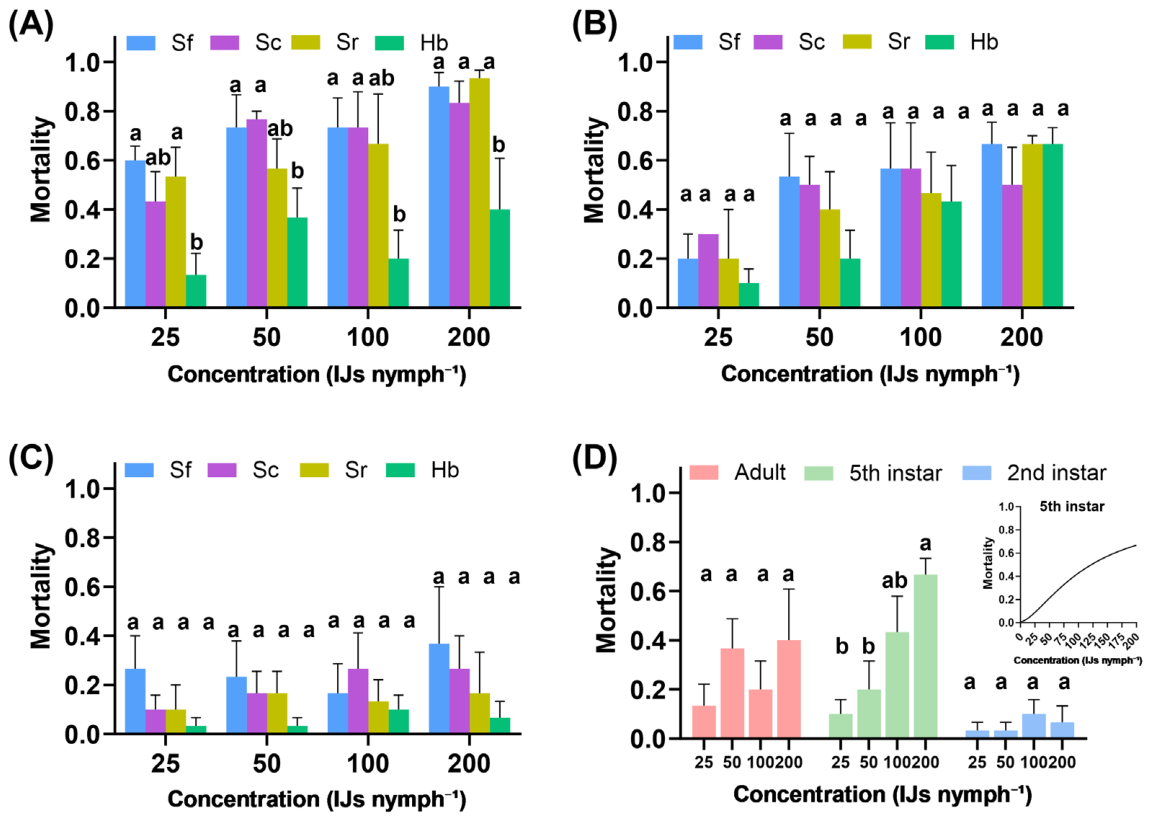
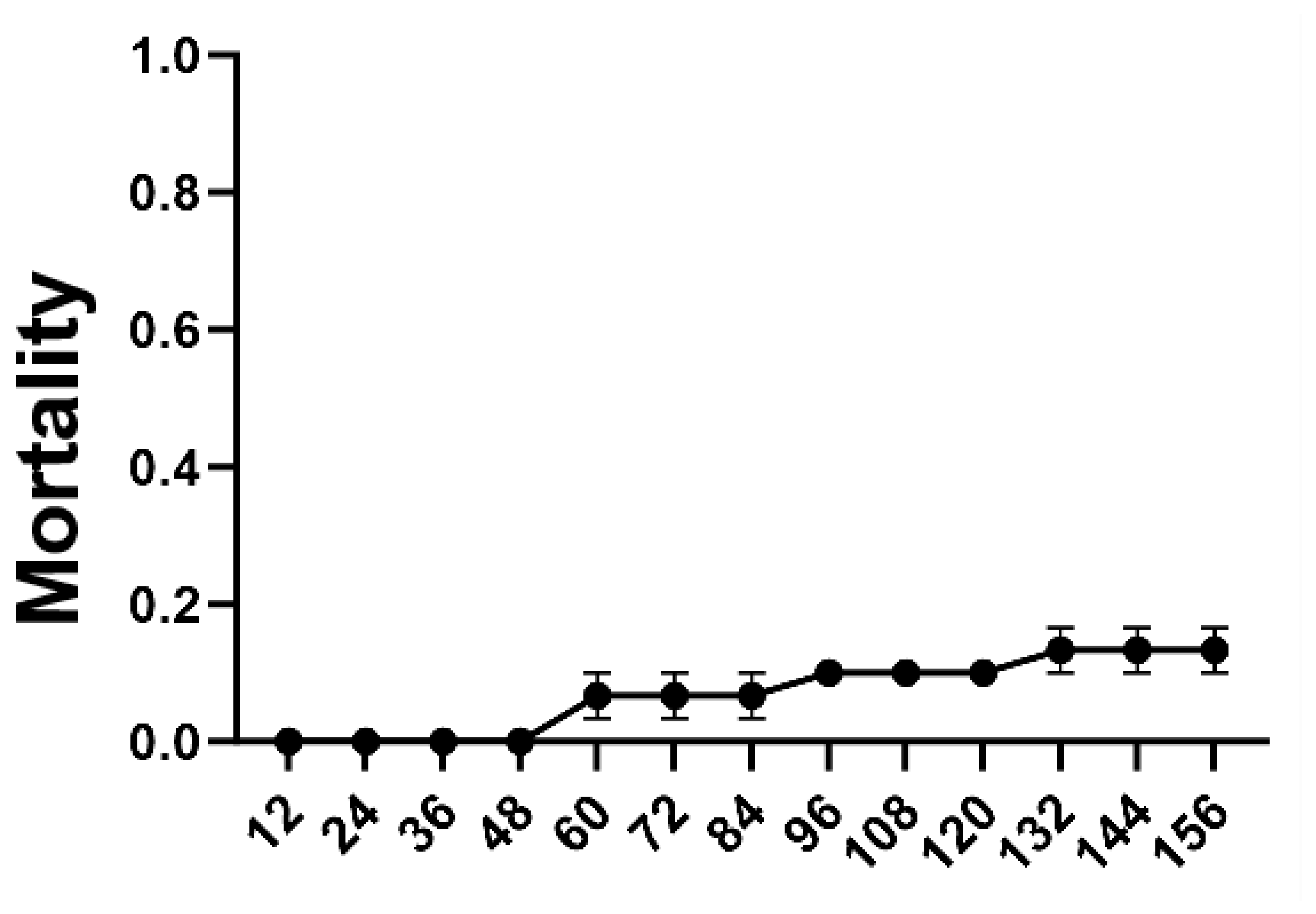
3.1. Virulence of EPNs Against A. chinensis
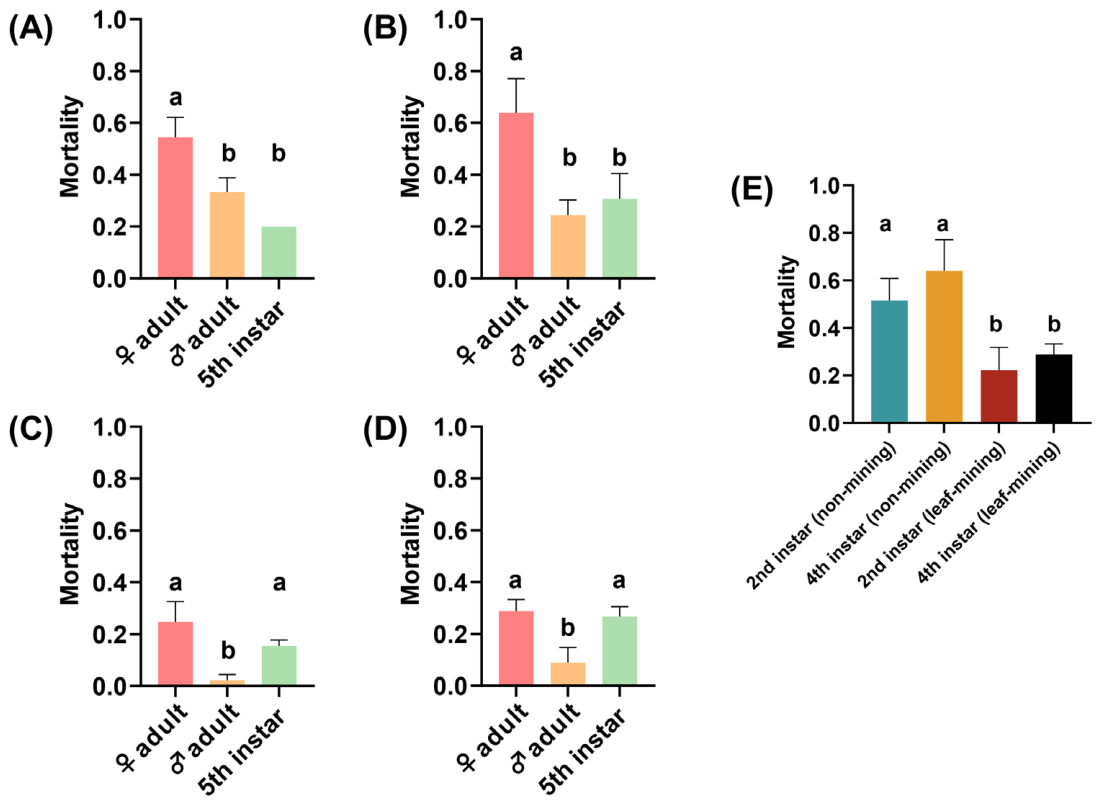
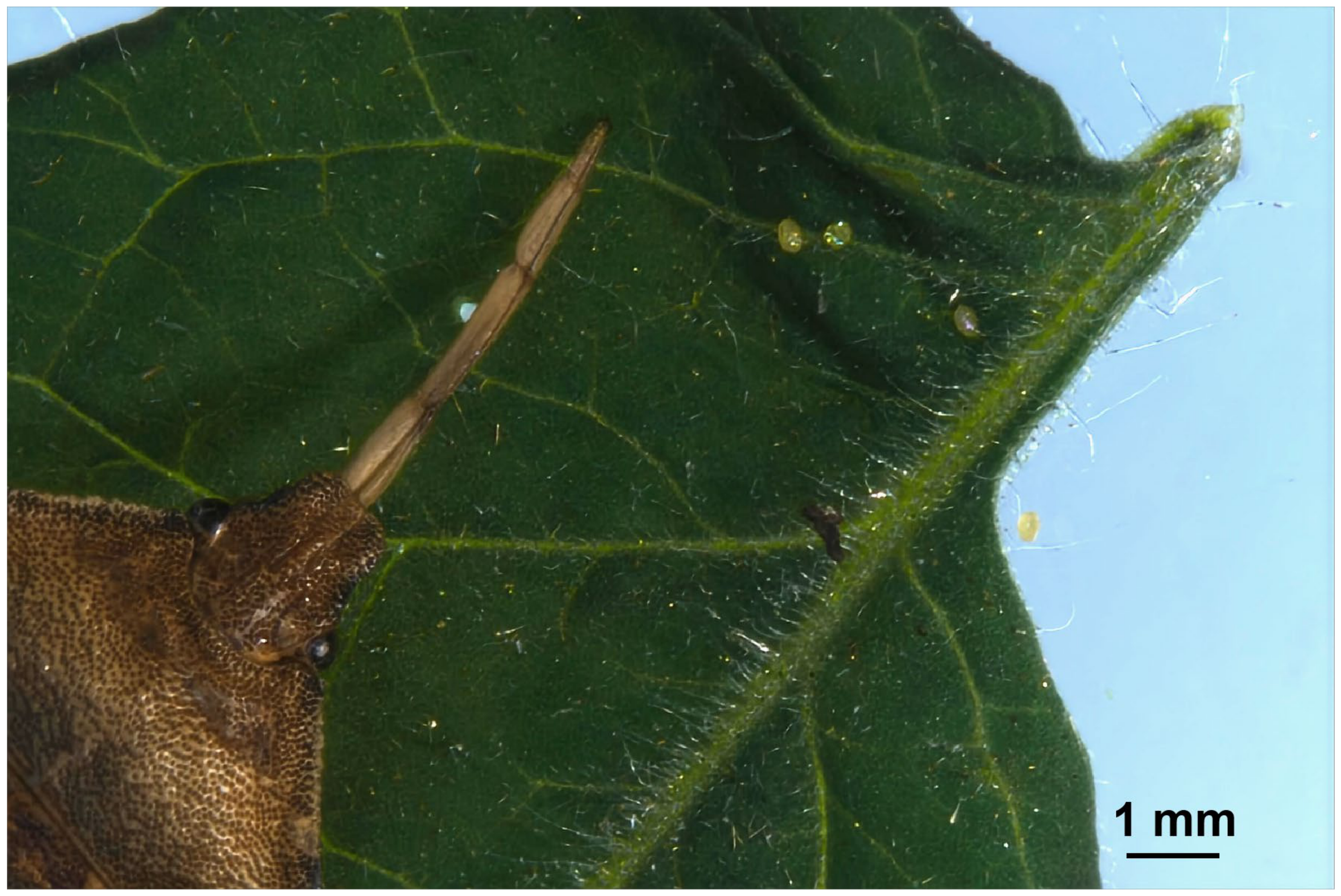
3.2. Stage-Specific Predation of A. chinensis on T. absoluta
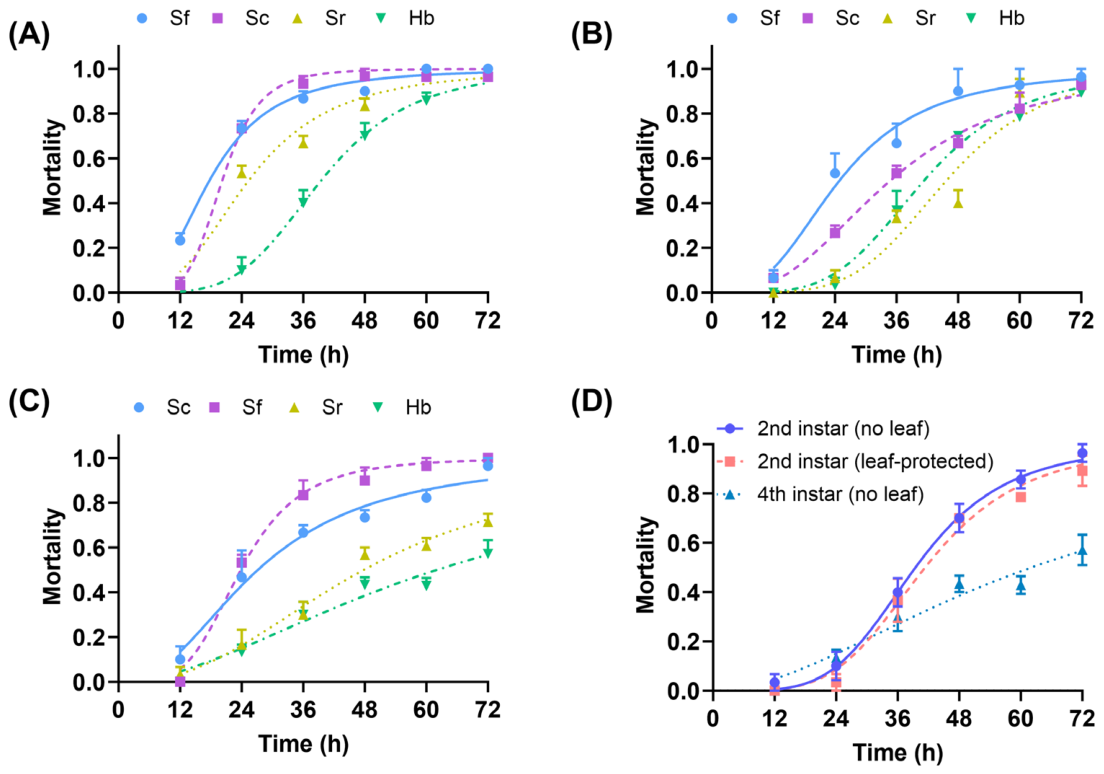
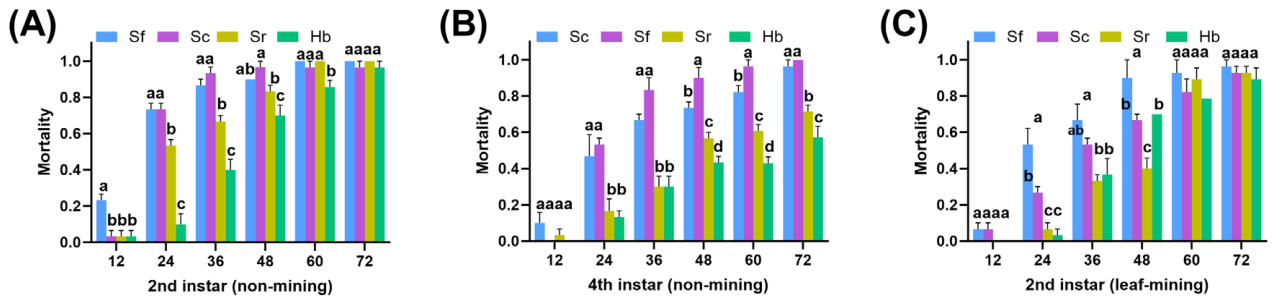
3.3. Insecticidal Efficacy of EPNs Against T. absoluta
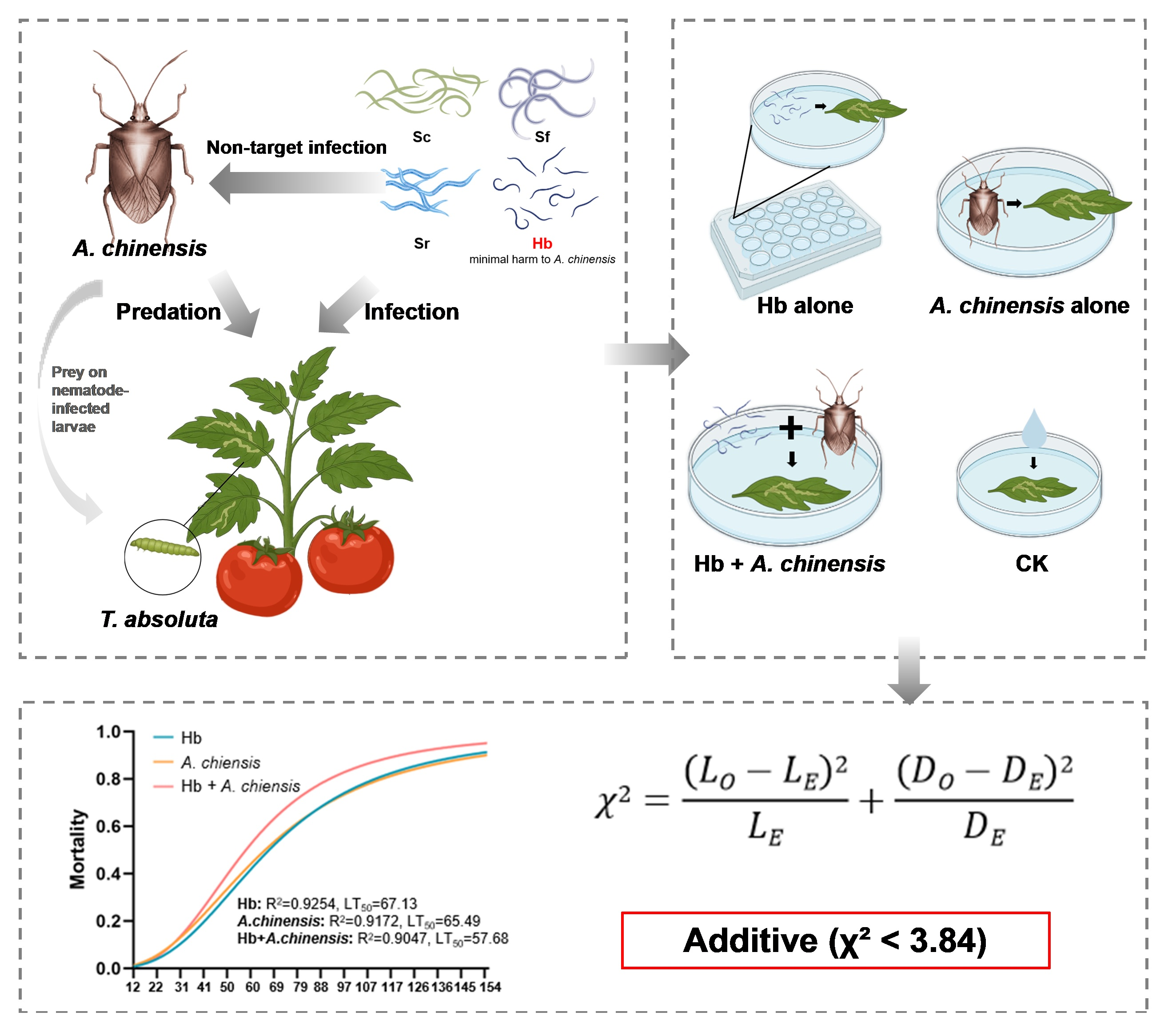
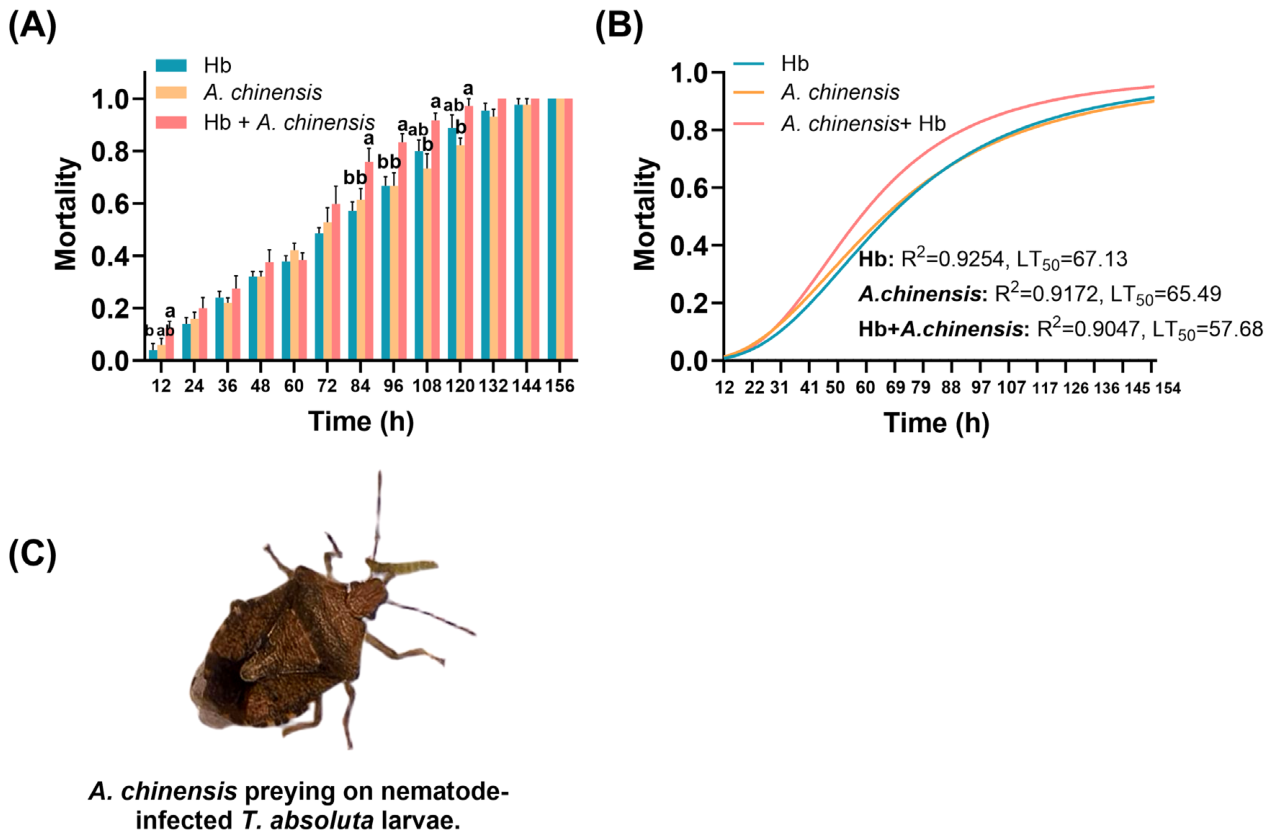
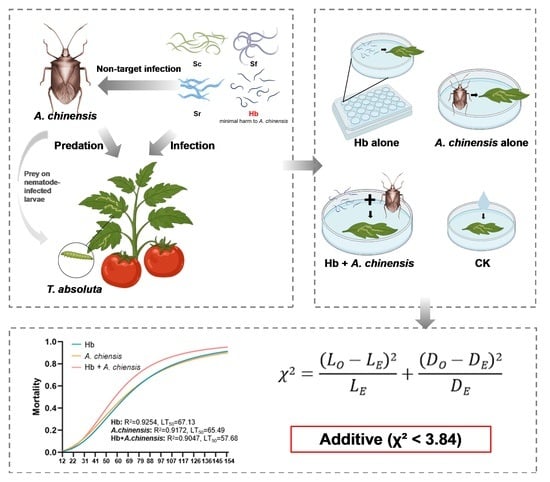
3.4. Additive Interaction Between A. chinensis and EPNs Against T. absoluta
4. Discussion
4.1. Developmental Stage and Leaf-Mining Behavior Mediate Biocontrol Efficacy
4.2. Biological Basis of Variation in Predator Performance
4.3. Additive Effects in Predator–EPN Biological Control Systems
4.4. Study Limitations and Management Implications
5. Conclusions
Author Contributions
Funding
Data Availability Statement
Acknowledgments
Conflicts of Interest
Abbreviations
| EPN | Entomopathogenic nematode |
| IPM | Integrated pest management |
| IJs | Infective juveniles |
| LT50 | Median lethal time |
| LC50 | Median lethal concentration |
| SE | Standard error |
| ANOVA | Analysis of variance |
| Sc | Steinernema carpocapsae |
| Sf | Steinernema feltiae |
| Sr | Steinernema riobrave |
| Hb | Heterorhabditis bacteriophora |
Appendix A

| Developmental Stage | Source of Variation | df | F | p-Value |
|---|---|---|---|---|
| Adult | Concentration | 11, 33 | 2.502 | 0.0206 |
| EPN species | 3, 33 | 14.94 | <0.0001 | |
| Second-instar nymph | Concentration | 11, 33 | 2.502 | 0.0206 |
| EPN species | 3, 33 | 3.606 | 0.0234 | |
| Fifth-instar nymph | Concentration | 11, 33 | 3.712 | 0.0017 |
| EPN species | 3, 33 | 1.079 | 0.3716 |
| Developmental Stage | Sc | Sf | Sr | Hb |
|---|---|---|---|---|
| Adult | 0.692 ± 0.079 a | 0.742 ± 0.079 a | 0.675 ± 0.079 a | 0.275 ± 0.079 b |
| Second-instar nymph | 0.200 ± 0.064 ab | 0.258 ± 0.064 a | 0.142 ± 0.064 ab | 0.058 ± 0.064 b |
| Fifth-instar nymph | 0.467 ± 0.084 | 0.492 ± 0.084 | 0.433 ± 0.084 | 0.350 ± 0.084 |
| Larval Type | EPN Species | LT50 (h) | 95% CI (h) | R2 | F (DFn, DFd) | p-Value |
|---|---|---|---|---|---|---|
| 2nd instar, non-mining | Sf | 17.7 | 16.6–18.9 | 0.974 | F6,64 = 60.46 | <0.0001 |
| Sc | 20.2 | 18.8–21.7 | 0.974 | |||
| Sr | 25.3 | 23.0–27.7 | 0.953 | |||
| Hb | 39.5 | 37.1–41.8 | 0.964 | |||
| 4th instar, non-mining | Sf | 23.9 | 22.1–25.6 | 0.965 | F6,64 = 56.00 | <0.0001 |
| Sc | 27.2 | 23.4–31.0 | 0.891 | |||
| Sr | 47.8 | 44.0–52.0 | 0.920 | |||
| Hb | 62.0 | 55.7–71.6 | 0.877 | |||
| 2nd instar, leaf-mining | Sf | 24.9 | 21.2–28.7 | 0.880 | F6,64 = 16.70 | <0.0001 |
| Sc | 34.8 | 32.1–37.5 | 0.954 | |||
| Sr | 41.4 | 38.8–43.9 | 0.957 | |||
| Hb | 45.7 | 41.7–49.6 | 0.917 | |||
| Hb only | 2nd instar, non-mining | 39.5 | 37.1–41.8 | 0.964 | F4,48 = 32.20 | <0.0001 |
| 2nd instar, leaf-mining | 41.4 | 38.8–43.9 | 0.957 | |||
| 4th instar, non-mining | 62.0 | 55.7–71.6 | 0.877 |
Appendix B


References
- Biondi, A.; Guedes, R.N.C.; Wan, F.H.; Desneux, N. Ecology, worldwide spread, and management of the invasive South American tomato pinworm, Tuta absoluta: Past, present, and future. Annu. Rev. Entomol. 2018, 63, 239–258. [Google Scholar] [CrossRef]
- Han, P.; Bayram, Y.; Shaltiel-Harpaz, L.; Sohrabi, F.; Saji, A.; Esenali, U.T.; Jalilov, A.; Ali, A.; Shashank, P.R.; Wang, S.; et al. Tuta absoluta continues to disperse in Asia: Damage, ongoing management and future challenges. J. Pest Sci. 2019, 92, 1317–1327. [Google Scholar] [CrossRef]
- Guedes, R.N.C.; Berenbaum, M.R.; Biondi, A.; Desneux, N. The side effects of pesticides on nontarget arthropods. Annu. Rev. Entomol. 2026, 71, 381–403. [Google Scholar] [CrossRef] [PubMed]
- Guedes, R.N.C.; Roditakis, E.; Campos, M.R.; Haddi, K.; Bielza, P.; Siqueira, H.A.A.; Tsagkarakou, A.; Vontas, J.; Nauen, R. Insecticide resistance in the tomato pinworm Tuta absoluta: Patterns, spread, mechanisms, management and outlook. J. Pest Sci. 2019, 92, 1329–1342. [Google Scholar] [CrossRef]
- Van Lenteren, J.C.; Bolckmans, K.; Köhl, J.; Ravensberg, W.J.; Urbaneja, A. Biological control using invertebrates and microorganisms: Plenty of new opportunities. BioControl 2018, 63, 39–59. [Google Scholar] [CrossRef]
- Cabello, T.; Gallego, J.R.; Fernandez, F.J.; Gamez, M.; Vila, E.; Del Pino, M.; Hernandez-Suarez, E. Biological control strategies for the South American tomato moth (Lepidoptera: Gelechiidae) in greenhouse tomatoes. J. Econ. Entomol. 2012, 105, 2085–2096. [Google Scholar] [CrossRef]
- Zang, L.S.; Wang, S.; Zhang, F.; Desneux, N. Biological control with Trichogramma in China: History, present status, and perspectives. Annu. Rev. Entomol. 2021, 66, 463–484. [Google Scholar] [CrossRef]
- Zappala, L.; Biondi, A.; Alma, A.; Al-Jboory, I.J.; Arno, J.; Bayram, A.; Chailleux, A.; El-Arnaouty, A.; Gerling, D.; Guenaoui, Y.; et al. Natural enemies of the South American moth, Tuta absoluta, in Europe, North Africa and Middle East, and their potential use in pest control strategies. J. Pest Sci. 2013, 86, 635–647. [Google Scholar] [CrossRef]
- Dhanapal, R.; Singh, R.N.; Raghuraman, M.; Mohan, M.; Subaharan, K.; Hemavathi, M. Evaluation of predatory potential and prey stage preference of mirid bug, Nesidiocoris tenuis on tomato pinworm, Tuta absoluta. Biologia 2021, 76, 2965–2971. [Google Scholar] [CrossRef]
- Michaelides, G.; Sfenthourakis, S.; Pitsillou, M.; Seraphides, N. Functional response and multiple predator effects of two generalist predators preying on Tuta absoluta eggs. Pest Manag. Sci. 2018, 74, 332–339. [Google Scholar] [CrossRef] [PubMed]
- Yiacoumi, E.; Kouloussis, N.A.; Koveos, D.S. Effect of sex, age and temperature on the functional response of Macrolophus pygmaeus Ramber and Nesidiocoris tenuis Reuter (Heteroptera: Miridae) on eggs of Tuta absoluta. Insects 2024, 15, 485. [Google Scholar] [CrossRef]
- Mollá, O.; Biondi, A.; Alonso-Valiente, M.; Urbaneja, A. A comparative life history study of two mirid bugs preying on Tuta absoluta and Ephestia kuehniella eggs on tomato crops: Implications for biological control. BioControl 2014, 59, 175–183. [Google Scholar] [CrossRef]
- Perdikis, D.; Kapaxidi, E.; Papadoulis, G. Biological control of insect and mite pests in greenhouse solanaceous crops. Eur. J. Plant Sci. Biotechnol. 2008, 2, 125–144. [Google Scholar]
- Brugnera, R.; Grazia, J. Predatory Stink Bugs of Economic Importance as Biological Control Agents. In Stink Bugs (Hemiptera: Pentatomidae) Research and Management: Recent Advances and Case Studies; Springer: Cham, Switzerland, 2024; pp. 29–40. [Google Scholar] [CrossRef]
- Zheng, H.; Cai, H.; Mo, Y.; Guo, X.; Wang, W.; Yang, Z. Effects of feeding on insect larvae treated with pesticide on the biological and biochemical characteristics of Arma chinensis. Arch. Insect Biochem. Physiol. 2025, 118, e70042. [Google Scholar] [CrossRef]
- Liu, G.; Jiang, T.; Wu, R.; Wu, S.-Y. An integrated above–belowground biological control strategy against Phyllotreta striolata using entomopathogenic nematodes and fungi. Pest Manag. Sci. 2026. [Google Scholar] [CrossRef] [PubMed]
- Shapiro-Ilan, D.I.; Lewis, E.E. Formulation and application technology for entomopathogenic nematodes. In Entomopathogenic Nematodes as Biological Control Agents; CABI: Wallingford, UK, 2024; pp. 201–218. [Google Scholar] [CrossRef]
- Ciche, T.A. The biology and genome of Heterorhabditis bacteriophora. In WormBook; The C. elegans Research Community, Ed.; WormBook: Online, 2007. [Google Scholar] [CrossRef]
- Kaya, H.K.; Gaugler, R. Entomopathogenic nematodes. Annu. Rev. Entomol. 1993, 38, 181–206. [Google Scholar] [CrossRef]
- Campos-Herrera, R.; Vicente-Díez, I.; Galeano, M.; Chelkha, M.; Gonzalez-Trujillo, M.D.M.; Puelles, M.; Labarga, D.; Pou, A. Intraspecific virulence of entomopathogenic nematodes against the pests Frankliniella occidentalis (Thysanoptera: Thripidae) and Tuta absoluta (Lepidoptera: Gelechiidae). J. Nematol. 2021, 53, 1–4. [Google Scholar] [CrossRef]
- Husin, T.O.B.; Port, G.R. Efficacy of entomopathogenic nematodes against Tuta absoluta. Biol. Control 2021, 160, 104699. [Google Scholar] [CrossRef]
- Moisan, K.; Kostenko, O.; Galeano, M.; Soler, R.; van der Ent, S.; Hiltpold, I. The sky is not the limit: Successful foliar application of Steinernema spp. entomopathogenic nematodes to control Lepidopteran caterpillars. J. Invertebr. Pathol. 2024, 206, 108163. [Google Scholar] [CrossRef]
- Waweru, B.W.; Kajuga, J.N.; Hategekimana, A.; Ndereyimana, A.; Kankundiye, L.; Umulisa, C.; Nyombayire, A.; Mutumwinka, M.; Ishimwe, P.M.; Bazagwira, D.; et al. Formulation of entomopathogenic nematodes for above-ground use against tomato leaf Miner, Phthorimaea absoluta. Insects 2025, 16, 189. [Google Scholar] [CrossRef]
- Askary, T.H.; Abd-Elgawad, M.M. Opportunities and challenges of entomopathogenic nematodes as biocontrol agents in their tripartite interactions. Egypt. J. Biol. Pest Control 2021, 31, 42. [Google Scholar] [CrossRef]
- Hazir, S.; Touray, M.; Cimen, H.; Ulug, D.; Hazir, C.; Gulsen, S.H. Natural enemies and antagonists of entomopathogenic nematodes. In Entomopathogenic Nematodes as Biological Control Agents; CABI: Wallingford, UK, 2024; pp. 149–163. [Google Scholar] [CrossRef]
- Ha, B.; Wei, X.; Lu, P.; Qing, H.; Guo, J.; Zhang, R.; Chen, L.; Li, X.; Hu, B.; Wang, S.; et al. Natural UV protectants and humectants to improve the efficiency of Steinernema carpocapsae in controlling foliar pests. Pest Manag. Sci. 2025, 81, 1422–1431. [Google Scholar] [CrossRef] [PubMed]
- Mohammadi, D.; Allahverdizadeh, N.M.; Valizadeh, H.; Kary, N.E. Synergistic biocontrol of Phthorimaea operculella: Solvent-dependent interactions between entomopathogenic nematodes and Achillea millefolium extracts. Biol. Control 2025, 208, 105836. [Google Scholar] [CrossRef]
- Ulug, D.; Hazir, S.; Kaya, H.K.; Lewis, E. Natural enemies of natural enemies: The potential top-down impact of predators on entomopathogenic nematode populations. Ecol. Entomol. 2014, 39, 462–469. [Google Scholar] [CrossRef]
- Wu, S.-Y.; El-Borai, F.E.; Graham, J.H.; Duncan, L.W. The saprophytic fungus Fusarium solani increases the insecticidal efficacy of the entomopathogenic nematode Steinernema diaprepesi. J. Invertebr. Pathol. 2018, 159, 87–94. [Google Scholar] [CrossRef]
- Wu, S.-Y.; Duncan, L.W. Recruitment of an insect and its nematode natural enemy by olfactory cues from a saprophytic fungus. Soil. Biol. Biochem. 2020, 144, 107781. [Google Scholar] [CrossRef]
- Borges, I.; Oliveira, L.; Durão, A.; Arruda, P.; Soares, A.O. Feeding preference and intraguild interactions between the parasitoid Trichogramma achaeae and the predator Macrolophus pygmaeus, two biological agents of Tuta absoluta. Pest Manag. Sci. 2023, 79, 4376–4382. [Google Scholar] [CrossRef]
- Chailleux, A.; Bearez, P.; Pizzol, J.; Amiens-Desneux, E.; Ramirez-Romero, R.; Desneux, N. Potential for combined use of parasitoids and generalist predators for biological control of the key invasive tomato pest Tuta absoluta. J. Pest Sci. 2013, 86, 533–541. [Google Scholar] [CrossRef]
- Kamou, N.; Papafoti, A.; Chatzaki, V.; Kapranas, A. Exploring the effects of entomopathogenic nematode symbiotic bacteria and their cell free filtrates on the tomato leafminer Tuta absoluta and its predator Nesidiocoris tenuis. J. Invertebr. Pathol. 2024, 206, 108181. [Google Scholar] [CrossRef]
- Garriga, A.; Morton, A.; Garcia-Lopez, D.; Garcia-del-Pino, F. Compatibility of entomopathogenic nematodes with natural enemies for horticultural pest control. Biol. Control 2019, 138, 104050. [Google Scholar] [CrossRef]
- Pratissoli, D.; Fernandes, O.A.; Zanuncio, J.C.; Pastori, P.L. Fertility life table of Trichogramma pretiosum and Trichogramma acacioi (Hymenoptera: Trichogrammatidae) on Sitotroga cerealella (Lepidoptera: Gelechiidae) eggs at different constant temperatures. Ann. Entomol. Soc. Am. 2004, 97, 729–731. [Google Scholar] [CrossRef]
- Woodring, J.; Kaya, H. Steinernematid and Heterorhabditid nematodes: A Handbook of Biology and Techniques; Southern Cooperative Series Bulletin 331; Arkansas Agricultural Experiment Station: Fayetteville, AR, USA, 1988. [Google Scholar]
- White, G.F. A method for obtaining infective nematode larvae from cultures. Science 1927, 66, 302–303. [Google Scholar] [CrossRef]
- Yang, Y.; Sun, G.L.; Wang, W.Q.; Chang, L.S.; Xia, Z.Y.; Chen, B. Behavior and predation of Picromerus lewisi to Tuta absoluta. J. Environ. Entomol. 2023, 45, 179–188. [Google Scholar] [CrossRef]
- Abbott, W.S. A method of computing the effectiveness of an insecticide. J. Econ. Entomol. 1925, 18, 265–267. [Google Scholar] [CrossRef]
- Wu, S.-Y.; Duncan, L.W. Entomopathogenic nematode species combinations alter rates of dispersal, host encounter and insecticidal efficiency. J. Pest Sci. 2022, 95, 1111–1119. [Google Scholar] [CrossRef]
- Labaude, S.; Griffin, C.T. Transmission success of entomopathogenic nematodes used in pest control. Insects 2018, 9, 72. [Google Scholar] [CrossRef]
- Acharya, R.; Yu, Y.S.; Shim, J.K.; Lee, K.Y. Virulence of four entomopathogenic nematodes against the tobacco cutworm Spodoptera litura Fabricius. Biol. Control 2020, 150, 104348. [Google Scholar] [CrossRef]
- Yan, X.; Shahid Arain, M.; Lin, Y.; Gu, X.; Zhang, L.; Li, J.; Han, R. Efficacy of entomopathogenic nematodes against the tobacco cutworm, Spodoptera litura (Lepidoptera: Noctuidae). J. Econ. Entomol. 2020, 113, 64–72. [Google Scholar] [CrossRef]
- Hübner, A.; Englert, C.; Herz, A. Effect of entomopathogenic nematodes on different developmental stages of Drosophila suzukii in and outside fruits. BioControl 2017, 62, 669–680. [Google Scholar] [CrossRef]
- Batalla-Carrera, L.; Morton, A.; García-del-Pino, F. Efficacy of entomopathogenic nematodes against the tomato leafminer Tuta absoluta in laboratory and greenhouse conditions. BioControl 2010, 55, 523–530. [Google Scholar] [CrossRef]
- Guo, W.; Wang, X.; Li, L.; Lv, S.; Cui, H.; Song, Y.; Tan, J.; Zhang, H.; Wang, R.; Cheng, H. Pathogenicity of five entomopathogenic nematodes to Tuta absoluta. Chin. J. Appl. Entomol. 2024, 61, 741–748. [Google Scholar]
- Van Damme, V.M.; Beck, B.K.; Berckmoes, E.; Moerkens, R.; Wittemans, L.; De Vis, R.; Nuyttens, D. Efficacy of entomopathogenic nematodes against larvae of Tuta absoluta in the laboratory. Pest Manag. Sci. 2016, 72, 1702–1709. [Google Scholar] [CrossRef] [PubMed]
- Ingegno, B.L.; Ferracini, C.; Gallinotti, D.; Alma, A.; Tavella, L. Evaluation of the effectiveness of Dicyphus errans (Wolff) as predator of Tuta absoluta (Meyrick). Biol. Control 2013, 67, 246–252. [Google Scholar] [CrossRef]
- Mahdavi, T.S.; Madadi, H.; Biondi, A. Predation and reproduction of the generalist predator Nabis pseudoferus preying on Tuta absoluta. Entomol. Exp. Appl. 2020, 168, 732–741. [Google Scholar] [CrossRef]
- Van Lenteren, J.C.; Bueno, V.H.; Smit, J.; Soares, M.A.; Calixto, A.M.; Montes, F.C.; Carvalho, L.M. Predation of Tuta absoluta eggs during the nymphal stages of three Neotropical mirid predators on tomato. Bull. Insectol. 2017, 70, 69–74. [Google Scholar]
- Arnó, J.; Alonso, E.; Gabarra, R. Role of the parasitoid Diglyphus isaea (Walker) and the predator Macrolophus caliginosus Wagner in the control of leafminers. IOBC/WPRS Bull. 2003, 26, 79–84. [Google Scholar]
- Ding, H.Y.; Lin, Y.Y.; Tuan, S.J.; Tang, L.C.; Chi, H. Integrating demography, predation rate, and computer simulation for evaluation of Orius strigicollis as biological control agent against Frankliniella intonsa. Entomol. Gen. 2021, 41, 179–196. [Google Scholar] [CrossRef]
- Urbaneja, A.; Montón, H.; Mollá, O. Suitability of the tomato borer Tuta absoluta as prey for Macrolophus pygmaeus and Nesidiocoris tenuis. J. Appl. Entomol. 2009, 133, 292–296. [Google Scholar] [CrossRef]
- Flick, A.J.; Acevedo, M.A.; Elderd, B.D. The negative effects of pathogen-infected prey on predators: A meta-analysis. Oikos 2016, 125, 1554–1560. [Google Scholar] [CrossRef]
- Postali Parra, J.R.; Coelho, A. Applied biological control in Brazil: From laboratory assays to field application. J. Insect Sci. 2019, 19, 5. [Google Scholar] [CrossRef]
- Desneux, N.; Wajnberg, E.; Wyckhuys, K.A.G.; Burgio, G.; Arpaia, S.; Narváez-Vasquez, C.A.; González-Cabrera, J.; Ruescas, D.C.; Tabone, E.; Frandon, J.; et al. Biological invasion of European tomato crops by Tuta absoluta: Ecology, geographic expansion and prospects for biological control. J. Pest Sci. 2010, 83, 197–215. [Google Scholar] [CrossRef]


| Time (h) | Mortality | Interaction Analysis | ||||
|---|---|---|---|---|---|---|
| Hb Alone | A. chinensis Alone | Hb + A. chinensis (PC) | Hb + A. chinensis (PE) | Effect Type | χ2 | |
| 12 | 0.06 | 0.04 | 0.13 | 0.10 | Additive effect | 0.09 |
| 24 | 0.16 | 0.14 | 0.20 | 0.28 | Additive effect | 0.30 |
| 36 | 0.22 | 0.24 | 0.28 | 0.41 | Additive effect | 0.72 |
| 48 | 0.32 | 0.32 | 0.38 | 0.54 | Additive effect | 1.06 |
| 60 | 0.42 | 0.38 | 0.38 | 0.66 | Additive effect | 3.52 |
| 72 | 0.53 | 0.49 | 0.60 | 0.77 | Additive effect | 1.76 |
| 84 | 0.61 | 0.57 | 0.76 | 0.85 | Additive effect | 0.58 |
| 96 | 0.67 | 0.67 | 0.83 | 0.90 | Additive effect | 0.49 |
| 108 | 0.73 | 0.80 | 0.92 | 0.95 | Additive effect | 0.27 |
| 120 | 0.82 | 0.89 | 0.97 | 0.98 | Additive effect | 0.06 |
| 132 | 0.93 | 0.95 | 0.97 | 1.00 | Additive effect | 0.03 |
| 144 | 0.98 | 0.98 | 1.00 | 1.00 | Additive effect | 0.00 |
| 156 | 1.00 | 1.00 | 1.00 | 1.00 | Additive effect | / |
Disclaimer/Publisher’s Note: The statements, opinions and data contained in all publications are solely those of the individual author(s) and contributor(s) and not of MDPI and/or the editor(s). MDPI and/or the editor(s) disclaim responsibility for any injury to people or property resulting from any ideas, methods, instructions or products referred to in the content. |
© 2026 by the authors. Licensee MDPI, Basel, Switzerland. This article is an open access article distributed under the terms and conditions of the Creative Commons Attribution (CC BY) license.
Share and Cite
Zhao, Y.; Shi, M.; Jiang, Y.; Chen, Q.; Li, R.; Meng, W.; Hou, Y.; Wu, S.-Y. Interactions Between Arma chinensis and Entomopathogenic Nematodes for Biological Control of Tuta absoluta. Insects 2026, 17, 627. https://doi.org/10.3390/insects17060627
Zhao Y, Shi M, Jiang Y, Chen Q, Li R, Meng W, Hou Y, Wu S-Y. Interactions Between Arma chinensis and Entomopathogenic Nematodes for Biological Control of Tuta absoluta. Insects. 2026; 17(6):627. https://doi.org/10.3390/insects17060627
Chicago/Turabian StyleZhao, Yan, Maiqi Shi, Yuyang Jiang, Qian Chen, Ruize Li, Wen Meng, Youming Hou, and Sheng-Yen Wu. 2026. "Interactions Between Arma chinensis and Entomopathogenic Nematodes for Biological Control of Tuta absoluta" Insects 17, no. 6: 627. https://doi.org/10.3390/insects17060627
APA StyleZhao, Y., Shi, M., Jiang, Y., Chen, Q., Li, R., Meng, W., Hou, Y., & Wu, S.-Y. (2026). Interactions Between Arma chinensis and Entomopathogenic Nematodes for Biological Control of Tuta absoluta. Insects, 17(6), 627. https://doi.org/10.3390/insects17060627