1. Introduction
Sea buckthorn (
Hippophae rhamnoides L.), a deciduous shrub or small tree belonging to the genus
Hippophae within the family Elaeagnaceae, is widely distributed across Eurasia [
1,
2]. China possesses the largest sea buckthorn forest area in the world, totaling approximately 2.26 million hectares and accounting for 88% of the global sea buckthorn forest area [
3,
4]. Xinjiang represents a key distribution region for sea buckthorn resources in China, with Altay Prefecture accounting for the largest cultivation area. Large-scale sea buckthorn plantations have been established in Qinghe County, Burqin County, and Habahe County, among other localities.
The sea buckthorn fruit fly (
Rhagoletis batava obscuriosa) belongs to the genus
Rhagoletis (Diptera: Tephritidae). It is host-specific, feeding exclusively on sea buckthorn fruits. Adult females oviposit beneath the fruit epidermis; upon hatching, the larvae bore into the pulp and feed internally. Infested fruits subsequently shrivel and desiccate, often leaving only the dried peel, thereby severely impairing fruit quality and marketability [
5]. This pest is primarily distributed across northern European countries, including Russia, Germany, and Belarus [
6,
7]. In China,
R. batava obscuriosa was first detected in Jianping County, Liaoning Province, in 1985, and has subsequently been reported in Shanxi, Shaanxi, Heilongjiang, Qinghai, and other provinces [
8]. The life history characteristics of the
R. batava obscuriosa present significant challenges for management. It is univoltine, completing one generation per year and overwintering primarily as pupae in the soil. The timing of adult emergence and the duration of the occurrence period vary slightly among geographic regions [
9,
10,
11,
12]. During outbreaks, fruit infestation rates often exceed 80% and may reach 100% under severe infestation conditions [
13].
Physical control refers to a technical approach that utilizes insect tropisms (e.g., color preference, chemical attraction) or artificially intervenes in their living environment to reduce pest population density. It is characterized by being environmentally friendly and residue-free, and constitutes an important component of integrated pest management (IPM) systems for tephritid fruit flies. Current physical control methods for tephritid fruit flies mainly include colored sticky traps, attractant application, fruit bagging, and soil turning to eliminate pupae [
14].
Regarding color-based trapping, exploiting the color preference behavior of fruit flies for monitoring and control has been widely applied. For instance, yellow sticky traps exhibit high capture efficacy against
Bactrocera dorsalis,
Carpomya vesuviana, and
R. batava obscuriosa. Regarding the application of attractants, research on
R. batava obscuriosa has demonstrated that combining a slow-release attractant with yellow sticky traps achieves greater trapping efficacy than using homemade traps [
15]. Studies on the European sea buckthorn fruit fly (
Rhagoletis batava) have confirmed that specialized yellow sticky traps increase trap catches by 30~50% compared to standard yellow sticky traps, and a synergistic trapping technique integrating colored sticky cards with attractants has been proposed [
16].
However, existing physical control techniques still face challenges in practical application, including limited trapping and killing efficacy and susceptibility to meteorological disturbances. Therefore, exploring novel physical barrier technologies based on ground mulching is of considerable significance for addressing the shortcomings of current methods in pest management.
In recent years, severe outbreaks of
R. batava obscuriosa have occurred in Xinjiang. Since 2014, this pest has infested large areas of the Altay Prefecture, and its presence has been successively detected in Urumqi County, Akqi County, and Qinghe County, causing substantial economic losses to the local sea buckthorn industry and severely constraining its development [
17]. Current control measures for
R. batava obscuriosa primarily target the adult stage; however, the adult emergence period is protracted and asynchronous. Therefore, accurately elucidating adult occurrence dynamics is fundamental for identifying the critical control window and enhancing management efficiency.
To this end, a systematic monitoring program of adult occurrence dynamics of
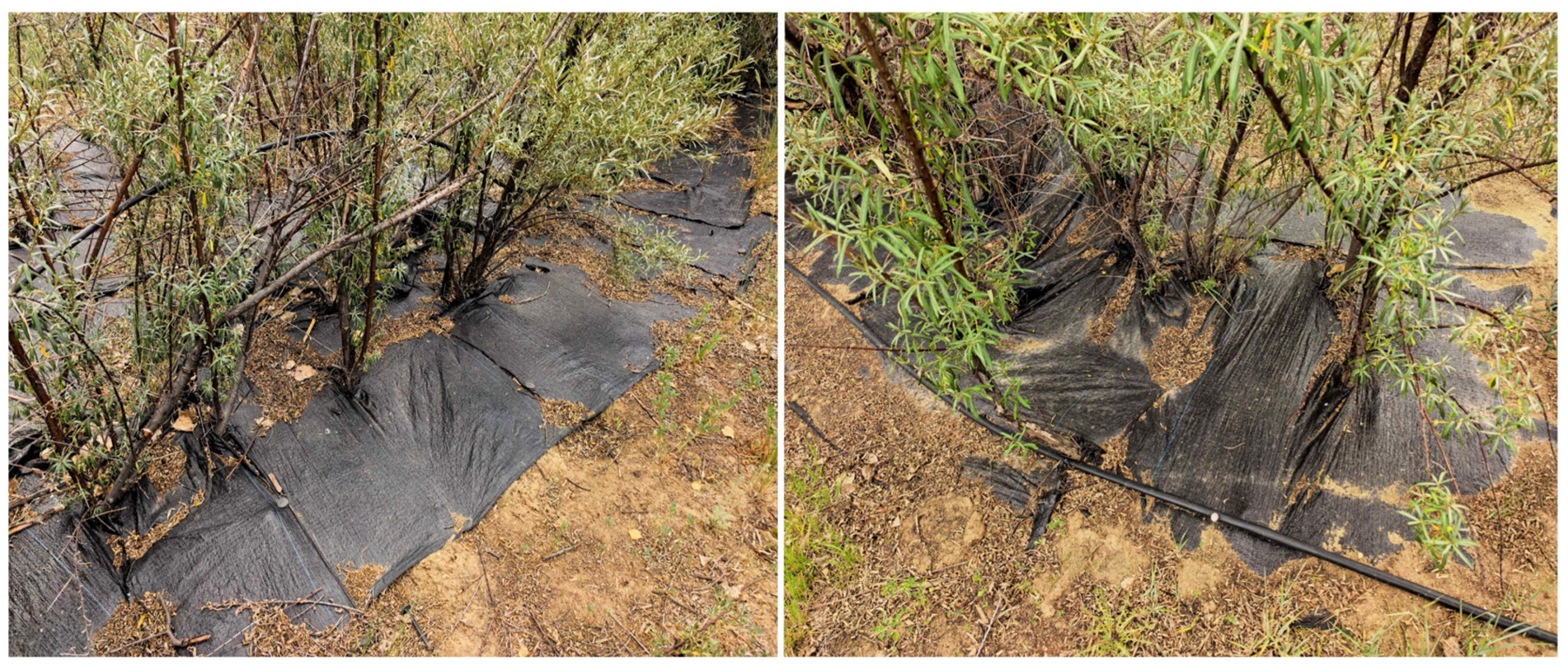
R. batava obscuriosa was conducted in Qinghe County in 2024. Adult population fluctuations were recorded, and occurrence dynamics curves were constructed to delineate the critical temporal window for control interventions. Based on the aforementioned biological characteristics—specifically, the behavior of mature larvae pupating in the soil primarily within a 60 cm radius of the sea buckthorn trunk base [
17]—this study deployed black PE ground cover on the ground surrounding the trunks to establish a physical barrier. This study systematically evaluated the field control efficacy of black PE ground cover against
R. batava obscuriosa by comparing adult abundance and fruit infestation rates between treatment and control plots over two consecutive years. We analyzed its potential role in disrupting the life cycle of
R. batava obscuriosa by potentially interfering with adult emergence and larval pupation, explored the advantages and limitations of this technology, and preliminarily assessed its practical application prospects in sea buckthorn orchards. This study aims to provide a scientific basis for establishing green and sustainable integrated pest management strategies against
R. batava obscuriosa.
4. Discussion
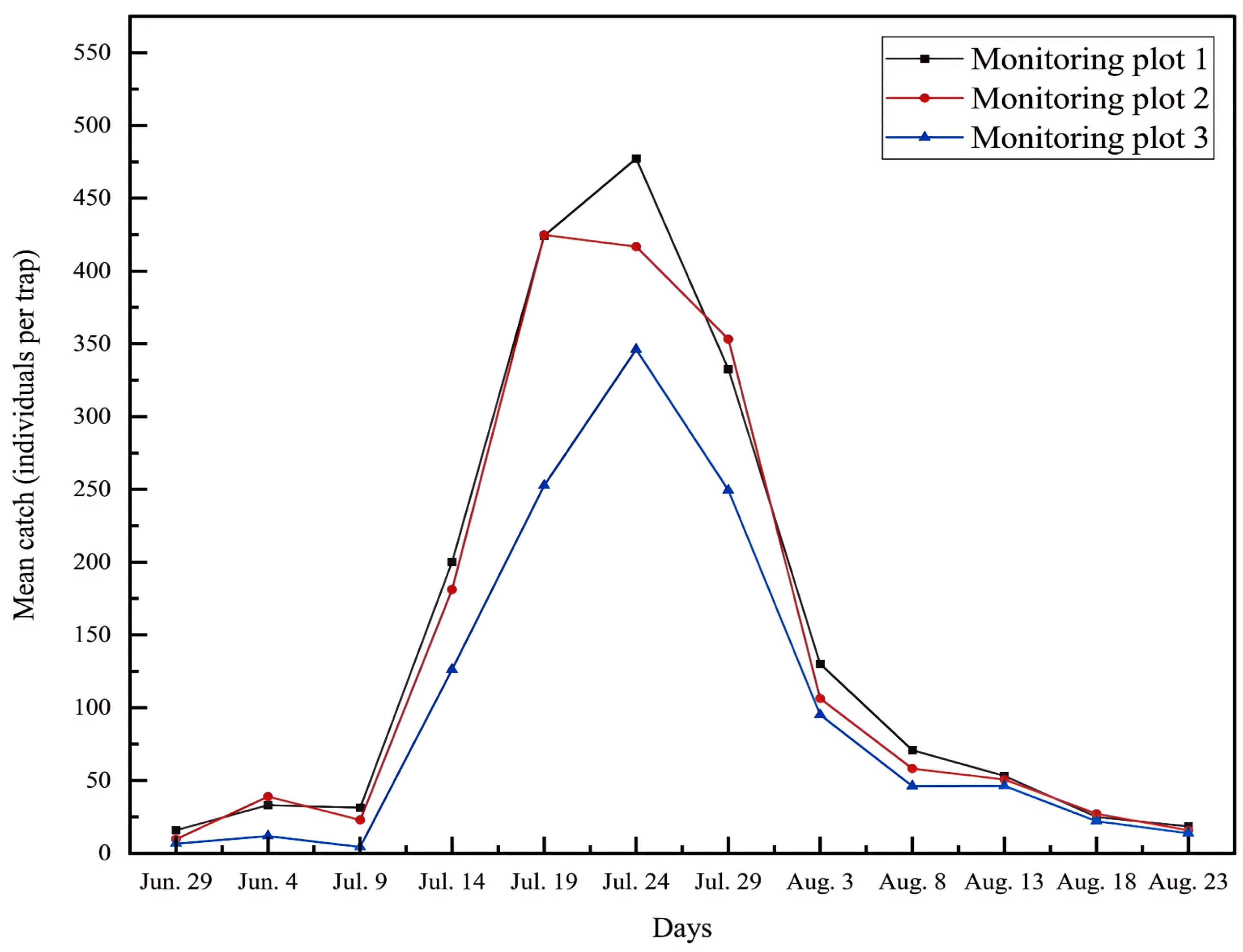
Systematic monitoring of pest population occurrence dynamics to elucidate their spatiotemporal patterns constitutes the foundation for determining critical control periods and formulating scientifically sound management strategies. In this study, yellow sticky trap monitoring was employed to delineate the adult population occurrence dynamics of
R. batava obscuriosa in Qinghe County, Altay Prefecture, Xinjiang. Consistent with previous reports on the biology of
R. batava obscuriosa [
17], this species is univoltine in the Altay region, overwintering as pupae in the soil, and adults emerge from mid-June to early August each year.
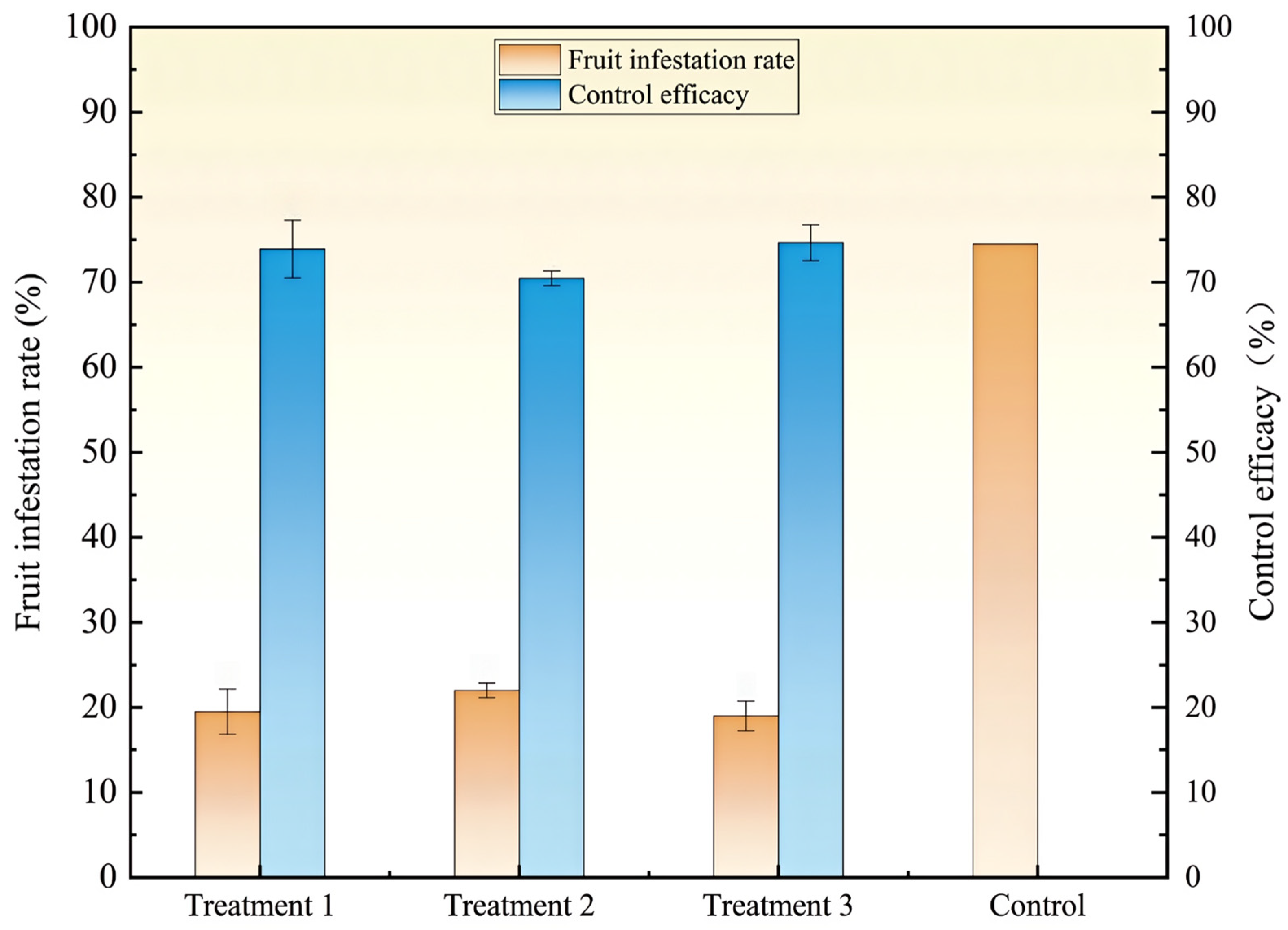
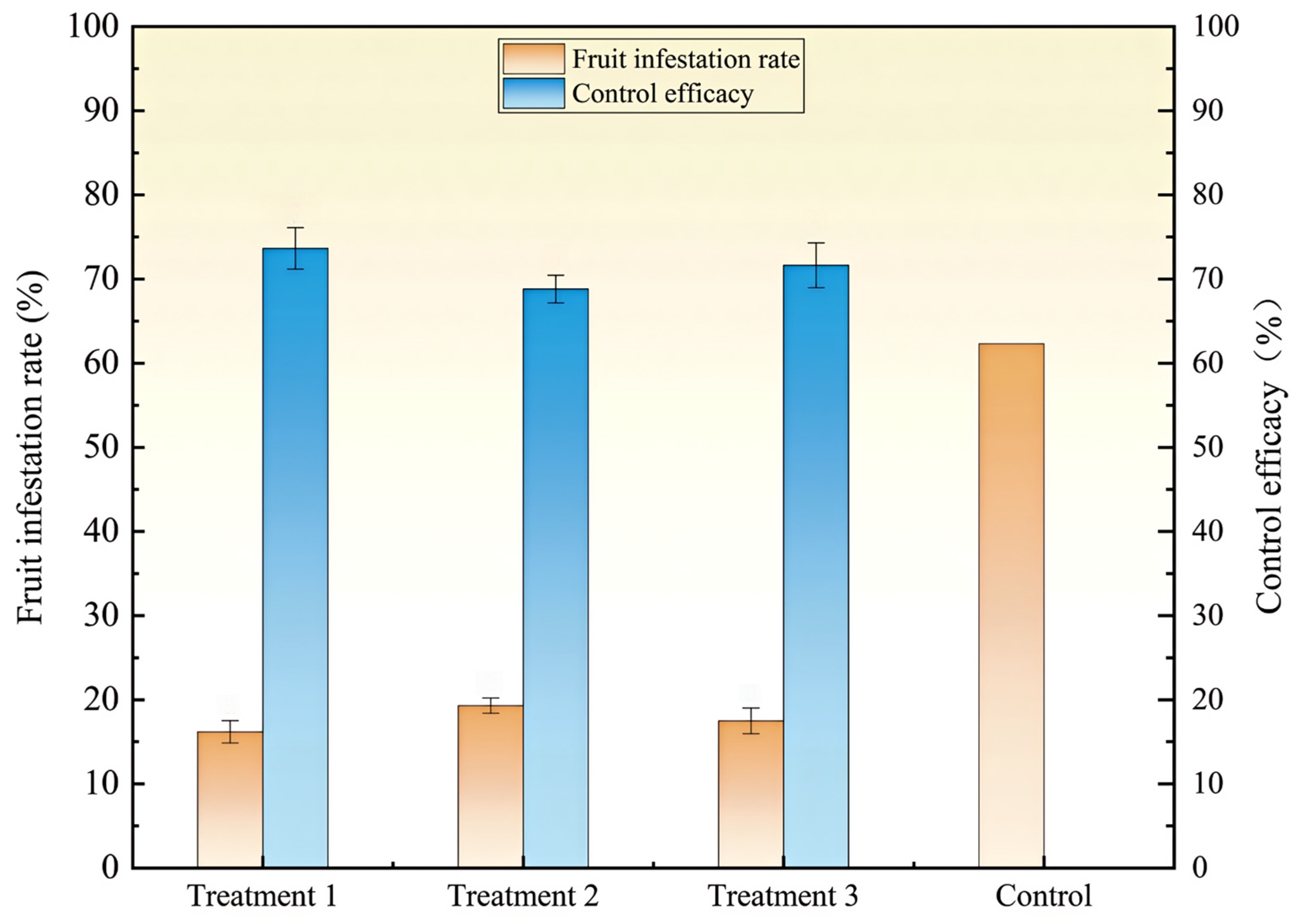
The results of this two-year field study demonstrate that black PE ground cover provides effective and sustained control of R. batava obscuriosa in sea buckthorn orchards. This soil-surface physical barrier targets the unique soil-pupating biology of R. batava obscuriosa, and may disrupt two critical stages of its life cycle by potentially reducing adult emergence from overwintering pupae and obstructing mature larvae from entering the soil to pupate. Notably, the total adult trap catch in the control plot was 4139 individuals in 2024, but only 878 individuals in 2025. This substantial interannual variation should be interpreted cautiously, as it is likely driven by a combination of natural and external factors rather than the experimental treatment alone. First, natural population variability and climatic conditions can strongly influence the population dynamics of this univoltine pest. Differences in winter soil temperatures, moisture, or extreme weather events between the two years may have significantly impacted the overwintering survival rates of pupae. Second, external area-wide pest control activities acted as a major confounding factor; during the occurrence period, the local government organized drone aerial spraying in the areas surrounding the experimental orchard, which likely contributed to the overall population decline in 2025. Finally, while the black PE ground cover deployed in 2024 locally blocked mature larvae from entering the soil, its suppressive effect was not directly tested at the whole-orchard scale and should not be overemphasized.
The lower adult abundance observed in 2025 should be interpreted cautiously because it may reflect both the possible suppressive effect of the black PE ground cover and external area-wide pest control activities, including government-organized drone spraying near the experimental orchard.
Importantly, this interannual variation does not compromise the validity of the within-year control efficacy estimates, as both the treatment and control plots were equally exposed to the same external conditions during each experimental year.
R. batava obscuriosa overwinters as pupae in the surface layer of the soil, and mature larvae exhibit the behavior of exiting the fruit and dropping to the ground to pupate. Female adults deposit their eggs beneath the epidermis of the fruit [
15]. Based on the well-documented soil-pupating biology of
R. batava obscuriosa and the reductions in adult trap catches and fruit infestation observed in treatment plots, two plausible physical mechanisms are proposed to explain the pest suppression effect. First, the black PE fabric deployed on the orchard floor may act as a physical barrier that reduces adult emergence from the soil into the canopy, thereby potentially inhibiting oviposition behavior. Second, the ground cover may simultaneously obstruct the pathway for mature larvae to enter the soil for pupation, which could effectively reduce the overwintering population base in subsequent generations. This physical exclusion mechanism has been systematically validated in the management of various tephritid and drosophilid fruit fly pests. For drosophilid pests, existing research has primarily focused on the spotted-wing drosophila (
Drosophila suzukii), a major pest of berry crops. Pioneering work in raspberry orchards employed a combined strategy of high-tunnel insect-proof netting and ground-level plastic film to establish exclusion barriers both aerially and at the soil surface. The netting prevented adult
D. suzukii from entering the planting area, while the plastic film obstructed mature larvae from dropping to the soil for pupation. Results from this investigation demonstrated that insect-proof netting alone reduced larval infestation rates from 81% to 35%, whereas the combined exclusion technique achieved a control efficacy of 98%, substantially outperforming conventional chemical control [
18]. In a subsequent study in raspberry, the application of plastic mulches on the orchard floor simultaneously blocked adult emergence from the soil and larval entry for pupation, while also modifying canopy microclimate conditions. This approach reduced adult
D. suzukii populations by 42~51% and larval populations by 52~72% [
19].
For tephritid fruit fly pests, existing studies have encompassed multiple species, including
B. dorsalis,
Bactrocera cucurbitae, and
R. batava obscuriosa. Precise laboratory bioassays evaluating the barrier efficacy of different materials have demonstrated that ground covers of non-woven fabric and polyethylene (PE) plastic film both completely prevent the penetration of third-instar mature larvae of
B. dorsalis, with no larvae successfully crossing the barrier after 24 h of exposure [
20]. In a field experiment conducted in cucumber orchards, the deployment of black plastic film as a ground cover obstructed both adult emergence from the soil and larval entry into the soil for pupation of
B. cucurbitae, resulting in a significant reduction in fruit infestation rate from 23.09% to 3.95% [
21]. In the present study, the sustained control efficacy observed across two consecutive years is consistent with the hypothesis that the 0.1 mm thick black PE ground cover may obstruct mature larvae of
R. batava obscuriosa from entering the soil to pupate, thereby reducing the overwintering population base at its source. This is supported by the fact that adult trap catches in treatment plots were lower than those in control plot in both 2024 and 2025, which likely contributes to reduced adult abundance and fruit infestation.
Furthermore, the efficacy of physical exclusion techniques has been corroborated across a broader range of pest taxa. Previous studies have established that the effectiveness of physical exclusion barriers depends on matching mesh size to the body dimensions of the target pest. Ebert demonstrated that screens with rectangular openings must limit the short side to less than the minimum body width of the pest to prevent penetration [
22]. In a field trial conducted in citrus orchards in Guangxi, the erection of insect-proof netting walls enclosing the entire orchard to obstruct adult immigration achieved over 92.04% control efficacy against
D. citri nymphs and over 87.06% efficacy against both adults and eggs, leading to a substantial reduction in chemical pesticide inputs [
23].
The findings of the aforementioned studies are mutually corroborative with the results of the present investigation, collectively demonstrating that physical exclusion technologies—exemplified by ground mulching and net-enclosure isolation—possess broad applicability and high efficacy in the management of agricultural and forestry pests. Compared with techniques such as yellow sticky trap monitoring and sex pheromone lures, which require periodic replacement and maintenance, black PE ground cover offers a distinct advantage in terms of long-term durability: a single installation can provide sustained control efficacy for two to three years. This durability characteristic aligns closely with the three-to-five-year service life of insect-proof netting documented in previous research [
18], further underscoring the economic feasibility of physical exclusion technologies in long-term pest management programs.
Several methodological limitations of this study should be acknowledged. First, the control treatment was not replicated at the plot level, with only one untreated control plot established. This prevents formal inferential statistical comparisons between treatment and control groups, and the control data are therefore presented as a biological baseline rather than a statistically replicated reference. Second, although plot-level variability in soil properties, vegetation coverage, and pest population density may exist, the descriptive results demonstrated consistent control efficacy among the three treatment replicates, suggesting consistent spatial performance under the conditions of this trial. However, because the untreated control was not replicated at the plot level, these results should be interpreted descriptively rather than as formal evidence of reproducibility. Third, adult R. batava obscuriosa have certain flight ability, and possible immigration of adults from the control plot or surrounding unmanaged areas into the treatment plots may have led to an underestimation of the true control efficacy of the black PE ground cover. Fourth, cross-year comparisons of absolute adult abundance are confounded by external area-wide pest control activities conducted in 2025, which may have contributed to the overall population decline observed across all plots. Fifth, this study only conducted two consecutive years of monitoring, which is insufficient to disentangle the relative contributions of natural population variability, climatic conditions, and treatment effects to the observed interannual population changes. Long-term multi-year monitoring across multiple sites is required to quantify these effects. Finally, this study did not conduct direct measurements of larval pupation success or adult emergence rates beneath the ground cover.
In addition, this study has a limitation in mechanism validation: we did not directly quantify larval movement into the soil, pupal survival rates beneath the fabric, or adult emergence success from covered soil. The proposed dual mechanisms are therefore plausible inferences rather than experimentally confirmed conclusions. Future studies should conduct targeted experiments, such as placing marked larvae on the fabric surface to monitor their penetration ability, and installing emergence traps beneath the fabric to directly measure adult emergence rates, to further validate the underlying mechanisms.
From an ecological economics perspective, black PE ground cover technology may offer notable potential economic and environmental advantages compared with repeated chemical applications, aligning with the principles of green agriculture. Compared with conventional chemical control, this approach may eliminate pesticide residues on fruit, thereby potentially preserving fruit quality, potentially reducing negative environmental impacts, and potentially maintaining the population stability of natural enemy insects. Moreover, the fabric may be recyclable and may leave no persistent environmental pollutants upon disposal, conferring potential ecological benefits.
Black PE ground cover may offer economic and environmental advantages compared with repeated chemical applications; however, these potential benefits have not been directly quantified in the present study. Detailed cost–benefit analysis, long-term assessment of material durability under field conditions, and comprehensive evaluation of plastic waste management and environmental fate are needed before large-scale recommendation.
From a practical production perspective, the application of black PE ground cover technology also faces several constraints that need to be addressed. In terms of labor and cost, the installation of ground cover is relatively simple in flat, intensively managed orchards. However, in sloped orchards or extensively managed orchards with dense thorns on sea buckthorn trunks, the installation difficulty increases significantly.
Regarding durability, the 0.1 mm thick black PE ground cover used in this study maintained structural integrity throughout the two-year experimental period, and is expected to remain functional for 2–3 years under normal orchard conditions based on material specifications. However, it is susceptible to tearing from mechanical operations, animal activities, and strong winds. Regular inspections and repairs are required when damage occurs to ensure barrier effectiveness.
For orchard management practices, black PE ground cover has minimal impact on drip irrigation systems. Notably, the ground cover also exhibits a weed suppression effect observed during the experiment, which may partially offset its installation cost. Future research should further explore the synergistic mechanisms between black PE ground cover and other environmentally sound control tactics, with the goal of establishing a multi-tactic integrated pest management framework for R. batava obscuriosa.